• Skip to primary navigation
  • Skip to main content
  • Skip to primary sidebar

everywomanover29 blog

Food, Mood and Women's Health – Be your healthiest, look and feel great!

  • Blog
  • About
  • Services
  • Store
  • Resources
  • Testimonials
  • The Book
  • Contact
  • Search this site

depression

Figure out if gluten is making you anxious or depressed and win a book

November 30, 2012 By Trudy Scott 12 Comments

Even wholegrain bread may be a problem

Wouldn’t you like to know if gluten is making you anxious or depressed (or causing other health issues). I teamed up with Richard and C.R. Zwolinksi on their Therapy Soup blog on Psychcentral.com to show you how to do a gluten elimination and challenge.

And you have a chance to win one of two copies of my book The Antianxiety Food Solution: How the Foods You Eat Can Help You Calm Your Anxious Mind, Improve Your Mood and End Cravings – keep reading and I’ll share the link below. The deadline is December 3, 2012.

Here is the series of very informative blogs with everything you’ll need.

#1 Introducing the Gluten-free Challenge

“Although sugar and junk and fast foods cause health problems for many, one major dietary culprit that has been getting a lot of attention is gluten. For the next few weeks, Trudy, C.R. and I are going to talk about the importance of diet, and specifically gluten, as it affects your mental health. Many people don’t realize that they might have gluten a intolerance, or even an allergy to gluten….” More about Introducing the Gluten-free Challenge

#2 Getting Rid of Gluten

“A list of foods that contain gluten so you can avoid them”…”Several gluten-free menu suggestions”… “Suggestions for how you can keep track of what you’re eating and what kinds of symptoms might be present or lessened” More about Getting Rid of Gluten

#3 The Gluten-Mood Connection

“There are many studies supporting the gluten-mood connection – anxiety, social phobia, depression and even schizophrenia”… “Dr. Fasano is one of the leading researchers in this field and states that gluten sensitivity is undertreated and underrecognized as a contributing factor to psychiatric & neurologic manifestations.” You’ll see from some of the comments that many people are not yet ready to accept the research based evidence! More about The Gluten-Mood Connection

#4 Your Gluten-Free Shopping List

“Buckwheat is acceptable, as are the wonderful ancient grains like quinoa and amaranth. Starchy vegetables like sweet potato and squashes are a wonderfully nutritious source of carbohydrates. Rather than simply replacing the problem grain with another grain, consider incorporating more vegetables like these into your diet.” More about Your Gluten-Free Shopping List

# 5 Your Gluten-free Food and Mood Log

#6 Gluten-free Menus to Improve Your Mood.

C.R posted some lovely menu ideas and some recipes from her food blog, healthyjewishcooking.com, “(her blog is not completely gluten-free but many individual recipes are), followed by some links to gluten-free resources” More about Gluten-free Menus to Improve Your Mood

#7 I want my turkey and stuffing.

“We got an email from a reader who says she doesn’t want to miss the traditional turkey and stuffing during Thanksgiving. And she doesn’t want to “experiment” with gluten-free stuffing. So, we asked nutritionist Trudy Scott whether or not it’s okay to add back in the gluten a bit early.” More on I want my turkey and stuffing

#8 Win a free copy of The Antianxiety Food Solution
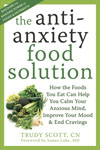
Read this blog to find out how to win one of two copies of the book. “We’d love to hear your gluten-free story if you want to include it in your email entry. If you like, please briefly describe your gluten-free experience.” Deadline for entries is Monday, December 3rd.

It’s been a lot of fun (and a real pleasure working with the Zwolinkis) and I hope you get as much out of it as we have! We will be sharing more in the coming week, talking about some testing options and how the amazing amino acids can help if you have quit but feel deprived and are using will-power.


Filed Under: Antianxiety Food Solution, Anxiety and panic, Food and mood, Real whole food Tagged With: Antianxiety Food Solution, anxiety, depression, gluten, gluten elimination, psychcentral.com, Therapy Soup

Organic foods, Stanford study, pesticides and the brain

October 3, 2012 By Trudy Scott 9 Comments

Conventional peppers are highly sprayed with pesticides

We should be concerned about non-organic produce and pesticides despite the recent research published by Stanford: Smith-Spangler C, Brandeau ML et al. 2012. Are Organic Foods Safer or Healthier Than Conventional Alternatives?: A Systematic Review. Annals of Internal Medicine. 2012;157(5):348-366

There are two parts to this study:

  • the study states there is no difference between the nutrient values in organic vs non-organic produce : “The published literature lacks strong evidence that organic foods are significantly more nutritious than conventional foods.” However it appears some studies that do show differences were not included in the review – see Jeff Cox’s blog below
  • the study recognizes that pesticides are present in non-organic produce but that they are possibly nothing to be concerned about. I disagree with this and will show you the evidence.

The focus of this article is to address this statement in the conclusion: “Consumption of organic foods may reduce exposure to pesticide residues…” and why it’s important.

Let’s look at the some of the research around pesticide exposure and how this can affect the brain, cognition, ADHD, anxiety and depression in particular.

Mearns J, Dunn J et al. 1994. Psychological effects of organophosphate pesticides: A review and call for research by psychologists. Journal of Clinical Psychology 50(2):286-294.

Organophosphates (a commonly used toxic pesticide) “act directly on the nervous system by inhibiting the neurotransmitter acetylcholine.” They have “acute psychological and behavioral effects, such as anxiety, depression, and cognitive impairments.” The researchers suggest that long-term psychological effects of low-level exposure have not been determined satisfactorily.

Mackenzie Ross SJ, Brewin CR et al. 2010. Neuropsychological and psychiatric functioning in sheep farmers exposed to low levels of organophosphate pesticides. Neurotoxicoly and Teratology.32(4):452-459.

In this study sheep framers exposed to low levels of organophosphate pesticides experienced increased anxiety and depression, as well as worse cognitive function and memory.

Bouchard MF, Bellinger DC et al. 2010. Attention-deficit/hyperactivity disorder and urinary metabolites of organophosphate pesticides. Pediatrics 125(6):e1270-1277.

More recently, this study found that even low levels of pesticides in conventionally grown vegetables and fruit increased the risk of developing attention deficit/hyperactivity disorder in 8 to 15 years of age.

Cherry N, Burstyn I et al. 2012. Mental health in Alberta grain farmers using pesticides over many years. Occup Med (Lond) 62(6):400-6.

When it comes to elderly grain farmers in Alberta those “with mental ill-health in hospital discharge records were more likely to have been exposed to phenoxy compounds for ≥35 years.”

Coleman MD, O’Neil JD et al. 2012. A preliminary investigation into the impact of a pesticide combination on human neuronal and glial cell lines in vitro. PLoS One. 7(8):e42768.

This study found that certain fungicides (pyrimethanil, cyprodinil and fludioxonil), alone and also in combination “showed significant reductions in cellular ATP.” “The effects on energy metabolism were reflected in their marked toxic effects on mitochondrial membrane potential.” There was also “evidence of oxidative stress.” The authors conclude: “This report suggests that the impact of some pesticides, both individually and in combinations, merits further study in terms of their impact on human cellular health.”

Braquenier JB, Quertemont E et al. 2010. Anxiety in adult female mice following perinatal exposure to chlorpyrifos. Neurotoxicol Teratol. 32(2):234-9.

In this study “chronic perinatal exposure to low doses” of insecticides led to an increase in anxiety in the offspring of female mice. The authors suggest that “the routes of administration and the duration of exposure during brain development may be factors to consider when studying the development of anxiety.”

Malhotra A, Nair P et al. 2011. Efficacy of zinc as a nutritional supplement in ameliorating chlorpyrifos-induced neurotoxicity in rats. J Environ Pathol Toxicol Oncol. 2011;30(3):225-33.

This animal study found that pesticide exposure resulted in an “increase in the levels of lipid peroxidation and reactive oxygen species in both cerebellum and cerebrum.” Also, glutathione (a potent detoxifier) was decreased and anxiety levels were increased. The interesting thing is that researchers concluded that zinc (one of my favorite nutrients for anxiety and depression) “has potential to act as a neuroprotectant against pesticide-induced neurodegenerative and behavioral disorders but further investigations need to be conducted to understand the exact mechanism of neuroprotection.”

I’m encouraged by this research and look forward to further studies that will examine the impacts of pesticides on the nervous system. So yes, we obviously do need to be concerned about pesticides in the produce we consume. This August 2012 Neurotoxicology paper states it well: “The association between pesticide exposure and neurobehavioral and neurodevelopmental effects is an area of increasing concern .”

Footnote and additional reading:

This is the headline of one of the original Stanford blogs: Little evidence of health benefits from organic foods, Stanford study finds.

Much of the media used this and ran with it. Here is the article on ScienceDaily.com  NPR’s food blog, The Salt took the same approach as did Huffington Post and others.

Thank you France Moore Lappe for your wisdom: Stanford Scientists Shockingly Reckless on Health Risk And Organics.   And Mike Adams, the Health Ranger writes: Flawed organic foods study really just a media psyop to confuse the public about organics while pushing GMOs.   Jeff Cox, shares some of the nutrient research that seems to be missing from the Stanford study in his blog:  Monsanto’s Tricky Plan to Defeat GMO Labeling?

Filed Under: Antianxiety Food Solution, Anxiety and panic, Food and mood, Real whole food Tagged With: ADHD, anxiety, depression, organic, pesticide, Stanford

Food does improve mood: 2012 research

August 21, 2012 By Trudy Scott 19 Comments

A recent blog post on the GoodTherapy.org site featured this article: “Can Social Anxiety Be Caused by a Nutritional Deficiency?”. I was thrilled to have been quoted and to have shared my experience with pyroluria, a form of social anxiety, shyness and inner tension, that responds very well to the supplements vitamin B6, zinc and evening primrose oil.  It was also a wonderful opportunity to get folks thinking about the role that food and nutrients play in mental health.

I was rather surprised by this comment from Nerina Garcia-Arcement, a licensed clinical psychologist and clinical assistant professor at the NYU School of Medicine: “Having a healthy and balanced diet is overall beneficial, but it won’t cure social anxiety or a mood disorder. I am more likely to recommend my clients get enough sun exposure to improve their moods (seasonal affective disorder) than recommend diet changes.”

I certainly support the recommendation for sun exposure and write this blog post to provide additional resources for those who may be unfamiliar with the recent food mood research. And I will address pyroluria, zinc and vitamin B6 in a separate post.

Here is just some of the 2012 food mood research:

Dias GP, Cavegn N et al. 2012. The role of dietary polyphenols on adult hippocampal neurogenesis: molecular mechanisms and behavioural effects on depression and anxiety. 2012. Oxidative Medicine and Cellular Longevity Epub 2012 Jun 28

“Studies on the effects of dietary polyphenols” (such as those found in green tea and turmeric), “on behaviour and AHN” (adult hippocampal neurogenesis), “may play an important role in the approach to use diet as part of the therapeutic interventions for mental-health-related conditions.”

Michalak J, Zhang XC et al. 2012 Vegetarian diet and mental disorders: results from a representative community survey. International Journal of Behavioral Nutrition and Physical Activity. Jun 7;9(1):67. [Epub ahead of print]

“Vegetarians displayed elevated prevalence rates for depressive disorders, anxiety disorders and somatoform disorders.” The authors also state that because “vegetarians exhibit a wide diversity of dietary practices, future research should more carefully define vegetarian diet to enable closer examination of the associations between diet and risk of mental disorders.”  Since this was an epidemiological study, it shows association only. But it’s a great start.

Davison KM, Kaplan BJ. 2012. Nutrient Intakes Are Correlated With Overall Psychiatric Functioning in Adults With Mood Disorders. Canadian Journal of Psychiatry. 57:85-92

This study looked at Canadian adults with mood disorders. Intake of carbs, fiber, total fat, linoleic acid, riboflavin, niacin, folate, vitamin B6, B12, pantothenic acid, calcium, phosphorus, potassium, iron, magnesium and zinc were measured and “higher levels of nutrients equated to better mental health.” (This study was included on my poster presentation at the 2012 Anxiety Disorders Association of America conference)

One of the study authors, Dr Kaplan, PhD was quoted as saying: “Doctors should consider counseling their patients to eat unprocessed, natural, healthy foods and refer them to a nutrition professional if specialized dietary consultation is needed.”

Torres SJ, Nowson CA. 2012. A moderate-sodium DASH-type diet improves mood in postmenopausal women. Nutrition. Sep;28(9):896-900. Epub 2012 Apr 4.

“In addition to the health benefits of a moderate-sodium Dietary Approaches to Stop Hypertension diet on blood pressure and bone health, this diet had a positive effect on improving mood in postmenopausal women.”  This diet did include lean red meat, which “was associated with a decrease in depression.”

Dr Felice Jacka, an Australian researcher, has a number of papers that I’ve blogged about in the past. A more recent one from 2011 looked at Norwegian adult men and women, and found that “those with better quality diets were less likely to be depressed” and that a “higher intake of processed and unhealthy foods was associated with increased anxiety.”

In a recent bipolar post, I also mention some of the research around eating a real food traditional diet and a lower risk of bipolar disorder, and the relationship between gluten and bipolar disorder.

All in all, there is much recent evidence pointing to some very real benefits for making dietary changes in order to improve mental health outcomes. Clearly, more research is needed, but we have growing evidence that the food mood connection is NOT “just a bunch of hooey” (as one of the readers stated) and we need to keep our minds open if we are to help those in need of our services!

Filed Under: Antianxiety Food Solution, Food and mood Tagged With: anxiety, depression, food and mood, GoodTherapy.org, pyroluria, research

Bubble gum flavored apples anyone?

July 2, 2012 By Trudy Scott 9 Comments

Guest Post by Mira Dessy, Certified Nutrition Educator and holistic health columnist helping others eat well to be well.


fake apples | photo: LeemanS

One of my readers, sent in this picture and comment/question about these apples.

“We came across these apples at Stop & Shop here in town. We could not believe our eyes when we saw flavored apples!! I told my husband to take a pic to send to you because I wasn’t sure you would believe me when I tell you that they had bubblegum flavored apples. I believe there were four flavors total to choose from. 

I’m curious what your thoughts are. I walked away all kinds of confused. Was this an attempt to help kids with poor eating habits cross over the healthy eating or the other way around? How exactly did they alter this apple to make it flavored? And of course the obvious…yet another example of FAKE food.

Oh and as you can see it’s was placed right next to the apples and the packaging says ready to eat snack. What’s so difficult about preparing an apple for eating? hmmm you wash it?!?!”

Good eye, and good thinking. This is very similar to something I just saw in my local grocery store called grapples. Research indicates that the flavoring comes from “natural” (read possible MSG ingredients) and artificial flavoring. It seems that the apples are marinated for several days in an undoubtedly chemical concoction which allows the apple to soak up the flavor. This process has apparently been approved by the FDA.

grapples | photo: Qrd2006

The Grapple company website assures the consumer that the product has not been genetically modified and there are no added sugars or calories. Unfortunately there is a huge chemical load, not just from the flavorings, but one assumes these are not organic apples and therefore potentially high in pesticide residue.

The Crazy Apple company website says they can’t tell you how they do it but I assume it’s the same sort of process. They do however assure you that their apples are gluten free (duh!), dairy free (again, duh!), and contain no soy or nuts.

I believe this is seen as a way to market apples to kids but I’m not really sure why this sort of adulteration is seen as a positive. Since apples by themselves are sweet, crunchy, and tasty I’m not sure what the appeal is here. Unfortunately I see this as a big step backwards as items like these further dull the taste buds to what food should taste like.

Update: It turns out these apples are being spotted all over the place and most of you are not happy about it. My friend Adrienne says, “If you want a grape flavored apple take a slice of apple and some grapes. Eat them together. It’s a party in your mouth!” Good advice.

Filed Under: Real whole food Tagged With: anxiety, depression, exercise, hot-flashes, mood, sleep, social anxiety

Bipolar, disruptive mood or gluten and junk food?

May 29, 2012 By Trudy Scott 27 Comments

A national study published in 2007 showed a surge in use of the bipolar diagnosis in children: the frequency of visits to doctors’ offices by youths 19 and younger for treatment of the condition increased from 25 per 100,000 visits in 1994-95 to 1,003 per 100,000 visits in 2002-03. I wonder what the numbers are now?

The above quote is from a story that appeared in the Boston Globe earlier this month [thanks to my friend in Boston who shared this story with me and urged me to write a commentary!]

The story, “Proposed diagnosis for bipolar disorder divides psychiatrists” by Patricia Wen, discusses issues with proposed revisions to the Diagnostic and Statistical Manual of Mental Disorders IV (DSMIV). The psychiatric association is expected to make final decisions for its fifth revised edition to be published in May 2013.

A panel appointed by the American Psychiatric Association is urging that a new, potentially more transient and less-stigmatizing diagnosis – “disruptive mood dysregulation disorder’’ – be added to the official manual of mental illnesses, which is undergoing a sweeping revision [this new disorder would be included in the manual in addition to the existing bipolar disorder, and this is where the division is].

The new condition would apply to children who have chronic irritability, as well as recurrent temper outbursts – three or more times a week, on average – that are “grossly out of proportion’’ to the situation the child confronts.

It can be as disabling to a young child as bipolar disorder, but would probably be treated with antidepressants, not antipsychotic drugs. As adults, these children would be more likely to develop anxiety or depression, rather than bipolar disorder.

Wow! chronic irritability, recurrent temper outbursts, “grossly out of proportion’’ to the situation, likely to develop anxiety or depression as adults

This sounds a lot like a combination of poor diet/junk food and food intolerances. And it’s no surprise when you consider what diets kids are eating these days! Let’s also throw in low blood sugar for good measure – how many kids do you know who eat a good breakfast that includes protein?

Let’s first look at food quality and bipolar disorder:

In the Journal of Affective Disorders, a 2012 paper titled “Diet quality in bipolar disorder in a population-based sample of women”, found a lower risk of bipolar disorder in those eating a quality traditional foods diet. Granted, this is epidemiological evidence, but this is exactly why more research is imperative. The authors do actually state: “Longitudinal studies are warranted”.

Lead author of the above paper, Dr. Felice Jacka , is also the lead author in a 2011 PLoS One paper that found diet quality in adolescents was associated with a lower risk of mental health issues. The author stated that this “study highlights the importance of diet in adolescence and its potential role in modifying mental health over the life course”

Let’s also look at gluten and bipolar disorder:

In the journal Psychiatry Research, a 2012 paper titled “Markers of gluten sensitivity in acute mania: A longitudinal study” states that individuals “with mania had significantly increased levels of IgG antibodies to gliadin” “which is derived from the wheat protein gluten”.

When I read this section in the Boston Globe story a light bulb went off….

What is ultimately added, subtracted, or revised in the Diagnostic and Statistical Manual of Mental Disorders, first put out by the American Psychiatric Association in 1952, is loaded with practical and cultural implications.

It will help define what is considered normal behavior. It largely determines how clinicians diagnose conditions; what health insurers will pay for; what drugs are made and marketed; and what research will be funded by governments and foundations

Perhaps the division between bipolar disorder and disruptive mood dysregulation disorder is less important than my whole-hearted proposal to add gluten intolerance and celiac disease, junk food addict (and low blood sugar and a host of other nutritional factors) to the DSMIV!!!

I’m obviously saying this tongue-in-cheek but imagine a world where we:

  • Do get government research funding and studies done on mental health issues related to or directly caused by gluten intolerance and a junk food diet
  • Do get insurance coverage for nutrition coaching and consulting
  • Do see subsidies for organic food farmers
  • Do make this the first approach instead of medications…or at least use this approach in conjunction with lower doses of medications
  • Do see huge improvements …leading to say a 40-fold (or more) decrease in bipolar diagnoses in children (and adults) in a less than a year!

Yes! Add these now… please! If we need research for it to become mainstream then so be it! I’m volunteering to be part of any research in these areas. It works – I already know this, as do countless of other practitioners and people who have made these changes. Just read Michael Ellsberg’s compelling bipolar story on Forbes to be inspired!

Dr Katherine Falk, MD is in private practice in New York City and is certified by the American Board of Psychiatry and Neurology. She endorsed my book The Antianxiety Food Solution and said this:

Trudy Scott is an expert on the relationship of food and mood, an often neglected area in the health of persons with mental illness. This book provides practical information, clearly presented, which I believe to be an important adjunct in the treatment of not only anxiety and depression, but also of serious mental illness.

I would like to end by saying that I have no intention of minimizing the seriousness of bipolar disorder or any mental illness, I just believe there is so much more we can do on the food-mood front!

Filed Under: Antianxiety Food Solution, Anxiety and panic, Bipolar disorder, Food and mood, Real whole food Tagged With: antianxiety diet, Antianxiety Food Solution, anxiety, Bipolar, depression, gluten, junk food, mood

NANP 2012 Golden Carrot awards for Impact, Service and Going Up: Trudy, Liz and Sara

May 19, 2012 By Trudy Scott 15 Comments

Each year the National Association of Nutrition Professionals / NANP (www.nanp.org) awards three Golden Carrot awards during the annual conference:

  • IMPACT: awarded to a member who has obtained visibility in the wider world during the past year. It could be a book, a TV show, testimony before a Senate Committee on Health Promotion, or other project that they executed with impact
  • SERVICE: awarded to a member whose efforts at mentoring and building connections that grow the holistic nutrition community deserve recognition
  • GOING UP: awarded to a member, in professional practice for one year or less, who has already begun to obtain visibility, success and distinction in their business.

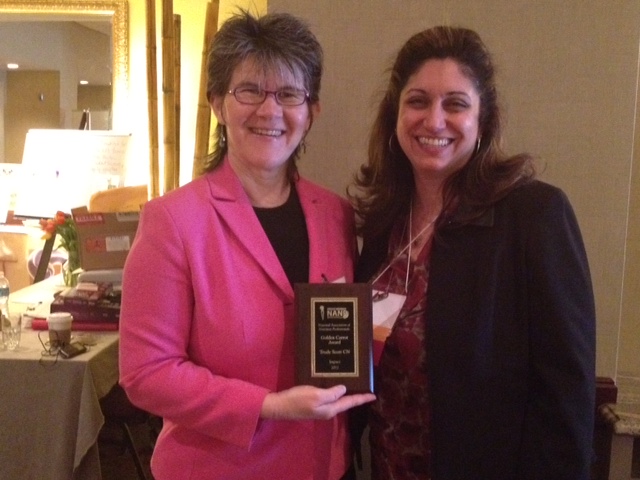
I was honored and humbled to receive the 2012 Golden Carrot Award for IMPACT.

Nicole Hodson, NC shared this heart-felt story before making the award announcement:

“Trudy Scott is the reason I am here today, as Executive Director of NANP.  Trudy became my nutritionist when I turned to her for help with weight loss a number of years ago.  Although I had been reading up on nutrition and trying to make changes on my own, I didn’t see the results I wanted until I began working with Trudy.  Most importantly Trudy was able to advise me on the holistic approach to some of my difficult hormonal health challenges.  In fact, Trudy was such an inspiration to me that I decided to pursue an education in holistic nutrition myself.  Trudy continues to inspire me as she tirelessly pursues new educational and growth opportunities.”

I’m smiling as I write this …as I have grown in my nutrition career I have been inspired by so many before me and it is truly wonderful to be able to inspire others! And to inspire someone like Nicole, whose has done so much for the organization, is truly wonderful!

Nicole continued:

“I would like to announce that Trudy Scott, CN is the 2012 NANP IMPACT winner. Trudy has done everything that fits this award’s description. Trudy obtained visibility in the wider world by being a focused leader as the past president of the NANP and organizer of the fight against CA AB575.  She is the current chair of the legislative affairs committee and continues to support our members to protect their right to practice. In June 2011, she released her first book, The Antianxiety Food Solution – How the Foods You Eat Can Help you Calm Your Anxious Mind, Improve Your Mood and End Cravings (New Harbinger) and has been presenting on food and mood at the national level and has become known as the Food Mood Expert.  She demonstrates passion and commitment on all levels and has the time to help anyone who needs it. Trudy truly is a passionate leader and a supporter of others.”

trudy scott and impact award with nicole
Trudy receives the 2012 NANP IMPACT Award from Nicole

I am so honored to be in the company of the other amazing award winners, Liz Lipski, Ph D, CCN, and Sara Edison, Certified Nutrition Consultant.

Liz received the SERVICE award:

“Liz Lipski, a nationally known clinical nutritionist, author of Digestive Wellness, and speaker has been an inspiration to the nutrition community for many years. She” is the founder of Innovative Healing,  “implemented a mentoring program for recent graduates and is the Director of Doctoral Studies at Hawthorn University. In 2012, Liz became an advocate for our industry as seven states attempted to pass licensure bills that would restrict or prevent holistically trained nutritionists from practicing. Liz helped connect individuals with attorneys and national organizations and recommended courses of action to those in need. She continues to contribute to NANP – most recently by sharing her knowledge of the legislative process with members in the Nourishing the Nutrition Professional teleconference.”

Sara received the GOING UP award:

“Sara Edison graduated from Bauman College in the spring of 2011 and has launched a private practice called A Stone’s Throw to Health. She also has a BS in Exercise Science from Skidmore College. In addition to starting her own practice, Sara is working with a colleague to build The Scoby Collective. This group is bringing together nutrition professionals interested in working collaboratively, i.e. peer to peer mentorships, sharing communal workspaces, and organizing informal gatherings to build nutrition knowledge and help recent graduates build confidence.

I plan to continue making an impact and sharing my food mood message! I know Liz well and I know she will continue to be a mentor and be of service!  She has always inspired me!  I have not met Sara and look forward to meeting her and watching her continue on her upward path leading people to optimal health!

Filed Under: Antianxiety Food Solution, Inspiration, NANP, People Tagged With: AB575, anxiety, depression, food and mood, Liz Lipski, NANP, Sara Edison, Trudy Scott

  • « Go to Previous Page
  • Page 1
  • Interim pages omitted …
  • Page 24
  • Page 25
  • Page 26
  • Page 27
  • Go to Next Page »

Primary Sidebar

NEW! GABA QuickStart Homestudy (with special intro pricing)

gaba quickstart homestudy

Free Report

9 Great Questions Women Ask about Food, Mood and their Health

You'll also receive a complimentary subscription to my ezine "Food, Mood and Gal Stuff"


Connect with me

Popular Posts

  • Amino Acids Mood Questionnaire from The Antianxiety Food Solution
  • The Antianxiety Food Solution Amino Acid and Pyroluria Supplements
  • Pyroluria Questionnaire from The Antianxiety Food Solution
  • Collagen and gelatin lower serotonin: does this increase your anxiety and depression?
  • Tryptophan for the worry-in-your-head and ruminating type of anxiety
  • GABA for the physical-tension and stiff-and-tense-muscles type of anxiety
  • The Antianxiety Food Solution by Trudy Scott
  • Seriphos Original Formula is back: the best product for anxiety and insomnia caused by high cortisol
  • Am I an anxious introvert because of low zinc and vitamin B6? My response to Huffington Post blog
  • Vagus nerve rehab with GABA, breathing, humming, gargling and key nutrients

Recent Posts

  • What do I use instead of Seriphos to help lower high cortisol that is affecting my sleep and making me anxious at night?
  • BeSerene™ GABA/theanine cream eases severe muscle tension in her neck/shoulders, prevents her bad headaches and quells her anxiety
  • How the correct approach, dose and sublingual use of GABA can be calming and not cause a flushed and itchy face and neck
  • The amino acid glutamine improves low mood by addressing gut health, and it has calming effects too
  • Flight anxiety with heightened breath, physical tension and also fearing the worst (the role of low GABA and low serotonin)

Categories

  • 5-HTP
  • AB575
  • Addiction
  • ADHD
  • Adrenals
  • Alcohol
  • Allergies
  • Alzheimer's disease
  • Amino Acids
  • Anger
  • Antianxiety
  • Antianxiety Food Solution
  • Antidepressants
  • Anxiety
  • Anxiety and panic
  • Autism
  • Autoimmunity
  • benzodiazapines
  • Bipolar disorder
  • Books
  • Caffeine
  • Cancer
  • Candida
  • Children/Teens
  • Collagen
  • Cooking equipment
  • Coronavirus/COVID-19
  • Cravings
  • Depression
  • Detoxification
  • Diabetes
  • Diet
  • DPA/DLPA
  • Drugs
  • EFT/Tapping
  • EMF
  • EMFs
  • Emotional Eating
  • Endorphins
  • Environment
  • Essential oils
  • Events
  • Exercise
  • Fear
  • Fear of public speaking
  • Fertility and Pregnancy
  • Fish
  • Food
  • Food and mood
  • Functional neurology
  • GABA
  • Gene polymorphisms
  • General Health
  • Giving
  • Giving back
  • Glutamine
  • Gluten
  • GMOs
  • Gratitude
  • Gut health
  • Heart health/hypertension
  • Histamine
  • Hormone
  • Hyperparathyroidism
  • Hypoglycemia
  • Immune system
  • Inflammation
  • Insomnia
  • Inspiration
  • Introversion
  • Joy and happiness
  • Ketogenic diet
  • Lithium orotate
  • Looking awesome
  • Lyme disease and co-infections
  • MCAS/histamine
  • Medication
  • Men's health
  • Mental health
  • Mercury
  • Migraine
  • Mold
  • Movie
  • MTHFR
  • Multiple sclerosis
  • Music
  • NANP
  • Nature
  • Nutritional Psychiatry
  • OCD
  • Osteoporosis
  • Oxalates
  • Oxytocin
  • Pain
  • Paleo
  • Parasites
  • Parkinson’s disease
  • PCOS
  • People
  • PMS
  • Postpartum
  • PTSD/Trauma
  • Pyroluria
  • Questionnaires
  • Real whole food
  • Recipes
  • Research
  • Schizophrenia
  • serotonin
  • SIBO
  • Sleep
  • Special diets
  • Sports nutrition
  • Stress
  • Sugar addiction
  • Sugar and mood
  • Supplements
  • Teens
  • Testimonials
  • Testing
  • The Anxiety Summit
  • The Anxiety Summit 2
  • The Anxiety Summit 3
  • The Anxiety Summit 4
  • The Anxiety Summit 5
  • The Anxiety Summit 6
  • Thyroid
  • Thyroid health
  • Toxins
  • Tryptophan
  • Tyrosine
  • Uncategorized
  • Vegan/vegetarian
  • Women's health
  • Yoga

Archives

  • October 2025
  • September 2025
  • August 2025
  • July 2025
  • June 2025
  • May 2025
  • April 2025
  • March 2025
  • February 2025
  • January 2025
  • November 2024
  • October 2024
  • September 2024
  • August 2024
  • July 2024
  • June 2024
  • May 2024
  • April 2024
  • March 2024
  • February 2024
  • January 2024
  • December 2023
  • November 2023
  • October 2023
  • September 2023
  • August 2023
  • July 2023
  • June 2023
  • May 2023
  • April 2023
  • March 2023
  • February 2023
  • January 2023
  • December 2022
  • November 2022
  • October 2022
  • September 2022
  • August 2022
  • July 2022
  • June 2022
  • May 2022
  • April 2022
  • March 2022
  • February 2022
  • January 2022
  • December 2021
  • November 2021
  • October 2021
  • September 2021
  • August 2021
  • July 2021
  • June 2021
  • May 2021
  • April 2021
  • March 2021
  • February 2021
  • January 2021
  • December 2020
  • November 2020
  • October 2020
  • September 2020
  • August 2020
  • July 2020
  • June 2020
  • May 2020
  • April 2020
  • March 2020
  • February 2020
  • January 2020
  • December 2019
  • November 2019
  • October 2019
  • September 2019
  • August 2019
  • July 2019
  • June 2019
  • May 2019
  • April 2019
  • March 2019
  • February 2019
  • January 2019
  • December 2018
  • November 2018
  • October 2018
  • September 2018
  • August 2018
  • July 2018
  • June 2018
  • May 2018
  • April 2018
  • March 2018
  • February 2018
  • January 2018
  • December 2017
  • November 2017
  • October 2017
  • September 2017
  • August 2017
  • July 2017
  • June 2017
  • May 2017
  • April 2017
  • March 2017
  • February 2017
  • January 2017
  • December 2016
  • November 2016
  • October 2016
  • September 2016
  • August 2016
  • July 2016
  • June 2016
  • May 2016
  • April 2016
  • March 2016
  • February 2016
  • January 2016
  • December 2015
  • November 2015
  • October 2015
  • September 2015
  • August 2015
  • July 2015
  • June 2015
  • May 2015
  • April 2015
  • March 2015
  • February 2015
  • January 2015
  • December 2014
  • November 2014
  • October 2014
  • September 2014
  • August 2014
  • July 2014
  • June 2014
  • May 2014
  • April 2014
  • March 2014
  • February 2014
  • January 2014
  • December 2013
  • November 2013
  • October 2013
  • September 2013
  • August 2013
  • July 2013
  • June 2013
  • May 2013
  • April 2013
  • March 2013
  • February 2013
  • January 2013
  • December 2012
  • November 2012
  • October 2012
  • August 2012
  • July 2012
  • June 2012
  • May 2012
  • April 2012
  • March 2012
  • February 2012
  • January 2012
  • December 2011
  • November 2011
  • October 2011
  • September 2011
  • August 2011
  • July 2011
  • June 2011
  • May 2011
  • April 2011
  • March 2011
  • February 2011
  • January 2011
  • December 2010
  • October 2010
  • September 2010
  • July 2010
  • May 2010
  • April 2010
  • March 2010
  • February 2010
  • January 2010
  • November 2009

Share the knowledge!

The above statements have not been evaluated by the Food and Drug Administration. Products listed in this website are not intended to diagnose, treat, cure or prevent any disease.

The information provided on this site is for informational and educational purposes only and is not intended as a substitute for advice from your physician or other health care professional. You should consult with a healthcare professional before starting or modifying any diet, exercise, or supplementation program, before taking or stopping any medication, or if you have or suspect you may have a health problem.


Copyright © 2026 Trudy Scott. All Rights Reserved. | Privacy | Terms and Conditions | Refund Policy | Medical Disclaimer

Free Report

9 Great Questions Women Ask about Food, Mood and their Health

You’ll also receive a complimentary subscription to my ezine “Food, Mood and Gal Stuff”