• Skip to primary navigation
  • Skip to main content
  • Skip to primary sidebar

everywomanover29 blog

Food, Mood and Women's Health – Be your healthiest, look and feel great!

  • Blog
  • About
  • Services
  • Store
  • Resources
  • Testimonials
  • The Book
  • Contact
  • Search this site

depression

GABA-consuming bacteria discovered: Evtepia gabavorous

July 15, 2016 By Trudy Scott 25 Comments

bacteria

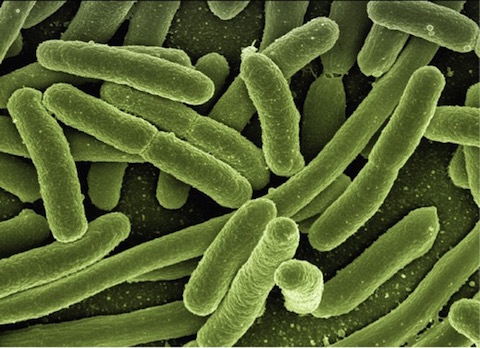
New bacteria that consumes GABA, the main calming neurotransmitter, has been discovered. It has provisionally been named KLE1738 Evtepia gabavorous (vorous means “eating”).

This new discovery was presented at the recent American Society for Microbiology conference in Boston in the Microbial Mind Control session.

Here is the entire abstract: Gaba Modulating Bacteria of the Human Gut Microbiome:

The gut microbiome affects many different diseases, and has been recently linked to human mental health. The microbiome community is diverse, but 50-80% of its diversity remains uncultured. We previously reported that uncultured bacteria from the marine environment require growth factors from neighboring species, and by using co-culture, we could cultivate novel diversity. In the present study, we used a similar co-culture approach to grow bacteria from humans stool samples. KLE1738, a “Most-Wanted” member of the human gut microbiome only known by its 16S rDNA signature, was found to require the presence of Bacteroides fragilis KLE1758 for growth. Using bio-assay driven purification of B. fragilis KLE1758 supernatant, γ-aminobutyric acid (GABA), the major inhibitory neurotransmitter of the central nervous system, was identified as the growth factor for KLE1738. We found no other tested compound but GABA supported the growth of KLE1738, and genomic analysis suggests an unusual metabolism focused on consuming GABA. Due to this unique growth requirement, we provisionally name KLE1738 Evtepia gabavorous. Using growth of E. gabalyticus as an indicator, we then identified novel GABA producing bacteria from the gut microbiome. Reduced levels of GABA are associated with depression, and we found fewer GABA producers in a human cohort of depressed individuals. By modulating the level of GABA, microbial producers and consumers of this neurotransmitter may be influencing host behavior.

If you’re anxious and especially if you have physical anxiety, it’s worth considering if low GABA is an issue and addressing your anxiety by trying to raise your GABA levels by taking GABA as a supplement, with lifestyle activities like yoga sessions, by eating a real whole foods traditional diet and by addressing gut health.

There is much research supporting the gut-brain connection and how imbalances of the microbiome i.e. intestinal dysbiosis, can contribute to:

  • anxiety, depression, social behaviour, cognition and visceral pain
  • neurobehavioral alterations in offspring
  • anorexia and anxiety/depression
  • alcohol use disorders and anxiety

Could Evtepia gabavorous be a factor in all of the above? It’s too soon to know but I expect we’ll know more as more research is completed.

If you’re looking for more information on GABA and the gut:

  • I recently covered GABA in my presentation during season 4 of the Anxiety Summit
  • and I’ve had the pleasure of interviewing Ted Dinan on psychobiotics on a previous summit
  • I also have a whole chapter on digestion and gut health in my book The Antianxiety Food Solution. It is still very relevant but could do with the addition of all this new research!

We certainly appreciate Postdoctoral Research Associate, Phillip Strandwitz and his team for the work they are doing. Strandwitz shares this on his bio:

my work has led me to focus on the gut-microbe-brain axis, specifically microbes able to modulate levels of neurotransmitters

I reached out to I asked him why he is interested this area of research and he shared this with me:

I think mental health is an incredible burden to society and there is not nearly enough spotlight nor funding to understand and treat these issues. I believe the microbiome is involved (at least to some capacity), and I’m passionate about trying to understand this involvement to create novel therapies to help those in need. I’m also a strong supporter of diet/lifestyle changes for better cognition!

How wonderful is this!

It’s early days and right now we can only speculate but it may be worth to considering if the presence of Evtepia gabavorous may be a reason why some individuals continue to need to take GABA supplements long-term to keep anxiety at bay. It also gives us additional reasons to focus on addressing gut health and boosting good bacteria to help to reduce the need for ongoing GABA supplementation.

As soon as the paper is published, I’ll have more details to share. In the meantime, enjoy the fascination and wonderment of the human body and our microbiome.

Please share if you have signs of low GABA and have you been taking GABA supplements long-term? Do you also have gut issues and dysbiosis too (based on stool testing)?

PS. So many of you contacted me with a link to this preliminary research so I’d just like to say thanks!
Filed Under: GABA Tagged With: anxiety, bacteria, depression, dysbiosis, GABA, Gabavorous, gut health, microbiome

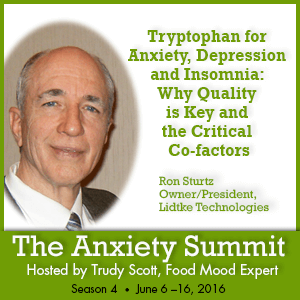
The Anxiety Summit – Tryptophan for anxiety, depression and insomnia: why quality is key and the critical co-factors

June 13, 2016 By Trudy Scott 64 Comments

Ron Sturtz_Anxiety4

Ron Sturtz, Owner/President, Lidtke Technologies, was interviewed on the Anxiety Summit by host of the Anxiety Summit, Trudy Scott, Food Mood Expert and Nutritionist, author of The Antianxiety Food Solution.

Tryptophan for anxiety, depression and insomnia: why quality is key and the critical co-factors

  • The benefits of tryptophan for anxiety/mood/insomnia and why Trudy only recommends Lidtke
  • Tryptophan history and why safety and quality is key
  • Concerns about neurotoxic quinolinic acid
  • Tryptophan 500mg, kids chewable, Tryptophan Complete, and tryptophan for pets
  • Why use lysine, vitamin B3, B6/P5P, folate and curcumin with tryptophan
  • Other serotonin co-factors and 5-HTP
  • Client feedback and how to use these amino acids

In part 1 we start by discussing the history, the controversy in 1990 over contaminated L-tryptophan,  the impurities that lead to the EMS outbreak and why Lidtke has “been fanatical about purity and safety” since then:

the main [impurity] was EBT  [1,1′-ethylidene-bis-L-tryptophan] and that was the one that they suspected was the most heavily implicated.  They never could identify exactly which ones were toxic or in combination.  It could be like numbers one, two and five in combination were deadly or two and six in combination more deadly or maybe just six alone was deadly.  They never were able to determine that because they never found an animal model to use in research because when they would feed the rats or any other kind of animal, lab animal they had samples of this known toxic tryptophan, none of them responded the way humans do.  They have a very different gut flora and metabolism and they never responded the same so they weren’t about to use humans in any of these clinical trials so they never really could tell which of those six were the worst, but they strongly suspected that EBT was the worst

Ron covers how glyphosate/Roundup is contributing to low serotonin levels:

…the food crops  absorb the chemical, they still soak it up and then they’re sent to market and you buy them and you cook them and you eat then and then you soak it up.  Well, you don’t produce tryptophan or phenylalanine, but your gut bacteria to do.  And preferentially the beneficial gut bacteria tend to be killed by the glyphosates.  So when that happens the pathogenic bacteria tend to dominate.  And then when that happens when they grow kind of out of control then even more tryptophan is used up by the macrophages, which then attack the pathogens.

If you’d like to read more about this we covered this is much more detail in these interviews:

  • Stephanie Seneff presented in season 1: Is Roundup toxic and a cause of anxiety, autism and celiac disease?
  • Jeffrey Smith presented in season 2: on Anxiety, depression, GMOs and Roundup

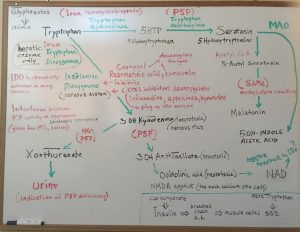
In part 2 Ron reviews the serotonin biochemistry:

lidtke image serotonin biochemistry
Serotonin Biochemistry – Ron Sturtz from Lidtke Technologies

And we discuss the Tryptophan Complete product, the ingredients and rationale for including P5P, lysine, curcumin, folic acid and niacinamide. This is my feedback on the product:

the Tryptophan Complete is one that I’m not as familiar with as the 500 milligram Tryptophan.  I’ve been using the 500 milligram with my clients for over ten years.  The Tryptophan Complete is just a new one that’s sort of come on my radar and I started looking into it and I actually posted something on Facebook a few months ago and then did a blog post to get feedback from people [see below]. And I’ve had some promising feedback.  I’ve had one person say “I’ve used the Tryptophan Complete and liked it a lot better than the 500 milligrams.  It gave me a much deeper state of relaxation and a way more solid sleep.”  She used that, got benefits then tried the 500 and now has decided to go back to the Complete.  So she feels that the addition of the other ingredients really helped for her body chemistry.  I did have someone else say that she can’t do P5P at all.  It makes her agitated.  So for people who have individual reactions to any of the ingredients then you would go with the 500 milligrams.

Here is my blog: Tryptophan 500mg or Tryptophan Complete (by Lidtke)?

And my supplements blog that lists Lidtke tryptophan products (500mg tryptophan, Tryptophan Complete and Tryptophan 100mg chewable), other amino acid products and pyroluria products I recommend: The Antianxiety Food Solution Amino Acid and Pyroluria Supplements

You can also find the amino acid questionnaire (which lists the low serotonin symptoms) and amino acid precautions on the above blog.

Here is some of the research:

  • Tryptophan supplementation modulates social behavior: A review
  • Chronic treatment with a tryptophan-rich protein hydrolysate improves emotional processing, mental energy levels and reaction time in middle-aged women
  • A placebo-controlled clinical trial of L-tryptophan in premenstrual dysphoria.
  • Lysine fortification reduces anxiety and lessens stress in family members in economically weak communities in Northwest Syria.

Lidtke is kindly offering 15% off all Lidtke products through the end of June  – use coupon code anxietysummit

If you are not already registered for the Anxiety Summit you can get live access to the speakers of the day here: www.theAnxietySummit.com

Missed this interview or can’t listen live? Or want this and the other great interviews for your learning library? Purchase the MP3s or MP3s + transcripts and listen when it suits you.

You can find your purchasing options here.: Anxiety Summit Season 1, Anxiety Summit Season 2, Anxiety Summit Season 3, and Anxiety Summit Season 4.

Filed Under: Events, The Anxiety Summit 4 Tagged With: anxiety, anxiety summit, depression, insomnia, Lidtke, Ron Sturtz, Trudy Scott, tryptophan

Mental Health Month: anxiety, nutrition, gluten, GABA, leptin and fluoroquinolones

May 13, 2016 By Trudy Scott 21 Comments

egg-asparagus-salad

Since 1949, Mental Health America and affiliates across the country have led the observance of May is Mental Health Month by reaching millions of people both online and locally. They share this:

This year’s theme for Mental Health Month is – Life with a Mental Illness – and calls on individuals to share what life with a mental illness feels like for them in words, pictures and video by tagging their social media posts with #mentalillnessfeelslike (or submitting to MHA anonymously). Posts are being collected and displayed at mentalhealthamerica.net/feelslike.

I love that they say that spreading the word that mental health issues like anxiety, depression, bipolar and other disorders is something everyone should care about.

I’d love to educate and inspire many of those individuals who have already posted on social media using #mentalillnessfeelslike and have yet to find a solution. There are so many of them and it’s heart-breaking. You can go to mentalhealthamerica.net/feelslike now and see what is being said.

Here are a few examples:

Severe anxiety feels like you are lost in a big city where no one else can speak your language and you are trying to get home.. #mentalillnessfeelslike

#anxietyfeelslike #mentalillnessfeelslike a never ending battle to keep worry from creeping in to your every thought. Trying to be present

Anxiety Attack #mentalillnessfeelslike: I’m swirling in a cyclone while also being constructed by a Boa

#MentalIllnessFeelsLike Worrying About Passing This Semester Causing Your Anxiety To Mess Up More Although Your Anxiety Put You Here

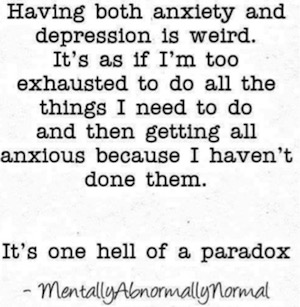
And this profound quote by MentallyAbnormallyNormal (you can find her here on Facebook)

mentally-abnormally-normal-meme

I encourage you to participate if it feels ok to you. I’d especially love you to share how nutrition and nutrients like GABA, tryptophan, zinc, vitamin B12, and/or vitamin D have helped you. You can also respond directly to the posts others have made.

Here are some links to my prior blog posts on some of the many nutritional (and biomedical) approaches so feel free to also share some of this information and use it if you’re still on your healing journey to overcome anxiety, panic attacks, OCD, insomnia and other mood problems:

  • Nutritional medicine in modern psychiatry: position statement by ISNPR
  • Integrative Medicine Approach to Pediatric Obsessive-Compulsive Disorder and Anxiety
  • GABA, the calming amino acid: products and results
  • Tryptophan for anxiety, sleep and mood: in Put Anxiety Behind You
  • Sleep promoting effects of combined GABA and 5-HTP: new research
  • Neuropsychiatric Lyme Disease by Dr. Suruchi Chandra
  • 60+ Nutritional & Biochemical Causes of Anxiety

I’ll be adding to this last blog during season 4 of The Anxiety Summit which runs June 6th – 16th. As I continue to interview experts I learn more about the myriad of possible underlying causes of anxiety:

  • Mike Mutzel will be covering how leptin resistance affects the HPA axis contributing to cortisol imbalances and how we handle stress, inflammation, immune imbalances and obesity – all playing a role in anxiety, schizophrenia and depression, and OCD and even PTSD.
  • Lisa Bloomquist will be covering fluoroquinolone related neuropsychiatric toxicity and how to recover from fluoroquinolone toxicity. Fluoroquinolones are commonly prescribed antibiotics (ciprofoxacin, levofoxacin, and moxifoxacin) and can be a major factor in anxiety and depression. She shares how this toxicity can be as bad for some individuals as benzodiazepine tolerance and withdrawal.

For some of my clients, eliminating anxiety (and other mood disorders) can be as simple as switching to a real whole foods diet, eating to balance blood sugar, quitting sugar/gluten/caffeine and adding some key nutrients like zinc and vitamin D. Many benefit immensely when using targeted individual amino acids like GABA and tryptophan. And some need to dig deeper to find the root cause of the anxiety.

But let’s always keep looking for that root cause or causes – find YOUR root cause/s – and address it/them.

My heart goes out to you if you are still suffering and still seeking a solution (and to everyone tagging themselves with #mentalillnessfeelslike and #anxietyfeelslike).

I say let’s aims to change this to the past tense so instead of #mentalillnessfeelslike let’s get to #mentalillnessfeltlike. Or how about #anxietyfeltlike or even #nutritionfixedmyanxiety ?

It truly is possible with food and nutrients! Do you agree? What has worked for you? Feel free to share in the comments and tag yourself on social media.

And do join us on The Anxiety Summit next month and share this during the Mental Health Month of May.


Filed Under: Events, Mental health Tagged With: anxiety, depression, fluoroquinolone, GABA, Leptin resistance, Mental Health Month, nutrition, OCD, PTSD, schizophrenia, the anxiety summit, tryptophan

A Mind of Your Own by Kelly Brogan MD – Chapter 1 Download

March 19, 2016 By Trudy Scott 2 Comments

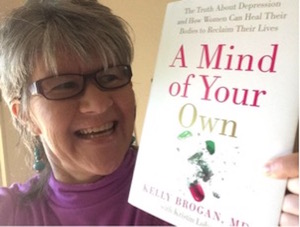
Here is a resource for you: Chapter 1 of Dr. Kelly Brogan’s new book on depression: A Mind of Your own.

mind-of-your-own-trudy


And  a reminder… if you’ve read chapter 1 and love it (and I’m sure you do!), and plan to buy a copy, Kelly is asking for your help.

It launched March 16th and there is a grass-roots effort to share this book widely because of the mainstream media blackout. Sayer Ji of GreenMedInfo shares this:

Unless about 3,000 copies of the book are sold in physical book stores throughout the country by Monday March 21st, it will not have a chance to make the NY Times and related best seller lists. Why is this so important? 

Two big reasons. 

One, because it sends a message that when major publishing companies like Harper Collins decide to print, uncensored, information that challenges the status quo, that instead of failing to receive a return on their investment, they can be further lionized in putting their money, influence, and power behind the truth, because not only is it the right thing to do but its good business (which ultimately is what drives future book buying decisions).

Two, because the very large publishers, like the NY Times, who wanted to ignore the message, and even threatened to publish negative reviews, will be compelled to acknowledge its success in their own best seller lists. Poetic, right?

So if you’d like to help, Kelly is asking that you buy a copy at your local bookstore by the end of day on Monday (and preferably sooner), take a picture with the book and show your support by posting on social media with #amindofyourown

I’d love to see the picture on my facebook page too https://www.facebook.com/TrudyScottAntianxietyFoodSolution/ or just tag me.

Get access to chapter 1 of the book here.  Be sure to enter your receipt number here so you can get access to a Q and A webinar too http://kellybroganmd.com/amindofyourown/?ref=35

And stay tuned for details of my upcoming audio interview with Kelly next week.  Have you got questions you’d like me to ask her?  If yes, please post them here and we’ll address them in our interview.

Check out the book selfies here – what fun! and what a lot of support!
https://tagboard.com/amindofyourown/274586


Trudy Scott (CN), Certified Nutritionist is the founder of www.everywomanover29.com, a thriving nutrition practice with a focus on food, mood and women’s health. Trudy educates women about the amazing healing powers of food and nutrients and helps them find natural solutions for anxiety and other mood problems. Trudy’s goal for all her clients (and all women): “You can be your healthiest, look your best and feel on-top-of-the-world emotionally!”

Filed Under: Anxiety and panic, Books, Depression Tagged With: anxiety, depression, Kelly Brogan

Western diet is associated with a smaller left hippocampus and anxiety

October 23, 2015 By Trudy Scott Leave a Comment

western-diet

A new food and mental health study has been published in the international BMC Medicine journal: Western diet is associated with a smaller hippocampus: a longitudinal investigation. The lead author is Associate Professor Felice Jacka from Deacon University in Australia.

Here is the conclusion of the study: 

Lower intakes of nutrient-dense foods and higher intakes of unhealthy foods are each independently associated with smaller left hippocampal volume. To our knowledge, this is the first human study to demonstrate associations between diet and hippocampal volume concordant with data previously observed in animal models.

Study participants were Australian adults aged 60-64.   The results of the study, show that an unhealthy “Western” diet is associated with a smaller left hippocampus and a healthier “prudent”, nutrient-dense diet is associated with a larger left hippocampus.

The unhealthy “Western” diet was:

characterized by the consumption of roast meat, sausages, hamburgers, steak, chips, crisps and soft drinks

and the healthy “prudent”, nutrient-dense diet was:

characterized by the consumption of fresh vegetables, salad, fruit and grilled fish

This study has importance for cognition and mental health, both depression and very possibly anxiety too:

extensive evidence from animal studies points to the importance of the hippocampus in the association between diet and mental and cognitive health

The hippocampus is a brain structure associated with both learning and memory, as well as mood regulation, and is specifically implicated in depression

The study does group high sugar and high saturated fat together, and unfortunately the healthy diet excludes good quality red meat which is surprising considering previous research and conversations with Dr. Jacka about the benefits of good quality red meat and mental health:

In our study, out of every single dietary food grouping that I looked at including vegetables, fruits, salads, beans, etc the strongest correlate of mental health was red meat intake [grass-fed red meat of course]

Consistently, women who have less than the recommended intake of red meat seem to be in an increased risk for common mental disorders [like anxiety and depression] and bipolar disorder.

It will be wonderful to see follow-up research looking at the effect of quality grass-fed red meat on hippocampus size.  

Drew Ramsey, MD, an assistant clinical professor of psychiatry at Columbia University College of Physicians and Surgeons in New York City, described the study as “exciting” in an interview on Medscape Medical News:

It’s the first time that a dietary pattern has been linked to specific changes in the brain. We’ve known for a long time that there’s a correlation between dietary pattern and the risk of a number of brain illnesses, like depression and dementia, and the mechanism behind this, we believe, involves neuroplastic processes of how food affects brain growth. This is the first study that’s really shown that quite conclusively.

Dr. Ramsey is the author of The Happiness Diet, and co-founder of National Kale Day. His mission is to educate America on eating healthier and I’ll second what he said about this study:

nutrition should be incorporated into mental health clinical practice.

How wonderful is it to hear a statement like this from a psychiatrist!?

You can read the complete study here.

What does all this mean for you? Eat real whole nutrient-dense food and ditch the junk food and processed food. Your brain will be happy and so will you be!

If you’re a mental health practitioner, start talking to your clients and patients about what they’re eating, ask them what they had for breakfast and share this research.


Filed Under: Antianxiety Food Solution, Depression, Food and mood, Mental health, Real whole food, Research Tagged With: anxiety, depression, drew ramsey, felice jacka, healthy diet, hippocampal, red meat, western diet

Neuropsychiatric Lyme Disease by Dr. Suruchi Chandra

September 25, 2015 By Trudy Scott 28 Comments

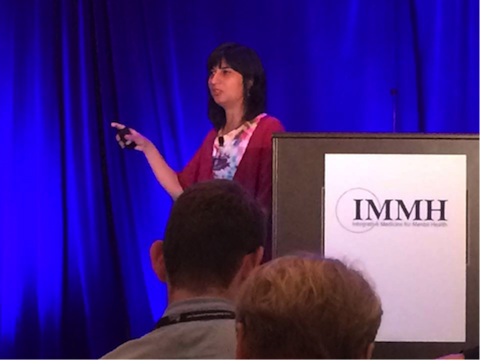
Dr. Suruchi Chandra, MD

One of my favorite presentations at the recent IMMH/Integrative Medicine for Mental Health conference was Dr. Suruchi Chandra’s Neuropsychiatric Lyme Disease talk.

Here is the description of her presentation:

“Neuropsychiatric Lyme Disease and Associated Co-infections: Clinical Presentations, Diagnostic Challenges, and Treatment Options”

Lyme disease is one of the fastest growing infectious diseases in the United States. It can remain dormant for years and then later mimic a number of psychiatric illnesses, including anxiety disorders, mood disturbances, psychosis, and autism-like behaviors. It can be further complicated by the presence of co-infections. Both the diagnosis and treatment of these infections in the chronic stage can be challenging. We will review both standard treatment recommendations and integrative and holistic approaches, including dietary changes, herbal medicines, and nutritional supplements.

Dr. Chandra started by sharing the late stage neuropsychiatric symptoms of Lyme disease:

  • Depression
  • Mood swings
  • Anxiety, panic attacks, OCD
  • Psychosis
  • Violent behaviors and irritability
  • Chronic fatigue syndrome
  • Fibromyalgia
  • ADHD and autism like behaviors
  • Seizures
  • Sleep disorders

Here are some of the many very interesting facts she shared:

  • Lyme disease is one of the fastest growing infectious diseases in the USA (and it doesn’t seem to be only an issue in the USA)
  • Not everyone recalls a tick bite or bulls-eye rash
  • Lyme disease is not only isolated to the Northeast – a year ago a Stanford study found the bacterium Borrelia miyamotoi, as well as burgdorferi, the bacterium that causes Lyme disease, in ticks they sampled throughout the San Francisco Bay area
  • Lyme disease may be due to tick borne complex i.e. it is hypothesized that there are multiple co-infections
  • Purple rashes that look like stretch marks are common with Bartonella
  • There can be maternal-fetal transmission of the disease
  • The involvement of the gut is under-rated with Lyme disease and cognitive decline is a big issue
  • Lyme and co-infections affects serotonin levels, due to IDO being increased
  • Low zinc (and high copper) and low manganese levels are often factors

Dr. Chandra is very unique in that she uses no antibiotics, “provokes” before testing and has some very interesting herbal protocols (many that are used with malaria). She stated that Lyme disease is worth treating even if there are no symptoms, simply because of the higher risk of Alzheimer’s disease.

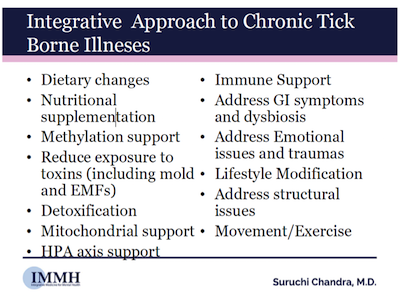
She uses a wonderfully integrative approach with her patients who have chronic tick borne diseases:

integrative-approach-chronic-tick-borne-illnesses

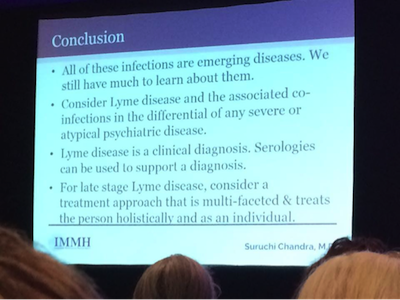
Here is the last slide of her presentation: Consider Lyme disease and the associated co-infections when there is any severe or atypical psychiatric disease, and use a holistic and individualized approach.

Chandra-conclusion

Excellent presentation! This really is the top integrative mental health conference to attend!

Here are a few of my other favorite presentations include:

  • Julie Matthews’ talk on “Oxalates, Phenols, and FODMAPs: Food Substances and Diets that Impact Mental Health Conditions”
  • James Greenblatt’s talk “New Information on Nutritional Lithium for ADHD, Mood Disorders and Prevention of Cognitive Decline”
  • Andrea Gruszecki’s talk on “The Effects of Stress on the Gut-Brain Microbiome”
  • Dr Kurt Woeller’s talk on “Oxytocin and Cholesterol – Their Interactions and Effects on Mental Health and Autism Spectrum Disorders”

I’ll share some highlights from these in a future blog post.

All the presentations were recorded and I’ll let you know when the recordings are available for purchase. These presentations are not to be missed.

Please share what you know about Lyme disease or if you have been diagnosed with one of the co-infections. Feel free to ask questions too.


Filed Under: Events, Lyme disease and co-infections Tagged With: anxiety, depression, Dr. Suruchi Chandra, IMMH, Integrative Medicine for Mental Health, Lyme Disease, Neuropsychiatric Lyme Disease

  • « Go to Previous Page
  • Page 1
  • Interim pages omitted …
  • Page 18
  • Page 19
  • Page 20
  • Page 21
  • Page 22
  • Interim pages omitted …
  • Page 27
  • Go to Next Page »

Primary Sidebar

NEW! GABA QuickStart Homestudy (with special intro pricing)

gaba quickstart homestudy

Free Report

9 Great Questions Women Ask about Food, Mood and their Health

You'll also receive a complimentary subscription to my ezine "Food, Mood and Gal Stuff"


Connect with me

Popular Posts

  • Amino Acids Mood Questionnaire from The Antianxiety Food Solution
  • The Antianxiety Food Solution Amino Acid and Pyroluria Supplements
  • Pyroluria Questionnaire from The Antianxiety Food Solution
  • Collagen and gelatin lower serotonin: does this increase your anxiety and depression?
  • Tryptophan for the worry-in-your-head and ruminating type of anxiety
  • GABA for the physical-tension and stiff-and-tense-muscles type of anxiety
  • The Antianxiety Food Solution by Trudy Scott
  • Seriphos Original Formula is back: the best product for anxiety and insomnia caused by high cortisol
  • Am I an anxious introvert because of low zinc and vitamin B6? My response to Huffington Post blog
  • Vagus nerve rehab with GABA, breathing, humming, gargling and key nutrients

Recent Posts

  • What do I use instead of Seriphos to help lower high cortisol that is affecting my sleep and making me anxious at night?
  • BeSerene™ GABA/theanine cream eases severe muscle tension in her neck/shoulders, prevents her bad headaches and quells her anxiety
  • How the correct approach, dose and sublingual use of GABA can be calming and not cause a flushed and itchy face and neck
  • The amino acid glutamine improves low mood by addressing gut health, and it has calming effects too
  • Flight anxiety with heightened breath, physical tension and also fearing the worst (the role of low GABA and low serotonin)

Categories

  • 5-HTP
  • AB575
  • Addiction
  • ADHD
  • Adrenals
  • Alcohol
  • Allergies
  • Alzheimer's disease
  • Amino Acids
  • Anger
  • Antianxiety
  • Antianxiety Food Solution
  • Antidepressants
  • Anxiety
  • Anxiety and panic
  • Autism
  • Autoimmunity
  • benzodiazapines
  • Bipolar disorder
  • Books
  • Caffeine
  • Cancer
  • Candida
  • Children/Teens
  • Collagen
  • Cooking equipment
  • Coronavirus/COVID-19
  • Cravings
  • Depression
  • Detoxification
  • Diabetes
  • Diet
  • DPA/DLPA
  • Drugs
  • EFT/Tapping
  • EMF
  • EMFs
  • Emotional Eating
  • Endorphins
  • Environment
  • Essential oils
  • Events
  • Exercise
  • Fear
  • Fear of public speaking
  • Fertility and Pregnancy
  • Fish
  • Food
  • Food and mood
  • Functional neurology
  • GABA
  • Gene polymorphisms
  • General Health
  • Giving
  • Giving back
  • Glutamine
  • Gluten
  • GMOs
  • Gratitude
  • Gut health
  • Heart health/hypertension
  • Histamine
  • Hormone
  • Hyperparathyroidism
  • Hypoglycemia
  • Immune system
  • Inflammation
  • Insomnia
  • Inspiration
  • Introversion
  • Joy and happiness
  • Ketogenic diet
  • Lithium orotate
  • Looking awesome
  • Lyme disease and co-infections
  • MCAS/histamine
  • Medication
  • Men's health
  • Mental health
  • Mercury
  • Migraine
  • Mold
  • Movie
  • MTHFR
  • Multiple sclerosis
  • Music
  • NANP
  • Nature
  • Nutritional Psychiatry
  • OCD
  • Osteoporosis
  • Oxalates
  • Oxytocin
  • Pain
  • Paleo
  • Parasites
  • Parkinson’s disease
  • PCOS
  • People
  • PMS
  • Postpartum
  • PTSD/Trauma
  • Pyroluria
  • Questionnaires
  • Real whole food
  • Recipes
  • Research
  • Schizophrenia
  • serotonin
  • SIBO
  • Sleep
  • Special diets
  • Sports nutrition
  • Stress
  • Sugar addiction
  • Sugar and mood
  • Supplements
  • Teens
  • Testimonials
  • Testing
  • The Anxiety Summit
  • The Anxiety Summit 2
  • The Anxiety Summit 3
  • The Anxiety Summit 4
  • The Anxiety Summit 5
  • The Anxiety Summit 6
  • Thyroid
  • Thyroid health
  • Toxins
  • Tryptophan
  • Tyrosine
  • Uncategorized
  • Vegan/vegetarian
  • Women's health
  • Yoga

Archives

  • October 2025
  • September 2025
  • August 2025
  • July 2025
  • June 2025
  • May 2025
  • April 2025
  • March 2025
  • February 2025
  • January 2025
  • November 2024
  • October 2024
  • September 2024
  • August 2024
  • July 2024
  • June 2024
  • May 2024
  • April 2024
  • March 2024
  • February 2024
  • January 2024
  • December 2023
  • November 2023
  • October 2023
  • September 2023
  • August 2023
  • July 2023
  • June 2023
  • May 2023
  • April 2023
  • March 2023
  • February 2023
  • January 2023
  • December 2022
  • November 2022
  • October 2022
  • September 2022
  • August 2022
  • July 2022
  • June 2022
  • May 2022
  • April 2022
  • March 2022
  • February 2022
  • January 2022
  • December 2021
  • November 2021
  • October 2021
  • September 2021
  • August 2021
  • July 2021
  • June 2021
  • May 2021
  • April 2021
  • March 2021
  • February 2021
  • January 2021
  • December 2020
  • November 2020
  • October 2020
  • September 2020
  • August 2020
  • July 2020
  • June 2020
  • May 2020
  • April 2020
  • March 2020
  • February 2020
  • January 2020
  • December 2019
  • November 2019
  • October 2019
  • September 2019
  • August 2019
  • July 2019
  • June 2019
  • May 2019
  • April 2019
  • March 2019
  • February 2019
  • January 2019
  • December 2018
  • November 2018
  • October 2018
  • September 2018
  • August 2018
  • July 2018
  • June 2018
  • May 2018
  • April 2018
  • March 2018
  • February 2018
  • January 2018
  • December 2017
  • November 2017
  • October 2017
  • September 2017
  • August 2017
  • July 2017
  • June 2017
  • May 2017
  • April 2017
  • March 2017
  • February 2017
  • January 2017
  • December 2016
  • November 2016
  • October 2016
  • September 2016
  • August 2016
  • July 2016
  • June 2016
  • May 2016
  • April 2016
  • March 2016
  • February 2016
  • January 2016
  • December 2015
  • November 2015
  • October 2015
  • September 2015
  • August 2015
  • July 2015
  • June 2015
  • May 2015
  • April 2015
  • March 2015
  • February 2015
  • January 2015
  • December 2014
  • November 2014
  • October 2014
  • September 2014
  • August 2014
  • July 2014
  • June 2014
  • May 2014
  • April 2014
  • March 2014
  • February 2014
  • January 2014
  • December 2013
  • November 2013
  • October 2013
  • September 2013
  • August 2013
  • July 2013
  • June 2013
  • May 2013
  • April 2013
  • March 2013
  • February 2013
  • January 2013
  • December 2012
  • November 2012
  • October 2012
  • August 2012
  • July 2012
  • June 2012
  • May 2012
  • April 2012
  • March 2012
  • February 2012
  • January 2012
  • December 2011
  • November 2011
  • October 2011
  • September 2011
  • August 2011
  • July 2011
  • June 2011
  • May 2011
  • April 2011
  • March 2011
  • February 2011
  • January 2011
  • December 2010
  • October 2010
  • September 2010
  • July 2010
  • May 2010
  • April 2010
  • March 2010
  • February 2010
  • January 2010
  • November 2009

Share the knowledge!

The above statements have not been evaluated by the Food and Drug Administration. Products listed in this website are not intended to diagnose, treat, cure or prevent any disease.

The information provided on this site is for informational and educational purposes only and is not intended as a substitute for advice from your physician or other health care professional. You should consult with a healthcare professional before starting or modifying any diet, exercise, or supplementation program, before taking or stopping any medication, or if you have or suspect you may have a health problem.


Copyright © 2026 Trudy Scott. All Rights Reserved. | Privacy | Terms and Conditions | Refund Policy | Medical Disclaimer

Free Report

9 Great Questions Women Ask about Food, Mood and their Health

You’ll also receive a complimentary subscription to my ezine “Food, Mood and Gal Stuff”