• Skip to primary navigation
  • Skip to main content
  • Skip to primary sidebar

everywomanover29 blog

Food, Mood and Women's Health – Be your healthiest, look and feel great!

  • Blog
  • About
  • Services
  • Store
  • Resources
  • Testimonials
  • The Book
  • Contact
  • Search this site

de-stress

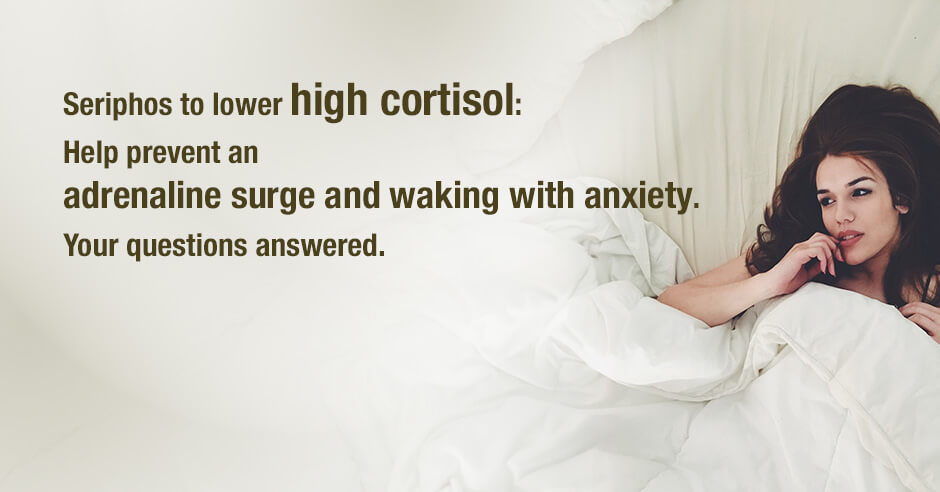
Seriphos to lower high cortisol: Help prevent an adrenaline-type surge and waking with anxiety and panic. Your questions answered

January 26, 2024 By Trudy Scott 16 Comments

seriphos and high cortisol

When you have high night-time cortisol it can cause you to wake in the middle of the night with anxiety and/or feeling like you’re having a panic attack. If your cortisol is really high in the early morning (outside of the normal range), you can also wake with a jolt and feelings of anxiety and panic. Seriphos, a phosphorylated serine product, can help to lower your high cortisol and eventually prevent these symptoms.

Today I’m addressing your questions about how to use Seriphos to lower high cortisol and help prevent an adrenaline-type surge – like dosing/timing at night and in the early morning, how long you can take it for, cortisol salivary testing, interactions, brands and another option to Seriphos.

Soma shared her symptoms on Facebook when I said I’d be taking questions:

Can feel the adrenaline rush “crash” over me. I responded so so to beta blockers but still having fitful sleep and occasional “shocks” into wakefulness in the night as if tragedy struck … fight or flight upon waking. Tremendous night sweats. Generally hyper vigilant as a person.

This is her question: “What dosage and when to take (how soon before bed) is recommended?”

Addressing dosage and timing is a good place to start (and a common question) but I asked her if she has done a 4-5x cortisol salivary collection to confirm that her night time cortisol is high. She has not done this simple and very effective adrenal test and I highly recommend it before using Seriphos. The reason is that low cortisol can often have similar symptoms to high cortisol and using Seriphos is going to make things worse.

What dosage and when to take Seriphos (how soon before bed) is recommended?

Assuming Soma has done the adrenal saliva test and knows her middle of the night cortisol (5th saliva collection) is high, using 1-3 capsules a few hours before the high cortisol seems to be most effective. For example, for 2-4 am waking this typically means taking Seriphos right before bed. In some instances, taking 1 on waking in the night can help too (for a maximum of 3).

If her late evening 10 pm (4th saliva collection) is high too, the dose can be split. For example, taking 1 Seriphos at 7- 8 pm (a few hours before the high cortisol at 10 pm) and 1-2 right before bed for the 2 -4 am high cortisol.

The bottle states to use 1 capsule with water 15 minutes before a meal. I’m really not sure why they state this.

How to use Seriphos for high morning cortisol and adrenaline surge on waking?

Syd asks this question about high morning cortisol (as confirmed by saliva adrenal testing):

Opinion about using it for confirmed high MORNING cortisol? (Yup, I know cortisol is supposed to be highest in the morning, but this is off the charts, literally, high.)

“Adrenaline surge” or “catecholamine surge” is exactly how I’ve explained it to people!! No cognitive worrying, just that surge.

Because Seriphos works best taken a few hours in advance of high cortisol, I typically have clients use Lactium in this situation. It’s a hydrolyzed casein product that also lowers high cortisol. If casein is an issue then Relora is another option. I’ve blogged about both – Lactium here and Relora here.

One other option is to experiment with Seriphos – using it in the morning and also trying it at bedtime.

Should I take two Seriphos? I wake halfway through the night

Anne asks this question:

I only take one capsule? Should I take two? I wake halfway through the night, usually due to a full bladder. I fall back to sleep easily if I use a CBD gummy. Tested high for cortisol throughout the day on a DUTCH complete test, which measures at least 4 times.

Anne has done a DUTCH test which includes 4 adrenal saliva collections but doesn’t know if her cortisol is high in the middle of the night.  As mentioned above, 1-3 capsules of Seriphos is ideal so I have clients start with 1 and increase to 2 and then 3. Since her cortisol is high throughout the day she may do better using Seriphos in the day and continuing with CBD at night when she wakes.

She may also want to consider low GABA and/or low serotonin as factors causing her to not sleep through the night. This applies to anyone using Seriphos to lower high cortisol. More on amino acids below.

If she does have bladder issues addressing this is key too.

For how long can Seriphos be taken?

It is recommended to take a one-month break after 3 months of Seriphos use. Ideally, once some or all the root causes of high cortisol are addressed (like gluten, stress, parasites, infections, trauma etc), you should be able to stop anyway.  Or take a break, retest cortisol and then continue.

Does Seriphos have any interactions? And is there any cohort who should not use it?

Someone asked about using Seriphos with a beta blocker and someone else asked about using it with a SSRI. I’m not aware of any medication interactions but it’s best to always discuss with the prescribing physician.

What brands make Seriphos and where can I find it?
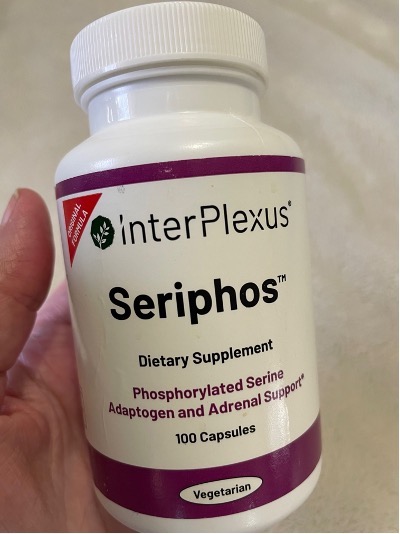
seriphos

There is only one product and it’s called Interplexis Seriphos. You can purchase this from my online store (Fullscript – only available to US customers – use this link to set up an account) and you can also find it on iherb (use this link to save 5%).
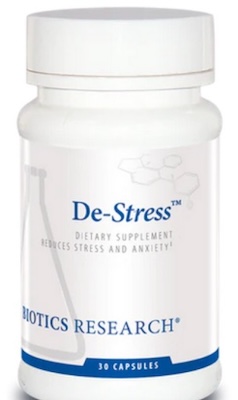
de-stress
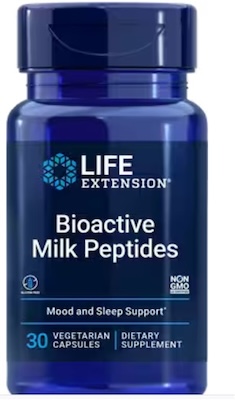
bioactive milk peptides

Since I mentioned Lactium above, Biotics Research De-Stress contains 150mg hydrolyzed casein or lactium. You can find this in my online Fullscript too – use this link to set up an account.  For non-US customers, Life Extension Bioactive Milk Peptides also contains 150mg hydrolyzed casein or lactium (you’ll see casein decapeptide and lactium on the label.)  You can find this on iherb (use this link to save 5%).

Additional resources when you are new to using amino acids as supplements

We use the symptoms questionnaire to figure out if low serotonin or low GABA and other neurotransmitter imbalances may be an issue for you.

If you suspect low levels of any of the neurotransmitters and do not yet have my book, The Antianxiety Food Solution – How the Foods You Eat Can Help You Calm Your Anxious Mind, Improve Your Mood, and End Cravings, I highly recommend getting it and reading it before jumping in and using amino acids on your own so you are knowledgeable. And be sure to share it with the practitioner/health team you or your loved one is working with.

There is an entire chapter on the amino acids and they are discussed throughout the book in the sections on gut health, gluten, blood sugar control, sugar cravings, anxiety and mood issues. The importance of quality animal protein is also covered.

The book doesn’t include product names (per the publisher’s request) so this blog, The Antianxiety Food Solution Amino Acid and Pyroluria Supplements, lists the amino acids that I use with my individual clients and those in my group programs.

If, after reading this blog and my book, you don’t feel comfortable figuring things out on your own (i.e. doing the symptoms questionnaire and respective amino acids trials), a good place to get help is the GABA QuickStart Program (if you have low GABA symptoms too). This is a paid online/virtual group program where you get my guidance and community support.

If you are a practitioner, join us in The Balancing Neurotransmitters: the Fundamentals program. This is also a paid online/virtual program with an opportunity to interact with me and other practitioners who are also using the amino acids.

Have you had success with Seriphos (or Lactium or Relora) to lower high cortisol and help with anxiety, panic and/or adrenaline-type surges?

Have you used Seriphos in combination with amino acids and dietary changes?

If you’re a practitioner do you use Seriphos with clients/patients?

Feel free to share and ask your questions below.
Filed Under: Adrenals, Anxiety and panic, Insomnia Tagged With: adrenaline-type surge, anxiety, cortisol, de-stress, dosage, fight or flight, high cortisol, interactions; GABA Quickstart; Balancing Neurotransmitters: the Fundamentals program for practitioners, jolt, lactium, panic, phosphorylated serine, safe, salivary testing, seriphos, shocks, Timing, waking

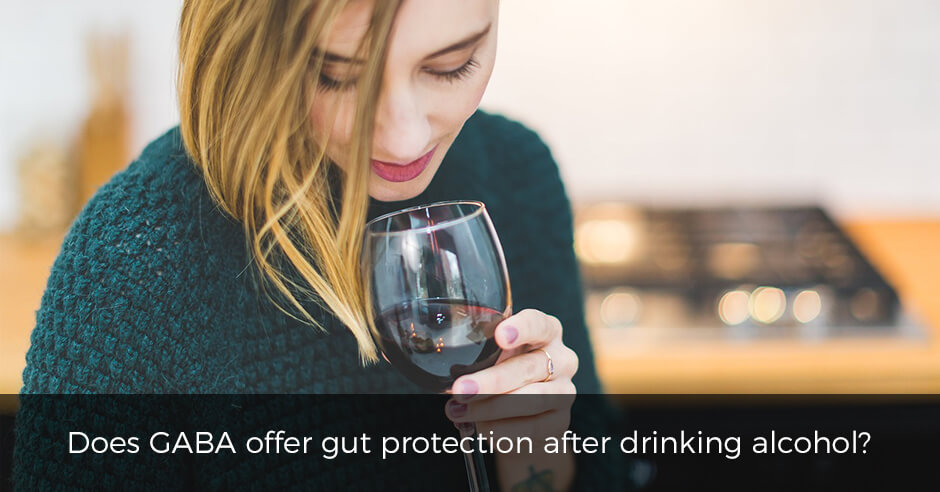
Does GABA offer gut protection after drinking alcohol?

September 22, 2017 By Trudy Scott 12 Comments

A paper published earlier this year has us asking the question: will oral GABA supplementation offer gut protection in humans who drink too much alcohol? It’s too soon to know but the results from the animal study leave me spell-bound by this calming amino acid yet again!

The paper, Gastroprotective effect of gamma-aminobutyric acid on ethanol-induced gastric mucosal injury

aimed to investigate the gastroprotective effect of gamma-aminobutyric acid (GABA) on ethanol-induced gastric mucosal injury and gastric epithelial cells injury [in rats].

Ethanol or alcohol is known to damage the gut and the study was carried out on rats given GABA and then ethanol.

It was also tested using the human gastric epithelial cell line GES-1 (more here on how human cell lines are commonly used in research) which was incubated with GABA and then treated with ethanol to induce cell injury.

The use of GABA prior to treatment with ethanol

showed that GABA pretreatment significantly reduced gastric ulcer index in a dose-dependent manner.

Administration with GABA could not only remarkably restrain oxidative stress by increase of superoxide dismutase, catalase activities and decrease of malondialdehyde content in gastric tissue and cells, but also significantly reduced pro-inflammatory factors activities (interleukin-6 and tumor necrosis factor α) in gastric tissue.

These studies clearly provided evidence that GABA had a considerable gastroprotective effect on ethanol-induced gastric mucosal injury and gastric epithelial cells injury. The underlying mechanism of mitigating lesions may be ascribed to the improvement of anti-inflammatory and anti-oxidant status as well as the increases of PGE2 [prostaglandin E2] and NO [nitric oxide] levels.

In summary, the use of GABA shows the potential for less ulcers, less oxidative damage, less inflammation in the gut, and gastroprotective properties after alcohol consumption. Human studies will show if oral GABA supplementation offers gut protection in those who drink too much alcohol.

Many social drinkers are not connecting their drinking to stress

We are a stressed society and this leads a great deal of “social” drinking. Many social drinkers are not connecting their drinking to stress and their need to self-medicate and de-stress.

As I found when I posted new study this on facebook – Moderate alcohol consumption as risk factor for adverse brain outcomes and cognitive decline – many social drinkers also get upset when you point out research like this because they don’t want to have to give it up. This CNN article, Moderate drinking may alter brain, summarizes the study and reports that the

moderate group was drinking about 14 to 21 units of alcohol per week, or about a medium glass of wine each night, plus a little extra on the weekends.

Update: Dec 2025
This 2024 paper, A qualitative analysis investigating drinking practices and meanings among a sample of Australian working mothers, explores the emotional/stress connection and how alcohol is their escape and coping tool:

Women felt they had to be available to both their employers and their children at the same time. For some, this led to internalized feelings of guilt and fatigue, increasing women’s desire to drink, and limiting their capacity to be mindful of the amount of alcohol they were consuming.

Women also described feeling overloaded and under-supported, where alcohol was viewed as being relaxing and rewarding, as well as a way to escape, cope, and recover from their day-to-day stressors.

Furthermore, through a combination of targeted marketing and broader social normalisation, women felt alcohol was presented as a solution to stress and problems among working mothers.

GABA also helps reduce your need to self-medicate or self-soothe with alcohol (or sugar/carbs)

What is so interesting is that this very same calming amino acid, GABA, when used to address low GABA levels can help reduce your need to self-medicate or self-soothe with alcohol (or sugar/carbs). Don’t forget, with low GABA levels, you’ll also experience physical anxiety, stiff and tense muscles, overwhelm and panic attacks. I recently blogged about GABA here: GABA for the physical-tension and stiff-and-tense-muscles type of anxiety

Of course, I’d recommend using GABA supplements to address the low GABA and prevent so much “social” drinking that may damage to the gut (i.e. addressing the root cause as always), rather than using GABA to prevent gut damage when you do drink.

If you are a big “social” drinker and choose the latter (use GABA to prevent gut damage when you do drink) be warned, you’ll feel calmer and less stressed and very likely reduce your desire and need for a drink!

My blog mentions “social” drinking because of the paper about moderate alcohol consumption above but all this could be equally applicable to heavy drinkers and alcoholics too.

In summary, the amino acid GABA can achieve the following:

  • help you quit alcohol and not feel deprived and having to use willpower
  • leave you feeling calm and stress-free with no need to self-medicate with alcohol
  • heal damage caused to your gut if you do indulge once in awhile (based on projections from the above research)

Additional resources when you are new to using GABA or other amino acids as supplements

We use the symptoms questionnaire to figure out if low GABA (indicating a possible need for GABA or theanine) or low serotonin (indicating a need for tryptophan or 5-HTP) or low endorphins (indicating a possible need for DPA) or other neurotransmitter imbalances may be an issue for you.

If you suspect low levels of any of the neurotransmitters and do not yet have my book, The Antianxiety Food Solution – How the Foods You Eat Can Help You Calm Your Anxious Mind, Improve Your Mood, and End Cravings. I highly recommend getting it and reading it before jumping in and using amino acids on your own so you are knowledgeable. And be sure to share it with the practitioner/health team you or your loved one is working with.

There is an entire chapter on the amino acids and they are discussed throughout the book in the sections on gut health, gluten, blood sugar control, sugar cravings, anxiety and mood issues. The importance of quality animal protein and healthy fats is also covered.

The book doesn’t include product names (per the publisher’s request) so this blog, The Antianxiety Food Solution Amino Acid and Pyroluria Supplements, lists the amino acids that I use with my individual clients and those in my group programs.

If, after reading this blog and my book, you don’t feel comfortable figuring things out on your own (i.e. doing the symptoms questionnaire and respective amino acids trials), a good place to get help is the GABA QuickStart Program (if you have low GABA symptoms). This is a paid online/virtual group program where you get my guidance and community support. Another option is the budget-friendly GABA QuickStart Homestudy program.

If you also need serotonin support, the Serotonin QuickStart Program is a good place to get help. This is also a paid online/virtual group program where you get my guidance on using tryptophan and 5-HTP safely, and community support during 5 LIVE Q&A calls. You can sign up to be notified when the next live launch of this program is happening.

If you are a practitioner, join us in The Balancing Neurotransmitters: the Fundamentals program. This is also a paid online/virtual program with an opportunity to interact with me and other practitioners who are also using the amino acids.

Now I’d like to hear from you

Do you drink alcohol in order to relieve your stress?

Have you noticed that GABA reduces your need to drink alcohol?

And have you noticed any improvements in gut health since using GABA?

Feel free to post your questions below.

Filed Under: Anxiety, GABA, Stress Tagged With: alcohol, anxiety, de-stress, GABA, gastroprotective, gut damage, self-medicate, stress

Smile and laugh to de-stress, calm down and boost your mood

June 14, 2013 By Trudy Scott 15 Comments

 laughter

My biggest stress-relief and mood-boosting tip is to smile and laugh! It is one of the many things I encourage my clients to do! And I personally love a good comedy and opportunity to smile and laugh! I almost feel like I need my “fix” of laughter by the end of the day. It really relaxes me, boosts my mood and helps me sleep better.

I was further inspired to make a commitment to laugh each day when I read all the research supporting the many and varied health benefits. Many days I’ll just take a break and engage in spontaneous laughter for no reason at all – just the act of laughing leaves me feeling SO good. I do food-mood presentations around the country and typically end my talks with a laugher session with the audience! It’s a great hit and they leave my talk feeling great!

A 2012 research paper in Physiological Science actually showed that if you smile, you feel less stressed. Also in a 1999 study, “Personality traits such as warmth, calmness, extroversion, and low anxiety were closely related to an attractive smile.”

Laughter falls into a similar category as smiling and is wonderful for improving mood and reducing anxiety and stress and pain. This 2012 paper. showed that laughter “is associated with feelings of wellbeing” and improved mood, likely related to “the release of endorphins.” The release of endorphins also reduced pain levels.

Recent research also shows that the “combination of a laughter and exercise program might have physiological and psychological health benefits for the elderly”. Laughter may also “be an effective strategy to motivate the elderly to participate in physical activity.”

Laughter is actually good for the heart as indicated by the title of a 2009 paper: “The effect of mirthful laughter on the human cardiovascular system.”

Here are some things to make you chuckle: a fun post I did awhile ago about a wonderfully funny and romantic blog called The Musings of a Romantic Comedy Girl and a video of a laughing baby. Enjoy!

And of course, the added bonus: if you eat foods that raise serotonin (like grass-fed read meat and wild fish like salmon), you’ll be happier and more inclined to smile too – and feel even less anxious and less stressed. Tryptophan or 5-HTP will help boost your serotonin levels and are wonderful if you do have low serotonin. You can check for low serotonin levels using this Amino Acids Mood Questionnaire from The Antianxiety Food Solution. 

Filed Under: Antianxiety Food Solution, Anxiety and panic, Depression, Food and mood, Joy and happiness, Pain, Stress Tagged With: Antianxiety Food Solution, anxiety, calm, de-stress, happy, laughter, pain, smiling, stress

Primary Sidebar

NEW! GABA QuickStart Homestudy (with special intro pricing)

gaba quickstart homestudy

Free Report

9 Great Questions Women Ask about Food, Mood and their Health

You'll also receive a complimentary subscription to my ezine "Food, Mood and Gal Stuff"


Connect with me

Popular Posts

  • Amino Acids Mood Questionnaire from The Antianxiety Food Solution
  • The Antianxiety Food Solution Amino Acid and Pyroluria Supplements
  • Pyroluria Questionnaire from The Antianxiety Food Solution
  • Collagen and gelatin lower serotonin: does this increase your anxiety and depression?
  • Tryptophan for the worry-in-your-head and ruminating type of anxiety
  • GABA for the physical-tension and stiff-and-tense-muscles type of anxiety
  • The Antianxiety Food Solution by Trudy Scott
  • Seriphos Original Formula is back: the best product for anxiety and insomnia caused by high cortisol
  • Am I an anxious introvert because of low zinc and vitamin B6? My response to Huffington Post blog
  • Vagus nerve rehab with GABA, breathing, humming, gargling and key nutrients

Recent Posts

  • What do I use instead of Seriphos to help lower high cortisol that is affecting my sleep and making me anxious at night?
  • BeSerene™ GABA/theanine cream eases severe muscle tension in her neck/shoulders, prevents her bad headaches and quells her anxiety
  • How the correct approach, dose and sublingual use of GABA can be calming and not cause a flushed and itchy face and neck
  • The amino acid glutamine improves low mood by addressing gut health, and it has calming effects too
  • Flight anxiety with heightened breath, physical tension and also fearing the worst (the role of low GABA and low serotonin)

Categories

  • 5-HTP
  • AB575
  • Addiction
  • ADHD
  • Adrenals
  • Alcohol
  • Allergies
  • Alzheimer's disease
  • Amino Acids
  • Anger
  • Antianxiety
  • Antianxiety Food Solution
  • Antidepressants
  • Anxiety
  • Anxiety and panic
  • Autism
  • Autoimmunity
  • benzodiazapines
  • Bipolar disorder
  • Books
  • Caffeine
  • Cancer
  • Candida
  • Children/Teens
  • Collagen
  • Cooking equipment
  • Coronavirus/COVID-19
  • Cravings
  • Depression
  • Detoxification
  • Diabetes
  • Diet
  • DPA/DLPA
  • Drugs
  • EFT/Tapping
  • EMF
  • EMFs
  • Emotional Eating
  • Endorphins
  • Environment
  • Essential oils
  • Events
  • Exercise
  • Fear
  • Fear of public speaking
  • Fertility and Pregnancy
  • Fish
  • Food
  • Food and mood
  • Functional neurology
  • GABA
  • Gene polymorphisms
  • General Health
  • Giving
  • Giving back
  • Glutamine
  • Gluten
  • GMOs
  • Gratitude
  • Gut health
  • Heart health/hypertension
  • Histamine
  • Hormone
  • Hyperparathyroidism
  • Hypoglycemia
  • Immune system
  • Inflammation
  • Insomnia
  • Inspiration
  • Introversion
  • Joy and happiness
  • Ketogenic diet
  • Lithium orotate
  • Looking awesome
  • Lyme disease and co-infections
  • MCAS/histamine
  • Medication
  • Men's health
  • Mental health
  • Mercury
  • Migraine
  • Mold
  • Movie
  • MTHFR
  • Multiple sclerosis
  • Music
  • NANP
  • Nature
  • Nutritional Psychiatry
  • OCD
  • Osteoporosis
  • Oxalates
  • Oxytocin
  • Pain
  • Paleo
  • Parasites
  • Parkinson’s disease
  • PCOS
  • People
  • PMS
  • Postpartum
  • PTSD/Trauma
  • Pyroluria
  • Questionnaires
  • Real whole food
  • Recipes
  • Research
  • Schizophrenia
  • serotonin
  • SIBO
  • Sleep
  • Special diets
  • Sports nutrition
  • Stress
  • Sugar addiction
  • Sugar and mood
  • Supplements
  • Teens
  • Testimonials
  • Testing
  • The Anxiety Summit
  • The Anxiety Summit 2
  • The Anxiety Summit 3
  • The Anxiety Summit 4
  • The Anxiety Summit 5
  • The Anxiety Summit 6
  • Thyroid
  • Thyroid health
  • Toxins
  • Tryptophan
  • Tyrosine
  • Uncategorized
  • Vegan/vegetarian
  • Women's health
  • Yoga

Archives

  • October 2025
  • September 2025
  • August 2025
  • July 2025
  • June 2025
  • May 2025
  • April 2025
  • March 2025
  • February 2025
  • January 2025
  • November 2024
  • October 2024
  • September 2024
  • August 2024
  • July 2024
  • June 2024
  • May 2024
  • April 2024
  • March 2024
  • February 2024
  • January 2024
  • December 2023
  • November 2023
  • October 2023
  • September 2023
  • August 2023
  • July 2023
  • June 2023
  • May 2023
  • April 2023
  • March 2023
  • February 2023
  • January 2023
  • December 2022
  • November 2022
  • October 2022
  • September 2022
  • August 2022
  • July 2022
  • June 2022
  • May 2022
  • April 2022
  • March 2022
  • February 2022
  • January 2022
  • December 2021
  • November 2021
  • October 2021
  • September 2021
  • August 2021
  • July 2021
  • June 2021
  • May 2021
  • April 2021
  • March 2021
  • February 2021
  • January 2021
  • December 2020
  • November 2020
  • October 2020
  • September 2020
  • August 2020
  • July 2020
  • June 2020
  • May 2020
  • April 2020
  • March 2020
  • February 2020
  • January 2020
  • December 2019
  • November 2019
  • October 2019
  • September 2019
  • August 2019
  • July 2019
  • June 2019
  • May 2019
  • April 2019
  • March 2019
  • February 2019
  • January 2019
  • December 2018
  • November 2018
  • October 2018
  • September 2018
  • August 2018
  • July 2018
  • June 2018
  • May 2018
  • April 2018
  • March 2018
  • February 2018
  • January 2018
  • December 2017
  • November 2017
  • October 2017
  • September 2017
  • August 2017
  • July 2017
  • June 2017
  • May 2017
  • April 2017
  • March 2017
  • February 2017
  • January 2017
  • December 2016
  • November 2016
  • October 2016
  • September 2016
  • August 2016
  • July 2016
  • June 2016
  • May 2016
  • April 2016
  • March 2016
  • February 2016
  • January 2016
  • December 2015
  • November 2015
  • October 2015
  • September 2015
  • August 2015
  • July 2015
  • June 2015
  • May 2015
  • April 2015
  • March 2015
  • February 2015
  • January 2015
  • December 2014
  • November 2014
  • October 2014
  • September 2014
  • August 2014
  • July 2014
  • June 2014
  • May 2014
  • April 2014
  • March 2014
  • February 2014
  • January 2014
  • December 2013
  • November 2013
  • October 2013
  • September 2013
  • August 2013
  • July 2013
  • June 2013
  • May 2013
  • April 2013
  • March 2013
  • February 2013
  • January 2013
  • December 2012
  • November 2012
  • October 2012
  • August 2012
  • July 2012
  • June 2012
  • May 2012
  • April 2012
  • March 2012
  • February 2012
  • January 2012
  • December 2011
  • November 2011
  • October 2011
  • September 2011
  • August 2011
  • July 2011
  • June 2011
  • May 2011
  • April 2011
  • March 2011
  • February 2011
  • January 2011
  • December 2010
  • October 2010
  • September 2010
  • July 2010
  • May 2010
  • April 2010
  • March 2010
  • February 2010
  • January 2010
  • November 2009

Share the knowledge!

The above statements have not been evaluated by the Food and Drug Administration. Products listed in this website are not intended to diagnose, treat, cure or prevent any disease.

The information provided on this site is for informational and educational purposes only and is not intended as a substitute for advice from your physician or other health care professional. You should consult with a healthcare professional before starting or modifying any diet, exercise, or supplementation program, before taking or stopping any medication, or if you have or suspect you may have a health problem.


Copyright © 2026 Trudy Scott. All Rights Reserved. | Privacy | Terms and Conditions | Refund Policy | Medical Disclaimer

Free Report

9 Great Questions Women Ask about Food, Mood and their Health

You’ll also receive a complimentary subscription to my ezine “Food, Mood and Gal Stuff”