• Skip to primary navigation
  • Skip to main content
  • Skip to primary sidebar

everywomanover29 blog

Food, Mood and Women's Health – Be your healthiest, look and feel great!

  • Blog
  • About
  • Services
  • Store
  • Resources
  • Testimonials
  • The Book
  • Contact
  • Search this site

calming

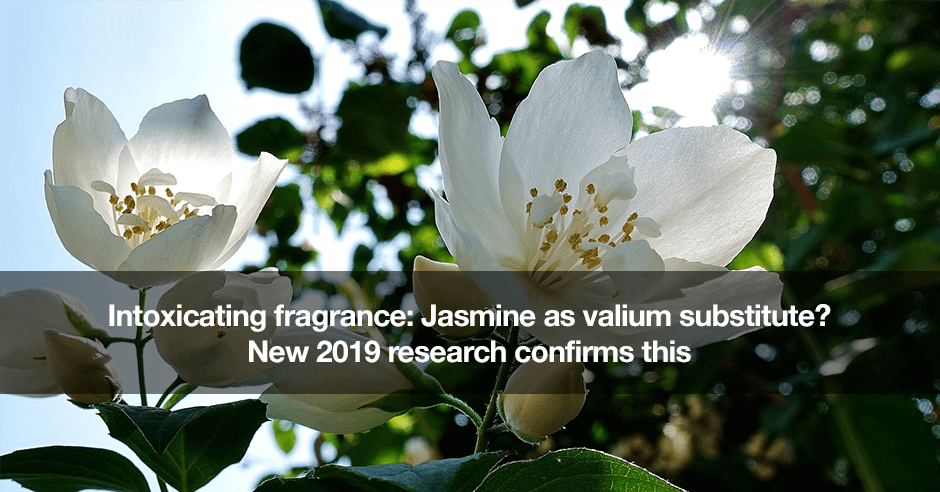
Intoxicating fragrance: Jasmine as valium substitute? New 2019 research confirms this

March 29, 2019 By Trudy Scott 11 Comments

A study from the University of the Ruhr, in Bochum, Germany, resulted in a press-release with a very provocative and enticing title – Intoxicating fragrance: Jasmine as valium substitute and a slew of articles which generated much interest. When I came across this 2010 press release recently, I was of course, intrigued and started digging deeper. Despite the fact that some folks felt it was a long stretch to extrapolate to humans, new research published this year confirms this headline may well have some merit.

Here are some highlights from the 2010 press release:

Instead of a sleeping pill or a mood enhancer, a nose full of jasmine from Gardenia jasminoides could also help, according to researchers in Germany. They have discovered that the two fragrances Vertacetal-coeur (VC) and the chemical variation (PI24513) have the same molecular mechanism of action and are as strong as the commonly prescribed barbiturates or propofol. They soothe, relieve anxiety and promote sleep.

The press release also shares that sedatives, sleeping pills and relaxants which increase the effect of GABA, are the most frequently prescribed psychotropic drugs. Also, “the benzodiazepines, which are now among the world’s most widely prescribed drugs” are “not only potentially addictive, but can also cause serious side effects, e.g. depression, dizziness, hypotension, muscle weakness and impaired coordination.” Valium, Xanax, Ativan and Klonopin are all benzodiazepines and I write more about these medications and why they are so problematic here.

Here are some really interesting facts from the press release/study:

  • The two fragrances vertacetal-coeur (VC) and the chemical variation (PI24513) were … able to increase the GABA effect by more than five times and thus act as strongly as the known drugs.
  • Injected or inhaled, the fragrances generated a calming effect.
  • Applications in sedation, anxiety, excitement and aggression relieving treatment and sleep induction therapy are all imaginable. The results can also be seen as evidence of a scientific basis for aromatherapy.

Here is a link to the 2010 paper: Fragrant dioxane derivatives identify beta1-subunit-containing GABAA receptors. I’ll be honest, it was challenging read for me and when I read the press release and actual paper at first, I wasn’t even sure they were talking about the same thing. You won’t find any mention of jasmine in the study, but instead will find vertacetal-coeur.

As I mentioned above, some organizations felt it was a long stretch to extrapolate to humans. The NHS in the UK was one example, publishing this:

Although some anti-anxiety medications are also known to interact with GABA receptors, it is far too soon to suggest that the effects of jasmine are similar to a recognised treatment for anxiety such as valium. People taking prescribed medication for anxiety should not change their treatment based on this study.

New 2019 research on jasmine for labor anxiety

However, a paper published just this month, A Systematic Review on the Anxiolytic Effect of Aromatherapy during the First Stage of Labor confirms the use of jasmine for reducing anxiety during the first stage of labor (in humans):

It is recommended that aromatherapy could be applied as a complementary therapy for reducing anxiety during the first stage of labor, but methodologically rigorous studies should be conducted in this area.

A total of 14 published papers and 2 unpublished papers were part of the review and other essential oils identified in the review for easing anxiety during labor include: rose, clary sage, geranium and frankincense, chamomile, bitter orange, sweet orange, peppermint, mandarin orange and clove.

Hopefully the NHS in the UK will update their article to include this new review.

Jasmine for other anxiety situations and feedback from real people

I feel very comfortable extrapolating this anxiety-reducing effect of jasmine during labor to other anxiety situations until we have more research.

I also asked folks on Facebook: “Do you use jasmine essential oil and love it? I’m working on a blog post on how jasmine impacts GABA levels and helps ease anxiety and I’d love to include some feedback (good or bad) in the blog. Care to share?” Here is some of the feedback –

Debra: “Never knew there was a Jasmine essential oil… love the smell of fresh Jasmine…will have to look out for it on days when I just need a bit more than what my antidepressant can do…”

Trish: “I use a blend from one of the companies called Joy that has Jasmine in it. It’s awesome, lightens the spirit, makes the day go happier. I use it as a perfume.”

Jessica: “I just started using it.. I really love it! I was using for facial purposes and then read it was good for anxiety and I do feel calm when using and just smelling it really.”

How to get some of the calming benefits of jasmine

There are many ways to enjoy the calming effects of jasmine. Here are some ideas for you:

  • Diffuse the jasmine essential oil alone in combination with other calming essential oils like lavender and one of the citrus oils like neroli or lemon. The Joy blend that Trish mentions above has bergamot, ylang ylang, geranium, lemon, coriander, tangerine, jasmine, roman chamomile, palmarosa and rose. Dr. Mariza, suggests this “Simply Soothing Diffuser Blend” in her new book The Essential Oils Hormone Solution (my review here)– 2 drops neroli, 2 drops jasmine and 2 drops ylang ylang essential oil
  • Use it topically with a carrier oil for a massage, alone or in a blend as above
  • Do what Trish suggests and use it as a perfume (I currently do this with neroli and am now going to try some jasmine)
  • Bring fresh jasmine flowers into your home or get a jasmine pot plant
  • Enjoy it in a tea. Organic India has a lovely tulsi tea that contains chamomile and jasmine. If you recall, tulsi or holy basil is an adaptogenic herb which has anti-stress effects
  • If you can tolerate caffeine, enjoy some Jasmine Oolong tea. Research suggests that the fragrant compounds in the tea “were absorbed by the brain and thereby potentiated the GABAA receptor response…and may therefore have a tranquillizing effect on the brain.”

Next steps: jasmine and GABA or jasmine alone?

It’s hard to know if jasmine used in any of the above ways will be enough to boost your GABA levels and ease your anxiety completely. The best way to find out is to try and see how you feel. It’s all very promising given that the 2010 study found that the compounds they used were able to increase the GABA effect by more than five times.

Until I’ve had clients use jasmine alone for this purpose, I’m still going to recommend the amino acid GABA (based on the questionnaire and a trial) and will suggest concurrent use of jasmine in some way. Once GABA levels have been boosted and all the other changes have been made (diet, blood sugar control, gut health, adrenals, low zinc, low vitamin B6 etc.), jasmine alone may be enough to keep GABA levels on an even keel.

However, right now I do see jasmine as a viable approach that is worth considering if you’re in the midst of tapering from a benzodiazepine and are not able to tolerate GABA and other oral supplements.

I’d love to get your feedback on jasmine and GABA and how you feel both help you (or have helped) with anxiety, depression, sleep or aggression? And if either has helped you taper off your benzodiazepine?

Please also share your favorite ways to use jasmine.

Feel free to post your questions here too.
Filed Under: Essential oils Tagged With: aggression, anxiety, anxiolytic, aromatherapy, benzodiazepine, calming, depression, essential oil, GABA, jasmine, labor, sleep, tulsi, Valium

The Essential Oils Hormone Solution by Dr. Mariza Snyder – my book review

February 22, 2019 By Trudy Scott 15 Comments

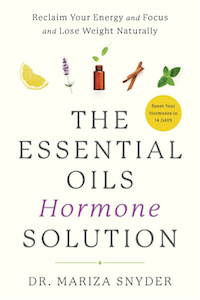
Together with dietary changes and key nutrients like GABA, tryptophan, zinc and vitamin B6, using essential oils are a wonderful tool for helping to ease anxiety, reduce stress, improve sleep and focus and contribute to overall hormonal health for women. Now we have a new book that is a wonderful essential oil resource specifically for women, The Essential Oils Hormone Solution: Reclaim Your Energy and Focus and Lose Weight Naturally by Dr. Mariza Snyder.

She shares this about essential oils:

Essential oils are natural aromatic com­pounds found in the roots, seeds, stems, bark, leaves, and flowers of various plants. They are super-charged, fifty to seventy times more potent than their dried-herbal counterparts. They’re simply the best plant-based remedy that exists, and they have been success­fully used for thousands of years.

Dr. Mariza lists these top 5 must-have hormone-support essential oils for perimenopausal and menopausal women: clary sage, geranium, lavender, peppermint and rosemary. Lavender and peppermint have been long-time favorites of mine and I recently learned about clary sage and rosemary and love both.

She covers so many wonderful essential oils in the book but for the purposes of this review I’ll focus on clary sage since it was new to me until recently and may be new to you too.

In the chapter on sleep, she shares this about the benefits of clary sage and how to use this essential oil:

CLARY SAGE (Salvia sclarea)

  • Promotes relaxation of the body for a restful night’s sleep
  • Calms and soothes the mind and body
  • Supportive during menstrual distress

Aromatic Use 

  • Apply 1–2 drops directly to bedclothes or pillow.
  • Diffuse 3–4 drops before bedtime.

Topical Use

  • Dilute 1–2 drops with your favorite carrier oil and massage into abdomen.
  • Add 2–3 drops to a warm bath with ¼ cup Epsom salts dis­solved in the water.
  • Dilute 1–2 drops with your favorite carrier oil and massage into your soles before bedtime.

I had looked into clary sage about 6 months ago when I learned that it supports serotonin production and also lowers high cortisol.

Interestingly, I didn’t care for the aroma of clary sage when I first purchased it and I diffused it with lavender and rosemary to disguise the aroma. But I have grown to really like it and use a drop on a hanky each night and look forward to how much it helps me sleep and the fact that it eased the mild hot flashes I had started to experience again.

I love the combinations/blends Dr. Mariza recommends in the book and would have welcomed these ideas when I first started using clary sage myself. Here is one example of a rollerball blend with clary sage:

Tense-Away Rollerball Blend

10 drops Lavender essential oil

10 drops Clary Sage essential oil

10 drops Peppermint essential oil

Carrier oil of choice

I also really like that Dr. Mariza describes different ways to use the oils other than only diffusing – like using rollerballs, using them for massages and in baths, and applying the essential oils on various parts of the body for a more direct impact. One such example is the Hormone Synergy Rollerball Blend (which contains clary sage, lavender, geranium, bergamot and ylang ylang). She recommends applying this blend directly over your ovaries.

I learned this direct application tip from Dr. Mariza last year and started using lavender, peppermint and rosemary (in a carrier oil) topically on my belly before bed. It helps with digestion, occasional belly bloat from SIBO (if I’ve eaten something that triggers symptoms) and is relaxing too. I think I’ll add clary sage to this belly blend too for the added hormone benefits. This could be one way to use clary sage for the benefits if you find you don’t really like the aroma (because it will be further from your nose!)

Here are some of the benefits of the other top 5 hormone-support essential oils for perimenopausal and menopausal women that Dr. Mariza shares:

  • geranium – calming and soothing and “rejuvenates and revitalizes skin, complexion, and hair” (I haven’t been using this one and looking forward to trying this one)
  • lavender – “eases and calms feelings of anxiety, stress, and tension while rebalancing emotions” and “relieves discomfort associated with menstrual cycles” (I’ve been using lavender for years)
  • peppermint – “stimulates mental focus and energy by enlivening the senses” and supports your respiratory system (I also use this one all the time. It’s also great for headaches and neck pain)
  • and rosemary – “increases memory, concentration, and focus” (I also use it for EMF/electromagnetic radiation protection. Research shows rosemary could play a protective role against this harmful effect through its antioxidant activity)

Clary sage is also featured in the libido chapter: “Commonly used to stimulate sexual energy and boost libido.” This aspect was new to me, but it makes sense given that it lowers cortisol and supports serotonin production (and hence estrogen). Dr. Mariza also covers many other wonderful essential oils that boost libido too: jasmine, neroli, rose, sandalwood, ylang ylang and geranium.  In one study neroli, lavender, fennel, geranium, and rose significantly improved sexual function in menopausal women.

Here is the official book blurb:

Have your hormones been hijacked? Do you feel energy-depleted and irritable, unable to sleep, stay focused, or lose weight? You may have attributed these symptoms to the natural hormonal fluctuations that occur with age. But behind the scenes, there are a host of pesky culprits wreaking havoc on your hormonal health: chronic stress, air pollution, chemical-laden foods and cleaning supplies, and the synthetic estrogens in personal care products. Women of all ages are left vulnerable to the consequences, suffering from unnecessary hormonal imbalance and frustrating symptoms that are often dismissed by their doctors.

Dr. Mariza Snyder is here to help put you back in control of your health. In The Essential Oils Hormone Solution, you will learn how to heal hormonal chaos and revitalize the body from the inside out with the support of high-quality essential oils. You’ll learn how essential oils work on a cellular level to mitigate the toxic loads we carry, and how to use essential oils to reduce cravings, get deep, restful sleep, ease stress, improve mood, banish the worst symptoms of PMS, regain focus and concentration, boost libido, and increase energy.

Featuring a 14-day plan to jumpstart your hormonal health, with over 100 essential oil blends, daily self-care rituals, and delicious, easy-to-prepare recipes, you’ll discover how to reset your body and pave the way for improved hormonal health, without taking hormones.

Grab your copy of The Essential Oils Hormone Solution here (my Amazon link).

I’d like to add my thoughts on what I have found to be safe use of essential oils, and what I share with my clients (I consider myself an essential oil user like you – I’m not an expert):

  • Always use a carrier oil, unless you are diffusing, and this includes using essential oils in the bath (I know there is some conflicting advice on this, but I like to err on the side of caution)
  • Don’t try to remove too much of an essential oil with water – it will only drive it deeper into the skin
  • Think low doses i.e. a little goes a long way
  • Be sure to rotate your essential oils
  • Don’t ingest the oils neat or even in a gelatin capsule. I would only consider doing so if I was working with an experienced practitioner and using an enteric coated capsule  (there is definitely conflicting advice on this one but again I like to err on the side of caution)

It’s a fun book with wonderful ideas for how to combine essential oils and use them to improve hormone imbalance. I love this quote from Dr. Mariza:

Inhaling them and applying them is like adorning yourself in something truly beautiful

What are your favorite essential oils and combinations for easing anxiety, reducing stress, improving sleep and balancing your hormones? How are you “adorning yourself” and what is your favorite way to use them – diffused, topically, via a rollerball, or via a massage or in the bath? Feel free to post questions here too.

Filed Under: Books, Essential oils Tagged With: anxiety, calming, clary sage, cortisol, Dr. Mariza Snyder, energy, essential oils, focus, hormone, hormones, insomnia, lavender, libido, mood, peppermint, PMS, serotonin, sleep, stress, The Essential Oils Hormone Solution

Anxiety, stress and high cortisol: forest bathing to the rescue

January 25, 2019 By Trudy Scott 16 Comments

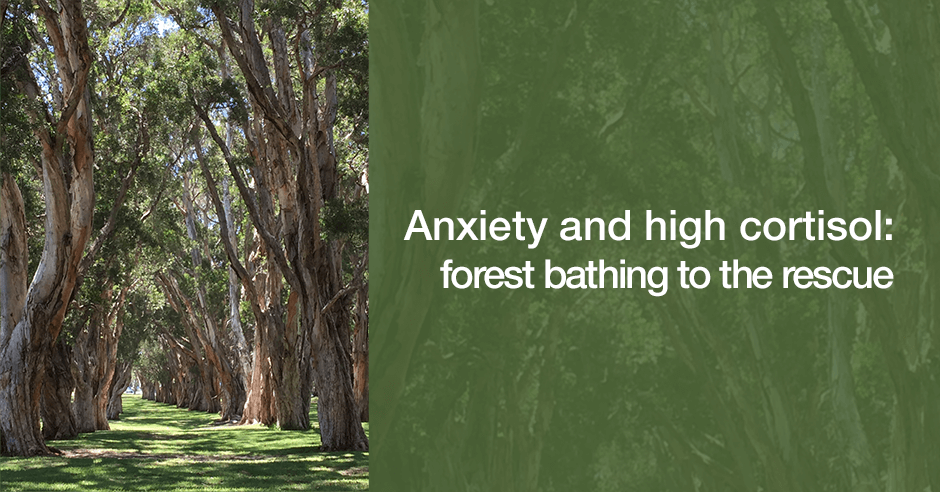
On the way home from a snorkelling trip to the beach earlier this week we stopped at Centennial Park in Sydney and were wowed by the magnificent trees. It inspired me to write this blog about forest bathing to inspire you to think about the power of nature as a simple way to give you joy and contribute to a wonderful sense of calm and peace. I was quite giddy with these feelings while there and still feel waves of awe days later when thinking about it and looking at these pictures of the Paperbark Grove and the massive Morton Bay fig trees.

We know being in nature has a psychological impact making us feel calm and relaxed, happy and joyful, and even playful. But what exactly is forest bathing and are there really physiological impacts i.e. does forest bathing simply help you feel good or does it actually lower your cortisol levels or blood pressure?

This paper, The physiological effects of Shinrin-yoku (taking in the forest atmosphere or forest bathing): evidence from field experiments in 24 forests across Japan, defines forest bathing:

The term Shinrin-yoku (taking in the forest atmosphere or forest bathing) was coined by the Japanese Ministry of Agriculture, Forestry, and Fisheries in 1982. It can be defined as making contact with and taking in the atmosphere of the forest: a process intended to improve an individual’s state of mental and physical relaxation

The above study set out to measure and clarify the physiological effects of Shinrin-yoku or forest bathing with 12 young male university students who had no history of physical or psychiatric disorders:

12 subjects walked in and viewed a forest or city area. On the first day, six subjects were sent to a forest area, and the others to a city area. On the second day, each group was sent to the other area as a cross-check.

The participants sat and viewed the landscape for 12-16 minutes and then walked in the landscape for 14-18 minutes (in one of the 24 forests and then in one of the 24 city areas on the second day).

The subjects had the following markers measured before breakfast and both before and after the walking and viewing periods:

  • salivary cortisol
  • blood pressure
  • pulse rate and
  • heart rate variability

After this surprisingly short period of viewing and walking in the forests the following results were found:

forest bathing promotes lower concentrations of cortisol, lower pulse rate, lower blood pressure, greater parasympathetic nerve activity, and lower sympathetic nerve activity

So, what we have, is more activity of the parasympathetic system i.e. more of the calming “rest and digest” activity and less activity of the sympathetic system i.e. what we term as “fight or flight” or stress activity.

The authors suggest that forest bathing “may be used as a strategy for preventive medicine” and I wholeheartedly agree.

Given that GABA can lower high pressure and calm down the “fight or flight” sympathetic system (see this animal study) I won’t be surprised when we see research showing us that forest bathing boosts GABA levels just in a similar way that yoga boosts GABA.

If you don’t have everyday access to parks, trees or forests be sure to go out of your way to make detours down nearby tree-lined streets to get some of these wonderful health benefits.

And because we know that simply looking at images of greenery and nature can have a calming and stress-reducing effect, here is a bigger version of the photo I took of the Paperbark Grove for you to enjoy looking at!

My picture of the Paperbark Grove in Centennial Park, Sydney

We were so excited to “discover” this gem and got home and googled it only to find out it’s a popular avenue for wedding parties! I’m sure you can see why!

Right next to the Paperbark Grove are three giant Moreton Bay fig trees. These trees are estimated to be older that the park, which was opened in 1888.

Here I am being “hugged” by one of them (doesn’t it take tree-hugging to another level!?)

If you’re local to Sydney or come for a visit one day, I highly recommend a trip to Centennial Park to see these magnificent trees and do your own Australian version of forest bathing. You may just see me there!

Until then, I encourage you to get outside into forests, get “hugged” by trees, hug trees and gaze up and enjoy every calming and joyous moment. It can help to lower your cortisol levels so you can be free of anxiety and it may even help to prevent anxiety!

Please do share your favorite forest bathing locations and how they make you feel.

Filed Under: Nature Tagged With: anxiety, calming, centennial park, cortisol, forest, forest bathing, GABA, Shinrin-yoku, stress, stress-reducing, trees, yoga

Knitting to ease anxiety, depression and dementia and give to a good cause

March 16, 2018 By Trudy Scott 3 Comments

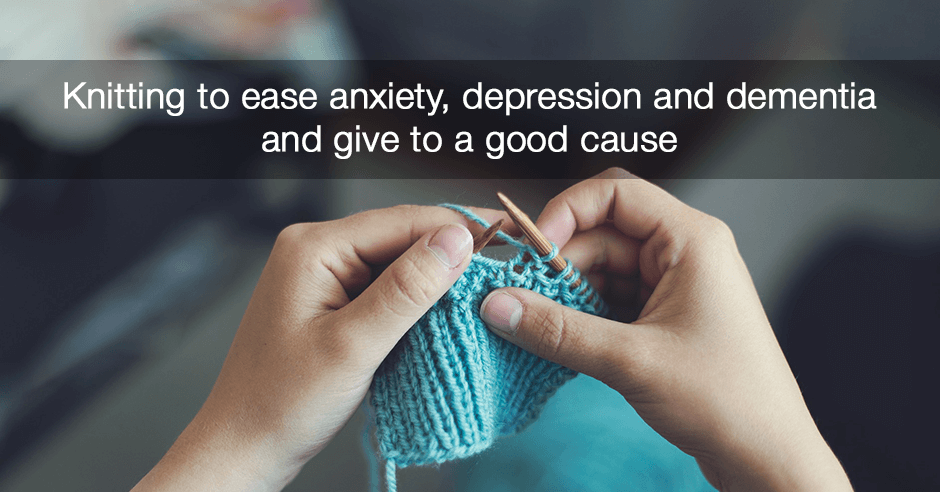
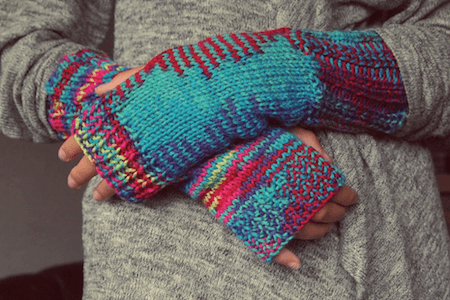
Knit for Peace, a UK based charity that “matches knitters with good causes” has published an extensive review of studies that reports the many physical and mental benefits of knitting, including easing anxiety and depression, benefiting those with dementia, helping with chronic pain, promoting a sense of community and improving sociability.

There is evidence-based research that shows that knitting does the following:

  • Lowers blood pressure
  • Reduces depression and anxiety
  • Slows the onset of dementia
  • Is as relaxing as yoga
  • Distracts from chronic pain
  • Provides an opportunity for creativity (at a time of reducing capacity)
  • Increases sense of wellbeing
  • Reduces loneliness and isolation
  • Increases sense of usefulness and inclusion in society

Knitting for those in need is a volunteering activity that can carry on into extreme old age and can be undertaken by those whose sight, hearing and mobility are severely limited. It provides an activity that gives a sense of purpose. Knitting for charity makes people feel more useful and worthwhile. Self-worth is important post retirement, especially with physical decline.

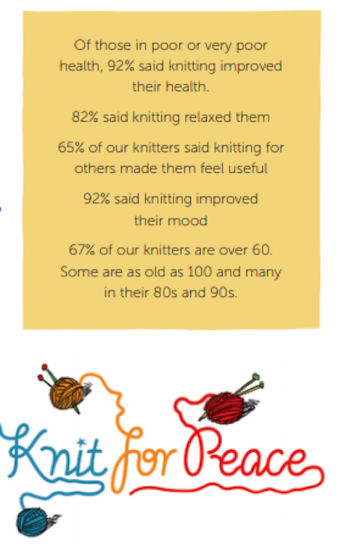
They also surveyed their members about their knitting experiences. Here is some of the feedback they received:

You can read a summary of that report here and request the entire digital report here.

You’ll be able to read some of the heartwarming backstory of Knit for Peace in the above summary… how they “started as an income generation project for Hutu and Tutsi widows, victims of the Rwandan genocide and civil war” and grew to a similar project in India “bringing together Hindu and Muslim women in the slums of Delhi” and then “Knit for Peace groups were set up in Pakistan, Bangladesh, Nepal and Afghanistan.” … And then “when people in the UK heard about this project they asked if they could knit for the children of Afghanistan.” “Through word of mouth the idea spread, and we were soon receiving a positive tsunami of knitted goods.”

Positive feedback about knitting

I asked my community on Facebook if they knit and how it makes them feel.

Diane shared this: I noticed that knitting lowers my blood pressure but interesting to note that crochet lowers it even more. Maybe because the crochet is an easier pattern?

Catriona shared this: I did some knitting when I had horrible anxiety and depressive symptoms. Really helped keep me focused on the present, which made it hard to ruminate and worry while doing it. Like mindfulness. And you end up with a nice gift at the end of it.

Maria shared this: I don’t knit but I crochet a lot. Very therapeutic 

Knitting is not for everyone

Knitting certainly isn’t for everyone. Bonnie shared this:  Knitting did not lower my stress level at all. First of all, I don’t like to sit or stand still that much, it bothered my wrists and was not easy to pick up. I think I was more stressed from doing it. Mountain biking is my stress reliever!

Aminda shared this: Knitting leads me to want to poke out eyes with knitting needles lol. I’ll stick to my crossword puzzles. I’m super tired of being told I just have to try it and being treated like something is wrong with me because I find crafts the opposite of de-stress. I’m glad people love knitting… I’m just not one of them and I only got happier when I stopped trying to fit onto the mold.

If knitting isn’t for you don’t worry about it, rather find something that you love to do.

Knitting is for kids too

I was very fortunate to have my granny teach me when I was about 8 years old. We had such fun time together, making scarves, gloves, baby clothes for my dolls and then my baby sister and eventually jerseys/jumpers for myself. It was a very special bonding time and it’s a skill I’ll always have. My granny was fearful of storms and I’d like to think knitting helped ease some of her anxieties.

I feel we should be encouraging kids to knit too. Many anxious kids could benefit from anxiety relief and contribute to a worthy cause by giving away their finished items.

Christina shared this on the Huffington Post blog: I’m an elementary teacher and I have a knitting group at lunch on Wednesday’s! The kids love it! It promotes patience, concentration and perseverance! I have about 25 students ages 10-12, both girls and boys!

Some of the research

In this Norwegian study, Knitters in a Day Center: The Significance of Social Participation for People With Mild to Moderate Dementia, the main activity of elderly women with mild dementia was knitting. It was found that

the social activity of knitting facilitated conversations about different topics, required various forms of memory and problem solving, and involved different participant statuses. Being part of the knitting group appeared to help the participants maintain their skills and facilitated sociability.

In this study, Managing anxiety in eating disorders with knitting, 38 women with anorexia reported these benefits of knitting:

  • it lessened the intensity of their fears and thoughts and cleared their minds of eating disorder preoccupations (74%)
  • it had a calming and therapeuticeffect (74%)
  • it provided satisfaction, pride and a sense of accomplishment (53%)

Where do you start if you don’t know how to knit?

If you didn’t learn to knit as a kid and want to learn now or possibly want your child or grandchild to learn, knitting is inexpensive and easily learned. Here are some resources for you:

  • The Complete Beginner’s Guide to Knitting (DVD). “Beautiful and clear demonstrations can get you started knitting in just 30 minutes.” You’ll learn all the basic stitches, get a booklet with scarf patterns and other bonus goodies.
  • A good starter yarn such as Lion Brand’s Wool Ease is recommended. Avoid dark colors when you are first learning to knit.
  • Wooden needles like Brittany 10-inch long Single Point Birch Knitting Needles are also suggested, US Size 10, 10.5 or 11. They say to avoid the more slippery metal needles (although I used these and they were fine), and the “grippy” plastics. (All these links are my Amazon affiliate links)

Knit as part of a group and give to someone in need

Whether or not you’re new to knitting, consider getting a knitting group together for that wonderful community aspect and once you’ve knitted enough goodies for family and friends, start to send knitted goods to a charity such as Knit for Peace or take them to a local shelter.

If you work in a nursing home or long-term care facility, in a school or after-school program, or are part of a church group, I encourage you to get a group knitting program together. Or you could even get together with friends and start knitting.

Notice the calmness you feel when you knit and the joy of giving your finished product to someone in need.

We’d love to hear if you knit and when you learned? And how do you feel when you knit? Are you part of a community knitting group and who do you knit for?

Filed Under: Antianxiety Tagged With: anxiety, calming, dementia, depression, fears, give, knit for peace, knitting, memory, sociability

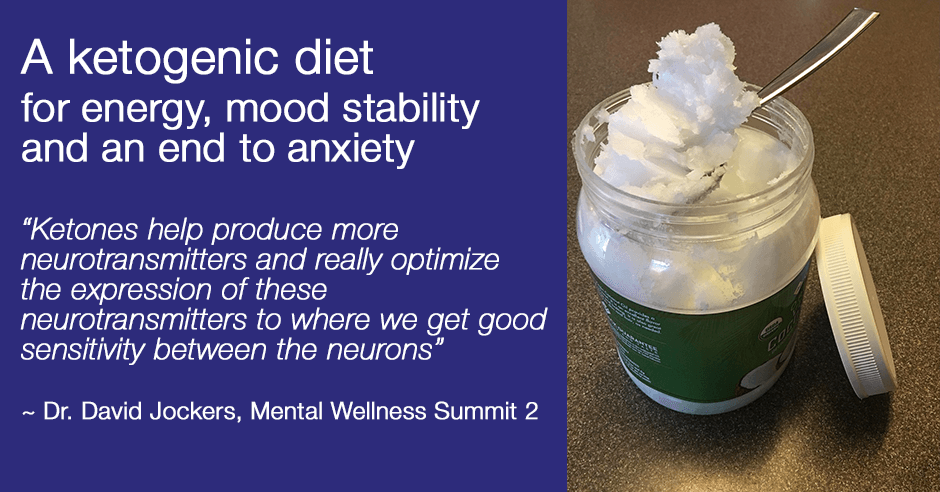
A ketogenic diet for energy, mood stability and an end to anxiety

September 21, 2017 By Trudy Scott 20 Comments

Dr. David Jockers, is interviewed on the topic of the ketogenic diet on the Mental Wellness Summit 2, which airs online September 25 – October 2, 2017. The title of his interview is “Ketogenesis for Energy Stability” but I feel it could be called “Ketogenesis for Energy, Mood Stability and an end to Anxiety.” It’s a brilliant interview and he starts by sharing how the brain can use ketones and not only sugar: 

We know that about 2/3 of the brain energy can be produced by ketones. We used to think that basically the brain depended upon sugar as its only energy source. And it does need a small amount of sugar, and that’s why it’s so important we have to have a certain level of blood glucose. However, as we get keto-adapted, when we start to utilize ketones as an energy source, the brain gets much more effective and efficient, and it needs less of the sugar. 

And that’s important because sugar produces a lot more metabolic waste. And so when the brain is using ketones, there is going to be less free radical damage and what we call oxidative stress in the brain, so less damage being associated with the various neurons in the brain therefore better connection, better communication.

He shares that ketones are epigenetic influencers and improve neuron sensitivity thereby improving neurotransmitter production:

Ketones act to induce healthy genetic expression. They’re epigenetic influencers where they actually influence the brain to promote more BDNF (brain derived neurotrophic growth factor), which helps grow more neurons and more synapses (little gaps between the neurons). They help produce more neurotransmitters and really optimize the expression of these neurotransmitters to where we get good sensitivity between the neurons.

So when the neurons secrete serotonin, the next neuron is able to actually connect with that very easily and realize “hey, this is the message that we need to get across.”

Dr. Jockers then goes into the relationship between GABA and glutamate and how the ketogenic diet improves the ability of glutamate converting into GABA:

There is a relationship between glutamate, which is an excitatory neurotransmitter in the brain, and GABA, which is an inhibitory neurotransmitter. Glutamate naturally converts into GABA when certain nutrients are present – like magnesium and vitamin B6 – along with a properly working GAD enzyme.

Now, when we have ketones present, they have been shown to improve the ability to convert glutamate into GABA.

Individuals with anxiety or obsessive compulsive [disorder] often have excessive amounts of glutamate, which can cause too much excitation in the brain and something called excitotoxicity that damages a whole bunch of different neurons, and causes massive neuronal death in parts of the brain. It can lead to symptoms like anxiety, headaches, migraines and seizures. The ketogenic diet has been shown in many studies to be a very powerful remedy for seizure disorders like epilepsy. That’s where this neuropharmacology of the ketogenic diet was analyzed in detail where they came up with the understanding that it impacts this glutamate to GABA conversion.

When we have adequate amounts of GABA and this proper relationship of glutamate to GABA, we feel very emotionally balanced and calm. We are able to fall asleep well. We have less pain in our body, and less susceptibility to headaches. In general, we just feel very emotionally balanced, and that’s what we’re going for.

Ketones are a huge help when it comes to that. When you’re in a state of ketosis, your natural feeling should be that you just feel awesome. You feel like a high performer. You feel at peace and you feel calm. That’s a sign that you’re in ketosis. If you are on a low carb ketogenic diet but you’re noticing irritability, anxiety and headaches, you’re actually not using the ketones. Your body is not actually keto-adapted. Instead, you’re in a hypoglycemic mode where your blood sugar is too low. You’re not using the ketones, and you’re getting exitotoxicity in your brain.

He goes on to share what a ketogenic diet should look like:

Avocados, coconut oil, coconut butter, coconut flakes, coconut milk, grass-fed butter, so butter or ghee (which is clarified butter from grass-fed cows) olives, olive oil. You want at least one of those in every single meal and you want a lot of it in every single meal.

Dr. Jockers shares about how much protein to eat, what proteins to eat, what fruits and vegetables and how much to eat, how he cycles in and out of ketosis, how he uses intermittent fasting, his favorite supplements to support ketosis (magnesium threonate is one of them), his favorite adrenal adaptogens and much more.

I hope you can us join on The Mental Wellness Summit 2 summit  to hear Dr. Jockers and other excellent speakers.

I know they are referring to medications but I find it quite funny that the hosts say the “magic pill” solution is not the answer. As you’ll hear in my interview, the dangers of benzodiazepines and why GABA is a more effective option for anxiety, I believe that GABA (and tryptophan and the other amino acids) are truly “magic pill” solutions that help so many seeking relief while they dig deeper for other contributing root causes and start to make dietary changes, whether it’s switching to real whole foods, quitting gluten, removing all grains or implementing a ketogenic diet.

Registration details are here

And let us know if you’d like to learn more about the ketogenic diet.

Also let us know how the ketogenic diet has helped you.

Filed Under: Events Tagged With: anxiety, calming, Dr. David Jockers, GABA, glutamate, Ketogenic diet, ketones, neurotransmitters

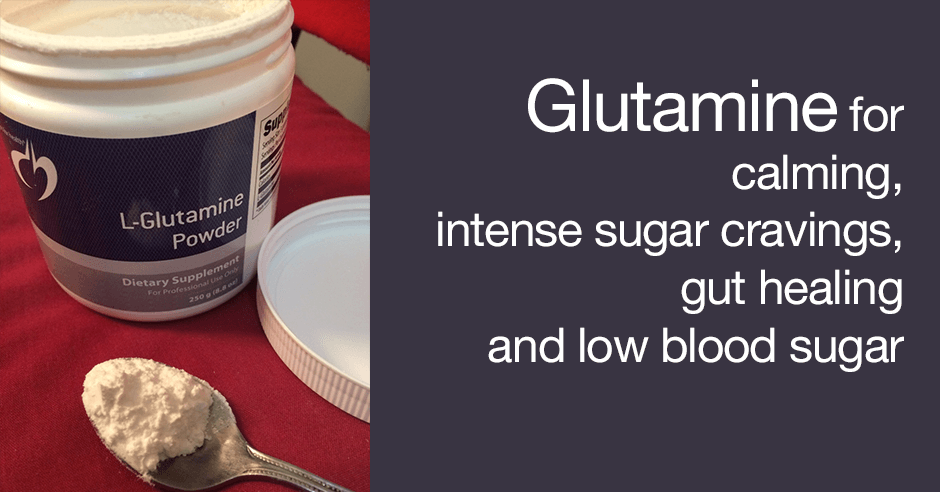
Glutamine for calming, intense sugar cravings, gut healing and low blood sugar

September 13, 2017 By Trudy Scott 29 Comments

Today I’m reviewing glutamine for the calming properties and to also share how glutamine helps reduce intense sugar cravings, helps with gut healing and prevents low blood sugar (which can actually cause anxiety and panic attacks).

I’m also sharing some additional resources for you on glutamine.

Here are all the symptoms we see with low blood sugar:

  • Crave sugar, starch or alcohol any time during the day
  • Irritable, shaky, headachey – especially if going too long between meals
  • Intense cravings for sweets
  • Lightheaded if meals are missed
  • Eating relieves fatigue
  • Agitated, easily upset
  • Nervous, anxious, panic attacks

Together with low serotonin and low GABA, addressing low blood sugar is one of the most effective approach I use with clients to help ease anxiety.   We achieve this with the use of glutamine and by controlling blood sugar by starting the day with a breakfast that includes quality animal protein.

Glutamine also helps eliminate sugar cravings and the strong desire for something sweet when opened directly on to the tongue. This blog and video explains it all: Glutamine for low blood sugar and calming effects

watch this video to hear how powerful glutamine was for Nicole – she saw results in around 5 minutes. I really like to get testimonials like this because when I talk about the profound and quick effects of the amazing amino acids it almost sounds too good to be true! But in this case (and the majority of cases), it really is true!

Nicole says “I get irritable, I get shaky and I get to the point that if I don’t get food NOW I think I’m going to hurt something!”

She tried the glutamine and in under 5 minutes she went from that feeling to: “I’m ok. I feel happy, I feel calm, I feel I can make it longer without needing food right away.”

She finished up by saying “I’m impressed at how well that worked for me”

When I mentioned I was working on this blog (on facebook) I had plenty of questions about this sugar craving benefit we see with glutamine. Keep in mind that low blood sugar is just ONE of the root causes of sugar cravings and glutamine will only work if the cravings are driven by low blood sugar. The way to figure it out is to do the amino acid mood questionnaire

Here is a simple way to help you figure it out:

  • if you have to eat sugar when you haven’t eaten in awhile it’s likely low blood sugar and glutamine on the tongue stops the sugar desire on the spot
  • if you stress-eat your sugar cravings are likely due to low GABA, and GABA will stop the stress-eating and calm you down
  • if you eat sugar or carbs to feel happy (and especially from late afternoon onwards) then your sugar cravings are likely due to low serotonin, and tryptophan stops the cravings and boosts mood and reduces anxiety
  • if you eat sugar for an energy boost then it’s likely due to low catecholamines and tyrosine will stop those cravings and give you a mood and energy boost
  • if you are a comfort-eater then it’s likely due to low endorphins and DPA will stop that “I deserve-it-reward-eating” and also give you a hug-like mood boost

When I asked for feedback one person felt glutamine made her depressed. This was new to me but I never say never and suggested she look at what else was in the product she used. I had one client feel more anxious on glutamine and it was due to one of the fillers.

Glutamine converts to GABA in most people and this is another way it helps calm you. For some people it converts to too much glutamate and can be a bit too stimulating. I’ll have these people use less or only use it during the day or not use it all. As with all nutrients used as supplements there is no one size fits all.

Dr. Josh Axe shares that glutamine is critical for any program designed to heal leaky gut and I write about this in this blog: Glutamine for healing a leaky gut

as a functional amino acid with multiple key physiological roles, glutamine holds great promise in protecting the gut from atrophy and injury under various stress conditions in mammals and other animals.

Here are some of the actual glutamine products I recommend and use with clients:

  • Pure Encapsulations L-Glutamine 500mg:  L-glutamine (free-form) 500 mg, vitamin C (as ascorbyl palmitate) 5 mg. The capsules can be swallowed or the capsule can be opened on to the tongue
  • Designs for Health Glutamine Powder: This is a powdered glutamine that you can use right on your tongue or even mixed in water. The taste is quite pleasant.

As with all the amino acids, when using glutamine:

  • Start low (500mg is a typical starting dose) and increase as needed.
  • Do a trial to determine if the anxiety and sugar cravings are in fact due to low blood sugar. I always do this with clients before starting any amino acid. Be sure to read how to do an amino acid trial. It has the amino acid questionnaire, the precautions and information on how to use targeted individual amino acids.
  • Take between meals and away from protein for the best effects

The blog has many other posts on glutamine – simply use the “search” function to find them.

This blog post is part of the series of amino acid product reviews:

  • Tryptophan for low serotonin (worry-in-the-head anxiety)
  • GABA for low GABA symptoms (physical anxiety)
  • DPA for weepiness, pain and comfort and reward eating
  • Tyrosine for focus, motivation, energy, a good mood and possibly even anxiety

The resources in this blog and my other articles are intended to be used in conjunction with my book: The Antianxiety Food Solution – How the Foods You Eat Can Help You Calm Your Anxious Mind, Improve Your Mood, and End Cravings. If you do not have my book I highly recommend getting it and reading it before jumping in and taking the amino acid supplements:

There is a complete chapter on the amino acids and one for pyroluria, plus information on real whole food, sugar and blood sugar, gluten, digestion and much more.

You can find the glutamine products and the others I recommend here on this blog: The Antianxiety Food Solution Amino Acid and Pyroluria Supplements


I’d love to hear if glutamine has worked for you and how it’s helped? With low blood sugar symptoms and anxiety? For intense sugar cravings? For gut healing?

If you have questions please post them below or on the supplements blog

Filed Under: Glutamine Tagged With: anxiety, calming, GABA, glutamine, gut healing, intense sugar cravings, low blood sugar, physical anxiety

  • « Go to Previous Page
  • Page 1
  • Page 2
  • Page 3
  • Page 4
  • Page 5
  • Go to Next Page »

Primary Sidebar

NEW! GABA QuickStart Homestudy (with special intro pricing)

gaba quickstart homestudy

Free Report

9 Great Questions Women Ask about Food, Mood and their Health

You'll also receive a complimentary subscription to my ezine "Food, Mood and Gal Stuff"


Connect with me

Popular Posts

  • Amino Acids Mood Questionnaire from The Antianxiety Food Solution
  • The Antianxiety Food Solution Amino Acid and Pyroluria Supplements
  • Pyroluria Questionnaire from The Antianxiety Food Solution
  • Collagen and gelatin lower serotonin: does this increase your anxiety and depression?
  • Tryptophan for the worry-in-your-head and ruminating type of anxiety
  • GABA for the physical-tension and stiff-and-tense-muscles type of anxiety
  • The Antianxiety Food Solution by Trudy Scott
  • Seriphos Original Formula is back: the best product for anxiety and insomnia caused by high cortisol
  • Am I an anxious introvert because of low zinc and vitamin B6? My response to Huffington Post blog
  • Vagus nerve rehab with GABA, breathing, humming, gargling and key nutrients

Recent Posts

  • What do I use instead of Seriphos to help lower high cortisol that is affecting my sleep and making me anxious at night?
  • BeSerene™ GABA/theanine cream eases severe muscle tension in her neck/shoulders, prevents her bad headaches and quells her anxiety
  • How the correct approach, dose and sublingual use of GABA can be calming and not cause a flushed and itchy face and neck
  • The amino acid glutamine improves low mood by addressing gut health, and it has calming effects too
  • Flight anxiety with heightened breath, physical tension and also fearing the worst (the role of low GABA and low serotonin)

Categories

  • 5-HTP
  • AB575
  • Addiction
  • ADHD
  • Adrenals
  • Alcohol
  • Allergies
  • Alzheimer's disease
  • Amino Acids
  • Anger
  • Antianxiety
  • Antianxiety Food Solution
  • Antidepressants
  • Anxiety
  • Anxiety and panic
  • Autism
  • Autoimmunity
  • benzodiazapines
  • Bipolar disorder
  • Books
  • Caffeine
  • Cancer
  • Candida
  • Children/Teens
  • Collagen
  • Cooking equipment
  • Coronavirus/COVID-19
  • Cravings
  • Depression
  • Detoxification
  • Diabetes
  • Diet
  • DPA/DLPA
  • Drugs
  • EFT/Tapping
  • EMF
  • EMFs
  • Emotional Eating
  • Endorphins
  • Environment
  • Essential oils
  • Events
  • Exercise
  • Fear
  • Fear of public speaking
  • Fertility and Pregnancy
  • Fish
  • Food
  • Food and mood
  • Functional neurology
  • GABA
  • Gene polymorphisms
  • General Health
  • Giving
  • Giving back
  • Glutamine
  • Gluten
  • GMOs
  • Gratitude
  • Gut health
  • Heart health/hypertension
  • Histamine
  • Hormone
  • Hyperparathyroidism
  • Hypoglycemia
  • Immune system
  • Inflammation
  • Insomnia
  • Inspiration
  • Introversion
  • Joy and happiness
  • Ketogenic diet
  • Lithium orotate
  • Looking awesome
  • Lyme disease and co-infections
  • MCAS/histamine
  • Medication
  • Men's health
  • Mental health
  • Mercury
  • Migraine
  • Mold
  • Movie
  • MTHFR
  • Multiple sclerosis
  • Music
  • NANP
  • Nature
  • Nutritional Psychiatry
  • OCD
  • Osteoporosis
  • Oxalates
  • Oxytocin
  • Pain
  • Paleo
  • Parasites
  • Parkinson’s disease
  • PCOS
  • People
  • PMS
  • Postpartum
  • PTSD/Trauma
  • Pyroluria
  • Questionnaires
  • Real whole food
  • Recipes
  • Research
  • Schizophrenia
  • serotonin
  • SIBO
  • Sleep
  • Special diets
  • Sports nutrition
  • Stress
  • Sugar addiction
  • Sugar and mood
  • Supplements
  • Teens
  • Testimonials
  • Testing
  • The Anxiety Summit
  • The Anxiety Summit 2
  • The Anxiety Summit 3
  • The Anxiety Summit 4
  • The Anxiety Summit 5
  • The Anxiety Summit 6
  • Thyroid
  • Thyroid health
  • Toxins
  • Tryptophan
  • Tyrosine
  • Uncategorized
  • Vegan/vegetarian
  • Women's health
  • Yoga

Archives

  • October 2025
  • September 2025
  • August 2025
  • July 2025
  • June 2025
  • May 2025
  • April 2025
  • March 2025
  • February 2025
  • January 2025
  • November 2024
  • October 2024
  • September 2024
  • August 2024
  • July 2024
  • June 2024
  • May 2024
  • April 2024
  • March 2024
  • February 2024
  • January 2024
  • December 2023
  • November 2023
  • October 2023
  • September 2023
  • August 2023
  • July 2023
  • June 2023
  • May 2023
  • April 2023
  • March 2023
  • February 2023
  • January 2023
  • December 2022
  • November 2022
  • October 2022
  • September 2022
  • August 2022
  • July 2022
  • June 2022
  • May 2022
  • April 2022
  • March 2022
  • February 2022
  • January 2022
  • December 2021
  • November 2021
  • October 2021
  • September 2021
  • August 2021
  • July 2021
  • June 2021
  • May 2021
  • April 2021
  • March 2021
  • February 2021
  • January 2021
  • December 2020
  • November 2020
  • October 2020
  • September 2020
  • August 2020
  • July 2020
  • June 2020
  • May 2020
  • April 2020
  • March 2020
  • February 2020
  • January 2020
  • December 2019
  • November 2019
  • October 2019
  • September 2019
  • August 2019
  • July 2019
  • June 2019
  • May 2019
  • April 2019
  • March 2019
  • February 2019
  • January 2019
  • December 2018
  • November 2018
  • October 2018
  • September 2018
  • August 2018
  • July 2018
  • June 2018
  • May 2018
  • April 2018
  • March 2018
  • February 2018
  • January 2018
  • December 2017
  • November 2017
  • October 2017
  • September 2017
  • August 2017
  • July 2017
  • June 2017
  • May 2017
  • April 2017
  • March 2017
  • February 2017
  • January 2017
  • December 2016
  • November 2016
  • October 2016
  • September 2016
  • August 2016
  • July 2016
  • June 2016
  • May 2016
  • April 2016
  • March 2016
  • February 2016
  • January 2016
  • December 2015
  • November 2015
  • October 2015
  • September 2015
  • August 2015
  • July 2015
  • June 2015
  • May 2015
  • April 2015
  • March 2015
  • February 2015
  • January 2015
  • December 2014
  • November 2014
  • October 2014
  • September 2014
  • August 2014
  • July 2014
  • June 2014
  • May 2014
  • April 2014
  • March 2014
  • February 2014
  • January 2014
  • December 2013
  • November 2013
  • October 2013
  • September 2013
  • August 2013
  • July 2013
  • June 2013
  • May 2013
  • April 2013
  • March 2013
  • February 2013
  • January 2013
  • December 2012
  • November 2012
  • October 2012
  • August 2012
  • July 2012
  • June 2012
  • May 2012
  • April 2012
  • March 2012
  • February 2012
  • January 2012
  • December 2011
  • November 2011
  • October 2011
  • September 2011
  • August 2011
  • July 2011
  • June 2011
  • May 2011
  • April 2011
  • March 2011
  • February 2011
  • January 2011
  • December 2010
  • October 2010
  • September 2010
  • July 2010
  • May 2010
  • April 2010
  • March 2010
  • February 2010
  • January 2010
  • November 2009

Share the knowledge!

The above statements have not been evaluated by the Food and Drug Administration. Products listed in this website are not intended to diagnose, treat, cure or prevent any disease.

The information provided on this site is for informational and educational purposes only and is not intended as a substitute for advice from your physician or other health care professional. You should consult with a healthcare professional before starting or modifying any diet, exercise, or supplementation program, before taking or stopping any medication, or if you have or suspect you may have a health problem.


Copyright © 2026 Trudy Scott. All Rights Reserved. | Privacy | Terms and Conditions | Refund Policy | Medical Disclaimer

Free Report

9 Great Questions Women Ask about Food, Mood and their Health

You’ll also receive a complimentary subscription to my ezine “Food, Mood and Gal Stuff”