• Skip to primary navigation
  • Skip to main content
  • Skip to primary sidebar

everywomanover29 blog

Food, Mood and Women's Health – Be your healthiest, look and feel great!

  • Blog
  • About
  • Services
  • Store
  • Resources
  • Testimonials
  • The Book
  • Contact
  • Search this site

brain health

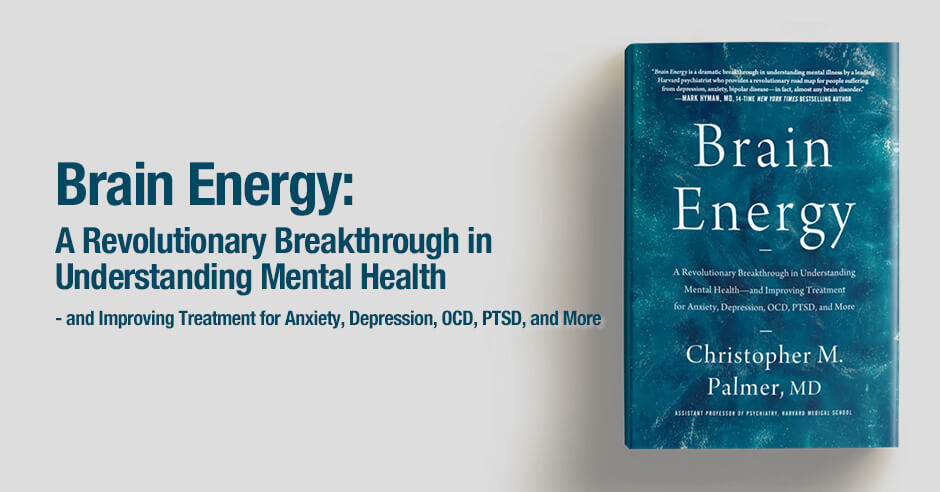
Brain Energy: A Revolutionary Breakthrough in Understanding Mental Health – and Improving Treatment for Anxiety, Depression, OCD, PTSD, and More

November 25, 2022 By Trudy Scott 2 Comments

brain energy book review

This much anticipated book by Christopher M. Palmer MD, just released last week… here is the official blurb:

This is the book that will forever change the way we understand and treat mental health. If you or someone you love is affected by mental illness, it might change your life.

We are in the midst of a global mental health crisis, and mental illnesses are on the rise. But what causes mental illness? And why are mental health problems so hard to treat? Drawing on decades of research, Harvard psychiatrist Dr. Chris Palmer outlines a revolutionary new understanding that for the first time unites our existing knowledge about mental illness within a single framework: Mental disorders are metabolic disorders of the brain.

Brain Energy explains this new understanding of mental illness in detail, from symptoms and risk factors to what is happening in brain cells.

Palmer also sheds light on the new treatment pathways this theory opens up – which apply to all mental disorders, including anxiety, depression, ADHD, alcoholism, eating disorders, bipolar disorder, autism, and even schizophrenia.

Brain Energy pairs cutting-edge science with practical advice and strategies to help people reclaim their mental health.

This groundbreaking book reveals:

  • Why classifying mental disorders as “separate” conditions is misleading
  • The clear connections between mental illness and disorders linked to metabolism, including diabetes, heart attacks, strokes, pain disorders, obesity, Alzheimer’s disease, and epilepsy
  • The link between metabolism and every factor known to play a role in mental health,
  • including genetics, inflammation, hormones, neurotransmitters, sleep, stress, and trauma
  • The evidence that current mental health treatments, including both medications and therapies, likely work by affecting metabolism
  • New treatments available today that readers can use to promote long-term healing

Palmer puts together the pieces of the mental illness puzzle to provide answers and offer hope. Brain Energy will transform the field of mental health, and the lives of countless people around the world.

I’ve been following Dr. Palmer for a few years and first blogged about his work and research here in 2018 before I knew much about ketogenic diets in mental health – Ketogenic diet: reductions in auditory hallucinations and delusions, better mood and energy, and weight loss

Here are some of the papers he has published in the last few years:

  • Ketogenic diet as a metabolic treatment for mental illness

Psychiatric conditions, such as schizophrenia, depression, bipolar disorder and binge eating disorder, are neurometabolic diseases that share several common mechanistic biopathologies. These include glucose hypometabolism, neurotransmitter imbalances, oxidative stress and inflammation. There is strong evidence that ketogenic diets can address these four fundamental diseases, and now complementary clinical evidence that ketogenic diets can improve the patients’ symptoms.

  • Ketogenic Therapy in Serious Mental Illness: Emerging Evidence (this is a review paper and discusses his cases (as mentioned in the above blog post) and this incredible outcome:

In 2009, a 70-year-old woman with chronic schizophrenia since her teens was reported to have improved significantly after starting a ketogenic diet for weight loss. Within 8 days of starting the diet, she reported no hallucinations and improved energy. After 1 year, she lost 5 kg and remained free of hallucinations.

And this update about the same woman:

At age 82, this woman who suffered from treatment-resistant schizophrenia for 53 years remained alive and well on the ketogenic diet. She was off all psychotropic medications for 11 years, including antipsychotic medications, and remained free of psychotic symptoms. She lost 150 pounds over this 12-year period. Additionally, she no longer needed a court-appointed guardian or Program of Assertive Community Treatment (PACT) team and was thriving independently.

  • Ketogenic diet for schizophrenia: clinical implication

Recent transcriptomic, proteomic and metabolomic evidence from postmortem prefrontal cortical samples and in-vivo NMR spectroscopy results support the hypothesis that there is a bioenergetics dysfunction characterized by abnormal glucose handling and mitochondrial dysfunctions resulting in impaired synaptic communication in the brain of people with schizophrenia.

Ketogenic diet, which provides alternative fuel to glucose for bioenergetic processes in the brain, normalizes schizophrenia-like behaviours in translationally relevant pharmacological and genetic mouse models. Furthermore, recent case studies demonstrate that ketogenic diets produce improvement in psychiatric symptoms as well as metabolic dysfunctions and body composition in patients with schizophrenia.

You can read more about Dr. Palmer and the book here and purchase your copy on Amazon here (my Amazon link).

Stay tuned for my in-depth book review.

Until then feel free to share your feedback/review when you purchase and read your copy. And do share if you’ve had success with a ketogenic diet and any of the other approaches he addresses.

If you have questions please share them here too.
Filed Under: Books, Mental health Tagged With: book review, brain energy, brain health, Christopher M. Palmer MD

30 Experts Share Their Best Advice for Brain Health by Jordan Fallis

November 24, 2017 By Trudy Scott 4 Comments

Jordan Fallis of Optimal Living Dynamics reached out to some of his favorite cutting-edge health practitioners and researchers and asked them one question:

What is the one piece of advice you would offer to people who want to improve and optimize their brain health?

I was thrilled to be one of the people he reached out to. This is my response:

This a tough question and I can think of many things such as eating sardines or other oily fish for the omega-3 benefits; eating pumpkin seeds as a great source of zinc and tryptophan (both great for anxiety and depression); dumping the bread and cookies due to the inflammatory effects of gluten on the brain and body; and eating grass-fed red meat as a great source of zinc, omega-3s and iron, all of which are needed for brain health. 

But if I had to pick only one piece of advice, I would say to optimize gut health because of the very strong gut-brain connection. This means healing a leaky gut with an amino acid like glutamine; improving the microbiome by eating fermented foods like sauerkraut; improving protein digestion with enzymes; cooking and eating quality food at home; chewing our food slowly, and addressing issues like candida, parasites, small intestinal bacterial overgrowth and dysbiosis.

In addition to the above, I always trial the use of targeted individual amino acids such as calming GABA, mood-boosting tryptophan and DPA, and addressing nutritional deficiencies with nutrients like zinc, vitamin B6, iron, magnesium and so on. You may need to also address Lyme disease, mold, heavy metals and many of the other possible biochemical causes of anxiety and depression.

Here are some snippets from a few of my favorite quotes:

  • Kelly Brogan: the brain “does not understand modern chemicals, processed foods, and industrial pollutants. It also doesn’t understand chronic stress, poor sleep, minimal movement, and indoor living”
  • Hyla Cass: “don’t follow a low-fat diet! Make sure to get sufficient fats and protein. Avoid trans fats, but eat healthy fats like omega 3’s found in fatty fish, and medium chain triglycerides from coconut oil”
  • Sayer Ji: “Turmeric is one of the most remarkable neuroprotective and neurorestorative agents yet identified”
  • Max Lugavere: “…there’s simply nothing like exercise for the brain.”
  • Gwen Olson: “Do your own due diligence before taking any pharmaceuticals. Put the name of the drug into a search engine followed by the words ‘controversy’ and ‘side effects’”
  • James Greenblatt: “As vitamins and minerals serve as co-factors in almost every enzymatic reaction in the brain, it is important to assess for adequate nutrient levels regularly to ensure that you are optimizing brain health”

You can read all the inspiring and valuable responses on Jordan’s blog: 30 Experts Share Their Best Advice for Brain Health. You’ll see some common themes: stress, the gut, exercise, real food, sleep and nutrients.

When I asked Jordan how he knew of me and my work he shared this:

I found you through Sean Croxton’s Depression Sessions. When that first came out, I was in the middle of my journey, trying to restore my own mental health. It was great timing. So I immediately purchased it and watched all the videos for more solutions.

I already knew about pyroluria, as I had read Dr. William Walsh’s book Nutrient Power at that time. But it was great to see you talk about it and bring it to light! And I believe I was taking just regular B6 before your talk. So then I switched to P-5-P. I continue to take P-5-P and zinc picolinate regularly.

I’m so thankful I’m feeling better and have my life back, so I’m going to work really hard to share everything that helped me. I just feel like I need to do that 🙂

I really appreciate that Jordan wants to share everything that has helped him and this article is a perfect way to do this.

Here are some additional resources for you on pyroluria, the social anxiety condition he mentions above:

  • Pyroluria prevalence and associated conditions
  • A snippet from the interview I did with Sean: Can Social Anxiety Be Reversed with Nutrition?
  • Some information from my interview with Dr. William Walsh on a prior Anxiety Summit: Is My Anxiety and Depression from a Methylation, Pyrrole, or Copper-Zinc Imbalance?

I hope you enjoy these resources from me, Jordan and all the experts he reached out to!

I’d love to hear what you have found to be the best brain advice you have received and implemented?  


Filed Under: Pyroluria Tagged With: anxiety, brain, brain health, copper, GABA, Jord, pyroluria, social anxiety, tryptophan, zinc

The Anxiety Summit: wise words on MS, oxytocin, red meat, marijuana, mercury

June 10, 2016 By Trudy Scott 10 Comments

fb_red_Anxiety4

We’re in the midst of season 4 of The Anxiety Summit www.theanxietysummit.com and here are wise words of wisdom from some of our amazing speakers on MS, oxytocin, red meat, marijuana, mercury and more.

If you have joined the summit and are loving it, this serves as a nice recap, a reminder if you missed a talk and inspiration to stay tuned in for some of the later interviews. And making sure you know that each speaker has a blog with snippets and many additional resources.

And if you’ve recently joined my community for the summit a VERY big welcome!

If you have not yet signed up I hope these wise words inspire you to join us!

Here are some snippets from some of the interviews.

Multiple sclerosis and anxiety: The Wahls Protocol

Dr. Terry Wahls shares how her MS was a gift:

And it all needs to happen this way Trudy.  I had to get that disabled.  I had to be on the verge of utter catastrophe to begin to feel the effects of cognitive decline to do all this work and then feel the effects of all this healing that happens when you provide a healthy habitat for the human ecosystem and all this repair happens.  If this hadn’t of have happened I’d still be a conventional medicine doc thinking the latest drugs out of the New England Journal of Medicine were the way to go as opposed to seeing the gospel of food and sleep and movement and stress reduction.

The Link Between Low Cholesterol and Low Oxytocin

The Pitocin/synthetic discussion oxytocin with Dr. Kurt Woeller was fascinating:

And there’s a theory … that the Pitocin, which is synthetic oxytocin, which is given to women who are not naturally going into labor, it’s meant to action speed labor up. Pitocin being synthetic oxytocin may short circuit in some susceptible kids the natural production of oxytocin, therefore slowing down or turning off those areas in the brain that are normally being developed at that time, with regards to socialization.

Gluten and anxiety: the testing conundrum solution

Dr. Tom O’Bryan’s explanation of the limited gluten sensitivity testing that most people have done:

what happens when people have one of those peptides that the immune system is fighting that’s not the 33 [alpha-gliadin] and you do a blood test for gluten sensitivity.  If your doctor orders the common blood test for gluten sensitivity and it looks for alpha-gliadin and it comes back negative and your doctors says you’re fine eating wheat.  See, here’s the blood test.  Well you can get a false negative meaning it says there’s no problem when there really is because your body’s fighting other peptides of wheat.

Nutrients that Fuel Brain Power and Reduce Anxiety

Dr. Drew Ramsey talks about zinc and animal protein:

Zinc is a mineral and minerals tend to be more absorbable in animal forms.  I think a lot of people are very confused about meat and seafood and often intimidated and scared.  And then we’ve had this message to go plant based and even vegan which is not a diet that is healthy for the brain.

Dr. Hyla Cass, integrative psychiatrist covers marijuana and anxiety later in the summit:

very often people who have been smoking marijuana for a while – when they go off it they go through serious withdrawal – anxiety, insomnia, feeling really very bad. Very much like we see in movies – we understand what it’s like getting off heroin when people go through withdrawal. Very similar, it really looks similar in appearance. Not everyone does that but common enough.

Dr. John Dempster, co-host of the Mental Wellness Summit discusses mercury as a neurotoxin in his interview later in the summit

So I kind of want to shed some light on some of these areas and how it can affect anxiety directly. One of the big areas is mercury itself is a neurotoxin. So how does that impact our biochemistry and our physiology? Well what it’s going to do it’s going to start to disrupt on an endocrine and a neurotransmitter level some of our pathways. And one of the big pathways is actually the glutamate connection and the glutamate pathway. And glutamate is something that’s known as an excitatory neurotransmitter and this is something that if we have too much of it or it’s not being reuptake properly in our synapses we start to exhibit different types of symptoms of anxiety. And of course that’s just one possible trigger for anxiety.

You can see a list of all the speakers and topics here on the master speaker blog.

You can sign up here: season 4 of The Anxiety Summit www.theanxietysummit.com

If you missed any, not to worry, we’ve decided to do an encore day with ALL the speakers. We don’t want you feeling stressed or anxious about missing out – not on a summit on anxiety!

Filed Under: Events, The Anxiety Summit 4 Tagged With: anxiety, brain health, cholesterol, drew ramsey, gluten, Hyla Cass, John Dempster, Kurt Woeller, marijuana, mercury, multiple sclerosis, oxytocin, terry wahls, the anxiety summit, tom o’bryan, Trudy Scott

Primary Sidebar

NEW! GABA QuickStart Homestudy (with special intro pricing)

gaba quickstart homestudy

Free Report

9 Great Questions Women Ask about Food, Mood and their Health

You'll also receive a complimentary subscription to my ezine "Food, Mood and Gal Stuff"


Connect with me

Popular Posts

  • Amino Acids Mood Questionnaire from The Antianxiety Food Solution
  • The Antianxiety Food Solution Amino Acid and Pyroluria Supplements
  • Pyroluria Questionnaire from The Antianxiety Food Solution
  • Collagen and gelatin lower serotonin: does this increase your anxiety and depression?
  • Tryptophan for the worry-in-your-head and ruminating type of anxiety
  • GABA for the physical-tension and stiff-and-tense-muscles type of anxiety
  • The Antianxiety Food Solution by Trudy Scott
  • Seriphos Original Formula is back: the best product for anxiety and insomnia caused by high cortisol
  • Am I an anxious introvert because of low zinc and vitamin B6? My response to Huffington Post blog
  • Vagus nerve rehab with GABA, breathing, humming, gargling and key nutrients

Recent Posts

  • What do I use instead of Seriphos to help lower high cortisol that is affecting my sleep and making me anxious at night?
  • BeSerene™ GABA/theanine cream eases severe muscle tension in her neck/shoulders, prevents her bad headaches and quells her anxiety
  • How the correct approach, dose and sublingual use of GABA can be calming and not cause a flushed and itchy face and neck
  • The amino acid glutamine improves low mood by addressing gut health, and it has calming effects too
  • Flight anxiety with heightened breath, physical tension and also fearing the worst (the role of low GABA and low serotonin)

Categories

  • 5-HTP
  • AB575
  • Addiction
  • ADHD
  • Adrenals
  • Alcohol
  • Allergies
  • Alzheimer's disease
  • Amino Acids
  • Anger
  • Antianxiety
  • Antianxiety Food Solution
  • Antidepressants
  • Anxiety
  • Anxiety and panic
  • Autism
  • Autoimmunity
  • benzodiazapines
  • Bipolar disorder
  • Books
  • Caffeine
  • Cancer
  • Candida
  • Children/Teens
  • Collagen
  • Cooking equipment
  • Coronavirus/COVID-19
  • Cravings
  • Depression
  • Detoxification
  • Diabetes
  • Diet
  • DPA/DLPA
  • Drugs
  • EFT/Tapping
  • EMF
  • EMFs
  • Emotional Eating
  • Endorphins
  • Environment
  • Essential oils
  • Events
  • Exercise
  • Fear
  • Fear of public speaking
  • Fertility and Pregnancy
  • Fish
  • Food
  • Food and mood
  • Functional neurology
  • GABA
  • Gene polymorphisms
  • General Health
  • Giving
  • Giving back
  • Glutamine
  • Gluten
  • GMOs
  • Gratitude
  • Gut health
  • Heart health/hypertension
  • Histamine
  • Hormone
  • Hyperparathyroidism
  • Hypoglycemia
  • Immune system
  • Inflammation
  • Insomnia
  • Inspiration
  • Introversion
  • Joy and happiness
  • Ketogenic diet
  • Lithium orotate
  • Looking awesome
  • Lyme disease and co-infections
  • MCAS/histamine
  • Medication
  • Men's health
  • Mental health
  • Mercury
  • Migraine
  • Mold
  • Movie
  • MTHFR
  • Multiple sclerosis
  • Music
  • NANP
  • Nature
  • Nutritional Psychiatry
  • OCD
  • Osteoporosis
  • Oxalates
  • Oxytocin
  • Pain
  • Paleo
  • Parasites
  • Parkinson’s disease
  • PCOS
  • People
  • PMS
  • Postpartum
  • PTSD/Trauma
  • Pyroluria
  • Questionnaires
  • Real whole food
  • Recipes
  • Research
  • Schizophrenia
  • serotonin
  • SIBO
  • Sleep
  • Special diets
  • Sports nutrition
  • Stress
  • Sugar addiction
  • Sugar and mood
  • Supplements
  • Teens
  • Testimonials
  • Testing
  • The Anxiety Summit
  • The Anxiety Summit 2
  • The Anxiety Summit 3
  • The Anxiety Summit 4
  • The Anxiety Summit 5
  • The Anxiety Summit 6
  • Thyroid
  • Thyroid health
  • Toxins
  • Tryptophan
  • Tyrosine
  • Uncategorized
  • Vegan/vegetarian
  • Women's health
  • Yoga

Archives

  • October 2025
  • September 2025
  • August 2025
  • July 2025
  • June 2025
  • May 2025
  • April 2025
  • March 2025
  • February 2025
  • January 2025
  • November 2024
  • October 2024
  • September 2024
  • August 2024
  • July 2024
  • June 2024
  • May 2024
  • April 2024
  • March 2024
  • February 2024
  • January 2024
  • December 2023
  • November 2023
  • October 2023
  • September 2023
  • August 2023
  • July 2023
  • June 2023
  • May 2023
  • April 2023
  • March 2023
  • February 2023
  • January 2023
  • December 2022
  • November 2022
  • October 2022
  • September 2022
  • August 2022
  • July 2022
  • June 2022
  • May 2022
  • April 2022
  • March 2022
  • February 2022
  • January 2022
  • December 2021
  • November 2021
  • October 2021
  • September 2021
  • August 2021
  • July 2021
  • June 2021
  • May 2021
  • April 2021
  • March 2021
  • February 2021
  • January 2021
  • December 2020
  • November 2020
  • October 2020
  • September 2020
  • August 2020
  • July 2020
  • June 2020
  • May 2020
  • April 2020
  • March 2020
  • February 2020
  • January 2020
  • December 2019
  • November 2019
  • October 2019
  • September 2019
  • August 2019
  • July 2019
  • June 2019
  • May 2019
  • April 2019
  • March 2019
  • February 2019
  • January 2019
  • December 2018
  • November 2018
  • October 2018
  • September 2018
  • August 2018
  • July 2018
  • June 2018
  • May 2018
  • April 2018
  • March 2018
  • February 2018
  • January 2018
  • December 2017
  • November 2017
  • October 2017
  • September 2017
  • August 2017
  • July 2017
  • June 2017
  • May 2017
  • April 2017
  • March 2017
  • February 2017
  • January 2017
  • December 2016
  • November 2016
  • October 2016
  • September 2016
  • August 2016
  • July 2016
  • June 2016
  • May 2016
  • April 2016
  • March 2016
  • February 2016
  • January 2016
  • December 2015
  • November 2015
  • October 2015
  • September 2015
  • August 2015
  • July 2015
  • June 2015
  • May 2015
  • April 2015
  • March 2015
  • February 2015
  • January 2015
  • December 2014
  • November 2014
  • October 2014
  • September 2014
  • August 2014
  • July 2014
  • June 2014
  • May 2014
  • April 2014
  • March 2014
  • February 2014
  • January 2014
  • December 2013
  • November 2013
  • October 2013
  • September 2013
  • August 2013
  • July 2013
  • June 2013
  • May 2013
  • April 2013
  • March 2013
  • February 2013
  • January 2013
  • December 2012
  • November 2012
  • October 2012
  • August 2012
  • July 2012
  • June 2012
  • May 2012
  • April 2012
  • March 2012
  • February 2012
  • January 2012
  • December 2011
  • November 2011
  • October 2011
  • September 2011
  • August 2011
  • July 2011
  • June 2011
  • May 2011
  • April 2011
  • March 2011
  • February 2011
  • January 2011
  • December 2010
  • October 2010
  • September 2010
  • July 2010
  • May 2010
  • April 2010
  • March 2010
  • February 2010
  • January 2010
  • November 2009

Share the knowledge!

The above statements have not been evaluated by the Food and Drug Administration. Products listed in this website are not intended to diagnose, treat, cure or prevent any disease.

The information provided on this site is for informational and educational purposes only and is not intended as a substitute for advice from your physician or other health care professional. You should consult with a healthcare professional before starting or modifying any diet, exercise, or supplementation program, before taking or stopping any medication, or if you have or suspect you may have a health problem.


Copyright © 2026 Trudy Scott. All Rights Reserved. | Privacy | Terms and Conditions | Refund Policy | Medical Disclaimer

Free Report

9 Great Questions Women Ask about Food, Mood and their Health

You’ll also receive a complimentary subscription to my ezine “Food, Mood and Gal Stuff”