• Skip to primary navigation
  • Skip to main content
  • Skip to primary sidebar

everywomanover29 blog

Food, Mood and Women's Health – Be your healthiest, look and feel great!

  • Blog
  • About
  • Services
  • Store
  • Resources
  • Testimonials
  • The Book
  • Contact
  • Search this site

anxious

How do I taper tryptophan without withdrawal symptoms: a tight band around my head, brain zaps and agitated free-floating anxiety?

September 21, 2018 By Trudy Scott 43 Comments

I have not had any clients experience the need to taper or slowly wean their tryptophan dose or report tapering side-effects similar to those they experienced when tapering off an antidepressant. However, I recently had someone ask this question on the blog (and then had someone else ask a similar question) so I’m sharing these questions and my responses in the hope of gleaning some additional information (and educating you if this applies to you). I never say never and am always learning. I’m also very interested to know how common this is and what some of the underlying factors could be.

Here is the question that was asked by Lara (we’ll call her Lara) and slightly paraphrased for clarity:

I’ve been taking 1500 mg of tryptophan for 3 months, and it has helped a lot with sleep and depression. I dropped to 1000 mg about a week ago then 500mg just to see how I’d do without it. I didn’t think it was numbing my feelings, but I am experiencing a return of feeling good.

I’ve been on antidepressants before and I am feeling the same withdrawal effects as when I weaned off meds. This is exactly why I chose to not go back to pharmaceuticals. It was difficult to wean off. How do I taper tryptophan without experiencing withdrawal symptoms? Thank you for your valuable knowledge.

These are the kinds of questions I’d ask a client in this situation:

  • Was the 1500mg helping and which low serotonin symptoms were eased?
  • How did this change when you reduced to 1000mg and then reduced to 500mg? i.e. did the low serotonin symptoms come back?
  • Which antidepressant are you comparing these affects to? And how long ago did you wean off the antidepressant?
  • Which brand of tryptophan you are using? (I find Lidtke is the best quality)

Keep in mind that we always want to be sure it’s not a one-off situation. In order to be sure someone is observing mild adverse effects from a supplement I’ll often have my client stop it and then add it back to make sure. And sometimes more than once.

In this instance repeating the process may be a good idea i.e. going back to 1000mg and then 1500mg and then reducing again, carefully documenting in a food mood supplement log.

It turns out that Lara was using the Lidtke tryptophan and she was seeing wonderful benefits for her low serotonin symptoms with none of the typical SSRI side-effects:

the 1500mg before bed with a small carb helped me get to sleep and stay asleep. It also helped with anxiety and depression during day. I tend to be a worrier, have social anxiety, and get stuck with negative thoughts about myself and others. And have very little interest in life.

I was on Zoloft from 2005 – 2009. Got off of that and did Lexapro for only 6 months in 2012. The Zoloft was life changing for me but I did not like the side effects and being on an antidepressant for the rest of my life.

The tryptophan is superior to these SSRIs [selective serotonin reuptake inhibitors] – no sexual side effects, no weight gain, or anhedonia [inability to feel pleasure in normally pleasurable activities].

She describes how she reduced the tryptophan and how her withdrawal symptoms were similar to those she experienced when tapering off her SSRIs in the past:

The withdrawal effects were felt when dropping from 1500mg to 1000mg, to 500mg, then zero over 2 days and they lasted about 3 days. By the 4th day I was no longer feeling bad.

The symptoms are hard to explain – it felt like a tight band around my head, also brain zaps (this is a common SSRI withdrawal symptom many describe feeling in their head).

The worst of it was a deep agitated free-floating anxiety like you’re walking along the edge of a cliff and there’s a physical pain in your gut. Fortunately, it was only present from waking up till around 2pm.

These are questions I’d ask or wonder about

As I mentioned in the introduction, I have not had any clients experience the need to taper or slowly wean their tryptophan dose or report tapering side-effects similar to those they experienced when tapering off an antidepressant. But if this is an issue some individuals experience I’d like to know about it

I’d also like to know how long the tapering side-effects of tryptophan last and how severe the symptoms are. In Lara’s case the symptoms were pretty severe but fortunately they only lasted 3 days which is very much shorter than SSRI tapers.

There could be confounding factors and here are additional questions I’d ask or wonder about if a client experienced similar adverse tapering effects. These are questions you could ask yourself if you have experienced this when stopping tryptophan abruptly:

  • Could the prior use of SSRI prescriptions be a factor? (but I have worked with many clients with prior use of SSRIs and not have tryptophan tapering issues)
  • What else has changed in terms of stress, diet, hidden gluten exposure, or even the something like a recent introduction of collagen (which may deplete serotonin levels in susceptible folks)?
  • Are there hormonal changes that could affect serotonin levels – like in a woman with PMS or perimenopausal or menopausal symptoms? (again, I’ve worked with many women of all ages and haven’t observed this to be an issue)
  • If you are prone to the winter blues and reduced winter serotonin, could stopping the tryptophan in the winter play a role? (I have had clients have SSRI tapering issues in winter because of being prone to the winter blues and choose to work with their doctors on their SSRI taper in the spring and summer for this reason)
  • Could this also be an issue with summer blues in hot states like Arizona?
  • Could any of these play a role: a recent medical procedure, a course of antibiotics (especially fluoroquinolones) or antifungals, poor gut health, a new infection, decreased immunity or increased inflammation?
  • Could low levels of these nutrients play a role: vitamin B6, ferritin, magnesium and zinc?
  • Would using high doses of vitamin C during the “taper” help reduce some of the symptoms? (this works well as an antidote when you take tryptophan and don’t need it and want to negate some of the negative effects, so may help in this situation)

Stopped tryptophan and felt very angry and down

The other question I had about tryptophan weaning is this one from someone who shared that she had suggested tryptophan for a friend. This friend was

experiencing a lot of ruminating and anxiety. She responded beautifully and felt great. About a year later, she tried to stop taking it, and said she felt very angry and down. Is there a weaning process for the tryptophan?

This could possibly be related to the above and you could pose similar questions but based on on what I see with clients I feel this is more of a matter of stopping the tryptophan too soon while she still had low serotonin – especially if the ruminating and anxiety came back. Feeling angry and down are classic signs of low serotonin.

The questions asked were specifically about tryptophan but they could also possibly apply to some individuals who stop 5-HTP abruptly.

I’d love to hear if you’ve experienced anything like this with either tryptophan or 5-HTP and if yes please share your answers to some of the above questions.

Right now, I’m afraid I don’t have an answer for you on how to taper tryptophan without these withdrawal symptoms: a tight band around the head, brain zaps and agitated free-floating anxiety. Right now, I’m not sure how big an issue this is. If it is common, I’m hoping some of the feedback I receive may provide some answers.
Filed Under: Tryptophan Tagged With: 5-HTP, agitated, angry, antidepressant, anxiety, anxious, brain zaps, down, symptoms, taper, tryptophan, withdrawal

My iPhone was zapping me with EMFs even when on airplane mode – affecting my sleep, and making me agitated and fatigued

September 7, 2018 By Trudy Scott 17 Comments

I recently got a new iPhone 6 and after having it for a good few weeks I discovered it had been zapping me with EMFs (electromagnetic fields) even when it was on airplane mode.

It was affecting my sleep, making me twitchy and agitated, leaving me feeling exhausted and more jet-lagged than usual (I had just travelled to the USA and then back to Australia) and making my right arm/mouse arm “thick” and slow when working on my PC. I have a feeling it played a role in my worsening lower back pain too!

I was NOT happy! I was actually fuming!

I have my phone on airplane mode most of time because in the last 6 months I’ve discovered I have some degree of EHS or electromagnetic hypersensitivity. This is a very real condition and many people are not even aware that EMFs may be playing a role in their symptoms.

This abstract summarizes EHS well: Characteristics of perceived electromagnetic hypersensitivity in the general population

Health problems evoked in the presence of electrical equipment is a concern, calling for better understanding for characteristics of electromagnetic hypersensitivity (EHS) in the general population.

The present study investigated demographics, lifestyle factors, frequency and duration, coping strategies, proportion meeting clinical criteria for intolerance attributed to electromagnetic fields (EMF) and comorbidity. Using data from a large-scale population-based questionnaire study, we investigated persons with self-reported (n = 91) EHS in comparison to referents (n = 3,250).

Middle age, female sex and poor perceived health was found to be associated with EHS. More than 50% in the EHS group reported having EMF-related symptoms more often than once a week, and the mean number of years experiencing EHS was 10.5. More than half of the EHS group reported that their symptoms started after a high-dose or long-term EMF exposure, that they actively tried to avoid EMF sources and that they mostly could affect the EMF environment. A minority of the EHS group had sought medical attention, been diagnosed by a physician or received treatment.

Exhaustion syndrome, anxiety disorder, back/joint/muscle disorder, depression, functional somatic syndrome and migraine were comorbid with EHS.

The results provide ground for future study of these characteristic features being risk factors for development of EHS and or consequences of EHS.

Fortunately, I used my Cornet meter and figured out something was up. Unfortunately, it took me some time to connect the dots. I figured I wasn’t feeling that great because of my recent trip and spending time sitting in planes and being exposed to so much WiFi in airports, planes, hotels, and conference rooms. I also drive a keyless car for 4 hours! Also, when you’re in the midst of this type of thing you’re kind of slow in figuring things out!

I’m going to share the lessons I learned so they can help you prevent something similar.

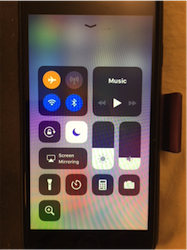
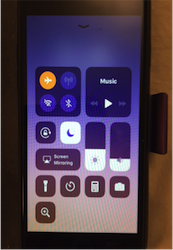
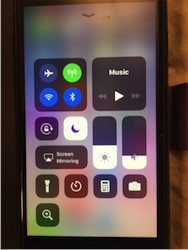
Lesson #1: When you toggle airplane mode off it via the swipe up feature it also activates Bluetooth and WiFi. BUT when you turn on airplane mode when using the swipe up feature, both Bluetooth and Wifi stay on unless you turn them off first in settings! This must be the default for new iPhones (and may even reset back to this with a software upgrade).

A: as expected
B: not good
C: make sure it’s like this

A: Airplane mode off (blue color plane) and Wifi is on and Bluetooth is on

B: Airplane mode on (orange color plane) and yet Bluetooth and WiFi is still on – this is not good if you’re using your phone next to your bed or in a car or close to your body

C: Airplane mode on (orange color plane) and Bluetooth and WiFi is off (they have a line through them) – make sure it’s like this when it’s next to your bed or in a car or close to your body

Lesson #2: Watch to see if 3G goes back to 4G when you toggle airplane mode on and off. I have changed my phone from 4G to 3G in settings in order to reduce EMF exposure when my phone is on. If you don’t know how to do this: settings/cellular/cellular data options – enable 4G toggle. Some folks are saying the airplane mode toggle reactivates 4G. I’m guessing it’s specific to the phone version as it’s not an issue on my phone.

Lesson #3: When you get a new phone or any new device, check everything and even if it’s not new, upgrades to software may change things.

Lesson #4: Distance is your friend when it comes to EMFs. I believe this impacted me more because I thought the iPhone was safely in airplane mode and not emitting EMFs. I had it close to me: in my handbag during the day when out and about, on my side-table next to my head at night, on my desk near me during the day, and in my money-belt right over my belly on the plane for 15 hours flying back!

Lesson #5: Trust your gut if you feel something is off and keep searching for a solution. I knew something was off and was prowling around trying to find what WiFi had been turned on in our home and looking for new hotspots in the area (I recently blogged about how a WiFi modem with a public hotspot caused seizures, vertigo, headaches, insomnia and heart palpitations in a woman with a history of West Nile virus)

Lesson #6: Get a meter so you can be proactive and actually measure this stuff. My Cornet meter is awesome! I’m still a newbie at this but when I see red flashing lights I know I’m onto something.

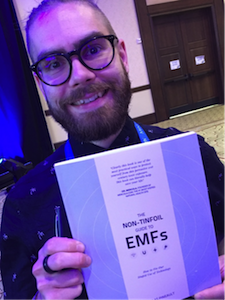
I owe much appreciation to Nick Pineault, author of The Non-Tinfoil Guide to EMFs (my Amazon link) for his amazing ElectrosmogRx practitioner training. I’ve learned so much about how EMFs are impacting our health and want to share this with you because I truly believe it’s a big player when you have ongoing anxiety, insomnia, pain, brain fog and with more serious health concerns too.

I even got to see Nick at the event I attended in the USA and got a signed copy of his excellent book!

When I shared this story on Facebook it was received with much interest and two people shared similar issues. One person said this:

Since I’ve moved I’ve been using my iPhone 6 as an alarm and getting disrupted sleep every night! Time for change!

And then shared this a few days later:

I want to report that I definitely slept better without my iPhone in the room last night!.

Someone else shared this:

Since getting the iPhone 6 I have been experiencing an overactive brain when trying to sleep plus heart palpitations. I usually sleep so well and turn off my thoughts and relax with no problems. I just thought it was a culmination of work, stress deadlines and hormones.

Too often I hear comments like this: “it’s all around us – what are we supposed to do?!” There is so much we can do!

Once I made the simple change of making sure the Bluetooth and WiFi stayed off when I toggled airplane mode on, my sleep improved, the twitchiness and agitation abated, my exhaustion ramped down and my slow mouse arm started to work normally again. My back pain is slowly but surely easing too.

As a nutritionist I always use everything at my disposal and so I’ve also used GABA for my back pain and tryptophan for the agitation and sleep issues and plenty of rosemary essential oil, together with grounding/earthing on a daily basis.

Thank goodness for my Qlink too! I’d probably have been feeling much worse had I not been wearing it 24 hours a day.

My wish now is for more folks to take this seriously!

Do you use your iPhone (or other smart phone) as an alarm without switching to airplane mode? Have you checked if Bluetooth and WiFi is off when you do switch to airplane mode?

And has disrupted sleep or other issues like anxiety, agitation, heart palpitations, pain issues, brain fog or fatigue resolved when making these very simple changes?

I’d love some feedback if you have a smart phone other than an iPhone – to share what happens on your phone and how you addressed it.

Filed Under: EMF Tagged With: agitated, airplane mode, anxious, EHS, EMF, EMFs, exhausted, fatigued, insomnia, iPhone, pain, sleep

The Truth about *PET* Cancer docu-series – save the lives of your precious pets

March 22, 2018 By Trudy Scott 4 Comments

Cancer is ruthless and this disease is stealing the lives our beloved animals. It’s sad but true. Each year, over 6 million dogs and 6 million cats are diagnosed with cancer. And millions die as a devastating result.

The experts at The Truth about *PET* Cancer share this:

The rate of cancer in pets is exploding! Just 50 years ago, 1 in 100 dogs got cancer. Today it is a staggering 1 in 1.65 dogs. Dogs have the highest rate of cancer of any mammal on the planet, and cats aren’t far behind, with 1 in every 3 receiving a cancer diagnosis.

I was shocked by these rates so I reached out to the hosts and they kindly sent me an article by Carol Beuchat PhD, Scientific Director of the Institute of Canine Biology: Do dogs have more cancer than other mammals?:

We can truthfully say that cancer in pets is at the epidemic stage right now, and just like most oncologists, the vast majority of vets don’t know about the countless natural therapies and protocols available to heal and prevent pet cancer.

Cancer is a problem not just in a few dog breeds but in many. Cancer rates of 20% or 30% are taken as “normal” because they are so much lower than the levels in breeds that are notorious for cancer – the ones up at 50% and 60%. Clearly, however, what is considered normal for dogs is much higher than what we see in mammals in general, and cancer rates that are “abnormally high” in dogs are actually off the charts.

She also compares cancer in dogs with other mammals and the Tasmanian Devil:

rates of cancer in dogs are higher- spectacularly so, in fact – compared to those for mammals in general. Cancer rates in other mammals are largely less than 20%, while in dogs there are only a handful of breeds in that range, and there are none at all lower than about 15%, where most of the mammals are. In fact, the Tasmanian Devil with its contagious cancer [and 50% rate] is matched by the Flatcoated Retriever and even outdone by the Irish Water Spaniel, with a half dozen more breeds almost as high.

What if your dogs and cats are tragically dying from cancer, simply because you haven’t heard about treatments that can truly heal them? In this groundbreaking 7-episode docu-series, 30 world-renowned pet health experts will reveal better, safer and more affordable cancer healing treatment. And you’ll discover simple prevention therapies (your vet probably doesn’t even know about) that can save the lives of your precious pets.

Here is one cancer prevention topic that will be covered by one of the experts Rodney Habib: Are there potatoes in your bag of pet food or in your pet’s diet?

Alas, the conventional potato tests positive for 35 different pesticides — more pesticides by weight than any other vegetable, according to EWG [Environmental Working Group] 2014 Dirty Dozen List

Unless you are feeding organic potatoes to your family and pets, you may want to give this information some serious consideration seeing that today’s cancer and disease rates are soaring at an all-time high! It is estimated that 5% of cancer is genetic and 95% is a result of lifestyle and environmental factors. The fewer toxins we have in our systems, the fewer problems we have. Period.

The experts will talk about topics from the pet food industry, diets and specific treatment protocols to reverse cancer, water intake, vaccinations (needed vs. those that are likely to cause cancer), essential oil recipes in place of flea/tick collars and overall homeopathy for pets.

I’ve seen natural health work wonders with anxious pets – such as theanine, a gluten-free diet and Thunder shirts – so let’s use natural approaches for cancer prevention and treatment too! You’ll find out everything you need to know in this cutting-edge series that starts in a few weeks.  

You’ll also discover that many of these natural approaches help with both pet cancer and pet anxiety too – such as a gluten-free diet, organic food, essential oils, nutrients like curcumin, vitamin D and much more.

If you want to protect your family pet from cancer… or heal your pet’s cancer when the vet says there’s nothing more to be done… or you want to give your pet the healthiest food and environment possible so they will live a long and happy life, then I encourage you to register for The Truth About PET Cancer docu-series now.

CLICK HERE to watch the video trailer and then register to watch this special event.

And check out this quiz: Do you know your pet’s risk for cancer?


Keywords


Filed Under: Cancer, Events Tagged With: anxiety, anxious, cancer, cat, dog, pets, potatoes, Prevention, treatment, Truth about pet cancer

The Antianxiety Food Solution: This Book Is a Total Game Changer!!

July 21, 2017 By Trudy Scott 7 Comments

I write multiple blogs each week and the website is a wealth of information (be sure to check the comments too – I love the community feedback and questions and learn so much from you!) BUT the foundation of all that I teach and how I work with my anxious clients is outlined in great detail in my book The Antianxiety Food Solution, so I recommend this essential reading to make the basic food changes (for some people that’s all they need to do), and before using any of the nutrients, and especially before using targeted individual amino acids.  

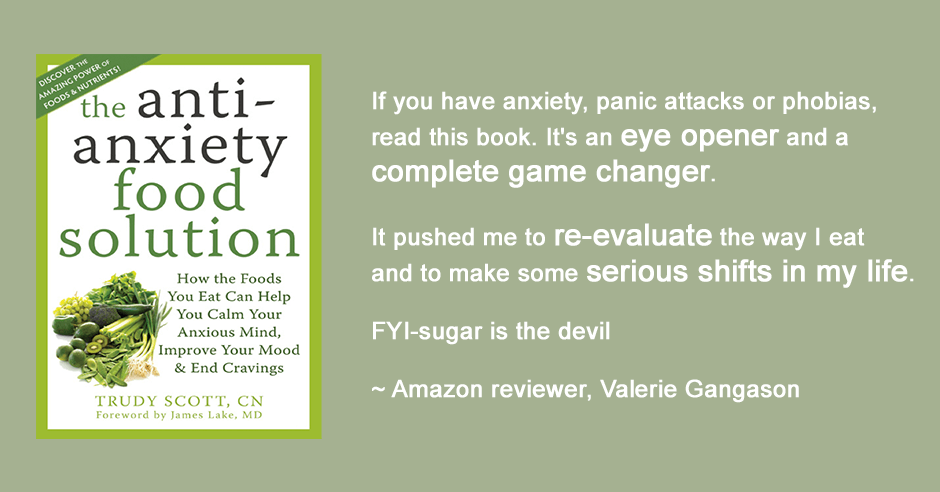
Valerie Gangason posted this wonderful review on Amazon recently: This Book Is a Total Game Changer!!

If you have anxiety, panic attacks or phobias, read this book. It’s an eye opener and a complete game changer. It pushed me to re-evaluate the way I eat and to make some serious shifts in my life. FYI-sugar is the devil

I love the comment about sugar being the devil and commend her for re-evaluating how she eats and for making those serious shifts. It’s how you get results and I ever get tired of feedback like this.

Grab your copy from Amazon here if you don’t yet have it. If you already have a copy I’d love a review on Amazon please! And if you have an older copy with no index you can grab a copy of the index here

Feel free to share your great results or ask questions in the comments.

Filed Under: Books Tagged With: anxiety, anxious, eat, panic attacks, phobias, sugar, the antianxiety food solution, Trudy Scott

Vagus nerve rehab with GABA, breathing, humming, gargling and key nutrients

March 25, 2016 By Trudy Scott 248 Comments

vegas nerve rehab

I’ve got an issue going on with my vagus nerve at the moment and the throat spasms have been affecting my voice and ability to speak for any length of time. It’s also causing this persistent dry cough, despite not feeling sick or having any respiratory symptoms. It’s much worse later in the day and gets particularly bad after about 30 minutes of talking.

I’ve been working with the very talented PT/nutritionist Joe Tatta for the last week and I am seeing much improvement already. I’m also learning so much on vagus nerve rehab.

Joe is a Musculoskeletal Pain Expert and you may recall our wonderful interview on the last Anxiety Summit on pain and anxiety.

Let me give you some of the back story. Just over a week ago I posted this message in a private facebook group of integrative practitioners/colleagues:

I’d love some help for me please. I have this ongoing spasmodic dry cough that starts as soon as I talk and gets worse later in the day. As you can imagine it’s affecting my day to day meetings, seeing clients and doing interviews, not to mention being highly irritating!

I don’t feel sick at all and have no congestion. It started after my NYC trip and a really frightening flight over the Colorado mountains!

We had the most awful turbulence and it felt like wings on the plane were going to break. People were screaming and the parents behind us were reassuring their kids saying it’s ok, it’s just like a roller coaster ride. I was sitting next to a 6’4’’ young man who had just completed training in the Coast Guard. He was also terrified and said they had taught him how to survive a boat going down but not how to survive a plane going down.

I believe my immune system got suppressed big time! The day after I got home I got the flu for the first time in 30+ years and I felt pretty grim for a day and then recovered nicely over the next 4-5 days. The flu was over 10 days ago but this stupid cough continues!

One night I could not sleep due to the coughing and decided to try and relax my airways with GABA. I know how effective GABA is for stiff and tense muscles so why not try it for the throat spasms I was having? I am now able to have a reasonable conversation for say 15-30 mins if I take 500mg GABA opened on to my tongue. Viola! a new use for GABA – pretty cool!

I must be low in GABA because I’m able to take upwards of 5 (and sometime more) doses of 500mg a day and not feel too wiped out. That’s a lot of GABA for me – 125mg to 250mg used to be enough for the anxiety I once experienced! I did have a bit of my old early morning waking with anxiety (that I used to have in my late 30s) that week of the flu but that’s now gone.

I’m also using a homeopathic called Boiron Drosera. I’ve never had asthma and don’t have much experience with it but from what I’m reading it sounds like the“cough-variant” of asthma!?

I’m asking here because I’m intrigued by this whole scary flight/depressed immunity/GABA for the spasms thing and wonder if anyone here has any insights?

Joe Tatta responded in about 30 minutes with this message:

Sounds like you have a vagus nerve problem. Potentially loss of parasympathetics. You can read some in this article but there is much more…

Here is the article he shared: Arnold’s nerve cough reflex: evidence for chronic cough as a sensory vagal neuropathy

Arnold’s nerve ear-cough reflex is recognised to occur uncommonly in patients with chronic cough. In these patients, mechanical stimulation of the external auditory meatus can activate the auricular branch of the vagus nerve (Arnold’s nerve) and evoke reflex cough. This is an example of hypersensitivity of vagal afferent nerves, and there is now an increasing recognition that many cases of refractory or idiopathic cough may be due to a sensory neuropathy of the vagus nerve.

The paper presents two cases where the cough was successfully treated with gabapentin. Gabapentin (also known as Neurontin) affects GABA levels and this why I get such great results with GABA.

Gabapentin is drug that is primarily used to treat seizures and neuropathic pain. It is also used for restless leg syndrome and hot flashes, and off-label for anxiety, insomnia, fibromyalgia and bipolar disorder. I’d love to see GABA being studied and used for these conditions especially because gabapentin can cause withdrawal syndrome: Withdrawal symptoms after gabapentin discontinuation and an increased risk of suicidal thoughts.

Joe offered to meet with me via skype and I learned that the neuro-rehab is key. I’ve been doing breathing exercises and humming every hour on the hour for the last week i.e. about 10 times a day. When I hum it’s the “happy birthday” song and I have to think of a specific birthday. I hum and smile and think about my baby sister’s 7th birthday party 37 years ago. I had just come back from Australia and I have such great memories of it! We chatted about it at the weekend and had a good laugh.

I continue to use the GABA as needed, and am also taking GPC (GlyceroPhosphoCholine) and Acetyl-L-carnitine, both of which are acetylcholine precursors for nerve rehabilitation.

Because I’ve had so many questions about what is going on with me and what I’m doing, I have decided to start this blog post and I’ll continue to add to it. I’ve been documenting what has been happening as I go through this rehab because I’m finding it so fascinating.

Stay tuned for all the details:

  • More on the vagus nerve and why it’s so important
  • Why the very scary plane ride triggered this issue I’m having
  • How GABA works to stop the spasms in 5-10 seconds (I have a video to share)
  • Exactly what exercises I’m doing for the rehab and why you need to build up and not do gargling exercises on day one
  • More details about the nutrients: GPC and acetyl-l-carnitine
  • And an interview with Joe Tatta to share his expertise (I’m the patient/client here and am in learning mode)

I wouldn’t suggest trying any of this yourself until I share more because from what I’ve learned so far, you need to slowly built up to certain of the exercises.

Updates April 1, 2016:

Here is the first video (taken March 16, 2016) where I share the story of the scary plane ride and my flu and the start of the throat spasms.  You can hear how my voice sounds and how quickly 500mg GABA relaxes the spasms in my throat/neck.  I share what I learned from Joe Tatta about it being connected the vagus nerve.

Here is the second video (also taken March 16, 2016) where I demonstrate the 3-6-6 second breathing exercise and the happy birthday song humming exercise. I have to think of an actual birthday. I hum and think of my baby sister’s birthday (you can see those photos above).  Be warned, I am what I call “musically challenged!”

Here is the third video (taken late evening March 16, 2016) where you can hear how bad my voice and throat gets later in the day.

Here is the video taken at Heavenly ski resort on March 27, 2016.  You can see me doing my humming exercises in between skiing on this beautiful mountain and how I needed GABA after a strenuous ski run.  And I summarize what has been working for me so far.  I hope you enjoy the stunning scenery too!  I feel so fortunate that we can hop in the car and visit such an amazing place like this on the weekend! It’s about 90 minutes up the hill from where we live.

And here is the final video in this series (taken yesterday March 31, 2016). I demonstrate the exercises I am currently doing: 3-6-6 second breathing, humming (which has improved), the yawning and the tongue massage of the roof of my mouth.  I also talk about GPC and acetyl-l-carnitine.

You can probably see and hear that I am much improved and have not needed much GABA for the last two days now.  In the last week I have interviewed Dr. Josh Axe for his “Eat Dirt” book and Dr. Kelly Brogan for her “A Mind of Your Own” book.  And Dr. David Brady has interviewed me for his Fibrofix Summit and Dr. Eric Zielinski interviewed me for his Essential Oils Summit.  For each interview I did my exercises right beforehand and took 500mg GABA half way through the interview and had immediate relief.

GABA for vagus nerve
I had 2 x 500mg GABA on hand for my interviews – opened and ready to use!

Update: April 8, 2016

I continue to improve and have not needed GABA for 4 days and only have a very mild hint of the throat feeling late evening.

Two days ago I added an essential oil called Parasympathetic. It contains clove and lemon and I’ll share more in a future post.  Right now I can share that I used too much the first day and had the very dry mouth I experienced with too much GPC and acetyl-l-carnitine.

Update: April 22, 2016

A quick update to let you know that my dry spasmodic cough has completely gone.  I  have not had any symptoms for a week and I have stopped the vagus nerve rehab exercises, GPC,  acetyl-l-carnitine, the essential oil called Parasympathetic and GABA.

Additional resources when you are new to using GABAand other amino acids as supplements

As always, I use the symptoms questionnaire to figure out if low serotonin or low GABA or other neurotransmitter imbalances may be an issue.

If you suspect low levels of any of the neurotransmitters and do not yet have my book, The Antianxiety Food Solution – How the Foods You Eat Can Help You Calm Your Anxious Mind, Improve Your Mood, and End Cravings, I highly recommend getting it and reading it before jumping in and using amino acids on your own so you are knowledgeable. And be sure to share it with the practitioner/health team you or your loved one is working with.

There is an entire chapter on the amino acids and they are discussed throughout the book in the sections on gut health, gluten, blood sugar control (this is covered in an entire chapter too), sugar cravings, anxiety and mood issues.

The book doesn’t include product names (per the publisher’s request) so this blog, The Antianxiety Food Solution Amino Acid and Pyroluria Supplements, lists the amino acids that I use with my individual clients and those in my group programs.

If, after reading this blog and my book, you don’t feel comfortable figuring things out on your own (i.e. doing the symptoms questionnaire and respective amino acids trials), a good place to get help is the GABA QuickStart Program (if you have low GABA symptoms). This is a paid online/virtual group program where you get my guidance and community support.

If you are a practitioner, join us in The Balancing Neurotransmitters: the Fundamentals program. This is also a paid online/virtual program with an opportunity to interact with me and other practitioners who are also using the amino acids.

Wrapping up and your feedback

I so appreciate all the caring and concerned comments, feedback and ideas for me!  And boy, am I grateful for Joe and his expertise!

I will still be interviewing Joe so he can share the theory and address questions so please post questions you may have.

If any of this resonates with you or if you have any other questions I’d love to hear back from you.

Please post them in the comments section below.

Filed Under: GABA Tagged With: anxious, breathing, GABA, gabapentin, humming, Joe Tatta, scary, spasms, vagus nerve, voice

Anna Clendening: Anxious Singer on America’s Got Talent 2014

July 13, 2014 By Trudy Scott 45 Comments

anna clendening agt

Anna is a very talented 20 year old young woman who recently performed on America’s Got Talent 2014. Her singing was just beautiful and you could hear the raw emotion in her voice.

Being on this big stage was quite something for her – she’s been suffering from anxiety and depression since she was 16. A few months ago she was bedridden and having panic attacks. She said: “my mind had given up on me. I didn’t see a future. I didn’t want to be here anymore and I felt so bad about myself.”

She was able to turn things around dramatically with therapy and music.

During her audition, judge Howie Mandel shared: “I also suffer from an anxiety disorder – I have OCD.” He also said: “There isn’t anyone alive who doesn’t need help at some time and the world is here for you.” After her song, Howie was very kind and went and hugged her. He also said this: “life is filled with peaks and valleys, you have experienced a lot of valleys. Tonight, young lady, you are on a peak.”

I would have to agree and I’d like to say “bravo Anna!”  Watch her performance here….

I’ve got three other comments on this: the stigma of mental health, the wonderful effects of music for mood and encouragement to look in to the powerful effects of food and nutrients.

The stigma of mental health

I commend her for being open about her anxiety and depression. There is a great deal of stigma around mental illness but I had no idea how bad it was. I was very surprised to see all the cruel and insensitive comments on the youtube video. Here is one example:

Couldn’t leave her bed?  What a joke.  You didn’t see this kind this stuff 50 years ago.  It was called responsibility and accountability.  She was obviously validated and enabled by her parents.  Society today substantiates this crap.  It’s called life, and everybody has challenges and feeling they need to overcome, get over it.  I bet she’s drawing a nice little social security disability check, too. Its pretty sad that she has such self pity.  She is very attractive, talented, not overweight, racially advantaged, has loving parents.  She needs to visit a children’s cancer ward or burn ward and get a grip as to how truly blessed she is.  

I say this to Anna: “Just ignore these naysayers. You did good and the more of us who talk about it the more awareness we’ll bring.”

The wonderful effects of music for mood

In a 2009 paper called The effect of group music therapy on quality of life for participants living with a severe and enduring mental illness

A 10-week group music therapy project was designed to determine whether music therapy influenced quality of life and social anxiety for people with a severe and enduring mental illness living in the community. Ten one-hour weekly sessions including song singing, song writing and improvisation, culminated in each group recording original song/s in a professional studio.

This is what they found:

music therapy gave joy and pleasure, working as a team was beneficial, participants were pleasantly surprised at their creativity, and they took pride in their song.

A 2014 study called Possible benefits of singing to the mental and physical condition of the elderly, reported that the study participants felt:

refreshed, comfortable, light-hearted, relieved, and relaxed, they felt less tense and confused and their mood improved.  The level of cortisol, a salivary stress marker, decreased after singing.  The same tendencies were shown regardless of whether or not the subjects liked singing !  (this is my exclamation point)

I say this to Anna: “Good for you for finding music! I wish you all the best in AGT 2014!”

The powerful effects of food and nutrients

I would also like to encourage Anna and anyone with anxiety and depression to look in to the powerful effects of food and nutrients. Here are just a few of the topics we covered on the recent Anxiety Summit:

  • Dr. Felice Jacka – Principal Research Fellow at Deakin University, Melbourne, Australia: “The research: food for the treatment and prevention of anxiety and depression?”
  • Julie Matthews – Certified Nutrition Consultant and author of award winning book, Nourishing Hope for Autism: “BioIndividual Nutrition for Anxiety: How special diets and avoiding certain foods can Support individuals with anxiety.”
  • Mira Dessy – Certified Nutrition Educator, Real Food Advocate, and author of The Pantry Principle: “How additives in your food can make you anxious.”
  • Amanda Swart – Associate Professor, Department of Biochemistry, Stellenbosch University, South Africa: “Rooibos: a functional food in the management of stress“
  • Julia Ross, MFT – Pioneer in the field of Neuro-nutrient Therapy and the author of the best sellers The Mood Cure and The Diet Cure: “Eliminating Anxiety: Amino Acid Therapy and Adrenal Balancing.”

I say this to Anna: “I’d like to encourage you explore these and other biochemical approaches – so you can have zero anxiety and depression.”

And I say this to Howie: “I’d like to encourage you to also explore these and other biochemical approaches for eliminating your OCD.”  In this blog post about Charlize Theron I talk about how GABA, tryptophan, 5-HTP and/or inositol can end OCD and obsessive thoughts and behaviors.

I am musically “challenged” and can’t sing to save my life so while this is all very interesting to me, it’s not something I have experienced first hand.  I’d love to hear from you.  

Do you sing or play a musical instrument? How does it make you feel?  Does it help with anxiety, depression, stress?

Filed Under: Music, People Tagged With: america's got talent, amino acids, anna clendening, anxiety, anxious, food, music, stigma

  • « Go to Previous Page
  • Page 1
  • Interim pages omitted …
  • Page 5
  • Page 6
  • Page 7
  • Page 8
  • Go to Next Page »

Primary Sidebar

NEW! GABA QuickStart Homestudy (with special intro pricing)

gaba quickstart homestudy

Free Report

9 Great Questions Women Ask about Food, Mood and their Health

You'll also receive a complimentary subscription to my ezine "Food, Mood and Gal Stuff"


Connect with me

Popular Posts

  • Amino Acids Mood Questionnaire from The Antianxiety Food Solution
  • The Antianxiety Food Solution Amino Acid and Pyroluria Supplements
  • Pyroluria Questionnaire from The Antianxiety Food Solution
  • Collagen and gelatin lower serotonin: does this increase your anxiety and depression?
  • Tryptophan for the worry-in-your-head and ruminating type of anxiety
  • GABA for the physical-tension and stiff-and-tense-muscles type of anxiety
  • The Antianxiety Food Solution by Trudy Scott
  • Seriphos Original Formula is back: the best product for anxiety and insomnia caused by high cortisol
  • Am I an anxious introvert because of low zinc and vitamin B6? My response to Huffington Post blog
  • Vagus nerve rehab with GABA, breathing, humming, gargling and key nutrients

Recent Posts

  • What do I use instead of Seriphos to help lower high cortisol that is affecting my sleep and making me anxious at night?
  • BeSerene™ GABA/theanine cream eases severe muscle tension in her neck/shoulders, prevents her bad headaches and quells her anxiety
  • How the correct approach, dose and sublingual use of GABA can be calming and not cause a flushed and itchy face and neck
  • The amino acid glutamine improves low mood by addressing gut health, and it has calming effects too
  • Flight anxiety with heightened breath, physical tension and also fearing the worst (the role of low GABA and low serotonin)

Categories

  • 5-HTP
  • AB575
  • Addiction
  • ADHD
  • Adrenals
  • Alcohol
  • Allergies
  • Alzheimer's disease
  • Amino Acids
  • Anger
  • Antianxiety
  • Antianxiety Food Solution
  • Antidepressants
  • Anxiety
  • Anxiety and panic
  • Autism
  • Autoimmunity
  • benzodiazapines
  • Bipolar disorder
  • Books
  • Caffeine
  • Cancer
  • Candida
  • Children/Teens
  • Collagen
  • Cooking equipment
  • Coronavirus/COVID-19
  • Cravings
  • Depression
  • Detoxification
  • Diabetes
  • Diet
  • DPA/DLPA
  • Drugs
  • EFT/Tapping
  • EMF
  • EMFs
  • Emotional Eating
  • Endorphins
  • Environment
  • Essential oils
  • Events
  • Exercise
  • Fear
  • Fear of public speaking
  • Fertility and Pregnancy
  • Fish
  • Food
  • Food and mood
  • Functional neurology
  • GABA
  • Gene polymorphisms
  • General Health
  • Giving
  • Giving back
  • Glutamine
  • Gluten
  • GMOs
  • Gratitude
  • Gut health
  • Heart health/hypertension
  • Histamine
  • Hormone
  • Hyperparathyroidism
  • Hypoglycemia
  • Immune system
  • Inflammation
  • Insomnia
  • Inspiration
  • Introversion
  • Joy and happiness
  • Ketogenic diet
  • Lithium orotate
  • Looking awesome
  • Lyme disease and co-infections
  • MCAS/histamine
  • Medication
  • Men's health
  • Mental health
  • Mercury
  • Migraine
  • Mold
  • Movie
  • MTHFR
  • Multiple sclerosis
  • Music
  • NANP
  • Nature
  • Nutritional Psychiatry
  • OCD
  • Osteoporosis
  • Oxalates
  • Oxytocin
  • Pain
  • Paleo
  • Parasites
  • Parkinson’s disease
  • PCOS
  • People
  • PMS
  • Postpartum
  • PTSD/Trauma
  • Pyroluria
  • Questionnaires
  • Real whole food
  • Recipes
  • Research
  • Schizophrenia
  • serotonin
  • SIBO
  • Sleep
  • Special diets
  • Sports nutrition
  • Stress
  • Sugar addiction
  • Sugar and mood
  • Supplements
  • Teens
  • Testimonials
  • Testing
  • The Anxiety Summit
  • The Anxiety Summit 2
  • The Anxiety Summit 3
  • The Anxiety Summit 4
  • The Anxiety Summit 5
  • The Anxiety Summit 6
  • Thyroid
  • Thyroid health
  • Toxins
  • Tryptophan
  • Tyrosine
  • Uncategorized
  • Vegan/vegetarian
  • Women's health
  • Yoga

Archives

  • October 2025
  • September 2025
  • August 2025
  • July 2025
  • June 2025
  • May 2025
  • April 2025
  • March 2025
  • February 2025
  • January 2025
  • November 2024
  • October 2024
  • September 2024
  • August 2024
  • July 2024
  • June 2024
  • May 2024
  • April 2024
  • March 2024
  • February 2024
  • January 2024
  • December 2023
  • November 2023
  • October 2023
  • September 2023
  • August 2023
  • July 2023
  • June 2023
  • May 2023
  • April 2023
  • March 2023
  • February 2023
  • January 2023
  • December 2022
  • November 2022
  • October 2022
  • September 2022
  • August 2022
  • July 2022
  • June 2022
  • May 2022
  • April 2022
  • March 2022
  • February 2022
  • January 2022
  • December 2021
  • November 2021
  • October 2021
  • September 2021
  • August 2021
  • July 2021
  • June 2021
  • May 2021
  • April 2021
  • March 2021
  • February 2021
  • January 2021
  • December 2020
  • November 2020
  • October 2020
  • September 2020
  • August 2020
  • July 2020
  • June 2020
  • May 2020
  • April 2020
  • March 2020
  • February 2020
  • January 2020
  • December 2019
  • November 2019
  • October 2019
  • September 2019
  • August 2019
  • July 2019
  • June 2019
  • May 2019
  • April 2019
  • March 2019
  • February 2019
  • January 2019
  • December 2018
  • November 2018
  • October 2018
  • September 2018
  • August 2018
  • July 2018
  • June 2018
  • May 2018
  • April 2018
  • March 2018
  • February 2018
  • January 2018
  • December 2017
  • November 2017
  • October 2017
  • September 2017
  • August 2017
  • July 2017
  • June 2017
  • May 2017
  • April 2017
  • March 2017
  • February 2017
  • January 2017
  • December 2016
  • November 2016
  • October 2016
  • September 2016
  • August 2016
  • July 2016
  • June 2016
  • May 2016
  • April 2016
  • March 2016
  • February 2016
  • January 2016
  • December 2015
  • November 2015
  • October 2015
  • September 2015
  • August 2015
  • July 2015
  • June 2015
  • May 2015
  • April 2015
  • March 2015
  • February 2015
  • January 2015
  • December 2014
  • November 2014
  • October 2014
  • September 2014
  • August 2014
  • July 2014
  • June 2014
  • May 2014
  • April 2014
  • March 2014
  • February 2014
  • January 2014
  • December 2013
  • November 2013
  • October 2013
  • September 2013
  • August 2013
  • July 2013
  • June 2013
  • May 2013
  • April 2013
  • March 2013
  • February 2013
  • January 2013
  • December 2012
  • November 2012
  • October 2012
  • August 2012
  • July 2012
  • June 2012
  • May 2012
  • April 2012
  • March 2012
  • February 2012
  • January 2012
  • December 2011
  • November 2011
  • October 2011
  • September 2011
  • August 2011
  • July 2011
  • June 2011
  • May 2011
  • April 2011
  • March 2011
  • February 2011
  • January 2011
  • December 2010
  • October 2010
  • September 2010
  • July 2010
  • May 2010
  • April 2010
  • March 2010
  • February 2010
  • January 2010
  • November 2009

Share the knowledge!

The above statements have not been evaluated by the Food and Drug Administration. Products listed in this website are not intended to diagnose, treat, cure or prevent any disease.

The information provided on this site is for informational and educational purposes only and is not intended as a substitute for advice from your physician or other health care professional. You should consult with a healthcare professional before starting or modifying any diet, exercise, or supplementation program, before taking or stopping any medication, or if you have or suspect you may have a health problem.


Copyright © 2026 Trudy Scott. All Rights Reserved. | Privacy | Terms and Conditions | Refund Policy | Medical Disclaimer

Free Report

9 Great Questions Women Ask about Food, Mood and their Health

You’ll also receive a complimentary subscription to my ezine “Food, Mood and Gal Stuff”