• Skip to primary navigation
  • Skip to main content
  • Skip to primary sidebar

everywomanover29 blog

Food, Mood and Women's Health – Be your healthiest, look and feel great!

  • Blog
  • About
  • Services
  • Store
  • Resources
  • Testimonials
  • The Book
  • Contact
  • Search this site

amino acids

Anxiety: food based solutions with Trudy Scott on The Randy and Christa show

April 25, 2014 By Trudy Scott 7 Comments

I met Christa Orrechio at a conference earlier this year and was thrilled to be invited to speak on The Randy and Christa show. They are doing a fabulous job getting the wellness message out into the world! I also love how they have such fun doing this show!

During my segment we talked about the following:

  • Why read my book The Antianxiety Food Solution: if you’re stressed, have panic attacks, fears, phobias and even sugar cravings
  • “80-90% of my clients do better off gluten”
  • My client who went gluten-free: her eczema cleared up and she felt calmer
  • Amino acid supplements (like GABA and tryptophan) help you break the gluten addiction/craving
  • Low serotonin causes anxiety, sadness, excessive worry in the head, depression, afternoon and evening cravings, PMS, winter blues and sleep problems (see the whole questionnaire here)
  • Tryptophan (500mg is the starting dose) midafternoon and evening raises serotonin so you’ll feel calmer, hopeful and optimistic
  • Some people may do better on 5-HTP but it can raise cortisol levels
  • Too much of the amino acids can have a reverse effect – use what you need. You may need less than the starting dose
  • The amino acids are a short-term approach – you also need to be addressing diet and low blood sugar etc
  • Low GABA causes physical tension and anxiety (Randy finds GABA helps him sleep)
  • Caffeine is a problem for many people with anxiety – give it up! If it doesn’t make you anxious make sure it’s organic
  • Zinc and vitamin B6 are important for making GABA and serotonin
  • A good source of zinc and B6 is red meat. It’s also a good source of iron and omega-3s (as much omega3-s as salmon!). Of course it does need to be grass-fed!
  • The starting dose for vitamin B6 is 100mg
  • Magnesium is a calming mineral
  • Sign up for your free report “5 Simple Steps to Reduce Anxiety Now“

Be sure to listen to Randy and Christa when I drop off as they continue the discussion (12:30 minutes).

Regarding the red meat discussion they had a bit later, I’d like to add that I find many of my clients with mood issues – both anxiety and depression – do better with more red meat than just once or twice a week. Having it every day is just fine! As Christa said, it has all the amino acids to make our neurotransmitters/brain chemicals.

Christa Orecchio is a clinical and holistic nutritionist, and founder of The Whole Journey, a nutrition practice and informational website. She is on a mission to help as many people as possible to heal by addressing the root cause (and not just the symptom) of why they don’t feel good and concurrently teaches people how to use food as their medicine to heal their bodies so they can ultimately live a thriving, vibrant life.

Christa has a TV show on FOX in San Diego called “Food as Medicine” and is the co-host of her own nationally syndicated health talk show “The Randy and Christa Show”.

 

Filed Under: Antianxiety Food Solution, Anxiety and panic, Food and mood, Gluten, Real whole food Tagged With: amino acids, anxiety, food, gluten, Randy and Christa, serotonin, Trudy Scott, tryptophan

Neurotransmitters in food addiction: dopamine, endorphins, GABA and serotonin

April 11, 2014 By Trudy Scott 22 Comments

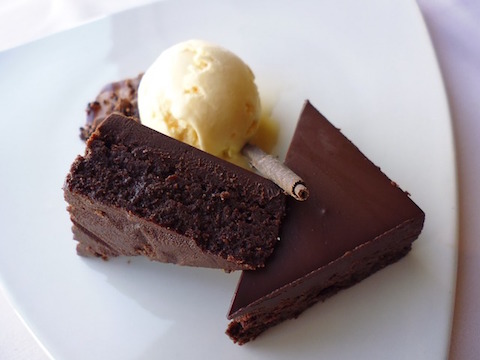
chocolate-cake-icecream

Food can be as addicting as drugs and we often see mood changes when someone has addictions or out of control cravings.

In this blog post Why do you crave and how do you self-medicate? I covered a simple way for you to figure out why you crave something or why you’re drawn to a particular food, substance, or behavior. I also said that it can be challenging to determine which part of your brain chemistry it’s affecting, and you may not associate cravings with mood issues.

In a series of connected articles I’m going to share some of the research supporting this. If you’ve read my book, The Antianxiety Food Solution, or have been reading my blog posts, you know I like to share research-based evidence. Unfortunately there are not many double blind studies on intervention and symptom management when it comes to amino acids, but I’ll be sharing the research that has been done – focusing on each neurotransmitter and amino acid individually.

Let’s start with this 2013 review titled Pharmacotherapies for Overeating and Obesity. Although the focus of the review is drug-based interventions for finding solutions to food addictions, the mechanisms of food addiction is nicely spelled out: neurotransmitter or brain chemical imbalances. I’d like to add that all of this can be in play even if you are not obese – you just have to love sugar/carbs, wine, coffee etc and eat or drink them to self-medicate.

  • “Research has shown that obesity can and does cause changes in behavior and in the brain itself that are very similar to changes caused by drugs of abuse”
  • “While food addiction is not the causal agent of all obesity, it is clear that many people no longer eat to survive, but instead survive to eat.”
  • “This review considers the importance of the brain’s reward system in food intake.”
  • “…research has recently demonstrated that each of these nutrient elements affects specific neurotransmitter systems in the brain providing the potential for targeted pharmacologic treatments” [instead of targeted drug treatments, we can use targeted amino acid supplements]
  • “The American Society of Addiction Medicine (ASAM) now recognizes addictions as a brain disorder, and as such, treatments aimed at addressing food addiction must address the dysfunctions at the level of the brain”
  • “There are a number of such therapies under investigation targeting neuropathways and neurotransmitters implicated in addiction, including: dopaminergic [i.e. low or high dopamine, a catecholamine], opioid [i.e. low endorphins], GABAnergic [i.e. low GABA or a need for glutamine], cannabinoid, serotonergic [i.e. low serotonin], and other novel treatment options.”

If this scientific information is of interest to you, I encourage you to read the whole paper here.

In this 2014 study looking at food addiction, in 233 participants, they did find a relationship between food addiction and negative mood i.e. there was: “an inclination toward behaving irrationally while experiencing negative mood states (Negative Urgency) and low levels of task persistence (lack of Perseverance)”

As a reminder here is the table again:

How you feel before

How you feel after

Brain chemistry imbalance

Amino acid to supplement

Anxious or stressed

Calm or relaxed

Low GABA

GABA

Depressed or anxious

Happy or content

Low serotonin

Tryptophan or 5-HTP

Tired or unfocused

Energetic, alert, or focused

Low catecholamines

Tyrosine

Wanting a reward or sad

Rewarded or comforted

Low endorphins

DPA (d-phenylalanine)

Irritable and shaky

Grounded or stable

Low blood sugar

Glutamine


As I said, the research is important, but more important are the incredible results my clients get when they have brain chemical deficiencies and use the amino acids in a targeted manner addressing each area of deficiency.

Meme Grant, GAPS Practitioner, Nutritional Therapist, FNTP, givennewlife.info participated my Amazing Aminos for Ending Emotional Eating program and this is what she said afterwards:

“I still am amazed at how quickly the panic attacks, binge eating, and mood swings disappeared. Tyrosine enabled me to focus and gave me energy to do things again, glutamine allowed me to walk past the gluten and dairy free junk foods, d-phenylalanine [DPA] stopped my comfort eating, tryptophan enabled me to stop my negative thoughts and helped me sleep but the best was when GABA was introduced, the panic attacks disappeared.”

This is why I call them the amazing amino acids. And this why addressing neurotransmitter deficiencies can end food addiction and out-of-control sugar cravings (and at the same time they help to eliminate or reduce anxiety, mood issues and insomnia).

Update June 24, 2016:

Research is now further highlighting the connection between food addiction and depression and anxiety.

In this May 2016 paper, Food addiction associations with psychological distress among people with type 2 diabetes  they looked at the relationship between food addiction and psychological distress among 334 patients with type 2 diabetes and found that those:

meeting the FA [food addiction] criterion had significantly higher depression, anxiety, and stress scores as compared to participants who did not meet the FA [food addiction] criterion.

This applies whether or not you have type 2 diabetes and whether or not you are overweight.

As you can see in this blog post: GABA for ending sugar cravings (and anxiety and insomnia), Melissa started taking Source Naturals GABA Calm in anticipation of stressful holiday travel and holiday gatherings.  She felt much calmer when she used GABA Calm and discovered that a wonderful side-benefit (we like side-benefits vs side-effects!) was reduced cravings (as well as improved sleep):

An unexpected result was that I stopped craving sweets after about a week of taking it! I didn’t even realize this until I was grocery shopping and out of habit walked towards the ice cream – I stopped and realized I didn’t want ice cream. So I walked toward the chocolate – same reaction. For once in my life, I was not craving sweets. I made truffles for a NYE party and only ate two. But what is really shocking is that the leftovers are still in my refrigerator two days later and I haven’t touched them. I don’t understand what is going on! Can this be the GABA Calm?

She was pleasantly surprised as many of my clients are – she felt more calm, she had better sleep and saw an end to her cravings!

If this is new to you this is what I do with my clients:  

  • Have them do the Amino Acid questionnaire  so they can figure out if they may have low brain chemicals that are affecting both mood and playing a role in food addiction or cravings.   
  • Review the Amino Acid Precautions
  • Have them do a trial  of the relevant amino acids, one at a time and monitor how they feel in terms of reduced cravings, less anxiety, improved mood and sleep

Let us know if this resonates with you and if you have tried the amino acids for food addiction or sugar/carb cravings? And what results you have seen?


Filed Under: Addiction, Amino Acids, Anxiety and panic, Sugar addiction, Sugar and mood Tagged With: amino acids, anxious, crave, depressed, dopamine, food addiction, GABA, neurotransmitter, self-medicate, serotonin

Why do you crave and how do you self-medicate?

March 14, 2014 By Trudy Scott 23 Comments

Sometimes it’s difficult to figure out why you crave something or why you’re drawn to a particular food, substance, or behavior. It can be challenging to determine which part of your brain chemistry it’s affecting, and you may not associate cravings with mood issues. Here is a way to figure out why you may crave certain things.

Your drug-of-choice is something you self-medicate with and it is something that makes you feel good or “normal.” It could be candy, chocolate, starchy foods like bread or pasta, cookies, ice-cream, coffee, sodas or wine/beer. It could also be cigarettes, marijuana, a prescription medication like Prozac, street drugs, or even shopping or exercise.

Cravings for these substances (or behaviors) typically indicate a brain chemistry imbalance, so it’s very helpful to identify how the substances you crave affect you. This will help you determine which amino acids you might supplement to address the imbalance.

For example, a glass of wine may be calming for one person but energizing for another, or chocolate may be calming for some people and comforting for others. Certain prescription medications also offer clues. If you have many symptoms of low serotonin and have found that prescription SSRIs help, it’s possible that low serotonin is an issue.

Taking chocolate as an example, here’s what I suggest: Before you eat some chocolate, think about why you want it. Is it because you’re sad or tired or anxious? Or do you feel like you deserve a reward or feel irritable and shaky? Then, once you’ve eaten it, think about how it made you feel.

Use your drug-of-choice (candy, chocolate, starchy foods like bread or pasta, cookies, ice-cream, coffee, sodas or wine/beer etc) and the chart below to help you determine what brain chemistry imbalance may be affecting you and which amino acid you may benefit from.

How you feel before How you feel after Brain chemistry imbalance Amino acid to supplement
Anxious or stressed Calm or relaxed Low GABA GABA
Depressed or anxious Happy or content Low serotonin Tryptophan or 5-HTP
Tired or unfocused Energetic, alert, or focused Low catecholamines Tyrosine
Wanting a reward or sad Rewarded or comforted Low endorphins DPA (d-phenylalanine)
Irritable and shaky Grounded or stable Low blood sugar Glutamine

Feel free to share in the comments section: your drug-of-choice and how it makes you feel before you indulge and how you feel afterwards. If you’ve used any of the amino acid supplements to end the craving or addiction, I’d love to hear your feedback too.

Filed Under: Anxiety and panic, Food and mood, Sugar addiction Tagged With: amino acids, anxious, crave, depressed, drug-of-choice, self-medicate

Amino Acids Mood Questionnaire from The Antianxiety Food Solution

May 24, 2013 By Trudy Scott 362 Comments

The targeted use of individual amino acid supplements will balance brain chemistry to alleviate anxiety, fear, worry, panic attacks, and feeling stressed or overwhelmed. They can also be helpful in addressing other problems that contribute to or exacerbate anxiety, such as sugar cravings and addictions. In addition, they can help with depression and insomnia, which often co-occur with anxiety. When you balance your brain chemistry, not only will you alleviate symptoms of anxiety, you’ll also have a great mood, eliminate cravings, sleep well, and have good energy and mental focus.

Worry and anxiety can be a result of low GABA and also low serotonin, so you may check off anxiety in both sections. Low GABA tends to result in a more physical anxiety, while low serotonin tends to result in more anxiety in the head, ruminating thoughts etc.

Low GABA

  • Physical tension/anxiety
  • Feeling worried or fearful
  • Panic attacks
  • Unable to relax or loosen up
  • Stiff or tense muscles
  • Feeling stressed and burned-out
  • Craving carbs for relaxation and calming
  • Craving alcohol for relaxation and calming
  • Craving drugs for relaxation and calming
  • Insomnia * (Aug 2019: GABA/theanine research)
  • Inability to prioritize planned actions * (Sept 2015: research and child ADHD case)
  • Poor focus/ADHD and spinning * (as above)
  • Have intrusive thoughts, perseverate or have an overactive brain (with unwanted thoughts about unpleasant memories, images or worries * (Nov 2017: research and case)
  • Acrophobia (fear of heights) * (Sep 2018: pharmaGABA research)
  • Rectal spasms (proctalgia fugax) * (Dec 2021: case studies)
  • Burning mouth * (Mar 2018: research)
  • Visceral pain/belly pain with IBS * (Aug 2018: research and case)
  • Bladder pain/interstitial cystitis and urgency * (Jan 2021: research)
  • Lyme-induced anxiety * (Jan 2022: neuropsychiatric Lyme disease and a case study)
  • Globus pharyngeus (lump in the throat) * (July 2022: research and case)
  • PCOS/polycystic ovarian syndrome * (Jan 2021: research and a case study)
  • Tourette’s syndrome (tics) * (Jan 2022: research and case)
  • Laryngospasm, “choking” episodes and swallowing problems * (Mar 2022: research and case)
  • Poor sensorimotor skills * (Dec 2022: research in autism, child with autism case study and adult case study)
  • Asthma* (Dec 2022: research and case)
  • Sound and tactile hypersensitivity * (Feb 2023: research and adult case study)
  • MS/multiple sclerosis * (April 2023: anxiety, muscle stiffness/spasms, swallowing issues and pain in MS)
  • Anger, rage and agitation * (June 2023: glutamate research and case studies and sundowning in Alzheimer’s disease)
  • High blood pressure * (Sept 2023: research)

Low Serotonin

  • Anxiety
  • Panic attacks or phobias
  • Feeling worried or fearful
  • Obsessive thoughts or behaviors
  • Perfectionism or being overly controlling
  • Irritability
  • Anxiety that’s worse in winter
  • Winter blues or seasonal affective disorder
  • Negativity or depression
  • Suicidal thoughts
  • Excessive self-criticism
  • Low self-esteem and poor self-confidence
  • PMS (premenstrual syndrome) or menopausal mood swings
  • Sensitivity to hot weather
  • Hyperactivity
  • Anger or rage
  • Digestive issues
  • Fibromyalgia, temporomandibular joint syndrome, or other pain syndromes
  • Difficulty getting to sleep
  • Insomnia or disturbed sleep
  • Afternoon or evening cravings for carbs, alcohol or drugs

Low Catecholamines

  • Depression and apathy
  • Easily bored
  • Lack of energy
  • Lack of focus
  • Lack of drive and low motivation
  • Attention deficit disorder
  • Procrastination and indecisiveness
  • Craving carbs, alcohol, caffeine, or drugs for energy

Low Endorphins

  • Heightened sensitivity to emotional pain
  • Heightened sensitivity to physical pain
  • Crying or tearing up easily
  • Eating to soothe your mood, or comfort eating
  • Really, really loving certain foods, behaviors, drugs, or alcohol
  • Craving a reward or numbing treat
  • PMS (premenstrual syndrome) or PMDD (premenstrual dysphoric disorder) * (Mar 2022: research published in 1989)

Low Blood Sugar

  • Crave sugar, starch or alcohol any time during the day
  • Irritable, shaky, headachey – especially if too long between meals
  • Intense cravings for sweets
  • Lightheaded if meals are missed
  • Eating relieves fatigue
  • Agitated, easily upset, nervous
  • Waking in the night or early hours with a jolt of anxiety/shakiness * (Feb 2024: case studies)
  • Binge eating and/or food addiction * (Feb 2024: research and a case study)

(* New additions that are not in my book. I’ve linked to some case studies above but there are many more on the blog so be sure to use the search feature)

Each of the above sections on specific neurotransmitter or brain chemical imbalances are found in The Antianxiety Food Solution: How the Foods You Eat Can Help You Calm Your Anxious Mind, Improve Your Mood and End Cravings. They were reprinted from The Mood Cure (2004) with permission from Julia Ross. They do contain some of my own modifications based on my experience with working with many clients, and the new additions as mentioned above.

Individual amino acids are used based on the above questionnaires and the results are profound and often felt within a few minutes:

  • check out this blog post on glutamine for low blood sugar and calming effects and watch how glutamine helped Nicole within 5 minutes.
  • check out how DPA was a miracle for Angie and her sugar cravings which were as a result of low endorphins.

Resources if you are new to using amino acids as supplements

If you suspect low levels of any of the neurotransmitters and do not yet have my book, The Antianxiety Food Solution – How the Foods You Eat Can Help You Calm Your Anxious Mind, Improve Your Mood, and End Cravings, (as I mentioned above) I highly recommend getting it and reading it before jumping in and using amino acids on your own so you are knowledgeable. And be sure to share it with the practitioner/health team you or your loved one is working with.

There is an entire chapter on the amino acids and they are discussed throughout the book in the sections on gut health, gluten, blood sugar control, sugar cravings, anxiety and mood issues.

The book doesn’t include product names (per the publisher’s request) so this blog, The Antianxiety Food Solution Amino Acid and Pyroluria Supplements, lists the amino acids that I use with my individual clients and those in my group programs. You can find them all in my online store.

If, after reading this blog and my book, you don’t feel comfortable figuring things out on your own (i.e. doing the symptoms questionnaire and respective amino acids trials), a good place to get help is the GABA QuickStart Program (if you have low GABA symptoms too). This is a paid online/virtual group program where you get my guidance and community support.

If you are a practitioner, join us in The Balancing Neurotransmitters: the Fundamentals program. This is also a paid online/virtual program with an opportunity to interact with me and other practitioners who are also using the amino acids.

Do you resonate with symptoms in more than one area? This is not unusual.

Do you resonate with some of the more recent additions to the low GABA section?

Feel free to share how the amino acids have helped you and if you found this symptoms questionnaire helpful for figuring out where to start.

If you have questions and other feedback please share here too.

Filed Under: Antianxiety Food Solution, Anxiety and panic, Questionnaires, Sugar addiction Tagged With: amino acids, Antianxiety Food Solution, anxiety, craving, Mood Questionnaire, panic

Amazing Amino Acids for Ending Emotional Eating – No Willpower Required! Really!!

May 13, 2013 By Trudy Scott 7 Comments

MP900387871

We start Monday with this live course where I am going to share the five brain chemical imbalances and respective amazing amino acids that can end cravings and emotional eating.

If you have these symptoms, then amino acids may help:

  • LOVING a certain food (do you just LOVE pizza or really LOVE cookies as a reward or to numb!?)
  • wanting caffeine or sugar for a pick me up in the afternoon
  • afternoon or night time cravings for carbs
  • poor sleep
  • feeling anxious and irritable (and wanting sugar/starches/alcohol to calm you down)
  • depression and low self-esteem (and wanting sugar/starch/alcohol for soothing)

Yep, all of those can be caused by a lack of some key amino acids that we either don’t get in our food or don’t get enough of.  I have amazing results with my clients!

I recently participated in the incredible Loving Food Loving Life Emotional Eating telesumit hosted by Aimee Serafini. The participants were so wowed by this new information that Aimee asked me to create a group program that would be affordable AND where participants could all support each other.

I’m going to share exactly what and how much to take and what brands based on your own brain chemical imbalances.  Plus we’ll also talk about diet, breakfast, getting enough protein, meal timing, your adrenals and thyroid, food intolerances and much more!

Here is the complete overview of the course:

  • Five Live Classes covering each of the 5 neurotransmitter deficiency categories (low serotonin, low GABA, low catecholamines, low endorphins and low blood sugar) and recordings for your library after the calls (live class dates are 5pm PT / 8pm ET: Mondays May 13 & 20, Tuesday May 28 (due to holiday), and Mondays June 3 & 10)
  • Bonus Live Q&A call after course to answer questions (Monday, June 17)
  • If you cannot attend the live classes, you will get the recordings to download so you can listen when you have time and refer to them later, plus you can ask questions on Facebook. Please do not let scheduling affect your being able to start getting relief now
  • Amino Acid Precautions questionnaire (to address contraindications)
  • Amino Acid Deficiency questionnaire
  • Food Mood Log – to figure out how food affects you and how you are feeling prior to eating
  • Supplement Sheet for amino acid timings
  • Membership in a private Facebook Group for peer support.  Support is super important and hearing the experiences and questions of other participants will surely be of great benefit
  • A Bonus audio interview with Mira Dessy, Nutrition Educator and Whole Food Advocate: The Pantry Principle, How to Read the label and Know What’s Really in Your Food 

If you’re still on the fence

  • check out this blog post on glutamine for low blood sugar and calming effects and watch how glutamine helped Nicole within 5 minutes

  • check out how DPA was a miracle for Angie and her sugar cravings

Are you in or out? 

Aimee and I hope to have you join us (Aimee enrolled for this class too!)  If you would like to enroll in this 6 week live virtual class you can still register here 

[7/8/13 update: this event has concluded and this program is now available as a 6 week homestudy program: The Amazing Amino Acids for Ending Emotional Eating – No Willpower Required! Really!! (Home Study Program – with or without Live Q&A calls) ]


Filed Under: Emotional Eating, Events, Sugar addiction, Sugar and mood Tagged With: amino acids, cravings, emotional eating, Trudy Scott

The biochemistry of self-confidence, anxiety, motivation and focus

October 31, 2010 By Trudy Scott 12 Comments

Nutrient and neurotransmitter deficiencies (as well as hormonal imbalances) can contribute to poor self-confidence, low motivation and the blahs, feeling negative and being overly self-critical.

Poor self-confidence, worry, overwhelm, anxiety and negativity could all be signs of low serotonin.  Serotonin levels can be increased by:

  • Eating enough good quality protein since protein provides amino acids for making neurotransmitters.  Some examples of good quality protein: grass-fed organic beef, New Zealand lamb (which is always grass-fed and free of hormones and antibiotics), pastured eggs and chicken (preferable) or second best, organic, wild fish and seafood.
  • Eating plenty of veggies, fruit, good fats – all part of a whole foods diet – provides all the cofactors necessary for making neurotransmitters.
  • Exercise, sunshine and the use of a full-spectrum lamp also raises serotonin.
  • And of course you’ll feel more confident, less overwhelmed and anxious, and more optimistic very soon (5-10 minutes) after taking one of the amazing amino acids tryptophan or 5-HTP.

With sufficient levels of serotonin you will also sleep better, and you will not have the afternoon and evening sugar cravings that are common with low serotonin.

If you have low motivation, the blahs and feel depressed (the kind of depression where you don’t want to see anyone), these could be signs of low catecholamines. If this is the case, you’re also likely to also have low energy and poor focus, and possibly feel like you are all over the map (kind of like ADD).  Just so you know, negativity can be a sign of low serotonin and low catecholamines and many people have deficiencies in both areas.

  • Again, eating enough good quality protein and eating real food is crucial.
  • The amazing amino acid tyrosine can do wonders (also in 5-10 minutes) to raise catecholamines and get you super-motivated, laser-focused and full of energy.

And with good levels of catecholamines you won’t be drawn to sugary foods or beverages for an energy pick-up.

Here is additional information on the amino acids and how to do a trial

Filed Under: Anxiety and panic, Food and mood, General Health, Joy and happiness, Real whole food, Women's health Tagged With: amino acids, confidence, motivation, serotonin

  • « Go to Previous Page
  • Page 1
  • Interim pages omitted …
  • Page 15
  • Page 16
  • Page 17
  • Page 18
  • Go to Next Page »

Primary Sidebar

NEW! GABA QuickStart Homestudy (with special intro pricing)

gaba quickstart homestudy

Free Report

9 Great Questions Women Ask about Food, Mood and their Health

You'll also receive a complimentary subscription to my ezine "Food, Mood and Gal Stuff"


Connect with me

Popular Posts

  • Amino Acids Mood Questionnaire from The Antianxiety Food Solution
  • The Antianxiety Food Solution Amino Acid and Pyroluria Supplements
  • Pyroluria Questionnaire from The Antianxiety Food Solution
  • Collagen and gelatin lower serotonin: does this increase your anxiety and depression?
  • Tryptophan for the worry-in-your-head and ruminating type of anxiety
  • GABA for the physical-tension and stiff-and-tense-muscles type of anxiety
  • The Antianxiety Food Solution by Trudy Scott
  • Seriphos Original Formula is back: the best product for anxiety and insomnia caused by high cortisol
  • Am I an anxious introvert because of low zinc and vitamin B6? My response to Huffington Post blog
  • Vagus nerve rehab with GABA, breathing, humming, gargling and key nutrients

Recent Posts

  • What do I use instead of Seriphos to help lower high cortisol that is affecting my sleep and making me anxious at night?
  • BeSerene™ GABA/theanine cream eases severe muscle tension in her neck/shoulders, prevents her bad headaches and quells her anxiety
  • How the correct approach, dose and sublingual use of GABA can be calming and not cause a flushed and itchy face and neck
  • The amino acid glutamine improves low mood by addressing gut health, and it has calming effects too
  • Flight anxiety with heightened breath, physical tension and also fearing the worst (the role of low GABA and low serotonin)

Categories

  • 5-HTP
  • AB575
  • Addiction
  • ADHD
  • Adrenals
  • Alcohol
  • Allergies
  • Alzheimer's disease
  • Amino Acids
  • Anger
  • Antianxiety
  • Antianxiety Food Solution
  • Antidepressants
  • Anxiety
  • Anxiety and panic
  • Autism
  • Autoimmunity
  • benzodiazapines
  • Bipolar disorder
  • Books
  • Caffeine
  • Cancer
  • Candida
  • Children/Teens
  • Collagen
  • Cooking equipment
  • Coronavirus/COVID-19
  • Cravings
  • Depression
  • Detoxification
  • Diabetes
  • Diet
  • DPA/DLPA
  • Drugs
  • EFT/Tapping
  • EMF
  • EMFs
  • Emotional Eating
  • Endorphins
  • Environment
  • Essential oils
  • Events
  • Exercise
  • Fear
  • Fear of public speaking
  • Fertility and Pregnancy
  • Fish
  • Food
  • Food and mood
  • Functional neurology
  • GABA
  • Gene polymorphisms
  • General Health
  • Giving
  • Giving back
  • Glutamine
  • Gluten
  • GMOs
  • Gratitude
  • Gut health
  • Heart health/hypertension
  • Histamine
  • Hormone
  • Hyperparathyroidism
  • Hypoglycemia
  • Immune system
  • Inflammation
  • Insomnia
  • Inspiration
  • Introversion
  • Joy and happiness
  • Ketogenic diet
  • Lithium orotate
  • Looking awesome
  • Lyme disease and co-infections
  • MCAS/histamine
  • Medication
  • Men's health
  • Mental health
  • Mercury
  • Migraine
  • Mold
  • Movie
  • MTHFR
  • Multiple sclerosis
  • Music
  • NANP
  • Nature
  • Nutritional Psychiatry
  • OCD
  • Osteoporosis
  • Oxalates
  • Oxytocin
  • Pain
  • Paleo
  • Parasites
  • Parkinson’s disease
  • PCOS
  • People
  • PMS
  • Postpartum
  • PTSD/Trauma
  • Pyroluria
  • Questionnaires
  • Real whole food
  • Recipes
  • Research
  • Schizophrenia
  • serotonin
  • SIBO
  • Sleep
  • Special diets
  • Sports nutrition
  • Stress
  • Sugar addiction
  • Sugar and mood
  • Supplements
  • Teens
  • Testimonials
  • Testing
  • The Anxiety Summit
  • The Anxiety Summit 2
  • The Anxiety Summit 3
  • The Anxiety Summit 4
  • The Anxiety Summit 5
  • The Anxiety Summit 6
  • Thyroid
  • Thyroid health
  • Toxins
  • Tryptophan
  • Tyrosine
  • Uncategorized
  • Vegan/vegetarian
  • Women's health
  • Yoga

Archives

  • October 2025
  • September 2025
  • August 2025
  • July 2025
  • June 2025
  • May 2025
  • April 2025
  • March 2025
  • February 2025
  • January 2025
  • November 2024
  • October 2024
  • September 2024
  • August 2024
  • July 2024
  • June 2024
  • May 2024
  • April 2024
  • March 2024
  • February 2024
  • January 2024
  • December 2023
  • November 2023
  • October 2023
  • September 2023
  • August 2023
  • July 2023
  • June 2023
  • May 2023
  • April 2023
  • March 2023
  • February 2023
  • January 2023
  • December 2022
  • November 2022
  • October 2022
  • September 2022
  • August 2022
  • July 2022
  • June 2022
  • May 2022
  • April 2022
  • March 2022
  • February 2022
  • January 2022
  • December 2021
  • November 2021
  • October 2021
  • September 2021
  • August 2021
  • July 2021
  • June 2021
  • May 2021
  • April 2021
  • March 2021
  • February 2021
  • January 2021
  • December 2020
  • November 2020
  • October 2020
  • September 2020
  • August 2020
  • July 2020
  • June 2020
  • May 2020
  • April 2020
  • March 2020
  • February 2020
  • January 2020
  • December 2019
  • November 2019
  • October 2019
  • September 2019
  • August 2019
  • July 2019
  • June 2019
  • May 2019
  • April 2019
  • March 2019
  • February 2019
  • January 2019
  • December 2018
  • November 2018
  • October 2018
  • September 2018
  • August 2018
  • July 2018
  • June 2018
  • May 2018
  • April 2018
  • March 2018
  • February 2018
  • January 2018
  • December 2017
  • November 2017
  • October 2017
  • September 2017
  • August 2017
  • July 2017
  • June 2017
  • May 2017
  • April 2017
  • March 2017
  • February 2017
  • January 2017
  • December 2016
  • November 2016
  • October 2016
  • September 2016
  • August 2016
  • July 2016
  • June 2016
  • May 2016
  • April 2016
  • March 2016
  • February 2016
  • January 2016
  • December 2015
  • November 2015
  • October 2015
  • September 2015
  • August 2015
  • July 2015
  • June 2015
  • May 2015
  • April 2015
  • March 2015
  • February 2015
  • January 2015
  • December 2014
  • November 2014
  • October 2014
  • September 2014
  • August 2014
  • July 2014
  • June 2014
  • May 2014
  • April 2014
  • March 2014
  • February 2014
  • January 2014
  • December 2013
  • November 2013
  • October 2013
  • September 2013
  • August 2013
  • July 2013
  • June 2013
  • May 2013
  • April 2013
  • March 2013
  • February 2013
  • January 2013
  • December 2012
  • November 2012
  • October 2012
  • August 2012
  • July 2012
  • June 2012
  • May 2012
  • April 2012
  • March 2012
  • February 2012
  • January 2012
  • December 2011
  • November 2011
  • October 2011
  • September 2011
  • August 2011
  • July 2011
  • June 2011
  • May 2011
  • April 2011
  • March 2011
  • February 2011
  • January 2011
  • December 2010
  • October 2010
  • September 2010
  • July 2010
  • May 2010
  • April 2010
  • March 2010
  • February 2010
  • January 2010
  • November 2009

Share the knowledge!

The above statements have not been evaluated by the Food and Drug Administration. Products listed in this website are not intended to diagnose, treat, cure or prevent any disease.

The information provided on this site is for informational and educational purposes only and is not intended as a substitute for advice from your physician or other health care professional. You should consult with a healthcare professional before starting or modifying any diet, exercise, or supplementation program, before taking or stopping any medication, or if you have or suspect you may have a health problem.


Copyright © 2026 Trudy Scott. All Rights Reserved. | Privacy | Terms and Conditions | Refund Policy | Medical Disclaimer

Free Report

9 Great Questions Women Ask about Food, Mood and their Health

You’ll also receive a complimentary subscription to my ezine “Food, Mood and Gal Stuff”