• Skip to primary navigation
  • Skip to main content
  • Skip to primary sidebar

everywomanover29 blog

Food, Mood and Women's Health – Be your healthiest, look and feel great!

  • Blog
  • About
  • Services
  • Store
  • Resources
  • Testimonials
  • The Book
  • Newsletter
  • Contact
  • Search this site

amino acids

Amino Acid Precautions

November 16, 2014 By Trudy Scott 159 Comments

There are some precautions to be aware of when taking supplemental amino acids. These are reprinted from The Mood Cure (2004) with permission from Julia Ross. Consult a knowledgeable practitioner before taking any supplemental amino acids if any of the following statements apply to you:

  • React to supplements, foods or medications with unusual or uncomfortable symptoms
  • Have a serious physical illness, particularly cancer
  • Have severe liver or kidney problems
  • Have an ulcer (amino acids are slightly acidic)
  • Have schizophrenia or other mental illness
  • Pregnant or nursing
  • Taking any medications for mood problems, particularly MAO inhibitors, or more than one SSRI

Also, please be aware of the following precautions in regard to specific amino acids and consult with a knowledgeable practitioner if in doubt:

  • Overactive thyroid/Grave’s disease: tyrosine, DLPA
  • Phenylketonuria (PKU): tyrosine, DLPA
  • Melanoma: tyrosine, DLPA
  • High Blood pressure: tyrosine, DLPA
  • Migraine headaches: tyrosine, DLPA
  • Low blood pressure: GABA, taurine
  • High blood pressure and on blood pressure medications: GABA, taurine (Sept 2023: research)
  • Asthma: tryptophan, melatonin
  • Severe depression: melatonin
  • Bipolar disorder: tyrosine, DLPA, glutamine
  • Cancer: there is a question around glutamine (some research shows it’s beneficial some research suggests avoiding it – check with your oncologist if you are currently undergoing treatment)

Amino Acids and SSRIs

If you’re currently taking a selective serotonin reuptake inhibitor (SSRI) or monoamine oxidase inhibitor (MAOI), don’t take either 5-HTP or tryptophan unless you’re working with a knowledgeable practitioner. Taking 5-HTP or tryptophan with either of these classes of antidepressants may cause serotonin syndrome, an adverse reaction characterized by agitation, confusion, rapid heart rate, and blood pressure fluctuations. If you experience these symptoms, stop taking 5-HTP or tryptophan immediately. When I have clients who are taking a single SSRI who might also benefit from tryptophan or 5-HTP, I have them take the amino acid six hours apart from their medication—after obtaining approval from their doctor and with their doctor monitoring for adverse reactions. Please do the same. I also recommend the chapter on antidepressants and amino acids in The Mood Cure: The 4-Step Program to take charge of your Emotions

The above (except for the cancer/glutamine statement) is an excerpt from my book The Antianxiety Food Solution: How the Foods You Eat Can Help You Calm Your Anxious Mind, Improve Your Mood, and End Cravings

Here is a link to the information shared during my interview on the Anxiety Summit season 2: Targeted individual amino acids for eliminating anxiety: practical applications 
The questionnaire is also on the blog – amino acid questionnaire   It has many comments that are invaluable.

Filed Under: Amino Acids, Antianxiety, Anxiety and panic, The Anxiety Summit 2 Tagged With: amino acids, Julia Ross, precautions, the antianxiety food solution, the mood cure, Trudy Scott

The Anxiety Summit – Treating Anxiety in an Integrative Medicine Practice

November 14, 2014 By Trudy Scott 8 Comments

Rebecca Robb, PsyD clinical psychologist, co-founder of an integrative health care practice, Integrative Primary Care Associates, was interviewed by host of the Anxiety Summit, Trudy Scott, Food Mood Expert and Nutritionist, author of The Antianxiety Food Solution.

Treating Anxiety in an Integrative Medicine Practice

  • What is integrated medicine
  • What are the complexities of building an integrated medical practice
  • Incorporating neuro-nutrition/amino acids into a psychotherapy practice
  • Case studies using neuro-nutrition/amino acids and psychotherapy for anxiety, depression, panic attacks, family dysfunction, chronic pain, gut distress

Rebecca Robb incorporates neuro nutrition into her psychotherapy practice. This is what she says about neuro nutrition:

From my standpoint, for me, I think I use those words to describe the way in which I use supplements, specifically amino acids although I’m starting to use lithium orotate, and vitamins and supplements, vitamins and omega-3’s, that kind of thing. How I use those supplements and how I use dietary change and adjustment to affect mental health issues or to tweak mental health issues. That’s what I mean by neuro-nutrition.

I will tell you any therapist can describe to you, and I can go on and on, about what it’s like, for example, to be sitting with somebody who’s quite anxious and spending your time on deep breathing exercises and the kind of tools that I have traditionally been offered as a psychologist, and yet here’s this other tool where we can calm the patient’s body. Once they can get more of their physical symptoms under control, the level that we can go at in a psychotherapy realm is very exciting.

People come in to see a therapist and then kind of push you away because it’s too scary to deal with grief, it’s too scary to deal with the hard stuff, they’re afraid to become more depressed or more anxious or more – but when we can get the physiological symptoms more under control, we can go to really deep places and make wonderful progress from the psychological standpoint. I do it, so that I can do my work better; that’s why I’m so attracted to it. I watched people be able to grow more than I could ever imagine them growing with us just using the traditional tools of psychotherapy.

We discussed the amino acid questionnaire created by Julia Ross, author of the The Mood Cure. Here is the link to the blog from my talk: Targeted individual amino acids for eliminating anxiety: practical applications. You can get a copy of the questionnaire from here and read up more information on GABA.  I am a big fan of GABA and find it to be very effective.

Rebecca has found phenibut (and Kavinace – a combo product that contains phenibut) to be more effective than GABA with her patients.  This is one of the case studies that has me concerned about phenibut: Phenibut dependence 

We present a case of a patient who used phenibut to self-medicate anxiety, insomnia and cravings for alcohol. While phenibut was helpful initially, the patient developed dependence including tolerance, significant withdrawal symptoms within 3-4 h of last use and failure to fulfil his roles at work and at home.

Rebecca mentioned two books: the book that covers a paleo style diet Practical Paleo: A Customized Approach to Health and a Whole-Foods Lifestyle by Diane Sanfilippo and The Defining Decade: Why Your Twenties Matter–And How to Make the Most of Them Now by Meg Jay, a guide for 20-somethings.

If you are not already registered for the Anxiety Summit you can get live access to the speakers of the day here www.theAnxietySummit.com

Filed Under: Amino Acids, Antianxiety, Food and mood, The Anxiety Summit 2 Tagged With: amino acids, anxiety, DPA, GABA, Julia Ross, neuronutrition, Rebecca Robb, the anxiety summit, Trudy Scott, tryptophan

The Anxiety Summit – Targeted individual amino acids for eliminating anxiety: practical applications
November 10, 2014 By Trudy Scott 126 Comments

Host of the Anxiety Summit, Trudy Scott, Food Mood Expert and Nutritionist, author of The Antianxiety Food Solution. was interviewed by Dr Lauren Noel, host of Dr Lo radio.

Targeted individual amino acids for eliminating anxiety: practical applications

  • Glutamine: how it’s calming and helps with blood sugar balancing
  • GABA: how it eases physical tension
  • Tryptophan: how it eases anxiety in the head/busy ruminations (and when not to use 5-HTP)
  • DPA and tyrosine: how they help you quit the comfort-eating and coffee
  • Precautions when using individual amino acids
  • Factors that make them more effective and factors that make them less effective

Here are some snippets from our interview:

You’ll hear some practitioners say GABA molecules are too large to cross the blood brain barrier so GABA won’t work or if it does work you must have a leaky blood brain barrier

Some practitioners are talking about and using a “test” for leaky brain called the GABA Challenge which recommends taking1000- 2000 mg of GABA at night. If the blood brain barrier is intact, you supposedly won’t feel any effect from the GABA. If you do feel a change (drowsiness /feeling drunk or even jittery) then you will need to repair your leaky blood brain barrier.

I have not used the GABA Challenge and only recently learned about it but I am concerned with the very high dose of 2000mg of GABA. That is a lot of GABA for most people and I would expect severe drowsiness for most people or even a reverse effect. I find 125mg (in GABA Calm) is a good starting dose for my anxious clients.

I have also seen research indicating that GABA’s relaxing effect may be due to peripheral effects rather than the effect on/in the brain

Here are some of the papers about there being GABA-receptors in peripheral tissues (these are older papers and I’d love to see some newer research).

  • “GABA and its receptors are found in a wide range of peripheral tissues, including parts of the peripheral nervous system, endocrine, and non-neural tissues such as smooth muscle and the female reproductive system” (http://www.ncbi.nlm.nih.gov/pubmed/2162457)
  • “GABA is widely distributed in endocrine tissues including the pituitary, pancreas, adrenal glands, uterus, ovaries, placenta and testis” (http://www.ncbi.nlm.nih.gov/pubmed/16338174)

Here is the research on oral GABA being a natural relaxant for 13 subjects who crossed a suspended bridge as a stressful stimulus

GABA could work effectively as a natural relaxant and its effects could be seen within 1 hour of its administration to induce relaxation and diminish anxiety.

Here is the research on the stress-reducing effect of chocolate enriched with gamma-aminobutyric acid (GABA) in humans

the participants performed an arithmetic task and those that were given the GABA choc made a quick recovery to the normal state from the stressful state.

It has been reported that ordinary doses of GABA by oral ingestion do not permeate the blood brain barrier. Therefore, it has been considered that GABA may act on the peripheral nervous system of the digestive organs and not the central nervous system

Here is the blog post that discusses why I don’t use urinary neurotransmitter testing.
There are some precautions to be aware of when taking supplemental amino acids. Here are the Amino Acid Precautions.

Meme Grant shared her success story with the amazing amino acids (and the pyroluria protocol) in season 1. She had anxiety, had panic attacks, didn’t enjoy speaking in public, had insomnia and was an emotional eater.

  • glutamine allowed her to walk past the gluten and dairy free junk foods
  • tyrosine helped her flutterby mind, gave her energy, focus and a desire to do things again
  • DPA stopped her comfort eating for too much of the “healthy” sweeteners
  • Tryptophan stopped her mind talk, got her sleeping through the night for the first time in 11 years and helped reduce the frequency of her panic attacks
  • GABA was the best amino acid and how the panic attacks disappeared
  • zinc, vitamin B6 and evening primrose oil helped her pyroluria symptoms

Enjoy the bonus audio of my interview with Meme. You’ll be able to hear first-hand from someone who experienced amazing results.

Here is a video of Nicole trying some glutamine for low blood sugar

The questionnaires are also on the blog – amino acid questionnaire and pyroluria questionnaire.  Both have many comments that are invaluable.

If you are not already registered for the Anxiety Summit you can get live access to the speakers of the day here www.theAnxietySummit.com

Filed Under: Amino Acids, Antianxiety, Antianxiety Food Solution, Anxiety and panic, Depression, Emotional Eating, Food and mood, Sugar and mood, The Anxiety Summit 2 Tagged With: amino acids, anxiety, DPA, GABA, glutamine, the anxiety summit, Trudy Scott, tryptophan, tyrosine

The Natural Cures Movement with Dr. Josh Axe

October 8, 2014 By Trudy Scott 26 Comments

NC_SidebarBanner_300x300_Attend

I love to bring you valuable content so I’m so pleased to be sharing this online event with you!

Learn secret cures to naturally heal your body from 30 unique presentations! The Natural Cures Movement includes natural remedies and treatment protocols for specific conditions like hypothyroidism, anxiety and depression, autoimmune disease, arthritis and inflammatory bowel disease. The home remedies and natural cures you will discover could help you begin a path to better health and disease prevention! Plus, it’s FREE and online from October 6-13. 2014.

Take your health to the next level when you join Dr. Josh Axe, founder of one of the top 25 natural health websites in the world, DrAxe.com, and author of The Real Food Diet Cookbook. It’s his mission to educate millions around the world in order to help them transform their health.

Here are a few of the incredible presenters:

Dr. Joseph Mercola, Take Control of Your Health & Insulin
Dr. Josh Axe, Natural Cures for Leaky Gut
Sayer Ji, 10 Food Medicines That Could Save Your Life
Suzy Cohen, RPh, Natural Remedies for Thyroid & Autoimmune Disease
Vani Hari, How to Cure Yourself Despite Food Companies and Your Doctor

Day3Banner

If you haven’t yet hear me present or want to hear me again, my food-mood-anxiety interview aired today (day 3) together with Marc David, Katie Wellness Mama and Lauren Geersten.

Here are a few gems from my food-mood-anxiety interview:

To raise low serotonin:

  • 5-HTP or tryptophan (amino acid supplements) taken between meals
  • Exercise, sunshine or a full spectrum lamp, and diet (quality real food and wild fish and grass-fed red meat and healthy fats!)
  • Pumpkin seeds – research shows that a functional food rich in tryptophan and zinc (made of pumpkin seeds) reduced social anxiety and helps sleep!

We didn’t get to talk about all the amino acids and brain chemical imbalances so here is a high level summary:

  • glutamine for low blood sugar
  • GABA for stress-eating/low GABA
  • tyrosine when you need a sugar or caffeine pickup/low catecholamines
  • DPA for comfort/emotional eating and low endorphins.

I love and highly recommend the eating psychology work of Marc David and I really enjoyed Katie’s talk on beautiful healthy coconut!

Here are some gems from her interview:

  • anti-microbial and anti-fungal properties and high in antioxidants
  • high in MCTs and easily digested so you don’t need bile to digest them, plus they help boost metabolism
  • she combines it with oregano oil for oil pulling/swishing in mouth
  • use it for cooking, as a body lotion, to help prevent diaper rash, as a hair detangler, as a massage oil

Register for FREE now at the following link: https://ju127.isrefer.com/go/summitreg/trudyscottcn/

Filed Under: Amino Acids, Antianxiety Food Solution, Events, Food and mood Tagged With: amino acids, anxiety, josh axe, natural cures, Trudy Scott

2nd Annual Online Eating Psychology Conference: Marc David shares

July 21, 2014 By Trudy Scott 13 Comments


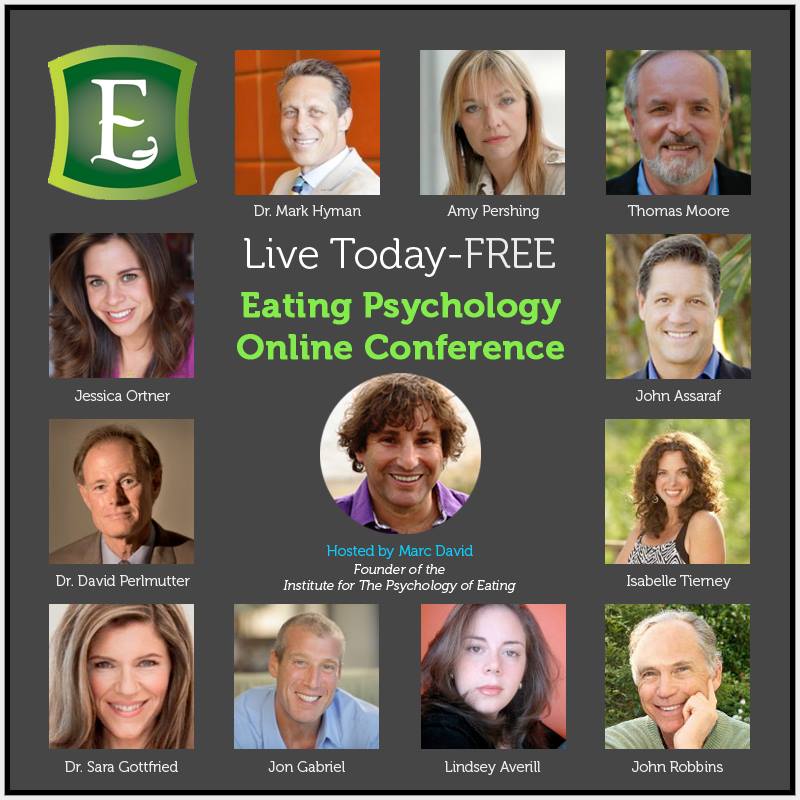
day 1The 2nd Annual Online Eating Psychology Conference started today and I thought I’d share some gems from Marc David’s opening interview. Marc is the Founder of the Institute for the Psychology of Eating and the host of the 2nd Annual Online Eating Psychology Conference. He shared this:

My mission is to expand eating psychology so it’s for everyone
I have an inclusive approach and I have invited speakers and thought leaders with diverse viewpoints
I have invited people who care and who bring something special to their work

Marc says we need to handle eating challenges, emotional eating, body image issues, mood, digestion, immunity, fatigue etc. so “we can step forward into our greatness and give our gifts in this world”

Marc shared an example of 40 year old client who had digestive issues, was a binge eater, was constipated, had a low mood, got coughs and colds, needed to lose 20 lbs. She had tried everything and nothing worked. He looked at her diet which was extremely low in fat. He shared this “When you go low fat, binge eating is common.” When he said “You need to eat more fat, she had a horrified look. She had toxic belief that fat was bad for her. It’s an outdated belief but she had a fear of fat.” He had to work with her at a psychological level – suggesting a little bit of olive oil on her salad, eating an avocado and taking a fish oil supplement. She made the changes and she lost 14 lbs over the course of 3 months.

I really enjoyed his principles of “dynamic eating psychology” (a term Marc David coined):

  1. Food is a doorway and our relationship with food is a doorway to see what is there. He says “Stop fighting yourself and stop hating yourself and walk through the door and be a little curious. Insights will start to happen”
  2. Food is a great teacher. For example, I hate my job, I’m unhappy, something is out of balance.
  3. Every symptom has a deeper meaning and message
  4. You are here to heal – you could tweak someone’s diet and it can help, sometimes you need to do more
  5. Our life has a bigger purpose and higher calling – our eating challenges are here to move us in the right direction, help us get better and grow
  6. The more we can become personally empowered the more we can reach our metabolic potential. As you become the best possible person you can be, you have the best chance for the body to reach it’s potential.
  7. Food is love, energy, information and nutrition.

Marc says “We are banding together and bringing together experts to find a better way to eat.”

I am thrilled that I am one of the featured experts in the 2nd Annual Online Eating Psychology Conference on July 21 – 26, 2014.

My interview plays tomorrow July 22 and is called: “The amazing amino acids for eliminating anxiety and emotional eating.” Could your anxiety and emotional eating be a brain chemical imbalance? And how do we address this with the amazing amino acids and other key nutrients

Join me, along with Marc David, as he interviews over 45+ experts in eating psychology, embodiment, weight, health, and nutrition. Get ready to hear some great insights and information that will advance your understanding of eating psychology and personal transformation in this one-of-a-kind virtual conference!

Here are a few gems from other speakers on day 1.

Dr. Mark Hyman, founder of the Ultrawellness Center, and author of the new book “The Blood Solution 10 day Detox Diet” shared this in his interview:

We have bought it hook line and sinker that we have to eat less and exercise more i.e. it’s your fault that you’re fat
The science now shows that all calories are not the same and certain foods are addictive
When we outsource our cooking to food corporations we will get sick. We have to learn how to cook. We have to eat real food! Eat an avocado – it doesn’t have a barcode on it and it doesn’t have an ingredient list. If something has an ingedient list it’s probably not that great for you!

Amy Pershing’s topic is “The Psychology of Binge Eating” and she shared:

Binge eating is not a willpower issue
Causes are profoundly varied – genetics, trauma, dieting, weight-related bullying, mood disorders like anxiety and depression
5 million adults 18 years and older ie 3.5 % of women and 2% of men, meet the criteria for BED (binge eating disorder)

You can sign up for the 2nd Annual Online Eating Psychology Conference for FREE here: https://ipe.isrefer.com/go/2ndepoc/trudyscott/

Filed Under: Addiction, Amino Acids, Anxiety and panic, Emotional Eating, Events, Sugar and mood Tagged With: amino acids, anxiety, eating psychology, emotional eating, marc david, Trudy Scott

Anna Clendening: Anxious Singer on America’s Got Talent 2014

July 13, 2014 By Trudy Scott 45 Comments

anna clendening agt

Anna is a very talented 20 year old young woman who recently performed on America’s Got Talent 2014. Her singing was just beautiful and you could hear the raw emotion in her voice.

Being on this big stage was quite something for her – she’s been suffering from anxiety and depression since she was 16. A few months ago she was bedridden and having panic attacks. She said: “my mind had given up on me. I didn’t see a future. I didn’t want to be here anymore and I felt so bad about myself.”

She was able to turn things around dramatically with therapy and music.

During her audition, judge Howie Mandel shared: “I also suffer from an anxiety disorder – I have OCD.” He also said: “There isn’t anyone alive who doesn’t need help at some time and the world is here for you.” After her song, Howie was very kind and went and hugged her. He also said this: “life is filled with peaks and valleys, you have experienced a lot of valleys. Tonight, young lady, you are on a peak.”

I would have to agree and I’d like to say “bravo Anna!”  Watch her performance here….

I’ve got three other comments on this: the stigma of mental health, the wonderful effects of music for mood and encouragement to look in to the powerful effects of food and nutrients.

The stigma of mental health

I commend her for being open about her anxiety and depression. There is a great deal of stigma around mental illness but I had no idea how bad it was. I was very surprised to see all the cruel and insensitive comments on the youtube video. Here is one example:

Couldn’t leave her bed?  What a joke.  You didn’t see this kind this stuff 50 years ago.  It was called responsibility and accountability.  She was obviously validated and enabled by her parents.  Society today substantiates this crap.  It’s called life, and everybody has challenges and feeling they need to overcome, get over it.  I bet she’s drawing a nice little social security disability check, too. Its pretty sad that she has such self pity.  She is very attractive, talented, not overweight, racially advantaged, has loving parents.  She needs to visit a children’s cancer ward or burn ward and get a grip as to how truly blessed she is.  

I say this to Anna: “Just ignore these naysayers. You did good and the more of us who talk about it the more awareness we’ll bring.”

The wonderful effects of music for mood

In a 2009 paper called The effect of group music therapy on quality of life for participants living with a severe and enduring mental illness

A 10-week group music therapy project was designed to determine whether music therapy influenced quality of life and social anxiety for people with a severe and enduring mental illness living in the community. Ten one-hour weekly sessions including song singing, song writing and improvisation, culminated in each group recording original song/s in a professional studio.

This is what they found:

music therapy gave joy and pleasure, working as a team was beneficial, participants were pleasantly surprised at their creativity, and they took pride in their song.

A 2014 study called Possible benefits of singing to the mental and physical condition of the elderly, reported that the study participants felt:

refreshed, comfortable, light-hearted, relieved, and relaxed, they felt less tense and confused and their mood improved.  The level of cortisol, a salivary stress marker, decreased after singing.  The same tendencies were shown regardless of whether or not the subjects liked singing !  (this is my exclamation point)

I say this to Anna: “Good for you for finding music! I wish you all the best in AGT 2014!”

The powerful effects of food and nutrients

I would also like to encourage Anna and anyone with anxiety and depression to look in to the powerful effects of food and nutrients. Here are just a few of the topics we covered on the recent Anxiety Summit:

  • Dr. Felice Jacka – Principal Research Fellow at Deakin University, Melbourne, Australia: “The research: food for the treatment and prevention of anxiety and depression?”
  • Julie Matthews – Certified Nutrition Consultant and author of award winning book, Nourishing Hope for Autism: “BioIndividual Nutrition for Anxiety: How special diets and avoiding certain foods can Support individuals with anxiety.”
  • Mira Dessy – Certified Nutrition Educator, Real Food Advocate, and author of The Pantry Principle: “How additives in your food can make you anxious.”
  • Amanda Swart – Associate Professor, Department of Biochemistry, Stellenbosch University, South Africa: “Rooibos: a functional food in the management of stress“
  • Julia Ross, MFT – Pioneer in the field of Neuro-nutrient Therapy and the author of the best sellers The Mood Cure and The Diet Cure: “Eliminating Anxiety: Amino Acid Therapy and Adrenal Balancing.”

I say this to Anna: “I’d like to encourage you explore these and other biochemical approaches – so you can have zero anxiety and depression.”

And I say this to Howie: “I’d like to encourage you to also explore these and other biochemical approaches for eliminating your OCD.”  In this blog post about Charlize Theron I talk about how GABA, tryptophan, 5-HTP and/or inositol can end OCD and obsessive thoughts and behaviors.

I am musically “challenged” and can’t sing to save my life so while this is all very interesting to me, it’s not something I have experienced first hand.  I’d love to hear from you.  

Do you sing or play a musical instrument? How does it make you feel?  Does it help with anxiety, depression, stress?

Filed Under: Music, People Tagged With: america's got talent, amino acids, anna clendening, anxiety, anxious, food, music, stigma

  • « Go to Previous Page
  • Page 1
  • Interim pages omitted …
  • Page 14
  • Page 15
  • Page 16
  • Page 17
  • Page 18
  • Go to Next Page »

Primary Sidebar

GABA QuickStart Homestudy

gaba quickstart homestudy

Free Report

9 Great Questions Women Ask about Food, Mood and their Health

You'll also receive a complimentary subscription to my ezine "Food, Mood and Gal Stuff"


Connect with me

Popular Posts

  • Amino Acids Mood Questionnaire from The Antianxiety Food Solution
  • The Antianxiety Food Solution Amino Acid and Pyroluria Supplements
  • Pyroluria Questionnaire from The Antianxiety Food Solution
  • Collagen and gelatin lower serotonin: does this increase your anxiety and depression?
  • Tryptophan for the worry-in-your-head and ruminating type of anxiety
  • GABA for the physical-tension and stiff-and-tense-muscles type of anxiety
  • The Antianxiety Food Solution by Trudy Scott
  • Seriphos Original Formula is back: the best product for anxiety and insomnia caused by high cortisol
  • Am I an anxious introvert because of low zinc and vitamin B6? My response to Huffington Post blog
  • Vagus nerve rehab with GABA, breathing, humming, gargling and key nutrients

Recent Posts

  • Her cravings for chips and peanut butter were triggered by stress: GABA ends cravings and reduces physical tension and fear of heights
  • It is truly miraculous to be able to move through life without crippling anxiety and panic
  • GABA and tryptophan combo provide immediate and noticeable relief for tremors and cervical dystonia in just 7 days
  • Red light therapy for back and neck pain, plantar fasciitis and low mood – a complement to the amino acids GABA, DPA and tryptophan
  • What do I use instead of Seriphos to help lower high cortisol that is affecting my sleep and making me anxious at night?

Categories

  • 5-HTP
  • AB575
  • Addiction
  • ADHD
  • Adrenals
  • Alcohol
  • Allergies
  • Alzheimer's disease
  • Amino Acids
  • Anger
  • Antianxiety
  • Antianxiety Food Solution
  • Antidepressants
  • Anxiety
  • Anxiety and panic
  • Autism
  • Autoimmunity
  • benzodiazapines
  • Bipolar disorder
  • Books
  • Caffeine
  • Cancer
  • Candida
  • Children/Teens
  • Collagen
  • Cooking equipment
  • Coronavirus/COVID-19
  • Cravings
  • Depression
  • Detoxification
  • Diabetes
  • Diet
  • DPA/DLPA
  • Drugs
  • EFT/Tapping
  • EMF
  • EMFs
  • Emotional Eating
  • Endorphins
  • Environment
  • Essential oils
  • Events
  • Exercise
  • Fear
  • Fear of public speaking
  • Fertility and Pregnancy
  • Fish
  • Food
  • Food and mood
  • Functional neurology
  • GABA
  • Gene polymorphisms
  • General Health
  • Giving
  • Giving back
  • Glutamine
  • Gluten
  • GMOs
  • Gratitude
  • Gut health
  • Heart health/hypertension
  • Histamine
  • Hormone
  • Hyperparathyroidism
  • Hypoglycemia
  • Immune system
  • Inflammation
  • Insomnia
  • Inspiration
  • Introversion
  • Joy and happiness
  • Ketogenic diet
  • Lithium orotate
  • Looking awesome
  • Lyme disease and co-infections
  • MCAS/histamine
  • Medication
  • Men's health
  • Mental health
  • Mercury
  • Migraine
  • Mold
  • Movie
  • MTHFR
  • Multiple sclerosis
  • Music
  • NANP
  • Nature
  • Nutritional Psychiatry
  • OCD
  • Osteoporosis
  • Oxalates
  • Oxytocin
  • Pain
  • Paleo
  • Parasites
  • Parkinson’s disease
  • PCOS
  • People
  • PMS
  • Postpartum
  • PTSD/Trauma
  • Pyroluria
  • Questionnaires
  • Real whole food
  • Recipes
  • Research
  • Schizophrenia
  • serotonin
  • SIBO
  • Sleep
  • Special diets
  • Sports nutrition
  • Stress
  • Sugar addiction
  • Sugar and mood
  • Supplements
  • Teens
  • Testimonials
  • Testing
  • The Anxiety Summit
  • The Anxiety Summit 2
  • The Anxiety Summit 3
  • The Anxiety Summit 4
  • The Anxiety Summit 5
  • The Anxiety Summit 6
  • Thyroid
  • Thyroid health
  • Toxins
  • Tryptophan
  • Tyrosine
  • Uncategorized
  • Vegan/vegetarian
  • Women's health
  • Yoga

Archives

  • May 2026
  • April 2026
  • October 2025
  • September 2025
  • August 2025
  • July 2025
  • June 2025
  • May 2025
  • April 2025
  • March 2025
  • February 2025
  • January 2025
  • November 2024
  • October 2024
  • September 2024
  • August 2024
  • July 2024
  • June 2024
  • May 2024
  • April 2024
  • March 2024
  • February 2024
  • January 2024
  • December 2023
  • November 2023
  • October 2023
  • September 2023
  • August 2023
  • July 2023
  • June 2023
  • May 2023
  • April 2023
  • March 2023
  • February 2023
  • January 2023
  • December 2022
  • November 2022
  • October 2022
  • September 2022
  • August 2022
  • July 2022
  • June 2022
  • May 2022
  • April 2022
  • March 2022
  • February 2022
  • January 2022
  • December 2021
  • November 2021
  • October 2021
  • September 2021
  • August 2021
  • July 2021
  • June 2021
  • May 2021
  • April 2021
  • March 2021
  • February 2021
  • January 2021
  • December 2020
  • November 2020
  • October 2020
  • September 2020
  • August 2020
  • July 2020
  • June 2020
  • May 2020
  • April 2020
  • March 2020
  • February 2020
  • January 2020
  • December 2019
  • November 2019
  • October 2019
  • September 2019
  • August 2019
  • July 2019
  • June 2019
  • May 2019
  • April 2019
  • March 2019
  • February 2019
  • January 2019
  • December 2018
  • November 2018
  • October 2018
  • September 2018
  • August 2018
  • July 2018
  • June 2018
  • May 2018
  • April 2018
  • March 2018
  • February 2018
  • January 2018
  • December 2017
  • November 2017
  • October 2017
  • September 2017
  • August 2017
  • July 2017
  • June 2017
  • May 2017
  • April 2017
  • March 2017
  • February 2017
  • January 2017
  • December 2016
  • November 2016
  • October 2016
  • September 2016
  • August 2016
  • July 2016
  • June 2016
  • May 2016
  • April 2016
  • March 2016
  • February 2016
  • January 2016
  • December 2015
  • November 2015
  • October 2015
  • September 2015
  • August 2015
  • July 2015
  • June 2015
  • May 2015
  • April 2015
  • March 2015
  • February 2015
  • January 2015
  • December 2014
  • November 2014
  • October 2014
  • September 2014
  • August 2014
  • July 2014
  • June 2014
  • May 2014
  • April 2014
  • March 2014
  • February 2014
  • January 2014
  • December 2013
  • November 2013
  • October 2013
  • September 2013
  • August 2013
  • July 2013
  • June 2013
  • May 2013
  • April 2013
  • March 2013
  • February 2013
  • January 2013
  • December 2012
  • November 2012
  • October 2012
  • August 2012
  • July 2012
  • June 2012
  • May 2012
  • April 2012
  • March 2012
  • February 2012
  • January 2012
  • December 2011
  • November 2011
  • October 2011
  • September 2011
  • August 2011
  • July 2011
  • June 2011
  • May 2011
  • April 2011
  • March 2011
  • February 2011
  • January 2011
  • December 2010
  • October 2010
  • September 2010
  • July 2010
  • May 2010
  • April 2010
  • March 2010
  • February 2010
  • January 2010
  • November 2009

Share the knowledge!

The above statements have not been evaluated by the Food and Drug Administration. Products listed in this website are not intended to diagnose, treat, cure or prevent any disease.

The information provided on this site is for informational and educational purposes only and is not intended as a substitute for advice from your physician or other health care professional. You should consult with a healthcare professional before starting or modifying any diet, exercise, or supplementation program, before taking or stopping any medication, or if you have or suspect you may have a health problem.


Copyright © 2026 Trudy Scott. All Rights Reserved. | Privacy | Terms and Conditions | Refund Policy | Medical Disclaimer

Free Report

9 Great Questions Women Ask about Food, Mood and their Health

You’ll also receive a complimentary subscription to my ezine “Food, Mood and Gal Stuff”