• Skip to primary navigation
  • Skip to main content
  • Skip to primary sidebar

everywomanover29 blog

Food, Mood and Women's Health – Be your healthiest, look and feel great!

  • Blog
  • About
  • Services
  • Store
  • Resources
  • Testimonials
  • The Book
  • Newsletter
  • Contact
  • Search this site

The Anxiety Summit – How Methylfolate can make you Feel Worse and even Cause Anxiety, and What to do about it

May 12, 2015 By Trudy Scott 176 Comments


Dr. Benjamin Lynch ND, MTHFR and methylation expert, is interviewed  by host of the Anxiety Summit, Trudy Scott, Food Mood Expert and Nutritionist, author of The Antianxiety Food Solution.

How Methylfolate can make you Feel Worse and even Cause Anxiety, and What to do about it

  • Methylfolate and the MTHFR polymorphism
  • Anxiety and other side effects of too much methylfolate
  • How to prevent methylfolate side-effects
  • How to determine how much methylfolate to take

Here are some snippets from our interview (Dr Lynch actually closed with these wise words) :

Just because you have MTHFR doesn’t mean you’re screwed! 

Don’t look at MTHFR as a bad thing

It just means you have to do things differently

Be proactive and don’t be scared about it

At the start of our interview he said this:

Anxiety can be relieved by methylfolate but it can also be made worse

Here are some snippets from Dr. Lynch’s excellent article: Methylfolate Side Effects

Methylfolate is a remarkable nutrient yet it can create significant side effects.

Those who have MTHFR mutations (especially the C677T MTHFR mutation) learn that methylfolate is critical to take. The issue is methylfolate can cause more harm than good if not started at the right time or tapered up slowly in amount.

There appear to be three types of responses to methylfolate:

FIRST: A person who can jump on methylfolate and feel absolutely wonderful. The only down side they experience is why didn’t they know about methylfolate before?!

SECOND: A person starts methylfolate has an amazingly incredible week where they are happy, interacting and alert. Then the second week comes and they switch to wanting to hide in a room by themselves or literally throw dishes across the room out of anger. Or they may become bed ridden from muscle aches, intense headaches or joint pain.

THIRD: A person takes a small amount of methylfolate and feels all the methylfolate side effects right out the gate.

The above blog also lists the Methylfolate Side Effects:

  • irritability
  • insomnia
  • sore muscles
  • achy joints
  • acne
  • rash
  • severe anxiety
  • palpitations
  • nausea
  • headaches
  • migraines

I encourage you to read the whole blog that Dr Lynch has written (Methylfolate Side Effects)

And here is the related blog on Preventing Methylfolate Side Effects.  I’ve included some snippets here but please read the whole article too

ALREADY TAKING METHYLFOLATE AND FEEL GREAT?

Excellent! However, it may be a ‘honeymoon’ period and in a few days or weeks, side effects may appear.

Discuss this article with your doctor and make appropriate changes to your protocol.

Just think of a bell-shaped curve.

Before you started taking methylfolate, you felt terrible. You began taking it and started to feel good. Day after day goes by and you continue to improve. In time if the above things are not corrected, you will begin to slide down the other side of the bell-shaped curve.

My whole point of this article is to prevent this from happening!

My goal is to keep you feel amazing!

I’ve seen it happen way too much – caused by me, caused by other doctors and caused by over-excited people feeling amazing and pushing their system too hard with methylfolate. Methylfolate is powerful.

This last statement by Dr. Lynch is why I invited him to speak on this summit on this topic!

This is the Dr. Carl Pfeiffer and Dr Bill Walsh histapenia/histadelia blog post that I referred to in our discussion.  You can either read the discussion in the comments or read this new blog post I created: Methylation and anxiety: histadelia and histapenia.

Here is information about the first annual Seeking Health Educational Institute Conference, SHEI Con 15 (an event for health professionals).

Dr Lynch and a team of world-renowned physicians will be presenting absolutely new clinically-relevant information that has never been seen before ANYWHERE.

The main topics of SHEI Con 15 are centered around where physicians must look to recover their patient’s heath at the core.

Mitochondria: Function, Dysfunction, Connections to Pathologies, Identification and Restoration

Cell Membranes: Function, Dysfunction, Connections to Pathologies, Identification and Restoration

If you are not already registered for the Anxiety Summit you can get live access to the speakers of the day here: www.theAnxietySummit.com

Missed this interview or can’t listen live? Or want this and the other great interviews for your learning library? Purchase the MP3s or MP3s + transcripts and listen when it suits you.

You can find your purchasing options here: Anxiety Summit Season 1, Anxiety Summit Season 2, and Anxiety Summit Season 3.

Filed Under: Antianxiety, MTHFR, The Anxiety Summit 3 Tagged With: anxiety, Dr Ben Lynch, Methylation, methylfolate, mthfr, the anxiety summit, Trudy Scott

The Anxiety Summit – Foods to balance your hormones and ease anxiety

May 11, 2015 By Trudy Scott 77 Comments


Magdalena Wszelaki, founder of Hormones Balance, is interviewed by host of the Anxiety Summit, Trudy Scott, Food Mood Expert and Nutritionist, author of The Antianxiety Food Solution.

Foods to balance your hormones and ease anxiety (part 1)

  • Magdalena’s own journey with Graves’ disease, Hashimoto’s disease, adrenal fatigue, estrogen dominance and anxiety
  • How hormonal imbalances can cause anxiety: low progesterone, low/high estrogen
  • How over and underactive thyroid can cause anxiety
  • The adrenals and anxiety and depression

Foods to balance your hormones and ease anxiety (part 2)

  • How to test for hormonal imbalances
  • The foundation to all hormonal health being: healthy gut, healthy blood sugar levels and optimal liver health
  • Foods that support the production of the different hormones
  • Seed rotation for balancing estrogen and progesterone
  • The role of coffee in liver health, hormone metabolism and anxiety


In part  1 we discussed this 2015 paper: Sex hormones affect neurotransmitters and shape the adult female brain during hormonal transition periods.

Here we review the evidence from animal experiments and human studies reporting interactions between sex hormones and the dominant neurotransmitters, such as serotonin, dopamine, GABA and glutamate

The brain represents an important target for estrogen and progesterone effects.

major shifts in sex hormone levels seem to be paralleled by the incidence rates of mood disorders such as unipolar depression

A subgroup of women suffers from clinical level of premenstrual mood changes called premenstrual dysphoric disorder (PMDD)… core symptoms include anxiety, irritability and depressed mood

Estrogen has been reported to have potent serotonin-modulating properties

progesterone and its neuroactive metabolites (allopregnanolone, pregnanolone) seem to facilitate GABAergic transmission

To summarize, neurotransmitter systems do not work in isolation and sex hormones act on multiple sites, highly intertwined with serotonin, dopamine, GABA and glutamate.

Magdalena shared these low estrogen symptoms:

  • Forgetfulness
  • Incontinence
  • Skin elasticity problems
  • Loss of muscle strength
  • Feeling really blah
  • Osteoporosis/osteopenia
  • Warm flashes and/or night sweats

Magdalena shared these low progesterone symptoms:

  • Tender breasts
  • PMS
  • Irregular periods
  • Puffiness and water retention
  • Mood swings and anger
  • Anxiety and sleep issues
  • Problems falling pregnant
 
In part 2:
 
Magdalena shared how the foundation of hormone balance is a healthy gut and talked about food intolerances, the microbiome, bone broths and quality animal protein.
 
I loved the discussion on using seed rotation for hormonal balancing: flax seeds and pumpkin seeds for the first half of your cycle and sesame and sunflower seeds for the second  half of your cycle/luteal phase (the cracker recipes are in the gift download – see below). 
 
Coffee does affect our hormones and here is a great guest blog post by Magdalena: 12 Ways Coffee Impacts Your Hormones 
If you had to give up either coffee or the internet for 2 weeks, which one would you choose? How about either coffee or sex for 2 weeks? If you’d rather relinquish anything to keep your coffee, you’d be on par with the majority of the people around you.
Be sure to check it out and try out her delicious Roasted Chicory Root Latte recipe.

I shared my recipe: Carob Cinnamon Delight instead of coffee – a calming hot beverage and mentioned rooibos tea how it’s A Functional Food in the Management of Stress (an interview from a prior anxiety summit)

Magdalena mentioned the EWG/Environmental Working Group’s Skin Deep site for checking your cosmetics – simply enter the name of the product in the search area.

We also mentioned Annmarie Gianni Skin Care, which is a natural skin care line made with organic ingredients that you can trust – and that actually work. This is the best and most natural skin-care line I have come across – anywhere! It’s organic, uses absolutely zero toxic ingredients and features gorgeous essential oils! You can try your Annmarie Gianni Skin Care sample kit here. 


Magdalena’s gift: How to Rebalance Your Hormones with Food and Recipes

magdalena gift image


If you are not already registered for the Anxiety Summit you can get live access to the speakers of the day here: www.theAnxietySummit.com 

Missed this interview or can’t listen live? Or want this and the other great interviews for your learning library? Purchase the MP3s or MP3s + transcripts and listen when it suits you.

You can find your purchasing options here: Anxiety Summit Season 1, Anxiety Summit Season 2, and Anxiety Summit Season 3.

Filed Under: Antianxiety, Fertility and Pregnancy, Hormone, The Anxiety Summit 3, Thyroid health Tagged With: cortisol, estrogen, food, GABA, hormones, Hormones Balance, Magdalena Wszelaki, progesterone, serotonin, the anxiety summit, Trudy Scott

The Anxiety Summit – Nutritional Influences on Anxiety and Musculoskeletal Pain

May 11, 2015 By Trudy Scott 20 Comments


Joe Tatta DPT, CCN, Musculoskeletal Pain Expert, was interviewed by host of the Anxiety Summit, Trudy Scott, Food Mood Expert and Nutritionist, author of The Antianxiety Food Solution.

Nutritional Influences on Anxiety and Musculoskeletal Pain

  • Link between anxiety and chronic musculoskeletal problems
  • Fear avoidance behaviors and pain
  • Headaches, back pain, joint pain and nutritional influences
  • An exercise prescription for anxiety

Here are some snippets from our interview:

People used to think depression was more linked to chronic pain but we are learning its more anxiety driven

The chronic anxiety that people have on a daily basis kicks off the pain process

Negative thoughts, worry, doom-and-gloom about the future all come in to play, with fear being the most common emotion leading to pain

Here is the very recent 2015 paper that discusses this – Psychological functioning of people living with chronic pain: A meta-analytic review.

Joe tied fear and anxiety to adrenalin release and the effects on the muscles, specifically how the smaller muscles around the spine and in the neck are turned off. You then have less blood flow, less oxygen and less nutrients going to those muscles and that’s when the pain starts.

Joe shared the staggering number of people who suffer from chronic pain:

more than those who suffer from heart disease, diabetes and cancer combined!

We also discussed migraines and magnesium, and this paper: Why all migraine patients should be treated with magnesium

Magnesium, the second most abundant intracellular cation, is essential in many intracellular processes and appears to play an important role in migraine pathogenesis. Routine blood tests do not reflect true body magnesium stores since <2% is in the measurable, extracellular space, 67% is in the bone and 31% is located intracellularly. Lack of magnesium may promote cortical spreading depression, hyperaggregation of platelets, affect serotonin receptor function, and influence synthesis and release of a variety of neurotransmitters.

There is strong evidence that magnesium deficiency is much more prevalent in migraine sufferers than in healthy controls.

Considering these features of magnesium, the fact that magnesium deficiency may be present in up to half of migraine patients, and that routine blood tests are not indicative of magnesium status, empiric treatment with at least oral magnesium is warranted in all migraine sufferers.

If you are not already registered for the Anxiety Summit you can get live access to the speakers of the day here: www.theAnxietySummit.com

Missed this interview or can’t listen live? Or want this and the other great interviews for your learning library? Purchase the MP3s or MP3s + transcripts and listen when it suits you.

You can find your purchasing options here: Anxiety Summit Season 1, Anxiety Summit Season 2, and Anxiety Summit Season 3.

Filed Under: Antianxiety, Anxiety and panic, Depression, Pain, The Anxiety Summit 3 Tagged With: anxiety, butterbur, chronic pain, cortisol, fear, Joe Tatta, magnesium, migraine, pain, the anxiety summit, Trudy Scott

The Anxiety Summit – Is Toxic Mold the Hidden Cause of Your Anxiety?

May 10, 2015 By Trudy Scott 54 Comments


Dr. Jill Carnahan MD, Functional Medicine Practitioner, is interviewed  by host of the Anxiety Summit, Trudy Scott, Food Mood Expert and Nutritionist, author of The Antianxiety Food Solution.

Is Toxic Mold the Hidden Cause of Your Anxiety?

  • An overview of functional medicine
  • How common is it for mold and mycotoxins to contribute to illness and anxiety
  • Where are we exposed to mold
  • Top symptoms associated with mycotoxin-associated illness
  • How to treat mold/mycotoxin exposure in someone who has anxiety (or depression)
  • The role of methylation and MTHFR polymorphisms in our detox abilities

We talked about the upcoming IFM conference: The Omics Revolution – Nature and Nurture, May 28-30, Austin TX

IFM’s 2015 Annual International Conference (AIC) will explore the wild and wonderful world of “omics,” including genomics, proteomics, metabolomics, and other terms that describe the cascade of responses in human biology initiated by signals from the outside world washing over our genes.

It’s not nature or nurture but nature (genetic heritage) and nurture (lifestyle and environment).

I’m excited to be attending for the first time and can’t wait. I know this conference does fill up each year so if you’re interested don’t wait to sign up.

Dr. Jill talked about functional medicine so I pulled this functional medicine definition off the IFM site:

Functional medicine addresses the underlying causes of disease, using a systems-oriented approach and engaging both patient and practitioner in a therapeutic partnership. It is an evolution in the practice of medicine that better addresses the healthcare needs of the 21st century. By shifting the traditional disease-centered focus of medical practice to a more patient-centered approach, functional medicine addresses the whole person, not just an isolated set of symptoms. Functional medicine practitioners spend time with their patients, listening to their histories and looking at the interactions among genetic, environmental, and lifestyle factors that can influence long-term health and complex, chronic disease. In this way, functional medicine supports the unique expression of health and vitality for each individual.

The topics we cover on this summit and the approaches the Anxiety Summit speakers take all fall under the definition of functional medicine.

Dr. Jill shared her story and amazing healing journey with cancer. You can read about this here

mold

Top Symptoms Associated with Mycotoxin-Associated Illness per the blog on Dr. Jill’s site: Is Toxic Mold Exposure the Cause of Your Symptoms?

  •    Fatigue and weakness
  •    Headache, light sensitivity
  •    Poor memory, difficult word finding
  •    Difficulty concentration
  •    Morning stiffness, joint pain
  •    Unusual skin sensations, tingling and numbness
  •    Shortness of breath, sinus congestion or chronic cough
  •    Appetite swings, body temperature regulation
  •    Increased urinary frequency or increased thirst
  •    Red eyes, blurred vision, sweats, mood swings, sharp pains
  •    Abdominal pain, diarrhea, bloating
  •    Tearing, disorientation, metallic taste in mouth
  •    Static shocks
  •    Vertigo, feeling lightheaded

(do check out the above link for more in depth information on Dr Jill’s site)

We didn’t discuss this paper but I’m including it anyway because anxiety isn’t in the above list of symptoms: Psychological, neuropsychological, and electrocortical effects of mixed mold exposure

The authors assessed the psychological, neuropsychological, and electrocortical effects of human exposure to mixed colonies of toxigenic molds

Patients reported high levels of physical, cognitive, and emotional symptoms.

Most of the patients were found to suffer from acute stress, adjustment disorder, or post-traumatic stress

These findings indicated a hypoactivation of the frontal cortex, possibly due to brainstem involvement and insufficient excitatory input from the reticular activating system. Neuropsychological testing revealed impairments similar to mild traumatic brain injury.

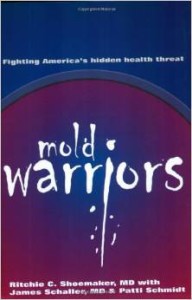
This is the book that Dr. Jill mentioned – Mold Warriors: Fighting America’s Hidden Health Threat by Ritchie C. Shoemaker

ritchie shoemaker mold warriors


Dr Jill has these Paleolicious Snack Ideas for download

If you are not already registered for the Anxiety Summit you can get live access to the speakers of the day here: www.theAnxietySummit.com

Missed this interview or can’t listen live? Or want this and the other great interviews for your learning library? Purchase the MP3s or MP3s + transcripts and listen when it suits you.

You can find your purchasing options here: Anxiety Summit Season 1, Anxiety Summit Season 2, and Anxiety Summit Season 3.

Filed Under: Antianxiety, The Anxiety Summit 3 Tagged With: anxiety, IFM, Jill Carnahan, mold, Ritchie Shoemaker, the anxiety summit, toxic mold, Trudy Scott

The Anxiety Summit – Small Intestinal Bacterial Overgrowth and Anxiety

May 9, 2015 By Trudy Scott 56 Comments


Dr. Allison Siebecker ND, LAc, SIBO specialist, was interviewed on the Anxiety Summit by host of the Anxiety Summit, Trudy Scott, Food Mood Expert and Nutritionist, author of The Antianxiety Food Solution.

Small Intestinal Bacterial Overgrowth and Anxiety

  • An overview of SIBO/small intestinal bacterial overgrowth and recent research
  • The SIBO connection to IBS and anxiety/depression
  • Using a SIBO questionnaire and SIBO testing
  • SIBO treatment: medications, a herbal approach and diet
  • Gut motility and low serotonin

Here is the information on the 2015 SIBO Symposium, June 6–7, 2015.

Designed for the medical doctor, alternative medicine practitioner, and the public, the 2nd Annual SIBO Symposium features the nation’s leading experts on the topic to present an evidence-based educational program on managing small intestine bacterial overgrowth.
Here is the definition of SIBO from the SIBO Symposium site:
Small intestine bacterial overgrowth (SIBO) is a chronic bacterial colonization of the small intestine.  These bacteria normally live in the gastrointestinal tract, however, in SIBO they have overgrown in a location not meant for so many bacteria. The bacteria interfere with our normal digestion and absorption of food and are associated with damage to the lining or membrane of the small intestine. These mechanisms in turn lead to myriad other disorders—gastrointestinal, systemic, and neurological.

Dr Siebecker has this quote on her site www.siboinfo.com (which has a wealth of information)

According to Bures et al,

It is mandatory to consider SIBO in all cases of complex non-specific dyspeptic complaints (bloating, abdominal discomfort, diarrhea, abdominal pain), in motility disorders, anatomical abnormalities of the small bowel and in all malassimilation syndromes (malabsorption, maldigestion).

I said there were no studies linking SIBO and anxiety but there are many studies connecting SIBO and IBS, and there are many studies connecting IBS and anxiety/depression

However I wrote this in my book the  The Antianxiety Food Solution. (published in 2011)

Studies have found that people with digestive complaints such IBS, food allergies and sensitivities, small intestinal bacterial overgrowth and ulcerative colitis frequently suffer from anxiety and, to a lesser extent, depression (Addolorato, Mirijello, D’Angelo, Leggio, Ferrulli, Abenavoli, et al. 2008).

One study (Lydiard 2001) found that 50 to 90 percent of people with IBS who visited a doctor for treatment also suffered from various anxiety disorders (panic disorder, generalized anxiety disorder, social phobia, and post-traumatic stress disorder) and major depression.

Here is a list of the symptoms of SIBO

Here are some of the papers we mentioned:

Serotonin and Its Role in Colonic Function and in Gastrointestinal Disorders

Herbal therapy is equivalent to rifaximin for the treatment of small intestinal bacterial overgrowth

You’ll find many more papers on Dr. Siebecker’s siboinfo.com research section

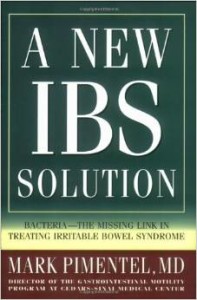
This is the book Dr Siebecker mentioned:  A New IBS Solution: Bacteria-The Missing Link in Treating Irritable Bowel Syndrome, written by Dr Mark Pimentel

mark pimentel IBS book


If you are not already registered for the Anxiety Summit you can get live access to the speakers of the day here: www.theAnxietySummit.com

Missed this interview or can’t listen live? Or want this and the other great interviews for your learning library? Purchase the MP3s or MP3s + transcripts and listen when it suits you.

You can find your purchasing options here: Anxiety Summit Season 1, Anxiety Summit Season 2, and Anxiety Summit Season 3.

Filed Under: Antianxiety, SIBO, The Anxiety Summit 3 Tagged With: Allison Siebecker, SIBO, SIBO symposium, small intestinal bacterial overgrowth, the anxiety summit, Trudy Scott

The Anxiety Summit – The Parasite/Anxiety Connection

May 9, 2015 By Trudy Scott 46 Comments


Ann Louise Gittleman PhD, CNS, author of The Fat Flush Plan and Guess What Came to Dinner, was interviewed on the Anxiety Summit by host of the Anxiety Summit, Trudy Scott, Food Mood Expert and Nutritionist, author of The Antianxiety Food Solution.

The Parasite/Anxiety Connection

  • How common are parasites and how do we become infected (even if we live in a first world country)
  • How do parasites contribute to anxiety and depression and even schizophrenia
  • Other symptoms of a parasitic infection
  • How to avoid being exposed to parasites
  • How to test for parasites and how do we get rid of the parasite/s

Here are some gems from our interview:

Parasitic infections in the USA are far more common than you would expect – in fact the estimates are that 1 in every 3 people have a parasite or more than one

Parasites can contribute to or cause anxiety and fear by altering “hormonal and neurotransmitter communication and/or direct interference with the neurons and brain regions that mediate behavioural expression”

According to folklore, parasites are more active around the full moon, so testing and treating around this time may yield better results

Toxoplasma gondii is one parasite that has been researched a great deal and is one that has big implications for anxiety and other mood conditions, especially schizophrenia.

Ann Louise shared this interesting article from Scientific American called Toxoplasma’s Dark Side: The Link Between Parasite and Suicide

In 2003, E. Fuller Torrey of the Stanley Medical Research Institute in Bethesda, Maryland his colleagues noted a link between Toxoplasma and schizophrenia – specifically, that women with high levels of the parasite were more likely to give birth to schizophrenics-to-be

scientists have discovered a link between suicide and parasite infection

In 2006, researchers linked Toxoplasma infection to neuroticism in both men and women.

When we are infected with a parasite like Toxoplasma gondii, our immune system goes on the offensive, producing a group of molecules called cytokines that activate various immune cell types. The exact mechanism by which cytokines cause depression and other mental illnesses is poorly understood, but we do know they are able to pass the blood-brain barrier and alter neurotransmitters like serotonin and dopamine in the brain.

Here is the parasite testing and products we discussed:  

The Expanded GI panel (for testing)

Colon Cleaning kit with Verma-Plus and Para- Key (together with a probiotic)

Verma-Plus contains the Native American herb called Centaury (aerial portion) (Centaurium erythraea)

It seems to have antimicrobial properties too: Volatile organic compounds from Centaurium erythraea Rafn (Croatia) and the antimicrobial potential of its essential oil.

And gastroprotective effects: Gastroprotective effect of small centaury (Centaurium erythraea L) on aspirin-induced gastric damage in rats.

We also talked about using filtered water for washing fruits and vegetables and this is the water filter Ann Louise recommends: Countertop Ultra-Ceramic Water Filter. “It purifies your tap water for the removal of incoming contaminants including parasites, chlorine, chloramines, heavy metals, cloudiness and sediment. The ceramic filter also inhibits the growth of bacteria”

Ann Louise has written many wonderful books.  Here are three of them that were mentioned in this interview:

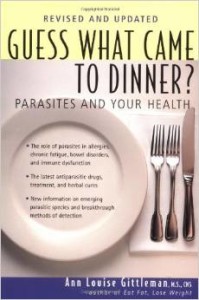
Guess What Came to Dinner? Parasites and Your Health (this is the book about parasites)

Ann Louise Gittleman_guess what came to dinner


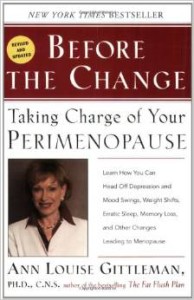
Before the Change: Taking Charge of Your Perimenopause (this is the one that helped me so much when I was in my late thirties and having perimenopausal symptoms – with the zinc, vitamin B6 and evening primrose oil )

Ann Louise Gittleman_before the change


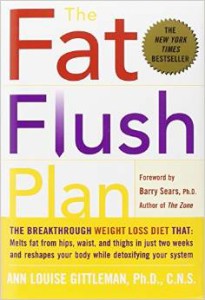
The Fat Flush Plan (this is one of many her classic weight loss books)

AnnLouiseGittleman_fat flush plan


Here is her gift: a 50-Page Report on Parasites – Still the Greatest Masqueraders of All Time

If you are not already registered for the Anxiety Summit you can get live access to the speakers of the day here: www.theAnxietySummit.com

Missed this interview or can’t listen live? Or want this and the other great interviews for your learning library? Purchase the MP3s or MP3s + transcripts and listen when it suits you.

You can find your purchasing options here: Anxiety Summit Season 1, Anxiety Summit Season 2, and Anxiety Summit Season 3.
Filed Under: Antianxiety, Parasites, Testing, The Anxiety Summit 3 Tagged With: ann louise gittleman, parasites, perimenopause, schizophrenia, the anxiety summit, toxoplasma gondii, Trudy Scott

  • « Go to Previous Page
  • Page 1
  • Interim pages omitted …
  • Page 114
  • Page 115
  • Page 116
  • Page 117
  • Page 118
  • Interim pages omitted …
  • Page 160
  • Go to Next Page »

Primary Sidebar

GABA QuickStart Homestudy

gaba quickstart homestudy

Free Report

9 Great Questions Women Ask about Food, Mood and their Health

You'll also receive a complimentary subscription to my ezine "Food, Mood and Gal Stuff"


Connect with me

Popular Posts

  • Amino Acids Mood Questionnaire from The Antianxiety Food Solution
  • The Antianxiety Food Solution Amino Acid and Pyroluria Supplements
  • Pyroluria Questionnaire from The Antianxiety Food Solution
  • Collagen and gelatin lower serotonin: does this increase your anxiety and depression?
  • Tryptophan for the worry-in-your-head and ruminating type of anxiety
  • GABA for the physical-tension and stiff-and-tense-muscles type of anxiety
  • The Antianxiety Food Solution by Trudy Scott
  • Seriphos Original Formula is back: the best product for anxiety and insomnia caused by high cortisol
  • Am I an anxious introvert because of low zinc and vitamin B6? My response to Huffington Post blog
  • Vagus nerve rehab with GABA, breathing, humming, gargling and key nutrients

Recent Posts

  • Her cravings for chips and peanut butter were triggered by stress: GABA ends cravings and reduces physical tension and fear of heights
  • It is truly miraculous to be able to move through life without crippling anxiety and panic
  • GABA and tryptophan combo provide immediate and noticeable relief for tremors and cervical dystonia in just 7 days
  • Red light therapy for back and neck pain, plantar fasciitis and low mood – a complement to the amino acids GABA, DPA and tryptophan
  • What do I use instead of Seriphos to help lower high cortisol that is affecting my sleep and making me anxious at night?

Categories

  • 5-HTP
  • AB575
  • Addiction
  • ADHD
  • Adrenals
  • Alcohol
  • Allergies
  • Alzheimer's disease
  • Amino Acids
  • Anger
  • Antianxiety
  • Antianxiety Food Solution
  • Antidepressants
  • Anxiety
  • Anxiety and panic
  • Autism
  • Autoimmunity
  • benzodiazapines
  • Bipolar disorder
  • Books
  • Caffeine
  • Cancer
  • Candida
  • Children/Teens
  • Collagen
  • Cooking equipment
  • Coronavirus/COVID-19
  • Cravings
  • Depression
  • Detoxification
  • Diabetes
  • Diet
  • DPA/DLPA
  • Drugs
  • EFT/Tapping
  • EMF
  • EMFs
  • Emotional Eating
  • Endorphins
  • Environment
  • Essential oils
  • Events
  • Exercise
  • Fear
  • Fear of public speaking
  • Fertility and Pregnancy
  • Fish
  • Food
  • Food and mood
  • Functional neurology
  • GABA
  • Gene polymorphisms
  • General Health
  • Giving
  • Giving back
  • Glutamine
  • Gluten
  • GMOs
  • Gratitude
  • Gut health
  • Heart health/hypertension
  • Histamine
  • Hormone
  • Hyperparathyroidism
  • Hypoglycemia
  • Immune system
  • Inflammation
  • Insomnia
  • Inspiration
  • Introversion
  • Joy and happiness
  • Ketogenic diet
  • Lithium orotate
  • Looking awesome
  • Lyme disease and co-infections
  • MCAS/histamine
  • Medication
  • Men's health
  • Mental health
  • Mercury
  • Migraine
  • Mold
  • Movie
  • MTHFR
  • Multiple sclerosis
  • Music
  • NANP
  • Nature
  • Nutritional Psychiatry
  • OCD
  • Osteoporosis
  • Oxalates
  • Oxytocin
  • Pain
  • Paleo
  • Parasites
  • Parkinson’s disease
  • PCOS
  • People
  • PMS
  • Postpartum
  • PTSD/Trauma
  • Pyroluria
  • Questionnaires
  • Real whole food
  • Recipes
  • Research
  • Schizophrenia
  • serotonin
  • SIBO
  • Sleep
  • Special diets
  • Sports nutrition
  • Stress
  • Sugar addiction
  • Sugar and mood
  • Supplements
  • Teens
  • Testimonials
  • Testing
  • The Anxiety Summit
  • The Anxiety Summit 2
  • The Anxiety Summit 3
  • The Anxiety Summit 4
  • The Anxiety Summit 5
  • The Anxiety Summit 6
  • Thyroid
  • Thyroid health
  • Toxins
  • Tryptophan
  • Tyrosine
  • Uncategorized
  • Vegan/vegetarian
  • Women's health
  • Yoga

Archives

  • May 2026
  • April 2026
  • October 2025
  • September 2025
  • August 2025
  • July 2025
  • June 2025
  • May 2025
  • April 2025
  • March 2025
  • February 2025
  • January 2025
  • November 2024
  • October 2024
  • September 2024
  • August 2024
  • July 2024
  • June 2024
  • May 2024
  • April 2024
  • March 2024
  • February 2024
  • January 2024
  • December 2023
  • November 2023
  • October 2023
  • September 2023
  • August 2023
  • July 2023
  • June 2023
  • May 2023
  • April 2023
  • March 2023
  • February 2023
  • January 2023
  • December 2022
  • November 2022
  • October 2022
  • September 2022
  • August 2022
  • July 2022
  • June 2022
  • May 2022
  • April 2022
  • March 2022
  • February 2022
  • January 2022
  • December 2021
  • November 2021
  • October 2021
  • September 2021
  • August 2021
  • July 2021
  • June 2021
  • May 2021
  • April 2021
  • March 2021
  • February 2021
  • January 2021
  • December 2020
  • November 2020
  • October 2020
  • September 2020
  • August 2020
  • July 2020
  • June 2020
  • May 2020
  • April 2020
  • March 2020
  • February 2020
  • January 2020
  • December 2019
  • November 2019
  • October 2019
  • September 2019
  • August 2019
  • July 2019
  • June 2019
  • May 2019
  • April 2019
  • March 2019
  • February 2019
  • January 2019
  • December 2018
  • November 2018
  • October 2018
  • September 2018
  • August 2018
  • July 2018
  • June 2018
  • May 2018
  • April 2018
  • March 2018
  • February 2018
  • January 2018
  • December 2017
  • November 2017
  • October 2017
  • September 2017
  • August 2017
  • July 2017
  • June 2017
  • May 2017
  • April 2017
  • March 2017
  • February 2017
  • January 2017
  • December 2016
  • November 2016
  • October 2016
  • September 2016
  • August 2016
  • July 2016
  • June 2016
  • May 2016
  • April 2016
  • March 2016
  • February 2016
  • January 2016
  • December 2015
  • November 2015
  • October 2015
  • September 2015
  • August 2015
  • July 2015
  • June 2015
  • May 2015
  • April 2015
  • March 2015
  • February 2015
  • January 2015
  • December 2014
  • November 2014
  • October 2014
  • September 2014
  • August 2014
  • July 2014
  • June 2014
  • May 2014
  • April 2014
  • March 2014
  • February 2014
  • January 2014
  • December 2013
  • November 2013
  • October 2013
  • September 2013
  • August 2013
  • July 2013
  • June 2013
  • May 2013
  • April 2013
  • March 2013
  • February 2013
  • January 2013
  • December 2012
  • November 2012
  • October 2012
  • August 2012
  • July 2012
  • June 2012
  • May 2012
  • April 2012
  • March 2012
  • February 2012
  • January 2012
  • December 2011
  • November 2011
  • October 2011
  • September 2011
  • August 2011
  • July 2011
  • June 2011
  • May 2011
  • April 2011
  • March 2011
  • February 2011
  • January 2011
  • December 2010
  • October 2010
  • September 2010
  • July 2010
  • May 2010
  • April 2010
  • March 2010
  • February 2010
  • January 2010
  • November 2009

Share the knowledge!

The above statements have not been evaluated by the Food and Drug Administration. Products listed in this website are not intended to diagnose, treat, cure or prevent any disease.

The information provided on this site is for informational and educational purposes only and is not intended as a substitute for advice from your physician or other health care professional. You should consult with a healthcare professional before starting or modifying any diet, exercise, or supplementation program, before taking or stopping any medication, or if you have or suspect you may have a health problem.


Copyright © 2026 Trudy Scott. All Rights Reserved. | Privacy | Terms and Conditions | Refund Policy | Medical Disclaimer

Free Report

9 Great Questions Women Ask about Food, Mood and their Health

You’ll also receive a complimentary subscription to my ezine “Food, Mood and Gal Stuff”