• Skip to primary navigation
  • Skip to main content
  • Skip to primary sidebar

everywomanover29 blog

Food, Mood and Women's Health – Be your healthiest, look and feel great!

  • Blog
  • About
  • Services
  • Store
  • Resources
  • Testimonials
  • The Book
  • Contact
  • Search this site

GABA

Sleep improvement: Oral intake of GABA and Apocynum venetum leaf extract

July 8, 2016 By Trudy Scott 17 Comments

sleep-improvement

I’ve blogged about the Sleep promoting effects of combined GABA and 5-HTP. There is another combination of nutrients that has been shown to help with sleep: GABA and the herb Apocynum venetum leaf extract.

In this 2015 paper: The Improvement of Sleep by Oral Intake of GABA and Apocynum venetum Leaf Extract

The electroencephalogram (EEG) test revealed that oral administration of GABA (100 mg) and [Apocynum venetum Leaf Extract] AVLE (50 mg) had beneficial effects on sleep.

In this study they found that GABA helps people to fall asleep quickly and Apocynum venetum Leaf Extract induces deep sleep, and that they work well when taken together.

The authors conclude that both GABA and Apocynum venetum leaf extract:

can be regarded as safe and appropriate for daily intake in order to improve the quality of sleep.

Earlier this year I heard Dr. Peter Bongiorno present at the Integrative Healthcare Symposium and one of the herbs he covered was Apocynum venetum leaf extract for depression. Since this was new to me, I invited him to share about this herb on the recent Anxiety Summit: Serotonin and anxiety: tryptophan, 5-HTP, serotonin syndrome and medication tapers

I also briefly mentioned the above GABA/Apocynum venetum leaf extract study in my talk on the recent Anxiety Summit – GABA: Blood brain barrier controversy, concerns, best forms and how to do a trial for eliminating anxiety

I find that many of my clients with anxiety also have sleep problems and GABA is often helpful if their sleep issues are related to low GABA levels, often manifesting as physical tension.

One of the signs of low serotonin, in addition to anxiety and worry, is insomnia and I find tryptophan (and sometimes 5-HTP) to be very helpful for many clients too. I’ll often have someone use both GABA and tryptophan (or GABA and 5-HTP) and the combination seems to be a good one.

I have not yet used Apocynum venetum leaf extract alone with clients or in combination with GABA and look forward to learning more. Have you have tried it alone or in combination with GABA? Have you used it with clients?
Filed Under: GABA, Tryptophan Tagged With: Apocynum venetum Leaf Extract, sleep, tryptophan

The Anxiety Summit – GABA: Blood brain barrier controversy, concerns, best forms and how to do a trial for eliminating anxiety

June 15, 2016 By Trudy Scott 106 Comments

Trudy Scott_GABA_Anxiety4

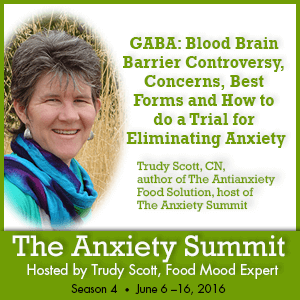
Trudy Scott, Food Mood Expert and Nutritionist, author of The Antianxiety Food Solution. presents during the Anxiety Summit Season 4.

GABA: Blood brain barrier controversy, concerns, best forms and how to do a trial for eliminating anxiety

  • Dispelling the blood brain barrier and the leaky brain myths
  • The newest research on GABA effectiveness
  • The best forms of GABA and why I have concerns about phenibut
  • Results from clients and feedback from practitioners using GABA
  • How to do a trial for the best results in eliminating anxiety

Here are some snippets from my presentation:

Worry and anxiety can be a result of low GABA and also low serotonin, so you may check off anxiety in both sections. Low GABA tends to result in a more physical anxiety, while low serotonin tends to result in more anxiety in the head and ruminating thoughts etc

With low GABA you have physical anxiety

  • Anxiety and feeling overwhelmed or stressed
  • Feeling worried or fearful
  • Panic attacks
  • Unable to relax or loosen up
  • Stiff or tense muscles
  • Feeling stressed and burned-out
  • Craving carbs, alcohol, or drugs for relaxation and calming

The targeted use of individual amino acid supplements like GABA will balance brain chemistry to alleviate anxiety, fear, worry, panic attacks, and feeling stressed or overwhelmed. They can also be helpful in addressing other problems that contribute to or exacerbate anxiety, such as sugar cravings and addictions. In addition, they can help with depression and insomnia, which often co-occur with anxiety.

Here is the amino acid questionnaire with all 5 sections including GABA

Here is the blog that discusses urinary neurotransmitter testing and why I don’t use it

Here are the list of amino acid precautions 

the main precaution with GABA is low blood pressure but I have yet to see it as an issue, liver/kidney issues – watch, GABA has not been studied in pregnancy or breastfeeding

Many individuals tapering from benzodiazepines find using GABA and other nutrients help the taper while others can’t tolerate GABA and other supplements.  If you’re new to the ill-effects of benzos do watch this webinar I did for Hawthorn University last year: Say NO to Benzos

The blood brain barrier controversy and the fact that so many people say GABA only works if you have a leaky brain

Does a GABA supplement have to cross the blood brain barrier to be effective? A nutrition seminar I have been to, said it does not and GABA supplements are ineffective

The 1960 paper published by Eugene Roberts, the scientist who discovered GABA mentions the failure of GABA to penetrate the blood-brain barrier readily:  Metabolic and Neurophysiological Roles of GABA

The 2015 zonulin intestinal permeability/leaky gut and possible blood brain barrier disruption paper: Gluten Psychosis: Confirmation of a New Clinical Entity

Zonulin is a tight junction modulator that is released by the small intestine mucosa upon gluten stimulation. Interestingly the zonulin receptor, identified as the precursor for haptoglobin-2, has been found in the human brain. Overexpression of zonulin (aka haptoglobin-2) could be involved in the blood brain barrier disruption similarly to the role that zonulin plays in increasing intestinal permeability.

NY Times article: Could Alzheimer’s Stem From Infections?

A virus, fungus or bacterium gets into the brain, passing through a membrane — the blood-brain barrier — that becomes leaky as people age

GABA – other possible mechanisms of action:

The microbiome and the bidirectional gut brain communication: Ingestion of Lactobacillus strain regulates emotional behavior and central GABA receptor expression in a mouse via the vagus nerve

Is the blood brain barrier more dynamic than assumed? A 2015 study discusses this Oral GABA supplementation allows better prioritizing of planned actions: new research

In the literature, there are controversial findings about GABA entering the brain through the blood brain barrier (BBB). The BBB is a tightly sealed layer of cerebral endothelial cells that form continuous tight junctions and prevent most solutes from entering the brain on the basis of size, charge, and lipid solubility. However … recent studies have demonstrated that the BBB is much more dynamic than assumed in the past, and some passage of solutes can occur by transcytosis, carrier-mediated transport, or simple diffusion of hydrophobic substances.

GABA’s relaxing effect may be due to peripheral effects rather than the effect on/in the brain. Here is an excerpt from this paper: GABA-receptors in peripheral tissues

GABA and its receptors are found in a wide range of peripheral tissues, including parts of the peripheral nervous system, endocrine, and non-neural tissues such as smooth muscle and the female reproductive system

The possible peripheral effects are also mentioned in this paper –  Psychological stress-reducing effect of chocolate enriched with gamma-aminobutyric acid (GABA) in humans: assessment of stress using heart rate variability and salivary chromogranin A

it has been considered that GABA may act on the peripheral nervous system of the digestive organs and not the central nervous system

The newest research on the mechanism of GABA was published just last year in October 2015 – Neurotransmitters as food supplements: the effects of GABA on brain and behavior

There is some evidence in favor of a calming effect of GABA food supplements, but most of this evidence was reported by researchers with a potential conflict of interest. We suggest that any veridical effects of GABA food supplements on brain and cognition might be exerted through BBB passage or, more indirectly, via an effect on the enteric nervous system. We conclude that the mechanism of action of GABA food supplements is far from clear, and that further work is needed to establish the behavioral effects of GABA. 

Here is other GABA research I mentioned:

  • A paper published in Life Sciences reports that a combination of GABA (?-aminobutyric acid) and 5-HTP (5-hydroxytryptophan) improved sleep and sleep duration more than the use of either of the two amino acids alone.
  • Research published in November 2015 – Study of GABA in Healthy Volunteers: Pharmacokinetics and Pharmacodynamics shows potential benefits for diabetes
  • The 2006 research on oral GABA being a natural relaxant for 13 subjects who crossed a suspended bridge as a stressful stimulus
  • The Improvement of Sleep by Oral Intake of GABA and Apocynum venetum Leaf Extract

I voiced concerns about how with phenibut physical dependence can develop and withdrawal symptoms can be similar to benzodiazepines

And how gabapentin withdrawal tends to mimic some of the same withdrawal symptoms associated with benzodiazepine withdrawal

Here is the blog post: how to do an amino acid trial for anxiety

I get valuable feedback about GABA’s effectiveness from other practitioners. Here are a few (and more here):

Dr. Josh Friedman, integrative psychotherapist uses amino acids and other nutritional approaches in his practice:

[GABA] is definitely something I use. I am not a biochemist, so I actually don’t really know whether it crosses the blood/brain barrier, nor do I care actually. The first question should be, is it harmful? Are any of these things going to cause harm? And the answer with all the amino acids are no, they’re not going to cause harm, especially when compared to psychiatric medicines. The second question is, does it work? Is it helpful for our patients that we see in our practice?

Jonathan Prousky, ND, MSc, editor of the Journal of Orthomolecular Medicine and author of Anxiety: Orthomolecular Diagnosis and Treatment shares this in our season 2 interview: Tapering off psychiatric drugs so they do not ruin your life 

I have found GABA to be invariably helpful and I don’t really know exactly how GABA works but I know it to be very, very safe and, to me, that is fundamentally important. It’s not associated with any withdrawal, with any tolerance, with any habituation, so people can try it without a lot of concern.

And it seems fitting to end with a quote from my mentor Julia Ross

On a scale of zero to ten, zero is not an unrealistic goal when it comes to anxiety.  It’s really the human potential and GABA gives us access to it.

And some feedback from real people who’ve used GABA (more here)

Dee likes the instant calm from a product that contains 500mg GABA and 200mg Theanine:

I have taken Xanax in the past for panic attacks. My functional medicine doctor suggested this product as I wanted a natural product. I was amazed how it works just like the Xanax did – instant calm feeling within 10 mins of taking 2 capsules. I use them as needed when I am having heightened stress and anxiety.

Melissa likes a product that contains GABA, taurine, glycine, inositol, niacin and vitamin B6

After my first panic attack I thankfully found Julia Ross’s work. I began taking 250 mg GABA every night. That really helped! Now a few years later I don’t need it every day, and I take a half pill during my cycle anxiety – more like uneasiness and over worried now, just as needed. I then heard you speak Trudy and share more info, bought your book, and put into place supportive lifestyle changes, and I have my life back. GABA is a great supplement for some of us!

Gina chewed two 100mg pharma GABA tablets and said this:

It changed my life in minutes! Take it every day now. No more hopelessness!

Do the amino acid questionnaire, review the precautions and do a GABA trial and let us know how it worked for you? If you’re a practitioner I’d love feedback too.

I’d also love to hear if you notice any difference opening a capsule or using something like GABA Calm instead of swallowing a capsule.

Here’s to hope and calm!

If you are not already registered for the Anxiety Summit you can get live access to the speakers of the day here: www.theAnxietySummit.com

Missed this interview or can’t listen live? Or want this and the other great interviews for your learning library? Purchase the MP3s or MP3s + transcripts and listen when it suits you.

You can find your purchasing options here.: Anxiety Summit Season 1, Anxiety Summit Season 2, Anxiety Summit Season 3, and Anxiety Summit Season 4.

Filed Under: Events, GABA, The Anxiety Summit 4 Tagged With: anxiety, anxiety summit, blood brain barrier, GABA, GABA trial, Trudy Scott

The Anxiety Summit – Opening: benzos, electroshock, blueberries, sauerkraut and the vagus nerve

June 7, 2016 By Trudy Scott 56 Comments

Trudy Scott_opening_Anxiety4 other

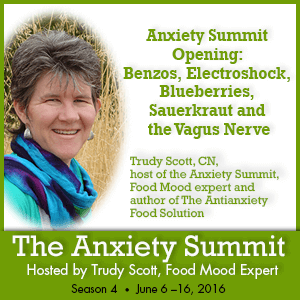
The host of the Anxiety Summit, Trudy Scott, Food Mood Expert and Nutritionist, author of The Antianxiety Food Solution opens up the Anxiety Summit Season 4.

Anxiety Summit opening: benzos, electroshock, blueberries, sauerkraut and the vagus nerve

  • My vagus nerve story and how GABA helped
  • Why we need an integrative approach: Electroshock, LSD, BPA, zinc deficiencies, medication side-effects
  • An update on benzodiazepines and what we can learn from the Swiss and Blue Zones
  • Anxiety: new research on blueberries, gluten, sauerkraut, low vitamin B6 and iron, foods rich in polyphenols
  • An overview of the speakers and topics on this summit

My vagus nerve story – the videos document the journey with GABA and vagus nerve exercises 3-6-6 breathing and happy birthday humming.

This article published just last month is just so distressing to even contemplate: American Psychiatric Association Lobbies FDA to Electroshock Children

While the APA looks to seizure-inducing, brain-disabling, electricity as a form of ‘treatment,’ lobbying the FDA to make ECT available for children, no one in medicine, let alone psychiatry, has a clue how ECT machines ‘work’ or how passing large amounts of electricity into a child’s brain ‘treats’ the subjective mental disorder.  

Also published last month is an article in the New York Times called: LSD Like Drugs Are Out of the Haze and Back in the Labs.

modern scientists are picking up where their forerunners of the ’50s and ’60s left off. They are studying hallucinogens’ potential to help smokers kick the habit, to undo addictions to drugs and alcohol, to cope with cluster headaches and depression, and to deal with obsessive-compulsive and post-traumatic stress disorders.

Earlier this year a bill was put forward in Massachusetts proposing informed consent for benzodiazepine use. They will be submitting it again in a future session.

Here is the blog post and research on blueberries and serotonin: Blueberries boost serotonin and may help with PTSD and anxiety

Rats that were fed blueberries saw an increase in serotonin levels and the study authors suggest that the neuroprotection offered by the blueberries may offer support for those with PTSD. Presumably this could help those with anxiety and depression too, since low serotonin can also be an underlying factor.

Here is the blog post and research on gluten and OCD: Integrative Medicine Approach to Pediatric Obsessive-Compulsive Disorder and Anxiety 

The 7-year-old boy was put on a gluten-free diet and they saw a huge reduction in his OCD symptoms and anxiety and an improvement in social behavior and school work.

A paper published in August 2015: Fermented foods, neuroticism, and social anxiety suggests that:

consumption of fermented foods that contain probiotics may serve as a low-risk intervention for reducing social anxiety

Here are some of the other papers I mentioned:

  • Low serum concentrations of vitamin B6 and iron are related to panic attack and hyperventilation attack
  • Zinc-deficient ASD mice study: Gender Dependent Evaluation of Autism like Behavior in Mice Exposed to Prenatal Zinc Deficiency

  • Polyphenols / what foods can help fight the risk of chronic inflammation?
  • Bisphenol A exposure and children’s behavior:  A systematic review 

Here is the master blog with all the speakers, their topics and their individual blog posts with additional information, links to studies, books and other resources – The Anxiety Summit Season 4: All the speakers and topics (keep in mind that the speaker blog links will be live/active from the day of the speaker interview)

If you already have my book The Antianxiety Food Solution: How the Foods You Eat Can Help You Calm Your Anxious Mind, Improve Your Mood, and End Cravings, I recommend that you skim through it again and review the chapters on the food basics, gluten, amino acids, pyroluria and digestion.  If you don’t yet have a copy, I highly recommend getting a copy so you can be educated as well as empowered.

trudy scott the antianxiety food solution

Here is my gift to you, a song called Top of the World (grab the mp3 at this link)

A new beginning, a brand new day
All of my fears are gone away
I feel so calm, so free, so whole
Right now, I’m feeling on top of the world

On top the world
Right now, I’m feeling on top of the world


And here is another special gift: transcript of this entire talk!
Download the transcript here (right-click on the link and select “Save link as” or “Save target as” to download the file to your computer)

If you are not already registered for the Anxiety Summit you can get live access to the speakers of the day here: www.theAnxietySummit.com

Missed this interview or can’t listen live? Or want this and the other great interviews for your learning library? Purchase the MP3s or MP3s + transcripts and listen when it suits you.

You can find your purchasing options here.: Anxiety Summit Season 1, Anxiety Summit Season 2, Anxiety Summit Season 3, and Anxiety Summit Season 4.

Filed Under: Events, Food and mood, GABA, The Anxiety Summit 4 Tagged With: anxiety, anxiety summit, Trudy Scott, vagus nerve

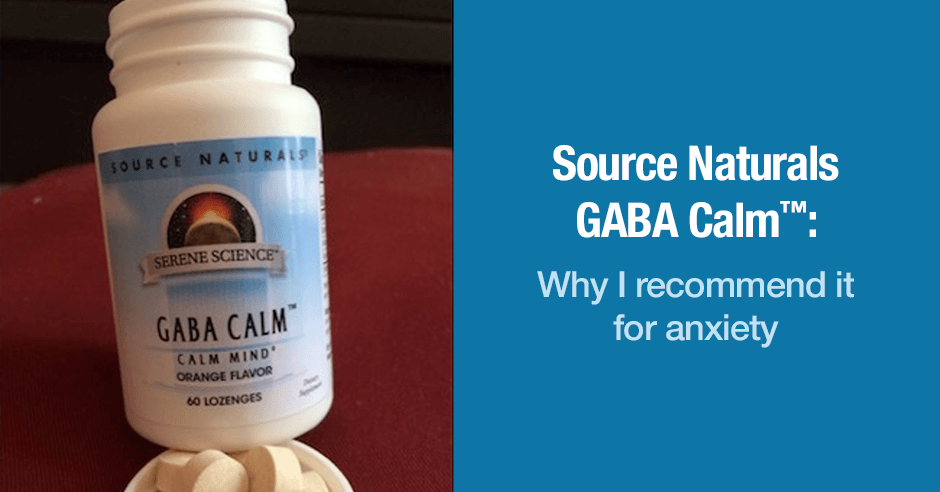
Source Naturals GABA Calm™: Why I recommend it for anxiety

May 27, 2016 By Trudy Scott 185 Comments

source naturals gaba calm

When you have low GABA levels you will have physical anxiety with stiff and tense muscles as well as feelings of stress, overwhelm and may even have panic attacks.

The amino acid GABA helps to raise GABA levels and ease these symptoms very quickly. I find that all GABA products are most effective when taken sublingually or opened on to the tongue. This is why I recommend the Source Naturals GABA Calm™ product.

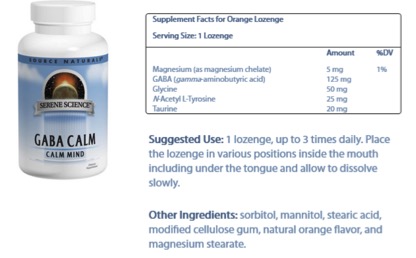
It is a pleasant-tasting sublingual product that you can buy at your local health-store and in my online supplement store. It is a lozenge that contains 125mg GABA, 5mg magnesium, 50mg glycine, 25mg tyrosine and 20 mg taurine.

[Note: this product is a lozenge with 125mg GABA and is not to be confused with the Source Naturals, GABA Calm Mind, 750 mg tablets]

This is my most popular and most effective form of GABA I use with my clients. Here is the product description from the Source Naturals site:

GABA Calm™ combines two of the main inhibitory neurotransmitters, GABA and glycine, with N-acetyl L-tyrosine, which is a precursor to the neurotransmitters dopamine and norepinephrine. In addition, taurine supports the calming effects of GABA. The lozenge form dissolves in the mouth for quick and convenient delivery.

gaba-calm-supplement-facts 

The GABA, glycine and taurine are calming and the N-acetyl L-tyrosine (which boosts the catecholamines and can be more stimulating) counters some of the calming effects so you have a nice balance.

A typical starting dose could look like this:

  • 1 x GABA Calm on waking
  • 1 x GABA Calm mid-morning
  • 1 x GABA Calm mid-afternoon

If this works well but you still have some anxiety, then you could try 2 each time and even 3 each time.

I have all my clients do an amino acid trial to determine what will work best for their own needs.

As with all of the amino acids we review the Amino Acid Precautions before starting GABA Calm. The only precaution for using GABA is low blood pressure. I have yet to see it be an issue but it’s something to watch.

Since GABA Calm does contain tyrosine please be aware of these precautions. I don’t have my clients use it in these instances:

  • Overactive thyroid/Grave’s disease
  • Melanoma
  • Phenylketonuria (PKU)
  • Bipolar disorder

The amount of tyrosine in GABA Calm is so low it’s typically not an issue but I have my clients monitor their use of GABA Calm if they have

  • High Blood pressure
  • Migraine headaches

Some of my clients do fine taking this product at night and it calms them and helps them sleep. Here is feedback I recently received from someone:

I’ve been getting good results with taking 2 x Source Naturals GABA Calm lozenges of late, especially at night if I can’t get to sleep. I have tried several GABA supplements but this one seems to be the only one that works for me

Others find it affects their sleep and can only use it for easing their anxiety in the day time.

When I was experiencing my anxiety and panic attacks I used to take GABA Calm™ during the day (1-3, 3 times day) and it completely stopped the panic attacks and eased my anxiety while I dug deeper looking for the other contributing factors (like gluten issues, low progesterone, heavy metals and more). I took 2 of the Country Life GABA Relaxer at night. This product contains GABA, glycine, taurine, inositol, vitamin B6 and niacinamide.

It’s a great product to use with children. Trish Soderstrom shared how she used this product with her daughter’s Lyme anxiety.

We’ve used Source Naturals GABA Calm sublinguals with good results. I learned about GABA helping anxiety and because I was treating my young daughter I purchased this because it was easy for her to take.

She’ll be sharing more during her interview on the Anxiety Summit: How We Used GABA for Lyme Anxiety.

Dr. Zendi Moldenhauer, PhD, NP, RN will also be talking about how she uses this product in her interview: Anxiety in children, adolescents and young adults: an integrative psychiatric approach.

I recently received this comment on another blog post where I mentioned GABA Calm™:

Checked out gaba calm. Sounded great until I looked at the ingredients: sorbitol and mannitol are listed as first ingredients. These fake sugars can wreak havoc on your system. Also natural orange flavor… Heaven knows what that is. Too bad, sounded great. Any other suggestions?

Here is my response to this: I agree we could do better but it’s still a very effective product since sublingual GABA is best for most people. Sorbitol and mannitol are not fake sugars but sugar alcohols that don’t affect blood sugar. Very large amounts of sugar alcohols can sometimes cause lose stool but none of my clients have reported this effect from GABA Calm since it contains a very small amount.

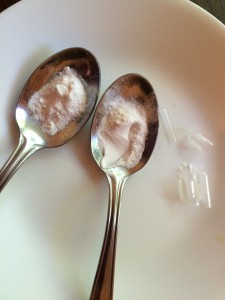
If you choose not to use this product, I list other GABA products here on my supplements blog. Opening the capsule seems to be the best way to take GABA.

We are all different and many people do well with other types of GABA products as you can read here – GABA, the calming amino acid: products and results.

The blood brain barrier question comes up at least once a week. In fact, I was just asked this question last week:

Does a GABA supplement have to cross the blood brain barrier to be effective? A nutrition seminar I have been to, said it does not and GABA supplements are ineffective.

This is a myth and I am on a mission to change this thinking about GABA. GABA supplements are very effective for many anxious individuals.

I’d love to hear if you’ve used GABA Calm™ for anxiety, panic attacks, sleep and/or stress eating and how it’s worked for you. How often do you take it and how much do you take?

If you use it with clients I’d love to hear from you too.

If you use GABA Calm™ during the day and another GABA product at night please share that info too.

I’m sharing this information in preparation for my Anxiety Summit interview on GABA and dispelling the blood brain barrier myth. I’ll be sharing what we do know about how GABA works, what we don’t yet know and what we hope to learn through further research.


Filed Under: Antianxiety, GABA Tagged With: amino acids, GABA, GABA Calm, panic, the anxiety summit

Vagus nerve rehab with GABA, breathing, humming, gargling and key nutrients

March 25, 2016 By Trudy Scott 248 Comments

vegas nerve rehab

I’ve got an issue going on with my vagus nerve at the moment and the throat spasms have been affecting my voice and ability to speak for any length of time. It’s also causing this persistent dry cough, despite not feeling sick or having any respiratory symptoms. It’s much worse later in the day and gets particularly bad after about 30 minutes of talking.

I’ve been working with the very talented PT/nutritionist Joe Tatta for the last week and I am seeing much improvement already. I’m also learning so much on vagus nerve rehab.

Joe is a Musculoskeletal Pain Expert and you may recall our wonderful interview on the last Anxiety Summit on pain and anxiety.

Let me give you some of the back story. Just over a week ago I posted this message in a private facebook group of integrative practitioners/colleagues:

I’d love some help for me please. I have this ongoing spasmodic dry cough that starts as soon as I talk and gets worse later in the day. As you can imagine it’s affecting my day to day meetings, seeing clients and doing interviews, not to mention being highly irritating!

I don’t feel sick at all and have no congestion. It started after my NYC trip and a really frightening flight over the Colorado mountains!

We had the most awful turbulence and it felt like wings on the plane were going to break. People were screaming and the parents behind us were reassuring their kids saying it’s ok, it’s just like a roller coaster ride. I was sitting next to a 6’4’’ young man who had just completed training in the Coast Guard. He was also terrified and said they had taught him how to survive a boat going down but not how to survive a plane going down.

I believe my immune system got suppressed big time! The day after I got home I got the flu for the first time in 30+ years and I felt pretty grim for a day and then recovered nicely over the next 4-5 days. The flu was over 10 days ago but this stupid cough continues!

One night I could not sleep due to the coughing and decided to try and relax my airways with GABA. I know how effective GABA is for stiff and tense muscles so why not try it for the throat spasms I was having? I am now able to have a reasonable conversation for say 15-30 mins if I take 500mg GABA opened on to my tongue. Viola! a new use for GABA – pretty cool!

I must be low in GABA because I’m able to take upwards of 5 (and sometime more) doses of 500mg a day and not feel too wiped out. That’s a lot of GABA for me – 125mg to 250mg used to be enough for the anxiety I once experienced! I did have a bit of my old early morning waking with anxiety (that I used to have in my late 30s) that week of the flu but that’s now gone.

I’m also using a homeopathic called Boiron Drosera. I’ve never had asthma and don’t have much experience with it but from what I’m reading it sounds like the“cough-variant” of asthma!?

I’m asking here because I’m intrigued by this whole scary flight/depressed immunity/GABA for the spasms thing and wonder if anyone here has any insights?

Joe Tatta responded in about 30 minutes with this message:

Sounds like you have a vagus nerve problem. Potentially loss of parasympathetics. You can read some in this article but there is much more…

Here is the article he shared: Arnold’s nerve cough reflex: evidence for chronic cough as a sensory vagal neuropathy

Arnold’s nerve ear-cough reflex is recognised to occur uncommonly in patients with chronic cough. In these patients, mechanical stimulation of the external auditory meatus can activate the auricular branch of the vagus nerve (Arnold’s nerve) and evoke reflex cough. This is an example of hypersensitivity of vagal afferent nerves, and there is now an increasing recognition that many cases of refractory or idiopathic cough may be due to a sensory neuropathy of the vagus nerve.

The paper presents two cases where the cough was successfully treated with gabapentin. Gabapentin (also known as Neurontin) affects GABA levels and this why I get such great results with GABA.

Gabapentin is drug that is primarily used to treat seizures and neuropathic pain. It is also used for restless leg syndrome and hot flashes, and off-label for anxiety, insomnia, fibromyalgia and bipolar disorder. I’d love to see GABA being studied and used for these conditions especially because gabapentin can cause withdrawal syndrome: Withdrawal symptoms after gabapentin discontinuation and an increased risk of suicidal thoughts.

Joe offered to meet with me via skype and I learned that the neuro-rehab is key. I’ve been doing breathing exercises and humming every hour on the hour for the last week i.e. about 10 times a day. When I hum it’s the “happy birthday” song and I have to think of a specific birthday. I hum and smile and think about my baby sister’s 7th birthday party 37 years ago. I had just come back from Australia and I have such great memories of it! We chatted about it at the weekend and had a good laugh.

I continue to use the GABA as needed, and am also taking GPC (GlyceroPhosphoCholine) and Acetyl-L-carnitine, both of which are acetylcholine precursors for nerve rehabilitation.

Because I’ve had so many questions about what is going on with me and what I’m doing, I have decided to start this blog post and I’ll continue to add to it. I’ve been documenting what has been happening as I go through this rehab because I’m finding it so fascinating.

Stay tuned for all the details:

  • More on the vagus nerve and why it’s so important
  • Why the very scary plane ride triggered this issue I’m having
  • How GABA works to stop the spasms in 5-10 seconds (I have a video to share)
  • Exactly what exercises I’m doing for the rehab and why you need to build up and not do gargling exercises on day one
  • More details about the nutrients: GPC and acetyl-l-carnitine
  • And an interview with Joe Tatta to share his expertise (I’m the patient/client here and am in learning mode)

I wouldn’t suggest trying any of this yourself until I share more because from what I’ve learned so far, you need to slowly built up to certain of the exercises.

Updates April 1, 2016:

Here is the first video (taken March 16, 2016) where I share the story of the scary plane ride and my flu and the start of the throat spasms.  You can hear how my voice sounds and how quickly 500mg GABA relaxes the spasms in my throat/neck.  I share what I learned from Joe Tatta about it being connected the vagus nerve.

Here is the second video (also taken March 16, 2016) where I demonstrate the 3-6-6 second breathing exercise and the happy birthday song humming exercise. I have to think of an actual birthday. I hum and think of my baby sister’s birthday (you can see those photos above).  Be warned, I am what I call “musically challenged!”

Here is the third video (taken late evening March 16, 2016) where you can hear how bad my voice and throat gets later in the day.

Here is the video taken at Heavenly ski resort on March 27, 2016.  You can see me doing my humming exercises in between skiing on this beautiful mountain and how I needed GABA after a strenuous ski run.  And I summarize what has been working for me so far.  I hope you enjoy the stunning scenery too!  I feel so fortunate that we can hop in the car and visit such an amazing place like this on the weekend! It’s about 90 minutes up the hill from where we live.

And here is the final video in this series (taken yesterday March 31, 2016). I demonstrate the exercises I am currently doing: 3-6-6 second breathing, humming (which has improved), the yawning and the tongue massage of the roof of my mouth.  I also talk about GPC and acetyl-l-carnitine.

You can probably see and hear that I am much improved and have not needed much GABA for the last two days now.  In the last week I have interviewed Dr. Josh Axe for his “Eat Dirt” book and Dr. Kelly Brogan for her “A Mind of Your Own” book.  And Dr. David Brady has interviewed me for his Fibrofix Summit and Dr. Eric Zielinski interviewed me for his Essential Oils Summit.  For each interview I did my exercises right beforehand and took 500mg GABA half way through the interview and had immediate relief.

GABA for vagus nerve
I had 2 x 500mg GABA on hand for my interviews – opened and ready to use!

Update: April 8, 2016

I continue to improve and have not needed GABA for 4 days and only have a very mild hint of the throat feeling late evening.

Two days ago I added an essential oil called Parasympathetic. It contains clove and lemon and I’ll share more in a future post.  Right now I can share that I used too much the first day and had the very dry mouth I experienced with too much GPC and acetyl-l-carnitine.

Update: April 22, 2016

A quick update to let you know that my dry spasmodic cough has completely gone.  I  have not had any symptoms for a week and I have stopped the vagus nerve rehab exercises, GPC,  acetyl-l-carnitine, the essential oil called Parasympathetic and GABA.

Additional resources when you are new to using GABAand other amino acids as supplements

As always, I use the symptoms questionnaire to figure out if low serotonin or low GABA or other neurotransmitter imbalances may be an issue.

If you suspect low levels of any of the neurotransmitters and do not yet have my book, The Antianxiety Food Solution – How the Foods You Eat Can Help You Calm Your Anxious Mind, Improve Your Mood, and End Cravings, I highly recommend getting it and reading it before jumping in and using amino acids on your own so you are knowledgeable. And be sure to share it with the practitioner/health team you or your loved one is working with.

There is an entire chapter on the amino acids and they are discussed throughout the book in the sections on gut health, gluten, blood sugar control (this is covered in an entire chapter too), sugar cravings, anxiety and mood issues.

The book doesn’t include product names (per the publisher’s request) so this blog, The Antianxiety Food Solution Amino Acid and Pyroluria Supplements, lists the amino acids that I use with my individual clients and those in my group programs.

If, after reading this blog and my book, you don’t feel comfortable figuring things out on your own (i.e. doing the symptoms questionnaire and respective amino acids trials), a good place to get help is the GABA QuickStart Program (if you have low GABA symptoms). This is a paid online/virtual group program where you get my guidance and community support.

If you are a practitioner, join us in The Balancing Neurotransmitters: the Fundamentals program. This is also a paid online/virtual program with an opportunity to interact with me and other practitioners who are also using the amino acids.

Wrapping up and your feedback

I so appreciate all the caring and concerned comments, feedback and ideas for me!  And boy, am I grateful for Joe and his expertise!

I will still be interviewing Joe so he can share the theory and address questions so please post questions you may have.

If any of this resonates with you or if you have any other questions I’d love to hear back from you.

Please post them in the comments section below.

Filed Under: GABA Tagged With: anxious, breathing, GABA, gabapentin, humming, Joe Tatta, scary, spasms, vagus nerve, voice

Chronic Lyme Disease Summit – anxiety, pyroluria & more

March 21, 2016 By Trudy Scott 6 Comments

The Chronic Lyme Disease Summit runs from April 4th to 11th so I’m sharing some additional information for you.

chronic-lyme-disease-summit-y

The response to this summit, hosted by Dr. Jay Davidson, is out of this world already. Lyme disease is much more talked about than most realize and more people are affected by Lyme disease each year than breast cancer!

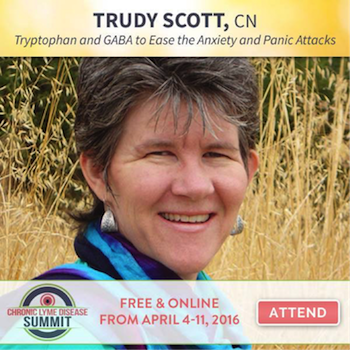
Many people with chronic Lyme disease have chronic anxiety too and the focus of my interview is how to use targeted individual amino acids GABA and tryptophan to top up low levels of GABA and serotonin while the Lyme is being addressed.

This gives Lyme sufferers resolution from much of the anxiety (if not all) right away and they don’t need to resort to meds like benzodiazepines or anti-depressants (like the women in the study below). There is also a big connection between Lyme disease and pyroluria and I cover this too.

Here is one study that shows that Lyme-anxiety is very real and that panic attacks may actually be trigged by the Lyme disease:

A paper published in the Journal of Psychiatric Practice in 2000: Panic attacks may reveal previously unsuspected chronic disseminated lyme disease

describes the histories of three patients with panic-like episodes that turned out to be related to underlying, previously unsuspected tick-borne diseases.

Each woman experienced symptoms that are not usual in panic disorder but are typical of neurological Lyme disease, including exquisite sensitivity to light, touch, and sounds, joint pain often in combination with cognitive changes including mental fogginess and loss of recent memory, and some degree of bizarre, shifting, and often excruciating neurological pain. Because these symptoms are atypical of primary panic disorder, they were very helpful in alerting the clinician to suspect an underlying physical illness.

In each case, the results of testing revealed positive hallmarks of disseminated Lyme and other tick-borne diseases [ including Lyme borreliosis caused by the spirochete, Borrelia burgdorferi, babesiosis, and ehrlichiosis.] Since beginning treatment with intensive doses of appropriate antimicrobial medications for their tick-borne infections, all three patients have become free of panic attacks.

Treatment of their infections by a specialist in Lyme disease allowed one of the women to discontinue anti-anxiety medication completely and another to reduce the dose of medication to occasional use only. The third patient is no longer anxious but her depression is resolving more slowly despite the ongoing use of an antidepressant. Two of the patients have also needed ongoing medication for pain and other symptoms of late-stage, neurological Lyme disease

lyme-trudy

One of my favorite presentations at the 2015 IMMH/Integrative Medicine for Mental Health conference was Dr. Suruchi Chandra’s Neuropsychiatric Lyme Disease talk. She shared that:

Lyme disease is one of the fastest growing infectious diseases in the United States. It can remain dormant for years and then later mimic a number of psychiatric illnesses, including anxiety disorders, mood disturbances, psychosis, and autism-like behaviors. It can be further complicated by the presence of co-infections.

Tune in to the summit to hear more about Lyme and anxiety and the amino acids GABA and tryptophan (and the Lyme-pyroluria connection).

(Please note: I’m not a Lyme disease expert – people seek me out for help with their anxiety and many of them also happen to have Lyme disease. The information we covered in the interview is very powerful for anxiety whether or not Lyme disease is a factor.)

Here are a selection of the many excellent Lyme interviews you’ll hear:

  • Dr. Jay Davidson, DC, PScD: Heavy Metal Detox and Lyme Disease
  • Connie Strasheim: Lyme Disease and Cancer
  • Jack Tips, PhD, CCN: The Gut Microbiome and Lyme disease
  • Shayne Morris, PhD: Biofilm, Bugs and Bacteriophage
  • Bradley Bush, ND: A Lab Test that Actually Works for Detecting Lyme Disease

When you register you get access to 3 talks right away – mine is one of the 3 talks! You can register here:
https://qt247.isrefer.com/go/LYME16reg/trudyscottcn

Filed Under: Amino Acids, Anxiety and panic, Events, GABA, Lyme disease and co-infections, Pyroluria, Tryptophan Tagged With: anxiety, GABA, Lyme Disease, pyroluria, tryptophan

  • « Go to Previous Page
  • Page 1
  • Interim pages omitted …
  • Page 21
  • Page 22
  • Page 23
  • Page 24
  • Page 25
  • Go to Next Page »

Primary Sidebar

NEW! GABA QuickStart Homestudy (with special intro pricing)

gaba quickstart homestudy

Free Report

9 Great Questions Women Ask about Food, Mood and their Health

You'll also receive a complimentary subscription to my ezine "Food, Mood and Gal Stuff"


Connect with me

Popular Posts

  • Amino Acids Mood Questionnaire from The Antianxiety Food Solution
  • The Antianxiety Food Solution Amino Acid and Pyroluria Supplements
  • Pyroluria Questionnaire from The Antianxiety Food Solution
  • Collagen and gelatin lower serotonin: does this increase your anxiety and depression?
  • Tryptophan for the worry-in-your-head and ruminating type of anxiety
  • GABA for the physical-tension and stiff-and-tense-muscles type of anxiety
  • The Antianxiety Food Solution by Trudy Scott
  • Seriphos Original Formula is back: the best product for anxiety and insomnia caused by high cortisol
  • Am I an anxious introvert because of low zinc and vitamin B6? My response to Huffington Post blog
  • Vagus nerve rehab with GABA, breathing, humming, gargling and key nutrients

Recent Posts

  • What do I use instead of Seriphos to help lower high cortisol that is affecting my sleep and making me anxious at night?
  • BeSerene™ GABA/theanine cream eases severe muscle tension in her neck/shoulders, prevents her bad headaches and quells her anxiety
  • How the correct approach, dose and sublingual use of GABA can be calming and not cause a flushed and itchy face and neck
  • The amino acid glutamine improves low mood by addressing gut health, and it has calming effects too
  • Flight anxiety with heightened breath, physical tension and also fearing the worst (the role of low GABA and low serotonin)

Categories

  • 5-HTP
  • AB575
  • Addiction
  • ADHD
  • Adrenals
  • Alcohol
  • Allergies
  • Alzheimer's disease
  • Amino Acids
  • Anger
  • Antianxiety
  • Antianxiety Food Solution
  • Antidepressants
  • Anxiety
  • Anxiety and panic
  • Autism
  • Autoimmunity
  • benzodiazapines
  • Bipolar disorder
  • Books
  • Caffeine
  • Cancer
  • Candida
  • Children/Teens
  • Collagen
  • Cooking equipment
  • Coronavirus/COVID-19
  • Cravings
  • Depression
  • Detoxification
  • Diabetes
  • Diet
  • DPA/DLPA
  • Drugs
  • EFT/Tapping
  • EMF
  • EMFs
  • Emotional Eating
  • Endorphins
  • Environment
  • Essential oils
  • Events
  • Exercise
  • Fear
  • Fear of public speaking
  • Fertility and Pregnancy
  • Fish
  • Food
  • Food and mood
  • Functional neurology
  • GABA
  • Gene polymorphisms
  • General Health
  • Giving
  • Giving back
  • Glutamine
  • Gluten
  • GMOs
  • Gratitude
  • Gut health
  • Heart health/hypertension
  • Histamine
  • Hormone
  • Hyperparathyroidism
  • Hypoglycemia
  • Immune system
  • Inflammation
  • Insomnia
  • Inspiration
  • Introversion
  • Joy and happiness
  • Ketogenic diet
  • Lithium orotate
  • Looking awesome
  • Lyme disease and co-infections
  • MCAS/histamine
  • Medication
  • Men's health
  • Mental health
  • Mercury
  • Migraine
  • Mold
  • Movie
  • MTHFR
  • Multiple sclerosis
  • Music
  • NANP
  • Nature
  • Nutritional Psychiatry
  • OCD
  • Osteoporosis
  • Oxalates
  • Oxytocin
  • Pain
  • Paleo
  • Parasites
  • Parkinson’s disease
  • PCOS
  • People
  • PMS
  • Postpartum
  • PTSD/Trauma
  • Pyroluria
  • Questionnaires
  • Real whole food
  • Recipes
  • Research
  • Schizophrenia
  • serotonin
  • SIBO
  • Sleep
  • Special diets
  • Sports nutrition
  • Stress
  • Sugar addiction
  • Sugar and mood
  • Supplements
  • Teens
  • Testimonials
  • Testing
  • The Anxiety Summit
  • The Anxiety Summit 2
  • The Anxiety Summit 3
  • The Anxiety Summit 4
  • The Anxiety Summit 5
  • The Anxiety Summit 6
  • Thyroid
  • Thyroid health
  • Toxins
  • Tryptophan
  • Tyrosine
  • Uncategorized
  • Vegan/vegetarian
  • Women's health
  • Yoga

Archives

  • October 2025
  • September 2025
  • August 2025
  • July 2025
  • June 2025
  • May 2025
  • April 2025
  • March 2025
  • February 2025
  • January 2025
  • November 2024
  • October 2024
  • September 2024
  • August 2024
  • July 2024
  • June 2024
  • May 2024
  • April 2024
  • March 2024
  • February 2024
  • January 2024
  • December 2023
  • November 2023
  • October 2023
  • September 2023
  • August 2023
  • July 2023
  • June 2023
  • May 2023
  • April 2023
  • March 2023
  • February 2023
  • January 2023
  • December 2022
  • November 2022
  • October 2022
  • September 2022
  • August 2022
  • July 2022
  • June 2022
  • May 2022
  • April 2022
  • March 2022
  • February 2022
  • January 2022
  • December 2021
  • November 2021
  • October 2021
  • September 2021
  • August 2021
  • July 2021
  • June 2021
  • May 2021
  • April 2021
  • March 2021
  • February 2021
  • January 2021
  • December 2020
  • November 2020
  • October 2020
  • September 2020
  • August 2020
  • July 2020
  • June 2020
  • May 2020
  • April 2020
  • March 2020
  • February 2020
  • January 2020
  • December 2019
  • November 2019
  • October 2019
  • September 2019
  • August 2019
  • July 2019
  • June 2019
  • May 2019
  • April 2019
  • March 2019
  • February 2019
  • January 2019
  • December 2018
  • November 2018
  • October 2018
  • September 2018
  • August 2018
  • July 2018
  • June 2018
  • May 2018
  • April 2018
  • March 2018
  • February 2018
  • January 2018
  • December 2017
  • November 2017
  • October 2017
  • September 2017
  • August 2017
  • July 2017
  • June 2017
  • May 2017
  • April 2017
  • March 2017
  • February 2017
  • January 2017
  • December 2016
  • November 2016
  • October 2016
  • September 2016
  • August 2016
  • July 2016
  • June 2016
  • May 2016
  • April 2016
  • March 2016
  • February 2016
  • January 2016
  • December 2015
  • November 2015
  • October 2015
  • September 2015
  • August 2015
  • July 2015
  • June 2015
  • May 2015
  • April 2015
  • March 2015
  • February 2015
  • January 2015
  • December 2014
  • November 2014
  • October 2014
  • September 2014
  • August 2014
  • July 2014
  • June 2014
  • May 2014
  • April 2014
  • March 2014
  • February 2014
  • January 2014
  • December 2013
  • November 2013
  • October 2013
  • September 2013
  • August 2013
  • July 2013
  • June 2013
  • May 2013
  • April 2013
  • March 2013
  • February 2013
  • January 2013
  • December 2012
  • November 2012
  • October 2012
  • August 2012
  • July 2012
  • June 2012
  • May 2012
  • April 2012
  • March 2012
  • February 2012
  • January 2012
  • December 2011
  • November 2011
  • October 2011
  • September 2011
  • August 2011
  • July 2011
  • June 2011
  • May 2011
  • April 2011
  • March 2011
  • February 2011
  • January 2011
  • December 2010
  • October 2010
  • September 2010
  • July 2010
  • May 2010
  • April 2010
  • March 2010
  • February 2010
  • January 2010
  • November 2009

Share the knowledge!

The above statements have not been evaluated by the Food and Drug Administration. Products listed in this website are not intended to diagnose, treat, cure or prevent any disease.

The information provided on this site is for informational and educational purposes only and is not intended as a substitute for advice from your physician or other health care professional. You should consult with a healthcare professional before starting or modifying any diet, exercise, or supplementation program, before taking or stopping any medication, or if you have or suspect you may have a health problem.


Copyright © 2026 Trudy Scott. All Rights Reserved. | Privacy | Terms and Conditions | Refund Policy | Medical Disclaimer

Free Report

9 Great Questions Women Ask about Food, Mood and their Health

You’ll also receive a complimentary subscription to my ezine “Food, Mood and Gal Stuff”