• Skip to primary navigation
  • Skip to main content
  • Skip to primary sidebar

everywomanover29 blog

Food, Mood and Women's Health – Be your healthiest, look and feel great!

  • Blog
  • About
  • Services
  • Store
  • Resources
  • Testimonials
  • The Book
  • Newsletter
  • Contact
  • Search this site

Events

Brain and mood benefits of a ketogenic lifestyle

May 19, 2018 By Trudy Scott 4 Comments

Keto Edge Summit

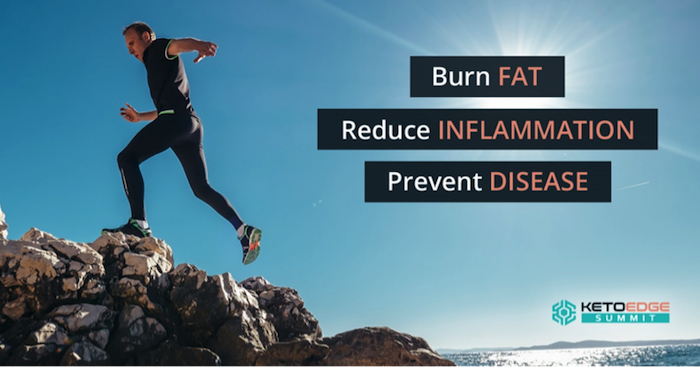
We know that ketones help you burn fat for energy, powerfully reduce inflammation and show promise in preventing and eradicating diabetes, cancer, autoimmune and neurodegenerative diseases like Alzheimer’s and Parkinson’s, and even play a role in mental health conditions like anxiety and depression. Experts on the Keto Edge Summit share many of the brain and mood benefits of a ketogenic lifestyle.

Dr. David Jockers shares this about anxiety and GABA and glutamate (his #5 benefit) in his interview on the ‘Top 7 Benefits of a Ketogenic Lifestyle’:

We have an epidemic of depression and anxiety in our society. And so, one of the key things that being keto-adapted does—not only does it downregulate inflammation in the brain, and we know that depression now is really neuroinflammation.

So the other big thing is we’ve got these neurotransmitters. One is glutamate; the other is GABA. Glutamate is an excitatory neurotransmitter, meaning that it helps us think sharply and quickly. What balances glutamate is this other neurotransmitter called GABA, gamma-aminobutyric acid. And it’s inhibitory. It helps balance us and calm us. What we find is that people with anxiety, they have high glutamate, low GABA. They don’t have a good ratio. Same thing with depression.

So what a ketogenic diet does, when we’re keto-adapted, it helps balance out the glutamate to GABA ratio and creates stability there. What does that mean to you? That means you’re going to be able to think sharply and quickly but you’re not going to get out of control. Your brain’s not going to be going too fast. You’re not going to be at risk for anxiety, for depression in the same way. You’re going to notice just an improved mood, more emotional balance.

Dr. David Perlmutter shares the importance of blood sugar regulation in his interview ‘Keto for Brain Health’:

Blood sugar regulation is pivotal as it relates to the destiny of your brain. Probably the most important biometric that determines whether you will or won’t become an Alzheimer’s patient is what your fasting blood sugar is today.

Even with the ApoE-4 gene, the ketogenic diet, physical exercise, and gluten-free, lowering sugar and carbs… are important changes that can absolutely rewrite your book.

I think it’s important to understand that humans have probably been in a state of ketosis most of the time over most of our existence on this planet. It’s only been in the last 10,000 years or so when we’ve created agriculture that we’ve had this robust availability of carbohydrate resources that has really shifted the human diet to one that is carbohydrate-based as opposed to fat-based.

Dr. Cheryl Burdette also covers inflammation in her interview, ‘Inflammation and the Ketogenic Diet’:

So when we see markers of oxidative stress high, not only do we know the DNA is suffering but we know our mitochondria, our powerhouse is suffering and, therefore, our brain is suffering. And so what you see is a high 8-OHdG – you see that high in conditions like Alzheimer’s or Parkinson’s but you even see it high in depression or bipolar or anxiety. What you also see is a ketogenic diet, helps to lower that. What you also see is adding more antioxidants, helps to lower that. So again, we’re back to our green leafies with our good fats.

The Keto Edge Summit is available online and there are REPLAYS ALL WEEKEND. You can still register here to hear the replays

Please share your gems and what you’ve implemented or are planning to implement in terms of a ketogenic lifestyle.
Filed Under: Events, Ketogenic diet Tagged With: anxiety, brain, David Jockers, David Perlmutter, depression, GABA, glutamate, Keto Edge Summit, Ketogenic diet, ketogenic lifestyle, mood

The Human Longevity Project – Secrets of the World’s Healthiest People

May 12, 2018 By Trudy Scott Leave a Comment

The Human Longevity Project is a first-of-it’s-kind 9 part online documentary filmed over 2 years, in over 50 locations, with over 90 expert interviews!

Join Health Researcher, Jason Prall, as he travels the world investigating why certain people live extraordinarily, healthy, happy and long lives.

Here is a trailer to inspire you to watch and learn and go on this amazing journey with Jason and the people he interviews:

With this documentary he wants to share that there are

  • populations all over the world that are virtually free of chronic disease
  • places where people typically live well into their 90s and 100s
  • ways to live a healthier, longer and happier life, using strategies that work for the oldest populations… free of fad diets and short-lived health trends.
  • ways to get clear on what naturally works to cure depression, anxiety, and overwhelm
  • new and proven ways to treat and prevent most epidemic diseases
  • tools to turn your mitochondria into a powerhouse for your body, so you get more energy and stamina throughout the day

Jason not only traveled the world to learn from these healthy populations, he interviewed leading researchers, doctors and experts to uncover the underlying mechanisms that afforded them such long, healthy and happy lives.

The results are stunning and scenery is superb!

(It’s truly magnificent and I’ve only seen snippets! It takes me back to my late 20s when I backpacked through Europe and lived like the locals did, eating amazing local food, explored beautiful Greece and Turkey and met incredible people!)

What’s wonderful is that you can now learn the secrets of the world’s healthiest people, and how to apply their wisdom to your modern life.

Here are some of my favorite quotes from just a few of the amazing speakers:

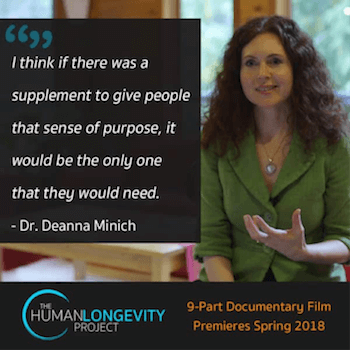
Yes to having a sense of purpose – a sense of purpose is the only one thing you need! Purpose is SO important and Deanna Minich, PhD shares why on The Human Longevity Project.

Do you have a sense of purpose? And how has it helped you heal and live a fuller life?

I know that quitting my computer job over 15 years ago and going back to school to become a nutritionist was the best thing I ever did! Helping others finding nutritional solutions for their anxiety symptoms is so incredibly rewarding. It’s my purpose in life – that’s for sure! I actually consider my own anxiety and panic attacks a gift now – a gift that led me to what I do today!

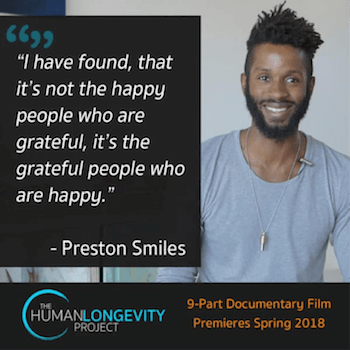
I love this quote from Preston Smiles:

It’s not the happy people who are grateful, it’s the grateful people who are happy

And don’t you just love his name and lovely smile too!? So much wisdom!

And wisdom from 68-year old Cristina in Costa Rica – go barefoot and walk on the ground to raise our defenses and build immunity.

Ayako, from Japan, is 83 years old and she says this:

The most important thing is balance in your way of eating, sleeping and work. If there is an imbalance you will get sick

I hope you feel as excited about this as I do! You can register for The Human Longevity Project here

Enjoy every beautiful minute of it!

Filed Under: Anxiety, Events Tagged With: anxiety, balance, grateful, health, Jason Prall, longevity, purpose, The Human Longevity Project

The ketogenic diet for mental health, weight loss, inflammation and disease prevention

May 2, 2018 By Trudy Scott 6 Comments

I wasn’t aware until recently that “KETO”, “Ketones” “Keto diet”, “Ketogenic lifestyle”, “Ketosis” and “Ketogenic diet” are some of the MOST SEARCHED terms on the internet today.

But there is a good reason for this and host of  The Keto Edge Summit (which runs from May 7-13, 2018), Dr. David Jockers shares this:

The goal of the ketogenic lifestyle is to adapt the body to utilize FAT as its primary fuel source instead of SUGAR.

For our ancestors, eating three meals a day just wasn’t a thing. Instead, they’d hunt and forage for the foods they could find. When there wasn’t food, they wouldn’t eat.

Sometimes they’d go for days without food. To sustain life during times of scarcity, the body is thought to have developed the ability to utilize fat as an alternative fuel source.

Today, there’s an abundance of food available to most of us at all times. We regularly eat three meals per day with intermittent snacking between them.

This kind of frequent eating, along with an overemphasis on carb-rich and sugary foods, causes a REDUCED ability to burn fat. Because we don’t have to hunt or forage for food; we’ve become “sugar burners.”

As these sugar-laden foods damage our bodies, we rely MORE on sugar and lose the ability to produce ketones – as a result, massive blood sugar spikes, inflammation, hormone imbalance and ultimately many of the chronic diseases that plague us today.

In a traditional nutrition course, you’d learn that sugar is the body’s PRIMARY fuel source, while fat is secondary. What we’ve learned now (and so much research is supporting this) fat can be a healthier and more sustainable source of energy.

Ketones help you burn fat for energy, powerfully reduce inflammation and show promise in preventing and eradicating diabetes, cancer, autoimmune and neurodegenerative diseases like Alzheimer’s and Parkinson’s, and they can even play a role in alleviating symptoms in mental health conditions like anxiety, depression and schizoaffective disorder.

One of the amazing speakers on the summit is Dominic D’Agostino, researcher and Associate Professor at the University of South Florida. I attended the Bioceuticals conference in Melbourne this past weekend and had the pleasure of hearing him present on this topic live and all I can say is wow! I don’t want you to miss out and now you don’t have to when you tune in via the Keto Edge Summit.

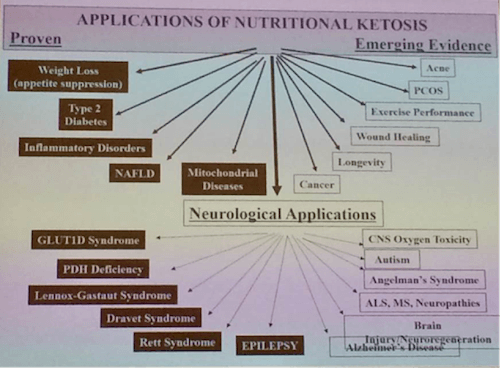
Here is one of the slides where he shares the many proven and emerging applications of nutritional ketosis:

The applications of nutritional ketosis are extensive – including epilepsy, type 2 diabetes, weight loss, NAFLD, mitochondrial disease and inflammation, with emerging evidence for acne, PCOS, wound healing, cancer, autism, ALS, MS, Alzheimer’s, the brain and anxiety.

(anxiety and depression fall under brain on the right and also under inflammatory disorders on the left)

I shared these case studies a few weeks ago in a blog post – Ketogenic diet: reductions in auditory hallucinations and delusions, better mood and energy, and weight loss. Two schizoaffective patients working with Dr. Chris Palmer, a psychiatrist from Harvard’s McLean Hospital in Belmont, Massachusetts, tried a ketogenic diet for weight loss:

  • After four weeks on the ketogenic diet, the female patient had resolution of her delusions and lost ten pounds.
  • The male patient experienced similar results with “dramatic” reductions in auditory hallucinations and delusions, as well as better mood and energy. He also lost weight, losing 104 pounds over the course of a year.

There is also research reporting the following results:

  • Therapeutic use of carbohydrate-restricted diets in an autistic child; a case report of clinical and 18FDG PET findings

the patient’s behavior and intellect improved in regard to hyperactivity, attention span, abnormal reactions to visual and auditory stimuli, usage of objects, adaptability to changes, communication skills, fear, anxiety, and emotional reactions

  • Exogenous Ketone Supplements Reduce Anxiety-Related Behavior in Sprague-Dawley and Wistar Albino Glaxo/Rijswijk Rats

ketone supplementation may represent a promising anxiolytic strategy through a novel means of inducing nutritional ketosis.

As Dr. Jockers states:

The GREATEST health discovery of this century may ALREADY be inside your body!

During this health summit, you’ll discover:

  • What is ketosis (and how does it work)?
  • Myths, and how to separate fact from fiction!
  • How to overcome the challenges of being “keto adapted.”
  • Whether you should start a keto diet (or not!).
  • How to shop, live and eat on a ketogenic lifestyle.

The Keto Edge Summit is online and available at no-cost from May 7-13, 2018! Register here

I will be in learning mode with you for the Keto Edge Summit. I’ve been following Dr. David Jockers for awhile and I’m very excited about the applications of a ketogenic diet for anxiety and depression, given what we’ve learned so far. It’s going to be a great educational opportunity for all of us.

Have you experienced benefits from a ketogenic diet? If yes please do share what benefits?

If you’ve had challenges being on a ketogenic diet please share those challenges too, so we can all learn.

Filed Under: Diet, Events, Ketogenic diet Tagged With: anxiety, brain, Dominic D'Agostino, Dr. David Jockers, Inflammation, keto, Ketogenic, Ketogenic diet, ketosis, The Keto Edge Summit, weight-loss

The Truth about *PET* Cancer docu-series – save the lives of your precious pets

March 22, 2018 By Trudy Scott 4 Comments

Cancer is ruthless and this disease is stealing the lives our beloved animals. It’s sad but true. Each year, over 6 million dogs and 6 million cats are diagnosed with cancer. And millions die as a devastating result.

The experts at The Truth about *PET* Cancer share this:

The rate of cancer in pets is exploding! Just 50 years ago, 1 in 100 dogs got cancer. Today it is a staggering 1 in 1.65 dogs. Dogs have the highest rate of cancer of any mammal on the planet, and cats aren’t far behind, with 1 in every 3 receiving a cancer diagnosis.

I was shocked by these rates so I reached out to the hosts and they kindly sent me an article by Carol Beuchat PhD, Scientific Director of the Institute of Canine Biology: Do dogs have more cancer than other mammals?:

We can truthfully say that cancer in pets is at the epidemic stage right now, and just like most oncologists, the vast majority of vets don’t know about the countless natural therapies and protocols available to heal and prevent pet cancer.

Cancer is a problem not just in a few dog breeds but in many. Cancer rates of 20% or 30% are taken as “normal” because they are so much lower than the levels in breeds that are notorious for cancer – the ones up at 50% and 60%. Clearly, however, what is considered normal for dogs is much higher than what we see in mammals in general, and cancer rates that are “abnormally high” in dogs are actually off the charts.

She also compares cancer in dogs with other mammals and the Tasmanian Devil:

rates of cancer in dogs are higher- spectacularly so, in fact – compared to those for mammals in general. Cancer rates in other mammals are largely less than 20%, while in dogs there are only a handful of breeds in that range, and there are none at all lower than about 15%, where most of the mammals are. In fact, the Tasmanian Devil with its contagious cancer [and 50% rate] is matched by the Flatcoated Retriever and even outdone by the Irish Water Spaniel, with a half dozen more breeds almost as high.

What if your dogs and cats are tragically dying from cancer, simply because you haven’t heard about treatments that can truly heal them? In this groundbreaking 7-episode docu-series, 30 world-renowned pet health experts will reveal better, safer and more affordable cancer healing treatment. And you’ll discover simple prevention therapies (your vet probably doesn’t even know about) that can save the lives of your precious pets.

Here is one cancer prevention topic that will be covered by one of the experts Rodney Habib: Are there potatoes in your bag of pet food or in your pet’s diet?

Alas, the conventional potato tests positive for 35 different pesticides — more pesticides by weight than any other vegetable, according to EWG [Environmental Working Group] 2014 Dirty Dozen List

Unless you are feeding organic potatoes to your family and pets, you may want to give this information some serious consideration seeing that today’s cancer and disease rates are soaring at an all-time high! It is estimated that 5% of cancer is genetic and 95% is a result of lifestyle and environmental factors. The fewer toxins we have in our systems, the fewer problems we have. Period.

The experts will talk about topics from the pet food industry, diets and specific treatment protocols to reverse cancer, water intake, vaccinations (needed vs. those that are likely to cause cancer), essential oil recipes in place of flea/tick collars and overall homeopathy for pets.

I’ve seen natural health work wonders with anxious pets – such as theanine, a gluten-free diet and Thunder shirts – so let’s use natural approaches for cancer prevention and treatment too! You’ll find out everything you need to know in this cutting-edge series that starts in a few weeks.  

You’ll also discover that many of these natural approaches help with both pet cancer and pet anxiety too – such as a gluten-free diet, organic food, essential oils, nutrients like curcumin, vitamin D and much more.

If you want to protect your family pet from cancer… or heal your pet’s cancer when the vet says there’s nothing more to be done… or you want to give your pet the healthiest food and environment possible so they will live a long and happy life, then I encourage you to register for The Truth About PET Cancer docu-series now.

CLICK HERE to watch the video trailer and then register to watch this special event.

And check out this quiz: Do you know your pet’s risk for cancer?


Keywords


Filed Under: Cancer, Events Tagged With: anxiety, anxious, cancer, cat, dog, pets, potatoes, Prevention, treatment, Truth about pet cancer

Infected root canal teeth, heart attacks, brain aneurysms, anxiety and depression

March 11, 2018 By Trudy Scott 33 Comments

Robert Kulacz, DDS shares this in his interview – Medical Alert: Root Canal Procedures – on the Holistic Oral Health Summit, hosted by Jonathan Landsman:

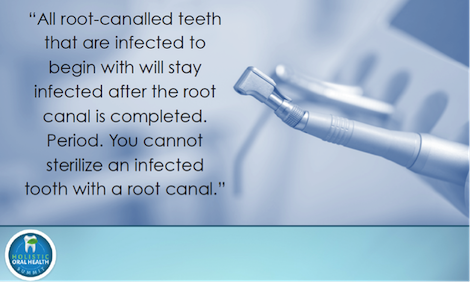
all root-canalled teeth that are infected to begin with will stay infected after the root canal is completed. Period. You cannot sterilize an infected tooth with a root canal….

Certainly, it’s very difficult to say definitively that the patient’s disease process [be it anxiety, depression, insomnia, heart disease, cancer etc.] is caused by a root canalled tooth. But we can say that these root canal teeth are toxic. They release potent exotoxins. They release bad bacteria into the body. And certainly, they may be the main cause or a contributing factor in a host of various diseases.

Do you have one or more root canals and have you ever been told they could be a factor in your unresolved health issues and even ongoing anxiety? It’s a controversial topic and Dr. Kulacz wants his patients to have the information in order to make a choice on whether or not to have a root canal, as well as being able to decide whether or not to have a root canal extracted. This is some of what he shares about myocardial infarction (commonly known as a heart attack):

in 2013, a study [Bacterial signatures in thrombus aspirates of patients with myocardial infarction] came out where bacterial signatures in thrombus aspirates of patients with myocardial infarction, and the conclusion was,“Dental infections and oral bacteria, especially viridans streptococci may be associated with the development of acute coronary thrombosis. Bacterial DNA, typical for endodontic infection,” that’s root canals, “mainly oral viridian streptococci, was measured in the thrombi. And periodontal pathogens from the gum was also a contributing factor.”

So these bacteria from these root canalled teeth, these bacteria from the gum tissues, travel from the mouth, go to the heart, go to the arterial plaques inside the coronary arteries—and that could be a major contributing factor to the development and progression of coronary artery disease—and also to the inflammation that causes that plaque to rupture and causing a heart attack.

So, we have a smoking gun here. It used to be said, “Oh, it’s correlation that oral infection can cause heart disease.” This is more a direct causation. We’re seeing the same bacteria in these root canalled teeth in the gum tissues in the plaques and coronary arteries.

He shares this about cerebral aneurysms, also called brain aneurysms which can leak or rupture, causing bleeding into the brain or a hemorrhagic stroke:

in the Journal of Neurology….published back in 2013, The Connection Between Ruptured Cerebral Aneurysms and Odontogenic Bacteria. Conclusion -“This is the first report showing evidence that dental infection could be part of the pathophysiology of intracranial aneurysm disease.”

So these bacteria go everywhere. There are going anywhere. So they can affect your heart. They can affect the blood vessels in your brain. They can affect your kidneys. They can affect your lungs. They can affect your brain.

I just wish the American Dental Association would just say, “Hey, listen! We have to look at this seriously. Now, we can no longer bury our head in the sand and say these root-canalled teeth can pose no health threat whatsoever.” That’s their position, that the bacteria found in these root-canalled teeth do not travel to other parts of the body and that these bacteria and toxins do not cause any other disease. And that simply is not true.

Here is my contribution to the above discussion and my connection to anxiety and mood….

There is so much research on the gut brain connection and we now know that the bacteria in our gut can impact our levels of anxiety (and depression), but what if the bacteria in our mouth can also contribute to our anxiety?

  • this 2017 paper, Exploring the Association between Alzheimer’s Disease, Oral Health, Microbial Endocrinology and Nutrition, make some of these connections, mentioning both anxiety and insomnia as well as Alzheimer’s disease and poor oral health.
  • this 2016 paper, Depression and Inflammatory Periodontal Disease Considerations—An Interdisciplinary Approach reports that periodontal disease may contribute to the onset of depression via inflammation, activation of cell-mediated immunity and increased oxidative stress

For many people the anxiety nutrition solution is an easy one but if you have been struggling for years to find your root cause and have root canals, periodontal disease and poor mouth health, this must be addressed.

Also, we see poorer dental health in those who have pyroluria (the social anxiety condition) and low histamine levels (also called histapenia or overmethylation). This topic isn’t covered on the summit but it’s been documented since the early work of Carl Pfeiffer, MD. So, addressing diet and nutritional imbalances can start to address both the anxiety and poor mouth health.

Be sure to register for the Holistic Oral Health Summit here. Here are a few other great reasons to tune in:

  • Oral health is the most overlooked health issue in conventional AND integrative medicine!
  • 80% of disease symptoms are caused by problems in the mouth.
  • Millions are exposed to disease-promoting dental procedures every day!
  • Autoimmune disorders CAN be resolved by getting rid of toxic dental materials
  • Reversing gum disease CAN help you get rid of digestive problems
  • Root canal procedures – as mentioned above – increase your risk of cancer and other degenerative diseases (and very possibly anxiety and depression too)
  • Heavy metals like mercury in silver dental fillings can contribute to anxiety and depression, damaging to your brain and nervous system, and affecting your digestion

This amazing event brings together some of the top doctors, dentists, scientists and health experts, giving you unprecedented access to oral health information that could transform your health!

Be in charge of your mouth health when you register for The Holistic Oral Health Summit airing from March 12-19, 2018!

We’d love to hear from you. Do you have root canals and unresolved health issues? Have you had your root canals extracted and experienced better health?

Filed Under: Events Tagged With: oral health, root canal

EMFs and how to help your electrosensitive clients/patients

February 28, 2018 By Trudy Scott 26 Comments

Our exposure to “Electrosmog” from cell phones, Wi-Fi, Bluetooth, smart meters and cell phone towers is increasing steadily and we can’t deny it anymore — electromagnetic fields (EMFs) — are making people sick. EMF exposure is now thought to be just as important as exposure to pesticides, mold, heavy metals or any other kind of environmental toxin:

  • Magda Havas from Trent University: up to 33% of the population has “mild to moderate symptoms” of electro sensitivity
  • Dietrich Klinghardt, health pioneer and Medical Director at the Sophia Health Institute: “patients suffering from chronic illness will likely never heal unless you reduce their exposure to Electrosmog.”

This paper published in 2016, Microwave frequency electromagnetic fields (EMFs) produce widespread neuropsychiatric effects including depression reports that

the mechanism of action of microwave EMFs, the role of the VGCCs [voltage-gated calcium channels] in the brain, the impact of non-thermal EMFs on the brain, extensive epidemiological studies performed over the past 50 years, and five criteria testing for causality, all collectively show that various non-thermal microwave EMF exposures produce diverse neuropsychiatric effects.

Among the more commonly reported changes are sleep disturbance/insomnia, headache, depression/depressive symptoms, fatigue/tiredness, dysesthesia, concentration/attention dysfunction, memory changes, dizziness, irritability, loss of appetite/body weight, restlessness/anxiety, nausea, skin burning/tingling/dermographism and EEG changes.

My friend and investigative health journalist Nicolas Pineault is the author of “The Non-Tinfoil Guide to EMFs” (my Amazon link) and an expert on EMFs. He is the creator of  Electrosmog Rx, an EMF Course for Health Practitioners, now available as an evergreen version.

In February I announced the live version and I know a number of you jumped right in and did the training with me! What an amazing course it was!

Here is my official testimonial:

This is the most intellectually-stimulating course I’ve done in a long time! Nick’s expertise is exceptional, the research expansive (and quite mind-blowing!), the practical solutions excellent and the Facebook community invaluable!  The knowledge I’ve gained is going to be a game-changer for every single one of my clients. I HIGHLY recommend this course!

I was limited by word count and could have shared much more! Nick invited me to be part of the beta group and I actually said this to him: “I’ve read your book and it’s brilliant – I’m not sure I really need to do a course too” Boy was I wrong!

This training focuses on the clinical side of EMFs as an environmental factor contributing to ill health (including widespread neuropsychiatric effects) and includes critical information on what to ask your patients/clients to assess if they’re being over-exposed, how EMFs could disrupt the protocols you’re giving them, how to help them mitigate the effects of EMFs and how to make them more resilient to the effects.

If you want to learn latest evidence-based, cutting-edge, credible information on how Electrosmog exposure affects your patients/clients, how to prevent EMF-related symptoms and illness, and how to support those clients/patients who have symptoms, then I recommend this course.

The course includes all replays (audio, video, transcripts) of each of the 5 webinars, the 5 bonus interviews, access to the private members-only Facebook group packed with cutting-edge discussions, and several bonus cheat sheets that have been added based on group feedback.

EMF Basics

  • The EMF spectrum
  • 4 types of EMFs linked with ill health
  • Common sources of EMFs your patients/clients are probably exposed to
  • Are there “safe” levels of EMFs?

EMF Science

  • How EMFs affect every cell in the body
  • The NO/ONOO- cycle
  • Synergies between EMFs, inflammation, environmental toxins and excessive NMDA activity
  • Review of the strongest evidence available

EMF Symptomatology

  • What to ask your patients/clients to assess their exposure
  • Common EMF-related symptoms
  • What to look for on labs
  • How to properly diagnose electro hypersensitivity (EHS)

EMF Mitigation

  • Evidence-based ways to reduce exposure in and out the home
  • Using EMF-blocking clothes
  • The lowdown on grounding

EMF Resilience

  • Diet interventions and supplements which support the NRF2 pathway
  • Supplements to heal electrosensitivity

He has also interviewed and collaborated with some of the best minds in healing including Dr. Klinghardt, Dr. Joseph Mercola, Dr. Ben Lynch and many more and the course offers these interviews as a bonus. Here is what I learned from his interview with Dr. Klinghart:

After applying a few evidence-based solutions to reduce exposure to this new environmental toxin, Klinghardt sees patients with chronic diseases such as Lyme, ALS, Parkinson’s, Alzheimer’s, MS, autism and fibromyalgia heal faster — making every single supplement or protocol he sends their way more effective.

We also learned about EMF mitigation efforts for autism/ASD and autoimmune disease:

  • a simple and yet effective approach recommended by Dr. Toril Jelter and Cindy Sage: no baby monitors, no cordless phones, no Wi-Fi and switch off the bedroom circuit breaker at night. They report that over 80% of children with autism/ASD saw noticeable improvement in as little as two weeks.
  • One of the most compelling studies I learned about is the study by Trevor Marshall, MD and Trudy Heil, RN: Electrosmog and autoimmune disease. In this study, 90% of the participants – all with an autoimmune diagnosis of either arthritis, lupus, multiple sclerosis, sjogrens or celiac disease – reported improved symptoms as a result of wearing silver-threaded EMF protective caps.

And based on what I learned in the course, I’m speculating (and extrapolating from some of the research) that EMF overload may play a role in chronic anxiety, insomnia, benzodiazepine issues, SIBO, high cortisol and dietary oxalate issues in some susceptible individuals. I blog in great detail about this here: Wi-Fi is an important threat to human health


You can watch his Mindshare presentation here:


Nick shares this wisdom

If you’ve never seen a patient or client whose health is being affected by EMFs, it’s very likely that you’ve missed it.

Here is some of the wisdom you can expect to learn in the course:

  • EMFs reduce the number of cells in the hippocampus
  • EMFs increase cortisol levels
  • EMFs affect the production of GABA
  • EMFs can increase blood pressure
  • EMFs increase markers of inflammation (TGF-Beta 1, MMP-9 and copper), disrupting hormone and neurotransmitter production

UPDATE March 1, 2018 – You can learn more and get on the waiting list for Electrosmog RX here. (the 100 seats sold out in 3 days and he’s opening up another 100 seats in the next few days)

UPDATE March 7, 2018 –  Another 200 seats have been added today and are now available for purchase. He is limiting the number so he can address all questions from participants. If you signed up prior to today you should have seen an email from Nick about this.  You can also use this link to purchase: Electrosmog RX 

UPDATE April 30, 2018: Updates to the blog with additional research and information for the launch of the evergreen digital version of the Electrosmog Rx program created by investigative health journalist Nicolas Pineault.

Feel free to post questions in the comments.

Filed Under: EMFs, Events Tagged With: Ben Lynch, dietrich klinghardt, electrosmog, EMF, joseph mercola, nicolas pineault

  • « Go to Previous Page
  • Page 1
  • Page 2
  • Page 3
  • Page 4
  • Page 5
  • Page 6
  • Interim pages omitted …
  • Page 35
  • Go to Next Page »

Primary Sidebar

GABA QuickStart Homestudy

gaba quickstart homestudy

Free Report

9 Great Questions Women Ask about Food, Mood and their Health

You'll also receive a complimentary subscription to my ezine "Food, Mood and Gal Stuff"


Connect with me

Popular Posts

  • Amino Acids Mood Questionnaire from The Antianxiety Food Solution
  • The Antianxiety Food Solution Amino Acid and Pyroluria Supplements
  • Pyroluria Questionnaire from The Antianxiety Food Solution
  • Collagen and gelatin lower serotonin: does this increase your anxiety and depression?
  • Tryptophan for the worry-in-your-head and ruminating type of anxiety
  • GABA for the physical-tension and stiff-and-tense-muscles type of anxiety
  • The Antianxiety Food Solution by Trudy Scott
  • Seriphos Original Formula is back: the best product for anxiety and insomnia caused by high cortisol
  • Am I an anxious introvert because of low zinc and vitamin B6? My response to Huffington Post blog
  • Vagus nerve rehab with GABA, breathing, humming, gargling and key nutrients

Recent Posts

  • Her cravings for chips and peanut butter were triggered by stress: GABA ends cravings and reduces physical tension and fear of heights
  • It is truly miraculous to be able to move through life without crippling anxiety and panic
  • GABA and tryptophan combo provide immediate and noticeable relief for tremors and cervical dystonia in just 7 days
  • Red light therapy for back and neck pain, plantar fasciitis and low mood – a complement to the amino acids GABA, DPA and tryptophan
  • What do I use instead of Seriphos to help lower high cortisol that is affecting my sleep and making me anxious at night?

Categories

  • 5-HTP
  • AB575
  • Addiction
  • ADHD
  • Adrenals
  • Alcohol
  • Allergies
  • Alzheimer's disease
  • Amino Acids
  • Anger
  • Antianxiety
  • Antianxiety Food Solution
  • Antidepressants
  • Anxiety
  • Anxiety and panic
  • Autism
  • Autoimmunity
  • benzodiazapines
  • Bipolar disorder
  • Books
  • Caffeine
  • Cancer
  • Candida
  • Children/Teens
  • Collagen
  • Cooking equipment
  • Coronavirus/COVID-19
  • Cravings
  • Depression
  • Detoxification
  • Diabetes
  • Diet
  • DPA/DLPA
  • Drugs
  • EFT/Tapping
  • EMF
  • EMFs
  • Emotional Eating
  • Endorphins
  • Environment
  • Essential oils
  • Events
  • Exercise
  • Fear
  • Fear of public speaking
  • Fertility and Pregnancy
  • Fish
  • Food
  • Food and mood
  • Functional neurology
  • GABA
  • Gene polymorphisms
  • General Health
  • Giving
  • Giving back
  • Glutamine
  • Gluten
  • GMOs
  • Gratitude
  • Gut health
  • Heart health/hypertension
  • Histamine
  • Hormone
  • Hyperparathyroidism
  • Hypoglycemia
  • Immune system
  • Inflammation
  • Insomnia
  • Inspiration
  • Introversion
  • Joy and happiness
  • Ketogenic diet
  • Lithium orotate
  • Looking awesome
  • Lyme disease and co-infections
  • MCAS/histamine
  • Medication
  • Men's health
  • Mental health
  • Mercury
  • Migraine
  • Mold
  • Movie
  • MTHFR
  • Multiple sclerosis
  • Music
  • NANP
  • Nature
  • Nutritional Psychiatry
  • OCD
  • Osteoporosis
  • Oxalates
  • Oxytocin
  • Pain
  • Paleo
  • Parasites
  • Parkinson’s disease
  • PCOS
  • People
  • PMS
  • Postpartum
  • PTSD/Trauma
  • Pyroluria
  • Questionnaires
  • Real whole food
  • Recipes
  • Research
  • Schizophrenia
  • serotonin
  • SIBO
  • Sleep
  • Special diets
  • Sports nutrition
  • Stress
  • Sugar addiction
  • Sugar and mood
  • Supplements
  • Teens
  • Testimonials
  • Testing
  • The Anxiety Summit
  • The Anxiety Summit 2
  • The Anxiety Summit 3
  • The Anxiety Summit 4
  • The Anxiety Summit 5
  • The Anxiety Summit 6
  • Thyroid
  • Thyroid health
  • Toxins
  • Tryptophan
  • Tyrosine
  • Uncategorized
  • Vegan/vegetarian
  • Women's health
  • Yoga

Archives

  • May 2026
  • April 2026
  • October 2025
  • September 2025
  • August 2025
  • July 2025
  • June 2025
  • May 2025
  • April 2025
  • March 2025
  • February 2025
  • January 2025
  • November 2024
  • October 2024
  • September 2024
  • August 2024
  • July 2024
  • June 2024
  • May 2024
  • April 2024
  • March 2024
  • February 2024
  • January 2024
  • December 2023
  • November 2023
  • October 2023
  • September 2023
  • August 2023
  • July 2023
  • June 2023
  • May 2023
  • April 2023
  • March 2023
  • February 2023
  • January 2023
  • December 2022
  • November 2022
  • October 2022
  • September 2022
  • August 2022
  • July 2022
  • June 2022
  • May 2022
  • April 2022
  • March 2022
  • February 2022
  • January 2022
  • December 2021
  • November 2021
  • October 2021
  • September 2021
  • August 2021
  • July 2021
  • June 2021
  • May 2021
  • April 2021
  • March 2021
  • February 2021
  • January 2021
  • December 2020
  • November 2020
  • October 2020
  • September 2020
  • August 2020
  • July 2020
  • June 2020
  • May 2020
  • April 2020
  • March 2020
  • February 2020
  • January 2020
  • December 2019
  • November 2019
  • October 2019
  • September 2019
  • August 2019
  • July 2019
  • June 2019
  • May 2019
  • April 2019
  • March 2019
  • February 2019
  • January 2019
  • December 2018
  • November 2018
  • October 2018
  • September 2018
  • August 2018
  • July 2018
  • June 2018
  • May 2018
  • April 2018
  • March 2018
  • February 2018
  • January 2018
  • December 2017
  • November 2017
  • October 2017
  • September 2017
  • August 2017
  • July 2017
  • June 2017
  • May 2017
  • April 2017
  • March 2017
  • February 2017
  • January 2017
  • December 2016
  • November 2016
  • October 2016
  • September 2016
  • August 2016
  • July 2016
  • June 2016
  • May 2016
  • April 2016
  • March 2016
  • February 2016
  • January 2016
  • December 2015
  • November 2015
  • October 2015
  • September 2015
  • August 2015
  • July 2015
  • June 2015
  • May 2015
  • April 2015
  • March 2015
  • February 2015
  • January 2015
  • December 2014
  • November 2014
  • October 2014
  • September 2014
  • August 2014
  • July 2014
  • June 2014
  • May 2014
  • April 2014
  • March 2014
  • February 2014
  • January 2014
  • December 2013
  • November 2013
  • October 2013
  • September 2013
  • August 2013
  • July 2013
  • June 2013
  • May 2013
  • April 2013
  • March 2013
  • February 2013
  • January 2013
  • December 2012
  • November 2012
  • October 2012
  • August 2012
  • July 2012
  • June 2012
  • May 2012
  • April 2012
  • March 2012
  • February 2012
  • January 2012
  • December 2011
  • November 2011
  • October 2011
  • September 2011
  • August 2011
  • July 2011
  • June 2011
  • May 2011
  • April 2011
  • March 2011
  • February 2011
  • January 2011
  • December 2010
  • October 2010
  • September 2010
  • July 2010
  • May 2010
  • April 2010
  • March 2010
  • February 2010
  • January 2010
  • November 2009

Share the knowledge!

The above statements have not been evaluated by the Food and Drug Administration. Products listed in this website are not intended to diagnose, treat, cure or prevent any disease.

The information provided on this site is for informational and educational purposes only and is not intended as a substitute for advice from your physician or other health care professional. You should consult with a healthcare professional before starting or modifying any diet, exercise, or supplementation program, before taking or stopping any medication, or if you have or suspect you may have a health problem.


Copyright © 2026 Trudy Scott. All Rights Reserved. | Privacy | Terms and Conditions | Refund Policy | Medical Disclaimer

Free Report

9 Great Questions Women Ask about Food, Mood and their Health

You’ll also receive a complimentary subscription to my ezine “Food, Mood and Gal Stuff”