• Skip to primary navigation
  • Skip to main content
  • Skip to primary sidebar

everywomanover29 blog

Food, Mood and Women's Health – Be your healthiest, look and feel great!

  • Blog
  • About
  • Services
  • Store
  • Resources
  • Testimonials
  • The Book
  • Contact
  • Search this site

Archives for May 2023

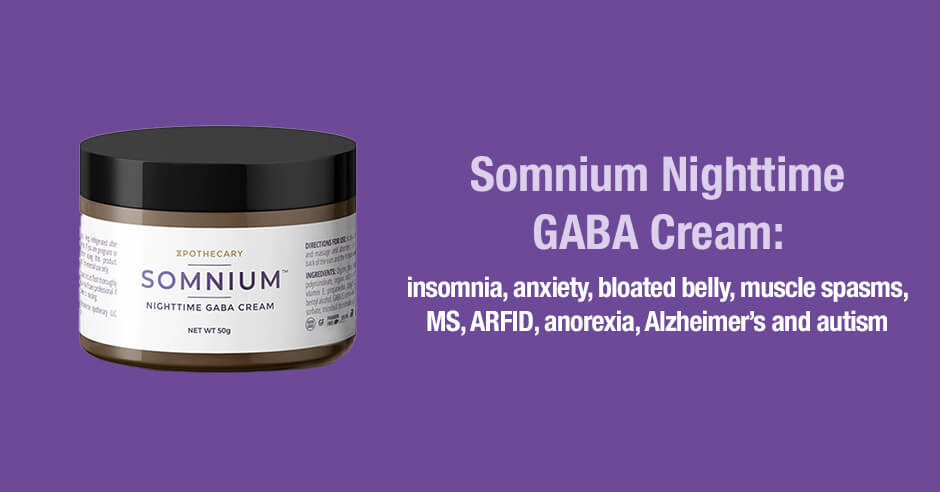
Somnium Nighttime GABA Cream: insomnia, anxiety, bloated belly, muscle spasms, MS, ARFID, anorexia, Alzheimer’s and autism

May 26, 2023 By Trudy Scott 45 Comments

somnium gaba cream

Somnium Nighttime GABA Cream is a topical GABA product I have been researching and trying personally with success. And folks in my community are reporting good results too. One woman shared this:

Surprisingly this stuff is very strong. I only use a small amount on the inside of my arm and it really helps me sleep better and calm down my nervous system at night. I don’t use it every day, rather I tend to use it when I’ve had a particularly busy or full/stressful day.

I endorse this topical GABA product as something to use in addition to the sublingual, powder, liposomal or opened GABA capsule you may be seeing benefits from OR it may become the one GABA product that works best for your needs – for helping with insomnia, easing physical anxiety and other low GABA symptoms.

I expect it to be beneficial for those with MS (multiple sclerosis), ARFID (Avoidant restrictive food intake disorder), anorexia, Alzheimer’s, autism and special needs children, and if you have severe digestive issues – for anxiety, insomnia and related symptoms.

When to use Somnium and increasing as needed

I do recommend only trialing this GABA cream when you know that GABA does work for you and you are looking for another way to increase GABA levels. I say this because it is more expensive than other GABA products and will only work if GABA is low – so it’s best to be sure.

Also, I have clients use a similar dose when using GABA products interchangeably. Somnium is around 250mg to 500mg for a small pea-size amount (the 1oz jar lasts 45 days, and the 2oz jar lasts 90 days if a pea-sized amount is used nightly.)

When comparing this with the GABA product that is already working for you, don’t forget to compare apples to apples with no confounding influences. So if you still have your period, the time of the month needs to be considered, and diet and other factors like outside stresses of course.

And don’t forget that there is no one size fits all. I have clients increase the amount of GABA when using it as a supplement, in order to find the ideal dose for their unique needs. I use the same logic with the GABA cream – start low and increase as needed.

For nighttime use for improving sleep (and how to use it)

As you’ll see on the website, it’s recommended for nighttime use for improving sleep but I have found there are many more applications (more on these below).

You’ll also see the recommended way to use it is to “Apply a small pea-size amount to skin and massage until absorbed. For best results apply to the back of the ears and the temples before bed time.”

Very quickly after starting to use Somnium myself, I decided I didn’t like using it on the back of my ears and temples, because it’s oily and made my hair greasy.

Rubbing it between my palms and applying some onto my forearms worked as well for my insomnia. Using it on the inner thigh is an option too.

It also helps me with a painful bloated belly and muscle spasms

I’ve also used it for a painful bloated belly at night, rubbed directly on my belly.

And I’ve found it to help back pain/muscle spasms when used directly over the spasming muscle.

(By the way my sublingual GABA product works as well as the GABA cream – I was experimenting with the cream so I could compare the two and offer my feedback.)

An application for specific populations

I also see the application for Somnium GABA cream for specific populations, who may find a cream is a better way to use GABA:

  • An aging parent with Alzheimer’s disease (and sundowning agitation/anxiety)
  • A person with ARFID (avoidant-restrictive food intake disorder)
  • A person with anorexia or other eating disorder
  • A child or young adult with autism (with anxiety and sensorimotor issues), a child/adult who struggles with taking supplements and other special needs children/adults
  • Someone with multiple sclerosis (for anxiety and muscle spasms/spasticity)
  • A person with severe digestive issues and prefers a cream

Low GABA symptoms

As a reminder, if you are new to GABA, it’s an amino acid that helps to address low GABA levels and the associated symptoms: insomnia, physical anxiety, feeling worried or fearful, panic attacks, stiff or tense muscles, feeling stressed and burned-out, craving carbs/alcohol for relaxation and calming, intrusive thoughts, spinning/poor focus, fear of heights, rectal spasms, burning mouth, and visceral pain/belly pain with IBS. See the most current list of low GABA symptoms here.

Is oral GABA not effective?

When I recently shared this GABA cream product someone asked this great question: “Why have I been spending a ton of money on oral GABA if it’s not effective?”

Oral GABA does work and is most effective when it’s used properly i.e. using a capsule opened on to the tongue (and held for at least 2 minutes) or using GABA in powder form on the tongue (and held for at least 2 minutes), or using a sublingual form of GABA. More on all this here – How did you come up with the idea of using GABA on the tongue? (GABA is a calming amino acid supplement used to ease physical anxiety symptoms).

Keep in mind there are many practitioners who are not aware of these methods and will recommend swallowing GABA capsules or tablets. This is not ideal for the majority of clients I have worked with.

There are also some practitioners and consumers who do not believe that any method of oral GABA works (swallowed or using the above approaches) or even that topical GABA works.

The important thing is this: if you do have low GABA symptoms and get symptom relief when you use GABA, you can ignore the naysayers. Better yet, shout it from the rooftops so more people get to learn about the amazing amino acid GABA and get results too!

My recommendation is to first experiment with oral GABA (used as above) and then consider Somnium when you know how GABA benefits you and how much is helping.

A few of the negatives

Here are a few of the negatives: You don’t know exactly how much GABA you’re getting (it’s a proprietary formulation but I suspect it’s 250mg to 500mg for a small pea-size amount); towards the end of the jar it does start to separate a bit/get clumpy; it’s pricey but it does go a long way.

However, it works!

The benefits of combing GABA with chondroitin sulfate

Dr. Christine Schaffner helped formulate the product and shares this about combining GABA with chondroitin sulfate:

Now individually, GABA and Chondroitin Sulfate have their respective health benefits. But when you combine these 2 compounds, something AMAZING happens.

You might’ve heard the phrase, ‘your skin is the antenna of your body’. It’s a fancy way of saying that your skin absorbs everything.

When you combine the 2 compounds… the absorption happens faster than with any other GABA cream on the market. And since chondroitin sulfate is known to pass the blood brain barrier, it’s as if the GABA has hopped on a super-highway straight to your brain.

Here is some feedback from a few of her Somnium customers:

I was waiting to share until I had more than one great night’s sleep after using Somnium Nighttime Gaba Cream. I now have had several nights of deep sleep and the only thing I changed was the sleep cream. It had been years since I slept straight through 7 – 8 hours. I feel SO rested when I get up. Wow!! – Candace

It works! I LOVE gaba and am familiar with how it feels. It’s especially nice to be able to get it in cream form. I’ve been sleeping much more deeply. – Jaya

UPDATE: April 2025 – unfortunately this product has been discontinued. Stay tuned for a new updated formula.

UPDATE: July 2025 – I have been in communication with Dr. Ruggiero’s team at Bravo North America about the new formulation called Bravo cream. He worked with Dr. Christine Schaffner to create Somnium GABA cream. They have shared that “Bravo is the combination of Somnium and Lymphflo; it contains all the active ingredients of the two creams with a delivery system that has been redesigned appropriately to allow the maximum efficacy.”

Purchase Bravo cream with this link – Use trudy15 at checkout to get a 15% discount.

Have you used Somnium in the past and how has it helped you? If you have used it and decide to get the Bravo cream I’d really appreciate your feedback on how it compares.

How does using a GABA cream compare with other GABA products you have used (feel free to share specific brands and how you used them – sublingual, capsule-opened, liposomal or powder). Some folks prefer a cream only and many use a combination of cream and sublingual.

Feel free to post your questions here too.
Filed Under: Anxiety, GABA Tagged With: alzheimer's, anorexia, anxiety, ARFID, autism, bloated belly, blood brain barrier, chondroitin sulfate, GABA, insomnia, MS, muscle spasms, Somnium, Somnium Nighttime GABA Cream, topical

PCOS (polycystic ovarian syndrome): GABA helped ease lifelong anxiety, wean off anxiety medication, ovulate each month and stop PCOS meds

May 19, 2023 By Trudy Scott 19 Comments

PCOS and GABA

I was diagnosed with PCOS (polycystic ovarian syndrome) when I was 27. (I’m currently 43 now). When diagnosed they immediately put me on birth control and metformin.

I also eventually went on anti-anxiety medication. I’ve been anxious my whole life, even as a kid, but my anxiety increased through my late 20s and peaked in my late 30s when panic attacks started taking over, even with anti-anxiety medication(Lexapro). It was debilitating.

I first heard about GABA/amino acids and how they can help with anxiety from a podcast you did with Wellness Mama about 3 years ago. I started to wean off my anxiety medication and I started taking GABA and noticed a huge difference [in my anxiety].

I eventually got off birth control and all medication for my PCOS and started regulating my cycle with diet, lifestyle changes and supplements, all while still taking GABA. Now I ovulate every month! Which I could never do on my own before.

Debbie shared this wonderful feedback on this blog: GABA eases anxiety and is protective against metabolic and reproductive disturbances in polycystic ovarian syndrome (PCOS)?

I love that GABA helped her so much with her anxiety and allowed her to get off her anxiety meds. And that GABA helped her resolve her PCOS, together with making diet, lifestyle changes and using other supplements too.

As you can read on the above blog, the study reports some very specific benefits of GABA being protective against metabolic and reproductive disturbances in PCOS. It’s an animal study but the results are profound: “the effects observed with GABA were comparable to that with metformin” with none of the side-effects (which can actually include anxiety, a racing heart, shakiness and depression).

If you’re new to PCOS, I share this in the above blog:

Research suggests that 5% to 10% of females 18 to 44 years of age are affected by PCOS, making it the most common endocrine abnormality among women of reproductive age in the U.S. Women seeking help from health care professionals to resolve issues of obesity, acne, amenorrhea, excessive hair growth, and infertility often receive a diagnosis of PCOS.

If you’re interested, here is the podcast where Debbie first learned about GABA – 105: Trudy Scott on How to Beat Anxiety & Resolve Panic Attacks

I commend her for taking control and making changes and then for seeking answers when her panic attacks returned.

Debbie started having panic attacks again – this time it was collagen causing low serotonin

Then about three and a half years ago, Debbie started having panic attacks again out of nowhere! She was very surprised and shared this:

I couldn’t understand why [I started having panic attacks again]. I wasn’t stressed. One attack even landed me in the ER (again). I was disappointed to be on this road again. Then I came across your interview talking about collagen and how it can lower your serotonin. I also have the MTHFR gene variant so I run low on serotonin already. I had started taking some collagen supplements not knowing that it was probably setting me into a panic attack mode.

As soon as I stopped taking collagen (and switched all my supplements that were in gelatin caps to veggie caps) I never had another episode again. Or if I felt one coming on, I know now to take Tryptophan to help counteract it.

Here is the interview she is referring to – Collagen Can Cause Anxiety and Insomnia with Trudy Scott: The Anxiety Summit 5

And here is the blog where I first wrote about this topic – Collagen and gelatin lower serotonin: does this increase your anxiety and depression?

Debbie mentions the MTHFR polymorphism and it’s impact on serotonin but another aspect is a predisposition to low serotonin in PCOS. This review paper, Neuroendocrine Determinants of Polycystic Ovary Syndrome, states that “different neurotransmitters (gamma-aminobutyric acid (GABA), glutamate, serotonin, dopamine, and acetylcholine) can also be involved in neuroendocrine etiopathogenesis [i.e. cause and development] of PCOS.” 

As you’ll read in the latter collagen blog, collagen affects a subset of susceptible individuals in this way. We can now add PCOS to that list.

Different root causes of anxiety (low GABA and then low serotonin) and different solutions

Debbie’s story illustrates that things can change and we need to figure out the root cause and course-correct if anxiety and panic attacks show up again. Earlier on, her anxiety and panic attacks were caused by low GABA, which also contributed to her PCOS symptoms.

Then later, the addition of collagen lowered her serotonin levels, because as someone with PCOS she was susceptible. What helped her was stopping the collagen and using tryptophan as needed. This was smart of her to connect the dots with her panic attacks and collagen, and use tryptophan as needed.

I will add that another option would have been to continue using collagen and use tryptophan at the same time. I’m also not sure how big an impact gelatin capsules would have been but switching them clearly gave her peace of mind.

Debbie’s oldest daughter asks for GABA, her “happy pills”

She also shared this lovely feedback when she commented on the blog:

My oldest daughter who is 9 has been showing early signs of developing PCOS and other of my issues. When her mood started changing and she was getting angry out of nowhere and very dark and moody, I started her on a small dose of GABA. Immediately both of us saw the difference in her mood. She now asks for her “happy pills” daily because she doesn’t want to feel those dark feelings anymore. I wish this information was around when I was young. It could’ve helped so much of what I had to struggle with for years.

What an amazing healing journey Debbie has had and she gets to help her daughter too!

She thanked Katie Wells and myself saying: “I want to thank you so much for both of those podcasts/interviews that I feel literally helped save my life.”

I never get tired of hearing this and thanked her for the kind words. I also appreciate her for sharing her wonderful results and said I’d share it as a blog post so you get to learn, be inspired and have hope.

And finally, all this illustrates that there is no one-size-fits-all and we often get unexpected side-benefits when using amino acids.

Resources if you are new to using amino acids as supplements

If you are new to using amino acids as supplements, here is the Amino Acids Mood Questionnaire from The Antianxiety Food Solution (you can see all the symptoms of neurotransmitter imbalances, including low GABA, low serotonin and low endorphins).

If you suspect low levels of any of the neurotransmitters and do not yet have my book, The Antianxiety Food Solution – How the Foods You Eat Can Help You Calm Your Anxious Mind, Improve Your Mood, and End Cravings, I highly recommend getting it and reading it before jumping in and using amino acids on your own so you are knowledgeable. And be sure to share it with the practitioner/health team you or your loved one is working with.

There is an entire chapter on the amino acids and they are discussed throughout the book in the sections on gut health, gluten, blood sugar control, sugar cravings, anxiety and mood issues.

The book doesn’t include product names (per the publisher’s request) so this blog, The Antianxiety Food Solution Amino Acid and Pyroluria Supplements, lists the amino acids that I use with my individual clients and those in my group programs. You can find them all in my online store.

If, after reading this blog and my book, you don’t feel comfortable figuring things out on your own (i.e. doing the symptoms questionnaire and respective amino acids trials), a good place to get help is the GABA QuickStart Program (if you have low GABA symptoms too). This is a paid online/virtual group program where you get my guidance and community support.

If you are a practitioner, join us in The Balancing Neurotransmitters: the Fundamentals program. This is also a paid online/virtual program with an opportunity to interact with me and other practitioners who are also using the amino acids.

Do you have PCOS and has GABA helped you or your loved one in any of these ways – easing anxiety and being able to quit anxiety meds, birth control and PCOS medications?

What other approaches have helped your PCOS?

Has collagen lowered your serotonin and does tryptophan or 5-HTP help?

What about low GABA and dark moods/anger – has GABA helped you or a loved one?

If you have questions and other feedback please share it here too.

Filed Under: Anxiety, GABA, PCOS, Women's health Tagged With: amino acids, anger, anxiety, anxiety medication, anxious, birth control, collagen serotonin, dark mood, diet, GABA, lifestyle, metabolic, metformin, ovulate, panic attacks, PCOS, polycystic ovarian syndrome, reproductive, tryptophan, “happy pills”; the GABA Quickstart online program; and Balancing Neurotransmitters: the Fundamentals program for practitioners

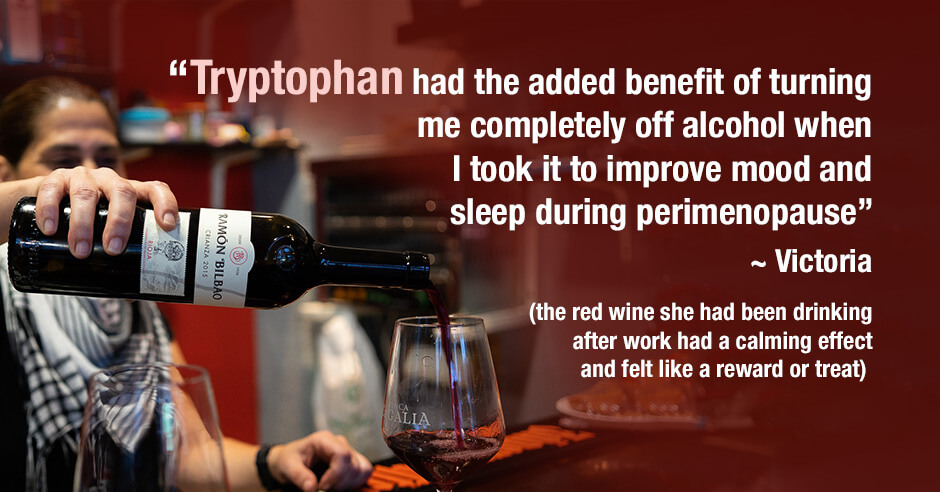
Tryptophan had the added benefit of turning me completely off alcohol when I took it to improve mood and sleep during perimenopause

May 12, 2023 By Trudy Scott 33 Comments

tryptophan alcohol

I started taking tryptophan 3 years ago to improve mood and sleep (not recognizing I was in perimenopause which it helped), but had the added benefit of turning me completely off alcohol! Lol. What serendipitous timing! I use amino therapy with pretty much all my perimenopause patients now. Thanks to you and Julia Ross’s work. Forever grateful.

Victoria shared this wonderful feedback about the benefits she experienced with tryptophan on a recent Facebook thread and kindly gave me permission to share.

Self-medicating with wine (and other alcoholic beverages) is common when we are anxious or stressed and typically we use it to wind down at the end of the day and to fit in socially. This is common when GABA levels are low and also happens due to low serotonin which declines from mid-afternoon into the evening.

I asked what she had been drinking and how often? And if it was calming for her? This was her response:

Red wine the minute I walked in the door in the evening. I guess it was calming… maybe more reward driven? It would be my reward for getting home from work via picking kids up from sport and doing a grocery shop and … (fill in the blank) that we working mums do and then having to walk straight into the kitchen to start on dinner.

The wine was like my little treat or reward to motivate me to just keep moving with my chores. No time to sit and unwind, just pour the wine and start chopping! Lol… I had tried to stop before but just couldn’t pick up a knife without the wine glass!

Within days, the tryptophan made the wine taste like cat’s pee! Haven’t touched it since. No desire at all. Almost hypnosis like?

How much tryptophan Victoria used and how did it help her quit?

Victoria used the Now Tryptophan 1000 mg at 3pm and 9pm for about a year, eventually stopping it and saying: “Alcohol still does not interest me at all.”

What wonderful results! A typical starting dose for tryptophan is 500 mg midafternoon and evening and she increased this to find her ideal dose of 1000 mg twice a day. She did report that 5-HTP didn’t work for her the way tryptophan did. This is not unusual as some folks do better with one versus the other.   

She has a great explanation regarding how tryptophan helped her quit without having to use willpower. She had no time to sit and unwind ….. so she was experiencing some of the calming aspects of getting serotonin support with the amino acid tryptophan. This is a very common benefit.

Serotonin appears to regulate the secretion of beta-endorphins

It is interesting that Victoria mentions a reward/treat benefit which is often due to low endorphins rather than low serotonin. This paper, Roles of β-Endorphin in Stress, Behavior, Neuroinflammation, and Brain Energy Metabolism, states that β-endorphins, in addition to their “potent analgesic effects” i.e. pain relief (both physical and emotional pain), are also involved in “reward-centric and homeostasis-restoring behaviors.”

However, as stated in this same paper, beta-endorphins play a role in stress-relief (common with working moms like Victoria) and are closely connected with serotonin. In fact “serotonin appears to regulate the secretion of β-endorphins” and vice versa. The body is fascinating and so smart.

Amino acids for alcohol addiction: 5-HTP, DLPA and glutamine

We know that amino acids help with alcohol cravings and addiction and have even been used in inpatient settings. This blog illustrates this well – An amino acid supplement with DLPA, glutamine and 5-HTP (and a few other nutrients) eases alcohol withdrawal symptoms at an inpatient detoxification program.

The study authors state that: “the physiological craving for alcohol may be the result of a deficiency of the naturally occurring opiate like substances as well as other neurochemical deficits (i.e., dopaminergic, GABAergic, and serotonergic).

Both tryptophan and 5-HTP support low serotonin worry-type anxiety, low mood and insomnia. Victoria happened to benefit from tryptophan. Someone else may benefit more from 5-HTP or DLPA or glutamine or a combination as illustrated in the above study. And even GABA, which can help with stress-drinking or stress-eating, as well as physical anxiety.

DPA and DLPA support endorphins and provide the reward/treat benefits from red wine that Victoria mentions.  You can read about the difference between DPA and DLPA here.

What if you have afternoon and evening sugar cravings instead of wine?

You may self-medicate with sugar, carbs, gluten, dairy instead of wine. Late afternoon/evening cravings are typically related to low serotonin when there are other low serotonin symptoms like low mood, anxiety, ruminations, worry, insomnia, PMS etc. You can see all the low serotonin symptoms here.

In this case, tryptophan or 5-HTP can be used in a similar way to stop the cravings with no willpower required and no feelings of being deprived. You’ll also experience reduced anxiety, improved mood and better sleep. Read more about this on this blog: Would using 5-HTP or tryptophan help when you crave sugar (as a sort of antidepressant) late afternoon/evening?

Other changes Victoria made and how is she doing now?

Victoria did also share that hot flushes “got me in the end though and I gave in to body identical progesterone for the final year of peri” and takes estradiol transdermally now that she is in menopause. Based on seeing these benefits while in perimenopause, she is now trialing tryptophan again for increased irritability. That is a huge plus with amino acids: once we’ve experienced the benefits, you have them at our disposal again and again in the future as your hormones or situation starts to change.

I love that she now uses tryptophan with her patients. She is a physio/physical therapist and exercise scientist turned Functional Health Practitioner having studied with IFM during the pandemic.

Of course, I thanked her for the kind words and shared how fortunate I was to work in Julia Ross’ clinic for 2 years. I also appreciate her for sharing this feedback and allowing me to share it here as a blog post so you get to learn, be inspired and have hope.

And finally, all this illustrates that there is no one-size-fits-all and we often get unexpected side-benefits when using amino acids.

Tryptophan and 5-HTP product options

Victoria happens to respond well to tryptophan and yet some folks do better with 5-HTP so it’s a matter of doing a trial of each.

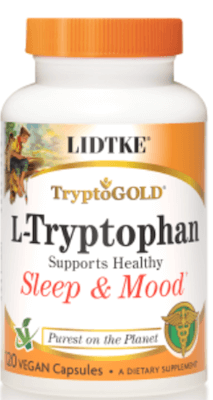
lydke l-tryptophan
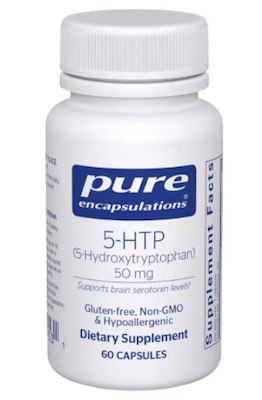
pure 5htp

Products I recommend include Lidtke 500 mg Tryptophan, and Pure Encapsulations 50 mg 5-HTP.  You can purchase these from my online store (Fullscript – only available to US customers – use this link to set up an account).

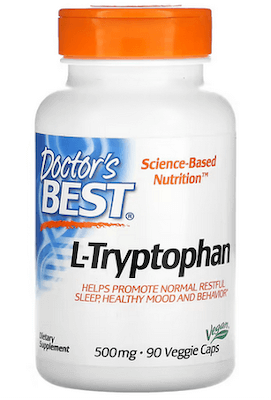
nature's best l-tryptophan
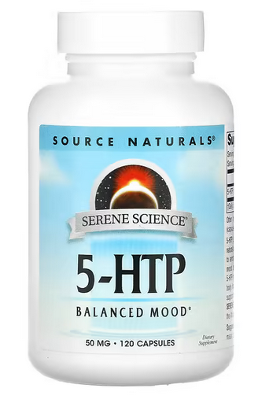
source natural 5-htp

If you’re not in the US, Doctor’s Best L-Tryptophan 500mg and Source Naturals 50 mg 5-HTP  are products I recommend on iherb (use this link to save 5%).

Resources if you are new to using amino acids as supplements

If you are new to using amino acids as supplements, here is the Amino Acids Mood Questionnaire from The Antianxiety Food Solution (you can see all the symptoms of neurotransmitter imbalances, including low GABA, low serotonin and low endorphins).

If you suspect low levels of any of the neurotransmitters and do not yet have my book, The Antianxiety Food Solution – How the Foods You Eat Can Help You Calm Your Anxious Mind, Improve Your Mood, and End Cravings, I highly recommend getting it and reading it before jumping in and using amino acids on your own so you are knowledgeable. And be sure to share it with the practitioner/health team you or your loved one is working with.

There is an entire chapter on the amino acids and they are discussed throughout the book in the sections on gut health, gluten, blood sugar control, sugar cravings, anxiety and mood issues.

The book doesn’t include product names (per the publisher’s request) so this blog, The Antianxiety Food Solution Amino Acid and Pyroluria Supplements, lists the amino acids that I use with my individual clients and those in my group programs. You can find them all in my online store.

If, after reading this blog and my book, you don’t feel comfortable figuring things out on your own (i.e. doing the symptoms questionnaire and respective amino acids trials), a good place to get help is the GABA QuickStart Program (if you have low GABA symptoms too). This is a paid online/virtual group program where you get my guidance and community support.

If you are a practitioner, join us in The Balancing Neurotransmitters: the Fundamentals program. This is also a paid online/virtual program with an opportunity to interact with me and other practitioners who are also using the amino acids.

Has tryptophan helped you quit alcohol easily when you could not do so with willpower alone?

Does tryptophan also help with your low mood, anxiety and sleep issues?

What about 5-HTP (some folks do better on one versus the other)?

And has either tryptophan or 5-HTP helped with other afternoon/evening cravings like sugar and other carbs?

If you have questions and other feedback please share it here too.

Filed Under: Addiction, Amino Acids, Anxiety, Tryptophan Tagged With: 5-HTP, alcohol, alcohol addiction, amino acids, anxious, beta-endorphins, calming, DLPA, evening, GABA, GABA Quickstart online program; Balancing Neurotransmitters: the Fundamentals program for practitioners, glutamine, mid-afternoon, mood, perimenopause, red wine, reward, self-medicating, serotonin, sleep, stressed, sugar cravings, treat, tryptophan, wine

How did you come up with the idea of using GABA on the tongue? (GABA is a calming amino acid supplement used to ease physical anxiety symptoms)

May 5, 2023 By Trudy Scott 27 Comments

gaba on tongue

Today I’m answering this question that has been asked of me a number of times: How did you come up with the idea of using GABA on the tongue? Since there is so much controversy about GABA and the blood brain barrier and whether GABA actually works, it’s time to address this question via a blog post. Using GABA on the tongue, under the tongue and/or on the inside cheek approach is also the most effective way to use GABA and when it’s not used in one of these ways many individuals end up saying GABA didn’t help ease their anxiety and other low GABA symptoms. I also define sublingual – the term I use when discussing this approach – and how this method is broader than just being sublingual. And I share a case study. More on all this below.

So how did I come up with the idea of using GABA on the tongue?

I’ve always had clients use a GABA capsule opened on to their tongue for the initial trial, based on them having low GABA symptoms of physical anxiety, stiff and tense muscles, tension, stress eating, insomnia, laryngospasms, intrusive thoughts and self-medicating with alcohol. Doing it this way means we get results right away (for example within 5 minutes they can say their physical anxiety has improved from 9/10 to say 6/10) and we know how to proceed in terms of dosing.

Then I’d have clients go home and swallow the GABA capsules. However not everyone continued to get the same benefits they experienced in the one-off trial so I’d suggest a higher dose, also swallowed.

Then I decided to have clients just continue to use GABA capsules opened or as powder or a liposomal product (more on these below) after the initial one-off trial. Having clients use GABA this way resulted in consistent and superior results and it’s what I continue to recommend.

The many benefits of this approach

There are many benefits to using this approach of using GABA on the tongue:

  • Seeing better results and in some cases getting results (fullstop!)when you were not seeing any benefits swallowing a GABA capsule
  • Better results when you have digestive and/or liver issues because GABA bypasses the liver and digestive system.
  • Quicker/almost immediate results (in 5-10 minutes and often quicker) which is more encouraging and gives you hope right away.
  • You need less GABA so it’s money-saving too.

I now have folks use all the amino acids this way and it’s working very well.

Defining sublingual, buccal and roof of the mouth and which is best

I use the term sublingual very broadly – under the tongue, in the cheek or on the tongue – for at least 2 minutes and not washed down with water or food right away.

It’s easier but technically sublingual means using GABA under the tongue. This way it is absorbed directly into the bloodstream for immediate use, bypassing the liver and digestive system.

When I talk and write about using GABA on the tongue or sublingually, I’m often asked: How is on tongue vs under tongue different or is it?

This paper, Sublingual Mucosa as a Route for Systemic Drug Delivery summarizes the benefits of sublingual delivery and which area of the mouth provides better results (for drug delivery)

Drug delivery via the oral mucous membrane is considered to be a promising alternative to the oral route. Sublingual route is useful when rapid onset of action is desired with better patient compliance than orally ingested tablets.

In terms of permeability, the sublingual area of the oral cavity (i.e. the floor of the mouth) is more permeable than the buccal (cheek) area, which in turn is more permeable than the palatal (roof of the mouth) area.

The portion of drug absorbed through the sublingual blood vessels bypasses the hepatic first‐pass metabolic processes giving acceptable bioavailability.

I find that either way works (under and on the tongue) and so does using it rubbed on the inside of the cheek/buccal area. I share more on that here – Paroxysmal laryngospasm with low GABA physical-tension-type-anxiety: Is GABA powder rubbed on the inside of the cheek a solution?

One way you could hedge your bets is to use a GABA powder (with some water) or lozenge or liposomal and swish it in the mouth, making sure it gets under the tongue, onto the cheek areas and on top of the tongue. Swish it for about 2 minutes before swallowing.  And don’t wash it down with water or food right away.

Amanda’s feedback on GABA calm vs GABA capsules

When I shared some of this on Facebook, Amanda shared her positive feedback:

Sublingual is more effective and faster. I’ve been taking capsules at night and noticed improvement with sleep. Last week we decided to sell our house and I was soooo stressed with prepping and dealing with people.

I had a bottle of GABA Calm I ordered from your recommendation (I didn’t mean to order because I had lots of gaba capsules). I was so thankful because I took two of those and about 15 minutes later I was much more relaxed. They are so helpful!!

A common question I get is this: is GABA Calm better than plain GABA powder? Some folks prefer GABA Calm and others the powder. Either way we do increase to find the ideal dose and using powder allows us to go higher more easily.

But we are all unique and it’s a matter of finding what works best for your needs. Amanda also shared why she feels GABA Calm is so helpful:

GABA Calm also has tyrosine, magnesium, and taurine. It seems for me the combination of the magnesium and taurine with the GABA takes it from helpful to stellar. I know I have a history of low taurine so perhaps that’s why for me.

All this and the fact that it’s a lozenge that is dissolved in your mouth and absorbed quickly makes it so effective for her and so many of my clients.

Resources if you are new to using amino acids as supplements

If you are new to using amino acids as supplements, here is the Amino Acids Mood Questionnaire from The Antianxiety Food Solution (you can see all the symptoms of neurotransmitter imbalances, including low GABA, low serotonin and low endorphins).

If you suspect low levels of any of the neurotransmitters and do not yet have my book, The Antianxiety Food Solution – How the Foods You Eat Can Help You Calm Your Anxious Mind, Improve Your Mood, and End Cravings, I highly recommend getting it and reading it before jumping in and using amino acids on your own so you are knowledgeable. And be sure to share it with the practitioner/health team you or your loved one is working with.

There is an entire chapter on the amino acids and they are discussed throughout the book in the sections on gut health, gluten, blood sugar control, sugar cravings, anxiety and mood issues.

The book doesn’t include product names (per the publisher’s request) so this blog, The Antianxiety Food Solution Amino Acid and Pyroluria Supplements, lists the amino acids that I use with my individual clients and those in my group programs. You can find them all in my online store.

If, after reading this blog and my book, you don’t feel comfortable figuring things out on your own (i.e. doing the symptoms questionnaire and respective amino acids trials), a good place to get help is the GABA QuickStart Program (if you have low GABA symptoms too). This is a paid online/virtual group program where you get my guidance and community support.

If you are a practitioner, join us in The Balancing Neurotransmitters: the Fundamentals program. This is also a paid online/virtual program with an opportunity to interact with me and other practitioners who are also using the amino acids.

What have you found, is GABA opened/sublingual more effective than a GABA capsule swallowed?

What works best for your unique needs – a powder, a chewable or a liposomal product?

And do you find it more effective under the tongue/sublingual, in the cheek/buccal or on the tongue? Or have you not noticed or perhaps find similar benefits with all three ways?

If you have questions and other feedback please share it here too.

Filed Under: Amino Acids, Anxiety, GABA Tagged With: amino acid, anxiety, buccal, calming, GABA, GABA capsules, GABA on the tongue, GABA Quickstart online program; Balancing Neurotransmitters: the Fundamentals program for practitioners, inside cheek, insomnia, intrusive thoughts, laryngospasms, liposomal, lozenge, on the tongue, physical anxiety, powder, roof of mouth, self-medicating with alcohol, stiff muscles, stress-eating, sublingual, swallowed, tension, under the tongue

Primary Sidebar

NEW! GABA QuickStart Homestudy (with special intro pricing)

gaba quickstart homestudy

Free Report

9 Great Questions Women Ask about Food, Mood and their Health

You'll also receive a complimentary subscription to my ezine "Food, Mood and Gal Stuff"


Connect with me

Popular Posts

  • Amino Acids Mood Questionnaire from The Antianxiety Food Solution
  • The Antianxiety Food Solution Amino Acid and Pyroluria Supplements
  • Pyroluria Questionnaire from The Antianxiety Food Solution
  • Collagen and gelatin lower serotonin: does this increase your anxiety and depression?
  • Tryptophan for the worry-in-your-head and ruminating type of anxiety
  • GABA for the physical-tension and stiff-and-tense-muscles type of anxiety
  • The Antianxiety Food Solution by Trudy Scott
  • Seriphos Original Formula is back: the best product for anxiety and insomnia caused by high cortisol
  • Am I an anxious introvert because of low zinc and vitamin B6? My response to Huffington Post blog
  • Vagus nerve rehab with GABA, breathing, humming, gargling and key nutrients

Recent Posts

  • What do I use instead of Seriphos to help lower high cortisol that is affecting my sleep and making me anxious at night?
  • BeSerene™ GABA/theanine cream eases severe muscle tension in her neck/shoulders, prevents her bad headaches and quells her anxiety
  • How the correct approach, dose and sublingual use of GABA can be calming and not cause a flushed and itchy face and neck
  • The amino acid glutamine improves low mood by addressing gut health, and it has calming effects too
  • Flight anxiety with heightened breath, physical tension and also fearing the worst (the role of low GABA and low serotonin)

Categories

  • 5-HTP
  • AB575
  • Addiction
  • ADHD
  • Adrenals
  • Alcohol
  • Allergies
  • Alzheimer's disease
  • Amino Acids
  • Anger
  • Antianxiety
  • Antianxiety Food Solution
  • Antidepressants
  • Anxiety
  • Anxiety and panic
  • Autism
  • Autoimmunity
  • benzodiazapines
  • Bipolar disorder
  • Books
  • Caffeine
  • Cancer
  • Candida
  • Children/Teens
  • Collagen
  • Cooking equipment
  • Coronavirus/COVID-19
  • Cravings
  • Depression
  • Detoxification
  • Diabetes
  • Diet
  • DPA/DLPA
  • Drugs
  • EFT/Tapping
  • EMF
  • EMFs
  • Emotional Eating
  • Endorphins
  • Environment
  • Essential oils
  • Events
  • Exercise
  • Fear
  • Fear of public speaking
  • Fertility and Pregnancy
  • Fish
  • Food
  • Food and mood
  • Functional neurology
  • GABA
  • Gene polymorphisms
  • General Health
  • Giving
  • Giving back
  • Glutamine
  • Gluten
  • GMOs
  • Gratitude
  • Gut health
  • Heart health/hypertension
  • Histamine
  • Hormone
  • Hyperparathyroidism
  • Hypoglycemia
  • Immune system
  • Inflammation
  • Insomnia
  • Inspiration
  • Introversion
  • Joy and happiness
  • Ketogenic diet
  • Lithium orotate
  • Looking awesome
  • Lyme disease and co-infections
  • MCAS/histamine
  • Medication
  • Men's health
  • Mental health
  • Mercury
  • Migraine
  • Mold
  • Movie
  • MTHFR
  • Multiple sclerosis
  • Music
  • NANP
  • Nature
  • Nutritional Psychiatry
  • OCD
  • Osteoporosis
  • Oxalates
  • Oxytocin
  • Pain
  • Paleo
  • Parasites
  • Parkinson’s disease
  • PCOS
  • People
  • PMS
  • Postpartum
  • PTSD/Trauma
  • Pyroluria
  • Questionnaires
  • Real whole food
  • Recipes
  • Research
  • Schizophrenia
  • serotonin
  • SIBO
  • Sleep
  • Special diets
  • Sports nutrition
  • Stress
  • Sugar addiction
  • Sugar and mood
  • Supplements
  • Teens
  • Testimonials
  • Testing
  • The Anxiety Summit
  • The Anxiety Summit 2
  • The Anxiety Summit 3
  • The Anxiety Summit 4
  • The Anxiety Summit 5
  • The Anxiety Summit 6
  • Thyroid
  • Thyroid health
  • Toxins
  • Tryptophan
  • Tyrosine
  • Uncategorized
  • Vegan/vegetarian
  • Women's health
  • Yoga

Archives

  • October 2025
  • September 2025
  • August 2025
  • July 2025
  • June 2025
  • May 2025
  • April 2025
  • March 2025
  • February 2025
  • January 2025
  • November 2024
  • October 2024
  • September 2024
  • August 2024
  • July 2024
  • June 2024
  • May 2024
  • April 2024
  • March 2024
  • February 2024
  • January 2024
  • December 2023
  • November 2023
  • October 2023
  • September 2023
  • August 2023
  • July 2023
  • June 2023
  • May 2023
  • April 2023
  • March 2023
  • February 2023
  • January 2023
  • December 2022
  • November 2022
  • October 2022
  • September 2022
  • August 2022
  • July 2022
  • June 2022
  • May 2022
  • April 2022
  • March 2022
  • February 2022
  • January 2022
  • December 2021
  • November 2021
  • October 2021
  • September 2021
  • August 2021
  • July 2021
  • June 2021
  • May 2021
  • April 2021
  • March 2021
  • February 2021
  • January 2021
  • December 2020
  • November 2020
  • October 2020
  • September 2020
  • August 2020
  • July 2020
  • June 2020
  • May 2020
  • April 2020
  • March 2020
  • February 2020
  • January 2020
  • December 2019
  • November 2019
  • October 2019
  • September 2019
  • August 2019
  • July 2019
  • June 2019
  • May 2019
  • April 2019
  • March 2019
  • February 2019
  • January 2019
  • December 2018
  • November 2018
  • October 2018
  • September 2018
  • August 2018
  • July 2018
  • June 2018
  • May 2018
  • April 2018
  • March 2018
  • February 2018
  • January 2018
  • December 2017
  • November 2017
  • October 2017
  • September 2017
  • August 2017
  • July 2017
  • June 2017
  • May 2017
  • April 2017
  • March 2017
  • February 2017
  • January 2017
  • December 2016
  • November 2016
  • October 2016
  • September 2016
  • August 2016
  • July 2016
  • June 2016
  • May 2016
  • April 2016
  • March 2016
  • February 2016
  • January 2016
  • December 2015
  • November 2015
  • October 2015
  • September 2015
  • August 2015
  • July 2015
  • June 2015
  • May 2015
  • April 2015
  • March 2015
  • February 2015
  • January 2015
  • December 2014
  • November 2014
  • October 2014
  • September 2014
  • August 2014
  • July 2014
  • June 2014
  • May 2014
  • April 2014
  • March 2014
  • February 2014
  • January 2014
  • December 2013
  • November 2013
  • October 2013
  • September 2013
  • August 2013
  • July 2013
  • June 2013
  • May 2013
  • April 2013
  • March 2013
  • February 2013
  • January 2013
  • December 2012
  • November 2012
  • October 2012
  • August 2012
  • July 2012
  • June 2012
  • May 2012
  • April 2012
  • March 2012
  • February 2012
  • January 2012
  • December 2011
  • November 2011
  • October 2011
  • September 2011
  • August 2011
  • July 2011
  • June 2011
  • May 2011
  • April 2011
  • March 2011
  • February 2011
  • January 2011
  • December 2010
  • October 2010
  • September 2010
  • July 2010
  • May 2010
  • April 2010
  • March 2010
  • February 2010
  • January 2010
  • November 2009

Share the knowledge!

The above statements have not been evaluated by the Food and Drug Administration. Products listed in this website are not intended to diagnose, treat, cure or prevent any disease.

The information provided on this site is for informational and educational purposes only and is not intended as a substitute for advice from your physician or other health care professional. You should consult with a healthcare professional before starting or modifying any diet, exercise, or supplementation program, before taking or stopping any medication, or if you have or suspect you may have a health problem.


Copyright © 2026 Trudy Scott. All Rights Reserved. | Privacy | Terms and Conditions | Refund Policy | Medical Disclaimer

Free Report

9 Great Questions Women Ask about Food, Mood and their Health

You’ll also receive a complimentary subscription to my ezine “Food, Mood and Gal Stuff”