• Skip to primary navigation
  • Skip to main content
  • Skip to primary sidebar

everywomanover29 blog

Food, Mood and Women's Health – Be your healthiest, look and feel great!

  • Blog
  • About
  • Services
  • Store
  • Resources
  • Testimonials
  • The Book
  • Contact
  • Search this site

Xanax

Rebound insomnia after tapering a benzodiazepine: will taking GABA or any other natural supplement interfere with healing?

August 26, 2022 By Trudy Scott 16 Comments

rebound insomnia after tapering

This question was posted on one of the GABA blog posts by Fran, asking about about using GABA for insomnia shortly after having tapered a benzodiazepine she had used for 15 years:

I am a senior who took benzodiazepines (clonazepam) on advice of my doctor for sleep because of chronic fatigue for 15 years. Last year I weaned myself off the medication and it has been just over 10 months. No one tells you that when you stop taking them you go into a rebound insomnia phase and it can last a long time. The doctor still won’t admit that!

I joined benzo buddies, a group I found out about on your site and found much encouragement from the posts of many brave and determined people. One post mentioned that the drug actually overrides your GABA receptors so when you stop taking it they have to heal to become active again. My question is: Will taking GABA or any other natural supplement interfere with that healing. The writer of the post feels taking nothing is best for the brain to return to normal and that only time will do that.

I said I was sorry to hear about her struggles with her benzodiazepine prescription. Sadly it’s all too common and it’s seldom that folks are cautioned about the rebound insomnia and other issues seen with benzodiazepines.

I love benzo buddies and other benzo support groups and often recommend that clients join one of these groups for the community support aspect. I am really happy that Fran found encouragement.

However, I  respectfully disagree with their message that GABA supplements or other supplements should not be used and that you should just wait for time to heal. We want to use everything at our disposal in order to heal as quickly as possible. And quality sleep is imperative for healing.

Also many of the most severely affected folks are part of these support groups, so it may well be all that they know, hence the advice they dispense.

Many do get relief with GABA during and post benzo taper and it won’t affect long-term healing (with a very low dose)

It is true that GABA receptors can be affected by benzodiazepines but despite this, many of my clients and others in my community do get relief from GABA during this period. Since we are all unique, some folks may have an issue, so we always do a trial with GABA if someone has rebound insomnia (and other low GABA symptoms of physical tension/anxiety, stiff and tense muscles, stress eating etc).

When someone can’t tolerate GABA they will know very quickly – typically in 1-2 days. If you can’t tolerate GABA it may feel the same as someone who takes GABA and doesn’t need it (i.e. GABA isn’t low) or when someone takes too much. This could make you feel light-headed, dizzy, feel a flush and/or feel too tired. You may even feel more anxious. Vitamin C is a wonderful antidote to all this and these short-term adverse reactions won’t interfere with long-term healing.

We also start with a very small dose – I typically have someone start with 25mg GABA and go up from there – and only use sublingual GABA. For some very sensitive folks we will start even lower as in this example where Syd gets sleep and body anxiety benefits with just 1.5 mg to 3 mg GABA.

Other nutrients that may also help with insomnia

We may also use other nutrients to help with sleep support and rebound anxiety (which is also common) and other symptoms, all based on each person’s unique needs. These may include tryptophan or 5-HTP if serotonin is also low (this can affect sleep and cause worry/ruminating type anxiety), melatonin if that is low (either sublingual or timed-release) and Seriphos if cortisol is high too. We may also combine GABA with theanine (research shows the combination may help some folks).

A full functional medicine and nutritional workup is recommended in order to be as nutritionally stable as possible. Ideally this happens before tapering starts but even if it’s done after the fact it can help with healing and symptom relief. Addressing histamine imbalances is one factor to consider as this can impact sleep (more on that below).

This is an important question that many folks ask so I appreciate her asking so I could share it as a blog post for others in a similar situation.

I am waiting to hear back about what happened when she did use GABA and how much she used. She mentioned that she did take GABA for a time at first but it only worked for a while. I find that during the taper and post taper, GABA needs can fluctuate as healing starts to take place. I have clients adjust up and down as needed.

More on benzodiazepine withdrawal and histamine issues

These medications have the most debilitating withdrawal reactions in all of medicine and Valium blocks DAO/impacts histamine levels:

  • World Benzodiazepine Awareness Day 2017: Awareness and Anxiety Nutrition Solutions

Benzodiazepines (Xanax, Klonopin, Ativan, Valium, Librium, and others) as well as Z-drugs (Ambien, Lunesta and others), which are similar, have the most debilitating withdrawal reactions in all of medicine.

This happens in regular, everyday people who are taking the medications exactly as their doctor prescribed. It also happens to people on what they think are “low doses” and is not just a “high dose” problem.

  • The benzodiazepine valium blocks DAO and impacts histamine levels: wisdom from Yasmina Ykelenstam and a tribute to her brilliance

Many people doing a benzodiazepine taper are often switched to Valium which is a DAO [diamine oxidase blocker (or histamine liberator)] and this further prevents histamine from being removed from the body [and can lead to increased anxiety].

Dyes are also triggers…the pink Xanax can be problematic.

GABA is as effective as benzodiazepines (which should only be prescribed for short-term use)

Many folks who have used benzos in the past, find GABA to be as effective. Another woman in my community, Dee, shared that she had taken Xanax in the past for panic attacks and her functional medicine doctor suggested GABA Calm as she wanted a natural product. This is her encouraging feedback: “I was amazed how it works just like the Xanax did – instant calm feeling within 10 mins of taking 2 capsules. I use them as needed when I am having heightened stress and anxiety.”

Ideally we want to use GABA instead of one of the benzodiazepines – which are all too commonly prescribed for anxiety, insomnia and pain – in order to avoid tolerance issues, dependence and withdrawal/tapering issues. The fact that they are used long term – like 15 years for Fran – further compounds the issues. Even a few months can be problematic for some folks. It’s important to be aware that this class of medication is intended for short-term use  i.e. 2-4 weeks only.

Resources if you are new to using the GABA and other amino acids as supplements

If you are new to using GABA and any of other the amino acids as supplements, here is the Amino Acids Mood Questionnaire from The Antianxiety Food Solution (you can see all the symptoms of neurotransmitter imbalances, including low GABA).

If you suspect low levels of any of the neurotransmitters and do not yet have my book, The Antianxiety Food Solution – How the Foods You Eat Can Help You Calm Your Anxious Mind, Improve Your Mood, and End Cravings, I highly recommend getting it and reading it before jumping in and using amino acids on your own so you are knowledgeable. And be sure to share it with the practitioner/health team you or your loved one is working with.

There is an entire chapter on the amino acids and they are discussed throughout the book in the sections on gut health, gluten, blood sugar control, sugar cravings, self-medicating with alcohol and more.

The book doesn’t include product names (per the publisher’s request) so this blog, The Antianxiety Food Solution Amino Acid and Pyroluria Supplements, lists the amino acids that I use with my individual clients and those in my group programs. You can find them all in my online store.

If, after reading this blog and my book, you don’t feel comfortable figuring things out on your own (i.e. doing the symptoms questionnaire and respective amino acids trials), a good place to get help is the GABA QuickStart Program (if you have low GABA symptoms). This is a paid online/virtual group program where you get my guidance and community support.

If you are a practitioner, join us in The Balancing Neurotransmitters: the Fundamentals program. This is also a paid online/virtual program with an opportunity to interact with me and other practitioners who are also using the amino acids.

Have you used GABA with success while tapering a benzodiazepine or shortly after tapering is complete?

Have you used other nutrients to help while tapering or post taper? If yes, which ones?

Did you find that GABA was not helpful? (which product and how much did you use?)

If you have questions please share them here too.
Filed Under: Anxiety, benzodiazapines, GABA, Insomnia Tagged With: 5-HTP, amino acids, Balancing Neurotransmitters: the Fundamentals program for practitioners, benzo buddies, benzodiazepine, clonazepam, DAO enzyme, GABA, GABA Quickstart program, GABA receptors, healing, histamine, insomnia, medication, melatonin, natural supplement, Rebound insomnia, seriphos, sleep, tapering, theanine, tryptophan, Xanax

GABA Calm instead of Xanax for panic attacks, heightened stress and anxiety: questions and my feedback

April 12, 2019 By Trudy Scott 42 Comments

Last month I shared Dee’s wonderful results with using GABA Calm for her panic attacks, heightened stress and anxiety. I posted the following on Facebook and it led to some really good questions so here they are with my feedback in case you have similar questions about using GABA, which is a calming amino acid. This is Dee’s feedback:

I have taken Xanax in the past for panic attacks. My functional medicine doctor suggested GABA Calm as I wanted a natural product. I was amazed how it works just like the Xanax did – instant calm feeling within 10 mins of taking 2 capsules. I use them as needed when I am having heightened stress and anxiety.

These are wonderful results for Dee and what a great functional medicine doctor she has. I get feedback like this all the time with my clients. In fact, I had this positive feedback on the Facebook post:

  • “Yes absolutely treat the anxiety while finding root cause” – I agree with this but would add that low GABA is one of the root causes we are addressing right away
  • I have GAD enzyme deficiency. B6, Magnesium, theanine, and GABA are a must
  • GABA saved my life – my functional medicine doctor gave me the same thing!


(1) The first question I received was about which product and which form of GABA:

The Gaba Calm that is being mentioned by Dee says 2 capsules – would you please provide a link for that? I see the one you mention as a lozenge – which I’d like to try as well. Do they contain pharmaGaba or synthetic GABA? I read that the pharmaGaba is superior – your thoughts on this?

This is the GABA product Dee is referring to: Source Naturals GABA Calm and she used 2 sublingual lozenges.

As a recap (in case you’re new to the low GABA type of anxiety) when you have low GABA levels you will have physical anxiety with stiff and tense muscles as well as feelings of stress, overwhelm and may even have panic attacks.

The amino acid GABA helps to raise GABA levels and ease these symptoms very quickly. I find that all GABA products are most effective when taken sublingually or opened on to the tongue. This is why I recommend the Source Naturals GABA Calm™ product.

This is my most popular and most effective form of GABA I use with my clients. It is a pleasant-tasting sublingual product that you can buy at your local health-store and in my online supplement store.

I prefer to start with GABA with my clients but folks do better with pharmaGABA so it’s matter of doing a trial to figure it out.

(2) Someone also asked if you can you take it if you are on antidepressants?

There are no known issues that I am aware of and I use GABA calm with clients who are prescribed antidepressants.

(3) One woman had a concern about her prior use and how GABA made her feel worse:

2 capsules at what dosage? I tried one at 750 mg and made me feel more panicked. Maybe it’s the strength?

I always have my clients start LOW, typically at 125mg, which is the amount in one GABA Calm lozenge. We start even lower (like ¼ of a lozenge) if they are very sensitive to supplement or medications. Higher doses like 750mg (and even 500mg for some people) is way too much for most folks to start on and can make you feel worse and even cause a panic attack, make you feel flushed and light-headed and very sleepy.

(4) One woman said, “unfortunately GABA didn’t work for me” but lithium orotate (5-10 mg per day did help her – “Great mood stabilizer”

When GABA doesn’t help to ease anxiety, it could be for a number of reasons:

  • the root cause of the anxiety wasn’t due to low GABA (perhaps it’s the low serotonin anxiety) or
  • it wasn’t enough GABA (we titrate up from 125mg until we find the ideal amount for each person) or
  • too much GABA was used (as above) or
  • it wasn’t actually GABA that was used (some people say GABA when they used the medication gabapentin or used Phenibut) or
  • the GABA was not used sublingually (this is the best way to use it for quickest results) or
  • the person has thyroid issues (the amino acids are less effective in this instance)

I do like lithium orotate as a mood stabilizer and find that for some individuals this does make the amino acids more effective. The fact that lithium worked for her makes me think there is some GABA involvement in her anxiety because lithium seems to support increased levels of GABA. Dr. Peter Bongiorno writes about this in his book Put Anxiety Behind You.

(5) One person shared her success with exposure therapy and acceptance and cognitive behavior therapy (CBT) instead of using GABA, and a concern about a lifetime need for GABA. I’m paraphrasing some of the discussion:

I have recovered from GAD, panic disorder, OCD and depression from exposure therapy and acceptance and cognitive behavior therapy (CBT). It takes a lot of work and understanding but anxiety and panic can be recovered, and you don’t have use ANY external substances.

We can’t take GABA for a whole life time and it isn’t a permanent solution. Anxiety comes with a LOT more than uncomfortable feelings. Unfortunately for myself and many others GABA had no significant impact on anxiety. No external substance is going to correct a cognitive disorder.

GABA is not a life-time solution. The goal is to take GABA short-term and address other root causes that are leading to low GABA such as poor gut health, gluten issues, diet (not enough quality protein or health fats), stress/adrenals, sex hormone imbalances, heavy metals, Lyme disease and so on.

As I mention in #4 above there are reasons when the GABA doesn’t work or doesn’t seem to work.

I respectfully disagree that “No external substance is going to correct a cognitive disorder.” I’m all for CBT but many folks have to address their biochemistry too for lasting results. I also have many therapist colleagues who share that CBT and other therapy is often more effective when someone is nutritionally stable and with no deficiencies or biochemical imbalances. I say let’s use everything at our disposal to feel good again!

I’m really pleased she found results with acceptance and cognitive behavior therapy. I will admit that I’m not a big fan of exposure therapy as I’m concerned about the added stress for someone who is already anxious. I’ve also worked with a number of clients who have not seen long-term results with exposure therapy.

Here are three additional GABA success stories:

  • GABA for children: ADHD, focus issues, irritability, anxiety and tantrums
  • GABA helps with Lyme anxiety (while addressing the underlying disease)
  • GABA for ending sugar cravings (and anxiety and insomnia)

In case this is relevant for you, the product mentioned in this blog can be found in my online store:

  • Source Naturals GABA Calm (with additional information here)

If for some reason GABA Calm isn’t the best product for you, a low dose GABA-only product or combination GABA/theanine product can easily be opened onto the tongue in order to provide similar benefits to the lozenge. You can find some examples on my supplements blog here and purchased from my online store:

  • Nutritional Fundamentals for Health GABA-T SAP: gamma-aminobutyric acid (GABA) 300 mg, l-theanine 150 mg. This is pleasant-tasting when opened on to the tongue and works very well when GABA Calm can’t be used.  I find best results when it is used opened on to the tongue.
  • Enzymatic Therapy GABA: gamma-aminobutyric acid (GABA) 250 mg. This is also pleasant-tasting when opened on to the tongue and works very well when GABA Calm can’t be used.  As with all GABA products, I find best results when it is used opened on to the tongue.
  • ProThera 500mg GABA: gamma-aminobutyric acid (GABA) 500 mg.  You will likely need to open this up and start with less than a full capsule during the day. A full capsule may be fine at night for some individuals)

I’d love to hear if these questions and my feedback have been helpful for you as you navigate the low GABA type of anxiety? Do you have additional GABA questions for me? Or a GABA success story to share? Please post in the comments below.

Filed Under: GABA Tagged With: anxiety, CBT, exposure therapy, GABA, GABA Calm, panic attacks, Source naturals, stress, theanine, Xanax

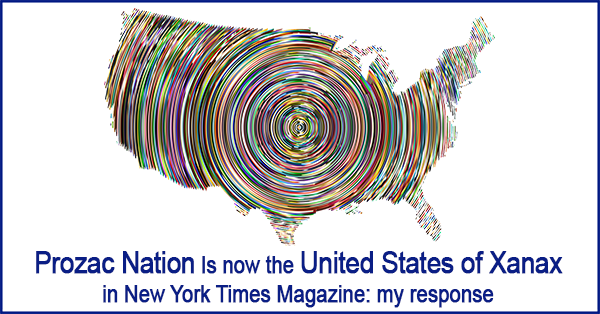
Prozac Nation Is Now the United States of Xanax in New York Times Magazine: my response

June 23, 2017 By Trudy Scott 11 Comments

This is the title of a new article recently published in the New York Times Magazine: Prozac Nation Is Now the United States of Xanax. In other words, depression has been surpassed by anxiety and the antidepressant Prozac has been replaced by Xanax (and other benzodiazepines /anti-anxiety medications) by the US population!

It’s an excellent read for creating awareness about anxiety and benzodiazepines but also sad because there is so much we can do and no solutions are offered. Here are some startling stats shared in the article:

According to data from the National Institute of Mental Health, some 38 percent of girls ages 13 through 17, and 26 percent of boys, have an anxiety disorder. [Note: this was quoted in the article. I’m trying to track down the source because an article in Time Magazine last year says this: ‘About 30% of girls and 20% of boys–totaling 6.3 million teens–have had an anxiety disorder, according to data from the National Institute of Mental Health’ as of 2015.]

On college campuses, anxiety is running well ahead of depression as the most common mental health concern, according to a 2016 national study of more than 150,000 students by the Center for Collegiate Mental Health at Pennsylvania State University. [Both anxiety and depression have shown slight but persistent increases each year for the past six years]

Meanwhile, the number of web searches involving the term [anxiety] has nearly doubled over the last five years, according to Google Trends. (The trendline for “depression” was relatively flat.)

I’m the optimistic type, I’m proactive and I like to give hope as well as solutions – and I have quite a bit to say about this article so here goes.

#1 Too many people are prescribed benzodiazepines without knowing what they are getting into

The article does not address the issues with benzodiazepines: how too many people are prescribed benzodiazepines without knowing what they are getting into, with many suffering dreadfully and never offered nutritional solutions. When I shared the article on my facebook page, someone in my community shared this (and gave me permission to share it further in the hope someone else will be spared her suffering)

Been totally disabled by benzo for 3.5 years. I have been off meds for 17.5 months and the impact of these meds makes any anxiety I ever felt a cake walk. Please run from the poison. Find healthy foods, nutrition and take the break your body is begging you for. We need to listen to our bodies! If it is screaming with anxiety maybe you need to make some life changes. I wish I did instead of taking a med that has almost destroyed me.

I asked her what symptoms she was experiencing, and as well as suffering from severe motion sickness (so badly she can’t even leave her home) she also shared this:

I have locked shoulder muscles, neck, jaw; I have internal vibrations, I get bad headaches, jelly legs, distorted vision like floaters and squiggles and fireworks, my teeth all feel like they will fall out but they are not lose, it feels like adrenaline or cortisol rushes through the body. Sometimes arms go numb. I am pretty tortured every day. These meds are truly causing chemical warfare on some of us.

I believe this will be the next big epidemic and I hope I heal somehow to help others

She had been on a variety of benzodiazepines, SSRIs and other medications for over 17 years and you may think this is an isolated incidence. I assure you it is not – just read the list of the most common psychological and physical symptoms of benzodiazepine withdrawal.

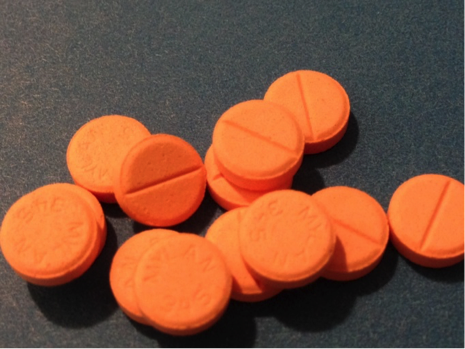
5mg diazepam / Valium, a benzodiazepine

Here is some useful information about the risks and dangers of benzodiazepines:

  • World Benzodiazepine Awareness Day – say NO to Benzodiazepines for anxiety!
  • Benzodiazepines do patients more harm than good

#2 Let’s help anxious individuals like you find solutions

Scott Stossel, journalist and author of My Age of Anxiety: Fear, Hope, Dread, and the Search for Peace of Mind was quoted as saying this in the article:

The silver lining for those with nervous disorders is that we can welcome our previously non-neurotic fellow citizens into the anxious fold.

My first response to the article is this: I say NO to Scott Stossel and instead I say let’s think bigger and instead let’s invite the anxious citizens into the calm and no-more-anxiety fold!

Scott’s book is well-written book, offers an excellent understanding of what it feels like to experience anxiety and panic attacks, and has many compelling stories. But as a number of his Amazon reviewer’s say the big question is this: what is the answer or solution? Unfortunately it’s not provided in his book (or the New York Times Magazine article).

The New York Times Magazine article provides another anxiety resource that has helped “bring anxiety into the open, and allowed its clinical sufferers to band together in a virtual group-therapy setting”: The Sarah Fader on twitter, creator of the hashtag #ThisIsWhatAnxietyFeelsLike and a mental-health advocacy organization called Stigma Fighters.

Again, these are wonderful resources for support, awareness and advocacy but they don’t offer solutions if you suffer from anxiety. With nutritional solutions we can change this to #ThisIsWhatCalmFeelsLike.

#3 Too few people know about nutritional solutions

Too few people know about nutritional solutions and that has to change. Clinically we know it works and there is now SO much research supporting this approach.

Here are a few of many blog posts on my site that share powerful anxiety nutrition solutions:

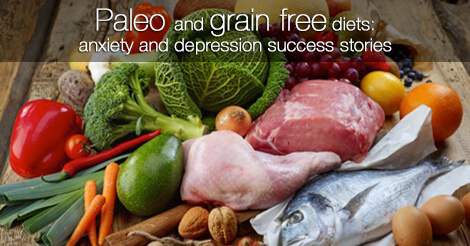
  • Paleo and grain free diets: anxiety and depression success stories
  • GABA the calming amino acid: common questions I get asked
  • GABA for children: ADHD, focus issues, irritability, anxiety and tantrums
  • Tryptophan for PMS: premenstrual dysphoria, mood swings, tension, and irritability

Here is one of the latest food and mental health studies – A modified Mediterranean dietary intervention for adults with major depression: Dietary protocol and feasibility data from the SMILES trial

This and other dietary and nutritional approaches for both depression and anxiety will be presented at the upcoming International Society of Nutritional Psychiatry Research conference in Bethesda, MD next month)

Here are two book resources too: my book The Antianxiety Food Solution and integrative psychiatrist Kelly Brogan’s book A Mind of Your Own.

I’d love your feedback

  • Which nutritional solutions topics do you have questions about and in what areas do you still need help?
  • What ideas do you have for getting this nutritional solution message out in a bigger way?
  • What do you wish you’d known when you were first diagnosed with anxiety and prescribed medication (such as a benzodiazepine or SSRI)?
  • How do we convince the naysayers that this does work and is worth implementing?
  • How do we get the mainstream mental health community on board?
  • What anxiety resources do you have to share

Filed Under: benzodiazapines Tagged With: anxiety, anxiety nutrition solutions, benzodiazepine, depression, prozac, Xanax

World Benzodiazepine Awareness Day – say NO to Benzodiazepines for anxiety!

July 11, 2016 By Trudy Scott 17 Comments

world benzo awareness day july 11 2016

Today, July 11th, is  World Benzodiazepine Awareness Day

This date was designated in recognition of Prof. Heather Ashton’s significant contributions to the benzodiazepine cause over so many decades; together with all of the help she has given to so many people around the world.

In honor of World Benzodiazepine Awareness Day, also called W-BAD I’ve decided to re-release a webinar I did last year: Say NO to Benzodiazepines for anxiety  [CLICK THIS LINK TO FIND THE WEBINAR]

say no-to-benzo

Here is an excerpt of the overview from: Say NO to benzodiazepines for anxiety! 

Benzodiazepines are a class of psychoactive drugs that work by enhancing the effect of the calming neurotransmitter GABA, and are used to treat anxiety, insomnia, pain, muscle spasms and a range of other conditions. They are widely prescribed, particularly among elderly patients and may even be used off-label with children with autism.

Use of this medication is very controversial.  We know long term use leads to tolerance, dependence, and many adverse psychological effects and even physical effects. Short term use is generally considered safe but even using them for 2 – 4 weeks can lead to problems for certain individuals.

This presentation provides an overview of benzodiazepines; when they are used; who they are prescribed to; details about tolerance, dependence, and the many adverse effects; how to taper, including nutritional support during the taper; what to do instead of saying yes to a benzodiazepine prescription in the first place; and additional resources.

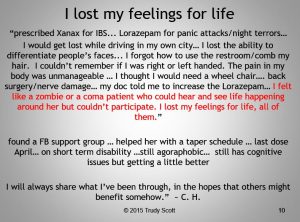
Here is one of the benzo stories I share in the webinar:

world benzo awareness day story


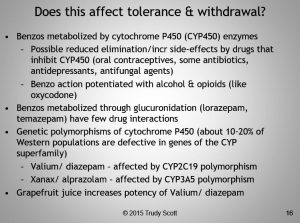
We know that some individuals are much more affected than others when it comes to tolerance and withdrawal.  Here are some other possible factors that may affect tolerance and withdrawal:

world benzo awareness day liver enzymes

During season 4 of the Anxiety Summit, Lisa Bloomquist talked about Antibiotic Induced Anxiety – How Fluoroquinolone Antibiotics Induce Psychiatric Illness Symptoms.   During this interview she shared how:

People who have gone through benzodiazepine withdrawal before should never take a fluoroquinolone because essentially it can throw people right back into the benzo withdrawal – because it has very similar effects on people’s GABA’s receptors as what happens when people go through benzodiazepine withdrawal. 

I would love to see a survey of people who have experienced adverse effects when using benzodiazepines as prescribed or when tapering. Could these be some of the contributing factors?

  • Taking Valium/ diazepam and have the CYP2C19 polymorphism (about 10-20% of Western populations are defective in genes of the CYP liver enzyme superfamily)
  • Taking Xanax/ alprazolam and have CYP3A5 polymorphism (about 10-20% of Western populations are defective in genes of the CYP liver enzyme superfamily)
  • Taking any benzodiazepine and also
    • Taking oral contraceptives
    • Taking a course of antibiotics
    • Taking a course of one of the fluoroquinolone antibiotics
    • On an SSRI prescription
    • Taking a course of antifungal medications
    • Drinking alcohol on a regular basis
    • On an opioid such as oxycodone
    • Drinking grapefruit juice on a regular basis

For withdrawal/tapering, the best resource I know of is Benzo.org.uk which contains the Ashton Manual. You will need to educate yourself and your doctor and/or find a doctor willing to help you with the adjusted prescription. It does need to be done very very very slowly.

Finding a good support group like Benzobuddies.org  is very helpful for many of my clients. Just be aware that this group and some of the other support groups say no to any supplements during the taper process. I find it to be very individualized and have many clients that see great benefit by using GABA, tryptophan, zinc, magnesium and other nutrients. (You can read more about this here: Anxiety and the amino acids overview)

That being said some people tapering can only tolerate very low amounts of the amino acids (like a dab or pinch from a capsule) and some can’t tolerate any supplements and do better with essential oils, yoga, light therapy and dietary changes.

You can find more information on World Benzodiazepine Awareness Day on Benzo Case: Raising Awareness about Benzodiazepine Drugs  (widely prescribed for anxiety, stress, sleep, pain and much more…) and additional stories on the World Benzo Awareness facebook page.

World Benzodiazepine Awareness Day was conceived by the acting Chair Barry Halsam, former Chair of Oldham TRANX, and jointly organized by Wayne Douglas, founder of benzo.case.com / benzo-case-japan.com

Please read share so your loved ones are informed and can say NO to benzos!  

If you have experienced adverse effects when taking or tapering from benzodiazepines I’d love some feedback on the above possible contributing factors.


Filed Under: Anxiety and panic, benzodiazapines, GABA, Gene polymorphisms Tagged With: benzodiazepine, benzodiazepines, CYP enzymes, fluoroquinolone antibiotics, GABA, Heather Ashton, Valium, World Benzodiazepine Awareness Day, Xanax

Primary Sidebar

NEW! GABA QuickStart Homestudy (with special intro pricing)

gaba quickstart homestudy

Free Report

9 Great Questions Women Ask about Food, Mood and their Health

You'll also receive a complimentary subscription to my ezine "Food, Mood and Gal Stuff"


Connect with me

Popular Posts

  • Amino Acids Mood Questionnaire from The Antianxiety Food Solution
  • The Antianxiety Food Solution Amino Acid and Pyroluria Supplements
  • Pyroluria Questionnaire from The Antianxiety Food Solution
  • Collagen and gelatin lower serotonin: does this increase your anxiety and depression?
  • Tryptophan for the worry-in-your-head and ruminating type of anxiety
  • GABA for the physical-tension and stiff-and-tense-muscles type of anxiety
  • The Antianxiety Food Solution by Trudy Scott
  • Seriphos Original Formula is back: the best product for anxiety and insomnia caused by high cortisol
  • Am I an anxious introvert because of low zinc and vitamin B6? My response to Huffington Post blog
  • Vagus nerve rehab with GABA, breathing, humming, gargling and key nutrients

Recent Posts

  • What do I use instead of Seriphos to help lower high cortisol that is affecting my sleep and making me anxious at night?
  • BeSerene™ GABA/theanine cream eases severe muscle tension in her neck/shoulders, prevents her bad headaches and quells her anxiety
  • How the correct approach, dose and sublingual use of GABA can be calming and not cause a flushed and itchy face and neck
  • The amino acid glutamine improves low mood by addressing gut health, and it has calming effects too
  • Flight anxiety with heightened breath, physical tension and also fearing the worst (the role of low GABA and low serotonin)

Categories

  • 5-HTP
  • AB575
  • Addiction
  • ADHD
  • Adrenals
  • Alcohol
  • Allergies
  • Alzheimer's disease
  • Amino Acids
  • Anger
  • Antianxiety
  • Antianxiety Food Solution
  • Antidepressants
  • Anxiety
  • Anxiety and panic
  • Autism
  • Autoimmunity
  • benzodiazapines
  • Bipolar disorder
  • Books
  • Caffeine
  • Cancer
  • Candida
  • Children/Teens
  • Collagen
  • Cooking equipment
  • Coronavirus/COVID-19
  • Cravings
  • Depression
  • Detoxification
  • Diabetes
  • Diet
  • DPA/DLPA
  • Drugs
  • EFT/Tapping
  • EMF
  • EMFs
  • Emotional Eating
  • Endorphins
  • Environment
  • Essential oils
  • Events
  • Exercise
  • Fear
  • Fear of public speaking
  • Fertility and Pregnancy
  • Fish
  • Food
  • Food and mood
  • Functional neurology
  • GABA
  • Gene polymorphisms
  • General Health
  • Giving
  • Giving back
  • Glutamine
  • Gluten
  • GMOs
  • Gratitude
  • Gut health
  • Heart health/hypertension
  • Histamine
  • Hormone
  • Hyperparathyroidism
  • Hypoglycemia
  • Immune system
  • Inflammation
  • Insomnia
  • Inspiration
  • Introversion
  • Joy and happiness
  • Ketogenic diet
  • Lithium orotate
  • Looking awesome
  • Lyme disease and co-infections
  • MCAS/histamine
  • Medication
  • Men's health
  • Mental health
  • Mercury
  • Migraine
  • Mold
  • Movie
  • MTHFR
  • Multiple sclerosis
  • Music
  • NANP
  • Nature
  • Nutritional Psychiatry
  • OCD
  • Osteoporosis
  • Oxalates
  • Oxytocin
  • Pain
  • Paleo
  • Parasites
  • Parkinson’s disease
  • PCOS
  • People
  • PMS
  • Postpartum
  • PTSD/Trauma
  • Pyroluria
  • Questionnaires
  • Real whole food
  • Recipes
  • Research
  • Schizophrenia
  • serotonin
  • SIBO
  • Sleep
  • Special diets
  • Sports nutrition
  • Stress
  • Sugar addiction
  • Sugar and mood
  • Supplements
  • Teens
  • Testimonials
  • Testing
  • The Anxiety Summit
  • The Anxiety Summit 2
  • The Anxiety Summit 3
  • The Anxiety Summit 4
  • The Anxiety Summit 5
  • The Anxiety Summit 6
  • Thyroid
  • Thyroid health
  • Toxins
  • Tryptophan
  • Tyrosine
  • Uncategorized
  • Vegan/vegetarian
  • Women's health
  • Yoga

Archives

  • October 2025
  • September 2025
  • August 2025
  • July 2025
  • June 2025
  • May 2025
  • April 2025
  • March 2025
  • February 2025
  • January 2025
  • November 2024
  • October 2024
  • September 2024
  • August 2024
  • July 2024
  • June 2024
  • May 2024
  • April 2024
  • March 2024
  • February 2024
  • January 2024
  • December 2023
  • November 2023
  • October 2023
  • September 2023
  • August 2023
  • July 2023
  • June 2023
  • May 2023
  • April 2023
  • March 2023
  • February 2023
  • January 2023
  • December 2022
  • November 2022
  • October 2022
  • September 2022
  • August 2022
  • July 2022
  • June 2022
  • May 2022
  • April 2022
  • March 2022
  • February 2022
  • January 2022
  • December 2021
  • November 2021
  • October 2021
  • September 2021
  • August 2021
  • July 2021
  • June 2021
  • May 2021
  • April 2021
  • March 2021
  • February 2021
  • January 2021
  • December 2020
  • November 2020
  • October 2020
  • September 2020
  • August 2020
  • July 2020
  • June 2020
  • May 2020
  • April 2020
  • March 2020
  • February 2020
  • January 2020
  • December 2019
  • November 2019
  • October 2019
  • September 2019
  • August 2019
  • July 2019
  • June 2019
  • May 2019
  • April 2019
  • March 2019
  • February 2019
  • January 2019
  • December 2018
  • November 2018
  • October 2018
  • September 2018
  • August 2018
  • July 2018
  • June 2018
  • May 2018
  • April 2018
  • March 2018
  • February 2018
  • January 2018
  • December 2017
  • November 2017
  • October 2017
  • September 2017
  • August 2017
  • July 2017
  • June 2017
  • May 2017
  • April 2017
  • March 2017
  • February 2017
  • January 2017
  • December 2016
  • November 2016
  • October 2016
  • September 2016
  • August 2016
  • July 2016
  • June 2016
  • May 2016
  • April 2016
  • March 2016
  • February 2016
  • January 2016
  • December 2015
  • November 2015
  • October 2015
  • September 2015
  • August 2015
  • July 2015
  • June 2015
  • May 2015
  • April 2015
  • March 2015
  • February 2015
  • January 2015
  • December 2014
  • November 2014
  • October 2014
  • September 2014
  • August 2014
  • July 2014
  • June 2014
  • May 2014
  • April 2014
  • March 2014
  • February 2014
  • January 2014
  • December 2013
  • November 2013
  • October 2013
  • September 2013
  • August 2013
  • July 2013
  • June 2013
  • May 2013
  • April 2013
  • March 2013
  • February 2013
  • January 2013
  • December 2012
  • November 2012
  • October 2012
  • August 2012
  • July 2012
  • June 2012
  • May 2012
  • April 2012
  • March 2012
  • February 2012
  • January 2012
  • December 2011
  • November 2011
  • October 2011
  • September 2011
  • August 2011
  • July 2011
  • June 2011
  • May 2011
  • April 2011
  • March 2011
  • February 2011
  • January 2011
  • December 2010
  • October 2010
  • September 2010
  • July 2010
  • May 2010
  • April 2010
  • March 2010
  • February 2010
  • January 2010
  • November 2009

Share the knowledge!

The above statements have not been evaluated by the Food and Drug Administration. Products listed in this website are not intended to diagnose, treat, cure or prevent any disease.

The information provided on this site is for informational and educational purposes only and is not intended as a substitute for advice from your physician or other health care professional. You should consult with a healthcare professional before starting or modifying any diet, exercise, or supplementation program, before taking or stopping any medication, or if you have or suspect you may have a health problem.


Copyright © 2026 Trudy Scott. All Rights Reserved. | Privacy | Terms and Conditions | Refund Policy | Medical Disclaimer

Free Report

9 Great Questions Women Ask about Food, Mood and their Health

You’ll also receive a complimentary subscription to my ezine “Food, Mood and Gal Stuff”