• Skip to primary navigation
  • Skip to main content
  • Skip to primary sidebar

everywomanover29 blog

Food, Mood and Women's Health – Be your healthiest, look and feel great!

  • Blog
  • About
  • Services
  • Store
  • Resources
  • Testimonials
  • The Book
  • Contact
  • Search this site

Trudy Scott

The Anxiety Summit – Opening: benzos, electroshock, blueberries, sauerkraut and the vagus nerve

June 7, 2016 By Trudy Scott 56 Comments

Trudy Scott_opening_Anxiety4 other

The host of the Anxiety Summit, Trudy Scott, Food Mood Expert and Nutritionist, author of The Antianxiety Food Solution opens up the Anxiety Summit Season 4.

Anxiety Summit opening: benzos, electroshock, blueberries, sauerkraut and the vagus nerve

  • My vagus nerve story and how GABA helped
  • Why we need an integrative approach: Electroshock, LSD, BPA, zinc deficiencies, medication side-effects
  • An update on benzodiazepines and what we can learn from the Swiss and Blue Zones
  • Anxiety: new research on blueberries, gluten, sauerkraut, low vitamin B6 and iron, foods rich in polyphenols
  • An overview of the speakers and topics on this summit

My vagus nerve story – the videos document the journey with GABA and vagus nerve exercises 3-6-6 breathing and happy birthday humming.

This article published just last month is just so distressing to even contemplate: American Psychiatric Association Lobbies FDA to Electroshock Children

While the APA looks to seizure-inducing, brain-disabling, electricity as a form of ‘treatment,’ lobbying the FDA to make ECT available for children, no one in medicine, let alone psychiatry, has a clue how ECT machines ‘work’ or how passing large amounts of electricity into a child’s brain ‘treats’ the subjective mental disorder.  

Also published last month is an article in the New York Times called: LSD Like Drugs Are Out of the Haze and Back in the Labs.

modern scientists are picking up where their forerunners of the ’50s and ’60s left off. They are studying hallucinogens’ potential to help smokers kick the habit, to undo addictions to drugs and alcohol, to cope with cluster headaches and depression, and to deal with obsessive-compulsive and post-traumatic stress disorders.

Earlier this year a bill was put forward in Massachusetts proposing informed consent for benzodiazepine use. They will be submitting it again in a future session.

Here is the blog post and research on blueberries and serotonin: Blueberries boost serotonin and may help with PTSD and anxiety

Rats that were fed blueberries saw an increase in serotonin levels and the study authors suggest that the neuroprotection offered by the blueberries may offer support for those with PTSD. Presumably this could help those with anxiety and depression too, since low serotonin can also be an underlying factor.

Here is the blog post and research on gluten and OCD: Integrative Medicine Approach to Pediatric Obsessive-Compulsive Disorder and Anxiety 

The 7-year-old boy was put on a gluten-free diet and they saw a huge reduction in his OCD symptoms and anxiety and an improvement in social behavior and school work.

A paper published in August 2015: Fermented foods, neuroticism, and social anxiety suggests that:

consumption of fermented foods that contain probiotics may serve as a low-risk intervention for reducing social anxiety

Here are some of the other papers I mentioned:

  • Low serum concentrations of vitamin B6 and iron are related to panic attack and hyperventilation attack
  • Zinc-deficient ASD mice study: Gender Dependent Evaluation of Autism like Behavior in Mice Exposed to Prenatal Zinc Deficiency

  • Polyphenols / what foods can help fight the risk of chronic inflammation?
  • Bisphenol A exposure and children’s behavior:  A systematic review 

Here is the master blog with all the speakers, their topics and their individual blog posts with additional information, links to studies, books and other resources – The Anxiety Summit Season 4: All the speakers and topics (keep in mind that the speaker blog links will be live/active from the day of the speaker interview)

If you already have my book The Antianxiety Food Solution: How the Foods You Eat Can Help You Calm Your Anxious Mind, Improve Your Mood, and End Cravings, I recommend that you skim through it again and review the chapters on the food basics, gluten, amino acids, pyroluria and digestion.  If you don’t yet have a copy, I highly recommend getting a copy so you can be educated as well as empowered.
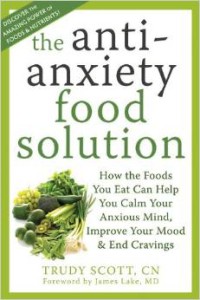
trudy scott the antianxiety food solution

Here is my gift to you, a song called Top of the World (grab the mp3 at this link)

A new beginning, a brand new day
All of my fears are gone away
I feel so calm, so free, so whole
Right now, I’m feeling on top of the world

On top the world
Right now, I’m feeling on top of the world


And here is another special gift: transcript of this entire talk!
Download the transcript here (right-click on the link and select “Save link as” or “Save target as” to download the file to your computer)

If you are not already registered for the Anxiety Summit you can get live access to the speakers of the day here: www.theAnxietySummit.com

Missed this interview or can’t listen live? Or want this and the other great interviews for your learning library? Purchase the MP3s or MP3s + transcripts and listen when it suits you.

You can find your purchasing options here.: Anxiety Summit Season 1, Anxiety Summit Season 2, Anxiety Summit Season 3, and Anxiety Summit Season 4.
Filed Under: Events, Food and mood, GABA, The Anxiety Summit 4 Tagged With: anxiety, anxiety summit, Trudy Scott, vagus nerve

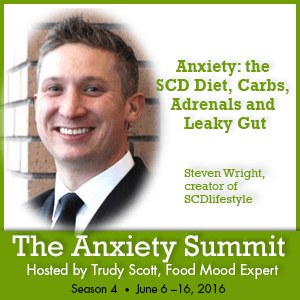
The Anxiety Summit – Anxiety: the SCD diet, carbs, adrenals and leaky gut

June 7, 2016 By Trudy Scott 25 Comments

Steven Wright_Anxiety4

Steven Wright, creator of SCDlifestyle, was interviewed on the Anxiety Summit by host of the Anxiety Summit, Trudy Scott, Food Mood Expert and Nutritionist, author of The Antianxiety Food Solution.

Anxiety: the SCD diet, carbs, adrenals and leaky gut

  • The Specific Carbohydrate Diet /SCD: the history and the basics
  • The GAPs diet – the similarities and differences
  • Stressful times and panic attacks and recovering
  • Adrenal health and restricting carbs too much
  • Leaky gut and glutamine

Here are some gems from our interview (I really enjoy Steve’s common-sense advice, especially when you are feeling overwhelmed):

And so if you can adopt the mindset of hey, you know what, this is just an exploration of food.  I’m just going to throw out all my beliefs for six months and I’m going to try buying that weird fruit at the grocery store; I’m going to buy a new pan; I’m going to burn some things and just try to make it an exploration, like try to mess it up.  If you can do that, if you can get some sort of mindset shift there where it becomes a fun little game, what I would do is I would have a spice of the week and I would put that spice on everything.  I don’t care what they say in cookbooks or chef schools, I’ve never been to chef school actually.  I would like love to go maybe sometime.  But I would just take like oregano and I would put oregano on everything.  I’d put it on my vegetables; I’d put it on my fish; I’d put it on the beef; I’d put it on the chicken I cooked just to see what it tasted like.  Like somebody says you should never put rosemary on your whatever you’re cooking.  Well how do they know?  Why don’t you make up the choice for yourself?  

We cover leaky gut, autoimmunity and anxiety:

So your immune system is concentrated in your gut.  It’s remarkable to think of that, but the reason why is in case these different molecules of the wrong size or the wrong type get into your gut then they gum in and they just kind of like start to attack it and it creates a war.  And so if your gut is chronically leaky, like it is for essentially anyone with an autoimmune condition, because that’s per Dr. Fasano’s theory, that’s essentially the way in which you become autoimmune, you’re going to have a war raging in your bloodstream, in your body, in your gut for all day all night.  And so that consumes a lot of resources; it creates a lot of inflammatory cytokines; it also regulates some other pathways, which can be circulated, end up in the brain and end up causing anxiety and depression.  And so I do believe that there is a subset of people who have anxiety who have either leaky gut as one of their main causes or at least it’s contributing to it.  And so digestive health is really important for anxiety in my opinion.  

This article:  Diet and Inflammatory Bowel Disease, discusses the diets commonly recommended to IBD patients and reviews the supporting data for the low-fermentable oligosaccharide, disaccharide, monosaccharide, and polyol diet; the specific carbohydrate diet; the anti-inflammatory diet; and the Paleolithic diet.  The authors of this paper do say that the role of dietary interventions in the management of IBD still needs to be tested vigorously in patients.

Here is the SCD Quick Start Guide

And for health practitioners wanting to learn how to get their message out in a bigger way and help more people: The Practitioner Liberation Project

If you are not already registered for the Anxiety Summit you can get live access to the speakers of the day here: www.theAnxietySummit.com

Missed this interview or can’t listen live? Or want this and the other great interviews for your learning library? Purchase the MP3s or MP3s + transcripts and listen when it suits you.

You can find your purchasing options here.: Anxiety Summit Season 1, Anxiety Summit Season 2, Anxiety Summit Season 3, and Anxiety Summit Season 4.
Filed Under: Events, The Anxiety Summit 4 Tagged With: adrenals, anxiety, anxiety summit, carbs, leaky gut, scd, Steven Wright, Trudy Scott

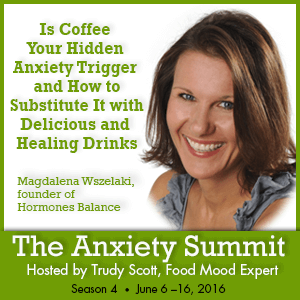
The Anxiety Summit – Is Coffee Your Hidden Anxiety Trigger and How to Substitute It with Delicious and Healing Drinks

June 7, 2016 By Trudy Scott 25 Comments

Magdalena Wszelaki_Anxiety4

Magdalena Wszelaki, founder of Hormones Balance, was interviewed on the Anxiety Summit by host of the Anxiety Summit, Trudy Scott, Food Mood Expert and Nutritionist, author of The Antianxiety Food Solution.

Is Coffee Your Hidden Anxiety Trigger and How to Substitute It with Delicious and Healing Drinks

  • Caffeine, anxiety and panic attacks and our genetics
  • How coffee impacts blood sugar and increases sugar cravings
  • Coffee: the gut, adrenals, sex hormones and the thyroid
  • Is decaf ok?
  • How to use chicory, dandelion, carob and reishi as great alternatives
  • Rooibos and tulsi/holy basil as anti-stress herbal teas

Here are some gems from our interview:

If you’re having type 2 adrenal fatigue so that means sometimes it’s s super high.  Your adrenals are pumping out too much cortisol.  Sometimes it’s too low, sometimes it’s just okay.  You can get that done through testing – hormone testing, saliva testing with cortisol.  The issue is that in times of low cortisol release you’re going to be pretty brain dead and this is when we want to bring the cortisol level up with coffee. 

The problem is the adrenals are already exhausted and that’s the reason why they are firing off with the wrong timing.  Sometimes it’s too high, sometimes it’s too low.  Women who have this “I’m tired and wired” thing going on late at night where they’re just lying in bed exhausted, can’t fall asleep.  That’s very often adrenal fatigue stage 2 with higher cortisol levels at night.  And so this is where coffee just exhausts your adrenals even further.  So you might get that instant release as in like you’re getting this clarity in your head.  You’re getting that energy to get through the day. But in the long term coffee is really going to just exhaust the adrenals to the maximum.

Here are some of the studies on anxiety and coffee discussed in the interview:

Caffeine can cause anxiety and panic attacks.  This study showed that people with panic disorder and social anxiety may be more sensitive to the anxiety-causing effects of caffeine.

In this paper, Caffeine abstention in the management of anxiety disorders, the participants had generalized anxiety disorder and panic disorder.  They had been on medication and they’d been on therapy and they drank one-and-a-half to three-and-a-half cups of coffee a day.  None of them had benefitted from either the therapy or the medication.  When they stopped the coffee within a week the anxiety disappeared. 

Here are additional studies we discussed:

  • Coffee and gastrointestinal function: facts and fiction. A review.
  • Caffeine as an intensifier of stress-induced hormonal and pathophysiologic changes in mice
  • Maternal caffeine consumption during pregnancy and the risk of miscarriage: a prospective cohort study
  • Caffeine and caffeinated beverage consumption and fecundability in a preconception cohort
  • Caffeine effects on sleep taken 0, 3, or 6 hours before going to bed.


magdalena roasted chicory latte

Here is Magdalena’s recipe for ROASTED CHICORY ROOT LATTE

Time to prepare: 15 minutes; Time to steep: 10minutes; Serves: 1; Equipment: blender

Ingredients

1 tbsp roasted chicory root

2 cups water

1 tbsp ghee, coconut butter or butter (if tolerated)

1 pitted date

fresh nutmeg (nut or powder)

How to make:

  1. Bring water to a boil, add chicory root and steep for 10 minutes.
  2. Strain and transfer to a blender.
  3. Add the ghee (or any fat you decide to use) and the date. Blend for 1 minute at high speed.
  4. Top with freshly grated nutmeg and enjoy.


I shared my carob recipe: Carob Cinnamon Delight instead of coffee – a calming hot beverage and mentioned rooibos tea how it’s A Functional Food in the Management of Stress (an interview from a prior anxiety summit)

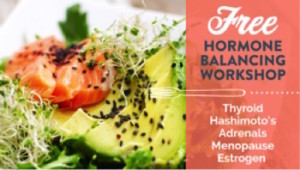
Here is Magdalena’s gift: Finding Hormonal Balance Through Food and Essential Oils


hormone-balancing-workshop

And here is Magdalena’s wonderful no-cost introductory Hormone Balancing Workshop/webinar   (many of my clients have attended and love learning about eating for hormone balance from Magdalena)

If you are not already registered for the Anxiety Summit you can get live access to the speakers of the day here: www.theAnxietySummit.com

Missed this interview or can’t listen live? Or want this and the other great interviews for your learning library? Purchase the MP3s or MP3s + transcripts and listen when it suits you.

You can find your purchasing options here.: Anxiety Summit Season 1, Anxiety Summit Season 2, Anxiety Summit Season 3, and Anxiety Summit Season 4.

Filed Under: Events, The Anxiety Summit 4 Tagged With: anxiety, anxiety summit, caffeine, coffee, Magdalena Wszelaki, Trudy Scott

The Anxiety Summit – Anxiety: the role of fats, turmeric and wheat

June 5, 2016 By Trudy Scott 37 Comments

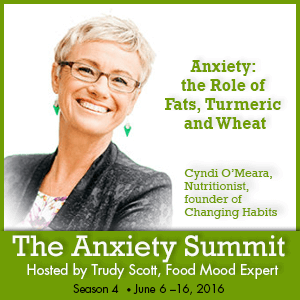
 Cyndi O’Meara_Anxiety4

Cyndi O’Meara, Nutritionist, founder of Changing Habits, was interviewed on the Anxiety Summit by host of the Anxiety Summit, Trudy Scott, Food Mood Expert and Nutritionist, author of The Antianxiety Food Solution.

Anxiety: the role of fats, turmeric and wheat

  • Oils ain’t oils and fats ain’t fats: the danger of vegetable oils
  • The benefits of butter and other healthy fats
  • The impact of wheat on anxiety and depression
  • Turmeric for detoxification, inflammation, depression and anxiety
  • How to get the most out of consuming turmeric

Here are some gems from our interview:

The healthy fats for me are any fat that nature has made.  So that could be a saturated fat in a plant based oil such as coconut oil or it could be a saturated fat in animal fats.  So in the winter there would not be a lot of saturated fat around.  It would be more in the summer. 

And in culture and traditions we ate seasonal foods.  So when the animals were fat they had saturated fat on them and we would consume those fats.  If they were producing dairy which would usually be in the spring and right through the summer we might eat that and that had saturated fat in it.  So we would have these types of fats in the summer.  In the winter we had lean meats because the animals were lean.  They didn’t have stored fats on them.  Neither did we.

I look at the morphing of margarine and the fact that it’s been seen as a healthy fat and it’s not a healthy fat.  It’s a chemicalized, manmade, manufactured, polyunsaturated fat that is normally liquid at room temperature that becomes solid because of what they do.

We also discuss inca inchi oil, a plant-based oil:

Inca inchi is very high in vitamin A and vitamin E – inca inchi seed oil is one of the most amazing plant based oils.  It’s also called sacha inchi, so it’s a South American seed and it’s 86 percent essential fatty acid and 48 percent omega-3 which means that we can make our EPAs and our DHAs with it.  So it’s a more sustainable omega-3 base as opposed to fish oil.  And it’s one of my favorite oils and it’s got a profile that’s similar to flaxseed oil and I can use it to make my mayonnaises, my pestos.  I can make all beautiful salad dressings with it.  I can drizzle it over some fresh vegetables that I’ve just steamed.

We talk about Roundup/glyphosate being sprayed on wheat and canola and the research work of Stephanie Seneff (interviewed in season 1 of the Anxiety summit): looking at the effects on the gut bacteria, the shikimate pathway and hence serotonin and anxiety, depression and autism.

Here is the TEDX talk that Cyndi recommended – Jeff Iliff: One more reason to get a good night’s sleep

And a recent study on camu camu – Antioxidant and associated capacities of Camu camu (Myrciaria dubia): a systematic review.

A program to increase the visibility of camu camu can contribute substantially not only to the management of inflammatory conditions and its positive contribution to overall good health but also to its potential role in many disease states.

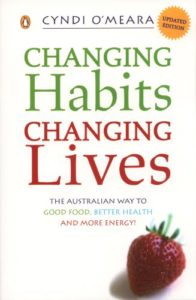
Here is Cyndi’s book: Changing Habits, Changing Lives

cyndi changing habits


Here is a digital gift from Cyndi: Depression e-report and Changing Habits Changing Lives audio book 

Here is the link to learn more about the new wheat documentary (online screening June 24-30): What’s With Wheat.

whats with wheat

If you are not already registered for the Anxiety Summit you can get live access to the speakers of the day here: www.theAnxietySummit.com

Missed this interview or can’t listen live? Or want this and the other great interviews for your learning library? Purchase the MP3s or MP3s + transcripts and listen when it suits you.

You can find your purchasing options here: Anxiety Summit Season 1, Anxiety Summit Season 2, Anxiety Summit Season 3, and Anxiety Summit Season 4.
 

Filed Under: Events, The Anxiety Summit 4 Tagged With: anxiety, anxiety summit, Cyndi O’Meara, fat, Trudy Scott, turmeric, wheat

The Anxiety Summit – Anxiety: The Stressed and Toxic Gut

June 5, 2016 By Trudy Scott 43 Comments

Josh Axe_Anxiety4

Dr. Josh Axe, DNM, DC, CNS, author of Eat Dirt, is interviewed on the Anxiety Summit by host of the Anxiety Summit, Trudy Scott, Food Mood Expert and Nutritionist, author of The Antianxiety Food Solution.

Anxiety: The Stressed and Toxic Gut

  • An overview of leaky gut, the causes and the 5 gut types
  • Symptoms of the stressed gut and how it impacts the adrenals
  • Leaky gut and glutamine as a fuel source
  • Healing licorice root, rhodiola and ashwaganda
  • How frankincense fights inflammation and protects the tight junctions of the gut
  • Signs of a toxic gut, soil-based organisms and what we can learn from the Yanomami tribe

Here are some gems from our interview:

So imagine your intestines as a net or your gut lining is a net and it’s sort of the barrier in between your intestines and blood stream. If that little net, if those little holes get tears in them then things that are too large start passing into your bloodstream such as undigested food particles such as gluten, toxins, bad bacteria. When those get into the bloodstream that sets off an immune response in the body and really causes system wide inflammation. And just to let you know, I want to go over some of the biggest warning signs that someone has leaky gut, which you’ll see these were often times anxiety and toxicity and other issues, but bloating and gas are big warning signs that you have leaky gut. Any type of food sensitivity, if you don’t tolerate certain foods like gluten that probably means you have leaky gut. Thyroid conditions such as Hashimoto’s thyroiditis, adrenal fatigue, joint pain, headaches, skin issues like rosacea, acne, eczema, psoriasis, digestive problems of any sort. And then even especially depression and anxiety, any of these issues, bipolar, those are all warning signs that somebody has leaky gut.

We discuss glutamine for healing a leaky gut and Dr. Axe mentioned his blog on the topic: L-Glutamine Benefits Leaky Gut & Metabolism

L-glutamine is the most abundant amino acid in the bloodstream and it makes up 30-35 percent of the amino acid nitrogen in your blood. It’s actually known as a conditionally essential amino acid because your body uses it in large amounts.

The most common uses of glutamine powder were to meet the following goals: to lose weight fast, burn fat and build muscle. And while that remains the case, science is now showing that L-glutamine benefits are abundant – and that this amino acid is especially helpful in treating leaky gut and improving your overall health.

We talk about the benefits of licorice root for both the gut and the adrenals:

Licorice root is another one of those herbs that’s used in Chinese medicine and it’s very effective for many things, with studies showing it helps the stomach, ulcers specifically.  Other studies show that it actually helps with soothing the intestinal tract.  But for the most part it’s also used as an adaptogenic herb.  Many of us have heard of adaptogens such as ashwaganda, rhodiola, ginseng, certain mushrooms such as cordyceps have been labeled adaptogenic, well licorice root works in the same way.  It really helps your body better adapt and deal with stress.  We know stress can be very, very hard on the intestines as well as the stomach. It can be very hard on your digestive system.  So licorice root is pretty amazing.  It’s an herb that really helps in sort of soothing inflammation, but it also works as an adaptogen to lower stress levels, which is harming the gut.  So really as a two pronged approach and why it’s so effective at both helping the digestive system as well as supporting the adrenal glands, thyroid and overall hormones.

Here are some links to some research:

  • Breaking down the barriers: the gut microbiome, intestinal permeability and stress-related psychiatric disorders.

The emerging links between our gut microbiome and the central nervous system (CNS) are regarded as a paradigm shift in neuroscience with possible implications for not only understanding the pathophysiology of stress-related psychiatric disorders, but also their treatment.

  • Anti-inflammatory effect of roasted licorice extracts on lipopolysaccharide-induced inflammatory responses in murine macrophages.
  • Boswellia serrata Preserves Intestinal Epithelial Barrier from Oxidative and Inflammatory Damage


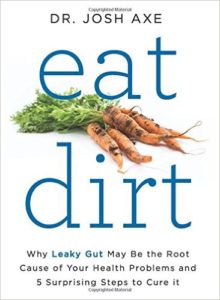
Dr. Josh Axe is author of a new book called  Eat Dirt: Why Leaky Gut May Be the Root Cause of Your Health Problems and 5 Surprising Steps to Cure It

josh axe eat dirt


Here is the link to a gift from Josh Axe The King’s Medicine Cabinet eBook:  A complete guide on essential oils and their history, uses, cures, and recipes that will transform your health forever!

And his Eat Dirt online gut quiz [disabling this until I hear back from them]

If you are not already registered for the Anxiety Summit you can get live access to the speakers of the day here: www.theAnxietySummit.com

Missed this interview or can’t listen live? Or want this and the other great interviews for your learning library? Purchase the MP3s or MP3s + transcripts and listen when it suits you.

You can find your purchasing options here.: Anxiety Summit Season 1, Anxiety Summit Season 2, Anxiety Summit Season 3, and Anxiety Summit Season 4.
Filed Under: Adrenals, Events, Stress, The Anxiety Summit 4 Tagged With: anxiety, anxiety summit, josh axe, toxic gut, Trudy Scott

Anxiety Summit season 4: the top six reasons to attend

June 3, 2016 By Trudy Scott 7 Comments

anxiety-summit-hope

We’re getting ready for the Anxiety Summit! It starts next week June 6th and runs through June 16th and I can’t wait to share all the amazing speakers and resources with you.

If you’ve already signed up for the summit these top six reasons will inspire you even further. If you haven’t yet signed up I hope to motivate you to join us and learn nutritional tools to overcome anxiety, social anxiety, panic attacks, OCD and even insomnia and stress eating.

(1) More and more children and adolescents have anxiety

Dr. Zendi Moldenhauer, integrative psychiatric NP, is one of the wonderful summit speakers. Her topic is Anxiety in children, adolescents and young adults: an integrative psychiatric approach, and she shares this:

Anxiety in children and adolescents is on the rise globally. The number of teens ages 13-18 who have been officially diagnosed with an anxiety disorder is only 8%, however our real-life experience shows it to be closer to 1 in 4 or 1 in 5.

Dr Zendi shares that many anxious children and adolescents actually have irritable bowel syndrome (IBS) and that by addressing gut health we can see anxiety symptoms disappear. The adrenals can be supported with theanine, an amino acid that promotes alert relaxation, and low GABA levels can be boosted with a calming amino acid such as GABA-Calm.

(2) American Psychiatric Association Lobbies FDA to Electroshock Children

This is the title of a recent article published on the CCHRINT website and here is what they are saying:

The American Psychiatric Association (APA) is aggressively lobbying the Food and Drug Administration (FDA) to allow it broader use of Electroshock (ECT) on patients, including children.

While the APA looks to seizure-inducing, brain-disabling, electricity as a form of ‘treatment,’ lobbying the FDA to make ECT available for children, no one in medicine, let alone psychiatry, has a clue how ECT machines ‘work’ or how passing large amounts of electricity into a child’s brain ‘treats’ the subjective mental disorder.

It’s unfathomable to me that with what we now know about nutritional psychiatry (see more on this below) that we could be considering something as awful as this.

We can control the size of our hippocampus by what we eat

(3) We can control the size of our hippocampus by what we eat

Dr. Drew Ramsey, M.D., psychiatrist, farmer and author of the new book Eat Complete, another wonderful summit speaker, covers Nutrients that Fuel Brain Power and Reduce Anxiety.

I love what Dr. Drew Ramsey says in our interview: “I eat for a bigger hippocampus.” The hippocampus is an area of your brain involved in emotional regulation and learning. Don’t you want a bigger hippocampus?

We talked about this in the context of the research published by Dr. Felice Jacka and her team: Western diet is associated with a smaller hippocampus: a longitudinal investigation. Here is the conclusion of the study:

Lower intakes of nutrient-dense foods and higher intakes of unhealthy foods are each independently associated with smaller left hippocampal volume. To our knowledge, this is the first human study to demonstrate associations between diet and hippocampal volume concordant with data previously observed in animal models.

The Anxiety Summit is “a bouquet of hope”

(4) Tryptophan and GABA give you hope and an immediate feeling of calm

The Anxiety Summit has been called a “bouquet of hope” and these calming and mood-boosting amino acids are my favorite nutrients for anxiety because they offer so much hope right away. They get much coverage this season.

Serotonin and anxiety: tryptophan, 5-HTP, serotonin syndrome and medication tapers, an interview with Dr. Peter Bongiorno, ND, author of Holistic Therapies for Anxiety and Depression:

Low levels of tryptophan contribute to generalized anxiety and panic attacks. Back in the early 1990s, a laboratory I was associated with at Yale University performed “tryptophan depletion studies” and which volunteers who were already prone to anxiety were put on a tryptophan-free diet. Within days, these people were extremely anxious, panicky and unstable – and they had lots of trouble staying asleep.

In my interview, GABA: Blood brain barrier controversy, concerns, best forms and how to do a trial for eliminating anxiety, I cover the research and practical steps on how to get the best results. But most importantly you’ll hear heartwarming success stories from people who use GABA, like this one:

It helps lower my overall anxious feeling all day (anxiety for no reason). I just started increasing the dose slightly and am beginning to take it a few times a day to help with social anxiety.

And this one:

It changed my life in minutes! Take it every day now. No more hopelessness!

If you have anxiety I want you to have hope that you will find an answer and I want to give you tools and resources to get there.

Tryptophan and GABA give you HOPE and relief right away while you are addressing some of the bigger underlying causes of your anxiety which may take longer to address. Some of these more complex causes may be leaky gut, mercury toxicity, gluten issues or Lyme disease and are also their own topics in the summit.

(5) Anxious individuals are actively looking for nutritional solutions

In a paper published earlier this year, Herbal medicine use behaviour in Australian adults who experience anxiety: a descriptive study, out of 400 anxious Australian adults in the study:

  • 47% were diagnosed with an anxiety disorder
  • 82% experienced anxiety symptoms in the previous 12 months
  • 3% had used prescribed pharmaceuticals for anxiety
  • 8% had used herbal medicines for anxiety

The authors of the study voice concerns about the dangers of self-prescribing saying this about the widespread use of herbal medicines:

Herbal medicines are being used by adults with anxiety and are commonly self-prescribed for anxiety symptoms. These behaviours are concerning as people may not be receiving the most suitable treatments, and their use of herbal medicines may even be dangerous. It is critical we develop a better understanding of why people are using these medicines.

Based on my practice and after interviewing over 100 experts on nutritional solutions for anxiety and seeing the research, this is my belief: more and more people who are not getting solutions from medications are being smart and are looking to address the root cause/s of their anxiety naturally and nutritionally. Are you one of them?

I’m all about self-empowerment and being informed and the summit delivers plenty of practical content and the research.

(6) Anxiety disorders are the most common psychiatric illness

Anxiety disorders are the most common psychiatric illness affecting children and adults. According to the Anxiety and Depression Association Of America, it’s estimated that 40 million American adults suffer with an anxiety disorder. These numbers are much higher because you may never get a diagnosis and be counted (just look at the Australian herbal study below). You may not even identify with the term anxiety because you have felt like for so long and just think ‘this is me, this is just how I am.’

It doesn’t have to be like this. We can change these stats. You can feel on top of the world again!

The summit offers hope and solutions, research and success stories!

Discover the connections between anxiety and brain food, why healthy fats and turmeric feed our brains, how grass-fed red meat helps with anxiety, the impact of coffee and gluten, the best gluten testing, GABA and the blood brain barrier, serotonin and tryptophan, best forms of GABA and tryptophan, anxiety in autism, MS and anxiety, Lyme disease and anxiety, mercury and lead detox, leaky gut and the SCD diet, low cholesterol and low oxytocin, the microbiome, stomach acid and zinc, fluroquinolones, methylation, pyroluria, the importance of community and much more.

Join us June 6-16th online – register here www.theanxietysummit.com

And please share widely!

Filed Under: Events, The Anxiety Summit 4 Tagged With: amino acids, anxiety, drew ramsey, GABA, GABA Calm, Hippocampus, Peter Bongiorno, the anxiety summit, Trudy Scott

  • « Go to Previous Page
  • Page 1
  • Interim pages omitted …
  • Page 4
  • Page 5
  • Page 6
  • Page 7
  • Page 8
  • Interim pages omitted …
  • Page 24
  • Go to Next Page »

Primary Sidebar

NEW! GABA QuickStart Homestudy (with special intro pricing)

gaba quickstart homestudy

Free Report

9 Great Questions Women Ask about Food, Mood and their Health

You'll also receive a complimentary subscription to my ezine "Food, Mood and Gal Stuff"


Connect with me

Popular Posts

  • Amino Acids Mood Questionnaire from The Antianxiety Food Solution
  • The Antianxiety Food Solution Amino Acid and Pyroluria Supplements
  • Pyroluria Questionnaire from The Antianxiety Food Solution
  • Collagen and gelatin lower serotonin: does this increase your anxiety and depression?
  • Tryptophan for the worry-in-your-head and ruminating type of anxiety
  • GABA for the physical-tension and stiff-and-tense-muscles type of anxiety
  • The Antianxiety Food Solution by Trudy Scott
  • Seriphos Original Formula is back: the best product for anxiety and insomnia caused by high cortisol
  • Am I an anxious introvert because of low zinc and vitamin B6? My response to Huffington Post blog
  • Vagus nerve rehab with GABA, breathing, humming, gargling and key nutrients

Recent Posts

  • What do I use instead of Seriphos to help lower high cortisol that is affecting my sleep and making me anxious at night?
  • BeSerene™ GABA/theanine cream eases severe muscle tension in her neck/shoulders, prevents her bad headaches and quells her anxiety
  • How the correct approach, dose and sublingual use of GABA can be calming and not cause a flushed and itchy face and neck
  • The amino acid glutamine improves low mood by addressing gut health, and it has calming effects too
  • Flight anxiety with heightened breath, physical tension and also fearing the worst (the role of low GABA and low serotonin)

Categories

  • 5-HTP
  • AB575
  • Addiction
  • ADHD
  • Adrenals
  • Alcohol
  • Allergies
  • Alzheimer's disease
  • Amino Acids
  • Anger
  • Antianxiety
  • Antianxiety Food Solution
  • Antidepressants
  • Anxiety
  • Anxiety and panic
  • Autism
  • Autoimmunity
  • benzodiazapines
  • Bipolar disorder
  • Books
  • Caffeine
  • Cancer
  • Candida
  • Children/Teens
  • Collagen
  • Cooking equipment
  • Coronavirus/COVID-19
  • Cravings
  • Depression
  • Detoxification
  • Diabetes
  • Diet
  • DPA/DLPA
  • Drugs
  • EFT/Tapping
  • EMF
  • EMFs
  • Emotional Eating
  • Endorphins
  • Environment
  • Essential oils
  • Events
  • Exercise
  • Fear
  • Fear of public speaking
  • Fertility and Pregnancy
  • Fish
  • Food
  • Food and mood
  • Functional neurology
  • GABA
  • Gene polymorphisms
  • General Health
  • Giving
  • Giving back
  • Glutamine
  • Gluten
  • GMOs
  • Gratitude
  • Gut health
  • Heart health/hypertension
  • Histamine
  • Hormone
  • Hyperparathyroidism
  • Hypoglycemia
  • Immune system
  • Inflammation
  • Insomnia
  • Inspiration
  • Introversion
  • Joy and happiness
  • Ketogenic diet
  • Lithium orotate
  • Looking awesome
  • Lyme disease and co-infections
  • MCAS/histamine
  • Medication
  • Men's health
  • Mental health
  • Mercury
  • Migraine
  • Mold
  • Movie
  • MTHFR
  • Multiple sclerosis
  • Music
  • NANP
  • Nature
  • Nutritional Psychiatry
  • OCD
  • Osteoporosis
  • Oxalates
  • Oxytocin
  • Pain
  • Paleo
  • Parasites
  • Parkinson’s disease
  • PCOS
  • People
  • PMS
  • Postpartum
  • PTSD/Trauma
  • Pyroluria
  • Questionnaires
  • Real whole food
  • Recipes
  • Research
  • Schizophrenia
  • serotonin
  • SIBO
  • Sleep
  • Special diets
  • Sports nutrition
  • Stress
  • Sugar addiction
  • Sugar and mood
  • Supplements
  • Teens
  • Testimonials
  • Testing
  • The Anxiety Summit
  • The Anxiety Summit 2
  • The Anxiety Summit 3
  • The Anxiety Summit 4
  • The Anxiety Summit 5
  • The Anxiety Summit 6
  • Thyroid
  • Thyroid health
  • Toxins
  • Tryptophan
  • Tyrosine
  • Uncategorized
  • Vegan/vegetarian
  • Women's health
  • Yoga

Archives

  • October 2025
  • September 2025
  • August 2025
  • July 2025
  • June 2025
  • May 2025
  • April 2025
  • March 2025
  • February 2025
  • January 2025
  • November 2024
  • October 2024
  • September 2024
  • August 2024
  • July 2024
  • June 2024
  • May 2024
  • April 2024
  • March 2024
  • February 2024
  • January 2024
  • December 2023
  • November 2023
  • October 2023
  • September 2023
  • August 2023
  • July 2023
  • June 2023
  • May 2023
  • April 2023
  • March 2023
  • February 2023
  • January 2023
  • December 2022
  • November 2022
  • October 2022
  • September 2022
  • August 2022
  • July 2022
  • June 2022
  • May 2022
  • April 2022
  • March 2022
  • February 2022
  • January 2022
  • December 2021
  • November 2021
  • October 2021
  • September 2021
  • August 2021
  • July 2021
  • June 2021
  • May 2021
  • April 2021
  • March 2021
  • February 2021
  • January 2021
  • December 2020
  • November 2020
  • October 2020
  • September 2020
  • August 2020
  • July 2020
  • June 2020
  • May 2020
  • April 2020
  • March 2020
  • February 2020
  • January 2020
  • December 2019
  • November 2019
  • October 2019
  • September 2019
  • August 2019
  • July 2019
  • June 2019
  • May 2019
  • April 2019
  • March 2019
  • February 2019
  • January 2019
  • December 2018
  • November 2018
  • October 2018
  • September 2018
  • August 2018
  • July 2018
  • June 2018
  • May 2018
  • April 2018
  • March 2018
  • February 2018
  • January 2018
  • December 2017
  • November 2017
  • October 2017
  • September 2017
  • August 2017
  • July 2017
  • June 2017
  • May 2017
  • April 2017
  • March 2017
  • February 2017
  • January 2017
  • December 2016
  • November 2016
  • October 2016
  • September 2016
  • August 2016
  • July 2016
  • June 2016
  • May 2016
  • April 2016
  • March 2016
  • February 2016
  • January 2016
  • December 2015
  • November 2015
  • October 2015
  • September 2015
  • August 2015
  • July 2015
  • June 2015
  • May 2015
  • April 2015
  • March 2015
  • February 2015
  • January 2015
  • December 2014
  • November 2014
  • October 2014
  • September 2014
  • August 2014
  • July 2014
  • June 2014
  • May 2014
  • April 2014
  • March 2014
  • February 2014
  • January 2014
  • December 2013
  • November 2013
  • October 2013
  • September 2013
  • August 2013
  • July 2013
  • June 2013
  • May 2013
  • April 2013
  • March 2013
  • February 2013
  • January 2013
  • December 2012
  • November 2012
  • October 2012
  • August 2012
  • July 2012
  • June 2012
  • May 2012
  • April 2012
  • March 2012
  • February 2012
  • January 2012
  • December 2011
  • November 2011
  • October 2011
  • September 2011
  • August 2011
  • July 2011
  • June 2011
  • May 2011
  • April 2011
  • March 2011
  • February 2011
  • January 2011
  • December 2010
  • October 2010
  • September 2010
  • July 2010
  • May 2010
  • April 2010
  • March 2010
  • February 2010
  • January 2010
  • November 2009

Share the knowledge!

The above statements have not been evaluated by the Food and Drug Administration. Products listed in this website are not intended to diagnose, treat, cure or prevent any disease.

The information provided on this site is for informational and educational purposes only and is not intended as a substitute for advice from your physician or other health care professional. You should consult with a healthcare professional before starting or modifying any diet, exercise, or supplementation program, before taking or stopping any medication, or if you have or suspect you may have a health problem.


Copyright © 2026 Trudy Scott. All Rights Reserved. | Privacy | Terms and Conditions | Refund Policy | Medical Disclaimer

Free Report

9 Great Questions Women Ask about Food, Mood and their Health

You’ll also receive a complimentary subscription to my ezine “Food, Mood and Gal Stuff”