• Skip to primary navigation
  • Skip to main content
  • Skip to primary sidebar

everywomanover29 blog

Food, Mood and Women's Health – Be your healthiest, look and feel great!

  • Blog
  • About
  • Services
  • Store
  • Resources
  • Testimonials
  • The Book
  • Contact
  • Search this site

SIBO

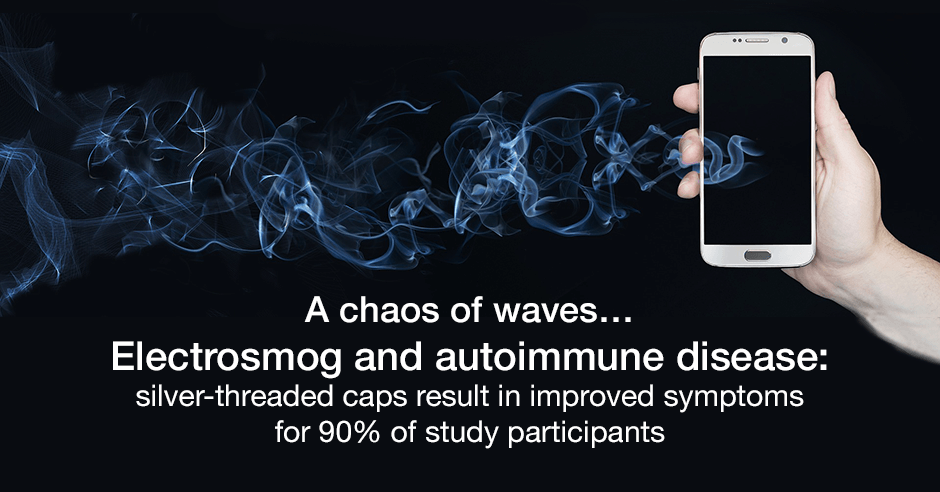
Electrosmog and autoimmune disease: silver-threaded caps result in improved symptoms for 90% of study participants

April 27, 2018 By Trudy Scott 40 Comments

One of the most compelling studies I learned about in the recent Electrosmog Rx course (hosted by Nick Pineault) is the study by Trevor Marshall, MD and Trudy Heil, RN: Electrosmog and autoimmune disease. In this study, 90% of the participants – all with an autoimmune diagnosis of either arthritis, lupus, multiple sclerosis, sjogrens or celiac disease – reported improved symptoms as a result of wearing silver-threaded EMF protective caps.

The paper provides a good overview from NASA on what electrosmog is i.e. all the electromagnetic waves we’re exposed to on a daily basis:

As you sit watching TV, not only are there visible light waves from the TV striking your eyes, but also radio waves, transmitting from a nearby station, and microwaves carrying cellphone calls and text messages, and waves from your neighbor’s WiFi, and GPS units in the cars driving by. There is a chaos of waves from all across the spectrum passing through your room right now.

Patients who were participating in Dr. Marshall’s autoimmune/VDR/electrosmog research were purchasing commercially available shielded clothing and tenting on their own from retailers and reporting symptom improvements:

This clothing typically has silver-coated polyester threads interwoven with the supporting fabric so that the garment is capable of partially blocking microwave Electrosmog.
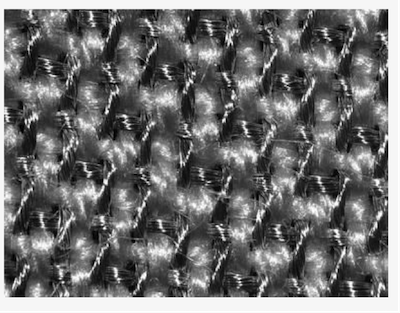
Fig. 5: A X20 micrograph of a microwave-blocking fabric woven with a mesh of silver-coated polyester strands among the supporting bamboo fibers (Electrosmog and autoimmune disease)

Because there were frequent anecdotal reports of symptom improvement, especially when their brain and brain stem were “shielded” during sleep, Dr. Marshall and his team decided to create a standardized sleeping cap so the EMF shielding effect could be easily analyzed and optimized.
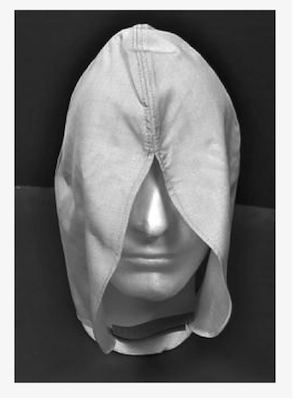
Fig. 6: A photograph of a sleeping cap sewn from the microwave-shielding fabric (Electrosmog and autoimmune disease)

Study participants wore the cap once for 4 hours during sleeping and once for 4 hours during normal activity. The results were impressive, with 90 % of the 64 patients reporting a “Definite” or “Strong” change in their symptoms.

The authors share that those with an autoimmune condition seem to be predisposed to Electrosmog hypersensitivity (now being called EHS) at levels currently existing in typical home and work environments. They suggest the following:

effective control of environmental Electrosmog immunomodulation may soon become necessary for successful therapy of autoimmune disease.

Caution does need to be exercised as some people can feel worse when going from being bombarded by EMFs on a daily basis to much less exposure. This could almost be considered a Herxheimer reaction and is described in the paper as follows:

When the Electrosmog in a patient’s environment is reduced, the immune system tends to become more active. This may result in immunopathology. Indeed, some patients have reported a surge in disease symptoms, occasionally an intolerable surge, after WiFi routers and cell phones have been switched off in their homes. Others have reported that travel to a very quiet area, such as a remote canyon, caused a surge in their immune symptoms.

This is something that Dr. Klinghardt finds when working with his patients and the authors agree that we need a plan on how best to address this. I can attest to this personally – I have discovered that I have Electrosmog hypersensitivity – and as I have started to mitigate my own EMF exposure I’ve had to be careful.

This proposed go-slow EMF mitigation plan includes:

  • the basic foundational work based on my book “The Antianxiety Food Solution” and the material on my blog
  • additional nutritional support specific to the EMF detox: mitochondria support, added antioxidants and melatonin, rosemary, propolis, kombucha, vitamin D and more
  • and only then removal of EMF sources, EMF-protective clothing, grounding and devices such as pendants, and supporting specific symptoms such as increased insomnia/anxiety
  • working with a knowledgeable functional medicine practitioner if heavy metals are being stirred up and are causing worse symptoms (Dr. Klinghardt reports this to be a common issue).
  • reducing some of the support nutrients once EMF mitigation is in place and the ‘herxheimer’ reaction is over, adding them back when you know you’ll be exposed to WiFi i.e. during travel and when ill or during times of stress

I’ll be sharing more about my journey and my detailed proposed go-slow EMF mitigation plan with links to research in a future blog.

Going back to the study – we are still learning more about what this may all mean for someone with an autoimmune disease. The results are clearly very powerful and the benefits wonderful. But for me this study is so promising on many other levels because it shows that:

  • EMFs can and do have an adverse impact on health and this adds to the growing body of evidence (despite this research and many more studies, the dangers of EMFs are not common knowledge)
  • we have control and can do something about the adverse effects of EMFs
  • those of us with less severe symptoms but still sensitive to EMFs, can also hopefully expect to see some improvements when mitigation approaches like this are implemented

I write about how Wi-Fi is an important threat to human health and may contribute to unresolved anxiety, SIBO, oxalate issues and high cortisol. This is just the tip of the iceberg and it’s something we all need to be taking seriously.

I’d love to hear from you. How concerned are you about EMFs and what changes have you made? Did you experience a Herxheimer reaction when reducing EMF exposure and what helped you?

If you’re a practitioner – are you talking to your clients/patients about this and seeing improvements in their symptoms when they make changes? Are you interested in learning more about this topic so you can further help them? If yes, the evergreen digital version of the Electrosmog Rx program created by investigative health journalist Nicolas Pineault is now available.  You can learn more about the program here. I highly recommend it!

His book, “The Non-Tinfoil Guide to EMFs” (my Amazon link), is also recommended reading for all of us.

 

Filed Under: Anxiety, EMFs Tagged With: anxiety, arthritis, autoimmune disease, celiac, Dr. Marshall, electrosmog, EMFs, high cortisol, MS, SIBO, silver-threaded caps

How much GABA should I use and which GABA product is best?

December 8, 2017 By Trudy Scott 61 Comments

The most common question I get about GABA (gamma-amino butyric acid) is the one about the blood-brain barrier and does it even work (it certainly does – read here for information on this one).

The next most common question I get about GABA is this one:

How much GABA should I use and which GABA product is best?

This exact question was actually asked of me a number of times last week after I published: Herbal therapy is equivalent to rifaximin for the treatment of small intestinal bacterial overgrowth (SIBO). In this blog I share about my trials of using sublingual GABA for the visceral pain and muscle tension in my gut caused by the bloating symptoms of SIBO.

There is no simple answer! It requires a blog post to provide a good answer because we are all unique, have different needs and these needs can even differ at different times depending on the issue and what is going on in our lives at the moment.

Let’s first do a quick recap of GABA (gamma-amino butyric acid) in case this is new to you. GABA is a calming amino acid that can be used as a supplement to raise GABA levels (GABA is also a neurotransmitter. It’s one of the amino acids I use most frequently with my anxious clients (together with tryptophan). GABA helps with the physical anxiety and tension, as well as panic attacks. New research shows it also helps with inhibition of unwanted thoughts and may also offer gut protection after alcohol consumption. It also helps with stiff and tense muscles and muscle pain and spasms.

How I have benefited from GABA

Here is a quick summary of how I’ve benefited from GABA supplements. I use this information to inform my use of GABA to help with the visceral pain I now experience due to my SIBO (more on that below).

If you have never used GABA or if you’ve used it once or twice, reading this should give you a clue as to why there is no one answer and how we need to use a trial approach to figure out what is best for each situation.

This also illustrates that there is no one size fits all for everyone and even for the same person under different situations.

  1. The anxiety and panic attacks I experienced 15 years ago:
    1. I used 1-2 GABA Calm three times a day and a combination GABA product at night. GABA Calm contains 125mg GABA and the GABA product contains 200mg GABA. My anxiety eased and my panic attacks stopped in a few days, giving me immediate relief and hope while I started to address all the other root causes like gluten sensitivity, adrenal issues, low zinc, gut health, low vitamin B6 and more
    2. The doses of GABA I used for my anxiety and panic attacks are typical amounts my clients benefit from and I would not have someone start on 500mg.
    3. If someone is a “pixie-dust” person and very sensitive I’d have them start with a pinch/dab or ¼ of 125 mg GABA Calm.
  1. The “ice-pick” headaches on the top of the skull that I discovered were caused by neck spasms:
    1. Physical therapy, high doses of GABA and high doses of magnesium were essential.
    2. Because of the low doses of GABA I had used for my anxiety years before this, I started with low doses of GABA increasing slowly from 200mg up to 1000mg GABA. This higher amount worked for me at this time for this injury.
  1. Throat spasms and the loss of my voice due to vagus nerve issues caused by a terrifying plane ride:
    1. Based on my prior ice-pick headache experience I now knew I could tolerate higher doses and started with 500mg GABA and used more as needed.
    2. I must have been really low in GABA because I was actually able to use upwards of 5 (and sometime more) doses of 500mg a day and not feel too wiped out, even during the day.
    3. That’s a lot of GABA for me – as I mentioned above 125mg to 250mg used to be enough for the anxiety I experienced 15 years ago.
    4. I write more about all this here: Vagus nerve rehab with GABA, breathing, humming, gargling and key nutrients (with videos to demonstrate immediate effects when using GABA sublingually)
  1. Rectal spasms/proctalgia fugax. These seem to be related to SIBO/IBS and I still experience these from time to time.
    1. I have found that 250mg to 500mg GABA opened onto my tongue works best for me for this particular muscle spasm.
    2. Again, it eases the spasms and pain in a few minutes. I write more about this here: How GABA eases agonizing rectal pain and spasms in under 2 minutes
  1. A back injury in August causing severe muscle spasms and pain.
    1. Again, based on my previous experiences using GABA, right after my fall I started taking 1000mg of GABA powder every few hours (held in my mouth for 1-2 minutes) and then reduced it to 2 or 3 times a day as needed.
    2. I share more in this blog: Acupuncture boosts GABA to reduce back pain and oral GABA further reduces the pain
    3. In the above blog you can also read some research about the mechanism of how GABA supplements ease inflammation and tracheal spasms associated with asthma.
  1. Visceral pain caused by SIBO.
    1. My SIBO is really well-controlled with diet but I’ve been having pain, bloating and insomnia while doing this herbal SIBO protocol. I suspect the cellulose in one of the herbal products is causing this bloating and pain after dinner. It was getting so bad it was keeping me awake (this is typical when I am accidently exposed to problematic foods and get a flare-up).
    2. SIBO patients can have visceral hypersensitivity where their pain can be due to the pressure of the gas that is produced and the muscles in the digestive system actually contracting against this pressure.
    3. It got me thinking about how effective GABA is for relieving muscle tension and how much it’s helped me in the past. I also use GABA with my clients all the time for relief of their physical anxiety and stiff and tense muscles. There are GABA receptors all over the gut and I recently discovered that GABA is important for motility.
    4. Over the last 2 weeks I’ve trialed 300mg GABA (opened on to the tongue) a few times to ease the pain and pressure and it’s been amazing at how much it’s helped and how quickly it’s eased the pain. I’ve used it as soon as I notice the bloating starting and it GABA helps me sleep too (as does the tryptophan I’ve also added). I suspect I could safely double this dose in the evening and may do this if the lower dose isn’t enough some evenings. I’ve also used it some days the next morning when I wake with the bloated ache in my belly.

How much should I use and which GABA product is best?

I have a blog post listing the products I use with clients: The Antianxiety Food Solution Amino Acid and Pyroluria Supplements

Always read the precautions (there is a link on the above blog) and do the amino acid questionnaire (the link is also on the above blog) before starting a trial. I also recommend reading the amino acids chapter in my book The Antianxiety Food Solution so you are a well-informed savvy consumer.

If you’re doing a trial for anxiety and panic attacks:

  • If you can use tyrosine the Source Naturals GABA Calm product is the one I use with most of my anxious clients.
  • The other GABA products listed on the supplements blog need to be opened onto the tongue and started with a low dose (100-200mg is a good starting dose) and increase based on symptom relief. More can often be used at night, especially if sleep is also an issue – sometimes up to 500mg.

If you have SIBO/IBS and are doing a trial for visceral pain:

  • I’d suggest NOT starting with the Source Naturals GABA Calm because the sugar alcohols can be problematic for some individuals. Or if you do, be aware that it may not help and may make things worse in the short-term. Personally, I have not found this product to be an issue with my SIBO and I have very few clients report an issue.
  • The other GABA products listed on the supplements blog need to be opened onto the tongue and started with a low dose and increased based on symptom relief.
  • For a client totally new to GABA I’d start with 100-200mg in the evening and also increase slowly over a few weeks based on symptom relief, up to 500-1000mg.
  • For early morning belly pain I’d start a client on 100-200mg because too much in the day can make you feel tired.    

If you have other pain issues:

  • For a client totally new to GABA I’d start with 100-200mg in the evening and increase slowly over a few weeks based on symptom relief, up to 500-1000mg.  Depending on the pain more may often be needed and higher doses can often be tolerated during the day.
  • Keep in mind that pain can have any many root causes and it may be more than low just GABA or may not be due to low GABA at all. Other factors to consider include but are not limited to: low serotonin, low magnesium, low endorphins, inflammation, structural damage, low omega-3s, gluten issues, Lyme disease etc.  Physical therapy and acupuncture are wonderful approaches to include too.

As you can see from my experiences above it’s a matter of doing trials to find the ideal amount for you for your particular situation.  

If you’ve used GABA supplements for anxiety, visceral pain or other muscles spasms I’d love to hear from you.

This GABA-pain connection is not well recognized and I’d love to have more people know about this as a possible option. The more we share our experiences the more we all learn.

If you plan a trial similar to any of the above I’d also love to hear your questions and feedback.

Filed Under: GABA, Pain, SIBO Tagged With: anxiety, back spasms, GABA, IBS, muscle, pain, SIBO, tryptophan, vagus nerve, visceral pain

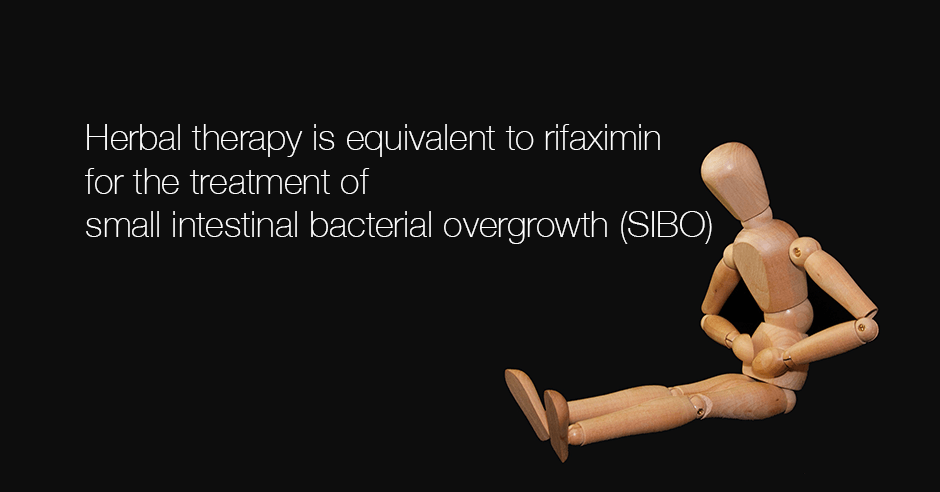
Herbal therapy is equivalent to rifaximin for the treatment of small intestinal bacterial overgrowth (SIBO)

December 1, 2017 By Trudy Scott 15 Comments

Despite the fact that this paper was published in 2014, it’s still very relevant and I’m just behind in sharing it via a blog post: Herbal therapy is equivalent to rifaximin for the treatment of small intestinal bacterial overgrowth

Patients with small intestine bacterial overgrowth (SIBO) have chronic intestinal and extraintestinal symptomatology which adversely affects their quality of life. Present treatment of SIBO is limited to oral antibiotics with variable success. A growing number of patients are interested in using complementary and alternative therapies for their gastrointestinal health. The objective was to determine the remission rate of SIBO using either the antibiotic rifaximin or herbals in a tertiary care referral gastroenterology practice.

I’ve also decided to post this study now because I’ve been dealing with chronic SIBO for some time and am in the middle of doing the Metagenics herbal protocol (more information on that below).

SIBO symptoms and conditions

Here is a summary of some of the chronic intestinal symptoms: Abdominal bloating (gas), belching, flatulence, abdominal pain, cramps, constipation and/or diarrhea, heartburn (reflux or GERD), nausea and food sensitivities.

Here is a summary of some of the extraintestinal (outside the intestinal system) symptoms and conditions that have been linked to SIBO and/or dysbiosis: disorders of mood and behavior (including anxiety), diabetes, obesity, cardiovascular disease, rosacea, restless legs syndrome, pain, anemia, interstitial cystitis, and other pelvic conditions such as vulvodynia and proctalgia fugax (rectal spasms), chronic prostatitis and polyneuropathy.

During season 3 of The Anxiety Summit, I interviewed Dr. Allison Siebecker on Small Intestinal Bacterial Overgrowth and Anxiety. We talked about the SIBO Questionnaire I use with my clients and she gave me permission to share my modified version. You can find this SIBO questionnaire here. Please check out Dr. Siebecker’s site siboinfo.com for a wealth of information about SIBO.

The herbal treatments in this study

In this study, one hundred and four patients who tested positive for newly diagnosed SIBO by lactulose breath testing were offered either 1200mg rifaximin a day or one of two herbal treatments for 4 weeks. Lactulose breath testing was done again at the end of the treatment.

These are the two herbal treatments that were offered:  

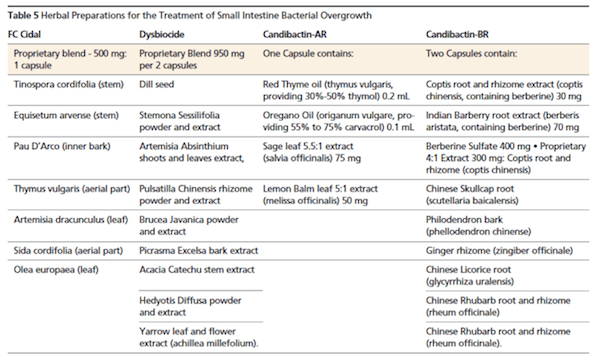
Dysbiocide and FC Cidal (both by Biotics Research): take 2 capsules twice daily of each of these products

or

Candibactin-AR and Candibactin-BR (both by Metagenics): take 2 capsules twice daily of each of these products

The ingredients in each of the products
(from the paper: Herbal therapy is equivalent to rifaximin for the treatment of small intestinal bacterial overgrowth)

Study conclusion

The study concluded that these herbal therapies are at least as effective as rifaximin for resolution of SIBO. It also states that the herbal products also appear to be as effective as triple antibiotic therapy in patients who don’t respond to rifaximin.

Adverse effects

With regards to adverse effects, they were reported as follows: in the rifaximin treated patients there was 1 case of anaphylaxis, 2 cases of hives, 2 cases of diarrhea and 1 case of Clostridium difficile; in the herbal group only one case of diarrhea was reported.

A comment about bioindividuality

You’ll notice that the only herb that is in both sets of herbal protocols is Red Thyme Oil or thymus vulgaris and yet both herbal protocols offer a solution. I’ve heard Dr. Siebecker share that of all the different approaches for SIBO (including the elemental diet), at least one approach works for everyone. So, if you’ve tried an approach and it hasn’t worked, don’t give up and move on to the next approach. This points to bioindividuality, and there being no one size fits all approach.

Dr. Siebecker lists the above combination herbal protocols together with the herbal protocol her and team use on her site, which, again, is different from the above: 1-3 of the following herbs x 4 weeks per course, at highest levels suggested on product labels.

  • Allicin from Garlic (the highest potency formula is Allimed)
  • Oregano
  • Berberine- found in Goldenseal, Oregon Grape, Barberry, Coptis, Phellodendron
  • Neem
  • Cinnamon

My protocol and experience

As I mention above, I also decided to post this study because I’ve been dealing with chronic SIBO for some time and am in the middle of doing the Metagenics herbal protocol. I’m 14 days into a 28-day protocol.

I’m actually doing 1 capsule of Candibactin-AR, 3 times a day away from food and 2 capsules of Candibactin-BR, twice a day, and about 10 minutes before food. I landed on this protocol, so I would have enough of each for a 4-week protocol.

When I started on the products I immediately observed the typical SIBO bloating and almost quit but quickly figured out it was from the microcrystalline cellulose and hypromellose in the Candibactin-BR.

It turns out that these are soluble fibers (dispersible in water) and are more easily fermented than insoluble fibers. This fermentation in the small intestine can trigger IBS/SIBO symptoms. Adding 2 capsules of a product with cellulase (an enzyme that breaks down cellulose) has helped.

Pain, gas and GABA

I also remembered that Dr. Siebecker shared on the SIBO SOS I summit about how SIBO patients can have visceral hypersensitivity where their pain can be due to the pressure of the gas that is produced and the muscles in the digestive system actually contracting against this pressure. It got me thinking about how effective GABA is for relieving muscle tension. I use GABA with my clients all the time for relief of their physical anxiety and stiff and tense muscles. And GABA helps me and many others with proctalgia fugax (rectal spasms)  which seems to be related to IBS/SIBO.

Over the last week I’ve tried sublingual GABA a few times to ease the pain and pressure and it’s been amazing. I’ve used it as soon as I notice the bloating starting AND even the next morning when I wake with the bloated ache in my belly.  I’ve been using the NFH GABA-T SAP opened on to my tongue. This product contains 300mg GABA and 150mg of theanine.  

I’m going to keep this in mind in case of a future flare up of my IBS/SIBO if I’m accidentally exposed to a food I can’t tolerate – assuming this protocol doesn’t clear it up for me. I suspect, as Dr. Siebecker reports, and based on the fact that I have chronic SIBO, that I’ll need a few more rounds anyway.

There is research supporting why this works: there are GABA receptors all over the gut and GABA is important for motility. (Stay tuned for a detailed blog post on this topic).

As well as the initial bloating and pain, I’ve also experienced some die-off symptoms like brain-fog and feeling blah, together with some sleep issues a few nights. The GABA helps with this and so does the tryptophan that I’ve also added.

If you’ve used GABA for this purpose or medications like Gabapentin or others to achieve similar results, I’d love to hear from you.

I’ll share more as I progress through the protocol. I’m also going to be speaking on SIBO SOS summit (the 3rd one) hosted by Dr. Allison Siebecker and Shivan Sarno. I will share more about my SIBO journey then, as well as all my results with this herbal protocol and any other challenges I face along the way.

Please also share if you’ve had success with any of the above herbal protocols or other approaches for your SIBO.

And feel free to post any questions below.

Filed Under: GABA, Gut health, SIBO Tagged With: anxiety, Candibactin-AR, Candibactin-BR, Dysbiocide, FC Cidal, GABA, herbal, IBS, rifaximin, SIBO, tryptophan

Fecal microbiota transplants and helminth therapy on the SIBO SOS Summit

October 21, 2017 By Trudy Scott 1 Comment

Mark Davis covers fecal microbiota transplants and helminth therapy on the SIBO SOS Summit part II. The title of his interview is: No Holds Bar Conversation About Fecal Transplants (yup, we go there) From a Fearless Expert. You will discover:

  • How Helminth therapy benefits autoimmune conditions & allergies
  • Fecal Matter/ microbiota Transplants: The shocking treatment with incredible results
  • New options for treating C Diff
  • Why not all parasites are bad! Parasite, commensal, and mutualistic organisms explained

This is what Mark has to share about helminths (microscopic worm-like organisms) and SIBO

My understanding of Dr. Pimentel’s hypothesis is that SIBO is really autoimmune enteritis. It’s your own body’s immune system launching antibodies either against cytolethal distending toxin B (CDT) or against vinculin in the gut. That’s an autoimmune process.

What these microscopic worm-like organisms, helminths, do for us is they invoke a robust T-regulatory cell response. T-regs are responsible for telling the rest of the immune system when to calm down.

If you’ve ever looked at the great book, Epidemic of Absence, the premise of the book is how absence of exposure to microbes, including helminths—your ancestors were exposed to them over and over again—absence to all that might be causing an epidemic of allergic and autoimmune disease today.

He also shares that his favorite helminth is one called Necator Americanus.

That’s the new world human hookworm. I have about 30 of them living in my gut right now. I’ve worked with dozens of patients using these.

Mark also shares what fecal microbiota transplantation is and how it is delivered:

taking the microorganisms that are alive in stool, which you have tens of trillions of them in and on you right now, and it is filtering and processing those in a way to isolate the important parts, as much as you can, and then delivering those to the gastrointestinal tract of somebody with a dysbiotic gut flora. That can be via capsule or upper endoscopy or via lower endoscopy or enema. Those are the most common ways to deliver it.

He goes on to share how effective a FMT is for a C. diff infection (when nothing else works, the FDA rulings about it only being allowed for C. diff or as part of a study, and how he is guiding his ulcerative colitis and Crohn’s disease patients through a DIY version.

I love this comment from Mark when we he is asked about the ick factor of working with poop:

It doesn’t feel like I’m processing poop. It feels like I’m mixing up a magic brew to help my patients.  

Here is some background on Mark Davis, ND: He practices at the IBD Specialty Center in Silver Spring, Maryland, and once per quarter at Bright Medicine Clinic in Portland, Oregon. He specializes in natural gastroenterology, especially the care of adults and children with inflammatory bowel disease. He is one of the few clinicians in North America with significant clinical experience using fecal microbiota transplantation (or FMT) as a therapeutic intervention, and has written and lectured extensively about FMT and helminthic therapy. He sits on the board of directors of the Fecal Transplant Foundation, and serves on the editorial board of the Natural Medicine Journal.

Mark is one of the speakers on the SIBO SOS Summit Part II. SIBO (Small Intestinal Bacterial Overgrowth) is a leading cause of IBS (irritable bowel syndrome). The most common SIBO symptoms are digestive issues, pain and bloating, and there are many other complications such as leaky gut and yeast overgrowth that make it difficult to diagnose and treat SIBO. Anxiety, depression and insomnia are common symptoms too.

FMT is not actually for used for treating small intestinal bacterial overgrowth (SIBO) and Mark shares this caution for about 5% of SIBO sufferers:

When you’re delivering [FMT] via capsules or upper endoscopy, some or all of them may end up in the small bowel. Ninety-five percent or more of the time, that ends up not being a problem, but if people already have impaired motility in the small bowel or an existing autoimmune process, or an existing small intestinal bacterial overgrowth (SIBO), that can compound the problem.

Part II of the SIBO SOS is all new interviews and is a great resource. Here are just a few of the guests and topics:

  • Dr. Allison Siebecker, Shivan Sarna, and Kristy Regan—Delicious Nutrient Rich Foods to Eat Even When You Have SIBO
  • Susanne Breen—When a SIBO Patient is Also a SIBO Doctor: The Obstacles and Strategies That Work For Her and Her Patients.
  • Dr. Megan Taylor: Been There, Done That! Help For Patients From a Doctor With Chronic SIBO
  • Dr. Norm Robillard—Choosing Diet Over Drugs
  • Angela Privin—How a Gut Health Coach Cured Herself of IBS After One Year of Paleo Done Right
  • Whitney Hayes—The Art and Science of SIBO Treatment
  • Jason Wysocki—The Importance of Neurology on GI Health and SIBO

You can register for the SIBO SOS Summit Part II here (it runs from Oct 21 to Oct 29)

Filed Under: Events, SIBO Tagged With: Mark Davis, SIBO, sibo sos summit

Dr. Allison Siebecker’s treatment approach: SIBO SOS Summit

June 24, 2017 By Trudy Scott 10 Comments

The SIBO SOS Summit starts today June 24th and runs to June 28th.

SIBO (Small Intestine Bacterial Overgrowth) is the #1 leading cause of IBS and other digestive problems and can cause bloating, chronic constipation or diarrhea (or both!!), anxiety, depression, pain and a host of other symptoms.

Shivan Sarna and co-host Dr. Allison Siebecker (a SIBO expert and hero of mine), are bringing some of the foremost experts in the country together to discuss this potentially life altering disease. Over 5 full days of expert interviews Shivan will take a deep dive into the causes, treatment options and expert opinions on everything from diet, to medication you need to know about to regain your optimal health and how to beat SIBO (even if you didn’t know you had it!)

You’ll also meet a host of patients who have lived with SIBO and have learned how to heal themselves… their passionate stories will give you the hope you need.

In her SIBO treatment interview Dr. Siebecker shares the following:

There’s several layers that we can aim our treatments at. I would say the top layer is the symptoms. And of course we want to get somebody feeling symptomatically better as soon as we can. And this is in regards to SIBO, it could apply to other diseases but specifically SIBO. The next layer down would be the bacteria. That’s the actual SIBO, the accumulation of bacteria in the small intestine aiming at eliminating those bacteria. And then the bottom layer would be the underlying cause of the SIBO. And that’s really where most of us probably want to focus our treatment because if we can get rid of the underlying cause well then we can get rid of SIBO and we can cure it, but that isn’t so easy.

I love these 2 tips she shares for the painful bloating:

something that helps a lot is charcoal, activated charcoal because it actually absorbs… gas into its little pockets and chambers inside the charcoal. That can really help people, especially if you’re having pain from the bloating that can really help.

Another thing is you can lie face down on your stomach and it puts the anatomy in a position where it can allow gas to be burped out and you can get some relief that way.

I’ve used the latter face down position but didn’t know about the charcoal tip, which is why I love these summits – I always learn something new!

Dr. Siebecker goes on to share in detail about

  • pharmaceutical antibiotics
  • herbal antibiotics (you would need to add in the allicin/Alimed if you had constipation type of SIBO or high methane)
  • prokinetics like triphala, MotilPro and Iberogast (and some pharmaceutical prokinetics) to assist motility
  • the elemental diet
  • visceral manipulation, massage and acupuncture

She ends with how important stress reduction is and that’s where my work comes in!

I hope you can join us. You can register for SIBO SOS here

Filed Under: Events, SIBO Tagged With: Allison Siebecker, SIBO, sibo sos summit

Anxiety is a common symptom of IBS/SIBO: breath and antibody testing at MINDD 2017

June 2, 2017 By Trudy Scott 8 Comments

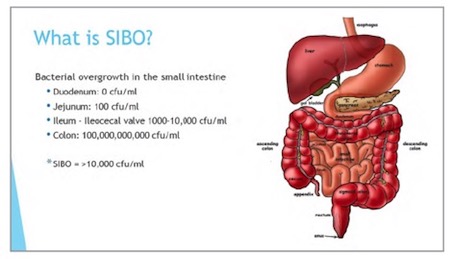
I attended Dr. Nirala Jacobi’s presentation on at MINDD 2017 practitioner training and here are some highlights from her presentation on SIBO (small intestine bacterial overgrowth) which is the leading cause of IBS and a major cause of leaky gut syndrome. It is the presence of an overgrowth of beneficial bacteria in the small intestine i.e. good bacteria in the wrong place.

She shares that:

Bacterial overgrowth has also been implicated in a host of other conditions such as developmental delay, fibromyalgia, interstitial cystitis, malabsorption syndromes and many more [such as anxiety and depression and even insomnia]. SIBO requires a methodical approach to testing and treatment in order to successfully re-establish a healthy digestive tract.

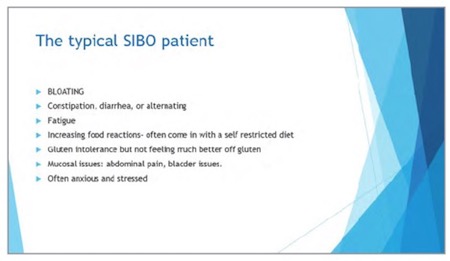
And some of the typical symptoms SIBO patients experience:

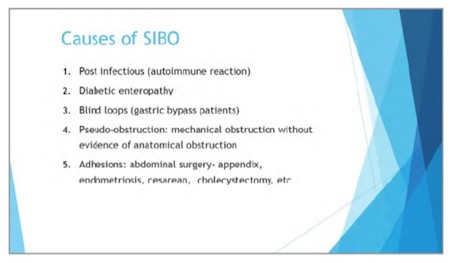
I was not familiar with all these prior surgical procedures being a possible cause but this makes sense. I’ve added gastric bypass, appendix removal, endometrial surgeries, C-section and gallbladder removal (cholecystectomy) to my SIBO questionnaire.

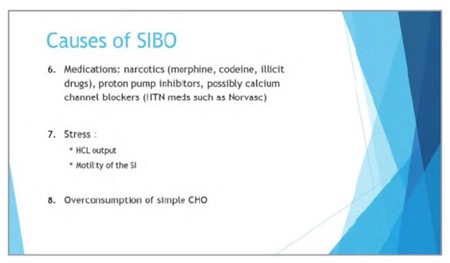
Other possible causes include certain medications, stress and anxiety (which affects how much HCl or stomach acid you produce and gut motility) and overconsumption of simple carbohydrates.

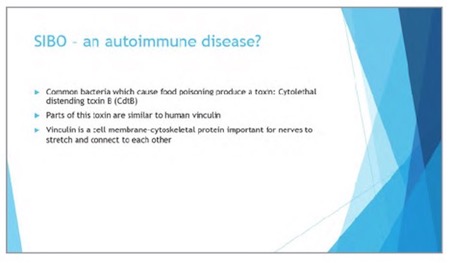
Going back to the #1 possible cause i.e. post-infectious due to a stomach bug, the gastroenteritis and autoimmunity connection was presented. Bacteria which cause food poisoning produce a toxin called CdtB which is similar to human vinculin which is important for nerve function.

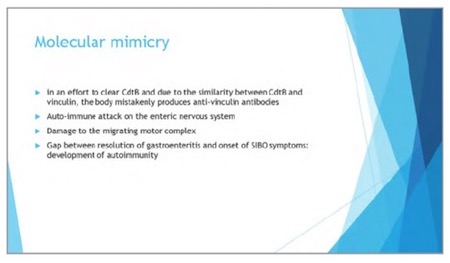
Due to the similarity between CdtB and vinculin, the body produces anti-vinculin and anti- CdtB antibodies which lead to an auto-immune attack on the enteric nervous system. This causes damage to the MMC/migrating motor complex and contributes to SIBO.

A press release from Cedars-Sinai and Dr. Pimental: Definitive Tests for Irritable Bowel Syndrome Developed at Cedars-Sinai announce the multicenter study validating the accuracy of the new blood tests:

Dr. Pimentel and fellow researchers studied nearly 3,000 people, comparing IBS patients to those diagnosed with inflammatory bowel disease, celiac disease and those with no GI disease. The blood tests identified the two antibodies associated with IBS – anti-Cdtb and anti-vinculin – with greater than 90 percent certainty.

The tests are marketed under the name IBSchek™ and are produced by Commonwealth Laboratories Inc., in Salem, Massachusetts.

This paper reports this autoimmunity connection: Autoimmunity Links Vinculin to the Pathophysiology of Chronic Functional Bowel Changes Following Campylobacter jejuni Infection in a Rat Model and this paper discusses the two tests: Development and Validation of a Biomarker for Diarrhea-Predominant Irritable Bowel Syndrome in Human Subjects

These blood tests are available in the USA but are not yet available in Australia where Dr. Nirala Jacobi now lives and practices.

Dr. Nirala Jacobi, BHSc, ND (USA) graduated from Bastyr University in 1998 with a doctorate in naturopathic medicine. She practiced as a primary care physician in Montana for 7 years before arriving in Australia. Nirala is considered one of Australia’s leading experts in the natural treatment of small intestine bacterial overgrowth (SIBO), a common cause of IBS. In 2014, she designed the SIBO Bi-Phasic Diet to aid practitioners in simplifying their treatment approach with their SIBO patients. She is the Chief Medical Officer and Director of SIBOtest.com, an online breath testing service and educational portal for practitioners. She frequently lectures to national and international professional audiences on the topic of SIBO and founded the first Australian SIBO Summit in 2016 Nirala has had a busy private practice in Brisbane since 2008 and recently moved her clinic to Wilsons Creek in the beautiful northern rivers region of NSW, Australia.

For SIBO breath testing services in all countries check out the testing page on Dr. Siebecker’s SIBOinfo site

Keep in mind that most SIBO studies are on IBS. According to Dr. Siebecker

Drs. Pimentel and Lin originated the theory that SIBO is the underlying cause of IBS.  As with all theories, there is debate and controversy about this idea, with many who agree and many who do not.  One thing is certainly clear, the symptoms of SIBO overlap with those of IBS and a large percentage of IBS sufferers test positive for SIBO.  One study by Dr Pimentel and team, showed SIBO in up to 84% of IBS patients, though the percentage has been lower in other studies, with an average of 60%.

Here is the most recent study showing the mental health effects of IBS (which we could presumably extrapolate to SIBO and confirm with the testing discussed above) – Neuroendocrine Dysregulation in Irritable Bowel Syndrome Patients: A Pilot Study

Irritable bowel syndrome (IBS) is a multifactorial disorder, involving dysregulation of brain-gut axis

Prevalent psychological symptoms in IBS were maladjustment (60%), trait (40%) and state (17%) anxiety, obsessive compulsive-disorders (23%), and depressive symptoms (23%).

If you are not getting anxiety symptom resolution with dietary changes, the use of targeted individual amino acid, adrenal support, addressing dysbiosis and other biochemical approaches it’s time to work with a practitioner to rule out or address SIBO as a causal factor.

Filed Under: Events, SIBO Tagged With: mindd, Nirala Jacobi, sbi, SIBO

  • « Go to Previous Page
  • Page 1
  • Page 2
  • Page 3
  • Go to Next Page »

Primary Sidebar

NEW! GABA QuickStart Homestudy (with special intro pricing)

gaba quickstart homestudy

Free Report

9 Great Questions Women Ask about Food, Mood and their Health

You'll also receive a complimentary subscription to my ezine "Food, Mood and Gal Stuff"


Connect with me

Popular Posts

  • Amino Acids Mood Questionnaire from The Antianxiety Food Solution
  • The Antianxiety Food Solution Amino Acid and Pyroluria Supplements
  • Pyroluria Questionnaire from The Antianxiety Food Solution
  • Collagen and gelatin lower serotonin: does this increase your anxiety and depression?
  • Tryptophan for the worry-in-your-head and ruminating type of anxiety
  • GABA for the physical-tension and stiff-and-tense-muscles type of anxiety
  • The Antianxiety Food Solution by Trudy Scott
  • Seriphos Original Formula is back: the best product for anxiety and insomnia caused by high cortisol
  • Am I an anxious introvert because of low zinc and vitamin B6? My response to Huffington Post blog
  • Vagus nerve rehab with GABA, breathing, humming, gargling and key nutrients

Recent Posts

  • What do I use instead of Seriphos to help lower high cortisol that is affecting my sleep and making me anxious at night?
  • BeSerene™ GABA/theanine cream eases severe muscle tension in her neck/shoulders, prevents her bad headaches and quells her anxiety
  • How the correct approach, dose and sublingual use of GABA can be calming and not cause a flushed and itchy face and neck
  • The amino acid glutamine improves low mood by addressing gut health, and it has calming effects too
  • Flight anxiety with heightened breath, physical tension and also fearing the worst (the role of low GABA and low serotonin)

Categories

  • 5-HTP
  • AB575
  • Addiction
  • ADHD
  • Adrenals
  • Alcohol
  • Allergies
  • Alzheimer's disease
  • Amino Acids
  • Anger
  • Antianxiety
  • Antianxiety Food Solution
  • Antidepressants
  • Anxiety
  • Anxiety and panic
  • Autism
  • Autoimmunity
  • benzodiazapines
  • Bipolar disorder
  • Books
  • Caffeine
  • Cancer
  • Candida
  • Children/Teens
  • Collagen
  • Cooking equipment
  • Coronavirus/COVID-19
  • Cravings
  • Depression
  • Detoxification
  • Diabetes
  • Diet
  • DPA/DLPA
  • Drugs
  • EFT/Tapping
  • EMF
  • EMFs
  • Emotional Eating
  • Endorphins
  • Environment
  • Essential oils
  • Events
  • Exercise
  • Fear
  • Fear of public speaking
  • Fertility and Pregnancy
  • Fish
  • Food
  • Food and mood
  • Functional neurology
  • GABA
  • Gene polymorphisms
  • General Health
  • Giving
  • Giving back
  • Glutamine
  • Gluten
  • GMOs
  • Gratitude
  • Gut health
  • Heart health/hypertension
  • Histamine
  • Hormone
  • Hyperparathyroidism
  • Hypoglycemia
  • Immune system
  • Inflammation
  • Insomnia
  • Inspiration
  • Introversion
  • Joy and happiness
  • Ketogenic diet
  • Lithium orotate
  • Looking awesome
  • Lyme disease and co-infections
  • MCAS/histamine
  • Medication
  • Men's health
  • Mental health
  • Mercury
  • Migraine
  • Mold
  • Movie
  • MTHFR
  • Multiple sclerosis
  • Music
  • NANP
  • Nature
  • Nutritional Psychiatry
  • OCD
  • Osteoporosis
  • Oxalates
  • Oxytocin
  • Pain
  • Paleo
  • Parasites
  • Parkinson’s disease
  • PCOS
  • People
  • PMS
  • Postpartum
  • PTSD/Trauma
  • Pyroluria
  • Questionnaires
  • Real whole food
  • Recipes
  • Research
  • Schizophrenia
  • serotonin
  • SIBO
  • Sleep
  • Special diets
  • Sports nutrition
  • Stress
  • Sugar addiction
  • Sugar and mood
  • Supplements
  • Teens
  • Testimonials
  • Testing
  • The Anxiety Summit
  • The Anxiety Summit 2
  • The Anxiety Summit 3
  • The Anxiety Summit 4
  • The Anxiety Summit 5
  • The Anxiety Summit 6
  • Thyroid
  • Thyroid health
  • Toxins
  • Tryptophan
  • Tyrosine
  • Uncategorized
  • Vegan/vegetarian
  • Women's health
  • Yoga

Archives

  • October 2025
  • September 2025
  • August 2025
  • July 2025
  • June 2025
  • May 2025
  • April 2025
  • March 2025
  • February 2025
  • January 2025
  • November 2024
  • October 2024
  • September 2024
  • August 2024
  • July 2024
  • June 2024
  • May 2024
  • April 2024
  • March 2024
  • February 2024
  • January 2024
  • December 2023
  • November 2023
  • October 2023
  • September 2023
  • August 2023
  • July 2023
  • June 2023
  • May 2023
  • April 2023
  • March 2023
  • February 2023
  • January 2023
  • December 2022
  • November 2022
  • October 2022
  • September 2022
  • August 2022
  • July 2022
  • June 2022
  • May 2022
  • April 2022
  • March 2022
  • February 2022
  • January 2022
  • December 2021
  • November 2021
  • October 2021
  • September 2021
  • August 2021
  • July 2021
  • June 2021
  • May 2021
  • April 2021
  • March 2021
  • February 2021
  • January 2021
  • December 2020
  • November 2020
  • October 2020
  • September 2020
  • August 2020
  • July 2020
  • June 2020
  • May 2020
  • April 2020
  • March 2020
  • February 2020
  • January 2020
  • December 2019
  • November 2019
  • October 2019
  • September 2019
  • August 2019
  • July 2019
  • June 2019
  • May 2019
  • April 2019
  • March 2019
  • February 2019
  • January 2019
  • December 2018
  • November 2018
  • October 2018
  • September 2018
  • August 2018
  • July 2018
  • June 2018
  • May 2018
  • April 2018
  • March 2018
  • February 2018
  • January 2018
  • December 2017
  • November 2017
  • October 2017
  • September 2017
  • August 2017
  • July 2017
  • June 2017
  • May 2017
  • April 2017
  • March 2017
  • February 2017
  • January 2017
  • December 2016
  • November 2016
  • October 2016
  • September 2016
  • August 2016
  • July 2016
  • June 2016
  • May 2016
  • April 2016
  • March 2016
  • February 2016
  • January 2016
  • December 2015
  • November 2015
  • October 2015
  • September 2015
  • August 2015
  • July 2015
  • June 2015
  • May 2015
  • April 2015
  • March 2015
  • February 2015
  • January 2015
  • December 2014
  • November 2014
  • October 2014
  • September 2014
  • August 2014
  • July 2014
  • June 2014
  • May 2014
  • April 2014
  • March 2014
  • February 2014
  • January 2014
  • December 2013
  • November 2013
  • October 2013
  • September 2013
  • August 2013
  • July 2013
  • June 2013
  • May 2013
  • April 2013
  • March 2013
  • February 2013
  • January 2013
  • December 2012
  • November 2012
  • October 2012
  • August 2012
  • July 2012
  • June 2012
  • May 2012
  • April 2012
  • March 2012
  • February 2012
  • January 2012
  • December 2011
  • November 2011
  • October 2011
  • September 2011
  • August 2011
  • July 2011
  • June 2011
  • May 2011
  • April 2011
  • March 2011
  • February 2011
  • January 2011
  • December 2010
  • October 2010
  • September 2010
  • July 2010
  • May 2010
  • April 2010
  • March 2010
  • February 2010
  • January 2010
  • November 2009

Share the knowledge!

The above statements have not been evaluated by the Food and Drug Administration. Products listed in this website are not intended to diagnose, treat, cure or prevent any disease.

The information provided on this site is for informational and educational purposes only and is not intended as a substitute for advice from your physician or other health care professional. You should consult with a healthcare professional before starting or modifying any diet, exercise, or supplementation program, before taking or stopping any medication, or if you have or suspect you may have a health problem.


Copyright © 2026 Trudy Scott. All Rights Reserved. | Privacy | Terms and Conditions | Refund Policy | Medical Disclaimer

Free Report

9 Great Questions Women Ask about Food, Mood and their Health

You’ll also receive a complimentary subscription to my ezine “Food, Mood and Gal Stuff”