• Skip to primary navigation
  • Skip to main content
  • Skip to primary sidebar

everywomanover29 blog

Food, Mood and Women's Health – Be your healthiest, look and feel great!

  • Blog
  • About
  • Services
  • Store
  • Resources
  • Testimonials
  • The Book
  • Contact
  • Search this site

schizophrenia

“A catatonic woman awakened after 20 years. Her story may change psychiatry.” (Her schizophrenia was an untreated autoimmune disease)

June 16, 2023 By Trudy Scott 8 Comments

catatonic woman

Today I’m sharing some highlights from a recent eye-opening article in the Washington Post: A catatonic woman awakened after 20 years. Her story may change psychiatry

Before she became a patient, April had been an outgoing, straight-A student majoring in accounting at the University of Maryland Eastern Shore. But after a traumatic event when she was 21, April suddenly developed psychosis and became lost in a constant state of visual and auditory hallucinations. The former high school valedictorian could no longer communicate, bathe or take care of herself.

April was diagnosed with a severe form of schizophrenia

April was hospitalized, medicated and eventually institutionalized. It got to the point where she no longer recognized her family and she became catatonic, “unmoving, unblinking and unknowing of where or who she was.”

Twenty years after April’s original diagnosis it was discovered that she has an autoimmune condition. Dr. Sander Markx is director of precision psychiatry at Columbia University and I have so much admiration for his dedication to the field and the fact that he facilitated this testing and discovery so long after meeting April, when he was a student:

Markx and his colleagues discovered that although April’s illness was clinically indistinguishable from schizophrenia, she also had lupus, an underlying and treatable autoimmune condition that was attacking her brain.

After months of targeted treatments – and more than two decades trapped in her mind – April woke up.

April’s transformation is truly heartwarming and it’s wonderful that the doctors plan to do similar testing and offer similar treatments for others living with schizophrenia who are in mental health institutions in New York State.

Researchers in other countries are making similar connections and it’s really exciting to read that they are recognizing that “underlying autoimmune and inflammatory processes may be more common in patients with a variety of psychiatric syndromes than previously believed.”

We can and should be doing better when looking for root causes

I believe we can and should be doing better when it comes to looking for root causes. Many individuals may have an autoimmune/inflammatory condition and many may have other root cause/s. If I was on an advisory panel these would be my recommendations:

  • Use this powerful outcome to really turn psychiatry on its head and screen for lupus and other autoimmune conditions in every single person with schizophrenia. Dr. Markx “believes highly sensitive and inexpensive blood tests to detect different antibodies should become part of the standard screening protocol for psychosis.”
  • Do the same for every single person with mental illnesses and illnesses with a behavioral aspect – including anxiety, depression, bipolar, OCD/obsessive compulsive disorder. ADD/ADHD, autism/ASD (autism spectrum disorders), developmental disorders and neurological disorders.
  • Go beyond autoimmune screening and do a comprehensive functional medicine and nutritional deficiency assessment for every single person, including low serotonin, low GABA, low vitamin D, low zinc, low vitamin B6, hormone imbalances (sex hormones, adrenals, thyroid health), gut health, liver health etc. This includes testing for infections (such as Lyme and strep), looking at toxin exposure (phthalates, mold, heavy metals) and medication side effects.

If you’re new to the concept of root causes and functional medicine/nutritional testing these two blogs will be helpful. They are specific to anxiety because I work with anxious individuals but much of it can also be applied to other mental health and even physical health conditions (like rheumatoid arthritis and say multiple sclerosis):

  • Nutritional testing for figuring out the root cause/s of your anxiety
  • 60+ Nutritional & Biochemical Causes of Anxiety

Functional medicine and nutrition for maintaining symptom resolution in the long term

As you read in the article, April received “short, but powerful “pulses” of intravenous steroids for five days, plus a single dose of cyclophosphamide, a heavy-duty immunosuppressive drug typically used in chemotherapy and borrowed from the field of oncology. She was also treated with rituximab, a drug initially developed for lymphoma.”

Incredibly, she recovered completely and was eventually discharged from the psychiatric hospital and has been living in a rehab center for 3 years. Unfortunately “she has recently regressed because she was not receiving adequate maintenance care.”

I see the next step for April and others like her, is maintaining resolution of symptoms in the long term. This is where functional medicine and nutrition shines.

The ISNPR shared this about Nutritional psychiatry in 2015 in a letter published in World Psychiatry, the official journal of the World Psychiatric Association:

In addition to dietary modification, we recognize that nutrient-based (nutraceutical) prescription has the potential to assist in the management of mental disorders at the individual and population level.

In other words, diet and nutrient-based approaches need to be included for mental health treatment and for prevention. One of many examples is the ketogenic diet which has been shown to reduce auditory hallucinations and delusions in those with schizophrenia. Another is the low carb diet helping to reduce bizarre intrusive thoughts. And the SMILES trial was the first randomized controlled trial to show that dietary improvement can actually treat depression.

Specific nutrients can be very powerful too. One example is a case where a woman in my community experienced a drastic reduction in intrusive thoughts, anxiety and fears (and better sleep) with GABA, tryptophan, 5-HTP and the pyroluria protocol (zinc, vitamin B6 and evening primrose oil). More on the blog. Intrusive thoughts can be alleviated with a similar combination of nutrients and by addressing hormonal imbalances too.

These blogs/research illustrate a few of the many root causes of schizophrenia and psychosis other than lupus:

  • Case Study: Bartonella and Sudden-Onset Adolescent Schizophrenia
  • Toxoplasma gondii: schizophrenia, bipolar disorder, OCD and unresolved anxiety?
  • Gluten sensitivity and relationship to psychiatric symptoms in people with schizophrenia

  • Late-Onset Psychotic Symptoms Associated With Vitamin B12 Deficiency in a Patient With Celiac Disease

When it comes to autoimmunity in general I refer you to the work of Dr. Tom O’Bryan, Dr. Izabella Wentz, Dr. Terry Wahls, Dr. Amy Myers and others who teach about using functional medicine and diet for reversing a number of different autoimmune conditions.

The above approaches can all be explored and used when individuals are initially diagnosed too. But keep in mind that there is no one size fits all and it’s a matter of finding the root causes for each person.

We are moving in the right direction and there is hope but…

We are moving in this direction, awareness is growing and there is hope. But I know we can get there sooner.

What Dr. Markx and his colleagues have discovered and shared with the world will hopefully help us get there much more quickly.

(You can read the whole story here and a similar transformation experienced by Devine Cruz.)

I’m thrilled for April and Devine and their families, and appreciate them sharing these stories with the world. Let’s hope their stories do change psychiatry!

Resources if you are new to using amino acids as supplements

If you are new to using amino acids as supplements, here is the Amino Acids Mood Questionnaire from The Antianxiety Food Solution (you can see all the symptoms of neurotransmitter imbalances, including low GABA, low serotonin and low endorphins).

If you suspect low levels of any of the neurotransmitters and do not yet have my book, The Antianxiety Food Solution – How the Foods You Eat Can Help You Calm Your Anxious Mind, Improve Your Mood, and End Cravings, I highly recommend getting it and reading it before jumping in and using amino acids on your own so you are knowledgeable. And be sure to share it with the practitioner/health team you or your loved one is working with.

There is an entire chapter on the amino acids and they are discussed throughout the book in the sections on gut health, gluten, blood sugar control, sugar cravings, anxiety and mood issues.

The book doesn’t include product names (per the publisher’s request) so this blog, The Antianxiety Food Solution Amino Acid and Pyroluria Supplements, lists the amino acids that I use with my individual clients and those in my group programs. You can find them all in my online store.

If, after reading this blog and my book, you don’t feel comfortable figuring things out on your own (i.e. doing the symptoms questionnaire and respective amino acids trials), a good place to get help is the GABA QuickStart Program (if you have low GABA symptoms too). This is a paid online/virtual group program where you get my guidance and community support.

If you are a practitioner, join us in The Balancing Neurotransmitters: the Fundamentals program. This is also a paid online/virtual program with an opportunity to interact with me and other practitioners who are also using the amino acids.

Does this heartwarming story give you hope for psychiatry?

What do you feel we should be doing to advance nutritional psychiatry even more quickly?

Can you or a family member relate to this and what did you discover in terms of testing and nutritional support/functional medicine?

Feel free to post your feedback and questions here in the comments.

Filed Under: Anxiety, Autism, Autoimmunity, Depression, Nutritional Psychiatry, Schizophrenia Tagged With: amino acids, auditory hallucinations, autoimmune disease, brain, catatonic, functional medicine, GABA, intrusive thoughts, lupus, nutrition, nutritional psychiatry, psychiatry, psychosis, root causes, schizophrenia, the GABA Quickstart online program; and Balancing Neurotransmitters: the Fundamentals program for practitioners, tryptophan, visual hallucinations, vitamin B6, zinc

I was called a vulture for preying on sensitive people in a social anxiety group – because I mentioned pyroluria and a nutritional solution

April 30, 2021 By Trudy Scott 74 Comments

I was called a vulture

Earlier this week I was called a vulture for preying on sensitive people in a social anxiety group because I mentioned pyroluria and a nutritional solution in response to someone asking for help. I shared much of this on Facebook and the response has been huge – supportive, understanding and encouraging, and also something many of you have also faced and can relate to. I’m publishing it as a blog post too because I feel there are many takeaways and lessons we can all learn from this.

The person asking for help posted this:

I’m seriously stuck. I’ve been battling social anxiety disorder my whole life. I feel like my social skills have gotten worse during 2020-2021. Is anyone the same way? And If possible can anyone give me some good advice?

I posted this in response to the request for advice:

Look into pyroluria and the nutrient protocol – life-changing for me (and my clients – disclaimer: I’m a nutritionist)

And this is the response from someone else in the group:

So not medicine. I think as a nutritionist you shouldn’t be advising people to avoid actual medical help. Foods can’t help but most depression and anxiety isn’t stress based. It’s a biological chemical imbalance. Food won’t help it in the long run. As someone who’s had bipolar, depression, anxiety, social anxiety, insomnia and possible schizo. I have known people to get seriously ill from people that couldn’t manage to be actual doctors. I’ve lost a friend due to them being advised to stop meds and take some herb. Please unless you are actually here because you have social anxiety and such. Could you please leave and stop acting like a vulture over the sensitive people.

I get that it can be tough to grasp that nutrition and nutrients could be a solution for social anxiety but even with a response like this I will continue to share my message.

This was my response:

Correct, not medicine … nutrition. I had social anxiety and panic attacks and diet (gluten-free, caffeine-free, sugar-free etc) and nutrients like zinc, vitamin B6, GABA, tryptophan and more solved my anxiety. I’m passionate about creating awareness because I’ve seen “nutritional psychiatry” work for 100s of thousands of folks.

Please be open-minded … and google “nutritional psychiatry”, “gut-brain”, “pyroluria social anxiety” and “gluten schizophrenia” … you will be pleasantly surprised. It’s going to take some time for all this to be part of mainstream psychiatry but it’s in the research and awareness and acceptance is growing.

I’m sorry about your loss but I would never advise anyone to stop taking their meds. For folks who want to explore this approach we always work in conjunction with their prescribing doctor.

It’s also not very nice calling someone a vulture but I understand that the idea that food and nutrients could be so powerful when it comes to anxiety and mental health can be tough when you first hear about it.

Why I’m sharing this – it’s not for sympathy or to call this person out

I’m not sharing this here for sympathy.

I’m not sharing this to call out this person who called me a vulture or to judge or shame them.

I’m sharing it to illustrate the challenge we have with getting this message out.

I’m sharing it in case you’ve tried to tell a loved one or friend or colleague about the power of anxiety nutrition solutions and have had push-back.

I’m sharing here so we remember to have empathy for someone who doesn’t yet know or understand what we have learned and experienced (no matter what they say or how they say it or even if they have even been preyed on in the past so a comment like this may be justified in their mind).

I’m sharing here because I truly believe in the power of planting seeds of knowledge.

I’m sharing here because I believe everyone deserves to feel their absolute best every single day.

I’m sharing here because everyone struggling with anxiety and social anxiety deserves to know about the growing field of “nutritional psychiatry” in mainstream medicine.

This is why I’m sharing here and why I’ll continue to share nutritional solutions in groups where folks are asking for help for social anxiety, anxiety and panic attacks (and other conditions where pyroluria and neurotransmitter imbalances are common, and there is a role for diet and nutrients).

Why the disconnect and the possible role of neurotransmitter imbalances

I’m hoping all this can help you as you reach out and offer support to someone in an online group. And also help you as you share what you have learned or experienced personally when it comes to nutritional solutions for social anxiety/anxiety – with loved ones, community members, friends and colleagues who are sometimes less than receptive.

I suspect one big disconnect is comprehending that lifestyle/diet/nutrients could help with anxiety and mental health challenges. Heart disease, diabetes, high blood pressure and cancer are more recognized as being lifestyle conditions even dietary and lifestyle changes are not always implemented.

I also often hear this: “my anxiety or social anxiety or panic attacks are so severe (or so complex) there is no way nutrients and nutrition could help! I need medications for sure.”

If someone has nutritional deficiencies or neurotransmitter imbalances, that may also be playing a role in how they respond. For example, low serotonin can make you feel hopeless, fearful, negative, overwhelmed and even angry. This is in addition to feeling anxious and not sleeping well, so you’re more likely to be cranky and irritable.

Links to resources for you to share

Here are links if you need some resources to share or in case you’re new to some of this:

  • Nutritional medicine in modern psychiatry: position statement by ISNPR (published in 2015)
  • SMILES diet depression trial: reduced depression and anxiety – the first randomized controlled diet depression study and ONE THIRD of the dietary intervention group saw improvements in their depression symptoms. This was just diet alone and switching from processed/junk food to real food with no specific dietary restrictions!
  • Paleo and grain free diets: anxiety and depression success stories
  • Nutritional Psychiatry: How Diet Affects Brain through Gut Microbiota
  • Anxiety and digestion: the microbiome, stomach acid, bile and the vagus nerve
  • A gut feeling – the gut microbiome in health, diseases and behavior
  • Berries: cognition, PTSD, inflammation, microbiome, anxiety and depression
  • Pyroluria prevalence and associated conditions
  • Randomized controlled trial of a gluten-free diet in patients with schizophrenia positive for antigliadin antibodies (AGA IgG): a pilot feasibility study
  • Ketogenic diet: reductions in auditory hallucinations and delusions, better mood and energy, and weight loss

Tamara’s wonderful feedback about gluten and vitamin D

This was Tamara Underwood’s response to my vulture post and her powerful feedback about gluten and vitamin D:

That was a thoughtful response Trudy. I think when people have complex health issues, they think the solution needs to be complex. I had no idea how powerful nutrients could be until it solved my own health issues. Often, it is returning to basics and using foundational support in a targeted way.

I’ve had chronic migraines (3-4 a week) since I was a toddler. Tried every medication, label and off label, to manage them for 40+ years. Removing gluten was life changing. I’ve been migraine free for 8 years now.

Also, about 10yrs ago, I experienced a very dark, unexplained depression for nearly a year. Of course drugs and therapy are the first line treatments. Not sure why I was opposed to starting there but thankful. My Vit D was 4.1. I felt so radically better within a week of starting repletion that I went back to school for my MS in Clinical Nutrition.

I think about how different life might be now, 10 yrs later, had I not pushed for testing. Psych meds wouldn’t have improved my Vit D so I would have been prescribed all the variations and combos and told how complex my case was when it didn’t help. [One study supporting an association between low vitamin D and depression]

There are just so many toxicities, deficiencies, and imbalances worth exploring if your mental wellness suffers. I’m passionate about this subject and a big fan of yours Trudy.

I’m thrilled that going gluten free and addressing low vitamin D solved her migraines and depression. It’s so wonderful to hear Tamara was inspired to go back to school to study nutrition. She now does this work helping professionals (firefighters, EMTS etc.) who shoulder a greater burden of stress and trauma. Check out Underwood Functional Wellness. I appreciate her for allowing me to share here.

I plan to update this blog with more of the wonderful insights from my community on Facebook but folks are still actively engaging and I need to get permission to share here. Stay tuned for more.  You can also join the discussion on the Facebook post here.

Until then, feel free to post your insights, thoughts, experiences (and questions if you have them) in the comments below.

Let us know how nutritional approaches have helped your anxiety and/or other health issues?

What made you open to this approach and were you initially skeptical?

And let us know if you continue to share your success and plant seeds even when you get negative feedback – and why? And do you have resources you like to share?

Filed Under: Anxiety, Nutritional Psychiatry, Pyroluria Tagged With: anxiety, GABA, gluten, gluten schizophrenia, gut-brain, mainstream, nutrients, nutrition, nutritional psychiatry, panic attacks, psychiatry, pyroluria, pyroluria social anxiety, schizophrenia, social anxiety, Solutions, tryptophan, vulture

Case Study: Bartonella and Sudden-Onset Adolescent Schizophrenia

March 22, 2019 By Trudy Scott 26 Comments

According to a press release from North Carolina State University, researchers share a case study describing an adolescent human patient diagnosed with rapid onset schizophrenia who was found instead to have a Bartonella henselae infection. This study adds to the growing body of evidence that Bartonella infection can mimic a host of chronic illnesses, including mental illness, and could open up new avenues of research into bacterial or microbial causes of mental disorders.

Bartonella is a bacteria most commonly associated with cat scratch disease, which until recently was thought to be a short-lived (or self-limiting) infection. There are at least 30 different known species of Bartonella, and 13 of those have been found to infect human beings. The ability to find and diagnose Bartonella infection in animals and humans – it is notorious for “hiding” in the linings of blood vessels – has led to its identification in patients with a host of chronic illnesses ranging from migraines to seizures to rheumatoid illnesses that the medical community previously hadn’t been able to attribute to a specific cause.

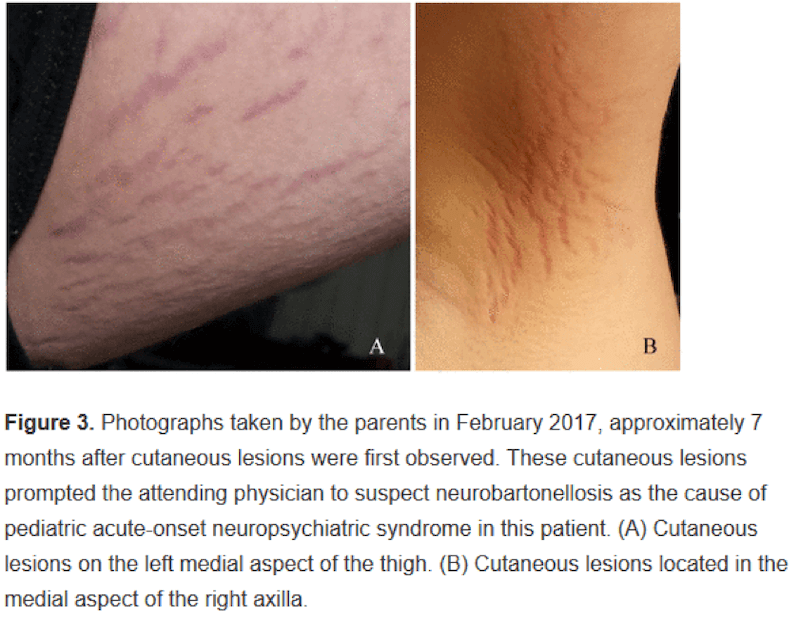
In the case study published in the Journal of Central Nervous Disease, an adolescent with sudden onset psychotic behavior – diagnosed as schizophrenia – was seen and treated by numerous specialists and therapists over an 18-month period. All conventional treatments for both psychosis and autoimmune disorders failed. Finally, a physician recognized lesions on the patient’s skin that are often associated with Bartonella, and the patient tested positive for the infection. Combination antimicrobial chemotherapy led to full recovery.

According to the case report above, Bartonella henselae Bloodstream Infection in a Boy With Pediatric Acute-Onset Neuropsychiatric Syndrome, these are some of the many symptoms he experienced over the 18-month period:

  • He reported feeling overwhelmed, confused, depressed, and agitated.
  • He said that he was an “evil, damned son of the devil” and wanted to kill himself because he was afraid of his new-onset homicidal thoughts toward those he cared about
  • Weeks after initial hospitalization in October, he became more dysfunctional; school was not possible; he developed progressively severe psychiatric symptoms including obsessional intrusive thoughts, phobias, irrational fears, emotional lability, unpredictable rage outbursts, and increased psychotic thinking. He believed that he had special powers and that a family cat wanted to kill him.
  • By December 2015, his illness had progressed in severity, causing his mother to quit her job to provide full-time supervision. In addition to persecutory delusions related to his pets, he developed auditory, visual, and tactile hallucinations and began refusing to leave the house.
  • In January 2016, following discharge after a week-long hospitalization, he developed non-specific somatic symptoms, including excessive fatigue, daily headaches, chest pains, shortness of breath (possible panic anxiety), and urinary frequency

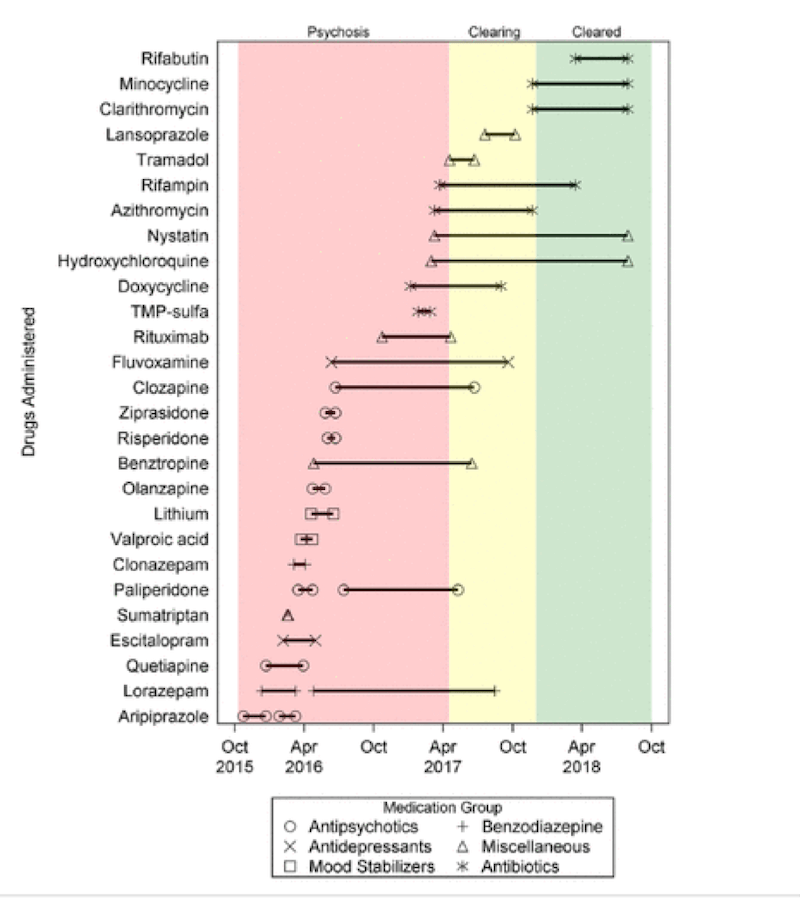
I suspect some of his later symptoms were related to side-effects from many of the medications he was prescribed over the course of his treatment. Some symptoms may also be attributed to withdrawal from some of these medications. One example mentioned in the case study was “abrupt withdrawal of clozapine and tramadol” where “he experienced severe anorexia, nausea, and vomiting, which resulted in hospitalization and a 20.5-kg weight loss over 40 days.” It’s well- documented that withdrawal signs and symptoms of antipsychotic medications such as clozapine “may include insomnia, nausea, vomiting, anxiety, and agitation.”

This figure lists the medications he was prescribed during his treatment. The pink area was during his psychotic 18-month period and the yellow area was during his antimicrobial treatment of the Bartonella.

Figure 2. Drug administration timeline for the boy, reprinted from the study

The skin lesions or “stretch mark-like” lesions on his thigh (A) and armpit (B) are tell-tale signs of a Bartonella bacterial infection or neurobartonellosis. Here are photographs taken by his parents.

Also from the study

A successful outcome for this young boy came about as a result of antimicrobial treatment in the way of antibiotics and antifungals. His skin lesions healed, his psychosis and other symptoms resolved, he was able to quit his psychiatric medications and go back to being a typical young boy. How wonderful for this young boy!  And this gives me so much hope for others who may be in a similar situation and looking for solutions.

Other than the hope I felt, these are my other thoughts that came to my mind as I read this case study:

  • How many people are being prescribed psychiatric medications when they actually have an infection or physiological condition? The authors state: “Beyond suggesting that Bartonella infection itself could contribute to progressive neuropsychiatric disorders like schizophrenia, it raises the question of how often infection may be involved with psychiatric disorders generally.”
  • How can a young boy of this age be prescribed this many psychiatric medications over an 18-month period? I’m sure his doctors were doing their best but what is it going to take for doctors to look for infectious (and/or physiological or biological or nutritional or environmental) causes for psychiatric symptoms as the first approach or certainly at the same time in a situation like this where psychosis was a factor?
  • What will it take for mainstream practitioners to get up to speed with this epidemic of Lyme disease? And when will testing for Lyme disease and co-infections be used by all doctors and not just Lyme-literate doctors and functional medicine doctors like Dr. Darin Ingels. the author of “The Lyme Solution.” (Here is my review of his excellent book.) It is worth noting that Dr. Ingels uses very successful treatments that are purely herbal, dietary and immune-supportive, and don’t require antibiotics.

We already know there is a huge psychiatric connection with Lyme disease and co-infections: anxiety, depression, panic attacks, and OCD too. This case adds to the evidence. Even though neuropsychiatric Lyme disease is well-recognized in the world of functional medicine, keep in mind that Lyme disease bacteria such as Borrelia and co-infections such as Bartonella are only one of many possible trigger/root cause of symptoms like this young boy experienced.

Other infectious causes of psychiatric conditions include chronic strep (in the case of PANDAS/PANS) and toxoplasma gondii.

Other physiological root causes of psychiatric conditions like schizophrenia, anxiety, bipolar disorder and depression could include a thyroid condition, heavy metal toxicity from say lead or mercury, mycotoxins, and even gluten.

We need to be shouting case studies like this from the rooftops so more doctors, more psychologists, more functional medicine practitioners, and more parents are aware and start to look for infectious/physiological/biological/nutritional/environmental root causes.

We appreciate those involved in publishing this case and the family for giving permission.  Hopefully, case studies like these will drive future research and treatment approaches.

What do you think and what came to your mind when you read this case study?

Feel free to post your questions here too.

Filed Under: Children/Teens Tagged With: anxiety, bartonella, bipolar disorder and depression, borrelia, lyme, neurobartonellosis, psychiatric, psychosis, psychotic, schizophrenia

Toxoplasma gondii: schizophrenia, bipolar disorder, OCD and unresolved anxiety?

August 14, 2017 By Trudy Scott 17 Comments

Toxoplasma gondii is a microscopic parasite that infects cats and can be found in the soil – research shows it may be a factor in schizophrenia, bipolar disorder and OCD in susceptible individuals. Could toxoplasma gondii could be one of the root causes of unresolved anxiety? I believe so and feel it’s under-rated.

This is the one of the parasitic infections I cover in an interview I did on The Parasite Summit.

Here are a few snippets from my interview:

A single-celled parasite called Toxoplasma gondii causes a disease known as toxoplasmosis.

Toxoplasma gondii is a microscopic parasite that infects cats and can be found in the soil. The infection can be acquired by ingesting contaminated food or water, by handling contaminated cat litter, or by transmission from mother-to-child.

According to the CDC – as of Mar 1, 2017 – in the United States it is estimated that 11% of the population 6 years and older have been infected with Toxoplasma. In various places throughout the world, it has been shown that up to 95% of some populations have been infected with Toxoplasma.

I love cats and have always been a cat person and pets are wonderful companions helping many of us humans recovering from PTSD and trauma – but we always need to dig deeper:

  • some individuals don’t respond as well to dietary changes, brain chemical balancing and addressing other biochemical/nutritional factors
  • I’m always looking for root possible causes. I’ve identified 70+ causes of anxiety and one of them is parasites
  • any parasite could be a factor – it causes stress and inflammation in the body, and we may see high cortisol leading to increased anxiety, insomnia and inflammation
  • could toxoplasma gondii could be one of the root causes of unresolved anxiety? I believe so and feel it’s under-rated – and believe we’ll be hearing more about it as more research comes out

I discuss this review paper published this year: Is Toxoplasma gondii a Trigger of Bipolar Disorder?

The association between T. gondii and schizophrenia/schizoaffective disorder is one of the most studied links between one pathogen and a psychiatric disorder.

However, growing emerging evidence has also documented an association between latent toxoplasmosis and the risk of [bipolar disorder] and suicidal/aggressive behaviors. T. gondii infection, as previously suggested for schizophrenia, may contribute to the onset and the progressive course of the disease interacting with genetic hereditary predisposing factors, as well as affecting neurotransmitter systems and immune responses, which have recently been shown to be closely linked to the pathogenesis of BD and its medical comorbidities.

The link between this parasite and psychiatric disorders could be also explained by its ability to influence neurotransmitter pathways. Indeed, T. gondii has been shown to increase dopamine levels, as well as to modulate serotonin, gamma-aminobutyric acid (GABA) and glutamate signaling.

With the impacts on neurotransmitters it’s clear how this parasite could directly trigger anxiety, panic attacks, fears, worry and even OCD. I cover this and more (malaria and malaria medications too) in my interview and book.

Parasites may be silently impacting your health and they’re FAR MORE COMMON than you think! Parasites aren’t just found in third-world countries, millions are already infected in industrialized countries and parasites could be silently hampering your health. Fortunately, with awareness and appropriate care, parasites can be prevented and treated, once detected.

If you’re struggling with any of the following, it may be worth looking into parasites:

  • Gastrointestinal: pain/cramps, excess gas, bloating, constipation/diarrhea
  • Infertility and hormone disorders
  • Skin issues: acne, itching, rashes
  • Mental health: depression, bipolar disorder, anxiety, OCD, schizophrenia
  • Challenges with autoimmune disease recovery (Toxoplasma gondii may also be a factor in Hashimoto’s thyroiditis)

Please share feedback and ask questions in the comments below.

Filed Under: Anxiety and panic, Events, Parasites Tagged With: anxiety, bipolar disorder, cats, dopamine, GABA, hashimoto's thyroiditis, OCD, parasite, schizophrenia, serotonin, The Parasite Summit, toxoplasma gondii, Trudy Scott

Mental Health Month: anxiety, nutrition, gluten, GABA, leptin and fluoroquinolones

May 13, 2016 By Trudy Scott 21 Comments

egg-asparagus-salad

Since 1949, Mental Health America and affiliates across the country have led the observance of May is Mental Health Month by reaching millions of people both online and locally. They share this:

This year’s theme for Mental Health Month is – Life with a Mental Illness – and calls on individuals to share what life with a mental illness feels like for them in words, pictures and video by tagging their social media posts with #mentalillnessfeelslike (or submitting to MHA anonymously). Posts are being collected and displayed at mentalhealthamerica.net/feelslike.

I love that they say that spreading the word that mental health issues like anxiety, depression, bipolar and other disorders is something everyone should care about.

I’d love to educate and inspire many of those individuals who have already posted on social media using #mentalillnessfeelslike and have yet to find a solution. There are so many of them and it’s heart-breaking. You can go to mentalhealthamerica.net/feelslike now and see what is being said.

Here are a few examples:

Severe anxiety feels like you are lost in a big city where no one else can speak your language and you are trying to get home.. #mentalillnessfeelslike

#anxietyfeelslike #mentalillnessfeelslike a never ending battle to keep worry from creeping in to your every thought. Trying to be present

Anxiety Attack #mentalillnessfeelslike: I’m swirling in a cyclone while also being constructed by a Boa

#MentalIllnessFeelsLike Worrying About Passing This Semester Causing Your Anxiety To Mess Up More Although Your Anxiety Put You Here

And this profound quote by MentallyAbnormallyNormal (you can find her here on Facebook)

mentally-abnormally-normal-meme

I encourage you to participate if it feels ok to you. I’d especially love you to share how nutrition and nutrients like GABA, tryptophan, zinc, vitamin B12, and/or vitamin D have helped you. You can also respond directly to the posts others have made.

Here are some links to my prior blog posts on some of the many nutritional (and biomedical) approaches so feel free to also share some of this information and use it if you’re still on your healing journey to overcome anxiety, panic attacks, OCD, insomnia and other mood problems:

  • Nutritional medicine in modern psychiatry: position statement by ISNPR
  • Integrative Medicine Approach to Pediatric Obsessive-Compulsive Disorder and Anxiety
  • GABA, the calming amino acid: products and results
  • Tryptophan for anxiety, sleep and mood: in Put Anxiety Behind You
  • Sleep promoting effects of combined GABA and 5-HTP: new research
  • Neuropsychiatric Lyme Disease by Dr. Suruchi Chandra
  • 60+ Nutritional & Biochemical Causes of Anxiety

I’ll be adding to this last blog during season 4 of The Anxiety Summit which runs June 6th – 16th. As I continue to interview experts I learn more about the myriad of possible underlying causes of anxiety:

  • Mike Mutzel will be covering how leptin resistance affects the HPA axis contributing to cortisol imbalances and how we handle stress, inflammation, immune imbalances and obesity – all playing a role in anxiety, schizophrenia and depression, and OCD and even PTSD.
  • Lisa Bloomquist will be covering fluoroquinolone related neuropsychiatric toxicity and how to recover from fluoroquinolone toxicity. Fluoroquinolones are commonly prescribed antibiotics (ciprofoxacin, levofoxacin, and moxifoxacin) and can be a major factor in anxiety and depression. She shares how this toxicity can be as bad for some individuals as benzodiazepine tolerance and withdrawal.

For some of my clients, eliminating anxiety (and other mood disorders) can be as simple as switching to a real whole foods diet, eating to balance blood sugar, quitting sugar/gluten/caffeine and adding some key nutrients like zinc and vitamin D. Many benefit immensely when using targeted individual amino acids like GABA and tryptophan. And some need to dig deeper to find the root cause of the anxiety.

But let’s always keep looking for that root cause or causes – find YOUR root cause/s – and address it/them.

My heart goes out to you if you are still suffering and still seeking a solution (and to everyone tagging themselves with #mentalillnessfeelslike and #anxietyfeelslike).

I say let’s aims to change this to the past tense so instead of #mentalillnessfeelslike let’s get to #mentalillnessfeltlike. Or how about #anxietyfeltlike or even #nutritionfixedmyanxiety ?

It truly is possible with food and nutrients! Do you agree? What has worked for you? Feel free to share in the comments and tag yourself on social media.

And do join us on The Anxiety Summit next month and share this during the Mental Health Month of May.


Filed Under: Events, Mental health Tagged With: anxiety, depression, fluoroquinolone, GABA, Leptin resistance, Mental Health Month, nutrition, OCD, PTSD, schizophrenia, the anxiety summit, tryptophan

The Anxiety Summit – The Parasite/Anxiety Connection

May 9, 2015 By Trudy Scott 46 Comments


Ann Louise Gittleman PhD, CNS, author of The Fat Flush Plan and Guess What Came to Dinner, was interviewed on the Anxiety Summit by host of the Anxiety Summit, Trudy Scott, Food Mood Expert and Nutritionist, author of The Antianxiety Food Solution.

The Parasite/Anxiety Connection

  • How common are parasites and how do we become infected (even if we live in a first world country)
  • How do parasites contribute to anxiety and depression and even schizophrenia
  • Other symptoms of a parasitic infection
  • How to avoid being exposed to parasites
  • How to test for parasites and how do we get rid of the parasite/s

Here are some gems from our interview:

Parasitic infections in the USA are far more common than you would expect – in fact the estimates are that 1 in every 3 people have a parasite or more than one

Parasites can contribute to or cause anxiety and fear by altering “hormonal and neurotransmitter communication and/or direct interference with the neurons and brain regions that mediate behavioural expression”

According to folklore, parasites are more active around the full moon, so testing and treating around this time may yield better results

Toxoplasma gondii is one parasite that has been researched a great deal and is one that has big implications for anxiety and other mood conditions, especially schizophrenia.

Ann Louise shared this interesting article from Scientific American called Toxoplasma’s Dark Side: The Link Between Parasite and Suicide

In 2003, E. Fuller Torrey of the Stanley Medical Research Institute in Bethesda, Maryland his colleagues noted a link between Toxoplasma and schizophrenia – specifically, that women with high levels of the parasite were more likely to give birth to schizophrenics-to-be

scientists have discovered a link between suicide and parasite infection

In 2006, researchers linked Toxoplasma infection to neuroticism in both men and women.

When we are infected with a parasite like Toxoplasma gondii, our immune system goes on the offensive, producing a group of molecules called cytokines that activate various immune cell types. The exact mechanism by which cytokines cause depression and other mental illnesses is poorly understood, but we do know they are able to pass the blood-brain barrier and alter neurotransmitters like serotonin and dopamine in the brain.

Here is the parasite testing and products we discussed:  

The Expanded GI panel (for testing)

Colon Cleaning kit with Verma-Plus and Para- Key (together with a probiotic)

Verma-Plus contains the Native American herb called Centaury (aerial portion) (Centaurium erythraea)

It seems to have antimicrobial properties too: Volatile organic compounds from Centaurium erythraea Rafn (Croatia) and the antimicrobial potential of its essential oil.

And gastroprotective effects: Gastroprotective effect of small centaury (Centaurium erythraea L) on aspirin-induced gastric damage in rats.

We also talked about using filtered water for washing fruits and vegetables and this is the water filter Ann Louise recommends: Countertop Ultra-Ceramic Water Filter. “It purifies your tap water for the removal of incoming contaminants including parasites, chlorine, chloramines, heavy metals, cloudiness and sediment. The ceramic filter also inhibits the growth of bacteria”

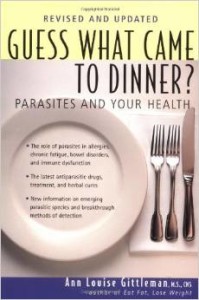
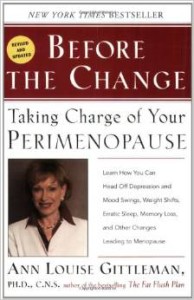
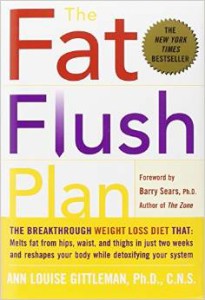
Ann Louise has written many wonderful books.  Here are three of them that were mentioned in this interview:

Guess What Came to Dinner? Parasites and Your Health (this is the book about parasites)

Ann Louise Gittleman_guess what came to dinner


Before the Change: Taking Charge of Your Perimenopause (this is the one that helped me so much when I was in my late thirties and having perimenopausal symptoms – with the zinc, vitamin B6 and evening primrose oil )

Ann Louise Gittleman_before the change


The Fat Flush Plan (this is one of many her classic weight loss books)

AnnLouiseGittleman_fat flush plan


Here is her gift: a 50-Page Report on Parasites – Still the Greatest Masqueraders of All Time

If you are not already registered for the Anxiety Summit you can get live access to the speakers of the day here: www.theAnxietySummit.com

Missed this interview or can’t listen live? Or want this and the other great interviews for your learning library? Purchase the MP3s or MP3s + transcripts and listen when it suits you.

You can find your purchasing options here: Anxiety Summit Season 1, Anxiety Summit Season 2, and Anxiety Summit Season 3.

Filed Under: Antianxiety, Parasites, Testing, The Anxiety Summit 3 Tagged With: ann louise gittleman, parasites, perimenopause, schizophrenia, the anxiety summit, toxoplasma gondii, Trudy Scott

  • Page 1
  • Page 2
  • Go to Next Page »

Primary Sidebar

NEW! GABA QuickStart Homestudy (with special intro pricing)

gaba quickstart homestudy

Free Report

9 Great Questions Women Ask about Food, Mood and their Health

You'll also receive a complimentary subscription to my ezine "Food, Mood and Gal Stuff"


Connect with me

Popular Posts

  • Amino Acids Mood Questionnaire from The Antianxiety Food Solution
  • The Antianxiety Food Solution Amino Acid and Pyroluria Supplements
  • Pyroluria Questionnaire from The Antianxiety Food Solution
  • Collagen and gelatin lower serotonin: does this increase your anxiety and depression?
  • Tryptophan for the worry-in-your-head and ruminating type of anxiety
  • GABA for the physical-tension and stiff-and-tense-muscles type of anxiety
  • The Antianxiety Food Solution by Trudy Scott
  • Seriphos Original Formula is back: the best product for anxiety and insomnia caused by high cortisol
  • Am I an anxious introvert because of low zinc and vitamin B6? My response to Huffington Post blog
  • Vagus nerve rehab with GABA, breathing, humming, gargling and key nutrients

Recent Posts

  • What do I use instead of Seriphos to help lower high cortisol that is affecting my sleep and making me anxious at night?
  • BeSerene™ GABA/theanine cream eases severe muscle tension in her neck/shoulders, prevents her bad headaches and quells her anxiety
  • How the correct approach, dose and sublingual use of GABA can be calming and not cause a flushed and itchy face and neck
  • The amino acid glutamine improves low mood by addressing gut health, and it has calming effects too
  • Flight anxiety with heightened breath, physical tension and also fearing the worst (the role of low GABA and low serotonin)

Categories

  • 5-HTP
  • AB575
  • Addiction
  • ADHD
  • Adrenals
  • Alcohol
  • Allergies
  • Alzheimer's disease
  • Amino Acids
  • Anger
  • Antianxiety
  • Antianxiety Food Solution
  • Antidepressants
  • Anxiety
  • Anxiety and panic
  • Autism
  • Autoimmunity
  • benzodiazapines
  • Bipolar disorder
  • Books
  • Caffeine
  • Cancer
  • Candida
  • Children/Teens
  • Collagen
  • Cooking equipment
  • Coronavirus/COVID-19
  • Cravings
  • Depression
  • Detoxification
  • Diabetes
  • Diet
  • DPA/DLPA
  • Drugs
  • EFT/Tapping
  • EMF
  • EMFs
  • Emotional Eating
  • Endorphins
  • Environment
  • Essential oils
  • Events
  • Exercise
  • Fear
  • Fear of public speaking
  • Fertility and Pregnancy
  • Fish
  • Food
  • Food and mood
  • Functional neurology
  • GABA
  • Gene polymorphisms
  • General Health
  • Giving
  • Giving back
  • Glutamine
  • Gluten
  • GMOs
  • Gratitude
  • Gut health
  • Heart health/hypertension
  • Histamine
  • Hormone
  • Hyperparathyroidism
  • Hypoglycemia
  • Immune system
  • Inflammation
  • Insomnia
  • Inspiration
  • Introversion
  • Joy and happiness
  • Ketogenic diet
  • Lithium orotate
  • Looking awesome
  • Lyme disease and co-infections
  • MCAS/histamine
  • Medication
  • Men's health
  • Mental health
  • Mercury
  • Migraine
  • Mold
  • Movie
  • MTHFR
  • Multiple sclerosis
  • Music
  • NANP
  • Nature
  • Nutritional Psychiatry
  • OCD
  • Osteoporosis
  • Oxalates
  • Oxytocin
  • Pain
  • Paleo
  • Parasites
  • Parkinson’s disease
  • PCOS
  • People
  • PMS
  • Postpartum
  • PTSD/Trauma
  • Pyroluria
  • Questionnaires
  • Real whole food
  • Recipes
  • Research
  • Schizophrenia
  • serotonin
  • SIBO
  • Sleep
  • Special diets
  • Sports nutrition
  • Stress
  • Sugar addiction
  • Sugar and mood
  • Supplements
  • Teens
  • Testimonials
  • Testing
  • The Anxiety Summit
  • The Anxiety Summit 2
  • The Anxiety Summit 3
  • The Anxiety Summit 4
  • The Anxiety Summit 5
  • The Anxiety Summit 6
  • Thyroid
  • Thyroid health
  • Toxins
  • Tryptophan
  • Tyrosine
  • Uncategorized
  • Vegan/vegetarian
  • Women's health
  • Yoga

Archives

  • October 2025
  • September 2025
  • August 2025
  • July 2025
  • June 2025
  • May 2025
  • April 2025
  • March 2025
  • February 2025
  • January 2025
  • November 2024
  • October 2024
  • September 2024
  • August 2024
  • July 2024
  • June 2024
  • May 2024
  • April 2024
  • March 2024
  • February 2024
  • January 2024
  • December 2023
  • November 2023
  • October 2023
  • September 2023
  • August 2023
  • July 2023
  • June 2023
  • May 2023
  • April 2023
  • March 2023
  • February 2023
  • January 2023
  • December 2022
  • November 2022
  • October 2022
  • September 2022
  • August 2022
  • July 2022
  • June 2022
  • May 2022
  • April 2022
  • March 2022
  • February 2022
  • January 2022
  • December 2021
  • November 2021
  • October 2021
  • September 2021
  • August 2021
  • July 2021
  • June 2021
  • May 2021
  • April 2021
  • March 2021
  • February 2021
  • January 2021
  • December 2020
  • November 2020
  • October 2020
  • September 2020
  • August 2020
  • July 2020
  • June 2020
  • May 2020
  • April 2020
  • March 2020
  • February 2020
  • January 2020
  • December 2019
  • November 2019
  • October 2019
  • September 2019
  • August 2019
  • July 2019
  • June 2019
  • May 2019
  • April 2019
  • March 2019
  • February 2019
  • January 2019
  • December 2018
  • November 2018
  • October 2018
  • September 2018
  • August 2018
  • July 2018
  • June 2018
  • May 2018
  • April 2018
  • March 2018
  • February 2018
  • January 2018
  • December 2017
  • November 2017
  • October 2017
  • September 2017
  • August 2017
  • July 2017
  • June 2017
  • May 2017
  • April 2017
  • March 2017
  • February 2017
  • January 2017
  • December 2016
  • November 2016
  • October 2016
  • September 2016
  • August 2016
  • July 2016
  • June 2016
  • May 2016
  • April 2016
  • March 2016
  • February 2016
  • January 2016
  • December 2015
  • November 2015
  • October 2015
  • September 2015
  • August 2015
  • July 2015
  • June 2015
  • May 2015
  • April 2015
  • March 2015
  • February 2015
  • January 2015
  • December 2014
  • November 2014
  • October 2014
  • September 2014
  • August 2014
  • July 2014
  • June 2014
  • May 2014
  • April 2014
  • March 2014
  • February 2014
  • January 2014
  • December 2013
  • November 2013
  • October 2013
  • September 2013
  • August 2013
  • July 2013
  • June 2013
  • May 2013
  • April 2013
  • March 2013
  • February 2013
  • January 2013
  • December 2012
  • November 2012
  • October 2012
  • August 2012
  • July 2012
  • June 2012
  • May 2012
  • April 2012
  • March 2012
  • February 2012
  • January 2012
  • December 2011
  • November 2011
  • October 2011
  • September 2011
  • August 2011
  • July 2011
  • June 2011
  • May 2011
  • April 2011
  • March 2011
  • February 2011
  • January 2011
  • December 2010
  • October 2010
  • September 2010
  • July 2010
  • May 2010
  • April 2010
  • March 2010
  • February 2010
  • January 2010
  • November 2009

Share the knowledge!

The above statements have not been evaluated by the Food and Drug Administration. Products listed in this website are not intended to diagnose, treat, cure or prevent any disease.

The information provided on this site is for informational and educational purposes only and is not intended as a substitute for advice from your physician or other health care professional. You should consult with a healthcare professional before starting or modifying any diet, exercise, or supplementation program, before taking or stopping any medication, or if you have or suspect you may have a health problem.


Copyright © 2026 Trudy Scott. All Rights Reserved. | Privacy | Terms and Conditions | Refund Policy | Medical Disclaimer

Free Report

9 Great Questions Women Ask about Food, Mood and their Health

You’ll also receive a complimentary subscription to my ezine “Food, Mood and Gal Stuff”