• Skip to primary navigation
  • Skip to main content
  • Skip to primary sidebar

everywomanover29 blog

Food, Mood and Women's Health – Be your healthiest, look and feel great!

  • Blog
  • About
  • Services
  • Store
  • Resources
  • Testimonials
  • The Book
  • Contact
  • Search this site

PANS

GABA worked amazingly for 18-year-old during a MCAS/histamine flare, helping with OCD, anxiety, rage and skin issues

October 27, 2023 By Trudy Scott Leave a Comment

gaba mcas

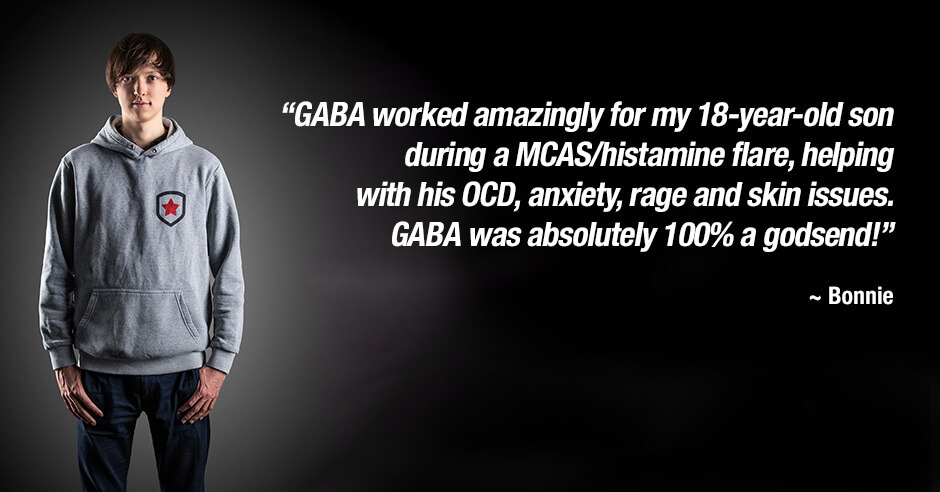
Bonnie shared how effective GABA was for her 18 year old son with suspected MCAS (mast cell activation syndrome/histamine issues) and his associated anxiety/OCD/rage and skin issues:

GABA worked amazingly for us during a flare! Flares began with OCD [obsessive compulsive disorder]and anxiety increasing before our eyes and then the rage followed.

He would wake up very early and his upper back, shoulders and upper chest would have acne all over, this would come and go, but never completely go.

GABA capsules worked in 20 minutes and thanks to you Trudy, I read and found GABA chewables worked in 5 minutes. We used to buy GABA all the time to stop the flares and to prevent them from coming! The GABA was absolutely 100% a godsend!

Once I started focusing on keeping histamine down, we don’t buy or use GABA much! Haven’t had a flare in almost a year!!

It’s so wonderful to hear that GABA helped Bonnie’s son so much. No MCAS/histamine flare in a year!

I checked with Bonnie and they primarily used 3 x Source Naturals GABA Calm chewables (each one contains 125 mg GABA). They initially used up to 3 x 250 mg GABA if he was having a really bad flare, 1 if he was not so bad and 2 if somewhere between.

Histamine issues frequently cause physical tension and anxiety so we’d expect GABA to help. Wth rage and OCD, we typically consider low serotonin as a possible cause but in her son’s case, GABA clearly was his root cause. I share another case where GABA helped ease symptoms of anger, rage, and dark moods.

It’s been a long road – ruling out PDD-NOS, PANDAS and PANS

But as amazing as GABA was for him there was more to it and it has been a long road for him. Bonnie shared this too: “At 4 years old he was diagnosed with PDD-NOS, then at 5 years old they said no it’s PANDAS, and at 6 years old no it’s PANS.”

Pervasive Developmental Disorder – Not Otherwise Specified (PDD-NOS) refers to a group of disorders characterized by impairment in the development of social interaction, verbal and non-verbal communication, imaginative activity and a limited number of interests and activities that tend to be repetitive.

Both PANDAS and PANS are associated with OCD, rages and other mental health issues which are often sudden onset and caused by infections – PANDAS is Pediatric Autoimmune Neuropsychiatric Disorders Associated with Streptococcal Infections, and PANS is when the severe onset of OCD symptoms is linked to another infection. More on these conditions here. It’s important to either rule out or address these conditions.

They tried several doctors and several protocols over the years: “B12 injections early but only saw a small gain. No reactions for years whatever we tried. IV treatment about 5 years ago was the second time we had gains.

Histamine was off the chart and flares were worse during allergy season and better in winter

I share all this to give you hope and to send the message that you don’t want to ever give up. Even with few gains, Bonnie persevered and started making the connections with allergies. She shared this: “During these years 2 different allergy tests matched and histamine was off the chart for both, but 2 different doctors did not address it. Maybe there was no connection then.”

She noticed flares were worse during the beginning of allergy season and better in winter, and started to histamine support:

We use DAO enzymes with high histamine foods. We tried quercetin, isoquercetin and curcumin with no gains. Started stinging nettles and bromelain and they are definitely helping us with gains.

Our son seems to be much better, being more social and we are just seeing better connections socially.

Just started Seeking Health Serotonin Nutrients to see if this can further add gains. Probably a different topic now! Sorry so long!! Love to share!!!

Bonnie noticed her son’s flares were better in winter but keep in mind there may be seasonality of GABA with worsening anxiety, insomnia and intrusive thoughts in winter (and the need for increased GABA supplementation). I blog about this here.

The research: Neurotransmitter and neuropeptide regulation of mast cell function

Bonnie shared her son’s results in response to a Facebook post where I shared the research that GABA (a well-known inhibitory neurotransmitter) helps with MCAS/mast cell activation syndrome and histamine issues.

This 2020 paper, Neurotransmitter and neuropeptide regulation of mast cell function: a systematic review, reports that:

Some reports link GABA to the inhibition of MC (mast cell) activation in allergies. GABA suppresses degranulation in rat basophilic leukemia RBL-2H3 cells via the GABA(B) receptor on the cell surface

….The administration of GABA in a dose-dependent manner reduced the development of AD [atopic dermatitis] – like skin lesions in mice by suppressing serum IgE and splenocyte IL-4 production.

(Keep in mind that the RBL-2H3 cell line mentioned in the above research is a commonly used histamine-releasing cell line used in inflammation, allergy and immunological research.)

My additional feedback about serotonin support and pyroluria

They also used (and still use) 5 mg lithium orotate and 100 mg 5-HTP. Bonnie will soon be stopping one at a time to see if that makes a difference. I’ll share what she reports back.

Bonnie mentions wanting to trial a combination product for serotonin support. I shared with her that I prefer individual amino acids so we know what’s helping. This is especially important with sensitive folks who may react to any one of the ingredients. My choice would be exploring 5-HTP further or doing a trial of tryptophan instead of 5-HTP (or possibly a combination of both) if there are still low serotonin symptoms.

She also mentions that her son is “more social and we are just seeing better connections socially.” This is great but if she feels he could make even more social gains I’d encourage looking into the pyroluria protocol too. There are many added benefits of addressing pyroluria (a social anxiety condition) when someone has MCAS, histamine issues, Lyme or another chronic condition. The zinc, vitamin B6 and other nutrients also support neurotransmitter production.

Resources if you are new to using amino acids as supplements

We use the symptoms questionnaire to figure out if low GABA or low serotonin may be an issue.

If you suspect low levels of any of the neurotransmitters and do not yet have my book, The Antianxiety Food Solution – How the Foods You Eat Can Help You Calm Your Anxious Mind, Improve Your Mood, and End Cravings, I highly recommend getting it and reading it before jumping in and using amino acids on your own so you are knowledgeable. And be sure to share it with the practitioner/health team you or your loved one is working with.

There is an entire chapter on the amino acids and they are discussed throughout the book in the sections on gut health, gluten, blood sugar control, sugar cravings, anxiety and mood issues.

The book doesn’t include product names (per the publisher’s request) so this blog, The Antianxiety Food Solution Amino Acid and Pyroluria Supplements, lists the amino acids that I use with my individual clients and those in my group programs. You can find them all in my online store.

If, after reading this blog and my book, you don’t feel comfortable figuring things out on your own (i.e. doing the symptoms questionnaire and respective amino acids trials), a good place to get help is the GABA QuickStart Program (if you have low GABA symptoms too). This is a paid online/virtual group program where you get my guidance and community support.

If you are a practitioner, join us in The Balancing Neurotransmitters: the Fundamentals program. This is also a paid online/virtual program with an opportunity to interact with me and other practitioners who are also using the amino acids.

I really appreciate Bonnie for sharing her son’s story and giving me permission to share as a blog.

Has GABA helped with your symptoms (or your loved one’s symptoms) triggered by MCAS/mast cell activation syndrome and histamine issues – like anxiety, insomnia, OCD, racing heart, rage, allergy symptoms and even rashes/dermatitis?

Do you also find that the sublingual/chewable GABA Calm product worked/works quicker than swallowed GABA products?

Has addressing pyroluria helped MCAS/histamine issues and social anxiety?

Feel free to share and ask your questions below.
Filed Under: Anger, Anxiety, GABA, MCAS/histamine, OCD Tagged With: acne, allergy season, amino acids, anger, anxiety, flare, GABA, GABA Calm, GABA Quickstart; Balancing Neurotransmitters, histamine flare, mast cell activation syndrome, MCAS, OCD, PANDAS, PANS, pyroluria, rage, serotonin, skin issues

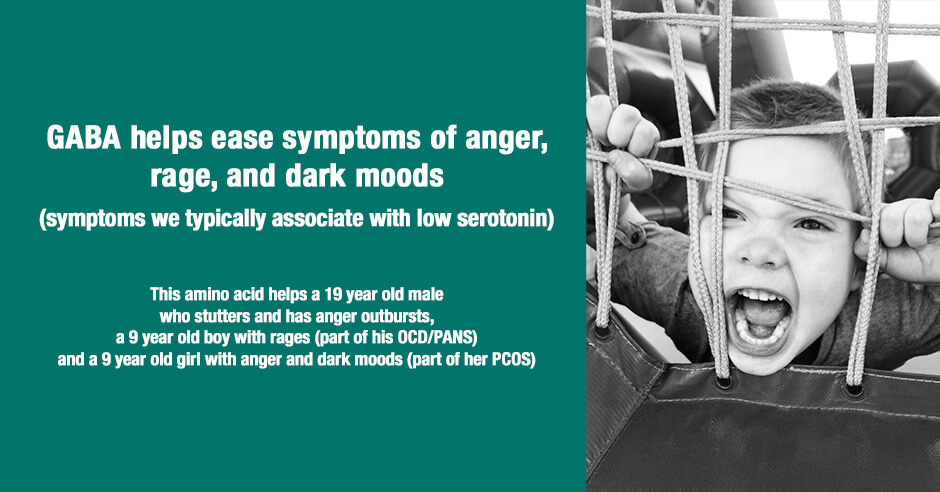
GABA helps ease symptoms of anger, rage, and dark moods (symptoms we typically associate with low serotonin)

June 30, 2023 By Trudy Scott 23 Comments

gaba eases anger

As a result of this wonderful feedback from a mom in the online GABA QuickStart program, I’ve been looking into GABA-anger connections. I’ve been trying to understand how GABA could offer similar benefits to tryptophan/5-HTP for anger, rage and dark moods, which we typically associate with low serotonin. She shares this:

My son who is 19 and on the autism spectrum was having issues with outbursts of anger and stuttering.  These issues seemed to worsen during his senior year of high school. Since starting GABA and tailoring his dosage from Trudy’s instruction and feedback, we have seen a 90% reduction in stuttering and 80% reduction in anger and outbursts.  We have done many supplemental protocols over the years and this is one of the few we have seen have an impact.

I am so happy for this young man and his family, and was also very intrigued. I’ve seen GABA help with stuttering. I have not noticed that GABA helps very much with anger/rage in clients but possibly because they are making other changes at the same time. Since they were in the program and he also had anxiety, we decided to continue with GABA.

I worked with them in the program over a few months and know he only changed one thing – GABA, starting low and increasing to find his ideal dose (with my guidance).

So I started to dig into the research, search through prior blog posts and ask on Facebook and the feedback is robust – folks are seeing GABA help with symptoms of anger and rage.

I share a few case studies below: how PharmaGABA helps a 9 year old boy with rages (part of his OCD/PANS), how GABA helps a young boy with Lyme-induced anger and how GABA helps a 9 year old girl with anger and dark moods (part of her PCOS).

I also share my insights with each case. And some possible mechanisms because we always want to understand why.

PharmaGABA helps 9 year old with rages that are part of his OCD/PANS

Kathy shares how pharmaGABA helped her son (on a pharmaGABA blog):

My 9 year old son had a lot of benefits from PharmaGABA. He used to have rages as part of his OCD/PANS. PharmaGaba 3 times a day was a miracle to get him through that period.

PANS is a neuropsychiatric disorder that falls under the same umbrella as PANDAS but is triggered by an infection other than strep.

If you’re new to PANS/PANDAS, I share the definition of PANDAS, from the PANDAS Network, in this blog: “PANDAS (Pediatric Autoimmune Neuropsychiatric Disorders Associated with Streptococcal Infections) occurs when strep triggers a misdirected immune response that results in inflammation on a child’s brain. In turn, the child quickly begins to exhibit life changing symptoms such as OCD/obsessive compulsive order, anxiety, tics, personality changes, decline in math and handwriting abilities, sensory sensitivities, restrictive eating, and more.”

Both PANS and PANDAS trigger OCD/obsessive compulsive disorder. OCD is typically supported with tryptophan and/or inositol i.e. these obsessive thinking and behaviors are typically related to low serotonin even when there is an infection involved. The infection needs to be addressed but the tryptophan and/or inositol help to ease the obsessive symptoms.

Rage is a common symptom when serotonin is low. Tryptophan addresses low serotonin and can have a huge impact as I share in this blog – Rage, anxiety, cravings & insomnia in 11-year old girl with RAD/reactive attachment disorder: chewable tryptophan turns things around.

However, in this instance, pharmaGABA worked for the rages Kathy’s son experienced.

PharmaGABA is one form of GABA that has been shown to help with relaxation and anxiety.

GABA helps a young boy with Lyme-induced anger

Another mom shared this on a Lyme disease post on Facebook:

One kid has developed fits of anger that come out of nowhere but the GABA seems to be able to help him to play longer periods.

Lyme disease can also have a neuropsychiatric aspect, as shared by Dr. Suruchi Chandra MD. I’ve had the pleasure of interviewing Dr. Chandra on one of the Anxiety Summits and hear her present at integrative mental health conferences.

In one conference presentation she shared this: “Lyme disease is one of the fastest growing infectious diseases in the United States. It can remain dormant for years and then later mimic a number of psychiatric illnesses, including anxiety disorders, mood disturbances, psychosis, and autism-like behaviors. It can be further complicated by the presence of co-infections.”

Anger and rage are also common symptoms. In one study, “Lyme rage” is described as an anger episode that “had a very abrupt onset and was extremely intense and often with minimal cognitive control.”

Yet again, we often see GABA help ease some of the anxiety symptoms, as I share here – GABA helps with Lyme anxiety (while addressing the underlying disease).

However in this instance, GABA helped with her son’s anger symptoms induced by the Lyme bacteria.

GABA helps a 9 year old girl with anger and dark moods (part of her PCOS)

Debbie was diagnosed with PCOS (polycystic ovarian syndrome) and GABA helped ease her lifelong anxiety, wean off anxiety medication, ovulate each month and stop her PCOS medications. She was thrilled that GABA helps her daughter too. She shared how her oldest daughter who is 9 has been showing early signs of developing PCOS and other issues similar to hers:

When her mood started changing and she was getting angry out of nowhere and very dark and moody, I started her on a small dose of GABA. Immediately both of us saw the difference in her mood. She now asks for her “happy pills” daily because she doesn’t want to feel those dark feelings anymore. I wish this information was around when I was young. It could’ve helped so much of what I had to struggle with for years.

I typically think of tryptophan or 5-HTP as “happy pills”, and anger and a dark mood as symptoms of low serotonin.

However, yet again, GABA resolves these symptoms in Debbie’s daughter.

These are just a few of the many recent success stories I’ve heard about GABA and anger/rage.

Does low GABA anger/rage look different from low serotonin anger-rage?

This is all new to me so I honestly don’t know. We do know that low GABA leads to more of a physical kind of anxiety (i.e. felt in the body) and it’s different from low serotonin worry-type anxiety (i.e. it’s felt in the head).

Therefore, it’s possible that low GABA anger and rage has more of a physical aspect too.

I have yet to explore this aspect but feel it may be helpful to figure out if there is a difference in order to effectively use the neurotransmitter symptoms questionnaire. This questionnaire is used to decide whether to trial GABA or tryptophan/5-HTP and the low GABA section will be updated with anger/rage once I’ve gone a bit deeper with all this.

The kind of anger symptoms may well look the same and then we’ll use the clustering of either low GABA or low serotonin symptoms to base our decision for doing an amino acid trial.

Research: GABA may be critical in the neurochemical control of aggressive behavior and rage

There is no research that I am aware of where the amino acid GABA has been used to ease rage, anger or dark moods.

However, this letter, Tiagabine for Rage, Aggression, and Anxiety published in the Journal of Neuropsychiatry and Clinical Neuroscicnes in 2015 offers some round-about support to this GABA-rage observation. They are discussing patients with treatment-resistant rage and aggression and they propose that:

Gamma-aminobutyric acid (GABA), the primary inhibitory neurotransmitter, may be critical in the neurochemical control of aggressive behavior.

They share that the prescription medication called Tiagabine, a selective GABA reuptake inhibitor (SGRI), increases synaptic GABA availability.

And that 20 out of 36 patients aged 15-54 years (69%)

with symptoms of rage, aggression, or anxiety in association with one or more of the following disorders: bipolar, intermittent explosive, major depression, panic disorder, attention deficit hyperactivity disorder, or substance abuse …demonstrated a good or excellent response to tiagabine, with reduction or elimination of the symptoms of rage, aggression, or anxiety.

This and the few studies on anger and glutamate (like this one) offer the most plausible explanations for the quick results we expect when using GABA and other amino acids i.e. quick as in results in 1-30 minutes.

Other than this there is not much direct evidence supporting this GABA-rage connection. GABA likely also helps quickly because of reduced anxiety, improved sleep, and being easil able to quit or eat less sugar (and in adults quit alcohol).

Based on some research I’ve found and my experience with GABA, I suspect GABA may also help in these ways over a longer period: countering a histamine reaction, reducing inflammation and impacting cytokines, improving progesterone levels, beneficial impacts on the microbiome, supporting the liver and toxin removal (such as fluorides), gut healing and reducing high blood pressure. I am still digging into the research.

I thank these families for sharing their stories so we all benefit.

I also really appreciate this opportunity to learn from you – my community – and I will always strive to keep an open mind.

Resources if you are new to using amino acids as supplements

If you are new to using amino acids as supplements, here is the Amino Acids Mood Questionnaire from The Antianxiety Food Solution (you can see all the symptoms of neurotransmitter imbalances, including low GABA and low serotonin).

If you suspect low levels of any of the neurotransmitters and do not yet have my book, The Antianxiety Food Solution – How the Foods You Eat Can Help You Calm Your Anxious Mind, Improve Your Mood, and End Cravings, I highly recommend getting it and reading it before jumping in and using amino acids on your own so you are knowledgeable. And be sure to share it with the practitioner/health team you or your loved one is working with.

There is an entire chapter on the amino acids and they are discussed throughout the book in the sections on gut health, gluten, blood sugar control, sugar cravings, anxiety and mood issues.

The book doesn’t include product names (per the publisher’s request) so this blog, The Antianxiety Food Solution Amino Acid and Pyroluria Supplements, lists the amino acids that I use with my individual clients and those in my group programs. You can find them all in my online store.

If, after reading this blog and my book, you don’t feel comfortable figuring things out on your own (i.e. doing the symptoms questionnaire and respective amino acids trials), a good place to get help is the GABA QuickStart Program (if you have low GABA symptoms). This is a paid online/virtual group program where you get my guidance and community support. Another option is the budget-friendly GABA QuickStart Homestudy program.

[The 19 year old young man/his mother were part of an earlier version of the GABA Quickstart program].

If you also need serotonin support, the Serotonin QuickStart Program is a good place to get help. This is also a paid online/virtual group program where you get my guidance on using tryptophan and 5-HTP safely, and community support during 5 LIVE Q&A calls. You can sign up to be notified when the next live launch of this program is happening.

If you are a practitioner, join us in The Balancing Neurotransmitters: the Fundamentals program. This is also a paid online/virtual program with an opportunity to interact with me and other practitioners who are also using the amino acids.

Now I’d love to hear from you ….

Has GABA helped you or your child with symptoms of anger, rage or a dark mood? And if yes, how did it help, how much helped and which product helped?

Can you be sure GABA helped i.e. is this the only change you made?

Has serotonin support with tryptophan or 5-HTP also helped? And if yes how would you describe the low serotonin anger symptoms vs the low GABA anger symptoms? Are they different?

If you are a practitioner, have you observed any of the above?

Feel free to post your feedback and questions here in the comments.

Filed Under: Anger, Anxiety, GABA Tagged With: 5-HTP, aggressive, amino acids, anger, anxiety, autism spectrum, dark moods, GABA, low serotonin, lyme, neurochemical, OCD, outbursts, PANDAS, PANS, PCOS, pharmaGABA, rage, resources if you are new to the amino acids; the GABA Quickstart online program; and Balancing Neurotransmitters: the Fundamentals program for practitioners, stuttering, Tiagabine, tryptophan

“I’m In An Abusive Relationship That I Will Never Walk Away From”: tryptophan, a gluten-free diet, lithium and other nutritional solutions

March 10, 2023 By Trudy Scott 16 Comments

abusive relationship - nutrition solutions

This mom’s story really struck a nerve for me… “I’m in an abusive relationship that I will never walk away from.” She shares this …

I can’t exactly pinpoint when I first felt the shift between our dynamic. One minute, things were as they always were. Before I could blink, though, I found myself engrossed in an alternate reality that resembled less and less of life as I knew it with each passing week. Trickles of rage and anger bubbled to the surface, threatening to break through until they could no longer be harnessed. I’ve been riding the waves ever since.

I currently exist in a heightened state of fear and anxiety, unsure of what each day will bring. When I wake each morning, I silently hope that today will be a “good” day; that he won’t be angry. That he won’t hurt me. Sometimes I’m lucky, and I get my person back. Other times, it feels like I’m living in a battle ground.

Her story really struck a nerve for me because of what she is going through but also because NO solutions are provided for her son. Stories like this help create awareness, make you feel less alone, create empathy and better understanding – which is important – but we want to offer nutritional solutions to families who are dealing with this.

(You can read her entire story on the ScaryMommy blog.)

Functional medicine and nutritional psychiatry as a solution

My heart goes out to this mom, this young man and the rest of the family. My hope is that this mom and all mom’s in similar situations are open to functional medicine, nutritional psychiatry and the power of food and nutrients to dramatically reduce and in many cases reverse behavioral issues like this in the child.

Sugar, caffeine and junk food must go and a gluten-free diet will very possibly make a difference. Having her son eat for blood sugar control is key too. It may also mean switching to a low-salicylate and/or, low-oxalate and low histamine diet. And addressing low lithium, low zinc, low vitamin D, low vitamin B12, high copper, low magnesium and/or low vitamin B6. Low serotonin and low GABA are common and this is where I would start with this young man (more on this below). They may also need to address his gut health/parasites, infections (like Lyme), PANS/PANDAS, mold toxicity, metals and environmental toxins etc.

I’ll highlight many of these in this blog and share links for further reading, plus the approaches I may consider. The important thing to recognize is that there is not one-size-fits-all.

Address low serotonin and low GABA

For a mom in the midst of all this, it can seem overwhelming and very daunting but when you start by addressing low serotonin and low GABA it becomes so much easier. Her son gets some relief very quickly and all the root causes can be figured out and addressed one by one. It also gives mom and the family a much-needed glimmer of hope. As I mentioned above, this is where I would start.

These are clues from her story as to why we’d want to look into and address low serotonin: her son’s explosive anger and rage, the physical and mental abuse, threats to hurt himself (self-harm) and his mother and siblings, and being argumentative.

You can see how the above fits into the list of low serotonin symptoms here. The amino acid that addresses low serotonin is tryptophan or 5-HTP and you can expect to see results in a few days.

I worked with an 11 year old girl with explosive rage issues (and anxiety, cravings & insomnia)  and chewable tryptophan started to turn things around very quickly. You can read more about this here.

If he has low GABA symptoms of physical tension and anxiety, we’d do a trial of GABA next.

A gluten-free diet and eating for blood sugar control

The next change I’d make is to have him start to make dietary changes, starting to switch to gluten-free eating and real whole food. As you can see from the above blog, a gluten-free diet and getting the 11 year old off the sugar made a big difference too. Tryptophan helped with this process, making it easy to break the addiction and not feel deprived.

Gluten issues (celiac disease and gluten sensitivity) are typically associated with gut issues but the psychiatric symptoms are less recognized. This 2023 paper, Psychiatric and Neurological Manifestations of Celiac Disease in Adults states that “Celiac disease is associated with mood disorders, such as manic-depressive disease, schizophrenia, and bipolar disorder, as well as other disorders such as depression and anxiety.”

In this blog I share how gluten was found to be the cause of a childhood case of obsessive-compulsive disorder. Symptoms resolved on a gluten-free diet.

Having him starting to eat for blood sugar stability may help with the irritability and mood swings, and may also help with his rageful outbursts.

Low dose lithium orotate for the rollercoaster of emotions

Next I’d likely explore the possibility of low dose lithium orotate as something that may help this young man too. The hallmark of low lithium is a rollercoaster of emotions and this mom shares how there are really good times amongst the really tough times.  I use this lithium questionnaire with clients. In addition to the ups and downs, these are clues that he may benefit: he’s rebellious, exhibits disruptive behavior and aggressiveness, is irritable, restless and engages in risky behavior.

Next steps: explore all the possible root causes and do nutritional testing

We’d want to explore all possible root causes and next steps would be decided based on his specific situation. Here is a list of 60+ root causes that I work through and the nutritional/functional testing that I do with my clients. You can replace anxiety with anger/rage in the blogs – for some people their symptoms show up as rage and for others it’s anxiety.

And here are some links for further reading:

  • Bartonella infection in mom and both sons: anxiety, panic attacks, insomnia, inconsolable crying, irritability, ADHD, rage and pain
  • Christmas tree phenols as a trigger for anger, meltdowns, anxiety, hyperactivity, insomnia, aggression, self-injury and autistic symptoms? (dietary salicylates – a type of phenol – can cause similar issues)
  • Sex and Aggression Characteristics in a Cohort of Patients with Pediatric Acute-Onset Neuropsychiatric Syndrome “Among patients with PANS, males exhibit more aggressive behavior when compared with females” (typically the clue it may be PANDAS/PANS is sudden onset of symptoms, although it’s not the case in all instances)
  • Neuropsychiatric Lyme Disease by Dr. Suruchi Chandra Lyme disease “can remain dormant for years and then later mimic a number of psychiatric illnesses, including anxiety disorders, mood disturbances, psychosis, and autism-like behaviors.”

This is not a conclusive list but a good start for seeing what the possibilities may be. Feel free to search the blog for more on some of the above and some of the other factors mentioned above and in the 60+ root causes blog.

As you can see above, we start with the simple changes – amino acids and a few simple dietary changes (all covered in my book) and lithium orotate – and then continue to dig deeper.

Mom and the other children need nutritional/trauma support too

This mom and the other children need support too – from family and community, from a therapist who specializes in trauma – and with GABA/tryptophan, adrenal support and B vitamins. You can read more about nutritional solutions for psychological stress here.

Resources if you are new to using tryptophan or GABA as supplements

If you are new to using tryptophan or GABA as supplements, here is the Amino Acids Mood Questionnaire from The Antianxiety Food Solution (you can see all the symptoms of neurotransmitter imbalances, including low GABA and low serotonin).

If you suspect low levels of any of the neurotransmitters and do not yet have my book, The Antianxiety Food Solution – How the Foods You Eat Can Help You Calm Your Anxious Mind, Improve Your Mood, and End Cravings, I highly recommend getting it and reading it before jumping in and using amino acids on your own so you are knowledgeable. And be sure to share it with the practitioner/health team you or your loved one is working with.

There is an entire chapter on the amino acids and they are discussed throughout the book in the sections on gut health, gluten, blood sugar control, sugar cravings, anxiety and mood issues (which include rage/anger/irritability/self-harm).

The book doesn’t include product names (per the publisher’s request) so this blog, The Antianxiety Food Solution Amino Acid and Pyroluria Supplements, lists the amino acids that I use with my individual clients and those in my group programs. You can find them all in my online store. The above oral lavender products are available in my online store too.

If, after reading this blog and my book, you don’t feel comfortable figuring things out on your own (i.e. doing the symptoms questionnaire and respective amino acids trials), a good place to get help is the GABA QuickStart Program (if you have low GABA symptoms). This is a paid online/virtual group program where you get my guidance and community support.

If you are a practitioner, join us in The Balancing Neurotransmitters: the Fundamentals program. This is also a paid online/virtual program with an opportunity to interact with me and other practitioners who are also using the amino acids.

Have you found tryptophan, GABA and/or lithium orotate to help in a situation like this?

What about a gluten-free diet and eating for blood sugar control?

What bigger root causes were found to be contributing factors too?

If you have questions and other feedback please share it here too.

Filed Under: Gluten, Lithium orotate, Nutritional Psychiatry, serotonin, Teens, Tryptophan Tagged With: abuse, abusive relationship, amino acids, anger, angry, anxiety, bartonella, blood sugar, emotions, fear, functional medicine, GABA Quickstart online program; and Balancing Neurotransmitters: the Fundamentals program for practitioners, gluten-free, irritability, lithium orotate, low GABA, low serotonin, Lyme Disease, nutritional psychiatry, nutritional solutions, PANS, Phenols, rage, rollercoaster, self-harm, Solutions, tryptophan

My Kid is Not Crazy and PANS/PANDAS awareness day 2017

October 13, 2017 By Trudy Scott 33 Comments

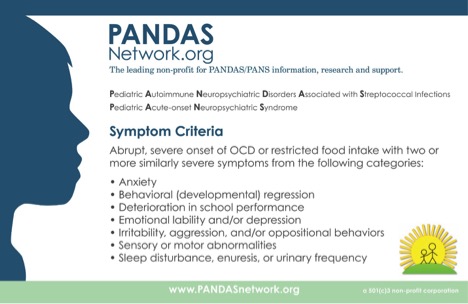
Earlier this week was PANS/PANDAS awareness day 2017 so I’d like to bring some awareness to this condition that causes sudden-onset OCD (obsessive compulsive disorder) type symptoms and anxiety. The PANDAS Network defines PANDAS as follows:

PANDAS (Pediatric Autoimmune Neuropsychiatric Disorders Associated with Streptococcal Infections) occurs when strep triggers a misdirected immune response results in inflammation on a child’s brain. In turn, the child quickly begins to exhibit life changing symptoms such as OCD, anxiety, tics, personality changes, decline in math and handwriting abilities, sensory sensitivities, restrictive eating, and more.

PANDAS Network estimates that PANDAS/PANS affects as many as 1 in 200 children.

This Huffington Post article: Misdiagnosed: How Children With Treatable Medical Issues Are Mistakenly Labeled as Mentally Ill covers one family’s experience with misdiagnosis with their daughter and the treatment that eventually helped her recover. As you’ll read in the blog, PANS/PANDAS is still very poorly understood in the medical community and misdiagnoses are very common:

the vast majority of pediatricians, child psychiatrists, and neurologists are unapprised of the latest research and continue to misdiagnose children who have PANS/PANDAS with any number of mental health disorders.

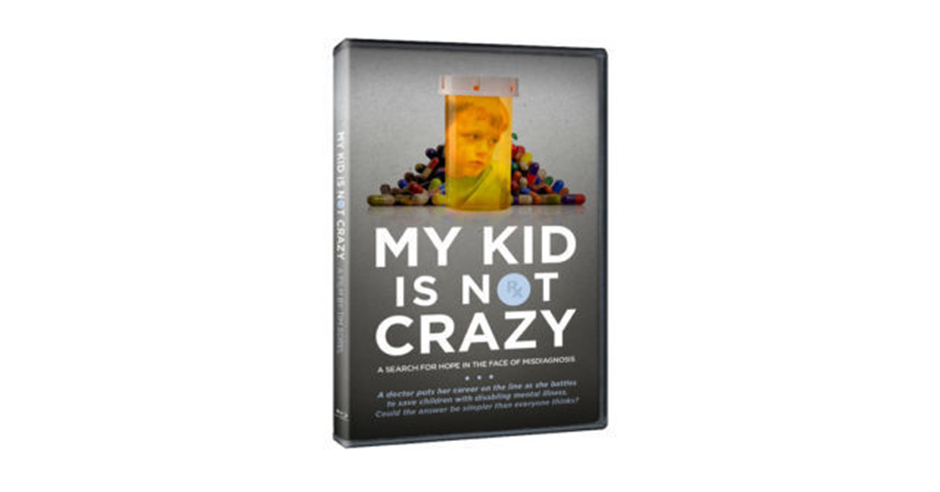
The new movie My Kid Is Not Crazy is another great resource for gaining a better understanding of this condition. Here are some snippets from this excellent movie:

Nine-year-old Kathryn was a normal, healthy child. She was a star student, athlete and dancer. In a matter of days, she would become totally dysfunctional. Kathryn had alarming rapid-onset OCD refusing to eat or drink. She had tremendous separation anxiety and would become panicked if her parents were not in sight. She had trouble sleeping and showed signs of age regression in vocabulary and handwriting.

How did this happen?

Kathryn’s family and many families like them— turned to a fractured medical system, where there is fierce disagreement about how to help their daughter. More often than not, a child with these symptoms would be diagnosed as having mental illness. They’d be treated with anti-psychotic medication, behavior therapy, and even hospitalization.

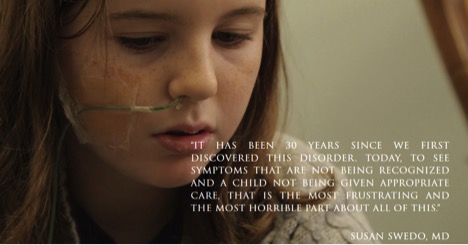
But more than 30 years ago, Susan Swedo—a doctor with the National Institutes of Health—discovered that an undiagnosed strep infection was the cause of one child’s disabling illness. The more Swedo dug, the more evidence she found: Strep was linked to symptoms normally chalked up to psychiatric illness.

She also discovered how non-accepting modern medicine can be of new ideas.

Swedo has put her reputation and career in jeopardy as she fights to cure the condition she named: Pediatric Autoimmune Neuropsychiatric Disorder Associated with Streptococcal Infections (PANDAS). Neurologists Jonathan Mink, Roger Kurlan, Harvey Singer and others publically ridicule Swedo and her PANDAS theory, creating controversy over diagnoses and treatment. This group has become known on social media as the “non-believers.” The result: the entire pediatric-care industry is confused and doesn’t know what to do.

And it’s the children who suffer.

“My Kid is Not Crazy,” a film by Tim Sorel, tracks the journey of six children and their families as they become tangled in the nightmare of a medical system heavily influenced by the pharmaceutical industry. Here it’s common for a caregiver to prescribe a young child with a Selective Serotonin Uptake Inhibitor (SSRI) but hesitate to prescribe an antibiotic to counteract a potential infectious-based trigger. For some of these kids, what happens after several years is shocking and sad.

You can watch the trailer here and rent the movie to watch it online or purchase the DVD here.

The movie site also lists many helpful resources for PANS/PANDAS.

Last week’s blog: Anxiety, compulsive thinking, counting behaviors: gluten, tryptophan and inositol covered gluten, tryptophan and inositol for OCD symptoms. I mentioned that I also always keep Lyme disease, heavy metals and PANDAS on the list as possible areas to refer out for if symptoms are not resolving with the above nutritional approaches, so it made sense to share more about PANDAS this week.

Even if the OCD and anxiety is due to PANS/PANDAS, I would still encourage a gluten-free diet and trials of tryptophan, GABA and inositol (and other nutritional approaches) in order to provide some relief while the infection/s are being addressed. Similar results are seen when providing nutrient support like the use of GABA (and/or tryptophan) for relief for Lyme anxiety.

Do you know about PANS/PANDAS and the connection to OCD and anxiety?

Have you seen symptom resolution by addressing the infection/s one of your children, personally or with a patient or client?

Have you seen some symptom relief when also using GABA and/or tryptophan and/or inositol?

Filed Under: Events Tagged With: My kid is not crazy, OCD, PANDAS, PANS, Susan Swedo, Tim Sorel, tryptophan

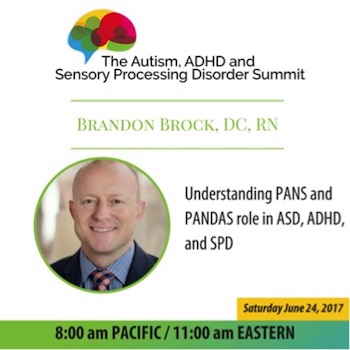
OCD, anxiety, PANDAS and PANS: Dr Brandon Brock

June 18, 2017 By Trudy Scott 6 Comments

This is a quick reminder that The Autism, ADHD and Sensory Processing Disorder Summit starts tomorrow.

I really enjoyed Dr. Brandon Brock’s interview, Understanding PANS and PANDAS role in ASD, ADHD and SPD, and it is particularly relevant for anxiety and OCD. During the interview he describes what he often finds with these children with PANS (Pediatric Acute-onset Neuropsychiatric Syndrome) and PANDAS (Pediatric Autoimmune Neuropsychiatric Disorders Associated with Streptococcal Infections):

A lot of times the child may come in having nightmares or they just start bed wetting or they’re having fears or a little bit of irritability and they get blamed on all kinds of things. You know they get blamed on maybe a sketchy home environment that’s really not that sketchy, or maybe they just say it’s normal for a child to go through this, or maybe they’re just starting to hit puberty so they’re getting more aggressive. In other words there’s always a reason other than looking at the brain physiology. Why is it changing? Is the brain physiology changing because maybe there is an environmental factor? You know maybe there is some abuse or something. And that does happen.

But on a bigger scale maybe they had some sort of infectious disease, or maybe they had a toxin that got into their body, and it made their immune system react, and it started giving them symptoms like abnormal movements, ticks, especially in the face, lip smacking, hair twirling.

He talks about how these immune reactions to the brain and basal ganglia cause symptoms:

So when you have an immune response against the basal ganglia it’s kind of like pushing the play button over and over and over again. So now we see things like obsessive compulsive disorder, we see tics, we see choreiform movements [repetitive and rapid, jerky, involuntary movement that appears to be well-coordinated], we see nightmares and bizarre thoughts, or the kid does something that we call a perseveration. It is the repetition of a particular response (such as a word, phrase, or gesture), so they say something over and over and over. So there’s a fine line between a kid being a kid and then a kid having something like PANDAS. And really what we call that is auto-immune encephalitis, which just means inflammation of the brain. So the kid’s brain really is kind of like, if you want to say it metaphorically, on fire.

Dr. Brock talks about the 2 strep tests or anti-streptococcal antibody titers that are commercially available and determines whether the child has had a previous strep infection:

  • Antistrepolysin O (ASO) titer,* which rises 3-6 weeks after a strep infection, and
  • Antistreptococcal DNAse B (AntiDNAse-B) titer, which rises 6-8 weeks after a strep infection.]

In addition to the many other labs tests they do, he goes on to discuss another whole set of antibodies that can become positive down the road:

Dopamine antibodies, calcium calmodulin mechanisms, and then all of the intra-cellular structures, like the tubulin structures, the alpha and beta tubulin structures, the micro-tubulin structures, and even the cell wall. So we have an antibody panel that really says it’s either the structure, it’s either the receptor, or it’s the actual pumping mechanism that makes dopamine.

He didn’t mention this but it’s the Cunningham Panel done by Moleculera Labs

Dr. Brock goes on to talk about functional neurology, diet, how to find a good practitioner and much more. It’s a great interview!

The Autism, ADHD and Sensory Processing Disorder Summit, hosted by Tara Hunkin, NTP, runs from June 19-28, 2017.

It will be 10 days of eye opening information into the root causes of your child’s neurological dysfunction. Imagine learning about what may have caused their symptoms and how to address them with nutrition and biomedical approaches and leverage the power of positive neuroplasticity to improve function, health and their lives.

As I mentioned in the prior summit announcement many of the interviews on this summit may be applicable for you even if you don’t have a child with a sensory processing disorder, ADHD and/or autism – many of my clients with anxiety often benefit from the biomedical support that many of these speakers are addressing. Simply replace sensory processing disorder, ADHD and/or autism with anxiety and listen and learn.

And if you’re new to my work, do also tune into my interview: Anxiety’s Role in ASD, ADHD and SPD and how nutrient therapy can help.

Here are a few other speakers and their interesting topics (and I can’t wait to hear them all):

  • David Perlmutter, MD: The role of the microbiome in neurological health.
  • Alex Doman: Using music to heal your child’s brain
  • Derrick MacFabe, MD: The role of propionic acid in the multi-system challenges found in ASD.
  • Sonia McGowin, DC: How to know if biomedical intervention is right for your child.

You can register for The Autism, ADHD and Sensory Processing Disorder Summit here

Filed Under: Autism Tagged With: ADHD, anxiety, autism, Brandon Brock, OCD, PANDAS, PANS, Sensory Processing Disorder, strep, Tara Hunkin

Primary Sidebar

NEW! GABA QuickStart Homestudy (with special intro pricing)

gaba quickstart homestudy

Free Report

9 Great Questions Women Ask about Food, Mood and their Health

You'll also receive a complimentary subscription to my ezine "Food, Mood and Gal Stuff"


Connect with me

Popular Posts

  • Amino Acids Mood Questionnaire from The Antianxiety Food Solution
  • The Antianxiety Food Solution Amino Acid and Pyroluria Supplements
  • Pyroluria Questionnaire from The Antianxiety Food Solution
  • Collagen and gelatin lower serotonin: does this increase your anxiety and depression?
  • Tryptophan for the worry-in-your-head and ruminating type of anxiety
  • GABA for the physical-tension and stiff-and-tense-muscles type of anxiety
  • The Antianxiety Food Solution by Trudy Scott
  • Seriphos Original Formula is back: the best product for anxiety and insomnia caused by high cortisol
  • Am I an anxious introvert because of low zinc and vitamin B6? My response to Huffington Post blog
  • Vagus nerve rehab with GABA, breathing, humming, gargling and key nutrients

Recent Posts

  • What do I use instead of Seriphos to help lower high cortisol that is affecting my sleep and making me anxious at night?
  • BeSerene™ GABA/theanine cream eases severe muscle tension in her neck/shoulders, prevents her bad headaches and quells her anxiety
  • How the correct approach, dose and sublingual use of GABA can be calming and not cause a flushed and itchy face and neck
  • The amino acid glutamine improves low mood by addressing gut health, and it has calming effects too
  • Flight anxiety with heightened breath, physical tension and also fearing the worst (the role of low GABA and low serotonin)

Categories

  • 5-HTP
  • AB575
  • Addiction
  • ADHD
  • Adrenals
  • Alcohol
  • Allergies
  • Alzheimer's disease
  • Amino Acids
  • Anger
  • Antianxiety
  • Antianxiety Food Solution
  • Antidepressants
  • Anxiety
  • Anxiety and panic
  • Autism
  • Autoimmunity
  • benzodiazapines
  • Bipolar disorder
  • Books
  • Caffeine
  • Cancer
  • Candida
  • Children/Teens
  • Collagen
  • Cooking equipment
  • Coronavirus/COVID-19
  • Cravings
  • Depression
  • Detoxification
  • Diabetes
  • Diet
  • DPA/DLPA
  • Drugs
  • EFT/Tapping
  • EMF
  • EMFs
  • Emotional Eating
  • Endorphins
  • Environment
  • Essential oils
  • Events
  • Exercise
  • Fear
  • Fear of public speaking
  • Fertility and Pregnancy
  • Fish
  • Food
  • Food and mood
  • Functional neurology
  • GABA
  • Gene polymorphisms
  • General Health
  • Giving
  • Giving back
  • Glutamine
  • Gluten
  • GMOs
  • Gratitude
  • Gut health
  • Heart health/hypertension
  • Histamine
  • Hormone
  • Hyperparathyroidism
  • Hypoglycemia
  • Immune system
  • Inflammation
  • Insomnia
  • Inspiration
  • Introversion
  • Joy and happiness
  • Ketogenic diet
  • Lithium orotate
  • Looking awesome
  • Lyme disease and co-infections
  • MCAS/histamine
  • Medication
  • Men's health
  • Mental health
  • Mercury
  • Migraine
  • Mold
  • Movie
  • MTHFR
  • Multiple sclerosis
  • Music
  • NANP
  • Nature
  • Nutritional Psychiatry
  • OCD
  • Osteoporosis
  • Oxalates
  • Oxytocin
  • Pain
  • Paleo
  • Parasites
  • Parkinson’s disease
  • PCOS
  • People
  • PMS
  • Postpartum
  • PTSD/Trauma
  • Pyroluria
  • Questionnaires
  • Real whole food
  • Recipes
  • Research
  • Schizophrenia
  • serotonin
  • SIBO
  • Sleep
  • Special diets
  • Sports nutrition
  • Stress
  • Sugar addiction
  • Sugar and mood
  • Supplements
  • Teens
  • Testimonials
  • Testing
  • The Anxiety Summit
  • The Anxiety Summit 2
  • The Anxiety Summit 3
  • The Anxiety Summit 4
  • The Anxiety Summit 5
  • The Anxiety Summit 6
  • Thyroid
  • Thyroid health
  • Toxins
  • Tryptophan
  • Tyrosine
  • Uncategorized
  • Vegan/vegetarian
  • Women's health
  • Yoga

Archives

  • October 2025
  • September 2025
  • August 2025
  • July 2025
  • June 2025
  • May 2025
  • April 2025
  • March 2025
  • February 2025
  • January 2025
  • November 2024
  • October 2024
  • September 2024
  • August 2024
  • July 2024
  • June 2024
  • May 2024
  • April 2024
  • March 2024
  • February 2024
  • January 2024
  • December 2023
  • November 2023
  • October 2023
  • September 2023
  • August 2023
  • July 2023
  • June 2023
  • May 2023
  • April 2023
  • March 2023
  • February 2023
  • January 2023
  • December 2022
  • November 2022
  • October 2022
  • September 2022
  • August 2022
  • July 2022
  • June 2022
  • May 2022
  • April 2022
  • March 2022
  • February 2022
  • January 2022
  • December 2021
  • November 2021
  • October 2021
  • September 2021
  • August 2021
  • July 2021
  • June 2021
  • May 2021
  • April 2021
  • March 2021
  • February 2021
  • January 2021
  • December 2020
  • November 2020
  • October 2020
  • September 2020
  • August 2020
  • July 2020
  • June 2020
  • May 2020
  • April 2020
  • March 2020
  • February 2020
  • January 2020
  • December 2019
  • November 2019
  • October 2019
  • September 2019
  • August 2019
  • July 2019
  • June 2019
  • May 2019
  • April 2019
  • March 2019
  • February 2019
  • January 2019
  • December 2018
  • November 2018
  • October 2018
  • September 2018
  • August 2018
  • July 2018
  • June 2018
  • May 2018
  • April 2018
  • March 2018
  • February 2018
  • January 2018
  • December 2017
  • November 2017
  • October 2017
  • September 2017
  • August 2017
  • July 2017
  • June 2017
  • May 2017
  • April 2017
  • March 2017
  • February 2017
  • January 2017
  • December 2016
  • November 2016
  • October 2016
  • September 2016
  • August 2016
  • July 2016
  • June 2016
  • May 2016
  • April 2016
  • March 2016
  • February 2016
  • January 2016
  • December 2015
  • November 2015
  • October 2015
  • September 2015
  • August 2015
  • July 2015
  • June 2015
  • May 2015
  • April 2015
  • March 2015
  • February 2015
  • January 2015
  • December 2014
  • November 2014
  • October 2014
  • September 2014
  • August 2014
  • July 2014
  • June 2014
  • May 2014
  • April 2014
  • March 2014
  • February 2014
  • January 2014
  • December 2013
  • November 2013
  • October 2013
  • September 2013
  • August 2013
  • July 2013
  • June 2013
  • May 2013
  • April 2013
  • March 2013
  • February 2013
  • January 2013
  • December 2012
  • November 2012
  • October 2012
  • August 2012
  • July 2012
  • June 2012
  • May 2012
  • April 2012
  • March 2012
  • February 2012
  • January 2012
  • December 2011
  • November 2011
  • October 2011
  • September 2011
  • August 2011
  • July 2011
  • June 2011
  • May 2011
  • April 2011
  • March 2011
  • February 2011
  • January 2011
  • December 2010
  • October 2010
  • September 2010
  • July 2010
  • May 2010
  • April 2010
  • March 2010
  • February 2010
  • January 2010
  • November 2009

Share the knowledge!

The above statements have not been evaluated by the Food and Drug Administration. Products listed in this website are not intended to diagnose, treat, cure or prevent any disease.

The information provided on this site is for informational and educational purposes only and is not intended as a substitute for advice from your physician or other health care professional. You should consult with a healthcare professional before starting or modifying any diet, exercise, or supplementation program, before taking or stopping any medication, or if you have or suspect you may have a health problem.


Copyright © 2026 Trudy Scott. All Rights Reserved. | Privacy | Terms and Conditions | Refund Policy | Medical Disclaimer

Free Report

9 Great Questions Women Ask about Food, Mood and their Health

You’ll also receive a complimentary subscription to my ezine “Food, Mood and Gal Stuff”