• Skip to primary navigation
  • Skip to main content
  • Skip to primary sidebar

everywomanover29 blog

Food, Mood and Women's Health – Be your healthiest, look and feel great!

  • Blog
  • About
  • Services
  • Store
  • Resources
  • Testimonials
  • The Book
  • Contact
  • Search this site

MS

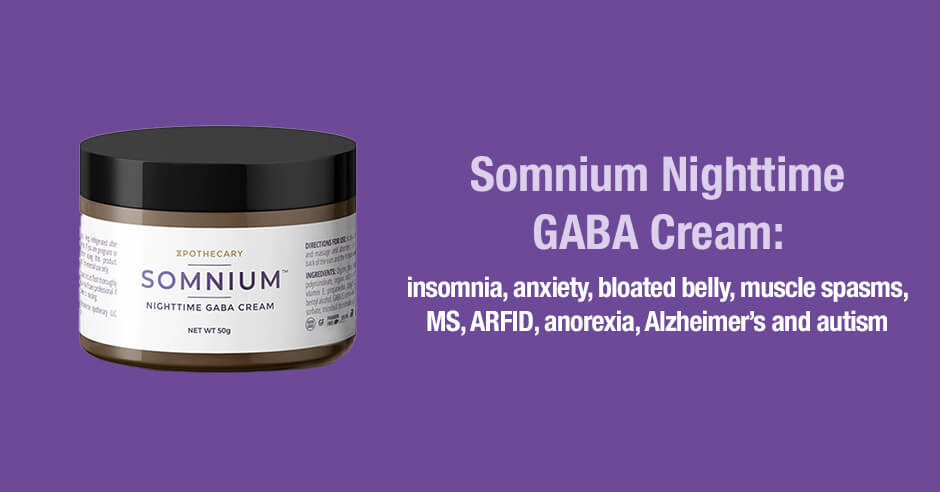
Somnium Nighttime GABA Cream: insomnia, anxiety, bloated belly, muscle spasms, MS, ARFID, anorexia, Alzheimer’s and autism

May 26, 2023 By Trudy Scott 45 Comments

somnium gaba cream

Somnium Nighttime GABA Cream is a topical GABA product I have been researching and trying personally with success. And folks in my community are reporting good results too. One woman shared this:

Surprisingly this stuff is very strong. I only use a small amount on the inside of my arm and it really helps me sleep better and calm down my nervous system at night. I don’t use it every day, rather I tend to use it when I’ve had a particularly busy or full/stressful day.

I endorse this topical GABA product as something to use in addition to the sublingual, powder, liposomal or opened GABA capsule you may be seeing benefits from OR it may become the one GABA product that works best for your needs – for helping with insomnia, easing physical anxiety and other low GABA symptoms.

I expect it to be beneficial for those with MS (multiple sclerosis), ARFID (Avoidant restrictive food intake disorder), anorexia, Alzheimer’s, autism and special needs children, and if you have severe digestive issues – for anxiety, insomnia and related symptoms.

When to use Somnium and increasing as needed

I do recommend only trialing this GABA cream when you know that GABA does work for you and you are looking for another way to increase GABA levels. I say this because it is more expensive than other GABA products and will only work if GABA is low – so it’s best to be sure.

Also, I have clients use a similar dose when using GABA products interchangeably. Somnium is around 250mg to 500mg for a small pea-size amount (the 1oz jar lasts 45 days, and the 2oz jar lasts 90 days if a pea-sized amount is used nightly.)

When comparing this with the GABA product that is already working for you, don’t forget to compare apples to apples with no confounding influences. So if you still have your period, the time of the month needs to be considered, and diet and other factors like outside stresses of course.

And don’t forget that there is no one size fits all. I have clients increase the amount of GABA when using it as a supplement, in order to find the ideal dose for their unique needs. I use the same logic with the GABA cream – start low and increase as needed.

For nighttime use for improving sleep (and how to use it)

As you’ll see on the website, it’s recommended for nighttime use for improving sleep but I have found there are many more applications (more on these below).

You’ll also see the recommended way to use it is to “Apply a small pea-size amount to skin and massage until absorbed. For best results apply to the back of the ears and the temples before bed time.”

Very quickly after starting to use Somnium myself, I decided I didn’t like using it on the back of my ears and temples, because it’s oily and made my hair greasy.

Rubbing it between my palms and applying some onto my forearms worked as well for my insomnia. Using it on the inner thigh is an option too.

It also helps me with a painful bloated belly and muscle spasms

I’ve also used it for a painful bloated belly at night, rubbed directly on my belly.

And I’ve found it to help back pain/muscle spasms when used directly over the spasming muscle.

(By the way my sublingual GABA product works as well as the GABA cream – I was experimenting with the cream so I could compare the two and offer my feedback.)

An application for specific populations

I also see the application for Somnium GABA cream for specific populations, who may find a cream is a better way to use GABA:

  • An aging parent with Alzheimer’s disease (and sundowning agitation/anxiety)
  • A person with ARFID (avoidant-restrictive food intake disorder)
  • A person with anorexia or other eating disorder
  • A child or young adult with autism (with anxiety and sensorimotor issues), a child/adult who struggles with taking supplements and other special needs children/adults
  • Someone with multiple sclerosis (for anxiety and muscle spasms/spasticity)
  • A person with severe digestive issues and prefers a cream

Low GABA symptoms

As a reminder, if you are new to GABA, it’s an amino acid that helps to address low GABA levels and the associated symptoms: insomnia, physical anxiety, feeling worried or fearful, panic attacks, stiff or tense muscles, feeling stressed and burned-out, craving carbs/alcohol for relaxation and calming, intrusive thoughts, spinning/poor focus, fear of heights, rectal spasms, burning mouth, and visceral pain/belly pain with IBS. See the most current list of low GABA symptoms here.

Is oral GABA not effective?

When I recently shared this GABA cream product someone asked this great question: “Why have I been spending a ton of money on oral GABA if it’s not effective?”

Oral GABA does work and is most effective when it’s used properly i.e. using a capsule opened on to the tongue (and held for at least 2 minutes) or using GABA in powder form on the tongue (and held for at least 2 minutes), or using a sublingual form of GABA. More on all this here – How did you come up with the idea of using GABA on the tongue? (GABA is a calming amino acid supplement used to ease physical anxiety symptoms).

Keep in mind there are many practitioners who are not aware of these methods and will recommend swallowing GABA capsules or tablets. This is not ideal for the majority of clients I have worked with.

There are also some practitioners and consumers who do not believe that any method of oral GABA works (swallowed or using the above approaches) or even that topical GABA works.

The important thing is this: if you do have low GABA symptoms and get symptom relief when you use GABA, you can ignore the naysayers. Better yet, shout it from the rooftops so more people get to learn about the amazing amino acid GABA and get results too!

My recommendation is to first experiment with oral GABA (used as above) and then consider Somnium when you know how GABA benefits you and how much is helping.

A few of the negatives

Here are a few of the negatives: You don’t know exactly how much GABA you’re getting (it’s a proprietary formulation but I suspect it’s 250mg to 500mg for a small pea-size amount); towards the end of the jar it does start to separate a bit/get clumpy; it’s pricey but it does go a long way.

However, it works!

The benefits of combing GABA with chondroitin sulfate

Dr. Christine Schaffner helped formulate the product and shares this about combining GABA with chondroitin sulfate:

Now individually, GABA and Chondroitin Sulfate have their respective health benefits. But when you combine these 2 compounds, something AMAZING happens.

You might’ve heard the phrase, ‘your skin is the antenna of your body’. It’s a fancy way of saying that your skin absorbs everything.

When you combine the 2 compounds… the absorption happens faster than with any other GABA cream on the market. And since chondroitin sulfate is known to pass the blood brain barrier, it’s as if the GABA has hopped on a super-highway straight to your brain.

Here is some feedback from a few of her Somnium customers:

I was waiting to share until I had more than one great night’s sleep after using Somnium Nighttime Gaba Cream. I now have had several nights of deep sleep and the only thing I changed was the sleep cream. It had been years since I slept straight through 7 – 8 hours. I feel SO rested when I get up. Wow!! – Candace

It works! I LOVE gaba and am familiar with how it feels. It’s especially nice to be able to get it in cream form. I’ve been sleeping much more deeply. – Jaya

UPDATE: April 2025 – unfortunately this product has been discontinued. Stay tuned for a new updated formula.

UPDATE: July 2025 – I have been in communication with Dr. Ruggiero’s team at Bravo North America about the new formulation called Bravo cream. He worked with Dr. Christine Schaffner to create Somnium GABA cream. They have shared that “Bravo is the combination of Somnium and Lymphflo; it contains all the active ingredients of the two creams with a delivery system that has been redesigned appropriately to allow the maximum efficacy.”

Purchase Bravo cream with this link – Use trudy15 at checkout to get a 15% discount.

Have you used Somnium in the past and how has it helped you? If you have used it and decide to get the Bravo cream I’d really appreciate your feedback on how it compares.

How does using a GABA cream compare with other GABA products you have used (feel free to share specific brands and how you used them – sublingual, capsule-opened, liposomal or powder). Some folks prefer a cream only and many use a combination of cream and sublingual.

Feel free to post your questions here too.
Filed Under: Anxiety, GABA Tagged With: alzheimer's, anorexia, anxiety, ARFID, autism, bloated belly, blood brain barrier, chondroitin sulfate, GABA, insomnia, MS, muscle spasms, Somnium, Somnium Nighttime GABA Cream, topical

Botox injections (cosmetic or non-cosmetic): are they a root cause of anxiety and panic attacks?

March 6, 2020 By Trudy Scott 71 Comments

botox injections

New research shows Botox injections are being considered for severe depression and bipolar disorder because it stops frowning and this lack of frowning has a positive impact on neurotransmitters and mood. I recently posted this on Facebook and asked this question:

I’m curious if you have had Botox injections or would consider it (for cosmetic reasons) or perhaps for migraines, dystonia, proctalgia fugax or depression/bipolar?

If you have had Botox injections are you happy with the result or did you have any adverse effects like increased anxiety, panic attacks or anything else?

The response was varied with most folks saying they would never consider using Botox for cosmetic reasons, some folks saying they used Botox for cosmetic reasons and had issues and some folks saying they’ve used Botox for cosmetic reasons and love it, and others who have used Botox for non-cosmetic reasons.

All the practitioners who commented have concerns about Botox saying results are mixed with some of their clients having severe reactions and some doing fine. As I looked further into this topic I’ve gained additional insights and my biggest concern for you, and my community, is that Botox can lead to very severe anxiety and panic attacks.

I encourage you to keep an open mind about my Botox concerns if you have chronic anxiety that is not resolving and it started (or got worse) after receiving Botox injections, or if  you’re considering Botox injections.

Anxiety, panic attacks, inability to handle stress, body shaking

I gained my biggest insights from the Botox Dysport (Side Effects) Support group. Someone suggested I look into this group and I requested an invite to join so I could learn more. So many of the members of this support group  report anxiety, panic attacks, inability to handle stress, body shaking and problems connecting socially.  This is what one member shared:

…just joining the dots, I’ve been unwell for a few years since getting Botox but didn’t put it together until having it last week and going into panic attacks / ER.

Since then extreme anxiety and I’ve ended up in a mental health facility on benzodiazepines (ativan/valium). Reactions / withdrawal has been severe, have started to put it all together whilst reading through this page.

I’m realising that my decline, immune system failure (chronic epstein barr) fatigue, loss of motivation, loss of appetite, shaking in my body, muscle atrophy, anxiety, no motivation to connect socially, can’t handle any stress, can’t relax, tinnitus, breathing trouble and the list goes on is from botox…. scared to say the least as doesn’t seem to be a solution, I was worried to get Botox originally and obviously am eating myself up with regret, thought I would share if anyone has a similar story.

There are many similar posts to this one and it’s heart-breaking, especially because they say they are not being heard by their doctors.

I had a short online conversation with one of the moderators and she shared they suspect Botox is impacting the hypothalamic-pituitary-adrenal (HPA) axis leading to high cortisol and causing their anxiety symptoms. Many of the members find relief with Seriphos, which is a phosphorylated serine product I’ve had great success with. Here is my blog post on Seriphos for anxiety and insomnia related to high cortisol.

I asked if any of the members find GABA or serotonin support helpful and for some GABA helps ease the physical tension and for other members tryptophan or 5-HTP helps ease the worry type of anxiety. However for others, the amino acids seem to have a paradoxical effect and make symptoms worse.

I’ve never been in favor of Botox for cosmetic reasons simply because I’m not a fan of putting foreign objects/toxins into the body and because I believe in aging gracefully with confidence. I do find that many women feel the need for cosmetic Botox injections and other ways to try and look younger (such as breast implants and hair dye) because of low self-esteem and lack of confidence caused by low serotonin.

Botox for non-cosmetic purposes

Botox is also used for non-cosmetic purposes. Some of my neurologist colleagues also have concerns about cosmetic use and will only use Botox injections for the following:

  • severe cases of dystonia
  • migraines (to relax forehead muscles)
  • proctalgia fugax /rectal spasms

Botox may also be used for multiple sclerosis (MS) symptoms, pelvic pain and bladder issues, for TMJ, after a stroke and for chronic anal fissures in colitis (sphincter spasms can prevent anal fissures from healing).

I would love to see safer approaches for non-cosmetic Botox injections being researched and explored by practitioners. For example:

  • Relief of dystonia symptoms using diet, GABA, tryptophan, zinc and vitamin B6
  • Sublingual GABA to help to relax forehead muscles in those with migraines
  • Sublingual GABA for the extremely painful proctalgia fugax. Could this also be considered in colitis patients?

Botox for mental health – we can do better with nutritional psychiatry

At the beginning of this blog I mentioned the new research that shows Botox injections are being considered for severe depression and bipolar disorder because it stops frowning. This lack of frowning has a positive impact on neurotransmitters and mood.

A study published in 2018, Clinical analysis of 86 botulism cases caused by cosmetic injection of botulinum toxin (BoNT), reports that botulism is a severe side effect of Botox injections with symptoms including: “headache, dizziness, insomnia, fatigue, blurred vision, eye opening difficulty, slurred speech, dysphagia [difficulty swallowing], constipation, and anxiety.”

The authors report these symptoms occur in the first 36 days after the Botox injections and that all symptoms resolved after botulinum antitoxin serum injections.

This conclusion clearly doesn’t address why there are so many folks in the Botox Dysport (Side Effects) Support group continue to experience long-term severe symptoms.

We also have research reporting a possible connection between Botox injections and thyroid autoimmunity.

I feel we can do better especially with what we know about nutritional psychiatry, the use of targeted individual amino acids, nutrients like lithium orotate, the gut-brain connections and everything covered in my book The Antianxiety Food Solution (my Amazon link) and on this blog.

A note of appreciation

I’d like to end with a note of appreciation to everyone who commented on my Facebook post, to the members of Botox Dysport (Side Effects) Support group on facebook (with over 5700 members as of this writing).

I’d also like to thank Diane Kazer for asking bold questions about Botox injections as part of her Non-Toxic Beauty Revolution Summit which addresses Botox, breast implant illness, toxins in your cosmetics and so much more. In my interview we talked extensively about the low serotonin/low self-esteem connections which I feel is a big missing piece for helping women who feel the desire or need to use cosmetic Botox in order to feel good and love themselves.

Diane writes about Botox here: Is Botox Safe? Top 3 Concerns & What to do if you’ve had it, sharing a brief history of botox, what she has uncovered about toxicity issues and possible detox solutions.

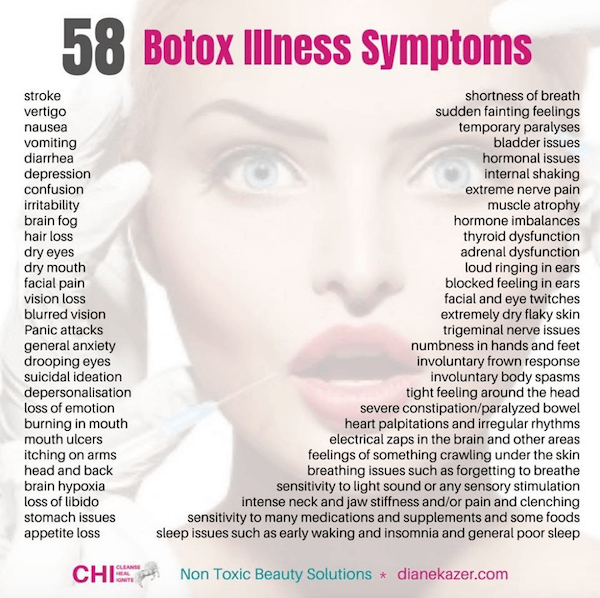
She also created this list of 58 Botox Illness Symptoms which she gave me permission to share here. She compiled this list from 1000+ people who have had Botox injections.

58 botox illness symptoms

Because of Diane asking questions and this initial research I’ve done, I’m adding a question about past history of Botox injections to my client intake form and will be gathering more information from my community of anxious women to see if there are patterns as to why some folks have such bad reactions.

I do feel we need to be asking if Botox injections (cosmetic or non-cosmetic) are a possible root cause of anxiety and panic attacks because they are adding to the toxic burden in susceptible folks.

But I do acknowledge it’s challenging to unwind all the contributing factors because it depends on what is going on with each person, such as their gut health, other medications (benzodiazepines themselves can be problematic), past trauma, infections, poor adrenal health, low GABA, low serotonin, poor detox capacity, low bile production, genetics etc. Unfortunately there is no way to know in advance who will be harmed and if Botox is the tipping point.

Please comment below if you’ve had Botox injections and had adverse reactions or have benefited from them with no adverse reactions. And if you have not had Botox would you ever consider it? Feel free to post your questions too.

Filed Under: Anxiety, Thyroid, Toxins Tagged With: 5-HTP, anxiety, bladder, Botox, botox injections, cosmetic, dystonia, GABA, low confidence, low serotonin, migraines, MS, panic attacks, pelvic, self-esteem, serotonin, TMJ, tryptophan

Electrosmog and autoimmune disease: silver-threaded caps result in improved symptoms for 90% of study participants

April 27, 2018 By Trudy Scott 40 Comments

One of the most compelling studies I learned about in the recent Electrosmog Rx course (hosted by Nick Pineault) is the study by Trevor Marshall, MD and Trudy Heil, RN: Electrosmog and autoimmune disease. In this study, 90% of the participants – all with an autoimmune diagnosis of either arthritis, lupus, multiple sclerosis, sjogrens or celiac disease – reported improved symptoms as a result of wearing silver-threaded EMF protective caps.

The paper provides a good overview from NASA on what electrosmog is i.e. all the electromagnetic waves we’re exposed to on a daily basis:

As you sit watching TV, not only are there visible light waves from the TV striking your eyes, but also radio waves, transmitting from a nearby station, and microwaves carrying cellphone calls and text messages, and waves from your neighbor’s WiFi, and GPS units in the cars driving by. There is a chaos of waves from all across the spectrum passing through your room right now.

Patients who were participating in Dr. Marshall’s autoimmune/VDR/electrosmog research were purchasing commercially available shielded clothing and tenting on their own from retailers and reporting symptom improvements:

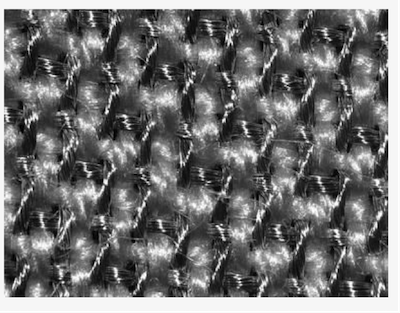
This clothing typically has silver-coated polyester threads interwoven with the supporting fabric so that the garment is capable of partially blocking microwave Electrosmog.

Fig. 5: A X20 micrograph of a microwave-blocking fabric woven with a mesh of silver-coated polyester strands among the supporting bamboo fibers (Electrosmog and autoimmune disease)

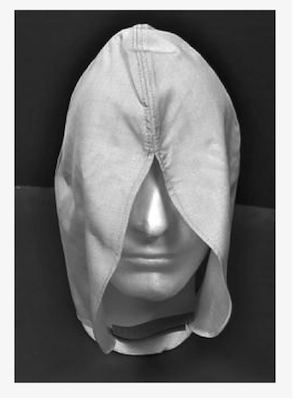
Because there were frequent anecdotal reports of symptom improvement, especially when their brain and brain stem were “shielded” during sleep, Dr. Marshall and his team decided to create a standardized sleeping cap so the EMF shielding effect could be easily analyzed and optimized.

Fig. 6: A photograph of a sleeping cap sewn from the microwave-shielding fabric (Electrosmog and autoimmune disease)

Study participants wore the cap once for 4 hours during sleeping and once for 4 hours during normal activity. The results were impressive, with 90 % of the 64 patients reporting a “Definite” or “Strong” change in their symptoms.

The authors share that those with an autoimmune condition seem to be predisposed to Electrosmog hypersensitivity (now being called EHS) at levels currently existing in typical home and work environments. They suggest the following:

effective control of environmental Electrosmog immunomodulation may soon become necessary for successful therapy of autoimmune disease.

Caution does need to be exercised as some people can feel worse when going from being bombarded by EMFs on a daily basis to much less exposure. This could almost be considered a Herxheimer reaction and is described in the paper as follows:

When the Electrosmog in a patient’s environment is reduced, the immune system tends to become more active. This may result in immunopathology. Indeed, some patients have reported a surge in disease symptoms, occasionally an intolerable surge, after WiFi routers and cell phones have been switched off in their homes. Others have reported that travel to a very quiet area, such as a remote canyon, caused a surge in their immune symptoms.

This is something that Dr. Klinghardt finds when working with his patients and the authors agree that we need a plan on how best to address this. I can attest to this personally – I have discovered that I have Electrosmog hypersensitivity – and as I have started to mitigate my own EMF exposure I’ve had to be careful.

This proposed go-slow EMF mitigation plan includes:

  • the basic foundational work based on my book “The Antianxiety Food Solution” and the material on my blog
  • additional nutritional support specific to the EMF detox: mitochondria support, added antioxidants and melatonin, rosemary, propolis, kombucha, vitamin D and more
  • and only then removal of EMF sources, EMF-protective clothing, grounding and devices such as pendants, and supporting specific symptoms such as increased insomnia/anxiety
  • working with a knowledgeable functional medicine practitioner if heavy metals are being stirred up and are causing worse symptoms (Dr. Klinghardt reports this to be a common issue).
  • reducing some of the support nutrients once EMF mitigation is in place and the ‘herxheimer’ reaction is over, adding them back when you know you’ll be exposed to WiFi i.e. during travel and when ill or during times of stress

I’ll be sharing more about my journey and my detailed proposed go-slow EMF mitigation plan with links to research in a future blog.

Going back to the study – we are still learning more about what this may all mean for someone with an autoimmune disease. The results are clearly very powerful and the benefits wonderful. But for me this study is so promising on many other levels because it shows that:

  • EMFs can and do have an adverse impact on health and this adds to the growing body of evidence (despite this research and many more studies, the dangers of EMFs are not common knowledge)
  • we have control and can do something about the adverse effects of EMFs
  • those of us with less severe symptoms but still sensitive to EMFs, can also hopefully expect to see some improvements when mitigation approaches like this are implemented

I write about how Wi-Fi is an important threat to human health and may contribute to unresolved anxiety, SIBO, oxalate issues and high cortisol. This is just the tip of the iceberg and it’s something we all need to be taking seriously.

I’d love to hear from you. How concerned are you about EMFs and what changes have you made? Did you experience a Herxheimer reaction when reducing EMF exposure and what helped you?

If you’re a practitioner – are you talking to your clients/patients about this and seeing improvements in their symptoms when they make changes? Are you interested in learning more about this topic so you can further help them? If yes, the evergreen digital version of the Electrosmog Rx program created by investigative health journalist Nicolas Pineault is now available.  You can learn more about the program here. I highly recommend it!

His book, “The Non-Tinfoil Guide to EMFs” (my Amazon link), is also recommended reading for all of us.


Filed Under: Anxiety, EMFs Tagged With: anxiety, arthritis, autoimmune disease, celiac, Dr. Marshall, electrosmog, EMFs, high cortisol, MS, SIBO, silver-threaded caps

GABA and tryptophan for pain and anxiety in Parkinson’s disease?

August 25, 2017 By Trudy Scott 12 Comments

Last week I blogged about my recent back injury and how acupuncture boosts GABA to reduce back pain and how oral GABA further reduces the pain. Both these interventions have helped me so much and I’m doing so much better.

I love the feedback I receive in the blog comments and the great questions – which get to help the person asking the question and everyone else reading the blog and comments. So thank you if you comment!

I received this lovely feedback about GABA and anxiety, and a question about Parkinson’s disease (on the above blog) and want to share it and my response here so you and families with a loved one with Parkinson’s disease will also have access to this information:

I have loved reading your articles for a long time and listen to you whenever you are on a summit. I have learned a lot. GABA definitely helps me to relax, reduce my monkey mind and sleep better.

My mom has Parkinson’s disease and is very stiff and tight. She hurts often, especially her back. She also has afternoon anxiety, some call it “sundowners”. Can she take GABA with carbidopa-levidopa and blood pressure meds? She needs some kind of help!

Thank you in advance for any suggestions you might have to give her any quality of life as right now it is not good and the doctors offer no suggestions beyond possibly more prescriptions.

I responded saying how glad I was to hear GABA helps her to relax, reduces her monkey mind and also helps her to sleep better and how sorry I was to hear about her mom’s stiffness, pain and anxiety.

I posted this regarding the stiffness and back pain: share this paper with your doctor and get his/her approval to do a trial of GABA – Parkinson’s Disease and Neurodegeneration: GABA-Collapse Hypothesis:

the original description of Parkinson’s disease (PD) as due to the selective damage of dopaminergic neurons in the mesencephalon should be updated into the concept of a severe multisystemic neurodegenerative disorder of the nervous system, whose clinical symptoms reflect the localization and progression of the most advanced GABA pathology. A future and more complete therapeutic approach to PD should be aimed first at slowing (or stopping) the progression of Ca(2+)/GABA functional decline.

I have worked with a few people with Parkinson’s disease and GABA has been very helpful for the stiffness and pain, the physical anxiety, easing some of their tremors and helping with insomnia. I always do a trial so we know how much the individual will need.

For someone on blood pressure medication I’d start with a GABA-only product or GABA-theanine product rather than GABA Calm which does contain tyrosine.

I posted this regarding the “sundowners” question: I’d share this with your doctor and get the approval to do a trial of tryptophan – Sundown Syndrome in Persons with Dementia: An Update

sundown syndrome is characterized by the emergence or increment of neuropsychiatric symptoms such as agitation, confusion, anxiety, and aggressiveness in late afternoon, in the evening, or at night.

Although this paper refers to dementia, these symptoms also happen to be classic low serotonin symptoms that typically respond really well to tryptophan. The paper mentions melatonin as an intervention but since tryptophan converts to melatonin I’d start with tryptophan (based on doing a trial) and then consider adding melatonin too if needed.

I shared a few more resources on Parkinson’s disease:

  • Chris Kresser has an excellent blog post called New Research and Treatments for Parkinson’s Disease where he writes about the microbiome, constipation, SIBO, gluten, the HPA axis, low-dose naltrexone (LDN) and the possible autoimmune aspect, iron overload and the benefits of curcumin, a ketogenic diet and glutathione.
  • The Wahls Protocol for MS (some versions of which are ketogenic diets) shows promise for many neurodegenerative diseases and is also being researched for Parkinson’s disease

I also shared this amazing and inspiring video created by physical therapist Anicea Gunlock, on how using music while gait training can be beneficial for those suffering from Parkinsons’s disease

You read more about this music approach Anicea Gunlock used with her patient here.

The amino acids GABA and tryptophan can often be used in conjunction with all of the above approaches and often provide immediate relief for anxiety, pain, agitation and insomnia while some of the other root causes are being addressed.

I’ve recently updated the Antianxiety Food Solution Amino Acid and Pyroluria Supplements blog with some of my favorite GABA and tryptophan products mentioned above. You’ll also see the amino acid questionnaire and amino acid precautions on this blog.

Instead of only considering the amino acids for someone whose primary issue is anxiety, I’d like you to start thinking about using the amino acids for anyone who has a medical diagnosis – such as autism, cancer, ALS, Parkinson’s disease, MS, Alzheimer’s disease or anything else – and who also happens to suffer from anxiety.

Have you used GABA or tryptophan to ease stiff and tense muscles and pain in your Parksinson’s disease, for a family member or for a patient/client?

And have you used tryptophan for the low serotonin worry-type of anxiety, agitation and insomnia?

Filed Under: Anxiety, GABA, serotonin Tagged With: agitation, anxiety, autism, GABA, MS, pain, Parkinson's disease, serotonin, stiff and tense muscles, sundowners, tryptophan

Primary Sidebar

NEW! GABA QuickStart Homestudy (with special intro pricing)

gaba quickstart homestudy

Free Report

9 Great Questions Women Ask about Food, Mood and their Health

You'll also receive a complimentary subscription to my ezine "Food, Mood and Gal Stuff"


Connect with me

Popular Posts

  • Amino Acids Mood Questionnaire from The Antianxiety Food Solution
  • The Antianxiety Food Solution Amino Acid and Pyroluria Supplements
  • Pyroluria Questionnaire from The Antianxiety Food Solution
  • Collagen and gelatin lower serotonin: does this increase your anxiety and depression?
  • Tryptophan for the worry-in-your-head and ruminating type of anxiety
  • GABA for the physical-tension and stiff-and-tense-muscles type of anxiety
  • The Antianxiety Food Solution by Trudy Scott
  • Seriphos Original Formula is back: the best product for anxiety and insomnia caused by high cortisol
  • Am I an anxious introvert because of low zinc and vitamin B6? My response to Huffington Post blog
  • Vagus nerve rehab with GABA, breathing, humming, gargling and key nutrients

Recent Posts

  • What do I use instead of Seriphos to help lower high cortisol that is affecting my sleep and making me anxious at night?
  • BeSerene™ GABA/theanine cream eases severe muscle tension in her neck/shoulders, prevents her bad headaches and quells her anxiety
  • How the correct approach, dose and sublingual use of GABA can be calming and not cause a flushed and itchy face and neck
  • The amino acid glutamine improves low mood by addressing gut health, and it has calming effects too
  • Flight anxiety with heightened breath, physical tension and also fearing the worst (the role of low GABA and low serotonin)

Categories

  • 5-HTP
  • AB575
  • Addiction
  • ADHD
  • Adrenals
  • Alcohol
  • Allergies
  • Alzheimer's disease
  • Amino Acids
  • Anger
  • Antianxiety
  • Antianxiety Food Solution
  • Antidepressants
  • Anxiety
  • Anxiety and panic
  • Autism
  • Autoimmunity
  • benzodiazapines
  • Bipolar disorder
  • Books
  • Caffeine
  • Cancer
  • Candida
  • Children/Teens
  • Collagen
  • Cooking equipment
  • Coronavirus/COVID-19
  • Cravings
  • Depression
  • Detoxification
  • Diabetes
  • Diet
  • DPA/DLPA
  • Drugs
  • EFT/Tapping
  • EMF
  • EMFs
  • Emotional Eating
  • Endorphins
  • Environment
  • Essential oils
  • Events
  • Exercise
  • Fear
  • Fear of public speaking
  • Fertility and Pregnancy
  • Fish
  • Food
  • Food and mood
  • Functional neurology
  • GABA
  • Gene polymorphisms
  • General Health
  • Giving
  • Giving back
  • Glutamine
  • Gluten
  • GMOs
  • Gratitude
  • Gut health
  • Heart health/hypertension
  • Histamine
  • Hormone
  • Hyperparathyroidism
  • Hypoglycemia
  • Immune system
  • Inflammation
  • Insomnia
  • Inspiration
  • Introversion
  • Joy and happiness
  • Ketogenic diet
  • Lithium orotate
  • Looking awesome
  • Lyme disease and co-infections
  • MCAS/histamine
  • Medication
  • Men's health
  • Mental health
  • Mercury
  • Migraine
  • Mold
  • Movie
  • MTHFR
  • Multiple sclerosis
  • Music
  • NANP
  • Nature
  • Nutritional Psychiatry
  • OCD
  • Osteoporosis
  • Oxalates
  • Oxytocin
  • Pain
  • Paleo
  • Parasites
  • Parkinson’s disease
  • PCOS
  • People
  • PMS
  • Postpartum
  • PTSD/Trauma
  • Pyroluria
  • Questionnaires
  • Real whole food
  • Recipes
  • Research
  • Schizophrenia
  • serotonin
  • SIBO
  • Sleep
  • Special diets
  • Sports nutrition
  • Stress
  • Sugar addiction
  • Sugar and mood
  • Supplements
  • Teens
  • Testimonials
  • Testing
  • The Anxiety Summit
  • The Anxiety Summit 2
  • The Anxiety Summit 3
  • The Anxiety Summit 4
  • The Anxiety Summit 5
  • The Anxiety Summit 6
  • Thyroid
  • Thyroid health
  • Toxins
  • Tryptophan
  • Tyrosine
  • Uncategorized
  • Vegan/vegetarian
  • Women's health
  • Yoga

Archives

  • October 2025
  • September 2025
  • August 2025
  • July 2025
  • June 2025
  • May 2025
  • April 2025
  • March 2025
  • February 2025
  • January 2025
  • November 2024
  • October 2024
  • September 2024
  • August 2024
  • July 2024
  • June 2024
  • May 2024
  • April 2024
  • March 2024
  • February 2024
  • January 2024
  • December 2023
  • November 2023
  • October 2023
  • September 2023
  • August 2023
  • July 2023
  • June 2023
  • May 2023
  • April 2023
  • March 2023
  • February 2023
  • January 2023
  • December 2022
  • November 2022
  • October 2022
  • September 2022
  • August 2022
  • July 2022
  • June 2022
  • May 2022
  • April 2022
  • March 2022
  • February 2022
  • January 2022
  • December 2021
  • November 2021
  • October 2021
  • September 2021
  • August 2021
  • July 2021
  • June 2021
  • May 2021
  • April 2021
  • March 2021
  • February 2021
  • January 2021
  • December 2020
  • November 2020
  • October 2020
  • September 2020
  • August 2020
  • July 2020
  • June 2020
  • May 2020
  • April 2020
  • March 2020
  • February 2020
  • January 2020
  • December 2019
  • November 2019
  • October 2019
  • September 2019
  • August 2019
  • July 2019
  • June 2019
  • May 2019
  • April 2019
  • March 2019
  • February 2019
  • January 2019
  • December 2018
  • November 2018
  • October 2018
  • September 2018
  • August 2018
  • July 2018
  • June 2018
  • May 2018
  • April 2018
  • March 2018
  • February 2018
  • January 2018
  • December 2017
  • November 2017
  • October 2017
  • September 2017
  • August 2017
  • July 2017
  • June 2017
  • May 2017
  • April 2017
  • March 2017
  • February 2017
  • January 2017
  • December 2016
  • November 2016
  • October 2016
  • September 2016
  • August 2016
  • July 2016
  • June 2016
  • May 2016
  • April 2016
  • March 2016
  • February 2016
  • January 2016
  • December 2015
  • November 2015
  • October 2015
  • September 2015
  • August 2015
  • July 2015
  • June 2015
  • May 2015
  • April 2015
  • March 2015
  • February 2015
  • January 2015
  • December 2014
  • November 2014
  • October 2014
  • September 2014
  • August 2014
  • July 2014
  • June 2014
  • May 2014
  • April 2014
  • March 2014
  • February 2014
  • January 2014
  • December 2013
  • November 2013
  • October 2013
  • September 2013
  • August 2013
  • July 2013
  • June 2013
  • May 2013
  • April 2013
  • March 2013
  • February 2013
  • January 2013
  • December 2012
  • November 2012
  • October 2012
  • August 2012
  • July 2012
  • June 2012
  • May 2012
  • April 2012
  • March 2012
  • February 2012
  • January 2012
  • December 2011
  • November 2011
  • October 2011
  • September 2011
  • August 2011
  • July 2011
  • June 2011
  • May 2011
  • April 2011
  • March 2011
  • February 2011
  • January 2011
  • December 2010
  • October 2010
  • September 2010
  • July 2010
  • May 2010
  • April 2010
  • March 2010
  • February 2010
  • January 2010
  • November 2009

Share the knowledge!

The above statements have not been evaluated by the Food and Drug Administration. Products listed in this website are not intended to diagnose, treat, cure or prevent any disease.

The information provided on this site is for informational and educational purposes only and is not intended as a substitute for advice from your physician or other health care professional. You should consult with a healthcare professional before starting or modifying any diet, exercise, or supplementation program, before taking or stopping any medication, or if you have or suspect you may have a health problem.


Copyright © 2026 Trudy Scott. All Rights Reserved. | Privacy | Terms and Conditions | Refund Policy | Medical Disclaimer

Free Report

9 Great Questions Women Ask about Food, Mood and their Health

You’ll also receive a complimentary subscription to my ezine “Food, Mood and Gal Stuff”