• Skip to primary navigation
  • Skip to main content
  • Skip to primary sidebar

everywomanover29 blog

Food, Mood and Women's Health – Be your healthiest, look and feel great!

  • Blog
  • About
  • Services
  • Store
  • Resources
  • Testimonials
  • The Book
  • Contact
  • Search this site

mood

The amino acid glutamine improves low mood by addressing gut health, and it has calming effects too

October 3, 2025 By Trudy Scott 2 Comments

glutamine and low mood

Recent research has shown that the amino acid glutamine can positively affect gut health by supporting the gut microbiome, gut mucosal wall integrity, and by modulating inflammatory responses.

As modulated by the vagus nerve, via the enteric nervous system, the gut-brain connection can impact the brain’s neurochemical environment. Poor gut health can disrupt the balance of neurotransmitters, which can result in neuropsychiatric based conditions such as depression.

Glutamine supplementation may provide significant adjunctive nutritional support in cases of depression by promoting proper gut health and function.

The above is an excerpt from the paper, The role of glutamine in supporting gut health and neuropsychiatric factors, published in 2021.

The authors do note the fact that glutamine is a “fundamental precursor to the most prevalent neurotransmitters, GABA and glutamate.” This is why glutamine supplementation can be calming for many individuals and may sometimes be too stimulating for some folks. It also highlights the importance of biochemical individuality and why it’s important to find your ideal dose (more on that below).

I appreciate their call for more research on glutamine, “as well as studies which could explore using glutamine in concert with other supportive amino acids, such as GABA and tyrosine, in an effort to restore neurotransmitter equilibrium” (more on that below too).

Read on below to learn more about how glutamine directly supports gut health and what harms the gut; how to know if glutamine will be calming or too stimulating, and how much to use; and other clues that you may benefit from glutamine; and additional resources when are new to amino acids such as glutamine, GABA and others.

How glutamine directly supports gut health and what harms the gut

From the above paper, glutamine:

1) has a positive impact on sustaining the balance of the gut microbiome
2) increases the expression of tight junction proteins and the integrity of the intestinal lining (i.e. it heals leaky gut)
3) helps to minimize the inflammatory response in situations of gut mucosal irritation (i.e the inner most lining of the digestive tract).

The authors also discuss all of the many factors that are harmful for the gut: highly processed foods, refined sugars, saturated fat, and minimal healthy fatty acids and antioxidants; lack of probiotics and prebiotics; blood sugar swings; stress and high cortisol; medications and alcohol consumption. Much of this is addressed in my book “The Antianxiety Food Solution”

It’s well-worth reading the entire paper for a full understanding of the two-way gut-brain connection via the vagus nerve and the role of the microbiome when it comes to neurotransmitter production and much more.

How to know if glutamine will be calming or too stimulating, and how much to use

As mentioned above, the authors share that glutamine is a precursor to GABA, a calming neurotransmitter i.e. it is often calming.

Glutamine is also a precursor to glutamate and can be too stimulating for some, typically when very high doses are used.

The paper mentions studies that “observed the effects of glutamine supplementation used at doses of between 15 g and 30 g,” however my recommendation is to start low and slowly increase based on your unique need. I have clients and those in my programs start with 500 mg once a day and increase to 1-3 x 500 mg, up to 3 or 4 times a day.

The only way to know if it will be calming or stimulating is to do a trial alone i.e. with no other new supplements, and carefully track the effects.

I also find using glutamine powder and holding it for 1-2 minutes on the tongue is more effective and less is often needed. This has additional benefits of stopping intense sugar cravings in their tracks (more on this below).

Other clues that you may benefit from glutamine: symptoms of low blood sugar

As mentioned above, glutamine helps reduce intense sugar cravings, and prevents low blood sugar (which can actually cause anxiety and panic attacks). This aspect is not mentioned in the paper but addressing low blood sugar is yet another application of glutamine when it comes to anxiety and low mood.

Here are all the symptoms we see with low blood sugar:

  • Crave sugar, starch or alcohol any time during the day
  • Irritable, shaky, headachey – especially if going too long between meals
  • Intense cravings for sweets
  • Lightheaded if meals are missed
  • Eating relieves fatigue
  • Agitated, easily upset
  • Nervous, anxious, panic attacks

And here are some other blog posts that illustrate some of the above:

  • Reactive hypoglycemia in binge eating disorder, food addiction and intense sugar cravings, and how glutamine stops the cravings
  • Waking with a jolt, feeling shaky and anxious: low blood sugar/hypoglycemia, glutamine and eating for blood sugar stability
  • Glutamine for hypoglycemia/low blood sugar: “500mg mixed in water works in 15 minutes and keeps me going for 2 – 3 hours”
  • “A demonic urge to eat sugar and all things sweet”: glutamine opened onto the tongue stops the urge every time!

Together with low serotonin and low GABA, addressing low blood sugar is one of the most effective approaches I use with clients to help ease anxiety.  We achieve this with the use of glutamine and by controlling blood sugar by starting the day with a breakfast that includes quality animal protein.

We may also use tyrosine if there are low dopamine symptoms and d-phenylalanine if there are low endorphin symptoms, in an “effort to restore neurotransmitter equilibrium.”

Additional resources when you are new to using glutamine, GABA or tyrosine, or other amino acids as supplements

We use the symptoms questionnaire to figure out if low blood sugar (indicating a possible need for glutamine) or low GABA (indicating a possible need for GABA or theanine) or low dopamine (indicating a possible need for tyrosine) or other neurotransmitter imbalances may be an issue for you.

If you suspect low levels of any of the neurotransmitters and do not yet have my book, The Antianxiety Food Solution – How the Foods You Eat Can Help You Calm Your Anxious Mind, Improve Your Mood, and End Cravings. I highly recommend getting it and reading it before jumping in and using amino acids on your own so you are knowledgeable. And be sure to share it with the practitioner/health team you or your loved one is working with.

There is an entire chapter on the amino acids and they are discussed throughout the book in the sections on gut health, gluten, blood sugar control (this and glutamine is covered in an entire chapter too), sugar cravings, anxiety and mood issues. The importance of quality animal protein and healthy fats is also covered.

The book doesn’t include product names (per the publisher’s request) so this blog, The Antianxiety Food Solution Amino Acid and Pyroluria Supplements, lists the amino acids that I use with my individual clients and those in my group programs.

If, after reading this blog and my book, you don’t feel comfortable figuring things out on your own (i.e. doing the symptoms questionnaire and respective amino acids trials), a good place to get help is the GABA QuickStart Program (if you have low GABA symptoms too). This is a paid online/virtual group program where you get my guidance and community support.

If you need serotonin support, the Serotonin QuickStart Program is a good place to get help. This is also a paid online/virtual group program where you get my guidance on using tryptophan and 5-HTP safely, and community support during 5 LIVE Q&A calls. You can sign up to be notified when the next live launch of this program is happening.

If you are a practitioner, join us in The Balancing Neurotransmitters: the Fundamentals program. This is also a paid online/virtual program with an opportunity to interact with me and other practitioners who are also using the amino acids.

Now I’d love to hear from you…

Has glutamine helped you with your leaky gut, low mood and/or offered calming effects?

What about intense cravings for something sweet or irritability and poor focus? And other low blood sugar symptoms?

How much do you find helps? And do you use powder or capsules?

Are you interested in a program to learn more about the safe and effective use of glutamine and/or tyrosine?

Feel free to share and ask your questions below.

Filed Under: Amino Acids, Anxiety, Depression, GABA, Glutamine, Gut health Tagged With: amino acid, blood sugar, calming, cravings, depression, GABA, glutamate, glutamine, gut, gut health, gut-brain connection, Inflammation, low mood, microbiome, mood, neuropsychiatric, neurotransmitters, serotonin, stimulating, tyrosine, vagus nerve

[NEW] D-Phenylalanine (DPA) powder for boosting endorphins: improve mood, reduce comfort eating and ease pain

May 30, 2025 By Trudy Scott 30 Comments

dpa for endorphins

D-Phenylalanine (DPA) is an amino acid that destroys the enzyme that breaks down endorphins. Endorphins are feel-good chemicals that you experience with an endorphin rush when you go for a run or when someone gives you a big hug, when you show kindness to someone or someone does something nice for you. Taking the amino acid DPA, as a supplement helps to boost your endorphins in order to improve mood, reduce pain and cravings or comfort-eating.

I’ve recommended the Lidtke Endorphigen product (500mg DPA) to my clients and community for many years, and wrote about it in my book and on various blog posts. Because product formulations have shifted and capsules changed, I’ve revised my recommendations over the years. I’ve suggested swallowing a capsule, then suggested chewing the capsule (when the company used gelatin capsules and clients saw quicker results than swallowing the capsule) and then suggested opening the capsule and tipping the contents on to the tongue (when the company  switched to vegan capsules).

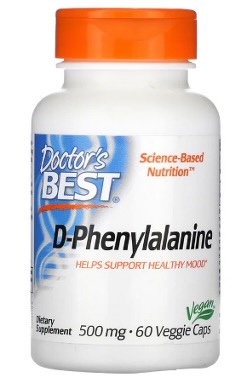
I then also started recommending Doctor’s Best D-Phenylalanine 500mg as another option and because many in the community didn’t like the taste and texture of the Lidtke product (more on that below). This product has now been discontinued.

The purpose of this blog post is to announce a new product: D-Phenylalanine (DPA) powder and share my current recommendations on the use of DPA for endorphin support. And some examples and feedback (from clients and my personal experiences too) in case you’re new to this amino acid and low endorphins.

Lidtke Endorphigen with 500mg D-phenylalanine (capsules)

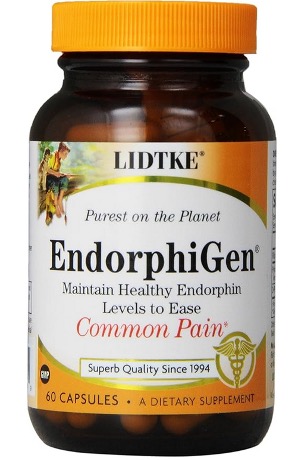
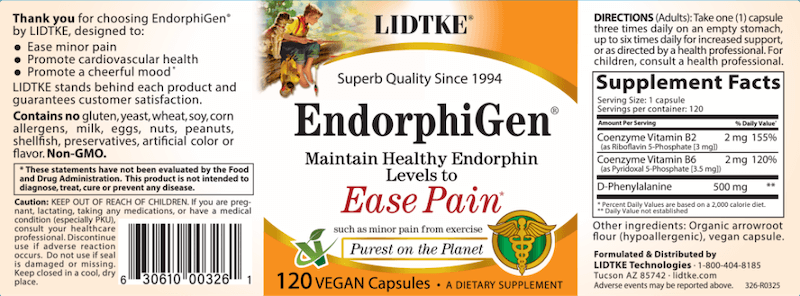
Here is the new label for the Lidtke Endorphigen with 500mg D-phenylalanine. As you can see it also contains vitamin B2 and vitamin B6. The latest version now contains arrowroot flour as a filler.

lidtke endorphigen

This product has been a firm favorite of mine for many years and the formulation has shifted over the years.

Last year I did a taste difference blog on Lidtke Endorphigen and Doctor’s Best D-phenylalanine – Lidtke Endorphigen vs Doctor’s Best D-phenylalanine: the taste difference and endorphin boosting benefits for mood and cravings

Many of my clients (and myself included) describe the opened DPA (from capsules) as a dark-chocolate bitter like taste that is not unpleasant. However, about half my clients don’t particularly like the taste of DPA and one woman in my community, Ali, was ready to give up on the Lidtke Endorphigen product because of the taste. I suspect it was the B vitamins that she didn’t like.

Oh goodness. If I open the Endorphigen on my tongue, it’s just awful. I might be able to get 1/4 of it but that’s it. And the taste stays there for at least an hour. No sense of chocolate in there for me. Isn’t that interesting that you and others like the taste. I consider myself pretty open to whatever needs to be done but wow, this is almost no way.

I reached out to Lidtke sharing the taste issue and the above blog post, and asked if they would be willing to offer a DPA only product and suggested a powder.

Lidtke appreciated the fact that I shared your taste issues and feedback, and my request for a powder-only product of d-phenyalanine/DPA has come to fruition.

Doctor’s Best D-phenylalanine has been discontinued, so this is great news taste-wise and for a number of other reasons (listed below)!

The brand new Lidtke D-Phenylalanine (DPA) powder

Here is the label for the brand new Lidtke D-Phenylalanine (DPA) powder. As you can see it’s only DPA – no added B vitamins or fillers.

lidtke d-phenylalanine

Here are the advantages of DPA in powder form:

  • A capsule opened on to the tongue offers mood and pain benefits so why not simply use the powder instead
  • Fewer capsules to swallow
  • Fewer digestive issues the cellulose of vegan capsules are not tolerated (I’m hearing more and more feedback about this)
  • Convenient for kids and older adults who may have problems swallowing capsules
  • A pleasant dark-chocolate like taste with none of bitterness of B vitamins
  • Hopefully, more affordable than the capsules

My personal experience with DPA

Personally I have used DPA over the years with much success. It’s my go-to amino acid for all kinds of pain – a sprained ankle, a pulled back muscle, a tension headache (and even a headache caused by chocolate) and belly pain during an IBS flare.

I’ve also used it for endorphin support when I have not been able to exercise due to an injury. I immediately notice a subtle mood boost and a reduction in comfort-eating and carb-cravings.

I have the new Endorphigen 500mg DPA product (i.e. the capsules) and it’s helping in the same way as the previous version.

I have yet to try the new DPA (d-phenylalanine) powder myself but will report back as soon as I have had a chance to do so – on the taste, the texture and the effectiveness.

Other DPA feedback from the community

I suspect many folks who already like the Lidtke 500mg Endorphigen and find opening the capsules to be more effective, are going to like the new powder:

  • “I love using the DPA! I use the Lidke brand. Very helpful in improving mood and anxiety. Open on my tongue. I like the taste!” ~ Lynn
  • “It’s interesting to read your recommendation to open the capsule … I had just started doing that! (Already using powdered forms of other aminos) Anyone looking thru my trash might wonder what I’m up to. This method really works for me.” ~ Joan

Here are a few blog posts illustrating the use of DPA in multiple sclerosis, weepiness, physical pain, emotional pain and resilience, cravings/emotional eating and even helping to wean off prescription pain medication:

  • Multiple sclerosis: low endorphin research and the amino acid DPA (d-phenylalanine) for pain, depression, comfort and trauma support “The endogenous opioid system is …well known to play a role in the development of chronic pain and negative affect [i.e. depression], both of which are common comorbidities in MS.”
  • DPA for weepiness, pain and comfort and reward eating
  • The individual amino acids glutamine, GABA, tryptophan (or 5-HTP), DPA and tyrosine are powerful for eliminating sugar cravings, often within 5 minutes
  • When using the amino acid DPA (d-phenylalanine) I have more resilience and more buffer in the caregiving work I do, and just the oops’s of life As I mentioned above, using DPA over these holidays also gave me more resilience and the endorphin boost I needed help with the emotional pain of losing my mom.
  • Wean off prescription pain medication, improve sleep and reduce emotional eating with DPA (an endorphin-boosting amino acid)

Be sure to use the search feature on the blog to find additional applications of DPA.

Additional resources when you are new to using DPA, tryptophan, GABA, and other amino acids as supplements

As always, I use the symptoms questionnaire to figure out if low endorphins or low serotonin or low GABA or other neurotransmitter imbalances may be an issue.

If you suspect low levels of any of the neurotransmitters and do not yet have my book, The Antianxiety Food Solution – How the Foods You Eat Can Help You Calm Your Anxious Mind, Improve Your Mood, and End Cravings, I highly recommend getting it and reading it before jumping in and using amino acids on your own so you are knowledgeable. And be sure to share it with the practitioner/health team you or your loved one is working with.

There is an entire chapter on the amino acids and they are discussed throughout the book in the sections on gut health, gluten, blood sugar control (this is covered in an entire chapter too), sugar cravings, anxiety and mood issues.

The book doesn’t include product names (per the publisher’s request) so this blog, The Antianxiety Food Solution Amino Acid and Pyroluria Supplements, lists the amino acids that I use with my individual clients and those in my group programs.

If, after reading this blog and my book, you don’t feel comfortable figuring things out on your own (i.e. doing the symptoms questionnaire and respective amino acids trials), a good place to get help is the GABA QuickStart Program (if you have low GABA symptoms). This is a paid online/virtual group program where you get my guidance and community support.

If you are a practitioner, join us in The Balancing Neurotransmitters: the Fundamentals program. This is also a paid online/virtual program with an opportunity to interact with me and other practitioners who are also using the amino acids.

Wrapping up and your feedback

My current recommendations for endorphin support are as follows:

  • Lidtke Endorphigen with 500mg D-phenylalanine – capsules swallowed
  • Lidtke Endorphigen with 500mg D-phenylalanine – capsules opened on to the tongue and held in the mouth 1-2 minutes
  • Lidtke D-phenylalanine powder – on to the tongue and held in the mouth 1-2 minutes (assuming it works as well as Endorphigen)

Now I’d love to hear from you – how has DPA helped your mood, cravings and pain?

Have you used Lidtke Endorpigen 500mg or Doctor’s Best D-Phenylalanine in the past – capsules swallowed or opened on the tongue? Have you had any issues with the taste or texture?

Are you interested in trying the new Lidtke D-Phenylalanine powder?

If you’re a practitioner do you use DPA with your clients/patients?

Feel free to share and ask your questions below.
Filed Under: Cravings, Depression, Endorphins, Pain Tagged With: amino acid, comfort eating, cravings, d-phenylalanine, Doctor’s Best D-Phenylalanine, DPA, DPA powder, endorphins, Lidtke Endorphigen, mood, pain, taste, texture

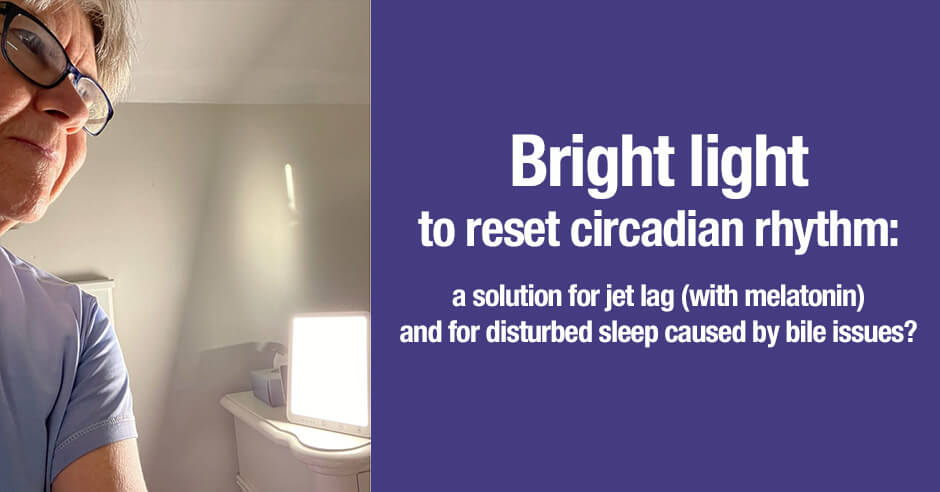
Bright light to reset circadian rhythm: a solution for jet lag (with melatonin) and for disturbed sleep caused by bile issues?

August 2, 2024 By Trudy Scott 28 Comments

bright light circadian rhythm

The symptoms of jet lag cause distress to an increasing number of travelers. Potentially they may impair sleep,mood and cognitive performance. Critically timed exposure to bright light and melatonin administration can help to reduce symptoms.

Bright light is one of the most powerful synchronizers of human rhythms and melatonin serves as a ‘‘dark pulse’’ helping to induce nighttime behaviors. Thus, enhancing day and night signals to the brain, appropriate to the environmental light/dark cycle of the new time zone, can serve to reestablish adaptive timing relationships between the body’s internal biological rhythms and the external environment, and thereby reduce the symptoms of jet lag.

The above is from a paper published in 2002, Jet Lag: Minimizing It’s Effects with Critically Timed Bright Light and Melatonin Administration.

I came across this research just before my recent trip to Boston. I always use high dose melatonin to help with jet lag but because it was a business trip and I needed to be in top form as soon as I arrived, I was intrigued about the addition of bright light. So I purchased a light-weight 10,000 lux bright light panel and took it with me.

I was actually looking for solutions for my issues with a strange sleep pattern i.e. in waking in the early hours and not being able to get back to sleep on days when I would go to bed much earlier than usual. That pilot study found that “a brief course of morning bright light treatment had positive effects on subjective sleep quality, daytime sleepiness, and sleep timing in patients with primary biliary cholangitis.” And it led me to the jet lag research which is typical when you’re digging through the research!

The benefits for both situations – jet lag and disturbed sleep/bile issues – reinforced my decision and I’m so glad I got one. I love it! My jet lag results were better with the bright light and melatonin combined (with some caveats I share below). And I continue to use my light panel daily which means much improved sleep on those nights when I have to get to bed earlier. I am a hot mess when I don’t get a good 9 hours sleep and it’s something I continually work on.

I share more on both studies below, details on what timing is best for the bright light when traveling and at home, melatonin dosing (from the study and what I do) and how I plan to adjust things for my next long flight.

More from the jet lag study on bright light timing and melatonin

The jet lag paper talks about light being “one of the most powerful synchronizers of human circadian rhythms:

  • Light in the morning advances circadian rhythms and
  • Light in the evening delays circadian rhythms.”

And so the author shares different and very “specific recommendations using bright light and melatonin for eastward and westward travel before and after departure”and depending on “time zone changes of up to 6, 7-9 and 10 or more hours.”

These involve using the bright light either morning or night and likewise with the melatonin.

Since I was traveling eastbound from Sydney to Boston (21+ hours depending on the route) I should have followed those specific instructions.

How I used the bright light panel and melatonin

Instead, I kept it simple and 3 days before my departure I started using the bright light for 30 minutes in the morning and took 2.5 mg melatonin (and my other usual sleep solutions – see below).

When I arrived in Boston I had an afternoon nap and took 10mg of melatonin that first night – the usual increase in melatonin I use when doing long trips. For the duration of my time in Boston (a week), I used the light panel each morning for 30 minutes and 10mg of melatonin each night. And I did not experience any jet lag, other than feeling a little tired for about an hour each afternoon. I was waking earlier than usual (4am then 4:30am then 5am and then 6am) but was getting 8-9 hours of solid sleep.

I stopped in Hawaii and spent a week with my sister on the way home. I did the same even though the paper had different directions for flying westbound on a 12 hour trip. I was really tired on arriving and crashed early and still woke earlier than usual but had no jet lag.

I continue to use the light panel for 30 minutes each morning and am using 10mg melatonin (I’ll drop it down to 2.5mg soon – wild dreams are my clue I’m getting too much). My sleep has been solid since returning (other than an issue with cellulose in a new product I tried). My bedtime is earlier and I had a little less energy in the afternoons for the first 2 weeks.

We were sprayed with insecticide on the plane on arrival in Australia so I suspect that may have been a factor. (I am trying to get something done about this – I can’t actually believe this happens!)

You may wonder why I shared this study and what I did instead. Quite honestly, I was in a mad rush before I left and didn’t have time to work out the different recommendations. And I figured if I found it overwhelming others may too so let’s keep it simple.

That said, I’m impressed by the level of detail in the recommendations and may try to implement some of this on a future trip where I have some leeway if it doesn’t work. If you’ve done it per the recommendations in the above study please do let us know.

Morning bright light for disturbed sleep in primary biliary cholangitis

As I mentioned above, I had also just read the pilot study, Morning Bright Light Treatment for Sleep-Wake Disturbances in Primary Biliary Cholangitis. “Primary biliary cholangitis is a rare, immune-mediated cholestatic liver disease, mostly affecting women” where there is cholestasis or a decrease in bile flow, pruritus (itchiness) and fatigue.  I don’t have this condition but do have bile issues and was experiencing a new sleep problem that my usual sleep protocol wasn’t helping.

I’ve always typically been a night owl, going to bed late and getting up late. However, I’m part of a new US-based Mastermind and with the time difference I have to get up at 5:30am two mornings a week for training sessions.  I would go to bed 9 hours earlier and without fail would wake at 1am or 2am and not be able to get back to sleep.

I figured it may be liver/bile related so when I found the above paper I was very excited to give morning bright light a try. And it’s been working!

The pilot study reports these results: “a brief course of morning bright light treatment had positive effects on subjective sleep quality, daytime sleepiness, and sleep timing in patients with PBC.” This matches what I am experiencing on those early training days.

If you’re curious, I write about my current bile issues here: Ox bile as a supplement: to help counter the effects of dietary oxalates very likely caused by bile issues and poor fat digestion. I’m not suggesting it’s anything like primary biliary cholangitis other than something seems to be going on with my liver and bile production or bile quality. I will add that ox bile supplementation has reduced my daytime fatigue dramatically.

Interestingly, in other research, it was suggested that “pruritus of cholestasis is responsive to bright light in some patients” i.e, the itchiness that is experienced with chronic liver disease/bile issues.

My light panel and other sleep solutions

As I shared above, I am a hot mess when I don’t get a good 9 hours of sleep and it’s something I continually work on.

I took this photo in Boston in my hotel room. You can see the light panel and the nutrients I use at night on a regular basis. There are also 3 essential oils I use on the blue cloth (lavender, rose geranium and clary sage) and mouth tape.  I always use an eye patch and only use earplugs when traveling.

sleep solutions

I recorded a video discussing each of the above and why I use it and will share this as a separate post if there is interest.

The only change for this trip was the full spectrum light panel.

The full spectrum light panel I purchased and now recommend

full spectrum light panel

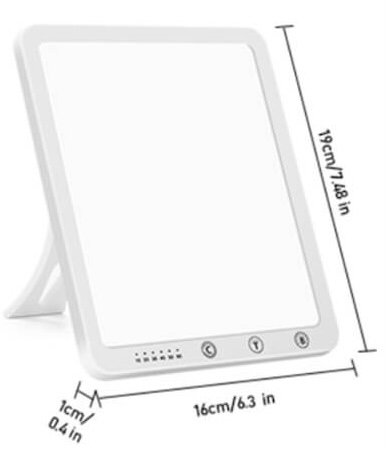
This is the exact one I purchased (my Amazon link and above image from Amazon). It has 5 brightness levels but I’m only using the brightest one. It has a timer – 10, 20, 30, 40, 50 and 60 minutes. To be safe I started with 10 minutes, then went to 20 minutes the next day and then 30 minutes and have continued with this time. It also has 3 colors but I’ve only used the white so far.

I packed it in my suitcase in the original box and although it was a little bulky, it worked well to prevent it getting damaged.

If you already have a 10,000 lux full spectrum light box or lamp, it will provide similar results and also mood benefits if you experience the winter blues (more about that here). However the light-weight bright light panel is ideal for traveling.

Update Dec 2025:

If the above full spectrum light panel is not available here are some other comparable panel options and some lamp options too:

  • Verilux Happy Light Luxe – a light panel (my Amazon link)
  • Verilux Happy Light Alba – another light panel (my Amazon link)
  • Happy Light Therapy Lamp – a standing map for your living room, bedroom or office (my Amazon link)
  • Light Therapy Lamp – a desk lamp (my Amazon link)

Additional resources when you are new to using amino acids as supplements

As you can see I continue to use GABA and tryptophan to keep me sleeping well and anxiety-free.

For clients who may be considering using either one of these amino acids, I use the symptoms questionnaire to figure out if low low serotonin or other neurotransmitter imbalances may be an issue.

If you suspect low levels of any of the neurotransmitters and do not yet have my book, The Antianxiety Food Solution – How the Foods You Eat Can Help You Calm Your Anxious Mind, Improve Your Mood, and End Cravings, I highly recommend getting it and reading it before jumping in and using amino acids on your own so you are knowledgeable. And be sure to share it with the practitioner/health team you or your loved one is working with.

There is an entire chapter on the amino acids and they are discussed throughout the book in the sections on gut health, gluten, blood sugar control (this is covered in an entire chapter too), sugar cravings, anxiety and mood issues.

The book doesn’t include product names (per the publisher’s request) so this blog, The Antianxiety Food Solution Amino Acid and Pyroluria Supplements, lists the amino acids that I use with my individual clients and those in my group programs.

If, after reading this blog and my book, you don’t feel comfortable figuring things out on your own (i.e. doing the symptoms questionnaire and respective amino acids trials), a good place to get help is the GABA QuickStart Program (if you have low GABA symptoms too). This is a paid online/virtual group program where you get my guidance and community support.

If you are a practitioner, join us in The Balancing Neurotransmitters: the Fundamentals program. This is also a paid online/virtual program with an opportunity to interact with me and other practitioners who are also using the amino acids.

Wrapping up and your feedback

I’d love to hear from you – does any of this resonate with you? If yes, has full spectrum light therapy helped with jet lag? What light box or light panel do you use? And do you also travel with one?

Do you also use melatonin for jet lag and how much helps you? And what else is part of your sleep solutions?

Has bright light therapy improved your sleep if you have liver/bile issues? Has it prevented middle of the night waking?

If you’re a practitioner have you seen this research and seen bright light therapy help with jet lag and/or sleep disruption caused by liver/bile issues?

Feel free to share and ask your questions below.

Filed Under: Gut health, Insomnia Tagged With: 000 lux, 10, bile liver, bright light, bright light panel, cholestasis, circadian rhythm, cognitive performance, daytime sleepiness, disturbed sleep, GABA, GABA Quickstart; Balancing Neurotransmitters: the Fundamentals program for practitioners, jet lag, melatonin, mood, primary biliary cholangitis, serotonin, sleep, sleep quality, sleep timing, tryptophan, waking early

Berberine in perimenopause and menopause: improving mood, calming the anxious mind, and improving heart health, blood sugar and bone health

May 10, 2024 By Trudy Scott 15 Comments

berberine and menopause

… Berberine, an isoquinoline alkaloid derived from plants of the generis Berberis, has been recognized as being capable of decreasing oxidative stress, LDL, triglycerides, and insulin resistance and of improving the mood. This review describes the cellular and clinical effects associated with the use of berberine, which suggest that this molecule could be an effective natural supplement to ensure a smooth peri- and postmenopausal transition.

The above is from a paper published in 2015, Potential benefits of berberine in the management of perimenopausal syndrome.

These are just a few of the many benefits of berberine. Other research reports impacts on the microbiome, benefits for bone density and kidney health – all very relevant in perimenopause and menopause.

I feel that berberine may be a nutrient to consider, in addition to dietary changes, stress reduction and lifestyle changes, and targeted individual amino acids. Read on to discover some of the mechanisms and the benefits of using a comprehensive approach, and feedback from folks in the community who are using berberine with success.

Impacts on oxidative stress, blood sugar/insulin resistance, lipids and heart health, and mood

I encourage you to read the full paper in order to get an overview of the impacts on oxidative stress, blood sugar/insulin resistance, lipids and heart health, and mood. Here is a very high level summary:

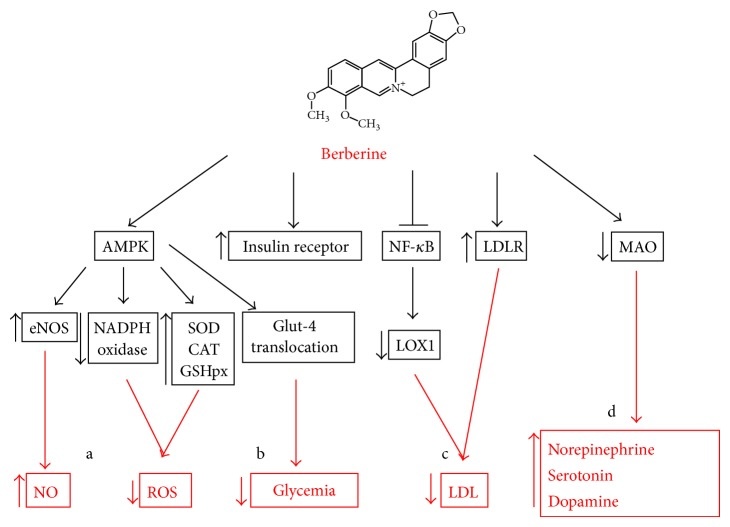
  • Estrogen deficiency, increased cardiovascular risk, an “overproduction of reactive oxygen species (ROS)” and reduced nitric oxide (NO) which are important contributing factors when it comes to “menopause-related endothelial dysfunction, atherosclerosis, hypertension, cardiovascular, and renal diseases.” Berberine counters this via various mechanisms.
  • Type 2 diabetes is higher amongst menopausal women, causing high blood sugar and insulin resistance. This paper shares a study that found berberine “significantly lowered fasting blood glucose (FBG), hemoglobin A1c, triglycerides, and insulin levels in patients with Type 2 diabetes as well as metformin and rosiglitazone.” One way berberine does this is via “increased insulin receptor (InsR) messenger RNA and protein expression.”
  • “inactivity of LDL receptor (LDLR)” in liver cells leads to higher levels of oxidized LDL, a risk factor for “endothelial dysfunction and atherosclerosis.” One mechanism is that berberine improves LDLR expression and has lipid-lowering activity.
  • When it comes to mood issues, the increased oxidative stress, immune dysfunction and inflammation play a role because of “interactions between neurotransmitters, neuropeptides, oxidative and nitrosative stress, and cytokines.” Higher levels of inflammatory markers such as interleukin-6 (IL-6), C-reactive protein, interleukin-1-beta (IL-1β), and TNFα “can enter the brain and may cause alterations of the metabolism of serotonin and dopamine.” Berberine helps to counter this inflammatory cascade and “inhibits the expression of MAO” , increasing norepinephrine, serotonin, and dopamine – and improving mood and presumably reducing anxiety too.
Berberine benefits menopause
From: Potential benefits of berberine in the management of perimenopausal syndrome

Feedback from folks in the community

When I shared this research on Facebook I received much in the way of positive results.

Susan shared this: “A functional medicine doctor suggested I take it with every meal. My A1C was not bad, (5.3) but my last level was 4.8. This was over the course of about 1 year.”

Becky shared this: “I used it for about 6 months along with diet changes to drop my A1C. Have been holding steady since with dietary measures alone. I didn’t realize berberine also helped lower LDL. Mine is slightly elevated. Not enough that my traditional MD has called me on it, but I’ve adjusted my diet again and hearing this about berberine I think I’ll try going back on it.”

Liz shared this: “I had gained some caregiver weight so started on berberine twice a day and it was helpful. However my Doc quickly had me switch over to [a combination product with berberine, chromium and alpha lipoic acid] and it’s fabulous! Twice a day and I feel great, my carb cravings are at bay and my bloodwork and overall health has vastly improved in just a few months.”

Marcy shared this: “Yes!! My son had been steadily gaining weight from binge eating and medications. In October 2022 his triglycerides were through the roof and I was so worried about his health. I put him on 500 mg of Berberine twice a day. Fast forward to today, he has lost approximately 50 pounds and his triglycerides are normal. There were other factors that may have contributed to the weight loss such as therapy and more structured eating times, but I absolutely believe the Berberine supported all this!” (this was also a combination product with berberine and a small amount of alpha lipoic acid and grape seed extract)

Marcia shared this: “I’ve used Berberine for appetite suppression, which it seems to help with, though not enough for me to lose any weight. But it did also actually lift my mood, which I was not expecting.”

Berberine: the microbiota, the gut-brain connection and anxiety

The number of studies on berberine is impressive and growing by the day. It’s not discussed in the above paper, but this paper, Effects of Berberine on the Gastrointestinal Microbiota states this: “The mechanism underlying the role of berberine in lipid‐lowering and insulin resistance is incompletely understood, but one of the possible mechanisms is related to its effect on the gastrointestinal microbiota.” Given what we know about the gut-brain connection, this is another likely mechanism for mood and anxiety benefits.

In another paper, Berberine ameliorates ovariectomy-induced anxiety-like behaviors by enrichment in equol generating gut microbiota, the authors propose that the use of berberine “modulates the gut microbiota, stimulates equol production, and improves anxiety-like symptoms” … “suggesting a direct link between gut microbiota modulation and estrogen deficiency-induced anxiety.”

Berberine: osteoporosis and the kidneys

An osteoporosis study shows that berberine regulates “the estrogen and thyroid hormone signaling pathways to treat osteoporosis in a multi-target, multi-pathway, and multi-system manner.”

And berberine used in conjunction with calcium carbonate and vitamin D, helps to prevent drug-induced bone loss too: “berberine inhibits bone resorption and improves bone formation to prevent glucocorticoid-induced osteoporosis.” I’d be considering vitamin K and other approaches like working towards optimal homocysteine, addressing food sensitivities, addressing possible oxalate and gallbladder issues too. The latter are more common during and after perimenopause.

Interestingly berberine also improves kidney health. One study reports that berberine “significantly ameliorated chronic kidney disease by altering the composition of the gut microbiota and inhibiting the production of gut-derived uremic toxins.”

A comprehensive approach that includes amino acids

As I mentioned above, I feel that berberine may be a nutrient to consider, in addition to dietary changes, stress reduction and lifestyle changes, and targeted individual amino acids. Berberine is relatively new to me and not covered in my book “The Antianxiety Food Solution” but it’s a great resource for the rest.

Here are are few blog posts specific to amino acids in perimenopause and menopause:

  • Tryptophan had the added benefit of turning me completely off alcohol when I took it to improve mood and sleep during perimenopause
  • “Potion” of tyrosine, Endorphigen, GABA and tryptophan has been nothing less than a miracle for my depression and anxiety – how long can I remain on these?
  • I have issues with perimenopausal anxiety a couple of weeks per month and don’t want to turn to SSRIs
  • The individual amino acids glutamine, GABA, tryptophan (or 5-HTP), DPA and tyrosine are powerful for eliminating sugar cravings, often within 5 minutes

The good news is that the amino acids provide immediate relief while the berberine is slower-acting and starting to have an impact.

Product recommendation: Thorne Berberine

There are many good berberine products available. I did some reading and research and landed on Thorne Berberine.

thorne berberine

It is available from my online store (Fullscript – only available to US customers – use this link to set up an account) and it’s available via iherb (use this link to save 5%).

If you’re new to berberine, be sure to discuss the research and if it may be something to consider with your practitioner.

Additional resources when you are new to using amino acids as supplements

As always, I use the symptoms questionnaire to figure out if low GABA or other neurotransmitter imbalances may be an issue.

If you suspect low levels of any of the neurotransmitters and do not yet have my book, The Antianxiety Food Solution – How the Foods You Eat Can Help You Calm Your Anxious Mind, Improve Your Mood, and End Cravings, I highly recommend getting it and reading it before jumping in and using amino acids on your own so you are knowledgeable. And be sure to share it with the practitioner/health team you or your loved one is working with.

There is an entire chapter on the amino acids and they are discussed throughout the book in the sections on gut health, gluten, blood sugar control (this is covered in an entire chapter too), sugar cravings, anxiety and mood issues.

The book doesn’t include product names (per the publisher’s request) so this blog, The Antianxiety Food Solution Amino Acid and Pyroluria Supplements, lists the amino acids that I use with my individual clients and those in my group programs.

If, after reading this blog and my book, you don’t feel comfortable figuring things out on your own (i.e. doing the symptoms questionnaire and respective amino acids trials), a good place to get help is the GABA QuickStart Program (if you have low GABA symptoms too). This is a paid online/virtual group program where you get my guidance and community support.

If you are a practitioner, join us in The Balancing Neurotransmitters: the Fundamentals program. This is also a paid online/virtual program with an opportunity to interact with me and other practitioners who are also using the amino acids.

Wrapping up and your feedback

I do always appreciate feedback from the community and being able to share it on the blog.

Now I’d love to hear from you – have you used berberine with success? How much have you used, which product and how has it helped?

Were you aware of all these benefits?

Have you also used amino acids and dietary approaches as you start to see hormonal shifts?

If you’re a practitioner do you berberine with your clients/patients?

And please let me know if it’s helpful that I’m now including product recommendations and where to get them.

Feel free to share and ask your questions below.
Filed Under: Anxiety, Depression, Women's health Tagged With: amino acids, anxious, anxious mind, berberine, blood sugar, bone density, bone health, calming, GABA, GABA Quickstart; Balancing Neurotransmitters: the Fundamentals program for practitioners, gut-brain, heart health, insulin resistance, kidney, LDL, menopause, microbiome, mood, osteoporosis, oxalates, oxidative stress, perimenopause, triglycerides, tryptophan

Lidtke Endorphigen vs Doctor’s Best D-phenylalanine: the taste difference and endorphin boosting benefits for mood and cravings

April 19, 2024 By Trudy Scott 26 Comments

lidtke endorphigen vs doctor's best d-phenylalanine

The amino acid d-phenylalanine (DPA) is used to boost endorphins in order to improve mood and reduce cravings. Lidtke Endorphigen has long been a favorite recommendation of mine for this purpose. Doctor’s Best D-phenylalanine is an equally effective and quality product, and both are ideally used opened onto the tongue. When DPA is used this way you get quick results. Many of my clients (and myself included) describe the opened DPA as a dark-chocolate bitter like taste that is not unpleasant. However, about half my clients don’t particularly like the taste of DPA and one woman in my community, Ali, was ready to give up on the Lidtke Endorphigen product because of the taste.

In today’s blog you can read her feedback comparing both products and what worked for her, feedback from a few other women about both products and my personal feedback – with all of us sharing results and taste. And I share some takeaway lessons from these DPA experiences.

She shared this about her strong aversion to the Endorphigen:

Oh goodness. If I open the Endorphigen on my tongue, it’s just awful. I might be able to get 1/4 of it but that’s it. And the taste stays there for at least an hour. No sense of chocolate in there for me. Isn’t that interesting that you and others like the taste. I consider myself pretty open to whatever needs to be done but wow, this is almost no way.

I shared how I love the taste of DPA and that it’s 50:50 in terms of loving it (chocolate-like taste) vs not loving it but also that using the amino acids opened is more effective for many folks. But it’s no good if it tastes bad. I also shared that Lidtke Endorphigen contains a small amount of vitamin B2 and vitamin B6 and maybe that was making it intolerable for her.

Doctor’s Best D-phenylalanine contains DPA only and when I let her know all this, Ali decided to give it a try. This is her feedback on the day she got it:

I received my Doctor’s Best D-phenylalanine and put it on my tongue. It’s 10 bazillion times better than the Endorphigen which was so bad for me that I couldn’t get past it. And I think I can get past a lot. I’m grateful. So now I have to see how it works for me.

Ali’s dark clouds have lifted and her sweet tooth has disappeared

The next day Ali posted this, amazed this product made such a difference in just one day:

I used the Doctor’s Best D-phenylalanine only once and that was today at about 8 am. I felt just generally better, no dark clouds. But also, it’s now 6:30pm when I get my sweet tooth. Nothing. Nothing at all. So no sweet tooth and an improved general feeling. I realize it’s only one day but I feel like it’s made a difference.

And a week later she posted this, confirming that Doctor’s Best D-phenylalanine “is a game changer”:

So much different from Endorphigen. I find I need only 1/2 capsule on my tongue. There’s not much of a taste to me. I then don’t want sweets like I have been wanting in the morning and evening. But I also have a better general feeling. Hard to describe but I just feel more grounded. I can’t tell if it physically reduces the sweet craving or if it’s a mental change. Or both. In any case, nice solid change. Thank you for being there.

Alicia also likes Doctor’s Best D-phenylalanine opened on to her tongue

She shared this about how this DPA product makes her feel:

It gives me a great feeling. Just getting me through some stressful moments. I recommend it! Opening onto the tongue is more effective than swallowing but swallowing adds a bit of relaxation too.

I don’t mind the taste at all – it reminds me of sugar or cocoa powder (my husband was less keen when I got him to try). And it works quickly, yes – I think within 10 minutes but probably less. And I feel more perky for hours. I think I feel more alert but calm emotionally.

I always have a bottle of DPA on hand and I shared my success with Doctor’s Best D-phenylalanine for a recent tooth issue/pain and emotional pain over the holidays on this blog post.

And yet many folks do well with Lidtke Endorphigen and like the taste

I’d like to be clear that this is not intended to be a negative post about Lidtke Endorphigen at all. I still recommend both products and I’ve personally used and like the taste of both. The purpose is to illustrate that we need to find what works for our unique needs and tastes.

As you can see, many folks do really well with the Lidtke product.

Lynn shared this: “I love using the DPA! I use the Lidke brand. Very helpful in improving mood and anxiety. Open on my tongue. I like the taste!”

Joan shared this: “It’s interesting to read your recommendation to open the capsule … I had just started doing that! (Already using powdered forms of other aminos) Anyone looking thru my trash might wonder what I’m up to. This method really works for me.” (she’s using the Lidtke brand).

The addition of vitamin B2 and vitamin B6 to the Lidtke DPA clearly makes no difference in these instances.

The takeaways from this post

  • DPA is effective for boosting mood and reducing cravings
  • DPA works more effectively when opened on to the tongue and you’ll see results more quickly
  • Don’t push through if a product tastes unpleasant
  • Don’t give up if one brand doesn’t work for you
  • What works for you may not work for someone else
  • We all have different taste perceptions – find what works for your unique needs and tastes
  • Product formulations change so keep track of exact ingredients on your log and check ingredients when you re-purchase a product

Both DPA products and where to find them

d-phenylalanine
lidke endorphigen

Doctor’s Best D-phenylalanine is available via iherb (use this link to save 5%). Lidtke Endorphigen is available from the company site and from my online store (Fullscript – only available to US customers – use this link to set up an account).

Update September 27, 2024

It appears there are issues with the supply of Doctor’s Best D-phenylalanine. As of now it’s no longer available on their website and nor is it available via iherb.

I emailed Doctor’s Best and received a very generic response and emailed again to try and find out if it’s a shortage or has been discontinued.

They replied to my 2nd email with this:

We appreciate your interest in the products that we offer. Unfortunately, our D-phenylalanine is temporarily out of stock and at this time, we do not have a specific restock date available. We apologize for the inconvenience.

We recommend checking back on our website periodically for updates on product availability. As soon as it is restocked, it will be listed on our website, and you’ll be able to place an order.

The problem is far from clear. Someone in the community reached out and shared this: “When I spoke to a DB representative on the phone, they told me the product was discontinued due to ‘supply chain issues,’ that they had not been producing it for some time, and that Lidtke was the only place they could redirect me. Sounds like they don’t even know in-house what the true status is.”

Let’s hope this is just a shortage. But either way, right now Lidtke Endorphigen is the only other company I know that offers DPA and because of the taste issue some individuals have with the Lidtke product, swallowing a capsule is going to be the best option. I have also reached out to Lidtke sharing the taste issue and this blog post, and asked if they would be willing to offer a DPA only product. I’ll keep you posted on the outcome (and thanks if you reached out to let me know your findings).

Update May 30, 2025

Unfortunately, Doctor’s Best D-phenylalanine has been discontinued. The good news is that Lidtke appreciated the fact that I shared your taste issues and feedback, and my request for a powder-only product of d-phenyalanine/DPA has come to fruition.

You can read more about this new DPA product on this blog post.

Additional resources when you are new to using DPA and other amino acids as supplements

As a reminder, low endorphins can cause low mood, weepiness, emotional pain, physical pain and emotional eating or cravings. As always, I use the symptoms questionnaire to figure out if low endorphins or other neurotransmitter imbalances may be an issue.

If you suspect low levels of any of the neurotransmitters and do not yet have my book, The Antianxiety Food Solution – How the Foods You Eat Can Help You Calm Your Anxious Mind, Improve Your Mood, and End Cravings, I highly recommend getting it and reading it before jumping in and using amino acids on your own so you are knowledgeable. And be sure to share it with the practitioner/health team you or your loved one is working with.

There is an entire chapter on the amino acids and they are discussed throughout the book in the sections on gut health, gluten, blood sugar control (this is covered in an entire chapter too), sugar cravings, anxiety and mood issues.

The book doesn’t include product names (per the publisher’s request) so this blog, The Antianxiety Food Solution Amino Acid and Pyroluria Supplements, lists the amino acids that I use with my individual clients and those in my group programs (over and above the DPA products I mentioned above).

If, after reading this blog and my book, you don’t feel comfortable figuring things out on your own (i.e. doing the symptoms questionnaire and respective amino acids trials), a good place to get help is the GABA QuickStart Program (if you have low GABA symptoms too). This is a paid online/virtual group program where you get my guidance and community support.

If you are a practitioner, join us in The Balancing Neurotransmitters: the Fundamentals program. This is also a paid online/virtual program with an opportunity to interact with me and other practitioners who are also using the amino acids.

Wrapping up and your feedback

I do always appreciate feedback like this so keep it coming so more folks can get results.

Now I’d love to hear from you – how has DPA helped your mood and cravings (and pain too?)

Which product has worked well for you?

Do you find DPA is more effective if swallowed or as a capsule opened? And how do you describe the taste?

If you’re a practitioner do you use DPA with your clients/patients and have you had this feedback?

And please let me know if it’s helpful that I’m now including product recommendations and where to get them?

Feel free to share and ask your questions below.

Filed Under: DPA/DLPA, Endorphins, Pain Tagged With: amino acid, cravings, d-phenylalanine, Doctor’s Best D-Phenylalanine, DPA, endorphin, GABA Quickstart; Balancing Neurotransmitters: the Fundamentals program for practitioners, Lidtke Endorphigen, mood, taste

How to use bright light therapy for increased anxiety, increased panic and SAD during the cold dark winter months

January 19, 2024 By Trudy Scott 2 Comments

bright light therapy

There is a seasonality to anxiety and panic disorder just as there are seasonal variations in mood for certain susceptible individuals:

Following a clinical observation of increased anxiety symptoms and mood changes during winter in panic disorder patients, the Seasonal Pattern Assessment Questionnaire (SPAQ) was completed by 133 patients. Global Seasonality Scores (GSS), and the prevalence of Seasonal Affective Disorder (SAD), were significantly higher than reported in general population studies.

Seasonal changes were also found in anxiety and panic attacks.

These findings suggest the possibility of a common aetiology [etiology or cause] for panic disorder and SAD, that seasonality may be a far more general phenomenon in psychopathology, and that light therapy may be a useful treatment for some panic disorder patients.

The above abstract is from this paper: Seasonality in panic disorder

If you’re new to bright light therapy or are currently using it with success and would like to learn more, I’d like to point you to this excellent review paper, Bright Light as a Personalized Precision Treatment of Mood Disorders. The authors of the above paper cover some of the basics like how to use bright light for SAD (seasonal affective disorder) or the winter blues, and for how long, possible adverse effects and who should not use bright light therapy (this last aspect is theoretical).

This information about bright light and mood disorders can be applied to anxiety and panic attacks, in addition to SAD.

As you’ll read below there are also often benefits for non seasonal depression, bipolar disorder, fatigue, sleep issues, emotional eating and other conditions too.  And bright light therapy can be used in conjunction with the amino acids tryptophan or 5-HTP, and is often used with psychiatric medications too.

How to use bright light for SAD and winter anxiety/panic and for how long?

You sit in front of the light box or full spectrum lamp – on a table or your desk – with open eyes.  Using a standing lamp as a source of light is another option.

The authors of the Bright Light paper share the following approach for SAD (seasonal affective disorder or the winter blues), all of which is applicable for increased anxiety and panic attacks in winter too):

  • Start with a “duration of 30 minutes, using a light intensity of 10,000 lux.” (more on lux comparisons below)
  • “Early morning administration offers greater chances for remission” (although there is documented research and clinical results that for some folks later in the day works well too).
  • “Measured at eye level, a therapeutic distance of 60–80 cm from the light box can be seen as standard requirements (some other devices recommend a distance of 30 cm, so we advise to follow the device recommendations that take into account light parameters and distance).” Most of the lights/devices I recommend state a distance of 30 cm so it’s best to follow the manufacturer’s guidelines.
  • “Lower intensities also appear to be effective, but need longer exposure durations: 2,500 Lux for 2 hours per day or 5,000 Lux for 1 hour a day.” This means sitting further away may allow you to sit in front of the lamp/device for longer duration and get the same benefits.
  • “Significant effects appear only at 2–3 weeks of treatment.” Based on my clinical results, I have clients start to feel some improvements right away with the correct distance and a good lamp.
  • “Treatment is usually continued until the time of usual spontaneous remission in the spring or summer” (and is ideally started as fall/autumn starts to approach rather than in the middle of winter).

I’m also adding this missing and yet important fact from another paper: “The light box is angled ~30° from the line of gaze. The user does not stare directly into the light.”

They also discuss guidelines for year round use of bright light therapy for non-seasonal unipolar depression, another term for major depressive disorder. And midday or morning use for bipolar depression (when on mood stabilizers). I share more about this in my blog: Midday bright light therapy for bipolar depression. I refer you to the study for this information so it can be discussed with your doctor.

Bright light therapy for insomnia and decreased alertness/fatigue

The Bright Light paper also mentions how light therapy “may also be useful to improve sleep quality” … and … “abnormalities in circadian rhythms such as sleep phase delay syndrome, that are frequently associated in mood disorders.”

The authors also mention how light therapy can also help “decreased alertness”, presumably as a result of poor sleep.

Clinically, I see these benefits for clients in similar ways that tryptophan or 5-HTP help with sleep issues. This is related to the serotonin boosting mechanism of bright light therapy. Keep in mind anxiety and panic are symptoms of low serotonin.

What are some possible adverse effects of bright light therapy?

The authors state that bright light therapy “is well-tolerated by patients; adverse effects such as headache, eyestrain, nausea and agitation, are usually transient and mild.” Clinically, I have seldom seen clients experience headache, eyestrain and nausea.

However, I have seen agitation and other low serotonin symptoms get worse – like feeling more sad or more worried or more angry or more irritated or more sleep issues (or all of the above). Too much bright light therapy can ramp up low serotonin symptoms in a similar way that too much tryptophan or 5-HTP can. In other words, it can be overdone and more is not necessarily better. You have to find a balance and figure out what works best for your needs.

I also have clients who are prescribed antidepressants discuss light therapy with their prescribing doctor as I suspect there is the possibility of serotonin syndrome. I don’t see any reports of this in the research and a number of reports of bright light therapy being used successfully in conjunction with antidepressants.

Who should not use bright light therapy?

The authors share these contraindications: “ophthalmic disorders (cataract, macular degeneration, glaucoma, retinitis pigmentosa) and disorders affecting the retina (retinopathy, diabetes, herpes, etc.).” They recommend getting an eye examination if you are in doubt.

Other papers state that the above is theoretical and there are no documented cases of eye damage from bright light therapy. But if you suspect you may be at high risk, get the approval from your ophthalmologist and ongoing monitoring too.

Recommended lights, lamps and panels: always 10,000 lux

This blog post, Winter blues or SAD: light therapy has been updated (as of Jan 2024) with new links for recommended lights/lamps/panels, all 10,000 lux. You can also read feedback from folks who use and find the benefits of full spectrum light or bright light therapy. For example, Chrstine shared this:

My office is the darkest room in the house and I have one sitting on my desk, especially helpful in the winter. This is the second Verilux Happy Light I have used and I really like it. Living in Nevada where there is sunshine over 330 days of the year I am so accustomed to light and brightness that if I am in a dark room or space for too long it really affects me. This has been a great product for me and I can recommend it.

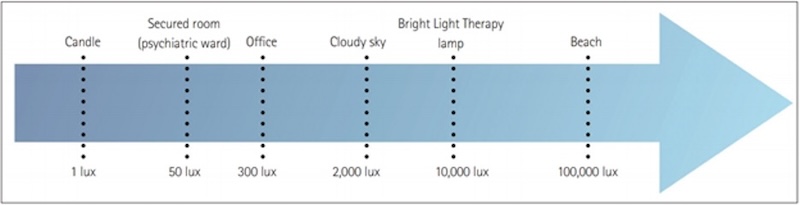
If you’re curious about lux, it is a unit of illumination and this paper, Light Therapy in Mood Disorders: A Brief History with Physiological Insights, includes this very useful lux comparison image:

light therapy and mood disorders
The above is shared under the Creative Commons Attribution License and can be found here .

The combination of using bright light therapy with amino acids such as tryptophan and 5-HTP

I often recommend the use of light therapy in conjunction with amino acids such as tryptophan and 5-HTP. This offers additional serotonin support and helps ease worry-type anxiety, panic attacks, low mood, insomnia, cravings and more. I discuss this combination approach in the winter blues blog.

When someone is already using amino acids with some success, we may just add light therapy and keep amino acid dosing the same or we may use higher doses of amino acids like tryptophan, 5-HTP and GABA during the winter months. We may also use both depending on the person’s unique needs.

I had one client who did really well with tryptophan: his anxiety decreased dramatically but then ramped up before winter. Increasing tryptophan was too much for him so we kept the original tryptophan dose and he started bright light therapy. This worked very well for him until the end of spring when he was able to stop the light therapy.

I also share links to increased OCD (obsessive compulsive disorder), intrusive thoughts, PMDD (premenstrual dysphoric disorder), PMS (premenstrual syndrome), binge eating/emotional eating and drinking/alcoholism in the winter months – and the role of light therapy and amino acids.

Additional resources when you are new to using tryptophan or other amino acids as supplements

We use the symptoms questionnaire to figure out if low serotonin or other neurotransmitter imbalances may be an issue for you.

If you suspect low levels of any of the neurotransmitters and do not yet have my book, The Antianxiety Food Solution – How the Foods You Eat Can Help You Calm Your Anxious Mind, Improve Your Mood, and End Cravings, I highly recommend getting it and reading it before jumping in and using amino acids on your own so you are knowledgeable. And be sure to share it with the practitioner/health team you or your loved one is working with.

There is an entire chapter on the amino acids and they are discussed throughout the book in the sections on gut health, gluten, blood sugar control, sugar cravings, anxiety and mood issues. The importance of quality animal protein is also covered.

The book doesn’t include product names (per the publisher’s request) so this blog, The Antianxiety Food Solution Amino Acid and Pyroluria Supplements, lists the amino acids that I use with my individual clients and those in my group programs.

If, after reading this blog and my book, you don’t feel comfortable figuring things out on your own (i.e. doing the symptoms questionnaire and respective amino acids trials), a good place to get help is the GABA QuickStart Program (if you have low GABA symptoms too). This is a paid online/virtual group program where you get my guidance and community support.

If you are a practitioner, join us in The Balancing Neurotransmitters: the Fundamentals program. This is also a paid online/virtual program with an opportunity to interact with me and other practitioners who are also using the amino acids.

Do you experience increased anxiety, panic attacks and/or the winter blues in the winter months? Have you had success with bright light therapy?

If yes, which full spectrum lamp have you found to be the most useful? What time of the day do you use it, how often do you use it and for what duration?

Have you used a combination of amino acids and light therapy, and adjusted up your amino acids during the colder and darker winter months?

If you’re a practitioner do you recommend light therapy to your clients/patients?

Feel free to share and ask your questions below.
Filed Under: Amino Acids, Anxiety and panic, Depression, Emotional Eating Tagged With: 000 lux, 10, 5-HTP, anxiety, Bipolar, Bright light therapy, depression, emotional eating amino acids, fatigue, GABA Quickstart; Balancing Neurotransmitters: the Fundamentals program for practitioners, how to use, light therapy, mood, panic, SAD, seasonal affective disorder, seasonality, sleep, tryptophan, winter, winter blues

  • Page 1
  • Page 2
  • Page 3
  • Interim pages omitted …
  • Page 8
  • Go to Next Page »

Primary Sidebar

NEW! GABA QuickStart Homestudy (with special intro pricing)

gaba quickstart homestudy

Free Report

9 Great Questions Women Ask about Food, Mood and their Health

You'll also receive a complimentary subscription to my ezine "Food, Mood and Gal Stuff"


Connect with me

Popular Posts

  • Amino Acids Mood Questionnaire from The Antianxiety Food Solution
  • The Antianxiety Food Solution Amino Acid and Pyroluria Supplements
  • Pyroluria Questionnaire from The Antianxiety Food Solution
  • Collagen and gelatin lower serotonin: does this increase your anxiety and depression?
  • Tryptophan for the worry-in-your-head and ruminating type of anxiety
  • GABA for the physical-tension and stiff-and-tense-muscles type of anxiety
  • The Antianxiety Food Solution by Trudy Scott
  • Seriphos Original Formula is back: the best product for anxiety and insomnia caused by high cortisol
  • Am I an anxious introvert because of low zinc and vitamin B6? My response to Huffington Post blog
  • Vagus nerve rehab with GABA, breathing, humming, gargling and key nutrients

Recent Posts

  • What do I use instead of Seriphos to help lower high cortisol that is affecting my sleep and making me anxious at night?
  • BeSerene™ GABA/theanine cream eases severe muscle tension in her neck/shoulders, prevents her bad headaches and quells her anxiety
  • How the correct approach, dose and sublingual use of GABA can be calming and not cause a flushed and itchy face and neck
  • The amino acid glutamine improves low mood by addressing gut health, and it has calming effects too
  • Flight anxiety with heightened breath, physical tension and also fearing the worst (the role of low GABA and low serotonin)

Categories

  • 5-HTP
  • AB575
  • Addiction
  • ADHD
  • Adrenals
  • Alcohol
  • Allergies
  • Alzheimer's disease
  • Amino Acids
  • Anger
  • Antianxiety
  • Antianxiety Food Solution
  • Antidepressants
  • Anxiety
  • Anxiety and panic
  • Autism
  • Autoimmunity
  • benzodiazapines
  • Bipolar disorder
  • Books
  • Caffeine
  • Cancer
  • Candida
  • Children/Teens
  • Collagen
  • Cooking equipment
  • Coronavirus/COVID-19
  • Cravings
  • Depression
  • Detoxification
  • Diabetes
  • Diet
  • DPA/DLPA
  • Drugs
  • EFT/Tapping
  • EMF
  • EMFs
  • Emotional Eating
  • Endorphins
  • Environment
  • Essential oils
  • Events
  • Exercise
  • Fear
  • Fear of public speaking
  • Fertility and Pregnancy
  • Fish
  • Food
  • Food and mood
  • Functional neurology
  • GABA
  • Gene polymorphisms
  • General Health
  • Giving
  • Giving back
  • Glutamine
  • Gluten
  • GMOs
  • Gratitude
  • Gut health
  • Heart health/hypertension
  • Histamine
  • Hormone
  • Hyperparathyroidism
  • Hypoglycemia
  • Immune system
  • Inflammation
  • Insomnia
  • Inspiration
  • Introversion
  • Joy and happiness
  • Ketogenic diet
  • Lithium orotate
  • Looking awesome
  • Lyme disease and co-infections
  • MCAS/histamine
  • Medication
  • Men's health
  • Mental health
  • Mercury
  • Migraine
  • Mold
  • Movie
  • MTHFR
  • Multiple sclerosis
  • Music
  • NANP
  • Nature
  • Nutritional Psychiatry
  • OCD
  • Osteoporosis
  • Oxalates
  • Oxytocin
  • Pain
  • Paleo
  • Parasites
  • Parkinson’s disease
  • PCOS
  • People
  • PMS
  • Postpartum
  • PTSD/Trauma
  • Pyroluria
  • Questionnaires
  • Real whole food
  • Recipes
  • Research
  • Schizophrenia
  • serotonin
  • SIBO
  • Sleep
  • Special diets
  • Sports nutrition
  • Stress
  • Sugar addiction
  • Sugar and mood
  • Supplements
  • Teens
  • Testimonials
  • Testing
  • The Anxiety Summit
  • The Anxiety Summit 2
  • The Anxiety Summit 3
  • The Anxiety Summit 4
  • The Anxiety Summit 5
  • The Anxiety Summit 6
  • Thyroid
  • Thyroid health
  • Toxins
  • Tryptophan
  • Tyrosine
  • Uncategorized
  • Vegan/vegetarian
  • Women's health
  • Yoga

Archives

  • October 2025
  • September 2025
  • August 2025
  • July 2025
  • June 2025
  • May 2025
  • April 2025
  • March 2025
  • February 2025
  • January 2025
  • November 2024
  • October 2024
  • September 2024
  • August 2024
  • July 2024
  • June 2024
  • May 2024
  • April 2024
  • March 2024
  • February 2024
  • January 2024
  • December 2023
  • November 2023
  • October 2023
  • September 2023
  • August 2023
  • July 2023
  • June 2023
  • May 2023
  • April 2023
  • March 2023
  • February 2023
  • January 2023
  • December 2022
  • November 2022
  • October 2022
  • September 2022
  • August 2022
  • July 2022
  • June 2022
  • May 2022
  • April 2022
  • March 2022
  • February 2022
  • January 2022
  • December 2021
  • November 2021
  • October 2021
  • September 2021
  • August 2021
  • July 2021
  • June 2021
  • May 2021
  • April 2021
  • March 2021
  • February 2021
  • January 2021
  • December 2020
  • November 2020
  • October 2020
  • September 2020
  • August 2020
  • July 2020
  • June 2020
  • May 2020
  • April 2020
  • March 2020
  • February 2020
  • January 2020
  • December 2019
  • November 2019
  • October 2019
  • September 2019
  • August 2019
  • July 2019
  • June 2019
  • May 2019
  • April 2019
  • March 2019
  • February 2019
  • January 2019
  • December 2018
  • November 2018
  • October 2018
  • September 2018
  • August 2018
  • July 2018
  • June 2018
  • May 2018
  • April 2018
  • March 2018
  • February 2018
  • January 2018
  • December 2017
  • November 2017
  • October 2017
  • September 2017
  • August 2017
  • July 2017
  • June 2017
  • May 2017
  • April 2017
  • March 2017
  • February 2017
  • January 2017
  • December 2016
  • November 2016
  • October 2016
  • September 2016
  • August 2016
  • July 2016
  • June 2016
  • May 2016
  • April 2016
  • March 2016
  • February 2016
  • January 2016
  • December 2015
  • November 2015
  • October 2015
  • September 2015
  • August 2015
  • July 2015
  • June 2015
  • May 2015
  • April 2015
  • March 2015
  • February 2015
  • January 2015
  • December 2014
  • November 2014
  • October 2014
  • September 2014
  • August 2014
  • July 2014
  • June 2014
  • May 2014
  • April 2014
  • March 2014
  • February 2014
  • January 2014
  • December 2013
  • November 2013
  • October 2013
  • September 2013
  • August 2013
  • July 2013
  • June 2013
  • May 2013
  • April 2013
  • March 2013
  • February 2013
  • January 2013
  • December 2012
  • November 2012
  • October 2012
  • August 2012
  • July 2012
  • June 2012
  • May 2012
  • April 2012
  • March 2012
  • February 2012
  • January 2012
  • December 2011
  • November 2011
  • October 2011
  • September 2011
  • August 2011
  • July 2011
  • June 2011
  • May 2011
  • April 2011
  • March 2011
  • February 2011
  • January 2011
  • December 2010
  • October 2010
  • September 2010
  • July 2010
  • May 2010
  • April 2010
  • March 2010
  • February 2010
  • January 2010
  • November 2009

Share the knowledge!

The above statements have not been evaluated by the Food and Drug Administration. Products listed in this website are not intended to diagnose, treat, cure or prevent any disease.

The information provided on this site is for informational and educational purposes only and is not intended as a substitute for advice from your physician or other health care professional. You should consult with a healthcare professional before starting or modifying any diet, exercise, or supplementation program, before taking or stopping any medication, or if you have or suspect you may have a health problem.


Copyright © 2026 Trudy Scott. All Rights Reserved. | Privacy | Terms and Conditions | Refund Policy | Medical Disclaimer

Free Report

9 Great Questions Women Ask about Food, Mood and their Health

You’ll also receive a complimentary subscription to my ezine “Food, Mood and Gal Stuff”