• Skip to primary navigation
  • Skip to main content
  • Skip to primary sidebar

everywomanover29 blog

Food, Mood and Women's Health – Be your healthiest, look and feel great!

  • Blog
  • About
  • Services
  • Store
  • Resources
  • Testimonials
  • The Book
  • Newsletter
  • Contact
  • Search this site

microbiome

The Anxiety Summit – Anxiety and digestion: the microbiome, stomach acid, bile and the vagus nerve

June 10, 2016 By Trudy Scott 50 Comments

Liz Lipski_Anxiety4

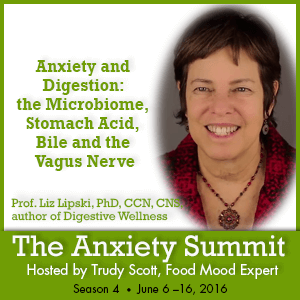
Prof. Liz Lipski, PhD, CCN, CNS, was interviewed on the Anxiety Summit by host of the Anxiety Summit, Trudy Scott, Food Mood Expert and Nutritionist, author of The Antianxiety Food Solution.

Anxiety and digestion: the microbiome, stomach acid, bile and the vagus nerve

  • The microbiome – how these microbes are “us” and not different from us
  • Low stomach acid and the effects on protein/zinc/iron absorption, and candida
  • Low bile production and fat absorption issues
  • The vagus nerve, enteric nervous system and neurotransmitter production

Here are some gems from our interview:

So just to start the microbiome itself is not something separate from us but it’s the most newly recognized organ that we have in the human body.  And it’s comprised of viruses, bacteria and fungi.  And they’re like our rainforest and they live in every epithelial cell surface of our body so they’re on our skin, they’re in your lungs, in your hair, in your nailbeds.  They’re in your genitourinary system, in your digestive system, in your nose.  They’re really everywhere and I think that we’re also going to find that we have these microbes inside of our brain and inside of our liver and I think the more we learn we’re going to find that they’re really everywhere.

The thing that excites me about them is that they really help run our metabolism, help determine whether we’re fat or thin, help determine what our moods are like and how we feel. 

I just love this comment about the microbiome:

And honestly I never know are we just a big bag for carrying around these microbes and they’re really the intelligence in our body or what?  Because they’re kind of like the superstars and we’re really a super organism.  And without them we don’t function at all.

Here is some of what covered in the gut brain connection section:

We make a lot of neurotransmitters in our gut.  In fact we make about 80 to 90 percent of our neurotransmitters like serotonin.  We make most of it in our digestive system and not in our brain at all.  And when you start looking at it, it’s like wow, you look at dopamine and epinephrine and norepinephrine and all of these are made in great abundance in the digestive system itself and again they help modulate again the microbiome.  They help modulate gut motility, so how fast or how slow the food moves through our digestive system. 

Here is a fascinating article that covers much of the new research. The tantalizing links between gut microbes and the brain : Neuroscientists are probing the idea that intestinal microbiota might influence brain development and behaviour.

We cover hydrochloric acid and minerals:

So hydrochloric acid is really important for that.  It also helps us just break down proteins so that our digestive enzymes don’t have to work so hard.  And then it also in the beginning of the small intestine which is called the duodenum -it’s the first 12 to 18 inches – what happens is that the acid is still there before it get neutralized by the pancreas which secretes basically baking soda and neutralizes it because it’s done its job.  But in that first big part of the small intestine, the duodenum, is where we absorb iron and calcium and zinc and to a lesser extent magnesium and copper.  And so when we don’t have enough acid we’re more likely to get mineral insufficient.

This is the book she mentions in the interview – Why Stomach Acid Is Good for You: Natural Relief from Heartburn, Indigestion, Reflux and GERD by Jonathan Wright
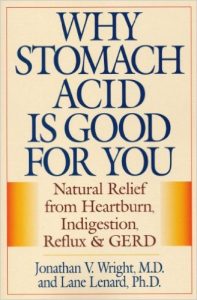
why stomach acid is good for you

Here is Liz’s fabulous book Digestive Wellness 4th edition
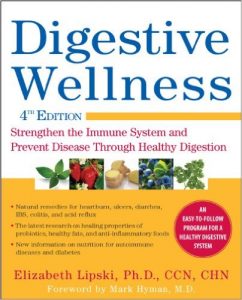
digestive wellness

Here is the Stomach Acid/Hydrochloric Acid Test handout

If you are not already registered for the Anxiety Summit you can get live access to the speakers of the day here: www.theAnxietySummit.com

Missed this interview or can’t listen live? Or want this and the other great interviews for your learning library? Purchase the MP3s or MP3s + transcripts and listen when it suits you.

You can find your purchasing options here.: Anxiety Summit Season 1, Anxiety Summit Season 2, Anxiety Summit Season 3, and Anxiety Summit Season 4.

Filed Under: Events, The Anxiety Summit 4 Tagged With: anxiety, anxiety summit, bile, digestion, Liz Lipski, microbiome, stomach acid, Trudy Scott, vagus nerve

Dr. David Perlmutter on The Role of Microbiome Diversity in Health and Disease

March 18, 2016 By Trudy Scott Leave a Comment

I had the distinct pleasure of hearing Dr. David Perlmutter present in person at the recent Integrative Healthcare Symposium. Dr. Perlmutter is a well-known neurologist and author of New York Times Bestsellers Grain Brain – The Surprising Truth About Wheat, Carbs, and Sugar – Your Brain’s Silent Killers and Brain Maker: The Power of Gut Microbes to Heal and Protect Your Brain – For Life

David-Perlmutter

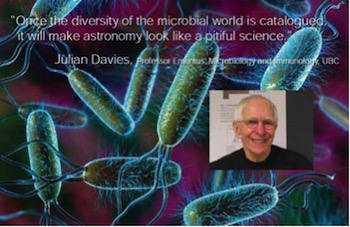
As expected, his talk was riveting, and so I’d like to share some of it with you! He opened with this quote from Julian Davies, Professor Emeritus, Microbiology and Immunology, UBC, showing just how much we have yet to learn about the microbiome:  

ihs-2

Once the diversity of the microbial world is catalogued it will make astronomy look like a pitiful science.  

ihs-3

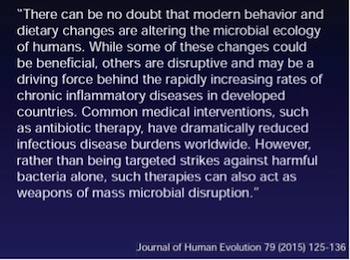
There can be no doubt that modern behavior and dietary changes are altering the microbial ecology of humans. While some of these changes could be beneficial, others are disruptive and may be a driving force behind the rapidly increasing rates of chronic inflammatory diseases in developed countries. Common medical interventions, such as antibiotic therapy, have dramatically reduced infectious disease burdens worldwide. However, rather than being targeted strikes against harmful bacteria alone, such therapies can also act as weapons of mass microbial disruption.

You can find the full paper here: Ancient Human Microbiomes

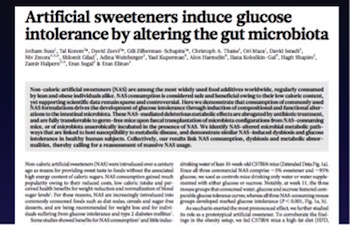
We know how harmful artificial sweeteners are (Mira Dessy writes about these and other harmful ingredients in her book The Pantry Principle)but now we are seeing how they affect the microbiome and contribute to diabetes.

ihs-4

ihs-5

In summary, our results suggest that NAS [non-caloric artificial sweeteners] consumption in both mice and humans enhances the risk of glucose intolerance and that these adverse metabolic effects are mediated by modulation of the composition and function of the microbiota. Notably, several of the bacterial taxa that changed following NAS consumption were previously associated with type 2 diabetes in humans, including over-representation of Bacteroides and under-representation of Clostridiales.

You can read the entire article in Nature: Artificial sweeteners induce glucose intolerance by altering the gut microbiota

You may have switched to artificial sweeteners because of sugar cravings and the desire to reduce sugar consumption. If this is the case, and you want to quit the artificial sweeteners and not go back to sugar, do check out this recent blog I wrote about diabetes and anxiety/cravings, and how the amino acid GABA was shown to:

increase islet hormonal secretion, suggesting potential therapeutic benefits for diabetes.

The GABA, will of course, also help with the cravings and quitting and not leave you feeling deprived, or needing to use willpower. You can read more on this topic here: GABA for ending sugar cravings (and anxiety and insomnia) 

ihs-6

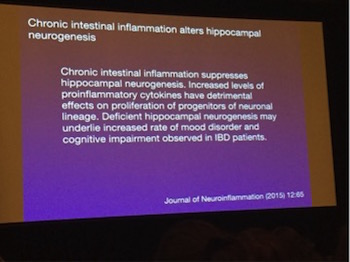
This paper in the Journal of Neuroinflammation shows us how connected the gut and the brain are:

Chronic intestinal inflammation suppresses hippocampal neurogenesis. Increased levels of proinflammatory cytokines have detrimental effects on proliferation of progenitors of neuronal lineage. Deficient hippocampal neurogenesis may underlie increased rate of mood disorder and cognitive impairment observed in IBD [inflammatory bowel disease] patients.

You can read the paper here: Chronic intestinal inflammation alters hippocampal neurogenesis.

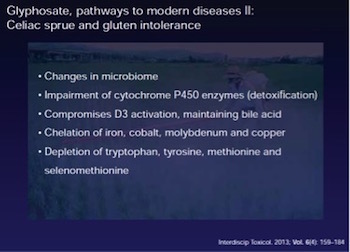
This paper: Glyphosate, pathways to modern diseases II: Celiac sprue and gluten intolerance states that :

Celiac disease, and, more generally, gluten intolerance, is a growing problem worldwide, but especially in North America and Europe, where an estimated 5% of the population now suffers from it. Symptoms include nausea, diarrhea, skin rashes, macrocytic anemia and depression. It is a multifactorial disease associated with numerous nutritional deficiencies as well as reproductive issues and increased risk to thyroid disease, kidney failure and cancer. Here, we propose that glyphosate, the active ingredient in the herbicide, Roundup®, is the most important causal factor in this epidemic.  

Glyphosate residues in wheat and other crops are likely increasing recently due to the growing practice of crop desiccation just prior to the harvest.

ihs-7

It discusses how glyphosate can cause the following:

  • Changes in microbiome
  • Impairment of cytochrome P450 enzymes (detoxification)
  • Compromises in D3 activation, maintaining bile acid
  • Chelation of iron, cobalt, molybdenum and copper
  • Depletion of tryptophan, tyrosine, methionine and selenomethionine

All of these factors can have a direct impact on your anxiety and depression levels. Dr. Perlmutter also discussed how glyphosate affects the shikimate pathway and in turn impacts our microbiome causing mood issues and anxiety.

Jeffrey Smith, non-GMO advocate, founder of Institute for Responsible Technology also talks about this on our Anxiety Summit interview: Anxiety, depression, GMOs and Roundup

Roundup shuts down this pathway called the shikimate pathway. Monsanto bragged up-and-down because Roundup blocks the shikimate pathway in order to kill weeds. And because humans don’t have the shikimate pathway, they said Roundup must be safe for humans. But it’s not safe for a lot of reasons.

It’s an endocrine disruptor. It can promote cancer. It’s linked to heart disease and diabetes. But what they failed to point out was that the shikimate pathway is what our gut bacteria use to produce the vast majority of the l-tryptophan that we assimilate. L-tryptophan is a precursor to melatonin, which is linked to sleep and circadian rhythms, daily cycles, but it’s also a precursor to serotonin and now we land squarely on the world of anxiety. Without sufficient serotonin there can be anxiety and depression.

ihs-8

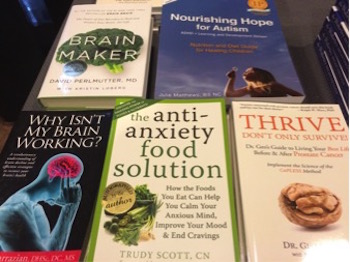
And now for a little fun! My book The Antianxiety Food Solution was on sale at the event, as was my colleague Julie Matthews’ book Nourishing Hope for Autism. After purchasing my signed copy of Brain Maker and “staged” it at the book table next to our books!

I have to admit it did give me a little thrill to see our books next to Dr. Perlmutter’s brilliant book and another great brain book Why Isn’t My Brain Working by Datis Kharrazian. The other book in the picture is a brand new book on prostate health by Dr. Geo Espinoza: Thrive Don’t Only Survive.

ihs-9

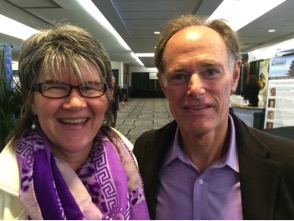
The other thrill was actually meeting a hero of mine! I heard his excellent presentation on the first day of the conference and then bumped in to him and his wife in one of the exhibit halls. I thanked him for his brilliance and asked if I could get a photo with him and he kindly obliged.

A bigger thrill and honor would be able to interview him on my next Anxiety Summit, now planned for June, so I can share his brilliance with you!  

In the meantime, I encourage you to check out his great blog and get a copy of Brain Maker, so you can learn from this great man and feel your absolute best!

Got questions? Feedback? Please post them in the comments.

Filed Under: Events Tagged With: Dr. David Perlmutter, microbiome

Microbiome & your mood! Don’t miss Microbiome Medicine Summit

February 24, 2016 By Trudy Scott 6 Comments

microbiome-summit-1

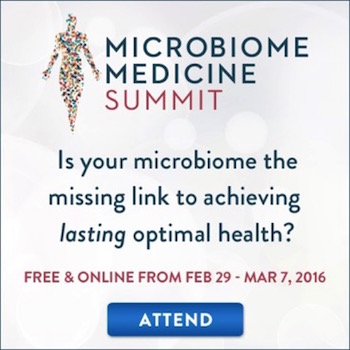
The trillions of organisms (known collectively as the microbiome) that live all over your body have a profound influence on your health. Understanding your microbiome is vitally important if you suffer from chronic diseases of the heart and digestive system, autoimmune disease, diabetes, thyroid disorders, anxiety and depression and more. The Microbiome Medicine Summit runs February 29 – March 7 and the line-up of speakers and topics is stellar!

Learn more and register here: https://qt247.isrefer.com/go/BIOME16reg/trudyscottcn/

Here are just some of the great speakers:

microbiome-summit-aviva-romm

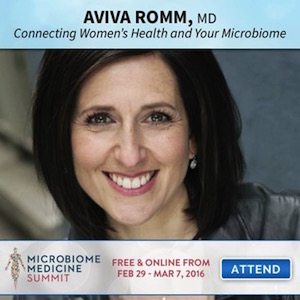
Aviva Romm, MD: “Connecting Women’s Health and Your Microbiome.” Dr. Romm is the author of many wonderful books on natural health for women, one of which is WomanWise. She shares:

And so we know that right now in the United States, 34% of all women are going to have a C­-section. And not only that, every mom who gets a C-section also gets an antibiotic. So those babies are getting the double whammy. They’re not getting exposed to the vaginal flora and mom’s breast milk is getting affected by the antibiotic. And baby is getting some of that antibiotic. So they’re getting an antibiotic exposure, and not getting the microbiome exposure. And then a whole other percentage of babies, maybe as much as 30% of babies on top of that, are getting exposure to an antibiotic all during labor or through mom because mom is positive with something called Group B strep. And so we give the mom an antibiotic to prevent her from passing this potentially serious infection on to the baby. So anywhere from 30% to 40% of babies in the United States are being born with an antibiotic exposure or absence of that good healthy immune education.

microbiome-summit-natasha-campbell-mcbride

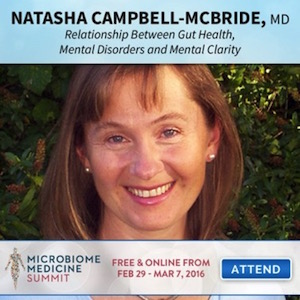
Natasha Campbell-McBride, MD: “The Relationship Between Gut Health, Mental Disorders and Mental Clarity.” Dr. Campbell-McBride is well-known for her book and program The Gut and Psychology Syndrome and the GAPS diet that benefits so many with anxiety and depression and other mood issues.

microbiome-summit-raphael-kellman

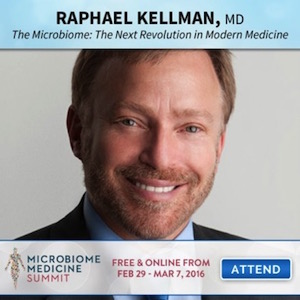
And the summit host, Raphael Kellman, MD, who created The Microbiome Medicine Summit to present ground-breaking information and a whole new perspective that could help you improve your emotional and physical wellbeing! His book is The Microbiome Diet and his talk is called “The Microbiome: The Next Revolution in Modern Medicine.”

He shares this fascinating information:

The microbiome is the community of trillions of bacteria that live in your digestive tract and elsewhere throughout your body. Collectively weighing about three pounds — the same weight as our brain — these bacteria outnumber our human cells by a factor of about 9 to 1. I jokingly tell my patients that I might look like a human, but I am really just “bacteria in a suit.” Each of us is literally more bacteria than human.

Not only do our bacteria outnumber us, their genes outnumber our genes — by a factor of 150 to 1. In many ways, their genes have more of an influence over our day-to-day life than our own genes do.

When your microbiome is balanced, you have a terrific ally that keeps your body healthy, promoting good digestion, clear thinking, balanced mood, and glowing overall health. When your microbiome goes out of balance, however, you risk such symptoms as brain fog, depression, anxiety, bad skin and insomnia — and, down the road, obesity, diabetes, and cancer.

I’m not speaking on this summit but will be listening and learning along with you. Learn more and register here: 
https://qt247.isrefer.com/go/BIOME16reg/trudyscottcn/

PS. I’m actually in New York city at the moment and get to hear Dr. Aviva Romm live at the Integrative Health Symposium. But when you sign up for this summit you get to hear her in the comfort of your own home! Enjoy the summit and don’t forget to share with a loved one or friend who may benefit from this too. 
https://qt247.isrefer.com/go/BIOME16reg/trudyscottcn/

PPS. It starts Monday next week!

Filed Under: Events Tagged With: microbiome, microbiome medicine summit

Healing Anxiety through the Gut on the Heal Your Gut Summit

December 28, 2015 By Trudy Scott 8 Comments

Gut dysfunction can be linked to virtually every disease and can cause conditions like autoimmunity, fatigue, depression, anxiety and panic attacks, food sensitivities, chronic pain, allergies and many more. These conditions are by and large preventable.

healthygutsummit-trudy

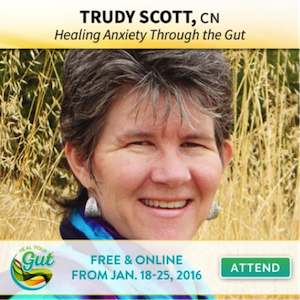
Gut issues and anxiety often go hand-in hand and my interview addresses Healing Anxiety through the Gut:

Can you relate to the following phrases? “I have butterflies in my stomach,” “I can feel it in my gut,” or “I just have this awful feeling in the pit of my stomach.” These aren’t just figures of speech.

It can be difficult to assess which came first. Is the anxiety affecting your digestion, or did poor digestion lead to anxiety or make anxiety worse? Sometimes it’s a mixture of both, and both need to be addressed.

Digestive disorders are very common in the United States. Over a third of all adults are affected by some kind of digestive disorder, and each year forty-five million people visit the doctor for reflux, constipation, irritable bowel syndrome (IBS), liver disease, and other digestive complaints.

Studies have found that people with digestive complaints such IBS, food allergies and sensitivities, small intestinal bacterial overgrowth and ulcerative colitis frequently suffer from anxiety and also depression too.

One study found that 50 to 90 percent of people with IBS who visited a doctor for treatment also suffered from various anxiety disorders (panic disorder, generalized anxiety disorder, social phobia, and post-traumatic stress disorder) and major depression.

There are many factors that can be considered when it comes to anxiety and gut health: the microbiome and psychobiotics (or good bacteria), low serotonin and an amino acid like tryptophan, low levels of stomach acid, low zinc, food sensitivities and much more.

heal-your-gut-summit

Join us for this fabulous upcoming online event that is being hosted by 3 of my favorite people: Dr. Josh Axe, who specializes in functional medicine and is on a mission to transform the health of millions all across the world; Donna Gates, the international best-selling author of The Body Ecology Diet and Dr. Eric L. Zielinski, a sought-after natural health educator, motivational speaker and author, and host of the well-known Essential Oils Summit.

I’m honored to have been invited to present with this excellent line-up of speakers that include:

  • Josh Axe, DNM, DC, CNS: 5 Steps to Heal Leaky Gut
  • Leo Galland, MD: Why Allergies Could Be Signaling Bigger Problems
  • David Perlmutter, MD: Heal Your Gut by Going Grain Free
  • Ty Bollinger: Boost Immunity with Gut-Immune-Cancer Connection

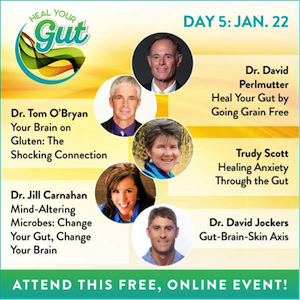
Here are some of the great speakers who I’ll be presenting with on day 5 of the summit:

healthygutsummit-speakers

I hope you can join us! You can register here https://ju127.isrefer.com/go/healyourgutreg/trudyscottcn/

Filed Under: Antianxiety, Events Tagged With: anxiety, Heal Your Gut Summit, IBS, microbiome, serotonin, Trudy Scott

Genome Meets Microbiome by Dr. Robert Rountree at IFM

June 5, 2015 By Trudy Scott 10 Comments

microbiota

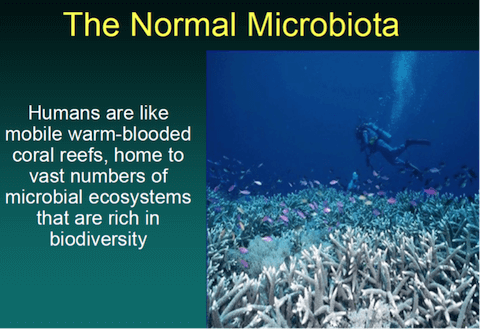
I’m going to share some gems from one of my favorite talks at the annual IFM conference The Omics Revolution – Nature and Nurture. It was a talk by Dr. Robert Rountree and was called “Genome Meets Microbiome” and he opens with this great slide that paints an incredible picture:

Humans are like mobile warm-blooded coral reefs, home to vast numbers of microbial ecosystems that are rich in biodiversity

Dr. Rountree shared how humans have more than 100 trillion microbiota, outnumbering human cells by 10:1. And he shared this great quote from Dr. Martin J Blaser, MD’s 2014 paper:

It is reasonable to propose that the composition of the microbiome and its activities are involved in most, if not all, of the biological processes that constitute human health and disease  

Here are some other gems from the talk:

  • Disease-specific alterations in the enteric virome in inflammatory bowel disease (such as Crohn’s disease and ulcerative colitis) and how changes in the virome may contribute to intestinal inflammation and dysbiosis
  • Methanogens in human health and disease Evidence has linked overabundance of methanogens to constipation and IBS, influencing intestinal transit and pH. These methanogens ensure more complete fermentation of carbohydrates, leading to higher production and absorption of SCFAs (short chain fatty acids), which may lead to obesity
  • The emerging world of the fungal microbiome or the mycobiome “Early-stage studies show interactions between the mycobiome and other microbes, with host physiology, and in pathogenic and mutualistic phenotypes. Current research portends a vital role for the mycobiome in human health and disease.”

So we have the microbiome, the virome, methanogens and the mycobiome! (and so much more)

He closes with this:

Alteration of the microbiome by our modern lifestyle (diet, stress, excessive hygiene and antibiotics) may be responsible for many chronic diseases [my addition: including anxiety and depression]

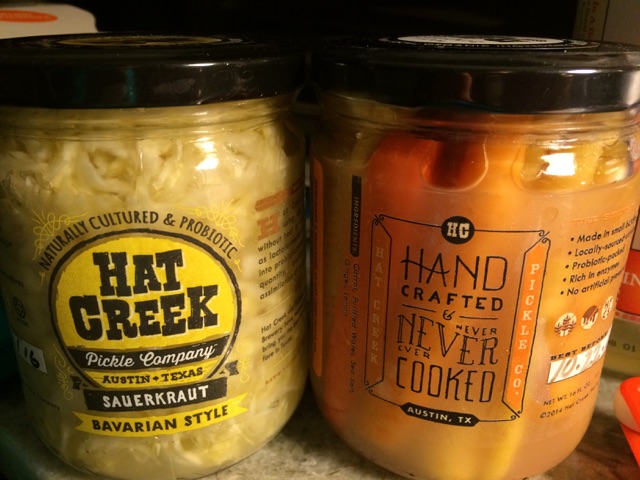
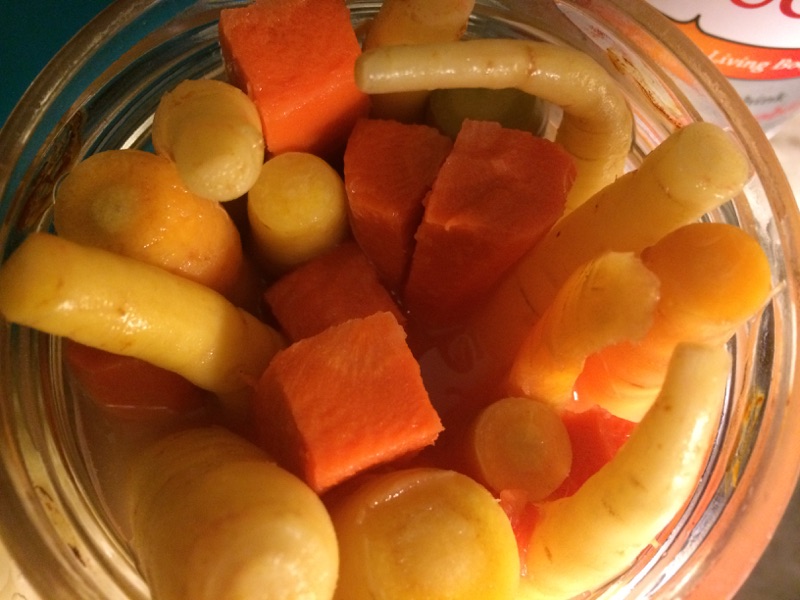
When I arrived in Austin I headed to the local Whole Foods to stock up on travel food (like I always do) and found some probiotic-rich foods that are made right in Austin.  Now I can highly recommend this fabulous sauerkraut and fermented carrots from Hat Creek Pickles. I  munched on this yummy food (and sardines, boiled eggs, grass-fed beef jerky, pemmican and fruit) all weekend! I even brought what was left of the the sauerkraut home!

Raw, local, organic, delish!!!! and oh so pretty too.

sauerkraut and fermented carrots
Sauerkraut and fermented carrots
Fermented carrots
Fermented carrots with a hint of ginger
Sauerkraut
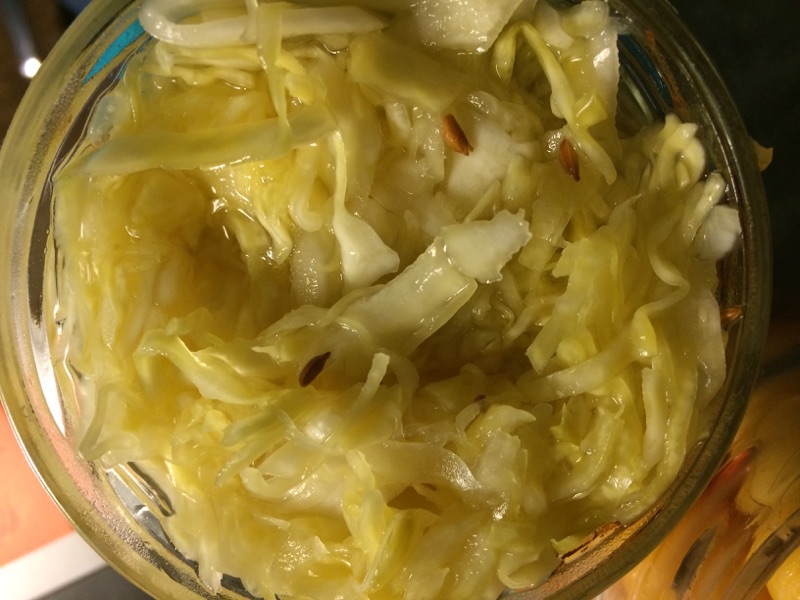
Sauerkraut with caraway seeds (a favorite of mine!)

Happy gut means happy Trudy!  How are you looking after your gut?


Filed Under: Antianxiety, Events, Gut health Tagged With: Dr. Robert Rountree, genome, gut health, IFM conference, microbiome

The Anxiety Summit – Sauerkraut for Gut Healing and Reducing Anxiety

May 8, 2015 By Trudy Scott 36 Comments


Summer Bock, Master Fermentationist, was interviewed on the Anxiety Summit by host of the Anxiety Summit, Trudy Scott, Food Mood Expert and Nutritionist, author of The Antianxiety Food Solution.

Sauerkraut for Gut Healing and Reducing Anxiety

  • Summer’s journey and recovery from allergies, gut problems, anxiety and panic attacks, and how fermented foods turned things round for her
  • The good bacteria we get from fermented foods: psychobiotics and anxiety
  • Sauerkraut: a “promising nutraceutical for the treatment of malnutrition-induced diseases” and how it helps with asthma, IBS and inflammatory bowel disease
  • The 3 categories of fermented foods: Functional Ferments, Increased Assimilation Ferments and Primarily Preservation Ferments
  • The history of kefir
  • How to buy sauerkraut in the store
  • How to make your own sauerkraut at home and why

Summer discovered that all the symptoms she was having (food and environmental allergies, anxiety and panic attacks, skin problems) were connected to her gut and that she needed probiotics.

With me being a herbalist and purist, I wanted to know how my ancestors did it. If I don’t have probiotics in my diet how do I get them? What is the whole food version of probiotics? It was when I discovered sauerkraut and kefir and all of these fermented foods and started including them in my diet, that’s when I started to see improvements in my health.

Sauerkraut is a whole food version of probiotics. The probiotics are one thing but raw (unpasteurized) sauerkraut also contains lactic acid which serves as a natural antibiotic.

I mentioned my season 2 interview with Dr. Ted Dinan, MD, PhD. Professor of Psychiatry at University College Cork: Microbes in the gut and psychobiotics as a potential treatment for anxiety and depression

we define a psychobiotic as a live organism that, when ingested in adequate amounts, produces a health benefit in patients suffering from psychiatric illness

This is Dr. Dinan’s most recent paper, published April this year: Gut Microbiota: The Conductor in the Orchestra of Immune-Neuroendocrine Communication

We discussed this paper at length: A MINI REVIEW ON THE MICROBIOCHEMICAL PROPERTIES OF SAUERKRAUT.

Healthy colons of humans contain some beneficial bacteria which feed on digestive wastes, thereby producing lactic acid. Without these beneficial bacteria, the digestive tracts become a thriving zone for pathogenic bacteria and yeasts, resulting in candidiasis. However, it is suggested that the consumption of lacto-fermented sauerkraut could help re-establish lactobacilli.

could be a promising nutraceutical for the treatment of malnutrition-induced diseases. Also, it could be suggested that the consumption of lacto-fermented sauerkraut could help reestablish lactobacilli-opportunistic infective agents equilibrium

lacto-fermented sauerkraut provides an array of lactobacilli probiotics, vitamin C, dietary folates, manganese and pyridoxine

If you are not already registered for the Anxiety Summit you can get live access to the speakers of the day here: www.theAnxietySummit.com

Missed this interview or can’t listen live? Or want this and the other great interviews for your learning library? Purchase the MP3s or MP3s + transcripts and listen when it suits you.

You can find your purchasing options here: Anxiety Summit Season 1, Anxiety Summit Season 2, and Anxiety Summit Season 3.

Filed Under: Antianxiety, Food and mood, Real whole food, The Anxiety Summit 3 Tagged With: anxiety, depression, microbiome, probiotics, sauerkraut, summer bock, the anxiety summit, Trudy Scott

  • « Go to Previous Page
  • Page 1
  • Page 2
  • Page 3
  • Page 4
  • Page 5
  • Go to Next Page »

Primary Sidebar

GABA QuickStart Homestudy

gaba quickstart homestudy

Free Report

9 Great Questions Women Ask about Food, Mood and their Health

You'll also receive a complimentary subscription to my ezine "Food, Mood and Gal Stuff"


Connect with me

Popular Posts

  • Amino Acids Mood Questionnaire from The Antianxiety Food Solution
  • The Antianxiety Food Solution Amino Acid and Pyroluria Supplements
  • Pyroluria Questionnaire from The Antianxiety Food Solution
  • Collagen and gelatin lower serotonin: does this increase your anxiety and depression?
  • Tryptophan for the worry-in-your-head and ruminating type of anxiety
  • GABA for the physical-tension and stiff-and-tense-muscles type of anxiety
  • The Antianxiety Food Solution by Trudy Scott
  • Seriphos Original Formula is back: the best product for anxiety and insomnia caused by high cortisol
  • Am I an anxious introvert because of low zinc and vitamin B6? My response to Huffington Post blog
  • Vagus nerve rehab with GABA, breathing, humming, gargling and key nutrients

Recent Posts

  • Her cravings for chips and peanut butter were triggered by stress: GABA ends cravings and reduces physical tension and fear of heights
  • It is truly miraculous to be able to move through life without crippling anxiety and panic
  • GABA and tryptophan combo provide immediate and noticeable relief for tremors and cervical dystonia in just 7 days
  • Red light therapy for back and neck pain, plantar fasciitis and low mood – a complement to the amino acids GABA, DPA and tryptophan
  • What do I use instead of Seriphos to help lower high cortisol that is affecting my sleep and making me anxious at night?

Categories

  • 5-HTP
  • AB575
  • Addiction
  • ADHD
  • Adrenals
  • Alcohol
  • Allergies
  • Alzheimer's disease
  • Amino Acids
  • Anger
  • Antianxiety
  • Antianxiety Food Solution
  • Antidepressants
  • Anxiety
  • Anxiety and panic
  • Autism
  • Autoimmunity
  • benzodiazapines
  • Bipolar disorder
  • Books
  • Caffeine
  • Cancer
  • Candida
  • Children/Teens
  • Collagen
  • Cooking equipment
  • Coronavirus/COVID-19
  • Cravings
  • Depression
  • Detoxification
  • Diabetes
  • Diet
  • DPA/DLPA
  • Drugs
  • EFT/Tapping
  • EMF
  • EMFs
  • Emotional Eating
  • Endorphins
  • Environment
  • Essential oils
  • Events
  • Exercise
  • Fear
  • Fear of public speaking
  • Fertility and Pregnancy
  • Fish
  • Food
  • Food and mood
  • Functional neurology
  • GABA
  • Gene polymorphisms
  • General Health
  • Giving
  • Giving back
  • Glutamine
  • Gluten
  • GMOs
  • Gratitude
  • Gut health
  • Heart health/hypertension
  • Histamine
  • Hormone
  • Hyperparathyroidism
  • Hypoglycemia
  • Immune system
  • Inflammation
  • Insomnia
  • Inspiration
  • Introversion
  • Joy and happiness
  • Ketogenic diet
  • Lithium orotate
  • Looking awesome
  • Lyme disease and co-infections
  • MCAS/histamine
  • Medication
  • Men's health
  • Mental health
  • Mercury
  • Migraine
  • Mold
  • Movie
  • MTHFR
  • Multiple sclerosis
  • Music
  • NANP
  • Nature
  • Nutritional Psychiatry
  • OCD
  • Osteoporosis
  • Oxalates
  • Oxytocin
  • Pain
  • Paleo
  • Parasites
  • Parkinson’s disease
  • PCOS
  • People
  • PMS
  • Postpartum
  • PTSD/Trauma
  • Pyroluria
  • Questionnaires
  • Real whole food
  • Recipes
  • Research
  • Schizophrenia
  • serotonin
  • SIBO
  • Sleep
  • Special diets
  • Sports nutrition
  • Stress
  • Sugar addiction
  • Sugar and mood
  • Supplements
  • Teens
  • Testimonials
  • Testing
  • The Anxiety Summit
  • The Anxiety Summit 2
  • The Anxiety Summit 3
  • The Anxiety Summit 4
  • The Anxiety Summit 5
  • The Anxiety Summit 6
  • Thyroid
  • Thyroid health
  • Toxins
  • Tryptophan
  • Tyrosine
  • Uncategorized
  • Vegan/vegetarian
  • Women's health
  • Yoga

Archives

  • May 2026
  • April 2026
  • October 2025
  • September 2025
  • August 2025
  • July 2025
  • June 2025
  • May 2025
  • April 2025
  • March 2025
  • February 2025
  • January 2025
  • November 2024
  • October 2024
  • September 2024
  • August 2024
  • July 2024
  • June 2024
  • May 2024
  • April 2024
  • March 2024
  • February 2024
  • January 2024
  • December 2023
  • November 2023
  • October 2023
  • September 2023
  • August 2023
  • July 2023
  • June 2023
  • May 2023
  • April 2023
  • March 2023
  • February 2023
  • January 2023
  • December 2022
  • November 2022
  • October 2022
  • September 2022
  • August 2022
  • July 2022
  • June 2022
  • May 2022
  • April 2022
  • March 2022
  • February 2022
  • January 2022
  • December 2021
  • November 2021
  • October 2021
  • September 2021
  • August 2021
  • July 2021
  • June 2021
  • May 2021
  • April 2021
  • March 2021
  • February 2021
  • January 2021
  • December 2020
  • November 2020
  • October 2020
  • September 2020
  • August 2020
  • July 2020
  • June 2020
  • May 2020
  • April 2020
  • March 2020
  • February 2020
  • January 2020
  • December 2019
  • November 2019
  • October 2019
  • September 2019
  • August 2019
  • July 2019
  • June 2019
  • May 2019
  • April 2019
  • March 2019
  • February 2019
  • January 2019
  • December 2018
  • November 2018
  • October 2018
  • September 2018
  • August 2018
  • July 2018
  • June 2018
  • May 2018
  • April 2018
  • March 2018
  • February 2018
  • January 2018
  • December 2017
  • November 2017
  • October 2017
  • September 2017
  • August 2017
  • July 2017
  • June 2017
  • May 2017
  • April 2017
  • March 2017
  • February 2017
  • January 2017
  • December 2016
  • November 2016
  • October 2016
  • September 2016
  • August 2016
  • July 2016
  • June 2016
  • May 2016
  • April 2016
  • March 2016
  • February 2016
  • January 2016
  • December 2015
  • November 2015
  • October 2015
  • September 2015
  • August 2015
  • July 2015
  • June 2015
  • May 2015
  • April 2015
  • March 2015
  • February 2015
  • January 2015
  • December 2014
  • November 2014
  • October 2014
  • September 2014
  • August 2014
  • July 2014
  • June 2014
  • May 2014
  • April 2014
  • March 2014
  • February 2014
  • January 2014
  • December 2013
  • November 2013
  • October 2013
  • September 2013
  • August 2013
  • July 2013
  • June 2013
  • May 2013
  • April 2013
  • March 2013
  • February 2013
  • January 2013
  • December 2012
  • November 2012
  • October 2012
  • August 2012
  • July 2012
  • June 2012
  • May 2012
  • April 2012
  • March 2012
  • February 2012
  • January 2012
  • December 2011
  • November 2011
  • October 2011
  • September 2011
  • August 2011
  • July 2011
  • June 2011
  • May 2011
  • April 2011
  • March 2011
  • February 2011
  • January 2011
  • December 2010
  • October 2010
  • September 2010
  • July 2010
  • May 2010
  • April 2010
  • March 2010
  • February 2010
  • January 2010
  • November 2009

Share the knowledge!

The above statements have not been evaluated by the Food and Drug Administration. Products listed in this website are not intended to diagnose, treat, cure or prevent any disease.

The information provided on this site is for informational and educational purposes only and is not intended as a substitute for advice from your physician or other health care professional. You should consult with a healthcare professional before starting or modifying any diet, exercise, or supplementation program, before taking or stopping any medication, or if you have or suspect you may have a health problem.


Copyright © 2026 Trudy Scott. All Rights Reserved. | Privacy | Terms and Conditions | Refund Policy | Medical Disclaimer

Free Report

9 Great Questions Women Ask about Food, Mood and their Health

You’ll also receive a complimentary subscription to my ezine “Food, Mood and Gal Stuff”