• Skip to primary navigation
  • Skip to main content
  • Skip to primary sidebar

everywomanover29 blog

Food, Mood and Women's Health – Be your healthiest, look and feel great!

  • Blog
  • About
  • Services
  • Store
  • Resources
  • Testimonials
  • The Book
  • Contact
  • Search this site

MCAS

GABA worked amazingly for 18-year-old during a MCAS/histamine flare, helping with OCD, anxiety, rage and skin issues

October 27, 2023 By Trudy Scott Leave a Comment

gaba mcas

Bonnie shared how effective GABA was for her 18 year old son with suspected MCAS (mast cell activation syndrome/histamine issues) and his associated anxiety/OCD/rage and skin issues:

GABA worked amazingly for us during a flare! Flares began with OCD [obsessive compulsive disorder]and anxiety increasing before our eyes and then the rage followed.

He would wake up very early and his upper back, shoulders and upper chest would have acne all over, this would come and go, but never completely go.

GABA capsules worked in 20 minutes and thanks to you Trudy, I read and found GABA chewables worked in 5 minutes. We used to buy GABA all the time to stop the flares and to prevent them from coming! The GABA was absolutely 100% a godsend!

Once I started focusing on keeping histamine down, we don’t buy or use GABA much! Haven’t had a flare in almost a year!!

It’s so wonderful to hear that GABA helped Bonnie’s son so much. No MCAS/histamine flare in a year!

I checked with Bonnie and they primarily used 3 x Source Naturals GABA Calm chewables (each one contains 125 mg GABA). They initially used up to 3 x 250 mg GABA if he was having a really bad flare, 1 if he was not so bad and 2 if somewhere between.

Histamine issues frequently cause physical tension and anxiety so we’d expect GABA to help. Wth rage and OCD, we typically consider low serotonin as a possible cause but in her son’s case, GABA clearly was his root cause. I share another case where GABA helped ease symptoms of anger, rage, and dark moods.

It’s been a long road – ruling out PDD-NOS, PANDAS and PANS

But as amazing as GABA was for him there was more to it and it has been a long road for him. Bonnie shared this too: “At 4 years old he was diagnosed with PDD-NOS, then at 5 years old they said no it’s PANDAS, and at 6 years old no it’s PANS.”

Pervasive Developmental Disorder – Not Otherwise Specified (PDD-NOS) refers to a group of disorders characterized by impairment in the development of social interaction, verbal and non-verbal communication, imaginative activity and a limited number of interests and activities that tend to be repetitive.

Both PANDAS and PANS are associated with OCD, rages and other mental health issues which are often sudden onset and caused by infections – PANDAS is Pediatric Autoimmune Neuropsychiatric Disorders Associated with Streptococcal Infections, and PANS is when the severe onset of OCD symptoms is linked to another infection. More on these conditions here. It’s important to either rule out or address these conditions.

They tried several doctors and several protocols over the years: “B12 injections early but only saw a small gain. No reactions for years whatever we tried. IV treatment about 5 years ago was the second time we had gains.

Histamine was off the chart and flares were worse during allergy season and better in winter

I share all this to give you hope and to send the message that you don’t want to ever give up. Even with few gains, Bonnie persevered and started making the connections with allergies. She shared this: “During these years 2 different allergy tests matched and histamine was off the chart for both, but 2 different doctors did not address it. Maybe there was no connection then.”

She noticed flares were worse during the beginning of allergy season and better in winter, and started to histamine support:

We use DAO enzymes with high histamine foods. We tried quercetin, isoquercetin and curcumin with no gains. Started stinging nettles and bromelain and they are definitely helping us with gains.

Our son seems to be much better, being more social and we are just seeing better connections socially.

Just started Seeking Health Serotonin Nutrients to see if this can further add gains. Probably a different topic now! Sorry so long!! Love to share!!!

Bonnie noticed her son’s flares were better in winter but keep in mind there may be seasonality of GABA with worsening anxiety, insomnia and intrusive thoughts in winter (and the need for increased GABA supplementation). I blog about this here.

The research: Neurotransmitter and neuropeptide regulation of mast cell function

Bonnie shared her son’s results in response to a Facebook post where I shared the research that GABA (a well-known inhibitory neurotransmitter) helps with MCAS/mast cell activation syndrome and histamine issues.

This 2020 paper, Neurotransmitter and neuropeptide regulation of mast cell function: a systematic review, reports that:

Some reports link GABA to the inhibition of MC (mast cell) activation in allergies. GABA suppresses degranulation in rat basophilic leukemia RBL-2H3 cells via the GABA(B) receptor on the cell surface

….The administration of GABA in a dose-dependent manner reduced the development of AD [atopic dermatitis] – like skin lesions in mice by suppressing serum IgE and splenocyte IL-4 production.

(Keep in mind that the RBL-2H3 cell line mentioned in the above research is a commonly used histamine-releasing cell line used in inflammation, allergy and immunological research.)

My additional feedback about serotonin support and pyroluria

They also used (and still use) 5 mg lithium orotate and 100 mg 5-HTP. Bonnie will soon be stopping one at a time to see if that makes a difference. I’ll share what she reports back.

Bonnie mentions wanting to trial a combination product for serotonin support. I shared with her that I prefer individual amino acids so we know what’s helping. This is especially important with sensitive folks who may react to any one of the ingredients. My choice would be exploring 5-HTP further or doing a trial of tryptophan instead of 5-HTP (or possibly a combination of both) if there are still low serotonin symptoms.

She also mentions that her son is “more social and we are just seeing better connections socially.” This is great but if she feels he could make even more social gains I’d encourage looking into the pyroluria protocol too. There are many added benefits of addressing pyroluria (a social anxiety condition) when someone has MCAS, histamine issues, Lyme or another chronic condition. The zinc, vitamin B6 and other nutrients also support neurotransmitter production.

Resources if you are new to using amino acids as supplements

We use the symptoms questionnaire to figure out if low GABA or low serotonin may be an issue.

If you suspect low levels of any of the neurotransmitters and do not yet have my book, The Antianxiety Food Solution – How the Foods You Eat Can Help You Calm Your Anxious Mind, Improve Your Mood, and End Cravings, I highly recommend getting it and reading it before jumping in and using amino acids on your own so you are knowledgeable. And be sure to share it with the practitioner/health team you or your loved one is working with.

There is an entire chapter on the amino acids and they are discussed throughout the book in the sections on gut health, gluten, blood sugar control, sugar cravings, anxiety and mood issues.

The book doesn’t include product names (per the publisher’s request) so this blog, The Antianxiety Food Solution Amino Acid and Pyroluria Supplements, lists the amino acids that I use with my individual clients and those in my group programs. You can find them all in my online store.

If, after reading this blog and my book, you don’t feel comfortable figuring things out on your own (i.e. doing the symptoms questionnaire and respective amino acids trials), a good place to get help is the GABA QuickStart Program (if you have low GABA symptoms too). This is a paid online/virtual group program where you get my guidance and community support.

If you are a practitioner, join us in The Balancing Neurotransmitters: the Fundamentals program. This is also a paid online/virtual program with an opportunity to interact with me and other practitioners who are also using the amino acids.

I really appreciate Bonnie for sharing her son’s story and giving me permission to share as a blog.

Has GABA helped with your symptoms (or your loved one’s symptoms) triggered by MCAS/mast cell activation syndrome and histamine issues – like anxiety, insomnia, OCD, racing heart, rage, allergy symptoms and even rashes/dermatitis?

Do you also find that the sublingual/chewable GABA Calm product worked/works quicker than swallowed GABA products?

Has addressing pyroluria helped MCAS/histamine issues and social anxiety?

Feel free to share and ask your questions below.
Filed Under: Anger, Anxiety, GABA, MCAS/histamine, OCD Tagged With: acne, allergy season, amino acids, anger, anxiety, flare, GABA, GABA Calm, GABA Quickstart; Balancing Neurotransmitters, histamine flare, mast cell activation syndrome, MCAS, OCD, PANDAS, PANS, pyroluria, rage, serotonin, skin issues

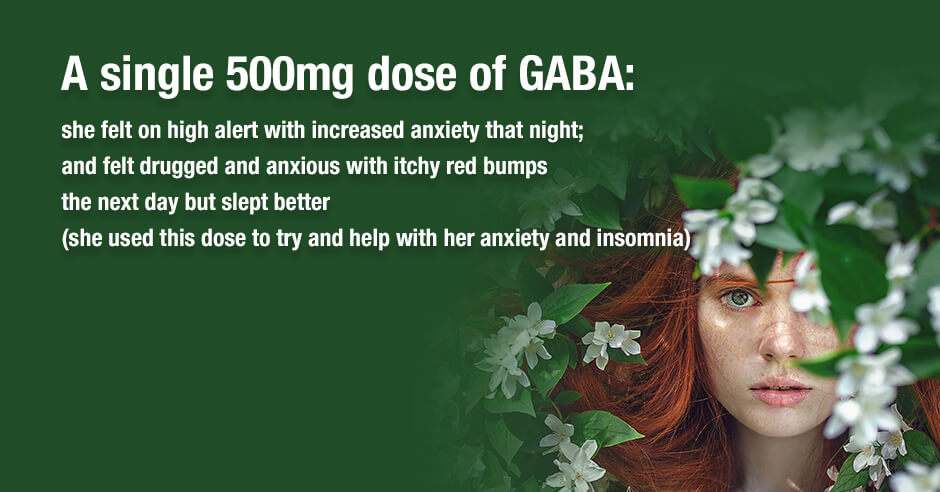
GABA 500mg: high alert and increased anxiety; drugged and anxious with itchy red bumps the next day but slept better

November 11, 2022 By Trudy Scott 22 Comments

500mg gaba

Too much of the calming amino acid, GABA, can cause the opposite effect leading to increased anxiety and feeling too tired the following day, sometimes even feeling drugged. I have clients start with 125mg if they have low GABA physical type of anxiety so when I hear someone has had a bad reaction after using 500mg GABA, it’s unfortunate but not surprising. SM posted her reaction on the blog where I write about a niacin-type flush from using too much GABA. However her reaction was more severe than this. Here is her feedback and questions:

I took a single dose of GABA 500mg from NOW foods one night hoping it can help with anxiety and insomnia. I felt on high alert that night and increased anxiety that night. The next day I felt drugged and anxious, but strangely slept better [the next] night. I also had itchy red bumps.

I realized from your blog that 500mg was too much for me. I switched to NOW Foods True Calm which has 200 mg GABA and other nutrients, quite like a mini version of the Country Life GABA. I slept better but again have itchy red bumps now, so I’m afraid of using another capsule during the day.

I am also on 0.375mg of Clonotril which I take only at night but it does not help with constant anxiety all day. I managed to taper down to 0.375mg from 1mg after taking magnesium glycinate but unfortunately I had too much diarrhea from the magnesium. That’s how I came to know about GABA hoping it can help relieve the constant anxiety and heart palpitations.

After reading this article I realize it’s important to start GABA low. I tried to use Olly Goodbye Stress gummies which have 100 mg GABA and 50 mg theanine per 2 gummies but it was of no help.

I want to try the Source Naturals GABA Calm lozenges you recommended but I’m also feeling scared as I have been trying so many things without much success. Very grateful if you could offer me some advice. I came across your work when googling about GABA. Thank you for this opportunity to ask you questions.

This is my feedback for SM: too much GABA can have adverse effects the day it’s taken and feeling on high alert with increased anxiety that night is not unusual. It’s also not unusual to feel overly fatigued and even experience a drugged-type feeling and still continue to feel anxious.

With symptoms like this my first piece of advice is to start low at 125mg and always have 1000mg vitamin C on hand when trialing GABA (and any of the amino acids). It’s the antidote and works quickly to ease all the adverse effects and also any beneficial effects that are experienced.

Use a much lower dose of GABA and keep vitamin C on hand

We often trial GABA again – even with adverse symptoms like this – but always use a much lower dose.. We could use another product like Source Naturals GABA Calm lozenges or use 125mg of the 500mg NOW GABA product.

One big clue that she may actually need GABA is that she did sleep better the next night.

If it’s a niacin type flush, as described in the blog she commented on, Too much GABA causes a tingling niacin-like flush sensation (in the brain and body). It’s awful and very uncomfortable!, I would still recommend another trial of the lower dose (with vitamin C on hand).

Other product options to consider are theanine and/or pharmaGABA too.

A histamine reaction or MCAS /mast cell activation syndrome?

However if it’s not a flush but a real rash or hives then I’m more concerned and would not have them trial something new. With a rash that doesn’t resolve we also consider a histamine reaction or MCAS /mast cell activation syndrome.

GABA typically helps with MCAS/histamine issues but unfortunately things are not predictable when you have MCAS. She may need to address the histamine/MCAS reaction before she can start benefiting from GABA.

A phenol sensitivity or allergic reaction?

Phenols can trigger some strong emotional reactions that do include anxiety, hyperactivity, insomnia and meltdowns – and a feeling of being on high alert (which SM mentions).

Since she mentions the rash, I would also want to rule out a phenol reaction to the GABA. My colleague Julie Matthews shares this: “When phenols are not able to be broken-down and detoxified by a process called sulfation… they can cause these emotional symptoms and also red cheeks and ears.”

The benzodiazepine may be the confounding factor

One other confounding factor is the Clonotril. Benzodiazepines (using them and/or tapering) can cause many different issues. I do have clients use GABA to help while tapering but we only change one thing at a time and the benzo taper is super super slow. They also only start to taper (with the doctor’s approval and monitoring) once they are nutritionally stable. My book The Antianxiety Food Solution is a great resource for learning more about becoming nutritionally stable.

Serotonin support as well as GABA support?

SM mentions that she took GABA hoping it would help with anxiety and insomnia. These are also both symptoms of low serotonin so she may also see benefits with tryptophan, 5-HTP and melatonin.   You can read more about tryptophan here: Tryptophan for the worry-in-your-head and ruminating type of anxiety and melatonin here: Melatonin improves sleep quality and reduces anxiety after a TBI.

Resources if you are new to using GABA and other amino acids as supplements

If you are new to using any of the amino acids as supplements, here is the Amino Acids Mood Questionnaire from The Antianxiety Food Solution (you can see all the symptoms of neurotransmitter imbalances, including low GABA and low serotonin).

If you suspect low levels of any of the neurotransmitters and do not yet have my book, The Antianxiety Food Solution – How the Foods You Eat Can Help You Calm Your Anxious Mind, Improve Your Mood, and End Cravings, I highly recommend getting it and reading it before jumping in and using amino acids on your own so you are knowledgeable. And be sure to share it with the practitioner/health team you or your loved one is working with.

There is an entire chapter on the amino acids and they are discussed throughout the book in the sections on gut health, gluten, blood sugar control, sugar cravings, self-medicating with alcohol and more.

The book doesn’t include product names (per the publisher’s request) so this blog, The Antianxiety Food Solution Amino Acid and Pyroluria Supplements, lists the amino acids that I use with my individual clients and those in my group programs. You can find them all in my online store.

If, after reading this blog and my book, you don’t feel comfortable figuring things out on your own (i.e. doing the symptoms questionnaire and respective amino acids trials), a good place to get help is the GABA QuickStart Program (if you have low GABA symptoms). This is a paid online/virtual group program where you get my guidance and community support.

If you are a practitioner, join us in The Balancing Neurotransmitters: the Fundamentals program. This is also a paid online/virtual program with an opportunity to interact with me and other practitioners who are also using the amino acids.

Have you had an adverse reaction to taking a high dose of GABA? What dose, which product and what was your reaction?

What did you figure out was the ideal dose for you?

If you have questions please share them here too.

Filed Under: Anxiety, GABA, Insomnia Tagged With: 500mg GABA, amino acids; GABA Quickstart online program; and Balancing Neurotransmitters: the Fundamentals program for practitioners, anxiety, anxious, benzodiazepine, Clonotril, drugged, high alert, histamine reaction, increased anxiety, insomnia, itchy red bumps, MCAS, niacin-type flush, phenol reaction, rash, serotonin, slept, Source Naturals GABA Calm, tired, vitamin C

The importance of addressing pyroluria with chronic Lyme disease (and co-infections), MCAS (Mast Cell Activation Syndrome) and other chronic illnesses

August 5, 2022 By Trudy Scott 27 Comments

addressing pyroluria

Pyroluria is a social anxiety condition that responds well to zinc, vitamin B6, evening primrose oil and a few other key nutrients, typically resulting in resolution of social anxiety symptoms within a few weeks with the correct combination and dosing. However there is much more to pyroluria than meets the eye. Addressing this biochemical imbalance is crucial for recovery from chronic Lyme disease (and co-infections), MCAS (Mast Cell Activation Syndrome) and other chronic illnesses caused by heavy metal toxicity, mold toxicity, multiple chemical sensitivities and Ehlers Danlos syndrome (amongst others).

Dr. Neil Nathan, MD, author of Toxic: Heal Your Body from Mold Toxicity, Lyme Disease, Multiple Chemical Sensitivities, and Chronic Environmental Illness (2018), shares this about pyroluria and chronic illness:

This biochemical imbalance is surprisingly common in chronically ill patients, and missing this diagnosis (by neglecting to test for and treat it) also denies us the opportunity to provide a simple, benign treatment that can help quiet down patients’ already overstimulated nervous systems.

(Here is my Amazon link to his book, which is excellent)

For over 15 years Dr. Dietrich Klinghardt has been saying you won’t see success with Lyme disease without also addressing pyroluria. He has seen a correlation with all his patients with chronic illness and pyroluria.

Let me quote from an article by Scott Forsgren, FDN-P and Dr. Dietrich Klinghardt, MD PhD: Kryptopyrroluria (aka Hemopyrrollactamuria): A Major Piece of the Puzzle in Overcoming Chronic Lyme Disease (a Townsend letter article published in 2017):

Based on testing with a lab in Holland, Klinghardt has found the incidence of KPU [Kryptopyrroluria or pyroluria] in Lyme disease to be 80% or higher; incidence of KPU over 75% in patients with heavy metal toxicity (lead, mercury, aluminum, cadmium, and others) and in children with autism over 80%.

These are very significant percentages of the patient population with chronic illness that may benefit from a treatment program that addresses KPU.

They also state what has long been known when it comes to pyroluria: symptoms are made worse by stress and “chronic infections, such as Lyme disease, may themselves serve as a trigger for the condition (of pyroluria).”

When it comes to MCAS, an updated version of this same article states that:

Klinghardt has worked with biochemists in Germany that are beginning to link KPU with mastocytosis or mast cell activation syndrome (MCAS).

They have observed that KPU treatment repairs the heme molecule, which notably stabilizes the mast cells and lowers the response to these relative rises in histamine.

I use the term pyroluria in this article, throughout my blog and in my book. It was coined by Carl Pfeiffer, MD PhD in the 1970s (after its discovery by Abram Hoffer in 1958). You’ll see these other terms used in various articles and in some of the older research: kryptopyrroluria (KPU), hemopyrrollactamuria (HPU), pyrrole disorder, mauve factor and sometimes malvaria.

As I shared in my interview with Dr. Kelly MCann on the summit, The Many Manifestations of Mast Cell Activation, it would be wonderful to get the terminology standardized and to get some case studies published. This would allow it to gain more acceptance in the mainstream and in functional medicine.

These papers, Discerning the Mauve Factor, Part 1 and 2, highlight some of the mechanisms as to why addressing pyroluria is so important:

  • “Treatment with nutrients – particularly vitamin B6 and zinc – reduces urinary excretion of HPL and improves diverse neurobehavioral symptoms in subjects with elevated urinary HPL.
  • Heightened HPL excretion classically associates with emotional stress, which in turn is known to associate with oxidative stress.
  • HPL correlated inversely with plasma glutathione
  • HPL is a promising biomarker for oxidative stress. HPL is known to cause non-erythroid heme depression, which lowers zinc, increases nitric oxide, and increases oxidative stress.”

The Forsgren/Klinghardt article above, covers additional mechanisms. With regards to MCAS specifically, the pyroluria supplements – zinc, vitamin B and evening primrose oil – all play a role in reducing histamine, providing immune support and reducing inflammation. And they provide nutritional support for the anxiety and mental health aspects of the condition – directly for pyroluria and indirectly via neurotransmitter support (since they are necessary cofactors for making serotonin and GABA).

Here is some of the research I gathered on some of the ways zinc, vitamin B6 and evening primrose oil (EPO) may help when it comes to MCAS:

  • This paper, Role of Zinc Signaling in the Regulation of Mast Cell-, Basophil-, and T Cell-Mediated Allergic Responses, states that “zinc signaling dysregulation is a leading health problem in inflammatory disease and allergy…. These findings may lead to future therapeutic applications for suppressing inflammatory or allergic responses.”
  • In this paper, Effect of pyridoxine on histamine liberation and degranulation of rat mast cells, the authors share that vitamin B6 “significantly inhibited rat mast cell degranulation and histamine release induced by egg albumin allergen.” This paper also discusses the lack of toxicity of vitamin B6 and “the possibility that other mechanisms of action may be involved, such as the improvement in tryptophan metabolism.”
  • This paper, Alterations of mast cell mediator production and release by gamma-linolenic and docosahexaenoic acid/DHA, was looking at mastocytoma (a type of mastocytosis) using a cell line as a model for canine atopic dermatitis (cells were incubated with the wasp venom peptide.) They found that “GLA decreased histamine release …and DHA diminished prostaglandin production.” Evening primrose oil is a source of GLA and fish oil is a source of DHA.

If you’re new to MCAS, Dr. Jill Carnahan has an excellent overview here: Mast Cell Activation Syndrome: Here’s What You Need to Know When Histamine Goes Haywire and I’ve blogged about PharmaGABA often being an issue and making anxiety worse when you have MCAS or histamine issues.

The ramifications of this biochemical imbalance are far-reaching

Here is the pyroluria questionnaire / symptoms list (from my book, The Antianxiety Food Solution). It has been updated with recently with additional conditions. You can read about pyroluria prevalence and associated conditions here.

Here are some of my pyroluria blog posts you may find useful (click each of the linked articles to read further). As you will see the ramifications of this biochemical imbalance are far-reaching:

  • Alice in Wonderland Syndrome – is there a pyroluria connection?
  • I was called a vulture for preying on sensitive people in a social anxiety group – because I mentioned pyroluria and a nutritional solution
  • Intrusive thoughts are a thing with anxiety: low GABA, low serotonin, pyroluria (low zinc & vitamin B6) and hormone imbalances as possible causes
  • Increased sociability improves vagus nerve function: the role of social anxiety, pyroluria and low zinc
  • Joint hypermobility / Ehlers-Danlos Syndrome and pyroluria?

Feel free to use the search feature on the blog to find additional information about pyroluria. I have written about it extensively. I have it myself and it’s really common – I see it in about 80% of my community – so I am pretty passionate about the topic.

Resources if you are new to pyroluria

If you are new to pyroluria, there is an entire chapter on the topic in my book, The Antianxiety Food Solution – How the Foods You Eat Can Help You Calm Your Anxious Mind, Improve Your Mood, and End Cravings. I highly recommend getting it and reading it before jumping in and using the pyroluria supplements on your own. And be sure to share it with the practitioner/health team you or your loved one is working with. We need the wider practitioner community to be aware of this condition and the importance of addressing it.

I use individual amino acids such as GABA and tryptophan with all my anxious clients and we always layer in the pyroluria protocol. There is also an entire chapter on the amino acids and they are discussed throughout the book in the sections on gut health, gluten, blood sugar control, sugar cravings, self-medicating with alcohol and more.

The book doesn’t include product names (per the publisher’s request) so this blog, The Antianxiety Food Solution Amino Acid and Pyroluria Supplements, lists the amino acids and pyroluria supplements that I use with my individual clients and those in my group programs.

If you are a practitioner, join us in The Balancing Neurotransmitters: the Fundamentals program. This is a paid online/virtual program with an opportunity to interact with me and other practitioners who are also using the amino acids and pyroluria protocol with success with their clients/patients.

Have you used the pyroluria protocol as part of your recovery from chronic Lyme disease or MCAS (or another chronic illness)?

Did you learn about this from your practitioner or elsewhere? (please share where)

If you’re a practitioner, is the pyroluria protocol part of your  plan for clients and patients? And has it been a game-changer for them?

If you have questions please share them here too.

Filed Under: Lyme disease and co-infections, MCAS/histamine, Pyroluria Tagged With: Alice in Wonderland Syndrome, Balancing Neurotransmitters: the Fundamentals program for practitioners, chronic illnesses, chronic Lyme disease, Dr. Dietrich Klinghardt Kryptopyrroluria, Ehlers-Danlos Syndrome, evening primrose oil, heavy metal toxicity, Hemopyrrollactamuria, intrusive thoughts, KPU, lyme, mast cell activation syndrome, MCAS, mold toxicity, multiple chemical sensitivities, pyroluria, social anxiety, vagus, vitamin B6, zinc

PharmaGABA vs GABA when you have histamine issues/MCAS: does pharmaGABA ease physical anxiety or make things worse?

April 15, 2022 By Trudy Scott 34 Comments

PharmaGABA vs GABA

If you have histamine issues or MCAS (mast cell activation syndrome) and the low GABA type of physical anxiety (with muscle tension, insomnia and stress eating), you may well want to consider which type of GABA product you use. It may be wise to avoid or use caution with the type of GABA that is produced via fermentation and could actually make your symptoms worse and cause a histamine reaction.

PharmaGABA and GABA (gamma-aminobutyric acid) are the two forms of commercially available GABA products. PharmaGABA is produced via industrial fermentation of the amino acid glutamic acid (glutamate) using Lactobacillus hilgardii. This is the same beneficial bacteria that is used to ferment foods like kimchi, the well-known Korean vegetable fermented product.

However, GABA is not fermented and is a manufactured product. It’s the form I typically have clients start with simply because it’s been around longer than pharmaGABA and I’ve had such excellent results with it.

I’ve also had reliable feedback from folks who have used both, that GABA works best for them. That said, some folks do find that pharmaGABA works better for their needs and I recognize that there is no one-size-fits-all.

How probable is it that someone could have a histamine reaction to pharmaGABA?

It was only recently that I became aware of the possibility that someone could have a histamine reaction to pharmaGABA. Someone asked the question in my GABA Quickstart online group program and I posed the question to folks on Facebook. Today I’m sharing some of that feedback and asking you to please contribute to the discussion so we can all learn.

Based on what I’ve learned so far I believe it’s very feasible and also probable for many individuals who have histamine issues to have a bad response to pharmaGABA. Keep in mind, histamine triggers are not the same across the board, and it’s possible that some individuals may not react initially and may only react as more and more is used. Or they may not not react at all.

Today’s blog is to shine light on the matter because it’s not something I’ve heard about or seen documented in the research or company product specifications or warnings.

PharmaGABA wasn’t tolerated by Calina’s daughter: she had increased ADHD, agitation, rages, tics and was argumentative and very emotional

Calina shared this about her daughter’s reaction to pharmaGABA and asked about a GABA product that isn’t fermented:

My daughter has high histamine and did not tolerate the pharmaGABA at all. She has increased ADHD, agitation, rages, constantly starts arguments, tics and is very emotional. She has the same reactions with fermented foods (like sauerkraut).

Calina shared that she is 20 and was diagnosed with MCAS at 2 years old:

It improved some for many years, but she’s always been very short attention span, anxiety, OCD, ODD, and learning differences.

Her daughter has a number of more recent factors that are likely compounding things for her:

In 2017 after a mold exposure, dog bite, mosquito bites that left bullseye rashes, all of those symptoms intensified to the extreme.

She used to eat sauerkraut daily but became intolerant. She’s always had problems with all fermented foods and supplements.

I suspect her daughter does have a histamine reaction to pharmaGABA. The clue for me is that her reactions to pharmaGABA are the same as when she consumes fermented foods.

And the symptoms are more severe and more varied than what we see when too much GABA or too much pharmaGABA is used. With too much of either we see increased anxiety and/or more sleepiness and/or feeling flushed. Flushing is common with histamine issues/MCAS and it can be challenging to figure out cause and effect, but this mom and daughter have been dealing with this for a long time and are more likely able to identify what is causing what.

If her daughter has low GABA anxiety physical type symptoms (with insomnia, spinning/focus issues, intrusive thoughts, panic attacks, stiff and tense muscles) I would recommend a GABA-only product, with manufactured GABA instead of fermented pharmaGABA.

PharmaGABA didn’t work for Bren and caused a migraine the next day

A common sign of histamine intolerance/MCAS is migraines so it’s possible that pharmaGABA could trigger a migraine in someone with histamine issues.

Bren shared this on my Facebook post:

Ah now I think I understand why Jarrow’s GABA Soothe not only didn’t work nearly as well for me as GABA Calm, but I also had a migraine the next day. Thanks so much for that information.

When I asked if she has histamine issues and if a migraine is a typical histamine reaction for her she shared that is really only just learning about histamine issues:

Until recently I would have said no and have only had the vaguest idea of what that might mean. But I have been struggling to get off Seroquel, which is the reason I started taking GABA, and I recently found out that Seroquel is a potent anti-histamine. So when you posted about people having histamine issues with the pharmaGABA, which seemed to have caused my migraine, I put 2 and 2 together. I may have it all wrong, but if so it is quite a coincidence.

In Bren’s case it’s a bit more challenging to tease out since this is new to her, she doesn’t eat sauerkraut because she doesn’t like them, but she feels there may be other foods that are affecting her.

This Jarrow GABA Soothe product also contains theanine and Ashwagandha extract so it’s hard to know if it was the pharmaGABA itself. In this instance confirming her reaction with a pharmaGABA only product would be better.

Quetiapine, sold under the brand name Seroquel, is an atypical antipsychotic medication and Bren started to make the connections when she saw my question and because she had read about Seroquel being a histamine-blocking medication.

I share her example because you may not know if you have histamine issues but you may have had a less than pleasant reaction. This will hopefully give you some things to think about.

Product labeling of pharmaGABA can be confusing

You may have noticed this product, Jarrow GABA Soothe, has GABA on the front of the bottle and strangely has “Gamma-amino butyric acid (GABA) (PharmaGABA)” on the product label.

This label makes no sense at all and is contributing to consumer and practitioner confusion.

Unfortunately this kind of labeling is not unusual and variations of this is common with many products.

GABA is used interchangeably with pharmaGABA all the time. In fact, I do it here on the blog and did it in my book. Maybe we are going to find we need to be specific.

Is the flush reaction from too much GABA or because of a histamine reaction?

The biggest issue I see with GABA and pharmaGABA is using too high a dose to start. This causes a temporary and uncomfortable tingling niacin-like flush sensation (in the brain and body).

One challenging aspect is figuring out if the flush reaction is from too much pharmaGABA, or if it’s due to a histamine reaction.

I’d suggest lowering the pharmaGABA dose and looking at all the adverse symptoms. For example, the symptoms of  increased ADHD, agitation, rages, tics, being more argumentative and very emotional experienced by Calina’s daughter would not be attributed to too much pharmaGABA but to a histamine reaction (especially when correlated with her similar reactions to high histamine foods.)

If you’re new to histamine issues and MCAS

If you’re new to histamine issues and MCAS (mast cell activation syndrome), Dr. Jill Carnahan has an excellent overview here – Mast Cell Activation Syndrome: Here’s What You Need to Know When Histamine Goes Haywire.

Mast cell activation syndrome is an immune disorder. It’s just one type of mast cell activation disease.

What sets MCAS apart from other mast cell activation diseases is that it isn’t caused by an abnormally large amount of mast cells, and it isn’t a result of pathogen infection. Instead, when you have MCAS, you have a normal amount of mast cells, but they’re overactive and malfunctioning.

When your body is exposed to what it thinks is a threat, these overactive mast cells start to go haywire and secrete massive amounts of chemical mediators stored in the cytoplasm of your cells—degranulation. What’s meant to be a positive, protective response from your mast cells instead triggers both local and systemic negative effects.

When chemical messengers are released into your body, they set off an alarm that triggers an immune system response. And when this response becomes chronic—the chemical messengers are set off too much, too often—the result is mast cell activation syndrome.

In this instance, because pharmaGABA is fermented (and is likely high in histamine for this reason), it’s perceived to be a threat and causes adverse symptoms.

Over the next few months I’ll be sharing additional information about histamine issues and MCAS because of the symptoms of anxiety, insomnia, brain fog, depression and racing heart. Stress is a big trigger and teasing out the role and interplay of neurotransmitter support with GABA and tryptophan is of value.

Resources if you are new to using GABA or pharmaGABA as supplement

If you are new to using the amino acids as supplements, here is the Amino Acids Mood Questionnaire from The Antianxiety Food Solution (you can see all the low GABA symptoms).

If you suspect low levels of any of the neurotransmitters and do not yet have my book, The Antianxiety Food Solution – How the Foods You Eat Can Help You Calm Your Anxious Mind, Improve Your Mood, and End Cravings, I highly recommend getting it and reading it before jumping in and using amino acids on your own so you are knowledgeable. And be sure to share it with the team you or your loved one is working with.

I actually write about pharmaGABA briefly because it was new at the time and I had some clients who were seeing success with GABA, also trial pharmaGABA. The results were not as good as when they used GABA, so I continued to use GABA.

The book doesn’t include product names (per the publisher’s request) so this blog, The Antianxiety Food Solution Amino Acid and Pyroluria Supplements, lists the amino acids that I use with my individual clients and those in my group programs.

If you don’t feel comfortable reading my book and figuring things out on your own (doing the symptoms questionnaire and doing respective trials), you can get guidance from me in the GABA Quickstart Program (online/virtual).

If you are a practitioner, join us in The Balancing Neurotransmitters: the Fundamentals program. It’s an opportunity to interact with me and other practitioners who are also using the amino acids.

If you have histamine issues or have been diagnosed with MCAS:

  • Have you found you can’t tolerate pharmaGABA and do better with GABA for easing physical anxiety, insomnia and/or stress eating?
  • Are your histamine reactions to pharmaGABA similar to when you eat fermented foods and other high histamine foods?
  • Please share which pharmaGABA product you used and how much you used
  • Please share the reactions and the foods that trigger similar reactions so we can build an informal database with the feedback

If you have experienced reactions to pharmaGABA but do well with GABA, do you now have plans to look into the possibility of histamine issues/MCAS? Please share which pharmaGABA product you used and how much you used.

If you’re a practitioner, have you observed these effects with your patients and/or clients and is it something you caution them about?

Feel free to ask your questions here too.

Filed Under: Anxiety, GABA, MCAS/histamine Tagged With: ADHD, agitation, argumentative, emotional, fermentation, flush, GABA, GABA Quickstart, gamma-aminobutyric acid, high histamine, histamine issues, insomnia, Lactobacillus hilgardii, mast cell activation syndrome, MCAS, migraine, muscle tension, pharmaGABA, physical anxiety, practitioner training, rages, stress-eating, tics

GABA for easing physical anxiety and tension: some questions and answers

April 2, 2021 By Trudy Scott 79 Comments

gaba q and a

GABA is an amino acid used as a supplement to ease low GABA levels. With low GABA you’ll experience physical-tension and stiff-and-tense-muscles type of anxiety, panic attacks and insomnia. You may feel the need to self-medicate to calm down, often with alcohol but sometimes with carbs and sugary foods. GABA also helps with muscle spasms and provides pain relief when muscles are tight.

When I share my GABA blogs on Facebook I receive so many great questions (some basic questions and some more complex). Today I’m going to share some of these and my answers so you can get the benefits too.

Let’s start with the basic questions about using GABA.

Amanda asks:

What time of the day is best to take GABA?

The best time is 1 to 4 x a day, depending on your symptoms, between meals and always away from protein so it doesn’t compete for absorption with the other amino acids.

Brian asks:

What dose do you recommend starting at?

I have clients start with 125mg and go up from there based on how they respond i.e. are they getting symptom resolution.

Based on the above 2 questions it’s clear that Amanda and Brian are new to using the amino acid GABA. If you are new to using GAB and the other amino acids (and other anxiety nutrition solutions like gluten/sugar/caffeine removal, blood sugar control, gut health, pyroluria etc.) my book “The Antianxiety Food Solution” is a great place to start.

I don’t cover specific brands in my book because brand formulations change and come and go so this is a great question from Olivia who asks:

Which brand would you recommend? thank you

My favorite is Source Naturals GABA Calm but since it’s been in short supply during the pandemic I list many other GABA options here. I’ve updated the main supplements blog with these additional GABA options too.

Now for some of the more advanced questions:

Salome asks:

I’m super sensitive to supplements (Histamine Intolerance / MCAS / Multiple chemical sensitivity). Are there any potential reactions from taking GABA that you know of?

As far as I know there are none (clinically or in the research) but, as always, the best is to do a trial. For clients who are very sensitive we start super low and may use 1/8 to 1/4 of the starting dose of 125mg GABA, and increase from there if there are no adverse effects.

Dena asks:

Does GABA help the same way Xanax does? I only take 0.5mg Xanax a few times a week when I really need it but if GABA works I’d like to try it but worry it won’t help like Xanax does. It calms me down and makes me feel normal

Many of my clients report back that GABA works just like Xanax used to work for them. But do keep in mind it’s important to work with your prescribing doctor and that the benzodiazepine taper should be very very slow. And it’s important to be aware that for some folks tapering can be very challenging (more on that here).

Boyd asks:

In New Zealand GABA is classed as a prohibited Class B drug so what can be used as an alternative for anxiety?

Taurine or theanine are good options if GABA is not available and mail order is not an option. Glutamine can be calming for some folks who are able to convert some of it to GABA. For others it can be too stimulating if it converts to glutamate. Addressing gut health and using precursors like magnesium, zinc and vitamin B6 are also key but this takes longer to see results.

Debbie asks:

Can u take GABA if taking a very low dose SSRI (sertraline). I’ve had to start it because I couldn’t find a GABA product when I needed it.

GABA is safe to take with an SSRI (antidepressant) but this should always be discussed with the prescribing doctor.  Also, keep in mind that Sertraline works on serotonin so GABA may not be the best solution and  tryptophan or 5-HTP may be. Looking at the low GABA and low serotonin symptoms and doing a trial is the best way to figure this out.

Cornina asks:

What could be used instead of Ativan for travel anxiety?

I would trial GABA if the anxiety is more physical with neck tension and butterflies in the stomach or tummy pain. I would trial tryptophan or 5-HTP if it’s mental like imagining-the- worst or if you have a phobia about flying or you are worrying and obsessing. Ideally you would want to build up levels before travelling and also use the amino acids as needed while traveling. Keep in mind that both GABA and serotonin support may be needed.

Kelly asks:

Is 4,000 mg of Now GABA too much for a person to take a day. This person is 86 years old.

This dose of 4,000mg GABA is high so I’d want to know if she is seeing benefits (and what benefits) and having any adverse reactions. I’d also want to know what product and how it’s being used (swallowed or opened on to the tongue).

I asked the above and Kelly shared this additional information:

Yes, it lessens the anxiety but also makes her very sleepy. She doesn’t take that many mg every day. She just swallows it.

When the GABA capsules are opened less can be used. Also, taking it at night helps improve sleep and avoids the sleepiness in the day and the anxiety-relief benefits often carry over to the next day too. We commonly experiment with different timings and dosing to find what works best for the client as there is no one-size fits all.

Rhonda asks:

Which would be best for a truck driver that drives all night – GABA or 5-HTP?

For someone who drives all night and wants to sleep in the day I would want to know why he or she can’t sleep (assuming it’s related to disrupted circadian rhythm). If it’s physical tension then I’d trial GABA, and if it’s worry and over-thinking then I’d trial 5-HTP or tryptophan for serotonin support. Often a combination is helpful, Research shows the sleep promoting effects of combined GABA and 5-HTP for some folks.

We appreciate these folks for asking questions and allowing me to share here on the blog.

As always, it’s not only the low GABA we need to address. GABA offers quick relief but we must always do a full functional workup looking at diet, nutritional deficiencies, digestion, all hormones, toxins and infections (and so on) so we can address all possible root causes.

Have these GABA questions and answers been helpful? Have you seen benefits from using GABA and do you have questions?

Feel free to post your questions and feedback in the comments below.

And join us on Facebook – TrudyScottAntianxietyFoodSolution – to read and ask questions there too.

Filed Under: Anxiety, GABA Tagged With: 5-HTP, anxiety, benzodiazepine, dosing, GABA, histamine, insomnia, MCAS, physical anxiety, serotonin, SSRI, tension, travel anxiety, truck driver, tryptophan

Primary Sidebar

NEW! GABA QuickStart Homestudy (with special intro pricing)

gaba quickstart homestudy

Free Report

9 Great Questions Women Ask about Food, Mood and their Health

You'll also receive a complimentary subscription to my ezine "Food, Mood and Gal Stuff"


Connect with me

Popular Posts

  • Amino Acids Mood Questionnaire from The Antianxiety Food Solution
  • The Antianxiety Food Solution Amino Acid and Pyroluria Supplements
  • Pyroluria Questionnaire from The Antianxiety Food Solution
  • Collagen and gelatin lower serotonin: does this increase your anxiety and depression?
  • Tryptophan for the worry-in-your-head and ruminating type of anxiety
  • GABA for the physical-tension and stiff-and-tense-muscles type of anxiety
  • The Antianxiety Food Solution by Trudy Scott
  • Seriphos Original Formula is back: the best product for anxiety and insomnia caused by high cortisol
  • Am I an anxious introvert because of low zinc and vitamin B6? My response to Huffington Post blog
  • Vagus nerve rehab with GABA, breathing, humming, gargling and key nutrients

Recent Posts

  • What do I use instead of Seriphos to help lower high cortisol that is affecting my sleep and making me anxious at night?
  • BeSerene™ GABA/theanine cream eases severe muscle tension in her neck/shoulders, prevents her bad headaches and quells her anxiety
  • How the correct approach, dose and sublingual use of GABA can be calming and not cause a flushed and itchy face and neck
  • The amino acid glutamine improves low mood by addressing gut health, and it has calming effects too
  • Flight anxiety with heightened breath, physical tension and also fearing the worst (the role of low GABA and low serotonin)

Categories

  • 5-HTP
  • AB575
  • Addiction
  • ADHD
  • Adrenals
  • Alcohol
  • Allergies
  • Alzheimer's disease
  • Amino Acids
  • Anger
  • Antianxiety
  • Antianxiety Food Solution
  • Antidepressants
  • Anxiety
  • Anxiety and panic
  • Autism
  • Autoimmunity
  • benzodiazapines
  • Bipolar disorder
  • Books
  • Caffeine
  • Cancer
  • Candida
  • Children/Teens
  • Collagen
  • Cooking equipment
  • Coronavirus/COVID-19
  • Cravings
  • Depression
  • Detoxification
  • Diabetes
  • Diet
  • DPA/DLPA
  • Drugs
  • EFT/Tapping
  • EMF
  • EMFs
  • Emotional Eating
  • Endorphins
  • Environment
  • Essential oils
  • Events
  • Exercise
  • Fear
  • Fear of public speaking
  • Fertility and Pregnancy
  • Fish
  • Food
  • Food and mood
  • Functional neurology
  • GABA
  • Gene polymorphisms
  • General Health
  • Giving
  • Giving back
  • Glutamine
  • Gluten
  • GMOs
  • Gratitude
  • Gut health
  • Heart health/hypertension
  • Histamine
  • Hormone
  • Hyperparathyroidism
  • Hypoglycemia
  • Immune system
  • Inflammation
  • Insomnia
  • Inspiration
  • Introversion
  • Joy and happiness
  • Ketogenic diet
  • Lithium orotate
  • Looking awesome
  • Lyme disease and co-infections
  • MCAS/histamine
  • Medication
  • Men's health
  • Mental health
  • Mercury
  • Migraine
  • Mold
  • Movie
  • MTHFR
  • Multiple sclerosis
  • Music
  • NANP
  • Nature
  • Nutritional Psychiatry
  • OCD
  • Osteoporosis
  • Oxalates
  • Oxytocin
  • Pain
  • Paleo
  • Parasites
  • Parkinson’s disease
  • PCOS
  • People
  • PMS
  • Postpartum
  • PTSD/Trauma
  • Pyroluria
  • Questionnaires
  • Real whole food
  • Recipes
  • Research
  • Schizophrenia
  • serotonin
  • SIBO
  • Sleep
  • Special diets
  • Sports nutrition
  • Stress
  • Sugar addiction
  • Sugar and mood
  • Supplements
  • Teens
  • Testimonials
  • Testing
  • The Anxiety Summit
  • The Anxiety Summit 2
  • The Anxiety Summit 3
  • The Anxiety Summit 4
  • The Anxiety Summit 5
  • The Anxiety Summit 6
  • Thyroid
  • Thyroid health
  • Toxins
  • Tryptophan
  • Tyrosine
  • Uncategorized
  • Vegan/vegetarian
  • Women's health
  • Yoga

Archives

  • October 2025
  • September 2025
  • August 2025
  • July 2025
  • June 2025
  • May 2025
  • April 2025
  • March 2025
  • February 2025
  • January 2025
  • November 2024
  • October 2024
  • September 2024
  • August 2024
  • July 2024
  • June 2024
  • May 2024
  • April 2024
  • March 2024
  • February 2024
  • January 2024
  • December 2023
  • November 2023
  • October 2023
  • September 2023
  • August 2023
  • July 2023
  • June 2023
  • May 2023
  • April 2023
  • March 2023
  • February 2023
  • January 2023
  • December 2022
  • November 2022
  • October 2022
  • September 2022
  • August 2022
  • July 2022
  • June 2022
  • May 2022
  • April 2022
  • March 2022
  • February 2022
  • January 2022
  • December 2021
  • November 2021
  • October 2021
  • September 2021
  • August 2021
  • July 2021
  • June 2021
  • May 2021
  • April 2021
  • March 2021
  • February 2021
  • January 2021
  • December 2020
  • November 2020
  • October 2020
  • September 2020
  • August 2020
  • July 2020
  • June 2020
  • May 2020
  • April 2020
  • March 2020
  • February 2020
  • January 2020
  • December 2019
  • November 2019
  • October 2019
  • September 2019
  • August 2019
  • July 2019
  • June 2019
  • May 2019
  • April 2019
  • March 2019
  • February 2019
  • January 2019
  • December 2018
  • November 2018
  • October 2018
  • September 2018
  • August 2018
  • July 2018
  • June 2018
  • May 2018
  • April 2018
  • March 2018
  • February 2018
  • January 2018
  • December 2017
  • November 2017
  • October 2017
  • September 2017
  • August 2017
  • July 2017
  • June 2017
  • May 2017
  • April 2017
  • March 2017
  • February 2017
  • January 2017
  • December 2016
  • November 2016
  • October 2016
  • September 2016
  • August 2016
  • July 2016
  • June 2016
  • May 2016
  • April 2016
  • March 2016
  • February 2016
  • January 2016
  • December 2015
  • November 2015
  • October 2015
  • September 2015
  • August 2015
  • July 2015
  • June 2015
  • May 2015
  • April 2015
  • March 2015
  • February 2015
  • January 2015
  • December 2014
  • November 2014
  • October 2014
  • September 2014
  • August 2014
  • July 2014
  • June 2014
  • May 2014
  • April 2014
  • March 2014
  • February 2014
  • January 2014
  • December 2013
  • November 2013
  • October 2013
  • September 2013
  • August 2013
  • July 2013
  • June 2013
  • May 2013
  • April 2013
  • March 2013
  • February 2013
  • January 2013
  • December 2012
  • November 2012
  • October 2012
  • August 2012
  • July 2012
  • June 2012
  • May 2012
  • April 2012
  • March 2012
  • February 2012
  • January 2012
  • December 2011
  • November 2011
  • October 2011
  • September 2011
  • August 2011
  • July 2011
  • June 2011
  • May 2011
  • April 2011
  • March 2011
  • February 2011
  • January 2011
  • December 2010
  • October 2010
  • September 2010
  • July 2010
  • May 2010
  • April 2010
  • March 2010
  • February 2010
  • January 2010
  • November 2009

Share the knowledge!

The above statements have not been evaluated by the Food and Drug Administration. Products listed in this website are not intended to diagnose, treat, cure or prevent any disease.

The information provided on this site is for informational and educational purposes only and is not intended as a substitute for advice from your physician or other health care professional. You should consult with a healthcare professional before starting or modifying any diet, exercise, or supplementation program, before taking or stopping any medication, or if you have or suspect you may have a health problem.


Copyright © 2026 Trudy Scott. All Rights Reserved. | Privacy | Terms and Conditions | Refund Policy | Medical Disclaimer

Free Report

9 Great Questions Women Ask about Food, Mood and their Health

You’ll also receive a complimentary subscription to my ezine “Food, Mood and Gal Stuff”