• Skip to primary navigation
  • Skip to main content
  • Skip to primary sidebar

everywomanover29 blog

Food, Mood and Women's Health – Be your healthiest, look and feel great!

  • Blog
  • About
  • Services
  • Store
  • Resources
  • Testimonials
  • The Book
  • Contact
  • Search this site

intrusive thoughts

Tryptophan and GABA for relaxation, jaw pain, sleep, anger and mood symptoms

June 13, 2025 By Trudy Scott 10 Comments

tryptophan gaba relaxation

I typically start clients on tryptophan if they have signs of low serotonin: stressed, overwhelmed worry, fears, obsessing, feeling anxious, ruminations, low mood, anger issues/rage, sleep problems, pain issues, PMS, low self-esteem, imposter syndrome, and afternoon/evening carb cravings etc. If we don’t get expected results we switch to 5-HTP as some people do better on one vs the other.

With signs of low GABA – a more physical kind of anxiety, with some overwhelm, intrusive thoughts, tension, sleep issues (often lying awake tense), stress-eating and/or drinking and pain – I typically recommend a GABA only product (as a powder or capsule opened) or GABA Calm (a sublingual). In some cases we may consider theanine and pharmaGABA.

The best way to assess low GABA and low serotonin is the symptoms questionnaire and a trial of the respective amino acids – one at a time. But the key is to find the ideal amount for the unique needs of each person. We do that by methodically and systematically increasing the amino acid slowly and tracking improvements for each increase.

In this blog you can read some success stories from women who used tryptophan and GABA for relaxation, jaw pain, sleep, anger and mood symptoms, and my commentary with some additional insights.

Tryptophan and GABA (as powders) – for her stress and pain

Amy uses both tryptophan and GABA for relaxation and jaw pain:

I use both tryptophan and GABA, I just take them separately. When my jaw was really bad the tryptophan really helped. I also do vagus nerve stimulating exercises that make me yawn and it stretches and releases the jaw.

As for the GABA …when I’m very stressed, I need extra to feel the effects. I use a pinch between the fingers of the Now powder and let it dissolve on my tongue. I feel my body relax in about 30 seconds. If nothing then I take a second pinch. Most days 1 pinch is enough.

I also let tryptophan dissolve in my mouth and most days I feel the same physical relaxation after a few moments. It’s not always obvious with the tryptophan though. I use 1/4 tsp of powder but you can use capsules. I mix the powder with pudding powder because it’s very bitter.

Both tryptophan and GABA can help with pain, and also feeling anxious and stressed.

The benefits are via different mechanisms – tryptophan boosts low serotonin and it’s typically more of a mental type of relaxation. This blog illustrates the use of tryptophan for TMJ (temporomandibular joint) – Tryptophan ends TMJ pain, headaches and worry, and improves mood and sleep: a success story.

The amino acid GABA boots low GABA levels and it provides more of a physical type of relaxation and also helps with pain relief.

I like that Amy is using both amino acids as powder and I’m happy for her. GABA powder tastes pleasant and is much more effective used this way (or capsule opened or sublingual).

Tryptophan can be swallowed but many find it more effective as a powder or capsule opened. As Amy says, it’s very bitter as a powder.

Tryptophan or 5-HTP and different forms of GABA – for sleep, anger and mood symptoms

Kerry tried 5-HTP and pharmaGABA but did better with tryptophan and GABA Calm:

My naturopath had me on 5-HTP but I never felt a benefit, and pharmaGaba was a histamine trigger. After reading your book I tried tryptophan and spent many months on 2 x 500mg at bedtime. This helped with sleep and definitely stopped the surges of anger that happened often.

I read a lady say her staple was 2 x Gaba Calm at bedtime and on rising, so I tried this and it helped.

I now take both tryptophan and Gaba Calm only if I feel niggly mood symptoms.

My previous diet was standard vegetarian, then vegan for several years. I now have lots of protein in the form of beef liver capsules, eggs and protein powder. I don’t like meat.

Kerry shared all this in a recent blog comment, describing how tryptophan and GABA Calm were big game-changers for her, in addition to “a long slow mold detox …addressing nutritional deficiencies and implementing dietary changes.”

Mycotoxins caused by mold, nutritional deficiencies and a poor quality diet can impact neurotransmitter production. The good news is that when you find the right combination of amino acids – in this case tryptophan and GABA Calm – you can get relief  right away while the other factors are being addressed. It reduces the overwhelm, stress and fears too.

Kerry’s approach of consistent use of both amino acids is the best way to go and I’m so happy for her. And once levels are sufficient they can be used as needed, provided other underlying causes (like toxins, diet etc) are being addressed.

I will add that some individuals do better on 5-HTP and some do better on tryptophan so it’s often a matter of doing a trial of both. I typically recommend tryptophan to start because 5-HTP can be an issue if cortisol is high.

I also always recommend starting with some forms of GABA because of the potential histamine issues with pharmaGABA. That said, some individuals do tolerate pharamGABA so it’s worth doing a trial of both. And we may also consider theanine when we want to support low GABA, low serotonin and low dopamine.

Theanine and tryptophan and diet/lifestyle changes – and feeling her best!

Luna worked with a health practitioner to taper off Prozac (very slowly) and used amino acids during the taper and afterwards:

As someone who took Prozac for years and eventually came off, please pay special attention to Trudy’s advice to come off it SLOWLY. I’d say do it so slowly it may seem ridiculous.

I tried three times to get off Prozac and it was only with the help of an ND/PharmD did I finally get the info needed to come off it without *awful* side effects. To do it well, the process takes MONTHS – not weeks as many doctors recommend.

These days, I take L-Theanine and L-Tryptophan. And I’m preparing to add some GABA soon. Combined with daily 45 minute walks outside, and a low-sugar/low-gluten diet, I’m doing the best I have in my adult life.

A comprehensive approach that includes amino acids, dietary changes, and getting out in nature can make a world of difference. I love it when I hear feedback like this.

Additional resources when you are new to using tryptophan and GABA and other amino acids as supplements

As always, I use the symptoms questionnaire to figure out if low serotonin or low GABA or other neurotransmitter imbalances may be an issue.

If you suspect low levels of any of the neurotransmitters and do not yet have my book, The Antianxiety Food Solution – How the Foods You Eat Can Help You Calm Your Anxious Mind, Improve Your Mood, and End Cravings, I highly recommend getting it and reading it before jumping in and using amino acids on your own so you are knowledgeable. And be sure to share it with the practitioner/health team you or your loved one is working with.

There is an entire chapter on the amino acids and they are discussed throughout the book in the sections on gut health, gluten, blood sugar control (this is covered in an entire chapter too), sugar cravings, anxiety and mood issues.

The book doesn’t include product names (per the publisher’s request) so this blog, The Antianxiety Food Solution Amino Acid and Pyroluria Supplements, lists the amino acids that I use with my individual clients and those in my group programs.

If, after reading this blog and my book, you don’t feel comfortable figuring things out on your own (i.e. doing the symptoms questionnaire and respective amino acids trials), a good place to get help is the GABA QuickStart Program (if you have low GABA symptoms). This is a paid online/virtual group program where you get my guidance and community support.

If you are a practitioner, join us in The Balancing Neurotransmitters: the Fundamentals program. This is also a paid online/virtual program with an opportunity to interact with me and other practitioners who are also using the amino acids.

Wrapping up and your feedback

Now I’d love to hear from you – how has tryptophan and GABA helped you or a loved one?

If you’d like to get on the notification list for the next Serotonin Quickstart Program (a paid online/virtual group program where you get my guidance and community support during 5 LIVE Q&A calls), please do so here.

If you’re a practitioner do you use tryptophan and GABA with your clients/patients?

Feel free to share and ask your questions below.
Filed Under: Anxiety, Cravings, GABA, Pain, serotonin, Tryptophan Tagged With: 5-HTP, afternoon/evening carb cravings, anger, fears, feeling anxious, GABA, GABA Calm, Imposter syndrome, intrusive thoughts, jaw pain, low mood, low self-esteem, low serotonin, mood symptoms, obsessing, overwhelmed, pharmaGABA, physical anxiety, PMS, rage, relaxation, ruminations, Serotonin Quickstart, sleep, stress-eating and/or drinking and pain, stressed, tension, theanine, tryptophan, worry

“A catatonic woman awakened after 20 years. Her story may change psychiatry.” (Her schizophrenia was an untreated autoimmune disease)

June 16, 2023 By Trudy Scott 8 Comments

catatonic woman

Today I’m sharing some highlights from a recent eye-opening article in the Washington Post: A catatonic woman awakened after 20 years. Her story may change psychiatry

Before she became a patient, April had been an outgoing, straight-A student majoring in accounting at the University of Maryland Eastern Shore. But after a traumatic event when she was 21, April suddenly developed psychosis and became lost in a constant state of visual and auditory hallucinations. The former high school valedictorian could no longer communicate, bathe or take care of herself.

April was diagnosed with a severe form of schizophrenia

April was hospitalized, medicated and eventually institutionalized. It got to the point where she no longer recognized her family and she became catatonic, “unmoving, unblinking and unknowing of where or who she was.”

Twenty years after April’s original diagnosis it was discovered that she has an autoimmune condition. Dr. Sander Markx is director of precision psychiatry at Columbia University and I have so much admiration for his dedication to the field and the fact that he facilitated this testing and discovery so long after meeting April, when he was a student:

Markx and his colleagues discovered that although April’s illness was clinically indistinguishable from schizophrenia, she also had lupus, an underlying and treatable autoimmune condition that was attacking her brain.

After months of targeted treatments – and more than two decades trapped in her mind – April woke up.

April’s transformation is truly heartwarming and it’s wonderful that the doctors plan to do similar testing and offer similar treatments for others living with schizophrenia who are in mental health institutions in New York State.

Researchers in other countries are making similar connections and it’s really exciting to read that they are recognizing that “underlying autoimmune and inflammatory processes may be more common in patients with a variety of psychiatric syndromes than previously believed.”

We can and should be doing better when looking for root causes

I believe we can and should be doing better when it comes to looking for root causes. Many individuals may have an autoimmune/inflammatory condition and many may have other root cause/s. If I was on an advisory panel these would be my recommendations:

  • Use this powerful outcome to really turn psychiatry on its head and screen for lupus and other autoimmune conditions in every single person with schizophrenia. Dr. Markx “believes highly sensitive and inexpensive blood tests to detect different antibodies should become part of the standard screening protocol for psychosis.”
  • Do the same for every single person with mental illnesses and illnesses with a behavioral aspect – including anxiety, depression, bipolar, OCD/obsessive compulsive disorder. ADD/ADHD, autism/ASD (autism spectrum disorders), developmental disorders and neurological disorders.
  • Go beyond autoimmune screening and do a comprehensive functional medicine and nutritional deficiency assessment for every single person, including low serotonin, low GABA, low vitamin D, low zinc, low vitamin B6, hormone imbalances (sex hormones, adrenals, thyroid health), gut health, liver health etc. This includes testing for infections (such as Lyme and strep), looking at toxin exposure (phthalates, mold, heavy metals) and medication side effects.

If you’re new to the concept of root causes and functional medicine/nutritional testing these two blogs will be helpful. They are specific to anxiety because I work with anxious individuals but much of it can also be applied to other mental health and even physical health conditions (like rheumatoid arthritis and say multiple sclerosis):

  • Nutritional testing for figuring out the root cause/s of your anxiety
  • 60+ Nutritional & Biochemical Causes of Anxiety

Functional medicine and nutrition for maintaining symptom resolution in the long term

As you read in the article, April received “short, but powerful “pulses” of intravenous steroids for five days, plus a single dose of cyclophosphamide, a heavy-duty immunosuppressive drug typically used in chemotherapy and borrowed from the field of oncology. She was also treated with rituximab, a drug initially developed for lymphoma.”

Incredibly, she recovered completely and was eventually discharged from the psychiatric hospital and has been living in a rehab center for 3 years. Unfortunately “she has recently regressed because she was not receiving adequate maintenance care.”

I see the next step for April and others like her, is maintaining resolution of symptoms in the long term. This is where functional medicine and nutrition shines.

The ISNPR shared this about Nutritional psychiatry in 2015 in a letter published in World Psychiatry, the official journal of the World Psychiatric Association:

In addition to dietary modification, we recognize that nutrient-based (nutraceutical) prescription has the potential to assist in the management of mental disorders at the individual and population level.

In other words, diet and nutrient-based approaches need to be included for mental health treatment and for prevention. One of many examples is the ketogenic diet which has been shown to reduce auditory hallucinations and delusions in those with schizophrenia. Another is the low carb diet helping to reduce bizarre intrusive thoughts. And the SMILES trial was the first randomized controlled trial to show that dietary improvement can actually treat depression.

Specific nutrients can be very powerful too. One example is a case where a woman in my community experienced a drastic reduction in intrusive thoughts, anxiety and fears (and better sleep) with GABA, tryptophan, 5-HTP and the pyroluria protocol (zinc, vitamin B6 and evening primrose oil). More on the blog. Intrusive thoughts can be alleviated with a similar combination of nutrients and by addressing hormonal imbalances too.

These blogs/research illustrate a few of the many root causes of schizophrenia and psychosis other than lupus:

  • Case Study: Bartonella and Sudden-Onset Adolescent Schizophrenia
  • Toxoplasma gondii: schizophrenia, bipolar disorder, OCD and unresolved anxiety?
  • Gluten sensitivity and relationship to psychiatric symptoms in people with schizophrenia

  • Late-Onset Psychotic Symptoms Associated With Vitamin B12 Deficiency in a Patient With Celiac Disease

When it comes to autoimmunity in general I refer you to the work of Dr. Tom O’Bryan, Dr. Izabella Wentz, Dr. Terry Wahls, Dr. Amy Myers and others who teach about using functional medicine and diet for reversing a number of different autoimmune conditions.

The above approaches can all be explored and used when individuals are initially diagnosed too. But keep in mind that there is no one size fits all and it’s a matter of finding the root causes for each person.

We are moving in the right direction and there is hope but…

We are moving in this direction, awareness is growing and there is hope. But I know we can get there sooner.

What Dr. Markx and his colleagues have discovered and shared with the world will hopefully help us get there much more quickly.

(You can read the whole story here and a similar transformation experienced by Devine Cruz.)

I’m thrilled for April and Devine and their families, and appreciate them sharing these stories with the world. Let’s hope their stories do change psychiatry!

Resources if you are new to using amino acids as supplements

If you are new to using amino acids as supplements, here is the Amino Acids Mood Questionnaire from The Antianxiety Food Solution (you can see all the symptoms of neurotransmitter imbalances, including low GABA, low serotonin and low endorphins).

If you suspect low levels of any of the neurotransmitters and do not yet have my book, The Antianxiety Food Solution – How the Foods You Eat Can Help You Calm Your Anxious Mind, Improve Your Mood, and End Cravings, I highly recommend getting it and reading it before jumping in and using amino acids on your own so you are knowledgeable. And be sure to share it with the practitioner/health team you or your loved one is working with.

There is an entire chapter on the amino acids and they are discussed throughout the book in the sections on gut health, gluten, blood sugar control, sugar cravings, anxiety and mood issues.

The book doesn’t include product names (per the publisher’s request) so this blog, The Antianxiety Food Solution Amino Acid and Pyroluria Supplements, lists the amino acids that I use with my individual clients and those in my group programs. You can find them all in my online store.

If, after reading this blog and my book, you don’t feel comfortable figuring things out on your own (i.e. doing the symptoms questionnaire and respective amino acids trials), a good place to get help is the GABA QuickStart Program (if you have low GABA symptoms too). This is a paid online/virtual group program where you get my guidance and community support.

If you are a practitioner, join us in The Balancing Neurotransmitters: the Fundamentals program. This is also a paid online/virtual program with an opportunity to interact with me and other practitioners who are also using the amino acids.

Does this heartwarming story give you hope for psychiatry?

What do you feel we should be doing to advance nutritional psychiatry even more quickly?

Can you or a family member relate to this and what did you discover in terms of testing and nutritional support/functional medicine?

Feel free to post your feedback and questions here in the comments.

Filed Under: Anxiety, Autism, Autoimmunity, Depression, Nutritional Psychiatry, Schizophrenia Tagged With: amino acids, auditory hallucinations, autoimmune disease, brain, catatonic, functional medicine, GABA, intrusive thoughts, lupus, nutrition, nutritional psychiatry, psychiatry, psychosis, root causes, schizophrenia, the GABA Quickstart online program; and Balancing Neurotransmitters: the Fundamentals program for practitioners, tryptophan, visual hallucinations, vitamin B6, zinc

How did you come up with the idea of using GABA on the tongue? (GABA is a calming amino acid supplement used to ease physical anxiety symptoms)

May 5, 2023 By Trudy Scott 27 Comments

gaba on tongue

Today I’m answering this question that has been asked of me a number of times: How did you come up with the idea of using GABA on the tongue? Since there is so much controversy about GABA and the blood brain barrier and whether GABA actually works, it’s time to address this question via a blog post. Using GABA on the tongue, under the tongue and/or on the inside cheek approach is also the most effective way to use GABA and when it’s not used in one of these ways many individuals end up saying GABA didn’t help ease their anxiety and other low GABA symptoms. I also define sublingual – the term I use when discussing this approach – and how this method is broader than just being sublingual. And I share a case study. More on all this below.

So how did I come up with the idea of using GABA on the tongue?

I’ve always had clients use a GABA capsule opened on to their tongue for the initial trial, based on them having low GABA symptoms of physical anxiety, stiff and tense muscles, tension, stress eating, insomnia, laryngospasms, intrusive thoughts and self-medicating with alcohol. Doing it this way means we get results right away (for example within 5 minutes they can say their physical anxiety has improved from 9/10 to say 6/10) and we know how to proceed in terms of dosing.

Then I’d have clients go home and swallow the GABA capsules. However not everyone continued to get the same benefits they experienced in the one-off trial so I’d suggest a higher dose, also swallowed.

Then I decided to have clients just continue to use GABA capsules opened or as powder or a liposomal product (more on these below) after the initial one-off trial. Having clients use GABA this way resulted in consistent and superior results and it’s what I continue to recommend.

The many benefits of this approach

There are many benefits to using this approach of using GABA on the tongue:

  • Seeing better results and in some cases getting results (fullstop!)when you were not seeing any benefits swallowing a GABA capsule
  • Better results when you have digestive and/or liver issues because GABA bypasses the liver and digestive system.
  • Quicker/almost immediate results (in 5-10 minutes and often quicker) which is more encouraging and gives you hope right away.
  • You need less GABA so it’s money-saving too.

I now have folks use all the amino acids this way and it’s working very well.

Defining sublingual, buccal and roof of the mouth and which is best

I use the term sublingual very broadly – under the tongue, in the cheek or on the tongue – for at least 2 minutes and not washed down with water or food right away.

It’s easier but technically sublingual means using GABA under the tongue. This way it is absorbed directly into the bloodstream for immediate use, bypassing the liver and digestive system.

When I talk and write about using GABA on the tongue or sublingually, I’m often asked: How is on tongue vs under tongue different or is it?

This paper, Sublingual Mucosa as a Route for Systemic Drug Delivery summarizes the benefits of sublingual delivery and which area of the mouth provides better results (for drug delivery)

Drug delivery via the oral mucous membrane is considered to be a promising alternative to the oral route. Sublingual route is useful when rapid onset of action is desired with better patient compliance than orally ingested tablets.

In terms of permeability, the sublingual area of the oral cavity (i.e. the floor of the mouth) is more permeable than the buccal (cheek) area, which in turn is more permeable than the palatal (roof of the mouth) area.

The portion of drug absorbed through the sublingual blood vessels bypasses the hepatic first‐pass metabolic processes giving acceptable bioavailability.

I find that either way works (under and on the tongue) and so does using it rubbed on the inside of the cheek/buccal area. I share more on that here – Paroxysmal laryngospasm with low GABA physical-tension-type-anxiety: Is GABA powder rubbed on the inside of the cheek a solution?

One way you could hedge your bets is to use a GABA powder (with some water) or lozenge or liposomal and swish it in the mouth, making sure it gets under the tongue, onto the cheek areas and on top of the tongue. Swish it for about 2 minutes before swallowing.  And don’t wash it down with water or food right away.

Amanda’s feedback on GABA calm vs GABA capsules

When I shared some of this on Facebook, Amanda shared her positive feedback:

Sublingual is more effective and faster. I’ve been taking capsules at night and noticed improvement with sleep. Last week we decided to sell our house and I was soooo stressed with prepping and dealing with people.

I had a bottle of GABA Calm I ordered from your recommendation (I didn’t mean to order because I had lots of gaba capsules). I was so thankful because I took two of those and about 15 minutes later I was much more relaxed. They are so helpful!!

A common question I get is this: is GABA Calm better than plain GABA powder? Some folks prefer GABA Calm and others the powder. Either way we do increase to find the ideal dose and using powder allows us to go higher more easily.

But we are all unique and it’s a matter of finding what works best for your needs. Amanda also shared why she feels GABA Calm is so helpful:

GABA Calm also has tyrosine, magnesium, and taurine. It seems for me the combination of the magnesium and taurine with the GABA takes it from helpful to stellar. I know I have a history of low taurine so perhaps that’s why for me.

All this and the fact that it’s a lozenge that is dissolved in your mouth and absorbed quickly makes it so effective for her and so many of my clients.

Resources if you are new to using amino acids as supplements

If you are new to using amino acids as supplements, here is the Amino Acids Mood Questionnaire from The Antianxiety Food Solution (you can see all the symptoms of neurotransmitter imbalances, including low GABA, low serotonin and low endorphins).

If you suspect low levels of any of the neurotransmitters and do not yet have my book, The Antianxiety Food Solution – How the Foods You Eat Can Help You Calm Your Anxious Mind, Improve Your Mood, and End Cravings, I highly recommend getting it and reading it before jumping in and using amino acids on your own so you are knowledgeable. And be sure to share it with the practitioner/health team you or your loved one is working with.

There is an entire chapter on the amino acids and they are discussed throughout the book in the sections on gut health, gluten, blood sugar control, sugar cravings, anxiety and mood issues.

The book doesn’t include product names (per the publisher’s request) so this blog, The Antianxiety Food Solution Amino Acid and Pyroluria Supplements, lists the amino acids that I use with my individual clients and those in my group programs. You can find them all in my online store.

If, after reading this blog and my book, you don’t feel comfortable figuring things out on your own (i.e. doing the symptoms questionnaire and respective amino acids trials), a good place to get help is the GABA QuickStart Program (if you have low GABA symptoms too). This is a paid online/virtual group program where you get my guidance and community support.

If you are a practitioner, join us in The Balancing Neurotransmitters: the Fundamentals program. This is also a paid online/virtual program with an opportunity to interact with me and other practitioners who are also using the amino acids.

What have you found, is GABA opened/sublingual more effective than a GABA capsule swallowed?

What works best for your unique needs – a powder, a chewable or a liposomal product?

And do you find it more effective under the tongue/sublingual, in the cheek/buccal or on the tongue? Or have you not noticed or perhaps find similar benefits with all three ways?

If you have questions and other feedback please share it here too.

Filed Under: Amino Acids, Anxiety, GABA Tagged With: amino acid, anxiety, buccal, calming, GABA, GABA capsules, GABA on the tongue, GABA Quickstart online program; Balancing Neurotransmitters: the Fundamentals program for practitioners, inside cheek, insomnia, intrusive thoughts, laryngospasms, liposomal, lozenge, on the tongue, physical anxiety, powder, roof of mouth, self-medicating with alcohol, stiff muscles, stress-eating, sublingual, swallowed, tension, under the tongue

Urinary neurotransmitter testing reports elevated GABA when it’s really low: using the low GABA symptoms and a trial of GABA is best

September 23, 2022 By Trudy Scott 4 Comments

elevated gaba when low

Francoise posted this feedback and her surprise about her elevated GABA levels – as reported on a urinary neurotransmitter test. She was justifiably confused because she had looked at the low GABA symptoms and resonated with them i.e. physical anxiety/tension, stiff and tense muscles, stress eating, self-medicating with alcohol, insomnia and intrusive thoughts etc:

I previously bought Gaba Calm after reading your blog since my symptoms seemed to match your description [of low GABA].

However, I recently did an exhaustive neurotransmitter test to realize that it was the exact opposite, having a significantly high level of GABA.

Unfortunately, I’ve looked all over the internet after talking to my doctor, and it seems that no one knows how to downregulate GABA.

Not sure what to do from there, but thought I should let you know that the situation exists despite not being common.

I posted this feedback for her:  I do not use urinary neurotransmitter testing as it’s not accurate. I use the low GABA symptoms questionnaire and we do a trial of GABA if low GABA symptoms are present.

She said it perfectly – “I previously bought Gaba Calm after reading your blog since my symptoms seemed to match your description” i.e. it’s very likely she does in fact have low GABA symptoms and if we were working together I’d have her do  trial of GABA.

I did ask her what her doctor and the lab recommended and to share the name of the lab/test and have yet to hear back. I will share when I do.

Someone else also had the neurotransmitter report high GABA so she stopped taking her GABA supplements

When I shared Francoise’s comment and my feedback on Facebook, I had someone share a very similar outcome. Kristin had already figured out that she had low GABA levels (based on the symptoms questionnaire), was already taking GABA with good results and was then told to stop taking GABA because the urinary neurotransmitter test reported elevated GABA levels!

This is what Kristin shared on Facebook:  “I just did the neurotransmitter test. It said I was high in GABA as well, so I stopped taking it.”

These were the questions I asked her: Why were you taking GABA at the time – was it because you had/have low GABA symptoms and was GABA helping to ease these symptoms? I also asked which lab did the test and what her practitioner recommended? She shared the following:

I was  taking GABA for anxiety. It was helping. .

My doctor recommended that I stop the GABA and use supplements to support the areas I was low in, which were: Dopamine, Norepinephrine, Epinephrine, and Serotonin (was VERY low).

Doctor’s Data is the company. And it wasn’t a cheap test.

I was surprised that even though GABA was helping Kristin, the doctor said to stop using it. What does also concern me too is that supporting dopamine, norepinephrine and epinephrine without supporting GABA can actually increase anxiety. I’ve seen this backfire a number of times.

After seeing my post and our Facebook back and forth she decided to start back on the GABA products she had been taking: GABA Calm 1-3 tablets a day and if  she is struggling terribly with morning anxiety, then 1/2 to 1 tablet as needed.  In the evening she takes 2 capsules of Neurocalm which has 100 mg of GABA (and some other ingredients).

Kristin confirmed that, once again, GABA was helping to ease her intrusive thoughts, anxiety and physical tension, all low GABA symptoms.

I said to Kristin that I’d reach out to Doctor’s Data and have done so. I shared all this and I am hoping to hear back from them. I’ll keep you posted when I do.

Kristin has offered to share this blog with her integrative doctor who prescribed this test. I’m hoping she does and you do too.

I appreciate both these women sharing their experiences so I can share with you.

Urinary neurotransmitter testing falls short and other practitioners weigh in too

I find many functional tests extremely useful and Doctor’s Data is well regarded in functional medicine. However, I do find it very unfortunate that so many practitioners continue to use and recommend this test when it’s not useful, doesn’t correlate with symptoms and so often causes confusion, like in these instances (which are just two of many similar cases). By the way, they are not the only lab offering urinary neurotransmitter testing.

Be sure to read this older blog: Urinary neurotransmitter testing falls short where I share more about why I’m not in favor of this testing.

This feedback from Nora Gedgaudas, author of Primal Body Primal Mind sums up what I often hear from other practitioners:

I have considered the urinary testing approach and was even enamored of the concept at first. Once I looked into the idea more closely, though, it just didn’t add up for me. I have been using amino acids now to address issues of mood, health and cognitive functioning for over 20 years. I have never used anything other than mood/symptomatic screening to guide amino acid supplementation. Results tend to be uniformly good to excellent. The sheer overwhelming complexity of amino acid/neurotransmitter activity in the human body/brain-and the compartmentalized nature of the biochemistry of each seems to best lend itself to a more functional and symptom-related evaluation. Lab testing simply falls short of the mark here.

A colleague and good friend of mine, Dr. Josh Friedman posted this in the comments section of the above blog post (back in 2014), further supporting what practitioners are reporting about this testing:

About a year ago I got excited about urinary neurotransmitter testing. I had been using Julia Ross’ pencil and paper neurotransmitter deficiency assessment for many years with good success. Over the past year I have done the neurotransmitter testing on about 10 people with very inconsistent results. With 2-3 we hit a home run, where the recommended supplements were just the right thing to diminish the presenting symptoms. More often than not the recommended supplements seemed to give little relief or even make the symptoms worse. Additionally the testing and supplements are quite expensive.

I have since given up on the testing and as I have found the pencil and paper NT deficiency sheet to be a more effective guide to treatment. When I am unable to make progress I will often turn to serum amino acid testing and the neurotransmitter markers on the Organic acid test offered by many functional medicine labs. In addition to information about neurotransmitter functioning, the Organic Acid Test provides information about other factors involved in mental health symptoms including levels of the yeast Candida, the bacterial infection Clostridia and others.

Of course, I wholeheartedly agree with both of them.

As you can see from these two cases (and the many others in my book and on this blog), using the low GABA symptoms and a trial of GABA is best. It’s the most effective way to determine if you need GABA initially and to monitor how it’s helping. It also doesn’t cost you anything more than your time and the GABA product/s.

Resources if you are new to using amino acids as supplements

If you are new to using any of the amino acids as supplements, here is the Amino Acids Mood Questionnaire from The Antianxiety Food Solution (you can see all the symptoms of neurotransmitter imbalances, including low serotonin and low GABA).

If you suspect low levels of any of the neurotransmitters and do not yet have my book, The Antianxiety Food Solution – How the Foods You Eat Can Help You Calm Your Anxious Mind, Improve Your Mood, and End Cravings, I highly recommend getting it and reading it before jumping in and using amino acids on your own so you are knowledgeable. And be sure to share it with the practitioner/health team you or your loved one is working with.

There is an entire chapter on the amino acids and they are discussed throughout the book in the sections on gut health, gluten, blood sugar control, sugar cravings, self-medicating with alcohol and more.

The book doesn’t include product names (per the publisher’s request) so this blog, The Antianxiety Food Solution Amino Acid and Pyroluria Supplements, lists the amino acids that I use with my individual clients and those in my group programs. You can find them all in my online store.

If, after reading this blog and my book, you don’t feel comfortable figuring things out on your own (i.e. doing the symptoms questionnaire and respective amino acids trials), a good place to get help is the GABA QuickStart Program (if you have low GABA symptoms). This is a paid online/virtual group program where you get my guidance and community support.

If you are a practitioner, join us in The Balancing Neurotransmitters: the Fundamentals program. This is also a paid online/virtual program with an opportunity to interact with me and other practitioners who are also using the amino acids.

Have you done urinary neurotransmitter testing and did any of it correlate with the neurotransmitter deficiency symptoms?

Have you been told to stop GABA that was helping to ease your symptoms – based on labs showing high GABA?

If you’re a practitioner I’d love to hear your experiences using the urinary neurotransmitter testing.

If you have questions please share them here too.

Filed Under: Anxiety, GABA, Testing Tagged With: anxiety, Balancing Neurotransmitters: the Fundamentals program for practitioners, GABA, GABA Calm, GABA Quickstart program, insomnia, intrusive thoughts, low GABA symptoms, neurotransmitter, physical anxiety, self-medicating with alcohol, stiff and tense muscles, stress-eating, symptoms questionnaire, tension, trial of GABA, urinary neurotransmitter testing

The importance of addressing pyroluria with chronic Lyme disease (and co-infections), MCAS (Mast Cell Activation Syndrome) and other chronic illnesses

August 5, 2022 By Trudy Scott 27 Comments

addressing pyroluria

Pyroluria is a social anxiety condition that responds well to zinc, vitamin B6, evening primrose oil and a few other key nutrients, typically resulting in resolution of social anxiety symptoms within a few weeks with the correct combination and dosing. However there is much more to pyroluria than meets the eye. Addressing this biochemical imbalance is crucial for recovery from chronic Lyme disease (and co-infections), MCAS (Mast Cell Activation Syndrome) and other chronic illnesses caused by heavy metal toxicity, mold toxicity, multiple chemical sensitivities and Ehlers Danlos syndrome (amongst others).

Dr. Neil Nathan, MD, author of Toxic: Heal Your Body from Mold Toxicity, Lyme Disease, Multiple Chemical Sensitivities, and Chronic Environmental Illness (2018), shares this about pyroluria and chronic illness:

This biochemical imbalance is surprisingly common in chronically ill patients, and missing this diagnosis (by neglecting to test for and treat it) also denies us the opportunity to provide a simple, benign treatment that can help quiet down patients’ already overstimulated nervous systems.

(Here is my Amazon link to his book, which is excellent)

For over 15 years Dr. Dietrich Klinghardt has been saying you won’t see success with Lyme disease without also addressing pyroluria. He has seen a correlation with all his patients with chronic illness and pyroluria.

Let me quote from an article by Scott Forsgren, FDN-P and Dr. Dietrich Klinghardt, MD PhD: Kryptopyrroluria (aka Hemopyrrollactamuria): A Major Piece of the Puzzle in Overcoming Chronic Lyme Disease (a Townsend letter article published in 2017):

Based on testing with a lab in Holland, Klinghardt has found the incidence of KPU [Kryptopyrroluria or pyroluria] in Lyme disease to be 80% or higher; incidence of KPU over 75% in patients with heavy metal toxicity (lead, mercury, aluminum, cadmium, and others) and in children with autism over 80%.

These are very significant percentages of the patient population with chronic illness that may benefit from a treatment program that addresses KPU.

They also state what has long been known when it comes to pyroluria: symptoms are made worse by stress and “chronic infections, such as Lyme disease, may themselves serve as a trigger for the condition (of pyroluria).”

When it comes to MCAS, an updated version of this same article states that:

Klinghardt has worked with biochemists in Germany that are beginning to link KPU with mastocytosis or mast cell activation syndrome (MCAS).

They have observed that KPU treatment repairs the heme molecule, which notably stabilizes the mast cells and lowers the response to these relative rises in histamine.

I use the term pyroluria in this article, throughout my blog and in my book. It was coined by Carl Pfeiffer, MD PhD in the 1970s (after its discovery by Abram Hoffer in 1958). You’ll see these other terms used in various articles and in some of the older research: kryptopyrroluria (KPU), hemopyrrollactamuria (HPU), pyrrole disorder, mauve factor and sometimes malvaria.

As I shared in my interview with Dr. Kelly MCann on the summit, The Many Manifestations of Mast Cell Activation, it would be wonderful to get the terminology standardized and to get some case studies published. This would allow it to gain more acceptance in the mainstream and in functional medicine.

These papers, Discerning the Mauve Factor, Part 1 and 2, highlight some of the mechanisms as to why addressing pyroluria is so important:

  • “Treatment with nutrients – particularly vitamin B6 and zinc – reduces urinary excretion of HPL and improves diverse neurobehavioral symptoms in subjects with elevated urinary HPL.
  • Heightened HPL excretion classically associates with emotional stress, which in turn is known to associate with oxidative stress.
  • HPL correlated inversely with plasma glutathione
  • HPL is a promising biomarker for oxidative stress. HPL is known to cause non-erythroid heme depression, which lowers zinc, increases nitric oxide, and increases oxidative stress.”

The Forsgren/Klinghardt article above, covers additional mechanisms. With regards to MCAS specifically, the pyroluria supplements – zinc, vitamin B and evening primrose oil – all play a role in reducing histamine, providing immune support and reducing inflammation. And they provide nutritional support for the anxiety and mental health aspects of the condition – directly for pyroluria and indirectly via neurotransmitter support (since they are necessary cofactors for making serotonin and GABA).

Here is some of the research I gathered on some of the ways zinc, vitamin B6 and evening primrose oil (EPO) may help when it comes to MCAS:

  • This paper, Role of Zinc Signaling in the Regulation of Mast Cell-, Basophil-, and T Cell-Mediated Allergic Responses, states that “zinc signaling dysregulation is a leading health problem in inflammatory disease and allergy…. These findings may lead to future therapeutic applications for suppressing inflammatory or allergic responses.”
  • In this paper, Effect of pyridoxine on histamine liberation and degranulation of rat mast cells, the authors share that vitamin B6 “significantly inhibited rat mast cell degranulation and histamine release induced by egg albumin allergen.” This paper also discusses the lack of toxicity of vitamin B6 and “the possibility that other mechanisms of action may be involved, such as the improvement in tryptophan metabolism.”
  • This paper, Alterations of mast cell mediator production and release by gamma-linolenic and docosahexaenoic acid/DHA, was looking at mastocytoma (a type of mastocytosis) using a cell line as a model for canine atopic dermatitis (cells were incubated with the wasp venom peptide.) They found that “GLA decreased histamine release …and DHA diminished prostaglandin production.” Evening primrose oil is a source of GLA and fish oil is a source of DHA.

If you’re new to MCAS, Dr. Jill Carnahan has an excellent overview here: Mast Cell Activation Syndrome: Here’s What You Need to Know When Histamine Goes Haywire and I’ve blogged about PharmaGABA often being an issue and making anxiety worse when you have MCAS or histamine issues.

The ramifications of this biochemical imbalance are far-reaching

Here is the pyroluria questionnaire / symptoms list (from my book, The Antianxiety Food Solution). It has been updated with recently with additional conditions. You can read about pyroluria prevalence and associated conditions here.

Here are some of my pyroluria blog posts you may find useful (click each of the linked articles to read further). As you will see the ramifications of this biochemical imbalance are far-reaching:

  • Alice in Wonderland Syndrome – is there a pyroluria connection?
  • I was called a vulture for preying on sensitive people in a social anxiety group – because I mentioned pyroluria and a nutritional solution
  • Intrusive thoughts are a thing with anxiety: low GABA, low serotonin, pyroluria (low zinc & vitamin B6) and hormone imbalances as possible causes
  • Increased sociability improves vagus nerve function: the role of social anxiety, pyroluria and low zinc
  • Joint hypermobility / Ehlers-Danlos Syndrome and pyroluria?

Feel free to use the search feature on the blog to find additional information about pyroluria. I have written about it extensively. I have it myself and it’s really common – I see it in about 80% of my community – so I am pretty passionate about the topic.

Resources if you are new to pyroluria

If you are new to pyroluria, there is an entire chapter on the topic in my book, The Antianxiety Food Solution – How the Foods You Eat Can Help You Calm Your Anxious Mind, Improve Your Mood, and End Cravings. I highly recommend getting it and reading it before jumping in and using the pyroluria supplements on your own. And be sure to share it with the practitioner/health team you or your loved one is working with. We need the wider practitioner community to be aware of this condition and the importance of addressing it.

I use individual amino acids such as GABA and tryptophan with all my anxious clients and we always layer in the pyroluria protocol. There is also an entire chapter on the amino acids and they are discussed throughout the book in the sections on gut health, gluten, blood sugar control, sugar cravings, self-medicating with alcohol and more.

The book doesn’t include product names (per the publisher’s request) so this blog, The Antianxiety Food Solution Amino Acid and Pyroluria Supplements, lists the amino acids and pyroluria supplements that I use with my individual clients and those in my group programs.

If you are a practitioner, join us in The Balancing Neurotransmitters: the Fundamentals program. This is a paid online/virtual program with an opportunity to interact with me and other practitioners who are also using the amino acids and pyroluria protocol with success with their clients/patients.

Have you used the pyroluria protocol as part of your recovery from chronic Lyme disease or MCAS (or another chronic illness)?

Did you learn about this from your practitioner or elsewhere? (please share where)

If you’re a practitioner, is the pyroluria protocol part of your  plan for clients and patients? And has it been a game-changer for them?

If you have questions please share them here too.

Filed Under: Lyme disease and co-infections, MCAS/histamine, Pyroluria Tagged With: Alice in Wonderland Syndrome, Balancing Neurotransmitters: the Fundamentals program for practitioners, chronic illnesses, chronic Lyme disease, Dr. Dietrich Klinghardt Kryptopyrroluria, Ehlers-Danlos Syndrome, evening primrose oil, heavy metal toxicity, Hemopyrrollactamuria, intrusive thoughts, KPU, lyme, mast cell activation syndrome, MCAS, mold toxicity, multiple chemical sensitivities, pyroluria, social anxiety, vagus, vitamin B6, zinc

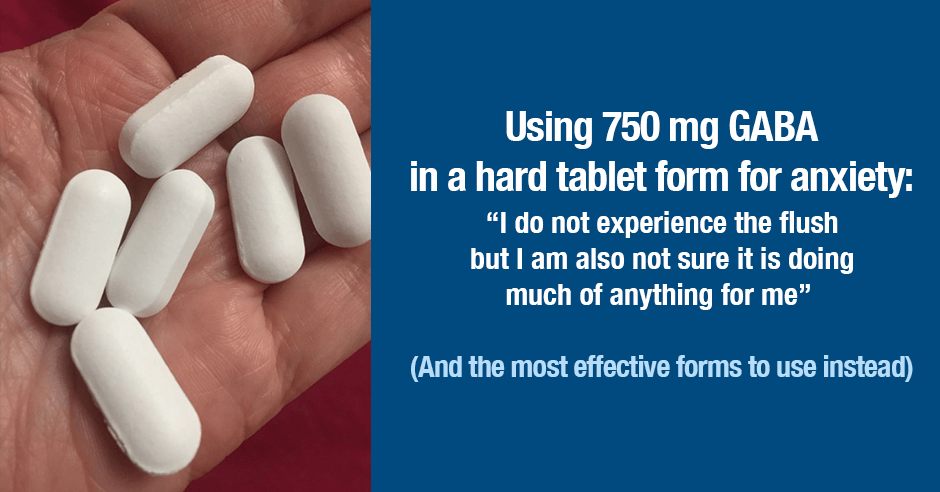
Using 750 mg GABA in a hard tablet form for anxiety: I do not experience the flush but I am also not sure it is doing much of anything for me

July 15, 2022 By Trudy Scott 21 Comments

gaba hard tablet

Today I’m addressing a question from someone in this community about a particular GABA product and her confusion about dosing with 750mg and using a hard tablet (she calls it a pill). When she uses it she doesn’t notice any effect i.e. no calming benefits and no adverse niacin-type tingly flush either. This is what she asked:

Not sure if “Source Naturals GABA Calm Mind” is on your list, but I thought it was one you had recommended at one time? Anyway, these are pills that cannot be opened like a capsule and 1 pill = 750 mg.

Personally, I had the tingly flush when I used a different product that WAS a capsule and opened it on my tongue…unfortunately I do not recall dosage or product name but I purchased at Whole Foods.

With this particular product (Source Naturals GABA Calm Mind) in pill form, although the dosage could be higher, I do not experience the flush…(however, I also am not sure it is doing much of anything for me).

This is my feedback for her: I have never recommended the Source Naturals GABA Calm Mind 750 mg tablet ever (she calls it a pill but I know she is referring to the hard tablets).

These are not a very effective way to use GABA. As you can see, she doesn’t feel it’s doing anything for her in terms of easing her anxiety and being calming. With a high dose of GABA we also often see a niacin-like flush or tingling and yet with this pill/tablet form she didn’t experience this either. GABA is much more effective when used sublingually or opening a capsule (and starting low at 125mg). More on this below.

But I’m not surprised she is confused and asking this question. The Source Naturals GABA Calm Mind has a very similar bottle/name/label to Source Naturals GABA Calm (the sublingual with 125mg GABA) and there is also a Source Naturals GABA Calm Mind 750 mg capsules (which can be opened).

She mentions the tingly flush when using a different product that was a capsule and opened on to her tongue. I’d suspect the tingling happened with a 500 mg GABA or 750 mg GABA product as this is a common dosage found in health stores. Opening the capsule and using less is best when starting out.

If you have to break it it’s a tablet and much less effective

All this logic applies to any brand of hard GABA tablet. Someone just shared on Facebook that she had purchased a GABA product in the Netherlands and broke it in half in order to use a lower dose. If you have to break it it’s a tablet and much less effective and possibly not at all effective. Be sure to read the front and back of the bottle and avoid hard tablets.

From time to time someone will see some benefit with a GABA tablet that is swallowed but it’s usually minimal.

The most effective forms of GABA to use

Here is a quick recap if you’re new to GABA. It’s an amino acid that is used as a supplement to boost GABA levels (a calming neurotransmitter) and ease physical tension type anxiety symptoms. It’s most effective when used sublingually, or as a powder or by using a GABA capsule opened on to the tongue or as a liposomal product.

When using GABA it must ideally be in one of these forms for the best effects:

  • Capsule form so the gelatin or cellulose capsule can be opened and the contents sprinkled onto the tongue, or some of it depending on dosing (NFH GABA-T SAP is a good example of this one – it contains GABA and theanine)
  • Sublingual form which is sucked/held in the mouth (Source Naturals GABA Calm 125mg is a good example of this – this is the GABA product that I have the most success with and it’s easy to use when out and about; PharmaGABA chewables are another option)
  • Powder form which is measured out using special tiny measuring spoon and sprinkled on to the tongue (Healthwise and Bulk Nutrients are good examples of this one)
  • Liposomal form which is sprayed into the mouth and held for a few minutes (Designs for Health Liposomal Neurocalm and Quicksilver Scientific Liposomal GABA with L-Theanine are good examples of this form)

This blog, Antianxiety Food Solution Amino Acid and Pyroluria Supplements, lists the amino acids that I use with my individual clients and those in my group programs. You can find a list of selected GABA products.

Here are a few success stories where the above different forms have been used:

  • Drastic reduction in intrusive thoughts, anxiety and fears (and better sleep) with GABA, tryptophan, 5-HTP and the pyroluria protocol
  • Keep GABA powder handy for choking episodes, stridor and panic (and find the ideal dose and be consistent for prevention/easing anxiety)
  • GABA helps 14-year-old with Tourette’s Syndrome (the tics and sleep), and tyrosine makes him happier and his mind sharper
  • GABA, Heartmath and EFT ease Micki’s mold-induced anxiety and panic attacks
  • PharmaGABA eases physical anxiety in a young man who has recently given up Adderall, alcohol and nicotine
  • GABA is the answer after 40 years of a lump-in-the-throat sensation, nervousness and muscle tension at work

Resources if you are new to using the amino acids as supplements

If you are new to using any of the amino acids as supplements, here is the Amino Acids Mood Questionnaire from The Antianxiety Food Solution (you can see all the symptoms of neurotransmitter imbalances, including low GABA).

If you suspect low levels of any of the neurotransmitters and do not yet have my book, The Antianxiety Food Solution – How the Foods You Eat Can Help You Calm Your Anxious Mind, Improve Your Mood, and End Cravings, I highly recommend getting it and reading it before jumping in and using amino acids on your own so you are knowledgeable. And be sure to share it with the practitioner/health team you or your loved one is working with.

There is an entire chapter on the amino acids and they are discussed throughout the book in the sections on gut health, gluten, blood sugar control, sugar cravings, self-medicating with alcohol and more.

The book doesn’t include product names (per the publisher’s request) so as mentioned above, this blog, The Antianxiety Food Solution Amino Acid and Pyroluria Supplements, lists the amino acids that I use with my individual clients and those in my group programs.

If, after reading this blog and my book, you don’t feel comfortable figuring things out on your own (i.e. doing the symptoms questionnaire and respective amino acids trials), a good place to get help is the GABA QuickStart Program (if you have low GABA symptoms). This is a paid online/virtual group program where you get my guidance and community support. There are many moms in the program who are having much success with their kids.

If you are a practitioner, join us in The Balancing Neurotransmitters: the Fundamentals program. This is also a paid online/virtual program with an opportunity to interact with me and other practitioners who are also using the amino acids with success with their clients/patients.

Did you use a GABA product that didn’t work for you before finding the ideal product and dose?

Please share which product didn’t work (was it a hard tablet?) and what did work for you. And be sure to share how it helps to ease your physical anxiety, insomnia, pain, intrusive thoughts and cravings (for sugar or alcohol).

Have you experienced the niacin-like flush or tingle from using too high a dose of GABA? How much did that and which product?

If you’re a practitioner, which forms of GABA do you find the most success with?

If you have questions please share them here too.

Filed Under: Amino Acids, Anxiety, GABA, Supplements Tagged With: 125mg, 750 mg GABA, anxiety, Balancing Neurotransmitters: the Fundamentals, calming, choking, flush, GABA, GABA Calm, GABA Quickstart program, hard tablet, intrusive thoughts, lump-in-the-throat sensation, mold-induced anxiety, muscle tension, nervousness, niacin-type flush, not doing much, opening a capsule, panic, pharmaGABA, pill, sleep, Source Naturals GABA Calm Mind, sublingual, tics, tingly, Tourette’s Syndrome

  • Page 1
  • Page 2
  • Page 3
  • Go to Next Page »

Primary Sidebar

NEW! GABA QuickStart Homestudy (with special intro pricing)

gaba quickstart homestudy

Free Report

9 Great Questions Women Ask about Food, Mood and their Health

You'll also receive a complimentary subscription to my ezine "Food, Mood and Gal Stuff"


Connect with me

Popular Posts

  • Amino Acids Mood Questionnaire from The Antianxiety Food Solution
  • The Antianxiety Food Solution Amino Acid and Pyroluria Supplements
  • Pyroluria Questionnaire from The Antianxiety Food Solution
  • Collagen and gelatin lower serotonin: does this increase your anxiety and depression?
  • Tryptophan for the worry-in-your-head and ruminating type of anxiety
  • GABA for the physical-tension and stiff-and-tense-muscles type of anxiety
  • The Antianxiety Food Solution by Trudy Scott
  • Seriphos Original Formula is back: the best product for anxiety and insomnia caused by high cortisol
  • Am I an anxious introvert because of low zinc and vitamin B6? My response to Huffington Post blog
  • Vagus nerve rehab with GABA, breathing, humming, gargling and key nutrients

Recent Posts

  • What do I use instead of Seriphos to help lower high cortisol that is affecting my sleep and making me anxious at night?
  • BeSerene™ GABA/theanine cream eases severe muscle tension in her neck/shoulders, prevents her bad headaches and quells her anxiety
  • How the correct approach, dose and sublingual use of GABA can be calming and not cause a flushed and itchy face and neck
  • The amino acid glutamine improves low mood by addressing gut health, and it has calming effects too
  • Flight anxiety with heightened breath, physical tension and also fearing the worst (the role of low GABA and low serotonin)

Categories

  • 5-HTP
  • AB575
  • Addiction
  • ADHD
  • Adrenals
  • Alcohol
  • Allergies
  • Alzheimer's disease
  • Amino Acids
  • Anger
  • Antianxiety
  • Antianxiety Food Solution
  • Antidepressants
  • Anxiety
  • Anxiety and panic
  • Autism
  • Autoimmunity
  • benzodiazapines
  • Bipolar disorder
  • Books
  • Caffeine
  • Cancer
  • Candida
  • Children/Teens
  • Collagen
  • Cooking equipment
  • Coronavirus/COVID-19
  • Cravings
  • Depression
  • Detoxification
  • Diabetes
  • Diet
  • DPA/DLPA
  • Drugs
  • EFT/Tapping
  • EMF
  • EMFs
  • Emotional Eating
  • Endorphins
  • Environment
  • Essential oils
  • Events
  • Exercise
  • Fear
  • Fear of public speaking
  • Fertility and Pregnancy
  • Fish
  • Food
  • Food and mood
  • Functional neurology
  • GABA
  • Gene polymorphisms
  • General Health
  • Giving
  • Giving back
  • Glutamine
  • Gluten
  • GMOs
  • Gratitude
  • Gut health
  • Heart health/hypertension
  • Histamine
  • Hormone
  • Hyperparathyroidism
  • Hypoglycemia
  • Immune system
  • Inflammation
  • Insomnia
  • Inspiration
  • Introversion
  • Joy and happiness
  • Ketogenic diet
  • Lithium orotate
  • Looking awesome
  • Lyme disease and co-infections
  • MCAS/histamine
  • Medication
  • Men's health
  • Mental health
  • Mercury
  • Migraine
  • Mold
  • Movie
  • MTHFR
  • Multiple sclerosis
  • Music
  • NANP
  • Nature
  • Nutritional Psychiatry
  • OCD
  • Osteoporosis
  • Oxalates
  • Oxytocin
  • Pain
  • Paleo
  • Parasites
  • Parkinson’s disease
  • PCOS
  • People
  • PMS
  • Postpartum
  • PTSD/Trauma
  • Pyroluria
  • Questionnaires
  • Real whole food
  • Recipes
  • Research
  • Schizophrenia
  • serotonin
  • SIBO
  • Sleep
  • Special diets
  • Sports nutrition
  • Stress
  • Sugar addiction
  • Sugar and mood
  • Supplements
  • Teens
  • Testimonials
  • Testing
  • The Anxiety Summit
  • The Anxiety Summit 2
  • The Anxiety Summit 3
  • The Anxiety Summit 4
  • The Anxiety Summit 5
  • The Anxiety Summit 6
  • Thyroid
  • Thyroid health
  • Toxins
  • Tryptophan
  • Tyrosine
  • Uncategorized
  • Vegan/vegetarian
  • Women's health
  • Yoga

Archives

  • October 2025
  • September 2025
  • August 2025
  • July 2025
  • June 2025
  • May 2025
  • April 2025
  • March 2025
  • February 2025
  • January 2025
  • November 2024
  • October 2024
  • September 2024
  • August 2024
  • July 2024
  • June 2024
  • May 2024
  • April 2024
  • March 2024
  • February 2024
  • January 2024
  • December 2023
  • November 2023
  • October 2023
  • September 2023
  • August 2023
  • July 2023
  • June 2023
  • May 2023
  • April 2023
  • March 2023
  • February 2023
  • January 2023
  • December 2022
  • November 2022
  • October 2022
  • September 2022
  • August 2022
  • July 2022
  • June 2022
  • May 2022
  • April 2022
  • March 2022
  • February 2022
  • January 2022
  • December 2021
  • November 2021
  • October 2021
  • September 2021
  • August 2021
  • July 2021
  • June 2021
  • May 2021
  • April 2021
  • March 2021
  • February 2021
  • January 2021
  • December 2020
  • November 2020
  • October 2020
  • September 2020
  • August 2020
  • July 2020
  • June 2020
  • May 2020
  • April 2020
  • March 2020
  • February 2020
  • January 2020
  • December 2019
  • November 2019
  • October 2019
  • September 2019
  • August 2019
  • July 2019
  • June 2019
  • May 2019
  • April 2019
  • March 2019
  • February 2019
  • January 2019
  • December 2018
  • November 2018
  • October 2018
  • September 2018
  • August 2018
  • July 2018
  • June 2018
  • May 2018
  • April 2018
  • March 2018
  • February 2018
  • January 2018
  • December 2017
  • November 2017
  • October 2017
  • September 2017
  • August 2017
  • July 2017
  • June 2017
  • May 2017
  • April 2017
  • March 2017
  • February 2017
  • January 2017
  • December 2016
  • November 2016
  • October 2016
  • September 2016
  • August 2016
  • July 2016
  • June 2016
  • May 2016
  • April 2016
  • March 2016
  • February 2016
  • January 2016
  • December 2015
  • November 2015
  • October 2015
  • September 2015
  • August 2015
  • July 2015
  • June 2015
  • May 2015
  • April 2015
  • March 2015
  • February 2015
  • January 2015
  • December 2014
  • November 2014
  • October 2014
  • September 2014
  • August 2014
  • July 2014
  • June 2014
  • May 2014
  • April 2014
  • March 2014
  • February 2014
  • January 2014
  • December 2013
  • November 2013
  • October 2013
  • September 2013
  • August 2013
  • July 2013
  • June 2013
  • May 2013
  • April 2013
  • March 2013
  • February 2013
  • January 2013
  • December 2012
  • November 2012
  • October 2012
  • August 2012
  • July 2012
  • June 2012
  • May 2012
  • April 2012
  • March 2012
  • February 2012
  • January 2012
  • December 2011
  • November 2011
  • October 2011
  • September 2011
  • August 2011
  • July 2011
  • June 2011
  • May 2011
  • April 2011
  • March 2011
  • February 2011
  • January 2011
  • December 2010
  • October 2010
  • September 2010
  • July 2010
  • May 2010
  • April 2010
  • March 2010
  • February 2010
  • January 2010
  • November 2009

Share the knowledge!

The above statements have not been evaluated by the Food and Drug Administration. Products listed in this website are not intended to diagnose, treat, cure or prevent any disease.

The information provided on this site is for informational and educational purposes only and is not intended as a substitute for advice from your physician or other health care professional. You should consult with a healthcare professional before starting or modifying any diet, exercise, or supplementation program, before taking or stopping any medication, or if you have or suspect you may have a health problem.


Copyright © 2026 Trudy Scott. All Rights Reserved. | Privacy | Terms and Conditions | Refund Policy | Medical Disclaimer

Free Report

9 Great Questions Women Ask about Food, Mood and their Health

You’ll also receive a complimentary subscription to my ezine “Food, Mood and Gal Stuff”