• Skip to primary navigation
  • Skip to main content
  • Skip to primary sidebar

everywomanover29 blog

Food, Mood and Women's Health – Be your healthiest, look and feel great!

  • Blog
  • About
  • Services
  • Store
  • Resources
  • Testimonials
  • The Book
  • Contact
  • Search this site

Inflammation

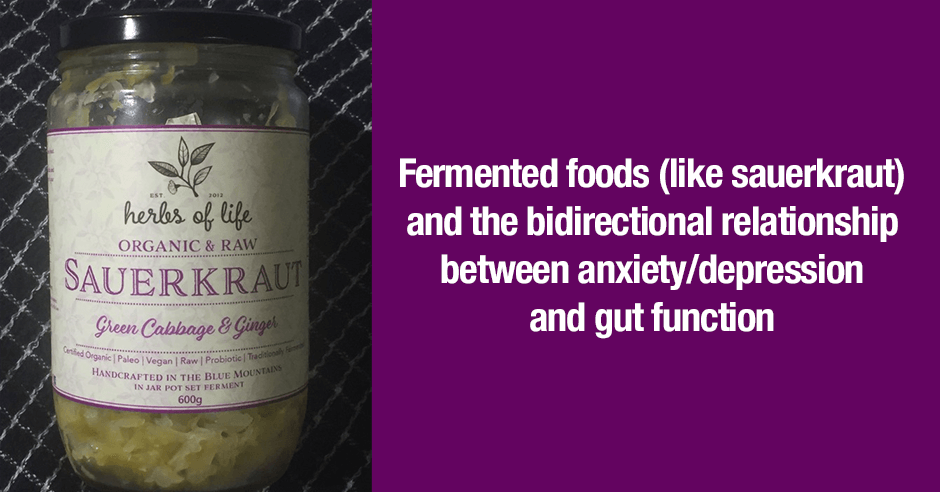
Fermented foods (like sauerkraut) and the bidirectional relationship between anxiety/depression and gut function

September 17, 2021 By Trudy Scott 6 Comments

fermented foods

Today’s blog is to whet your appetite (pun intended) with some snippets from my interview – Anxiety: Gut-Brain Communication & Diet – with Dr. David Perlmutter, author of Grain Brain and Brain Wash. In this interview we talk about fermented foods (like sauerkraut) and a study that highlights mechanisms underlying the  bidirectional relationship between anxiety/depression and gut function.

With anxiety at an all-time high and the ever-evolving research on the gut-brain connections we are relaunching the Anxiety Summit 5: Gut-Brain Axis summit on November 8-14, 2021. This interview is featured during the summit and is meaty (you’d expect nothing less from Dr. Perlmutter.)

The two-way connection between the gut and brain is powerful and needs to be explored and addressed if you have anxiety. Diet, fermented foods, reducing inflammation, addressing leaky gut (or intestinal permeability) and neurotransmitter support with amino acids are some of the ways that make a difference.

For the summit relaunch we have 4 incredible new guest expert interviews on sugar addiction, thiamine deficiency, trauma and the freeze response and safe tapering of SSRIs. And I have a new deep dive interview on glutamine, DPA and tyrosine for anxiety and sugar cravings/addiction. I’m excited to share it all with you!

For now, save the date and look out for the registration link in a few weeks. We’re in edit mode for the videos and transcripts, and getting all the backend setup done.

This is the first question I ask Dr. Perlmutter: I’d like to start with the microbiome and the fact that there is a bidirectional relationship between mental health and gut function. There’s a paper titled, Fermented foods, the gut and mental health: a mechanistic overview with implications for depression and anxiety published online late 2018 in The Journal of Nutritional Neuroscience. It highlights this important bidirectional relationship and the role of fermented foods. Can you share a little bit more about this and why this is important?

Before I share Dr. Perlmutter’s response, let me share a few quotes from the abstract of the paper:

  • Mental disorders including depression and anxiety are often comorbid with gut problems, suggesting a bidirectional relationship between mental health and gut function.
  • Several mechanisms might explain this comorbidity, such as inflammation and immune activation; intestinal permeability; perturbations in the hypothalamic-pituitary-adrenal axis; neurotransmitter/neuropeptide dysregulation; dietary deficiencies; and disturbed gut microbiome composition.
  • The potential of modulating the microbiome-gut-brain axis, and subsequently mental health, through the use of functional foods, is an emerging and novel topic of interest.
  • Fermented foods are considered functional foods due to their reputed health benefits.

The paper goes on to discuss food fermentation and summarizes how these foods “act biologically in the gastrointestinal tract and have the ability to modify the gut microbiota, influence translocation of endotoxins and subsequent immune activation, and promote host nutrition.” They are exploring their theoretical potential to improve symptoms of depression and anxiety in humans, saying more research is needed.

Dr. Perlmutter highlights various section of the paper and starts by sharing more about fermented foods and that we’ve been actively fermenting for thousands of years:

I think it’s first instructive to recognize that we’ve been actively fermenting foods for thousands of years as humans as a technique to preserve them, and allow us to travel with a food source. But beyond that, our ancestors prior to that would eat fermented foods. Fermentation is actually what happens to food when it’s left outside and is exposed to bacteria and begins the process of, dare I say, rotting. I don’t want that to be off putting to people who are going to hear the later part of our discussion dealing with eating fermented foods, because we have wonderful fermented foods that we eat these days.

He goes on to elaborate on what the paper terms functional foods. What this means is that these fermented foods have far-reaching health benefits for optimal health and for making us resistant to disease (i.e. improving our immunity):

The point is that the process of fermentation is basically a process of enrichment of food sources with bacteria. And what a notion that is, where we’re looking at the idea of eating a food that’s teeming with bugs, with germs, if you will. I say it that way, because it has such a negative connotation, but it really is what we want to do. These bacteria are involved in so many processes that deal with our health, and nurture our health, and our resistance to disease.

Some common examples of fermented foods are kimchi, sauerkraut, kefir (dairy kefir and water kefir), kombucha, and yogurt. Keep in mind, you can ferment many different vegetables. One of my favorites is cauliflower.

The paper also mentions inflammation as one possible mechanism for the bidirectional relationship between anxiety/depression and gut function, and Dr. Perlmutter discusses this in great detail, in the context of chronic health conditions. And he ties it all back to the microbiome:

From my perspective, of course, that has to do with the functionality of the brain, the way the brain remains healthy, and disease-free moving forward. And there are multiple mechanisms that relate to what’s going on in the gut to the brain. When we think of disease processes, most of what we are concerned about is the notion of inflammation, at least, in terms of a mechanism that relates to so many of the chronic degenerative conditions of the brain; be it Alzheimer’s, Parkinson’s, or even a non-chronic degenerative condition, which is autism is not necessarily considered to be progressive, but nonetheless at its heart, is in fact an inflammatory disorder.

So beyond that, of course, all of the chronic degenerative conditions that plague our planet, including heart disease, cancer, diabetes, the autoimmune conditions are at their very core, primarily inflammatory.

And let me be very clear that chronic degenerative conditions are ranked by the World Health Organization as the number one cause of death on planet Earth.

So we have to pay attention to anything that’s involved in the regulation of inflammation in the human body. And front and center right now in terms of gaining the spotlight, is the health of the gut bacteria, as well as its metabolites and it’s gene expression, collectively, we call that the microbiome.

The paper mentions intestinal permeability as another mechanism. Dr. Perlmutter covers the importance of the gut lining integrity and why it’s so important when it comes to anxiety, depression and the chronic diseases he mentions:

So we realize that the gut bacteria have a very important function, and that is to maintain the integrity of the gut lining.

And why would I, as a neurologist, give a hoot about the integrity of the gut lining? Quite categorically it’s because that is where inflammation in the body, in the long term, has its genesis. So, meaning we’ve got to have a strong gatekeeper at the lining of the gut to keep various gut-related proteins and other chemicals from making their way into the rest of the body, and challenging the immune system, upregulating the production of inflammatory chemicals that then do damage.

Dr. Perlmutter ends by discussing neurotransmitter dysregulation (also mentioned in the paper):

We know that our gut bacteria are involved in the manufacture of various neurochemicals, various neurotransmitters, serotonin, for example, dopamine, norepinephrine, epinephrine, [GABA], etcetera, that are primarily manufactured in the gut.

As a matter of fact, when it comes to serotonin, which certainly gains the spotlight; 90% is manufactured in the gut, another 9% is manufactured in the blood platelets, meaning that only 1% is actually manufactured in the brain, though, we call it a brain transmitter, a neurotransmitter. That said, the availability of the precursor for serotonin; the amino acid tryptophan, the availability of that even to the brain, is in fact controlled to a significant degree by actions of the gut microbes.

He wraps up by bringing in the microbiome, inflammation, chronic health conditions, anxiety and depression, and our lifestyle choices and diet (which includes foods such as fermented vegetables):

If we simply recognize that our gut bacteria are playing a massive role in regulating inflammation in the body, that’s enough, because our mission for the prevention of chronic degenerative conditions in the brain and out of the brain is controlling inflammation.

And it’s through the lens of the microbiome that we realize the detrimental or effectiveness of our food choices, and other lifestyle choices that can act to increase or balance inflammation. So it becomes extremely important.

The paper does discuss perturbations in the hypothalamic-pituitary-adrenal axis but we didn’t get into this during this interview. However, we do cover this in Dr. Peter Bongiorno’s interview on the summit.

Some of the recent research on specific fermented foods and mental health

Here is some of the recent research on specific fermented foods and mental health, where some or all of the above mechanisms may be a factor:

  • Kefir peptides exhibit antidepressant-like activity in mice through the BDNF/TrkB pathway
  • Effects of Fermented Milk Containing Lacticaseibacillus paracasei Strain Shirota on Constipation in Patients with Depression: A Randomized, Double-Blind, Placebo-Controlled Trial
  • Consumption of OLL1073R-1 yogurt improves psychological quality of life in women healthcare workers: secondary analysis of a randomized controlled trial (this improved mood, sleep and gastrointestinal health)
  • Possible use of fermented foods in rehabilitation of anorexia nervosa: the gut microbiota as a modulator

Some simple changes you can make

Here are some simple changes that be incorporated when you have anxiety or depression:

  • Include fermented foods and beverages in the diet (ideally on a daily basis). If you decide to include sauerkraut, you can make it yourself or buy it from the store. If you buy it ready-made, always make sure it’s raw and found in the refrigerated section. Vinegar should not feature on the label but do look for salt as this is used in the fermentation process. In the example I share above, the added ginger helps with digestion even further and is very delicious!
  • Eat a real whole foods diet with quality animal protein, healthy fats and organic vegetables and fruit (there is much research supporting dietary changes for improving mood and easing anxiety i.e. nutritional psychiatry)
  • Avoid inflammatory foods like gluten, sugar, processed foods/fast foods and foods that you have a sensitivity to
  • Address intestinal permeability if necessary (glutamine is my go-to nutrient for this and I take a deep dive into this amino acid in one of the new interviews on the summit)
  • Use targeted individual amino acids such as GABA to boost GABA (for physical anxiety symptoms) and tryptophan or 5-HTP to boost serotonin (for worry-type anxiety). You can do this while you are addressing underlying gut issues and making dietary changes. Keep in mind that these amino acids help you quit sugar, gluten and junk food at the same time as easing anxiety!

Resources if you are new to using the amino acids as supplements

If you are new to using the amino acids as supplements and want to know more, here is the Amino Acids Mood Questionnaire from The Antianxiety Food Solution and a brief overview here, Anxiety and targeted individual amino acid supplements: a summary.

If you suspect low neurotransmitters and do not yet have my book, The Antianxiety Food Solution – How the Foods You Eat Can Help You Calm Your Anxious Mind, Improve Your Mood, and End Cravings, I highly recommend getting it and reading it before jumping in and using amino acids so you are knowledgeable.

Do join us on the summit relaunch of Anxiety Summit 5: Gut-Brain Axis summit on November 8-14, 2021. Registration details coming soon.

And if you’d like to learn more about Dr. Perlmutter’s book, Brain Wash: Detox Your Mind for Clearer Thinking, Deeper Relationships, and Lasting Happiness (written with his son Dr. Austin Perlmutter), here is my review. In our interview on the summit, he shares about disconnection syndrome (and loneliness) and how our decision-making abilities have been compromised.

Are fermented foods and beverages included in your diet (and your family’s diet) on a daily basis? And what are your favorites?

Do you make your own fermented vegetables?

Have you observed mood and/or digestive improvements since including fermented foods in your diet?

If you are a practitioner, do you recommend fermented foods and discuss this bidirectional communication between the gut and the brain with your clients/patients?

Feel free to post your questions too.
Filed Under: Anxiety, Depression, Gut health, Inflammation Tagged With: amino acids, anxiety, anxiety summit, bidirectional, depression, diet, Dr. David Permutter, fermented foods, GABA, gut, gut-brain, Inflammation, intestinal permeability, leaky gut, mental health, neurotransmitter support, sauerkraut, serotonin, tryptophan

Increased sociability improves vagus nerve function: the role of social anxiety, pyroluria and low zinc

December 13, 2019 By Trudy Scott 43 Comments

increased sociability and vagus nerve

With the objective of taking a deeper dive into some of the favorite topics of the recent Anxiety Summit: Gut-Brain Axis, today’s blog is about the vagus nerve since Dr. Navaz Habib’s interview, Vagus Nerve Activation to Reduce Anxiety, was voted one of the favorites. I’m focusing on one tool that improves vagus nerve function that we didn’t have time to get into in great detail – and that is how increased sociability helps.  It’s all good and well to recommend getting out and hanging out with more people but if you have the social anxiety condition called pyroluria it’s really challenging, hard work and very stressful. Added stress makes pyroluria worse so it becomes a vicious cycle.

Let’s start with the research that supports the connection between the vagus nerve and increased anxiety and mood problems.  In the interview with Dr Navaz, we discussed this paper: Vagus Nerve as Modulator of the Brain–Gut Axis in Psychiatric and Inflammatory Disorders which states that “vagus nerve stimulation is a promising add-on treatment for treatment-refractory depression, posttraumatic stress disorder, and inflammatory bowel disease” and how stimulation of vagal fibers that go from the gut to the brain (afferent fibers) influences neurotransmitter production and “play crucial roles in major psychiatric conditions, such as mood and anxiety disorders.”  The gut bacteria play a major role too, “partly by affecting the activity of the vagus nerve.”

In our interview we end with very practical ways to activate your vagus nerve

  • Deep breathing exercises (mentioned in the above paper, together with yoga and meditation) and cold showers (which makes you breathe harder)
  • Gargling and using the gag reflex
  • Humming, chanting and singing (I used these approaches for my vagus nerve issue after my terrifying plane ride. GABA also helped with the voice/throat spasms I experienced – more here on that)
  • Auricular acupuncture (which is also very effective for addictions)
  • And finally, social interaction or increased sociability, which I want to cover today

The research on the vagus nerve and being more social

Let’s look at the research on the vagus nerve or vagal tone and being more social.  This paper, Upward spirals of the heart: autonomic flexibility, as indexed by vagal tone, reciprocally and prospectively predicts positive emotions and social connectedness, reports that that vagal tone and connectedness or being more social is a two-way street i.e. it’s reciprocal

  • “…increases in connectedness and positive emotions predicted increases in vagal tone” and
  • “Adults who possessed higher initial levels of vagal tone increased in connectedness and positive emotions more rapidly than others”

In summary, the more social and happy you are, the healthier your vagus nerve is and a healthier vagus nerve leads to feeling more connected and happy.

This study was done with adults in a community-dwelling setting over 9 weeks: “adults were asked to monitor and report their positive emotions and the degree to which they felt socially connected each day.”

Address pyroluria in those who have social anxiety

Pyroluria, the social anxiety condition, was not part of the study because it’s under-recognized as a factor in anxiety.  I’d like to propose that we address pyroluria in those who have social anxiety in order to further improve social connectedness and their vagus nerve function.

Many folks with pyroluria put on a brave face in social settings and even “extrovert” which is extremely stressful. The added stress makes pyroluria worse (zinc and vitamin B6 are dumped in much higher amounts) so it becomes a vicious cycle.

Others, who are not willing to even show up because of their severe social anxiety, are not getting that social interaction and connectedness that is so crucial for improved vagus nerve function and better overall health.

Here is the pyroluria questionnaire and the pyroluria/introvert connection.

Connecting the dots further we have

  • research that reports that vagus nerve stimulation has potential in autism treatment and we know pyroluria and social issues are common in autism
  • one of the key nutrients for pyroluria, zinc, plays a role in vagus nerve function
  • another key nutrient in pyroluria is vitamin B6 and it plays a role in reducing inflammation
  • according to the vagus nerve study above, the vagus nerve “plays important roles in the relationship between the gut, the brain, and inflammation”
  • both zinc and vitamin B6 are needed for neurotransmitter production, so increasing both GABA and serotonin will further improve mood and reduce anxiety
  • and finally, the more social and happy you are, the healthier your vagus nerve is and a healthier vagus nerve leads to feeling more connected and happy

By addressing the social anxiety called pyroluria with a foundation of zinc and vitamin B6, we can increase sociability and thereby improve vagus nerve function.

UPDATE 5/7/2020:

Social isolation during the coronavirus pandemic – other vagus nerve exercises

This blog is very applicable now during the coronavirus pandemic. I’ve made an update because I feel we need to start thinking about the longer-term adverse impacts of social isolation and work on other ways to improve vagus nerve function during isolation or quarantine.

This can include any or all of the ways mentioned above: deep breathing exercises, yoga, meditation, cold showers, gargling/gag reflex, humming/chanting/singing and/or auricular acupuncture.

Do you find you have better vagus nerve function when you are more sociable? What of these vagus nerve exercises have you been doing and found helpful during isolation? Do you have any other favorite approaches like using essential oils or anything else?

Vagus nerve stimulation to treat respiratory symptoms associated with COVID-19

This paper reports benefits in 2 patients with coronavirus – Use of non-invasive vagus nerve stimulation to treat respiratory symptoms associated with COVID-19: A theoretical hypothesis and early clinical experience

  • Both patients reported clinically meaningful benefits from nVNS therapy [non-invasive vagus nerve stimulation].
  • In Case 1, the patient used nVNS to expedite symptomatic recovery at home after hospital discharge and was able to discontinue use of opioid and cough suppressant medications.
  • In Case 2, the patient experienced immediate and consistent relief from symptoms of chest tightness and shortness of breath, as well as an improved ability to clear his lungs.

The authors also share that “vagus nerve stimulation has been demonstrated to block production of cytokines in sepsis and other medical conditions.”

With this virus being novel and with everyone learning we are still appreciative of small case reports like this and hope to see bigger studies done. Until then there is other evidence of the overall importance of the vagus nerve in helping to regulate lung infection and immunity.

The nVNS therapy mentioned in the COVID-19 paper is an external device that delivers “a proprietary signal through the skin to either the right or the left branches of the vagus nerve in the neck.” It’s not something I’ve used personally or had clients use so please share if you’ve had success with this device or a similar device.

Loving social isolation and thriving during coronavirus

On the flip side we also need to consider that there are some individuals who are loving social isolation and thriving emotionally. I share some feedback from folks in my community:

  • Elissa: “As an introvert, my mental health has never been better ☺️. Loving isolation life.”
  • Drew: “Loving it in many ways. Dreading the hedonism starting up again…”
  • Tiffany: “My anxiety levels have decreased and I have decreased my anxiety meds! I think it’s because the demand to produce has decreased. I can actually move at my own speed in this world. I’m fortunate, though. My heart goes out to those people in medical fields. I really miss some things, like time with my dad, but we have made some adjustments, like driveway picnics.”
  • Katie: “I was praying for relief from the busyness. Definitely didn’t have this in mind and my heart hurts for those who are impacted. It has been a beautiful time of rest and restoration for my body and soul.”
  • Wendy: “My life is usually slow paced and introverted. Now it’s more so and I’m finding the less I do in a day, the better I sleep. I’m actually dreading getting back to “normal” with all the pressures put on us by extroverts. Yes I have sympathy for people suffering mentally by isolation, but for the first time I feel like my type of lifestyle is socially acceptable. I’m tired of life expectations being dictated by the extrovert half of the population.”

I appreciate these folks for sharing their valuable perspectives about thriving in these times. It reinforces how unique we all are.

If you’re struggling with social isolation…

  • How are you feeling and what are you most looking forward to doing once social isolation recommendations are relaxed?
  • I’m guessing you don’t have pyroluria but please share if you do?

If you are thriving in social isolation…

  • Would you consider yourself an introvert /a contented introvert?
  • Have you got pyroluria and has addressing it nutritionally in the past allowed you to be more sociable or at least less anxious when you are in crowds?
  • How are you feeling during social isolation and what do you love the most right now?
  • What are you not looking forward to once social isolation recommendations are relaxed?
  • And how do you plan to go back to the old “normal” or don’t you?

Please comment below and let us know where you are with social isolation during this pandemic – struggling or thriving? And what vagus nerve exercises are you using right now? Have you used an external device with success?

Filed Under: Coronavirus/COVID-19, Pyroluria Tagged With: anxiety, anxiety summit, autism, Coronavirus, COVID-19, depression, GABA, Habib Navaz, infection, Inflammation, lung, non-invasive vagus nerve stimulation, posttraumatic stress disorder, pyroluria, sociability, social anxiety, spasms, stress, struggling, thriving, vagal tone, vagus nerve, vitamin B6, voice, zinc

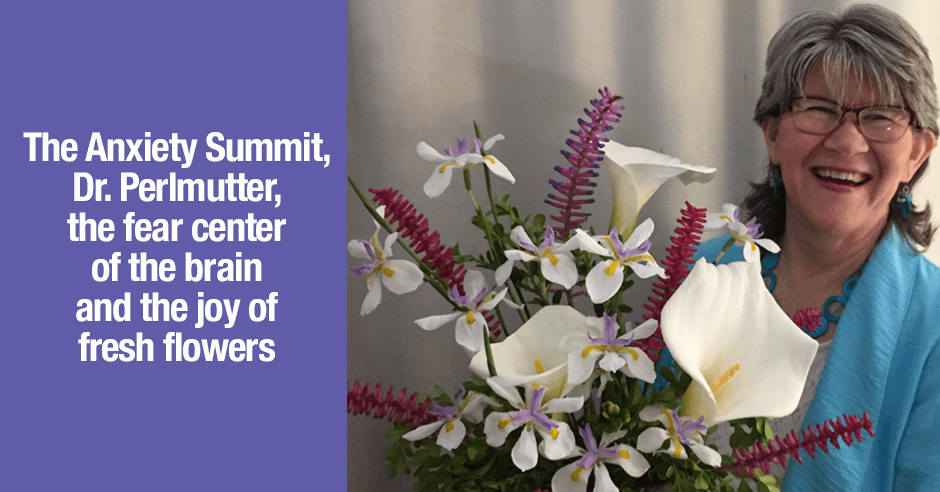
The Anxiety Summit, Dr. Perlmutter, the fear center of the brain and the joy of fresh flowers

September 27, 2019 By Trudy Scott 4 Comments

trudy and flowers

These lovely flowers are all from our garden and I have my wonderful mom-in-law to thank for this arrangement which I used for a very special interview this week with Dr. David Perlmutter (more on this below) for season 5 of The Anxiety Summit. I have my mom-in-law, Althea, to thank for all the flowers in all the interviews.

As you know, I love nature and flowers and because of this it feels really special to be able to say that The Anxiety Summit has been dubbed “a bouquet of hope.” Someone in one of the past seasons shared this anonymously and then sent me a lovely letter afterwards saying it was her.

Unfortunately, we were in the middle of packing to move and her letter was misplaced so I still don’t have a name and person to thank. If you’re reading this now, please please let me know it was you so I can thank you.

I’m sure you don’t need a study to convince you why you enjoy flowers so much but here goes anyway because – you know me – I love to geek out on the research.

In a study, Effect of olfactory stimulation by fresh rose flowers on autonomic nervous activity, 19 female university and graduate students (21 to 26 years old) reported an increase in physiological and psychological relaxation when smelling fresh roses. The study reported that the aroma of the fresh flowers led to

  • a significant increase in parasympathetic nervous activities
  • an increase in “comfortable” and “natural” feelings.

I’m not one bit surprised at these results! Are you? I would expect there to be an effect on our endorphins too because we feel so wonderful when we get a bunch of flowers from our loved one!

Dr. Perlmutter – Anxiety: Gut-Brain Communication & Diet

As I said above, I had the distinct pleasure of interviewing Dr. David Perlmutter for The Anxiety Summit this week (notice the flower arrangement in the background).

dr. perlmutter interview

You likely know Dr. Perlmutter as the author of Grain Brain, The Surprising Truth About Wheat, Carbs and Sugar, with over 1 million copies in print. What a wonderful interview we had. He’s smart, articulate, funny, geeky and practical at the same time, and an all around lovely person. I can’t wait to share this and all the incredible interviews I have done for The Anxiety Summit 5: Gut-Brain Axis.

In my interview with Dr David Brady on this summit he mentions how Dr. Perlmutter has championed the whole gut-brain connection. We all appreciate him for this work and with him being a trailblazer and leader in this, having him as a speaker on this summit could not have been more perfect. This is our topic and the talking points we cover

Anxiety: Gut-Brain Communication & Diet

  • Fermented foods, prebiotics, gut integrity and anxiety
  • SCFAs/short chain fatty acids, HDACs and serotonin production
  • Inflammation/cortisol and the amygdala/prefrontal cortex connection

Here is a snippet from our interview which went deep into the research, the mechanisms and biochemistry, and then brought it all back to practical interventions :

Both inflammation and stress can enhance anxiety. Well, what is anxiety? Anxiety is a physiological reaction to real of more commonly a perceived stress – in other words, a threat. There is no real threat there but the body perceives a situation that is not necessarily threatening as being threatening. So the body goes into this anxiety response for no good reason….

What we understand is that inflammation and cortisol actually tend to reduce the availability or the functionality of a connection between two parts of the brain. One of them, called the amygdala, is the fear center, and the other is the prefrontal cortex which is an area of the brain that tends to calm things down. It says to the amygdala: “Hey, cool, we’re glad you’re around but this isn’t one of those times you need to get excited.” It’s the adult in the room, if you will.

Inflammation and cortisol/stress breaks this key connection between the amygdala and the prefrontal cortex and these are one possible mechanism that leads to anxiety. We go on to discuss solutions such as diet, nature, and sleep.

I could have brought up flowers and talked more about nature at this point but we still had so much to cover.

Earlier in the interview went in depth into dietary aspects like delicious fermented foods and prebiotics such as garlic, onions, leeks and cauliflower. Prebiotics are fuel for short-chain fatty acids like butyrate, acetate and propionate, which are involved in the integrity of the gut lining, protect from intestinal inflammation. They are also involved in the manufacture of calming neurotransmitters, so here we have some of the stress/cortisol aspect covered.

Please join us and listen to the entire interview on The Anxiety Summit 5: Gut-Brain Axis.

Resources from Dr. Perlmutter

Now I get to share some of his wonderful work. You can find him online at DrPerlmutter.com and he has these new releases coming up:

  • He is the editor of the upcoming collection The Microbiome and the Brain that will be authored by top experts in the field and will be published in 2019 by CRC Press – written for both practitioners and researchers. This is so exciting and perfectly supports what we cover in this summit.
  • He shares a few gems from his book Brain Wash, which is proudly co-written with his son Austin Perlmutter, MD, in our interview.

Are you excited to hear my interview with Dr. Perlmutter? Which areas are of most interest to you?

And do you love flowers as much as I do? What are you favorites and how do you enjoy them?

If you have found any of the Anxiety Summits to be “a bouquet of hope” in your healing journey please tell us why and how you’re doing now.

If you’d like to give feedback or ask a question, please post in the comments below.


Filed Under: The Anxiety Summit, The Anxiety Summit 5 Tagged With: amygdala, anxiety, anxiety summit, bouquet of hope, Butyrate, cortisol, Dr. Perlmutter, fear, fear center, fresh flowers, gut integrity, Inflammation, prefrontal cortex, short chain fatty acids, stress

Sjogren’s syndrome: tryptophan and GABA for anxiety, and moisturizing for dry skin and inflammation?

May 10, 2019 By Trudy Scott 33 Comments

sjogren's syndrome

A few weeks ago I blogged about a new pilot study about the use of a skin moisturizer twice a day reduced inflammation in older adults. I use the inflammation research to question if this may be applicable and helpful for you if you suffer from anxiety, extrapolating that it may well be given the added benefits of touch and an oxytocin boost.

I received a number of great questions about how to apply this information and have decided to share a question from someone with both Sjogren’s syndrome and anxiety, in order to illustrate how I’d work with someone like this.

Here is the question I received:

I would like to know how much of one’s body needs to be moisturized, and if it is also necessary to be done twice per day? Such a simple but effective way to help with anxiety. Will be slathering a lot more in the future! I have Sjogren’s so everything is dry – skin, mouth, eyes, hair. I have been trying to keep my face much “moister” and I am sure my wrinkles have lessened. I find rice bran oil is also quite good.

I’m going to address her moisturizing question below and share more about anxiety in Sjogren’s syndrome and some nutritional solutions, but first let me explain what Sjogren’s syndrome is.

An overview of Sjogren’s syndrome

Let me explain what Sjogren’s (SHOW-grins) is in case you’re not familiar with this condition. It’s an autoimmune condition and is described as follows on the Mayo Clinic site:

often accompanies other immune system disorders, such as rheumatoid arthritis and lupus. In Sjogren’s syndrome, the mucous membranes and moisture-secreting glands of your eyes and mouth are usually affected first — resulting in decreased tears and saliva.

Although you can develop Sjogren’s syndrome at any age, most people are older than 40 at the time of diagnosis. The condition is much more common in women.

The site goes on to say that other than dry eyes and mouth, some people experience joint pain and stiffness, swollen salivary glands, skin rashes or dry skin, vaginal dryness, persistent dry cough and prolonged fatigue. It’s worth a read to learn more about complications like more dental cavities, yeast infections, vision issues, problems in the lungs, kidneys or liver, the risk of lymphoma and peripheral neuropathy.

My feedback about moisturizing

In the study, moisturizing was done twice a day. I’m not sure how much of the body needs to be moisturized but if everything is dry, I’d want to moisturize as much as possible.

Given that chronic inflammation is a major factor in Sjogren’s and other autoimmune conditions like systemic lupus erythematosus, it’s feasible to expect similar benefits in terms of reduced inflammation. Hopefully we’ll see research on autoimmune conditions in the future.

When it comes to anxiety, I do want to make it clear that I was and still am extrapolating from the research on inflammation and measuring reduced anxiety was not part of the study. Moisturizing may or may not help with anxiety and I certainly wouldn’t only use this intervention.

Anxiety in Sjogren’s – low serotonin and GABA?

You may not be aware that anxiety/depression is very common in Sjogren’s. In one study they

found 33.8% patients with anxiety, and 36.9% had depression, which were significantly higher than controls.

I use a comprehensive nutritional and lifestyle approach to help my clients ease their anxiety and as I mention above, I would not only rely on moisturizing.

I would use the serotonin questionnaire to determine if low serotonin is contributing to the anxiety (the worry-in-the head and rumination type of anxiety) and do a trial of tryptophan or 5-HTP.

Interestingly, a number of studies suggest the involvement of the serotonin system in the development of Sjogren’s, with one study reporting

Significantly lower platelet levels of serotonin in Sjogren’s patients as compared to healthy controls.

They didn’t find a correlation between the levels of serotonin and how severe the Sjogren’s symptoms were, which falls in line with what we know about biochemical individuality and why doing a trial of tryptophan or 5-HTP (to find your ideal dose) is the best approach for serotonin support.

I would use also the GABA questionnaire to determine if low GABA (physical tension type of anxiety) is a factor, and do a trial of GABA.

If you recall, in the Mayo Clinic description above, stiffness is a common symptom of Sjogren’s and GABA eases stiffness.

I haven’t found any research on GABA in Sjogren’s, but one case study reports that a patient experiencing athetoid movements (a movement dysfunction, characterized by involuntary writhing movements), reported symptom improvement with hydroxychloroquine (which can have severe psychiatric effects in susceptible individuals), pilocarpine, gabapentin, and clonazepam. The latter two medications work on the GABA system.

You can find the tryptophan and GABA products I use with my clients here.

Poor sociability in Sjogrens – could this be related to pyroluria?

A study published earlier this year is reportedly the first study to conclude that patients with Sjogren’s score “high on neuroticism and anxiety and low on sociability.”

If social anxiety is a concern, I’d have her do the pyroluria questionnaire and address this if needed.

If you recall, in the Mayo Clinic description above, joint pain and dental cavities are common symptoms. These are also very common with pyroluria, so using a nutritional approach helps ease the social anxiety, and improves joint issues and mouth health.

The other factor that makes me suspect pyroluria may be common in Sjogren’s is that it’s considered a systemic connective tissue disorder, together with systemic lupus erythematosus and rheumatoid arthritis. You can read more about pyroluria and connective tissue disorders on the pyroluria prevalence blog and the Ehlers Danlos/joint hypermobility blog.

Poor mouth health is also common with histapenia/low histamine so I’d want to look into this too.

You can find the pyroluria supplements I use with my clients here.

Sjogren’s and the Autoimmune-Paleo diet

Since Sjogren’s is an autoimmune condition, following an Autoimmune-Paleo (AIP) diet is key too. Here are some books that are well-worth making part of your library, even though they are not specific to Sjogren’s syndrome they offer support for autoimmune conditions (and many individuals often have more than one autoimmune disease)

  • Hashimoto’s Protocol by Dr. Izabella Wentz (Hashimoto’s is an autoimmune thyroid condition)
  • Hashimoto’s Food Pharmacology, a recipe book by Dr. Izabella Wentz (both on Hashimoto’s but applicable to any autoimmune condition)
  • Cooking for Hormone Balance: a recipe book by Magdalena Wszelaki (she has AIP recipes)
  • The Autoimmune Solution Cookbook by Amy Myers MD

I haven’t dived into the research on all the other autoimmune conditions and the above connections (low serotonin, low GABA and pyroluria) but it’s highly likely similar connections exist. So, if you have any autoimmune condition and anxiety this could all apply for you too.

If you have been diagnosed with Sjogren’s syndrome please share if GABA and tryptophan have helped ease your anxiety, and if the pyroluria protocol has helped you with social anxiety?

And let us know if moisturizing is helping your dry skin and possibly reducing inflammation and anxiety too?

Filed Under: Anxiety, Autoimmunity, GABA, Pyroluria, serotonin, Tryptophan Tagged With: AIP diet, anxiety, autoimmune, dry skin, GABA, hashimoto's, Inflammation, moisturizer, pyroluria, serotonin, Sjogren’s syndrome, social anxiety, tryptophan

DIY moisturizer recipes to lower inflammation and reduce anxiety, panic, PTSD, phobias and social anxiety?

May 3, 2019 By Trudy Scott 16 Comments

Could daily use of a good quality moisturizer help to reduce anxiety, panic, PTSD, phobias and social anxiety by reducing inflammation? Last week I blogged about a new pilot study on how a skin moisturizer reduced inflammation in older adults and extrapolated these results suggesting this may well be applicable for you if you suffer from anxiety because of the reduced inflammation. The benefits of touch, the oxytocin boost and slowing down for some self-care most likely play a role too. I promised to share some DIY home-made moisturizer recipes so here goes. You’ll see that many of these include ingredients that are helpful for anxiety when used stand-alone, so you get that benefit too.

Dr. Mariza shares Lavender-Cocoa Body Lotion Bars and a Soothing Skin Roller Blend

Dr. Mariza Snyder, author of The Essential Oils Hormone Solution (my Amazon link) and Smart Mom’s Guide to Essential Oils (my Amazon link), has a lovely recipe for DIY lotion bars on her site which she gave me permission to share here. She describes these bars as a “luxurious chocolaty-lavender post-shave moisturizer.” She adds that “Lavender and Geranium essential oils are the perfect combination when it comes to softening the skin while helping you to relax in the process.”

Lavender-Cocoa Body Lotion Bars

Ingredients:

1 cup beeswax pastilles
1 cup cocoa butter
1 cup coconut oil
2 teaspoons vitamin E
10 drops lavender essential oil
10 drops geranium essential oil

Directions: Combine all ingredients except essential oils in a double boiler or a glass bowl over a smaller sauce pan with 1 inch of water in it. Bring to a boil. Stir ingredients until they are completely melted and smooth. Remove from heat and then add essential oils and stir. Pour mixture into silicone bake cup molds for the lotion to solidify, allowing them to completely dry before removing them from the molds. Store lotion bars in a clean container and apply to body after a shower. The heat from your body will melt the lotion! Yield: 10-12 bars (depending on molds).

Check out her blog for other self-care recipes like a salt scrub, a cooling peppermint shaving cream and a razor burn serum (with versions for both women and men).

When I reached out to her for recipes, Dr. Mariza also shared a soothing skin healing blend recipe saying: “I’ve used this blend to reduce inflammation and redness on irritated skin with incredible success! I’ve treated a lot of acute eczema and psoriasis with this blend flare ups.” 

Soothing Skin Roller Blend 

Ingredients:

5 drops Melaleuca/Tea Tree essential oil
5 drops Geranium essential oil
6 drops Rose essential oil (optional)
6 drops Lavender essential oil
6 drops Frankincense essential oil
Fractionated Coconut Oil or Carrier Oil of choice

Directions:  Add essential oils to 10ml roller bottle and top off with Fractionated Coconut oil, or carrier oil of your choice.  Apply directly over the area of concern to reduce red, irritated skin.  Use as needed.

You can read my review of her book here): The Essential Oils Hormone Solution.

Dr. Z and Mama Z share their most used recipe: DIY Healing Skin Serum

Dr. Eric Zielinski, author of The Healing Power of Essential Oils (my Amazon link), and known affectionately as Dr. Z, and his wonderful wife, Mama Z, gave me permission to share this DIY Healing Skin Serum recipe. They run the Natural Living Family site.

Mama Z’s DIY Healing Skin Serum

Ingredients:

1 tablespoon cold fresh frozen aloe, or aloe vera gel
1 tablespoon organic coconut oil (softened or melted)
5 drops lavender essential oil
2 drops frankincense essential oil

Directions:

  1. Blend the aloe gel, coconut oil and essential oils in a Magic Bullet or food processor until smooth.
  2. Once well mixed, store in a class jar or glass salve container in a cool place so the coconut oil remains hardened.
  3. Store in fridge or cool place and enjoy at least once per day. Make fresh each week.

Notes: No matter what allergies you may have, there’s a carrier oil that’s right for you. You can use any, or a combination of these: Avocado, Fractionated Coconut, Grapeseed, Jojoba, Sweet Almond.

Be sure to read the entire blog post to get the back story on how Mama Z used this to heal her face after experiencing some chemical burns from store bought facial cleansers and creams when she was a teen, how it helped her dad with some skin cancer on his hands, some tips on aloe and some recipe variations.

Dr. Z gives it this glowing endorsement: “This is by far the most proven and most used DIY recipe that we have. It helps people with everything with skin cancer to sun burn, eczema to acne to psoriasis to you name it.”

Here is my review of Dr. Z’s book: The Healing Power of Essential Oils. You’ll find additional recipes here.

If you’re looking to learn how to use essential oils, I highly recommend their Essential Oils for Abundant Living 10-Part Video Masterclass.

Rachael, herbal skincare formulator, shares a lovely Skin Repair Souffle recipe

Rachael Pontillo, Licensed Aesthetician, herbal skincare formulator, educator and author of Love Your Skin, Love Yourself (my Amazon link) shares this lovely Skin Repair Souffle recipe.

Skin Repair Souffle Recipe

Supplies needed:

A glass jar–4 oz is preferred
A small double boiler/bain marie
Heat element (stove, cooktop, hot plate)
Kitchen scale
A small whisk
Small hand mixer, milk frother, or immersion blender

Ingredients:

30 g shea butter
30 g jojoba oil
15 drops total essential oils (Frankincense, Helichrysum, Geranium, and Lavender are the essential oils Rachael likes best for barrier support. She says either choose one or create a blend).

Instructions:

  1. Heat your double boiler until the water is boiling, then reduce to a simmer.
  2. Add the shea and jojoba and whisk gently until completely melted.
  3. Remove the vessel from the heat (careful not to get water into the mixture), and cool to room temperature in an ice bath while stirring gently.
  4. Add your essential oils, one by one, stirring gently.
  5. Blend gently with your milk frother or blender until the mixture begins to rise with a meringue-like texture (usually about 60 seconds)
  6. Pour into your jar. Close the jar immediately. Refrigerate overnight.

Dr. Keira, The Skin Whisperer, shares Lavender Bath Oil and Rejuvenating Serum

Dr. Keira L. Barr, MD, Founder and Chief Wellness Officer of Resilient Health Institute and author of The Skin Whisperer: A Dermatologist Reveals How to Look Younger, Radiate Beauty and Create the Life you Crave (my Amazon link), shares two wonderful recipes.

Lavender Bath Oil

Ingredients:

30 ml Almond Oil (or other carrier oil)
3 drops lavender essential oil
1 drop jasmine essential oil
1 drop myrrh essential oil

Instructions:

Mix all oils together in a bottle and shake well. This oil can be applied to skin in the shower, added to bath water or used after bathing or showering (while skin is damp but not completely dry to aid in absorption). Note: essential oil is 1% dilution.

Rejuvenating Serum 

Ingredients:

4ml Rosehip Seed Oil
3 ml Argan Oil
1 ml Pomegranate seed Oil
1 ml Sea Buckthorn Oil
1 drop carrot seed essential oil
Pour into 10 ml amber or dark colored glass bottle and label

Instructions:

Blend all the oils together adding the carrot seed essential oil last. Shake thoroughly and store in the refrigerator. Apply 3 to 5 drops after cleansing the skin nightly. Can be used on the face, neck and back of hands.

Calming essential oils and the original blog

As I mentioned above many of these recipes include ingredients that are calming and helpful for anxiety when used stand-alone, so you get that benefit too:

  • Intoxicating fragrance: Jasmine as valium substitute? New 2019 research confirms this
  • Blend of lavender, ylang-ylang, marjoram, and neroli reduces stress and lowers cortisol
  • Essential oils to help alleviate anxiety and improve sleep

If you missed the original blog with the research or would like a recap here it is: Could a daily moisturizer help to lower markers of inflammation and reduce anxiety, panic, PTSD, phobias and social anxiety?

You can learn more about the study; why poor skin health leads to inflammation; the role of inflammation on anxiety and other mental health conditions; the many nutritional approaches for reducing cytokines and inflammation; some studies on the benefit of touch and a boost of oxytocin; and tips for adding skin moisturizing to your daily self-care routine.

Skin moisturizing, diet and calming nutrients

As I said in the original blog, I feel very comfortable saying you now have a new tool – daily skin moisturizing – to add to your toolbox to help lower inflammation and reduce anxiety, panic, PTSD, phobias and social anxiety. Let’s use this – together with dietary changes and key calming nutrients – to eliminate anxiety and feel your absolute best.

These recipes provide safe and fun options for you to try. Have fun with these recipes and be sure to share which ones you try and like or if you have your own favorite. Also share what your moisturizing self-care routine is like.

I have more to share – all the feedback from a recent Facebook post on favorite home-made and store-bought moisturizers and will share this in the next installment. Do let me know what else you’d like me to cover.

Filed Under: Inflammation Tagged With: anxiety, coconut oil, diet, essential oils, geranium, Inflammation, lavender, moisturizer, panic, phobias and social anxiety, PTSD, skin

Could a daily moisturizer help to lower markers of inflammation and reduce anxiety, panic, PTSD, phobias and social anxiety?

April 26, 2019 By Trudy Scott 43 Comments

Could using a good quality moisturizer on a daily basis help to lower markers of inflammation (proinflammatory markers) and actually help reduce anxiety, panic, PTSD, phobias, social anxiety and other mental health symptoms, plus other chronic health conditions at the same time? Based on a new pilot study, I’m going out on a limb and saying this may well pan out to be true. And there is certainly no harm in making this a daily self-care routine until further research confirms this, certainly because of the other benefits of using a moisturizer.

New study: a skin moisturizer reduces markers of inflammation

Let’s take a look at this new study which reports how using a skin moisturizer actually reduces markers of inflammation in the body: Topical Applications of an Emollient Reduce Circulating Pro-Inflammatory Cytokine Levels in Chronically Aged Humans: A Pilot Clinical Study

Emollients are moisturizers that help keep the skin moist and supple by reducing water loss from the epidermis, the outer layer of the skin.

The study set out to mirror an animal study where skin problems in older/aged mice was tied to elevated markers of inflammation called cytokines. When epidermal function/skin health in the mice was improved, the circulating cytokine levels were reduced:

Thirty‐three aged humans were treated twice‐daily for 30 days, with ≈3 ml of an emollient, previously shown to improve epidermal [i.e. skin] function

Changes in epidermal function and levels of three key, age‐related, plasma cytokines (IL‐1β, IL‐6 and TNFα) were measured at baseline and after treatment.

Circulating levels of proinflammatory cytokines in the body, IL‐1β, IL‐6 and TNFα, were higher in the older adults before the use of the emollient. After topical use, i.e, using the cream on their skin twice a day for 30 days:

circulating levels of IL‐1β and IL‐6 normalized, while TNFα levels declined substantially.

The authors suggest larger clinical trials to confirm this connection between high levels of proinflammatory cytokines and chronic inflammatory disorders and to show how improving skin health by moisturizing may prevent chronic inflammatory disorders such as heart disease, type II diabetes, osteoporosis and Alzheimer’s disease in older adults.

The University of California explains the mechanism:

Our skin starts to deteriorate around age 50 with changes to epidermal pH, hydration, and the permeability barrier, which keeps water in and bacteria and other potential pathogens out. A loss of moisture and breaks in the permeability barrier cause the skin to release inflammatory cytokines. Ordinarily, these cytokines help to repair defects in the barrier, but in aging skin the barrier can’t be fixed as easily, so the inflammatory signals continue to be released, eventually reaching the blood.

This article and the study authors are suggesting this is an issue to be addressed with older adults and with respect to the above chronic diseases, but there is enough research on the role of inflammation on anxiety and other mental health conditions at any age, that this study had me perk up and take notice. Also, if you’re young and not moisturizing or living in a dry climate or have other factors contributing to inflammation (more on that below), could this be happening too? I believe it’s highly likely.

The role of inflammation on anxiety and other mental health conditions

Here is one of the many anxiety-inflammation studies: Inflammation in Fear- and Anxiety-Based Disorders: PTSD, GAD, and Beyond, reporting that:

heightened concentrations of inflammatory signals, including cytokines and C-reactive protein, have been described in posttraumatic stress disorder (PTSD), generalized anxiety disorder (GAD), panic disorder (PD), and phobias (agoraphobia, social phobia), etc.

And concludes that:

targeting inflammation may serve as a potential therapeutic target for treating these fear- and anxiety-based disorders in the future

Inflammation plays a role in depression too. This paper, Role of Inflammation in Depression and Treatment Implications reports that:

Numerous studies (including meta-analyses) have found elevated peripheral and central inflammatory cytokines and acute phase proteins in depression.

The ongoing inflammation affects neurotransmitters and makes antidepressants less effective:

Chronic exposure to increased inflammation is thought to drive changes in neurotransmitters and neurocircuits that lead to depressive symptoms and that may also interfere with or circumvent the efficacy of antidepressants.

Many approaches for reducing cytokines and inflammation

I do want to address the one statement in the emollient study where they say that “approaches that reduce circulating cytokines are not yet available.” There are, in fact, many approaches for reducing cytokines and inflammation.

In one study vitamin D supplementation improved mood, reduced anxiety and lowered markers of inflammation (CRP and IL-10) in female diabetics who had low levels of vitamin D.

In another study looking at anxiety in women with PCOS (polycystic ovary syndrome), probiotics and selenium improved their mental health and hormonal profiles, lowered markers of inflammation and reduced oxidative stress.

This paper lists a number of underling root causes that cause systemic inflammation and depression: psychosocial or life stressors, poor diet, physical inactivity, obesity, smoking, altered gut permeability (i.e. leaky gut), atopy (a genetic tendency to allergies – this could include gluten sensitivity), poor dental health, sleep issues and vitamin D deficiency.

Of course, these factors may also play a role in anxiety and using a functional medicine and nutritional approach, you can reduce the inflammation and eliminate the anxiety/depression. It’s a matter of finding your root cause/s and addressing them.

Research is also finding that GABA, one of the main calming neurotransmitters, may also have a possible role in “neuroimmune interaction, being involved in the modulation of immune cell activity associated with different systemic and enteric inflammatory conditions.”

Low zinc and low vitamin B6 are also factors in inflammation, and addressing low levels reduces inflammation and eases anxiety such as pyroluria (a social anxiety condition) and low GABA and low serotonin anxiety because zinc and vitamin B6 are co-factors for making these brain chemicals.

The benefit of touch and a boost of oxytocin

I’d like to mention other benefits of using a daily moisturizer – the benefits of touch, massage and a boost of oxytocin:

  • Hand massage and therapeutic touch has been shown to decrease anxiety and make the elderly in a nursing home feel more comforted. If you’re a caregiver to a parent, make daily moisturizing part of your routine.
  • Swedish massage reduces anxiety in ICU patients and improves vital signs.
  • Touch increases the release of oxytocin improving well-being and may also have “applications in neuropsychiatric disorders especially those characterized by persistent fear, repetitive behavior, reduced trust and avoidance of social interactions.”

Adding skin moisturizing to your daily self-care routine

I feel very comfortable saying you now we have a new tool – daily skin moisturizing – to add to your toolbox to help lower your markers of inflammation and reduce anxiety, panic, PTSD, phobias and social anxiety. Let’s use everything at your disposal to heal and feel your absolute best.

It’s something most women (and a few men) are already doing, and this information can give you more reason to continue to do it.

It’s a lovely self-care routine if you’ve not been doing it for some time or have never regularly used a moisturizer. This information can be an incentive to add it back to your daily routine or start doing it.

The biggest problem I see with moisturizing is using toxic chemicals and less than ideal creams on your skin so I reached out to colleagues and my community on Facebook to get input on their favorite home-made and store-bought moisturizers:

  • Here are the DIY recipes: DIY moisturizer recipes to lower inflammation and reduce anxiety, panic, PTSD, phobias and social anxiety?
  • Stay tuned for a new blog on favorite good quality store-bought moisturizers

In the meanwhile, feel free to share your favorites and what your moisturizing self-care routine is like, and if you get regular massages and use moisturizing creams with love ones. Simply comment below.

Filed Under: Inflammation Tagged With: anxiety, diet, gluten, Inflammation, massage, moisturizer, oxytocin, panic, phobias and social anxiety, PTSD, skin, touch, vitamin D

  • « Go to Previous Page
  • Page 1
  • Page 2
  • Page 3
  • Page 4
  • Go to Next Page »

Primary Sidebar

NEW! GABA QuickStart Homestudy (with special intro pricing)

gaba quickstart homestudy

Free Report

9 Great Questions Women Ask about Food, Mood and their Health

You'll also receive a complimentary subscription to my ezine "Food, Mood and Gal Stuff"


Connect with me

Popular Posts

  • Amino Acids Mood Questionnaire from The Antianxiety Food Solution
  • The Antianxiety Food Solution Amino Acid and Pyroluria Supplements
  • Pyroluria Questionnaire from The Antianxiety Food Solution
  • Collagen and gelatin lower serotonin: does this increase your anxiety and depression?
  • Tryptophan for the worry-in-your-head and ruminating type of anxiety
  • GABA for the physical-tension and stiff-and-tense-muscles type of anxiety
  • The Antianxiety Food Solution by Trudy Scott
  • Seriphos Original Formula is back: the best product for anxiety and insomnia caused by high cortisol
  • Am I an anxious introvert because of low zinc and vitamin B6? My response to Huffington Post blog
  • Vagus nerve rehab with GABA, breathing, humming, gargling and key nutrients

Recent Posts

  • What do I use instead of Seriphos to help lower high cortisol that is affecting my sleep and making me anxious at night?
  • BeSerene™ GABA/theanine cream eases severe muscle tension in her neck/shoulders, prevents her bad headaches and quells her anxiety
  • How the correct approach, dose and sublingual use of GABA can be calming and not cause a flushed and itchy face and neck
  • The amino acid glutamine improves low mood by addressing gut health, and it has calming effects too
  • Flight anxiety with heightened breath, physical tension and also fearing the worst (the role of low GABA and low serotonin)

Categories

  • 5-HTP
  • AB575
  • Addiction
  • ADHD
  • Adrenals
  • Alcohol
  • Allergies
  • Alzheimer's disease
  • Amino Acids
  • Anger
  • Antianxiety
  • Antianxiety Food Solution
  • Antidepressants
  • Anxiety
  • Anxiety and panic
  • Autism
  • Autoimmunity
  • benzodiazapines
  • Bipolar disorder
  • Books
  • Caffeine
  • Cancer
  • Candida
  • Children/Teens
  • Collagen
  • Cooking equipment
  • Coronavirus/COVID-19
  • Cravings
  • Depression
  • Detoxification
  • Diabetes
  • Diet
  • DPA/DLPA
  • Drugs
  • EFT/Tapping
  • EMF
  • EMFs
  • Emotional Eating
  • Endorphins
  • Environment
  • Essential oils
  • Events
  • Exercise
  • Fear
  • Fear of public speaking
  • Fertility and Pregnancy
  • Fish
  • Food
  • Food and mood
  • Functional neurology
  • GABA
  • Gene polymorphisms
  • General Health
  • Giving
  • Giving back
  • Glutamine
  • Gluten
  • GMOs
  • Gratitude
  • Gut health
  • Heart health/hypertension
  • Histamine
  • Hormone
  • Hyperparathyroidism
  • Hypoglycemia
  • Immune system
  • Inflammation
  • Insomnia
  • Inspiration
  • Introversion
  • Joy and happiness
  • Ketogenic diet
  • Lithium orotate
  • Looking awesome
  • Lyme disease and co-infections
  • MCAS/histamine
  • Medication
  • Men's health
  • Mental health
  • Mercury
  • Migraine
  • Mold
  • Movie
  • MTHFR
  • Multiple sclerosis
  • Music
  • NANP
  • Nature
  • Nutritional Psychiatry
  • OCD
  • Osteoporosis
  • Oxalates
  • Oxytocin
  • Pain
  • Paleo
  • Parasites
  • Parkinson’s disease
  • PCOS
  • People
  • PMS
  • Postpartum
  • PTSD/Trauma
  • Pyroluria
  • Questionnaires
  • Real whole food
  • Recipes
  • Research
  • Schizophrenia
  • serotonin
  • SIBO
  • Sleep
  • Special diets
  • Sports nutrition
  • Stress
  • Sugar addiction
  • Sugar and mood
  • Supplements
  • Teens
  • Testimonials
  • Testing
  • The Anxiety Summit
  • The Anxiety Summit 2
  • The Anxiety Summit 3
  • The Anxiety Summit 4
  • The Anxiety Summit 5
  • The Anxiety Summit 6
  • Thyroid
  • Thyroid health
  • Toxins
  • Tryptophan
  • Tyrosine
  • Uncategorized
  • Vegan/vegetarian
  • Women's health
  • Yoga

Archives

  • October 2025
  • September 2025
  • August 2025
  • July 2025
  • June 2025
  • May 2025
  • April 2025
  • March 2025
  • February 2025
  • January 2025
  • November 2024
  • October 2024
  • September 2024
  • August 2024
  • July 2024
  • June 2024
  • May 2024
  • April 2024
  • March 2024
  • February 2024
  • January 2024
  • December 2023
  • November 2023
  • October 2023
  • September 2023
  • August 2023
  • July 2023
  • June 2023
  • May 2023
  • April 2023
  • March 2023
  • February 2023
  • January 2023
  • December 2022
  • November 2022
  • October 2022
  • September 2022
  • August 2022
  • July 2022
  • June 2022
  • May 2022
  • April 2022
  • March 2022
  • February 2022
  • January 2022
  • December 2021
  • November 2021
  • October 2021
  • September 2021
  • August 2021
  • July 2021
  • June 2021
  • May 2021
  • April 2021
  • March 2021
  • February 2021
  • January 2021
  • December 2020
  • November 2020
  • October 2020
  • September 2020
  • August 2020
  • July 2020
  • June 2020
  • May 2020
  • April 2020
  • March 2020
  • February 2020
  • January 2020
  • December 2019
  • November 2019
  • October 2019
  • September 2019
  • August 2019
  • July 2019
  • June 2019
  • May 2019
  • April 2019
  • March 2019
  • February 2019
  • January 2019
  • December 2018
  • November 2018
  • October 2018
  • September 2018
  • August 2018
  • July 2018
  • June 2018
  • May 2018
  • April 2018
  • March 2018
  • February 2018
  • January 2018
  • December 2017
  • November 2017
  • October 2017
  • September 2017
  • August 2017
  • July 2017
  • June 2017
  • May 2017
  • April 2017
  • March 2017
  • February 2017
  • January 2017
  • December 2016
  • November 2016
  • October 2016
  • September 2016
  • August 2016
  • July 2016
  • June 2016
  • May 2016
  • April 2016
  • March 2016
  • February 2016
  • January 2016
  • December 2015
  • November 2015
  • October 2015
  • September 2015
  • August 2015
  • July 2015
  • June 2015
  • May 2015
  • April 2015
  • March 2015
  • February 2015
  • January 2015
  • December 2014
  • November 2014
  • October 2014
  • September 2014
  • August 2014
  • July 2014
  • June 2014
  • May 2014
  • April 2014
  • March 2014
  • February 2014
  • January 2014
  • December 2013
  • November 2013
  • October 2013
  • September 2013
  • August 2013
  • July 2013
  • June 2013
  • May 2013
  • April 2013
  • March 2013
  • February 2013
  • January 2013
  • December 2012
  • November 2012
  • October 2012
  • August 2012
  • July 2012
  • June 2012
  • May 2012
  • April 2012
  • March 2012
  • February 2012
  • January 2012
  • December 2011
  • November 2011
  • October 2011
  • September 2011
  • August 2011
  • July 2011
  • June 2011
  • May 2011
  • April 2011
  • March 2011
  • February 2011
  • January 2011
  • December 2010
  • October 2010
  • September 2010
  • July 2010
  • May 2010
  • April 2010
  • March 2010
  • February 2010
  • January 2010
  • November 2009

Share the knowledge!

The above statements have not been evaluated by the Food and Drug Administration. Products listed in this website are not intended to diagnose, treat, cure or prevent any disease.

The information provided on this site is for informational and educational purposes only and is not intended as a substitute for advice from your physician or other health care professional. You should consult with a healthcare professional before starting or modifying any diet, exercise, or supplementation program, before taking or stopping any medication, or if you have or suspect you may have a health problem.


Copyright © 2026 Trudy Scott. All Rights Reserved. | Privacy | Terms and Conditions | Refund Policy | Medical Disclaimer

Free Report

9 Great Questions Women Ask about Food, Mood and their Health

You’ll also receive a complimentary subscription to my ezine “Food, Mood and Gal Stuff”