• Skip to primary navigation
  • Skip to main content
  • Skip to primary sidebar

everywomanover29 blog

Food, Mood and Women's Health – Be your healthiest, look and feel great!

  • Blog
  • About
  • Services
  • Store
  • Resources
  • Testimonials
  • The Book
  • Contact
  • Search this site

diet

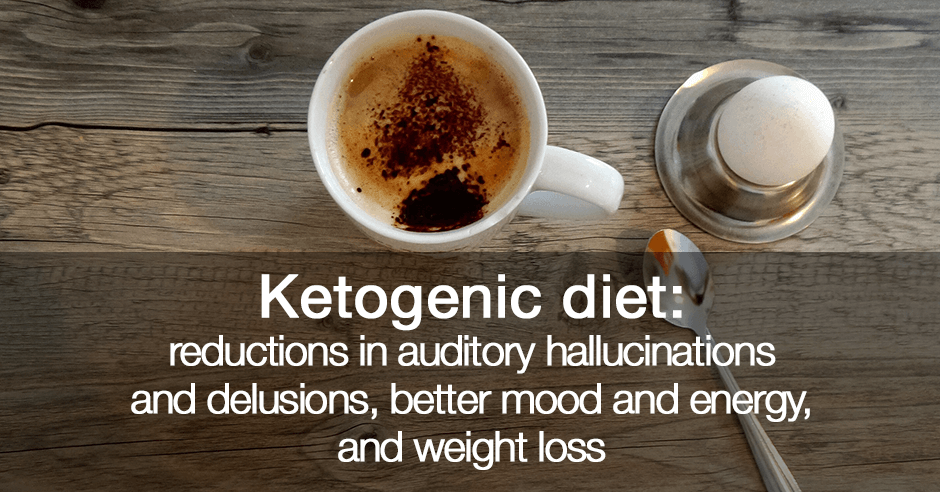
Ketogenic diet: reductions in auditory hallucinations and delusions, better mood and energy, and weight loss

April 6, 2018 By Trudy Scott 5 Comments

Two schizoaffective patients of Dr. Chris Palmer, a psychiatrist from Harvard’s McLean Hospital in Belmont, Massachusetts, tried a ketogenic diet for weight loss. As well as losing weight, they experienced reductions in auditory hallucinations and delusions, had a better mood and had more energy.

Here is additional information about these remarkable results, published late last year in this letter to the editor – Ketogenic diet in the treatment of schizoaffective disorder: Two case studies.

The male patient: lost weight, reductions in auditory hallucinations and delusions, better mood and energy

The male patient, diagnosed with schizoaffective disorder, with a prior psychiatric history of attention deficit hyperactivity disorder and major depression, experienced “dramatic” reductions in auditory hallucinations and delusions, as well as better mood and energy on the ketogenic diet. He also lost weight, losing 104 pounds over the course of a year.

He weighed 322 lb and wanted to lose weight by following a ketogenic diet, typically consisting of coffee with medium chain triglyceride (MCT) oil and butter (“bulletproof coffee”), eggs, meat, fish, poultry, spinach, kale, and olive oil. Within 3 weeks, he had lost 15 lb, but also noted a dramatic reduction in his auditory hallucinations and delusions, and improvement in his mood, energy, and ability to concentrate. For the past year, he has largely remained on this ketogenic diet and has lost 104 lb.

His functioning has improved and he has become more independent:

He completed a certification course, successfully participates in an online college program, has friends, began dating, and moved from his father’s home into an independent apartment.

The female patient: lost weight, resolution of her delusions

After four weeks on the ketogenic diet, the female patient, also diagnosed with schizoaffective disorder, and with a prior psychiatric history of major depression and anorexia nervosa, had resolution of her delusions and lost ten pounds:

she wanted to lose weight, and went on a ketogenic diet, consisting mostly of coffee, eggs, poultry, and lettuce. Within 4 weeks, she lost 10 lb and noted that her delusions were no longer present, and that her mood and energy were much better. After 4 months, she lost a total of 30 lb and her PANSS score decreased to 70 [down from 107]

In both instances their symptoms returned when they stopped the diet, but then improved again when back on the ketogenic diet.

In case you’re not familiar with the ketogenic diet here is a quick summary:

The ketogenic diet is a high-fat / low carbohydrate [and low protein] diet that has been used since the 1920’s to treat childhood epilepsy, with some studies suggesting that over 50% of patients experience significant reductions in seizure frequency. The ketogenic diet results in ketone bodies, instead of glucose, being used as the primary energy source in the brain.

There simply is no psychiatric medication available with the power to accomplish these results

I had the pleasure of meeting Dr. Georgia Ede, MD  last year at the ISNPR conference. She is a Harvard-trained psychiatrist and nutrition consultant practicing at Smith College, and writes about these two schizoaffective cases in her article – Low-Carbohydrate Diet Superior to Antipsychotic Medications:

These outcomes are truly remarkable: improvement by dozens of points on the PANSS, significant weight loss, and better quality of life. There simply is no psychiatric medication available with the power to accomplish these results.

I agree with Dr. Ede especially when we look at the medications these patients had trialed. These medication trials for the male patient: methylphenidate, amphetamine salts, dextroamphetamine, bupropion, sertraline, paroxetine, buspirone, lamotrigine, lorazepam, clonazepam, gabapentin, haloperidol, perphenazine, aripiprazole, olanzapine, quetiapine, and clozapine. The female patient had a similarly long list of medication trials and she also received 23 electroconvulsive therapy treatments. For both of them, positive and negative symptoms persisted.

I do still have questions about the ketogenic diet

The research in epilepsy is extensive and the research in mental health is growing. I am really impressed with the results, but I do still have questions about the ketogenic diet. Perhaps you have some similar questions and concerns. Here goes…

  1. If this particular nutritional psychiatry approach works so well for severe mental health disorders such as schizophrenia and psychosis, how will it work for less severe conditions like anxiety and panic attacks? Are these severe cases like the “canaries in the coal-mine” paving the way and teaching us about the benefits of this way of eating?
  2. Should you use a ketogenic dietary approach as the first approach or consider it as a last resort once the other dietary approaches have been implemented and you’re not seeing full symptom resolution? In other words, should you start with a real whole foods diet, then implement a gluten-free diet, then a grain-free diet, then remove dairy (if it’s an issue), then incorporate low FODMAPs if needed and only then implement a ketogenic diet? (low oxalate, low salicylate and low histamine would be incorporated as needed earlier in the process, based on each person’s unique needs).  If we look only at schizoaffective disorder,  there is growing evidence of the role of gluten  in some individuals with this paper “suggesting that an antigliadin IgG positive population of schizophrenia could be a distinct subgroup.” This 2 person pilot study reports the benefits of a gluten-free diet: “this potential mechanism is exciting and may provide improvement for up to one-fourth of patients (antibody-positive) who suffer from this devastating disorder.”
  3. How do we clearly define a ketogenic diet and communicate this definition to practitioners and to those who choose to implement this way of eating on their own? I’ve had feedback from many people who tell me they have been on a ketogenic diet (and it’s worked well for them or maybe it hasn’t worked so well for them), only to discover they are not really eating a true ketogenic diet. How do we simplify this way of eating and make it easy for individuals to understand and then stay in ketosis?
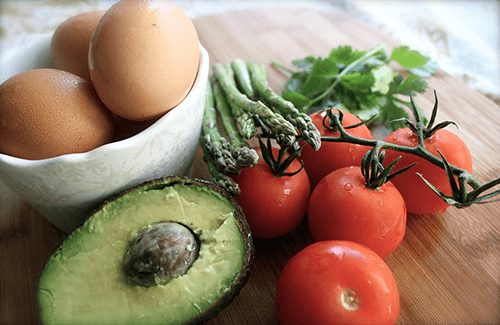
  4. How do we create a ketogenic diet that is nutrient dense and also offers the benefits seen in this research. I have major concerns about long-term nutritional deficiencies with a diet of coffee, eggs, poultry, and lettuce (as eaten by the female patient in this case study). It should ideally include plenty of leafy greens, non-starchy vegetables like broccoli, cauliflower, asparagus etc. and healthy fats like avocado, grass-fed butter and coconut oil, together with fermented vegetables and bone broths. I’m also not convinced that coffee should be part of the ketogenic diet, especially if coffee increases your anxiety and affects your sleep.
  1. How do we help individuals make the switch to this way of low carb eating and help them maintain so they don’t feel deprived and are not relying on willpower alone? As you can see from these 2 cases, the diet can be challenging to sustain and slip ups are common. If you are eating enough health fats (and it’s a lot more than you’re used to eating), this typically helps with cravings. If you still have cravings and feel you are deprived and missing out on treats, the targeted individual amino acids offer powerful results: tryptophan (for afternoon cravings), GABA (for stress eating), DPA (for comfort eating), tyrosine (when there is low motivation) and glutamine (for low blood sugar cravings).
  2. Is the ketogenic diet the next big fad or weight-loss trend as we’re hearing in the media? Based on the above research it truly does have impressive therapeutic benefits beyond only weight-loss. So can we see similar benefits with a modified ketogenic diet, using intermittent fasting and/or cycling in and out of ketosis, and even adding in a ‘feasting day’ of carbs?
  3. Who shouldn’t adopt a ketogenic diet? For example: those with the APOE4 gene, women with adrenal and hormone issues, and individuals with thyroid issues and no gallbladder? The question then becomes this: of those suffering with anxiety and depression or another mental health disorder, who doesn’t have one of these issues? And how do we address the keto rash, constipation, fat malabsorption, fatigue, mineral deficiencies and other issues some people experience on a ketogenic diet?

Right now, this is my thinking: as with any nutritional or functional medicine approach, I would say there is no one-size-fits all for who should implement a ketogenic diet (we need to consider the unique biochemistry of each person) and there is no one set ketogenic diet (it will need to be customized for each person).

Please do share if you’ve adopted a ketogenic diet and the benefits you have experienced, and if you experienced any issues. Be sure to share what a typical day’s diet looks like for you.
Filed Under: Anxiety, Diet, Sugar addiction Tagged With: anxiety, coffee, delusions, depression, diet, Dr. Chris Palmer, energy, hallucinations, Ketogenic, mood, schizoaffective, weight-loss

World Benzodiazepine Awareness Day 2017: Awareness and Anxiety Nutrition Solutions

July 14, 2017 By Trudy Scott 14 Comments

World Benzodiazepine Awareness Day 2017 was celebrated earlier this week on July 11th. The organization recommends that everyone should watch and share this short informative video: The risks of taking benzodiazepines (Klonopin, Xanax, Ativan) as prescribed. It could save your life or the life of someone you know.

This is what W-BAD shares about benzodiazepines and Z-drugs that are used as prescribed:

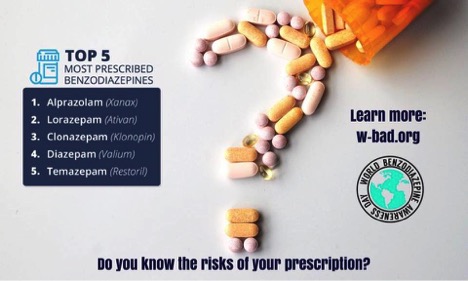
Benzodiazepines (Xanax, Klonopin, Ativan, Valium, Librium, and others) as well as Z-drugs (Ambien, Lunesta and others), which are similar, have the most debilitating withdrawal reactions in all of medicine.

This happens in regular, everyday people who are taking the medications exactly as their doctor prescribed. It also happens to people on what they think are “low doses” and is not just a “high dose” problem. This happens because the prescribing guidelines for this class of drug recommend short-term use only (less than 2-4 weeks), yet doctors are prescribing them for much longer. Even worse, these unsuspecting patients are given no warning (or informed consent) by their doctor about these risks and dangers before taking the prescription past the recommended timeline. The patients think the drugs are “safe” because they are prescribed when they are actually quite dangerous medications that are capable of inflicting sometimes severe and life-threatening withdrawal syndromes which are known, for some people, to persist for many years.

W-BAD shares these stats about how common it is to see physical dependence, adverse effects, and withdrawal:

Experts and studies estimate that as many as 60% of people taking benzodiazepines for more than the recommended 2-4 week time period will develop physical dependence, adverse effects, and withdrawal

60% is actually a conservative percentage, as some other sources indicate that “50-80% of people regularly taking benzodiazepines (even in ‘low dose’) for longer than a few months will develop a physical tolerance to the drug and become dependent, resulting in difficulty stopping benzodiazepines because of withdrawal symptoms”.

30% of long-term users will experience severe withdrawal or adverse effects which may include seizures, hallucinations, psychosis, akathisia, and sometimes suicide or death (people are especially at risk for severe withdrawal if they over-rapidly taper or cold-turkey their benzodiazepine/Z-drug).

The tapers to discontinue these medications, once you’ve taken them past 2-4 weeks and depending on dose, can last many months or years. I see this all the time in my practice.

About 10-15% of people who withdraw will develop a protracted withdrawal syndrome which can potentially persist for many years (there are anecdotal reports of it persisting up to five, seven, and even ten years post-cessation.). Others, even after a slow, gradual reduction of the benzodiazepine or Z-drug will experience withdrawal that lasts for up to 18 months post-cessation.

Physical dependence is a physical condition, a state of adaptation in the body caused by chronic use of a tolerance forming drug, in which abrupt or gradual drug withdrawal causes withdrawal.

When someone becomes physically dependent to benzodiazepines (or Z-drugs), they are also at risk for developing tolerance. With benzodiazepines/Z-drugs, specifically, when the receptors in the brain become adapted or accustomed to the action of the original dose of BZ, more of the drug is needed in order for the desired therapeutic effect (or the original effect at the original dose) to be achieved. This means that the drug loses its effectiveness and the person taking it can begin to experience withdrawal symptoms while still taking the prescribed dose of the drug.

It’s very unfortunate that some of the very same symptoms that are trying to be addressed by these medications are now amplified or seen for the first time:

Some common symptoms of tolerance include increasing anxiety, panic attacks, development of agoraphobia for the first time, interdose withdrawal (withdrawal symptoms emerging in between doses), as well as a plethora of other physical/neurological/psychological symptoms.

Visit the website World Benzodiazepine Awareness Day to learn more and to get involved:

By spreading the word about taken-as-prescribed benzodiazepine risks, harms, and dangers, W-BAD (World Benzodiazepine Awareness Day) hopes to bring awareness to the general public and the medical community about this problem before more people are needlessly harmed. Please help share this video with everyone you know and, together, we can prevent more victims of iatrogenic (caused by medicine) dependence, withdrawal, and injury from prescribed benzodiazepines and Z-drugs.

There are some heartbreaking stories on the Facebook page (an excellent resource) :

  • W-BAD volunteer Jan Elle bravely shares some details of her cold-turkey benzo withdrawal in this video as she recovers from the Protracted Withdrawal Syndrome
  • Jennifer Fritzler-Krueger was struggling really badly through withdrawal and major brain fog but shared her story via video anyway

W-BAD acknowledges Professor Malcolm H. Lader for guiding them in providing information that appears throughout the website and in handout materials. Prof. Lader first described benzodiazepine withdrawal syndrome as a potential brain injury in the scientific literature, and also campaigned around the world to get everyone from politicians to royalty to listen.

Here is some guidance with slow tapering protocols from W-BAD (and never stop cold-turkey).

For additional resources this is the blog post I published last year: World Benzodiazepine Awareness Day – say NO to Benzodiazepines for anxiety!

Awareness and nutrition solutions

I do love that this awareness is being created. It is so needed for those who are prescribed these medications and currently taking them, for anyone who may consider a future prescription, and for everyone in the medical profession, as well as all integrative and functional medicine practitioners and nutritionists.

All this awareness creates the perfect opportunity to offers nutrition solutions too, so we can address:

  • the initial root cause/s of your anxiety which led to your prescription of this medication to start with
  • the anxiety you now experience even through you were prescribed these medications for something else (such as pain)
  • your current biochemistry and nutritional status to facilitate an easier taper from the benzodiazepine with the least withdrawal effects
  • your current biochemistry and nutritional status so you don’t get anxiety in the future, once you have completed the taper

And if you are considering a benzodiazepine prescription in the future you are now informed about the dangers and have nutritional resources too.

When I am working with someone who has been prescribed a benzodiazepine, I get them nutritionally stable BEFORE they even consider a benzodiazepine taper.

I use amino acids like GABA and tryptophan, melatonin and niacinamide to make the taper easier and so we can balance brain chemistry before tapering and then during the taper (all under the supervision of the prescribing doctor and using the Ashton taper protocol).

Dr. Jonathan Prousky, talks about his success with benzodiazepine tapers on a prior Anxiety Summit interview – using melatonin, niacinamide, Neurapas Balance, rhodiola and GABA.

There is also a big focus on diet (real food/often a Paleo diet, no additives, organic, healthy fats, no gluten, no sugar, no caffeine, quality grass-fed/wild protein), addressing high cortisol if needed, addressing low zinc, low iron, low vitamin B6, low B12 and looking at gut health. Lifestyle and stress reduction is important and we look at and address all possible 60+ underlying factors/causes.

This is all covered in detail in my book “The Antianxiety Food Solution” (on amazon here) The basics plus advanced topics (like fluoroquinolone antibiotic issues when on benzodiazepines and more) are also addressed on the Anxiety Summits.

I feel very strongly about providing this nutritional support and sharing how helpful it is because organizations like W-BAD and Benzobuddies.org (as much as love them) advocate for no nutrient support suggesting it won’t help or could make symptoms worse. I will admit that some people who are tapering are very sensitive and in these situations very very tiny amounts (as small as a pinch in some instances) of some of the nutrients may be a better option, always only doing one thing at a time to make sure it’s helping and not making symptoms worse, and doing functional medicine tests. Using essential oils, light therapy, gentle detox, Heartmath and yoga are wonderful to start with, in conjunction with all the diet changes.

Please share your benzodiazepine story and what has helped you taper more easily and recover.

If you’re a practitioner please share what approaches you have used to help your clients or patients taper more easily.

Filed Under: benzodiazapines Tagged With: anxiety, benzodiazepine, diet, GABA, melatonin, nutrition solutions, World Benzodiazepine Awareness Day

SMILES diet depression trial: reduced depression and anxiety

March 24, 2017 By Trudy Scott 16 Comments

The SMILES trial, A randomised controlled trial of dietary improvement for adults with major depression was recently published BMC Medicine. It is the first randomized controlled trial to test whether dietary improvement can actually treat depression. Yes, we’re using dietary improvement and treat in the same sentence!

The objective was to determine if “structured dietary support, focusing on improving diet quality using a modified Mediterranean diet model” would have an impact on mood. The outcome is very exciting:

‘SMILES’ was a 12-week, parallel-group, single blind, randomised controlled trial of an adjunctive dietary intervention in the treatment of moderate to severe depression. The intervention consisted of seven individual nutritional consulting sessions delivered by a clinical dietician. The control condition comprised a social support protocol to the same visit schedule and length.

The results indicate that dietary improvement may provide an efficacious and accessible treatment strategy for the management of this highly prevalent mental disorder, the benefits of which could extend to the management of common co-morbidities.

These encouraging results were seen in participants who switched from a junk food diet to a real foods diet. Of the 67 who were enrolled in the study, the majority were using some form of therapy: psychotherapy and medications combined or psychotherapy only or medication only. There were 31 in the diet support group and 25 in the social support control group. Participants had to have been eating this diet in order to be accepted into the study:

a poor (low) intake of dietary fibre, lean proteins and fruit and vegetables, and a high intake of sweets, processed meats and salty snacks.

The dietary approach followed by participants in the study intervention group was the ‘ModiMedDiet’ which is based on the Australian Dietary guidelines and the Dietary Guidelines for Adults in Greece.

The primary focus was on increasing diet quality by supporting the consumption of the following 12 key food groups (recommended servings in brackets): whole grains (5–8 servings per day); vegetables (6 per day); fruit (3 per day), legumes (3–4 per week); low-fat and unsweetened dairy foods (2–3 per day); raw and unsalted nuts (1 per day); fish (at least 2 per week); lean red meats (3–4 per week), chicken (2–3 per week); eggs (up to 6 per week); and olive oil (3 tablespoons per day), whilst reducing intake of ‘extras’ foods, such as sweets, refined cereals, fried food, fast-food, processed meats and sugary drinks (no more than 3 per week). Red or white wine consumption beyond 2 standard drinks per day and all other alcohol (e.g. spirits, beer) were included within the ‘extras’ food group. Individuals were advised to select red wine preferably and only drink with meals.

The dietary composition of the ModiMedDiet was as follows: protein 18% of total energy; fat 40%; carbohydrates 37%; alcohol 2%; fibre/other 3%.

Here are the reasons I’m excited about this research:

  • It’s the first randomized controlled diet depression study and ONE THIRD of the dietary intervention group saw improvements in their depression symptoms.  This was just diet alone and switching from processed/junk food to real food with no specific dietary restrictions!
  • Participants also reported improvements in anxiety symptoms.
  • The authors even addressed the cost factor, stating it was more affordable to eat this way ($112 per week vs $138 per week).
  • The authors address the fact that the dietary intervention group was able to make these dietary changes “despite the fatigue and lack of motivation” that we so commonly see with depression.
  • I’m optimistic about it paving the way for making dietary approaches part of the standard of treatment for mental health conditions. The paper suggests the addition of “clinical dieticians to multidisciplinary mental health teams.”  I’d like to add that these dieticians, together with nutritionists and health coaches would need to be well versed in functional medicine approaches.
  • According to an article on ABC, one participant continued the Mediterranean diet after finishing the study and is now doing a diploma in health science. How inspiring is this? When we get results like this we want to share them with everyone!  

These are very encouraging results and we applaud the positive results of this SMILES study which are truly groundbreaking.

Let’s also be aware of where we are headed with future research and how we can improve on the trial diet.  The researchers conclude with this comment about future research:

The scaling up of interventions and identification of the pathways that mediate the impact of dietary improvement on depressive illness are also key imperatives

Professor Jacka recently shared this paper on how personalized dietary interventions successfully lower post-meal glucose i.e. how certain foods can affect two people quite differently because of our unique gut bacteria. She said that she wants to do a similar personalized nutrition study for depression if they are successful in obtaining NHMRC funding.

Here are some questions I’ve been asked about this SMILES trial (and I’m sharing here in case you have similar questions):

  • why did only one-third of the study intervention group see improvements?
  • why was wheat and other grains included?
  • why was low fat dairy and lean meats emphasized?
  • why was there no mention of grass-fed meat, wild fish, healthy fats like butter and coconut oil, pastured eggs or chickens or quality organic fruits and vegetables?

The ideal dietary approach for anxiety, depression and any health condition is always one that high quality, is personalized and takes into account biochemical individuality. With the removal of gluten, grains and the inclusion of the other dietary changes mentioned above, plus addressing all nutritional imbalances I expect we will see more than one-third of the dietary group experiencing improvements in depression in future trials.  

I truly appreciate the work of Professor Felice Jacka and her team and look forward to seeing more studies like the SMILES trial, using a personalized approach and quality foods that include grass-fed red meat and wild fish, plus pastured eggs or chickens, and healthy fats; and organic produce as a baseline. 

And then future trials that also look at the impacts of these dietary changes on anxiety and depression: gluten and/or grain removal;  removal of high histamine foods and high oxalate foods;  a low FODMAPs diet; the specific carbohydrate diet/SCD; a Paleo diet and so on – all based on biochemical individuality. We know these diets works in clinical practice and now we just need the research to back this up.  In part 2 of the blog, I share some incredibly inspiring diet-depression and diet-anxiety Paleo success stories.

In summary:

  • a simple change like switching from junk to real food can have a major impact on your depression and anxiety – ONE THIRD of the dietary intervention group saw improvements in their depression symptoms and many also saw reduced anxiety. This is profound! 
  • you may need to make additional dietary changes (gluten-free, grain-free, low FODMAPs i.e. avoiding or adding certain foods based on your biochemical individuality) and always add healthy fats and focus on quality
  • you may also need to address brain chemical imbalances with amino acids supplements, address gut health, adrenal issues, low zinc, low vitamin B6, low vitamin D etc. too

Are you encouraged by this research?

And have you made similar dietary changes to those done in the SMILES trial and seen a reduction in your anxiety and depression?

Have you removed gluten or grains and made additional dietary changes, and added supplements and seen even more benefits?

Note: to avoid confusion I’ve used the Australia spelling of “randomised” and “fibre” in the quoted sections and the US spelling “randomized” elsewhere in the blog.

Filed Under: Antianxiety, Depression Tagged With: anxiety, depression, diet, felice jacka, SMILES, treatment, trial

Share your diet-depression success story: SMILES study looking for your input

January 19, 2017 By Trudy Scott 18 Comments

Professor Felice Jacka, nutritional psychiatry researcher and founder of ISNPR/International Society for Nutritional Psychiatry Research posted this exciting news and important request on the ISNPR facebook page:

The SMILES RCT, which is the first randomised controlled trial to test whether dietary improvement can actually treat depression, has now been accepted for publication in BMC Medicine (publication date 31st January).

As part of the media campaign, we will be needing to identify people who are willing to be interviewed. If there is anyone who has personally experienced a benefit from improving their diet, would you please volunteer for this purpose?

It’s a very important role, as the media coverage for SMILES will be limited if we can’t provide personal, first-person experiences to journalists. Clearly – for the sake of the field – it will be important to generate extensive media in order for clinicians and the general public to understand the implications and possibilities that arise from the RCT. Your help is enormously appreciated!

You can read more about this SMILES RCT here and the Anxiety Summit interview with Felice Jacka here: The Research – Food to prevent and treat anxiety and depression?.

Although anxiety was looked at in the study, Felice shared this regarding the type of interviewees they are looking for:

  • We really need to keep a focus on the topic of the RCT, which is depression
  • And to also keep it to those who improved the quality of their diet i.e. moving from a processed food diet, to one high in plant foods and healthy fats and healthy proteins
  • Not a particular type of diet (e.g. not paleo, not gluten free).

If you’ve personally benefited from changing your diet in this way and you’d like to help by sharing your story with the media please comment on the blog (or send an email to support [at] everywomanover29.com) with details of your story and willingness to be interviewed, plus your location. Be sure to let us know how best to contact you.

Right now we’ll just be calling on those who meet the above criteria for the media interviews.

BUT if you’ve benefited from any other changes to your diet – for either anxiety or depression – feel free to share anyway, so we can inspire others to do the same.

Here is my story:

For me it was anxiety and panic attacks that resolved when I made dietary and other nutritional and lifestyle changes.   I had been eating a vegetarian diet for a few years and I suspect the non-organic/GMO processed soy products (soy milk, soy yogurt, soy “butter” etc) were a big issue for me and damaged my gut.  When I added back quality animal protein (grass-fed red meat, wild fish, pastured eggs and chicken), switched to organic produce, added healthy fats and removed gluten my mood improved dramatically.  Now I eat a combination of a Paleo/SCD /low FODMAPS/low oxalate diet. 

During the severe anxiety and panic attacks I also needed additional support in the way of the targeted amino acids GABA (this was a life-saver and stopped the panic attacks in a few days) and tryptophan, plus zinc, vitamin B6, evening primrose oil, a good multi and B complex and adrenal support.  I still continue with some of these basic nutrients today.

My health issues have been complex as I’ve also had to deal with heavy metals, poor gut health and much more so I had what I call “a perfect storm” and yet diet has had such a huge impact for me!

Thanks for sharing your story! I’ll be sharing more as soon as the paper is actually published. Stay tuned for an interview with Felice too! 

And  big congrats to Felice and her team on this ground-breaking research!

UPDATE January 30, 2017: Here is the link to the research – A randomised controlled trial of dietary improvement for adults with major depression (the ‘SMILES’ trial)


Filed Under: Depression, Food and mood, Research Tagged With: anxiety, depression, diet, felice jacka, food, smiles study

The Anxiety Summit – New 2015 Food/Nutrient Research on Anxiety and Speaker Highlights

May 6, 2015 By Trudy Scott 107 Comments


The host of the Anxiety Summit, Trudy Scott, Food Mood Expert and Nutritionist, author of The Antianxiety Food Solution opens up the Anxiety Summit Season 3.

New 2015 Food/Nutrient Research on Anxiety and Speaker Highlights

  • Nutritional medicine as mainstream in psychiatry
  • What if nutrients could treat mental illness?
  • The gut microbiome and diet in psychiatry, and the guts of remote Amazon dwellers
  • Dietary guidelines from Brazil, exercise, mindfulness, caffeine and social interaction
  • Preschoolers on Medicaid being prescribed psychotropic drugs and other medication news
  • Speaker highlights, gems and connections

“Nutritional Medicine as Mainstream in Psychiatry” published in January this year.

Psychiatry is at an important juncture, with the current pharmacologically focused model having achieved modest benefits in addressing the burden of poor mental health worldwide. Although the determinants of mental health are complex, the emerging and compelling evidence for nutrition as a crucial factor in the high prevalence and incidence of mental disorders suggests that diet is as important to psychiatry as it is to cardiology, endocrinology, and gastroenterology. Evidence is steadily growing for the relation between dietary quality (and potential nutritional deficiencies) and mental health, and for the select use of nutrient-based supplements to address deficiencies, or as monotherapies or augmentation therapies.

The abstract concludes as follows:

We present a viewpoint from an international collaboration of academics (members of the International Society for Nutritional Psychiatry Research), in which we provide a context and overview of the current evidence in this emerging field of research, and discuss the future direction. We advocate recognition of diet and nutrition as central determinants of both physical and mental health.

I blogged about this earlier this year and you can read more here

Here is part of “What if nutrients could treat mental illness?”

We are at a tipping point in psychiatry.

The growing body of literature on the effect of nutrients on mental health is compelling enough and consistent enough for us to pay attention. It is time to revisit the role of diet and supplementary nutrients in the treatment of mental illness and to invest in this line of research.

Here are the other studies I mentioned:

  • “A randomized controlled trial to test the effect of multispecies probiotics on cognitive reactivity to sad mood”
  • “Indigenous Bacteria from the Gut Microbiota Regulate Host Serotonin Biosynthesis”

Here are 2014 dietary guidelines of Brazil  What is your takeaway? who will you teach to cook? Will you take cooking lessons?  Will you plan more family sit-down meals?

Here is the information on Preschoolers on Medicaid being prescribed psychotropic drugs – very disturbing and sad! 

And here are all the speakers of Season 3 of The Anxiety Summit.

Here are some of the words from Top of the World

A new beginning, a brand new day
All of my fears are gone away
I feel so calm, so free, so whole
Right now, I’m feeling on top of the world
You’ll find the link to download the song on the replay page. Enjoy and share!
 

A few final words from me –

  • Please don’t tolerate how you feel
  • Don’t ever give up hope and keep looking for answers until you have zero anxiety – there may be one root cause, there may be many but you can end your anxiety!
  • Finally ….“You deserve to feel your absolute best, and can and should feel on top of the world – always!”
If you are not already registered for the Anxiety Summit you can get live access to the speakers of the day here: www.theAnxietySummit.com


Missed this interview or can’t listen live? Or want this and the other great interviews for your learning library? Purchase the MP3s or MP3s + transcripts and listen when it suits you.

You can find your purchasing options here: Anxiety Summit Season 1, Anxiety Summit Season 2, and Anxiety Summit Season 3.

Filed Under: Antianxiety, Anxiety and panic, Drugs, The Anxiety Summit 3 Tagged With: anxiety, cooking, diet, drugs, microbiome, micronutrients, the anxiety summit, Trudy Scott

Nutritional medicine as mainstream in psychiatry

January 30, 2015 By Trudy Scott 31 Comments

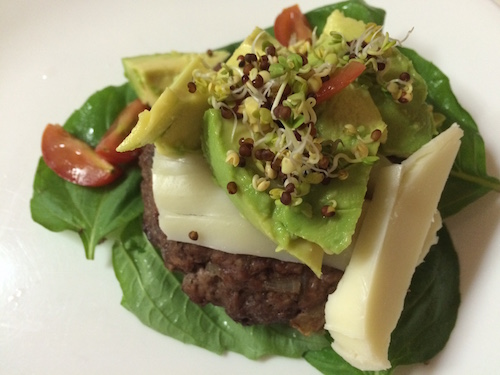
Home-made grass-fed burger, greens/basil, avocado, sprouts and cheese

Psychiatry is at an important juncture, with the current pharmacologically focused model having achieved modest benefits in addressing the burden of poor mental health worldwide. Although the determinants of mental health are complex, the emerging and compelling evidence for nutrition as a crucial factor in the high prevalence and incidence of mental disorders suggests that diet is as important to psychiatry as it is to cardiology, endocrinology, and gastroenterology. Evidence is steadily growing for the relation between dietary quality (and potential nutritional deficiencies) and mental health, and for the select use of nutrient-based supplements to address deficiencies, or as monotherapies or augmentation therapies.

I’m excited to share this groundbreaking publication, “Nutritional medicine as mainstream in psychiatry” which was published just last week in the mainstream journal Lancet. We have members of The International Society for Nutritional Psychiatry Research, also known as ISNPR to thank: Jerome Sarris, PhD, Alan C Logan, BA, Tasnime N Akbaraly, PhD, G Paul Amminger, MD, Vicent Balanzá-Martínez, MD, Marlene P Freeman, MD, Joseph Hibbeln, MD, Yutaka Matsuoka, MD, David Mischoulon, MD, Tetsuya Mizoue, MD, Akiko Nanri, MD, Daisuke Nishi, MD, Drew Ramsey, MD, Julia J Rucklidge, PhD, Almudena Sanchez-Villegas, PhD, Andrew Scholey, PhD, Kuan-Pin Su, MD, Felice N Jacka, PhD.

The abstract concludes as follows:

We present a viewpoint from an international collaboration of academics (members of the International Society for Nutritional Psychiatry Research), in which we provide a context and overview of the current evidence in this emerging field of research, and discuss the future direction. We advocate recognition of diet and nutrition as central determinants of both physical and mental health.

You may recognize some of these people from my prior writings and interviews.

  • Felice Jacka was interviewed in season 1 of the Anxiety Summit. Our topic was The Research: Food to prevent and treat anxiety and depression? She has been and still is very active in the nutrition/mental health/anxiety/depression research community
  • Julia Rucklidge recently did a fabulous TEDx talk called The surprisingly dramatic role of nutrition in mental health. She is also a very prolific researcher.

Dr. Marlene Freeman is also the author of an editorial, Nutrition and Psychiatry, published in the American Journal of Psychiatry in 2010.

It is both compelling and daunting to consider that dietary intervention at an individual or population level could reduce rates of psychiatric disorders. There are exciting implications for clinical care, public health, and research.

This is one of my favorite quotes! If you’ve ever heard me present I’m sure you’ll recognize it! This was in 2010 so we are making progress with getting nutrition recognized in the mainstream mental health world and I couldn’t be happier.

Here are a few select quotes from the new paper (which will shortly be released as an open-source document).

Mental disorders in general, and major depression and anxiety disorders in particular, account for a large burden of disability worldwide. Rapid urbanisation, and an overall transition from traditional lifestyles (concerning diet, physical activity, and social structures), which are some of the most pressing global and environmental issues of our time, have both been linked to increases in depression and other mental disorders

The mechanisms by which nutrition might affect mental health are, at least superficially, quite obvious: the human brain operates at a very high metabolic rate, and uses a substantial proportion of total energy and nutrient intake; in both structure and function (including intracellular and intercellular communication), it is reliant on amino acids, fats, vitamins, and minerals or trace elements.

The purpose of this Personal View is to provide a platform for robust debate in the specialty, particularly regarding the need to move towards a new integrated framework in psychiatry, whereby consideration of nutritional factors should be standard practice.

Diet and nutrition offer key modifiable targets for the prevention of mental disorders, having a fundamental role in the promotion of mental health. Now is time for the recognition of the importance of nutrition and nutrient supplementation in psychiatry. Nutritional medicine should now be considered as a mainstream element of psychiatric practice, with research, education, policy, and health promotion supporting this new framework.

This is so powerful! I commend the efforts of these authors and thank the researchers for all the groundwork which has led to where were are today…recognizing the very powerful connection between what we eat and how we feel. It’s exciting to be part of this movement!


Filed Under: Mental health Tagged With: anxiety, depression, diet, Jacka, Lancet, nutrition, nutritional, psychiatry

  • « Go to Previous Page
  • Page 1
  • Page 2
  • Page 3
  • Page 4
  • Page 5
  • Go to Next Page »

Primary Sidebar

NEW! GABA QuickStart Homestudy (with special intro pricing)

gaba quickstart homestudy

Free Report

9 Great Questions Women Ask about Food, Mood and their Health

You'll also receive a complimentary subscription to my ezine "Food, Mood and Gal Stuff"


Connect with me

Popular Posts

  • Amino Acids Mood Questionnaire from The Antianxiety Food Solution
  • The Antianxiety Food Solution Amino Acid and Pyroluria Supplements
  • Pyroluria Questionnaire from The Antianxiety Food Solution
  • Collagen and gelatin lower serotonin: does this increase your anxiety and depression?
  • Tryptophan for the worry-in-your-head and ruminating type of anxiety
  • GABA for the physical-tension and stiff-and-tense-muscles type of anxiety
  • The Antianxiety Food Solution by Trudy Scott
  • Seriphos Original Formula is back: the best product for anxiety and insomnia caused by high cortisol
  • Am I an anxious introvert because of low zinc and vitamin B6? My response to Huffington Post blog
  • Vagus nerve rehab with GABA, breathing, humming, gargling and key nutrients

Recent Posts

  • What do I use instead of Seriphos to help lower high cortisol that is affecting my sleep and making me anxious at night?
  • BeSerene™ GABA/theanine cream eases severe muscle tension in her neck/shoulders, prevents her bad headaches and quells her anxiety
  • How the correct approach, dose and sublingual use of GABA can be calming and not cause a flushed and itchy face and neck
  • The amino acid glutamine improves low mood by addressing gut health, and it has calming effects too
  • Flight anxiety with heightened breath, physical tension and also fearing the worst (the role of low GABA and low serotonin)

Categories

  • 5-HTP
  • AB575
  • Addiction
  • ADHD
  • Adrenals
  • Alcohol
  • Allergies
  • Alzheimer's disease
  • Amino Acids
  • Anger
  • Antianxiety
  • Antianxiety Food Solution
  • Antidepressants
  • Anxiety
  • Anxiety and panic
  • Autism
  • Autoimmunity
  • benzodiazapines
  • Bipolar disorder
  • Books
  • Caffeine
  • Cancer
  • Candida
  • Children/Teens
  • Collagen
  • Cooking equipment
  • Coronavirus/COVID-19
  • Cravings
  • Depression
  • Detoxification
  • Diabetes
  • Diet
  • DPA/DLPA
  • Drugs
  • EFT/Tapping
  • EMF
  • EMFs
  • Emotional Eating
  • Endorphins
  • Environment
  • Essential oils
  • Events
  • Exercise
  • Fear
  • Fear of public speaking
  • Fertility and Pregnancy
  • Fish
  • Food
  • Food and mood
  • Functional neurology
  • GABA
  • Gene polymorphisms
  • General Health
  • Giving
  • Giving back
  • Glutamine
  • Gluten
  • GMOs
  • Gratitude
  • Gut health
  • Heart health/hypertension
  • Histamine
  • Hormone
  • Hyperparathyroidism
  • Hypoglycemia
  • Immune system
  • Inflammation
  • Insomnia
  • Inspiration
  • Introversion
  • Joy and happiness
  • Ketogenic diet
  • Lithium orotate
  • Looking awesome
  • Lyme disease and co-infections
  • MCAS/histamine
  • Medication
  • Men's health
  • Mental health
  • Mercury
  • Migraine
  • Mold
  • Movie
  • MTHFR
  • Multiple sclerosis
  • Music
  • NANP
  • Nature
  • Nutritional Psychiatry
  • OCD
  • Osteoporosis
  • Oxalates
  • Oxytocin
  • Pain
  • Paleo
  • Parasites
  • Parkinson’s disease
  • PCOS
  • People
  • PMS
  • Postpartum
  • PTSD/Trauma
  • Pyroluria
  • Questionnaires
  • Real whole food
  • Recipes
  • Research
  • Schizophrenia
  • serotonin
  • SIBO
  • Sleep
  • Special diets
  • Sports nutrition
  • Stress
  • Sugar addiction
  • Sugar and mood
  • Supplements
  • Teens
  • Testimonials
  • Testing
  • The Anxiety Summit
  • The Anxiety Summit 2
  • The Anxiety Summit 3
  • The Anxiety Summit 4
  • The Anxiety Summit 5
  • The Anxiety Summit 6
  • Thyroid
  • Thyroid health
  • Toxins
  • Tryptophan
  • Tyrosine
  • Uncategorized
  • Vegan/vegetarian
  • Women's health
  • Yoga

Archives

  • October 2025
  • September 2025
  • August 2025
  • July 2025
  • June 2025
  • May 2025
  • April 2025
  • March 2025
  • February 2025
  • January 2025
  • November 2024
  • October 2024
  • September 2024
  • August 2024
  • July 2024
  • June 2024
  • May 2024
  • April 2024
  • March 2024
  • February 2024
  • January 2024
  • December 2023
  • November 2023
  • October 2023
  • September 2023
  • August 2023
  • July 2023
  • June 2023
  • May 2023
  • April 2023
  • March 2023
  • February 2023
  • January 2023
  • December 2022
  • November 2022
  • October 2022
  • September 2022
  • August 2022
  • July 2022
  • June 2022
  • May 2022
  • April 2022
  • March 2022
  • February 2022
  • January 2022
  • December 2021
  • November 2021
  • October 2021
  • September 2021
  • August 2021
  • July 2021
  • June 2021
  • May 2021
  • April 2021
  • March 2021
  • February 2021
  • January 2021
  • December 2020
  • November 2020
  • October 2020
  • September 2020
  • August 2020
  • July 2020
  • June 2020
  • May 2020
  • April 2020
  • March 2020
  • February 2020
  • January 2020
  • December 2019
  • November 2019
  • October 2019
  • September 2019
  • August 2019
  • July 2019
  • June 2019
  • May 2019
  • April 2019
  • March 2019
  • February 2019
  • January 2019
  • December 2018
  • November 2018
  • October 2018
  • September 2018
  • August 2018
  • July 2018
  • June 2018
  • May 2018
  • April 2018
  • March 2018
  • February 2018
  • January 2018
  • December 2017
  • November 2017
  • October 2017
  • September 2017
  • August 2017
  • July 2017
  • June 2017
  • May 2017
  • April 2017
  • March 2017
  • February 2017
  • January 2017
  • December 2016
  • November 2016
  • October 2016
  • September 2016
  • August 2016
  • July 2016
  • June 2016
  • May 2016
  • April 2016
  • March 2016
  • February 2016
  • January 2016
  • December 2015
  • November 2015
  • October 2015
  • September 2015
  • August 2015
  • July 2015
  • June 2015
  • May 2015
  • April 2015
  • March 2015
  • February 2015
  • January 2015
  • December 2014
  • November 2014
  • October 2014
  • September 2014
  • August 2014
  • July 2014
  • June 2014
  • May 2014
  • April 2014
  • March 2014
  • February 2014
  • January 2014
  • December 2013
  • November 2013
  • October 2013
  • September 2013
  • August 2013
  • July 2013
  • June 2013
  • May 2013
  • April 2013
  • March 2013
  • February 2013
  • January 2013
  • December 2012
  • November 2012
  • October 2012
  • August 2012
  • July 2012
  • June 2012
  • May 2012
  • April 2012
  • March 2012
  • February 2012
  • January 2012
  • December 2011
  • November 2011
  • October 2011
  • September 2011
  • August 2011
  • July 2011
  • June 2011
  • May 2011
  • April 2011
  • March 2011
  • February 2011
  • January 2011
  • December 2010
  • October 2010
  • September 2010
  • July 2010
  • May 2010
  • April 2010
  • March 2010
  • February 2010
  • January 2010
  • November 2009

Share the knowledge!

The above statements have not been evaluated by the Food and Drug Administration. Products listed in this website are not intended to diagnose, treat, cure or prevent any disease.

The information provided on this site is for informational and educational purposes only and is not intended as a substitute for advice from your physician or other health care professional. You should consult with a healthcare professional before starting or modifying any diet, exercise, or supplementation program, before taking or stopping any medication, or if you have or suspect you may have a health problem.


Copyright © 2026 Trudy Scott. All Rights Reserved. | Privacy | Terms and Conditions | Refund Policy | Medical Disclaimer

Free Report

9 Great Questions Women Ask about Food, Mood and their Health

You’ll also receive a complimentary subscription to my ezine “Food, Mood and Gal Stuff”