• Skip to primary navigation
  • Skip to main content
  • Skip to primary sidebar

everywomanover29 blog

Food, Mood and Women's Health – Be your healthiest, look and feel great!

  • Blog
  • About
  • Services
  • Store
  • Resources
  • Testimonials
  • The Book
  • Contact
  • Search this site

cortisol

Seriphos Original Formula is back: the best product for anxiety and insomnia caused by high cortisol

January 20, 2017 By Trudy Scott 296 Comments

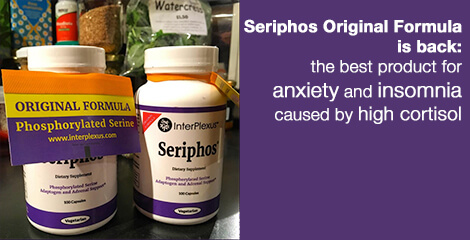
Seriphos “Original Formula” with a red triangle on the left side of the bottle (Photo credit: Drew Todd)

Interplexus changed its proprietary formula for Seriphos, a phosphorylated serine product, sometime March/April 2016. It was changed to a form which no longer worked for many people with the anxiety and insomnia that is associated with high levels of cortisol at night.

Thanks to feedback from folks in my community I investigated and blogged about this here: Seriphos has been reformulated – what do I use to lower high cortisol?, sharing information about labeling confusion and many possible alternatives.  I also looked into Relora, a standardized/patented Magnolia bark extract and Phellodendron bark extract, as a very viable alternative.

But I was hoping, as were many of you, that they’d hear all the requests and complaints from their loyal users and practitioners like myself and bring back the original formula.

This week a number of people in my community notified me that the original Seriphos is back so I reached out to Interplexus again. I had been watching their site and had not seen any announcement just a banner stating it’ll be ready Dec 2016 (which is still on the site as of this writing). So I emailed Interplexus earlier this week:

Just checking to see if you have a status update on this please?  When will it be ready and when can we expect to see it in online stores? Can it be purchased from Interplexus directly? Can you also please share how we’ll know it’s the new formulation and are you able to guarantee it’s the exact same formula as before?

And the response from Interplexus:

Seriphos has been in stock for about 3 weeks now and is widely available online, we are suggesting retail customers search the product online and purchase from the most convenient retailer because at this time we [Interplexus] are wholesale only. However we will be venturing into retail in the future.

The label now has a red triangle on the left side that states “Original Formula.” To avoid confusion we are asking that customers purchase from online stores that have the updated label. We can assure you that it is the exact same formula as before.

The Original Formula of Seriphos is now back! And we’re thrilled! Thank you Interplexus!
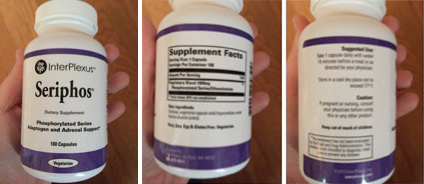
(Photo credit: Julie Matthews)

This is what the old bottle looked like before it was reformulated. The label reads: Proprietary Blend 1000mg Phosphorylated Serine/Ethanolamine.
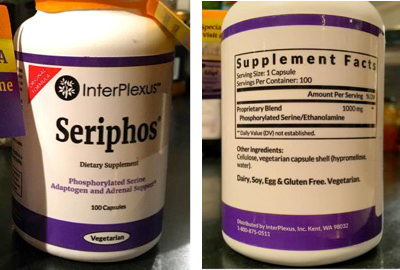
(Photo credit: Drew Todd)

This is the label from the “Original Formula” – the new Seriphos just reintroduced

As you can see the new “Original Formula” has the red triangle on the front and the back also reads: Proprietary Blend 1000mg Phosphorylated Serine/Ethanolamine.

I’m sharing all this and the images for a few reasons:

  • There was some confusion with the labels when it was reformulated earlier in 2016 (you can see what I mean here)
  • If you need it I want to make sure you get the correct one and
  • In the last week I’ve had three reports from people who have the “Original Formula” and feel it’s not working as before.

I’m going to stay optimistic and hope they’ll see results after another week of use (maybe 2 weeks tops), although in the past I have had many clients say they notice a difference in a few days.

If you have new “Original Formula” and have started using it again and have observed it’s not working as before here are a few things to consider:

  • Give it a week or two to see if it’s going to work for you
  • Keep a food mood sleep log to make sure nothing else is affecting your anxiety and sleep (like accidental gluten exposure, caffeine, high FODMAPs food if you have SIBO
  • Your cortisol high may have shifted in the time you weren’t taking the old Seriphos pre-April 2016 and you may need to retest your salivary cortisol levels and adjust the timing accordingly
  • Think back to try and figure out if anything else may have change between then and now (a new medication started, a medication stopped, new supplements, dietary changes etc)

If this is the first time you’re reading about Seriphos here is some additional information: If you have high nighttime cortisol (as measured by an adrenal saliva test) it can cause insomnia and anxiety. Using 1-3 x Seriphos about 1-3 hours before the high cortisol is the best way I know for lowering the high cortisol and providing relief.

Here is some feedback from someone who commented on the blog:

I have been tested for cortisol and I have extremely high levels day and night. The old Seriphos [pre-April 2016] was working for me to reduce the internal jitters which would wake me several times a night with heart pounding and adrenalin rushing. I do not have a problem turning my brain off going to sleep – just problems waking several hours later (sometimes several times a night) – sometimes not being able to get back to sleep because I am wide awake.

And feedback from Julie Matthews, Certified Nutrition Consultant, Author of Nourishing Hope for Autism and founder of Bioindividual Nutrition Institute:

Seriphos is the best thing I found to combat high cortisol levels in the evening. I don’t need to take it every day, but if there is an event that gets my cortisol up such as: travel, speaking at a conference, or doing taiko too late at night, I could be awake for hours from high cortisol. When I take Seriphos, I can literally feel my system dramatically ratcheting down moment by moment and within an hour or less I am easily able to go to bed and sleep. I have tried other supplements and none of them work nearly as well as Seriphos for me. I’m so glad the “Original Formula” is back.

If you do have the new “Original Formula” and used the old Seriphos pre-April 2016, have you started using it again? We’d love to hear how you’re doing and how it compares to the Seriphos pre-April 2016?

If you’re a practitioner and have used the old Seriphos pre-April 2016 with success for helping clients/patients lower high cortisol we’d love to hear your feedback on the new “Original Formula.”

Thanks for the initial alert about the reformulation, thanks if you shared pictures with me, thanks if have been asking questions and sharing feedback here on the blog, and thanks if you contacted Interplexus! I love the community we are creating here!

UPDATE 3/7/2020: The new “Original Formula” of Seriphos is the same as the old Seriphos pre-April 2016 and is working as it always did, helping to lower high cortisol levels in order to ease anxiety that is due to high cortisol and improve sleep issues that are caused by high night-time or early morning cortisol. (I’ve been replying to comments to this effect but forgot to come back and update the blog.)
Filed Under: Supplements Tagged With: anxiety, cortisol, insomnia, seriphos

Seriphos has been reformulated – what do I use to lower high cortisol?

September 30, 2016 By Trudy Scott 121 Comments

seriphos
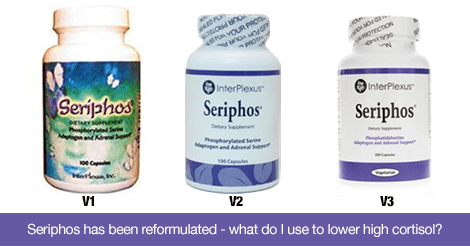
V1. The very old bottle (many years ago): Phospholylated Serine on the front

V2. Old label, original formulation (2 years ago?): Phospholylated Serine on the front

V3. New label, new formulation (5 months ago): Phosphatidylserine on the front

Last month I wrote a blog called Tryptophan and melatonin make a big difference but why do I still wake at 4am? and included a section about high night-time cortisol (measured with an adrenal salivary test) also being a factor with insomnia and waking in the night, often with anxiety. I then shared my top product for lowing high cortisol, Interplexus Seriphos, and had a number of readers (very kindly) inform me that Seriphos has been reformulated. One person shared this:

In your blog you recommend Interplexus Seriphos for those who have a high cortisol problem. What you may not know is that Interplexus changed its proprietary formula sometime March/April 2016 to a form which no longer works for many of us.

This is also true for me as I have been taking the new formula and the sleep issues have returned: waking at 2 am and not being able to go back to sleep. I have asked my functional medicine doctor and called Interplexus but they cannot help. Since you are an expert in such matters, PLEASE, help find another product like the old Seriphos (prior to March 2016) so that all of us who were happy with the old product can get back to the business of sleeping through the night.

Someone else shared this:

I was using the phosphorylated serine found in Interplexus Seriphos from November 2015 until present. For the first 6 months it was like a miracle pill calming me and leaving me feel normal, not like Niagara Falls was rushing through my veins.

Sometime in the spring 2016 I noticed the Seriphos was not working and read the reviews on Amazon that Interplexus had changed the formula.

I was not aware that the formulation had changed

I was not aware that the formulation had changed and love that I get to learn from my community too – thank you for letting me know!

I had not seen any new clients since just before the Anxiety Summit in June and my existing clients who are using the original Seriphos have enough stock to not have noticed the change or brought it to my attention.

It’s such a pity it has been reformulated because it’s been so powerful for lowering high cortisol and quickly when 1-3 x Seriphos (the original) are taken about 2-3 hours before the high cortisol. I first learned about this phosphorylated serine product when working with Julia Ross and continued to use it very successfully in my practice.

As you can see from the feedback above it truly was a lifesaver for these two women and for so many individuals.

I’m going to share what I have discovered thus far

I like to share what I know works but so many of you are desperately seeking a solution right now. I promised to look into what has happened so I’m going to share what I have discovered thus far.

It’s always helpful to learn from feedback from others (both positive and negative) so I read through Steve Gibson’s negative review on Amazon and found the very long thread of comments under this.

I also reached out to my colleagues to ask what they are now using:

  • some had not ever used Seriphos
  • some were also not aware it had changed (the old and new labels are deceptively similar)
  • some had used phosphatidyl serine and found Seriphos to be more effective
  • and many have had/do have success with phosphatidyl serine.

I also contacted Interplexus and was told there are no plans to go bring back the original formulation and they very nicely communicated that they’re sorry and feel they’ve done their best in communicating that it’s a new product.

As you can see from the images above the bottles, I tend to disagree and find it confusing:

V1. The very old bottle (many years ago): Phospholylated Serine on the front

V2. Old label, original formulation (2 years ago?): Phospholylated Serine on the front

V3. New label, new formulation (5 months ago): Phosphatidylserine on the front

So what are your options instead of Seriphos?

It’s going to be a good 3 months before I can definitively give you feedback so these are my suggestions right now since it’s too soon to know for sure. These are based on what I already know, some common sense, some of what we know from the research, feedback from colleagues, and feedback from real people who have been searching for alternatives and trying various combinations:

  • Cortisol Manager by Integrative Therapeutics (1 capsule contains 50mg phosphatidyl serine, theanine and other ingredients)
      • A colleague shared this: “Cortisol Manager can be dosed up to 2-3 tablets per day and used with or without additional phosphatidyl serine which can easily go as high as 600 mg.” He has seen salivary cortisol levels shift with this approach and shared: “Interestingly, I never saw those changes with Seriphos despite being a heavy user between 2009 and 2011 so I thought it was just hype.”
      • Feedback from someone on my blog: “Cortisol Manager was too stimulating with the Ashwagandha”
      • Feedback from a practitioner who first used Cortisol Manager personally and then switched to Seriphos at my recommendation: “Cortisol Manager did nothing for me. I dosed it high enough and took it for a month – but I felt nothing. Seriphos on the other hand, worked the same night, within an hour or two.”
  • Designs for Health PS 150 – Phosphatidylserine 150 mg: non-soy, sunflower sourced phosphatidyl serine with one capsule serving of 150mg
    • Someone shared this on Amazon: “We have equally good results with phosphatidyl serine, but the dose usually needs to be in the 300-500mg range, to equate to what 1 or 2 Seriphos capsules could do.” I don’t know which brand they use used.
    • Feedback from a colleague: “We started using PS150 from DFH and love it.” He often uses this in conjunction with another Designs for Health product called Catecholacalm.
  • Phosphatidyl Serine Powder 50 gms: One quarter teaspoon provides Phosphatidyl Serine 200 mg in a powder form.
    • This one is soy-derived (GMO-free) but may be easier to use to get higher doses
  • Enerphos by T.E. Neesby [Update Oct 2025 – this product is no longer on the Neesby site]
      • It is advertised to be same formula as the original Seriphos
      • Julia Ross recommends this as a replacement
      • One practitioner shared that she has had similar results with this product.
      • I’ve also had feedback from colleagues saying it works half as well. Perhaps doubling the dose would be more effective?
  • Lactium, also known as hydrolyzed casein
    • Biotics Research De-stress is a product I use with clients with good results. It’s calming and based on the research it also lowers high cortisol
  • There is very promising research on essential oils lowering cortisol levels – such as bergamot and I wonder if this approach could be incorporated too?

Update Nov 11, 2016: Relora, which is a proprietary combination of Magnolia bark extract and Phellodendron bark extract that studies show reduces cortisol and perceived daily stress and anxiety, improving mood and reducing fatigue.

I know the original Seriphos was very affordable and very effective for the cost. Using higher amounts of the above products and various combinations is likely to be much more expensive but at least it’s an option to provide relief until we find a longer term solution or until a Seriphos-type product becomes available.

Address all the possible underlying causes of high cortisol

We also don’t want to lose sight of why long-term use of Seriphos is needed and be sure to also focus on addressing all the possible underlying causes of high cortisol: stress, parasites, infections and inflammation, gluten sensitivity and other food sensitivities, low calorie eating, medication side-effects etc.

Please share what helps

If you’ve used Seriphos in the past and have found a solution please let us know.

If you are looking for an alternative to Seriphos please share this list with your practitioner in case they are not aware the formulation has changed. And have them help you find the right combination for your particular needs. Please come back and share what helps so we can all benefit.

If you are a practitioner and have your favorite product or combination please share what is working for your clients/patients.


Update November 18, 2016: I emailed Interplexus asking if they will be bringing back the original Seriphos formula and received this message from them:

Yes, the information is correct we will be returning the previous formula of Seriphos and are expecting to have it late November, unfortunately we do not have a completion date as of yet so the estimated time frame is not a guarantee. It will be the same formula as before and we will also manufacture a Phosphatidylserine standalone product in the future. If you have further questions or concerns feel free to contact, and you’re also welcome to check on the status of Seriphos periodically.

Update January 20, 2017:

The original Seriphos formula is back. This blog post has additional information – Seriphos Original Formula is back: the best product for anxiety and insomnia caused by high cortisol


Filed Under: Antianxiety Tagged With: anxiety, cortisol, Cortisol Manager, insomnia, phosphatidyl serine, phosphorylated serine, seriphos

Bergamot, lavender and ylangylang for anxiety and high blood pressure

August 4, 2016 By Trudy Scott 23 Comments

bergamot-eo

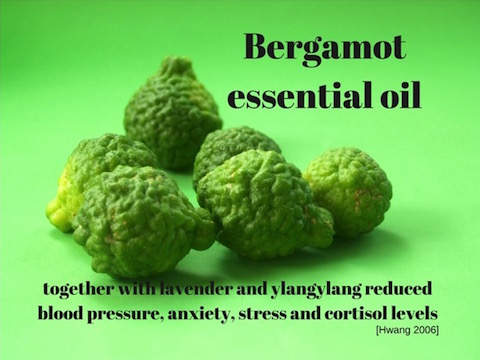
The wonderful combination of bergamot, lavender and ylangylang essential oils have been found to lower high blood pressure and reduce anxiety.

The study The effects of the inhalation method using essential oils on blood pressure and stress responses of clients with essential hypertension was published in 2006 and looked at 52 people who were anxious and stressed, and had high blood pressure.

The participants were placed in an essential oil group, a placebo group, and a control group by random assignment.

The essential oil group used aromatherapy inhalation by blending lavender, ylangylang, and bergamot essential oils once a day for 4 weeks.

To evaluate the effects of aromatherapy, blood pressure and pulse were measured two times a week and serum cortisol levels, catecholamine levels, subjective stress, and state anxiety were measured before and after treatment in the three groups.

 Here are the results of the study:

The blood pressure, pulse, subjective stress, state anxiety, and serum cortisol levels among the three groups were significantly statistically different.

The results suggest that the inhalation method using essential oils can be considered an effective nursing intervention that reduces psychological stress responses and serum cortisol levels, as well as the blood pressure of clients with essential hypertension.

They did not see any significant differences in catecholamine levels among the three groups but keep in mind this was only a 4-week study. And to see those other results in just 4 weeks is very encouraging! A simple intervention and yet very profound.

Dietary changes and amino acids and other nutrients are my go-to approach for anxiety but I’m finding more and more of my clients benefit with the addition of essential oils.

Essential oils are also very beneficial in the following instance where amino acids and other supplements can’t be taken or are not tolerated:

  • Young children (inhalation aromatherapy and creams/lotions work well here)
  • Older adults (creams/lotions work well when there is loss of smell with dementia or Alzheimer’s disease)
  • Someone going through benzodiazepine withdrawal and is too sensitive for supplements or can only tolerate small amounts

I talk about this research and other essential oils for anxiety and stress in the upcoming Essential Oils Revolution 2 summit which runs August 22 to 29. I’m thrilled to be part of this event!

essential-oils-revolution-banner

People all over the world are scrambling to find the answer to health problems like diabetes, pain, chronic fatigue, anxiety, estrogenic cancers and more. Millions are turning to natural solutions and many have experienced great success with essential oils. Learn if oils could be the missing ingredient for you and your family! What you will gain from this event:

  • Why essential oils are truly nature’s best medicine
  • How to use essential oils safely and effectively
  • Tips for regaining control of your health
  • Home recipes, guides, safety protocols and best practices
  • And so much more!

More than 165,000 people joined the 2015 Essential Oils Revolution. This year, the experts in aromatherapy, medicine and research will deliver in-depth discussion, debunk common myths and help you learn about the possibility of regaining your health using essential oils.

I can’t wait to learn more and hope you’ll tune in too. Here is the registration link:
https://qt247.isrefer.com/go/EOR16reg/trudyscottcn/

Let’s get the conversation started now. Feel free to share which essential oils you use for anxiety and stress? And how do you use them?

Filed Under: Essential oils, Events Tagged With: anxiety, Bergamot, cortisol, Essential Oils Revolution, high blood pressure, lavender, stress, Ylangylang

The Anxiety Summit – Foods to balance your hormones and ease anxiety

May 11, 2015 By Trudy Scott 77 Comments


Magdalena Wszelaki, founder of Hormones Balance, is interviewed by host of the Anxiety Summit, Trudy Scott, Food Mood Expert and Nutritionist, author of The Antianxiety Food Solution.

Foods to balance your hormones and ease anxiety (part 1)

  • Magdalena’s own journey with Graves’ disease, Hashimoto’s disease, adrenal fatigue, estrogen dominance and anxiety
  • How hormonal imbalances can cause anxiety: low progesterone, low/high estrogen
  • How over and underactive thyroid can cause anxiety
  • The adrenals and anxiety and depression

Foods to balance your hormones and ease anxiety (part 2)

  • How to test for hormonal imbalances
  • The foundation to all hormonal health being: healthy gut, healthy blood sugar levels and optimal liver health
  • Foods that support the production of the different hormones
  • Seed rotation for balancing estrogen and progesterone
  • The role of coffee in liver health, hormone metabolism and anxiety


In part  1 we discussed this 2015 paper: Sex hormones affect neurotransmitters and shape the adult female brain during hormonal transition periods.

Here we review the evidence from animal experiments and human studies reporting interactions between sex hormones and the dominant neurotransmitters, such as serotonin, dopamine, GABA and glutamate

The brain represents an important target for estrogen and progesterone effects.

major shifts in sex hormone levels seem to be paralleled by the incidence rates of mood disorders such as unipolar depression

A subgroup of women suffers from clinical level of premenstrual mood changes called premenstrual dysphoric disorder (PMDD)… core symptoms include anxiety, irritability and depressed mood

Estrogen has been reported to have potent serotonin-modulating properties

progesterone and its neuroactive metabolites (allopregnanolone, pregnanolone) seem to facilitate GABAergic transmission

To summarize, neurotransmitter systems do not work in isolation and sex hormones act on multiple sites, highly intertwined with serotonin, dopamine, GABA and glutamate.

Magdalena shared these low estrogen symptoms:

  • Forgetfulness
  • Incontinence
  • Skin elasticity problems
  • Loss of muscle strength
  • Feeling really blah
  • Osteoporosis/osteopenia
  • Warm flashes and/or night sweats

Magdalena shared these low progesterone symptoms:

  • Tender breasts
  • PMS
  • Irregular periods
  • Puffiness and water retention
  • Mood swings and anger
  • Anxiety and sleep issues
  • Problems falling pregnant
 
In part 2:
 
Magdalena shared how the foundation of hormone balance is a healthy gut and talked about food intolerances, the microbiome, bone broths and quality animal protein.
 
I loved the discussion on using seed rotation for hormonal balancing: flax seeds and pumpkin seeds for the first half of your cycle and sesame and sunflower seeds for the second  half of your cycle/luteal phase (the cracker recipes are in the gift download – see below). 
 
Coffee does affect our hormones and here is a great guest blog post by Magdalena: 12 Ways Coffee Impacts Your Hormones 
If you had to give up either coffee or the internet for 2 weeks, which one would you choose? How about either coffee or sex for 2 weeks? If you’d rather relinquish anything to keep your coffee, you’d be on par with the majority of the people around you.
Be sure to check it out and try out her delicious Roasted Chicory Root Latte recipe.

I shared my recipe: Carob Cinnamon Delight instead of coffee – a calming hot beverage and mentioned rooibos tea how it’s A Functional Food in the Management of Stress (an interview from a prior anxiety summit)

Magdalena mentioned the EWG/Environmental Working Group’s Skin Deep site for checking your cosmetics – simply enter the name of the product in the search area.

We also mentioned Annmarie Gianni Skin Care, which is a natural skin care line made with organic ingredients that you can trust – and that actually work. This is the best and most natural skin-care line I have come across – anywhere! It’s organic, uses absolutely zero toxic ingredients and features gorgeous essential oils! You can try your Annmarie Gianni Skin Care sample kit here. 


Magdalena’s gift: How to Rebalance Your Hormones with Food and Recipes

magdalena gift image


If you are not already registered for the Anxiety Summit you can get live access to the speakers of the day here: www.theAnxietySummit.com 

Missed this interview or can’t listen live? Or want this and the other great interviews for your learning library? Purchase the MP3s or MP3s + transcripts and listen when it suits you.

You can find your purchasing options here: Anxiety Summit Season 1, Anxiety Summit Season 2, and Anxiety Summit Season 3.

Filed Under: Antianxiety, Fertility and Pregnancy, Hormone, The Anxiety Summit 3, Thyroid health Tagged With: cortisol, estrogen, food, GABA, hormones, Hormones Balance, Magdalena Wszelaki, progesterone, serotonin, the anxiety summit, Trudy Scott

The Anxiety Summit – Nutritional Influences on Anxiety and Musculoskeletal Pain

May 11, 2015 By Trudy Scott 20 Comments


Joe Tatta DPT, CCN, Musculoskeletal Pain Expert, was interviewed by host of the Anxiety Summit, Trudy Scott, Food Mood Expert and Nutritionist, author of The Antianxiety Food Solution.

Nutritional Influences on Anxiety and Musculoskeletal Pain

  • Link between anxiety and chronic musculoskeletal problems
  • Fear avoidance behaviors and pain
  • Headaches, back pain, joint pain and nutritional influences
  • An exercise prescription for anxiety

Here are some snippets from our interview:

People used to think depression was more linked to chronic pain but we are learning its more anxiety driven

The chronic anxiety that people have on a daily basis kicks off the pain process

Negative thoughts, worry, doom-and-gloom about the future all come in to play, with fear being the most common emotion leading to pain

Here is the very recent 2015 paper that discusses this – Psychological functioning of people living with chronic pain: A meta-analytic review.

Joe tied fear and anxiety to adrenalin release and the effects on the muscles, specifically how the smaller muscles around the spine and in the neck are turned off. You then have less blood flow, less oxygen and less nutrients going to those muscles and that’s when the pain starts.

Joe shared the staggering number of people who suffer from chronic pain:

more than those who suffer from heart disease, diabetes and cancer combined!

We also discussed migraines and magnesium, and this paper: Why all migraine patients should be treated with magnesium

Magnesium, the second most abundant intracellular cation, is essential in many intracellular processes and appears to play an important role in migraine pathogenesis. Routine blood tests do not reflect true body magnesium stores since <2% is in the measurable, extracellular space, 67% is in the bone and 31% is located intracellularly. Lack of magnesium may promote cortical spreading depression, hyperaggregation of platelets, affect serotonin receptor function, and influence synthesis and release of a variety of neurotransmitters.

There is strong evidence that magnesium deficiency is much more prevalent in migraine sufferers than in healthy controls.

Considering these features of magnesium, the fact that magnesium deficiency may be present in up to half of migraine patients, and that routine blood tests are not indicative of magnesium status, empiric treatment with at least oral magnesium is warranted in all migraine sufferers.

If you are not already registered for the Anxiety Summit you can get live access to the speakers of the day here: www.theAnxietySummit.com

Missed this interview or can’t listen live? Or want this and the other great interviews for your learning library? Purchase the MP3s or MP3s + transcripts and listen when it suits you.

You can find your purchasing options here: Anxiety Summit Season 1, Anxiety Summit Season 2, and Anxiety Summit Season 3.

Filed Under: Antianxiety, Anxiety and panic, Depression, Pain, The Anxiety Summit 3 Tagged With: anxiety, butterbur, chronic pain, cortisol, fear, Joe Tatta, magnesium, migraine, pain, the anxiety summit, Trudy Scott

The Anxiety Summit – Adrenals – Master glands of anxiety / tranquility

November 8, 2014 By Trudy Scott 16 Comments

Alan ChristiansonQuote_Anxiety2

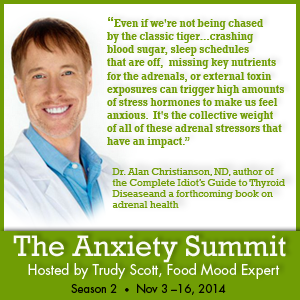
Dr. Alan Christianson, ND. author of Complete Idiot’s Guide to Thyroid Disease and a forthcoming book on adrenal health, was interviewed by host of the Anxiety Summit, Trudy Scott, Food Mood Expert and Nutritionist, author of The Antianxiety Food Solution.

Adrenals – Master glands of anxiety / tranquility

  • Why the adrenals regulate the anxiety response
  • Why some are more prone to anxiety than others
  • How to know if your adrenals are healthy
  • Testing your adrenal function
  • The difference between adrenal dysfunction and disease
  • How your diet and daily habits stress your adrenals
  • The best ways to heal your adrenal glands

Here is short video of Dr. Christianson sharing his story as an unhealthy kid and why he does what he does

Here are some snippets from our interview:

So even if we’re not being chased by the classic tiger if our blood sugar’s crashing, that, by itself, can trigger high amounts of stress hormones to make us feel more anxious, or if our sleep schedules have been thrown off, or if we’re missing some key nutrients that are needed by the adrenal glands, or if we’ve got a high amount of some external toxin in our body. All these separate things – and it can also be thought of that it’s not just a factor, but it’s the collective weight of all of those adrenal stressors. It’s how much we’ve got pushing those glands off at any given point in time that makes us more or less apt to have anxiety symptoms.

So caffeine is a stimulant, and what it does specifically is it causes our body to take all of our stored energy. We make something called glycogen. We take good carbs, and we pack them deep into our muscles. We pack them really tight, and we make glycogen out of that. It’s also in our liver. So caffeine causes us to just dump a whole of glycogen out, and it makes this big burst, this big rise in your blood sugar. The same thing would happen if you just drank a full sugar coke. It’s the same phenomenon, the same rise in blood sugar.

Here is a link to the online Adrenal Quiz we talked about. Let us know your score in the comments below.

In this Huffington Post blog called the Top 3 Myths of Adrenal Fatigue he writes how strategically using sunlight is one of the best-documented ways to help restore daily rhythms and heal the adrenals. We discussed some of this in the interview and here is a nice summary:

  1. Within an hour of waking, expose yourself to sunlight or a light box emitting at least 10,000 lux (measure of light intensity). Do not wear sunglasses, do not look directly at the source of light, and get at least a half hour of exposure.
  2. Get low wattage (under 40 watts) red-colored light bulbs for your bedroom. For the last 50 minutes of your day, feel free to read a book our journal, but use no other sources of light or electronics.
  3. In your bedroom, make sure your windows block all outdoor lights and cover any lights on thermostats, or alarm units. Make sure that any lights used to find your way around are colored red.

Here is a link to Dr. Alan Christianson’s book on thyroid disease:

Complete Idiot’s Guide to Thyroid Disease

As we mentioned at the start of the interview, Dr. Christianson has a new book on adrenal health coming out next month! When you register for the free gift he has kindly offered, you’ll also be updated on information about the new book. 

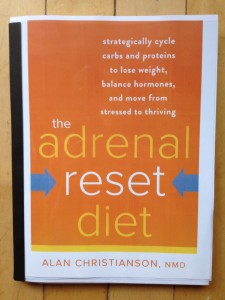
Here is Dr. Christianson’s new book on adrenal health – The Adrenal Reset Diet: Strategically Cycle Carbs and Proteins to Lose Weight, Balance Hormones, and Move from Stressed to Thriving

adrenal reset diet 

The free gift is 49 Fresh Recipes for a Stronger Body and More Vibrant You

UPDATE: Season 2 of The Anxiety Summit concluded in November 2014. If you’d like to be on the notification list for the next summit just sign up here www.theAnxietySummit.com

Missed this interview and want this and the other great interviews for your learning library? Purchase the MP3s or MP3s + transcripts + interview highlights and listen when it suits you

Filed Under: Adrenals, Antianxiety, Anxiety and panic, Stress, The Anxiety Summit 2 Tagged With: adrenal reset diet, adrenals, Alan Christianson, anxiety, caffeine, cortisol, the anxiety summit, Trudy Scott

  • « Go to Previous Page
  • Page 1
  • Interim pages omitted …
  • Page 4
  • Page 5
  • Page 6
  • Page 7
  • Go to Next Page »

Primary Sidebar

NEW! GABA QuickStart Homestudy (with special intro pricing)

gaba quickstart homestudy

Free Report

9 Great Questions Women Ask about Food, Mood and their Health

You'll also receive a complimentary subscription to my ezine "Food, Mood and Gal Stuff"


Connect with me

Popular Posts

  • Amino Acids Mood Questionnaire from The Antianxiety Food Solution
  • The Antianxiety Food Solution Amino Acid and Pyroluria Supplements
  • Pyroluria Questionnaire from The Antianxiety Food Solution
  • Collagen and gelatin lower serotonin: does this increase your anxiety and depression?
  • Tryptophan for the worry-in-your-head and ruminating type of anxiety
  • GABA for the physical-tension and stiff-and-tense-muscles type of anxiety
  • The Antianxiety Food Solution by Trudy Scott
  • Seriphos Original Formula is back: the best product for anxiety and insomnia caused by high cortisol
  • Am I an anxious introvert because of low zinc and vitamin B6? My response to Huffington Post blog
  • Vagus nerve rehab with GABA, breathing, humming, gargling and key nutrients

Recent Posts

  • What do I use instead of Seriphos to help lower high cortisol that is affecting my sleep and making me anxious at night?
  • BeSerene™ GABA/theanine cream eases severe muscle tension in her neck/shoulders, prevents her bad headaches and quells her anxiety
  • How the correct approach, dose and sublingual use of GABA can be calming and not cause a flushed and itchy face and neck
  • The amino acid glutamine improves low mood by addressing gut health, and it has calming effects too
  • Flight anxiety with heightened breath, physical tension and also fearing the worst (the role of low GABA and low serotonin)

Categories

  • 5-HTP
  • AB575
  • Addiction
  • ADHD
  • Adrenals
  • Alcohol
  • Allergies
  • Alzheimer's disease
  • Amino Acids
  • Anger
  • Antianxiety
  • Antianxiety Food Solution
  • Antidepressants
  • Anxiety
  • Anxiety and panic
  • Autism
  • Autoimmunity
  • benzodiazapines
  • Bipolar disorder
  • Books
  • Caffeine
  • Cancer
  • Candida
  • Children/Teens
  • Collagen
  • Cooking equipment
  • Coronavirus/COVID-19
  • Cravings
  • Depression
  • Detoxification
  • Diabetes
  • Diet
  • DPA/DLPA
  • Drugs
  • EFT/Tapping
  • EMF
  • EMFs
  • Emotional Eating
  • Endorphins
  • Environment
  • Essential oils
  • Events
  • Exercise
  • Fear
  • Fear of public speaking
  • Fertility and Pregnancy
  • Fish
  • Food
  • Food and mood
  • Functional neurology
  • GABA
  • Gene polymorphisms
  • General Health
  • Giving
  • Giving back
  • Glutamine
  • Gluten
  • GMOs
  • Gratitude
  • Gut health
  • Heart health/hypertension
  • Histamine
  • Hormone
  • Hyperparathyroidism
  • Hypoglycemia
  • Immune system
  • Inflammation
  • Insomnia
  • Inspiration
  • Introversion
  • Joy and happiness
  • Ketogenic diet
  • Lithium orotate
  • Looking awesome
  • Lyme disease and co-infections
  • MCAS/histamine
  • Medication
  • Men's health
  • Mental health
  • Mercury
  • Migraine
  • Mold
  • Movie
  • MTHFR
  • Multiple sclerosis
  • Music
  • NANP
  • Nature
  • Nutritional Psychiatry
  • OCD
  • Osteoporosis
  • Oxalates
  • Oxytocin
  • Pain
  • Paleo
  • Parasites
  • Parkinson’s disease
  • PCOS
  • People
  • PMS
  • Postpartum
  • PTSD/Trauma
  • Pyroluria
  • Questionnaires
  • Real whole food
  • Recipes
  • Research
  • Schizophrenia
  • serotonin
  • SIBO
  • Sleep
  • Special diets
  • Sports nutrition
  • Stress
  • Sugar addiction
  • Sugar and mood
  • Supplements
  • Teens
  • Testimonials
  • Testing
  • The Anxiety Summit
  • The Anxiety Summit 2
  • The Anxiety Summit 3
  • The Anxiety Summit 4
  • The Anxiety Summit 5
  • The Anxiety Summit 6
  • Thyroid
  • Thyroid health
  • Toxins
  • Tryptophan
  • Tyrosine
  • Uncategorized
  • Vegan/vegetarian
  • Women's health
  • Yoga

Archives

  • October 2025
  • September 2025
  • August 2025
  • July 2025
  • June 2025
  • May 2025
  • April 2025
  • March 2025
  • February 2025
  • January 2025
  • November 2024
  • October 2024
  • September 2024
  • August 2024
  • July 2024
  • June 2024
  • May 2024
  • April 2024
  • March 2024
  • February 2024
  • January 2024
  • December 2023
  • November 2023
  • October 2023
  • September 2023
  • August 2023
  • July 2023
  • June 2023
  • May 2023
  • April 2023
  • March 2023
  • February 2023
  • January 2023
  • December 2022
  • November 2022
  • October 2022
  • September 2022
  • August 2022
  • July 2022
  • June 2022
  • May 2022
  • April 2022
  • March 2022
  • February 2022
  • January 2022
  • December 2021
  • November 2021
  • October 2021
  • September 2021
  • August 2021
  • July 2021
  • June 2021
  • May 2021
  • April 2021
  • March 2021
  • February 2021
  • January 2021
  • December 2020
  • November 2020
  • October 2020
  • September 2020
  • August 2020
  • July 2020
  • June 2020
  • May 2020
  • April 2020
  • March 2020
  • February 2020
  • January 2020
  • December 2019
  • November 2019
  • October 2019
  • September 2019
  • August 2019
  • July 2019
  • June 2019
  • May 2019
  • April 2019
  • March 2019
  • February 2019
  • January 2019
  • December 2018
  • November 2018
  • October 2018
  • September 2018
  • August 2018
  • July 2018
  • June 2018
  • May 2018
  • April 2018
  • March 2018
  • February 2018
  • January 2018
  • December 2017
  • November 2017
  • October 2017
  • September 2017
  • August 2017
  • July 2017
  • June 2017
  • May 2017
  • April 2017
  • March 2017
  • February 2017
  • January 2017
  • December 2016
  • November 2016
  • October 2016
  • September 2016
  • August 2016
  • July 2016
  • June 2016
  • May 2016
  • April 2016
  • March 2016
  • February 2016
  • January 2016
  • December 2015
  • November 2015
  • October 2015
  • September 2015
  • August 2015
  • July 2015
  • June 2015
  • May 2015
  • April 2015
  • March 2015
  • February 2015
  • January 2015
  • December 2014
  • November 2014
  • October 2014
  • September 2014
  • August 2014
  • July 2014
  • June 2014
  • May 2014
  • April 2014
  • March 2014
  • February 2014
  • January 2014
  • December 2013
  • November 2013
  • October 2013
  • September 2013
  • August 2013
  • July 2013
  • June 2013
  • May 2013
  • April 2013
  • March 2013
  • February 2013
  • January 2013
  • December 2012
  • November 2012
  • October 2012
  • August 2012
  • July 2012
  • June 2012
  • May 2012
  • April 2012
  • March 2012
  • February 2012
  • January 2012
  • December 2011
  • November 2011
  • October 2011
  • September 2011
  • August 2011
  • July 2011
  • June 2011
  • May 2011
  • April 2011
  • March 2011
  • February 2011
  • January 2011
  • December 2010
  • October 2010
  • September 2010
  • July 2010
  • May 2010
  • April 2010
  • March 2010
  • February 2010
  • January 2010
  • November 2009

Share the knowledge!

The above statements have not been evaluated by the Food and Drug Administration. Products listed in this website are not intended to diagnose, treat, cure or prevent any disease.

The information provided on this site is for informational and educational purposes only and is not intended as a substitute for advice from your physician or other health care professional. You should consult with a healthcare professional before starting or modifying any diet, exercise, or supplementation program, before taking or stopping any medication, or if you have or suspect you may have a health problem.


Copyright © 2026 Trudy Scott. All Rights Reserved. | Privacy | Terms and Conditions | Refund Policy | Medical Disclaimer

Free Report

9 Great Questions Women Ask about Food, Mood and their Health

You’ll also receive a complimentary subscription to my ezine “Food, Mood and Gal Stuff”