• Skip to primary navigation
  • Skip to main content
  • Skip to primary sidebar

everywomanover29 blog

Food, Mood and Women's Health – Be your healthiest, look and feel great!

  • Blog
  • About
  • Services
  • Store
  • Resources
  • Testimonials
  • The Book
  • Contact
  • Search this site

BPA

Phthalates (found in soft plastics and fragrances) are the new BPA and cause anxiety. Is this why the amino acid GABA is so often needed long-term?

June 10, 2022 By Trudy Scott 11 Comments

phthalates and gaba

Using the amino acid GABA (as a supplement) for anxiety (the physical tension type of anxiety) should ideally be short-term to address your low levels of GABA (gamma-amino butyric acid). Why then do many folks only find relief when using GABA long-term? What is depleting their GABA levels on an ongoing basis? One reason is that anxiety is caused with ongoing exposure to phthalates (found in soft plastics and fragrances). Ongoing exposure can continue to deplete GABA levels so supplementation is needed long-term. This blog reviews sources of phthalates and the supporting (and growing) research. And also the fact that we’re being told that phthalates are safe.

The awareness and concern about BPA (bisphenol A), an industrial chemical found in hard plastics (and a contributing factor when it comes to anxiety), is being surpassed by an awareness and concern about phthalates (pronounced “thalates”).

I believe “Phthalates are the new BPA!” and “Fragrance is the new smoking!” and I suspect we’ll be seeing more and more research on the adverse health impacts (including anxiety and other conditions – more on that below) and hopefully more and more awareness too.

Here is a brief summary:

  • They act as binding agents and make plastics flexible….and are found in plastics in the kitchen, vinyl toys (it makes them soft), shower curtains, paint and nail polish.
  • They are also found in anything with a fragrance – like air-fresheners and most commercial house-cleaning products, and cosmetics such as shampoos, moisturizers, sun cream and of course perfumes, deodorants and after-shave products. I cringe every time I see the beautiful perfume ads on TV and when I walk past someone with loads of after-shave wafting behind them

My assumption is that you’ve heard of phthalates and know they are harmful. They are well-recognized as being an endocrine disruptor but less is known about the effects on GABA levels and increasing anxiety (more on that below).

If you are new to phthalates, the organization called Safer Chemicals Healthy Family, has an excellent overview. They share that

Food is the leading source of exposure. Phthalates have been found in dairy products, meats, fish, oils & fats, baked goods, infant formula, processed foods, and fast foods. Phthalates are not intentionally added ingredients but rather “indirect” food additives. They easily escape from food processing equipment, food packaging, and food preparation materials, and contaminate food at points all along the supply chain.

They list the many health impacts (with links to studies): Endocrine disruption (i.e. affecting your hormones); abnormalities in the male reproductive system; reduced testosterone levels and altered thyroid hormone production; neurodevelopmental effects in infants or children (ADHD-like behaviors, aggression, depression, a lower IQ, and autism); liver and kidney toxicity; cancer; and asthma.

This article also addresses the fact that we’re being told that phthalates are safe when they are not.

Phthalates are associated with emotional symptoms (depression, anxiety and stress) in male and female students

In addition to the above health impacts, phthalates play a role in causing anxiety too. This 2020 paper, Association of Urinary Phthalates Metabolites Concentration With Emotional Symptoms in Chinese University Students, reports the results of a school-based cross-sectional survey that was carried out among 990 university students aged 17-24 years:

  • the concentration of six phthalate metabolites in urine was measured (with a detection rate of 79.6% to 99.7%)
  • The positive rates of depressive symptoms, anxiety symptoms, and stress were 17.4%, 24.8%, and 9.5%, respectively
  • One type of phthalates affected the males more severely and another type affected the females more

The authors concluded that:

Our study demonstrates that Chinese university students are widely exposed to phthalates; and high- and low-molecular weight phthalates are associated with emotional symptoms in males and females, respectively.

It’s seldom one cause that is contributing to anxiety and emotional symptoms, as illustrated by this study: Association Between Screen Time, Fast Foods, Sugar-Sweetened Beverages and Depressive Symptoms in Chinese Adolescents. We need to address all factors. And here it’s a combination of screen time, as well as junk food and sugar, and the plastic containers and soda bottles that are a source of phthalates.

As you can see, fast foods are a huge source – Phthalate and novel plasticizer concentrations in food items from U.S. fast food chains: a preliminary analysis. This paper was published in May 2022 and already we’re seeing “certain ortho-phthalates (i.e., di-n-butyl phthalate (DnBP) and di(2-ethylhexyl) phthalate (DEHP)) have been phased out and replaced with other plasticizers (e.g., dioctyl terephthalate (DEHT))”. This mirrors what we saw with BPA being replaced with BPS and BPF, which are concerning.

The anxiety-inducing effects caused by phthalates could be alleviated by GABA

What is very encouraging is the fact that the amino acid GABA can alleviate the anxiety caused by phthalates. In this 2018 animal study, Intervention Effect of Gamma Aminobutyric Acid on Anxiety Behavior Induced by Phthalate (2-ethylhexyl Ester) in Rats. This is the conclusion:

  • DEHP [phthalate] exposure induced anxiety in rats, which may be achieved through elevating nitric oxide and nitric oxide synthase levels in the prefrontal cortex of rats.
  • The [anxiety-inducing] effects caused by DEHP could be alleviated by GABA.

This study was looking at Di(2-ethylhexyl) phthalate (DEHP), and the authors shared that “it is one of the most widely used phthalate esters.” As you can see from the 2022 paper I shared above, it’s now being replaced with other plasticizers.

This 2019 paper, Effect of di(2-ethylhexyl) phthalate on the neuroendocrine regulation of reproduction in adult male rats and its relationship to anxiogenic behavior: Participation of GABAergic system didn’t use the amino acid GABA but do report a “decrease in hypothalamic gamma-aminobutyric acid (GABA) concentration” and the authors “suggest that GABA could participate in the modulation of reproductive and behavioral DEHP effects.”

Long-term use of GABA because of phthalates: using GABA should ideally be short-term

We clearly need human studies to confirm all this but until then we can use what we know about GABA and supplement with the amino acid GABA (as a supplement) when there are low GABA symptoms of physical anxiety, tension, stiff and tense muscles, intrusive thoughts, insomnia, and self-medicating with alcohol or sugar.

As mentioned above, using GABA should ideally be short-term – 3 to 12 months – to address your low levels of GABA. I propose that many folks only find relief when using GABA long-term and it’s partly due to phthalates (and other chemicals) depleting their GABA levels on an ongoing basis.

I’m in favor of long-term use of GABA supplementation as long as GABA levels continue to be low and GABA supplementation offers relief.

But you also need to be addressing your exposure to these chemicals and doing ongoing detoxification. And also addressing diet, gut-health, infections, low zinc, low vitamin B6, low serotonin etc. (on an as-needed basis).

Addressing exposure and ongoing detoxification

As far as addressing our exposure to these chemicals, reduction and ideally avoidance is ideal. The Safer Chemicals Healthy Family overview includes plenty of practical steps.

As far as ongoing detoxification and nutritional support I encourage regular infrared sauna (my personal favorite is the portable Therasage sauna), rebounding, dry skin brushing, optimizing lymph drainage and exercise.

The research on NAC alone and a combination of zinc and NAC is encouraging even if it’s not specific to anxiety. Also, research shows that rosmarinic acid, a natural polyphenol “confers protection against DEHP-induced thyroid inflammation.”

You can read about other more general detox approaches on this pesticide spill blog: rooibos tea, castor oil packs, vitamin D (it’s often lower in those exposed to phthalates), epsom salts baths, apple cider vinegar and broccoli sprouts (as a source of sulforaphane).

Resources if you are new to using GABA as a supplement

If you are new to using GABA as a supplement, here is the Amino Acids Mood Questionnaire from The Antianxiety Food Solution (you can see all the low GABA symptoms).

If you suspect low levels of GABA or any of the neurotransmitters and do not yet have my book, The Antianxiety Food Solution – How the Foods You Eat Can Help You Calm Your Anxious Mind, Improve Your Mood, and End Cravings, I highly recommend getting it and reading it before jumping in and using amino acids on your own so you are knowledgeable. And be sure to share it with the team you or your loved one is working with.

There is an entire chapter on the amino acids and they are discussed throughout the book in the sections on gut health, blood sugar control, sugar cravings, self-medicating with alcohol and more.

The book doesn’t include product names (per the publisher’s request) so this blog, The Antianxiety Food Solution Amino Acid and Pyroluria Supplements, lists the amino acids that I use with my individual clients and those in my group programs.

If, after reading this blog and my book, you don’t feel comfortable figuring things out on your own (i.e. doing the symptoms questionnaire and respective amino acids trials), a good place to get help is the GABA Quickstart Program. This is a paid online/virtual group program where you get my guidance and community support. There are many moms in the program who are having much success with their kids.

If you are a practitioner, join us in The Balancing Neurotransmitters: the Fundamentals program. This is also a paid online/virtual program with an opportunity to interact with me and other practitioners who are also using the amino acids.

Have you been using GABA for longer than 3-12 months? (please share how long and how it’s helping)

Do you think phthalates could be a factor in keeping your GABA levels low?

What have you done to reduce or eliminate phthalates from your life? (please share which sources and how)

If you have questions please share them here too.
Filed Under: Anxiety, Detoxification, GABA, Toxins Tagged With: anxiety, Balancing Neurotransmitters: the Fundamentals. NAC, BPA, depression, detoxification, emotional symptoms, endocrine disruptor, fast foods, fragrances, GABA, GABA Quickstart program, long-term, phthalates, physical-tension, rosmarinic acid, sauna, short-term, soda, soft plastics, sulforaphane, vitamin D, zinc

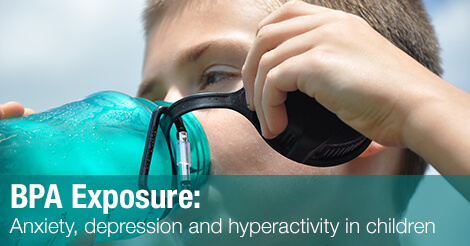
BPA Exposure: Anxiety, depression and hyperactivity in children

September 21, 2016 By Trudy Scott 10 Comments

bpa-exposure

BPA is a chemical that’s found in hard plastics. And it behaves in a very similar way to estrogen and other hormones in the body. And because of this it’s called an endocrine disrupter. And we may find it in water bottles and it’s actually found in baby bottles as well. Interestingly enough, it’s found in dental fillings and sealants and other dental devices. And it’s used as a coating inside food containers and drink cans. So it’s very prevalent. It’s also used on receipts. So we are exposed to it in many different ways. And unfortunately children and babies are especially sensitive to the effects of BPA.

These are snippets from my response to questions Dr. Jay Davidson asks me during my interview on the Detox Project (an online summit) which runs Sept 26 to October 3: can we start talking about neuroendocrine and the toxic effects of maybe something like BPA, Bisphenol A? What is it? Where is it found? And then of course you’re the anxiety expert, so how does that even tie into anxiety as a chemical?

There have been a number of papers that look at the direct effects of a chemical such as BPA on anxiety. And there was a paper actually published earlier this year in March. And it was titled “Bisphenol A Exposure and Children’s Behavior: A Systematic Review.” And what that means is they’re looking at the results of a number of papers. And I’ll just read a few quotes here from the paper.

“We concluded original studies reporting on the association between prenatal and childhood BPA exposure.”

So they’re looking at exposure to BPA before the child is even born. They found that prenatal exposure was related to high levels of anxiety, depression, aggression, and hyperactivity in children. Think about how many kids are put on ADHD medications. Maybe it’s an issue simply because they were exposed to BPA before they were even born.

They also found that BPA exposure in childhood was associated with high levels of anxiety, depression, hyperactivity, and attention problems.

So we’ve got to really look at the chemicals and see is that causing some of these problems. And so it’s always getting back to the root cause and not necessarily thinking, “Well, we need to go ahead and medicate right away.”

I also cover why BPA-free is no longer an option, what to use instead of plastic, the effects of pesticides in our foods and the toxicity of benzodiazepines. My interview is called: Toxicity of Benzodiazepine Medication for Anxiety.

Detoxify your body to aid in prevention of – and possibly overcome – chronic illnesses! The unhealthy amounts of chemicals and toxins in our bodies are causing tremendously negative consequences! Let’s overcome this crisis! I hope you can join us to hear the many topics being covered:

  • Kelly Brogan, MD -Toxic Impact of Antidepressants
  • Suzanne Somers – Tox-Sick: From Toxic to Not Sick
  • Jeffrey Smith – The Toxicity of Glyphosate and GMOs
  • Wendy Myers – Toxic Metals that Cause Fatigue and How to Detox Them
  • Narelle Chenery – Toxic Chemicals Found in “Natural” Skin Care Products!

detox-project

Use this link to register for access: 
https://qt247.isrefer.com/go/DETOX16reg/trudyscottcn/

Use this link to purchase at pre-summit special prices: 
https://qt247.isrefer.com/go/DETOX16order/trudyscottcn/

Filed Under: Detoxification, Events Tagged With: BPA, detox, detox project

Sugar vs fat, BPA in cans, PCOS awareness month: in the news

September 16, 2016 By Trudy Scott 2 Comments

sugar-vs-fat

Sugar vs fat, BPA in cans, and PCOS awareness month are all in the news this month so here are some links to more information on each of these topics.

This shocking NPR article covers this new paper about the sugar vs fat debate: 50 years ago, sugar industry quietly paid scientists to point blame at fat

In the 1960s, the sugar industry funded research that downplayed the risks of sugar and highlighted the hazards of fat, according to a newly published article in JAMA Internal Medicine.

The article draws on internal documents to show that an industry group called the Sugar Research Foundation wanted to “refute” concerns about sugar’s possible role in heart disease. The SRF then sponsored research by Harvard scientists that did just that. The result was published in the New England Journal of Medicine in 1967, with no disclosure of the sugar industry funding.

It’s hard to believe that researchers would do this! The worst part is that this type of thing is still happening. You can read some of Marion Nestle’s commentary at the end of the above article.

At least now research sponsors do have to be disclosed so we are hopefully getting better at preventing this type of thing. We must always look at who funds a paper.

canned-foods

A CNN article, Canned foods linked to BPA risk in new study reports:

A study published in the journal Environmental Research on Wednesday not only reveals that consuming canned foods can expose our bodies to BPA, it pinpoints the worst offenders.

The study suggests that canned soups and pasta can expose consumers to higher concentrations of BPA than canned vegetables and fruit – and although those foods are tied to BPA concentrations, canned beverages, meat and fish are not.

BPA stands for bisphenol A, it’s a chemical that is found in plastics and it behaves in a very similar way to estrogen in the body. Because of this it’s called an endocrine disrupter and has an impact on depression, ADHD and anxiety.

An animal study published in 2015, Hypothalamic-pituitary-adrenal axis hyperactivity accounts for anxiety- and depression-like behaviors in rats perinatally exposed to bisphenol A reports

hyperactivity of the HPA [hypothalamic-pituitary-adrenal axis] is an important link between perinatal BPA exposure and persistent potentiation in anxiety and depression

It’s unfortunate they didn’t get a commentary from the Environmental Working Group which has a great short Guide to BPA.

pcos-yoga

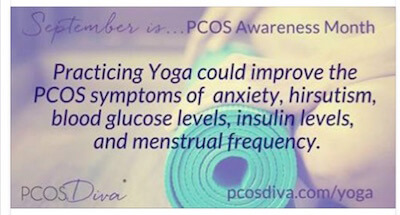
September is PCOS awareness month and here is some wonderful information on yoga for anxiety and PCOS, from my friend and PCOS expert Amy Medling at PCOS Diva. I’m such a big fan of yoga for stress and anxiety but had no idea it could improve these PCOS symptoms:

Yoga can reduce anxiety symptoms, reduce mFG score for hirsutism, improve menstrual frequency, insulin values and more according to a 2012 study. For more about the benefits of yoga for women with PCOS check out this blog post: 5 Reasons Why Yoga is Beneficial for PCOS

In case you’re not familiar with PCOS, Amy shares this overview on her site

PCOS Polycystic Ovarian Syndrome (PCOS) is one of the most common endocrine disorders found in women, affecting approximately 10% of women worldwide, with less than 50% of them diagnosed. The syndrome is present throughout a woman’s life from puberty through post-menopause and affects women of all races and ethnic groups. Women with PCOS wrestle with an array of possible symptoms including obesity, irregular menstrual cycles, infertility, depression [and anxiety], acne, and hair loss. Far reaching health implications such as increased risk of cardiovascular disease and diabetes make these already stressful symptoms even more daunting.

What do you think? Are you shocked about the sugar study discovery? Do you already avoid BPA? Do you have PCOS or know someone who has PCOS?

Filed Under: Sugar and mood, Yoga Tagged With: anxiety, BPA, depression, fat, PCOS, sugar, yoga

The Anxiety Summit – Our environmental toxin exposures promote anxiety

November 7, 2014 By Trudy Scott 3 Comments

Tom A. Malterre

Tom A. Malterre, MS, CN author of Nourishing Meals: Healthy Gluten-Free Recipes for the Whole Family was interviewed by host of the Anxiety Summit, Trudy Scott, Food Mood Expert and Nutritionist, author of The Antianxiety Food Solution.

Our environmental toxin exposures promote anxiety

  • The drastic spike in ADD/ADHD and autism and increase in anxiety and depression
  • Air pollution as an environmental toxin: concerns and sources (mercury, the brown cloud)
  • Mercury in fish and fish meal for animals
  • EDCs/ Endocrine Disrupting Compounds: BPA, phthalates and anxiety
  • Pesticides and the effects on folates in the colon and the production of serotonin
  • TILT /Toxicant-induced  loss of tolerance
  • What to do: nutritional and lifestyle tips

Here are the quotes from The Journal of Environmental Health paper co-written by Dr. Steven Genuis:

Toxicity and nutritional deficiency states often receive insufficient attention as common source causes of chronic disease in the developed world

it’s evident that a reevaluation of conventional wisdom on the current construct of disease origins should be considered

Here are some snippets from our interview:

Now 74 billion pounds of chemicals are being imported or produced in the United States every single day, that doesn’t include pharmaceuticals, it doesn’t include fuels and food additives. It doesn’t include some of the primary things like pesticides that we’re exposed to on a daily basis so that number is conservative and still, to me, it’s completely and totally overwhelming

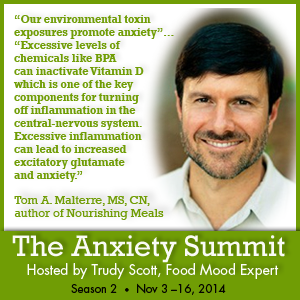
Excessive levels of chemicals like BPA can inactivate Vitamin D which is one of the key components for turning off inflammation in the central-nervous system. Excessive inflammation can lead to increased excitatory glutamate and anxiety.

Here is the 2012 study co-authored by Stephen Genuis: Human Excretion of Bisphenol A: Blood, Urine, and Sweat (BUS) Study

Biomonitoring of BPA through blood and/or urine testing may underestimate the total body burden of this potential toxicant. Sweat analysis should be considered as an additional method for monitoring bioaccumulation of BPA in humans. Induced sweating appears to be a potential method for elimination of BPA.

The Environmental Working Group SkinDeep site is a great resource for checking out safe cosmetics

Here is some of the research on Vitamin D and inflammation that is being conducted by Colleen Hayes and colleagues

If you are interested in learning more about broccoli’s superhero powers, watch Tom’s TED talk here on YouTube! “Broccoli – the DNA whisperer”


Cauliflower is also a good source of sulforaphane and here is a yummy Coconut lemon garlic cauliflower recipe from one of Tom’s books Nourishing Meals: Healthy Gluten-Free Recipes for the Whole Family.

If you are not already registered for the Anxiety Summit you can get live access to the speakers of the day here www.theAnxietySummit.com

Filed Under: Antianxiety, Detoxification, Environment, The Anxiety Summit 2, Toxins Tagged With: air pollution, anxiety, BPA, Endocrine Disrupting Compounds, environment, the anxiety summit, Tom Malterre, toxins

Primary Sidebar

NEW! GABA QuickStart Homestudy (with special intro pricing)

gaba quickstart homestudy

Free Report

9 Great Questions Women Ask about Food, Mood and their Health

You'll also receive a complimentary subscription to my ezine "Food, Mood and Gal Stuff"


Connect with me

Popular Posts

  • Amino Acids Mood Questionnaire from The Antianxiety Food Solution
  • The Antianxiety Food Solution Amino Acid and Pyroluria Supplements
  • Pyroluria Questionnaire from The Antianxiety Food Solution
  • Collagen and gelatin lower serotonin: does this increase your anxiety and depression?
  • Tryptophan for the worry-in-your-head and ruminating type of anxiety
  • GABA for the physical-tension and stiff-and-tense-muscles type of anxiety
  • The Antianxiety Food Solution by Trudy Scott
  • Seriphos Original Formula is back: the best product for anxiety and insomnia caused by high cortisol
  • Am I an anxious introvert because of low zinc and vitamin B6? My response to Huffington Post blog
  • Vagus nerve rehab with GABA, breathing, humming, gargling and key nutrients

Recent Posts

  • What do I use instead of Seriphos to help lower high cortisol that is affecting my sleep and making me anxious at night?
  • BeSerene™ GABA/theanine cream eases severe muscle tension in her neck/shoulders, prevents her bad headaches and quells her anxiety
  • How the correct approach, dose and sublingual use of GABA can be calming and not cause a flushed and itchy face and neck
  • The amino acid glutamine improves low mood by addressing gut health, and it has calming effects too
  • Flight anxiety with heightened breath, physical tension and also fearing the worst (the role of low GABA and low serotonin)

Categories

  • 5-HTP
  • AB575
  • Addiction
  • ADHD
  • Adrenals
  • Alcohol
  • Allergies
  • Alzheimer's disease
  • Amino Acids
  • Anger
  • Antianxiety
  • Antianxiety Food Solution
  • Antidepressants
  • Anxiety
  • Anxiety and panic
  • Autism
  • Autoimmunity
  • benzodiazapines
  • Bipolar disorder
  • Books
  • Caffeine
  • Cancer
  • Candida
  • Children/Teens
  • Collagen
  • Cooking equipment
  • Coronavirus/COVID-19
  • Cravings
  • Depression
  • Detoxification
  • Diabetes
  • Diet
  • DPA/DLPA
  • Drugs
  • EFT/Tapping
  • EMF
  • EMFs
  • Emotional Eating
  • Endorphins
  • Environment
  • Essential oils
  • Events
  • Exercise
  • Fear
  • Fear of public speaking
  • Fertility and Pregnancy
  • Fish
  • Food
  • Food and mood
  • Functional neurology
  • GABA
  • Gene polymorphisms
  • General Health
  • Giving
  • Giving back
  • Glutamine
  • Gluten
  • GMOs
  • Gratitude
  • Gut health
  • Heart health/hypertension
  • Histamine
  • Hormone
  • Hyperparathyroidism
  • Hypoglycemia
  • Immune system
  • Inflammation
  • Insomnia
  • Inspiration
  • Introversion
  • Joy and happiness
  • Ketogenic diet
  • Lithium orotate
  • Looking awesome
  • Lyme disease and co-infections
  • MCAS/histamine
  • Medication
  • Men's health
  • Mental health
  • Mercury
  • Migraine
  • Mold
  • Movie
  • MTHFR
  • Multiple sclerosis
  • Music
  • NANP
  • Nature
  • Nutritional Psychiatry
  • OCD
  • Osteoporosis
  • Oxalates
  • Oxytocin
  • Pain
  • Paleo
  • Parasites
  • Parkinson’s disease
  • PCOS
  • People
  • PMS
  • Postpartum
  • PTSD/Trauma
  • Pyroluria
  • Questionnaires
  • Real whole food
  • Recipes
  • Research
  • Schizophrenia
  • serotonin
  • SIBO
  • Sleep
  • Special diets
  • Sports nutrition
  • Stress
  • Sugar addiction
  • Sugar and mood
  • Supplements
  • Teens
  • Testimonials
  • Testing
  • The Anxiety Summit
  • The Anxiety Summit 2
  • The Anxiety Summit 3
  • The Anxiety Summit 4
  • The Anxiety Summit 5
  • The Anxiety Summit 6
  • Thyroid
  • Thyroid health
  • Toxins
  • Tryptophan
  • Tyrosine
  • Uncategorized
  • Vegan/vegetarian
  • Women's health
  • Yoga

Archives

  • October 2025
  • September 2025
  • August 2025
  • July 2025
  • June 2025
  • May 2025
  • April 2025
  • March 2025
  • February 2025
  • January 2025
  • November 2024
  • October 2024
  • September 2024
  • August 2024
  • July 2024
  • June 2024
  • May 2024
  • April 2024
  • March 2024
  • February 2024
  • January 2024
  • December 2023
  • November 2023
  • October 2023
  • September 2023
  • August 2023
  • July 2023
  • June 2023
  • May 2023
  • April 2023
  • March 2023
  • February 2023
  • January 2023
  • December 2022
  • November 2022
  • October 2022
  • September 2022
  • August 2022
  • July 2022
  • June 2022
  • May 2022
  • April 2022
  • March 2022
  • February 2022
  • January 2022
  • December 2021
  • November 2021
  • October 2021
  • September 2021
  • August 2021
  • July 2021
  • June 2021
  • May 2021
  • April 2021
  • March 2021
  • February 2021
  • January 2021
  • December 2020
  • November 2020
  • October 2020
  • September 2020
  • August 2020
  • July 2020
  • June 2020
  • May 2020
  • April 2020
  • March 2020
  • February 2020
  • January 2020
  • December 2019
  • November 2019
  • October 2019
  • September 2019
  • August 2019
  • July 2019
  • June 2019
  • May 2019
  • April 2019
  • March 2019
  • February 2019
  • January 2019
  • December 2018
  • November 2018
  • October 2018
  • September 2018
  • August 2018
  • July 2018
  • June 2018
  • May 2018
  • April 2018
  • March 2018
  • February 2018
  • January 2018
  • December 2017
  • November 2017
  • October 2017
  • September 2017
  • August 2017
  • July 2017
  • June 2017
  • May 2017
  • April 2017
  • March 2017
  • February 2017
  • January 2017
  • December 2016
  • November 2016
  • October 2016
  • September 2016
  • August 2016
  • July 2016
  • June 2016
  • May 2016
  • April 2016
  • March 2016
  • February 2016
  • January 2016
  • December 2015
  • November 2015
  • October 2015
  • September 2015
  • August 2015
  • July 2015
  • June 2015
  • May 2015
  • April 2015
  • March 2015
  • February 2015
  • January 2015
  • December 2014
  • November 2014
  • October 2014
  • September 2014
  • August 2014
  • July 2014
  • June 2014
  • May 2014
  • April 2014
  • March 2014
  • February 2014
  • January 2014
  • December 2013
  • November 2013
  • October 2013
  • September 2013
  • August 2013
  • July 2013
  • June 2013
  • May 2013
  • April 2013
  • March 2013
  • February 2013
  • January 2013
  • December 2012
  • November 2012
  • October 2012
  • August 2012
  • July 2012
  • June 2012
  • May 2012
  • April 2012
  • March 2012
  • February 2012
  • January 2012
  • December 2011
  • November 2011
  • October 2011
  • September 2011
  • August 2011
  • July 2011
  • June 2011
  • May 2011
  • April 2011
  • March 2011
  • February 2011
  • January 2011
  • December 2010
  • October 2010
  • September 2010
  • July 2010
  • May 2010
  • April 2010
  • March 2010
  • February 2010
  • January 2010
  • November 2009

Share the knowledge!

The above statements have not been evaluated by the Food and Drug Administration. Products listed in this website are not intended to diagnose, treat, cure or prevent any disease.

The information provided on this site is for informational and educational purposes only and is not intended as a substitute for advice from your physician or other health care professional. You should consult with a healthcare professional before starting or modifying any diet, exercise, or supplementation program, before taking or stopping any medication, or if you have or suspect you may have a health problem.


Copyright © 2026 Trudy Scott. All Rights Reserved. | Privacy | Terms and Conditions | Refund Policy | Medical Disclaimer

Free Report

9 Great Questions Women Ask about Food, Mood and their Health

You’ll also receive a complimentary subscription to my ezine “Food, Mood and Gal Stuff”