• Skip to primary navigation
  • Skip to main content
  • Skip to primary sidebar

everywomanover29 blog

Food, Mood and Women's Health – Be your healthiest, look and feel great!

  • Blog
  • About
  • Services
  • Store
  • Resources
  • Testimonials
  • The Book
  • Newsletter
  • Contact
  • Search this site

Low oxalate success stories: resolution of joint/body pain, insomnia, peripheral neuropathy and can walk without a cane

November 18, 2022 By Trudy Scott 18 Comments

low oxalate success stories

I’d love to hear how switching to a low oxalate way of eating helped you. And what motivated you to go down this path? Was it pain, weakness, low energy, anxiety, insomnia, bladder issues and/or restless legs and painful feet? (or something else?) How quickly did you see results when making the dietary changes? And what would you say to someone who can’t even imagine a better, easier and pain-free life, and really doesn’t want to give up so many foods?

I’ve seen incredible results personally and my painful feet and restless legs/insomnia (and also severe eye pain in one eye) was my motivation. I’m a nutritionist and understand the power of nutrition and know what is possible. But I know it’s tough to grasp for many individuals.

I’m asking for a dear family member who uses a walker and can’t imagine life without her walker and that dietary changes could make a difference.

I posted the above on Facebook and here are some of the few incredible responses I received. I hope they inspire and motivate you if you’re just beginning this low oxalate journey, or if you have a family member you’re trying to inspire, educate and help.

Beth shared how stopping high oxalate foods – beets, sweet potatoes, almonds, swiss chard, and chocolate – enabled her to stop using her cane in just 2 weeks:

I had to use cane by the time I was 28 and could barely hobble. The pain was like ground glass in my joints. To take a flight I had to get a wheelchair at the airport and had to use the electric carts at the grocery because I couldn’t walk or stand due to the excruciating pain. This went on for a few years.

When I learned about oxalates and stopped beets, sweet potatoes, almonds, swiss chard, and chocolate and went down to only medium oxalate foods or lower, I was off the cane in 2 weeks. I didn’t know about dumping, and I got lucky, but now if I eat too many oxalates the only problem I get is pain in my fingers and toes.

I can personally relate to the ground glass pain she describes – the pain in my feet felt like a mix of shards of glass and hot coals. It’s a common description I hear from clients.

You may be familiar with the wonderful work of Beth O’Hara, functional naturopath and founder of Mast Cell 360. She shares this too: “ I see a lot of mold toxicity underlying oxalate issues due to leaky gut, nutrient depletion, and a few other factors.” 

Quick results for insomnia, bloating, stomach pain, peripheral neuropathy, body pain, brain fog, weird rashes and more

Nicola shared these wonderful results and the fact that her symptoms started to resolve quickly:

I had extremely quick results – a couple of days for some symptoms. But the thrill of the slow realization that I wasn’t actually seriously ill and brewing up ever more and newer ways to suffer, was the biggest relief. Lower stress also equals lower pain.

Insomnia first, then bloating, stomach pain, peripheral neuropathy, chest pains, body pain, swollen lymph glands, brain fog, TMJ pains, weird rashes, arthritis type pains in hands/wrists, headaches. The list is too extensive to enumerate. Suffice to say I no longer feel in imminent danger of contracting lymphoma, heart problems, Alzheimer’s etc.

I am 66 years old and I’ve only been on this TLO (trying low oxalates) journey for about 8 months or so and all those issues have mostly been resolved. Kind of magical really. Still dumping oxalates regularly as I had a long way to come having been mostly Paleo for about 8 years previously.

I think we are too quick to resign ourselves to the ‘aging’ process. I find I am getting younger by the month, the longer I am lowering oxalates. I may not look any younger, but to be living without chronic pain is quite the unexpected boon.

I have to agree with Nicola. It is quite magical to get results like this and too often we take for granted that as we age chronic pain is inevitable. As you can see from these stories it is not inevitable and you have much more control than you may realize!

So desperate with pain that she thought she was going to have to quit work

Yvonne found out she had oxalate issues after having DNA testing done. She shares this about her journey and motivation:

I had extreme shoulder pain, grainy eyes and in the end, I couldn’t take my thyroid meds without the shoulder pain or some other pain. I found my way to the group through DNA testing which …suggested that I may have an oxalate problem. I slowly started eating low oxalate, suggested by the TLO group.

I had been primarily consuming high oxalate foods trying to be healthy but my diet wasn’t diverse enough. I was eating nuts, celery, spinach, kale, chocolate and sweet potatoes.

I was cautious after going low oxalate and having my problems relieved. Over time I’ve gone back to eating medium oxalate foods and done well. I do feel like making my own kombucha and drinking it daily has helped.

Dietary oxalate issues are often worse for women as they start to go through perimenopause and into menopause because of lower estradiol levels (more on that below). Yvonne was 65 at the time.

She shares what motivated her to make changes: “I was so desperate with pain that I thought I was going to have to quit work. That’s the reason I had the DNA testing done.”

Belly pain (maybe bladder), left leg pain, scalp itch, eye stinging and itching reduced immediately

Cristina shared what she observed when switching to a low oxalate diet:

Noticed belly pain (maybe bladder), left leg pain, scalp itch, eye stinging and itching reduced immediately. But might have taken a couple of years to really unload excess oxalates. I still get the exact same symptoms if I have high oxalates, particularly carrots, potatoes and nuts.

With much appreciation for these women for sharing their stories and giving me permission to share. I do hope this is inspiring and motivating for you if you are navigating dietary oxalates and can’t yet imagine that a diet change could lead to a better life and symptom-free existence.  I’ll be sharing all this wonderful feedback with my loved one too.

Additional reading about dietary oxalates

If you’re new to the concept of dietary oxalates here are some blog posts for additional reading:

  • Oxalate crystal disease, dietary oxalates and pain: the research & questions (this is a good one to start with if you’re new to dietary oxalates and the issues they can cause)
  • Vulvodynia: oxalates, GABA, tryptophan and physical therapy
  • Vitamin C causes oxalate formation resulting in pain, anxiety, and insomnia (when there is a defect in ascorbic acid or oxalate metabolism)?
  • Waking in the night due to environmental toxins: impacts on the liver, gallbladder and fat digestion (making oxalate issues worse)
  • Increased kidney stones in postmenopausal women with lower estradiol levels. What about increased dietary oxalate issues too?

I’d love to hear how switching to a low oxalate way of eating helped you and which high oxalate foods were you eating?

What motivated you to go down this path? Was it pain, weakness, low energy, anxiety, insomnia, bladder issues and/or restless legs and painful feet (or some other symptoms)?

How quickly did you see results when making the dietary changes?

And what would you say to someone who can’t even imagine a better, easier and pain-free life, and really doesn’t want to give up so many foods?

If you have questions please share them here too.
Filed Under: Insomnia, Oxalates, Pain Tagged With: anxiety, bladder pain, body pain, brain fog, eye pain, grainy eyes, ground glass, hot coals, insomnia, joint pain, low energy, Low oxalate, pain, pain-free, painful feet, peripheral neuropathy, restless legs, scalp itch, walk without a cane, weakness, weird rashes

GABA 500mg: high alert and increased anxiety; drugged and anxious with itchy red bumps the next day but slept better

November 11, 2022 By Trudy Scott 22 Comments

500mg gaba

Too much of the calming amino acid, GABA, can cause the opposite effect leading to increased anxiety and feeling too tired the following day, sometimes even feeling drugged. I have clients start with 125mg if they have low GABA physical type of anxiety so when I hear someone has had a bad reaction after using 500mg GABA, it’s unfortunate but not surprising. SM posted her reaction on the blog where I write about a niacin-type flush from using too much GABA. However her reaction was more severe than this. Here is her feedback and questions:

I took a single dose of GABA 500mg from NOW foods one night hoping it can help with anxiety and insomnia. I felt on high alert that night and increased anxiety that night. The next day I felt drugged and anxious, but strangely slept better [the next] night. I also had itchy red bumps.

I realized from your blog that 500mg was too much for me. I switched to NOW Foods True Calm which has 200 mg GABA and other nutrients, quite like a mini version of the Country Life GABA. I slept better but again have itchy red bumps now, so I’m afraid of using another capsule during the day.

I am also on 0.375mg of Clonotril which I take only at night but it does not help with constant anxiety all day. I managed to taper down to 0.375mg from 1mg after taking magnesium glycinate but unfortunately I had too much diarrhea from the magnesium. That’s how I came to know about GABA hoping it can help relieve the constant anxiety and heart palpitations.

After reading this article I realize it’s important to start GABA low. I tried to use Olly Goodbye Stress gummies which have 100 mg GABA and 50 mg theanine per 2 gummies but it was of no help.

I want to try the Source Naturals GABA Calm lozenges you recommended but I’m also feeling scared as I have been trying so many things without much success. Very grateful if you could offer me some advice. I came across your work when googling about GABA. Thank you for this opportunity to ask you questions.

This is my feedback for SM: too much GABA can have adverse effects the day it’s taken and feeling on high alert with increased anxiety that night is not unusual. It’s also not unusual to feel overly fatigued and even experience a drugged-type feeling and still continue to feel anxious.

With symptoms like this my first piece of advice is to start low at 125mg and always have 1000mg vitamin C on hand when trialing GABA (and any of the amino acids). It’s the antidote and works quickly to ease all the adverse effects and also any beneficial effects that are experienced.

Use a much lower dose of GABA and keep vitamin C on hand

We often trial GABA again – even with adverse symptoms like this – but always use a much lower dose.. We could use another product like Source Naturals GABA Calm lozenges or use 125mg of the 500mg NOW GABA product.

One big clue that she may actually need GABA is that she did sleep better the next night.

If it’s a niacin type flush, as described in the blog she commented on, Too much GABA causes a tingling niacin-like flush sensation (in the brain and body). It’s awful and very uncomfortable!, I would still recommend another trial of the lower dose (with vitamin C on hand).

Other product options to consider are theanine and/or pharmaGABA too.

A histamine reaction or MCAS /mast cell activation syndrome?

However if it’s not a flush but a real rash or hives then I’m more concerned and would not have them trial something new. With a rash that doesn’t resolve we also consider a histamine reaction or MCAS /mast cell activation syndrome.

GABA typically helps with MCAS/histamine issues but unfortunately things are not predictable when you have MCAS. She may need to address the histamine/MCAS reaction before she can start benefiting from GABA.

A phenol sensitivity or allergic reaction?

Phenols can trigger some strong emotional reactions that do include anxiety, hyperactivity, insomnia and meltdowns – and a feeling of being on high alert (which SM mentions).

Since she mentions the rash, I would also want to rule out a phenol reaction to the GABA. My colleague Julie Matthews shares this: “When phenols are not able to be broken-down and detoxified by a process called sulfation… they can cause these emotional symptoms and also red cheeks and ears.”

The benzodiazepine may be the confounding factor

One other confounding factor is the Clonotril. Benzodiazepines (using them and/or tapering) can cause many different issues. I do have clients use GABA to help while tapering but we only change one thing at a time and the benzo taper is super super slow. They also only start to taper (with the doctor’s approval and monitoring) once they are nutritionally stable. My book The Antianxiety Food Solution is a great resource for learning more about becoming nutritionally stable.

Serotonin support as well as GABA support?

SM mentions that she took GABA hoping it would help with anxiety and insomnia. These are also both symptoms of low serotonin so she may also see benefits with tryptophan, 5-HTP and melatonin.   You can read more about tryptophan here: Tryptophan for the worry-in-your-head and ruminating type of anxiety and melatonin here: Melatonin improves sleep quality and reduces anxiety after a TBI.

Resources if you are new to using GABA and other amino acids as supplements

If you are new to using any of the amino acids as supplements, here is the Amino Acids Mood Questionnaire from The Antianxiety Food Solution (you can see all the symptoms of neurotransmitter imbalances, including low GABA and low serotonin).

If you suspect low levels of any of the neurotransmitters and do not yet have my book, The Antianxiety Food Solution – How the Foods You Eat Can Help You Calm Your Anxious Mind, Improve Your Mood, and End Cravings, I highly recommend getting it and reading it before jumping in and using amino acids on your own so you are knowledgeable. And be sure to share it with the practitioner/health team you or your loved one is working with.

There is an entire chapter on the amino acids and they are discussed throughout the book in the sections on gut health, gluten, blood sugar control, sugar cravings, self-medicating with alcohol and more.

The book doesn’t include product names (per the publisher’s request) so this blog, The Antianxiety Food Solution Amino Acid and Pyroluria Supplements, lists the amino acids that I use with my individual clients and those in my group programs. You can find them all in my online store.

If, after reading this blog and my book, you don’t feel comfortable figuring things out on your own (i.e. doing the symptoms questionnaire and respective amino acids trials), a good place to get help is the GABA QuickStart Program (if you have low GABA symptoms). This is a paid online/virtual group program where you get my guidance and community support.

If you are a practitioner, join us in The Balancing Neurotransmitters: the Fundamentals program. This is also a paid online/virtual program with an opportunity to interact with me and other practitioners who are also using the amino acids.

Have you had an adverse reaction to taking a high dose of GABA? What dose, which product and what was your reaction?

What did you figure out was the ideal dose for you?

If you have questions please share them here too.
Filed Under: Anxiety, GABA, Insomnia Tagged With: 500mg GABA, amino acids; GABA Quickstart online program; and Balancing Neurotransmitters: the Fundamentals program for practitioners, anxiety, anxious, benzodiazepine, Clonotril, drugged, high alert, histamine reaction, increased anxiety, insomnia, itchy red bumps, MCAS, niacin-type flush, phenol reaction, rash, serotonin, slept, Source Naturals GABA Calm, tired, vitamin C

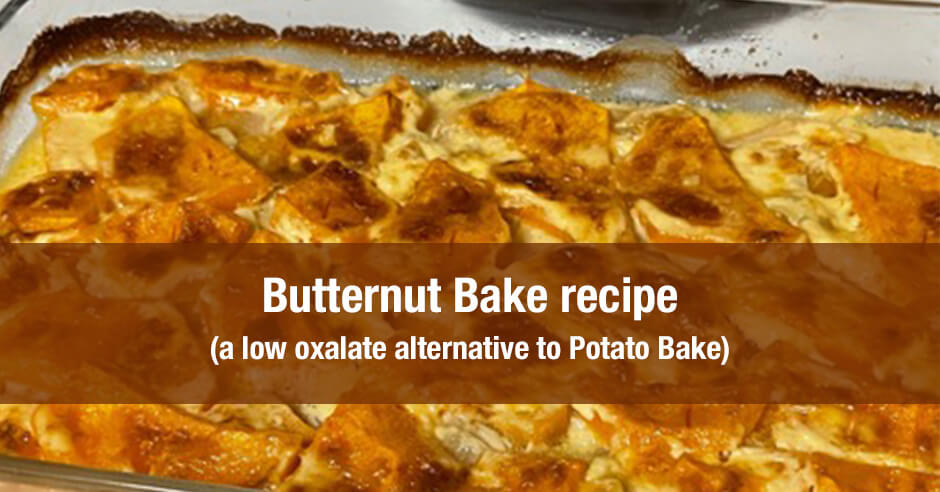
Butternut Bake recipe (a low oxalate alternative to Potato Bake)

November 4, 2022 By Trudy Scott 13 Comments

butternut bake recipe

Do you have dietary oxalate issues (pain, anxiety, insomnia, restless legs, hearing loss, eye issues, unresolved thyroid issues, bladder issues and more) and yet really miss potatoes and even sweet potatoes, both of which are very high oxalate?

I modified a family favorite recipe called Potato Bake (from Pips and my sister) to be a low oxalate option called Butternut Bake.

If you’re new to the dietary oxalate issues you can read more about this below. I’m finding it to be underappreciated as an issue especially in menopausal women when symptoms seems to be  more severe in susceptible individuals.

And if you don’t have dietary oxalate issues, you can certainly enjoy this recipe too.

Butternut Bake Recipe (a low oxalate alternative to potato bake)

Ingredients

1 large butternut peeled and sliced thinly
2 cups homemade stock (beef or chicken)
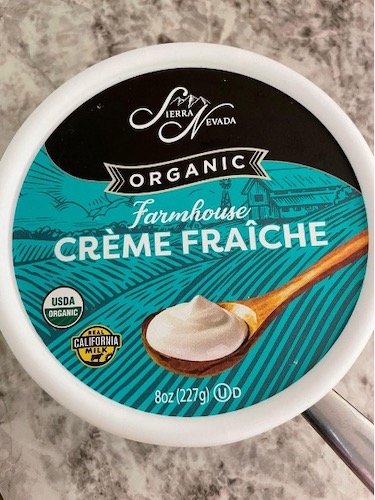
1 cup creme fraiche (or sour cream)
1 teaspoon butter
1 onion (grated)
6 large garlic cloves (grated or crushed in a garlic press)
Salt and pepper

Method

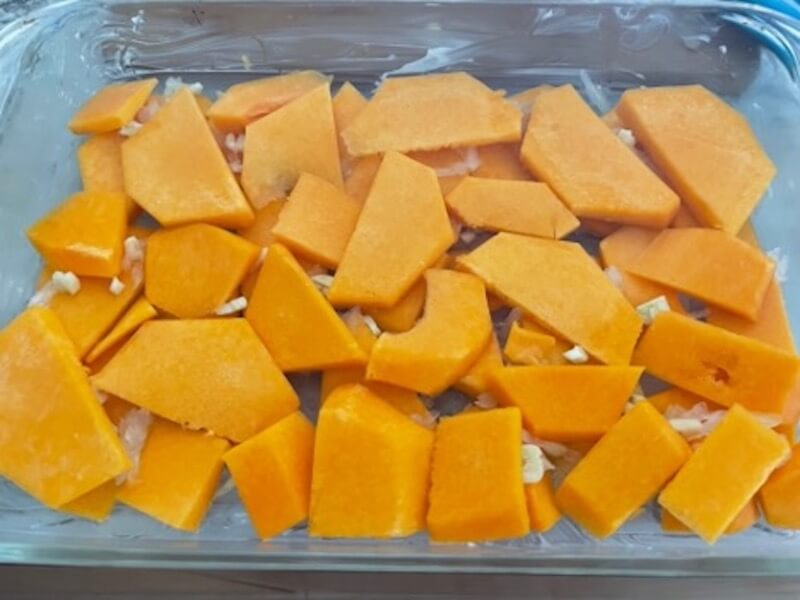
Peel the butternut and slice thinly (½ inch or 1 ¼  cm).

Butter a casserole dish (9×9 inches or 23 x 23 cm) and layer half the butternut slices in the dish.

Sprinkle with salt and pepper, and the grated onion and garlic – spreading it all evenly.

Layer the remaining butternut slices on top.

Bring the creme fraiche to boil and pour in the stock, boil for another minute.

Pour over the butternut.

Bake 180 deg C/350 deg F for 1.5 hours until the liquid has been absorbed by the butternut and the top is golden brown.

Enjoy as a side dish with a serving of quality/organic animal protein like grass-fed beef/lamb or pastured chicken or wild fish and some non-starchy low oxalate veggies such as cauliflower, zucchini  or asparagus.

Options

I have not tried it with coconut milk but I’m sure this could be substituted for the creme fraiche.

Low oxalate spices that could be experimented with include: chives, cilantro, basil, lemongrass, parsley, rosemary, ginger and sage.

If you know you don’t have dietary oxalate issues and decide to use potatoes instead, they do need to be cooked in the stock for 10 minutes before layering in the casserole dish. The original recipe calls for 3 large potatoes, sliced.

Some pictures to help as you make this butternut bake

The top image shows the first layer of sliced butternut with grated onion and garlic. And the image below shows the second layer of butternut.

butternut bake

butternut bake

I was very pleased to find some very nice organic creme fraiche which has no added thickeners. The other image below shows the creme fraiche after it’s been boiled in the stock.

creme fraiche
creme fraiche sauce

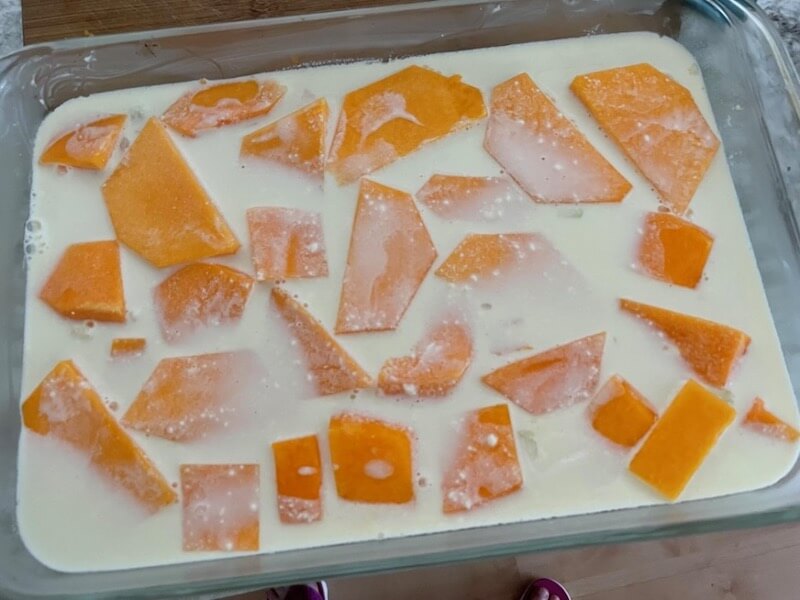
The next image shows what the layers of butternut and garlic/onion looks like covered with the creme fraiche/stock mixture i.e. it looks like it may be too much liquid but it really isn’t.

butternut bake

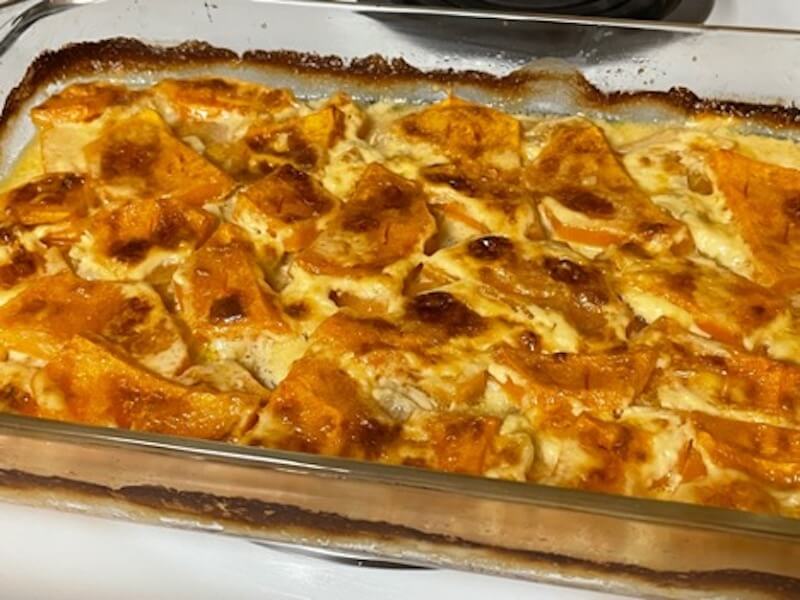
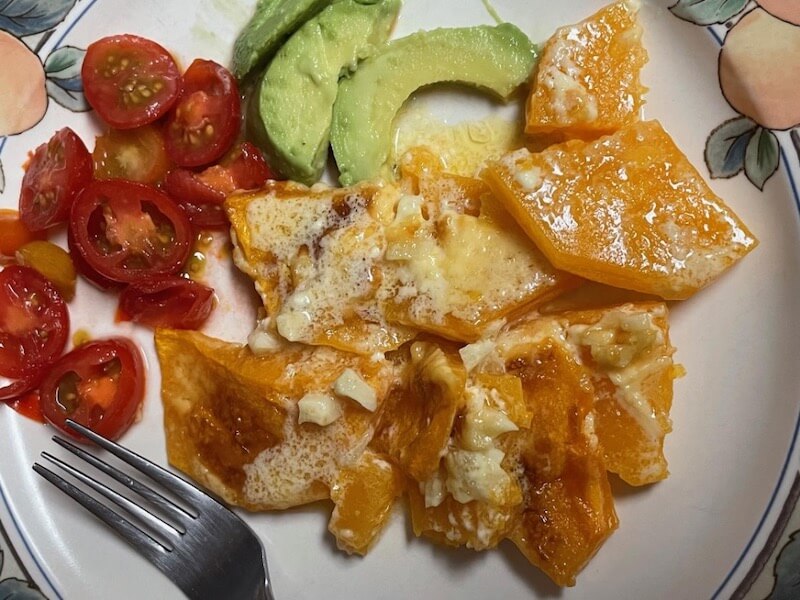
The bottom two images show what it looks like when the Butternut Bake is ready and comes out the oven, and then when it’s been served as a starter or side dish. There is a small amount of thick sauce.

butternut bake

butternut bake

Why consider dietary oxalates as a possible issue?

This blog post is a good one to start with if you’re new to dietary oxalates and the issues they can cause: Oxalate crystal disease, dietary oxalates and pain: the research & questions

These are the common medium-oxalate and high-oxalate foods that many folks have problems with: nuts, nut-butters and nut-flour (something to watch when eating Paleo or GAPS), wheat, chocolate, kiwi fruit (very high – see the raphides image on the above blog), star fruit (also very high), beets, potatoes, sweet potatoes, legumes, raspberries, spinach and soy.

In the above blog post, I share an overview of oxalates, my pain issues with dietary oxalates (severe foot pain and eye pain), and deeper dive into the condition called oxalate crystal disease (with some of my insights and questions).

The big take-aways are that calcium oxalate crystals are sharp and can cause far reaching harm beyond pain – such as unresolved anxiety, thyroid issues, neurological symptoms, eye issues, hearing loss, bladder issues, headaches, fatigue, insomnia, restless legs, autism symptoms and more; and you can have issues with dietary oxalates and not have kidney disease/kidney stones (although there is very little research supporting the latter).

You may find these oxalate blogs helpful too:

  • Waking in the night due to environmental toxins: impacts on the liver, gallbladder and fat digestion (making oxalate issues worse)
  • Increased kidney stones in postmenopausal women with lower estradiol levels. What about increased dietary oxalate issues too?

What dietary oxalates issues have you experienced and has a low oxalate diet helped you?

Do let us know if you make this recipe and enjoy it.

Feel free to share a favorite recipe of something you’ve adapted to be low or even medium oxalate.

If you have questions please share them here too.

Filed Under: Anxiety, Insomnia, Oxalates, Recipes Tagged With: anxiety, bladder issues, butternut, Butternut Bake recipe, dietary oxalate, estradiol, eye issues, hearing loss, high oxalate, insomnia, kidney disease, kidney stones, low oxalate alternative, menopausal women, oxalate, pain, potato, Potato Bake, restless legs, sweet potatoes, unresolved thyroid issues

A weighted blanket increases pre-sleep salivary concentrations of melatonin in young, healthy adults – a new study

October 28, 2022 By Trudy Scott 7 Comments

weighted blanket melatonin

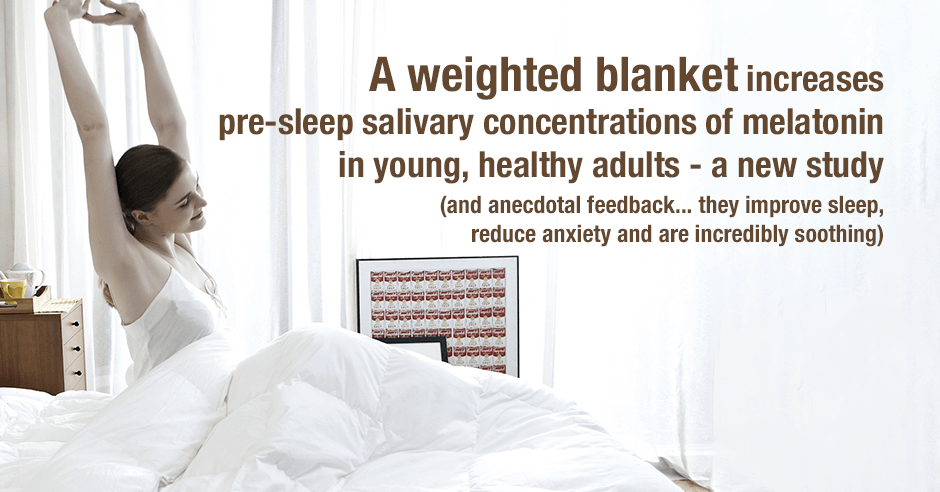
A new paper published earlier this month, A weighted blanket increases pre-sleep salivary concentrations of melatonin in young, healthy adults provides yet another mechanism supporting the benefits of a weighted blanket for improving sleep and also reducing anxiety – an increase in melatonin. The authors share that “Weighted blankets have emerged as a potential non-pharmacological intervention to ease conditions such as insomnia and anxiety. Despite a lack of experimental evidence, these alleged effects are frequently attributed to a reduced activity of the endogenous stress systems and an increased release of hormones such as oxytocin and melatonin.”

Here are some of the details from the study:

  • It was a small in-laboratory crossover study and included 26 young and healthy participants (15 men and 11 women)
  • The heavier weighted blanket was about 12% of their body weight
  • The following were measured: “salivary concentrations of the stress hormone cortisol, salivary alpha-amylase activity (as an indicative metric of sympathetic nervous system activity), subjective sleepiness, and sleep duration.”

The only difference found was a 1 hour increase of salivary melatonin from 10pm to lights off at 11pm. It was about 32% higher when using the heavier weighted blanket.

No other differences were found in terms of subjective sleepiness and total sleep duration.

The study concludes as follows:

Our study is the first to suggest that using a weighted blanket may result in a more significant release of melatonin at bedtime. Future studies should investigate whether the stimulatory effect on melatonin secretion is observed on a nightly basis when frequently using a weighted blanket over weeks to months. It remains to be determined whether the observed increase in melatonin may be therapeutically relevant for the previously described effects of the weighted blanket on insomnia and anxiety.

The authors only identified an increase in pre-sleep melatonin in this study. But keep in mind these limitations of the study: participants did not have insomnia or anxiety, and they were young (and melatonin declines as we age). The authors didn’t find an improvement in subjective feedback on better sleep and they did not measure subjective changes in anxiety levels – which I don’t find surprising.

However, as you’ll read below, many individuals in my community responded favorably when I posted this new study on Facebook, sharing how using their weighted blankets does improve their sleep and reduce their anxiety.  I share some of the anecdotal feedback below.

Feedback from real people: improved sleep, calm body, soothing and less anxiety

Here is some of the feedback from folks in my Facebook community:

Krys shares this: Ever since I started using a weighted blanket my sleep has improved. I think I need a heavier one. I believe the one I have is only 12 lbs. I was born in Poland, and we always had very heavy covers. Usually feather filled comforters, which made me feel secure and helped with sleep. I have a lot of past trauma and did not notice the weighted  blanket to be confining.

Christine shares this “I love my weighted blanket and sleep much better with it. I definitely sleep more soundly…less waking up. I bought it about 3 months ago and plan to use it year round. It is a faux fur glass bead filled one….it is super flexible and I can tuck it in and around all the nooks and crannies around my body. I considered a flatter, more stiff one but preferred the tucking option.” Christine’s weighted blanket is 15lbs and she plans to use an electric blanket to warm it up in winter (and switch it off /unplug it, before getting into bed).

Courtney shares this: “I started with a 12lb, then 20lb, now I have a 25lb one lol. I absolutely love my weighted blanket and can not sleep without it…I use it year round, it’s not hot but yet keeps you warm. And I feel like the weight keeps you from tossing and turning as much. It feels like a hug lol.”  The hug comment makes me wonder if they provide endorphin support too.

MaryKatherine shares this: “Wow that is seriously amazing. They definitely help me. I love weighted blankets…I feel almost instant calm in my body when I use weighted blankets. It does take 10-15 min for full effect.”

Tana shares this: “I love  my weighted blanket. It helps me relax. I sleep so much better.”

And then she shared this: “After this post I thought I should let my teenage daughter try my weighted blanket . She has anxiety and poor sleep habits. She loved it. I will be ordering her one.”  How wonderful is this?

Brenda shares this: “Love mine… I find it helps my AM anxiety. I’m kind of a hot sleeper, so I can’t keep it on for long, but I pull it up in the early morning, and it just gives a nice feeling of safety almost. I know a guy who does this with his dog when he’s having PTSD anxiety attacks.”

Willow shares this: “I have a cooling weighted blanket that I use all year. It is completely magical. I bought it hoping to sleep better but I didn’t expect it to be so incredibly soothing. Mine is 100% organic bamboo with glass beads. I find the cooling cover perfect all year. I honestly LOVE this improvement in my life.”

Katie shares this: “I love mine! I got one for each of my kids too. For my son I got a lighter one for kids, though he prefers my heavier adult blanket. He has ADHD and anxiety and really loves the weight. We all sleep deeper and fall asleep faster. Sometimes I use mine during the day when anxiety is especially high and it helps to calm my nervous system.”

Many folks are going to need additional nutritional support for their anxiety and insomnia

One person shared this: “I love my weighted blankets but it took awhile to get used to the heaviness on me… It’s not a miracle particularly if my stress and anxiety is much higher but I’d rather have it then not. It’s more helpful if I’m calmer.”

I agree. Many folks are going to need additional nutritional support for their anxiety and insomnia. This is where my work with addressing low GABA and low serotonin comes into play. Also, we may need to consider high cortisol and always need to address gut health, diet, caffeine/sugar/gluten intake, parasites, EMFs and everything covered in my book “The Antianxiety Food Solution.”

Here are a few (of many) useful resources from the blog:

  • GABA and theanine mixture improves sleep and eases anxiety
  • Rage, anxiety, cravings & insomnia in 11-year old girl with RAD/reactive attachment disorder: chewable tryptophan turns things around
  • Lactium® (alpha-s1 casein hydrolysate/hydrolyzed casein) for lowering high cortisol, reducing anxiety and improving sleep

Feel free to use the search feature to find additional anxiety and sleep resources and success stories.

Resources if you are new to using GABA, tryptophan and other amino acids as supplements

If you are new to using any of the amino acids as supplements, here is the Amino Acids Mood Questionnaire from The Antianxiety Food Solution (you can see all the symptoms of neurotransmitter imbalances, including low GABA and low serotonin).

If you suspect low levels of any of the neurotransmitters and do not yet have my book, The Antianxiety Food Solution – How the Foods You Eat Can Help You Calm Your Anxious Mind, Improve Your Mood, and End Cravings, I highly recommend getting it and reading it before jumping in and using amino acids on your own so you are knowledgeable. And be sure to share it with the practitioner/health team you or your loved one is working with.

There is an entire chapter on the amino acids and they are discussed throughout the book in the sections on gut health, gluten, blood sugar control, sugar cravings, self-medicating with alcohol and more.

The book doesn’t include product names (per the publisher’s request) so this blog, The Antianxiety Food Solution Amino Acid and Pyroluria Supplements, lists the amino acids that I use with my individual clients and those in my group programs. You can find them all in my online store.

If, after reading this blog and my book, you don’t feel comfortable figuring things out on your own (i.e. doing the symptoms questionnaire and respective amino acids trials), a good place to get help is the GABA QuickStart Program (if you have low GABA symptoms). This is a paid online/virtual group program where you get my guidance and community support.

If you are a practitioner, join us in The Balancing Neurotransmitters: the Fundamentals program. This is also a paid online/virtual program with an opportunity to interact with me and other practitioners who are also using the amino acids.

Have you had success with a weighted blanket …for sleep issues and anxiety?

If you have seen these benefits with a weighted blanket:

  • I’m also curious if you’ve observed reductions in sugar cravings, less anger issues, less irritability, less PMS symptoms, less negativity and less worry and panic attacks? These are all symptoms of low serotonin. I suspect that if there is an increase in melatonin there may also be an increase in serotonin (which is used to make melatonin).
  • Have you noticed any other benefits?
  • Be sure to share which weighted blanket you have, what percentage of your weight it is, and how often you use it.
  • Have some of the nutritional approaches helped too?

If you have not seen benefits or didn’t like using one, please feel free to share your experiences.

If you’re a practitioner, do you recommend a weighted blanket to your clients/patients?

If you have questions please share them here too.
Filed Under: Anxiety, GABA, Insomnia, serotonin Tagged With: amino acids; the GABA Quickstart online program; Balancing Neurotransmitters: the Fundamentals program for practitioners, anxiety, calm body, calming, cortisol, GABA, healthy adults, insomnia, lactium, melatonin, oxytocin, pre-sleep salivary melatonin, sleep, sleep duration, sleepiness, soothing, theanine, tryptophan, weighted blanket, young

Lactium® (alpha-s1 casein hydrolysate/hydrolyzed casein) for lowering high cortisol, reducing anxiety and improving sleep

October 14, 2022 By Trudy Scott 29 Comments

lactium cortisol anxiety

Lactium® is my second choice for lowering high cortisol and reducing the type of anxiety that we see when cortisol is high i.e. anxiety that feels like an adrenaline-type surge.  It is especially helpful when cortisol is high as you wake up. This can be confirmed by a 4 collection saliva test. The reason why Lactium® is the best choice in a situation like this is because Seriphos (a phosphorylated serine product) is most effective for lowering high cortisol when it’s used 3 hours before the high cortisol measurement and you can’t do this when anxiety and adrenaline-type surges happen on waking in the morning. This is where Lactium® shines. It also helps to reduce anxiety at other times in the day and to improve sleep.

The Lactium® research

There is research supporting the use of Lactium® for improving sleep, reducing anxiety and lowering high cortisol. The number of Lactium® studies are not extensive but the results are very promising and correlate with what we see clinically. Here are a few of them:

  • Effects of a tryptic hydrolysate from bovine milk alphaS1-casein on hemodynamic responses in healthy human volunteers facing successive mental and physical stress situations

“The study subjects were (double blind) randomly allocated to ingest three times, 12 hours apart, two capsules containing either 200 mg of alphaS1-casein hydrolysate or bovine skimmed milk powder as a placebo.” They were then subjected to successive stress situations. There was a significant decrease of plasma cortisol concentrations and heart rate remained stable in the Lactium® group. The study conclusion is as follows: “On the basis of blood pressure and cortisol changes, these results suggest an anti stress profile of this alphaS1-casein hydrolysate in human subjects.”

  • A Double-Blind, Randomized, Placebo-Controlled Crossover Clinical Study of the Effects of Alpha-s1 Casein Hydrolysate on Sleep Disturbance

48 participants exhibited mild to moderate degree of sleep disturbance and after 4 weeks of Lactium® use, “overall perceived sleep profiles in sleep diaries were significantly improved … represented by increased total sleep time and sleep efficiency, as well as decreased sleep latency and wake after sleep onset.” It was concluded that Lactium® “was well tolerated and could improve sleep quality, with possible cumulative beneficial effects with long-term administration.”

  • Effect of Alpha-S1-Casein Tryptic Hydrolysate and L-Theanine on Poor Sleep Quality: A Double Blind, Randomized Placebo-Controlled Crossover Trial

39 subjects were given a supplement containing Lactium® and theanine for four weeks. The authors concluded that “given its beneficial effects without notable adverse events, it would be advantageous to use these nutraceutical ingredients to promote better sleep quality” (and in a larger study).

You’ll see Lactium® referred to as alpha-s1 casein hydrolysate, hydrolyzed casein concentrate, and tryptic hydrolysate from bovine milk alphaS1-casein.

INGREDIA of France manufactures Lactium and you will see some of the studies have been initiated and/or co-authored by them.

The product I use is called Biotics Research De-Stress. It contains 150mg Lactium® in one capsule. I’ve had clients use 1-2 capsules at a time, based on symptoms and the relief they feel.

Lactium® works on GABAA receptors

What is really interesting is an animal study that reports Lactium® works on the GABAA receptor: A tryptic hydrolysate from bovine milk αs1-casein enhances pentobarbital-induced sleep in mice via the GABAA receptor

It was found that Lactium® “enhanced the sleep induced by pentobarbital sodium in mice. It also promoted slow-wave (delta) EEG activity in rats; a pattern indicative of sleep or relaxation.” The authors state that the effects are “probably mediated through the GABAA receptor-chloride ion channel complex.”

As you may already know, GABA is one of the amino acids I use extensively with folks with low GABA physical anxiety and related sleep issues. There is also compelling research on the benefits of GABA and theanine for improving sleep and easing anxiety.

I have found that many of my clients do well on both GABA (when GABA levels are low) and Lactium® (when cortisol is high).  Lactium® can be used in the daytime and at night when cortisol is high (and so can Seriphos).

Seriphos and other ways to lower high cortisol

As I mentioned above, Seriphos is my first choice for lowering high cortisol and easing this type of anxiety, especially when cortisol is high during the night. Seriphos is a phosphorylated serine product and I find it much more effective than regular phosphatidylserine products.

If you’re new to Seriphos here is my blog post – Seriphos Original Formula is back: the best product for anxiety and insomnia caused by high cortisol

There are other ways to lower cortisol too:

  • Relora – Magnolia officinalis and Phellodendron amurense (Relora®) lowers cortisol and reduces stress and anxiety
  • Forest bathing – Anxiety, stress and high cortisol: forest bathing to the rescue
  • Reducing Wi-Fi exposure – Wi-Fi is an important threat to human health and may contribute to unresolved anxiety, SIBO, oxalate issues and high cortisol
  • Tapping – Tapping (or EFT) for reducing anxiety, depression, pain and cravings, plus physiological changes in cortisol, heart rate, blood pressure and SigA
  • Essential oils – Orange essential oil to alleviate PTSD, fear, stress and anxiety

Resources if you are new to using GABA and other amino acids as supplements

If you are new to using any of the amino acids as supplements, here is the Amino Acids Mood Questionnaire from The Antianxiety Food Solution (you can see all the symptoms of neurotransmitter imbalances, including low GABA).

If you suspect low levels of any of the neurotransmitters and do not yet have my book, The Antianxiety Food Solution – How the Foods You Eat Can Help You Calm Your Anxious Mind, Improve Your Mood, and End Cravings, I highly recommend getting it and reading it before jumping in and using amino acids on your own so you are knowledgeable. And be sure to share it with the practitioner/health team you or your loved one is working with.

There is an entire chapter on the amino acids and they are discussed throughout the book in the sections on gut health, gluten, blood sugar control, sugar cravings, self-medicating with alcohol and more.

The book doesn’t include product names (per the publisher’s request) so this blog, The Antianxiety Food Solution Amino Acid and Pyroluria Supplements, lists the amino acids that I use with my individual clients and those in my group programs. You can find them all in my online store.

You can also find Biotics Research De-Stress in my online store (see link above for how to set up an account and purchase).

If, after reading this blog and my book, you don’t feel comfortable figuring things out on your own (i.e. doing the symptoms questionnaire and respective amino acids trials), a good place to get help is the GABA QuickStart Program (if you have low GABA symptoms). This is a paid online/virtual group program where you get my guidance and community support.

If you are a practitioner, join us in The Balancing Neurotransmitters: the Fundamentals program. This is also a paid online/virtual program with an opportunity to interact with me and other practitioners who are also using the amino acids.

Have you used Lactium® for improving your sleep, reducing anxiety and/or lowering your high cortisol?

Have you also used any of the above approaches to lower cortisol or reduce anxiety too?

How quickly did each one help?

If you’re a practitioner do you use Lactium® with success?

If you have questions please share them here too.
Filed Under: Anxiety, Insomnia Tagged With: adrenaline-type surge, alpha-s1 casein hydrolysate, anxiety, Balancing Neurotransmitters: the Fundamentals program for practitioners, cortisol, GABA Quickstart program, high cortisol, hydrolyzed casein, insomnia, lactium, phosphorylated serine, saliva test, seriphos, sleep

Does 5-HTP (an amino acid) cause nightmares or does it help prevent nightmares (and also support low serotonin symptoms)?

October 7, 2022 By Trudy Scott 24 Comments

5-htp and nightmares

How do you do with using the amino acid 5-HTP for supporting your low serotonin symptoms of anxiety, worry, ruminating, fears, depression and insomnia?  Does it help or does it cause nightmares? On a recent Facebook thread someone shared that 5-HTP causes really bad nightmares, so she had to stop using it. A few others posted saying 5-HTP also caused them nightmares. I’ve not had any clients report nightmares, so I was surprised to hear this feedback.  However, most folks on the same Facebook thread shared that 5-HTP works very well for them and does not cause nightmares. There is also research that supports the use of 5-HTP for night terrors. I suspect it may have to do with low vitamin B6 and share more on that below.

Here is her experience with 5-HTP and nightmares and some of my feedback:

I don’t know how anyone takes 5-HTP. The horrific nightmares I got from taking it made me stop 50 mg. I tried 3 times thinking it was a fluke and it happened every time. Too scary for me.

My first try was suggested from my Naturopath, Metagenics SeroSyn. 200 mg. First morning waking up I had a nightmare so bad I can’t even share it. I also woke up feeling unable to wake up, drugged almost. So I waited, did more research and googled 5-HTP and nightmares just to see if there was a connection. I found it. I read to lower the dosage. So I went to Pure Encapsulations 50 mg. Same thing happened. I tried 2 more times, same thing happened. When I researched, I found so many people talking about “vivid dreams” and after my last attempt the dream was so real I thought my son was in my home when I woke up and had to process reality from my dream. That did it for me. Now I’m terrified of it. Just my own experience. I did get help from depression though! But I cannot go through one evil for another. Now I’m stuck looking for help and answers.

I thanked her for sharing and agreed it does help to do a few experiments to be sure it was the 5-HTP. I also shared that I would not consider the Metagenics SeroSyn a good 5-HTP to test because of all the other ingredients. But it also happened with Pure Encapsulations 50 mg 5-HTP – that was a good test to confirm.

I also shared that some folks do better on 5-HTP and some on tryptophan so if 5-HTP did help with low serotonin symptoms then I’d consider a trial of tryptophan especially since she did say using the 5-HTP helped with her depression.

We would also look for other ways to support serotonin – saffron, turmeric, St. John’s Wort, theanine (it supports GABA, serotonin and dopamine) and of course diet (real whole food, quality animal protein, no gluten/sugar/caffeine, fermented foods, organic vegetables and fruit, healthy fats etc), gut health and more.

I’d also look into and address low zinc and low vitamin B6 as both are needed to make serotonin and the other neurotransmitters. More on low vitamin B6, pyroluria and nightmares below.

Here is some of the feedback from other folks who also had issues with 5-HTP:

  • 5-HTP didn’t mix well with my body either. Taken at night, horrible dreams, and 50mg Pure Encapsulations formula in the morning made me feel so dark, spaced out and terrible nausea.
  • I appreciate this post. I had nightmares from a magnesium supplement that included 5-HTP! Now I know I’m not alone.

And here is some of the feedback from folks who do well with 5-HTP (the majority of those who responded):

  • I take 100 mg of 5-HTP in the morning (Natural Factors) and about 350 mg of tryptophan before bed (Lidtke). It works well for me. No nightmares although I do dream a lot. Mostly noticed improvement in mood and ruminating thoughts. Also taking Sam-e which also helps.
  • I take chewable natural factors Tranquil Sleep. It contains other ingredients (like theanine) as well but it’s really easy to dose. If I take 2 it’s too much. I get weird dreams and a headache. So 1 1/2 it is.
  • 5-htp helped me so much! But I had to take it in the morning. 250mg was perfect for me. I was using this for my debilitating anxiety which would keep me in flight or fight all day and I would ruminate. Really helped me along with therapy. I no longer need it.
  • I’ve just started taking 50mg 5-HTP at night. It’s a micronized version I buy from a compounding chemist in Australia. No negative side effects so far.
  • Grateful for the reminder … I did great on 5-htp myself. Have had all dose amounts, given at different times too. I deal with chronic pain and trauma/stress.
  • My sister gets anxiety on 5-HTP but it helps me so much! I have not tracked regular consumption compared to my sleep (I get too much REM without it and wake up exhausted). I also no longer need it as a daily and can take it as needed. I take 200mg, forget the brand but it’s a single ingredient.
  • I take 50 mg of 5-HTP from Seeking Health and do very well on it. It has helped me with depression, worry, fear, more energy and motivation and no nightmares.
  • I take the Now brand, 100mg at bedtime along with the same brand of L theanine. No nightmares and I’ve been doing this for about 5 years.
  • I use 50mg Seeking Health 5-HTP and I love it. It gives me energy and motivation, helps with intrusive thoughts and anxiety. I’ve used the Jarrow brand in the past without results. No nightmares. P5P, on the other hand, I cannot take. It gives me such clear, vivid nightmares I would wake up crying. Never again.

We are all unique and there is clearly no one-size fits all.

Low vitamin B6 can cause nightmares or poor dream recall

It’s well recognized that low vitamin B6 can cause nightmares or poor dream recall. In this study, Effects of Vitamin B6 (Pyridoxine) and a B Complex Preparation on Dreaming and Sleep (which was randomized, double-blind and placebo-controlled), 100 participants from across Australia were given 240 mg vitamin B6 (pyridoxine hydrochloride) before bed for five consecutive days. Other study participants were given a B complex. This is the outcome of the study:

  • vitamin B6 significantly increased the amount of dream content participants recalled but did not significantly affect dream vividness, bizarreness, or color, nor did it significantly affect other sleep-related variables
  • participants in the B complex group showed significantly lower self-rated sleep quality and significantly higher tiredness on waking

This vitamin B6/dream recall research is of particular interest to me because of my work with pyroluria, a social anxiety condition which responds really well to supplementation with zinc, vitamin B6 or P5P (pyridoxal-5-phosphate) or a combination of both, and a few other key nutrients.  Here is the pyroluria questionnaire.

One of the classic signs of pyroluria is poor dream recall, stressful or bizarre dreams, or nightmares, signs which the late Carl Pfeiffer, MD attributed to low vitamin B6 status. He suggested that your dreams and dream recall serve as a good indicator of your need for vitamin B6. You should dream every night and you should remember your dreams. They should be pleasant – the kind of dreams where you wake up and want to close your eyes and continue dreaming.

Could it be that folks who get nightmares with 5-HTP, happen to also have pyroluria? Or perhaps they simply have low vitamin B6 status? I have all my anxious clients supplement with vitamin B6 and/or P5P and this may be why nightmares with 5-HTP was news to me.

5-HTP can increase cortisol – does this affect nightmares?

There is research and clinical evidence supporting that, for some individuals, 5-HTP can raise cortisol. I’ve blogged about this here:

This is not always the case. Someone in the same Facebook thread shared this: “My cortisol measured above the reference range, but 5-HTP is the only thing I’ve found that’s helping me sleep recently.”

I’m not aware of a high cortisol-nightmare connection but it’s possible. In one study, nightmares triggered high cortisol the next morning, but I donut this has relevance in this situation.

5-HTP induces long-term improvement of sleep terrors in children

There clearly is a subset of folks who don’t do well with 5-HTP and yet there is evidence that it can actually improve sleep terrors. In a small open label clinical trial of 45 children, it was found that 5-HTP was able to “modulate the arousal level in children and to induce a long-term improvement of sleep terrors” (in the majority of children in the trial). There were 34 male and 11 female children ranging in age from 3.2-10.6 years.

After the first visit, L -5-HTP was administered (2 mg/kg per day) at bedtime to 31 randomly selected patients for a single period of 20 consecutive days. After 1 month of treatment, 29/31 (93.5%) of patients showed a positive response. In the comparison group without drug therapy, after 1 month, the episodes disappeared only in four children (28.6%) while ten children (71.4%) showed the persistence of episodes with the same frequency as before. After 6 months, 26/31 (83.9%) of children treated with L -5HTP were sleep terror-free, while in five children (16.1%) sleep terror episodes persisted. Of the children in the comparison group, ten (71.4%) continued to show sleep terrors at 6-month follow-up.

If we assume a 10-year-old weighs, 70lb or close to 32kg, they would have been given 60mg 5-HTP (i.e. 2 mg/kg).

Typical adult dosing of 5-HTP is 50mg twice a day, mid-afternoon and evening. For a 10-year-old we may start with a quarter of this dose i.e. 12.5mg or 25mg 5-HTP twice a day, for a total of 25mg or 50mg a day – which is close to what was used in this study.

You can read more about this in the paper here: L -5-Hydroxytryptophan treatment of sleep terrors in children

Resources if you are new to using 5-HTP and other amino acids as supplements

If you are new to using any of the amino acids as supplements, here is the Amino Acids Mood Questionnaire from The Antianxiety Food Solution (you can see all the symptoms of neurotransmitter imbalances, including low serotonin and low GABA).

If you suspect low levels of any of the neurotransmitters and do not yet have my book, The Antianxiety Food Solution – How the Foods You Eat Can Help You Calm Your Anxious Mind, Improve Your Mood, and End Cravings, I highly recommend getting it and reading it before jumping in and using amino acids on your own so you are knowledgeable. And be sure to share it with the practitioner/health team you or your loved one is working with.

There is an entire chapter on the amino acids and they are discussed throughout the book in the sections on gut health, gluten, blood sugar control, sugar cravings, self-medicating with alcohol and more.

The book doesn’t include product names (per the publisher’s request) so this blog, The Antianxiety Food Solution Amino Acid and Pyroluria Supplements, lists the amino acids that I use with my individual clients and those in my group programs. You can find them all in my online store.

If, after reading this blog and my book, you don’t feel comfortable figuring things out on your own (i.e. doing the symptoms questionnaire and respective amino acids trials), a good place to get help is the GABA QuickStart Program (if you have low GABA symptoms). This is a paid online/virtual group program where you get my guidance and community support.

If you are a practitioner, join us in The Balancing Neurotransmitters: the Fundamentals program. This is also a paid online/virtual program with an opportunity to interact with me and other practitioners who are also using the amino acids.

How do you do with 5-HTP for low mood, worry-type of low serotonin anxiety, cravings, PMS, negative self-talk, anger/rage/irritability, insomnia, ruminating thoughts, winter blues etc? Does it help?

Or does it give you nightmares that are bad enough that you have had to stop?

Please share how much you used? And if tryptophan or other serotonin support helped instead?

Did the addition of vitamin B6 or P5P help prevent the nightmares when using 5-HTP?

And do you have pyroluria or suspect you may have it? Do you have high cortisol?

If you’re a practitioner I’d love to hear your experiences with 5-HTP and nightmares.

If you have questions please share them here too.

Filed Under: 5-HTP, Anxiety, Insomnia Tagged With: 5-HTP, amino acid, anxiety, Balancing Neurotransmitters: the Fundamentals program for practitioners, cortisol, depression, fears, GABA Quickstart program, insomnia, low serotonin, night terrors, Nightmares, P5P, pyroluria, ruminating, sleep, vitamin B6, worry

  • « Go to Previous Page
  • Page 1
  • Interim pages omitted …
  • Page 16
  • Page 17
  • Page 18
  • Page 19
  • Page 20
  • Interim pages omitted …
  • Page 160
  • Go to Next Page »

Primary Sidebar

GABA QuickStart Homestudy

gaba quickstart homestudy

Free Report

9 Great Questions Women Ask about Food, Mood and their Health

You'll also receive a complimentary subscription to my ezine "Food, Mood and Gal Stuff"


Connect with me

Popular Posts

  • Amino Acids Mood Questionnaire from The Antianxiety Food Solution
  • The Antianxiety Food Solution Amino Acid and Pyroluria Supplements
  • Pyroluria Questionnaire from The Antianxiety Food Solution
  • Collagen and gelatin lower serotonin: does this increase your anxiety and depression?
  • Tryptophan for the worry-in-your-head and ruminating type of anxiety
  • GABA for the physical-tension and stiff-and-tense-muscles type of anxiety
  • The Antianxiety Food Solution by Trudy Scott
  • Seriphos Original Formula is back: the best product for anxiety and insomnia caused by high cortisol
  • Am I an anxious introvert because of low zinc and vitamin B6? My response to Huffington Post blog
  • Vagus nerve rehab with GABA, breathing, humming, gargling and key nutrients

Recent Posts

  • Her cravings for chips and peanut butter were triggered by stress: GABA ends cravings and reduces physical tension and fear of heights
  • It is truly miraculous to be able to move through life without crippling anxiety and panic
  • GABA and tryptophan combo provide immediate and noticeable relief for tremors and cervical dystonia in just 7 days
  • Red light therapy for back and neck pain, plantar fasciitis and low mood – a complement to the amino acids GABA, DPA and tryptophan
  • What do I use instead of Seriphos to help lower high cortisol that is affecting my sleep and making me anxious at night?

Categories

  • 5-HTP
  • AB575
  • Addiction
  • ADHD
  • Adrenals
  • Alcohol
  • Allergies
  • Alzheimer's disease
  • Amino Acids
  • Anger
  • Antianxiety
  • Antianxiety Food Solution
  • Antidepressants
  • Anxiety
  • Anxiety and panic
  • Autism
  • Autoimmunity
  • benzodiazapines
  • Bipolar disorder
  • Books
  • Caffeine
  • Cancer
  • Candida
  • Children/Teens
  • Collagen
  • Cooking equipment
  • Coronavirus/COVID-19
  • Cravings
  • Depression
  • Detoxification
  • Diabetes
  • Diet
  • DPA/DLPA
  • Drugs
  • EFT/Tapping
  • EMF
  • EMFs
  • Emotional Eating
  • Endorphins
  • Environment
  • Essential oils
  • Events
  • Exercise
  • Fear
  • Fear of public speaking
  • Fertility and Pregnancy
  • Fish
  • Food
  • Food and mood
  • Functional neurology
  • GABA
  • Gene polymorphisms
  • General Health
  • Giving
  • Giving back
  • Glutamine
  • Gluten
  • GMOs
  • Gratitude
  • Gut health
  • Heart health/hypertension
  • Histamine
  • Hormone
  • Hyperparathyroidism
  • Hypoglycemia
  • Immune system
  • Inflammation
  • Insomnia
  • Inspiration
  • Introversion
  • Joy and happiness
  • Ketogenic diet
  • Lithium orotate
  • Looking awesome
  • Lyme disease and co-infections
  • MCAS/histamine
  • Medication
  • Men's health
  • Mental health
  • Mercury
  • Migraine
  • Mold
  • Movie
  • MTHFR
  • Multiple sclerosis
  • Music
  • NANP
  • Nature
  • Nutritional Psychiatry
  • OCD
  • Osteoporosis
  • Oxalates
  • Oxytocin
  • Pain
  • Paleo
  • Parasites
  • Parkinson’s disease
  • PCOS
  • People
  • PMS
  • Postpartum
  • PTSD/Trauma
  • Pyroluria
  • Questionnaires
  • Real whole food
  • Recipes
  • Research
  • Schizophrenia
  • serotonin
  • SIBO
  • Sleep
  • Special diets
  • Sports nutrition
  • Stress
  • Sugar addiction
  • Sugar and mood
  • Supplements
  • Teens
  • Testimonials
  • Testing
  • The Anxiety Summit
  • The Anxiety Summit 2
  • The Anxiety Summit 3
  • The Anxiety Summit 4
  • The Anxiety Summit 5
  • The Anxiety Summit 6
  • Thyroid
  • Thyroid health
  • Toxins
  • Tryptophan
  • Tyrosine
  • Uncategorized
  • Vegan/vegetarian
  • Women's health
  • Yoga

Archives

  • May 2026
  • April 2026
  • October 2025
  • September 2025
  • August 2025
  • July 2025
  • June 2025
  • May 2025
  • April 2025
  • March 2025
  • February 2025
  • January 2025
  • November 2024
  • October 2024
  • September 2024
  • August 2024
  • July 2024
  • June 2024
  • May 2024
  • April 2024
  • March 2024
  • February 2024
  • January 2024
  • December 2023
  • November 2023
  • October 2023
  • September 2023
  • August 2023
  • July 2023
  • June 2023
  • May 2023
  • April 2023
  • March 2023
  • February 2023
  • January 2023
  • December 2022
  • November 2022
  • October 2022
  • September 2022
  • August 2022
  • July 2022
  • June 2022
  • May 2022
  • April 2022
  • March 2022
  • February 2022
  • January 2022
  • December 2021
  • November 2021
  • October 2021
  • September 2021
  • August 2021
  • July 2021
  • June 2021
  • May 2021
  • April 2021
  • March 2021
  • February 2021
  • January 2021
  • December 2020
  • November 2020
  • October 2020
  • September 2020
  • August 2020
  • July 2020
  • June 2020
  • May 2020
  • April 2020
  • March 2020
  • February 2020
  • January 2020
  • December 2019
  • November 2019
  • October 2019
  • September 2019
  • August 2019
  • July 2019
  • June 2019
  • May 2019
  • April 2019
  • March 2019
  • February 2019
  • January 2019
  • December 2018
  • November 2018
  • October 2018
  • September 2018
  • August 2018
  • July 2018
  • June 2018
  • May 2018
  • April 2018
  • March 2018
  • February 2018
  • January 2018
  • December 2017
  • November 2017
  • October 2017
  • September 2017
  • August 2017
  • July 2017
  • June 2017
  • May 2017
  • April 2017
  • March 2017
  • February 2017
  • January 2017
  • December 2016
  • November 2016
  • October 2016
  • September 2016
  • August 2016
  • July 2016
  • June 2016
  • May 2016
  • April 2016
  • March 2016
  • February 2016
  • January 2016
  • December 2015
  • November 2015
  • October 2015
  • September 2015
  • August 2015
  • July 2015
  • June 2015
  • May 2015
  • April 2015
  • March 2015
  • February 2015
  • January 2015
  • December 2014
  • November 2014
  • October 2014
  • September 2014
  • August 2014
  • July 2014
  • June 2014
  • May 2014
  • April 2014
  • March 2014
  • February 2014
  • January 2014
  • December 2013
  • November 2013
  • October 2013
  • September 2013
  • August 2013
  • July 2013
  • June 2013
  • May 2013
  • April 2013
  • March 2013
  • February 2013
  • January 2013
  • December 2012
  • November 2012
  • October 2012
  • August 2012
  • July 2012
  • June 2012
  • May 2012
  • April 2012
  • March 2012
  • February 2012
  • January 2012
  • December 2011
  • November 2011
  • October 2011
  • September 2011
  • August 2011
  • July 2011
  • June 2011
  • May 2011
  • April 2011
  • March 2011
  • February 2011
  • January 2011
  • December 2010
  • October 2010
  • September 2010
  • July 2010
  • May 2010
  • April 2010
  • March 2010
  • February 2010
  • January 2010
  • November 2009

Share the knowledge!

The above statements have not been evaluated by the Food and Drug Administration. Products listed in this website are not intended to diagnose, treat, cure or prevent any disease.

The information provided on this site is for informational and educational purposes only and is not intended as a substitute for advice from your physician or other health care professional. You should consult with a healthcare professional before starting or modifying any diet, exercise, or supplementation program, before taking or stopping any medication, or if you have or suspect you may have a health problem.


Copyright © 2026 Trudy Scott. All Rights Reserved. | Privacy | Terms and Conditions | Refund Policy | Medical Disclaimer

Free Report

9 Great Questions Women Ask about Food, Mood and their Health

You’ll also receive a complimentary subscription to my ezine “Food, Mood and Gal Stuff”