• Skip to primary navigation
  • Skip to main content
  • Skip to primary sidebar

everywomanover29 blog

Food, Mood and Women's Health – Be your healthiest, look and feel great!

  • Blog
  • About
  • Services
  • Store
  • Resources
  • Testimonials
  • The Book
  • Contact
  • Search this site

The Anxiety Summit – Adrenals – Master glands of anxiety / tranquility

November 8, 2014 By Trudy Scott 16 Comments

Alan ChristiansonQuote_Anxiety2

Dr. Alan Christianson, ND. author of Complete Idiot’s Guide to Thyroid Disease and a forthcoming book on adrenal health, was interviewed by host of the Anxiety Summit, Trudy Scott, Food Mood Expert and Nutritionist, author of The Antianxiety Food Solution.

Adrenals – Master glands of anxiety / tranquility

  • Why the adrenals regulate the anxiety response
  • Why some are more prone to anxiety than others
  • How to know if your adrenals are healthy
  • Testing your adrenal function
  • The difference between adrenal dysfunction and disease
  • How your diet and daily habits stress your adrenals
  • The best ways to heal your adrenal glands

Here is short video of Dr. Christianson sharing his story as an unhealthy kid and why he does what he does

Here are some snippets from our interview:

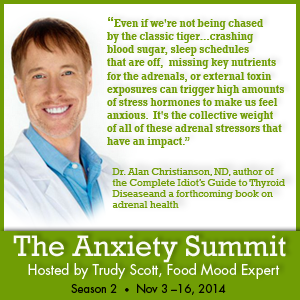
So even if we’re not being chased by the classic tiger if our blood sugar’s crashing, that, by itself, can trigger high amounts of stress hormones to make us feel more anxious, or if our sleep schedules have been thrown off, or if we’re missing some key nutrients that are needed by the adrenal glands, or if we’ve got a high amount of some external toxin in our body. All these separate things – and it can also be thought of that it’s not just a factor, but it’s the collective weight of all of those adrenal stressors. It’s how much we’ve got pushing those glands off at any given point in time that makes us more or less apt to have anxiety symptoms.

So caffeine is a stimulant, and what it does specifically is it causes our body to take all of our stored energy. We make something called glycogen. We take good carbs, and we pack them deep into our muscles. We pack them really tight, and we make glycogen out of that. It’s also in our liver. So caffeine causes us to just dump a whole of glycogen out, and it makes this big burst, this big rise in your blood sugar. The same thing would happen if you just drank a full sugar coke. It’s the same phenomenon, the same rise in blood sugar.

Here is a link to the online Adrenal Quiz we talked about. Let us know your score in the comments below.

In this Huffington Post blog called the Top 3 Myths of Adrenal Fatigue he writes how strategically using sunlight is one of the best-documented ways to help restore daily rhythms and heal the adrenals. We discussed some of this in the interview and here is a nice summary:

  1. Within an hour of waking, expose yourself to sunlight or a light box emitting at least 10,000 lux (measure of light intensity). Do not wear sunglasses, do not look directly at the source of light, and get at least a half hour of exposure.
  2. Get low wattage (under 40 watts) red-colored light bulbs for your bedroom. For the last 50 minutes of your day, feel free to read a book our journal, but use no other sources of light or electronics.
  3. In your bedroom, make sure your windows block all outdoor lights and cover any lights on thermostats, or alarm units. Make sure that any lights used to find your way around are colored red.

Here is a link to Dr. Alan Christianson’s book on thyroid disease:

Complete Idiot’s Guide to Thyroid Disease

As we mentioned at the start of the interview, Dr. Christianson has a new book on adrenal health coming out next month! When you register for the free gift he has kindly offered, you’ll also be updated on information about the new book. 

Here is Dr. Christianson’s new book on adrenal health – The Adrenal Reset Diet: Strategically Cycle Carbs and Proteins to Lose Weight, Balance Hormones, and Move from Stressed to Thriving
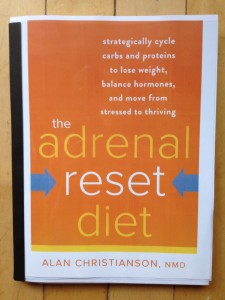
adrenal reset diet 

The free gift is 49 Fresh Recipes for a Stronger Body and More Vibrant You

UPDATE: Season 2 of The Anxiety Summit concluded in November 2014. If you’d like to be on the notification list for the next summit just sign up here www.theAnxietySummit.com

Missed this interview and want this and the other great interviews for your learning library? Purchase the MP3s or MP3s + transcripts + interview highlights and listen when it suits you
Filed Under: Adrenals, Antianxiety, Anxiety and panic, Stress, The Anxiety Summit 2 Tagged With: adrenal reset diet, adrenals, Alan Christianson, anxiety, caffeine, cortisol, the anxiety summit, Trudy Scott

The Anxiety Summit – How thyroid imbalance can cause anxiety and depression

November 8, 2014 By Trudy Scott 6 Comments

Dr. Hyla CassQuote_Anxiety2

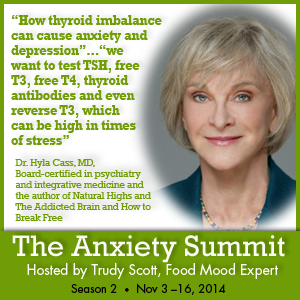
Dr Hyla Cass, MD, author of Eight Weeks to Vibrant Health was interviewed by host of the Anxiety Summit, Trudy Scott, Food Mood Expert and Nutritionist, author of The Antianxiety Food Solution.

How thyroid imbalance can cause anxiety and depression

  • An aside on Abram Hoffer and orthomolecular medicine
  • Thyroid disorders: frequency, causes, symptoms and the mood/anxiety connection
  • Hashimotos thyroiditis and anxiety
  • Hyperthyroidism and anxiety
  • Testing: basal temperature and blood tests
  • Conventional medical treatment
  • Natural thyroid hormones and dietary factors
  • Shoulder stands, rebounding and exercise for stress and anxiety

Hyla and I recently both presented at the Integrative Medicine for Mental Health conference.  While we were these I asked her to do a quick video.  Here it is…

Here is Hyla’s answer to: “What are some of the other factors that can cause us to have a low thyroid function?”

Well, if you’re not converting T4 to T3, you want to go another step deeper, and that is why aren’t you converting T4 to T3? Because that is the active form. So it could be that you’re converting it to inactive form, which is reverse T3. That’s what you do in times of stress. It could be that you’re deficient in certain minerals that are required to convert the T4 to T3. Those are selenium, for example, zinc, magnesium.

We need to have a lot of chemicals in our body, a lot of good chemicals, good vitamins, good minerals for all the chemistry to work properly. So rather than simply replacing thyroid hormones, which is a good idea and it works, but also to find out what’s going on to make your body produce the T3 instead of giving it exogenously, giving external T3. But let’s encourage the body first to make it.

Or your adrenals can be wiped out. You get really stressed and your adrenals are working too hard, and they kind of go on strike. What happens when your adrenals are really exhausted is they’re releasing cortisol. You actually suppress your thyroid, your production of thyroid. You could actually have a low TSH and a low T4 and a low T3. It has to do with your adrenal glands being really tired. What you look for is reverse T3. That’s a good clue that your adrenals are not functioning on all cylinders.

Here is the paper: The prevalence of depression and anxiety disorders in patients with euthyroid Hashimoto’s thyroiditis: a comparative study, discussing the connection between thyroid disorders and anxiety and depression (and treatment resistant depression)

Euthyroid Hashimotos thyroiditis and euthyroid goiter increase predisposition to major depression and anxiety disorders, and thyroid autoimmunity and other thyroid pathologies should be investigated in euthyroid patients with chronic and treatment-resistant complaints.

We discussed hyperthyroidism and psychiatric diagnoses. Here is the paper in the European Journal of Endinocrinology: Hyperthyroidism and psychiatric morbidity: evidence from a Danish nationwide register study:

Hyperthyroid individuals have an increased risk of being hospitalized with psychiatric diagnoses and being treated with antipsychotics, antidepressants, and anxiolytics, both before and after the diagnosis of hyperthyroidism.

Here is the 2014 paper I mentioned – Paradigm shifts in thyroid hormone replacement therapies for hypothyroidism.

Impaired psychological well-being, depression or anxiety are observed in 5-10% of hypothyroid patients receiving levothyroxine, despite normal TSH levels

Here is a link to my interview with Dr. Prousky – Tapering off psychiatric drugs so they don’t ruin your life. It has information about the Canadian Society for Orthomolecular Medicine

Here are two of Hyla’s great books:

Natural Highs: Supplements, Nutrition, and Mind-Body Techniques to Help You Feel Good All the Time

Eight Weeks to Vibrant Health: A Take Charge Plan for Women to Correct Imbalances, Reclaim Energy and Restore Well-Being

Get your free gifts from Dr. Hyla Cass: “Outsmart Your Addiction Quiz” and “Reclaim Your Brain” e-report

If you are not already registered for the Anxiety Summit you can get live access to the speakers of the day here www.theAnxietySummit.com

Filed Under: Antianxiety, Anxiety and panic, Depression, The Anxiety Summit 2, Thyroid health Tagged With: anxiety, depression, hashimoto's thyroiditis, Hyla Cass, hyperthyroidism, the anxiety summit, thyroid, Trudy Scott

The Anxiety Summit – Your hidden mercury burden: A likely root cause of the other root causes of anxiety part 1

November 7, 2014 By Trudy Scott 39 Comments

Kris Homme

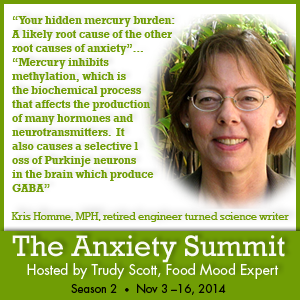
Kris Homme, MPH retired engineer turned science writer was interviewed by host of the Anxiety Summit, Trudy Scott, Food Mood Expert and Nutritionist, author of The Antianxiety Food Solution.

Your hidden mercury burden: A likely root cause of the other root causes of anxiety – part 1

  • chronic mercury poisoning effects at the molecular level: blocks enzymes, displaces minerals
  • chronic mercury poisoning effects the cellular and organ level: mineral transport, destroys barriers like gut and brain, mitochondrial dysfunction
  • effects on hormone imbalance, blood sugar regulation, food sensitivities, GABA/serotonin levels, autoimmunity
  • why mercury toxicity is complicated and hard to test for
  • subjective signs of chronic mercury poisoning

Here are some snippets from our interview:

Mercury inhibits methylation, which is the biochemical process that affects the production of many hormones and neurotransmitters. It also causes a selective loss of Purkinje neurons in the brain which produce GABA.

Mercury is known to concentrate in glands, including the thyroid and blocks the enzyme that converts T4 to T3. Also, your mercury burden is a chronic stressor that seems to provoke symptoms of adrenal fatigue.

Erethism: It’s the mercury personality, and that involves excessive timidity, diffidence, shyness, conflict avoidance, loss of self-confidence, anxiety, a desire to remain unobserved and unobtrusive, a pathological fear of ridicule and explosive loss of temper when criticized. There are different versions of this definition and they’re all fun and they really resonated with me, so that can be interesting to look that up on the internet.

Here is the link to Kris Homme’s publication in Biometals, published earlier this year: New science challenges old notion that mercury dental amalgam is safe

Kris has gathered some additional information into this document – Chronic mercury poisoning: A brief summary of the science

It was lovely to recently meet Kris. After enjoying a nice cup of herbal tea with her, she shared a few things about mercury toxicity in her pretty back garden. Here is one of the videos we did – enjoy!

Here is a link to part 2 of this discussion- what to do and additional resources.

If you are not already registered for the Anxiety Summit you can get live access to the speakers of the day here www.theAnxietySummit.com

Filed Under: Antianxiety, Anxiety and panic, Environment, Mercury, The Anxiety Summit 2, Toxins Tagged With: anxiety, GABA, Kris Homme, mercury, the anxiety summit, toxicity, Trudy Scott

The Anxiety Summit – Our environmental toxin exposures promote anxiety

November 7, 2014 By Trudy Scott 3 Comments

Tom A. Malterre

Tom A. Malterre, MS, CN author of Nourishing Meals: Healthy Gluten-Free Recipes for the Whole Family was interviewed by host of the Anxiety Summit, Trudy Scott, Food Mood Expert and Nutritionist, author of The Antianxiety Food Solution.

Our environmental toxin exposures promote anxiety

  • The drastic spike in ADD/ADHD and autism and increase in anxiety and depression
  • Air pollution as an environmental toxin: concerns and sources (mercury, the brown cloud)
  • Mercury in fish and fish meal for animals
  • EDCs/ Endocrine Disrupting Compounds: BPA, phthalates and anxiety
  • Pesticides and the effects on folates in the colon and the production of serotonin
  • TILT /Toxicant-induced  loss of tolerance
  • What to do: nutritional and lifestyle tips

Here are the quotes from The Journal of Environmental Health paper co-written by Dr. Steven Genuis:

Toxicity and nutritional deficiency states often receive insufficient attention as common source causes of chronic disease in the developed world

it’s evident that a reevaluation of conventional wisdom on the current construct of disease origins should be considered

Here are some snippets from our interview:

Now 74 billion pounds of chemicals are being imported or produced in the United States every single day, that doesn’t include pharmaceuticals, it doesn’t include fuels and food additives. It doesn’t include some of the primary things like pesticides that we’re exposed to on a daily basis so that number is conservative and still, to me, it’s completely and totally overwhelming

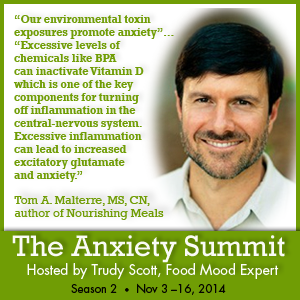
Excessive levels of chemicals like BPA can inactivate Vitamin D which is one of the key components for turning off inflammation in the central-nervous system. Excessive inflammation can lead to increased excitatory glutamate and anxiety.

Here is the 2012 study co-authored by Stephen Genuis: Human Excretion of Bisphenol A: Blood, Urine, and Sweat (BUS) Study

Biomonitoring of BPA through blood and/or urine testing may underestimate the total body burden of this potential toxicant. Sweat analysis should be considered as an additional method for monitoring bioaccumulation of BPA in humans. Induced sweating appears to be a potential method for elimination of BPA.

The Environmental Working Group SkinDeep site is a great resource for checking out safe cosmetics

Here is some of the research on Vitamin D and inflammation that is being conducted by Colleen Hayes and colleagues

If you are interested in learning more about broccoli’s superhero powers, watch Tom’s TED talk here on YouTube! “Broccoli – the DNA whisperer”


Cauliflower is also a good source of sulforaphane and here is a yummy Coconut lemon garlic cauliflower recipe from one of Tom’s books Nourishing Meals: Healthy Gluten-Free Recipes for the Whole Family.

If you are not already registered for the Anxiety Summit you can get live access to the speakers of the day here www.theAnxietySummit.com

Filed Under: Antianxiety, Detoxification, Environment, The Anxiety Summit 2, Toxins Tagged With: air pollution, anxiety, BPA, Endocrine Disrupting Compounds, environment, the anxiety summit, Tom Malterre, toxins

The Anxiety Summit – Conquering those yeastie beasties (candida) once and for all

November 6, 2014 By Trudy Scott 43 Comments

Mikell Suzanne

Dr Mikell S. Parsons, DC. Certified Clinical Nutritionist was interviewed by host of the Anxiety Summit, Trudy Scott, Food Mood Expert and Nutritionist, author of The Antianxiety Food Solution.

Conquering those yeastie beasties (candida) once and for all

  • Yeastie beasties/ candida: what it is and how common it is
  • How to assess if you have it and symptoms of overgrowth
  • Why craving sugar is a HUGE sign of a yeast overgrowth
  • How yeast can be a cause of weight gain
  • How do we get it and is it contagious
  • Protocols for getting rid of the yeastie beasties
  • Methylation and mercury toxicity and candida?

Here are some snippets from our interview:

We’ve got a lot of different microbes in the gut, and we’re supposed to have them, but they’re all supposed to be in the right balance. It’s when the body gets out of balance, yeast is opportunistic. I tell my patients yeast is like a covert spy. It’s laying in the background, doing its thing, acting like everything is cool until the body gets out of balance. And then it can just grow like crazy. And that’s when people start to get symptoms. So we’re all supposed to have it, but the question is will your body provide the opportunity for yeast to kind of take over.

I’ve found it in people who may not have had antibiotics in the last five years or so. But they’re eating a lot of food that is higher in sugar, and they’re not eating vegetables and even good sources of protein. So if you coat your body from the inside with a lot of sugar, that candida starts to kick up their heels, and it’s like a fire. If you want a fire to build, keep putting wood on the fire. If you want to put the fire out, you take the wood away and you cover it with water.

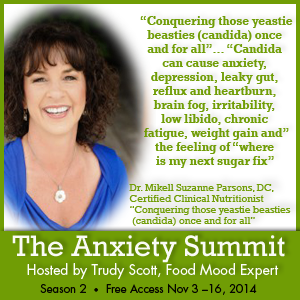
Candida can cause anxiety, depression, leaky gut, reflux and heartburn, brain fog, irritability, low libido, chronic fatigue, weight gain and the feeling of where is my next sugar fix.

Here is the 2013 study we discussed: Could yeast infections impair recovery from mental illness? A case study using micronutrients and olive leaf extract for the treatment of ADHD and depression.

Micronutrients are increasingly used to treat psychiatric disorders including attention-deficit/hyperactivity disorder (ADHD), mood disorders, stress, and anxiety. However, a number of factors influence optimal response and absorption of nutrients, including the health of the gut, particularly the presence of yeast infections, such as Candida. As part of a wider investigation into the impact of micronutrients on psychiatric symptoms, many participants who experienced a yeast infection during their treatment showed a diminished response to the micronutrients. One case was followed systematically over a period of 3 y with documentation of deterioration in psychiatric symptoms (ADHD and mood) when infected with Candida and then symptom improvement following successful treatment of the infection with olive leaf extract (OLE) and probiotics.

You can get a copy of her fun and educational video here Sexy from the Inside Out: The Art of Poop.

If you are not already registered for the Anxiety Summit you can get live access to the speakers of the day here www.theAnxietySummit.com

Filed Under: Anxiety and panic, Candida, Sugar and mood, The Anxiety Summit 2 Tagged With: anxiety, candida, Mikell Parsons, sugar craving, the anxiety summit, Trudy Scott, yeast

The Anxiety Summit – The hidden master organ: Why treating your liver is fundamental to anxiety and depression

November 6, 2014 By Trudy Scott 32 Comments

AmeetAggarwal

Dr. Ameet Aggarwal ND psychotherapist and author of Feel Good: Easy Steps to Health and Happiness was interviewed  by host of the Anxiety Summit, Trudy Scott, Food Mood Expert and Nutritionist, author of The Antianxiety Food Solution.

The hidden master organ: Why treating your liver is fundamental to anxiety and depression

  • Why the liver is the hidden master organ and defining a sluggish liver
  • The role of lactate and the liver and how this contributes to anxiety
  • How the liver affects thyroid hormones
  • Dietary factors that improve the liver and the ones that make it more sluggish
  • A form of breathing that massages the liver
  • Homeopathics, antioxidants and herbs for a sluggish liver
  • The benefits of using a castor oil pack
  • The importance of organic psychotherapy, family constellations, de-stressing, meditation, and exercise

Here are some snippets from our interview:

We call the liver the master organ because it’s really responsible for most of the functions in your body, including blood purification, detoxification of drugs and toxins, and also detoxifies the toxins that are produced by your body itself. The liver also creates a lot of enzymes, produces bile, so it’s responsible for a lot of your digestion, hormone production, protein production, and it also helps with blood sugar storage and regulation. Not only that, it helps with immune cell activation and storage of vitamins and iron.

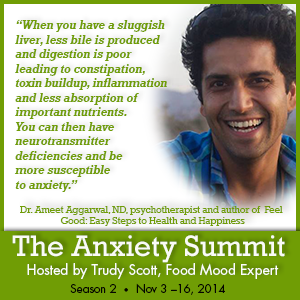
When you have a sluggish liver, less bile is produced and digestion is poor leading to constipation, toxin buildup, inflammation and less absorption of important nutrients. You can then have neurotransmitter deficiencies and be more susceptible to anxiety.

Your liver also controls hormones, so if your liver is imbalanced, you will see a progesterone deficiency and usually estrogen dominance. As you know, Trudy, progesterone deficiency directly affects the function of GABA in your brain, and so with liver qi stagnation, leading to progesterone deficiency, we will see increased levels of anxiety.

Here is the Neuropsychopharmacology paper called Neural pathways underlying lactate-induced panic where they connected high lactate levels to panic attacks. We discussed how sugar, alcohol, caffeine, food sensitivities, low levels of niacin and vitamins B6 may contribute to elevated levels of lactate in the blood.

Here is the paper that addresses the liver-thyroid connection: The relationship between the thyroid gland and the liver. Basically, thyroid hormones are processed by the liver. Some of the conversion of T4 into active T3, which is a thyroid hormone, requires healthy liver function.

Ameet shared this at the end of our interview and I want to share it here because I’m inspired by what Ameet is doing, because I love Africa and Kenya (my husband and I honey-mooned there) and because I’d love to inspire you to get involved and consider a trip to Kenya (why not!):

I actually live at the bottom of Mount Kenya right on the equator, a little town called Nanyuki. My dream was to come back to Kenya after Canada to start mobile clinics for remote communities and supervise students and doctors from around the world, which I started through a program called FIMAFRICA/Foundation for Integrated Medicine in Africa. Basically, we go to remote villages that don’t have medical services and treat them for chronic diseases or acute diseases using naturopathic medicine, mainly homeopathic medicine, which works really well, because a lot of these communities suffer from just a lot of chronic disease but all they’re given is antibiotics or antimalarials, which don’t necessarily treat the root cause of the issue. So, they love homeopathy because a lot of chronic disease is disappearing, and they really notice the difference between the two types of medicine. So it’s my passion, and yeah, I hope to continue doing it for the rest of my life. My aim is hopefully one day to sell a million copies of my book and just do mobile clinics all day.

Watch this short video of Ameet talking about it and then tell me you’re not excited about the idea of going to Africa and getting involved!

If you want to help, check out the FIMAFRICA site above, contact him about going there and volunteering or buy a few copies of his great book Feel Good: Easy Steps to Health and Happiness

Here is a nice video of Ameet giving an overview of Feel Good

And get your free chapters from the Feel Good book (on emotions, better sex and liver health)

If you are not already registered for the Anxiety Summit you can get live access to the speakers of the day here www.theAnxietySummit.com

Filed Under: Anxiety and panic, Detoxification, Giving back, The Anxiety Summit 2 Tagged With: Ameet Aggarwal, anxiety, breathing, castor oil pack, Feel Good, liver, the anxiety summit, Trudy Scott

  • « Go to Previous Page
  • Page 1
  • Interim pages omitted …
  • Page 124
  • Page 125
  • Page 126
  • Page 127
  • Page 128
  • Interim pages omitted …
  • Page 159
  • Go to Next Page »

Primary Sidebar

NEW! GABA QuickStart Homestudy (with special intro pricing)

gaba quickstart homestudy

Free Report

9 Great Questions Women Ask about Food, Mood and their Health

You'll also receive a complimentary subscription to my ezine "Food, Mood and Gal Stuff"


Connect with me

Popular Posts

  • Amino Acids Mood Questionnaire from The Antianxiety Food Solution
  • The Antianxiety Food Solution Amino Acid and Pyroluria Supplements
  • Pyroluria Questionnaire from The Antianxiety Food Solution
  • Collagen and gelatin lower serotonin: does this increase your anxiety and depression?
  • Tryptophan for the worry-in-your-head and ruminating type of anxiety
  • GABA for the physical-tension and stiff-and-tense-muscles type of anxiety
  • The Antianxiety Food Solution by Trudy Scott
  • Seriphos Original Formula is back: the best product for anxiety and insomnia caused by high cortisol
  • Am I an anxious introvert because of low zinc and vitamin B6? My response to Huffington Post blog
  • Vagus nerve rehab with GABA, breathing, humming, gargling and key nutrients

Recent Posts

  • What do I use instead of Seriphos to help lower high cortisol that is affecting my sleep and making me anxious at night?
  • BeSerene™ GABA/theanine cream eases severe muscle tension in her neck/shoulders, prevents her bad headaches and quells her anxiety
  • How the correct approach, dose and sublingual use of GABA can be calming and not cause a flushed and itchy face and neck
  • The amino acid glutamine improves low mood by addressing gut health, and it has calming effects too
  • Flight anxiety with heightened breath, physical tension and also fearing the worst (the role of low GABA and low serotonin)

Categories

  • 5-HTP
  • AB575
  • Addiction
  • ADHD
  • Adrenals
  • Alcohol
  • Allergies
  • Alzheimer's disease
  • Amino Acids
  • Anger
  • Antianxiety
  • Antianxiety Food Solution
  • Antidepressants
  • Anxiety
  • Anxiety and panic
  • Autism
  • Autoimmunity
  • benzodiazapines
  • Bipolar disorder
  • Books
  • Caffeine
  • Cancer
  • Candida
  • Children/Teens
  • Collagen
  • Cooking equipment
  • Coronavirus/COVID-19
  • Cravings
  • Depression
  • Detoxification
  • Diabetes
  • Diet
  • DPA/DLPA
  • Drugs
  • EFT/Tapping
  • EMF
  • EMFs
  • Emotional Eating
  • Endorphins
  • Environment
  • Essential oils
  • Events
  • Exercise
  • Fear
  • Fear of public speaking
  • Fertility and Pregnancy
  • Fish
  • Food
  • Food and mood
  • Functional neurology
  • GABA
  • Gene polymorphisms
  • General Health
  • Giving
  • Giving back
  • Glutamine
  • Gluten
  • GMOs
  • Gratitude
  • Gut health
  • Heart health/hypertension
  • Histamine
  • Hormone
  • Hyperparathyroidism
  • Hypoglycemia
  • Immune system
  • Inflammation
  • Insomnia
  • Inspiration
  • Introversion
  • Joy and happiness
  • Ketogenic diet
  • Lithium orotate
  • Looking awesome
  • Lyme disease and co-infections
  • MCAS/histamine
  • Medication
  • Men's health
  • Mental health
  • Mercury
  • Migraine
  • Mold
  • Movie
  • MTHFR
  • Multiple sclerosis
  • Music
  • NANP
  • Nature
  • Nutritional Psychiatry
  • OCD
  • Osteoporosis
  • Oxalates
  • Oxytocin
  • Pain
  • Paleo
  • Parasites
  • Parkinson’s disease
  • PCOS
  • People
  • PMS
  • Postpartum
  • PTSD/Trauma
  • Pyroluria
  • Questionnaires
  • Real whole food
  • Recipes
  • Research
  • Schizophrenia
  • serotonin
  • SIBO
  • Sleep
  • Special diets
  • Sports nutrition
  • Stress
  • Sugar addiction
  • Sugar and mood
  • Supplements
  • Teens
  • Testimonials
  • Testing
  • The Anxiety Summit
  • The Anxiety Summit 2
  • The Anxiety Summit 3
  • The Anxiety Summit 4
  • The Anxiety Summit 5
  • The Anxiety Summit 6
  • Thyroid
  • Thyroid health
  • Toxins
  • Tryptophan
  • Tyrosine
  • Uncategorized
  • Vegan/vegetarian
  • Women's health
  • Yoga

Archives

  • October 2025
  • September 2025
  • August 2025
  • July 2025
  • June 2025
  • May 2025
  • April 2025
  • March 2025
  • February 2025
  • January 2025
  • November 2024
  • October 2024
  • September 2024
  • August 2024
  • July 2024
  • June 2024
  • May 2024
  • April 2024
  • March 2024
  • February 2024
  • January 2024
  • December 2023
  • November 2023
  • October 2023
  • September 2023
  • August 2023
  • July 2023
  • June 2023
  • May 2023
  • April 2023
  • March 2023
  • February 2023
  • January 2023
  • December 2022
  • November 2022
  • October 2022
  • September 2022
  • August 2022
  • July 2022
  • June 2022
  • May 2022
  • April 2022
  • March 2022
  • February 2022
  • January 2022
  • December 2021
  • November 2021
  • October 2021
  • September 2021
  • August 2021
  • July 2021
  • June 2021
  • May 2021
  • April 2021
  • March 2021
  • February 2021
  • January 2021
  • December 2020
  • November 2020
  • October 2020
  • September 2020
  • August 2020
  • July 2020
  • June 2020
  • May 2020
  • April 2020
  • March 2020
  • February 2020
  • January 2020
  • December 2019
  • November 2019
  • October 2019
  • September 2019
  • August 2019
  • July 2019
  • June 2019
  • May 2019
  • April 2019
  • March 2019
  • February 2019
  • January 2019
  • December 2018
  • November 2018
  • October 2018
  • September 2018
  • August 2018
  • July 2018
  • June 2018
  • May 2018
  • April 2018
  • March 2018
  • February 2018
  • January 2018
  • December 2017
  • November 2017
  • October 2017
  • September 2017
  • August 2017
  • July 2017
  • June 2017
  • May 2017
  • April 2017
  • March 2017
  • February 2017
  • January 2017
  • December 2016
  • November 2016
  • October 2016
  • September 2016
  • August 2016
  • July 2016
  • June 2016
  • May 2016
  • April 2016
  • March 2016
  • February 2016
  • January 2016
  • December 2015
  • November 2015
  • October 2015
  • September 2015
  • August 2015
  • July 2015
  • June 2015
  • May 2015
  • April 2015
  • March 2015
  • February 2015
  • January 2015
  • December 2014
  • November 2014
  • October 2014
  • September 2014
  • August 2014
  • July 2014
  • June 2014
  • May 2014
  • April 2014
  • March 2014
  • February 2014
  • January 2014
  • December 2013
  • November 2013
  • October 2013
  • September 2013
  • August 2013
  • July 2013
  • June 2013
  • May 2013
  • April 2013
  • March 2013
  • February 2013
  • January 2013
  • December 2012
  • November 2012
  • October 2012
  • August 2012
  • July 2012
  • June 2012
  • May 2012
  • April 2012
  • March 2012
  • February 2012
  • January 2012
  • December 2011
  • November 2011
  • October 2011
  • September 2011
  • August 2011
  • July 2011
  • June 2011
  • May 2011
  • April 2011
  • March 2011
  • February 2011
  • January 2011
  • December 2010
  • October 2010
  • September 2010
  • July 2010
  • May 2010
  • April 2010
  • March 2010
  • February 2010
  • January 2010
  • November 2009

Share the knowledge!

The above statements have not been evaluated by the Food and Drug Administration. Products listed in this website are not intended to diagnose, treat, cure or prevent any disease.

The information provided on this site is for informational and educational purposes only and is not intended as a substitute for advice from your physician or other health care professional. You should consult with a healthcare professional before starting or modifying any diet, exercise, or supplementation program, before taking or stopping any medication, or if you have or suspect you may have a health problem.


Copyright © 2026 Trudy Scott. All Rights Reserved. | Privacy | Terms and Conditions | Refund Policy | Medical Disclaimer

Free Report

9 Great Questions Women Ask about Food, Mood and their Health

You’ll also receive a complimentary subscription to my ezine “Food, Mood and Gal Stuff”