• Skip to primary navigation
  • Skip to main content
  • Skip to primary sidebar

everywomanover29 blog

Food, Mood and Women's Health – Be your healthiest, look and feel great!

  • Blog
  • About
  • Services
  • Store
  • Resources
  • Testimonials
  • The Book
  • Newsletter
  • Contact
  • Search this site

Stress

The Anxiety Summit – Anxiety: The Stressed and Toxic Gut

June 5, 2016 By Trudy Scott 43 Comments

Josh Axe_Anxiety4

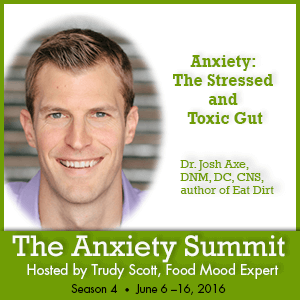
Dr. Josh Axe, DNM, DC, CNS, author of Eat Dirt, is interviewed on the Anxiety Summit by host of the Anxiety Summit, Trudy Scott, Food Mood Expert and Nutritionist, author of The Antianxiety Food Solution.

Anxiety: The Stressed and Toxic Gut

  • An overview of leaky gut, the causes and the 5 gut types
  • Symptoms of the stressed gut and how it impacts the adrenals
  • Leaky gut and glutamine as a fuel source
  • Healing licorice root, rhodiola and ashwaganda
  • How frankincense fights inflammation and protects the tight junctions of the gut
  • Signs of a toxic gut, soil-based organisms and what we can learn from the Yanomami tribe

Here are some gems from our interview:

So imagine your intestines as a net or your gut lining is a net and it’s sort of the barrier in between your intestines and blood stream. If that little net, if those little holes get tears in them then things that are too large start passing into your bloodstream such as undigested food particles such as gluten, toxins, bad bacteria. When those get into the bloodstream that sets off an immune response in the body and really causes system wide inflammation. And just to let you know, I want to go over some of the biggest warning signs that someone has leaky gut, which you’ll see these were often times anxiety and toxicity and other issues, but bloating and gas are big warning signs that you have leaky gut. Any type of food sensitivity, if you don’t tolerate certain foods like gluten that probably means you have leaky gut. Thyroid conditions such as Hashimoto’s thyroiditis, adrenal fatigue, joint pain, headaches, skin issues like rosacea, acne, eczema, psoriasis, digestive problems of any sort. And then even especially depression and anxiety, any of these issues, bipolar, those are all warning signs that somebody has leaky gut.

We discuss glutamine for healing a leaky gut and Dr. Axe mentioned his blog on the topic: L-Glutamine Benefits Leaky Gut & Metabolism

L-glutamine is the most abundant amino acid in the bloodstream and it makes up 30-35 percent of the amino acid nitrogen in your blood. It’s actually known as a conditionally essential amino acid because your body uses it in large amounts.

The most common uses of glutamine powder were to meet the following goals: to lose weight fast, burn fat and build muscle. And while that remains the case, science is now showing that L-glutamine benefits are abundant – and that this amino acid is especially helpful in treating leaky gut and improving your overall health.

We talk about the benefits of licorice root for both the gut and the adrenals:

Licorice root is another one of those herbs that’s used in Chinese medicine and it’s very effective for many things, with studies showing it helps the stomach, ulcers specifically.  Other studies show that it actually helps with soothing the intestinal tract.  But for the most part it’s also used as an adaptogenic herb.  Many of us have heard of adaptogens such as ashwaganda, rhodiola, ginseng, certain mushrooms such as cordyceps have been labeled adaptogenic, well licorice root works in the same way.  It really helps your body better adapt and deal with stress.  We know stress can be very, very hard on the intestines as well as the stomach. It can be very hard on your digestive system.  So licorice root is pretty amazing.  It’s an herb that really helps in sort of soothing inflammation, but it also works as an adaptogen to lower stress levels, which is harming the gut.  So really as a two pronged approach and why it’s so effective at both helping the digestive system as well as supporting the adrenal glands, thyroid and overall hormones.

Here are some links to some research:

  • Breaking down the barriers: the gut microbiome, intestinal permeability and stress-related psychiatric disorders.

The emerging links between our gut microbiome and the central nervous system (CNS) are regarded as a paradigm shift in neuroscience with possible implications for not only understanding the pathophysiology of stress-related psychiatric disorders, but also their treatment.

  • Anti-inflammatory effect of roasted licorice extracts on lipopolysaccharide-induced inflammatory responses in murine macrophages.
  • Boswellia serrata Preserves Intestinal Epithelial Barrier from Oxidative and Inflammatory Damage


Dr. Josh Axe is author of a new book called  Eat Dirt: Why Leaky Gut May Be the Root Cause of Your Health Problems and 5 Surprising Steps to Cure It
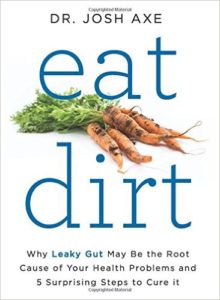
josh axe eat dirt


Here is the link to a gift from Josh Axe The King’s Medicine Cabinet eBook:  A complete guide on essential oils and their history, uses, cures, and recipes that will transform your health forever!

And his Eat Dirt online gut quiz [disabling this until I hear back from them]

If you are not already registered for the Anxiety Summit you can get live access to the speakers of the day here: www.theAnxietySummit.com

Missed this interview or can’t listen live? Or want this and the other great interviews for your learning library? Purchase the MP3s or MP3s + transcripts and listen when it suits you.

You can find your purchasing options here.: Anxiety Summit Season 1, Anxiety Summit Season 2, Anxiety Summit Season 3, and Anxiety Summit Season 4.

Filed Under: Adrenals, Events, Stress, The Anxiety Summit 4 Tagged With: anxiety, anxiety summit, josh axe, toxic gut, Trudy Scott

Alzheimer’s disease, inflammation, stress and candida: Dr. Rudy Tanzi at IHS 2016

March 4, 2016 By Trudy Scott 17 Comments

ihs-1

I spent last week in New York city at the Integrative Healthcare Symposium Annual Conference listening to some truly brilliant speakers and would like to share some highlights from the wonderful presentation by Rudolph Tanzi, PhD : What Can Alzheimer’s Disease Teach Us About the Brain, Mind, and Self?

Dr. Rudolph Tanzi is the Vice-Chair of Neurology and Director of the Genetics and Aging Research Unit at Massachusetts General Hospital, and serves as the Joseph P. and Rose F. Kennedy Professor of Neurology at Harvard Medical School. 

Dr. Tanzi co-discovered three of the first Alzheimer’s disease genes and has identified several others in the Alzheimer’s Genome Project, which he directs. He also discovered the Wilson’s disease gene and participated in the discovery of several other neurological disease genes.

The focus of his research is in identifying and characterizing the genetic and environmental factors involved in neurodegeneration in Alzheimer’s disease and autism.

Dr. Tanzi shared this fundamental information:

  • the Alzheimer’s disease pathology begins in all of us after the age of 40
  • two thirds of those with Alzheimer’s disease are female
  • and women are especially susceptible after menopause  
  • head injuries increase the risk
  • these genes predispose us to the disease: APP, PSEN1, PSEN2 and APOE

Most of the above apply to me (I know I have the APOE gene) but I’m less concerned about Alzheimer’s disease that I have ever been and this is based on what was shared later in his presentation.

ihs-2

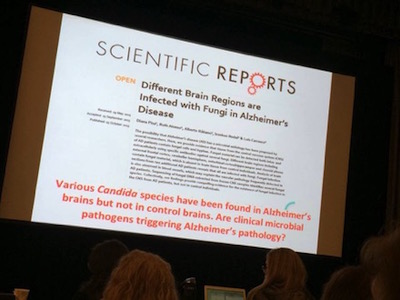
Dr. Tanzi’s whole presentation was fascinating and the section on fungi/candida, although concerning, was promising because we can do something about candida. This is the paper he shared: Different Brain Regions are Infected with Fungi in Alzheimer’s Disease with this question: Are clinical microbial pathogens triggering Alzheimer’s disease?

ihs-3

It was really interesting to hear that

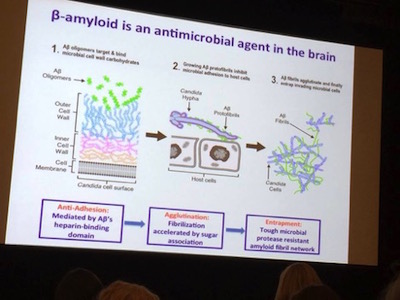
  • the amyloid is an antimicrobial agent in the brain and provides protection against the candida/fungi
  • and that that the amyloid plaques also provide protection against Borellia, periodontal bugs, Herpes Simplex 1 and other infectious agents

What was most encouraging was this:

  • your brain can handle tons of amyloid plaques and tangles and yet not develop Alzheimer’s disease.
  • the big deciding factor seems to be inflammation
  • “resilient brains” had plaques, no inflammation and no Alzheimer’s disease!

So these are some of my thoughts:

  • Tanzi did share that many people with Alzheimer’s disease suffer from depression and agitation. Here is a paper I retrieved; it does state that depression is worse when benzodiazepines have been used and we know benzodiazepines have been found to contribute to dementia so we need to consider this too.
  • We also know anxiety is a factor in Alzheimer’s disease and this study “showed that anxiolytic behavior…is predominantly due to cox-2 mediated neuroinflammation induced neurodegeneration in the brain.”
  • Some of the same underlying causes of anxiety and depression seem to be underlying factors when it comes to Alzheimer’s disease – like candida and inflammation – and there is something we can do about this. We can get rid of the candida and can use natural methods to reduce inflammation starting with eating an anti-inflammatory diet with wild oily fish, no gluten, no sugar and reduced carbs.    

Dr. Tanzi also shared these for preventing Alzheimer’s disease:

  • Social engagement (this is why addressing pyroluria/social anxiety is important – interestingly zinc, vitamin B6 and evening primrose oil are anti-inflammatory)
  • Learning new things
  • Reducing emotional stress and deep sleep (this is where my work with the amino acids comes in – interestingly I found this study that discusses how enhancing GABA signaling can prevent cognitive decline in mice with the apoE4 gene)
  • Exercise (also so beneficial in anxiety and depression)
  • And nutrients like ashwaganda and cat’s claw (to address stress and kill infections/candida)

Clearly I have more reading and researching to do! As you can tell I love putting all the puzzle pieces together.

I’ve also got more to share from Dr. Tanzi’s talk and will do so next week. Stay tuned for more information on his “three- dimensional human stem cell-derived neural culture system that recapitulates Alzheimer’s disease plaque and tangle pathology.”

Feel free to ask questions and share your thoughts in the comments section.


Filed Under: Candida, Events, Inflammation, Stress Tagged With: Alzheimer’s disease, candida, Dr. Rudy Tanzi, Inflammation, integrative healthcare symposium, stress

Barefoot on the grass with The Urban Monk: an interview with Dr. Pedram Shojai

February 3, 2016 By Trudy Scott 28 Comments

urban-monk
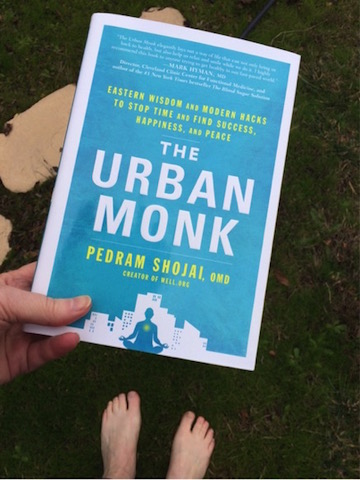
Barefoot on the grass with my copy of The Urban Monk

Dr. Pedram Shojai is the author of newly released book, The Urban Monk: Eastern Widsom and Modern Hacks to Stop Time and Find Success, Happiness and Peace.  

I recently had the opportunity to interview him and would love to share that wonderful interview with you (see the audio link below).

Dr. Shojai is a Doctor of Oriental Medicine and a Qi Gong master who has studied Kung Fu and Tai Chi for decades. He climbs big mountains and skies down them, he has two adorable kids, a delightful wife and is happy to be a family man. He’s the founder of Well.Org and the producer of the must-see movies “Vitality” and “Origins”.

Pedram was a Taoist monk for four years and decided his place was back here in the real world where he feels he can make a bigger impact:

Pedram has discovered a way for us to harness the calm of a Zen master in the midst of our hectic lives, showing how we can bring the centeredness of the monastery into our highly stimulating and demanding careers, families, and environments in a grounded way!

Here are some of the topics we discussed during our interview:

  • To merely survive is not enough. We want to thrive.
  • Stress impacts us physically and cuts off blood flow to the prefrontal cortex of our brains impacting digestion, reasoning, weight
  • A great “shake it out” de-stressing exercise
  • Sleep: “Our ancestors got a lot more of it and we’re suffering without it.” He shares a great tip for helping you get to sleep and here is his clip from the Dr. Oz show
  • How we are disconnected from nature and how our relationship with nature helps charge our batteries and soothe our souls … “the energy of nature is so simple and pure”
  • Why we want to kick off our shoes and put our feet on the grass

Here is an example of the simple and yet profound wisdom he shares in the book … on why we want to go barefoot:

Cutting off the flow of vital qi to your body is a bad idea. This happens as we cut off our contact with the natural world. We all get stuck doing it at times, and too much of it makes us weak and sick. Taking some time to reconnect with the planet and its free flow of limitless electrons is key. Take off your shoes and touch the earth. Doing so on raw earth is best. Grass, gravel, sand, and seawater are powerful ways to connect back into the “life soup” and let your body heal through the vital exchange of energy it needs (and direly misses) with the earth. The more the merrier on this. Some people take it to the extreme and go barefoot everywhere; I don’t advise this simply because walking around in urban environments subjects us to a barrage of petrochemicals and nasty agents that are not natural and have negative health impacts on us. We absorb things through our skin. We drag things into our homes with our feet. That’s why in traditional Asian cultures, shoes are left at the door and the house is to remain pure and clean. I’d say use shoes (with leather soles if you can) while walking the streets and go barefoot in nature, your yard, and your own house all the time.

Here is the whole interview.  (Click the link to listen)

Get a copy of the book if it sounds like you need help with some great ways for becoming an Urban Monk so you can reduce stress and anxiety and be a happier, healthier and more peaceful you!

Or sign up here for additional resources and Pedram’s upcoming Urban Monk 7-Day Reboot program if you feel you could do with wisdom and guidance from the Urban Monk himself, plus all the visuals of the videos.

I’ve also got 2 copies of the book for a giveaway so check out the table of contents (with the look inside Amazon feature) and share in the comments why you’d like to be one of the winners. Be sure to share at least one topic from the book that you think sounds really interesting. I’ll announce the winners in the ezine on Friday.

2/5/16 UPDATE: Thanks for participating and commenting – the winners are Michele and JoAnn. We’ll contact you to get a mailing address and get a copy of the book to each of you! 

If you missed out I encourage you to still check out the table of contents (with the look inside Amazon feature) and get the book if it feels like a fit for you. Check out the comments below to be inspired further.

Enjoy and lets us know what you think?

I’d also love to hear if you enjoy going barefoot in nature?

Filed Under: Anxiety and panic, Books, Stress Tagged With: anxiety, Dr. Pedram Shojai, happiness, stress, the urban monk

The Anxiety Summit – How to use MindBody Medicine to Reverse Anxiety in 3 Minutes or Less

May 16, 2015 By Trudy Scott 8 Comments


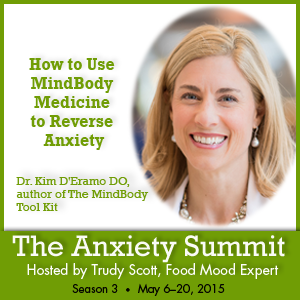
Dr. Kim D’Eramo, DO, author of The MindBody Tool Kit, is interviewed by host of the Anxiety Summit, Trudy Scott, Food Mood Expert and Nutritionist, author of The Antianxiety Food Solution.

How to use MindBody Medicine to Reverse Anxiety in 3 Minutes or Less

  • Why anxiety leads to us developing diseases like heart disease
  • What is MindBody medicine
  • How do we use MindBody medicine to reverse anxiety, depression, pain or other symptoms instantly
  • MindBody tools like the instant elevation technique
  • The broccoli yoga pose

Dr. Kim shared how at osteopathic school you learn how the body and mind are related and how that has a direct impact on health and the body’s ability to heal itself.

Here is the medical student mindfulness study I mentioned: An Adapted, Four-Week Mind-Body Skills Group for Medical Students: Reducing Stress, Increasing Mindfulness, and Enhancing Self-Care.

these findings suggest that a brief, voluntary mind-body skills workshop specifically adapted for medical students is feasible, acceptable, and effective for reducing stress, increasing mindfulness, and enhancing student self-care

Dr. Kim shared about women she has worked with whose kids have struggled with anxiety or behavior problems and how having the mom do the mindbody techniques led to the kids no longer having night-terrors and anxiety. I found this section so fascinating.

Dr Kim shared this:

Most of us live in the sympathetic state of fight or flight and that means your stress hormones are high all the time. You can’t metabolize nutrients, you gain weight, you develop allergies and you no longer have the big picture ability to make little changes to make your life easier, You’re in survival mode and not relaxation mode. This leads to heart disease, inflammation, anxiety and it affects your thyroid and overall hormonal balance.

Here is the Brazilian civil servant heart disease mood study I mentioned: The association between mood and anxiety disorders, and coronary heart disease in Brazil

The association with CHD [coronary heart disease] is greatest in those with psychiatric comorbidity, while associations were also observed in MDD [major depressive disorder] and generalized anxiety disorder without comorbidity


Dr Kim says this about the broccoli pose (don’t you just love that name?):

According to my friend, Matt Sanford (he trains yogis all over the world) this simple yoga pose is like “Broccoli for your emotional body.” You literally cannot feel depressed after being in this pose.

I recommend it daily for 5 minutes. Life-changing!

It decreases stress hormones, and inflammation that causes disease, AND it’s shown to increase “healthy hormones” like endorphins and oxytocin, that make you feel a sense of confidence and self-worth

What mindbody tool have you used today?  I just did the broccoli pose and loved it!

If you are not already registered for the Anxiety Summit you can get live access to the speakers of the day here: www.theAnxietySummit.com

Missed this interview or can’t listen live? Or want this and the other great interviews for your learning library? Purchase the MP3s or MP3s + transcripts and listen when it suits you.

You can find your purchasing options here: Anxiety Summit Season 1, Anxiety Summit Season 2, and Anxiety Summit Season 3.

Filed Under: Antianxiety, Stress, The Anxiety Summit 3, Yoga Tagged With: anxiey, Dr. Kim D’Eramo, the anxiety summit, The MindBody Tool Kit, Trudy Scott, yoga

Pyroluria/social anxiety protocol: why aren’t I getting results? (trouble-shooting checklist)

May 16, 2015 By Trudy Scott 118 Comments

pyroluria social anxiety protocol

How do you trouble-shoot when you score high on the Pyroluria Questionnaire from The Antianxiety Food Solution  or even have a positive pyroluria urine test but you don’t seem to be getting the results you expect?

You still have social anxiety, that inner tension that you push through and deal with, and likely still feel uncomfortable when in large groups. You force yourself to put on the confident brave face. You may wish you could be more like your extrovert friends and actual enjoy socializing and speaking in public/on stage – without the fear and anxiety. You may still not be a big breakfast eater and have morning nausea. You may not yet be having pleasant dreams that you always remember.

(If pyroluria is new to you here is the Pyroluria Questionnaire from The Antianxiety Food Solution and here is a nice summary – Pyroluria, social anxiety, introversion: a summary )

This checklist is a starting point to try and figure out what may be the issue. These are the questions I work through with someone who is working with me one-on-one.

I discussed 21 of these in my interview on season 3 of the Anxiety Summit: Pyroluria, Amino Acids and Anxiety: Troubleshooting when you are not getting results

As you heard during the interview, I added MTHFR and I’ve even added a few more since then. I expect this list to continue to grow.

  1. What form of zinc are you taking and is it free from copper? My favorite is Optizinc (zinc monomethionine) as it’s typically well-absorbed
  2. Have you made sure that there is no copper in your multivitamin or other supplements? (this completes with zinc)
  3. Have you been taking evening primrose oil and if yes, how much? (this enhances zinc absorption)
  4. Did you test your fatty acid levels? What are the results? Did it show a need for GLA (I like evening primrose oil rather than borage oil) and no need for omega-3s (pyrolurics typically don’t need to supplement with omega-3s like fish oil)
  5. What is your alkaline phosphatase (a blood test)? Less than 70 may indicate a need for zinc
  6. Have you done the zinc tally/challenge with zinc sulfate and does it taste like water or does it taste really bad? If you zinc levels are good it should taste really bad
  7. Did you test copper and ceruloplasmin, and if yes, what were the results?
  8. Did you do the pyroluria urine test? What are the results?
  9. What’s your score on the pyroluria questionnaire ? And which symptoms do you have?
  10. What is your score on the introversion questionnaire?
  11. What were your dreams like before starting the protocol and now? How high did you go on the vitamin B6? Did you switch to P5P and/or use a combination of both if needed?
  12. On a scale of 1-10, what was your social anxiety before and now (10 is worst)
  13. What is your stomach acid like? And have you trialed HCl supplements? Tested total protein (in blood)
  14. Do you eat grass-fed red meat (a good source of zinc, iron and omega-3s)?
  15. Do you eat sugar? Refined sugar and processed foods? Or even “healthy” sweeteners such as honey in large quantities? (sugar depletes zinc)
  16. Do you eat large quantities of nuts or bake with nut flours? (the copper in the nuts may be affecting your zinc levels)
  17. Do you have a copper IUD, copper pipes, copper pots? (this may also affect your zinc levels, keeping them low)
  18. Have you done a hair analysis and found high copper or high hidden copper? (this may also affect your zinc levels, keeping them low)
  19. How much and how often do you exercise? What about bikram/hot yoga? (sweating depletes us of zinc)
  20. Have you used any of the amino acids? And seen good results? (this could be a clue that zinc and vitamin B6 are low since they are cofactors for making neurotransmitters such as serotonin, GABA, dopamine)
  21. Do you eat gluten and have a gluten sensitivity? If yes, have you healed your gut? If not, you may have malabsorption issues
  22. Are you completely grain-free? (this may be impacting your vitamin B6 levels)
  23. Do you have amalgams/silver fillings? Did you have them removed and did a mercury detox? Were you tested for heavy metals? (zinc absorption can be blocked by heavy metals – we talked about this in season 2)
  24. Do you have the MTHFR polymorphism? It’s common with pyroluria and this may mean you need higher amounts of the supplements
  25. Do you have high histamine/hisadelia or low histamine/histapenia? Pyrolurics often have one or the other
  26. Are you taking benzodiazapines or have recently quit benzodiazapines? Your unresolved anxiety may be due to this fact (we talked about this in season 1)
  27. Do you have parasites, candida, dysbiosis, SIBO or other digestive issues? These can be considered stresses and pyroluria symptoms are worse under stress. Digestive issues also impact absorption
  28. Do you have Lyme disease or another infection? These can be considered stresses and pyroluria symptoms are worse under stress. The immune system also uses up zinc.
  29. Do you have food sensitivities?  This may contribute to malabsorption.  This can also be considered a stress and pyroluria symptoms are worse under stress
  30. Do you have problems with histamine-containing foods? This can be considered a stress and pyroluria symptoms are worse under stress.  Also, vitamin B6 is a co-factor needed for the DAO enzyme, which is responsible for the degradation of histamine.
  31. Do you have issues with oxalates? This can be considered a stress and pyroluria symptoms are worse under stress. Oxalates can also bind to minerals and lower the levels. For some folks vitamin B6 helps with oxalate issues so the need may be higher.
  32. Have you been/are you exposed to mold and other toxins? These can be considered stresses and pyroluria symptoms are worse under stress. The immune system also uses up zinc.
  33. Do you have low oxytocin levels?  Do you have a genetic variation in the oxytocin receptor gene (OXTR). Oxytocin has been implicated in anxiety, depression and related stress phenotypes
  34. Is your life super-stressful or have you suffered from a recent trauma (or have old unresolved trauma)? Stress and trauma makes pyroluria worse
  35. Do you have adrenal issues? We need good adrenal function for optimal digestion, being able to handle stress and being able to fight off infections/avoid getting parasites and dysbiosis
  36. Do you have hormonal issues – PMS, perimenopausal or menopausal symptoms?  The pyroluria protocol helps and this could be a clue that something is off
  37. Are you on the birth control pill or have used one in the past? Oral contraceptives cause low vitamin B6 and zinc, reduce serotonin levels and increase anxiety.
  38. Are you on any other prescription medications? Many medications deplete B vitamins and zinc.
  39. Do you have vagus nerve issues? Good vagus nerve function is key for digestion, immunity, inflammation, neurotransmitter production and so much more. Also, forcing yourself to socialize when you have pyroluria is stressful and impacts the vagus nerve
  40. Do you have inflammation and/or immunity issues? Vitamin B6 plays a role in reducing inflammation and immune modulation
[August 2021: the above list was updated extensively]


This list is NOT exhaustive and it’s NOT in my book The Antianxiety Food Solution because I gathered this information after the book was published. However, the pyroluria questionnaire, detailed protocol and testing information is in the book. There is an entire chapter on pyroluria.

Keep in mind that most folks do the pyroluria questionnaire, start on the recommended protocol of zinc, vitamin B6 and a copper-free multi and start to see improvements in a week. These can be dramatic improvements for many folks. And many folks see decent improvements in a few weeks and tweak things over the next few weeks before landing on the ideal doses.

This blog is for you if this doesn’t happen.

Did you miss this interview or want this and the other great interviews for your learning library? You can purchase the MP3s or MP3s + transcripts and listen/read when it suits you. You can find your purchasing options here: Anxiety Summit Season 1, Anxiety Summit Season 2, and Anxiety Summit Season 3.

Feel free to share your results in the blog comments and what you figured may be the issue/s for you.

If you tweak something and it helped do let us know too. That way we all help each other.

And feel free to ask questions in the comments too.

Filed Under: Antianxiety, Antianxiety Food Solution, Introversion, MTHFR, Pyroluria, Stress, The Anxiety Summit 3 Tagged With: anxiety, introversion, pyroluria, social anxiety, the anxiety summit, Trudy Scott, vitamin B6, zinc

Calm, a cool new meditation tool to help you with anxiety and stress

May 15, 2015 By Trudy Scott 23 Comments

You heard me mention this new cool online tool called Calm in my Anxiety Summit interview with Dr. Eva Selhub

If you’re working and can’t get out in nature, try this very cool online meditation tool. It’s not nature but may help until you can get into nature.  You can pick what nature scene you like, the background sound and then pick the meditation duration.  I love it!

Of course I love mountains….

online-meditation


Maybe this is the one for you? Just seeing this is calming….

online-meditation2

In this image you actually get to watch and hear the waves …

online-meditation3

The Harvard Medical School newsletter shared this:

Although the practice of meditation is thousands of years old, research on its health benefits is relatively new, but promising. A research review published in JAMA Internal Medicine in January 2014 found meditation helpful for relieving anxiety, pain, and depression. For depression, meditation was about as effective as an antidepressant.

Enjoy! Go to Calm now and use it when your day gets hectic! Use it even when your day isn’t hectic! And do let us know what your favorite image and sound is! Right now mine is the breaking waves.

If you’re looking for other ways to ease your anxiety do check out the amazing speakers offering nutritional solutions on the Anxiety Summit  www.theAnxietySummit.com


Filed Under: Stress, The Anxiety Summit 3 Tagged With: calm, Dr. Eva Selhub, nature, online tool

  • « Go to Previous Page
  • Page 1
  • Page 2
  • Page 3
  • Page 4
  • Page 5
  • Interim pages omitted …
  • Page 7
  • Go to Next Page »

Primary Sidebar

GABA QuickStart Homestudy

gaba quickstart homestudy

Free Report

9 Great Questions Women Ask about Food, Mood and their Health

You'll also receive a complimentary subscription to my ezine "Food, Mood and Gal Stuff"


Connect with me

Popular Posts

  • Amino Acids Mood Questionnaire from The Antianxiety Food Solution
  • The Antianxiety Food Solution Amino Acid and Pyroluria Supplements
  • Pyroluria Questionnaire from The Antianxiety Food Solution
  • Collagen and gelatin lower serotonin: does this increase your anxiety and depression?
  • Tryptophan for the worry-in-your-head and ruminating type of anxiety
  • GABA for the physical-tension and stiff-and-tense-muscles type of anxiety
  • The Antianxiety Food Solution by Trudy Scott
  • Seriphos Original Formula is back: the best product for anxiety and insomnia caused by high cortisol
  • Am I an anxious introvert because of low zinc and vitamin B6? My response to Huffington Post blog
  • Vagus nerve rehab with GABA, breathing, humming, gargling and key nutrients

Recent Posts

  • Her cravings for chips and peanut butter were triggered by stress: GABA ends cravings and reduces physical tension and fear of heights
  • It is truly miraculous to be able to move through life without crippling anxiety and panic
  • GABA and tryptophan combo provide immediate and noticeable relief for tremors and cervical dystonia in just 7 days
  • Red light therapy for back and neck pain, plantar fasciitis and low mood – a complement to the amino acids GABA, DPA and tryptophan
  • What do I use instead of Seriphos to help lower high cortisol that is affecting my sleep and making me anxious at night?

Categories

  • 5-HTP
  • AB575
  • Addiction
  • ADHD
  • Adrenals
  • Alcohol
  • Allergies
  • Alzheimer's disease
  • Amino Acids
  • Anger
  • Antianxiety
  • Antianxiety Food Solution
  • Antidepressants
  • Anxiety
  • Anxiety and panic
  • Autism
  • Autoimmunity
  • benzodiazapines
  • Bipolar disorder
  • Books
  • Caffeine
  • Cancer
  • Candida
  • Children/Teens
  • Collagen
  • Cooking equipment
  • Coronavirus/COVID-19
  • Cravings
  • Depression
  • Detoxification
  • Diabetes
  • Diet
  • DPA/DLPA
  • Drugs
  • EFT/Tapping
  • EMF
  • EMFs
  • Emotional Eating
  • Endorphins
  • Environment
  • Essential oils
  • Events
  • Exercise
  • Fear
  • Fear of public speaking
  • Fertility and Pregnancy
  • Fish
  • Food
  • Food and mood
  • Functional neurology
  • GABA
  • Gene polymorphisms
  • General Health
  • Giving
  • Giving back
  • Glutamine
  • Gluten
  • GMOs
  • Gratitude
  • Gut health
  • Heart health/hypertension
  • Histamine
  • Hormone
  • Hyperparathyroidism
  • Hypoglycemia
  • Immune system
  • Inflammation
  • Insomnia
  • Inspiration
  • Introversion
  • Joy and happiness
  • Ketogenic diet
  • Lithium orotate
  • Looking awesome
  • Lyme disease and co-infections
  • MCAS/histamine
  • Medication
  • Men's health
  • Mental health
  • Mercury
  • Migraine
  • Mold
  • Movie
  • MTHFR
  • Multiple sclerosis
  • Music
  • NANP
  • Nature
  • Nutritional Psychiatry
  • OCD
  • Osteoporosis
  • Oxalates
  • Oxytocin
  • Pain
  • Paleo
  • Parasites
  • Parkinson’s disease
  • PCOS
  • People
  • PMS
  • Postpartum
  • PTSD/Trauma
  • Pyroluria
  • Questionnaires
  • Real whole food
  • Recipes
  • Research
  • Schizophrenia
  • serotonin
  • SIBO
  • Sleep
  • Special diets
  • Sports nutrition
  • Stress
  • Sugar addiction
  • Sugar and mood
  • Supplements
  • Teens
  • Testimonials
  • Testing
  • The Anxiety Summit
  • The Anxiety Summit 2
  • The Anxiety Summit 3
  • The Anxiety Summit 4
  • The Anxiety Summit 5
  • The Anxiety Summit 6
  • Thyroid
  • Thyroid health
  • Toxins
  • Tryptophan
  • Tyrosine
  • Uncategorized
  • Vegan/vegetarian
  • Women's health
  • Yoga

Archives

  • May 2026
  • April 2026
  • October 2025
  • September 2025
  • August 2025
  • July 2025
  • June 2025
  • May 2025
  • April 2025
  • March 2025
  • February 2025
  • January 2025
  • November 2024
  • October 2024
  • September 2024
  • August 2024
  • July 2024
  • June 2024
  • May 2024
  • April 2024
  • March 2024
  • February 2024
  • January 2024
  • December 2023
  • November 2023
  • October 2023
  • September 2023
  • August 2023
  • July 2023
  • June 2023
  • May 2023
  • April 2023
  • March 2023
  • February 2023
  • January 2023
  • December 2022
  • November 2022
  • October 2022
  • September 2022
  • August 2022
  • July 2022
  • June 2022
  • May 2022
  • April 2022
  • March 2022
  • February 2022
  • January 2022
  • December 2021
  • November 2021
  • October 2021
  • September 2021
  • August 2021
  • July 2021
  • June 2021
  • May 2021
  • April 2021
  • March 2021
  • February 2021
  • January 2021
  • December 2020
  • November 2020
  • October 2020
  • September 2020
  • August 2020
  • July 2020
  • June 2020
  • May 2020
  • April 2020
  • March 2020
  • February 2020
  • January 2020
  • December 2019
  • November 2019
  • October 2019
  • September 2019
  • August 2019
  • July 2019
  • June 2019
  • May 2019
  • April 2019
  • March 2019
  • February 2019
  • January 2019
  • December 2018
  • November 2018
  • October 2018
  • September 2018
  • August 2018
  • July 2018
  • June 2018
  • May 2018
  • April 2018
  • March 2018
  • February 2018
  • January 2018
  • December 2017
  • November 2017
  • October 2017
  • September 2017
  • August 2017
  • July 2017
  • June 2017
  • May 2017
  • April 2017
  • March 2017
  • February 2017
  • January 2017
  • December 2016
  • November 2016
  • October 2016
  • September 2016
  • August 2016
  • July 2016
  • June 2016
  • May 2016
  • April 2016
  • March 2016
  • February 2016
  • January 2016
  • December 2015
  • November 2015
  • October 2015
  • September 2015
  • August 2015
  • July 2015
  • June 2015
  • May 2015
  • April 2015
  • March 2015
  • February 2015
  • January 2015
  • December 2014
  • November 2014
  • October 2014
  • September 2014
  • August 2014
  • July 2014
  • June 2014
  • May 2014
  • April 2014
  • March 2014
  • February 2014
  • January 2014
  • December 2013
  • November 2013
  • October 2013
  • September 2013
  • August 2013
  • July 2013
  • June 2013
  • May 2013
  • April 2013
  • March 2013
  • February 2013
  • January 2013
  • December 2012
  • November 2012
  • October 2012
  • August 2012
  • July 2012
  • June 2012
  • May 2012
  • April 2012
  • March 2012
  • February 2012
  • January 2012
  • December 2011
  • November 2011
  • October 2011
  • September 2011
  • August 2011
  • July 2011
  • June 2011
  • May 2011
  • April 2011
  • March 2011
  • February 2011
  • January 2011
  • December 2010
  • October 2010
  • September 2010
  • July 2010
  • May 2010
  • April 2010
  • March 2010
  • February 2010
  • January 2010
  • November 2009

Share the knowledge!

The above statements have not been evaluated by the Food and Drug Administration. Products listed in this website are not intended to diagnose, treat, cure or prevent any disease.

The information provided on this site is for informational and educational purposes only and is not intended as a substitute for advice from your physician or other health care professional. You should consult with a healthcare professional before starting or modifying any diet, exercise, or supplementation program, before taking or stopping any medication, or if you have or suspect you may have a health problem.


Copyright © 2026 Trudy Scott. All Rights Reserved. | Privacy | Terms and Conditions | Refund Policy | Medical Disclaimer

Free Report

9 Great Questions Women Ask about Food, Mood and their Health

You’ll also receive a complimentary subscription to my ezine “Food, Mood and Gal Stuff”