• Skip to primary navigation
  • Skip to main content
  • Skip to primary sidebar

everywomanover29 blog

Food, Mood and Women's Health – Be your healthiest, look and feel great!

  • Blog
  • About
  • Services
  • Store
  • Resources
  • Testimonials
  • The Book
  • Newsletter
  • Contact
  • Search this site

Stress

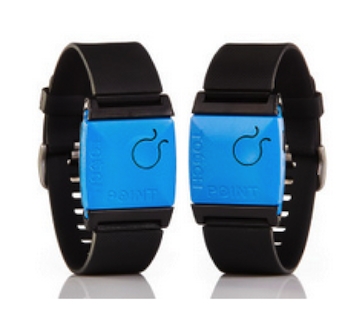
TouchPoints™ neuroscience device for stress relief, improved sleep and focus and reduced cravings

June 30, 2017 By Trudy Scott 20 Comments

TouchPoints™ basic are non-invasive neuroscientific lifestyle wearables that use patent pending neuroscience to relieve stress, improve sleep, performance, and focus, and can reduce cravings and anger.

I shared some information about these TouchPoints™ neuroscience devices a short time ago and it created some interest. This week I was just on a private call with one of the founders, Dr. Amy Serin and I’m so impressed with what I learned about these EMDR-type devices that I’m sharing their indiegogo campaign (happening right now) for the new lower price point device (the basic). The Basic device doesn’t use an iphone or ipad. I am somewhat concerned about EMFs with their other device and I’m still looking into this to determine if it is an issue.

This Basic device can be worn on a wrist-band or can be worn on a belt, socks, shirt etc.

I have NOT yet used one of these devices myself or with clients but I have purchased one to test and will share more as I learn more. Please do share your experiences too!

As with addressing any imbalance too much of something can be problematic. I received this feedback from a colleague who is a psychotherapist:

We use bilateral stimulation in our work with various gadgets – bilateral music with headphones, bilateral tappers etc. It’s been used with EMDR for 20 years. I haven’t seen this gadget before but the idea is not new. It can also be TOO activating and increase sympathetic arousal for some people.

If they work you I do see these as a great add-on to the nutrition work I do for anxiety (diet, adrenals, amino acids like GABA etc.) and could be especially helpful if you can’t tolerate supplements right now (like during a benzodiazepine taper or being highly sensitive).

You can find all the details here

 

Filed Under: Sleep, Stress Tagged With: anxiety, cravings, EMDR, focus, stress, TouchPoints

Laughter, self-compassion and appreciation: Global Stress Summit

May 1, 2017 By Trudy Scott 1 Comment

Laughter, self-compassion and appreciation: 3 wonderful tips for reducing stress and anxiety in your life – from experts in the Global Stress Summit, hosted by Heidi Hanna.

#1: Laughter and mirth

Heidi Hanna’s wise words:

I have three things I do every morning to prime my brain. One is movement. One is meditation. And one is mirth

Heidi and neurohumorist Karen Buxman talk about the many benefits of humor and laughter during Karen’s interview What’s so Funny About Stress? It’s one of my favorites in the summit!

Laughter and humor boost resilience, affect gene expression and generate gamma brain waves in a similar way that meditation does, acting as a brain tonic. People who experience this gamma wave pattern find that

Food tastes better, things look more appealing and colors look brighter

I’m with them and HAVE to laugh every day – what about you?

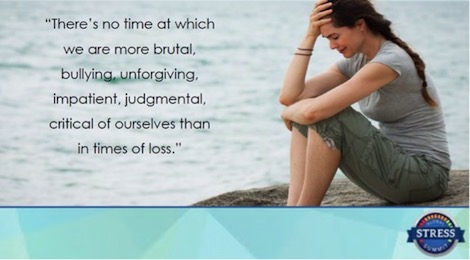
#2 Self-care and self-compassion in times of loss

Ken Druck, PhD shares this in his interview on Courageous Living: Turning Adversity into Opportunity

There is no time at which we are more brutal, bullying, unforgiving, impatient, judgmental and critical of ourselves than in times of loss

This could be the loss of someone we love or a living loss like a divorce or break-up. He goes on to say:

It’s a teachable moment in our life to learn self-care and self-compassion. The practice of self-compassion is the basis for surviving through these hard and rough stretches in our lives

#3 Appreciation for your loved one every day

Arielle Ford shares this in her interview with her husband Brian on Positively Resilient Relationships

I try to give him 5 appreciations every day, just things that he’s doing and acknowledging them

She shares how research shows that doing it in public in front of other people wins millions more brownie points!

Arielle and Brian also share how they lighten up stressful situations with laughter and humor. I love their “Sheila” and “Wayne” tip when either of them are being too bossy (Sheila is Arielle’s mom and Wayne is Brian’s dad).

Arielle also offers these wise words: instead of being annoyed with something Brian is doing she changes the way she perceives the behavior.

It’s encore day of the Global Stress Summit so you can watch these and all the speakers today. If you haven’t already signed up you can still do so – just register here)

If you’re considering purchasing the series for your learning library be sure to do so today before the price increase. Here is the link to learn more and purchase.

I hope you enjoy them as much as I have!

Filed Under: Events, Stress Tagged With: anxiety, appreciation, Arielle Ford, global stress summit, Heidi Hanna, Karen Buxman, Ken Druck, laughter, Mirth, Self-care, stress

The definition of stress and why we need it: Global Stress Summit

April 12, 2017 By Trudy Scott Leave a Comment

I really enjoyed this interview between Dr. Heidi Hanna, host of the Global Stress Summit and guest expert Dr. Susan Peirce Thompson, author of Bright Line Eating: The Science of Living Happy, Thin & Free.

Dr. Heidi Hanna starts by asking what the definition of stress is, first sharing her definition:

What’s so crazy is if you look at that same textbook, depending on who wrote it, you can find a thousand different definitions for what stress actually is. And I think one of the things that you and I also, without knowing, really connect on is this idea that stress is not necessarily bad. My definition of stress is what happens when demand exceeds capacity. So that doesn’t have to be bad.

When we feel like we don’t have the resources we need to adapt appropriately, there’s a tension that exists. And that can actually help us grow. Or it can wear us out.

Dr. Susan likes this definition and I do too: “stress is what happens when demand exceeds capacity.” Dr. Susan goes on to say we actually need stress – all of the meaningful things in life come with stress (success, love, marriage etc.) – and how she can handle high stress because she keeps her support really high:

And I personally prefer to run high stress. I just do. I like activity. I like engagement. I like meaning. I like to stay active. I just do. So I’ve learned that I just need to keep my support really high.

And that makes my days really, really full. I’m an extrovert so I like a lot of human connection. And so for me, staying in touch with my friends on the phone is one of the best ways that I can manage my stress, just process it, process it, process it. Get enough sleep. I eat immaculately.

You put those things together. And you’re good to go. I can shoulder a lot of stress.

Later on in the interview Dr. Susan emphasizes the self-care aspect, to know how much you need and why it should be as automatic as brushing your teeth twice a day:

We all should be taking exquisite care of ourselves. Some of us just don’t get away with it when we don’t though, whether it’s because we’re highly sensitive or because we’re addictive.

For me, the consequences of not taking care of myself are really high. So I get the bounty of, therefore, meditating every morning and hopefully getting a good night’s sleep and having a wonderful support network.

But it’s definitely worth it to know what kind of person you are and to build up your self-care regimen accordingly, for sure.

….You want to be executing your self-care habits like you brush your teeth.

Dr. Susan also covers the stress and sugar addiction connections and how some of us have brains that are susceptible to the addictive pull of sugar and how some of us have brains that are just not affected.

And as a society, we need to understand. Sugar is more addictive than nicotine, more addictive than cocaine.

She shares interesting information about how a third of the population will say “Oh yeah. I don’t think that’s true. I can take a cookie or leave it alone” because that’s the percentage that doesn’t experience that addictive pull at all. And how two-thirds of the population do experience that addictive pull – there are one third who experience it mildly and then the other third find the addictive pull of sugar and carbs to be very severe.

If you’d like to hear more from Dr. Susan Peirce Thompson, tune in to the Global Stress Summit, which is online from April 24 – May1, 2017

Your host, Dr. Heidi Hanna, began her expedition into the world of stress science at the early age of 12 when she began to suffer from debilitating anxiety, depression, and panic attacks. With no medical explanation, she was forced to dive into mind-body research to try to put the puzzle pieces together. In this Global Stress Summit, Dr. Hanna interviews the very pioneering researchers and thought leaders who helped her learn how to utilize stress as a stimulus for growth rather than a trigger for burnout and breakdown, as she passionately encourages us to do the same. Here is the registration link.

Filed Under: Events, Stress Tagged With: Bright Line Eating, Dr. Heidi Hanna, Dr. Susan Peirce Thompson, global stress summit, stress, Sugar addiction

Why green spaces in cities are good for grey matter, stress and anxiety

April 12, 2017 By Trudy Scott 2 Comments

Central Park in New York City

I love all research that support green space and nature for anxiety and stress reduction. And I’m thrilled to see this taking a front seat in cities where people often have less access to greenery!   A great example is the beautiful   Central Park in New York City.

New research is reviewed in this report in Science Daily: Why green spaces in cities are good for grey matter

Walking between busy urban environments and green spaces triggers changes in levels of excitement, engagement and frustration in the brain, a study of older people has found.

Researchers at the Universities of York and Edinburgh say the findings have important implications for architects, planners and health professionals as we deal with an aging population.

The volunteers experienced beneficial effects of green space and preferred it, as it was calming and quieter, the study revealed.

Dr Chris Neale, Research Fellow, from the University of York’s Stockholm Environment Institute, said: “There are concerns about mental wellbeing as the global population becomes older and more urbanised.”

“Urban green space has a role to play in contributing to a supportive city environment for older people through mediating the stress induced by built up settings.”

You can read the study abstract here – Older People’s Experiences of Mobility and Mood in an Urban Environment: A Mixed Methods Approach Using Electroencephalography (EEG) and Interviews.

Personally I need greenery and nature and thrive on it!

How important is greenery for you? Especially if you’re a city person?

Filed Under: Antianxiety, Environment, Nature, Stress Tagged With: anxiety, calming, green spaces, greenery, grey matter, nature, parks, stress

Stress, aging and turning off your bad genes: with Dr. Sara Gottfried

March 6, 2017 By Trudy Scott 23 Comments

At age 44, my friend and colleague Dr. Sara Gottfried, M.D., got a research opportunity few people would want. She performed a simple blood test of how fast she was aging, and she failed.

She was aging 20 years faster than her chronological years, as measured by her telomeres. Those are the protective caps on your chromosomes that determine how your cells age. You want telomeres that are long and lovely. Dr. Sara’s were short and stubby.

Despite what we’ve been told, it’s not normal to age fast, gain weight, feel anxious, and become disease-ridden. Just as the number on the bathroom scale isn’t always a simple reflection of calories consumed vs. calories burned, the number of years you’ve lived isn’t always a reflection of your biological age (meaning the age of your cells).

Dr. Sara’s telomeres and body needed rescuing, so she dove into the science and created a breakthrough protocol to slow down aging.

Dr. Sara also had adrenal fatigue, a slow thyroid, estrogen dominance, disrupted sleep, and insulin resistance. Because her cells were numb to insulin, her blood sugar was climbing. Not in the diabetes range, but prediabetes. These hormone problems added up to faster aging.

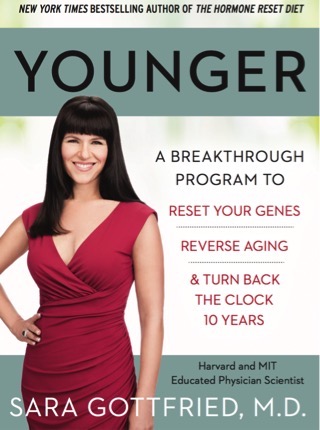
During the past five years of research, Dr. Sara discovered crucial truths locked in our genes—truths about how you age, how you gain weight, how your body handles stress, and so much more. In her new book, Younger: A Breakthrough Program to Reset Your Genes, Reverse Aging, and Turn Back the Clock 10 Years, she reveals important yet little-known truths to slow down aging and reverse anxiety. She helps you create hormonal harmony and turn on and off the appropriate longevity genes. Here are just a few highlights:

  • Breast cancer runs in her family, so she learned how to turn off her cancer-promoting genes using her fork and wine glass.
  • Sara doesn’t detox well—neither do half of Americans—so she needed to add a specific B vitamin to her daily regimen. Hint: we talk about the MTHFR gene and detox in our interview below).
  • Her grandmother died of Alzheimer’s disease, so Dr. Sara was thrilled to learn about the functional medicine protocol that preserves cognitive function regardless of age. Hint: it involves a specific way of eating, exercising, practicing yoga or meditation, flossing, brushing teeth, and sleeping.

In her new book, you’ll learn what happened to Dr. Sara’s telomeres over the past 5 years as she tested and refined her protocol, first on herself, and then on 1,000 other women.

I was fortunate to receive an advance copy of Younger and loved it so much that I wrote the following endorsement:

The brilliant book, Younger, by Dr. Sara Gottfried MD is mesmerizing, cutting-edge and a must-read! It teaches how you can turn your good genes on and your bad genes off via a healthy mix of science and gene information, together with simple assessment tools and powerful lifestyle changes. You’ll feel happier and calmer, look and feel younger, and actually reverse age-related diseases – even if you have anxiety, depression, Alzheimer’s disease, breast cancer, heart disease or obesity in your family. Why wouldn’t you want to influence your genes for the better? I know I do and so do my community of anxious women. We will all benefit immensely from Dr. Gottfried’s wisdom!

~ Trudy Scott, nutritionist and author of The Antianxiety Food Solution

I also had the opportunity to interview Dr. Sara about this topic and you can watch and listen below as we discuss some of the following:

  • Telomeres and aging (at 44 Dr. Sara had the telomeres of a 64 year old woman)
  • Healthspan and feeling fantastic
  • Walking on the beach for the adrenals, earthing and vagal toning
  • Forest bathing and the effects on cortisol levels [this isn’t in the book]
  • Ikaria “the island where they forgot to die” – herbal teas, tight social community, long lunches, no watches, 7.5 hours of sleep
  • Date night and chanting in the infrared sauna
  • Finnish study: saunas, longevity and the FOXO3 gene (a panacea? and even a form of exercise for those with heart failure)
  • MTHFR “detox” or methylation gene (depression and alcohol detox)
  • We can impact how our genes talk to our bodies in such profound ways
  • The FKBP5 Gene is turned on by severe trauma (studied in Holocaust victims) and affects how we handle stress
  • The TH gene is turned on by the cold
  • rs6330 – NGF/nerve growth factor gene and vagal tone (CC form = more anxious females; TT form = more anxious males) [this isn’t in the book]
  • Genetic testing is optional but can be done with 23andme, Pathway and SmartDNA (in Australia)
  • Testing telomeres with Lifelength and SpectraCell
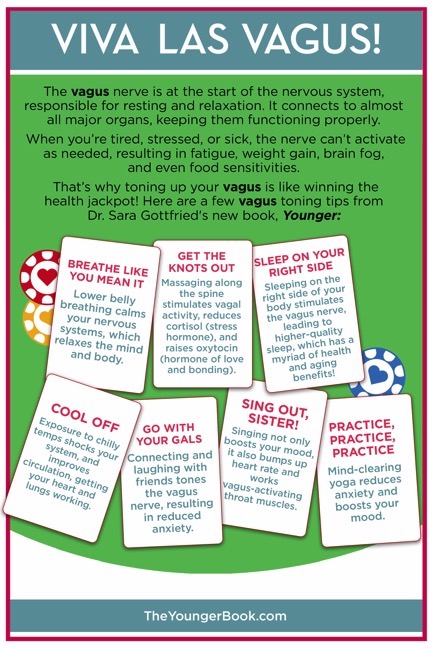
  • Vagus nerve and parasympathetic system – affects anxiety levels, the gut, voice and brain – improved with meditation, prayer, chanting, social connection, singing, call girlfriends, sleeping on your right side
  • 7 day Younger challenge (most powerful levers from the book)
  • 7 week Younger challenge
  • Thing about your 75 year old self: “I want to make decisions that are kind to her” and “How can you kind be to your future self”

If this resonates with you, I encourage you to join Dr. Sara’s slow aging revolution by ordering your copy of Younger.

I hope you’ll join Dr. Sara and me in our quest to continue resetting genes and reversing aging in 2017. The science is yours for the taking!

If you are like Dr. Sara and have issues with your adrenals, thyroid, insulin, or sleep, you could be aging too fast, as she was. And while the genetic hand you’ve been dealt may seem like a fait accompli, the greatest truth Dr. Sara discovered is that you can “turn on” good genes and “turn off” bad ones using the seven-week protocol she developed based on the latest research. Thankfully, she’s done all the research so you don’t have to!

When you order the new book, feel free to click here to submit your receipt and get several bonuses for a limited time, including Dr. Sara’s Younger Quick Start Guide. This guide includes an overview of the Younger Protocol, Dr. Sara’s Anti-Aging Prerequisites, and a sample menu so that you’re ready when the book arrives.


Filed Under: Books, Stress Tagged With: aging, Sara Gottfried, vagus nerve

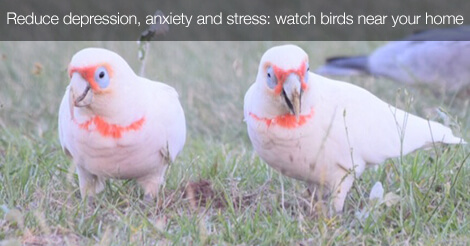
Reduce depression, anxiety and stress: watch birds near your home

March 3, 2017 By Trudy Scott 8 Comments

I love this new research about watching birds and how you’re less likely to suffer from depression, anxiety and stress when doing so:

People living in neighborhoods with more birds, shrubs and trees are less likely to suffer from depression, anxiety and stress.

The study, involving hundreds of people, found benefits for mental health of being able to see birds, shrubs and trees around the home, whether people lived in urban or more leafy suburban neighbourhoods.

Previous studies have found that the ability of most people to identify different species is low (e.g. Dallimer et al. 2012), suggesting that for most people it is interacting with birds, not just specific birds, that provides well-being.

You can read the full study here – Doses of Neighborhood Nature: The Benefits for Mental Health of Living with Nature

I’m not sure we needed a study to confirm this but it’s still interesting and an easy and affordable way to support yourself emotionally!

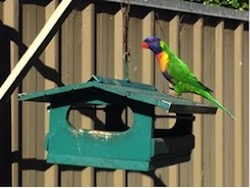
I’m a big nature lover and I am just smitten with the colorful birds here in Australia! These lorikeets come by the house each morning and I could watch them for hours.

Just down the road at Smith Park in Richmond, NSW we get to enjoy these magnificent black swans. We were just these 2 days ago and spotted these darling chicks with proud mama and poppa!

I shared the study and some of my pictures on my facebook page inviting comments and the response was so super I decided to do a blog and share some of the feedback and pictures. I hope this inspires you to seek out nature and bird-watching.

If you’re not in a position right now to go bird-watching hopefully it will give you some joy and calm seeing all these pictures.

Laura Pruente Cauley loves the study and shares this

I’m also an avid watcher! After going through our Master Gardener Program I began to add more native plants and flowers to increase birds, bees and butterflies. It’s been so much fun seeing new varieties and behaviors! This guy stopped by over the weekend. I think it’s a Cooper’s Hawk.

I’m curious if others find it calming just being in nature like I do.

For me being in nature feeds me, calms me and gives me so much joy! Together with laughter and hugs (as well as family, friends and nutrient-dense food) it is absolutely a required part of my life!

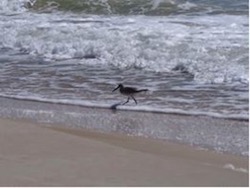
Renee Graslie shares this picture of shore birds at St George Island State Park, Florida and this feedback:

Yes! But watching them on the beach ups that a notch! I am an avid birder at home too! So relaxing!


Mia D shares this feedback:

I live at the country side. The best time of the year is when spring arrives and all the birds sing in the morning. What a better way to wake up in the morning. I always go walking in the forest and listen to the birds singing in the trees. It gives so much peace and joy.

Debbie Lane shares these pictures and message:

Have to say we both enjoy watching the birds. It’s fun to figure out the birds that are here. These are my pride and joy pictures.

Tricia Soderstrom shared this picture (the large bird is a Mourning Dove) and message:

I love watching birds but had to move the feeders because we were finding too many ticks on our dog, but I can still watch them and they do bring peace

She offers this smart advice about birds and ticks (you may recall Tricia from the last Anxiety Summit, sharing her success with GABA for Lyme anxiety):

Birds get ticks just like other animals and they drop off of them.

It’s recommended to keep bird feeders away from the house and away from areas, you might spend time because birds carry ticks that can fall off (that’s how Lyme is “migrating”) but also because feeders tend to attract squirrels and mice which are definitely high risk. I don’t know if you’re aware that Mice are where these bacteria first transmitted to nymphal ticks. As the ticks grow they move onto larger animals and eventually deer and people.

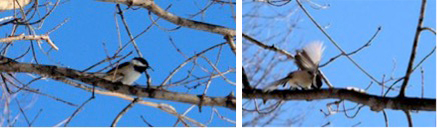
Diane Lalomia shares these pictures of a Chickadee, taken on Christmas Day her backyard in northern Michigan:

I’ve been rescuing several chickadees that fly into our sliding glass door. The poor things are stunned and laying in the snow, cold. I get a small cardboard box and bring them inside to warm up inside the closed dark box (keeps them calm) and when they start moving around (usually less than 5 min) I take them outside and let them go.

And her friend, the Chickadee, braving a snowstorm:

Lisa Ziazan shares this picture of black cockatoos in her front yard in suburban Perth. She shared how watching birds has helped her through the last 4 years of chronic illness:

I have been very isolated due to being housebound and not getting many visitors. When I was bedbound I had a window I could watch birds flying by, and when I can get outside and go for short walks I can see many birds in our neighbourhood. They are fascinating to watch. I saw a flock of the coloured parrots one morning all sitting in a tree on the edge of a school oval, it was a hot day and the sprinklers were on. The parrots were all bathing in the sprinkler as it hit the tree. I also collect feathers I find as I believe birds are wonderful spirit messengers. The birds lift my spirits when I am sick of being sick.

It’s wonderful to hear and I know this will be uplifting and inspiring for others too!

I appreciate all the feedback and pictures and permission to share it all here.

If you’d like to share your picture feel free to post on Facebook too (and let us know where it’s taken and the name of the bird).

Here are some practical tips:

  • Add bird baths and bird-feeders to your garden
  • Do a Master Gardener Program and add more native plants and flowers to increase birds, bees and butterflies
  • Keep in mind concerns about ticks and bird-feed attracting rodents
  • Enjoy birds in nearby parks (just be aware birds need quality food too – feeding bread to ducks and other wild birds is not a good idea)
  • Enjoy birds on a hike or at the beach/river
  • Get a bird book and do some bird spotting too (we gave one to Brad’s dad for Christmas and we all use it when we go for hikes and love it!)

Are you a bird-watcher? At home? On hikes? At the beach? Somewhere else? Please let us know how it makes you feel.

Filed Under: Stress Tagged With: birds, nature

  • « Go to Previous Page
  • Page 1
  • Page 2
  • Page 3
  • Page 4
  • Interim pages omitted …
  • Page 7
  • Go to Next Page »

Primary Sidebar

GABA QuickStart Homestudy

gaba quickstart homestudy

Free Report

9 Great Questions Women Ask about Food, Mood and their Health

You'll also receive a complimentary subscription to my ezine "Food, Mood and Gal Stuff"


Connect with me

Popular Posts

  • Amino Acids Mood Questionnaire from The Antianxiety Food Solution
  • The Antianxiety Food Solution Amino Acid and Pyroluria Supplements
  • Pyroluria Questionnaire from The Antianxiety Food Solution
  • Collagen and gelatin lower serotonin: does this increase your anxiety and depression?
  • Tryptophan for the worry-in-your-head and ruminating type of anxiety
  • GABA for the physical-tension and stiff-and-tense-muscles type of anxiety
  • The Antianxiety Food Solution by Trudy Scott
  • Seriphos Original Formula is back: the best product for anxiety and insomnia caused by high cortisol
  • Am I an anxious introvert because of low zinc and vitamin B6? My response to Huffington Post blog
  • Vagus nerve rehab with GABA, breathing, humming, gargling and key nutrients

Recent Posts

  • Her cravings for chips and peanut butter were triggered by stress: GABA ends cravings and reduces physical tension and fear of heights
  • It is truly miraculous to be able to move through life without crippling anxiety and panic
  • GABA and tryptophan combo provide immediate and noticeable relief for tremors and cervical dystonia in just 7 days
  • Red light therapy for back and neck pain, plantar fasciitis and low mood – a complement to the amino acids GABA, DPA and tryptophan
  • What do I use instead of Seriphos to help lower high cortisol that is affecting my sleep and making me anxious at night?

Categories

  • 5-HTP
  • AB575
  • Addiction
  • ADHD
  • Adrenals
  • Alcohol
  • Allergies
  • Alzheimer's disease
  • Amino Acids
  • Anger
  • Antianxiety
  • Antianxiety Food Solution
  • Antidepressants
  • Anxiety
  • Anxiety and panic
  • Autism
  • Autoimmunity
  • benzodiazapines
  • Bipolar disorder
  • Books
  • Caffeine
  • Cancer
  • Candida
  • Children/Teens
  • Collagen
  • Cooking equipment
  • Coronavirus/COVID-19
  • Cravings
  • Depression
  • Detoxification
  • Diabetes
  • Diet
  • DPA/DLPA
  • Drugs
  • EFT/Tapping
  • EMF
  • EMFs
  • Emotional Eating
  • Endorphins
  • Environment
  • Essential oils
  • Events
  • Exercise
  • Fear
  • Fear of public speaking
  • Fertility and Pregnancy
  • Fish
  • Food
  • Food and mood
  • Functional neurology
  • GABA
  • Gene polymorphisms
  • General Health
  • Giving
  • Giving back
  • Glutamine
  • Gluten
  • GMOs
  • Gratitude
  • Gut health
  • Heart health/hypertension
  • Histamine
  • Hormone
  • Hyperparathyroidism
  • Hypoglycemia
  • Immune system
  • Inflammation
  • Insomnia
  • Inspiration
  • Introversion
  • Joy and happiness
  • Ketogenic diet
  • Lithium orotate
  • Looking awesome
  • Lyme disease and co-infections
  • MCAS/histamine
  • Medication
  • Men's health
  • Mental health
  • Mercury
  • Migraine
  • Mold
  • Movie
  • MTHFR
  • Multiple sclerosis
  • Music
  • NANP
  • Nature
  • Nutritional Psychiatry
  • OCD
  • Osteoporosis
  • Oxalates
  • Oxytocin
  • Pain
  • Paleo
  • Parasites
  • Parkinson’s disease
  • PCOS
  • People
  • PMS
  • Postpartum
  • PTSD/Trauma
  • Pyroluria
  • Questionnaires
  • Real whole food
  • Recipes
  • Research
  • Schizophrenia
  • serotonin
  • SIBO
  • Sleep
  • Special diets
  • Sports nutrition
  • Stress
  • Sugar addiction
  • Sugar and mood
  • Supplements
  • Teens
  • Testimonials
  • Testing
  • The Anxiety Summit
  • The Anxiety Summit 2
  • The Anxiety Summit 3
  • The Anxiety Summit 4
  • The Anxiety Summit 5
  • The Anxiety Summit 6
  • Thyroid
  • Thyroid health
  • Toxins
  • Tryptophan
  • Tyrosine
  • Uncategorized
  • Vegan/vegetarian
  • Women's health
  • Yoga

Archives

  • May 2026
  • April 2026
  • October 2025
  • September 2025
  • August 2025
  • July 2025
  • June 2025
  • May 2025
  • April 2025
  • March 2025
  • February 2025
  • January 2025
  • November 2024
  • October 2024
  • September 2024
  • August 2024
  • July 2024
  • June 2024
  • May 2024
  • April 2024
  • March 2024
  • February 2024
  • January 2024
  • December 2023
  • November 2023
  • October 2023
  • September 2023
  • August 2023
  • July 2023
  • June 2023
  • May 2023
  • April 2023
  • March 2023
  • February 2023
  • January 2023
  • December 2022
  • November 2022
  • October 2022
  • September 2022
  • August 2022
  • July 2022
  • June 2022
  • May 2022
  • April 2022
  • March 2022
  • February 2022
  • January 2022
  • December 2021
  • November 2021
  • October 2021
  • September 2021
  • August 2021
  • July 2021
  • June 2021
  • May 2021
  • April 2021
  • March 2021
  • February 2021
  • January 2021
  • December 2020
  • November 2020
  • October 2020
  • September 2020
  • August 2020
  • July 2020
  • June 2020
  • May 2020
  • April 2020
  • March 2020
  • February 2020
  • January 2020
  • December 2019
  • November 2019
  • October 2019
  • September 2019
  • August 2019
  • July 2019
  • June 2019
  • May 2019
  • April 2019
  • March 2019
  • February 2019
  • January 2019
  • December 2018
  • November 2018
  • October 2018
  • September 2018
  • August 2018
  • July 2018
  • June 2018
  • May 2018
  • April 2018
  • March 2018
  • February 2018
  • January 2018
  • December 2017
  • November 2017
  • October 2017
  • September 2017
  • August 2017
  • July 2017
  • June 2017
  • May 2017
  • April 2017
  • March 2017
  • February 2017
  • January 2017
  • December 2016
  • November 2016
  • October 2016
  • September 2016
  • August 2016
  • July 2016
  • June 2016
  • May 2016
  • April 2016
  • March 2016
  • February 2016
  • January 2016
  • December 2015
  • November 2015
  • October 2015
  • September 2015
  • August 2015
  • July 2015
  • June 2015
  • May 2015
  • April 2015
  • March 2015
  • February 2015
  • January 2015
  • December 2014
  • November 2014
  • October 2014
  • September 2014
  • August 2014
  • July 2014
  • June 2014
  • May 2014
  • April 2014
  • March 2014
  • February 2014
  • January 2014
  • December 2013
  • November 2013
  • October 2013
  • September 2013
  • August 2013
  • July 2013
  • June 2013
  • May 2013
  • April 2013
  • March 2013
  • February 2013
  • January 2013
  • December 2012
  • November 2012
  • October 2012
  • August 2012
  • July 2012
  • June 2012
  • May 2012
  • April 2012
  • March 2012
  • February 2012
  • January 2012
  • December 2011
  • November 2011
  • October 2011
  • September 2011
  • August 2011
  • July 2011
  • June 2011
  • May 2011
  • April 2011
  • March 2011
  • February 2011
  • January 2011
  • December 2010
  • October 2010
  • September 2010
  • July 2010
  • May 2010
  • April 2010
  • March 2010
  • February 2010
  • January 2010
  • November 2009

Share the knowledge!

The above statements have not been evaluated by the Food and Drug Administration. Products listed in this website are not intended to diagnose, treat, cure or prevent any disease.

The information provided on this site is for informational and educational purposes only and is not intended as a substitute for advice from your physician or other health care professional. You should consult with a healthcare professional before starting or modifying any diet, exercise, or supplementation program, before taking or stopping any medication, or if you have or suspect you may have a health problem.


Copyright © 2026 Trudy Scott. All Rights Reserved. | Privacy | Terms and Conditions | Refund Policy | Medical Disclaimer

Free Report

9 Great Questions Women Ask about Food, Mood and their Health

You’ll also receive a complimentary subscription to my ezine “Food, Mood and Gal Stuff”