• Skip to primary navigation
  • Skip to main content
  • Skip to primary sidebar

everywomanover29 blog

Food, Mood and Women's Health – Be your healthiest, look and feel great!

  • Blog
  • About
  • Services
  • Store
  • Resources
  • Testimonials
  • The Book
  • Newsletter
  • Contact
  • Search this site

Events

The Anxiety Summit – Anxiety: the role of fats, turmeric and wheat

June 5, 2016 By Trudy Scott 37 Comments

 Cyndi O’Meara_Anxiety4

Cyndi O’Meara, Nutritionist, founder of Changing Habits, was interviewed on the Anxiety Summit by host of the Anxiety Summit, Trudy Scott, Food Mood Expert and Nutritionist, author of The Antianxiety Food Solution.

Anxiety: the role of fats, turmeric and wheat

  • Oils ain’t oils and fats ain’t fats: the danger of vegetable oils
  • The benefits of butter and other healthy fats
  • The impact of wheat on anxiety and depression
  • Turmeric for detoxification, inflammation, depression and anxiety
  • How to get the most out of consuming turmeric

Here are some gems from our interview:

The healthy fats for me are any fat that nature has made.  So that could be a saturated fat in a plant based oil such as coconut oil or it could be a saturated fat in animal fats.  So in the winter there would not be a lot of saturated fat around.  It would be more in the summer. 

And in culture and traditions we ate seasonal foods.  So when the animals were fat they had saturated fat on them and we would consume those fats.  If they were producing dairy which would usually be in the spring and right through the summer we might eat that and that had saturated fat in it.  So we would have these types of fats in the summer.  In the winter we had lean meats because the animals were lean.  They didn’t have stored fats on them.  Neither did we.

I look at the morphing of margarine and the fact that it’s been seen as a healthy fat and it’s not a healthy fat.  It’s a chemicalized, manmade, manufactured, polyunsaturated fat that is normally liquid at room temperature that becomes solid because of what they do.

We also discuss inca inchi oil, a plant-based oil:

Inca inchi is very high in vitamin A and vitamin E – inca inchi seed oil is one of the most amazing plant based oils.  It’s also called sacha inchi, so it’s a South American seed and it’s 86 percent essential fatty acid and 48 percent omega-3 which means that we can make our EPAs and our DHAs with it.  So it’s a more sustainable omega-3 base as opposed to fish oil.  And it’s one of my favorite oils and it’s got a profile that’s similar to flaxseed oil and I can use it to make my mayonnaises, my pestos.  I can make all beautiful salad dressings with it.  I can drizzle it over some fresh vegetables that I’ve just steamed.

We talk about Roundup/glyphosate being sprayed on wheat and canola and the research work of Stephanie Seneff (interviewed in season 1 of the Anxiety summit): looking at the effects on the gut bacteria, the shikimate pathway and hence serotonin and anxiety, depression and autism.

Here is the TEDX talk that Cyndi recommended – Jeff Iliff: One more reason to get a good night’s sleep

And a recent study on camu camu – Antioxidant and associated capacities of Camu camu (Myrciaria dubia): a systematic review.

A program to increase the visibility of camu camu can contribute substantially not only to the management of inflammatory conditions and its positive contribution to overall good health but also to its potential role in many disease states.

Here is Cyndi’s book: Changing Habits, Changing Lives
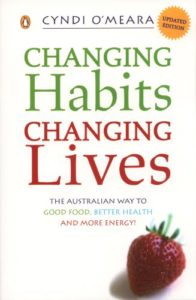
cyndi changing habits


Here is a digital gift from Cyndi: Depression e-report and Changing Habits Changing Lives audio book 

Here is the link to learn more about the new wheat documentary (online screening June 24-30): What’s With Wheat.

whats with wheat

If you are not already registered for the Anxiety Summit you can get live access to the speakers of the day here: www.theAnxietySummit.com

Missed this interview or can’t listen live? Or want this and the other great interviews for your learning library? Purchase the MP3s or MP3s + transcripts and listen when it suits you.

You can find your purchasing options here: Anxiety Summit Season 1, Anxiety Summit Season 2, Anxiety Summit Season 3, and Anxiety Summit Season 4.
 

Filed Under: Events, The Anxiety Summit 4 Tagged With: anxiety, anxiety summit, Cyndi O’Meara, fat, Trudy Scott, turmeric, wheat

The Anxiety Summit – Anxiety: The Stressed and Toxic Gut

June 5, 2016 By Trudy Scott 43 Comments

Josh Axe_Anxiety4

Dr. Josh Axe, DNM, DC, CNS, author of Eat Dirt, is interviewed on the Anxiety Summit by host of the Anxiety Summit, Trudy Scott, Food Mood Expert and Nutritionist, author of The Antianxiety Food Solution.

Anxiety: The Stressed and Toxic Gut

  • An overview of leaky gut, the causes and the 5 gut types
  • Symptoms of the stressed gut and how it impacts the adrenals
  • Leaky gut and glutamine as a fuel source
  • Healing licorice root, rhodiola and ashwaganda
  • How frankincense fights inflammation and protects the tight junctions of the gut
  • Signs of a toxic gut, soil-based organisms and what we can learn from the Yanomami tribe

Here are some gems from our interview:

So imagine your intestines as a net or your gut lining is a net and it’s sort of the barrier in between your intestines and blood stream. If that little net, if those little holes get tears in them then things that are too large start passing into your bloodstream such as undigested food particles such as gluten, toxins, bad bacteria. When those get into the bloodstream that sets off an immune response in the body and really causes system wide inflammation. And just to let you know, I want to go over some of the biggest warning signs that someone has leaky gut, which you’ll see these were often times anxiety and toxicity and other issues, but bloating and gas are big warning signs that you have leaky gut. Any type of food sensitivity, if you don’t tolerate certain foods like gluten that probably means you have leaky gut. Thyroid conditions such as Hashimoto’s thyroiditis, adrenal fatigue, joint pain, headaches, skin issues like rosacea, acne, eczema, psoriasis, digestive problems of any sort. And then even especially depression and anxiety, any of these issues, bipolar, those are all warning signs that somebody has leaky gut.

We discuss glutamine for healing a leaky gut and Dr. Axe mentioned his blog on the topic: L-Glutamine Benefits Leaky Gut & Metabolism

L-glutamine is the most abundant amino acid in the bloodstream and it makes up 30-35 percent of the amino acid nitrogen in your blood. It’s actually known as a conditionally essential amino acid because your body uses it in large amounts.

The most common uses of glutamine powder were to meet the following goals: to lose weight fast, burn fat and build muscle. And while that remains the case, science is now showing that L-glutamine benefits are abundant – and that this amino acid is especially helpful in treating leaky gut and improving your overall health.

We talk about the benefits of licorice root for both the gut and the adrenals:

Licorice root is another one of those herbs that’s used in Chinese medicine and it’s very effective for many things, with studies showing it helps the stomach, ulcers specifically.  Other studies show that it actually helps with soothing the intestinal tract.  But for the most part it’s also used as an adaptogenic herb.  Many of us have heard of adaptogens such as ashwaganda, rhodiola, ginseng, certain mushrooms such as cordyceps have been labeled adaptogenic, well licorice root works in the same way.  It really helps your body better adapt and deal with stress.  We know stress can be very, very hard on the intestines as well as the stomach. It can be very hard on your digestive system.  So licorice root is pretty amazing.  It’s an herb that really helps in sort of soothing inflammation, but it also works as an adaptogen to lower stress levels, which is harming the gut.  So really as a two pronged approach and why it’s so effective at both helping the digestive system as well as supporting the adrenal glands, thyroid and overall hormones.

Here are some links to some research:

  • Breaking down the barriers: the gut microbiome, intestinal permeability and stress-related psychiatric disorders.

The emerging links between our gut microbiome and the central nervous system (CNS) are regarded as a paradigm shift in neuroscience with possible implications for not only understanding the pathophysiology of stress-related psychiatric disorders, but also their treatment.

  • Anti-inflammatory effect of roasted licorice extracts on lipopolysaccharide-induced inflammatory responses in murine macrophages.
  • Boswellia serrata Preserves Intestinal Epithelial Barrier from Oxidative and Inflammatory Damage


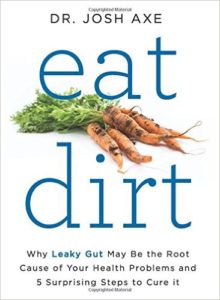
Dr. Josh Axe is author of a new book called  Eat Dirt: Why Leaky Gut May Be the Root Cause of Your Health Problems and 5 Surprising Steps to Cure It

josh axe eat dirt


Here is the link to a gift from Josh Axe The King’s Medicine Cabinet eBook:  A complete guide on essential oils and their history, uses, cures, and recipes that will transform your health forever!

And his Eat Dirt online gut quiz [disabling this until I hear back from them]

If you are not already registered for the Anxiety Summit you can get live access to the speakers of the day here: www.theAnxietySummit.com

Missed this interview or can’t listen live? Or want this and the other great interviews for your learning library? Purchase the MP3s or MP3s + transcripts and listen when it suits you.

You can find your purchasing options here.: Anxiety Summit Season 1, Anxiety Summit Season 2, Anxiety Summit Season 3, and Anxiety Summit Season 4.
Filed Under: Adrenals, Events, Stress, The Anxiety Summit 4 Tagged With: anxiety, anxiety summit, josh axe, toxic gut, Trudy Scott

Anxiety Summit season 4: the top six reasons to attend

June 3, 2016 By Trudy Scott 7 Comments

anxiety-summit-hope

We’re getting ready for the Anxiety Summit! It starts next week June 6th and runs through June 16th and I can’t wait to share all the amazing speakers and resources with you.

If you’ve already signed up for the summit these top six reasons will inspire you even further. If you haven’t yet signed up I hope to motivate you to join us and learn nutritional tools to overcome anxiety, social anxiety, panic attacks, OCD and even insomnia and stress eating.

(1) More and more children and adolescents have anxiety

Dr. Zendi Moldenhauer, integrative psychiatric NP, is one of the wonderful summit speakers. Her topic is Anxiety in children, adolescents and young adults: an integrative psychiatric approach, and she shares this:

Anxiety in children and adolescents is on the rise globally. The number of teens ages 13-18 who have been officially diagnosed with an anxiety disorder is only 8%, however our real-life experience shows it to be closer to 1 in 4 or 1 in 5.

Dr Zendi shares that many anxious children and adolescents actually have irritable bowel syndrome (IBS) and that by addressing gut health we can see anxiety symptoms disappear. The adrenals can be supported with theanine, an amino acid that promotes alert relaxation, and low GABA levels can be boosted with a calming amino acid such as GABA-Calm.

(2) American Psychiatric Association Lobbies FDA to Electroshock Children

This is the title of a recent article published on the CCHRINT website and here is what they are saying:

The American Psychiatric Association (APA) is aggressively lobbying the Food and Drug Administration (FDA) to allow it broader use of Electroshock (ECT) on patients, including children.

While the APA looks to seizure-inducing, brain-disabling, electricity as a form of ‘treatment,’ lobbying the FDA to make ECT available for children, no one in medicine, let alone psychiatry, has a clue how ECT machines ‘work’ or how passing large amounts of electricity into a child’s brain ‘treats’ the subjective mental disorder.

It’s unfathomable to me that with what we now know about nutritional psychiatry (see more on this below) that we could be considering something as awful as this.

We can control the size of our hippocampus by what we eat

(3) We can control the size of our hippocampus by what we eat

Dr. Drew Ramsey, M.D., psychiatrist, farmer and author of the new book Eat Complete, another wonderful summit speaker, covers Nutrients that Fuel Brain Power and Reduce Anxiety.

I love what Dr. Drew Ramsey says in our interview: “I eat for a bigger hippocampus.” The hippocampus is an area of your brain involved in emotional regulation and learning. Don’t you want a bigger hippocampus?

We talked about this in the context of the research published by Dr. Felice Jacka and her team: Western diet is associated with a smaller hippocampus: a longitudinal investigation. Here is the conclusion of the study:

Lower intakes of nutrient-dense foods and higher intakes of unhealthy foods are each independently associated with smaller left hippocampal volume. To our knowledge, this is the first human study to demonstrate associations between diet and hippocampal volume concordant with data previously observed in animal models.

The Anxiety Summit is “a bouquet of hope”

(4) Tryptophan and GABA give you hope and an immediate feeling of calm

The Anxiety Summit has been called a “bouquet of hope” and these calming and mood-boosting amino acids are my favorite nutrients for anxiety because they offer so much hope right away. They get much coverage this season.

Serotonin and anxiety: tryptophan, 5-HTP, serotonin syndrome and medication tapers, an interview with Dr. Peter Bongiorno, ND, author of Holistic Therapies for Anxiety and Depression:

Low levels of tryptophan contribute to generalized anxiety and panic attacks. Back in the early 1990s, a laboratory I was associated with at Yale University performed “tryptophan depletion studies” and which volunteers who were already prone to anxiety were put on a tryptophan-free diet. Within days, these people were extremely anxious, panicky and unstable – and they had lots of trouble staying asleep.

In my interview, GABA: Blood brain barrier controversy, concerns, best forms and how to do a trial for eliminating anxiety, I cover the research and practical steps on how to get the best results. But most importantly you’ll hear heartwarming success stories from people who use GABA, like this one:

It helps lower my overall anxious feeling all day (anxiety for no reason). I just started increasing the dose slightly and am beginning to take it a few times a day to help with social anxiety.

And this one:

It changed my life in minutes! Take it every day now. No more hopelessness!

If you have anxiety I want you to have hope that you will find an answer and I want to give you tools and resources to get there.

Tryptophan and GABA give you HOPE and relief right away while you are addressing some of the bigger underlying causes of your anxiety which may take longer to address. Some of these more complex causes may be leaky gut, mercury toxicity, gluten issues or Lyme disease and are also their own topics in the summit.

(5) Anxious individuals are actively looking for nutritional solutions

In a paper published earlier this year, Herbal medicine use behaviour in Australian adults who experience anxiety: a descriptive study, out of 400 anxious Australian adults in the study:

  • 47% were diagnosed with an anxiety disorder
  • 82% experienced anxiety symptoms in the previous 12 months
  • 3% had used prescribed pharmaceuticals for anxiety
  • 8% had used herbal medicines for anxiety

The authors of the study voice concerns about the dangers of self-prescribing saying this about the widespread use of herbal medicines:

Herbal medicines are being used by adults with anxiety and are commonly self-prescribed for anxiety symptoms. These behaviours are concerning as people may not be receiving the most suitable treatments, and their use of herbal medicines may even be dangerous. It is critical we develop a better understanding of why people are using these medicines.

Based on my practice and after interviewing over 100 experts on nutritional solutions for anxiety and seeing the research, this is my belief: more and more people who are not getting solutions from medications are being smart and are looking to address the root cause/s of their anxiety naturally and nutritionally. Are you one of them?

I’m all about self-empowerment and being informed and the summit delivers plenty of practical content and the research.

(6) Anxiety disorders are the most common psychiatric illness

Anxiety disorders are the most common psychiatric illness affecting children and adults. According to the Anxiety and Depression Association Of America, it’s estimated that 40 million American adults suffer with an anxiety disorder. These numbers are much higher because you may never get a diagnosis and be counted (just look at the Australian herbal study below). You may not even identify with the term anxiety because you have felt like for so long and just think ‘this is me, this is just how I am.’

It doesn’t have to be like this. We can change these stats. You can feel on top of the world again!

The summit offers hope and solutions, research and success stories!

Discover the connections between anxiety and brain food, why healthy fats and turmeric feed our brains, how grass-fed red meat helps with anxiety, the impact of coffee and gluten, the best gluten testing, GABA and the blood brain barrier, serotonin and tryptophan, best forms of GABA and tryptophan, anxiety in autism, MS and anxiety, Lyme disease and anxiety, mercury and lead detox, leaky gut and the SCD diet, low cholesterol and low oxytocin, the microbiome, stomach acid and zinc, fluroquinolones, methylation, pyroluria, the importance of community and much more.

Join us June 6-16th online – register here www.theanxietysummit.com

And please share widely!

Filed Under: Events, The Anxiety Summit 4 Tagged With: amino acids, anxiety, drew ramsey, GABA, GABA Calm, Hippocampus, Peter Bongiorno, the anxiety summit, Trudy Scott

Mental Health Month: anxiety, nutrition, gluten, GABA, leptin and fluoroquinolones

May 13, 2016 By Trudy Scott 21 Comments

egg-asparagus-salad

Since 1949, Mental Health America and affiliates across the country have led the observance of May is Mental Health Month by reaching millions of people both online and locally. They share this:

This year’s theme for Mental Health Month is – Life with a Mental Illness – and calls on individuals to share what life with a mental illness feels like for them in words, pictures and video by tagging their social media posts with #mentalillnessfeelslike (or submitting to MHA anonymously). Posts are being collected and displayed at mentalhealthamerica.net/feelslike.

I love that they say that spreading the word that mental health issues like anxiety, depression, bipolar and other disorders is something everyone should care about.

I’d love to educate and inspire many of those individuals who have already posted on social media using #mentalillnessfeelslike and have yet to find a solution. There are so many of them and it’s heart-breaking. You can go to mentalhealthamerica.net/feelslike now and see what is being said.

Here are a few examples:

Severe anxiety feels like you are lost in a big city where no one else can speak your language and you are trying to get home.. #mentalillnessfeelslike

#anxietyfeelslike #mentalillnessfeelslike a never ending battle to keep worry from creeping in to your every thought. Trying to be present

Anxiety Attack #mentalillnessfeelslike: I’m swirling in a cyclone while also being constructed by a Boa

#MentalIllnessFeelsLike Worrying About Passing This Semester Causing Your Anxiety To Mess Up More Although Your Anxiety Put You Here

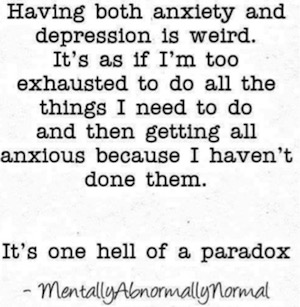
And this profound quote by MentallyAbnormallyNormal (you can find her here on Facebook)

mentally-abnormally-normal-meme

I encourage you to participate if it feels ok to you. I’d especially love you to share how nutrition and nutrients like GABA, tryptophan, zinc, vitamin B12, and/or vitamin D have helped you. You can also respond directly to the posts others have made.

Here are some links to my prior blog posts on some of the many nutritional (and biomedical) approaches so feel free to also share some of this information and use it if you’re still on your healing journey to overcome anxiety, panic attacks, OCD, insomnia and other mood problems:

  • Nutritional medicine in modern psychiatry: position statement by ISNPR
  • Integrative Medicine Approach to Pediatric Obsessive-Compulsive Disorder and Anxiety
  • GABA, the calming amino acid: products and results
  • Tryptophan for anxiety, sleep and mood: in Put Anxiety Behind You
  • Sleep promoting effects of combined GABA and 5-HTP: new research
  • Neuropsychiatric Lyme Disease by Dr. Suruchi Chandra
  • 60+ Nutritional & Biochemical Causes of Anxiety

I’ll be adding to this last blog during season 4 of The Anxiety Summit which runs June 6th – 16th. As I continue to interview experts I learn more about the myriad of possible underlying causes of anxiety:

  • Mike Mutzel will be covering how leptin resistance affects the HPA axis contributing to cortisol imbalances and how we handle stress, inflammation, immune imbalances and obesity – all playing a role in anxiety, schizophrenia and depression, and OCD and even PTSD.
  • Lisa Bloomquist will be covering fluoroquinolone related neuropsychiatric toxicity and how to recover from fluoroquinolone toxicity. Fluoroquinolones are commonly prescribed antibiotics (ciprofoxacin, levofoxacin, and moxifoxacin) and can be a major factor in anxiety and depression. She shares how this toxicity can be as bad for some individuals as benzodiazepine tolerance and withdrawal.

For some of my clients, eliminating anxiety (and other mood disorders) can be as simple as switching to a real whole foods diet, eating to balance blood sugar, quitting sugar/gluten/caffeine and adding some key nutrients like zinc and vitamin D. Many benefit immensely when using targeted individual amino acids like GABA and tryptophan. And some need to dig deeper to find the root cause of the anxiety.

But let’s always keep looking for that root cause or causes – find YOUR root cause/s – and address it/them.

My heart goes out to you if you are still suffering and still seeking a solution (and to everyone tagging themselves with #mentalillnessfeelslike and #anxietyfeelslike).

I say let’s aims to change this to the past tense so instead of #mentalillnessfeelslike let’s get to #mentalillnessfeltlike. Or how about #anxietyfeltlike or even #nutritionfixedmyanxiety ?

It truly is possible with food and nutrients! Do you agree? What has worked for you? Feel free to share in the comments and tag yourself on social media.

And do join us on The Anxiety Summit next month and share this during the Mental Health Month of May.


Filed Under: Events, Mental health Tagged With: anxiety, depression, fluoroquinolone, GABA, Leptin resistance, Mental Health Month, nutrition, OCD, PTSD, schizophrenia, the anxiety summit, tryptophan

Tryptophan, red meat and baby steps for anxiety: the Brain Summit

May 1, 2016 By Trudy Scott 18 Comments

Just a quick reminder that the Brain Summit starts tomorrow, Monday, May 2nd.

brainsummit-trudy

Here are some snippets from my anxiety interview with host Erin Matlock. We started out talking about diet and grass-fed red meat and why it’s so beneficial if you have anxiety (and other mood problems):

…there’s a lot of research showing now that [a Western diet] diet is not good for so many conditions, and mental health is now coming into the research. And we know this, but to see it in the research is really beneficial. Dr. Felice Jacka did a great study in Australia that was one of the first studies that looked at anxiety and depression in women and found that the Western diet was associated with a higher risk for anxiety and depression. And this whole foods, traditional diet, that actually included grass-fed red meat, was more beneficial for anxiety and depression. And in her thesis, they actually looked at red meat thinking that they would find that red meat was actually detrimental. And, lo and behold, they found that grass-fed red meat was one of the most important predictors for good mental health. So a lot of people say, “I don’t eat red meat any more. I’m being healthy.” And in actual fact, not eating it is doing them harm.

So red meat is wonderful! And it needs to be grass fed because then you’re getting the good levels of the Omega-3s. The Omega-3 three profile of grass fed red meat is very similar to what you would find in salmon. Obviously, fish is great, so while fish like salmon or sardines are great as well, the reason I like the red meat is it’s something that most people enjoy eating. And as well as the Omega-3s, we’re getting the iron, and iron is a co-factor for making serotonin and making GABA, and it’s needed for energy and so many other functions in the body.

It’s also got zinc, and zinc is a common deficiency, way more common than we realize. And when you are anxious, you may have high copper level, and low zinc level. So getting those zinc levels up will push the copper down, and that can help with your anxiety, as well.

We also had a long discussion on serotonin and tryptophan/5-HTP:

…we often associate serotonin with depression. And a lot of people don’t realize that it’s very closely tied to anxiety, as well.  So we’ve got two types of anxiety when it comes to the brain chemicals. One is the low-serotonin type, and this is the anxiety in the head, where you’ve got the ruminating thoughts, and the busy mind, and the negative self-talk, and just this monkey mind that you can’t switch off — this worry, and sort of reprocessing things. And then we have the low-GABA kind of anxiety, where it’s in your physical body and you’re feeling stiff and tense, and you can feel it in your body, and you may feel it in your gut….

I have people do a questionnaire, and depending on how you score on that questionnaire, that’s a clue as to whether serotonin may be a factor. So all of those symptoms I’ve just mentioned, you would rate yourself on a scale of one to ten.  And then I use individual, targeted amino acids. So it’s a supplement, and the other things that obviously have an impact are food, and diet, and everything we just talked about. Getting exercise, getting outside in the light, all of those are factors.

But for quick, immediate results, and pretty profound results – people just say to me, “Could this really be happening so quickly?” that’s how quickly we get results, you know, within 30 seconds to two minutes they’re getting results – is to use these individual amino acids as supplements. And the reason they’re called “targeted” is because it’s targeted to your unique needs. Like when you do the questionnaire and it says, yes, you need some serotonin support, and then you would use either tryptophan or 5-HTP as a supplement. And again, targeted, because you need it, but also targeted to your unique biochemistry.

There’s a standard starting dose for tryptophan, which is 500 mg, while 5-HTP is 50 mg.

Be sure to tune into the interview with Debbie Hampton. She is the survivor of an acquired brain injury (from a pill overdose when trying to commit suicide) and the author of the upcoming book, Sex, Suicide, and Serotonin.  Her story and resilience is inspiring!  Here is Debbie’s wonderful answer to Erin’s question: “What advice would you give to someone who feels like it’s too late to do what they want to do? I’m already so deep in, there’s no way that I could possibly have the life that I wanted or do the work that I really wanted to do.”

debbie-hampton

It’s never too late. And those limitations, you’re putting on yourself. Those limitations are in your mind. If you think you can’t, and you think it’s too late, then it is. You’ve got to change your mind first and if your mind thinks you can, you’re halfway there.

My advice would be to start small … I’m not big on long-term plans. I’m big on a long-term bigger goal. But what you’ve got to do is you’ve got to take a little step in the right direction towards that goal, and when you get there, you look around and you say, “Okay, what is my next best step?” And when you get to that next step, there may be opportunities that you can see that you couldn’t even see back here.

So you’ve got to take it one step at a time and get there and assess your opportunities. And then figure out the next best step, and then get there and figure out the next one. And it may be a zigzag path, and you may even have to go back sometimes, regress, but as long as you just keep moving forward and keep positive momentum and positive thoughts and be your own cheerleader, and encourager, and supporter— be your own friend—that is the most important thing.

I could not agree more – there is an answer, you can do whatever you set out to do and just take baby steps!

You can register for the Brain Summit here:
http://www.brainsummit.com?orid=45505&opid=12


Filed Under: Amino Acids, Events, Food and mood, Real whole food, Tryptophan Tagged With: 5-HTP, anxiety, brain summit, Erin Matlock, iron, red meat, serotonin, Trudy Scott, tryptophan, zinc

Music Therapy for Vagus Nerve rehab: on the Brain Summit

April 25, 2016 By Trudy Scott 9 Comments

Just a quick reminder that the Brain Summit airs May 2nd to 6th.

brain-summit

Here is a snippet from the interview with Alex Doman: Using Music to Rewire Your Brain. Alex is CEO of Advanced Brain Technologies, the third generation of a family of pioneers in the field of human brain development, co-founder of Sleep Genius, author of the best-selling book, Healing at the Speed of Sound and co-creator of The Listening Program, a sound therapy program.

alex-dorman

It’s a fascinating topic that I didn’t know much about until I heard this interview. Alex shares some of the basics of sound and sound therapy:

Sound affects us on a myriad of levels, from lower brain centers to the higher brain centers. So bottom-up and top-down processing, emotional regulation, moods. So it has a swath of impact on us as human beings, and, you know, the music that’s in our personal playlist we use, you know, to self-regulate, and, as you said, maybe an up-tempo piece for our cardio; a slow tempo, very calm piece when we’re in a stress state; maybe some baroque music to help focus us.

And the principles of using music and sound for self-regulation, there are a few components, right? One is frequency, which you mentioned, which is a big area of focus for us. Different sound frequencies have a different impact on our functions and performance, right? So we’ve learned that low-frequency sounds have a very calming effect on the nervous system. They have an effect on our motor functions within the brain; fine and gross motor skills, our sense of body and space, our left-right awareness, our coordinated movements, and our vestibular functions, primarily. Whereas, the mid-frequencies are very focusing, as opposed to the low frequencies being grounded, and they are more related to our communication with one another, our ability to receive and express language, both orally and through written communication. And then these high frequencies, which are rather magical, in a way, that are very stimulating and tap into our intuition, our beliefs, our creativity. And actually, in the brain, there’s more neural area for the high frequencies than any other range of sound frequencies.

So we are working with sound and the components of frequency to affect different functions within our lives — from the low to the mid to the high frequencies—in very specific ways, but then there are other features, like the tempo, the pace of the music, right? Slow tempos will entrain our body rhythms and brain waves to lower states, and fast tempos will activate us. So, in way, you can think of high frequencies like sonic caffeine that I have here in my cup, to get me activated, and the low frequencies might be like taking a lavender essential oil to help kind of calm our nervous system. So they affect us across a great range.

Once he started talking about stress, burnout and the vagus nerve, I was even more fascinated and really intrigued:

What’s happening is our stress resilience is getting lower and lower and lower. So what’s interesting is noise is a big contributor to that. But sound is also the antidote. So there was some research that was done in Europe a few years ago with child care workers that experienced burnout symptoms to the magnitude that many would qualify for a depression diagnosis.

So the investigators wanted to research the impact of Music Listening Therapy with a special mode of stimulation that would impact the vagus nerve and the autonomic nervous system with more impact—and we’ll probably talk about bone conduction later—and to use one of our protocols to see if, in fact, symptoms of burnout would be lessened in response to that intervention, compared to the standard care, that standard care being visits to a psychotherapist for these workers.

So they did a controlled study, and one group saw the therapist and one group, their therapist was themselves using sound as the input and to help heal and change their state. And what was miraculous is that those that did the listening had statistically significant improvements going from stress burnout to normal stress resilience, and those getting talk therapy made very little change. They stayed kind of stuck in their pattern of stress response. So it’s really a testament to the power of the right sound done in a very specific manner, right? This isn’t haphazard; this is a very focused, structured program to create a massive change to a very big issue that many of us face.

Later on in the interview, there is more discussion about the vagus nerve. If you’ve been following my blogging recently you’ll be aware of the issues I had with my voice and the breathing and humming work I did for my vagus nerve rehabilitation. Now I have a much better understanding of why it helped so much!  

And what’s interesting is the vagus nerve, which is a cranial nerve, has enervations within the ear, meaning connections, inner connections within the ear. So when we hear or experience sound, that sound carries along the vagus nerve. So it connects our central nervous system and our autonomic nervous system; that’s the main bridge, the main connector that happens. And it’s very important for emotional regulation; it’s the center of emotional regulation.

And what we’ve found with Music Listening Therapy, the observations are that it helps with that homeostatic state, that balance of acceleration when we need it and deceleration in the brake when we need it. So that we can have improved stress resilience and better emotional regulation

Erin Matlock is founder of Brain Summit, a mental health advocate and popular speaker. After overcoming a crippling battle with severe depression, she went on to create an online community where she openly shares her search for a better brain.  

During this interview she shares how much this music therapy helped her to feel joyful and more connected:

erin-matlock

I’d spent four weeks in the high frequency range, and that produced a joy. And I have never described myself as joyful, not since I was a little child, because of the history of depression. And I can’t remember – and I know I wrote about that – a time when I walked around saying, “I feel joy,” for no reason, none at all.

And then the other part was the connection. And this part was interesting. As an introvert, as someone who has always felt very out of place, like I was born in the wrong time, I used to describe myself like that saying, “alone in a crowded room.” That was me. And to feel connected — not to any particular person, just in a general sense— for me it was spiritual; it’s not that way for everyone else. I don’t know where that connection comes from, but it was something that my brain wasn’t giving me before. And that came directly as a result of this training.

Overall it is a fascinating interview and one I know you’ll want to hear! I look forward to checking out other interviews and hope you’ll join me on the Brain Summit. Erin interviews 25 global experts who present cutting edge information on brain health, mental health, peak performance, neurotechnology, nutrition and much more.

You can register here: http://www.brainsummit.com?orid=45505&opid=12

Filed Under: Events, Music Tagged With: Alex Doman, Erin Matlock, vagus nerve

  • « Go to Previous Page
  • Page 1
  • Interim pages omitted …
  • Page 20
  • Page 21
  • Page 22
  • Page 23
  • Page 24
  • Interim pages omitted …
  • Page 35
  • Go to Next Page »

Primary Sidebar

GABA QuickStart Homestudy

gaba quickstart homestudy

Free Report

9 Great Questions Women Ask about Food, Mood and their Health

You'll also receive a complimentary subscription to my ezine "Food, Mood and Gal Stuff"


Connect with me

Popular Posts

  • Amino Acids Mood Questionnaire from The Antianxiety Food Solution
  • The Antianxiety Food Solution Amino Acid and Pyroluria Supplements
  • Pyroluria Questionnaire from The Antianxiety Food Solution
  • Collagen and gelatin lower serotonin: does this increase your anxiety and depression?
  • Tryptophan for the worry-in-your-head and ruminating type of anxiety
  • GABA for the physical-tension and stiff-and-tense-muscles type of anxiety
  • The Antianxiety Food Solution by Trudy Scott
  • Seriphos Original Formula is back: the best product for anxiety and insomnia caused by high cortisol
  • Am I an anxious introvert because of low zinc and vitamin B6? My response to Huffington Post blog
  • Vagus nerve rehab with GABA, breathing, humming, gargling and key nutrients

Recent Posts

  • Her cravings for chips and peanut butter were triggered by stress: GABA ends cravings and reduces physical tension and fear of heights
  • It is truly miraculous to be able to move through life without crippling anxiety and panic
  • GABA and tryptophan combo provide immediate and noticeable relief for tremors and cervical dystonia in just 7 days
  • Red light therapy for back and neck pain, plantar fasciitis and low mood – a complement to the amino acids GABA, DPA and tryptophan
  • What do I use instead of Seriphos to help lower high cortisol that is affecting my sleep and making me anxious at night?

Categories

  • 5-HTP
  • AB575
  • Addiction
  • ADHD
  • Adrenals
  • Alcohol
  • Allergies
  • Alzheimer's disease
  • Amino Acids
  • Anger
  • Antianxiety
  • Antianxiety Food Solution
  • Antidepressants
  • Anxiety
  • Anxiety and panic
  • Autism
  • Autoimmunity
  • benzodiazapines
  • Bipolar disorder
  • Books
  • Caffeine
  • Cancer
  • Candida
  • Children/Teens
  • Collagen
  • Cooking equipment
  • Coronavirus/COVID-19
  • Cravings
  • Depression
  • Detoxification
  • Diabetes
  • Diet
  • DPA/DLPA
  • Drugs
  • EFT/Tapping
  • EMF
  • EMFs
  • Emotional Eating
  • Endorphins
  • Environment
  • Essential oils
  • Events
  • Exercise
  • Fear
  • Fear of public speaking
  • Fertility and Pregnancy
  • Fish
  • Food
  • Food and mood
  • Functional neurology
  • GABA
  • Gene polymorphisms
  • General Health
  • Giving
  • Giving back
  • Glutamine
  • Gluten
  • GMOs
  • Gratitude
  • Gut health
  • Heart health/hypertension
  • Histamine
  • Hormone
  • Hyperparathyroidism
  • Hypoglycemia
  • Immune system
  • Inflammation
  • Insomnia
  • Inspiration
  • Introversion
  • Joy and happiness
  • Ketogenic diet
  • Lithium orotate
  • Looking awesome
  • Lyme disease and co-infections
  • MCAS/histamine
  • Medication
  • Men's health
  • Mental health
  • Mercury
  • Migraine
  • Mold
  • Movie
  • MTHFR
  • Multiple sclerosis
  • Music
  • NANP
  • Nature
  • Nutritional Psychiatry
  • OCD
  • Osteoporosis
  • Oxalates
  • Oxytocin
  • Pain
  • Paleo
  • Parasites
  • Parkinson’s disease
  • PCOS
  • People
  • PMS
  • Postpartum
  • PTSD/Trauma
  • Pyroluria
  • Questionnaires
  • Real whole food
  • Recipes
  • Research
  • Schizophrenia
  • serotonin
  • SIBO
  • Sleep
  • Special diets
  • Sports nutrition
  • Stress
  • Sugar addiction
  • Sugar and mood
  • Supplements
  • Teens
  • Testimonials
  • Testing
  • The Anxiety Summit
  • The Anxiety Summit 2
  • The Anxiety Summit 3
  • The Anxiety Summit 4
  • The Anxiety Summit 5
  • The Anxiety Summit 6
  • Thyroid
  • Thyroid health
  • Toxins
  • Tryptophan
  • Tyrosine
  • Uncategorized
  • Vegan/vegetarian
  • Women's health
  • Yoga

Archives

  • May 2026
  • April 2026
  • October 2025
  • September 2025
  • August 2025
  • July 2025
  • June 2025
  • May 2025
  • April 2025
  • March 2025
  • February 2025
  • January 2025
  • November 2024
  • October 2024
  • September 2024
  • August 2024
  • July 2024
  • June 2024
  • May 2024
  • April 2024
  • March 2024
  • February 2024
  • January 2024
  • December 2023
  • November 2023
  • October 2023
  • September 2023
  • August 2023
  • July 2023
  • June 2023
  • May 2023
  • April 2023
  • March 2023
  • February 2023
  • January 2023
  • December 2022
  • November 2022
  • October 2022
  • September 2022
  • August 2022
  • July 2022
  • June 2022
  • May 2022
  • April 2022
  • March 2022
  • February 2022
  • January 2022
  • December 2021
  • November 2021
  • October 2021
  • September 2021
  • August 2021
  • July 2021
  • June 2021
  • May 2021
  • April 2021
  • March 2021
  • February 2021
  • January 2021
  • December 2020
  • November 2020
  • October 2020
  • September 2020
  • August 2020
  • July 2020
  • June 2020
  • May 2020
  • April 2020
  • March 2020
  • February 2020
  • January 2020
  • December 2019
  • November 2019
  • October 2019
  • September 2019
  • August 2019
  • July 2019
  • June 2019
  • May 2019
  • April 2019
  • March 2019
  • February 2019
  • January 2019
  • December 2018
  • November 2018
  • October 2018
  • September 2018
  • August 2018
  • July 2018
  • June 2018
  • May 2018
  • April 2018
  • March 2018
  • February 2018
  • January 2018
  • December 2017
  • November 2017
  • October 2017
  • September 2017
  • August 2017
  • July 2017
  • June 2017
  • May 2017
  • April 2017
  • March 2017
  • February 2017
  • January 2017
  • December 2016
  • November 2016
  • October 2016
  • September 2016
  • August 2016
  • July 2016
  • June 2016
  • May 2016
  • April 2016
  • March 2016
  • February 2016
  • January 2016
  • December 2015
  • November 2015
  • October 2015
  • September 2015
  • August 2015
  • July 2015
  • June 2015
  • May 2015
  • April 2015
  • March 2015
  • February 2015
  • January 2015
  • December 2014
  • November 2014
  • October 2014
  • September 2014
  • August 2014
  • July 2014
  • June 2014
  • May 2014
  • April 2014
  • March 2014
  • February 2014
  • January 2014
  • December 2013
  • November 2013
  • October 2013
  • September 2013
  • August 2013
  • July 2013
  • June 2013
  • May 2013
  • April 2013
  • March 2013
  • February 2013
  • January 2013
  • December 2012
  • November 2012
  • October 2012
  • August 2012
  • July 2012
  • June 2012
  • May 2012
  • April 2012
  • March 2012
  • February 2012
  • January 2012
  • December 2011
  • November 2011
  • October 2011
  • September 2011
  • August 2011
  • July 2011
  • June 2011
  • May 2011
  • April 2011
  • March 2011
  • February 2011
  • January 2011
  • December 2010
  • October 2010
  • September 2010
  • July 2010
  • May 2010
  • April 2010
  • March 2010
  • February 2010
  • January 2010
  • November 2009

Share the knowledge!

The above statements have not been evaluated by the Food and Drug Administration. Products listed in this website are not intended to diagnose, treat, cure or prevent any disease.

The information provided on this site is for informational and educational purposes only and is not intended as a substitute for advice from your physician or other health care professional. You should consult with a healthcare professional before starting or modifying any diet, exercise, or supplementation program, before taking or stopping any medication, or if you have or suspect you may have a health problem.


Copyright © 2026 Trudy Scott. All Rights Reserved. | Privacy | Terms and Conditions | Refund Policy | Medical Disclaimer

Free Report

9 Great Questions Women Ask about Food, Mood and their Health

You’ll also receive a complimentary subscription to my ezine “Food, Mood and Gal Stuff”