• Skip to primary navigation
  • Skip to main content
  • Skip to primary sidebar

everywomanover29 blog

Food, Mood and Women's Health – Be your healthiest, look and feel great!

  • Blog
  • About
  • Services
  • Store
  • Resources
  • Testimonials
  • The Book
  • Newsletter
  • Contact
  • Search this site

benzodiazapines

Say NO to benzodiazepines for anxiety!

September 3, 2015 By Trudy Scott 61 Comments

no-to-benzodiazepines

Professor Malcolm H. Lader says it well: 

It is more difficult to withdraw people from benzodiazepines than it is from heroin. 

For this reason we need to say NO to benzodiazepines for anxiety (and other conditions)!

Benzodiazepines are a class of psychoactive drugs that work by enhancing the effect of the calming neurotransmitter GABA, and are used to treat anxiety, insomnia, pain, muscle spasms and a range of other conditions. They are widely prescribed, particularly among elderly patients and may even be used off-label with children with autism.

Use of this medication is very controversial.  We know long term use leads to tolerance, dependence, and many adverse psychological effects and even physical effects. Short term use is generally considered safe but even using them for 2 – 4 weeks can lead to problems for certain individuals.  

In this presentation I’ll be providing an overview of benzodiazepines; when they are used; who they are prescribed to; details about tolerance, dependence, and the many adverse effects; how to taper, including nutritional support during the taper; what to do instead of saying yes to a benzodiazepine prescription in the first place; and additional resources.

This will be a webinar for Hawthorn University and will be on Tuesday Sept 15 at 4pm PST. Register for the webinar here:
https://attendee.gotowebinar.com/register/2859158311212769537

I’d love questions/feedback/comments/your benzodiazepine experiences and topics you’d like me to address during this presentation.

Filed Under: benzodiazapines, Events Tagged With: adverse effects, anxiety, benzodiazepine, dependence, GABAtolerance, how to taper

The Anxiety Summit – Histamine-containing Foods: their Role in Anxiety, Depression and Schizophrenia

May 13, 2015 By Trudy Scott 81 Comments


Yasmina Ykelenstam, the Low Histamine Chef, was interviewed by host of the Anxiety Summit, Trudy Scott, Food Mood Expert and Nutritionist, author of The Antianxiety Food Solution.

Histamine-containing Foods: their Role in Anxiety, Depression and Schizophrenia

  • What is histamine
  • Yasmina’s anxiety story and how she discovered the histamine connection
  • How histamine can cause symptoms of anxiety: high-histamine foods, low levels of DAO or HMNT enzyme, neuroinflammation
  • The histamine and depression/ schizophrenia connection and possible links to pyroluria
  • Histamine disorders: allergies, histamine intolerance and mast cell activation
  • The difficulty in diagnosing a histamine intolerance
  • High histamine foods and factors that cause histamine to be released
  • High histamine foods with anti-inflammatory properties
  • How to eat when you have a histamine intolerance: the “histamine-balanced” diet
  • Histamine interaction with psych medications such as valium and why this can be problematic for many doing the Ashton benzodiazepine taper protocol
  • Histamine interaction with other medications and dyes in medications

Here are some snippets from our interview:

Histamine is the gluten of the intolerance world

Histamine is a neurotransmitter and plays a role in mood disorders

Here is one of the recent studies I mentioned: The human histaminergic system in neuropsychiatric disorders

The histaminergic system is involved in basic physiological functions, such as the sleep-wake cycle, energy and endocrine homeostasis, sensory and motor functions, cognition, and attention, which are all severely affected in neuropsychiatric disorders.

Here, we present recent postmortem findings on the alterations in this system in neuropsychiatric disorders, including Parkinson’s disease (PD), Alzheimer’s disease (AD), Huntington’s disease (HD), depression, and narcolepsy.

Histamine can cause symptoms of anxiety:

  • Increased heart rate and blood pressure
  • Shortness of breath and gasping for air
  • Pounding heart
  • Dizziness and feeling faint

Here is the complete list of Histamine Intolerance Symptoms on Yasmina’s blog

Yasmina’s blog is a wealth of information. Here is a post on The Histamine Mast Cell Depression link

According to a growing body of research, by Dr Theoharides and others, shows that pro-inflammatory brain cytokines are implicated in depression. In English: mast cells cause inflammation in the brain, which causes depression.

In short, neuroinflammation, involving mast cells, can manifest in many different ways. In some people it can cause disorders involving a loss of speech (autism) or psych disorders (schizophrenia, bipolar, major depression), or demyelination disorders like Multiple Sclerosis

We didn’t discuss this paper, but I’m sharing it because it’s the most recent study by Dr. Theoharides: Mast cells, brain inflammation and autism

brain MCs [mast cells] may be involved in the pathogenesis of “brain fog,” headaches, and autism spectrum disorders (ASDs), which worsen with stress

I did bring up “whole blood histamine” testing and the work of Dr. Carl Pfeiffer and Dr. William Walsh but we’ll have to take a deeper dive into this in a subsequent interview. You can read more about this here: Methylation and anxiety: histadelia and histapenia

We did also briefly talk about this in my interview with Dr Ben Lynch: How Methylfolate can make you Feel Worse and even Cause Anxiety, and What to do about it

Our discussion around the benzodiazapines was fascinating and very concerning:

Many people doing a benzo taper are often switched to Valium which is a DAO blocker and further prevents histamine from being removed from the body

Dye are also triggers…the pink Xanax can be problematic

In general I have real concerns with benzodiazapines being prescribed and you can check out my interview with Dr. Katherine Pittman on season 1 of the Anxiety Summit here: Benzodiazepines Risks vs Benefits

Be sure to get Yasmina’s ebook Taster of My High Nutrient Diet

If you are not already registered for the Anxiety Summit you can get live access to the speakers of the day here: www.theAnxietySummit.com

Missed this interview or can’t listen live? Or want this and the other great interviews for your learning library? Purchase the MP3s or MP3s + transcripts and listen when it suits you.

You can find your purchasing options here: Anxiety Summit Season 1, Anxiety Summit Season 2, and Anxiety Summit Season 3.

Filed Under: Antianxiety, benzodiazapines, Histamine, The Anxiety Summit 3 Tagged With: anxiety, benzodiazapines, DAO enzyme, histamine, the anxiety summit, the Low Histamine Chef, Trudy Scott, Yasmina Ykelenstam

The Anxiety Summit – Tapering off psychiatric drugs so they don’t ruin your life

November 13, 2014 By Trudy Scott 53 Comments

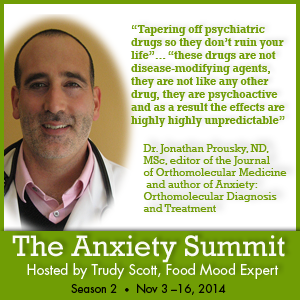
Dr. Jonathan ProuskyQuote_Anxiety2

Dr. Jonathan Prousky, MSc, ND, editor of the Journal of Orthomolecular Medicine and author of Anxiety: Orthomolecular Diagnosis and Treatment was interviewed by host of the Anxiety Summit, Trudy Scott, Food Mood Expert and Nutritionist, author of The Antianxiety Food Solution.

Tapering off psychiatric drugs so they don’t ruin your life

  • The process of reducing or discontinuing psychotropic medications
  • Difficulties patients have in overcoming pharmacological dependence
  • Reactions when someone discontinues SSRIs and benzodiazapines
  • Tapering approach, duration and improving outcomes
  • The importance of diet and lifestyle
  • Melatonin and niacinamide during benzodiazepine withdrawal
  • Using Neurapas Balance, rhodiola and GABA during a taper protocol
  • A tapering schedule case report

Here are a few snippets from our interview:

prescribed psychiatric drugs…. They are not like any other medication. These drugs are not disease-modifying agents, so they’re not like taking a drug for diabetes. These drugs are psychoactive.

That’s exactly how they work. They influence, basically, how one thinks, feels and behaves and, of course, physiology and, as a result, their effects are highly, highly unpredictable and what I constantly see in my own practice is how doctors are failing our patients and not really discussing all of what is necessary when prescribing these drugs because these drugs tend to have some significant effects. and I don’t consider any of the effects of these psychoactive drug’s effects and they can be either positive, negative or neutral

I think what’s important for people to realize is there’s no specific clinical manifestation that would be appropriate for all patients that are on SSRI drugs, whether that’s something like Paxil or Prozac or Celexa. It doesn’t matter. There’s no one manifestation that all patients coming off those drugs are going to experience. Essentially, because these drugs have very, I would say, unpredictable psychoactive effects then, when somebody is coming off of them, the effects from tapering are also rather unpredictable. So, people can experience either regression of their symptoms that brought them to a physician in the first place and one of the reasons why they were prescribed the drug in the first place, so patients can certainly regress and start having a return of their previous symptoms. Patients can have incredible sleep issues where they just cannot sleep, and they literally are feeling so concerned and they start worrying about not being able to fall asleep even before they sleep because it becomes such an issue.

Patients can feel very restless and they can get an inner restlessness that sometimes can drive them, literally almost like, as if, they’re going crazy, it’s called agathusia. There’s like this inner restlessness that torments people. Sometimes that can even happen as they taper down. Sometimes people can develop some weird, neurological manifestations whether it’s ticks or just strange or abnormal body movements, which we call dyskinesias. Patients can start having the sweats or feelings of derealization where they don’t feel grounded in reality.

They can have brain zaps where their brain just feels like it’s being zapped or as if someone’s electrocuting them. They can feel their whole body shaking and sort of becoming very jittery or even they can have cold sweats and shiver a lot. Essentially, there’s not a manifestation that you and I couldn’t think of that couldn’t happen to somebody coming off of these drugs because, as I said, they’re so unpredictable.

During the interview we discussed a number of papers written by Dr. Prousky. Here is a link to his publications.

Here is the Harm Reduction Guide to Coming Off Psychiatric Drugs by Will Hall

Dr. Prousky discussed this paper about pharmaGABA: Relaxation and immunity enhancement effects of gamma-aminobutyric acid (GABA) administration in humans.

GABA could work effectively as a natural relaxant and its effects could be seen within 1 hour of its administration to induce relaxation and diminish anxiety.

I talked more about GABA in my interview: Targeted individual amino acids for eliminating anxiety: practical applications

Dr. Prousky shared a case study of an SSRI and rhodiola taken together leading to tachyarrhythmia: Herbal medicine–sets the heart racing!

We report the case of a young previously healthy woman who had a significant tachyarrhythmia whilst taking a combination of escitalopram and the over the counter herbal medicine Rhodiola. Escitalopram, a SSRI, increases serotonin levels in the brain by selectively inhibiting re-uptake of serotonin. It is metabolised by the cytochrome P450 (CYP) isoenzymes CYP2C19, CYP2D6 and CYP3A4. Rhodiola also increases serotonin levels by inhibiting monoamine oxidase. It is a potent inhibitor of CYP3A4 and P-Glycoprotein. Consequently both agents taken by a patient can augment serotonin levels.

Dr. Prousky discussed the risks of SSRIs during pregnancy and shared this paper: The risks of selective serotonin reuptake inhibitor use in infertile women: a review of the impact on fertility, pregnancy, neonatal health and beyond

Antidepressant use during pregnancy is associated with increased risks of miscarriage, birth defects, preterm birth, newborn behavioral syndrome, persistent pulmonary hypertension of the newborn and possible longer term neurobehavioral effects.

Dr. Prousky is the editor of the Journal of Orthomolecular medicine.

The CSOM/Canadian Society for Orthomolecular Medicine holds an annual conference in Toronto and you can learn more here. The 2015 conference will be April 24-26.

If you are not already registered for the Anxiety Summit you can get live access to the speakers of the day here www.theAnxietySummit.com

Filed Under: Anxiety and panic, benzodiazapines, Drugs, The Anxiety Summit 2 Tagged With: anxiety, Dr Jonathan Prousky, GABA, niacin, pharmaGABA, psychiatric drugs, rhodiola, SSRIs, the anxiety summit, Trudy Scott

Nutrients for dementia: could they help during benzodiazepine withdrawal?

September 19, 2014 By Trudy Scott 29 Comments

Half Coconut and Flower on Bamboo Mat

Could certain nutrients help with memory and cognitive issues, and the “pseudo-dementia” symptoms so many people experience when withdrawing from benzodiazapines?

In a recent article I shared the new research on benzodiazepines being linked to increased Alzheimer’s risk and other serious concerns.

Alison, who was featured in the Boston Globe story, commented on the above blog post:

I am only 29 years old, and I developed what I refer to as pseudo-dementia once I developed a tolerance to benzodiazepines and it got worse once the drug was stopped. From what I have seen from others recovering from and in tolerance to benzodiazepines, cognitive functioning and memory can get hit hard and actually mimic dementia. I wonder if the symptoms these elders are experiencing are true Alzheimer’s, or a side effect/withdrawal effect.

This really got me thinking. She makes an excellent point. It may well be that the symptoms they are seeing in the study are a side effect/withdrawal effect, rather than true Alzheimer’s disease and may be reversible. It surprises me that the study authors have not commented on this since cognitive effects are well documented in the literature.

Here are a few examples I found:

“Benzodiazepines revisited—will we ever learn?” Published in Addiction in 2011

“The review noted a series of adverse effects that continued to cause concern, such as cognitive and psychomotor impairment. In addition, dependence and abuse remain as serious problems. Despite warnings and guidelines, usage of these drugs remains at a high level.”

“Benzodiazepine harm: how can it be reduced?” Published in British Journal of Clinical Pharmacology in January this year (2014)

“Adverse effects comprise sedation subjectively and cognitive and psychomotor impairment objectively. Complex skills such as driving can be compromised… Withdrawal and dependence have excited particular concern, and even polemic. Perhaps a third of long term (beyond 6 months) users experience symptoms and signs on attempting to withdraw – anxiety, insomnia, muscle spasms and tension and perceptual hypersensitivity.”

I was not able to find much in the literature on pseudo-dementia. I did see it listed on the benzo.org.uk site but not elsewhere in relation to benzodiazapines.

I did find this paper “Pseudo-dementia: A neuropsychological review” which is presumably something different (as it refers to depression/dementia). This part may be applicable: “ ‘The pseudo component’ which denotes the actual lack of the neurodegenerative dementia” and the fact that it can be reversed.

This all inspired me to do some digging on dementia. If what they are seeing in participants of the British Medical Journal is not true dementia, it’s very encouraging to think that recovery is possible.

There are some very powerful foods and nutrients that help certain people with dementia and I wonder if they would also help with the benzodiazepine-induced pseudo-dementia:

  • Phosphatidyl serine
  • Fish oil
  • Niacinaminde
  • Olive oil
  • Coconut oil
  • Nattokinase
  • Vitamin E
  • Folate
  • Folate, vitamin B6 and B12
  • Zinc
  • Lithium orotate
  • Bacopa

Not all of the above would work for everyone because of biochemical individuality, and there are mixed results in the literature, but it’s worth assessing for possible deficiencies and addressing overall nutrient status.

It would be wonderful to think that benzo recovery can be improved in the areas of cognition, memory and “pseudo-dementia.”

Interestingly, many of these above nutrients are also factors in anxiety and/or depression and may be related to why someone sought help and was prescribed benzos initially.

P.S. There nutrients are great for overall brain function so anyone could benefit from one or more of them. I actually take 20mg of lithium orotate a day and it helps keep my post-menopausal brain sharp and focused.

P.P.S. I have recently learned that many people in benzo withdrawal do not tolerate supplements so please USE CAUTION and work with your health practitioner.  I will do a part 2 follow up to this blog listing foods high in these nutrients in case you feel more comfortable and do better with a food based approach. 


Filed Under: benzodiazapines Tagged With: bacopa, benzodiazapines, cognitive, dementia, fish oil, lithium, olive oil

Benzodiazepines linked to increased Alzheimer’s risk and other serious concerns

September 12, 2014 By Trudy Scott 18 Comments

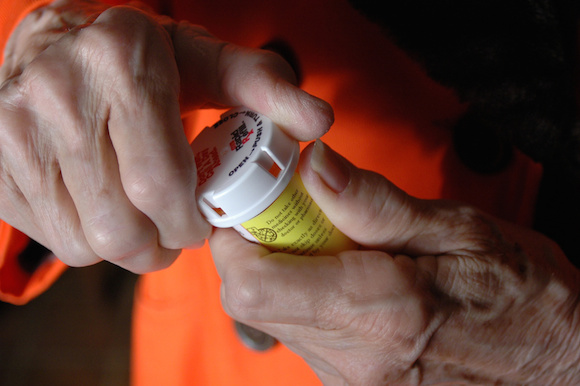
pill bottle

A new study published last week shows that benzodiazepines are linked to an increased Alzheimer’s disease risk. A useful synopsis was published on the Harvard Health Publications blog.

A team of researchers from France and Canada linked benzodiazepine use to an increased risk of being diagnosed with Alzheimer’s disease. In the study, the greater a person’s cumulative dose of benzodiazepines, the higher his or her risk of Alzheimer’s.

The type of drug taken also mattered. People who were on a long-acting benzodiazepine like diazepam (Valium) and flurazepam (Dalmane) were at greater risk than those on a short-acting one like triazolam (Halcion), lorazepam (Ativan), alprazolam (Xanax), and temazepam (Restoril).

You can read the full British Medical Journal study here.

The possible increased risk of Alzheimer’s disease is just part of the picture. There are a host of other very serious issues with this medication.

Jeremy C. Fox wrote a great article in the Boston Globe called “When withdrawal is the hardest part.”  It covers Alison Page’s struggle with recovering from difficulties associated with benzodiazepine withdrawal.

… Alison ” was experiencing withdrawal between doses of Ativan, a drug often prescribed for anxiety or insomnia. After taking a dose that night” Alison “felt fine — for the moment. But her struggle to recover continues more than two years later.

While rampant abuse of heroin and prescription opiates dominates public attention, dependency on benzodiazepines — a group of tranquilizers that includes drugs such as Ativan, Klonopin, and Xanax — remains less widely acknowledged or understood.

Doctors say benzodiazepines are effective for short-term stress, as in the days following the death of a loved one or another emotionally difficult event. But problems can arise when use continues for more than a few weeks.”

I don’t feel any benzodiazepine prescriptions should be written. There are much better ways to deal with anxiety – like addressing possible low GABA and tryptophan; addressing low zinc levels; addressing the gut and possible dysbiosis; quitting sugar and caffeine; figuring out if gluten is an issue; eating to control blood sugar; and eating quality food that includes grass-fed red meat, wild fish, healthy fats and organic produce.

Alison “was prescribed Ativan by a psychiatrist in 2009, she said, as she adjusted to working as a receptionist after graduating from Northeastern University. As a shy person, she found the front-and-center role a tough fit, she said.”

Many of my shy and introverted clients have pyroluria, a social anxiety condition. Addressing this with zinc, vitamin B6 and evening primrose oil solves the problem. Instead many people are prescribed benzos rather casually and end up like Alison, having to deal with all these horrible withdrawal effects from the benzos: increased anxiety, dizziness, terrible fears, less able to deal with stress, prone to getting sick and not sleeping for months.

Alison joined the BenzoBuddies.org support group and it was through this group that she learned what was happening to her. This is a great group that supports folks who are tapering off benzos.

I was fortunate to have interviewed Dr. Catherine Pittman on the Anxiety Summit in June – Benzodiazapines: Risks vs Benefits – and she shared the results of a survey she did with members of BenzoBuddies.org.

Here are a few facts and gems from our interview:

  • The United States has the highest rate of benzodiazepine prescription in the world
  • If the person is prescribed a benzodiazepine, short-term relief is obtained, but tolerance develops, and increasing dosages may be required
  • Physiological dependence on the benzodiazepines can occur within, four to six weeks [I am hearing it can be much shorter than four to six weeks]
  • If you have people who are on benzodiazepines, you may have to give them lists, because they may not remember as much as person who’s not on benzodiazepines [this relates directly to the new research mentioned above and cognitive decline]
  • Not all physicians or psychiatrists have the knowledge to help a person successfully withdraw.
  • Professor Malcolm Lader, who is from the Royal Maudsley Hospital (in the UK) stated: “It’s more difficult to withdraw people from benzodiazepines than it is from heroin.”
  • And one of the things that we heard from the BenzoBuddies community, “Please educate the treatment professional community. Please help them know. My doctor didn’t understand this. My psychiatrist didn’t understand what was going on. Try to do what you can to educate them.”

My goal with this blog post is to help with what the BenzoBuddies community is asking – educating the treatment professional community and you as well. If you’re not currently taking a prescription for benzodiazapines please think twice before doing so and please share this information with friends and family who may be considering getting on them.

I also encourage you to read the comments in the Benzodiazapines: Risks vs Benefits blog. Many Benzobuddies.org members shared very heartfelt stories of their battles with benzo withdrawal.  We appreciate them (and Alison) for being so open and vulnerable about what has happened to them. They are doing this to raise awareness.

If you do have a benzodiazepine prescription please don’t stop cold turkey and without first talking to your doctor, as well as learning about the taper protocols.  www.Benzo.org.uk is a great resource for Professor Ashton’s taper protocols and other valuable benzo information.  And do check out BenzoBuddies.org for a great support system.

Based on all the above side-effects and withdrawal symptoms and whether or not the above new study shows a causal link between benzodiazapines and Alzheimer’s disease, I would not recommend these drugs for anyone ever! 

Filed Under: benzodiazapines Tagged With: alzheimer's, Dr. Catherine Pittman

  • « Go to Previous Page
  • Page 1
  • Page 2
  • Page 3

Primary Sidebar

GABA QuickStart Homestudy

gaba quickstart homestudy

Free Report

9 Great Questions Women Ask about Food, Mood and their Health

You'll also receive a complimentary subscription to my ezine "Food, Mood and Gal Stuff"


Connect with me

Popular Posts

  • Amino Acids Mood Questionnaire from The Antianxiety Food Solution
  • The Antianxiety Food Solution Amino Acid and Pyroluria Supplements
  • Pyroluria Questionnaire from The Antianxiety Food Solution
  • Collagen and gelatin lower serotonin: does this increase your anxiety and depression?
  • Tryptophan for the worry-in-your-head and ruminating type of anxiety
  • GABA for the physical-tension and stiff-and-tense-muscles type of anxiety
  • The Antianxiety Food Solution by Trudy Scott
  • Seriphos Original Formula is back: the best product for anxiety and insomnia caused by high cortisol
  • Am I an anxious introvert because of low zinc and vitamin B6? My response to Huffington Post blog
  • Vagus nerve rehab with GABA, breathing, humming, gargling and key nutrients

Recent Posts

  • Her cravings for chips and peanut butter were triggered by stress: GABA ends cravings and reduces physical tension and fear of heights
  • It is truly miraculous to be able to move through life without crippling anxiety and panic
  • GABA and tryptophan combo provide immediate and noticeable relief for tremors and cervical dystonia in just 7 days
  • Red light therapy for back and neck pain, plantar fasciitis and low mood – a complement to the amino acids GABA, DPA and tryptophan
  • What do I use instead of Seriphos to help lower high cortisol that is affecting my sleep and making me anxious at night?

Categories

  • 5-HTP
  • AB575
  • Addiction
  • ADHD
  • Adrenals
  • Alcohol
  • Allergies
  • Alzheimer's disease
  • Amino Acids
  • Anger
  • Antianxiety
  • Antianxiety Food Solution
  • Antidepressants
  • Anxiety
  • Anxiety and panic
  • Autism
  • Autoimmunity
  • benzodiazapines
  • Bipolar disorder
  • Books
  • Caffeine
  • Cancer
  • Candida
  • Children/Teens
  • Collagen
  • Cooking equipment
  • Coronavirus/COVID-19
  • Cravings
  • Depression
  • Detoxification
  • Diabetes
  • Diet
  • DPA/DLPA
  • Drugs
  • EFT/Tapping
  • EMF
  • EMFs
  • Emotional Eating
  • Endorphins
  • Environment
  • Essential oils
  • Events
  • Exercise
  • Fear
  • Fear of public speaking
  • Fertility and Pregnancy
  • Fish
  • Food
  • Food and mood
  • Functional neurology
  • GABA
  • Gene polymorphisms
  • General Health
  • Giving
  • Giving back
  • Glutamine
  • Gluten
  • GMOs
  • Gratitude
  • Gut health
  • Heart health/hypertension
  • Histamine
  • Hormone
  • Hyperparathyroidism
  • Hypoglycemia
  • Immune system
  • Inflammation
  • Insomnia
  • Inspiration
  • Introversion
  • Joy and happiness
  • Ketogenic diet
  • Lithium orotate
  • Looking awesome
  • Lyme disease and co-infections
  • MCAS/histamine
  • Medication
  • Men's health
  • Mental health
  • Mercury
  • Migraine
  • Mold
  • Movie
  • MTHFR
  • Multiple sclerosis
  • Music
  • NANP
  • Nature
  • Nutritional Psychiatry
  • OCD
  • Osteoporosis
  • Oxalates
  • Oxytocin
  • Pain
  • Paleo
  • Parasites
  • Parkinson’s disease
  • PCOS
  • People
  • PMS
  • Postpartum
  • PTSD/Trauma
  • Pyroluria
  • Questionnaires
  • Real whole food
  • Recipes
  • Research
  • Schizophrenia
  • serotonin
  • SIBO
  • Sleep
  • Special diets
  • Sports nutrition
  • Stress
  • Sugar addiction
  • Sugar and mood
  • Supplements
  • Teens
  • Testimonials
  • Testing
  • The Anxiety Summit
  • The Anxiety Summit 2
  • The Anxiety Summit 3
  • The Anxiety Summit 4
  • The Anxiety Summit 5
  • The Anxiety Summit 6
  • Thyroid
  • Thyroid health
  • Toxins
  • Tryptophan
  • Tyrosine
  • Uncategorized
  • Vegan/vegetarian
  • Women's health
  • Yoga

Archives

  • May 2026
  • April 2026
  • October 2025
  • September 2025
  • August 2025
  • July 2025
  • June 2025
  • May 2025
  • April 2025
  • March 2025
  • February 2025
  • January 2025
  • November 2024
  • October 2024
  • September 2024
  • August 2024
  • July 2024
  • June 2024
  • May 2024
  • April 2024
  • March 2024
  • February 2024
  • January 2024
  • December 2023
  • November 2023
  • October 2023
  • September 2023
  • August 2023
  • July 2023
  • June 2023
  • May 2023
  • April 2023
  • March 2023
  • February 2023
  • January 2023
  • December 2022
  • November 2022
  • October 2022
  • September 2022
  • August 2022
  • July 2022
  • June 2022
  • May 2022
  • April 2022
  • March 2022
  • February 2022
  • January 2022
  • December 2021
  • November 2021
  • October 2021
  • September 2021
  • August 2021
  • July 2021
  • June 2021
  • May 2021
  • April 2021
  • March 2021
  • February 2021
  • January 2021
  • December 2020
  • November 2020
  • October 2020
  • September 2020
  • August 2020
  • July 2020
  • June 2020
  • May 2020
  • April 2020
  • March 2020
  • February 2020
  • January 2020
  • December 2019
  • November 2019
  • October 2019
  • September 2019
  • August 2019
  • July 2019
  • June 2019
  • May 2019
  • April 2019
  • March 2019
  • February 2019
  • January 2019
  • December 2018
  • November 2018
  • October 2018
  • September 2018
  • August 2018
  • July 2018
  • June 2018
  • May 2018
  • April 2018
  • March 2018
  • February 2018
  • January 2018
  • December 2017
  • November 2017
  • October 2017
  • September 2017
  • August 2017
  • July 2017
  • June 2017
  • May 2017
  • April 2017
  • March 2017
  • February 2017
  • January 2017
  • December 2016
  • November 2016
  • October 2016
  • September 2016
  • August 2016
  • July 2016
  • June 2016
  • May 2016
  • April 2016
  • March 2016
  • February 2016
  • January 2016
  • December 2015
  • November 2015
  • October 2015
  • September 2015
  • August 2015
  • July 2015
  • June 2015
  • May 2015
  • April 2015
  • March 2015
  • February 2015
  • January 2015
  • December 2014
  • November 2014
  • October 2014
  • September 2014
  • August 2014
  • July 2014
  • June 2014
  • May 2014
  • April 2014
  • March 2014
  • February 2014
  • January 2014
  • December 2013
  • November 2013
  • October 2013
  • September 2013
  • August 2013
  • July 2013
  • June 2013
  • May 2013
  • April 2013
  • March 2013
  • February 2013
  • January 2013
  • December 2012
  • November 2012
  • October 2012
  • August 2012
  • July 2012
  • June 2012
  • May 2012
  • April 2012
  • March 2012
  • February 2012
  • January 2012
  • December 2011
  • November 2011
  • October 2011
  • September 2011
  • August 2011
  • July 2011
  • June 2011
  • May 2011
  • April 2011
  • March 2011
  • February 2011
  • January 2011
  • December 2010
  • October 2010
  • September 2010
  • July 2010
  • May 2010
  • April 2010
  • March 2010
  • February 2010
  • January 2010
  • November 2009

Share the knowledge!

The above statements have not been evaluated by the Food and Drug Administration. Products listed in this website are not intended to diagnose, treat, cure or prevent any disease.

The information provided on this site is for informational and educational purposes only and is not intended as a substitute for advice from your physician or other health care professional. You should consult with a healthcare professional before starting or modifying any diet, exercise, or supplementation program, before taking or stopping any medication, or if you have or suspect you may have a health problem.


Copyright © 2026 Trudy Scott. All Rights Reserved. | Privacy | Terms and Conditions | Refund Policy | Medical Disclaimer

Free Report

9 Great Questions Women Ask about Food, Mood and their Health

You’ll also receive a complimentary subscription to my ezine “Food, Mood and Gal Stuff”