• Skip to primary navigation
  • Skip to main content
  • Skip to primary sidebar

everywomanover29 blog

Food, Mood and Women's Health – Be your healthiest, look and feel great!

  • Blog
  • About
  • Services
  • Store
  • Resources
  • Testimonials
  • The Book
  • Newsletter
  • Contact
  • Search this site

Anxiety and panic

The Anxiety Summit: Dr. Daniel Amen on the gut and serotonin

April 24, 2015 By Trudy Scott 45 Comments

DanielAmenTitle_Anxiety3

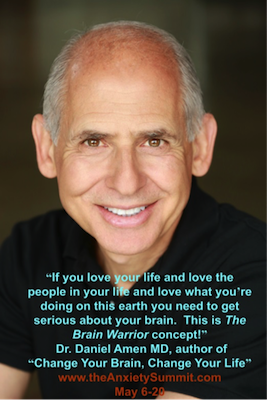
Dr. Daniel Amen MD, is well recognized as the brain doctor and this is the title of our interview on season 3 of The Anxiety Summit: “The Brain Warriors Way to Attacking Anxiety, Depression and Aging.”

  • Why we are in a war for the health of our brains?
  • Why anxiety is so common in women and how depression shows up in men
  • Four different brain types
  • Natural ways for dealing with anxiety (instead of typical anti-anxiety medications)
  • How birth control pills contribute to anxiety
  • The impact of gut health on anxiety

daniel-amen-anxietysummit


He just has so much wisdom:

If you love your life and love the people in your life and love what you’re doing on this earth you need to get serious about your brain. This is The Brain Warrior concept!”

There is a path to keep your brain much healthier than most people every thought possible! Neurons don’t age, it’s blood vessels that age and if you understand that and can keep the blood flow to your brain healthy, it directly attacks ADD, anxiety, depression, obesity and Alzheimer’s disease.

And a great sense of humor too! We had many laugh out loud moments which are always good for us but especially great when we’re feeling sad, anxious or overwhelmed.

We talk about how important the microbiome and gut health is when it comes to mental health.   He finds it funny that as the brain doctor, he now going to have to consider poop! He really does say that!

You may recall my great interview with Dr. Ted Dinan on season 2: Microbes in the gut and psychobiotics as a potential treatment for anxiety and depression

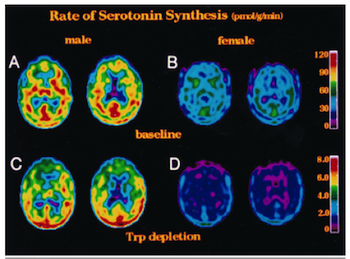
We also talk about how women make less serotonin so I just had to look up the research. Here are some snippets from this 1997 paper “Differences between males and females in rates of serotonin synthesis in human brain”

The marked difference in the rates of serotonin synthesis between male and female subjects is, to our knowledge, a new finding.

Moreover, no differences have been found between the number of serotonin re-uptake sites in the brains of male and female subjects.

The rate of serotonin synthesis will depend on numerous factors including the free plasma tryptophan levels, the plasma levels of tryptophan relative to the other large neutral amino acids, the activity of the system that transports the large neutral amino acids into brain, the gene expression of tryptophan hydroxylase, degradation of tryptophan hydroxylase, compartmentalization of tryptophan and tryptophan hydroxylase in brain cells, as well as probably numerous other factors.

Averaging over the different brain areas, the rate of serotonin synthesis is 52% greater in male than in female subjects. This is one of the largest differences between the brains of males and females that is not related to hormone binding sites. The reason for this difference is not clear at this time.
brainimage

Here is an image of brain scans that were published in the above study. The color bar on the right in the same row gives an indication of synthesis i.e. blues, purples and pinks means low synthesis of serotonin. The research found low synthesis of serotonin in the women in the study.

We can tie this all back to the gut since we make so much serotonin in the gut!

As Dr. Amen says “you need to get serious about your brain” and here a few of his recommendations:

  • eat real whole food, quit sugar and sodas, get plenty of healthy fats in your diet and quit bread
  • use natural approaches to boost serotonin and GABA, and address low progesterone if necessary
  • fall in love with exercise and get rid of negative thoughts (he calls them ANTS: automatic negative thoughts)
  • and avoid medications like benzodiazapines and the BCP/birth control pill

Here are some of Dr. Amen’s wonderful books:
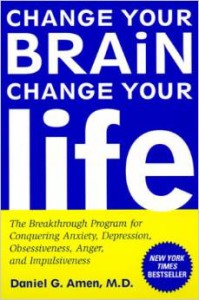
Change Your Brain, Change Your Life: The Breakthrough Program for Conquering Anxiety, Depression, Obsessiveness, Anger, and Impulsiveness

daniel amen change your brain change your life


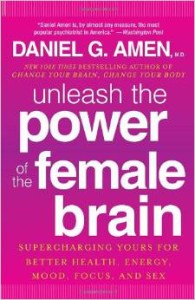
Unleash the Power of the Female Brain: Supercharging Yours for Better Health, Energy, Mood, Focus, and Sex

daniel amen unleash the power of the female brain


Dr. Amen, and his wife Tana have created this free 3-part online video series called the Brain Warrior’s Way. Dr. Amen says:

To survive and thrive, you must become a brain warrior, because without a doubt you are in a war for the health of your brain.

daniel amen gift video

You can get access to the 3-part online video series called the Brain Warrior’s Way here
Join us on season 3 of The Anxiety Summit (www.theanxietysummit) and hear Dr. Amen share more on “The Brain Warriors Way to Attacking Anxiety, Depression and Aging.”


 

Filed Under: Anxiety and panic, Depression, The Anxiety Summit 3 Tagged With: aging, brain warrior, depression, Dr. Daniel Amen, serotonin

The Hormone Secret and progesterone for anxiety

March 18, 2015 By Trudy Scott 68 Comments

Dr Tami Meraglia, MD, is the author of  The Hormone Secret. I had an advance review copy and read it on the plane coming back from San Diego and it’s fabulous!

Read on below for a wonderful sample snippet from the book:

Did you know that you have a natural anti-anxiety hormone?

Women have a hormone that is produced in the ovaries and the adrenal glands that is like Valium bathing the female mind.  It helps reduce anxiety and is known as the peaceful hormone.  It also helps us sleep soundly through the entire night.

What is this amazing hormone?  Progesterone.

Progesterone acts on the gamma amino butyric (GABA) receptors in the brain (the same receptors sleeping pills, anti-anxiety medication and even alcohols act upon), producing a calming effect.  GABA is the primary inhibitory transmitter in the brain.  If you wake between 2am and 4 am wide awake, you likely have a progesterone deficiency.

Progesterone also affects the elasticity of our skin, memory, is anti-inflammatory, is a natural diuretic and helps normalize blood sugar.  It also stimulates that cells that make new bone called osteoblasts.

Unfortunately progesterone leaves our bodies first and leaves us quickly.  You can have a low progesterone level as early as your late 20’s!  Many women think that their increased irritability, loss of enjoyment of life and trouble sleeping if from their 24/7 lifestyle but it is likely more often due to a progesterone deficiency

Here are 7 common symptoms associated with low progesterone:

  1. Anxiety
  2. Waking at night
  3. Fibrocystic breasts
  4. PMS
  5. Bone loss
  6. Low libido
  7. Infertility or irregular periods.

Here are 3 simple and natural things you can do to help your own body produce more progesterone:

  • Vitamin C.   A dose of 750-1000 mg has been shown in studies to raise progesterone in women.
  • Selenium.  200-400 mcg/day was shown to boost production of progesterone in an Italian study.
  • The spices turmeric, thyme and oregano are also useful for raising progesterone.  Use in cooking whenever you can.

Topical progesterone is also available over-the-counter.

If you find that it takes a bit more energy to keep your cool or that you are no longer sleeping through the night I encourage you to look to progesterone as a way to help.

I love Dr. Tami’s famous quote: “Remember, fine is a four-letter word.  You deserve to feel FABULOUS!”   I could not agree more – we all deserve to feel our absolute best all the time!

I do want to mention that we do differ in our food recommendations. I’m a Paleo eater myself and am recommending this more and more to my clients.   But I absolutely LOVE the hormone information in this book!  Just wait until you read about testosterone too – yes! And natural ways to boost your own production! And/or how to use small amounts for women!  It’s very different from what you typically hear.


Filed Under: Anxiety and panic, Books, Hormone Tagged With: anxiety, progesterone, Tami Meraglia, the hormone secret

The Diabetes World Summit and the anxiety-diabetes connection

March 16, 2015 By Trudy Scott Leave a Comment

diabetes-summit

The Diabetes World Summit (ONLINE) from March 23-30, 2015!

The mission of The Diabetes World Summit is to change lives. This incredible, online event has the potential to improve the health of tens of thousands with diabetes or pre-diabetes!

387 million people in the world have diabetes, and nearly half of them don’t know it. In the United States alone, type 2 diabetes is the 7th leading cause of death. The statistics are alarming, especially when we’ve proven that type 2 can be prevented and reversed!

Dr. Brian Mowll, The Diabetes Coach™, created The Diabetes World Summit to share the expertise of the world’s leaders in natural diabetes care to help you regain blood sugar control, live the highest quality life and even reverse type 2 and pre-diabetes. The 40 powerful, expert sessions at The Diabetes World Summit will benefit anyone with type 1 or type 2 diabetes, pre-diabetes, metabolic syndrome, as well as those who want to avoid blood sugar problems and achieve optimal health.

You may wonder: what is the connection between anxiety/depression and diabetes? In this study: Frequency of depression and anxiety in patients attending a diabetes clinic, they found “almost 50% of patients were found to have anxiety and depression.” The study concludes with this: “There is a high incidence of depression and anxiety in patients with chronic type-2 diabetes and clinicians must screen regularly for better care of these patients.”

Register now at the following link: https://vj173.isrefer.com/go/summitreg/trudyscottcn/


Filed Under: Anxiety and panic, Depression Tagged With: Brian Mowll, diabetes, The Diabetes World Summit

MTHFR and methylation: mood, anxiety, depression, and resources

March 6, 2015 By Trudy Scott 27 Comments

Methylation polymorphisms (also called defects or mutations or SNPs) can impact mood. I’d like to share a few studies on some of the mood issues, other health conditions where we may see impacts and some resources for you to learn more.

If you have one of the MTHFR polymorphisms, the BH4 cycle may be affected and may impact how we make serotonin and dopamine. Here is some of the research:

  • Anxiety and schizophrenia
  • Depression
  • Bipolar disorder

There is much evidence on the methylation polymorphisms and these health conditions:

  • Cancer
  • Fertility
  • Heart disease and stroke
  • Thyroid cancer

Resources for further learning

The two practitioners who I have learned the most from are Dr. Ben Lynch ND and Coleen Walsh, a nutritionist who has been dubbed the “methyl queen”.    

  • Ben Lynch ND: his website http://mthfr.net/ and blog articles provide a wealth of information and he is very active on his Facebook page (https://www.facebook.com/drbenjaminlynch). I did his excellent 2 day professional training which he has available on this site. I also interviewed him on The Anxiety Summit and we talked about GAD, MOAO and COMT polymorphisms
  • Coleen Walsh, nutritionist, “methyl queen” offers a professional MTHFR and Methylation training for practitioners and a MTHFR workshop for the layperson and every day mutant. I highly recommend both of these.

Just remember this great quote from Coleen Walsh during our interview on the Anxiety Summit:

Our DNA is not set in stone! Diet and lifestyle can go a long way to change our health destiny

The good news is that we can change our health, our disease outcomes and how we feel by eating real whole good quality organic food, getting chemicals and toxins out of our diets and environment, reducing stress, supporting the liver and our natural detox processes.

Certain key nutrients can also be very help for many people with polymorphisms. I’ll share more on folate and other nutrients and other SNPs in a later blog post. I’ll also share more on genetic testing.

I’d love to hear if you’ve done genetic testing and how making changes (supplement, diet, lifestyle) have helped. Be sure to post questions too.


Filed Under: Anxiety and panic, Bipolar disorder, Cancer, Depression, MTHFR, The Anxiety Summit Tagged With: coleen walsh, Methylation, mthfr

Menopause is a Trip: Travel First Class summit

March 2, 2015 By Trudy Scott Leave a Comment

Just a quick reminder – this online event starts TODAY – Menopause is a Trip: Travel First Class, hosted by my colleague, Holistic Health Coach Katherine Miller.

I am happy to invite you to this online event that will bring together 16 experts in women’s health and balancing hormones that will help you find relief from menopausal symptoms and enjoy a healthy, vital future.

Here is an excerpt from a recent article Katherine wrote:

Every woman goes through menopause, yet very few prepare for it. This natural shift of our biology, from reproductive potential to what I call the “self-creative” stage, is a potent time for women. So much of our energy is freed up for new ventures, including our own self-development.

Yet rather than enjoy menopause as a time of positive potential, most women find themselves struggling to cope with the hot flashes, night sweats, mood swings, low libido, exhaustion and host of other symptoms for which “the change” is known. The problem is that rather than practicing good self-care, most of us have been pushing ourselves past our limits for years. We begin the 10+ year transition into menopause when our resources are at their lowest, which causes natural hormonal shifts to be unnaturally dramatic or even hellish.

Fortunately, it doesn’t have to be that way. “Lifestyle is so under-rated as a preventive measure in staying well–stress reduction, sleep, exercise, eating well,” says Dr. Mache Seibel, a professor at UMass Medical School, who focuses on perimenopause and menopause. “There has to be an awareness of ‘How can I take care of myself?’”

Even those whose symptoms of exaggerated hormonal imbalance have become impossible to ignore have more choices than they may realize. “It’s just quite incredible how food choices, lifestyle choices, good quality sleep, detoxifying our environment, taking care of the gut, and taking care of the liver can have some really profound impacts on our hormones,” says health coach Magdalena Wszelaki.

Dr. Mache Seibel and health coach Magdalena Wszelaki are speakers on the summit and I support everything they say!

My talk is today and the focus is anxiety …. “Your key nutrients to end anxiety and stress during menopause.” I talk about:

  • low GABA and low serotonin and the connection to low progesterone and estrogen
  • how important adrenal support is when you go into menopause
  • key nutrients like zinc and vitamin B6 – for anxiety, pyroluria and hormone balance
  • why grass-fed red meat is good (really!!) – zinc, iron, omega-3s and more
  • and why skipping the coffee is a good thing!

Also hear Dr. Tami Meraglia today. She is an integrative MD, and author of the soon-to-be-released book called The Hormone Secret (I have my advance review copy and it’s good!) and one of my favorite hormone docs (and a good friend who I adore)!

And do catch the rest of the excellent line-up through the week.

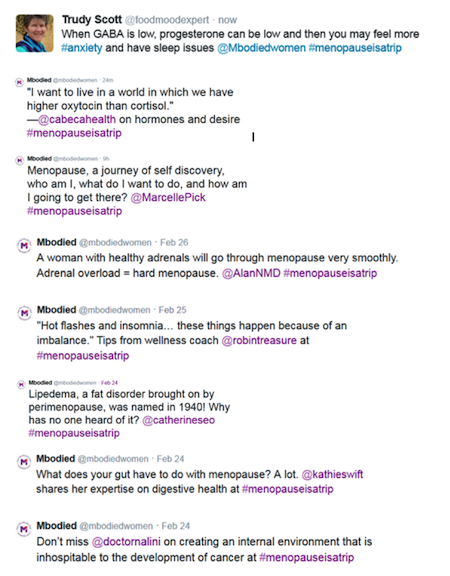
To entice you and give you a feel for what is to come, here are some tweets with quotes from many of the speakers.

Register here https://tz207.isrefer.com/go/menopuasesummit/TSsummit2015/


Filed Under: Anxiety and panic, Events, Women's health Tagged With: Katherine Miller, menopause

Winter blues or SAD: light therapy

February 27, 2015 By Trudy Scott 44 Comments

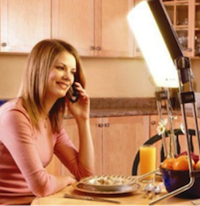
Seasonal affective disorder (SAD) or “winter blues” is a form of depression most often associated with the lack of light during the fall and winter months. It is very common and may be associated with low serotonin levels. We often associate low serotonin with depression, however low serotonin can also be associated with: anxiety, excessive worry and feeling overly stressed. There’s evidence of seasonality in anxiety and panic attacks, just as there is with seasonal affective disorder (SAD). Another common sign of low serotonin is increased carbohydrate cravings, especially during the afternoon or evening.

One very effective approach for SAD is light therapy. I also find the use of targeted individual amino acids and a dietary approach to be very useful and share more about that below.

Winter Blues by Dr. Norman Rosenthal MD

I’ve just finished reading a really great book called Winter Blues: Everything You Need to Know to Beat Seasonal Affective Disorder by Dr. Norman Rosenthal MD, and the research is fascinating. He is a fellow South African who moved to the USA and found he was depressed each winter. After 3 seasons of this, he started doing research on light therapy and was one of the original SAD researchers. He is internationally recognized for his pioneering contributions to understanding SAD and using light therapy to treat it.

Feedback from colleagues: desk lamp, desk panels, floor lamps and light boxes

I asked some colleagues what they have used and/or liked, and recommend and share some of these below (providing my Amazon links in most cases so you can find them easily). Due to models being discontinued/revamped, I’ve made some updates as of Jan 2024.

Donna Kelley, Certified Holistic Nutritionist

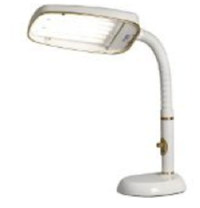
I have a Blue Max, full spectrum, 70 watt dimmable desk lamp. I have had it for 3 years and actually use it to work by. It was recommended by Julia Ross in her certification program. (The company that makes this one is Full Spectrum Solutions)


winter-lamp

UPDATE: Jan 2024 – the above model is no longer available but a very comparable one is the Verilux HappyLight Duo – 2-in-1 Light Therapy & Task Desk Lamp. Be sure to read some of the reviews. This is a really good one: “providing me with light therapy to lift my mood some during these dark times (literally since it’s winter…and figuratively…). I genuinely think I feel better/lighter/cheerier after I’ve been working by my HappyLight Duo for several hours.”

Christine Wokowsky, Board Certified in Holistic Nutrition

My office is the darkest room in the house and I have one sitting on my desk, especially helpful in the winter. This is the second Verilux Happy Light I have used and I really like it. Living in Nevada where there is sunshine over 330 days of the year I am so accustomed to light and brightness if I am in a dark room or space for too long it really affects me. This has been a great product for me and I can recommend it.

happy-light

Tracey Schuyler, Owner, Nutrition Counselor at Redefining Food 4 Health, LLC, also likes the Verilux

Like Christine, I personally use the Verilux Happy Light, which I purchased recently. It made a difference right away. I live in Boise, Idaho, and we are accustomed to winter inversions … sometimes days / weeks on end without any sunlight! I place it on my bathroom counter, turn it on in the morning before I shower, and turn it off as I’m leaving the bathroom, after drying my hair, etc. (about 25 minutes).

UPDATE: Jan 2024 – the above model, Verilux Happy Light, is no longer available but a very comparable one by the same company is the Verilux® HappyLight® Alba – New Round UV-Free LED Therapy Lamp. This one has a count-down timer and is portable so can be moved from room to room easily.

Shirley Pastore McCormack, Writer, Life/Wellness Coach, Registered Yoga Teacher

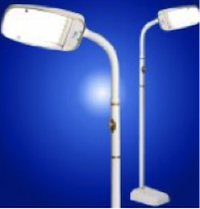
I use the Blue Max Lighting (BlueMax 70W dimmable) floor lamp. I use it 20 minutes each morning from the fall to spring equinoxes. I noticed a great level of improvement, but even more improvement when a doctor prescribed Vitamin D therapy. I was moderately to severely deficient, and needed 10,000 IU for 4-6 weeks under her care to bring my levels up. I do well with the light therapy as long as it is used in conjunction with regular daily doses of D3 (I’m now on 2000IU daily). The light therapy just seems to be “part of the whole solution.” (The company that makes this one is also Full Spectrum Solutions.)”

blue-max

UPDATE: Jan 2024 – the above model, Blue Max Lighting floor lamp, is no longer available but a very comparable one is the Verilux® HappyLight® Duo – 2-in-1 Light Therapy & Task Floor Lamp.

Dr Josh Friedman, PHD, Integrative Psychotherapy of Omaha

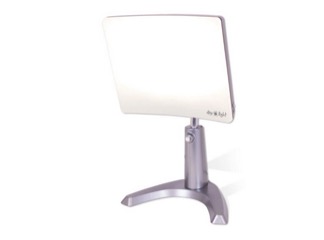
I follow the guidelines of Columbia University’s Center for Environmental Therapeutics. They have done research on a variety of light boxes and the one on this page is inexpensive and effective [and is 10,000 lux]  You can find it on Amazon here: Carex Day-Light Classic Plus Bright Light Therapy Lamp

daylight-simulator

This is what the Center for Environmental Therapeutics has to say about this newer light therapy device:

This handsome new bright light therapy unit ― the Carex Day-light “Classic” Plus Model supersedes our former Daylight “Classic” Model, presenting the same benefits at lower cost and with enhanced design. The required parameters for 10,000 lux light therapy have been thoroughly clinically tested at major university centers, and have been established as the international standard for treatment of winter depression, milder “winter doldrums,” and other chronobiological, circadian rhythm sleep and mood disturbances.

Using light therapy with amino acids or adjusting up the amino acids or doing both

Additional Jan 2024 updates:

I often recommend the use of light therapy in conjunction with amino acids. We may just add light therapy and keep amino acid dosing the same or we may  use higher doses of amino acids like tryptophan, 5-HTP and GABA during the winter months. We may also do both depending on the person’s unique needs.

Here are some blog posts where I address adjusting up/increasing the amino acids during winter:

  • Increasing tryptophan or 5-HTP temporarily when a winter dip in serotonin causes more severe anxiety, OCD and/or the winter blues
  • The seasonality of GABA: worsening anxiety, insomnia and intrusive thoughts in winter (and the need for increased GABA supplementation)

There may even be a seasonal aspect to PMDD/PMS with an increase in hormonal binge eating, wine drinking and anxiety – with symptoms ramping up from October (click here to read that blog post).

More binge eating, emotional eating and carb cravings in Winter

This paper, The Role of Diet, Eating Behavior, and Nutrition Intervention in Seasonal Affective Disorder: A Systematic Review discusses the eating and drinking habits of individuals with SAD (seasonal affective disorder):

Compared with non-clinical subjects, SAD patients tended to consume significantly larger dinners and more evening snacks during weekdays and weekends and exhibit a higher frequency of binge eating, external eating, and emotional eating. Additionally, compared to healthy controls, SAD patients presented more cravings for starch-rich food and food with high fiber.

This paper also mentions vegetarianism being associated with higher SAD prevalence. As outlined in my book (link below) and various blogs, I am an advocate of quality animal protein as it provides amino acids, zinc, iron, omega-3s and vitamin B12 – all needed for neurotransmitter production.

It also mentions that alcoholism is “associated with higher SAD prevalence.”

Amino acids and light therapy help emotional eating and excessive drinking

The authors don’t offer a solution but I can share that the amino acids mentioned above help with sugar/carb  cravings and emotional eating and alcohol addiction.

Using light therapy is going to help too, with research suggesting that bright light therapy is potentially effective at improving both disordered-eating behavior and mood.

Seasonality to anxiety and panic disorder and how to use bright light therapy

There is a seasonality to anxiety and panic disorder just as there are seasonal variations in mood for certain susceptible individuals. You can read more about this and some of the basics like how to use bright light, and for how long, possible adverse effects and who should not use bright light therapy.

The blog is: How to use bright light therapy for increased anxiety, increased panic and SAD during the cold dark winter months

This information about bright light and mood disorders can be applied to anxiety and panic attacks, in addition to SAD.

Additional resources when you are new to using tryptophan and the other amino acids as supplements

We use the symptoms questionnaire to figure out if low serotonin or other neurotransmitter imbalances may be an issue for you.

If you suspect low levels of any of the neurotransmitters and do not yet have my book, The Antianxiety Food Solution – How the Foods You Eat Can Help You Calm Your Anxious Mind, Improve Your Mood, and End Cravings, I highly recommend getting it and reading it before jumping in and using amino acids on your own so you are knowledgeable. And be sure to share it with the practitioner/health team you or your loved one is working with.

There is an entire chapter on the amino acids and they are discussed throughout the book in the sections on gut health, gluten, blood sugar control, sugar cravings, anxiety and mood issues. The importance of quality animal protein is also covered.

The book doesn’t include product names (per the publisher’s request) so this blog, The Antianxiety Food Solution Amino Acid and Pyroluria Supplements, lists the amino acids that I use with my individual clients and those in my group programs.

If, after reading this blog and my book, you don’t feel comfortable figuring things out on your own (i.e. doing the symptoms questionnaire and respective amino acids trials), a good place to get help is the GABA QuickStart Program (if you have low GABA symptoms too). This is a paid online/virtual group program where you get my guidance and community support.

If you are a practitioner, join us in The Balancing Neurotransmitters: the Fundamentals program. This is also a paid online/virtual program with an opportunity to interact with me and other practitioners who are also using the amino acids.

Do you get the winter blues and increased anxiety in the winter months? Have you had success with light therapy?

If yes, which full spectrum lamp have you found to be the most useful? What time of the day do you use it, how often do you use it and for what duration?

Have you used a combination of amino acids and light therapy, and adjusted up your amino acids during the colder and darker winter months?

If you’re a practitioner do you recommend light therapy to your clients/patients?

Feel free to share and ask your questions below.

Filed Under: Anxiety and panic, Depression, Environment Tagged With: anxiety, depression, light therapy, SAD, winter blues

  • « Go to Previous Page
  • Page 1
  • Interim pages omitted …
  • Page 6
  • Page 7
  • Page 8
  • Page 9
  • Page 10
  • Interim pages omitted …
  • Page 27
  • Go to Next Page »

Primary Sidebar

GABA QuickStart Homestudy

gaba quickstart homestudy

Free Report

9 Great Questions Women Ask about Food, Mood and their Health

You'll also receive a complimentary subscription to my ezine "Food, Mood and Gal Stuff"


Connect with me

Popular Posts

  • Amino Acids Mood Questionnaire from The Antianxiety Food Solution
  • The Antianxiety Food Solution Amino Acid and Pyroluria Supplements
  • Pyroluria Questionnaire from The Antianxiety Food Solution
  • Collagen and gelatin lower serotonin: does this increase your anxiety and depression?
  • Tryptophan for the worry-in-your-head and ruminating type of anxiety
  • GABA for the physical-tension and stiff-and-tense-muscles type of anxiety
  • The Antianxiety Food Solution by Trudy Scott
  • Seriphos Original Formula is back: the best product for anxiety and insomnia caused by high cortisol
  • Am I an anxious introvert because of low zinc and vitamin B6? My response to Huffington Post blog
  • Vagus nerve rehab with GABA, breathing, humming, gargling and key nutrients

Recent Posts

  • Her cravings for chips and peanut butter were triggered by stress: GABA ends cravings and reduces physical tension and fear of heights
  • It is truly miraculous to be able to move through life without crippling anxiety and panic
  • GABA and tryptophan combo provide immediate and noticeable relief for tremors and cervical dystonia in just 7 days
  • Red light therapy for back and neck pain, plantar fasciitis and low mood – a complement to the amino acids GABA, DPA and tryptophan
  • What do I use instead of Seriphos to help lower high cortisol that is affecting my sleep and making me anxious at night?

Categories

  • 5-HTP
  • AB575
  • Addiction
  • ADHD
  • Adrenals
  • Alcohol
  • Allergies
  • Alzheimer's disease
  • Amino Acids
  • Anger
  • Antianxiety
  • Antianxiety Food Solution
  • Antidepressants
  • Anxiety
  • Anxiety and panic
  • Autism
  • Autoimmunity
  • benzodiazapines
  • Bipolar disorder
  • Books
  • Caffeine
  • Cancer
  • Candida
  • Children/Teens
  • Collagen
  • Cooking equipment
  • Coronavirus/COVID-19
  • Cravings
  • Depression
  • Detoxification
  • Diabetes
  • Diet
  • DPA/DLPA
  • Drugs
  • EFT/Tapping
  • EMF
  • EMFs
  • Emotional Eating
  • Endorphins
  • Environment
  • Essential oils
  • Events
  • Exercise
  • Fear
  • Fear of public speaking
  • Fertility and Pregnancy
  • Fish
  • Food
  • Food and mood
  • Functional neurology
  • GABA
  • Gene polymorphisms
  • General Health
  • Giving
  • Giving back
  • Glutamine
  • Gluten
  • GMOs
  • Gratitude
  • Gut health
  • Heart health/hypertension
  • Histamine
  • Hormone
  • Hyperparathyroidism
  • Hypoglycemia
  • Immune system
  • Inflammation
  • Insomnia
  • Inspiration
  • Introversion
  • Joy and happiness
  • Ketogenic diet
  • Lithium orotate
  • Looking awesome
  • Lyme disease and co-infections
  • MCAS/histamine
  • Medication
  • Men's health
  • Mental health
  • Mercury
  • Migraine
  • Mold
  • Movie
  • MTHFR
  • Multiple sclerosis
  • Music
  • NANP
  • Nature
  • Nutritional Psychiatry
  • OCD
  • Osteoporosis
  • Oxalates
  • Oxytocin
  • Pain
  • Paleo
  • Parasites
  • Parkinson’s disease
  • PCOS
  • People
  • PMS
  • Postpartum
  • PTSD/Trauma
  • Pyroluria
  • Questionnaires
  • Real whole food
  • Recipes
  • Research
  • Schizophrenia
  • serotonin
  • SIBO
  • Sleep
  • Special diets
  • Sports nutrition
  • Stress
  • Sugar addiction
  • Sugar and mood
  • Supplements
  • Teens
  • Testimonials
  • Testing
  • The Anxiety Summit
  • The Anxiety Summit 2
  • The Anxiety Summit 3
  • The Anxiety Summit 4
  • The Anxiety Summit 5
  • The Anxiety Summit 6
  • Thyroid
  • Thyroid health
  • Toxins
  • Tryptophan
  • Tyrosine
  • Uncategorized
  • Vegan/vegetarian
  • Women's health
  • Yoga

Archives

  • May 2026
  • April 2026
  • October 2025
  • September 2025
  • August 2025
  • July 2025
  • June 2025
  • May 2025
  • April 2025
  • March 2025
  • February 2025
  • January 2025
  • November 2024
  • October 2024
  • September 2024
  • August 2024
  • July 2024
  • June 2024
  • May 2024
  • April 2024
  • March 2024
  • February 2024
  • January 2024
  • December 2023
  • November 2023
  • October 2023
  • September 2023
  • August 2023
  • July 2023
  • June 2023
  • May 2023
  • April 2023
  • March 2023
  • February 2023
  • January 2023
  • December 2022
  • November 2022
  • October 2022
  • September 2022
  • August 2022
  • July 2022
  • June 2022
  • May 2022
  • April 2022
  • March 2022
  • February 2022
  • January 2022
  • December 2021
  • November 2021
  • October 2021
  • September 2021
  • August 2021
  • July 2021
  • June 2021
  • May 2021
  • April 2021
  • March 2021
  • February 2021
  • January 2021
  • December 2020
  • November 2020
  • October 2020
  • September 2020
  • August 2020
  • July 2020
  • June 2020
  • May 2020
  • April 2020
  • March 2020
  • February 2020
  • January 2020
  • December 2019
  • November 2019
  • October 2019
  • September 2019
  • August 2019
  • July 2019
  • June 2019
  • May 2019
  • April 2019
  • March 2019
  • February 2019
  • January 2019
  • December 2018
  • November 2018
  • October 2018
  • September 2018
  • August 2018
  • July 2018
  • June 2018
  • May 2018
  • April 2018
  • March 2018
  • February 2018
  • January 2018
  • December 2017
  • November 2017
  • October 2017
  • September 2017
  • August 2017
  • July 2017
  • June 2017
  • May 2017
  • April 2017
  • March 2017
  • February 2017
  • January 2017
  • December 2016
  • November 2016
  • October 2016
  • September 2016
  • August 2016
  • July 2016
  • June 2016
  • May 2016
  • April 2016
  • March 2016
  • February 2016
  • January 2016
  • December 2015
  • November 2015
  • October 2015
  • September 2015
  • August 2015
  • July 2015
  • June 2015
  • May 2015
  • April 2015
  • March 2015
  • February 2015
  • January 2015
  • December 2014
  • November 2014
  • October 2014
  • September 2014
  • August 2014
  • July 2014
  • June 2014
  • May 2014
  • April 2014
  • March 2014
  • February 2014
  • January 2014
  • December 2013
  • November 2013
  • October 2013
  • September 2013
  • August 2013
  • July 2013
  • June 2013
  • May 2013
  • April 2013
  • March 2013
  • February 2013
  • January 2013
  • December 2012
  • November 2012
  • October 2012
  • August 2012
  • July 2012
  • June 2012
  • May 2012
  • April 2012
  • March 2012
  • February 2012
  • January 2012
  • December 2011
  • November 2011
  • October 2011
  • September 2011
  • August 2011
  • July 2011
  • June 2011
  • May 2011
  • April 2011
  • March 2011
  • February 2011
  • January 2011
  • December 2010
  • October 2010
  • September 2010
  • July 2010
  • May 2010
  • April 2010
  • March 2010
  • February 2010
  • January 2010
  • November 2009

Share the knowledge!

The above statements have not been evaluated by the Food and Drug Administration. Products listed in this website are not intended to diagnose, treat, cure or prevent any disease.

The information provided on this site is for informational and educational purposes only and is not intended as a substitute for advice from your physician or other health care professional. You should consult with a healthcare professional before starting or modifying any diet, exercise, or supplementation program, before taking or stopping any medication, or if you have or suspect you may have a health problem.


Copyright © 2026 Trudy Scott. All Rights Reserved. | Privacy | Terms and Conditions | Refund Policy | Medical Disclaimer

Free Report

9 Great Questions Women Ask about Food, Mood and their Health

You’ll also receive a complimentary subscription to my ezine “Food, Mood and Gal Stuff”