• Skip to primary navigation
  • Skip to main content
  • Skip to primary sidebar

everywomanover29 blog

Food, Mood and Women's Health – Be your healthiest, look and feel great!

  • Blog
  • About
  • Services
  • Store
  • Resources
  • Testimonials
  • The Book
  • Newsletter
  • Contact
  • Search this site

Archives for March 2018

Infected root canal teeth, heart attacks, brain aneurysms, anxiety and depression

March 11, 2018 By Trudy Scott 33 Comments

Robert Kulacz, DDS shares this in his interview – Medical Alert: Root Canal Procedures – on the Holistic Oral Health Summit, hosted by Jonathan Landsman:

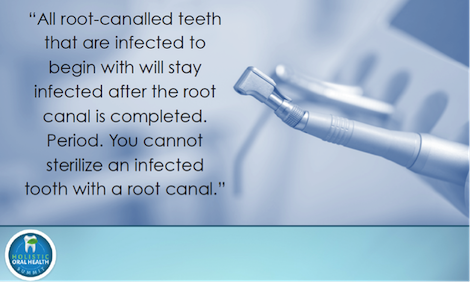
all root-canalled teeth that are infected to begin with will stay infected after the root canal is completed. Period. You cannot sterilize an infected tooth with a root canal….

Certainly, it’s very difficult to say definitively that the patient’s disease process [be it anxiety, depression, insomnia, heart disease, cancer etc.] is caused by a root canalled tooth. But we can say that these root canal teeth are toxic. They release potent exotoxins. They release bad bacteria into the body. And certainly, they may be the main cause or a contributing factor in a host of various diseases.

Do you have one or more root canals and have you ever been told they could be a factor in your unresolved health issues and even ongoing anxiety? It’s a controversial topic and Dr. Kulacz wants his patients to have the information in order to make a choice on whether or not to have a root canal, as well as being able to decide whether or not to have a root canal extracted. This is some of what he shares about myocardial infarction (commonly known as a heart attack):

in 2013, a study [Bacterial signatures in thrombus aspirates of patients with myocardial infarction] came out where bacterial signatures in thrombus aspirates of patients with myocardial infarction, and the conclusion was,“Dental infections and oral bacteria, especially viridans streptococci may be associated with the development of acute coronary thrombosis. Bacterial DNA, typical for endodontic infection,” that’s root canals, “mainly oral viridian streptococci, was measured in the thrombi. And periodontal pathogens from the gum was also a contributing factor.”

So these bacteria from these root canalled teeth, these bacteria from the gum tissues, travel from the mouth, go to the heart, go to the arterial plaques inside the coronary arteries—and that could be a major contributing factor to the development and progression of coronary artery disease—and also to the inflammation that causes that plaque to rupture and causing a heart attack.

So, we have a smoking gun here. It used to be said, “Oh, it’s correlation that oral infection can cause heart disease.” This is more a direct causation. We’re seeing the same bacteria in these root canalled teeth in the gum tissues in the plaques and coronary arteries.

He shares this about cerebral aneurysms, also called brain aneurysms which can leak or rupture, causing bleeding into the brain or a hemorrhagic stroke:

in the Journal of Neurology….published back in 2013, The Connection Between Ruptured Cerebral Aneurysms and Odontogenic Bacteria. Conclusion -“This is the first report showing evidence that dental infection could be part of the pathophysiology of intracranial aneurysm disease.”

So these bacteria go everywhere. There are going anywhere. So they can affect your heart. They can affect the blood vessels in your brain. They can affect your kidneys. They can affect your lungs. They can affect your brain.

I just wish the American Dental Association would just say, “Hey, listen! We have to look at this seriously. Now, we can no longer bury our head in the sand and say these root-canalled teeth can pose no health threat whatsoever.” That’s their position, that the bacteria found in these root-canalled teeth do not travel to other parts of the body and that these bacteria and toxins do not cause any other disease. And that simply is not true.

Here is my contribution to the above discussion and my connection to anxiety and mood….

There is so much research on the gut brain connection and we now know that the bacteria in our gut can impact our levels of anxiety (and depression), but what if the bacteria in our mouth can also contribute to our anxiety?

  • this 2017 paper, Exploring the Association between Alzheimer’s Disease, Oral Health, Microbial Endocrinology and Nutrition, make some of these connections, mentioning both anxiety and insomnia as well as Alzheimer’s disease and poor oral health.
  • this 2016 paper, Depression and Inflammatory Periodontal Disease Considerations—An Interdisciplinary Approach reports that periodontal disease may contribute to the onset of depression via inflammation, activation of cell-mediated immunity and increased oxidative stress

For many people the anxiety nutrition solution is an easy one but if you have been struggling for years to find your root cause and have root canals, periodontal disease and poor mouth health, this must be addressed.

Also, we see poorer dental health in those who have pyroluria (the social anxiety condition) and low histamine levels (also called histapenia or overmethylation). This topic isn’t covered on the summit but it’s been documented since the early work of Carl Pfeiffer, MD. So, addressing diet and nutritional imbalances can start to address both the anxiety and poor mouth health.

Be sure to register for the Holistic Oral Health Summit here. Here are a few other great reasons to tune in:

  • Oral health is the most overlooked health issue in conventional AND integrative medicine!
  • 80% of disease symptoms are caused by problems in the mouth.
  • Millions are exposed to disease-promoting dental procedures every day!
  • Autoimmune disorders CAN be resolved by getting rid of toxic dental materials
  • Reversing gum disease CAN help you get rid of digestive problems
  • Root canal procedures – as mentioned above – increase your risk of cancer and other degenerative diseases (and very possibly anxiety and depression too)
  • Heavy metals like mercury in silver dental fillings can contribute to anxiety and depression, damaging to your brain and nervous system, and affecting your digestion

This amazing event brings together some of the top doctors, dentists, scientists and health experts, giving you unprecedented access to oral health information that could transform your health!

Be in charge of your mouth health when you register for The Holistic Oral Health Summit airing from March 12-19, 2018!

We’d love to hear from you. Do you have root canals and unresolved health issues? Have you had your root canals extracted and experienced better health?

Filed Under: Events Tagged With: oral health, root canal

Happiness is driven by biological factors like diet, the microbiome and serotonin, plus epigenetics

March 9, 2018 By Trudy Scott 5 Comments

As a food mood expert and nutritionist, I believe one very overlooked way we can address the lack of happiness or joy is the biochemical aspect.

One classic root cause of depression or unhappiness is low serotonin and this low serotonin can also lead to fear, worry, anxiety, self-doubt, lack of confidence, ruminations, insomnia and imposter syndrome, all of which are classic signs of low serotonin.  

A poor diet or a diet that is not right for you is a big factor in serotonin production and therefore happiness and a sense of calm.

The biological or biochemical connections to lack of happiness

This paper, Happiness & Health: The Biological Factors – Systematic Review Article, supports the biological or biochemical connections to lack of happiness (and the other signs of low serotonin), listing endogenic (or internal) as well as exogenic (or external) factors :

Happiness underlying factors are considerable from two dimensions:

  • endogenic factors (biological, cognitive, personality and ethical sub-factors) and
  • exogenic factors (behavioral, social/cultural, economical, geographical, life events and aesthetics sub-factors).

Among all endogenic [or internal] factors, biological sub-factors are the significant predictors of happiness.

The external factors are the ones we’re most familiar with i.e. things that are going on in our lives like relationships, income, where we live and life events. It’s the internal factors that we don’t discuss.

This study looked at biological factors (one of the internal factors) that underlie happiness and optimism. Five sub-groups of biological factors were found:

  1. brain and neurotransmitters (dopamine, serotonin and endorphins playing a role in happiness)
  2. endocrinology and hormones (cortisol and oxytocin playing a role in happiness)
  3. physical health
  4. physical attractiveness
  5. genetic (this accounted for 35-50% of happiness)

Nutritional psychiatry and the first 4 sub-groups

The work of nutritional psychiatry, a new and growing field, shows that food and nutrients have a direct impact on the first 4 groups: brain and neurotransmitters, on endocrinology and hormones and on physical health (and thereby physical attractiveness too):

The International Society for Nutritional Psychiatry Research hosted their first international conference in August last year in Bethesda, MD, and I had the pleasure of attending.

The new SMILES trial was presented at the conference: the first randomized controlled diet depression study where ONE THIRD of the dietary intervention group saw improvements in their depression and anxiety symptoms by switching from processed/junk food to real food with no specific dietary restrictions.

Here I am with world-renowned nutritional psychiatry researcher, Professor Felice Jacka

I participated in the rapid fire presentation session at the conference. In my talk, Applications of the Paleo diet and Gluten-free diet for Anxiety, I shared how Paleo and grain-free diets can increase happiness and reduce anxiety.

This November 2017 review, Nutritional psychiatry: the present state of the evidence, mentions the SMILES trial and provides the latest overview of the evidence in nutritional psychiatry:

Potential biological pathways related to mental disorders include inflammation, oxidative stress, the gut microbiome, epigenetic modifications and neuroplasticity. Consistent epidemiological evidence, particularly for depression, suggests an association between measures of diet quality and mental health, across multiple populations and age groups; these do not appear to be explained by other demographic, lifestyle factors or reverse causality.

Genetics (the last sub-group), epigenetics, diet and the microbiome

It saddens me when I hear someone say: “depression runs in my family – my grandmother suffered, I suffer with depression and I don’t know what kind of life my daughter is going to have.”

Even though genetics (the last sub-group) is reported to accounted for 35-50% of happiness, we now know that “our genes are not our destiny” and we can actually switch on good genes and switch off bad genes when we change our diet and environment.

This paper, Microbiome, inflammation, epigenetic alterations, and mental diseases, sums it up perfectly, reporting that recent findings show that the onset and development of mental diseases such as autism, bipolar disorder, schizophrenia, and depression cannot be well described by the one-gene/one-disease approach:

Even though the involvement of many genes are likely, up regulating and activation or down regulation and silencing of these genes by the environmental factors play a crucial role in contributing to their pathogenesis. Much of this interplay may be moderated by epigenetic changes.

Environmental factors such as diet, gut microbiota, and infections have significant role in these epigenetic modifications.

The authors conclude that the potential interactions of diet, gastrointestinal microbiome, and inflammation can all contribute to epigenetic alterations in psychiatric disorders.

If the term epigenetic is new to you, here is a helpful explanation:

The word “epigenetic” literally means “in addition to changes in genetic sequence.” The term has evolved to include any process that alters gene activity without changing the DNA sequence, and leads to modifications that can be transmitted to daughter cells.

What this means is that you can change your destiny in a positive way – by changing your diet – even if you have bad genes passed on from your grandmother and mother or other family members.

And don’t forget the environmental factors (as stated in the above paper) that can change your genes in a negative way: heavy metals, pesticides, diesel exhaust, tobacco smoke, polycyclic aromatic hydrocarbons (environmental pollutants from coal, oil, petrol, and wood), radioactivity, viruses and bacteria.

The take-aways are to eat quality real whole food, avoid sugar, caffeine and gluten, address the microbiome and nutritional deficiencies, avoid toxins/chemicals, detox if needed, address infections and the adrenals. This is exactly what my book The Antianxiety Food Solution covers so if you don’t yet have a copy, grab one from your nearest bookstore or from Amazon here (my affiliate link).

For a deeper dive into the epigenetics aspect and detoxification, I recommend Dr. Ben Lynch’s new book called Dirty Genes (my Amazon link).

Are you ready to find the biological root causes of your lack of happiness and anxiety?

Or are you already there and have seen the benefits already?

Filed Under: Food and mood Tagged With: anxiety, biochemical, biological, depression, epigenetics, food, genes, happiness, microbiome

GABA oral rinse reduces burning mouth pain

March 2, 2018 By Trudy Scott 47 Comments

Burning Mouth Syndrome (BMS) is a chronic pain condition characterized by persistent burning in the mouth. It affects mostly females, especially postmenopausal women, and conventional approaches are often not very successful. You’ll often see articles and papers with the terms ‘refractory’ and ‘unknown etiology’/unknown causes.

Medications like SRNIs and benzodiazepines

Some studies report limited success with medications like venlafaxine/Effexor, an SRNI and topical and oral use of benzodiazepines such as clonazepam/Klonopin. In this paper, Refractory burning mouth syndrome: clinical and paraclinical evaluation, comorbidities, treatment and outcome, 8 participants saw their pain diminish by half within 3 months.

Another paper, The Effect of Clonazepam Mouthwash on the Symptomatology of Burning Mouth Syndrome: An Open Pilot Study, reports success with a benzodiazepine mouthwash in half the participants.

Other than the poor quality of life and having to continue to live with pain, the bigger concern is the side-effects of medications like these, plus concerns with tolerance and then issues with withdrawal.

New oral GABA research for burning mouth

It’s for this reason that I’m excited about the recent research, γ-Aminobutyric acid (GABA) oral rinse reduces capsaicin-induced burning mouth pain sensation: An experimental quantitative sensory testing study in healthy subjects, that finds that both and men and women experienced immediate benefits when using GABA for burning mouth pain.

The burning mouth pain was caused by the application of capsaicin to the tongues of thirty healthy males and females. Capsaicin is the compound that makes chili peppers hot. (I find it interesting that capsaicin was the compound used to cause the burning mouth sensation because this same compound is used in topical creams and patches to ease pain.)

The study concludes as follows:

Capsaicin-induced burning tongue pain and decreases in WDT (warm detection) and HPT (heat pain) can be ameliorated by rinsing the mouth with lidocaine and GABA solutions.

Rinsing the mouth with an oral GABA containing solution ameliorated burning pain and increased heat sensitivity produced by application of capsaicin to the tongue. This finding suggests that GABA can act as a local analgesic agent in the oral cavity.

Lidocaine, a numbing medication, was part of the GABA solution in this study, but because it has side-effects that may include anxiety, I recommend a trial of a GABA-only solution to ease the burning mouth pain.

Using a GABA-only oral solution

Using a GABA-only oral solution makes sense given that the likely mechanism of action of topical benzodiazepines in burning mouth pain is via local action on peripheral GABAA receptors found in the nerve fibers of the tongue.

This is also very feasible based on how effective GABA is for other pain such as proctalgia fugax/rectal spasms, and the visceral pain and muscle tension in your gut caused by the bloating symptoms of SIBO (small intestinal bacterial overgrowth) and muscular back pain after a fall.

How much GABA will help?

As with any use of GABA and the other amino acids, how much will help depends on each person’s unique biochemistry and needs at the time. In the same way I do a trial of GABA with my anxiety clients to determine how much would help, I do the same with burning mouth pain (and other pain situations).

I recommend a trial of a GABA-only product and starting low with 100 to 200mg of GABA swished held in the mouth with some water for a few minutes. This can be used three or four times a day in between meals and with the mg increased slowly based on results.  You can find the GABA supplements I recommend here.

GABA is an amino acid that is recognized for calming physical anxiety and tension and since anxiety (and depression) is very common in those with burning mouth pain, the GABA is going to provide calming benefits too.

As with any health condition, finding the underlying root causes using a comprehensive functional medicine approach is key. One such root cause may be low GABA and using oral GABA is going to address this one and provide some relief while other root causes are identified and addressed.

These other root causes can be very varied as explained in the paper Burning Mouth Syndrome. They can include: age-related reduction in estrogen and progesterone levels, lower cortisol, diabetes mellitus and hypothyroidism, allergic reactions to foods, additives and even metals in the mouth, autoimmune connective tissue disorders, nutritional deficiencies (B1, B2, B6, B12. folate, and/or zinc), smoking and candida, and medication side-effects as mentioned above.

Have you experienced burning mouth pain and seen relief with GABA or other nutritional approaches?

If you’re a practitioner, is burning mouth pain common in your postmenopausal clients or patients and what approaches have you found most successful? Have you found GABA to be helpful?

If you are still suffering with burning mouth please share the following when you comment:

  • Your age (it seems to be more prevalent in women 59 and older)
  • If you have anxiety and/or depression now and have been prone to either in the past
  • How you score on the low GABA questionnaire and which symptoms you relate to? This will provide a clue that low GABA may be an issue and the oral GABA rinse is more likely to help
  • How you score on the low serotonin questionnaire (same link as GABA questionnaire above) and which symptoms you relate to? SSRIs have been shown to help in some cases and we know tryptophan/5-HTP help with pain so serotonin support may help too. Perhaps a tryptophan or 5-HTP rinse is worth a trial too?
  • How long it’s been an issue, what approaches you’ve tried and which approaches have helped (even if they only helped a short while or helped the pain a little)
  • Current and past medications (burning mouth is caused by certain medications)

I’d love to gather a list of all this so we can help you and more women who suffer with these awful symptoms.

Filed Under: Amino Acids, Anxiety, benzodiazapines, GABA, Pain Tagged With: anxiety, benzodiazepines, burning mouth, burning mouth pain, burning mouth syndrome, depression, GABA, Klonopin, pain

  • « Go to Previous Page
  • Page 1
  • Page 2

Primary Sidebar

GABA QuickStart Homestudy

gaba quickstart homestudy

Free Report

9 Great Questions Women Ask about Food, Mood and their Health

You'll also receive a complimentary subscription to my ezine "Food, Mood and Gal Stuff"


Connect with me

Popular Posts

  • Amino Acids Mood Questionnaire from The Antianxiety Food Solution
  • The Antianxiety Food Solution Amino Acid and Pyroluria Supplements
  • Pyroluria Questionnaire from The Antianxiety Food Solution
  • Collagen and gelatin lower serotonin: does this increase your anxiety and depression?
  • Tryptophan for the worry-in-your-head and ruminating type of anxiety
  • GABA for the physical-tension and stiff-and-tense-muscles type of anxiety
  • The Antianxiety Food Solution by Trudy Scott
  • Seriphos Original Formula is back: the best product for anxiety and insomnia caused by high cortisol
  • Am I an anxious introvert because of low zinc and vitamin B6? My response to Huffington Post blog
  • Vagus nerve rehab with GABA, breathing, humming, gargling and key nutrients

Recent Posts

  • Her cravings for chips and peanut butter were triggered by stress: GABA ends cravings and reduces physical tension and fear of heights
  • It is truly miraculous to be able to move through life without crippling anxiety and panic
  • GABA and tryptophan combo provide immediate and noticeable relief for tremors and cervical dystonia in just 7 days
  • Red light therapy for back and neck pain, plantar fasciitis and low mood – a complement to the amino acids GABA, DPA and tryptophan
  • What do I use instead of Seriphos to help lower high cortisol that is affecting my sleep and making me anxious at night?

Categories

  • 5-HTP
  • AB575
  • Addiction
  • ADHD
  • Adrenals
  • Alcohol
  • Allergies
  • Alzheimer's disease
  • Amino Acids
  • Anger
  • Antianxiety
  • Antianxiety Food Solution
  • Antidepressants
  • Anxiety
  • Anxiety and panic
  • Autism
  • Autoimmunity
  • benzodiazapines
  • Bipolar disorder
  • Books
  • Caffeine
  • Cancer
  • Candida
  • Children/Teens
  • Collagen
  • Cooking equipment
  • Coronavirus/COVID-19
  • Cravings
  • Depression
  • Detoxification
  • Diabetes
  • Diet
  • DPA/DLPA
  • Drugs
  • EFT/Tapping
  • EMF
  • EMFs
  • Emotional Eating
  • Endorphins
  • Environment
  • Essential oils
  • Events
  • Exercise
  • Fear
  • Fear of public speaking
  • Fertility and Pregnancy
  • Fish
  • Food
  • Food and mood
  • Functional neurology
  • GABA
  • Gene polymorphisms
  • General Health
  • Giving
  • Giving back
  • Glutamine
  • Gluten
  • GMOs
  • Gratitude
  • Gut health
  • Heart health/hypertension
  • Histamine
  • Hormone
  • Hyperparathyroidism
  • Hypoglycemia
  • Immune system
  • Inflammation
  • Insomnia
  • Inspiration
  • Introversion
  • Joy and happiness
  • Ketogenic diet
  • Lithium orotate
  • Looking awesome
  • Lyme disease and co-infections
  • MCAS/histamine
  • Medication
  • Men's health
  • Mental health
  • Mercury
  • Migraine
  • Mold
  • Movie
  • MTHFR
  • Multiple sclerosis
  • Music
  • NANP
  • Nature
  • Nutritional Psychiatry
  • OCD
  • Osteoporosis
  • Oxalates
  • Oxytocin
  • Pain
  • Paleo
  • Parasites
  • Parkinson’s disease
  • PCOS
  • People
  • PMS
  • Postpartum
  • PTSD/Trauma
  • Pyroluria
  • Questionnaires
  • Real whole food
  • Recipes
  • Research
  • Schizophrenia
  • serotonin
  • SIBO
  • Sleep
  • Special diets
  • Sports nutrition
  • Stress
  • Sugar addiction
  • Sugar and mood
  • Supplements
  • Teens
  • Testimonials
  • Testing
  • The Anxiety Summit
  • The Anxiety Summit 2
  • The Anxiety Summit 3
  • The Anxiety Summit 4
  • The Anxiety Summit 5
  • The Anxiety Summit 6
  • Thyroid
  • Thyroid health
  • Toxins
  • Tryptophan
  • Tyrosine
  • Uncategorized
  • Vegan/vegetarian
  • Women's health
  • Yoga

Archives

  • May 2026
  • April 2026
  • October 2025
  • September 2025
  • August 2025
  • July 2025
  • June 2025
  • May 2025
  • April 2025
  • March 2025
  • February 2025
  • January 2025
  • November 2024
  • October 2024
  • September 2024
  • August 2024
  • July 2024
  • June 2024
  • May 2024
  • April 2024
  • March 2024
  • February 2024
  • January 2024
  • December 2023
  • November 2023
  • October 2023
  • September 2023
  • August 2023
  • July 2023
  • June 2023
  • May 2023
  • April 2023
  • March 2023
  • February 2023
  • January 2023
  • December 2022
  • November 2022
  • October 2022
  • September 2022
  • August 2022
  • July 2022
  • June 2022
  • May 2022
  • April 2022
  • March 2022
  • February 2022
  • January 2022
  • December 2021
  • November 2021
  • October 2021
  • September 2021
  • August 2021
  • July 2021
  • June 2021
  • May 2021
  • April 2021
  • March 2021
  • February 2021
  • January 2021
  • December 2020
  • November 2020
  • October 2020
  • September 2020
  • August 2020
  • July 2020
  • June 2020
  • May 2020
  • April 2020
  • March 2020
  • February 2020
  • January 2020
  • December 2019
  • November 2019
  • October 2019
  • September 2019
  • August 2019
  • July 2019
  • June 2019
  • May 2019
  • April 2019
  • March 2019
  • February 2019
  • January 2019
  • December 2018
  • November 2018
  • October 2018
  • September 2018
  • August 2018
  • July 2018
  • June 2018
  • May 2018
  • April 2018
  • March 2018
  • February 2018
  • January 2018
  • December 2017
  • November 2017
  • October 2017
  • September 2017
  • August 2017
  • July 2017
  • June 2017
  • May 2017
  • April 2017
  • March 2017
  • February 2017
  • January 2017
  • December 2016
  • November 2016
  • October 2016
  • September 2016
  • August 2016
  • July 2016
  • June 2016
  • May 2016
  • April 2016
  • March 2016
  • February 2016
  • January 2016
  • December 2015
  • November 2015
  • October 2015
  • September 2015
  • August 2015
  • July 2015
  • June 2015
  • May 2015
  • April 2015
  • March 2015
  • February 2015
  • January 2015
  • December 2014
  • November 2014
  • October 2014
  • September 2014
  • August 2014
  • July 2014
  • June 2014
  • May 2014
  • April 2014
  • March 2014
  • February 2014
  • January 2014
  • December 2013
  • November 2013
  • October 2013
  • September 2013
  • August 2013
  • July 2013
  • June 2013
  • May 2013
  • April 2013
  • March 2013
  • February 2013
  • January 2013
  • December 2012
  • November 2012
  • October 2012
  • August 2012
  • July 2012
  • June 2012
  • May 2012
  • April 2012
  • March 2012
  • February 2012
  • January 2012
  • December 2011
  • November 2011
  • October 2011
  • September 2011
  • August 2011
  • July 2011
  • June 2011
  • May 2011
  • April 2011
  • March 2011
  • February 2011
  • January 2011
  • December 2010
  • October 2010
  • September 2010
  • July 2010
  • May 2010
  • April 2010
  • March 2010
  • February 2010
  • January 2010
  • November 2009

Share the knowledge!

The above statements have not been evaluated by the Food and Drug Administration. Products listed in this website are not intended to diagnose, treat, cure or prevent any disease.

The information provided on this site is for informational and educational purposes only and is not intended as a substitute for advice from your physician or other health care professional. You should consult with a healthcare professional before starting or modifying any diet, exercise, or supplementation program, before taking or stopping any medication, or if you have or suspect you may have a health problem.


Copyright © 2026 Trudy Scott. All Rights Reserved. | Privacy | Terms and Conditions | Refund Policy | Medical Disclaimer

Free Report

9 Great Questions Women Ask about Food, Mood and their Health

You’ll also receive a complimentary subscription to my ezine “Food, Mood and Gal Stuff”