• Skip to primary navigation
  • Skip to main content
  • Skip to primary sidebar

everywomanover29 blog

Food, Mood and Women's Health – Be your healthiest, look and feel great!

  • Blog
  • About
  • Services
  • Store
  • Resources
  • Testimonials
  • The Book
  • Contact
  • Search this site

yoga

Around my period I definitely feel the need for extra tryptophan if I’ve had some extra heavy emotional stuff come up that I need to process

December 10, 2021 By Trudy Scott 6 Comments

period and extra tryptophan

Many women find that they need additional nutritional support i.e. tryptophan for serotonin support (and often GABA too) around their periods. Today’s case study highlights the hormonal shifts that may lead to a situation where it appears tryptophan doesn’t work, then it does work, and then sometimes it doesn’t work as expected. The variable results and the need to switch between lower and higher doses on an ongoing basis can occur with PMS (premenstrual syndrome) PMDD (premenstrual dysphoric disorder, a severe, sometimes disabling extension of premenstrual syndrome). The variable results can also be more pronounced while recovering from trauma.

This case study is a follow-on from a blog I recently published: Tryptophan doesn’t work, then it does and then it doesn’t: could it be hormonal shifts, dietary factors and/or parasites?

Here is Kimberley’s feedback on the Facebook post that discussed these variable results. She shared how her hormonal shifts led to a need for additional tryptophan and 5-HTP:

Around my period I definitely feel the need for extra tryptophan. My PMDD symptoms have decreased since I started using tryptophan/5-HTP, but sometimes I need a bit more if I’ve had some extra heavy emotional stuff come up that I need to process (since that always happens with my period!).

I thanked her for sharing and said how happy I was for her. I also asked what symptoms have decreased and how much? I also asked how much tryptophan and 5-HTP she uses before her period and then around her period?

I was also curious if she just experimented with different doses until she figured it out or had she heard me talk about the PMDD tryptophan study: A placebo-controlled clinical trial of L-tryptophan in premenstrual dysphoria. In this study tryptophan was found to reduce symptoms of PMS when used in the luteal phase or second half of the cycle (i.e. after ovulation).

Her low serotonin symptoms have decreased as much as 75-80 percent

Kimberley confirmed that she had read the above study and related blog post – Tryptophan for PMS: premenstrual dysphoria, mood swings, tension, and irritability – and more about her symptoms:

I had read the blog you referenced, which is one of the reasons I tried tryptophan in the first place.

I was experiencing a lot of emotional distress, feelings of downright despair that left me miserable both during my period and ovulation (half the month, every month, which was truly awful). Those have definitely decreased, sometimes as much as 75-80 percent, other times they’re worse and I feel like I need more support.

I usually take 1x Lidtke 5-HTP (50mg) mid-afternoon and 1x Lidtke Tryptophan (500mg) at bedtime, but yesterday I increased to 2x Lidtke Tryptophan and do feel an improvement in my mood this morning.

I experimented to get the right dose of both amino acids, initially increasing to the maximum you recommend, and then slowly decreasing to what I’m taking now when I found I didn’t feel well when I took too much.

I just reread the blog you linked above and realized I should be using GABA every day to support progesterone (instead of just as needed for anxiety). Thanks for the reminder!

I love that after reading the blog she was inspired and motivated to experiment with different doses when she is/was feeling so bad. I encouraged her to continue trialing different doses at various times of the month especially in the second half of the month. I also reminded her that some folks do better with tryptophan and some do better with 5-HTP when it comes to low serotonin symptoms. And to continue to look at why serotonin is low and address that. Low GABA (related to low progesterone) can cause increased anxiety at this time and is a common issue with PMS/PMDD.

(You can see the entire list of low serotonin and low GABA symptoms here.)

She plans to continue experimenting with tryptophan and 5-HTP and may also try switching over to just 5-HTP and see if that changes anything. It’s unlikely that she would benefit from much higher doses of either as she shared “I don’t seem to be able to take more than 2 caps of either one without getting uncomfortable symptoms, though.”

Exercise and yoga for her low serotonin and PMDD

She did share how much exercise helps her mood, why she isn’t able to exercise as much:

The biggest thing I know to do to address low serotonin is add more exercise into my life, but this has been hard lately because I’ve had a couple of different viruses recently that left my exercise intolerance worse than it had been. I’m trying to support my mitochondria right now and add light exercise back in slowly.

Exercise is a wonderful way to raise serotonin levels and aerobic exercise has been shown to reduce the symptoms of PMS too. Yoga may be an option while she is recovering. In one study, yoga was found to be beneficial for PMS: “Alpha-brain waves production due to regular yoga practice are directly related with state of peace, creativity, mood elevation, relaxation, and release of serotonin, thus leading yoga practitioners feel more relaxed.”

Trauma: cortisol, serotonin, dopamine and estradiol

Kimberley also shared how how trauma plays into her situation:

I think some of the reasons for my health issues, low neurotransmitters, etc., are trauma related and I’ve been working through Dr. Aimie Apigian’s programs for that. But that’s another story.

I respect Dr. Aimie Apigian’s work in trauma and somatic experiencing and acknowledge this aspect must be addressed too. I love that Dr. Aimie brings this together with a functional medicine approach, looking at biology/biochemistry too. Recent trauma research confirms that there are major biochemical mechanisms involved in PTSD (post-traumatic stress disorder). These can include impacts to cortisol, serotonin and dopamine levels. And women are more vulnerable to these effects.

A 2021 paper, Estradiol, stress reactivity, and daily affective experiences in trauma-exposed women discusses high cortisol and more severe symptoms around their periods when estradiol (one of the estrogens) is low. As I mentioned above, estrogen and serotonin are closely related. The authors state this:“For women who are cycling, it may be useful to understand how the menstrual cycle affects their symptoms. When you can explain what’s happening biologically, it often becomes less threatening.”

Yoga may provide added psychological benefits as she works through her past trauma too.

Kimberly gave me permission to share her story and this is always something I appreciate so others in my community can learn from these types of experiences. If needed, I hope this her story gives you confidence to experiment with different doses and combinations around your period.

She also benefits from the comments from others on Facebook and the comments here on the blog, our back and forth, and this blog post.

She promised to keep me posted on how she goes and I’ll be sure to share when I hear back from her.

Resources if you are new to using tryptophan, 5-HTP and GABA and the amino acids as supplements

If you are new to using the amino acids as supplements, here is the Amino Acids Mood Questionnaire from The Antianxiety Food Solution (you can see the low GABA symptoms here) and a brief overview here, Anxiety and targeted individual amino acid supplements: a summary.

If you suspect low GABA or low levels of any of the neurotransmitters and do not yet have my book, The Antianxiety Food Solution – How the Foods You Eat Can Help You Calm Your Anxious Mind, Improve Your Mood, and End Cravings, I highly recommend getting it and reading it before jumping in and using amino acids so you are knowledgeable. And be sure to share it with the team you or your loved one is working with.

The book doesn’t include product names (per the publisher’s request) so this blog, The Antianxiety Food Solution Amino Acid and Pyroluria Supplements, lists the amino acid products that I use with my individual clients and those in my group programs.

Have you found you need additional tryptophan/5-HTP or GABA around your period? How have you experimented and how does it help you?

If you’re a practitioner, have you seen this with clients or patients?

Do you also feel better with exercise and/or yoga?

And are/were your variable results more pronounced while recovering from trauma?

Feel free to ask your questions here too.
Filed Under: Anxiety, GABA, PMS, PTSD/Trauma, serotonin, Women's health Tagged With: 5-HTP, anxiety, biochemical, cortisol, despair, dopamine, emotional distress, emotional stuff, estradiol, estrogen, exercise, GABA, hormonal shifts, miserable, my period, PMDD, PMS premenstrual syndrome, premenstrual dysphoric disorder, PTSD, serotonin, stress, trauma, tryptophan, yoga

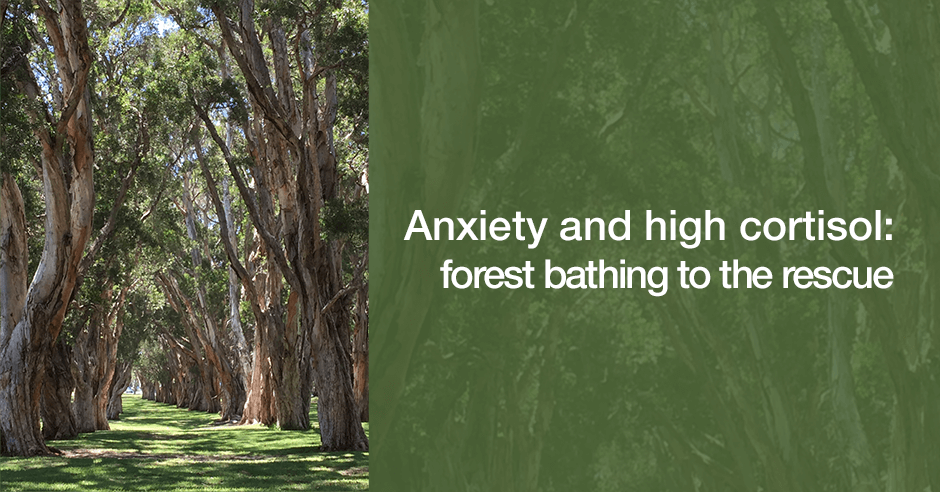
Anxiety, stress and high cortisol: forest bathing to the rescue

January 25, 2019 By Trudy Scott 16 Comments

On the way home from a snorkelling trip to the beach earlier this week we stopped at Centennial Park in Sydney and were wowed by the magnificent trees. It inspired me to write this blog about forest bathing to inspire you to think about the power of nature as a simple way to give you joy and contribute to a wonderful sense of calm and peace. I was quite giddy with these feelings while there and still feel waves of awe days later when thinking about it and looking at these pictures of the Paperbark Grove and the massive Morton Bay fig trees.

We know being in nature has a psychological impact making us feel calm and relaxed, happy and joyful, and even playful. But what exactly is forest bathing and are there really physiological impacts i.e. does forest bathing simply help you feel good or does it actually lower your cortisol levels or blood pressure?

This paper, The physiological effects of Shinrin-yoku (taking in the forest atmosphere or forest bathing): evidence from field experiments in 24 forests across Japan, defines forest bathing:

The term Shinrin-yoku (taking in the forest atmosphere or forest bathing) was coined by the Japanese Ministry of Agriculture, Forestry, and Fisheries in 1982. It can be defined as making contact with and taking in the atmosphere of the forest: a process intended to improve an individual’s state of mental and physical relaxation

The above study set out to measure and clarify the physiological effects of Shinrin-yoku or forest bathing with 12 young male university students who had no history of physical or psychiatric disorders:

12 subjects walked in and viewed a forest or city area. On the first day, six subjects were sent to a forest area, and the others to a city area. On the second day, each group was sent to the other area as a cross-check.

The participants sat and viewed the landscape for 12-16 minutes and then walked in the landscape for 14-18 minutes (in one of the 24 forests and then in one of the 24 city areas on the second day).

The subjects had the following markers measured before breakfast and both before and after the walking and viewing periods:

  • salivary cortisol
  • blood pressure
  • pulse rate and
  • heart rate variability

After this surprisingly short period of viewing and walking in the forests the following results were found:

forest bathing promotes lower concentrations of cortisol, lower pulse rate, lower blood pressure, greater parasympathetic nerve activity, and lower sympathetic nerve activity

So, what we have, is more activity of the parasympathetic system i.e. more of the calming “rest and digest” activity and less activity of the sympathetic system i.e. what we term as “fight or flight” or stress activity.

The authors suggest that forest bathing “may be used as a strategy for preventive medicine” and I wholeheartedly agree.

Given that GABA can lower high pressure and calm down the “fight or flight” sympathetic system (see this animal study) I won’t be surprised when we see research showing us that forest bathing boosts GABA levels just in a similar way that yoga boosts GABA.

If you don’t have everyday access to parks, trees or forests be sure to go out of your way to make detours down nearby tree-lined streets to get some of these wonderful health benefits.

And because we know that simply looking at images of greenery and nature can have a calming and stress-reducing effect, here is a bigger version of the photo I took of the Paperbark Grove for you to enjoy looking at!

My picture of the Paperbark Grove in Centennial Park, Sydney

We were so excited to “discover” this gem and got home and googled it only to find out it’s a popular avenue for wedding parties! I’m sure you can see why!

Right next to the Paperbark Grove are three giant Moreton Bay fig trees. These trees are estimated to be older that the park, which was opened in 1888.

Here I am being “hugged” by one of them (doesn’t it take tree-hugging to another level!?)

If you’re local to Sydney or come for a visit one day, I highly recommend a trip to Centennial Park to see these magnificent trees and do your own Australian version of forest bathing. You may just see me there!

Until then, I encourage you to get outside into forests, get “hugged” by trees, hug trees and gaze up and enjoy every calming and joyous moment. It can help to lower your cortisol levels so you can be free of anxiety and it may even help to prevent anxiety!

Please do share your favorite forest bathing locations and how they make you feel.

Filed Under: Nature Tagged With: anxiety, calming, centennial park, cortisol, forest, forest bathing, GABA, Shinrin-yoku, stress, stress-reducing, trees, yoga

Sugar vs fat, BPA in cans, PCOS awareness month: in the news

September 16, 2016 By Trudy Scott 2 Comments

sugar-vs-fat

Sugar vs fat, BPA in cans, and PCOS awareness month are all in the news this month so here are some links to more information on each of these topics.

This shocking NPR article covers this new paper about the sugar vs fat debate: 50 years ago, sugar industry quietly paid scientists to point blame at fat

In the 1960s, the sugar industry funded research that downplayed the risks of sugar and highlighted the hazards of fat, according to a newly published article in JAMA Internal Medicine.

The article draws on internal documents to show that an industry group called the Sugar Research Foundation wanted to “refute” concerns about sugar’s possible role in heart disease. The SRF then sponsored research by Harvard scientists that did just that. The result was published in the New England Journal of Medicine in 1967, with no disclosure of the sugar industry funding.

It’s hard to believe that researchers would do this! The worst part is that this type of thing is still happening. You can read some of Marion Nestle’s commentary at the end of the above article.

At least now research sponsors do have to be disclosed so we are hopefully getting better at preventing this type of thing. We must always look at who funds a paper.

canned-foods

A CNN article, Canned foods linked to BPA risk in new study reports:

A study published in the journal Environmental Research on Wednesday not only reveals that consuming canned foods can expose our bodies to BPA, it pinpoints the worst offenders.

The study suggests that canned soups and pasta can expose consumers to higher concentrations of BPA than canned vegetables and fruit – and although those foods are tied to BPA concentrations, canned beverages, meat and fish are not.

BPA stands for bisphenol A, it’s a chemical that is found in plastics and it behaves in a very similar way to estrogen in the body. Because of this it’s called an endocrine disrupter and has an impact on depression, ADHD and anxiety.

An animal study published in 2015, Hypothalamic-pituitary-adrenal axis hyperactivity accounts for anxiety- and depression-like behaviors in rats perinatally exposed to bisphenol A reports

hyperactivity of the HPA [hypothalamic-pituitary-adrenal axis] is an important link between perinatal BPA exposure and persistent potentiation in anxiety and depression

It’s unfortunate they didn’t get a commentary from the Environmental Working Group which has a great short Guide to BPA.

pcos-yoga

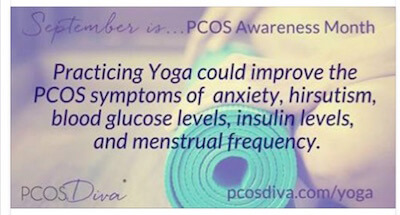
September is PCOS awareness month and here is some wonderful information on yoga for anxiety and PCOS, from my friend and PCOS expert Amy Medling at PCOS Diva. I’m such a big fan of yoga for stress and anxiety but had no idea it could improve these PCOS symptoms:

Yoga can reduce anxiety symptoms, reduce mFG score for hirsutism, improve menstrual frequency, insulin values and more according to a 2012 study. For more about the benefits of yoga for women with PCOS check out this blog post: 5 Reasons Why Yoga is Beneficial for PCOS

In case you’re not familiar with PCOS, Amy shares this overview on her site

PCOS Polycystic Ovarian Syndrome (PCOS) is one of the most common endocrine disorders found in women, affecting approximately 10% of women worldwide, with less than 50% of them diagnosed. The syndrome is present throughout a woman’s life from puberty through post-menopause and affects women of all races and ethnic groups. Women with PCOS wrestle with an array of possible symptoms including obesity, irregular menstrual cycles, infertility, depression [and anxiety], acne, and hair loss. Far reaching health implications such as increased risk of cardiovascular disease and diabetes make these already stressful symptoms even more daunting.

What do you think? Are you shocked about the sugar study discovery? Do you already avoid BPA? Do you have PCOS or know someone who has PCOS?

Filed Under: Sugar and mood, Yoga Tagged With: anxiety, BPA, depression, fat, PCOS, sugar, yoga

Yoga increases brain GABA levels and reduces anxiety

July 22, 2016 By Trudy Scott 8 Comments

triangle-pose

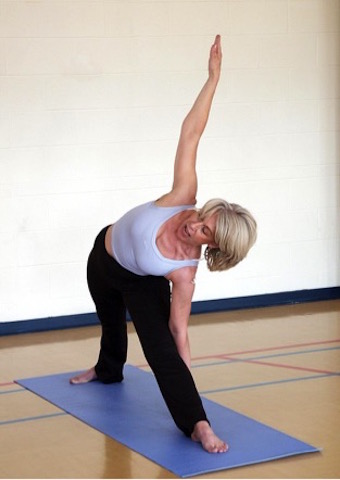
In a 2007 study published by the Division of Psychiatry at the Boston University School of Medicine – Yoga Asana sessions increase brain GABA levels: a pilot study – researchers had 8 yoga practitioners complete a 60-minute yoga session and 11 comparison subjects complete a 60-minute reading session.

The study objective was to compare changes in brain levels of gamma-aminobutyric acid (GABA) – our calming neurotransmitter – in those completing the 60-minute yoga session and in those reading.

These were the results that were reported:

There was a 27% increase in GABA levels in the yoga practitioner group after the yoga session but no change in the comparison subject group after the reading session.

And here is the conclusion the authors reached:

These findings demonstrate that in experienced yoga practitioners, brain GABA levels increase after a session of yoga. This suggests that the practice of yoga should be explored as a treatment for disorders with low GABA levels such as depression and anxiety disorders. Future studies should compare yoga to other forms of exercise to help determine whether yoga or exercise alone can alter GABA levels.

In this study, GABA levels were measured with magnetic resonance spectroscopic imaging (MRS/MRSI) before and after the yoga and reading sessions. If you really want to know how yoga improves your anxiety you could do the GABA section of the amino acid questionnaire and rate your before and after symptoms:  

  • Anxiety and feeling overwhelmed or stressed
  • Feeling worried or fearful
  • Panic attacks
  • Unable to relax or loosen up
  • Stiff or tense muscles
  • Feeling stressed and burned-out
  • Craving carbs, alcohol, or drugs for relaxation and calming

The above study looked at experienced yoga practitioners but there is so much research on the many benefits of yoga for everyone and for many conditions. Here is a small sampling of some other studies that include anxiety as well as depression, stress, hormonal imbalances and sleep issues:

  • Improved menopausal symptoms, stress levels and depression symptoms
  • Reduced anxiety in pediatric burn survivors
  • Potential benefits for people who have anxiety and stutter
  • Reduced back pain, depression, anxiety, fatigue and medication usage, and improved quality of life and sleep in military veterans
  • Changes in neural connectivity and memory in older adults

If you’ve never done yoga or if you haven’t been doing it for a while this blog will hopefully give you the motivation to start a yoga practice or get back into it.

You may ask: how do I get started?

  • Find a class at a local yoga studio or gym OR
  • Buy a yoga DVD (like Yoga for Beginners or Yoga for Stress Relief and do it at home with some friends or your kids

The important thing is to find the joy in doing it so I encourage you to try different classes until you find one you love. I love Iyengar yoga but it’s not for everyone (it can be seen as too slow for some people.) Here is a yoga DVD for more advanced Iyengar yoga students: Iyengar Yoga with Gabriella.

If you already do yoga this will confirm what you already likely know. Please share what yoga you enjoy, how often you practice and how it leaves you feeling.

If you’re a health practitioner, please share if yoga is something you recommend to your clients or patients.

Filed Under: GABA Tagged With: anxiety, depression, GABA, gamma-aminobutyric acid, our calming neurotransmitter, sleep, yoga

The Anxiety Summit – How to use MindBody Medicine to Reverse Anxiety in 3 Minutes or Less

May 16, 2015 By Trudy Scott 8 Comments


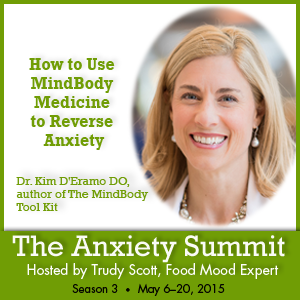
Dr. Kim D’Eramo, DO, author of The MindBody Tool Kit, is interviewed by host of the Anxiety Summit, Trudy Scott, Food Mood Expert and Nutritionist, author of The Antianxiety Food Solution.

How to use MindBody Medicine to Reverse Anxiety in 3 Minutes or Less

  • Why anxiety leads to us developing diseases like heart disease
  • What is MindBody medicine
  • How do we use MindBody medicine to reverse anxiety, depression, pain or other symptoms instantly
  • MindBody tools like the instant elevation technique
  • The broccoli yoga pose

Dr. Kim shared how at osteopathic school you learn how the body and mind are related and how that has a direct impact on health and the body’s ability to heal itself.

Here is the medical student mindfulness study I mentioned: An Adapted, Four-Week Mind-Body Skills Group for Medical Students: Reducing Stress, Increasing Mindfulness, and Enhancing Self-Care.

these findings suggest that a brief, voluntary mind-body skills workshop specifically adapted for medical students is feasible, acceptable, and effective for reducing stress, increasing mindfulness, and enhancing student self-care

Dr. Kim shared about women she has worked with whose kids have struggled with anxiety or behavior problems and how having the mom do the mindbody techniques led to the kids no longer having night-terrors and anxiety. I found this section so fascinating.

Dr Kim shared this:

Most of us live in the sympathetic state of fight or flight and that means your stress hormones are high all the time. You can’t metabolize nutrients, you gain weight, you develop allergies and you no longer have the big picture ability to make little changes to make your life easier, You’re in survival mode and not relaxation mode. This leads to heart disease, inflammation, anxiety and it affects your thyroid and overall hormonal balance.

Here is the Brazilian civil servant heart disease mood study I mentioned: The association between mood and anxiety disorders, and coronary heart disease in Brazil

The association with CHD [coronary heart disease] is greatest in those with psychiatric comorbidity, while associations were also observed in MDD [major depressive disorder] and generalized anxiety disorder without comorbidity


Dr Kim says this about the broccoli pose (don’t you just love that name?):

According to my friend, Matt Sanford (he trains yogis all over the world) this simple yoga pose is like “Broccoli for your emotional body.” You literally cannot feel depressed after being in this pose.

I recommend it daily for 5 minutes. Life-changing!

It decreases stress hormones, and inflammation that causes disease, AND it’s shown to increase “healthy hormones” like endorphins and oxytocin, that make you feel a sense of confidence and self-worth

What mindbody tool have you used today?  I just did the broccoli pose and loved it!

If you are not already registered for the Anxiety Summit you can get live access to the speakers of the day here: www.theAnxietySummit.com

Missed this interview or can’t listen live? Or want this and the other great interviews for your learning library? Purchase the MP3s or MP3s + transcripts and listen when it suits you.

You can find your purchasing options here: Anxiety Summit Season 1, Anxiety Summit Season 2, and Anxiety Summit Season 3.

Filed Under: Antianxiety, Stress, The Anxiety Summit 3, Yoga Tagged With: anxiey, Dr. Kim D’Eramo, the anxiety summit, The MindBody Tool Kit, Trudy Scott, yoga

The Anxiety Summit – How Changing My Breakfast Cut My Anxiety in Half

November 13, 2014 By Trudy Scott 8 Comments

Angela Savitri, OTR/L, Freedom from Chronic Stress Coach was interviewed by host of the Anxiety Summit, Trudy Scott, Food Mood Expert and Nutritionist, author of The Antianxiety Food Solution.

How Changing My Breakfast Cut My Anxiety in Half

  • How amino acids helped (5-HTP, and GABA)
  • How yoga and mindfulness meditation helped her anxiety
  • The research supporting yoga and mindfulness meditation for anxiety
  • How changing to a 90% whole foods diet helped her anxiety
  • What the biggest game-changer was for her anxiety?

It warmed my heart when I read this in a recent newsletter that Angela sent to her community. I contacted her right away and asked if she would come and share this on the summit and she said yes!

If you’ve been part of this community for a while, you’ve heard some of my personal struggles with anxiety.

When Lexapro, Buspar, and Doral were not helping, I sought alternatives.

I got some relief with taking amino acids, 5-HTP, and GABA.

I found some relief in yoga and mindfulness meditation.

I found some relief from eating a 90% whole foods diet.

I received the most relief from eating animal protein within one hour of waking.

Seriously…my anxiety went from a daily 6 to a 2 with this one nutrition adjustment.

And I learned it from Trudy!

This is going back to basics! This is simple and yet so powerful!

Here is a great blog post from Angela: 5 Tips to Avoid Depression and Anxiety

And an audio gift from Angela 3 Secrets to Self-Care Without Feeling Guilty

If you are not already registered for the Anxiety Summit you can get live access to the speakers of the day here www.theAnxietySummit.com

Filed Under: Anxiety and panic, Food and mood, Real whole food, The Anxiety Summit 2 Tagged With: 5-HTP, Angela Savitri, anxiety, breakfast, GABA, mindfulness meditation, protein, the anxiety summit, Trudy Scott, whole foods, yoga

  • Page 1
  • Page 2
  • Go to Next Page »

Primary Sidebar

NEW! GABA QuickStart Homestudy (with special intro pricing)

gaba quickstart homestudy

Free Report

9 Great Questions Women Ask about Food, Mood and their Health

You'll also receive a complimentary subscription to my ezine "Food, Mood and Gal Stuff"


Connect with me

Popular Posts

  • Amino Acids Mood Questionnaire from The Antianxiety Food Solution
  • The Antianxiety Food Solution Amino Acid and Pyroluria Supplements
  • Pyroluria Questionnaire from The Antianxiety Food Solution
  • Collagen and gelatin lower serotonin: does this increase your anxiety and depression?
  • Tryptophan for the worry-in-your-head and ruminating type of anxiety
  • GABA for the physical-tension and stiff-and-tense-muscles type of anxiety
  • The Antianxiety Food Solution by Trudy Scott
  • Seriphos Original Formula is back: the best product for anxiety and insomnia caused by high cortisol
  • Am I an anxious introvert because of low zinc and vitamin B6? My response to Huffington Post blog
  • Vagus nerve rehab with GABA, breathing, humming, gargling and key nutrients

Recent Posts

  • What do I use instead of Seriphos to help lower high cortisol that is affecting my sleep and making me anxious at night?
  • BeSerene™ GABA/theanine cream eases severe muscle tension in her neck/shoulders, prevents her bad headaches and quells her anxiety
  • How the correct approach, dose and sublingual use of GABA can be calming and not cause a flushed and itchy face and neck
  • The amino acid glutamine improves low mood by addressing gut health, and it has calming effects too
  • Flight anxiety with heightened breath, physical tension and also fearing the worst (the role of low GABA and low serotonin)

Categories

  • 5-HTP
  • AB575
  • Addiction
  • ADHD
  • Adrenals
  • Alcohol
  • Allergies
  • Alzheimer's disease
  • Amino Acids
  • Anger
  • Antianxiety
  • Antianxiety Food Solution
  • Antidepressants
  • Anxiety
  • Anxiety and panic
  • Autism
  • Autoimmunity
  • benzodiazapines
  • Bipolar disorder
  • Books
  • Caffeine
  • Cancer
  • Candida
  • Children/Teens
  • Collagen
  • Cooking equipment
  • Coronavirus/COVID-19
  • Cravings
  • Depression
  • Detoxification
  • Diabetes
  • Diet
  • DPA/DLPA
  • Drugs
  • EFT/Tapping
  • EMF
  • EMFs
  • Emotional Eating
  • Endorphins
  • Environment
  • Essential oils
  • Events
  • Exercise
  • Fear
  • Fear of public speaking
  • Fertility and Pregnancy
  • Fish
  • Food
  • Food and mood
  • Functional neurology
  • GABA
  • Gene polymorphisms
  • General Health
  • Giving
  • Giving back
  • Glutamine
  • Gluten
  • GMOs
  • Gratitude
  • Gut health
  • Heart health/hypertension
  • Histamine
  • Hormone
  • Hyperparathyroidism
  • Hypoglycemia
  • Immune system
  • Inflammation
  • Insomnia
  • Inspiration
  • Introversion
  • Joy and happiness
  • Ketogenic diet
  • Lithium orotate
  • Looking awesome
  • Lyme disease and co-infections
  • MCAS/histamine
  • Medication
  • Men's health
  • Mental health
  • Mercury
  • Migraine
  • Mold
  • Movie
  • MTHFR
  • Multiple sclerosis
  • Music
  • NANP
  • Nature
  • Nutritional Psychiatry
  • OCD
  • Osteoporosis
  • Oxalates
  • Oxytocin
  • Pain
  • Paleo
  • Parasites
  • Parkinson’s disease
  • PCOS
  • People
  • PMS
  • Postpartum
  • PTSD/Trauma
  • Pyroluria
  • Questionnaires
  • Real whole food
  • Recipes
  • Research
  • Schizophrenia
  • serotonin
  • SIBO
  • Sleep
  • Special diets
  • Sports nutrition
  • Stress
  • Sugar addiction
  • Sugar and mood
  • Supplements
  • Teens
  • Testimonials
  • Testing
  • The Anxiety Summit
  • The Anxiety Summit 2
  • The Anxiety Summit 3
  • The Anxiety Summit 4
  • The Anxiety Summit 5
  • The Anxiety Summit 6
  • Thyroid
  • Thyroid health
  • Toxins
  • Tryptophan
  • Tyrosine
  • Uncategorized
  • Vegan/vegetarian
  • Women's health
  • Yoga

Archives

  • October 2025
  • September 2025
  • August 2025
  • July 2025
  • June 2025
  • May 2025
  • April 2025
  • March 2025
  • February 2025
  • January 2025
  • November 2024
  • October 2024
  • September 2024
  • August 2024
  • July 2024
  • June 2024
  • May 2024
  • April 2024
  • March 2024
  • February 2024
  • January 2024
  • December 2023
  • November 2023
  • October 2023
  • September 2023
  • August 2023
  • July 2023
  • June 2023
  • May 2023
  • April 2023
  • March 2023
  • February 2023
  • January 2023
  • December 2022
  • November 2022
  • October 2022
  • September 2022
  • August 2022
  • July 2022
  • June 2022
  • May 2022
  • April 2022
  • March 2022
  • February 2022
  • January 2022
  • December 2021
  • November 2021
  • October 2021
  • September 2021
  • August 2021
  • July 2021
  • June 2021
  • May 2021
  • April 2021
  • March 2021
  • February 2021
  • January 2021
  • December 2020
  • November 2020
  • October 2020
  • September 2020
  • August 2020
  • July 2020
  • June 2020
  • May 2020
  • April 2020
  • March 2020
  • February 2020
  • January 2020
  • December 2019
  • November 2019
  • October 2019
  • September 2019
  • August 2019
  • July 2019
  • June 2019
  • May 2019
  • April 2019
  • March 2019
  • February 2019
  • January 2019
  • December 2018
  • November 2018
  • October 2018
  • September 2018
  • August 2018
  • July 2018
  • June 2018
  • May 2018
  • April 2018
  • March 2018
  • February 2018
  • January 2018
  • December 2017
  • November 2017
  • October 2017
  • September 2017
  • August 2017
  • July 2017
  • June 2017
  • May 2017
  • April 2017
  • March 2017
  • February 2017
  • January 2017
  • December 2016
  • November 2016
  • October 2016
  • September 2016
  • August 2016
  • July 2016
  • June 2016
  • May 2016
  • April 2016
  • March 2016
  • February 2016
  • January 2016
  • December 2015
  • November 2015
  • October 2015
  • September 2015
  • August 2015
  • July 2015
  • June 2015
  • May 2015
  • April 2015
  • March 2015
  • February 2015
  • January 2015
  • December 2014
  • November 2014
  • October 2014
  • September 2014
  • August 2014
  • July 2014
  • June 2014
  • May 2014
  • April 2014
  • March 2014
  • February 2014
  • January 2014
  • December 2013
  • November 2013
  • October 2013
  • September 2013
  • August 2013
  • July 2013
  • June 2013
  • May 2013
  • April 2013
  • March 2013
  • February 2013
  • January 2013
  • December 2012
  • November 2012
  • October 2012
  • August 2012
  • July 2012
  • June 2012
  • May 2012
  • April 2012
  • March 2012
  • February 2012
  • January 2012
  • December 2011
  • November 2011
  • October 2011
  • September 2011
  • August 2011
  • July 2011
  • June 2011
  • May 2011
  • April 2011
  • March 2011
  • February 2011
  • January 2011
  • December 2010
  • October 2010
  • September 2010
  • July 2010
  • May 2010
  • April 2010
  • March 2010
  • February 2010
  • January 2010
  • November 2009

Share the knowledge!

The above statements have not been evaluated by the Food and Drug Administration. Products listed in this website are not intended to diagnose, treat, cure or prevent any disease.

The information provided on this site is for informational and educational purposes only and is not intended as a substitute for advice from your physician or other health care professional. You should consult with a healthcare professional before starting or modifying any diet, exercise, or supplementation program, before taking or stopping any medication, or if you have or suspect you may have a health problem.


Copyright © 2026 Trudy Scott. All Rights Reserved. | Privacy | Terms and Conditions | Refund Policy | Medical Disclaimer

Free Report

9 Great Questions Women Ask about Food, Mood and their Health

You’ll also receive a complimentary subscription to my ezine “Food, Mood and Gal Stuff”