• Skip to primary navigation
  • Skip to main content
  • Skip to primary sidebar

everywomanover29 blog

Food, Mood and Women's Health – Be your healthiest, look and feel great!

  • Blog
  • About
  • Services
  • Store
  • Resources
  • Testimonials
  • The Book
  • Contact
  • Search this site

social anxiety

Pyroluria, social anxiety, introversion: a summary

May 8, 2015 By Trudy Scott 53 Comments

 reading-on-beach

Pyroluria is a social anxiety condition that is not well recognized in the medical community. It responds really well to a few key nutrients. I cover this in this blog post: Pyroluria, high mauve, pyrrole disorder, malvaria, elevated kryptopyrroles and social anxiety

Low levels of the mineral zinc and vitamin B6 are frequently associated with a type of anxiety characterized by social anxiety, avoidance of crowds, a feeling of inner tension, and bouts of depression. People with this problem experience varying degrees of anxiety or fear, often starting in childhood, but they usually manage to cover it up and push through. They tend to build their life around one person, become more of a loner over time, have difficulty handling stress or change, and have heightened anxiety symptoms when under more stress.

This constellation of symptoms is often the result of a genetic condition called pyroluria, also known as high mauve, pyrrole disorder, pyrroluria, pyrolleuria, malvaria, and elevated kryptopyrroles.

If this sounds like you, here is a link to the Pyroluria Questionnaire from my book The Antianxiety Food Solution. I created this using the work of Carl Pfeiffer and Joan Mathews-Larson, modifying it based on feedback I received from my clients.

I encourage you to do this questionnaire and see how you score (before starting on the supplements and once you are on them).

This is a collection of past blog posts on the topic of pyroluria in preparation for my season 3 interview on the Anxiety Summit: “Pyroluria, Amino Acids and Anxiety: Troubleshooting when you are not getting results”

During the Anxiety Summit season 2 Dr Corey Schuler interviewed me on the topic: How zinc and vitamin B6 prevent pyroluria and social anxiety

I review the questionnaire, the protocol and discuss how I’ve discovered a pyroluria-introversion connection. Here is the blog post I wrote in response to the Huffington Post article, written by Carolyn Gregoire and called “23 Signs You’re Secretly An Introvert”: Am I an anxious introvert because of low zinc and vitamin B6? My response to Huffington Post blog

I encourage you to also do this questionnaire and see how you score and see if a high score correlates with a high score on the pyroluria questionnaire. Do this before starting on the supplements and then once you are on them. Many anxious introverts no longer feel anxious in social settings once they get on the pyroluria protocol. Many say they no longer see themselves as introverted!

In that season 2 interview I also share about the connection between Pyroluria and focal musician’s dystonia or musician’s cramp

Here are some more recent blogs on pyroluria and related conditions:

  • Pyroluria and chronic fatigue syndrome: is there a link?
  • Oxytocin and social anxiety, pyroluria and depression?
  • Oxytocin, social anxiety, pyroluria and autism

For most of my clients getting on the pyroluria protocol is life-changing! It certainly has been for me!

Unfortunately not everyone responds as expected. Some people:

  • Cannot get their zinc levels to increase
  • Feel too nauseas when taking any zinc
  • Never seem to remember their dreams
  • Continue to have social anxiety despite everything they do

My troubleshooting interview will be addressing the above scenarios and other related pyroluria questions that come up. PLEASE ASK YOUR QUESTIONS in the comments section below.

PS. If you’d like me to try and troubleshoot for you, please answer the questions I posed to Nancy below

If you’re not already signed up do join us here: season 3 of The Anxiety Summit
 

Filed Under: Pyroluria, The Anxiety Summit 3 Tagged With: introversion, social anxiety

Oxytocin, social anxiety, pyroluria and autism

April 10, 2015 By Trudy Scott 11 Comments

autism-awareness

I recently blogged about the possible connection between oxytocin, social anxiety, pyroluria and depression and would like to share that there is also a connection between autism, low oxytocin and social anxiety, and possibly pyroluria too.

It’s Autism Awareness Month so I’d like to share a video from Dr. Kurt Woeller D.O., an integrative medicine physician and biomedical autism specialist. He is also a lecturer, educator, and experienced practicing clinician offering specialized diagnostic testing and treatment for individuals with complex medical conditions like autism, mental health disorders, multiple sclerosis, and other chronic health conditions.

Dr. Woeller shares how helpful oxytocin is for social anxiety, facial recognition and voice recognition in individuals with autism and Asperger’s syndrome

An interesting therapy for certain individuals on the autism spectrum is something called oxytocin. Oxytocin is a hormone that is produced in our bodies and it has a wide range of effects. When a woman is in labor, oxytocin helps with uterine contractions so it is useful for the delivery of the baby. When a mother is breastfeeding her newborn, oxytocin can be released and it is felt that oxytocin helps with mother to child bonding that occurs with breastfeeding.

This is important for human to human interaction. Oxytocin is also released during physical contact between two people, and we know it is released in large amounts particularly during sexual intercourse.

As a therapy, oxytocin has been very helpful particularly for social anxiety. There are a couple of other effects that are interesting with oxytocin. Oxytocin seems to help with facial cue recognition. That enables us to tell the difference between a happy face, sad face, inquisitive face, etc. It also helps with voice cue recognition as well.

They did a study with adults on the autism spectrum and who had Asperger’s as well and they gave them an IV infusion of oxytocin and then measured their response over a two week period of time. What they found was that the individuals that received the oxytocin did much better at looking at pictures of different facial expressions and picking out the differences as well as listening to recordings of different voice emotional cues: an angry voice, a happy voice, etc.

Oxytocin is a useful remedy to consider particularly if the child, teenager or adult that you know has social anxiety issues or lacks the recognition of facial and/or voice cues.

Oxytocin comes as a nasal spray and does need to be prepared by a compounding pharmacy.

Usually you dose oxytocin once a day, maybe twice a day or even as needed situationally. You can give oxytocin before going into a situation where your child has a problem with social anxiety.

Dr Woeller uses the Meridian Valley Lab 24-hr urinary oxytocin test which, according to them “is the best method to capture the pulsatile peaks and valleys of oxytocin production.” You can order the test (and interpretation) via his testing site Lab Tests Plus

There are a number of studies that support the use of oxytocin for improving eye-contact, facial recognition and social anxiety:

  • Oxytocin increases eye contact during a real-time, naturalistic social interaction in males with and without autism
  • Effects of intranasal oxytocin on the neural basis of face processing in autism spectrum disorder
  • Oxytocin improves behavioural and neural deficits in inferring others’ social emotions in autism
  • Intranasal oxytocin in the treatment of autism spectrum disorders: a review of literature and early safety and efficacy data in youth
  • Effects of oxytocin on attention to emotional faces in healthy volunteers and highly socially anxious males

Here is a snippet from my book The Antianxiety Food Solution on the estimates of the prevalence of pyroluria (be aware that can vary depending on the type of clients/patients a practitioner works with):

Joan Mathews-Larson, considered an expert on the subject, reports the prevalence as follows: 11 percent of the healthy population, 40 percent of adults with psychiatric disorders, 25 percent of children with psychiatric disorders, 30 percent of people with schizophrenia, and 40 percent of alcoholics.

Abram Hoffer worked primarily with schizophrenic patients, but he found pyroluria was also present in 25 percent of his nonschizophrenic patients, including adults with anxiety, depression, and alcoholism, and children with learning disorders and behavioral disorders.

According to McGinnis, pyroluria is also present in about 46 percent of people with autism spectrum disorders and 71 percent of those with Down syndrome.

I work primarily with adult women who are anxious, depressed, or both and have found that at least 80 percent of my clients with moderate to severe anxiety have a large number of pyroluria symptoms.

Based on this and the research we’re seeing on autism, social anxiety and oxytocin, I would expect that if you have pyroluria you may also have low levels of oxytocin and may need to address this, especially if you not getting complete resolution with the zinc, vitamin B6 and evening primrose oil.


Filed Under: Antianxiety, Autism, Pyroluria Tagged With: autism awareness month, social anxiety

Oxytocin and social anxiety, pyroluria and depression?

March 27, 2015 By Trudy Scott 66 Comments

A 2014 paper published in the Journal of Psychiatric Research looked at how variations in the oxytocin receptor gene is associated with increased risk for anxiety, stress and depression in individuals with a history of exposure to early life stress. Here are some excerpts from this paper:

Oxytocin is a neuropeptide that is involved in the regulation of mood, anxiety and social biology.

Genetic variation in the oxytocin receptor gene (OXTR) has been implicated in anxiety, depression and related stress phenotypes.

In this study, we examined genotypes in 653 individuals and tested whether SNP variation in OXTR correlates with severity of features of self-reported experience on the Depression Anxiety and Stress Scale (DASS), and whether this correlation is enhanced when early life trauma is taken into account.

The study found a significant effect of several oxytocin receptor genes (OXTR genotypes) on anxiety, stress and depression scores. They concluded that:

These results support the hypothesis that the oxytocin system plays a role in the pathophysiology of mood and anxiety disorders.

In this 2015 paper published in Neuropsychopharmacology, they looked at “Oxytocin modulation of amygdala functional connectivity to fearful faces in generalized social anxiety disorder” and found that oxytocin lessened anxiety by dampening amygdala reactivity to threat in individuals with generalized social anxiety disorder.

Results indicated that in individuals with generalized social anxiety disorder:

Oxytocin enhanced functional connectivity between the amygdala and the bilateral insula and middle cingulate/dorsal anterior cingulate gyrus during the processing of fearful faces

These findings suggest that [oxytocin] may have broad pro-social implications such as enhancing the integration and modulation of social responses.

We know that low serotonin can cause anxiety, worry and depression and research shows there are interactions between oxytocin and serotonin levels. So if you don’t respond to serotonin support (tryptophan or 5-HTP or light therapy), maybe boosting oxytocin is a possible solution?  Or maybe supporting serotonin will boost oxytocin? 

What is also really interesting to me is that zinc is needed for binding oxytocin to its receptor so I wonder about the oxytocin connection to pyroluria, a social anxiety condition where higher amounts of zinc and vitamin B6 are needed. I wonder if adding oxytocin to the mix or boosting it would help even more?  Or if optimizing zinc use and absorption would help promote oxytocin?

Have you had your oxytocin levels tested? Have you used oxytocin with good results and did it help your social anxiety/pyroluria and/or depression?  Have you done anything else to boost your oxytocin levels?


Filed Under: Amino Acids, Antianxiety, Depression, Pyroluria Tagged With: depression, oxytocin, pyroluria, serotonin, social anxiety, zinc

Quiet: introverts on the job – pyroluria, low blood sugar, gluten?

October 22, 2013 By Trudy Scott 13 Comments

In a recent blog post I discussed a possible connection between introversion and pyroluria, especially if you also have social anxiety, inner tension and a preference for interacting with a few people rather than a crowd.

This nice infographic gives us some of the useful facts and stats:

  • introverts make better one-on-one connections
  • introverts sometimes experience anxiety when speaking to large groups of people
  • introverts are prone to social anxiety disorder
  • the percentage of introverts in the U.S. is about 50%
  • the percentage of people in the U.S. who are estimated to have social anxiety disorder is 7%-8%
  • the percentage of adults in the U.S. who are estimated to have an anxiety disorder is 18% [I added this one]

I like that this infographic is suggesting more comfortable work environments and jobs that may suit introverts better. 

BUT …and this is a BIG BUT….I feel we can do better if you are one of those introverts who still feel anxious or nervous despite all the tips and tricks. 

It’s important for you to also address some of the possible biochemical and nutritional imbalances:

  • low blood sugar can make you feel anxious, irritable and depressed – eating protein at breakfast helps so much
  • pyroluria can cause social anxiety and inner tension, especially in crowds and when under more stress – zinc and vitamin B6 can make a world of difference
  • gluten intolerance can cause anxiety and depression and can lead to nutritional deficiencies – do an elimination and challenge
  • low GABA or low serotonin can lead to physical tension/anxiety and worry/anxiety in the head – consider a trial of GABA or tryptophan supplements

This is just a few factors that may be contributing to your anxiety.  I encourage you to investigate and address ALL the possible causes of your anxiety and/or social anxiety.  You don’t have to live with it, tolerate it and force or “extrovert” (a new verb!) yourself in social settings.  You can feel comfortable, relaxed, calm and be a “Social Butterfly” – really!

Do also check out my book for in-depth protocols and research:  The Antianxiety Food Solution: How the Foods You Eat Can Help You Calm Your Anxious Mind, Improve Your Mood, and End Cravings (New Harbinger, 2011).

Quiet: Introverts on the Job
Source: BestMastersPrograms.org


Filed Under: Antianxiety, Anxiety and panic, Introversion, Pyroluria Tagged With: introvert, pyroluria, social anxiety

How to get a great night’s sleep

August 31, 2012 By Trudy Scott 26 Comments

“A 2009 poll by the National Sleep Foundation found that only 28 percent of those surveyed regularly got eight hours or more of sleep a night. The average was around six and a half hours on weekdays and seven on weekends. Those who slept less than eight hours a night typically had mood problems, including worry and anxiety, ate more sugar and unhealthy food and drank more caffeinated beverages!”

~ Trudy Scott, The Antianxiety Food Solution

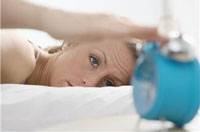
It’s amazing how many people don’t get enough sleep and there is so much we can do from a nutritional point of view to change this.  Here are six things to consider:

  1. One of the first things I think about when a client can’t sleep is low serotonin.  Low serotonin symptoms include insomnia, depression, negativity, worry and anxiety, irritability, PMS and afternoon and evening cravings.  And low serotonin can be boosted with tryptophan, taken as a supplement and/or in food sources.
  2. Research has actually shown that a medical or functional food made with pumpkin seeds improved sleep, due to the good sources of tryptophan and zinc. In another study this same functional food was also shown to reduce anxiety and social phobia.Pumpkin seeds can be soaked in water overnight and then lightly roasted with olive oil, sea salt, pepper, turmeric and ginger.  Food-wise, pumpkin seeds are a favorite of mine for a healthy snack and my clients love them.  Here is an blog post that discusses the benefits of soaked nuts and a roasted pumpkin seed recipe
  3. When tryptophan is taken as a supplement, some is converted to serotonin and some to melatonin.  Melatonin is fabulous for resetting your circadian rhythm so your sleep cycle gets back to normal. If taking tryptophan doesn’t quite get you sleeping through the night then taking additional melatonin may help. Sublingual melatonin helps you fall asleep and the timed-release form helps you stay asleep.
  4. Other factors that should be considered when sleep is an issue: low blood sugar,  addressing low serotonin levels,  addressing low GABA levels, checking for parasites and dysbiosis, and making sure you don’t have high cortisol.
  5. Other nutrients that may be helpful:  vitamin B6 (which helps improve mood and reduce anxiety too), zinc (which is also important for skin health,  reducing anxiety, improving mood, helping with blood sugar balance and PMS), and magnesium (which is also calming).
  6. Of course, it also helps to use a comfortable soft eye patch to keep the room dark and to use earplugs to keep things quiet. Also, keep clock radios and cell phones away from your head and don’t use an electric blanket!  Having a warm bath with essential oil of lavender is also a great help to help you wind down at the end of a hectic day.

Try some of the above tips and get those eight hours of sleep and you’ll have less mood problems, experience less worry and anxiety, eat less (or no) sugar and unhealthy food and drink less (or no) caffeinated beverages!   Sweet dreams!

Filed Under: Antianxiety Food Solution, Anxiety and panic, Real whole food, Sleep Tagged With: anxiety, insomnia, pumpkin seeds, serotonin, sleep, social anxiety, tryptophan

Bubble gum flavored apples anyone?

July 2, 2012 By Trudy Scott 9 Comments

Guest Post by Mira Dessy, Certified Nutrition Educator and holistic health columnist helping others eat well to be well.


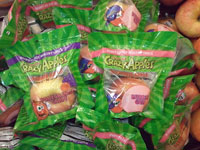
fake apples | photo: LeemanS

One of my readers, sent in this picture and comment/question about these apples.

“We came across these apples at Stop & Shop here in town. We could not believe our eyes when we saw flavored apples!! I told my husband to take a pic to send to you because I wasn’t sure you would believe me when I tell you that they had bubblegum flavored apples. I believe there were four flavors total to choose from. 

I’m curious what your thoughts are. I walked away all kinds of confused. Was this an attempt to help kids with poor eating habits cross over the healthy eating or the other way around? How exactly did they alter this apple to make it flavored? And of course the obvious…yet another example of FAKE food.

Oh and as you can see it’s was placed right next to the apples and the packaging says ready to eat snack. What’s so difficult about preparing an apple for eating? hmmm you wash it?!?!”

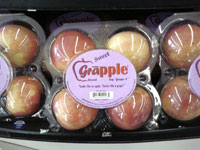
Good eye, and good thinking. This is very similar to something I just saw in my local grocery store called grapples. Research indicates that the flavoring comes from “natural” (read possible MSG ingredients) and artificial flavoring. It seems that the apples are marinated for several days in an undoubtedly chemical concoction which allows the apple to soak up the flavor. This process has apparently been approved by the FDA.

grapples | photo: Qrd2006

The Grapple company website assures the consumer that the product has not been genetically modified and there are no added sugars or calories. Unfortunately there is a huge chemical load, not just from the flavorings, but one assumes these are not organic apples and therefore potentially high in pesticide residue.

The Crazy Apple company website says they can’t tell you how they do it but I assume it’s the same sort of process. They do however assure you that their apples are gluten free (duh!), dairy free (again, duh!), and contain no soy or nuts.

I believe this is seen as a way to market apples to kids but I’m not really sure why this sort of adulteration is seen as a positive. Since apples by themselves are sweet, crunchy, and tasty I’m not sure what the appeal is here. Unfortunately I see this as a big step backwards as items like these further dull the taste buds to what food should taste like.

Update: It turns out these apples are being spotted all over the place and most of you are not happy about it. My friend Adrienne says, “If you want a grape flavored apple take a slice of apple and some grapes. Eat them together. It’s a party in your mouth!” Good advice.

Filed Under: Real whole food Tagged With: anxiety, depression, exercise, hot-flashes, mood, sleep, social anxiety

  • « Go to Previous Page
  • Page 1
  • Page 2
  • Page 3
  • Page 4

Primary Sidebar

NEW! GABA QuickStart Homestudy (with special intro pricing)

gaba quickstart homestudy

Free Report

9 Great Questions Women Ask about Food, Mood and their Health

You'll also receive a complimentary subscription to my ezine "Food, Mood and Gal Stuff"


Connect with me

Popular Posts

  • Amino Acids Mood Questionnaire from The Antianxiety Food Solution
  • The Antianxiety Food Solution Amino Acid and Pyroluria Supplements
  • Pyroluria Questionnaire from The Antianxiety Food Solution
  • Collagen and gelatin lower serotonin: does this increase your anxiety and depression?
  • Tryptophan for the worry-in-your-head and ruminating type of anxiety
  • GABA for the physical-tension and stiff-and-tense-muscles type of anxiety
  • The Antianxiety Food Solution by Trudy Scott
  • Seriphos Original Formula is back: the best product for anxiety and insomnia caused by high cortisol
  • Am I an anxious introvert because of low zinc and vitamin B6? My response to Huffington Post blog
  • Vagus nerve rehab with GABA, breathing, humming, gargling and key nutrients

Recent Posts

  • What do I use instead of Seriphos to help lower high cortisol that is affecting my sleep and making me anxious at night?
  • BeSerene™ GABA/theanine cream eases severe muscle tension in her neck/shoulders, prevents her bad headaches and quells her anxiety
  • How the correct approach, dose and sublingual use of GABA can be calming and not cause a flushed and itchy face and neck
  • The amino acid glutamine improves low mood by addressing gut health, and it has calming effects too
  • Flight anxiety with heightened breath, physical tension and also fearing the worst (the role of low GABA and low serotonin)

Categories

  • 5-HTP
  • AB575
  • Addiction
  • ADHD
  • Adrenals
  • Alcohol
  • Allergies
  • Alzheimer's disease
  • Amino Acids
  • Anger
  • Antianxiety
  • Antianxiety Food Solution
  • Antidepressants
  • Anxiety
  • Anxiety and panic
  • Autism
  • Autoimmunity
  • benzodiazapines
  • Bipolar disorder
  • Books
  • Caffeine
  • Cancer
  • Candida
  • Children/Teens
  • Collagen
  • Cooking equipment
  • Coronavirus/COVID-19
  • Cravings
  • Depression
  • Detoxification
  • Diabetes
  • Diet
  • DPA/DLPA
  • Drugs
  • EFT/Tapping
  • EMF
  • EMFs
  • Emotional Eating
  • Endorphins
  • Environment
  • Essential oils
  • Events
  • Exercise
  • Fear
  • Fear of public speaking
  • Fertility and Pregnancy
  • Fish
  • Food
  • Food and mood
  • Functional neurology
  • GABA
  • Gene polymorphisms
  • General Health
  • Giving
  • Giving back
  • Glutamine
  • Gluten
  • GMOs
  • Gratitude
  • Gut health
  • Heart health/hypertension
  • Histamine
  • Hormone
  • Hyperparathyroidism
  • Hypoglycemia
  • Immune system
  • Inflammation
  • Insomnia
  • Inspiration
  • Introversion
  • Joy and happiness
  • Ketogenic diet
  • Lithium orotate
  • Looking awesome
  • Lyme disease and co-infections
  • MCAS/histamine
  • Medication
  • Men's health
  • Mental health
  • Mercury
  • Migraine
  • Mold
  • Movie
  • MTHFR
  • Multiple sclerosis
  • Music
  • NANP
  • Nature
  • Nutritional Psychiatry
  • OCD
  • Osteoporosis
  • Oxalates
  • Oxytocin
  • Pain
  • Paleo
  • Parasites
  • Parkinson’s disease
  • PCOS
  • People
  • PMS
  • Postpartum
  • PTSD/Trauma
  • Pyroluria
  • Questionnaires
  • Real whole food
  • Recipes
  • Research
  • Schizophrenia
  • serotonin
  • SIBO
  • Sleep
  • Special diets
  • Sports nutrition
  • Stress
  • Sugar addiction
  • Sugar and mood
  • Supplements
  • Teens
  • Testimonials
  • Testing
  • The Anxiety Summit
  • The Anxiety Summit 2
  • The Anxiety Summit 3
  • The Anxiety Summit 4
  • The Anxiety Summit 5
  • The Anxiety Summit 6
  • Thyroid
  • Thyroid health
  • Toxins
  • Tryptophan
  • Tyrosine
  • Uncategorized
  • Vegan/vegetarian
  • Women's health
  • Yoga

Archives

  • October 2025
  • September 2025
  • August 2025
  • July 2025
  • June 2025
  • May 2025
  • April 2025
  • March 2025
  • February 2025
  • January 2025
  • November 2024
  • October 2024
  • September 2024
  • August 2024
  • July 2024
  • June 2024
  • May 2024
  • April 2024
  • March 2024
  • February 2024
  • January 2024
  • December 2023
  • November 2023
  • October 2023
  • September 2023
  • August 2023
  • July 2023
  • June 2023
  • May 2023
  • April 2023
  • March 2023
  • February 2023
  • January 2023
  • December 2022
  • November 2022
  • October 2022
  • September 2022
  • August 2022
  • July 2022
  • June 2022
  • May 2022
  • April 2022
  • March 2022
  • February 2022
  • January 2022
  • December 2021
  • November 2021
  • October 2021
  • September 2021
  • August 2021
  • July 2021
  • June 2021
  • May 2021
  • April 2021
  • March 2021
  • February 2021
  • January 2021
  • December 2020
  • November 2020
  • October 2020
  • September 2020
  • August 2020
  • July 2020
  • June 2020
  • May 2020
  • April 2020
  • March 2020
  • February 2020
  • January 2020
  • December 2019
  • November 2019
  • October 2019
  • September 2019
  • August 2019
  • July 2019
  • June 2019
  • May 2019
  • April 2019
  • March 2019
  • February 2019
  • January 2019
  • December 2018
  • November 2018
  • October 2018
  • September 2018
  • August 2018
  • July 2018
  • June 2018
  • May 2018
  • April 2018
  • March 2018
  • February 2018
  • January 2018
  • December 2017
  • November 2017
  • October 2017
  • September 2017
  • August 2017
  • July 2017
  • June 2017
  • May 2017
  • April 2017
  • March 2017
  • February 2017
  • January 2017
  • December 2016
  • November 2016
  • October 2016
  • September 2016
  • August 2016
  • July 2016
  • June 2016
  • May 2016
  • April 2016
  • March 2016
  • February 2016
  • January 2016
  • December 2015
  • November 2015
  • October 2015
  • September 2015
  • August 2015
  • July 2015
  • June 2015
  • May 2015
  • April 2015
  • March 2015
  • February 2015
  • January 2015
  • December 2014
  • November 2014
  • October 2014
  • September 2014
  • August 2014
  • July 2014
  • June 2014
  • May 2014
  • April 2014
  • March 2014
  • February 2014
  • January 2014
  • December 2013
  • November 2013
  • October 2013
  • September 2013
  • August 2013
  • July 2013
  • June 2013
  • May 2013
  • April 2013
  • March 2013
  • February 2013
  • January 2013
  • December 2012
  • November 2012
  • October 2012
  • August 2012
  • July 2012
  • June 2012
  • May 2012
  • April 2012
  • March 2012
  • February 2012
  • January 2012
  • December 2011
  • November 2011
  • October 2011
  • September 2011
  • August 2011
  • July 2011
  • June 2011
  • May 2011
  • April 2011
  • March 2011
  • February 2011
  • January 2011
  • December 2010
  • October 2010
  • September 2010
  • July 2010
  • May 2010
  • April 2010
  • March 2010
  • February 2010
  • January 2010
  • November 2009

Share the knowledge!

The above statements have not been evaluated by the Food and Drug Administration. Products listed in this website are not intended to diagnose, treat, cure or prevent any disease.

The information provided on this site is for informational and educational purposes only and is not intended as a substitute for advice from your physician or other health care professional. You should consult with a healthcare professional before starting or modifying any diet, exercise, or supplementation program, before taking or stopping any medication, or if you have or suspect you may have a health problem.


Copyright © 2026 Trudy Scott. All Rights Reserved. | Privacy | Terms and Conditions | Refund Policy | Medical Disclaimer

Free Report

9 Great Questions Women Ask about Food, Mood and their Health

You’ll also receive a complimentary subscription to my ezine “Food, Mood and Gal Stuff”