• Skip to primary navigation
  • Skip to main content
  • Skip to primary sidebar

everywomanover29 blog

Food, Mood and Women's Health – Be your healthiest, look and feel great!

  • Blog
  • About
  • Services
  • Store
  • Resources
  • Testimonials
  • The Book
  • Contact
  • Search this site

osteoporosis

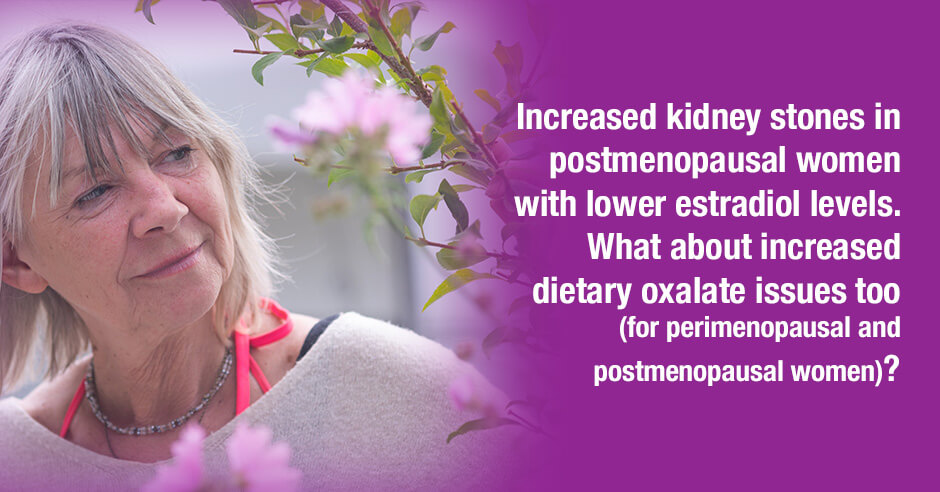
Increased kidney stones in postmenopausal women with lower estradiol levels. What about increased dietary oxalate issues too?

June 3, 2022 By Trudy Scott 20 Comments

oxalate menopause

Epidemiological data reveal that the overall risk for kidney stones disease is lower for women compared to age-matched men. However, the beneficial effect for the female sex is lost upon menopause, a time corresponding to the onset of fall in estrogen levels.

The above is from a 2013 paper, Serum estradiol and testosterone levels in kidney stones disease with and without calcium oxalate components in naturally postmenopausal women.

The aim of this study was to look at serum estradiol and testosterone levels of naturally postmenopausal women who had kidney stones.

It was a small study with 113 naturally postmenopausal women with newly diagnosed kidney stones (some with calcium oxalate stones and some with non-calcium oxalate stones) and 84 controls, all around 52 to 62 years of age.

The results were as follows:

  • Serum estradiol (E2) was significantly lower in kidney stones patients compared to controls (21.1 vs. 31.1 pg/ml)
  • Serum testosterone (T) levels did not significantly differ among the groups.

The authors came to the conclusion that “Naturally postmenopausal women with higher remaining estradiol levels appear less likely to suffer from kidney calcium oxalate stones.

These findings support the hypothesis that higher postmenopausal endogenous [produced by the body] estrogens may protect against kidney stones with ageing.”

This is very encouraging research because it means we can do something about it (more on that below).

My question is this: What about increased dietary oxalate issues in this age group? And can there be similar issues in perimenopausal women too? This study only looked at kidney stones but I propose that there is a connection and that declining estradiol is the common factor. I also propose that providing estrogen support may help to counter both issues – kidney stones and/or dietary oxalate issues with no kidney stones, especially with the clinical observations and feedback I have had (more on that below).

Now this may not be the case for all women and is clearly not the only factor when it comes to kidney stones and dietary oxalate issues. But I do feel it needs to be part of the discussion. In menopause, osteoporosis and heart disease are on our radar but kidney stones and dietary oxalate issues are not.

Dr. Felice Gersch talks about estrogen and calcium in bone health and osteoporosis

I really thought I was onto something after hearing Dr. Felice Gersh, MD (a integrative gynecologist who focuses on women’s health and menopause) talk about estrogen and calcium in bone health/osteoporosis on The Osteoporosis Summit earlier this year. This is some of what she shared:

Estrogen affects everything! So estrogen is involved in the development of bone, but it’s even more complex. For example, estrogen allows the proper absorption of calcium, so that you get proper absorption of calcium from food in the gastrointestinal tract. That involves having proper estrogen levels. And having proper estrogen levels allows the reabsorption of calcium in the kidneys so that you don’t excrete a lot of calcium that you shouldn’t be excreting.

As soon as I heard calcium and the kidneys, the light bulbs went off and I started looking for some research. I didn’t expect there to be much because a higher incidence of kidney stones in menopause and the estrogen connection is not something I’ve heard discussed by menopause experts. However, the above study was one of many. Here are a few more studies that support this connection:

  • Estrogen replacement increased the citrate and calcium excretion rates in postmenopausal women with recurrent urolithiasis (urolithiasis is kidney stone disease)
  • Etiological role of estrogen status in renal stone formation

Interestingly this 2021 paper, Association between sex hormones and kidney stones: analysis of the National Health and Nutrition Examination Survey, reports that there is “no independent association between sex hormones (testosterone and estradiol) and history of kidney stones in either males or females.”  This conclusion may be related to the fact that there are fewer studies that include women. I look forward to future research in this area and until then we use the other research and what we see clinically.

How common are dietary oxalate issues in my community of perimenopausal and menopausal women?

I posted the 2013 study and this question on Facebook to see how common an issue it is:

If you have dietary oxalate issues (with or without kidney stones) I’m curious if there is a hormonal connection and specifically if things got worse for you in perimenopause, and got really bad in menopause (as estrogen declines even further). This has certainly been the case for me.

Here is some of the feedback I’ve received on this post and related posts:

Cynthia shared this: “Really interesting! I definitely had oxalate issues (perimenopause) provoked by ruptured appendix/SBO/abscesses and fistula formation (13 day hospitalization)….I had to remove all oxalates and go full carnivore for 9 months….I’m still oxalate sensitive and had not been before…. I will definitely be sharing this with my communities….there are SO many middle aged women with oxalate issues”

Kirsten shared this: “Interesting to know. At the age of 49 (I am now 51), for the first time in my life I developed kidney stones – probably the most painful experience of my life. I eliminated vitamin C supplements and some oxalates (I had a daily dose of “green juice” that I was consuming as well that I no longer take) however I never understood the relationship between estrogen and their development. I am not post menopausal as of yet -but definitely experiencing symptoms common in peri-menopause… Perimenopausal symptoms include – anxiety (the worrying type) which is at its worst around the time I menstruate (taking 5-HTP which helps but doesn’t completely resolve), night sweats, hypoglycemia, HPA dysfunction (which could be a result of perimeno as well as its own issue – or both). If I don’t keep my stress levels in check, everything becomes exacerbated – meditation helps too.”

Leah shared this: I developed oxalate issues after menopause (I’m in my 60s) and didn’t realize what is was until I read your post about it during the early days of the pandemic when people were overdosing on vitamin C (at least you were trying to figure out if there was a connection at the time). With more research, I discovered a product called Kidney Cop that I still take (though I never get stones, only skin issues on my face). I also switched to liposomal vitamin C and amla and cut back on the offensive [high oxalate] foods for me. I do also experience a similar effect when I use collagen powder with peptides (skin issues). When I switched to a powder that didn’t contain peptides but has collagen types 1-5 in it, I had no issues. I don’t know if this is oxalate-related or not, but the skin issue is the same (clear fluid-filled bumps around my mouth and chin only).”

A number of women in the Facebook group Trying Low Oxlaates have shared comments like this: “I was never bothered by oxalate issues before menopause” and “I can tell you that my oxalate problems became far worse – along with everything else, pyroluria, copper toxicity etc – in perimenopause.”

Personally, my severe dietary oxalate issues started in 2012, when I was 52, and it manifested as excruciating foot pain. It was a combination of hot-burning-coals-pain and shards-of-glass-pain. Later it affected my left eye and more recently it impacted my sleep in a big way. I eat low oxalate and use vitamin B6 and calcium citrate (carefully timed) to keep symptoms away. My next plan is to see if addressing my low estrogen will help even more (more on that below).

Approaches to support declining estrogen levels in perimenopause and menopause

Briefly, here is a summary for supporting declining estrogen levels in perimenopause and menopause:

  • Diet and lifestyle including exercise and stress-reduction
  • Amino acid support as needed (GABA supports progesterone and tryptophan supports estrogen) and the pyroluria protocol of zinc, vitamin B6 and evening primrose oil (more on this here)
  • Adrenal support
  • Essential oils such as geranium and rose otto and clary sage and other oils to help with anxiety and stress
  • Liver and kidney support
  • Avoiding environmental toxins, especially xenoestrogens (plastics, fragrances, pesticides etc) which bind to estrogen receptor sites
  • Maca – the research on Femmenessence Maca-Pause for bone and cardio health is very encouraging and I suspect there may be benefits for dietary oxalate issues and kidney stones too (when there is a low estrogen trigger). I will be trying this approach and I’ll report back on what I find.
  • Other herbal approaches for hormonal support: Black cohosh, red clover, dong quai (which, interestingly, are reno-protective too)
  • Bioidentical hormone replacement therapy

This section deserves an entire blog post and is important to address over and above the mood issues, increased anxiety, compromised sleep, low libido, vaginal issues and hot flashes – because of the impacts for heart health, cognitive decline and bone health.

Kidney stones and dietary oxalate issues in men

This 2016 paper addresses kidney stones in males and makes the testosterone connection for men under 60 years of age: Possible role of elevated serum testosterone in pathogenesis of renal stone formation

Urolithiasis [kidney stones] occurs with greater frequency in males with incidences three times higher compared to females indicating some role played by androgens. Stone formation in renal tissues before puberty is similar between males and females, whereas greater frequency is seen in the third to the fourth decade of life when the levels of serum testosterone are also the highest in males.

With advancing age, the probability for stone formation also decreases as consistent with the decline in serum testosterone levels with more than 20% of healthy men over 60 years of age presenting with serum levels of hormone below the range for young men.

This paper does also support the menopausal estrogen connection I’ve mentioned above: “With females, the frequency for stone formation is considered more compared with premenopausal postulated mainly due to low estrogen levels.”

There is so mention of dietary oxalate issues but we do see this clinically.

My other resources on oxalates if this is new to you

This blog, Oxalate crystal disease, dietary oxalates and pain: the research & questions, came out of my quest for finding a medical explanation/term for my own pain caused by dietary oxalates and a desire to gain a better understanding for my clients who experience similar pain.

You can read an overview of oxalates, my pain issues with dietary oxalates, a deeper dive into the condition called oxalate crystal disease (with some of my insights and questions), and the autism and atherosclerosis research.

As I mentioned above, my severe dietary oxalate issues started in 2012 (when I was 52) and it manifested as excruciating foot pain. It was a combination of hot-burning-coals-pain and shards-of-glass-pain. Later it affected my left eye.

You can also read how oxalates can contribute to anxiety, sleep issues (this has been a more recent issue for me), headaches, fatigue and other symptoms.

When I did the research for this older blog I didn’t come across any studies related to menopause and estrogen levels.

I published this blog, Coronavirus and vitamin C for immune support: new pain or more severe pain due to oxalate issues?, to help folks identify the increase in different types of pain they were seeing as a result of using high dose vitamin C. This could be joint pain, eye pain, foot pain, vulvodynia, bladder issues, insomnia, gut pain, kidney pain, changes in thyroid health/labs, bone pain etc.

This blog, Vitamin C causes oxalate formation resulting in pain, anxiety, and insomnia (when there is a defect in ascorbic acid or oxalate metabolism)? is part 2 and reviews some of the research on vitamin C/ascorbic acid being a possible trigger for the formation of oxalates in certain instances.

I do mention the big disconnect that we see in this research is always the mention of kidney stones. The missing piece – in the research and in many articles – is that you can have issues with dietary oxalates when there is no kidney disease/no kidney stones. I propose similar logic for dietary oxalate issues in perimenopause and menopause with declining estrogen levels i.e. dietary oxalate issues with or without kidney stones.

If you’re in perimenopause or menopause have approaches for supporting estrogen (estradiol) made your dietary oxalate issues and/or kidney stones less severe? Please share what has helped and if you have both – dietary oxalate issues and kidney stones/kidney disease.

If you’re a younger woman and have dietary oxalate issues and kidney stones/kidney disease, have you noticed any hormonal connections?

If this doesn’t affect you personally, have you seen the benefits of supporting estrogen with your perimenopausal/menopausal female clients/patients who have dietary oxalate issues and kidney stones/kidney disease?

If you’re male and have had dietary oxalate issues and/or kidney stones have you found they get less severe as you get older and testosterone declines?

If you have questions please share them here too.
Filed Under: Oxalates, Women's health Tagged With: anxiety, bone health, calcium, calcium oxalate, cognitive decline, dietary oxalate issues, Dr. Felice Gersch, estrogen, heart health, hot-flashes, insomnia, kidney stones, libido, lower estradiol levels, men, mood issues, osteoporosis, oxalate menopause, pain, perimenopausal, perimenopause, postmenopausal women, postmenopause, sleep, testosterone, vaginal, vitamin C

The Toxin Solution – an interview with author Dr. Joseph Pizzorno

May 24, 2019 By Trudy Scott 4 Comments

toxin solution

Toxin exposure is at an all-time high and very relevant when it comes to anxiety, ADHD, asthma, diabetes, cancer, dementia and all chronic diseases. I did this wonderful interview with Dr. Joseph Pizzorno in 2017 when his book – The Toxin Solution – was published and for some reason it didn’t make it onto the blog.

I’ve decided to share it now because Dr. Pizzorno is one of the speakers at the August IMMH/Integrative Medicine for Mental Health conference.

If you’re planning to attend this will give you a taste of what to expect. If you’re on the fence hopefully this will convince you, together with the fact that I’m presenting again this year (I’m doing a deep dive into GABA).

I look forward to meeting him in person at the conference and will hopefully see you there too! If you can’t make it or are not a practitioner enjoy this interview and do checkout his fabulous book.

Read on for notes from our interview, the video interview and resources for you related to our interview. Some highlights include these facts: about 90% of diabetes is just due to 6 toxins; PCBs (polychlorinated biphenyls) may account for half of all breast cancer; top 10% of those exposed to organophosphate pesticides saw a doubling of ADHD (just one pesticide); 20% of osteoporosis in women is due to cadmium; lentil soup in a can has 10 x more BPA than homemade and much more

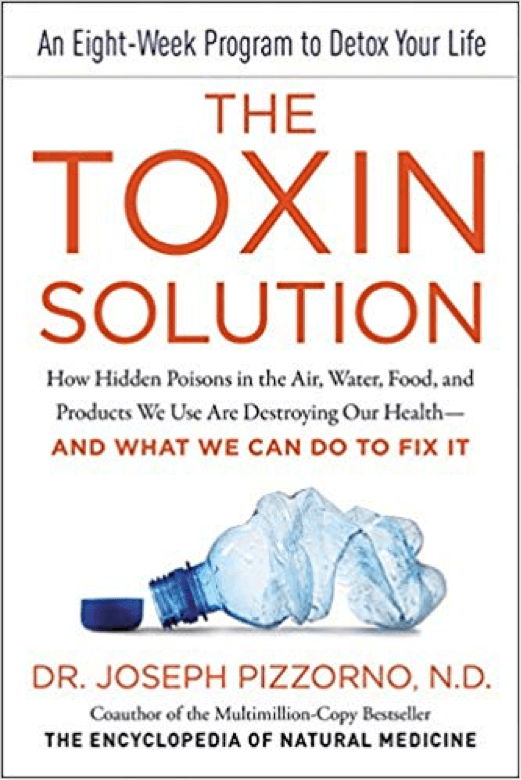
Here is the book: The Toxin Solution: How Hidden Poisons in the Air, Water, Food, and Products We Use Are Destroying Our Health–AND WHAT WE CAN DO TO FIX IT (my Amazon link)

Here is our wonderful interview

And here is a summary from the video interview:

  • in mid to late-70s people were sick because of nutritional deficiencies, lack of exercise and lifestyle factors
  • we have polluted our air, water, food, health and beauty aids, household cleaning products, products in our yards – independent of what you do, toxins are coming in
  • he worked with big oil company in Canada – they wanted to improve the health of the staff and he ran tests to measure nutritional status and toxin levels ($1500 worth of lab tests of 4500 people) – saw a lot of toxicity
  • top 20% of those with body burden of toxins vs bottom 20% – what is disease risk? very big increase in disease risk
  • diabetes as example – when he was in medical school 50 years ago diabetes affected 1% of the population and now it’s 20-30x more common
  • looked at data on diabetes and toxins – looked at organochlorine pesticides – used widely in our food supply
  • top 10% of those with high body burden – 12 fold increase risk of diabetes
  • looked at many other diseases and all had high correlation of toxicity with higher risk
  • used his book advance to hire researchers (Bastyr grads) to determine what toxins contribute to what diseases
  • about 90% of diabetes is just due to 6 toxins
  • it’s why he wrote this book The Toxin Solution (my Amazon link) – here’s how toxins cause disease, here’s where the toxins are coming from, here’s how you avoid them and here’s how you prepare your body for a detox (do this first) and then do the detox
  • [I shared my exposure to lead when I worked in an oil refinery before I became a nutritionist]
  • oil field workers he tested were never exposed to the oil itself as it was underground – they were also farmers and spaying with pesticides, herbicides and insecticides
  • everyone can relate to how dangerous smoking is i.e. lung cancer is doubled by smoking and it affects 20-25% of the population, so bring it home for people asked if there are other toxins that increase the risk of certain diseases – answer is most certainly yes
  • asthma – Polycyclic aromatic hydrocarbons (PAHs) from second-hand smoke, city living, diesel, barbecue smoke; 93% of the US population have enough PAH exposure to double their risk of asthma
  • breast cancer – PCBs (polychlorinated biphenyls) may account for half of all breast cancer
  • some data on toxins and anxiety, mental health but more on neurodegeneration and dementia; damage to the neurons will make you more prone to anxiety, stress and depression
  • anxiety and ADHD in children – top 10% of those exposed to organophosphate pesticides compared to bottom 10%, saw a doubling of ADHD (and this was just looking at one pesticide)
  • neurological system is really susceptible to these toxins
  • if you’re eating conventional foods you’re full of toxins
  • Seattle study on kids coming out of organic stores vs those coming out of conventional stores – the later had 10x higher levels of organophosphate pesticides
  • high phosphate fertilizers are contaminated with cadmium
  • osteoporosis study in women – thinner bones when exposed to cadmium from conventional soybeans; 20% of osteoporosis in women in the USA is due to cadmium
  • eat organically grown foods
  • foods will absorb BPA and phthalates from the cans they are in
  • study comparing homemade lentil soup vs lentil soup in a can – canned lentil soup had 10 x more BPA
  • BPA binds to insulin-receptor sites, pancreas burns out and you get diabetes
  • [I mention moms exposed to BPA when pregnant and their children have higher risk for ADHD and anxiety]
  • children born to moms in top 10% of exposure to organophosphate pesticides vs bottom 10% – children had a 7 point drop in IQ (even when followed for 7 years)
  • women who breastfeed have lower cancer risk and more breastfeeding leads to lower PCB levels (breast-feeding for 12 months decreased PCB levels by 40%)
  • great for the mom but no good for the children
  • what’s remarkable – PCBs were banned in the US 40 years ago – so hard to breakdown in our bodies and the environment so they accumulate
  • best plan – east organic, don’t use plastic storage containers, beauty products with no phthalates
  • check your water – in the USA 10% of public water has high enough arsenic levels to increase risk of diseases; at least use carbon filter to get out the chemicals
  • 60-70% of out toxin exposure comes from food – we have control over this and the body can heal
  • [I say the book offers solutions: The Toxin Solution: How Hidden Poisons in the Air, Water, Food, and Products We Use Are Destroying Our Health–AND WHAT WE CAN DO TO FIX IT (my Amazon link)]
  • our bodies evolved to detoxify and there is a lot we can do
  • what to do – don’t let them in
  • increase your fiber intake – liver denatures toxins by binding them to another molecule and dumps them into the gut where they are bound to fiber and excreted but 90% of toxins get reabsorbed through enterohepatic circulation because we now only consume 15-20g of fiber a day. You need at least 40-50g of fiber a day to detox
  • if you do nothing more than consume more fiber you will get the toxins out – it’s very slow but you will get the toxins out
  • flax seeds, oats, alginate, pectin
  • not a fan of wheat fiber – most of his patients don’t tolerate wheat
  • any kind of fiber that mixes in water and gels – this is good
  • NAC (N-acetyl cysteine) – the cysteine promotes the production of glutathione (most important intracellular and intra-mitochondrial antioxidant
  • glutathione is also part of process in the liver where it binds chemical toxins in order to neutralize them and dump them into the gut to get rid of them
  • as little 500mg/day of NAC can help your body get rid of toxins
  • next is sweat – saunas and running, but not steam-baths as this recirculates stuff – your sweat is full of toxins
  • [I have a question about the toxin-filled sweat on the towels and in the sauna]
  • air out the sauna and wash the towels but it’s not ideal because then we’re putting those toxins back into the environment (can burn them or bury them but there is no good solution) – best to stop putting chemicals into environment
  • [I have a question about an indoor saunas and toxins going into the home]
  • valid question – his sauna has a window to the outside
  • tip for homemade cleaning products – water, vinegar and lavender oil (which is both calming and antibacterial)
  • no to fragrances which are solubilized to phthalates and 1/3 of all diabetes is linked to phthalate exposure
  • you get exposed to phthalates when hot water hits your plastic shower curtain
  • great-grandfather ate a Mediterranean diet lived to 95 and never saw a doctor, grandfather ate a mix of American diet and Mediterranean diet
  • dad ate 100% American diet, plus not worried about exposure to chemicals – lived to 88 but had dementia by 83, osteoporosis, arthritis, hip replacement surgery, cardiac surgery
  • final words of wisdom: good health is quite straight-forward – eat real food rich in nutrients and avoid toxins as much as you can and your wonderful body will take of just about everything else

Resources for you

  • The Toxin Solution: How Hidden Poisons in the Air, Water, Food, and Products We Use Are Destroying Our Health–AND WHAT WE CAN DO TO FIX IT (my Amazon link). This is a wonderful book if you as a health-savvy consumer are looking to learn and protect yourself and your family. It’s aksi a great gift for someone who is new to the concept of how toxins affect our health. Finally, it’s a wonderful resource for practitioners to share with their patients and clients.
  • You can purchase NAC and lavender essential oil from my supplement store here.
  • As I mentioned, Dr. Pizzorno is one of the speakers at the August 2019 IMMH/Integrative Medicine for Mental Health. His presentation will be on day 2 – Neurotoxin Susceptibility by Age: The Impact of Metal and Non-Metal Toxins on the Brain. You can read more here.
  • We didn’t address how some of the amino acids can help with detox too. But you can learn more about how GABA protects against hypothyroidism caused by fluoride and reduces anxiety here. I’ll be discussing this and some other new GABA research in my presentation on day 3 – GABA for Anxiety, ADHD, Autism, Insomnia and Addictions: Research and Practical Applications. You can read more here.

Do let us know what steps you’ve made to reduce toxic exposure in your life and what you’ve done to detox, and what improvements you’ve observed.

Feel free to post questions in the comments too.

And let me know if you’ll be at IMMH. And be sure to stop by and say hi to both me and Dr. Pizzorno.

Filed Under: Toxins Tagged With: ADHD, anxiety, asthma, breast cancer, dementia, fiber, Joseph Pizzorno, NAC, organic, osteoporosis, PCBs, pesticides, phthalates, sauna, The Toxin Solution

  • « Go to Previous Page
  • Page 1
  • Page 2

Primary Sidebar

NEW! GABA QuickStart Homestudy (with special intro pricing)

gaba quickstart homestudy

Free Report

9 Great Questions Women Ask about Food, Mood and their Health

You'll also receive a complimentary subscription to my ezine "Food, Mood and Gal Stuff"


Connect with me

Popular Posts

  • Amino Acids Mood Questionnaire from The Antianxiety Food Solution
  • The Antianxiety Food Solution Amino Acid and Pyroluria Supplements
  • Pyroluria Questionnaire from The Antianxiety Food Solution
  • Collagen and gelatin lower serotonin: does this increase your anxiety and depression?
  • Tryptophan for the worry-in-your-head and ruminating type of anxiety
  • GABA for the physical-tension and stiff-and-tense-muscles type of anxiety
  • The Antianxiety Food Solution by Trudy Scott
  • Seriphos Original Formula is back: the best product for anxiety and insomnia caused by high cortisol
  • Am I an anxious introvert because of low zinc and vitamin B6? My response to Huffington Post blog
  • Vagus nerve rehab with GABA, breathing, humming, gargling and key nutrients

Recent Posts

  • What do I use instead of Seriphos to help lower high cortisol that is affecting my sleep and making me anxious at night?
  • BeSerene™ GABA/theanine cream eases severe muscle tension in her neck/shoulders, prevents her bad headaches and quells her anxiety
  • How the correct approach, dose and sublingual use of GABA can be calming and not cause a flushed and itchy face and neck
  • The amino acid glutamine improves low mood by addressing gut health, and it has calming effects too
  • Flight anxiety with heightened breath, physical tension and also fearing the worst (the role of low GABA and low serotonin)

Categories

  • 5-HTP
  • AB575
  • Addiction
  • ADHD
  • Adrenals
  • Alcohol
  • Allergies
  • Alzheimer's disease
  • Amino Acids
  • Anger
  • Antianxiety
  • Antianxiety Food Solution
  • Antidepressants
  • Anxiety
  • Anxiety and panic
  • Autism
  • Autoimmunity
  • benzodiazapines
  • Bipolar disorder
  • Books
  • Caffeine
  • Cancer
  • Candida
  • Children/Teens
  • Collagen
  • Cooking equipment
  • Coronavirus/COVID-19
  • Cravings
  • Depression
  • Detoxification
  • Diabetes
  • Diet
  • DPA/DLPA
  • Drugs
  • EFT/Tapping
  • EMF
  • EMFs
  • Emotional Eating
  • Endorphins
  • Environment
  • Essential oils
  • Events
  • Exercise
  • Fear
  • Fear of public speaking
  • Fertility and Pregnancy
  • Fish
  • Food
  • Food and mood
  • Functional neurology
  • GABA
  • Gene polymorphisms
  • General Health
  • Giving
  • Giving back
  • Glutamine
  • Gluten
  • GMOs
  • Gratitude
  • Gut health
  • Heart health/hypertension
  • Histamine
  • Hormone
  • Hyperparathyroidism
  • Hypoglycemia
  • Immune system
  • Inflammation
  • Insomnia
  • Inspiration
  • Introversion
  • Joy and happiness
  • Ketogenic diet
  • Lithium orotate
  • Looking awesome
  • Lyme disease and co-infections
  • MCAS/histamine
  • Medication
  • Men's health
  • Mental health
  • Mercury
  • Migraine
  • Mold
  • Movie
  • MTHFR
  • Multiple sclerosis
  • Music
  • NANP
  • Nature
  • Nutritional Psychiatry
  • OCD
  • Osteoporosis
  • Oxalates
  • Oxytocin
  • Pain
  • Paleo
  • Parasites
  • Parkinson’s disease
  • PCOS
  • People
  • PMS
  • Postpartum
  • PTSD/Trauma
  • Pyroluria
  • Questionnaires
  • Real whole food
  • Recipes
  • Research
  • Schizophrenia
  • serotonin
  • SIBO
  • Sleep
  • Special diets
  • Sports nutrition
  • Stress
  • Sugar addiction
  • Sugar and mood
  • Supplements
  • Teens
  • Testimonials
  • Testing
  • The Anxiety Summit
  • The Anxiety Summit 2
  • The Anxiety Summit 3
  • The Anxiety Summit 4
  • The Anxiety Summit 5
  • The Anxiety Summit 6
  • Thyroid
  • Thyroid health
  • Toxins
  • Tryptophan
  • Tyrosine
  • Uncategorized
  • Vegan/vegetarian
  • Women's health
  • Yoga

Archives

  • October 2025
  • September 2025
  • August 2025
  • July 2025
  • June 2025
  • May 2025
  • April 2025
  • March 2025
  • February 2025
  • January 2025
  • November 2024
  • October 2024
  • September 2024
  • August 2024
  • July 2024
  • June 2024
  • May 2024
  • April 2024
  • March 2024
  • February 2024
  • January 2024
  • December 2023
  • November 2023
  • October 2023
  • September 2023
  • August 2023
  • July 2023
  • June 2023
  • May 2023
  • April 2023
  • March 2023
  • February 2023
  • January 2023
  • December 2022
  • November 2022
  • October 2022
  • September 2022
  • August 2022
  • July 2022
  • June 2022
  • May 2022
  • April 2022
  • March 2022
  • February 2022
  • January 2022
  • December 2021
  • November 2021
  • October 2021
  • September 2021
  • August 2021
  • July 2021
  • June 2021
  • May 2021
  • April 2021
  • March 2021
  • February 2021
  • January 2021
  • December 2020
  • November 2020
  • October 2020
  • September 2020
  • August 2020
  • July 2020
  • June 2020
  • May 2020
  • April 2020
  • March 2020
  • February 2020
  • January 2020
  • December 2019
  • November 2019
  • October 2019
  • September 2019
  • August 2019
  • July 2019
  • June 2019
  • May 2019
  • April 2019
  • March 2019
  • February 2019
  • January 2019
  • December 2018
  • November 2018
  • October 2018
  • September 2018
  • August 2018
  • July 2018
  • June 2018
  • May 2018
  • April 2018
  • March 2018
  • February 2018
  • January 2018
  • December 2017
  • November 2017
  • October 2017
  • September 2017
  • August 2017
  • July 2017
  • June 2017
  • May 2017
  • April 2017
  • March 2017
  • February 2017
  • January 2017
  • December 2016
  • November 2016
  • October 2016
  • September 2016
  • August 2016
  • July 2016
  • June 2016
  • May 2016
  • April 2016
  • March 2016
  • February 2016
  • January 2016
  • December 2015
  • November 2015
  • October 2015
  • September 2015
  • August 2015
  • July 2015
  • June 2015
  • May 2015
  • April 2015
  • March 2015
  • February 2015
  • January 2015
  • December 2014
  • November 2014
  • October 2014
  • September 2014
  • August 2014
  • July 2014
  • June 2014
  • May 2014
  • April 2014
  • March 2014
  • February 2014
  • January 2014
  • December 2013
  • November 2013
  • October 2013
  • September 2013
  • August 2013
  • July 2013
  • June 2013
  • May 2013
  • April 2013
  • March 2013
  • February 2013
  • January 2013
  • December 2012
  • November 2012
  • October 2012
  • August 2012
  • July 2012
  • June 2012
  • May 2012
  • April 2012
  • March 2012
  • February 2012
  • January 2012
  • December 2011
  • November 2011
  • October 2011
  • September 2011
  • August 2011
  • July 2011
  • June 2011
  • May 2011
  • April 2011
  • March 2011
  • February 2011
  • January 2011
  • December 2010
  • October 2010
  • September 2010
  • July 2010
  • May 2010
  • April 2010
  • March 2010
  • February 2010
  • January 2010
  • November 2009

Share the knowledge!

The above statements have not been evaluated by the Food and Drug Administration. Products listed in this website are not intended to diagnose, treat, cure or prevent any disease.

The information provided on this site is for informational and educational purposes only and is not intended as a substitute for advice from your physician or other health care professional. You should consult with a healthcare professional before starting or modifying any diet, exercise, or supplementation program, before taking or stopping any medication, or if you have or suspect you may have a health problem.


Copyright © 2026 Trudy Scott. All Rights Reserved. | Privacy | Terms and Conditions | Refund Policy | Medical Disclaimer

Free Report

9 Great Questions Women Ask about Food, Mood and their Health

You’ll also receive a complimentary subscription to my ezine “Food, Mood and Gal Stuff”