• Skip to primary navigation
  • Skip to main content
  • Skip to primary sidebar

everywomanover29 blog

Food, Mood and Women's Health – Be your healthiest, look and feel great!

  • Blog
  • About
  • Services
  • Store
  • Resources
  • Testimonials
  • The Book
  • Contact
  • Search this site

grain-free

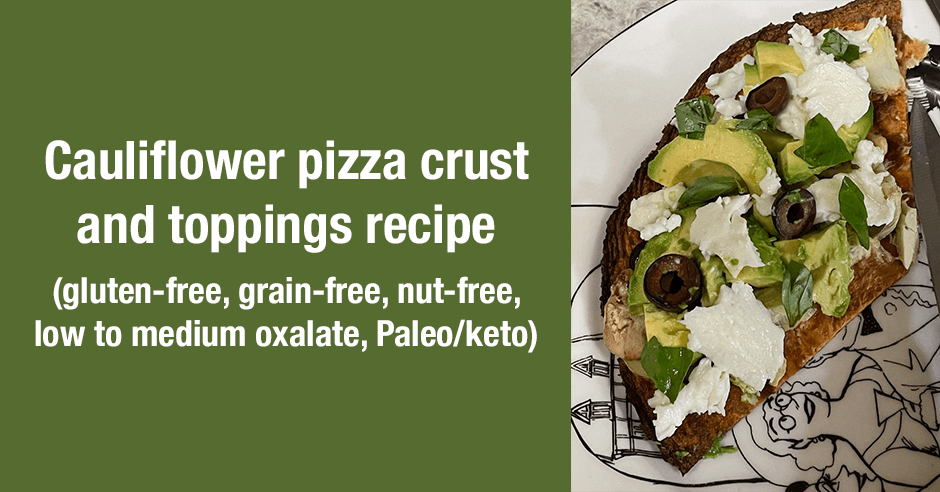
Cauliflower pizza crust and toppings recipe (gluten-free, grain-free, nut-free, low to medium oxalate, Paleo/keto)

July 19, 2024 By Trudy Scott Leave a Comment

cauliflower pizza

Today I’m sharing a really delicious cauliflower pizza crust recipe from Megan Gilmore of Detoxinista (the pizza crust recipe is unchanged and perfect just the way it is), my variations on toppings and some additional information on oxalates.

I do acknowledge, as far as pizza goes, my toppings are rather unconventional but I’ve never really been a big pizza lover (there, I said it!) But I do love cauliflower – it’s my favorite veggie – and I was excited when my sister told me about this recipe and then made it especially for me when I visited her and her family in Hawaii recently! Aren’t I spoiled?!

The fact that the cauliflower pizza crust is low oxalate makes a huge difference: the only ingredients are cauliflower, goats cheese and an egg. I’ve seen other cauliflower pizza crust recipes that include a nut flour such as almond flour. That would be a no-no for me and someone with dietary oxalate issues because almonds are high oxalate.

My topping included: a light smearing of tomato sauce, chunks of chicken (left-overs from the night before), a few halves of tinned artichoke and a few halved olives. I added all this to the prepared cauliflower pizza crust and heated it for 10 minutes.

Once it came out of the oven I loaded it up with freshly cut avocado, pieces of fresh basil and chunks of mozzarella cheese. I don’t like melted cheese and have a hard time digesting it so I prefer to add it afterwards. I think I’ll try feta cheese next time for a change.

I personally have dietary oxalate issues but right now I am doing well with a little tomato sauce, a few artichokes, a few olives and some fresh basil (as long as that is all I’m consuming that day in the way of medium oxalate foods). It’s best to figure out your own needs based on your oxalate issues and what you know you can tolerate.

Read on below for the link to the cauliflower pizza crust recipe and more about dietary oxalates.

The cauliflower pizza crust recipe from detoxinista

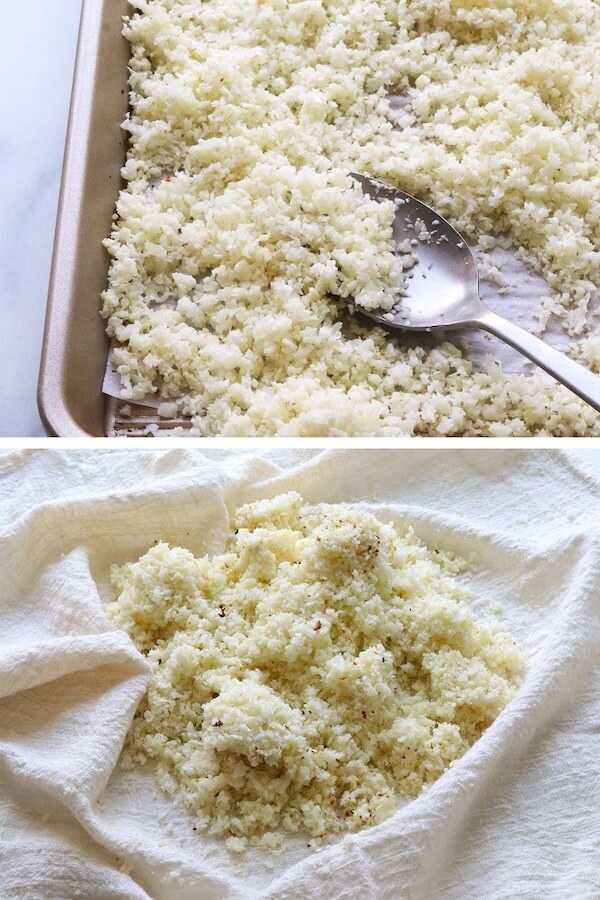
Here is the recipe for the perfect cauliflower pizza crust from Megan Gilmore. I have permission to only share the ingredients: cauliflower, egg, goats cheese, oregano, salt, and a pinch of black pepper, and photos from the site but you need to go to her site for the recipe instructions. It’s well worth it to see how it looks at the various stages. I’ve included a few of Megan’s images below.

I will add that my sister doesn’t have a food processor and just cooked the chopped cauliflower and then used a stick blender to get it looking like this.
cauliflower pizza
(Images used with permission from detoxinista)

(Images used with permission from detoxinista https://detoxinista.com/the-secret-to-perfect-cauliflower-pizza-crust/)

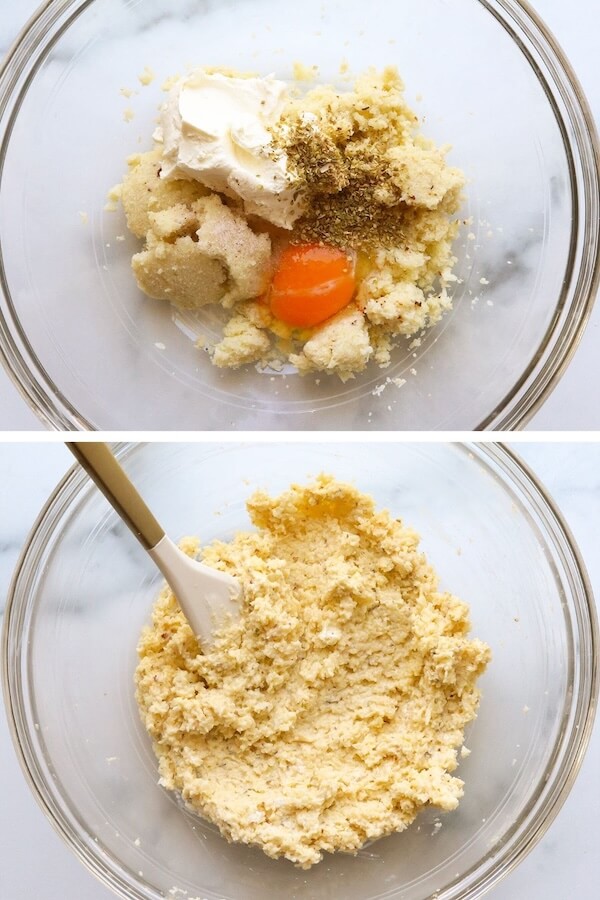
Once you add the egg and goat cheese it will have a texture and consistency like this. This is done after you have squeezed the liquid out of the cooked cauliflower – a crucial step for a firm and crunchy pizza crust.
cauliflower recipe
(Images used with permission from detoxinista)

Check out Megan’s site for other useful images, especially to see what the cooked crust looks like. One tip from my sister: once the crust is golden and crisp, flip it over and cook it another 10 minutes.

You’ll see there are also some variations with no goat cheese and no egg. If you try either of these please do share how they turned out.

Enjoying family, nature and a cauliflower crust pizza

After a gorgeous evening with my sister and brother (they were camera-shy!) at Kona on the Big Island, we got back home and ate delicious pizza on this home-made cauliflower pizza crust!

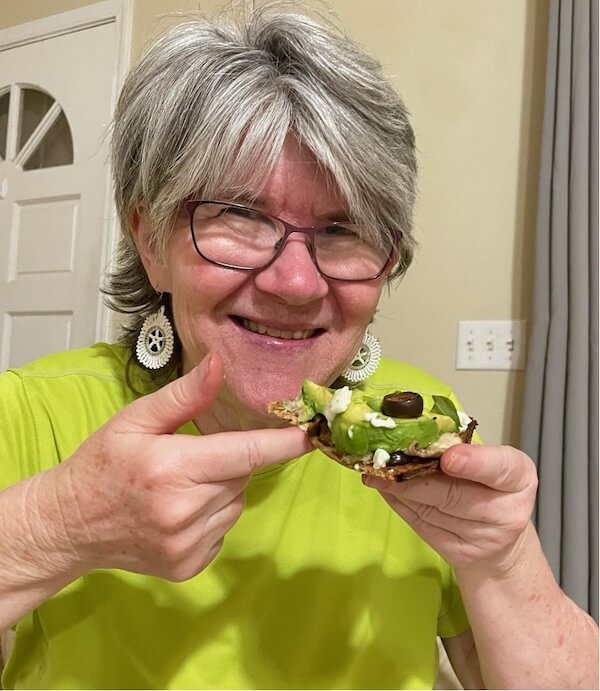
It was all prepared in advance – the crust and all the toppings – so we just put it all together based on our own likes and munched away. And boy did I rave about it – so much so that I said “hey take photos of me eating my pizza and I’ll share my my community”
cauliflower pizza

As you can see it’s a pretty firm crust and holds up well with all the toppings I added to mine. And yes my shirt matches the pizza topping – unintentional but still fun!
cauliflower pizza

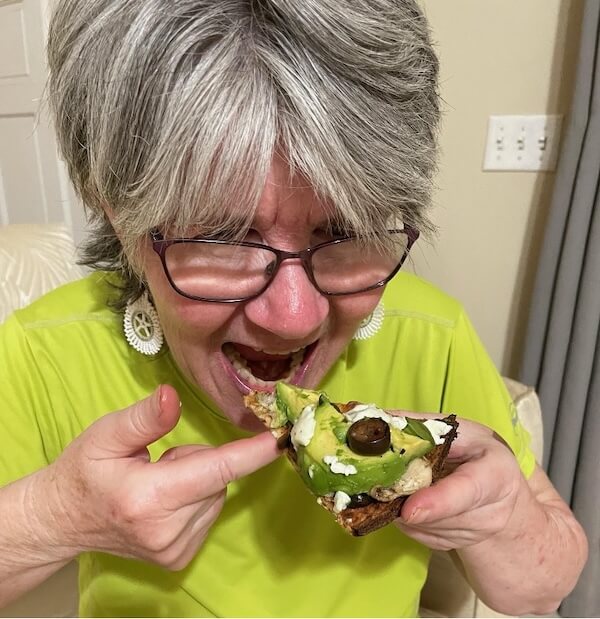
It’s also really nice to eat something crunchy with a pizza-crust-like texture. If you’re gluten-free and grain-free I’m sure you can relate! And it tastes lovely.

Of course you can make it with conventional pizza toppings too. And I think you could use the pizza crust as crackers too. I plan to make a double batch and try this and freeze them.

Dietary oxalates and the problems they can cause

This blog post is a helpful one to start with if you’re new to dietary oxalates and the issues they can cause – Oxalate crystal disease, dietary oxalates and pain: the research & questions.

These are the common medium-oxalate and high-oxalate foods that many folks have problems with: nuts, nut-butters and nut-flour (especially baking with almond flour and something to watch when eating Paleo or GAPS), wheat, chocolate, kiwi fruit (very high – see the raphides image on the above blog), star fruit (also very high), beets, potatoes, sweet potatoes, legumes, raspberries, spinach and soy.

In the above blog post, I share an overview of oxalates, my pain issues with dietary oxalates (severe foot pain and eye pain), and deeper dive into the condition called oxalate crystal disease (with some of my insights and questions).

The big take-aways are that calcium oxalate crystals are sharp and can cause far reaching harm beyond pain – such as unresolved anxious feelings, thyroid issues, neurological symptoms, eye issues, hearing loss, bladder issues, headaches, fatigue, sleep issues, restless legs, autism symptoms and more. You can have issues with dietary oxalates and not have kidney disease/kidney stones, although there is very little research supporting the latter.

I’m finding dietary oxalate issues to be underappreciated especially in menopausal women when symptoms can show up and be more severe. And there is a strong connection with gallbladder issues and problems with fat digestion, which becomes more of an issue in perimenopause and beyond.

You can click on this link to read other blog posts on the topic of oxalates.

A resource if you are looking for a nutritional approach

If you are looking for a nutritional approach for your anxious feelings, mood issues, sleep problems and overall health issues, my book, The Antianxiety Food Solution – How the Foods You Eat Can Help You Calm Your Anxious Mind, Improve Your Mood, and End Cravings, is a great foundation. Be sure to share it with the practitioner/health team you or your loved one is working with.

If diet isn’t enough, there are entire chapters on the amino acids, gut health, blood sugar control and pyroluria. I don’t cover oxalates because I only became aware of them after my book was published (but I’ve published much on the blog since then – simply search this blog for other articles on the topic).

If, after reading this blog and my book, you don’t feel comfortable figuring things out on your own (i.e. doing the amino acids symptoms questionnaire and respective amino acids trials), a good place to get help is the GABA QuickStart Program (if you have low GABA symptoms too). This is a paid online/virtual group program where you get my guidance and community support.

If you are a practitioner, join us in The Balancing Neurotransmitters: the Fundamentals program. This is also a paid online/virtual program with an opportunity to interact with me and other practitioners who are also using the amino acids.

I’d love to hear if you try this recipe and enjoy it (and what modifications you made).

Do you like cauliflower and what is your favorite way to enjoy it?

Feel free to share and ask your questions below.
Filed Under: Oxalates, Recipes Tagged With: anxious, cauliflower, cauliflower pizza crust, dietary oxalate issues, egg, gluten-free, goats cheese, grain-free, Low oxalate, low to medium oxalate, Megan Gilmore, nut-free, pain, Paleo/keto, recipe, sharp crystals, sleep

Too much GABA causes a tingling niacin-like flush sensation (in the brain and body). It’s awful and very uncomfortable!

February 18, 2022 By Trudy Scott 104 Comments

too much gaba

GABA, used as an amino acid, helps to raise GABA levels and ease physical tension-type anxiety. There are many misunderstandings on the best and most effective ways to use GABA and this can lead to unpleasant symptoms. One common thing I see is that too much GABA causes the brain and body to react with a tingling niacin-like flush sensation that is very uncomfortable and often described as awful.

Too many people stop using GABA for this reason. And then they lose out on the wonderful calming benefits of this amino acid. Some folks actually push through and continue with the unpleasant tingling sensation because they don’t know better and because they are also getting some of the calming benefits of GABA (I share an example of this below). Neither situation is ideal.

I recently received a GABA question on the blog on this very topic. It was from a licensed acupuncturist in California, USA (let’s call her Dr. M):

When I used to take GABA for my stress, my body/brain reacted with a tingling sensation.

It was so awkward and uncomfortable.

I thought it was only me, but when I prescribed GABA to my patients, they also felt the same sensations.

Can you tell me why this reaction occurred?

Thank you so much for your generosity and deep research.

Because this is such a common question that I get, I’m sharing it and my responses to use it as a teaching opportunity.

Too much GABA can cause this uncomfortable tingling niacin-like flush or sensation

I responded sharing that it can happen when too much GABA is used or if GABA is not needed. I typically hear of this happening when 500mg to 750mg is used to start. It’s also often described as a niacin-like flush. With GABA, 125mg is a typical starting dose and it’s always used as a sublingual or capsule opened onto the tongue. We slowly go up from there based on symptoms and the final dose is unique to each person’s needs. You may end up using 500mg or more but it’s a slow approach to get there.

I asked Dr. M to share which product/s she used, the dosing and let me know if she does better with a lower dose.

As expected she was using too high a dose (and hadn’t done a trial of a lower dose). She responded with this feedback:

The GABA I used for me and my patients is from Pure Encapsulations. This GABA contains 700 mg per capsule, which may be too much for the start.

Which brand would you recommend for practitioner use?

I responded by confirming that 700 mg GABA is way too much to start for most people.

What product and how much to use instead of 700 mg GABA

I like the Pure Encapsulations product but I actually feel the companies are partially at fault for having such high dose products, stating “1 capsule daily, between meals, or as directed by a health professional” on the label, and not educating practitioners and consumers about this issue.

With a product like this I have clients open up the capsule and start with 125 mg GABA powder on the tongue and increase from there as needed.

I also shared the other GABA products I use in case she would prefer to try something like the Source Naturals GABA Calm product I frequently use with clients.

This is a lozenge that contains 125 mg GABA, 5 mg magnesium, 50 mg glycine, 25 mg tyrosine and 20 mg taurine. This is my most popular and most effective form of GABA I use with my clients. [Note: this product is a lozenge with 125mg GABA and is not to be confused with the Source Naturals, GABA Calm Mind, 750 mg tablets]

I’m waiting for feedback from her to hear how using less of the 700 mg GABA (opened up and divided out) or how using another GABA product works for her and her patients.

I do appreciate Dr. M for asking a tough question like this and being open to me sharing so everyone gets to learn.

Where did Dr. M learn about GABA and some resources for additional practitioner education

I did ask Dr. M where she learned about using GABA and if the recommendation was to use a high dose like this. I’m genuinely curious to know so I can help guide further education in the use of GABA.

Of course, I encouraged her to get my book “The Antianxiety Food Solution” and read the chapter on the amino acids. And to consider signing up for the amino acid training for practitioners. There are many nuances and best practices when using the amino acids. And it’s an opportunity to interact with me and other practitioners who are also using the amino acids.

If you’re a practitioner, I’m hoping this question, my feedback and these resources are helpful for you.

Similar niacin-like flush experienced by Holly

As mentioned above this is a very common issue because most GABA products are 500mg and up and folks hear how amazing GABA is for physical anxiety and use a high dose without understanding they need to start low and use only what they need.

I shared my discussion with Dr. M in a Facebook post and Holly responded with what happened to her when she switched from GABA Calm (which has 125 mg GABA) to a 750 mg GABA product:

I experienced the niacin-like flush when I tried to go from GABA Calm [mostly dissolved in my mouth] to a pill form and didn’t realize the dosage would be way too high all at one time. The pill was 750 mg GABA [and swallowed with food], so it wasn’t going to work well anyway.

The flush lasted about 15-20 minutes. It was awful. I was sure I was going to throw up every time.

It took me a couple of weeks to figure out the cause.  My therapist recommended your website and book and those helped me understand when to take it and why it would help.

When I eliminated the 750 mg GABA  pill the symptoms completely went away.

Now I stick to GABA Calm. I take one in the morning and one before bed and sometimes one midday.

I appreciate Holly for sharing and I’m glad her and her therapist figured it out.

Resources if you are new to using GABA as a supplement

If you are new to using the the amino acids GABA as supplements, here is the Amino Acids Mood Questionnaire from The Antianxiety Food Solution (you can see the low GABA and other low neurotransmitter symptoms)

In case you’re new to the low GABA-type of anxiety, with low GABA levels you may experience physical-tension and stiff-and-tense-muscles, panic attacks, more physical tension in certain settings like public speaking or driving. You will often have the need to self-medicate to calm down, often with alcohol but sometimes with carbs and sugary foods.

Insomnia can also be caused by low GABA and you’ll experience physical tension in bed at night rather than the ruminating thoughts which is the low serotonin type of insomnia (although it’s not uncommon to experience both.) GABA also helps with muscle spasms and pain relief when muscles are tight.

If you suspect low levels of GABA or low serotonin and do not yet have my book, The Antianxiety Food Solution – How the Foods You Eat Can Help You Calm Your Anxious Mind, Improve Your Mood, and End Cravings, I highly recommend getting it and reading it before jumping in and using amino acids on your own so you are knowledgeable. And be sure to share it with the team you or your loved one is working with.

The book doesn’t include product names (per the publisher’s request) so this blog, The Antianxiety Food Solution Amino Acid and Pyroluria Supplements, lists the GABA products that I use with my individual clients and those in my group programs.

Get guidance in the GABA QuickStart Program

If you don’t feel comfortable reading my book, doing the low GABA symptoms questionnaire and doing trials of GABA on your own, you can get guidance from me in the GABA Quickstart Program.

We have an active and engaged community in the private Facebook group and there are 2 live Q & A calls with me.

One of the recent participants shared this lightbulb moment after starting with GABA Calm in the day and then shifting to 250 mg GABA at night only:

Listening to the GABA Quickstart made me realize something about the Source Naturals GABA Calm with the bit of tyrosine. I bought the NOW GABA powder and last night took 250mg (1/8 tsp and I have tiny measuring spoons) and woke up great.

I think I found my dose of GABA and I don’t think after my trial I’m a GABA in the day girl.

Have you used a high dose of GABA to start (or switched to a higher dose like Holly did) and experienced this unpleasant niacin-like flush?

How much caused this tingling sensation for you and how unpleasant was it? Did you push through and continue using the high dose? Or did you figure it out and use less? How long did it take you to figure it out?

Maybe you quit using GABA because of something like this – do you now feel inspired to try again?

If you’ve had success with using GABA please do share too.

If you’re a practitioner where did you learn about using GABA and was the recommendation was to use a high dose like 500 mg or 750 mg to start?

Feel free to ask your questions here too.

Be sure to share which product you used, how much you used and if you have low GABA symptoms.

Filed Under: Anxiety, Diet, GABA Tagged With: anxiety, bizarre, GABA, grain-free, horrible, intrusive thoughts, keto, Ketogenic, LCHF, low carb/high fat diet, microbiome, nutritional psychiatry, OCD, paleo, postpartum, serotonin, tryptophan, zinc

A lifetime of horrible and bizarre intrusive thoughts eliminated by a low carb/high fat diet (not as strict as keto) – a case study and research

February 11, 2022 By Trudy Scott 26 Comments

intrusive thoughts and low carb high fat diet

Intrusive thoughts are a symptom of anxiety, are more common than you’d expect and it’s not just you who experiences them. Today’s case study illustrates the power of diet: a low carb/high fat diet (not as strict as keto) completely eliminated a lifetime of horrible and bizarre intrusive thoughts for one woman. Read examples of her actual intrusive thoughts below and check out the supporting research and other case studies.

Ruthie suffered from intrusive thoughts as a child and most of her adult life, and assumed everyone did too. As a child, she would share some of her bizarre thoughts with other children, and they would stare at her and tell their parents. Her own parents became extremely concerned believing she might do one of these bizarre things. Her husband would sometimes look at her in horror when she asked certain questions. As an adult, she was told she was “unusual in a nice sort of way-haha!” This is how she described some of her intrusive thoughts:

They took the form of either myself or family members doing horrible/bizzare things or I would get in the car to go someplace and imagine one of the other drivers on the road doing something bizarre and my mind would follow it right through to the end result of what the individual caused to happen. I would arrive at my destination not remembering any part of my drive, my mind was so busy.

She goes on to share some of her postpartum experience with intrusive thoughts:

Everyone thought I had postpartum depression with my first child but it was the intrusive thoughts that had put me into a panic regarding her care. It was wonderful when a therapist told me it was the intrusive thought component of OCD and I could put a name to it.

It was the greatest delight of my life, when both children grew bigger and stronger than me so I knew, even though I knew I would never hurt them, they had the chance to defend themselves!

For her, eating high fat/low carb has eliminated her lifetime of intrusive thoughts:

Fast forward to discovering the low carb/high fat (LCHF) eating plan (not as strict as keto) and my intrusive thoughts have been gone for almost 2 years now (unless I become overtired).

It is a simply horrid disorder to have. I am just glad now it is well known but it really upsets me that it is being treated with dangerous psychotropic drugs that can do more harm than good when diet changes could be the solution.

I asked if she had ever used GABA or tryptophan (covered in part 1) or any other nutrients during any of the really bad periods and if any of it had helped. She shared that tryptophan gave her dreams that were too vivid and “by the time I was aware of GABA as a possibility, I had changed my diet and my problems had basically been resolved.”

She also confirmed her LCHF diet is predominantly gluten/grain free except the occasional splurge. I suspect these splurges may contribute to her feeling overtired and factor into her intrusive thoughts showing up again.

These are powerful results and I’m thrilled for her. I also appreciate her willingness to share and for allowing me to include her story.

A low carb/high fat (LCHF) / Ketogenic diet study

Most of the LCHF diet research focuses on weight loss and improvement of metabolic markers for conditions like diabetes. However, there is some promising new research on mental health.

This 2020 paper is one example – Ketogenic Diet: A Dietary Modification as an Anxiolytic Approach?

Diets with low amounts of carbohydrate consumption (low-carb) seem promising both for weight mass optimization among mentally ill patients and for their possible anxiolytic effect.

A diet is characterized as being low-carb high-fat (LCHF) when fat comprises >70% of the daily calorie consumption, with sugars [or carbs] being 5–15%, and the rest of the calorie intake being made up of proteins.

This paper discusses anxiety and the role of serotonin, GABA/glutamate imbalance, hypothalamic-pituitary-adrenal axis and elevated cortisol, inflammation and oxidative stress, the microbiome and leaky gut.

It also covers some ways LCHF diets may reduce anxiety: via impacts on the microbiome (with GABA being produced by good bacteria in the gut), by reducing inflammation and oxidative stress, and by providing omega-3 fatty acids and healthy oils (such as olive oil). The inclusion of real whole foods (i.e. no processed junk foods) with quality protein and zinc-rich foods such as oysters, low glycemic index carbohydrates and leafy greens as a source of magnesium, all contribute too.

The authors do mention canola oil which I do not recommend. And contrary to their mention of egg whites, I recommend the entire egg.

Their conclusion includes these statements:

In our mind, the LCHF diet is a promising, well-accepted diet regimen which has an impact on anxiety disorders…

The evidence mentioned in this paper should encourage psychiatrists to recommend LCHF diets as advice somewhere between psychotherapy and pharmacology, or as an add-on to those two.

And I’ll add this: let’s consider LCHF instead of psychotherapy and pharmacology. As you heard Ruthie share above and as you’ll read below, diet changes alone can have profound effects.

Dietary changes alone can be profound for many folks

I’ve blogged extensively about diet in the past: ketogenic diets, the omnivore or Paleo diet and grain-free diets. Diet provides the foundation of any anxiety nutritional program but many people don’t realize or acknowledge that dietary changes alone can be profound for many folks.

I’ll typically hear something like this: “My anxiety [or depression or intrusive thoughts] are too severe for only diet to make a difference. I’m someone who really does need medication.”

As you’ll see below, diet alone can make a huge difference and is often the only thing that needs to change:

  • Ketogenic diet: reductions in auditory hallucinations and delusions, better mood and energy, and weight loss

Two schizoaffective patients of Dr. Chris Palmer, a psychiatrist from Harvard’s McLean Hospital in Belmont, Massachusetts, tried a ketogenic diet for weight loss. As well as losing weight, they experienced reductions in auditory hallucinations and delusions, had a better mood and had more energy. I review the 2018 study and offer my insights in this blog.

  • An “omnivore” like diet or Paleo diet is associated with reduced anxiety and depression

This type of diet is also referred to as a cave-man type of diet. Even though this 2018 study was only showing associations and not a cause-and-effect, it’s still very encouraging to see new research in the field of nutritional psychiatry, further supporting the results we see in clinical practice.

  • Paleo and grain free diets: anxiety and depression success stories

I share many success stories in this blog. Here is an example from one woman: “Three days after I stopped eating grains, my chronic depression lifted and has never returned (it’s three years later now).”

  • Integrative Medicine Approach to Pediatric Obsessive-Compulsive Disorder and Anxiety

I write about a 2016 study where gluten was found to be the cause of a childhood case of obsessive-compulsive disorder (OCD). Intrusive thoughts are common with OCD and a gluten-free diet (and some other interventions) led to a “marked reduction of OCD symptoms and anxiety along with marked improvement of social behavior and school work.”

This is a small selection of many similar articles on the blog.

Other nutritional and hormonal solutions

This blog is part 2 of my deeper dive into intrusive thoughts and as a follow-on to part 1 where I cover low GABA, low serotonin, low zinc, low vitamin B6 (and pyroluria) and hormone imbalances as root causes for some individuals.

  • Many people “did not realize intrusive thoughts were a ‘thing’ a symptom of something” and thought it’s just something that happens to them
  • A definition of intrusive thoughts from The Anxiety and Depression Association of America and the fact that “Unwanted intrusive thoughts can be very explicit, and many people are ashamed and worried about them, and therefore keep them secret.”
  • The article that inspired these blogs on intrusive thoughts: The Debilitating Anxiety Symptom No One Ever Talks About
  • How to address low GABA, low serotonin, pyroluria (low zinc & vitamin B6) and hormone imbalances as possible causes (and examples from folks with these causes, plus supporting research)

As I mentioned in part 1, my purpose is to share actual examples from real people so you can see how varied these intrusive thoughts can be. And recognize that they are a thing and that you are not alone if you experience them.

And, of course, to create awareness that there are nutritional solutions.

My book as a resource if you are new to nutritional psychiatry

If you are new to nutritional psychiatry, do read this blog: Nutritional medicine in modern psychiatry: position statement by ISNPR.

If you do not yet have my book, The Antianxiety Food Solution – How the Foods You Eat Can Help You Calm Your Anxious Mind, Improve Your Mood, and End Cravings, I highly recommend getting it and reading the chapters on diet, sugar and blood sugar control, gluten and grains, and caffeine/alcohol so you have the foundation in place. Who knows, it may be the only changes you need to make to eliminate your intrusive thoughts and other anxiety symptoms!

Be sure to share it with the health team you or your loved one is working with.

If you are new to using the the amino acids GABA or 5-HTP/tryptophan as supplements, I cover this and pyroluria in part 1: Intrusive thoughts are a thing with anxiety: low GABA, low serotonin, pyroluria (low zinc & vitamin B6) and hormone imbalances as possible causes. Be sure to read the many comments and especially Kimberly’s feedback – she combined everything in the above blog and saw wonderful results.

As I mentioned in part 1, let’s talk about intrusive thoughts so we don’t have to feel alone and so we can find solutions. And share your success with nutritional solutions when something works for you. Share it with your friends, your health practitioner, researchers and on this blog.

Did you know intrusive thoughts are a thing, or did you think it was just you? And what kind of intrusive thoughts have you had?

Are you surprised that a LCHF/keto or similar diet could have such a profound impact?

Has a dietary approach alone helped you eliminate your intrusive thoughts or other anxiety symptoms?  Or has diet, in conjunction with amino acids such as GABA and tryptophan helped?

What else has helped eliminate or reduce your unwanted intrusive thoughts?

Feel free to ask your questions here too.

Filed Under: Anxiety, Diet, GABA Tagged With: anxiety, bizarre, GABA, grain-free, horrible, intrusive thoughts, keto, Ketogenic, LCHF, low carb/high fat diet, microbiome, nutritional psychiatry, OCD, paleo, postpartum, serotonin, tryptophan, zinc

Paleo and grain free diets: anxiety and depression success stories

March 31, 2017 By Trudy Scott 16 Comments

I recently reached out to my community to hear your diet-depression or diet-anxiety success stories in anticipation of the new SMILES diet depression trial, published last month and which I covered in a blog post last week. In that post I promised to share some real-life success stories on how an anti-inflammatory and anti-anxiety diet i.e. nutritional psychiatry people’s lives for the better!

I also shared that everyone who responded with success stories was following a more “evolved” diet than those who participated in the SMILES trial, the first randomized controlled diet depression study where ONE THIRD of the dietary intervention group saw improvements in their depression symptoms by switching from processed/junk food to real food with no specific dietary restrictions!

What do I mean by a more evolved diet? Each of them was eating a real foods or traditional non-processed diet that was gluten-free, mostly or all grain-free and various permutations of the Paleo or cave-main diet.

The anxiety and depression success stories

Alice from Cape Town shared this about banting, a Paleo-type dietary approach that does include dairy products and has been popularized in South Africa by Professor Tim Noakes:

Three days after I stopped eating grains, my chronic depression lifted and has never returned (it’s three years later now). I had been a vegetarian most of my life, discovered in my early 50s that I was gluten intolerant, went off grains, started banting (Cape Town craze!) and have never felt better. Gut, mood, bones, energy, skin … all better!

Andrea shared this about her diet-mood results, also with a grain-free and high fat diet:

I happened upon a fat loss diet that had me cut out grains, most dairy, and sugar while focusing on mostly meat, fish, fats from nature such as butter, olive, and coconut oils. Nuts, seeds, and legumes were allowed too. These rules made it so I had to avoid processed foods. There was one day a week of eating anything.

Within 6 weeks I was shocked that I got much much more than fat loss. My depression, anxiety, mood swings, sleep issues and all but one pesky health symptom was left disappeared. I was stronger, faster, and felt energy I never remember having.

Holly shared how she healed severe depression and anxiety by changing her diet:

Over the course of a year and a half, I was given 10 different psychiatric diagnoses and cycled through 10 different medications. I discovered the healing power of diet completely by accident, and it changed my life. I now live with no diagnoses and no symptoms.

I started with the Whole30 (strict paleo), then went paleo, dabbled with a ketogenic approach, and now I eat a modified paleo diet, with some rice and goat dairy.

Krysti shared how diet reduced her severe mood swings and panic attacks:

I was dx with bipolar at 18 years old. Suffered panic attacks and the random severe mood swings that made absolutely no sense. I was sad for days to weeks only to be followed with unrealistic overly-exuberant highs where I had the energy of a toddler on sugar and the signature grandiose thoughts that I could simultaneously fly and conquer the world and do all the things! For a day. Then the next day felt numb. And resorted back to “cutting” just to feel something. I never cut for attention. In fact not even my closest friends knew I did it. It was for me and I hid it.

…my oldest sister introduced me to Paleo. I was soon dx celiac, cut out grains and have been med and *mostly* mood swing/manic free ever since. No panic attacks. I have never felt more emotionally stable. Even through the death of my youngest sister and big life events, my emotions have been that of a normal person. Explicable. Expected. Level. No extremes.

You can read their entire inspiring diet-depression stories and other ones in the comments on this blog.

Thanks to Alice, Andrea, Holly and Krysti for sharing your wonderful and very hopeful stories! It warms my heart and I know it inspires my community!

And here is my story again:

For me it was anxiety and panic attacks that resolved when I made dietary and other nutritional and lifestyle changes.   I had been eating a vegetarian diet for a few years and I suspect the non-organic/GMO processed soy products (soy milk, soy yogurt, soy “butter” etc) were a big issue for me and damaged my gut.  When I added back quality animal protein (grass-fed red meat, wild fish, pastured eggs and chicken), switched to organic produce, added healthy fats and removed gluten my mood improved dramatically.  Now I eat a combination of a Paleo/SCD /low FODMAPS/low oxalate diet.

During the severe anxiety and panic attacks I also needed additional support in the way of the targeted amino acids GABA (this was a life-saver and stopped the panic attacks in a few days) and tryptophan, plus zinc, vitamin B6, evening primrose oil, a good multi and B complex and adrenal support.  I still continue with some of these basic nutrients today.

My health issues have been complex as I’ve also had to deal with heavy metals, poor gut health and much more so I had what I call “a perfect storm” and yet diet has had such a huge impact for me!

Getting off medications

Lead researcher Professor Felice Jacka was quoted in an ABC article saying this in response to the SMILES trial:

people suffering from depression should not replace therapy and drug treatments with the Mediterranean diet.

Based on my experience working with clients and feedback I receive on the blog, finding the ideal diet and addressing all nutritional deficiencies often allows my clients to work with their doctors on eliminating all their depression and antianxiety medications. Other medications also go by the wayside: pain meds, high blood pressure meds, allergy meds, reflux meds etc.

What is Paleo?

I had the pleasure of hearing Australian Chef Pete Evans at an all-day Sydney event earlier this year, in celebration of the launch of his new book The Complete Gut Health Cookbook, with co-author Dr. Helen Padarin. He is a big time Paleo advocate and this is what he said on stage at the start of his presentation and wonderful day of cooking demos:

Paleo is basically a meat and 3 vegetables – it’s that simple!

To expand on this a bit…this means quality animal proteins like grass-fed red meat, wild fish, pastured eggs and chickens, organic vegetables (typically lower carb) and fruit, soaked nuts (if tolerated), bone broths, fermented vegetables and broths, and health fats like coconut and avocado. Many in the Paleo community say no to dairy and butter but I do find that some of my clients do fine with small amounts and some people do better with fermented dairy like kefir and yogurt or goat/sheep and even camel milk rather than cow’s milk.

I also got to meet both Pete and Helen at the book signing – they are both wonderful and very down-to-earth!

Meeting the famous (and very down-to-earth) Chef Pete Evans at the book signing

Can you imagine my surprise when Pete invited me on to stage to welcome me to Australia and share a bit about my work with diet and anxiety!?

Here is a 5 minute clip of me on stage with Pete and Helen where we talk about:

  • How what we eat has a direct impact on our brains and how we feel
  • How our gut bacteria make some of our brain chemicals like serotonin and GABA when we consume fermented foods [and other foods rich in amino acids and organic produce]
  • The term “psychobiotics” coined by Dr. Ted Dinan ie. good bacteria that improve our mood
  • Kelly Brogan’s wonderful work around depression and diet and medication tapering, and her great book A Mind of Your Own
  • How quickly can diet lead to anxiety and depression symptoms improving and allowing you to get off medications? …biochemical individuality, diet alone, addressing gut health, adding fermented foods, addressing low zinc and other root causes, looking at gene defects
  • Real food, liver, rooibos tea, herbs
  • My story of anxiety and panic attacks and changing from a vegetarian diet to a modified Paleo diet
  • The Anxiety Summit and my book The Antianxiety Food Solution as resources


As you’ve read with these success stories and heard me say on Pete’s stage, many people can do it with diet alone (even if their anxiety is very severe), many need additional nutritional support, and many need the targeted individual amino acids to get immediate relief from their anxiety or depression while they are looking for all their root causes. Many also need the amino acids to break their gluten and sugar addictions. But making the dietary changes are the foundation!

Stay tuned for more about Pete Evans, some of his recipes and gut healing protocols and the unfortunate grilling he’s been getting in the Australian media for advocating a Paleo diet! In the meantime, I will say that all his books come highly recommended!

In case you’re wondering about the research on the Paleo diet, while we don’t have a study that’s looking directly at anxiety and depression, we do have these papers on the overall benefits of a Paleolithic diet:

  • January 2017: Benefits of a Paleolithic diet with and without supervised exercise on fat mass, insulin sensitivity, and glycemic control: a randomized controlled trial in individuals with type 2 diabetes
  • June 2016: Paleolithic and Mediterranean Diet Pattern Scores Are Inversely Associated with Biomarkers of Inflammation and Oxidative Balance in Adults
  • January 2016: Cutting through the Paleo hype: The evidence for the Palaeolithic diet

And in this paper co-authored by Professor Felice Jacka – Nutritional psychiatry research: an emerging discipline and its intersection with global urbanization, environmental challenges and the evolutionary mismatch, they mention

a potential evolutionary mismatch between our ancestral past (Paleolithic, Neolithic) and the contemporary nutritional environment.

We do, of course, have many studies supporting a diet-mood connection:

  • Anxiety and Hypoglycemia Symptoms Improve with Diet Modification
  • Western diet is associated with a smaller left hippocampus and anxiety
  • Integrative Medicine Approach to Pediatric Obsessive-Compulsive Disorder and Anxiety
  • Reduced anxiety in forensic inpatients – long-term intervention with Atlantic salmon

And Professor Felice Jacka shared this during our interview on The Anxiety Summit: The Research – Food to prevent and treat anxiety and depression?

One of the hypotheses that I had during the Ph.D. was that increased intake of animal foods would be toxic and would be associated with more mental disorders.

This did not turn out to be the case: In our study, out of every single dietary food grouping that I looked at including vegetables, fruits, salads, beans, etc the strongest correlate of mental health was red meat intake [grass-fed red meat of course.]

Consistently, women who have less than the recommended intake of red meat seem to be in an increased risk for common mental disorders [like anxiety and depression] and bipolar disorder.

She was referring to the results of her Ph.D. paper that was published in the American Journal of Psychiatry in 2010: “Association of Western and Traditional Diets with Depression and Anxiety in Women.”

Have you changed your diet to a Paleo way of eating and observed a reduction or elimination of anxiety or depression? Was a dietary change enough or did you need to address brain chemical imbalances and other nutritional deficiencies too?

If you’re a practitioner, have you seen results like this with your clients or patients?

Filed Under: Antianxiety, Antianxiety Food Solution, Paleo Tagged With: anxiety, depression, felice jacka, grain-free, grains, paleo, Pete Evans, red meat, vegetables

Primary Sidebar

NEW! GABA QuickStart Homestudy (with special intro pricing)

gaba quickstart homestudy

Free Report

9 Great Questions Women Ask about Food, Mood and their Health

You'll also receive a complimentary subscription to my ezine "Food, Mood and Gal Stuff"


Connect with me

Popular Posts

  • Amino Acids Mood Questionnaire from The Antianxiety Food Solution
  • The Antianxiety Food Solution Amino Acid and Pyroluria Supplements
  • Pyroluria Questionnaire from The Antianxiety Food Solution
  • Collagen and gelatin lower serotonin: does this increase your anxiety and depression?
  • Tryptophan for the worry-in-your-head and ruminating type of anxiety
  • GABA for the physical-tension and stiff-and-tense-muscles type of anxiety
  • The Antianxiety Food Solution by Trudy Scott
  • Seriphos Original Formula is back: the best product for anxiety and insomnia caused by high cortisol
  • Am I an anxious introvert because of low zinc and vitamin B6? My response to Huffington Post blog
  • Vagus nerve rehab with GABA, breathing, humming, gargling and key nutrients

Recent Posts

  • What do I use instead of Seriphos to help lower high cortisol that is affecting my sleep and making me anxious at night?
  • BeSerene™ GABA/theanine cream eases severe muscle tension in her neck/shoulders, prevents her bad headaches and quells her anxiety
  • How the correct approach, dose and sublingual use of GABA can be calming and not cause a flushed and itchy face and neck
  • The amino acid glutamine improves low mood by addressing gut health, and it has calming effects too
  • Flight anxiety with heightened breath, physical tension and also fearing the worst (the role of low GABA and low serotonin)

Categories

  • 5-HTP
  • AB575
  • Addiction
  • ADHD
  • Adrenals
  • Alcohol
  • Allergies
  • Alzheimer's disease
  • Amino Acids
  • Anger
  • Antianxiety
  • Antianxiety Food Solution
  • Antidepressants
  • Anxiety
  • Anxiety and panic
  • Autism
  • Autoimmunity
  • benzodiazapines
  • Bipolar disorder
  • Books
  • Caffeine
  • Cancer
  • Candida
  • Children/Teens
  • Collagen
  • Cooking equipment
  • Coronavirus/COVID-19
  • Cravings
  • Depression
  • Detoxification
  • Diabetes
  • Diet
  • DPA/DLPA
  • Drugs
  • EFT/Tapping
  • EMF
  • EMFs
  • Emotional Eating
  • Endorphins
  • Environment
  • Essential oils
  • Events
  • Exercise
  • Fear
  • Fear of public speaking
  • Fertility and Pregnancy
  • Fish
  • Food
  • Food and mood
  • Functional neurology
  • GABA
  • Gene polymorphisms
  • General Health
  • Giving
  • Giving back
  • Glutamine
  • Gluten
  • GMOs
  • Gratitude
  • Gut health
  • Heart health/hypertension
  • Histamine
  • Hormone
  • Hyperparathyroidism
  • Hypoglycemia
  • Immune system
  • Inflammation
  • Insomnia
  • Inspiration
  • Introversion
  • Joy and happiness
  • Ketogenic diet
  • Lithium orotate
  • Looking awesome
  • Lyme disease and co-infections
  • MCAS/histamine
  • Medication
  • Men's health
  • Mental health
  • Mercury
  • Migraine
  • Mold
  • Movie
  • MTHFR
  • Multiple sclerosis
  • Music
  • NANP
  • Nature
  • Nutritional Psychiatry
  • OCD
  • Osteoporosis
  • Oxalates
  • Oxytocin
  • Pain
  • Paleo
  • Parasites
  • Parkinson’s disease
  • PCOS
  • People
  • PMS
  • Postpartum
  • PTSD/Trauma
  • Pyroluria
  • Questionnaires
  • Real whole food
  • Recipes
  • Research
  • Schizophrenia
  • serotonin
  • SIBO
  • Sleep
  • Special diets
  • Sports nutrition
  • Stress
  • Sugar addiction
  • Sugar and mood
  • Supplements
  • Teens
  • Testimonials
  • Testing
  • The Anxiety Summit
  • The Anxiety Summit 2
  • The Anxiety Summit 3
  • The Anxiety Summit 4
  • The Anxiety Summit 5
  • The Anxiety Summit 6
  • Thyroid
  • Thyroid health
  • Toxins
  • Tryptophan
  • Tyrosine
  • Uncategorized
  • Vegan/vegetarian
  • Women's health
  • Yoga

Archives

  • October 2025
  • September 2025
  • August 2025
  • July 2025
  • June 2025
  • May 2025
  • April 2025
  • March 2025
  • February 2025
  • January 2025
  • November 2024
  • October 2024
  • September 2024
  • August 2024
  • July 2024
  • June 2024
  • May 2024
  • April 2024
  • March 2024
  • February 2024
  • January 2024
  • December 2023
  • November 2023
  • October 2023
  • September 2023
  • August 2023
  • July 2023
  • June 2023
  • May 2023
  • April 2023
  • March 2023
  • February 2023
  • January 2023
  • December 2022
  • November 2022
  • October 2022
  • September 2022
  • August 2022
  • July 2022
  • June 2022
  • May 2022
  • April 2022
  • March 2022
  • February 2022
  • January 2022
  • December 2021
  • November 2021
  • October 2021
  • September 2021
  • August 2021
  • July 2021
  • June 2021
  • May 2021
  • April 2021
  • March 2021
  • February 2021
  • January 2021
  • December 2020
  • November 2020
  • October 2020
  • September 2020
  • August 2020
  • July 2020
  • June 2020
  • May 2020
  • April 2020
  • March 2020
  • February 2020
  • January 2020
  • December 2019
  • November 2019
  • October 2019
  • September 2019
  • August 2019
  • July 2019
  • June 2019
  • May 2019
  • April 2019
  • March 2019
  • February 2019
  • January 2019
  • December 2018
  • November 2018
  • October 2018
  • September 2018
  • August 2018
  • July 2018
  • June 2018
  • May 2018
  • April 2018
  • March 2018
  • February 2018
  • January 2018
  • December 2017
  • November 2017
  • October 2017
  • September 2017
  • August 2017
  • July 2017
  • June 2017
  • May 2017
  • April 2017
  • March 2017
  • February 2017
  • January 2017
  • December 2016
  • November 2016
  • October 2016
  • September 2016
  • August 2016
  • July 2016
  • June 2016
  • May 2016
  • April 2016
  • March 2016
  • February 2016
  • January 2016
  • December 2015
  • November 2015
  • October 2015
  • September 2015
  • August 2015
  • July 2015
  • June 2015
  • May 2015
  • April 2015
  • March 2015
  • February 2015
  • January 2015
  • December 2014
  • November 2014
  • October 2014
  • September 2014
  • August 2014
  • July 2014
  • June 2014
  • May 2014
  • April 2014
  • March 2014
  • February 2014
  • January 2014
  • December 2013
  • November 2013
  • October 2013
  • September 2013
  • August 2013
  • July 2013
  • June 2013
  • May 2013
  • April 2013
  • March 2013
  • February 2013
  • January 2013
  • December 2012
  • November 2012
  • October 2012
  • August 2012
  • July 2012
  • June 2012
  • May 2012
  • April 2012
  • March 2012
  • February 2012
  • January 2012
  • December 2011
  • November 2011
  • October 2011
  • September 2011
  • August 2011
  • July 2011
  • June 2011
  • May 2011
  • April 2011
  • March 2011
  • February 2011
  • January 2011
  • December 2010
  • October 2010
  • September 2010
  • July 2010
  • May 2010
  • April 2010
  • March 2010
  • February 2010
  • January 2010
  • November 2009

Share the knowledge!

The above statements have not been evaluated by the Food and Drug Administration. Products listed in this website are not intended to diagnose, treat, cure or prevent any disease.

The information provided on this site is for informational and educational purposes only and is not intended as a substitute for advice from your physician or other health care professional. You should consult with a healthcare professional before starting or modifying any diet, exercise, or supplementation program, before taking or stopping any medication, or if you have or suspect you may have a health problem.


Copyright © 2026 Trudy Scott. All Rights Reserved. | Privacy | Terms and Conditions | Refund Policy | Medical Disclaimer

Free Report

9 Great Questions Women Ask about Food, Mood and their Health

You’ll also receive a complimentary subscription to my ezine “Food, Mood and Gal Stuff”