• Skip to primary navigation
  • Skip to main content
  • Skip to primary sidebar

everywomanover29 blog

Food, Mood and Women's Health – Be your healthiest, look and feel great!

  • Blog
  • About
  • Services
  • Store
  • Resources
  • Testimonials
  • The Book
  • Contact
  • Search this site

gabapentin

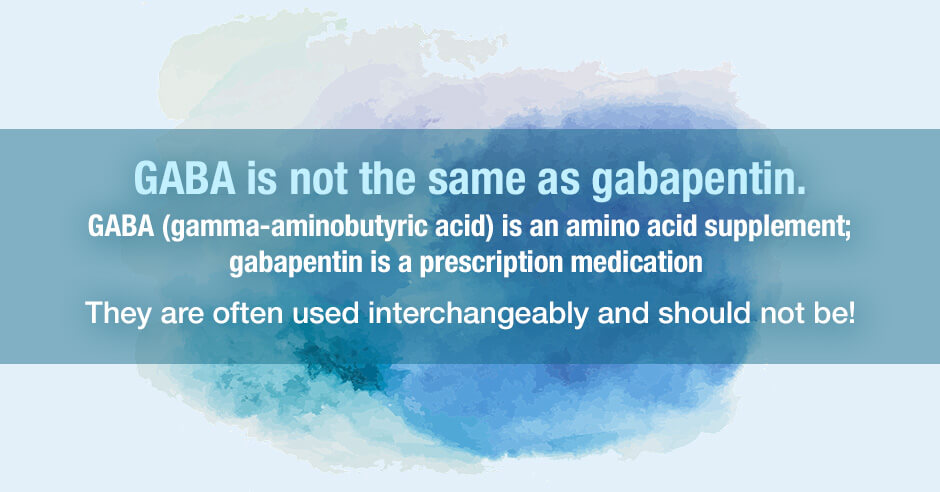
GABA is not the same as gabapentin. GABA (gamma-aminobutyric acid) is an amino acid supplement; gabapentin is a prescription medication

December 23, 2022 By Trudy Scott 53 Comments

gaba and gabapentin

One common question I hear from folks who are new to my work is this: “is GABA the same as gabapentin?”  Quite frankly it has always surprised me to get this question since they are different words – why would you think they are the same? But I’d carefully explain the difference, educate the person and move on. A few months ago I shared a blog post on how the amino acid GABA was effective for an 11 year old with ADHD, irritability, anxiety and tantrums and someone asked this question again: “GABA sold at health store or prescription Gabapentin?”

I decided it was finally time to ask why she thought they may be the same thing. I first explained what GABA is (an amino acid supplement), shared some links to products and said “no, not prescription Gabapentin – I’m curious why you’d think that?”

She replied that “some people refer to GABA the same as Gabapentin” and thanked me for the clarification.

I appreciate her response but it did still concern me that the amino acid GABA is lumped together with prescription gabapentin. My next step was a facebook post sharing the above dialogue and asking my community there for feedback: “Have you heard GABA and gabapentin used interchangeably? Did you think they were the same thing at one stage?”

The response was enlightening, hence this blog post to provide clarification if you’re not sure either or if you know exactly what GABA is but have had confused conversations with your practitioner, family members, friends and/or colleagues. And to also get your feedback on this topic.

GABA is not the same as gabapentin. GABA (gamma-aminobutyric acid) is an amino acid supplement and neurotransmitter; gabapentin is a prescription medication. They are often used interchangeably (as you’ll read below) and should not be!

GABA and gabapentin is used interchangeably by a variety of practitioners

Here are some of the many responses showing how GABA and gabapentin is used interchangeably by a variety of practitioners:

Jennifer shared this: Yes in the vet world, gabapentin is often called gaba. Not surprising since western medicine likes to pretend that supplements don’t exist. I didn’t know GABA existed as a supplement for many years. I always explain what it is when I talk about it, to make sure there’s no confusion.

Val shared this: I was just at the dentist and I shared that I take Gaba to help me sleep. She said “Gabapentin?” I said “no I don’t take a synthetic medication, instead I take Gaba which is an amino acid.” It’s good to share with all who are willing to listen.

Katie shared this: I have never heard them used interchangeably but, whenever I talk about GABA, I say “GABA otc amino acid, not gabapentin the prescription” to be extra clear and educational.

Heather said: I was wondering this earlier in the week. My husband’s [nurse practitioner] suggested gabapentin temporarily for a back injury but she used the term “gaba”. I quickly got clarification. Hopefully she won’t do that again. But I understand it. Her field is all pain management.

Theresa shared this: Nurses who don’t know medicine often do that. I’ve found that [gaba] is listed in my med list when they don’t seem to know the difference.

Laura shared this: I always knew that they were different but I have had psychiatrists use them interchangeably. 

Bonnie shared this: I mentioned GABA to my dad’s nurse and she got all upset, thinking I meant Gabapentin. At the time I didn’t know it was two different things. Dad was in the hospital and I suggested gaba to calm him. She said, no, no, no! I didn’t realize we were speaking of two different things.

Lisa shared this: When I told my primary doctor [an MD] that I was taking Gaba instead of prescription drugs she asked “gabapentin?” I said “no, Gaba which is a supplement”. She looked confused.

Lindy shared this: It’s a common assumption. I think some GPs (general practitioners) shorten gapapentin to gaba.

Jane shared this: “Yes – I am very careful to say the “supplement GABA.” I mentioned it to an Anesthesiologist when I had surgery. I normally don’t tell the medical profession my supplements – they have no idea what they are. I do specify the “supplement GABA” to holistic providers – I don’t want any misunderstanding. I was on Gabapentin and Lyrica for a long time. Horrific medications with severe consequences

If you relate to any of this feedback, keep sharing in order to educate, explain the difference and clarify to make sure there is no confusion.

What is GABA?

If you are new to the amino acid GABA, it’s a supplement that is used to raise low GABA (the neurotransmitter) levels and ease the physical-tension and stiff-and-tense-muscles type of anxiety.

The other symptoms we see with low GABA are panic attacks, physical tension in certain settings like public speaking or driving, and the need to self-medicate to calm down, often with alcohol but sometimes with carbs and sugary foods. Insomnia can also be due to low GABA and you’ll experience physical tension (rather than the ruminating thoughts which is the low serotonin type of insomnia – although it’s not uncommon to experience both). GABA also helps with muscle spasms and pain relief when muscles are tight.

You can read this blog, GABA for the physical-tension and stiff-and-tense-muscles type of anxiety for my biggest takeaways for using GABA effectively.  I also share a number of GABA products and some feedback from folks who have experienced the benefits. One example is this:

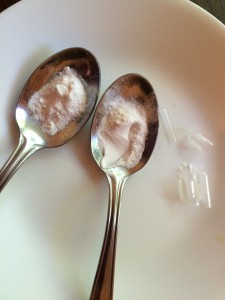
I have used GABA (several brands, just open a capsule and sprinkle a small amount under the tongue) for years now, with calming results within minutes.

With regards to the question about GABA being available in health stores: there are amino acid supplements that are available over the counter at a health store and also via my online health store here (these are products I have vetted and use with clients).

Here is the blog I referred to above: GABA for children: ADHD, focus issues, irritability, anxiety and tantrums. My blog is a wealth of information when it comes to GABA so be sure to use the search feature.

What is gabapentin?

Per the Cleveland Clinic site:

Gabapentin is a prescription medication known as a gamma aminobutyric acid (GABA) analogue. GABA reduces the excitability of nerve cells (neurons) in the brain, which play a role in seizures and the transmission of pain signals. Gabapentin mirrors the effects of GABA calming excited neurons. Gabapentin is in a class of medications called anticonvulsants.

It’s been approved for seizures and nerve pain caused by shingles, however, off-label use is common when it comes to other types of pain, anxiety and depression. This  paper, Outpatient Off-Label Gabapentin Use for Psychiatric Indications Among U.S. Adults, 2011-2016 warns of

risks associated with gabapentin combined with central nervous system depressant (CNS-D) drugs, which are commonly prescribed in psychiatric treatment….Over 6 years, 58.4% of off-label gabapentin visits listed one or more concomitant CNS-D medications, most frequently antidepressants (24.3%), opioids (22.9%), and benzodiazepines (17.3%).

The above Cleveland Clinic site lists some brand names – Horizant®, Gralise® and Neurontin® – but it is known by many different names in other countries. You can look it up in your country here.

You’ll also see all the side effects and the fact that dependence and withdrawal is downplayed despite the growing evidence that these are very real issues. More on that below.

There are many issues with gabapentin dependence and withdrawal

This blog post is really about terminology and the interchangeable use of GABA and gabapentin, but if you’re new to gabapentin, it’s important to be aware that there are many issues with dependence and withdrawal (often similar to benzodiazepines):

  • Withdrawal symptoms after gabapentin discontinuation

On day 3 of hospitalization, she developed restlessness, disorientation, confusion, agitation, and anxiety. She was presumed to be suffering from ethanol withdrawal and was treated with benzodiazepines but had no improvement in symptoms. During days 4 and 5, the patient became increasingly confused, agitated, and anxious, with complaints of headache, light sensitivity, and increasing nervousness. On day 5, gabapentin was reinitiated, and the patient’s confusion and agitation improved that evening. The next morning, the patient was calm, alert, and cooperative.

  • Akathisia induced by gabapentin withdrawal

To our knowledge, this is the first reported cases of akathisia induced by gabapentin withdrawal. Available case reports suggest that gabapentin withdrawal can occur at doses ranging from 400-8000 mg/day. Patients experienced symptoms similar to those that develop with benzodiazepine withdrawal and were taking gabapentin for as little as 3 weeks to as long as 5 years.

  • Gabapentin dependence and withdrawal requiring an 18-month taper in a patient with alcohol use disorder: a case report

This case highlights the need for patient-centered slow tapers in patients with severe gabapentin dependence and withdrawal.

The withdrawal took 18 months.

There is one case report of macular edema after gabapentin use and gabapentinoid (pregabalin/Lyrica) more so than gabapentin/Neurontin) prescriptions increased risk of suicidal behavior and unintentional overdose.

This 2017 paper, Gabapentin and pregabalin: do the benefits outweigh the harms? summarizes as follows: “Prescribers should be aware of the very limited clinical evidence for use of gabapentin and pregabalin outside their licensed indications, as well as their capacity to do harm.”

The amino acid GABA has none of these issues.

Why it may be confusing for practitioners

Other than the fact that gabapentin is described as a GABA analogue, I can see why it may be confusing for practitioners who don’t yet know about my work and the amino acid GABA.

The fact that GABA is an amino acid supplement and also a neurotransmitter may also be contributing to some of the confusion.

The other fact that I believe is adding to the confusion is because of how gabapentin is often referred to in the research. Let’s take this 2020 paper as an example: γ-Aminobutyric Acid and Derivatives Reduce the Incidence of Acute Pain after Herpes Zoster – A Systematic Review and Meta-analysis

It has γ-aminobutyric acid and derivatives in the paper title and as part of the aim, is mentioned in the results and elsewhere too:

  • The aim of the present study was to investigate the effectiveness of GABA and its derivatives in reducing acute pain incidence in patients having HZ.
  • The results showed that the treatment with GABA and its derivatives significantly reduced the number of patients with acute zoster pain.
  • There is no guideline for using and dosing GABA and its derivatives to prevent acute HZ pain.

And elsewhere they refer to GABA-like compounds:

  • The optimal dosage of GABA-like compounds is still to be determined.
  • Nevertheless, the presently available data indicate that the application of GABA-like compounds in this respect is very promising.

The entire review is about gabapentin/neurontin and is not about the amino acid GABA at all, even though the search terms used for this paper included: gamma-aminobutyric acid and gaba.

This is just one example of many such papers. I know what the amino acid GABA is and I was initially confused when reading the title and abstract, and even when reading the full paper (initially hopeful the paper would also be discussing the amino acid GABA).

Resources if you are new to using GABA and other amino acids as supplements

If you are new to using GABA or any of the other amino acids as supplements, here is the Amino Acids Mood Questionnaire from The Antianxiety Food Solution (you can see all the symptoms of neurotransmitter imbalances, including low GABA and low serotonin).

If you suspect low levels of any of the neurotransmitters and do not yet have my book, The Antianxiety Food Solution – How the Foods You Eat Can Help You Calm Your Anxious Mind, Improve Your Mood, and End Cravings, I highly recommend getting it and reading it before jumping in and using amino acids on your own so you are knowledgeable. And be sure to share it with the practitioner/health team you or your loved one is working with.

There is an entire chapter on the amino acids and they are discussed throughout the book in the sections on gut health, gluten, blood sugar control, sugar cravings, self-medicating with alcohol and more.

The book doesn’t include product names (per the publisher’s request) so this blog, The Antianxiety Food Solution Amino Acid and Pyroluria Supplements, lists the amino acids that I use with my individual clients and those in my group programs. You can find them all in my online store.

If, after reading this blog and my book, you don’t feel comfortable figuring things out on your own (i.e. doing the symptoms questionnaire and respective amino acids trials), a good place to get help is the GABA QuickStart Program (if you have low GABA symptoms). This is a paid online/virtual group program where you get my guidance and community support.

If you are a practitioner, join us in The Balancing Neurotransmitters: the Fundamentals program. This is also a paid online/virtual program with an opportunity to interact with me and other practitioners who are also using the amino acids.

I appreciate these women for sharing their interactions with practitioners so we can all be enlightened.

Have you heard GABA and gabapentin used interchangeably? Did you think they were the same thing at one stage?

How do you refer to GABA and gabapentin in order to avoid confusion?

If you’ve been prescribed gabapentin what was/is it prescribed for? And did you/do you also have a prescription for an antidepressant, opioid or benzodiazepine?

Have you had/do you have any issues using gabapentin?

Have you had success using the amino acid GABA? If yes, what for?

Feel free to post your questions and feedback in the comments below.
Filed Under: Anxiety, GABA, Medication Tagged With: ADHD, amino acid, Antidepressants, anxiety, benzodiazepines, dependence, depression, GABA, GABA Quickstart online program; Balancing Neurotransmitters: the Fundamentals program for practitioners, gabapentin, gamma-aminobutyric acid, irritability, is GABA the same as gabapentin?, medication, off-label use, opioids, pain, prescription, some people refer to GABA the same as Gabapentin, supplement, withdrawal

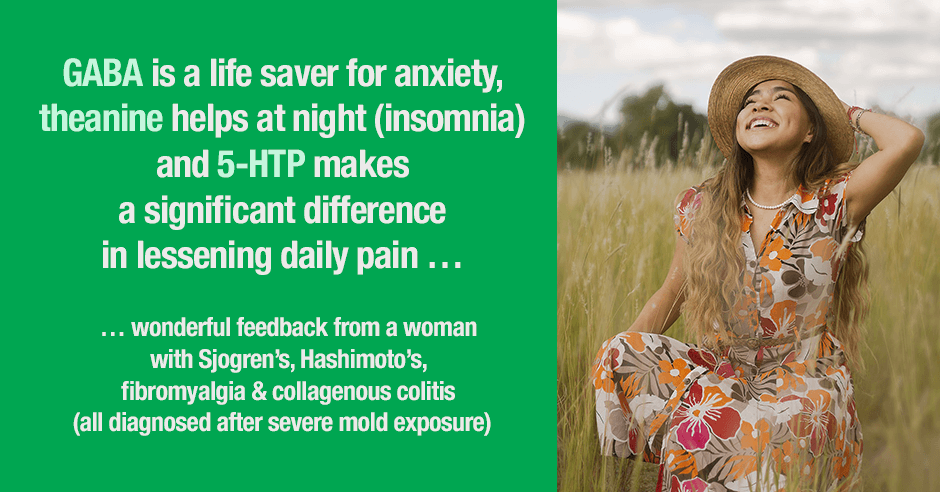
GABA is a life saver for anxiety, theanine helps at night (insomnia) and 5-HTP makes a significant difference in lessening daily pain

September 16, 2022 By Trudy Scott 16 Comments

aminos help

Joie has Sjogren’s, Hashimoto’s, fibromyalgia & collagenous colitis (all diagnosed after severe mold exposure) and shared how GABA is a life saver for her anxiety, how theanine helps at night with her insomnia and how 5-HTP makes a significant difference in lessening her daily pain. Here is her wonderful feedback in her own words (my feedback for her follows):

I was diagnosed with Sjogrens several years ago. I also have Hashimoto’s, Fibromyalgia & Collagenous Colitis. All of these happened after a severe mold exposure which destroyed my pituitary, and caused Exocrine Pancreatic Insufficiency (EPI). I have to take human growth hormone injections daily, as my pituitary isn’t working, digestive enzymes for the EPI, and have experienced the anxiety and depression you’ve written about.

The GABA has been a life saver for me (for my anxiety), and I share this with all I know who experience anxiety. I also use L-theanine at night because of insomnia. The 5-HTP has helped somewhat for sleep. L-tryptophan didn’t seem to make a difference. However the 5-HTP has made a significant difference in lessening my daily pain levels, which I am most grateful for.

Unfortunately, I am also taking Klonopin and Gabapentin, both of which I have tried to get off of but keep finding myself back on both in order to have greater than 5 hours of sleep at night. Even with these, I often awaken after 4-6 hours and take 1-2 chewable GABA which allows me to go back to sleep and get 2-4 more hours of sleep.

She shared this on the blog, Sjogren’s syndrome: tryptophan and GABA for anxiety, and moisturizing for dry skin and inflammation?, where I write about the prevalence of anxiety and depression in this autoimmune condition, and the fact that serotonin and GABA are often low.

I shared how sorry I was to hear how mold has impacted her but that it was wonderful to hear the GABA has been a lifesaver for you in terms of anxiety (and when waking in the night) and that theanine helps her sleep. It’s wonderful that 5-HTP helps ease her daily pain (here is fibromyalgia research on 5-HTP) and helps somewhat with her sleep issues.

Has she increased the amino acids to the optimal doses for her unique needs?

My question for her was this: “how much of each of these amino acids are you using and have you increased them to the optimal doses for your unique needs?” I asked this because many folks don’t do this and we always want to capitalize on what is working.

Here are some examples that relate to Joie:

  • When 5-HTP helps with pain relief we also do afternoon and bedtime trials to see if it can improve sleep further. And we always explore some of the reasons why serotonin may be low and address those too. You can read more on that here: what causes low serotonin

I shared that tryptophan doesn’t work for everyone and some do better with 5-HTP, but I do also consider melatonin when sleep is an issue, especially timed release to prevent waking in the night.

  • Since GABA is a lifesaver for her in terms of her anxiety and also helps when she wakes, trialing higher doses at bedtime may prevent the early morning waking. The same could be said for trialing a higher dose of theanine and using both GABA and theanine together at night (a 2019 study shows the combination decreases sleep latency and improves NREM sleep).

High cortisol, rebound sleep issues with meds and/or poor fat digestion?

If she has already done the above, I’d explore high cortisol and do a 5-collection an adrenal saliva test). When cortisol is high during the night, the use of Seriphos can be a game-changer for many.

Unfortunately both Klonopin and Gabapentin (especially the former) can cause rebound insomnia even when they seem to be helping in the short-term.

I also mentioned that my recent blog post many be helpful since she mentions exocrine pancreatic insufficiency, which could affect sleep by impacting her fat digestion – Waking in the night due to environmental toxins: impacts on the liver, gallbladder and fat digestion (making oxalate issues worse). This has relevance whether or not oxalates are an issue.

Autoimmune-Paleo (AIP) diet, pyroluria and moisturizing for reducing inflammation

It goes without saying that since Sjogren’s, Hashimoto’s and even Collagenous Colitis are autoimmune conditions, following an Autoimmune-Paleo (AIP) diet is key too. I have links to some AIP resources on the above Sjogren’s blog post.

In this blog I also mention pyroluria which may be relevant for someone with Collagenous Colitis and is crucial to address when there has been toxic mold exposure or other chronic issues like Lyme disease or MCAS. More on this here.

And you can also read about the value of moisturizing for reducing inflammation.

I thanked her and said I plan to share her results and my response as a new blog as I feel it will help others and give hope!

Resources if you are new to using amino acids as supplements

If you are new to using any of the amino acids as supplements, here is the Amino Acids Mood Questionnaire from The Antianxiety Food Solution (you can see all the symptoms of neurotransmitter imbalances, including low serotonin and low GABA).

If you suspect low levels of any of the neurotransmitters and do not yet have my book, The Antianxiety Food Solution – How the Foods You Eat Can Help You Calm Your Anxious Mind, Improve Your Mood, and End Cravings, I highly recommend getting it and reading it before jumping in and using amino acids on your own so you are knowledgeable. And be sure to share it with the practitioner/health team you or your loved one is working with.

There is an entire chapter on the amino acids and they are discussed throughout the book in the sections on gut health, gluten, blood sugar control, sugar cravings, self-medicating with alcohol and more.

The book doesn’t include product names (per the publisher’s request) so this blog, The Antianxiety Food Solution Amino Acid and Pyroluria Supplements, lists the amino acids that I use with my individual clients and those in my group programs. You can find them all in my online store.

If, after reading this blog and my book, you don’t feel comfortable figuring things out on your own (i.e. doing the symptoms questionnaire and respective amino acids trials), a good place to get help is the GABA QuickStart Program (if you have low GABA symptoms). This is a paid online/virtual group program where you get my guidance and community support.

If you are a practitioner, join us in The Balancing Neurotransmitters: the Fundamentals program. This is also a paid online/virtual program with an opportunity to interact with me and other practitioners who are also using the amino acids.

Has GABA helped with your anxiety and insomnia? What about theanine? And 5-HTP for your pain? Or melatonin for sleep?

Have you used taurine with success for fat digestion? Or Seriphos for high cortisol?

What else has helped you with symptoms like these ones?

If you have questions please share them here too.

Filed Under: 5-HTP, Anxiety, GABA, Insomnia, Pain Tagged With: 5-HTP, anxiety, Balancing Neurotransmitters: the Fundamentals program for practitioners, collagenous colitis, depression, Exocrine Pancreatic Insufficiency, Fibromyalgia, GABA, GABA Quickstart program, gabapentin, hashimoto's, Inflammation, insomnia, Klonopin, lessening daily pain, moisturizing, mold exposure, pain, serotonin, Sjogren’s, sleep, theanine, tryptophan

Vulvodynia: oxalates, GABA, tryptophan and physical therapy

February 10, 2017 By Trudy Scott 41 Comments

On a recent webinar with Julie Matthews, I shared how healthy foods that are high in oxalates caused me excruciating foot pain: Oxalates and leaky gut for Anxiety.

We also mentioned how oxalates can be a factor in vulvodynia and someone asked this question on the blog:

I just listened to the webinar talking about oxalates. I was shocked and delighted to hear the mention of the connection between high oxalates and vulvodynia. My friend has suffered with this for 18 months with little improvement. She has painful feet so I am wondering if there is indeed a connection for her situation. Could you please explain a bit more of the vulvodynia/ oxalates connection? I would like to give my friend the information.

Before I share the resources I offered her for her friend, let me share this about vulvodynia:

Vulvodynia is defined as chronic vulvar burning, stinging, rawness, soreness or pain in the absence of objective clinical or laboratory findings to explain these symptoms. Vulvodynia is a chronic pain syndrome affecting up to 18% of the female population and is generally regarded as an underdiagnosed difficult to treat gynecological disorder.

There is still much we have to learn about vulvodynia and the causes are multifactorial:

The etiology [cause] of vulvodynia is still enigmatic and is probably multifactorial-including physiological concerns (eg, pelvic floor muscle dysfunction, neuropathic pain, and psychosocial) and sexual issues (eg, anxiety and sexual dysfunction). Although it is a common syndrome, most patients are neither correctly diagnosed nor treated. A diagnosis of vulvodynia is based upon patient history and lack of physical findings upon careful examination. No clinical or histological findings are present to aid in diagnosis. Most treatment options for vulvodynia are neither well studied nor have an evidence base, relying instead upon expert opinion, care provider experience, and use of data from other pain syndromes. However, many patients show marked improvement after physical therapy for the pelvic floor, medications for neuropathic pain, and psychosexual therapy.

You’ll notice that oxalates and other dietary approaches are not mentioned. There are actually 2 studies that state there is NO connection between dietary oxlalates and vulvodynia. This is the first one: Influence of dietary oxalates on the risk of adult-onset vulvodynia. The second paper: Urinary oxalate excretion and its role in vulvar pain syndrome concludes that:

Urinary oxalates may be nonspecific irritants that aggravate vulvodynia; however, the role of oxalates as instigators is doubtful.

In this paper: Vulvar vestibulitis-a complex clinical entity, a low oxalate diet and calcium citrate did help:

Successful outcomes were achieved in 14.3% of patients using a low oxalate diet and calcium citrate supplementation

The Vulval Pain Society is a wealth of information on vulvodynvia and they have this information on the low oxalate diet, saying it helps many women and it worth trying:

A diet low in oxalate salts has been suggested as a treatment for women who experience unexplained vulval pain or vulvodynia… it is widely used in the United States as a treatment for vulvodynia. The diet may be supplemented with the use of oral calcium citrate.

There are few doctors in the UK who are aware of or routinely use this treatment. Many specialist doctors who run vulval clinics in this country [the UK] are skeptical about the treatment, as much of the evidence has not been published in the medical literature and the treatment is not of proven value. A diet low in oxalate with or without calcium citrate may, however, benefit some women with vulval pain and this is certainly an option for some women to try.

The vulvar pain is often described as a “burning” or “cutting” or “sharp” kind of pain. You’ll see medications recommended for the neuropathic pain in many of the studies and on the Vulval Pain society site.

It does concern me that so many women are prescribed SSRIs and medications like gabapentin and benzodiazepines when there are the safer and more effective options of the amino acids such as tryptophan and GABA.   When dosed correctly these individual amino acids help with some of the pain and anxiety right away while other root causes are addressed.

For my clients, I recommend targeted individual amino acids instead of the medications. I recommend a trial of tryptophan instead of an antidepressant, assuming they score low on the serotonin section of the amino acid questionnaire.

Research shows there is serotonin involvement with vulvodynia. In this study of women with PVD (provoked vestibulodynia i.e. pain in the entrance of the vagina, common with vulvodynia):

Polymorphism in the serotonin receptor gene, 5HT-2A, has been associated with other chronic pain disorders such as fibromyalgia…. The results [of this study] indicate a contribution of alterations in the serotonergic system to the patho-genesis of PVD and gives further evidence of PVD being a general pain disorder similar to other chronic pain disorders.

I also recommend a trial of GABA instead of gabapentin or one of the benzodiazepines, assuming they score low on the GABA section of the amino acid questionnaire.

Tryptophan and GABA can help with both the pain, and the anxiety and depression that is commonly seen with vulvodynia and other pelvic floor conditions – right away while other root causes are addressed.

Since acupuncture is often reported to be helpful, I also consider a trial of DPA for endorphin boosting and hence some pain reduction too.

Physical therapy is often extremely beneficial and frequently overlooked, so finding a good pelvic floor PT to be part of your healing team is key too.

When responding to the blog question I commented that “your friend is fortunate to have you looking out for her”. Using some or all of the above approaches I would expect her to find some relief of the vulva pain, the foot pain and experience reduced anxiety and depression (assuming these are her root causes).

Please note that this is not an exhaustive list of contributing factors for vulvoldynia – other factors could include candida, infections such as HPV, IBS/SIBO, and trauma and sexual abuse. My colleague, Jessica Drummond, nutritionist and physical therapist, and an expert on female pelvic pain, writes about immunity, dysbiosis, gluten and other food sensitivities, cortisol and sex hormone imbalances in this article: Vulvovaginal Pain and The Immune System: Practical Steps for Vulvovaginal Pain Relief. A full functional workup is required and your root cause can be different from someone else’s root cause.

I’d also like to add that although dietary oxalates cause excruciating pain in my feet, I’m so fortunate, in that I do not have vulvodynia.

Additional resources when you are new to using tryptophan and other amino acids as supplements

We use the symptoms questionnaire to figure out if low serotonin or other neurotransmitter imbalances may be an issue for you.

If you suspect low levels of any of the neurotransmitters and do not yet have my book, The Antianxiety Food Solution – How the Foods You Eat Can Help You Calm Your Anxious Mind, Improve Your Mood, and End Cravings, I highly recommend getting it and reading it before jumping in and using amino acids on your own so you are knowledgeable. And be sure to share it with the practitioner/health team you or your loved one is working with.

There is an entire chapter on the amino acids and they are discussed throughout the book in the sections on gut health, gluten, blood sugar control (this is covered in an entire chapter too), sugar cravings, anxiety and mood issues. The importance of quality animal protein and healthy fats is also covered.

The book doesn’t include product names (per the publisher’s request) so this blog, The Antianxiety Food Solution Amino Acid and Pyroluria Supplements, lists the amino acids that I use with my individual clients and those in my group programs.

If, after reading this blog and my book, you don’t feel comfortable figuring things out on your own (i.e. doing the symptoms questionnaire and respective amino acids trials), a good place to get help is the GABA QuickStart Program (if you have low GABA symptoms too). This is a paid online/virtual group program where you get my guidance and community support.

If you are a practitioner, join us in The Balancing Neurotransmitters: the Fundamentals program. This is also a paid online/virtual program with an opportunity to interact with me and other practitioners who are also using the amino acids.

Have you had success with a low oxalate diet and calcium citrate for vulvodynia? And other pain (in the feet or hips or elsewhere in the body)?

Has physical therapy with a pelvic floor specialist helped?

Have you found tryptophan, GABA or DPA to help with the pain and the anxiety and/or depression too?

Have any other treatments helped you?

If you’re a practitioner what approaches have helped your clients/patients?

Please share questions or feedback below.

Filed Under: Amino Acids, Women's health Tagged With: anxiety, benzodiazepine, depression, GABA, gabapentin, oxalates, pain, physical therapy, SSRI, tryptophan, vulvodynia

Why I recommend GABA for anxiety instead of phenibut

November 25, 2016 By Trudy Scott 68 Comments

gaba-instead-of-phanibut

I have concerns with phenibut and I don’t feel anyone should be using it. It is widely used in Russia as a medication for anxiety and it’s only available by prescription in that country. It’s available over-the-counter in the USA, Australia and the UK and it’s very effective for anxiety and insomnia. It’s for this reason that many anxious individuals really love it and practitioners recommend it.

Here is some information about phenibut from this 2001 paper – Phenibut (beta-phenyl-GABA): a tranquilizer and nootropic drug:

Phenibut (beta-phenyl-gamma-aminobutyric acid HCl) is a neuropsychotropic drug that was discovered and introduced into clinical practice in Russia in the 1960s. It has anxiolytic and nootropic (cognition enhancing) effects. It acts as a GABA-mimetic, primarily at GABA(B) and, to some extent, at GABA(A) receptors. It also stimulates dopamine receptors and antagonizes beta-phenethylamine (PEA), a putative endogenous anxiogenic. The psychopharmacological activity of phenibut is similar to that of baclofen, a p-Cl-derivative of phenibut.

Phenibut is widely used in Russia to relieve tension, anxiety, and fear, to improve sleep in psychosomatic or neurotic patients; as well as a pre- or post-operative medication. It is also used in the therapy of disorders characterized by asthenia [abnormal physical weakness or lack of energy] and depression, as well as in post-traumatic stress, stuttering and vestibular disorders.

One of the reasons phenibut seems to work so well is because it is so similar to benzodiazepines. The above paper goes on to state:

Comparison of phenibut with piracetam and diazepam reveals similarities and differences in their pharmacological and clinical effects.

There is research showing that physical dependence can develop, including tolerance and withdrawal, and adverse symptoms can be similar to benzodiazepines: Phenibut Dependence

We present a case of a patient who used phenibut to self-medicate anxiety, insomnia and cravings for alcohol. While phenibut was helpful initially, the patient developed dependence including tolerance, significant withdrawal symptoms within 3-4 h of last use and failure to fulfil his roles at work and at home. He finally sought medical assistance in our addictions clinic. We have gradually, over the course of 9 weeks, substituted phenibut with baclofen, which has similar pharmacological properties, and then successfully tapered the patient off baclofen. This required approximately 10 mg of baclofen for each gram of phenibut.

I talk about my concerns about phenibut and cover the best forms of GABA in my Anxiety Summit season 4 presentation – GABA: Blood Brain Barrier Controversy Concerns, Best Forms and How to Do a Trial for Eliminating Anxiety, and share what other practitioners share:

…practitioners will say well they use it cautiously. They only use it if really needed. And some practitioners will say they pulse. So they’ll have a client or a patient take it for a certain number of days and then stop for a certain number of days.

I just think let’s err on the side of caution and let’s not even go there. Let’s use these other nutrients [like GABA].

Why mess with something when you’ve got something else that can be used. I’ve had practitioners say to me “Well, phenibut works so well. That’s why I use it. GABA doesn’t seem to work as well.” And maybe it’s because they are not doing it sublingually. So if you’ve been using phenibut or you’re a practitioner I’d love to hear from you if you switch your patients or your clients to GABA and have them open up the capsules. Let us know if you’re finding better results with that method rather than having them swallow the GABA capsules.

During this same GABA presentation on the Anxiety Summit I share some of my other concerns about phenibut:

It’s used in high doses for performance enhancement and what really horrified me is that there are these dedicated forums with information on how to taper safely. So there are these forums that talk about phenibut like it’s a drug and tell people how they can safely go this high [on the phenibut] and if they get these [bad] effects, what they need to do and how they can taper. When I read all that I was just horrified.

Why mess with something like phenibut when we’ve got GABA that does work so well when used in the right way (sublingually appears to be most effective) and when trialed to find the ideal targeted dose for your particular needs.

If you’d like a refresher or want to learn more about the following topics, be sure to listen (or re-listen if you tuned in during the summit) to my season 4 Anxiety Summit presentation on GABA:

  • more about phenibut
  • gabapentin (which also has issues and withdrawal symptoms can to mimic some of the same withdrawal symptoms associated with benzodiazepine and alcohol withdrawal)
  • the blood-brain barrier GABA concerns that many people raise (and one of the reasons many practitioners say they like phenibut)
  • some possible mechanisms as to how GABA does work to ease anxiety and worry
  • good forms of GABA and how best to use GABA
  • how to do a GABA trial to find your ideal dose (you can find some of this information here and in my book The Antianxiety Food Solution)
  • feedback from people who have used GABA with success (you can also find some of that positive feedback here)
  • and what to use if you don’t have access to GABA supplements

Please share your phenibut and GABA experiences so we can all learn.

Filed Under: GABA Tagged With: anxiety, depression, GABA, gabapentin, phenibut, post-traumatic stress, the anxiety summit

Vagus nerve rehab with GABA, breathing, humming, gargling and key nutrients

March 25, 2016 By Trudy Scott 248 Comments

vegas nerve rehab

I’ve got an issue going on with my vagus nerve at the moment and the throat spasms have been affecting my voice and ability to speak for any length of time. It’s also causing this persistent dry cough, despite not feeling sick or having any respiratory symptoms. It’s much worse later in the day and gets particularly bad after about 30 minutes of talking.

I’ve been working with the very talented PT/nutritionist Joe Tatta for the last week and I am seeing much improvement already. I’m also learning so much on vagus nerve rehab.

Joe is a Musculoskeletal Pain Expert and you may recall our wonderful interview on the last Anxiety Summit on pain and anxiety.

Let me give you some of the back story. Just over a week ago I posted this message in a private facebook group of integrative practitioners/colleagues:

I’d love some help for me please. I have this ongoing spasmodic dry cough that starts as soon as I talk and gets worse later in the day. As you can imagine it’s affecting my day to day meetings, seeing clients and doing interviews, not to mention being highly irritating!

I don’t feel sick at all and have no congestion. It started after my NYC trip and a really frightening flight over the Colorado mountains!

We had the most awful turbulence and it felt like wings on the plane were going to break. People were screaming and the parents behind us were reassuring their kids saying it’s ok, it’s just like a roller coaster ride. I was sitting next to a 6’4’’ young man who had just completed training in the Coast Guard. He was also terrified and said they had taught him how to survive a boat going down but not how to survive a plane going down.

I believe my immune system got suppressed big time! The day after I got home I got the flu for the first time in 30+ years and I felt pretty grim for a day and then recovered nicely over the next 4-5 days. The flu was over 10 days ago but this stupid cough continues!

One night I could not sleep due to the coughing and decided to try and relax my airways with GABA. I know how effective GABA is for stiff and tense muscles so why not try it for the throat spasms I was having? I am now able to have a reasonable conversation for say 15-30 mins if I take 500mg GABA opened on to my tongue. Viola! a new use for GABA – pretty cool!

I must be low in GABA because I’m able to take upwards of 5 (and sometime more) doses of 500mg a day and not feel too wiped out. That’s a lot of GABA for me – 125mg to 250mg used to be enough for the anxiety I once experienced! I did have a bit of my old early morning waking with anxiety (that I used to have in my late 30s) that week of the flu but that’s now gone.

I’m also using a homeopathic called Boiron Drosera. I’ve never had asthma and don’t have much experience with it but from what I’m reading it sounds like the“cough-variant” of asthma!?

I’m asking here because I’m intrigued by this whole scary flight/depressed immunity/GABA for the spasms thing and wonder if anyone here has any insights?

Joe Tatta responded in about 30 minutes with this message:

Sounds like you have a vagus nerve problem. Potentially loss of parasympathetics. You can read some in this article but there is much more…

Here is the article he shared: Arnold’s nerve cough reflex: evidence for chronic cough as a sensory vagal neuropathy

Arnold’s nerve ear-cough reflex is recognised to occur uncommonly in patients with chronic cough. In these patients, mechanical stimulation of the external auditory meatus can activate the auricular branch of the vagus nerve (Arnold’s nerve) and evoke reflex cough. This is an example of hypersensitivity of vagal afferent nerves, and there is now an increasing recognition that many cases of refractory or idiopathic cough may be due to a sensory neuropathy of the vagus nerve.

The paper presents two cases where the cough was successfully treated with gabapentin. Gabapentin (also known as Neurontin) affects GABA levels and this why I get such great results with GABA.

Gabapentin is drug that is primarily used to treat seizures and neuropathic pain. It is also used for restless leg syndrome and hot flashes, and off-label for anxiety, insomnia, fibromyalgia and bipolar disorder. I’d love to see GABA being studied and used for these conditions especially because gabapentin can cause withdrawal syndrome: Withdrawal symptoms after gabapentin discontinuation and an increased risk of suicidal thoughts.

Joe offered to meet with me via skype and I learned that the neuro-rehab is key. I’ve been doing breathing exercises and humming every hour on the hour for the last week i.e. about 10 times a day. When I hum it’s the “happy birthday” song and I have to think of a specific birthday. I hum and smile and think about my baby sister’s 7th birthday party 37 years ago. I had just come back from Australia and I have such great memories of it! We chatted about it at the weekend and had a good laugh.

I continue to use the GABA as needed, and am also taking GPC (GlyceroPhosphoCholine) and Acetyl-L-carnitine, both of which are acetylcholine precursors for nerve rehabilitation.

Because I’ve had so many questions about what is going on with me and what I’m doing, I have decided to start this blog post and I’ll continue to add to it. I’ve been documenting what has been happening as I go through this rehab because I’m finding it so fascinating.

Stay tuned for all the details:

  • More on the vagus nerve and why it’s so important
  • Why the very scary plane ride triggered this issue I’m having
  • How GABA works to stop the spasms in 5-10 seconds (I have a video to share)
  • Exactly what exercises I’m doing for the rehab and why you need to build up and not do gargling exercises on day one
  • More details about the nutrients: GPC and acetyl-l-carnitine
  • And an interview with Joe Tatta to share his expertise (I’m the patient/client here and am in learning mode)

I wouldn’t suggest trying any of this yourself until I share more because from what I’ve learned so far, you need to slowly built up to certain of the exercises.

Updates April 1, 2016:

Here is the first video (taken March 16, 2016) where I share the story of the scary plane ride and my flu and the start of the throat spasms.  You can hear how my voice sounds and how quickly 500mg GABA relaxes the spasms in my throat/neck.  I share what I learned from Joe Tatta about it being connected the vagus nerve.

Here is the second video (also taken March 16, 2016) where I demonstrate the 3-6-6 second breathing exercise and the happy birthday song humming exercise. I have to think of an actual birthday. I hum and think of my baby sister’s birthday (you can see those photos above).  Be warned, I am what I call “musically challenged!”

Here is the third video (taken late evening March 16, 2016) where you can hear how bad my voice and throat gets later in the day.

Here is the video taken at Heavenly ski resort on March 27, 2016.  You can see me doing my humming exercises in between skiing on this beautiful mountain and how I needed GABA after a strenuous ski run.  And I summarize what has been working for me so far.  I hope you enjoy the stunning scenery too!  I feel so fortunate that we can hop in the car and visit such an amazing place like this on the weekend! It’s about 90 minutes up the hill from where we live.

And here is the final video in this series (taken yesterday March 31, 2016). I demonstrate the exercises I am currently doing: 3-6-6 second breathing, humming (which has improved), the yawning and the tongue massage of the roof of my mouth.  I also talk about GPC and acetyl-l-carnitine.

You can probably see and hear that I am much improved and have not needed much GABA for the last two days now.  In the last week I have interviewed Dr. Josh Axe for his “Eat Dirt” book and Dr. Kelly Brogan for her “A Mind of Your Own” book.  And Dr. David Brady has interviewed me for his Fibrofix Summit and Dr. Eric Zielinski interviewed me for his Essential Oils Summit.  For each interview I did my exercises right beforehand and took 500mg GABA half way through the interview and had immediate relief.

GABA for vagus nerve
I had 2 x 500mg GABA on hand for my interviews – opened and ready to use!

Update: April 8, 2016

I continue to improve and have not needed GABA for 4 days and only have a very mild hint of the throat feeling late evening.

Two days ago I added an essential oil called Parasympathetic. It contains clove and lemon and I’ll share more in a future post.  Right now I can share that I used too much the first day and had the very dry mouth I experienced with too much GPC and acetyl-l-carnitine.

Update: April 22, 2016

A quick update to let you know that my dry spasmodic cough has completely gone.  I  have not had any symptoms for a week and I have stopped the vagus nerve rehab exercises, GPC,  acetyl-l-carnitine, the essential oil called Parasympathetic and GABA.

Additional resources when you are new to using GABAand other amino acids as supplements

As always, I use the symptoms questionnaire to figure out if low serotonin or low GABA or other neurotransmitter imbalances may be an issue.

If you suspect low levels of any of the neurotransmitters and do not yet have my book, The Antianxiety Food Solution – How the Foods You Eat Can Help You Calm Your Anxious Mind, Improve Your Mood, and End Cravings, I highly recommend getting it and reading it before jumping in and using amino acids on your own so you are knowledgeable. And be sure to share it with the practitioner/health team you or your loved one is working with.

There is an entire chapter on the amino acids and they are discussed throughout the book in the sections on gut health, gluten, blood sugar control (this is covered in an entire chapter too), sugar cravings, anxiety and mood issues.

The book doesn’t include product names (per the publisher’s request) so this blog, The Antianxiety Food Solution Amino Acid and Pyroluria Supplements, lists the amino acids that I use with my individual clients and those in my group programs.

If, after reading this blog and my book, you don’t feel comfortable figuring things out on your own (i.e. doing the symptoms questionnaire and respective amino acids trials), a good place to get help is the GABA QuickStart Program (if you have low GABA symptoms). This is a paid online/virtual group program where you get my guidance and community support.

If you are a practitioner, join us in The Balancing Neurotransmitters: the Fundamentals program. This is also a paid online/virtual program with an opportunity to interact with me and other practitioners who are also using the amino acids.

Wrapping up and your feedback

I so appreciate all the caring and concerned comments, feedback and ideas for me!  And boy, am I grateful for Joe and his expertise!

I will still be interviewing Joe so he can share the theory and address questions so please post questions you may have.

If any of this resonates with you or if you have any other questions I’d love to hear back from you.

Please post them in the comments section below.

Filed Under: GABA Tagged With: anxious, breathing, GABA, gabapentin, humming, Joe Tatta, scary, spasms, vagus nerve, voice

Primary Sidebar

NEW! GABA QuickStart Homestudy (with special intro pricing)

gaba quickstart homestudy

Free Report

9 Great Questions Women Ask about Food, Mood and their Health

You'll also receive a complimentary subscription to my ezine "Food, Mood and Gal Stuff"


Connect with me

Popular Posts

  • Amino Acids Mood Questionnaire from The Antianxiety Food Solution
  • The Antianxiety Food Solution Amino Acid and Pyroluria Supplements
  • Pyroluria Questionnaire from The Antianxiety Food Solution
  • Collagen and gelatin lower serotonin: does this increase your anxiety and depression?
  • Tryptophan for the worry-in-your-head and ruminating type of anxiety
  • GABA for the physical-tension and stiff-and-tense-muscles type of anxiety
  • The Antianxiety Food Solution by Trudy Scott
  • Seriphos Original Formula is back: the best product for anxiety and insomnia caused by high cortisol
  • Am I an anxious introvert because of low zinc and vitamin B6? My response to Huffington Post blog
  • Vagus nerve rehab with GABA, breathing, humming, gargling and key nutrients

Recent Posts

  • What do I use instead of Seriphos to help lower high cortisol that is affecting my sleep and making me anxious at night?
  • BeSerene™ GABA/theanine cream eases severe muscle tension in her neck/shoulders, prevents her bad headaches and quells her anxiety
  • How the correct approach, dose and sublingual use of GABA can be calming and not cause a flushed and itchy face and neck
  • The amino acid glutamine improves low mood by addressing gut health, and it has calming effects too
  • Flight anxiety with heightened breath, physical tension and also fearing the worst (the role of low GABA and low serotonin)

Categories

  • 5-HTP
  • AB575
  • Addiction
  • ADHD
  • Adrenals
  • Alcohol
  • Allergies
  • Alzheimer's disease
  • Amino Acids
  • Anger
  • Antianxiety
  • Antianxiety Food Solution
  • Antidepressants
  • Anxiety
  • Anxiety and panic
  • Autism
  • Autoimmunity
  • benzodiazapines
  • Bipolar disorder
  • Books
  • Caffeine
  • Cancer
  • Candida
  • Children/Teens
  • Collagen
  • Cooking equipment
  • Coronavirus/COVID-19
  • Cravings
  • Depression
  • Detoxification
  • Diabetes
  • Diet
  • DPA/DLPA
  • Drugs
  • EFT/Tapping
  • EMF
  • EMFs
  • Emotional Eating
  • Endorphins
  • Environment
  • Essential oils
  • Events
  • Exercise
  • Fear
  • Fear of public speaking
  • Fertility and Pregnancy
  • Fish
  • Food
  • Food and mood
  • Functional neurology
  • GABA
  • Gene polymorphisms
  • General Health
  • Giving
  • Giving back
  • Glutamine
  • Gluten
  • GMOs
  • Gratitude
  • Gut health
  • Heart health/hypertension
  • Histamine
  • Hormone
  • Hyperparathyroidism
  • Hypoglycemia
  • Immune system
  • Inflammation
  • Insomnia
  • Inspiration
  • Introversion
  • Joy and happiness
  • Ketogenic diet
  • Lithium orotate
  • Looking awesome
  • Lyme disease and co-infections
  • MCAS/histamine
  • Medication
  • Men's health
  • Mental health
  • Mercury
  • Migraine
  • Mold
  • Movie
  • MTHFR
  • Multiple sclerosis
  • Music
  • NANP
  • Nature
  • Nutritional Psychiatry
  • OCD
  • Osteoporosis
  • Oxalates
  • Oxytocin
  • Pain
  • Paleo
  • Parasites
  • Parkinson’s disease
  • PCOS
  • People
  • PMS
  • Postpartum
  • PTSD/Trauma
  • Pyroluria
  • Questionnaires
  • Real whole food
  • Recipes
  • Research
  • Schizophrenia
  • serotonin
  • SIBO
  • Sleep
  • Special diets
  • Sports nutrition
  • Stress
  • Sugar addiction
  • Sugar and mood
  • Supplements
  • Teens
  • Testimonials
  • Testing
  • The Anxiety Summit
  • The Anxiety Summit 2
  • The Anxiety Summit 3
  • The Anxiety Summit 4
  • The Anxiety Summit 5
  • The Anxiety Summit 6
  • Thyroid
  • Thyroid health
  • Toxins
  • Tryptophan
  • Tyrosine
  • Uncategorized
  • Vegan/vegetarian
  • Women's health
  • Yoga

Archives

  • October 2025
  • September 2025
  • August 2025
  • July 2025
  • June 2025
  • May 2025
  • April 2025
  • March 2025
  • February 2025
  • January 2025
  • November 2024
  • October 2024
  • September 2024
  • August 2024
  • July 2024
  • June 2024
  • May 2024
  • April 2024
  • March 2024
  • February 2024
  • January 2024
  • December 2023
  • November 2023
  • October 2023
  • September 2023
  • August 2023
  • July 2023
  • June 2023
  • May 2023
  • April 2023
  • March 2023
  • February 2023
  • January 2023
  • December 2022
  • November 2022
  • October 2022
  • September 2022
  • August 2022
  • July 2022
  • June 2022
  • May 2022
  • April 2022
  • March 2022
  • February 2022
  • January 2022
  • December 2021
  • November 2021
  • October 2021
  • September 2021
  • August 2021
  • July 2021
  • June 2021
  • May 2021
  • April 2021
  • March 2021
  • February 2021
  • January 2021
  • December 2020
  • November 2020
  • October 2020
  • September 2020
  • August 2020
  • July 2020
  • June 2020
  • May 2020
  • April 2020
  • March 2020
  • February 2020
  • January 2020
  • December 2019
  • November 2019
  • October 2019
  • September 2019
  • August 2019
  • July 2019
  • June 2019
  • May 2019
  • April 2019
  • March 2019
  • February 2019
  • January 2019
  • December 2018
  • November 2018
  • October 2018
  • September 2018
  • August 2018
  • July 2018
  • June 2018
  • May 2018
  • April 2018
  • March 2018
  • February 2018
  • January 2018
  • December 2017
  • November 2017
  • October 2017
  • September 2017
  • August 2017
  • July 2017
  • June 2017
  • May 2017
  • April 2017
  • March 2017
  • February 2017
  • January 2017
  • December 2016
  • November 2016
  • October 2016
  • September 2016
  • August 2016
  • July 2016
  • June 2016
  • May 2016
  • April 2016
  • March 2016
  • February 2016
  • January 2016
  • December 2015
  • November 2015
  • October 2015
  • September 2015
  • August 2015
  • July 2015
  • June 2015
  • May 2015
  • April 2015
  • March 2015
  • February 2015
  • January 2015
  • December 2014
  • November 2014
  • October 2014
  • September 2014
  • August 2014
  • July 2014
  • June 2014
  • May 2014
  • April 2014
  • March 2014
  • February 2014
  • January 2014
  • December 2013
  • November 2013
  • October 2013
  • September 2013
  • August 2013
  • July 2013
  • June 2013
  • May 2013
  • April 2013
  • March 2013
  • February 2013
  • January 2013
  • December 2012
  • November 2012
  • October 2012
  • August 2012
  • July 2012
  • June 2012
  • May 2012
  • April 2012
  • March 2012
  • February 2012
  • January 2012
  • December 2011
  • November 2011
  • October 2011
  • September 2011
  • August 2011
  • July 2011
  • June 2011
  • May 2011
  • April 2011
  • March 2011
  • February 2011
  • January 2011
  • December 2010
  • October 2010
  • September 2010
  • July 2010
  • May 2010
  • April 2010
  • March 2010
  • February 2010
  • January 2010
  • November 2009

Share the knowledge!

The above statements have not been evaluated by the Food and Drug Administration. Products listed in this website are not intended to diagnose, treat, cure or prevent any disease.

The information provided on this site is for informational and educational purposes only and is not intended as a substitute for advice from your physician or other health care professional. You should consult with a healthcare professional before starting or modifying any diet, exercise, or supplementation program, before taking or stopping any medication, or if you have or suspect you may have a health problem.


Copyright © 2026 Trudy Scott. All Rights Reserved. | Privacy | Terms and Conditions | Refund Policy | Medical Disclaimer

Free Report

9 Great Questions Women Ask about Food, Mood and their Health

You’ll also receive a complimentary subscription to my ezine “Food, Mood and Gal Stuff”