• Skip to primary navigation
  • Skip to main content
  • Skip to primary sidebar

everywomanover29 blog

Food, Mood and Women's Health – Be your healthiest, look and feel great!

  • Blog
  • About
  • Services
  • Store
  • Resources
  • Testimonials
  • The Book
  • Newsletter
  • Contact
  • Search this site

GABA

The Anxiety Summit: GABA, magnesium, pyroluria and digestive issues

June 19, 2014 By Trudy Scott 15 Comments


This is day 12 of the Anxiety Summit.  Host of the Anxiety Summit, Trudy Scott, Food Mood Expert and Nutritionist, author of The Antianxiety Food Solution, interviews two clients who saw transfromational changes in their mood and anxiety when they made food changes, added in nutrients, addressed digestive issues and food intolerances.

carolyn gard client story

Client success story: Carolyn Gard

GABA and magnesium helped her feel calmer, the amino acids have helped with her sugar cravings and she wishes she had known about pyroluria, introversion and social anxiety when she was at college

Here is a great gem from my interview with Carolyn. We were talking about GABA, the main calming neurotransmitter and amino acid. She said it:

makes me feel very calm and focused no matter what I’m doing. I feel like I’m on a real calm, peaceful cruise control.”

 

sophia elizabeth client story

Client success story: Sophia Elizabeth Archambault

Sophia Elizabeth struggled with chronic sadness and an eating disorder, and now she has resilience, balance and lives happily on a farm with her husband, 3 dogs and 10 goats. She found solutions by addressing food sensitivities, pyroluria and digestive issues.

Here is a great gem from my interview with Sophia Elizabeth.  We were talking about the value of keeping a food mood log:

And then you note with each meal or each beverage how you’re feeling, or the various things you notice in shifts of mood or sensations in the body. And it’s all there in black and white. It’s sort of like using your own body as research.”

Both Carolyn and Elizabeth did better with nutrients for pyroluria.  Here is the pyroluria questionnaire we discussed.

If you are not already registered for the Anxiety Summit you can get live access to the speakers of the day here www.theAnxietySummit.com

UPDATE: the summit concluded on Tues 6/24 – season 2 of The Anxiety Summit will be in November 2014. If you’d like to be on the notification list just sign up here www.theAnxietySummit.com

Missed this interview or can’t listen live? Or want this and the other great interviews for your learning library? Purchase the MP3s or MP3s + transcripts + interview highlights and listen when it suits you
Filed Under: Antianxiety, Antianxiety Food Solution, Pyroluria, The Anxiety Summit Tagged With: Antianxiety Food Solution, anxiety, calmer, digestive, GABA, pyroluria, the anxiety summit, Trudy Scott

The Anxiety Summit: Sleep Your Way to Better Moods

June 19, 2014 By Trudy Scott 9 Comments

robin nielsen 1 the anxiety summit

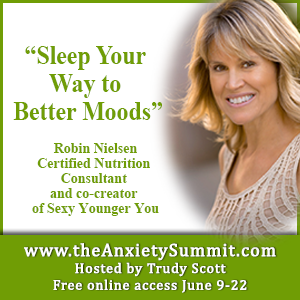
This is day 12 of the Anxiety Summit. Robin Nielsen, Certified Nutrition Consultant and co-creator of Sexy Younger You, is interviewed by host of the Anxiety Summit, Trudy Scott, Food Mood Expert and Nutritionist, author of The Antianxiety Food Solution.

Everyone needs sleep! The CDC /Centers for Disease control says “Insufficient Sleep Is a Public Health Epidemic” According to data from the National Health Interview Survey, nearly 30% of adults reported an average of ?6 hours of sleep and only 31% of high school students reported getting at least 8 hours of sleep on an average school night. How do you feel when you don’t get enough sleep – other than awful…irritable, anxious, depressed and you very likely gravitate to sugar and caffeine to keep you going – which is only going to make things worse!

Research published just last month in the journal Pediatrics suggest that poor sleep in children under age 7 can lead to weight problems later on in life and can also affect their emotional health leading to more anxiety and depression.

Robin shares how you can …

Sleep Your Way to Better Moods

  • Learn why restorative sleep is the key to being happier
  • How anxiety and poor sleep are connected: sugar, blood sugar, caffeine, gluten
  • What sleep has to do with brain chemistry and hormones
  • How you can feel so much better when you get restorative sleep

Here are some great gems from my interview with Robin:

restorative sleep means sleep without medication

sleep helps to keep us beautiful as we age

insomnia can really be caused by just about anything and things that we would never guess

if you have a busy day, you’re going to have a busy night

chronic infections are constant stressor (and can affect your sleep)

hypothyroidism can cause sleep apnea

if you’re exercising improperly it’s going to raise your stress hormones and it’s going to affect your sleep and anxiety

We certainly did cover all the causes of insomnia and there are a lot of them.

Robin also shared that one of her favorite books is Lights Out: Sleep, Sugar, and Survival by T.S. Wiley.

Robin is so funny…she starts out by saying talking about sleep is not sexy and then ends with a sexy bombshell about oxytocin that left me speechless! Be warned!

Get your free gift from Robin Nielsen. She has a great Sleep Quiz, Checklist and Journal for you.

If you are not already registered for the Anxiety Summit you can get live access to the speakers of the day here www.theAnxietySummit.com

UPDATE: the summit concluded on Tues 6/24 – season 2 of The Anxiety Summit will be in November 2014. If you’d like to be on the notification list just sign up here www.theAnxietySummit.com

Missed this interview or can’t listen live? Or want this and the other great interviews for your learning library? Purchase the MP3s or MP3s + transcripts + interview highlights and listen when it suits you

Filed Under: Antianxiety, Anxiety and panic, Sleep, The Anxiety Summit Tagged With: Antianxiety Food Solution, anxiety, GABA, insomnia, mood, Robin Nielsen, sleep, the anxiety summit, Trudy Scott

The Anxiety Summit: Benzodiazepines Risks vs Benefits

June 18, 2014 By Trudy Scott 56 Comments


catherine pittman benzos anxiety

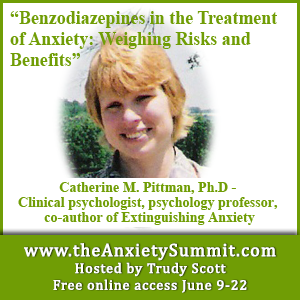
This is day 10 of the Anxiety Summit. Dr Catherine M. Pittman, Ph.D., Clinical psychologist, psychology professor, and co-author of Extinguishing Anxiety is interviewed by host of the Anxiety Summit, Trudy Scott, Food Mood Expert and Nutritionist, author of The Antianxiety Food Solution.

Benzodiazepines in the Treatment of Anxiety: Weighing Risks and Benefits

  • benzodiazapines: how they work and some of the benefits
  • side-effects, tolerance facts and withdrawal effects
  • survey results from members of the Benzobuddies.org online support group:
  • what sort of questions should we be asking about benzodiazepine prescriptions

Benzodiazepines are a class of drugs primarily used for treating anxiety.

I heard Dr. Pittman present on this topic at The Anxiety and Depression Association of America annual conference in 2012 and really wanted to share this with you.

Dr Pittman very kindly gave me permission to share a link to her PDF of the presentation she did at the ADAA conference.

During the interview we discussed the Ashton taper protocol which can be found at www.benzo.org.uk.  

During the interview I incorrectly stated that this is the site of Professor Ashton. Colin, the owner of BenzoBuddies kindly contacted me and informed me that “this site is actually owned and operated by Ray Nimmo, a benzodiazepine survivor. With Prof. Ashton’s permission, Ray has published the ‘Ashton Manual’ and some of her other writings at his website. benzo.org.uk is a personal website, containing all kinds of articles and writings which interest Ray and which he feels would be of interest to others going through benzodiazepine withdrawal and recovery.”

Julia Ross, author of The Mood Cure, presented earlier in the week on “Eliminating Anxiety: Amino Acid Therapy and Adrenal Balancing” and acknowledged the work of Professor Ashton. She emphasized how imperative it is to taper extremely slowly per the Ashton protocol. Julia also shared that the missing piece in getting off benzos is the use of GABA and often high doses of vitamin C (possibly even intravenously). I support this wholeheartedly.

If you are currently taking benzodiazapines:

  • please do NOT stop cold-turkey
  • do not make any changes to your prescription without working with your doctor
  • know that not everyone is affected to the same extent
  • and apologies if this is upsetting and scary

If you need support from people who have lived the benzo hell do check out www.benzobuddies.org. I’d like to acknowledge this group for being willing to participate in Dr. Pittman’s survey and want to let you know that we are doing our best to get this information into the hands of those who so need it.

Dr. Pittman shared some of the benefits of benzos and Dr. Kelly Brogan (in the opening interview “”Misunderstood and Mistreated: Reinventing Psychiatry”) shared how she only uses them for postpartum psychosis.

Dr. Pittman said: “benzos can cause physiological dependence in 4-6 weeks.”

This is not acceptable. 

I strongly believe we should BAN BENZOs completely

  • this is my belief, not Dr Pittman’s
  • we have better options and should be using them
  • GABA is one fabulous option
  • and so are all the other approaches shared in this summit

If you are not already registered for the Anxiety Summit you can get live access to the speakers of the day here www.theAnxietySummit.com

UPDATE: the summit concluded on Tues 6/24 – season 2 of The Anxiety Summit will be in November 2014. If you’d like to be on the notification list just sign up here www.theAnxietySummit.com

UPDATE: the summit concluded on Tues 6/24 – season 2 of The Anxiety Summit will be in November 2014. If you’d like to be on the notification list just sign up here www.theAnxietySummit.com – See more at: https://www.everywomanover29.com/blog/anxiety-summit-rooibos-a-functional-food-in-the-management-of-stress/#sthash.DxVLSzXs.dpuf

Missed this interview or can’t listen live? Or want this and the other great interviews for your learning library? Purchase the MP3s or MP3s + transcripts + interview highlights and listen when it suits you

Filed Under: Antianxiety, The Anxiety Summit Tagged With: Antianxiety Food Solution, anxiety, benzodiazapines, Catherine Pittman, GABA, the anxiety summit, Trudy Scott

Anxiety nation: why are so many of us ill-at-ease

May 1, 2014 By Trudy Scott 12 Comments

anxious childAnxiety nation – this is what we are!

I recently received a call from a school in New York City asking me to present to the parents of the autistic children who go to the school. The school director said the biggest issue their kids face is …anxiety and OCD (obsessive compulsive disorder).

“For a condition that affects so many of us, there is very little agreement about what anxiety actually is. Is it a physiological condition, best treated with medication, or psychological – the product of repressed trauma, as a Freudian might suggest?

Is it a cultural construct, a reaction to today’s anomic society, or a more fundamental spiritual and philosophical reflection of what it means to be human?

For most sufferers, the most pressing concern is whether drugs work, and if therapy is a good idea.”

This is an excerpt from a recent article with this same title on newstatesman.com – you can read the whole article here.

The author also states:

“The most recent nationwide survey, which took place in 2007, found that three million people in the UK have an anxiety disorder.

About 7 per cent of UK adults are on antidepressants (often prescribed for anxiety, too) and one in seven will take benzodiazepines such as Xanax in any one year.

Mental health charities warn that our anxiety levels are creeping even higher”

Something is NOT working, both in the UK, here in the USA and in other developed countries – it’s time to be open to more than only medications and therapy.

I’d like to suggest that we rather look at the beneficial effects of real whole food and nutrients (like zinc and GABA and tryptophan) and exercise and yoga and nature.

Here are a few examples:

  • Low blood sugar can result in anxiety
  • Good levels of zinc and vitamin B6 can help many anxious introverts not feel anxious in social settings
  • Red meat is good (provided it’s grass-fed) and coffee is not – listen to an audio interview on these topics
This questionnaire is taken from chapter 6 of The Antianxiety Food Solution: How the Foods You Eat Can Help You Calm Your Anxious Mind, Improve Your Mood and End Cravings, now available in major books stores, at Amazon and via www.antianxietyfoodsolution.com. – See more at: https://www.everywomanover29.com/blog/low-gaba-questionnaire-anxiety/#sthash.UI3XqHNv.dpuf

Read more in The Antianxiety Food Solution: How the Foods You Eat Can Help You Calm Your Anxious Mind, Improve Your Mood and End Cravings, available in major books stores, on Amazon and via www.antianxietyfoodsolution.com


This questionnaire is taken from chapter 6 of The Antianxiety Food Solution: How the Foods You Eat Can Help You Calm Your Anxious Mind, Improve Your Mood and End Cravings, now available in major books stores, at Amazon and via www.antianxietyfoodsolution.com. – See more at: https://www.everywomanover29.com/blog/low-gaba-questionnaire-anxiety/#sthash.UI3XqHNv.dpuf


Filed Under: Antianxiety Food Solution, Anxiety and panic, Food and mood, Real whole food Tagged With: anxiety, food, GABA, yoga, zinc

Neurotransmitters in food addiction: dopamine, endorphins, GABA and serotonin

April 11, 2014 By Trudy Scott 22 Comments

chocolate-cake-icecream

Food can be as addicting as drugs and we often see mood changes when someone has addictions or out of control cravings.

In this blog post Why do you crave and how do you self-medicate? I covered a simple way for you to figure out why you crave something or why you’re drawn to a particular food, substance, or behavior. I also said that it can be challenging to determine which part of your brain chemistry it’s affecting, and you may not associate cravings with mood issues.

In a series of connected articles I’m going to share some of the research supporting this. If you’ve read my book, The Antianxiety Food Solution, or have been reading my blog posts, you know I like to share research-based evidence. Unfortunately there are not many double blind studies on intervention and symptom management when it comes to amino acids, but I’ll be sharing the research that has been done – focusing on each neurotransmitter and amino acid individually.

Let’s start with this 2013 review titled Pharmacotherapies for Overeating and Obesity. Although the focus of the review is drug-based interventions for finding solutions to food addictions, the mechanisms of food addiction is nicely spelled out: neurotransmitter or brain chemical imbalances. I’d like to add that all of this can be in play even if you are not obese – you just have to love sugar/carbs, wine, coffee etc and eat or drink them to self-medicate.

  • “Research has shown that obesity can and does cause changes in behavior and in the brain itself that are very similar to changes caused by drugs of abuse”
  • “While food addiction is not the causal agent of all obesity, it is clear that many people no longer eat to survive, but instead survive to eat.”
  • “This review considers the importance of the brain’s reward system in food intake.”
  • “…research has recently demonstrated that each of these nutrient elements affects specific neurotransmitter systems in the brain providing the potential for targeted pharmacologic treatments” [instead of targeted drug treatments, we can use targeted amino acid supplements]
  • “The American Society of Addiction Medicine (ASAM) now recognizes addictions as a brain disorder, and as such, treatments aimed at addressing food addiction must address the dysfunctions at the level of the brain”
  • “There are a number of such therapies under investigation targeting neuropathways and neurotransmitters implicated in addiction, including: dopaminergic [i.e. low or high dopamine, a catecholamine], opioid [i.e. low endorphins], GABAnergic [i.e. low GABA or a need for glutamine], cannabinoid, serotonergic [i.e. low serotonin], and other novel treatment options.”

If this scientific information is of interest to you, I encourage you to read the whole paper here.

In this 2014 study looking at food addiction, in 233 participants, they did find a relationship between food addiction and negative mood i.e. there was: “an inclination toward behaving irrationally while experiencing negative mood states (Negative Urgency) and low levels of task persistence (lack of Perseverance)”

As a reminder here is the table again:

How you feel before

How you feel after

Brain chemistry imbalance

Amino acid to supplement

Anxious or stressed

Calm or relaxed

Low GABA

GABA

Depressed or anxious

Happy or content

Low serotonin

Tryptophan or 5-HTP

Tired or unfocused

Energetic, alert, or focused

Low catecholamines

Tyrosine

Wanting a reward or sad

Rewarded or comforted

Low endorphins

DPA (d-phenylalanine)

Irritable and shaky

Grounded or stable

Low blood sugar

Glutamine


As I said, the research is important, but more important are the incredible results my clients get when they have brain chemical deficiencies and use the amino acids in a targeted manner addressing each area of deficiency.

Meme Grant, GAPS Practitioner, Nutritional Therapist, FNTP, givennewlife.info participated my Amazing Aminos for Ending Emotional Eating program and this is what she said afterwards:

“I still am amazed at how quickly the panic attacks, binge eating, and mood swings disappeared. Tyrosine enabled me to focus and gave me energy to do things again, glutamine allowed me to walk past the gluten and dairy free junk foods, d-phenylalanine [DPA] stopped my comfort eating, tryptophan enabled me to stop my negative thoughts and helped me sleep but the best was when GABA was introduced, the panic attacks disappeared.”

This is why I call them the amazing amino acids. And this why addressing neurotransmitter deficiencies can end food addiction and out-of-control sugar cravings (and at the same time they help to eliminate or reduce anxiety, mood issues and insomnia).

Update June 24, 2016:

Research is now further highlighting the connection between food addiction and depression and anxiety.

In this May 2016 paper, Food addiction associations with psychological distress among people with type 2 diabetes  they looked at the relationship between food addiction and psychological distress among 334 patients with type 2 diabetes and found that those:

meeting the FA [food addiction] criterion had significantly higher depression, anxiety, and stress scores as compared to participants who did not meet the FA [food addiction] criterion.

This applies whether or not you have type 2 diabetes and whether or not you are overweight.

As you can see in this blog post: GABA for ending sugar cravings (and anxiety and insomnia), Melissa started taking Source Naturals GABA Calm in anticipation of stressful holiday travel and holiday gatherings.  She felt much calmer when she used GABA Calm and discovered that a wonderful side-benefit (we like side-benefits vs side-effects!) was reduced cravings (as well as improved sleep):

An unexpected result was that I stopped craving sweets after about a week of taking it! I didn’t even realize this until I was grocery shopping and out of habit walked towards the ice cream – I stopped and realized I didn’t want ice cream. So I walked toward the chocolate – same reaction. For once in my life, I was not craving sweets. I made truffles for a NYE party and only ate two. But what is really shocking is that the leftovers are still in my refrigerator two days later and I haven’t touched them. I don’t understand what is going on! Can this be the GABA Calm?

She was pleasantly surprised as many of my clients are – she felt more calm, she had better sleep and saw an end to her cravings!

If this is new to you this is what I do with my clients:  

  • Have them do the Amino Acid questionnaire  so they can figure out if they may have low brain chemicals that are affecting both mood and playing a role in food addiction or cravings.   
  • Review the Amino Acid Precautions
  • Have them do a trial  of the relevant amino acids, one at a time and monitor how they feel in terms of reduced cravings, less anxiety, improved mood and sleep

Let us know if this resonates with you and if you have tried the amino acids for food addiction or sugar/carb cravings? And what results you have seen?


Filed Under: Addiction, Amino Acids, Anxiety and panic, Sugar addiction, Sugar and mood Tagged With: amino acids, anxious, crave, depressed, dopamine, food addiction, GABA, neurotransmitter, self-medicate, serotonin

Zinc deficiency is common: using liquid zinc status test as an assessment tool

December 21, 2012 By Trudy Scott 156 Comments

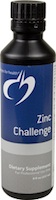
zinctest

“Zinc deficiency is quite common in the developing world. Even in the United States, about 12 percent of the population is probably at risk for zinc deficiency, and perhaps as many as 40 percent of the elderly” Science Daily, Sept 17, 2009

I, however, find that the majority of my clients with anxiety, pyroluria, depression and/or sugar and carb cravings are low in zinc. I have all my clients do the zinc status test when we start working together and then we retest their levels each week until they have good zinc levels. I use zinc sulfate, a liquid zinc that tastes a certain way depending on zinc levels.

Zinc Status test (also called zinc taste test or zinc tally or zinc challenge)

Category 1:

No specific taste or sensation – “It tastes like water” INDICATES GREATEST NEED FOR EXTRA ZINC

Category 2

No immediate taste noticed, but after a few seconds, a slight taste is noticed – ‘stale’, ‘dry mineral’, ‘furry’ or ‘sweet’ INDICATES SOME NEED FOR ZINC

Category 3

A definite mildly unpleasant taste is noticed almost immediately , and tends to intensify with time.. INDICATES LESS NEED FOR ZINC

Category 4

A very strong and very unpleasant taste is noticed immediately – bad enough to need to spit it out.. INDICATES NO NEED FOR ADDITIONAL ZINC, EXCEPT THAT FOUND IN A MULTIVITAMIN

Here is a video of Kelly taken at the recent 2012 Weston A Price conference. She did the zinc status test at my Antianxiety Food Solution booth and this is how the zinc sulfate should taste! Really really terrible! She was the one and only person over a 3 day period who had this reaction. Most of the other attendees scored either 1 or 2 i.e low zinc; a few people scored 3.

If your zinc status is good, this is what the zinc sulfate should taste like!

Zinc is an important and much-needed mineral:

  • Zinc is needed for neurotransmitter functioning ie to make “calming” GABA and “happy” serotonin
  • Zinc helps eliminate pyroluria (a social anxiety condition – see the pyroluria questionnaire here
  • Zinc is critical for wound healing, protein synthesis, muscle contractions, skin conditions
  • Zinc is critical for taste buds and appetite
  • Zinc is crucial for blood sugar control, weight control and diabetes
  • Zinc is crucial for thyroid health and sex hormones (and fertility)
  • Zinc is important for immunity and protection against yeast infections
  • Zinc helps with mental alertness and brain function, as well as sleep
  • Zinc is needed for many enzymatic processes in the body
  • Zinc is not stored in the body and can be depleted by sugar consumption, exercise and sweating and stress

Food sources of zinc

  • The highest concentration of zinc is oysters
  • Zinc is also found in other shellfish such as shrimps and crab
  • Zinc is also found in red meat, fish, poultry and cheese
  • It’s also found in smaller amounts in whole grains, beans, miso, tofu, nuts and seeds, mushrooms and broccoli (many of the plant sources also contain phytic acid which binds to zinc and prevents it being absorbed; many also contain copper so overdoing something like nuts or nut flours can be an issue for many of my clients with low zinc and anxiety)

Zinc supplements

I have found that zinc supplement containing 30mg is a good place to start if your level is low i.e. level 1 or 2 or even 3. I also find that Opti-zinc is very well absorbed by most of my clients (I like the Solaray brand). For someone with pyroluria I prefer a zinc supplement without copper and this brand is free of copper.

Here is my blog with the supplements I recommend to clients and details on how to set up an account with the fulfilment company I use.  Simply search for zinc and you’ll find various professional grade zinc products and the zinc tally or zinc challenge products.

If you’d like more information on zinc, pyroluria and anxiety, a great resource is my book The Antianxiety Food Solution: How the Foods You Eat Can Help You Calm Your Anxious Mind, Improve Your Mood and End Cravings, available in major books stores and from Amazon.  You can read more about it here.

Filed Under: Antianxiety Food Solution, Anxiety and panic, Food and mood, Sleep, Women's health Tagged With: anxiety, deficiency, GABA, pyroluria zinc taste test, serotonin, zinc, zinc sulfate

  • « Go to Previous Page
  • Page 1
  • Interim pages omitted …
  • Page 46
  • Page 47
  • Page 48
  • Page 49
  • Go to Next Page »

Primary Sidebar

GABA QuickStart Homestudy

gaba quickstart homestudy

Free Report

9 Great Questions Women Ask about Food, Mood and their Health

You'll also receive a complimentary subscription to my ezine "Food, Mood and Gal Stuff"


Connect with me

Popular Posts

  • Amino Acids Mood Questionnaire from The Antianxiety Food Solution
  • The Antianxiety Food Solution Amino Acid and Pyroluria Supplements
  • Pyroluria Questionnaire from The Antianxiety Food Solution
  • Collagen and gelatin lower serotonin: does this increase your anxiety and depression?
  • Tryptophan for the worry-in-your-head and ruminating type of anxiety
  • GABA for the physical-tension and stiff-and-tense-muscles type of anxiety
  • The Antianxiety Food Solution by Trudy Scott
  • Seriphos Original Formula is back: the best product for anxiety and insomnia caused by high cortisol
  • Am I an anxious introvert because of low zinc and vitamin B6? My response to Huffington Post blog
  • Vagus nerve rehab with GABA, breathing, humming, gargling and key nutrients

Recent Posts

  • Her cravings for chips and peanut butter were triggered by stress: GABA ends cravings and reduces physical tension and fear of heights
  • It is truly miraculous to be able to move through life without crippling anxiety and panic
  • GABA and tryptophan combo provide immediate and noticeable relief for tremors and cervical dystonia in just 7 days
  • Red light therapy for back and neck pain, plantar fasciitis and low mood – a complement to the amino acids GABA, DPA and tryptophan
  • What do I use instead of Seriphos to help lower high cortisol that is affecting my sleep and making me anxious at night?

Categories

  • 5-HTP
  • AB575
  • Addiction
  • ADHD
  • Adrenals
  • Alcohol
  • Allergies
  • Alzheimer's disease
  • Amino Acids
  • Anger
  • Antianxiety
  • Antianxiety Food Solution
  • Antidepressants
  • Anxiety
  • Anxiety and panic
  • Autism
  • Autoimmunity
  • benzodiazapines
  • Bipolar disorder
  • Books
  • Caffeine
  • Cancer
  • Candida
  • Children/Teens
  • Collagen
  • Cooking equipment
  • Coronavirus/COVID-19
  • Cravings
  • Depression
  • Detoxification
  • Diabetes
  • Diet
  • DPA/DLPA
  • Drugs
  • EFT/Tapping
  • EMF
  • EMFs
  • Emotional Eating
  • Endorphins
  • Environment
  • Essential oils
  • Events
  • Exercise
  • Fear
  • Fear of public speaking
  • Fertility and Pregnancy
  • Fish
  • Food
  • Food and mood
  • Functional neurology
  • GABA
  • Gene polymorphisms
  • General Health
  • Giving
  • Giving back
  • Glutamine
  • Gluten
  • GMOs
  • Gratitude
  • Gut health
  • Heart health/hypertension
  • Histamine
  • Hormone
  • Hyperparathyroidism
  • Hypoglycemia
  • Immune system
  • Inflammation
  • Insomnia
  • Inspiration
  • Introversion
  • Joy and happiness
  • Ketogenic diet
  • Lithium orotate
  • Looking awesome
  • Lyme disease and co-infections
  • MCAS/histamine
  • Medication
  • Men's health
  • Mental health
  • Mercury
  • Migraine
  • Mold
  • Movie
  • MTHFR
  • Multiple sclerosis
  • Music
  • NANP
  • Nature
  • Nutritional Psychiatry
  • OCD
  • Osteoporosis
  • Oxalates
  • Oxytocin
  • Pain
  • Paleo
  • Parasites
  • Parkinson’s disease
  • PCOS
  • People
  • PMS
  • Postpartum
  • PTSD/Trauma
  • Pyroluria
  • Questionnaires
  • Real whole food
  • Recipes
  • Research
  • Schizophrenia
  • serotonin
  • SIBO
  • Sleep
  • Special diets
  • Sports nutrition
  • Stress
  • Sugar addiction
  • Sugar and mood
  • Supplements
  • Teens
  • Testimonials
  • Testing
  • The Anxiety Summit
  • The Anxiety Summit 2
  • The Anxiety Summit 3
  • The Anxiety Summit 4
  • The Anxiety Summit 5
  • The Anxiety Summit 6
  • Thyroid
  • Thyroid health
  • Toxins
  • Tryptophan
  • Tyrosine
  • Uncategorized
  • Vegan/vegetarian
  • Women's health
  • Yoga

Archives

  • May 2026
  • April 2026
  • October 2025
  • September 2025
  • August 2025
  • July 2025
  • June 2025
  • May 2025
  • April 2025
  • March 2025
  • February 2025
  • January 2025
  • November 2024
  • October 2024
  • September 2024
  • August 2024
  • July 2024
  • June 2024
  • May 2024
  • April 2024
  • March 2024
  • February 2024
  • January 2024
  • December 2023
  • November 2023
  • October 2023
  • September 2023
  • August 2023
  • July 2023
  • June 2023
  • May 2023
  • April 2023
  • March 2023
  • February 2023
  • January 2023
  • December 2022
  • November 2022
  • October 2022
  • September 2022
  • August 2022
  • July 2022
  • June 2022
  • May 2022
  • April 2022
  • March 2022
  • February 2022
  • January 2022
  • December 2021
  • November 2021
  • October 2021
  • September 2021
  • August 2021
  • July 2021
  • June 2021
  • May 2021
  • April 2021
  • March 2021
  • February 2021
  • January 2021
  • December 2020
  • November 2020
  • October 2020
  • September 2020
  • August 2020
  • July 2020
  • June 2020
  • May 2020
  • April 2020
  • March 2020
  • February 2020
  • January 2020
  • December 2019
  • November 2019
  • October 2019
  • September 2019
  • August 2019
  • July 2019
  • June 2019
  • May 2019
  • April 2019
  • March 2019
  • February 2019
  • January 2019
  • December 2018
  • November 2018
  • October 2018
  • September 2018
  • August 2018
  • July 2018
  • June 2018
  • May 2018
  • April 2018
  • March 2018
  • February 2018
  • January 2018
  • December 2017
  • November 2017
  • October 2017
  • September 2017
  • August 2017
  • July 2017
  • June 2017
  • May 2017
  • April 2017
  • March 2017
  • February 2017
  • January 2017
  • December 2016
  • November 2016
  • October 2016
  • September 2016
  • August 2016
  • July 2016
  • June 2016
  • May 2016
  • April 2016
  • March 2016
  • February 2016
  • January 2016
  • December 2015
  • November 2015
  • October 2015
  • September 2015
  • August 2015
  • July 2015
  • June 2015
  • May 2015
  • April 2015
  • March 2015
  • February 2015
  • January 2015
  • December 2014
  • November 2014
  • October 2014
  • September 2014
  • August 2014
  • July 2014
  • June 2014
  • May 2014
  • April 2014
  • March 2014
  • February 2014
  • January 2014
  • December 2013
  • November 2013
  • October 2013
  • September 2013
  • August 2013
  • July 2013
  • June 2013
  • May 2013
  • April 2013
  • March 2013
  • February 2013
  • January 2013
  • December 2012
  • November 2012
  • October 2012
  • August 2012
  • July 2012
  • June 2012
  • May 2012
  • April 2012
  • March 2012
  • February 2012
  • January 2012
  • December 2011
  • November 2011
  • October 2011
  • September 2011
  • August 2011
  • July 2011
  • June 2011
  • May 2011
  • April 2011
  • March 2011
  • February 2011
  • January 2011
  • December 2010
  • October 2010
  • September 2010
  • July 2010
  • May 2010
  • April 2010
  • March 2010
  • February 2010
  • January 2010
  • November 2009

Share the knowledge!

The above statements have not been evaluated by the Food and Drug Administration. Products listed in this website are not intended to diagnose, treat, cure or prevent any disease.

The information provided on this site is for informational and educational purposes only and is not intended as a substitute for advice from your physician or other health care professional. You should consult with a healthcare professional before starting or modifying any diet, exercise, or supplementation program, before taking or stopping any medication, or if you have or suspect you may have a health problem.


Copyright © 2026 Trudy Scott. All Rights Reserved. | Privacy | Terms and Conditions | Refund Policy | Medical Disclaimer

Free Report

9 Great Questions Women Ask about Food, Mood and their Health

You’ll also receive a complimentary subscription to my ezine “Food, Mood and Gal Stuff”