• Skip to primary navigation
  • Skip to main content
  • Skip to primary sidebar

everywomanover29 blog

Food, Mood and Women's Health – Be your healthiest, look and feel great!

  • Blog
  • About
  • Services
  • Store
  • Resources
  • Testimonials
  • The Book
  • Contact
  • Search this site

depression

DPA to end comfort-eating, end weepiness and boost endorphins

September 10, 2016 By Trudy Scott 83 Comments

medicinal-supplements-summit-speakers

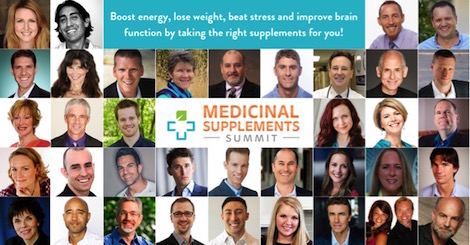
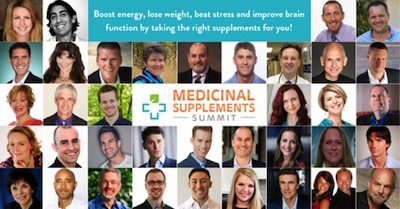
The Medicinal Supplements Summit runs September 12 -19 and is dedicated to helping you learn the latest in supplement customization to boost energy, lose weight, beat stress, improve brain function and heal your body! 

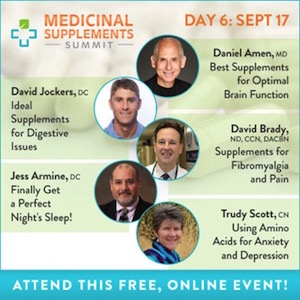
My interview addresses amino acids for both anxiety and depression – I talk about GABA, tryptophan, 5-HTP (and when not to use it), DPA, glutamine and tyrosine.
medicinal-supplements-summit-day6

Wendy asks me to share more about DPA for the low endorphins kind of depression, comfort eating, emotional pain, weepiness and physical pain. Here are some snippets on this topic from my interview:

DPA is D-phenylalanine. It’s an amino acid that actually destroys the enzyme that breaks down endorphins. Endorphins are feel-good chemicals that we may relate to when you hear about getting an endorphin rush, when you go for a run or when someone gives you a big hug or when you do something nice for someone or someone does something nice for you, you get that nice sort of feel good feeling, like you’ve got this big hug kind of feeling. So taking this amino acid, DPA, helps, in essence, to raise your endorphins.

There are different kinds of depression. I mentioned the low serotonin depression, which is more the anxiety kind of depression. With the low endorphin kind of depression, you’re very weepy. You may be overly emotional. So if you watched a TV ad or you watched a really sad movie, you may be more prone to crying than the average person. As well as being sensitive to emotional pain, which is the crying and the weepiness, you also tend to be sensitive to physical pain.

So we know that doing acupuncture raises your endorphin levels. And in that way it helps with pain. So taking this amino acid will help with that emotional sadness that you often feel when you’ve got low endorphins. And it is very, very helpful for physical pain as well. I find a number of clients with physical pain that is related to low endorphins. Pain can be related to low oxalates or nightshades, something physical, or even osteoarthritis. So you’ve got some kind of physical issue. But if it’s related to low endorphins you’ll actually see a really nice pain reduction effect from it.

Now, the big thing with low endorphins is this comfort eating. So I mentioned earlier with low serotonin you have the anxiety and the depression and the afternoon and the evening cravings. With low endorphins, as well as this emotional aspect and the pain aspect, the cravings part is very much a comfort kind of craving.

It’s like, “This is my reward. This is my treat. I deserve it.” And when you consume those carbohydrates, that bowl of ice cream, that bowl of cereal, that chocolate chip cookie, you feel like this is my reward. I deserve it. So a lot of people will resonate with the low endorphins kind of emotional eating. And when they get on DPA their mood improves, and this comfort eating goes away.

Tune in to hear my entire interview and all the other great speakers!

You can use this link to register for access: https://qt247.isrefer.com/go/SUPP16reg/trudyscottcn/

And use this link to purchase at pre-summit special prices:
https://qt247.isrefer.com/go/SUPP16order/trudyscottcn/

Filed Under: Events, GABA Tagged With: 5-HTP, aminos for anxiety, comfort eating, depression, DPA, emotional, GABA, glutamine, Medicinal supplements summit, tryptophan, tyrosine

Erin Matlock: talk about suicide, don’t gloss over it and don’t flinch!

September 9, 2016 By Trudy Scott 29 Comments

erin-matlock-talk-suicide

Earlier this week when Erin Matlock shared her “Changing Fate” video from the Superhero You live event she said this:

This is hands down the most personal and most difficult talk I’ve ever given. In it I read from my own suicide note.

Please help us send this video out into the world so that people who are suffering alone can see that they are so very not alone.

I was very moved to share this video and since it’s National Suicide Prevention Week and World Suicide Prevention Day, September 10th, I’ve added to her wonderful message by sharing some powerful nutritional resources too.

You can WATCH the entire 16 minute video from the SuperheroYou live event VIA THIS LINK on the SuperheroYou facebook page. This is what Superhero You founder Jim Kwik shared when posting the video:

If you feel broken, alone, or unhappy, this might be the most important video you watch today.

Most of us think suicide is something that happens to strangers – not to people we know. But someone dies by suicide every 40 seconds. That’s 15,385 people this week and 800,000 people this year. If you have 1,000 Facebook friends, 60 of them have thought about suicide in the past year.

Erin Matlock knows this struggle well. She battled major depression for 15 years and had 4 escalating attempts on her own life. Today, Erin is a mental health advocate and founder of the Brain Summit, an online platform where experts present the latest tools and techniques to upgrade your brain. In the video, Erin shares how neuroscience helped her during this time, the challenges that even the happiest-seeming people might face, and what you can do if you (or someone you love) might be struggling.

Erin also talks about Cynthia Pasquella’s struggles with depression and saying “my brain is trying to murder me.” Here is her powerful blog where she bravely and openly shares: Let’s Talk About Depression – Because Most People Won’t And It’s Killing Us

Here is the resource list Erin shares:

National Suicide Prevention Lifeline (United States 24 hour hotline)
1-800-273-TALK

Samaritans  (United Kingdom and Republic of Ireland 24 hour hotline)
116 123 (UK) and 116 123 (ROI)

Beyond Blue (Australia 24 hour hotline and resources)
1300 22 4636

To Write Love On Her Arms
A nonprofit movement dedicated to presenting hope and finding help for people struggling with depression, addiction, self-injury, and suicide.

Mind
A UK charity with an extensive collection of information about mental health.

HeadsTogether
A UK Mental Health Awareness Campaign spearheaded by The Duke and Duchess of Cambridge and Prince Harry.

PsychologyToday Therapist Directory
Find Help From A licensed Therapist In Your Area

EEG Info Neurofeedback Provider Directory
Find a qualified clinician in your area

Advanced Brain Technologies Provider Directory
Music Listening Therapy

Fisher Wallace Stimulator
FDA approved device for the treatment of depression and anxiety. Stimulates the brain to produce serotonin while lowering cortisol.

You can find more wonderful resources from Erin on the Brain Pages and her website

erin-matlock-search-for-better-brain

In addition to the above resources Erin has so kindly shared I’d like to share some powerful and effective nutritional resources too. Just like anxiety, depression often has a biochemical and nutritional component and getting to the root cause of these imbalances and deficiencies can often completely eliminate the depression and suicidal thinking.

I hear this from Anxiety Summit attendees all the time:

Why has no-one told me that food and nutrients could have such an impact on my anxiety and panic attacks?

The same could be said for depression and suicidal thinking.

I also hear this from many in my community:

My anxiety (or depression) is SO severe there is no way that diet and nutrients could make a difference!

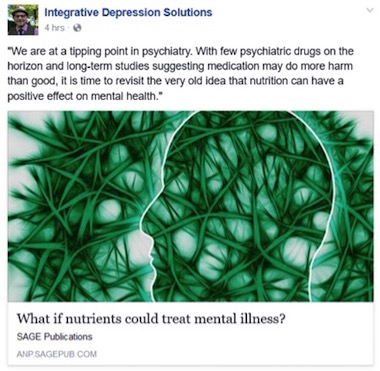
This is not true and I encourage you to have an open mind about this. We now have much research and so many integrative practitioners and nutritionists doing this work and seeing incredible results.  My colleague (and prior Anxiety Summit guest expert) Dr. Josh Friedman is one such practitioner and he has a wealth of information on his facebook page Integrative Depression Solutions. Here is just one example of a post:

nutrienta-and-mental-illness

The article was published in the Australian and New Zealand Journal of Psychiatry: What if nutrients could treat mental illness? and it starts with this sentence:

We are at a tipping point in psychiatry. With few psychiatric drugs on the horizon and long-term studies suggesting medication may do more harm than good, it is time to revisit the very old idea that nutrition can have a positive effect on mental health.

You can hear more about this topic in Julia Rucklidge’s TEDX talk: The surprisingly dramatic role of nutrition in mental health and read more about nutritional medicine in modern psychiatry from the International Society for Nutritional Psychiatry Research/ISNPR, and it’s founder Felice Jacka.

Here are some other nutritional resources for depression. Don’t let the word anxiety deter you – for some people anxiety is their biggest issue, for other it’s depression and the same underlying causes can be factors in both conditions.

60+ Nutritional & Biochemical Causes of Anxiety, a check-list to rule out possible underlying causes

The Anxiety Summit, an online event I host, now in its 4th season and called “a bouquet of hope”

The Depression Sessions, an online event hosted by Sean Croxton

The Mental Wellness Summit, an online event hosted by Dr. John Dempster and Ross McKenzie

The Medicinal Supplements Summit, co-hosted by Wendy Myers, airs next week (I cover both anxiety and depression in my interview)

The Brain Summit, hosted by Erin earlier this year.  I was fortunate enough to get to know Erin earlier this year, both as a speaker (I talked about grass-fed red meat and tryptophan) and by listening to her interview many wonderful brain experts like Alex Doman (who talked about music therapy for vagus nerve rehab).

A Mind of Your Own: The Truth about Depression and How Women Can Heal Their Bodies to Reclaim Their Lives, the wonderful best-selling book by Dr. Kelly Brogan

The Mood Cure: The 4-Step Program to Take Charge of Your Emotions–Today, the excellent book my mentor, Julia Ross

The Antianxiety Food Solution: How the Foods You Eat Can Help You Calm Your Anxious Mind, Improve Your Mood, and End Cravings, my book on anxiety

There is hope and just know there is an answer for you! Start by talking about how you feel, ask for help and work with someone to help you find your underlying cause and solution.

I know Erin’s courage and wisdom will get more people starting the conversation about suicide. And as she so wisely says:

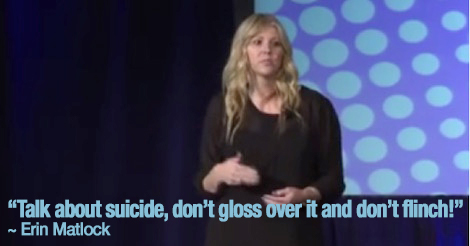
talk about suicide, don’t gloss over it and don’t flinch!

I’d like to challenge you to be a superhero and talk to at least three people about suicide in the next week, whether you’re the one having suicidal thoughts or whether you’re the one concerned about a loved one or friend who may be having suicidal thoughts. Don’t gloss over it and don’t flinch!


Filed Under: Depression, Food and mood Tagged With: anxiety, Cynthia Pasquella, depression, Erin Matlock, integrative, nutritional psychiatry, suicide, SuperHero

Zinc deficiency alters chick gut bacteria makeup and function

September 2, 2016 By Trudy Scott 11 Comments

chick-gut-mulfunction

A press release published by Cornell University shares research that has found that zinc deficiency alters gut bacteria makeup and function:

The researchers used broiler chickens in the study, partly due to their omnivorous appetites – which allowed the researchers to feed them purified diets – and because of their fatty acids and genetic similarities to humans.

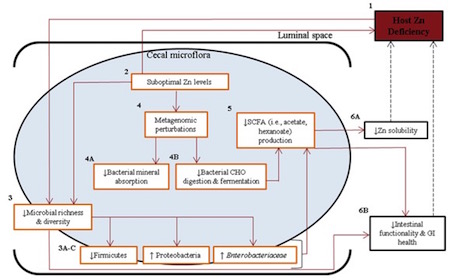
There is a great diagram in the actual study: Chronic Zinc Deficiency Alters Chick Gut Microbiota Composition and Function. It explains the proposed mechanisms by which a zinc-deficient gut microbiome may perpetuate a zinc-deficient state.

zinc-chick-diagram

Figure 8. Schematic diagram depicting proposed mechanisms by which a Zn [zinc] deficient gut microbiome may worsen a Zn deficient phenotype. Zn deficiency (1), caused by insufficient dietary Zn (2), induces a decrease in gut microbial diversity (3), and an outgrowth of bacteria particularly suited to low Zn conditions, leading to dysbiosis [3A–C]. Lack of dietary Zn also leads to alterations in the functional capacity of the microflora (4), causing multiple effects including decreased expression of pathways related to mineral (i.e., Zn) absorption (4A) and carbohydrate digestion and fermentation (4B). A decrease in the latter pathway may also cause a depression in the production of SCFAs [short chain fatty acids] (5), compounds responsible for improving the bioavailability of Zn. Altogether, these microbial effects may decrease Zn absorbability (6A) and disturb GI health (6B), thereby perpetuating a Zn deficient state. Red arrows and orange–lined boxes denote observations of this study, and dashed arrows and black–lined boxes describe published findings.

The above is shared here under the Creative Commons Attribution License and can be found here: Reed, S.; Neuman, H.; Moscovich, S.; Glahn, R.P.; Koren, O.; Tako, E. Chronic Zinc Deficiency Alters Chick Gut Microbiota Composition and Function. Nutrients 2015, 7, 9768-9784.

Zinc status is notoriously difficult to assess so I am fascinated by the findings of this Cornell University study suggesting

a simple new way to test for zinc deficiency by analyzing a patient’s fecal sample and seeing if the profile of gut bacteria matches the makeup one would expect in a zinc-deficient individual.

The authors suggest that with additional research this zinc stool test could become a noninvasive biomarker for zinc deficiency.

Zinc deficiency is common, affecting 25 percent of the world’s population, especially in the developing world.

Zinc deficiency plays a major role in anxiety and depression. Here is a recent paper on the connection between low serum zinc, high CRP (a marker of inflammation) and pre- and post-natal anxiety and depression: Lower Serum Zinc and Higher CRP Strongly Predict Prenatal Depression and Physio-somatic Symptoms, Which All Together Predict Postnatal Depressive Symptoms.

New research, soon to be published by the Journal of Neuroscience by researchers at the University of Auckland, shows the importance of zinc in autism. The study looks at how zinc can affect brain cell communication that is altered at the cellular level.

The researchers suggest this research may have applications for psychiatric disorders such as schizophrenia (and presumably anxiety and depression too).

I feel that we have an under-recognized opportunity to have a bigger impact on mental and physical health if we take zinc deficiency more seriously.

Have you had your zinc status assessed and do you supplement accordingly?

If you’re a practitioner, do you regularly check the zinc status of all your patients/clients?

Filed Under: Gut health Tagged With: anxiety, autism, depression, gut, Gut bacteria, microbiome, zinc, Zinc stool test

Confused about supplements? Join me on the Medicinal Supplements Summit

August 29, 2016 By Trudy Scott 1 Comment

medical-supplement-summit-speakers

Confused about supplements? Are you they doing you more harm than good? Join me on The Medicinal Supplements Summit from September 12-19, 2016 and learn the latest in supplement customization to beat stress and end anxiety, boost energy, lose weight, improve brain function and heal your body!

Your hosts of The Medicinal Supplements Summit are Wendy Myers, an expert in detoxification and founder of Liveto110.com, and Ian Clark, founder of Activation Products.  

They both understand the importance of taking the right supplements – after all, they both healed their own health crises through targeted supplements, whole body health and the power of micronutrients!

This event is dedicated to helping you determine what you need, separate “claims” from the truth, customize to your needs and make proper decisions at the store or online.

All reasons not to miss The Medicinal Supplements Summit, online from September 12-19, 2016!

Here is the line-up of topics:

DAY 1 (September 12, after 10am US eastern)
The Medicinal Supplements Summit starts. We’ll discuss whether you need supplements to be healthy, can you get all your nutrients from food and important supplements missing from your health regime!

DAY 2 (September 13, after 10am US eastern)
On Day 2 of The Medicinal Supplements Summit, we discuss top supplements in depth: fish oil, probiotics, Vitamin C, food-based vs. synthetic supplements and minerals, like magnesium. Learn what kind of supplements you should take and how to take them!

DAY 3 (September 14, after 10am US eastern)
On Day 3 of The Medicinal Supplements Summit, we discuss tips and tests you can take to customize supplements to your body’s needs. Take the guesswork out of choosing supplements!

DAY 4 (September 15, after 10am US eastern)
Buyer beware! On day 4 of The Medicinal Supplements Summit we discuss the supplement categories that require extra scrutiny before you buy: weight loss, detox, energy, performance-enhancing and protein supplements. These supplement categories offer products that are harmful or ineffective, and should be avoided.

DAY 5 (September 16, after 10am US eastern)
On Day 5 of The Medicinal Supplements Summit, we review the top medicinal supplements for common health conditions: heart disease, pain, adrenal fatigue, thyroid dysfunction, gut health and autoimmunity. These supplements should be in your medicine cabinet!

DAY 6 (September 17, after 10am US eastern)
Day 6 at The Medicinal Supplements Summit reviews supplements for common health conditions: brain fog, depression, anxiety, digestive issues, fibromyalgia, pain and sleep disturbances.  

My interview airs on day 6: Using Amino Acids for Anxiety and Depression

  • How to find out what type of depression you have
  • Specific amino acids for your type of depression or anxiety (individual targeted amino acids: tryptophan, GABA, DPA, glutamine and tyrosine)
  • Serious complications caused by anti-anxiety medication

DAY 7 (September 18, after 10am US eastern)
On Day 7 of The Medicinal Supplements Summit, we discuss hot topics in the supplement world: toxic metals in supplements, hidden gluten, ingredients to avoid and using essential oils.

DAY 8 (September 19, after 10am US eastern)
Encore Day at The Medicinal Supplements Summit!

Here is the registration link https://qt247.isrefer.com/go/SUPP16reg/trudyscottcn/

Hope to see you there.

Filed Under: Events Tagged With: amino acids, anxiety, depression, GABA, Medicinal supplements summit, supplements, tryptophan, Wendy Myers

Sleep restriction for insomnia – Dr. Breus on the Sleep Success Summit

August 8, 2016 By Trudy Scott 17 Comments

sleep-success-summit

As you probably know, insomnia is often a big issue if you have anxiety and/or depression. I like to address low serotonin, low GABA and low blood sugar for the sleep and mood issues but sleep issues can be caused by so many factors.

The Sleep Success summit addresses so many of these other factors: the adrenals, the thyroid, the gut, hormone health (all of which can impact sleep), plus topics on sleep apnea (and the inflammation connection), MTHFR, autoimmunity, using essential oils, sleep problems we see in kids and so much more.

sleep-summit-speakers

Dr. Michael Breus is the host of the summit and is interviewed by Sean Croxton: “An Interview with The Sleep Doctor.” He shares:

We know that when people aren’t able to stay asleep or fall asleep there is always some type of a mental component, either anxiety or depression (60-70% of the time)

There are just not a lot of people out there treating insomnia other than just prescribing pills and I’m not a big fan of that. Now you have two problems – you have a sleep problem and you have a pill problem.

I learned something new listening to Dr. Breus’ interview. He uses an evidence-based technique called “sleep restriction” to help his patients with insomnia.   He says it trains your brain to know when to sleep and it works for about 50% of his patients.   When the “sleep restriction” technique isn’t enough he uses cognitive behavior therapy to help with the negative thoughts and worry around the lack of sleep and supplements. He does use medications short-term (a few weeks only) to break the insomnia cycle.

I’m so intrigued by this “sleep restriction” method that I went looking for the research and found this study published just last month: 70% of the women receiving cognitive behavioral therapy for insomnia (CBT-I) said they had no more insomnia after 8 weeks and 84% said they had no more insomnia after 24 weeks!

A randomized clinical trial was conducted among 106 perimenopausal or postmenopausal women aged 40 to 65 years with moderate insomnia symptoms and 2 or more daily hot flashes.

Telephone-based cognitive behavioral therapy for insomnia (CBT-I) – which included sleep restriction, stimulus control, sleep hygiene education, cognitive restructuring, and behavioral homework – was compared to menopause education MEC/ information about menopause and women’s health.

At 8 and 24 weeks, 33 of 47 women (70%) and 37 of 44 (84%) in the CBT-I group, had scores in the no-insomnia range, compared with 10 of 41 (24%) and 16 of 37 (43%) in the MEC group.

Dr. Breus’ expertise is CBT-I and he is new to the naturopathic and nutritional world so we do have some professional differences of opinion, like buying Cosco magnesium (I would suggest looking for a quality product just like I do with all supplments) and avoiding 5-HTP and melatonin (although I do agree we do need to be informed consumers when using them).  The good news is that because he’s new to this he does ask great in-depth questions of the experts on the summit.

Other great interviews to check out:

  • Ben Lynch, ND – Are Your Genes Affecting Your Ability to Sleep?
  • Izabella Wentz, PharmD, FASCP – Getting to the Root Cause of Hypersomnia and Thyroid Fatigue
  • Magdalena Wszelaki, HHC – Your Hormones Could Be Affecting Your Sleep
  • Alan Christianson, NMD – Heal Your Adrenals and Get Better Sleep
  • Daniel Kalish, DC – How Sleep Influences Functional Medicine
  • Amy Myers, MD – Sleep, Functional Medicine and Autoimmune Function
  • Eric L. Zielinski, DC, MPH(c), BA – Sleep and Essential Oils: What’s the Connection?
  • Emily Fletcher – How Meditation Cured my Insomnia!
  • David Wolfe – How Your Environment Could Be Affecting Sleep! (Earthing and grounding for better sleep + Analyzing your environment to sleep better)

You can REGISTER HERE

You can PURCHASE HERE (it’s summit special pricing until the summit ends) 

I’d love to know if you’ve ever done cognitive behavioral therapy for insomnia (CBT-I) and if it helped you?   Is yes did it include all of the following: sleep restriction, stimulus control, sleep hygiene education, cognitive restructuring, and behavioral homework? Please share in the comments.

Filed Under: Events, Sleep Tagged With: anxiety, CBT-I, depression, insomnia, Michael Breus, sleep, sleep restriction, Sleep Success Summit

Yoga increases brain GABA levels and reduces anxiety

July 22, 2016 By Trudy Scott 8 Comments

triangle-pose

In a 2007 study published by the Division of Psychiatry at the Boston University School of Medicine – Yoga Asana sessions increase brain GABA levels: a pilot study – researchers had 8 yoga practitioners complete a 60-minute yoga session and 11 comparison subjects complete a 60-minute reading session.

The study objective was to compare changes in brain levels of gamma-aminobutyric acid (GABA) – our calming neurotransmitter – in those completing the 60-minute yoga session and in those reading.

These were the results that were reported:

There was a 27% increase in GABA levels in the yoga practitioner group after the yoga session but no change in the comparison subject group after the reading session.

And here is the conclusion the authors reached:

These findings demonstrate that in experienced yoga practitioners, brain GABA levels increase after a session of yoga. This suggests that the practice of yoga should be explored as a treatment for disorders with low GABA levels such as depression and anxiety disorders. Future studies should compare yoga to other forms of exercise to help determine whether yoga or exercise alone can alter GABA levels.

In this study, GABA levels were measured with magnetic resonance spectroscopic imaging (MRS/MRSI) before and after the yoga and reading sessions. If you really want to know how yoga improves your anxiety you could do the GABA section of the amino acid questionnaire and rate your before and after symptoms:  

  • Anxiety and feeling overwhelmed or stressed
  • Feeling worried or fearful
  • Panic attacks
  • Unable to relax or loosen up
  • Stiff or tense muscles
  • Feeling stressed and burned-out
  • Craving carbs, alcohol, or drugs for relaxation and calming

The above study looked at experienced yoga practitioners but there is so much research on the many benefits of yoga for everyone and for many conditions. Here is a small sampling of some other studies that include anxiety as well as depression, stress, hormonal imbalances and sleep issues:

  • Improved menopausal symptoms, stress levels and depression symptoms
  • Reduced anxiety in pediatric burn survivors
  • Potential benefits for people who have anxiety and stutter
  • Reduced back pain, depression, anxiety, fatigue and medication usage, and improved quality of life and sleep in military veterans
  • Changes in neural connectivity and memory in older adults

If you’ve never done yoga or if you haven’t been doing it for a while this blog will hopefully give you the motivation to start a yoga practice or get back into it.

You may ask: how do I get started?

  • Find a class at a local yoga studio or gym OR
  • Buy a yoga DVD (like Yoga for Beginners or Yoga for Stress Relief and do it at home with some friends or your kids

The important thing is to find the joy in doing it so I encourage you to try different classes until you find one you love. I love Iyengar yoga but it’s not for everyone (it can be seen as too slow for some people.) Here is a yoga DVD for more advanced Iyengar yoga students: Iyengar Yoga with Gabriella.

If you already do yoga this will confirm what you already likely know. Please share what yoga you enjoy, how often you practice and how it leaves you feeling.

If you’re a health practitioner, please share if yoga is something you recommend to your clients or patients.

Filed Under: GABA Tagged With: anxiety, depression, GABA, gamma-aminobutyric acid, our calming neurotransmitter, sleep, yoga

  • « Go to Previous Page
  • Page 1
  • Interim pages omitted …
  • Page 17
  • Page 18
  • Page 19
  • Page 20
  • Page 21
  • Interim pages omitted …
  • Page 27
  • Go to Next Page »

Primary Sidebar

NEW! GABA QuickStart Homestudy (with special intro pricing)

gaba quickstart homestudy

Free Report

9 Great Questions Women Ask about Food, Mood and their Health

You'll also receive a complimentary subscription to my ezine "Food, Mood and Gal Stuff"


Connect with me

Popular Posts

  • Amino Acids Mood Questionnaire from The Antianxiety Food Solution
  • The Antianxiety Food Solution Amino Acid and Pyroluria Supplements
  • Pyroluria Questionnaire from The Antianxiety Food Solution
  • Collagen and gelatin lower serotonin: does this increase your anxiety and depression?
  • Tryptophan for the worry-in-your-head and ruminating type of anxiety
  • GABA for the physical-tension and stiff-and-tense-muscles type of anxiety
  • The Antianxiety Food Solution by Trudy Scott
  • Seriphos Original Formula is back: the best product for anxiety and insomnia caused by high cortisol
  • Am I an anxious introvert because of low zinc and vitamin B6? My response to Huffington Post blog
  • Vagus nerve rehab with GABA, breathing, humming, gargling and key nutrients

Recent Posts

  • What do I use instead of Seriphos to help lower high cortisol that is affecting my sleep and making me anxious at night?
  • BeSerene™ GABA/theanine cream eases severe muscle tension in her neck/shoulders, prevents her bad headaches and quells her anxiety
  • How the correct approach, dose and sublingual use of GABA can be calming and not cause a flushed and itchy face and neck
  • The amino acid glutamine improves low mood by addressing gut health, and it has calming effects too
  • Flight anxiety with heightened breath, physical tension and also fearing the worst (the role of low GABA and low serotonin)

Categories

  • 5-HTP
  • AB575
  • Addiction
  • ADHD
  • Adrenals
  • Alcohol
  • Allergies
  • Alzheimer's disease
  • Amino Acids
  • Anger
  • Antianxiety
  • Antianxiety Food Solution
  • Antidepressants
  • Anxiety
  • Anxiety and panic
  • Autism
  • Autoimmunity
  • benzodiazapines
  • Bipolar disorder
  • Books
  • Caffeine
  • Cancer
  • Candida
  • Children/Teens
  • Collagen
  • Cooking equipment
  • Coronavirus/COVID-19
  • Cravings
  • Depression
  • Detoxification
  • Diabetes
  • Diet
  • DPA/DLPA
  • Drugs
  • EFT/Tapping
  • EMF
  • EMFs
  • Emotional Eating
  • Endorphins
  • Environment
  • Essential oils
  • Events
  • Exercise
  • Fear
  • Fear of public speaking
  • Fertility and Pregnancy
  • Fish
  • Food
  • Food and mood
  • Functional neurology
  • GABA
  • Gene polymorphisms
  • General Health
  • Giving
  • Giving back
  • Glutamine
  • Gluten
  • GMOs
  • Gratitude
  • Gut health
  • Heart health/hypertension
  • Histamine
  • Hormone
  • Hyperparathyroidism
  • Hypoglycemia
  • Immune system
  • Inflammation
  • Insomnia
  • Inspiration
  • Introversion
  • Joy and happiness
  • Ketogenic diet
  • Lithium orotate
  • Looking awesome
  • Lyme disease and co-infections
  • MCAS/histamine
  • Medication
  • Men's health
  • Mental health
  • Mercury
  • Migraine
  • Mold
  • Movie
  • MTHFR
  • Multiple sclerosis
  • Music
  • NANP
  • Nature
  • Nutritional Psychiatry
  • OCD
  • Osteoporosis
  • Oxalates
  • Oxytocin
  • Pain
  • Paleo
  • Parasites
  • Parkinson’s disease
  • PCOS
  • People
  • PMS
  • Postpartum
  • PTSD/Trauma
  • Pyroluria
  • Questionnaires
  • Real whole food
  • Recipes
  • Research
  • Schizophrenia
  • serotonin
  • SIBO
  • Sleep
  • Special diets
  • Sports nutrition
  • Stress
  • Sugar addiction
  • Sugar and mood
  • Supplements
  • Teens
  • Testimonials
  • Testing
  • The Anxiety Summit
  • The Anxiety Summit 2
  • The Anxiety Summit 3
  • The Anxiety Summit 4
  • The Anxiety Summit 5
  • The Anxiety Summit 6
  • Thyroid
  • Thyroid health
  • Toxins
  • Tryptophan
  • Tyrosine
  • Uncategorized
  • Vegan/vegetarian
  • Women's health
  • Yoga

Archives

  • October 2025
  • September 2025
  • August 2025
  • July 2025
  • June 2025
  • May 2025
  • April 2025
  • March 2025
  • February 2025
  • January 2025
  • November 2024
  • October 2024
  • September 2024
  • August 2024
  • July 2024
  • June 2024
  • May 2024
  • April 2024
  • March 2024
  • February 2024
  • January 2024
  • December 2023
  • November 2023
  • October 2023
  • September 2023
  • August 2023
  • July 2023
  • June 2023
  • May 2023
  • April 2023
  • March 2023
  • February 2023
  • January 2023
  • December 2022
  • November 2022
  • October 2022
  • September 2022
  • August 2022
  • July 2022
  • June 2022
  • May 2022
  • April 2022
  • March 2022
  • February 2022
  • January 2022
  • December 2021
  • November 2021
  • October 2021
  • September 2021
  • August 2021
  • July 2021
  • June 2021
  • May 2021
  • April 2021
  • March 2021
  • February 2021
  • January 2021
  • December 2020
  • November 2020
  • October 2020
  • September 2020
  • August 2020
  • July 2020
  • June 2020
  • May 2020
  • April 2020
  • March 2020
  • February 2020
  • January 2020
  • December 2019
  • November 2019
  • October 2019
  • September 2019
  • August 2019
  • July 2019
  • June 2019
  • May 2019
  • April 2019
  • March 2019
  • February 2019
  • January 2019
  • December 2018
  • November 2018
  • October 2018
  • September 2018
  • August 2018
  • July 2018
  • June 2018
  • May 2018
  • April 2018
  • March 2018
  • February 2018
  • January 2018
  • December 2017
  • November 2017
  • October 2017
  • September 2017
  • August 2017
  • July 2017
  • June 2017
  • May 2017
  • April 2017
  • March 2017
  • February 2017
  • January 2017
  • December 2016
  • November 2016
  • October 2016
  • September 2016
  • August 2016
  • July 2016
  • June 2016
  • May 2016
  • April 2016
  • March 2016
  • February 2016
  • January 2016
  • December 2015
  • November 2015
  • October 2015
  • September 2015
  • August 2015
  • July 2015
  • June 2015
  • May 2015
  • April 2015
  • March 2015
  • February 2015
  • January 2015
  • December 2014
  • November 2014
  • October 2014
  • September 2014
  • August 2014
  • July 2014
  • June 2014
  • May 2014
  • April 2014
  • March 2014
  • February 2014
  • January 2014
  • December 2013
  • November 2013
  • October 2013
  • September 2013
  • August 2013
  • July 2013
  • June 2013
  • May 2013
  • April 2013
  • March 2013
  • February 2013
  • January 2013
  • December 2012
  • November 2012
  • October 2012
  • August 2012
  • July 2012
  • June 2012
  • May 2012
  • April 2012
  • March 2012
  • February 2012
  • January 2012
  • December 2011
  • November 2011
  • October 2011
  • September 2011
  • August 2011
  • July 2011
  • June 2011
  • May 2011
  • April 2011
  • March 2011
  • February 2011
  • January 2011
  • December 2010
  • October 2010
  • September 2010
  • July 2010
  • May 2010
  • April 2010
  • March 2010
  • February 2010
  • January 2010
  • November 2009

Share the knowledge!

The above statements have not been evaluated by the Food and Drug Administration. Products listed in this website are not intended to diagnose, treat, cure or prevent any disease.

The information provided on this site is for informational and educational purposes only and is not intended as a substitute for advice from your physician or other health care professional. You should consult with a healthcare professional before starting or modifying any diet, exercise, or supplementation program, before taking or stopping any medication, or if you have or suspect you may have a health problem.


Copyright © 2026 Trudy Scott. All Rights Reserved. | Privacy | Terms and Conditions | Refund Policy | Medical Disclaimer

Free Report

9 Great Questions Women Ask about Food, Mood and their Health

You’ll also receive a complimentary subscription to my ezine “Food, Mood and Gal Stuff”