• Skip to primary navigation
  • Skip to main content
  • Skip to primary sidebar

everywomanover29 blog

Food, Mood and Women's Health – Be your healthiest, look and feel great!

  • Blog
  • About
  • Services
  • Store
  • Resources
  • Testimonials
  • The Book
  • Contact
  • Search this site

autoimmune

Understanding the function of the GABAergic system and its potential role in rheumatoid arthritis (for pain, anxiety, sleep issues and more)

January 3, 2025 By Trudy Scott 2 Comments

GABAergic system and its potential role in rheumatoid arthritis

This is a great question posed by a woman in my GABA/anxiety online group program:

Can GABA be good for rheumatoid arthritis, and in its early stages? If so, in what ways would someone see signs of improvement with GABA?

When I looked into some of the recent research on GABA and rheumatoid arthritis I was fascinated. A 2023 review paper, Understanding the function of the GABAergic system and its potential role in rheumatoid arthritis, discusses the relationship between rheumatoid arthritis (RA), an autoimmune condition, and GABA (gamma-amino butyric acid), a calming neurotransmitter.

The authors discuss “a new mechanism of action in RA” and the fact that “bidirectional communication occurs between the brain and immune system…and neuroinflammatory responses in the brain.”

The paper discusses GABA and neurosignalling, immunomodulatory effects and inflammation, stating that the:

GABAergic system may modulate the abnormal pain response in RA patients.

So to answer her question, if she has low GABA levels we would expect to see some reduction in her RA pain.

As always, we look for the signs and symptoms of low GABA regardless of the diagnosis or possible diagnosis. So if someone has low GABA symptoms of physical tension, overwhelm, fears, anxiousness, stiff and tense muscles, focus issues, pain, stress eating or drinking to calm down, and poor sleep, we consider a trial of the amino acid GABA, and could expect improvements in all or some of the above symptoms.

I would also recommend that she tracks markers of inflammation (like hs CRP, IL-6, IL-1β, and TNF-α) and RA markers to see if they shift in a positive direction with her use of GABA too.

I share more below about the incidence of anxiety and sleep issues in rheumatoid arthritis and some of the mechanisms covered in the review paper. Also, there are lab tests to track and there are other nutritional approaches for supporting an autoimmune condition such as RA.

Some of the mechanisms covered in the review paper

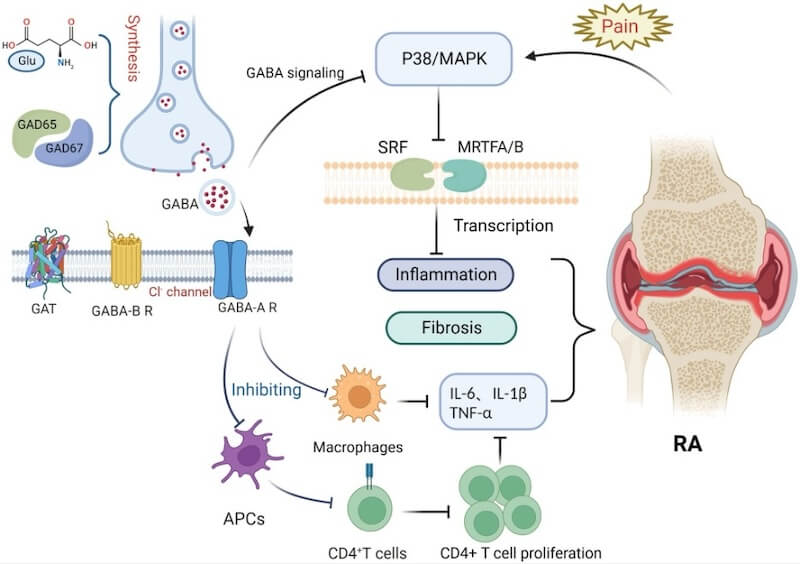
This image from the paper and the explanation provides some insights on the mechanisms at play.

  • Glutamate interacts with glutamate decarboxylase (GAD65 and GAD67) to produce gamma-aminobutyric acid (GABA).
  • Binding of GABA to GABA-A receptors inhibits macrophage activation and decreases the release of inflammatory factors such as IL-6, IL-1β, and TNF-α. Antigen presentation by antigen-presenting cells, however, is impaired, inhibiting CD4+ T cell proliferation and differentiation and reducing the expression of inflammatory factors such as IL-6, IL-1β, and TNF-α.
  • Pain signaling activates the P38/MAPK pathway, whereas GABA binding to GABA-A receptors inhibits P38/MAPK. The P38/MAPK signaling pathway contributes to inflammation and is involved in the activation of myocardin-related transcription factor A (MRTFA), myocardin-related transcription factor B (MRTFB), and serum response factor (SRF) that played key roles in fibroblast activation.
gaba and rheumatoid arthritis
Figure 1. Understanding the function of the GABAergic system and its potential role in rheumatoid arthritis

The authors don’t mention the use of the amino acid GABA as a supplement for RA but do list a number of clinical trials (mostly diabetes patients) where GABA has been used with success. It’s a start and I look forward to future research in this area.

Anxiety, depression, insomnia, cognitive issues and stress-eating in RA

This paper, Psychiatric aspects of rheumatoid arthritis: Review of literature, reports that

Among the major psychiatric disorders found in RA, the anxiety and depressive disorders are prevalent (13 to 48% of patients), as well as suicide, insomnia and tiredness. The impairment of quality of life is markedly after age 65.

This paper, A 30-Day Adjunct Wellness Intervention for the Management of Extra-Articular Symptoms of Rheumatoid Arthritis: A Formative Study, also mentions “cognitive and physical dysfunction” and “stress-related eating” in addition to anxiety, depression and insomnia in RA patients.

Doing a trial of GABA (and other amino acids such as tryptophan and d-phenylalanine/ DPA), will confirm which symptoms are related to which neurotransmitter deficiencies. It’s exciting to consider a very possible role of GABA and other amino acids given the fact that “individuals with rheumatoid arthritis (RA) continually fall short of treatment targets using standard drug therapies alone”

Looking further than GABA and other amino acids: a gluten-free diet and other root causes

With RA we obviously want to address more than just GABA (and other amino acids). Gluten removal is recommended but I do want to mention that the research is surprisingly mixed. This paper, Efficacy of gluten-free diet in patients with rheumatoid arthritis states that

Gluten seems to be a glycoprotein with a clinically relevant inflammatory effect. Several observational studies and anecdotal cases reported a correlation between gluten and various diseases, including autoimmune diseases, such as rheumatoid arthritis. This study aimed to evaluate whether gluten-free diet could be effective in controlling inflammation and ongoing rheumatoid arthritis symptoms.

We report 4 cases of patients with long-standing rheumatoid arthritis with no response to several conventional and biotechnological drugs, treated with a gluten-free diet concurrently with the drug therapy. Our patients presented different degrees of response to the diet, in terms of disease remission and improvement of symptoms. Our cases confirm that a gluten-free diet may improve symptoms of rheumatoid arthritis, even in patients resistant to conventional drug therapies.

Many other papers dismiss the role of gluten and inflammatory diets. This one is an example of a number of similar papers.

The benefits of addressing neurotransmitter imbalances with GABA and other amino acids means the addiction is stopped and quitting bread and cookies now no longer requires willpower,

Here are some autoimmune recipe resources:

  • The Autoimmune Solution Cookbook by Amy Myers MD
  • The Autoimmune Fix by Dr. Tom O’Bryan: gluteomorphins, casomorphins and withdrawal
  • Hashimoto’s Food Pharmacology, a new recipe book by Dr. Izabella Wentz

In addition to dietary changes, a full functional medicine approach is warranted as there is much research supporting the benefits of the following for RA: omega-3 fatty acids, olive oil, low vitamin B6, addressing heavy metals such as mercury and much much more.

I cover 60+ root causes of anxiety here – I’d be carefully assessing each of these root causes for RA too.

Additional resources when you are new to using GABA and other amino acids as supplements

As always, I use the symptoms questionnaire to figure out if low serotonin or low GABA or other neurotransmitter imbalances may be an issue.

If you suspect low levels of any of the neurotransmitters and do not yet have my book, The Antianxiety Food Solution – How the Foods You Eat Can Help You Calm Your Anxious Mind, Improve Your Mood, and End Cravings, I highly recommend getting it and reading it before jumping in and using amino acids on your own so you are knowledgeable. And be sure to share it with the practitioner/health team you or your loved one is working with.

There is an entire chapter on the amino acids and they are discussed throughout the book in the sections on gut health, gluten, blood sugar control (this is covered in an entire chapter too), sugar cravings, anxiety and mood issues.

The book doesn’t include product names (per the publisher’s request) so this blog, The Antianxiety Food Solution Amino Acid and Pyroluria Supplements, lists the amino acids that I use with my individual clients and those in my group programs.

If, after reading this blog and my book, you don’t feel comfortable figuring things out on your own (i.e. doing the symptoms questionnaire and respective amino acids trials), a good place to get help is the GABA QuickStart Program (if you have low GABA symptoms). This is a paid online/virtual group program where you get my guidance and community support, and is where this question was asked of me during one of the live Q&A calls.

If you are a practitioner, join us in The Balancing Neurotransmitters: the Fundamentals program. This is also a paid online/virtual program with an opportunity to interact with me and other practitioners who are also using the amino acids.

Wrapping up and your feedback

Do you have rheumatoid arthritis (RA) or another autoimmune condition and has GABA helped?

Were you aware of these possible connections?

What about dietary and nutritional approaches?

Feel free to share your feedback and ask your questions below.
Filed Under: Anxiety, GABA, Pain Tagged With: amino acids, anxiety, anxious, anxiousness, autoimmune, calming, drinking, fears, focus, GABA, GABA Quickstart, GABAergic system, Inflammation, neurotransmitter, overwhelm, pain, physical-tension, rheumatoid arthritis, sleep issues, stiff and tense muscles, stress-eating

Sjogren’s syndrome: tryptophan and GABA for anxiety, and moisturizing for dry skin and inflammation?

May 10, 2019 By Trudy Scott 33 Comments

sjogren's syndrome

A few weeks ago I blogged about a new pilot study about the use of a skin moisturizer twice a day reduced inflammation in older adults. I use the inflammation research to question if this may be applicable and helpful for you if you suffer from anxiety, extrapolating that it may well be given the added benefits of touch and an oxytocin boost.

I received a number of great questions about how to apply this information and have decided to share a question from someone with both Sjogren’s syndrome and anxiety, in order to illustrate how I’d work with someone like this.

Here is the question I received:

I would like to know how much of one’s body needs to be moisturized, and if it is also necessary to be done twice per day? Such a simple but effective way to help with anxiety. Will be slathering a lot more in the future! I have Sjogren’s so everything is dry – skin, mouth, eyes, hair. I have been trying to keep my face much “moister” and I am sure my wrinkles have lessened. I find rice bran oil is also quite good.

I’m going to address her moisturizing question below and share more about anxiety in Sjogren’s syndrome and some nutritional solutions, but first let me explain what Sjogren’s syndrome is.

An overview of Sjogren’s syndrome

Let me explain what Sjogren’s (SHOW-grins) is in case you’re not familiar with this condition. It’s an autoimmune condition and is described as follows on the Mayo Clinic site:

often accompanies other immune system disorders, such as rheumatoid arthritis and lupus. In Sjogren’s syndrome, the mucous membranes and moisture-secreting glands of your eyes and mouth are usually affected first — resulting in decreased tears and saliva.

Although you can develop Sjogren’s syndrome at any age, most people are older than 40 at the time of diagnosis. The condition is much more common in women.

The site goes on to say that other than dry eyes and mouth, some people experience joint pain and stiffness, swollen salivary glands, skin rashes or dry skin, vaginal dryness, persistent dry cough and prolonged fatigue. It’s worth a read to learn more about complications like more dental cavities, yeast infections, vision issues, problems in the lungs, kidneys or liver, the risk of lymphoma and peripheral neuropathy.

My feedback about moisturizing

In the study, moisturizing was done twice a day. I’m not sure how much of the body needs to be moisturized but if everything is dry, I’d want to moisturize as much as possible.

Given that chronic inflammation is a major factor in Sjogren’s and other autoimmune conditions like systemic lupus erythematosus, it’s feasible to expect similar benefits in terms of reduced inflammation. Hopefully we’ll see research on autoimmune conditions in the future.

When it comes to anxiety, I do want to make it clear that I was and still am extrapolating from the research on inflammation and measuring reduced anxiety was not part of the study. Moisturizing may or may not help with anxiety and I certainly wouldn’t only use this intervention.

Anxiety in Sjogren’s – low serotonin and GABA?

You may not be aware that anxiety/depression is very common in Sjogren’s. In one study they

found 33.8% patients with anxiety, and 36.9% had depression, which were significantly higher than controls.

I use a comprehensive nutritional and lifestyle approach to help my clients ease their anxiety and as I mention above, I would not only rely on moisturizing.

I would use the serotonin questionnaire to determine if low serotonin is contributing to the anxiety (the worry-in-the head and rumination type of anxiety) and do a trial of tryptophan or 5-HTP.

Interestingly, a number of studies suggest the involvement of the serotonin system in the development of Sjogren’s, with one study reporting

Significantly lower platelet levels of serotonin in Sjogren’s patients as compared to healthy controls.

They didn’t find a correlation between the levels of serotonin and how severe the Sjogren’s symptoms were, which falls in line with what we know about biochemical individuality and why doing a trial of tryptophan or 5-HTP (to find your ideal dose) is the best approach for serotonin support.

I would use also the GABA questionnaire to determine if low GABA (physical tension type of anxiety) is a factor, and do a trial of GABA.

If you recall, in the Mayo Clinic description above, stiffness is a common symptom of Sjogren’s and GABA eases stiffness.

I haven’t found any research on GABA in Sjogren’s, but one case study reports that a patient experiencing athetoid movements (a movement dysfunction, characterized by involuntary writhing movements), reported symptom improvement with hydroxychloroquine (which can have severe psychiatric effects in susceptible individuals), pilocarpine, gabapentin, and clonazepam. The latter two medications work on the GABA system.

You can find the tryptophan and GABA products I use with my clients here.

Poor sociability in Sjogrens – could this be related to pyroluria?

A study published earlier this year is reportedly the first study to conclude that patients with Sjogren’s score “high on neuroticism and anxiety and low on sociability.”

If social anxiety is a concern, I’d have her do the pyroluria questionnaire and address this if needed.

If you recall, in the Mayo Clinic description above, joint pain and dental cavities are common symptoms. These are also very common with pyroluria, so using a nutritional approach helps ease the social anxiety, and improves joint issues and mouth health.

The other factor that makes me suspect pyroluria may be common in Sjogren’s is that it’s considered a systemic connective tissue disorder, together with systemic lupus erythematosus and rheumatoid arthritis. You can read more about pyroluria and connective tissue disorders on the pyroluria prevalence blog and the Ehlers Danlos/joint hypermobility blog.

Poor mouth health is also common with histapenia/low histamine so I’d want to look into this too.

You can find the pyroluria supplements I use with my clients here.

Sjogren’s and the Autoimmune-Paleo diet

Since Sjogren’s is an autoimmune condition, following an Autoimmune-Paleo (AIP) diet is key too. Here are some books that are well-worth making part of your library, even though they are not specific to Sjogren’s syndrome they offer support for autoimmune conditions (and many individuals often have more than one autoimmune disease)

  • Hashimoto’s Protocol by Dr. Izabella Wentz (Hashimoto’s is an autoimmune thyroid condition)
  • Hashimoto’s Food Pharmacology, a recipe book by Dr. Izabella Wentz (both on Hashimoto’s but applicable to any autoimmune condition)
  • Cooking for Hormone Balance: a recipe book by Magdalena Wszelaki (she has AIP recipes)
  • The Autoimmune Solution Cookbook by Amy Myers MD

I haven’t dived into the research on all the other autoimmune conditions and the above connections (low serotonin, low GABA and pyroluria) but it’s highly likely similar connections exist. So, if you have any autoimmune condition and anxiety this could all apply for you too.

If you have been diagnosed with Sjogren’s syndrome please share if GABA and tryptophan have helped ease your anxiety, and if the pyroluria protocol has helped you with social anxiety?

And let us know if moisturizing is helping your dry skin and possibly reducing inflammation and anxiety too?

Filed Under: Anxiety, Autoimmunity, GABA, Pyroluria, serotonin, Tryptophan Tagged With: AIP diet, anxiety, autoimmune, dry skin, GABA, hashimoto's, Inflammation, moisturizer, pyroluria, serotonin, Sjogren’s syndrome, social anxiety, tryptophan

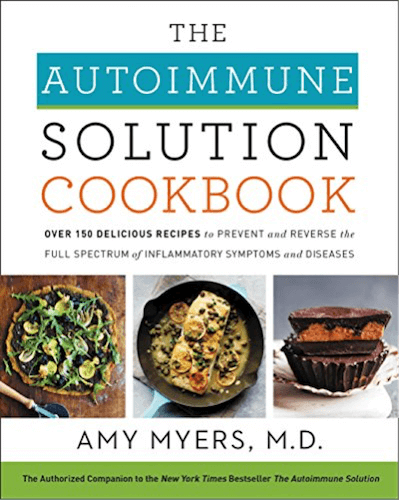
The Autoimmune Solution Cookbook by Amy Myers MD

May 8, 2018 By Trudy Scott 6 Comments

There is a wonderful new recipe book out this week and I want you to know about it!

Dealing with an autoimmune or other chronic health condition such as Hashimoto’s, IBS, Celiac, RA, Psoriasis, chronic fatigue or fibromyalgia, or even just committing to your family’s health does NOT have to mean giving up delicious foods!

No one knows this better than my dear friend and world-renowned functional medicine physician, Amy Myers, MD.

Amy Myers reversed her own autoimmune condition by addressing the root causes of her illness and diet played a HUGE role. She continues to follow the same dietary program that she recommends to her patients and community.

We actually ate out together in Melbourne at the recent Bioceuticals Symposium and I saw her put The Myers Way® (her proven program) of eating into practice at the restaurant, making sure everything she was eating was safe and would not trigger an autoimmune flare. Our server worked hard making sure all her questions were addressed in a satisfactory manner and she set a great example for all of us.

She does this in her wonderful new cookbook, setting a great example and guiding you to make the right choices in order to reduce inflammation, heal your leaky gut and help you move toward the optimal health side of the autoimmune spectrum and stay there.

Here I am with integrative pediatrician Elisa Song MD and functional medicine physician, Amy Myers, MD.

Amy inspires you to cook delicious meals at the same time. She helps you change the way you look at food, both when you’re cooking at home for our families, and when we’re eating out and traveling.

This new book, The Autoimmune Solution Cookbook (my Amazon link), contains over 150 absolutely delicious, easy-to-make, autoimmune-reversing recipes. Amy shares this:

Whether you’re a five-star chef or just getting started in the kitchen, I created these recipes to be a piece of cake (YES! There’s even a birthday cake recipe I created for my daughter).

This cookbook is perfect for you if you:

  • Have an autoimmune or other chronic condition
  • Know that autoimmunity runs in your family
  • Currently follow an autoimmune, Paleo or ketogenic diet
  • Have read The Autoimmune Solution and have already followed its thirty-day protocol, this cookbook is the perfect companion for spicing up your diet and adding more variety to your mealtimes
  • Are dealing with leaky gut, seasonal allergies, asthma, or eczema
  • Have Hashimoto’s, Graves’, or any other type of thyroid issue
  • Deal with digestive issues such as bloating, gas, constipation, and more
  • Have food allergies or food sensitivities
  • Have a loved one dealing with any of the above issues and are looking for the perfect gift for them
  • Are looking for a gift for your doctor or other health practitioner

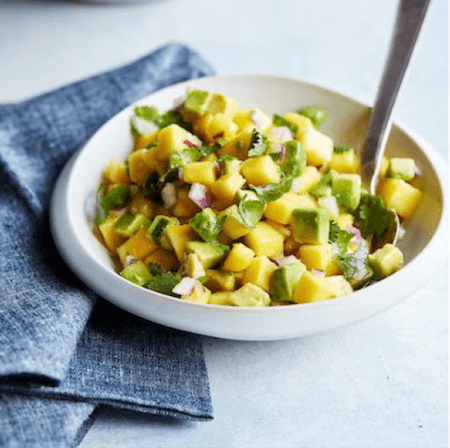
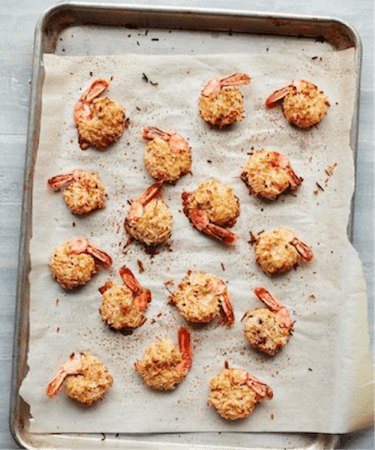
Here are 2 yummy recipes to get you tempted, your mouth watering and cooking: Refreshing Mango-Avocado Salsa and Coconut Shrimp.

Refreshing Mango-Avocado Salsa

With summer approaching, this refreshing mango-avocado salsa makes the perfect poolside snack or cookout appetizer served with plantain chips. Or add it to grilled fish, shrimp, or chicken for an extra boost of inflammation-fighting Omega 3 fatty acids. Makes 2 cups

Ingredients:

1 mango, cubed
1 avocado, cubed
½ red onion, finely chopped
3 tablespoons chopped fresh cilantro
Juice of 1 small lime
1 tablespoon extra virgin olive oil
¼ teaspoon fine sea salt
½ teaspoon freshly ground black pepper
½ teaspoon ground cumin

Instructions:

In a bowl, combine all ingredients and mix gently. Serve immediately


Coconut Shrimp

When I was growing up in New Orleans, my grandparents took the family out to dinner at the Yacht Club for special occasions, and I always ordered a fried shrimp po’ boy—a traditional Louisiana sandwich. This substitute for fried shrimp is a healthier option that everyone will love. The shrimp are tossed with coconut flour and shredded coconut instead of breadcrumbs— and they are so easy to make! My husband and I served this as an appetizer at our wedding and they were a huge hit! Serves 4

Ingredients:

2 tablespoons coconut flour
½ cup unsweetened shredded coconut
1 teaspoon garlic powder
1 teaspoon onion powder
½ teaspoon fine sea salt
½ teaspoon ground black pepper
¾ cup full-fat coconut milk
1 ½ tablespoons coconut aminos
1 pound wild-caught shrimp

Instructions:

  1. Heat oven to 400°F. In a shallow bowl, whisk together coconut flour, shredded coconut, garlic and onion powders, salt, and pepper.
  2. In another shallow bowl, whisk together the coconut milk and coconut aminos.
  3. Dip each shrimp into the liquid mixture, and then into the dry mixture to coat. Arrange in a single layer in a baking dish. Bake for 15 to 20 minutes, until golden brown. For extra crispiness, remove the pan and set the oven to broil. Broil the shrimp for 4 to 5 minutes.

Some of the other recipes I’m really looking forward to trying are the creamy zucchini-basil soup, the herbed roast chicken, the world’s best Asian flank steak, the rosemary sea-salt crackers (made with cassava flour), the spinach artichoke dip (I’ll replace the spinach with low-oxalate dino kale), raspberry cheesecake bites (I’ll make it with blueberries instead of high-oxalate raspberries), and the apple crisp.  There are so many delicious recipes!

There is no perfect eating plan for everyone and Amy has created this eating plan and recipes to cater for the majority of those with an autoimmune condition. I really appreciate that recipes are marked as being autoimmune-friendly, thyroid-friendly, suitable for candida and SIBO, and low histamine.  However, if you do have oxalate issues you will need to adjust some of the recipes. Also, if you have issues with collagen making your anxiety or insomnia worse then I recommend adding some protein powder to the recipes that call for gelatin or collagen, and/or consider a trial of tryptophan.

Here’s the official book blurb:

The companion cookbook to the revolutionary New York Times bestseller The Autoimmune Solution, filled with more than 150 nutritious, easy-to-prepare, every day recipes to heal symptoms of inflammation and autoimmune disorders, including Graves’ Disease, Psoriasis, Fibromyalgia, Lupus, Celiac disease, Hashimoto’s thyroiditis, and Multiple sclerosis.

Nine in ten Americans suffer from inflammation or an autoimmune disorder—conditions for which conventional medicine has no cure. Minor irritations like rashes and runny noses are ignored, while chronic and debilitating diseases like Crohn’s and rheumatoid arthritis are handled with a cocktail of toxic treatments that fail to address their root cause. But as Dr. Amy Myers revealed in The Autoimmune Solution, there are solutions. In this invaluable cookbook, she now shows you how to repair your body and reverse your symptoms by eating your way to good health.

The Autoimmune Solution Cookbook delivers more than 150 grain-free recipes designed to prevent and reverse the full spectrum of autoimmune diseases, including allergies, obesity, asthma, cardiovascular disease, fibromyalgia, lupus, IBS, chronic headaches, fatigue, multiple sclerosis, colitis, Graves’ disease, and Hashimoto’s thyroiditis. As our food and environment becomes more toxic, the health of millions of us have been impaired. Thanks to Dr. Myers, you no longer need to rely on prescriptions—with troubling, sometimes dangerous side effects—to counteract your body’s over-reactive immune system. The Autoimmune Solution Cookbook is the healthy alternative to cope with and conquer inflammatory-related symptoms and diseases.

If you’re ready to enjoy amazing meals that will help you take back your health and your life, this book is an absolute must-have, so get your copy of The Autoimmune Solution Cookbook today – on Amazon here (my affiliate link) or from your favorite book store.

This cookbook is the perfect companion to The Autoimmune Solution (my affiliate link), a wonderful book that introduced The Myers Way®, empowering so many to reverse their autoimmune conditions.

Learn more about the book and claim the book launch gifts here.

And stay tuned for an email notification from Dr. Myers about the upcoming Autoimmune Program webinar being held online on May 17. She’ll be sharing more about her group program if you’re the kind of person looking for a community-based program.

Happy cooking and do let us know how you enjoy the recipes!

If you have questions or feedback please post them in the comments below.

Filed Under: Books Tagged With: amy myers, autoimmune, autoimmune disease, Inflammation, The Autoimmune Solution, The Autoimmune Solution Cookbook

The Lyme Solution by Dr. Darin Ingels

March 30, 2018 By Trudy Scott 4 Comments

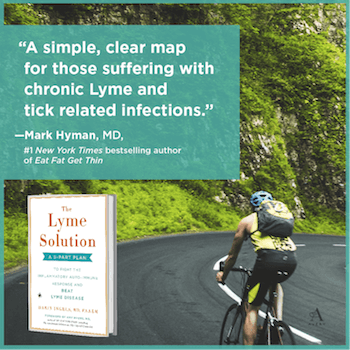
I highly recommend Dr. Darin Ingels, ND new book The Lyme Solution: A 5-Part Plan to Fight the Inflammatory Auto-Immune Response and Beat Lyme Disease. As a functional medicine practitioner, he provides a natural approach to treating Lyme disease that is both comprehensive and designed to each person’s own unique needs i.e. he doesn’t use a one size fits all approach. His uniquely holistic approach to treating this rampant disease, treats both the infection and the resulting autoimmune response. He’s also recovered from Lyme disease himself so he really gets it!

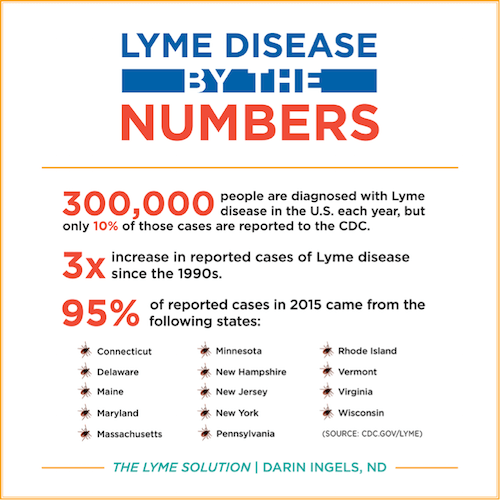
According to the CDC, over 300,000 cases of Lyme are reported every year in the U.S.A.

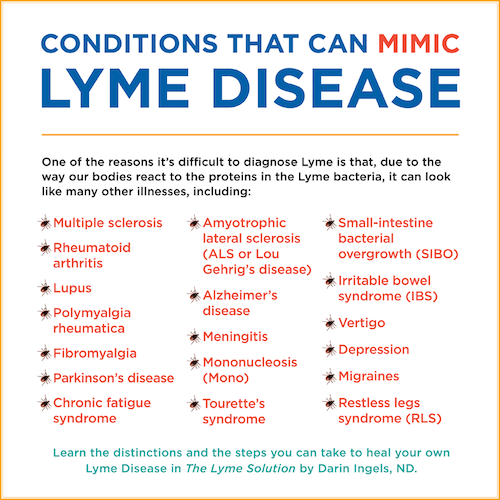
As you can see, many conditions can mimic Lyme disease, including anxiety and depression.

Many in my community have both Lyme disease and anxiety and many nutritional solutions, such as GABA (a calming amino acid supplement), can ease their anxiety while my client is working with a doctor such as Dr. Ingels in order to address and eliminate the Lyme disease.

Tricia Soderstrom from Abounding in Hope With Lyme shares her Lyme GABA story here: GABA helps with Lyme anxiety (while addressing the underlying disease)

Dr. Ingels shared this with me when I asked about what GABA products he likes and why:

I use DFH PharmaGaba and Allergy Research Liposomal GABA, which also has theanine. Liposomal GABA works beautifully for anxiety and sleep disturbances in my Lyme patients and children with autism. I also love how quickly it seems to affect people, often within 10-15 minutes of taking it.

Including the latest research about the diagnosis and treatment of Lyme, The Lyme Solution provides a path to wellness by strengthening the body’s ability to heal from within. Dr. Ingels suggests an actionable 5-Part Plan to:

  • Fortify gut health and restore the immune system
  • Follow a diet that increases immunity and reduces inflammation
  • Thwart and target an active infection
  • Identify hidden toxins that worsen Lyme
  • Lifestyle suggestions to help healing

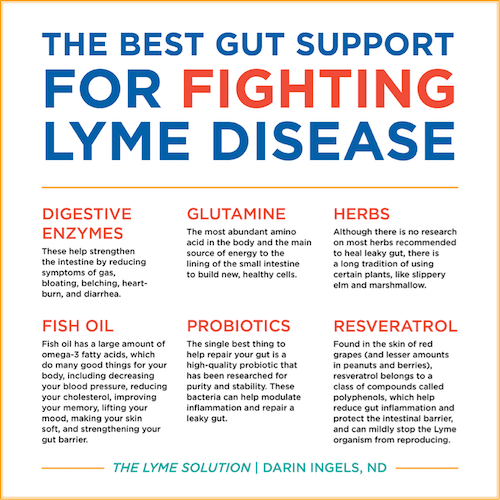
Here are some of his gut support protocols: digestive enzymes, glutamine, resveratrol, herbs like slippery elm and marshmallow, fish oil and probiotics:

The Lyme Solution is a simple guide for how you can advocate for your own health and use innovative treatments to maintain wellness, using the least invasive ways to facilitate treatment. By following this plan, you can become even stronger than you were before the Lyme and better equipped to manage recurring symptoms.

UPDATE: April 20, 2018 – My actual review  

I highly recommend this book if you have Lyme disease or if you suspect that Lyme disease may be playing a role in your ill-health or have chronic anxiety (or another chronic health condition) and have not yet found a solution. I also highly recommend it for practitioners who are both treating Lyme disease patients and those, like myself, who want to really understand all aspects in order to make good referrals for Lyme treatment.

I read it cover to cover in one sitting and could not put it down!

Chapter 1 – An excellent discussion about the problems with long-term antibiotics for chronic Lyme disease and when antibiotics should be used. The chronic inflammatory autoimmune connection is unique to Dr. Ingels’ approach for treating Lyme disease and makes a great deal of sense. The Lyme facts are invaluable: Lyme spirochete going dormant and hiding in scar tissue and lymph nodes; the nymph the most dangerous; Lyme-reactive antibodies form against proteins in the brain, giving rise to neurological symptoms.

Chapter 2 – Covers complex and controversial issues with diagnosis and pitfalls of the various testing that is available. It contains Lyme signs/symptoms and a Lyme questionnaire. It was eye-opening to learn that the bull’s-eye rash is Lyme specific and that changes in handwriting and mixing up words may be a sign of chronic Lyme disease. This is one of my favorite chapters of the book and is very comprehensive.

Chapter 3 – Gut and immune restoring protocols and more on the autoimmune connection. Addressing gut health is key to any condition and Dr. Ingels reiterates that addressing the immune system is key for recovery from Lyme.

Chapter 4 – Immune boosting diet and the importance of alkalinity. This is my least favorite chapter because I’m an advocate of the Paleo diet and have found that when done well with large amounts of vegetables, it is healing and alkaline. (He did connect with me on this and agrees in principle with a Paleo diet that does include plenty of vegetables). I am pleased to see coffee is off the list but would have liked to hear his experiences with intermittent fasting.

Chapter 5 – Covers targeting the infection in a way that doesn’t impact gut flora and undermine the immune system. This chapter has extensive coverage of the herbal protocols Dr. Ingels has found to be effective for his patients: Zhang protocol, his version of the Cowden protocol and others. He goes into great detail for each herb, including products to help with a Herxheimer reaction, as well as the rationale and protocols for breaking up biofilm. It’s also one of my favorite chapters in the book.

Chapter 6 – Cleaning your home and environment and getting rid of toxic chemicals and products, as well as addressing mold. This is also common-sense to address for any condition so it’s great to cover for Lyme.

Chapter 7 – Sleep, exercise and stress reduction. This is also common-sense to address for any condition. I do have a professional difference of opinion for the GABA recommendation for sleep and typically start my clients on much lower doses. I also love GABA for stress and anxiety.

Chapter 8 – Advanced protocols for specific symptoms: mitochondrial issues, neuropathy and balance, low dose immunotherapy, LDN and other approaches where you’ll need to work with a health care provider. Another favorite chapter of mine.

Chapter 9 – Additional lab testing, SIBO, Mast cell activation syndrome and POTS are addressed in relation to Lyme disease. This chapter is enlightening.

The case studies throughout the book reflect the complex nature of Lyme disease and help us get a better understanding about unexpected symptoms, as well as Dr. Ingels’ level of expertise. One such example is Peter’s story: he developed tics but none of the other classic Lyme symptoms, PANS was found and then Lyme disease.

Given that neuropsychiatric symptoms are common in Lyme disease I hope to see more coverage of this in a later edition or follow-up book. I work with individuals with anxiety and underlying Lyme disease is very common, with benzodiazepines and SSRIs commonly prescribed. Using nutritional approaches for the anxiety and/or depression and since it gets to the root cause it’s more effective, plus it lowers the toxic burden and side-effects of added medications. (He also connected with me about this and said he agrees but word-count was the challenge in this first book).

Overall, this book is an excellent resource and I highly recommend it! It offers practical solutions and hope for those who are been suffering with chronic Lyme disease and are seeking a solution.

Learn more and get your copy here on Amazon (my link) or at major bookstores. Get access to a digital version of chapter 1 here.

Filed Under: Books, Lyme disease and co-infections Tagged With: anxiety, autoimmune, Darin Ingels, GABA, glutamine, gut, Lyme Disease, The Lyme Solution

Triggers and tests from Dr. Tom O’Bryan on Interpreting Your Genetics Summit

July 17, 2017 By Trudy Scott 2 Comments

I’m really excited about the upcoming Interpreting Your Genetics Summit which runs August 21-28, 2017.

Summit host, James Maskell of Evolution of Medicine, has gathered world-renowned leaders from genetics, genomics and functional medicine. These pioneering experts are on the front lines interpreting data to create improved health in patients around the globe. Learn how to translate your health data to better understand:

  • Your predisposition for diseases and how to minimize manifestation.
  • Genetic health traits your children are likely to inherit.
  • Whether your medications and supplements are right for you.
  • How to unlock previously unsolved health challenges.
  • And more!

Tom O’Bryan, author of The Autoimmune Fix and creator of the docuseries Betrayal: The Autoimmune Secret They’re Not Telling You sets the stage for the summit in his brilliant interview by explaining that simply because you have a genetic defect or polymorphism doesn’t mean you’re going to get that disease:

It means that you’re vulnerable to a particular disease. “Mrs. Patient, if you pull at a chain, it always breaks at the weakest link. Always. It’s going to be at one end, the middle, the other end. It’s your heart, your brain, your liver, your kidneys. Wherever your genetic weak link is. And where’s your weak link? Whatever your genes are. Whatever the deck of cards you’ve been dealt in life, that’s the weak link in your chain.”

So when you have that basic understanding, the first thing that comes up is stop pulling on the chain so much, right. And then, the link won’t break. And how do you stop pulling on the chain? Reduce the inflammation, reduce the activation of your immune system, which is what turns on the genes.

James summarizes this concept perfectly:

So what I hear you saying is that whatever your genetic test comes back, you want to be minimizing the pull on the chain. And you want to be minimizing and repairing the holes in your gut to make sure that you don’t end up with a broken-chain situation, which would be an autoimmune disease, which could manifest anywhere depending on your genetic makeup.

Tom O’Bryan discusses some common environmental triggers that will “pull on the chain” in great detail, and how they lead to genes being turned on and hence causing disease: food quality, wheat, dairy sugar, glyphosate, plastic and air quality. He also covers the APOE4 genes that increase your risk for Alzheimer’s disease and shares this scary fact about kids in Mexico City:

what they have found is that every child that they checked in Mexico City has evidence of early Alzheimer’s. Every child! Let me say that again. Every child that they check has evidence of early Alzheimer’s.

Why? Because the air pollution is so bad. And you breathe that stuff in. It goes into your lungs. And just like leaky gut, you get leaky lungs. And this particulate matter goes right through the lungs, into the bloodstream, straight up to the brain, activating your immune system to fight this stuff. Tears the lining of the blood-brain barrier.

And he shares one of his favorite tests for determining if damage is being done to the brain:

8-hydroxy-2′- Deoxyguanosine… a measure of the DNA residue from damaged brain cells or damaged nerve cells, mostly in the brain. So you just do a simple urine test. And if your 8-hydroxy is up, you’re killing off brain cells. And that makes you say, “Well, why?” [this is the DNA Oxidative Damage Assay from Doctor’s Data]

And this one to look at antibodies to the blood-brain barrier:

You have a simple type of lining on your brain that stops molecules from getting in the brain that shouldn’t be here. So you want to look for antibodies… to S100B. There’s a panel of antibodies that you could look for to see, “Is my brain on fire right now,” because if you have elevated antibodies, your brain is on fire. You’re killing off brain cells.

This interview sets the stage for the rest of the summit! I can’t wait to learn from these amazing speakers on this very relevant and cutting-edge topic.

I hope you can join us on Interpreting Your Genetics Summit, August 21-28, 2017. You can register here

Once you register you’ll have access to this interview and 2 others (Epigenetic Mastery for Everyone from Andrea Nakayama, CNC, CNE and The Current State of Genetics from Jeffrey Bland, PhD) right away.

Hope to “see you” on the summit!

Filed Under: Events Tagged With: 8-hydroxy, autoimmune, Betrayal, genes, Interpreting Your Genetics Summit, james maskell, S100B, The Autoimmune Fix, tom o’bryan

Primary Sidebar

NEW! GABA QuickStart Homestudy (with special intro pricing)

gaba quickstart homestudy

Free Report

9 Great Questions Women Ask about Food, Mood and their Health

You'll also receive a complimentary subscription to my ezine "Food, Mood and Gal Stuff"


Connect with me

Popular Posts

  • Amino Acids Mood Questionnaire from The Antianxiety Food Solution
  • The Antianxiety Food Solution Amino Acid and Pyroluria Supplements
  • Pyroluria Questionnaire from The Antianxiety Food Solution
  • Collagen and gelatin lower serotonin: does this increase your anxiety and depression?
  • Tryptophan for the worry-in-your-head and ruminating type of anxiety
  • GABA for the physical-tension and stiff-and-tense-muscles type of anxiety
  • The Antianxiety Food Solution by Trudy Scott
  • Seriphos Original Formula is back: the best product for anxiety and insomnia caused by high cortisol
  • Am I an anxious introvert because of low zinc and vitamin B6? My response to Huffington Post blog
  • Vagus nerve rehab with GABA, breathing, humming, gargling and key nutrients

Recent Posts

  • What do I use instead of Seriphos to help lower high cortisol that is affecting my sleep and making me anxious at night?
  • BeSerene™ GABA/theanine cream eases severe muscle tension in her neck/shoulders, prevents her bad headaches and quells her anxiety
  • How the correct approach, dose and sublingual use of GABA can be calming and not cause a flushed and itchy face and neck
  • The amino acid glutamine improves low mood by addressing gut health, and it has calming effects too
  • Flight anxiety with heightened breath, physical tension and also fearing the worst (the role of low GABA and low serotonin)

Categories

  • 5-HTP
  • AB575
  • Addiction
  • ADHD
  • Adrenals
  • Alcohol
  • Allergies
  • Alzheimer's disease
  • Amino Acids
  • Anger
  • Antianxiety
  • Antianxiety Food Solution
  • Antidepressants
  • Anxiety
  • Anxiety and panic
  • Autism
  • Autoimmunity
  • benzodiazapines
  • Bipolar disorder
  • Books
  • Caffeine
  • Cancer
  • Candida
  • Children/Teens
  • Collagen
  • Cooking equipment
  • Coronavirus/COVID-19
  • Cravings
  • Depression
  • Detoxification
  • Diabetes
  • Diet
  • DPA/DLPA
  • Drugs
  • EFT/Tapping
  • EMF
  • EMFs
  • Emotional Eating
  • Endorphins
  • Environment
  • Essential oils
  • Events
  • Exercise
  • Fear
  • Fear of public speaking
  • Fertility and Pregnancy
  • Fish
  • Food
  • Food and mood
  • Functional neurology
  • GABA
  • Gene polymorphisms
  • General Health
  • Giving
  • Giving back
  • Glutamine
  • Gluten
  • GMOs
  • Gratitude
  • Gut health
  • Heart health/hypertension
  • Histamine
  • Hormone
  • Hyperparathyroidism
  • Hypoglycemia
  • Immune system
  • Inflammation
  • Insomnia
  • Inspiration
  • Introversion
  • Joy and happiness
  • Ketogenic diet
  • Lithium orotate
  • Looking awesome
  • Lyme disease and co-infections
  • MCAS/histamine
  • Medication
  • Men's health
  • Mental health
  • Mercury
  • Migraine
  • Mold
  • Movie
  • MTHFR
  • Multiple sclerosis
  • Music
  • NANP
  • Nature
  • Nutritional Psychiatry
  • OCD
  • Osteoporosis
  • Oxalates
  • Oxytocin
  • Pain
  • Paleo
  • Parasites
  • Parkinson’s disease
  • PCOS
  • People
  • PMS
  • Postpartum
  • PTSD/Trauma
  • Pyroluria
  • Questionnaires
  • Real whole food
  • Recipes
  • Research
  • Schizophrenia
  • serotonin
  • SIBO
  • Sleep
  • Special diets
  • Sports nutrition
  • Stress
  • Sugar addiction
  • Sugar and mood
  • Supplements
  • Teens
  • Testimonials
  • Testing
  • The Anxiety Summit
  • The Anxiety Summit 2
  • The Anxiety Summit 3
  • The Anxiety Summit 4
  • The Anxiety Summit 5
  • The Anxiety Summit 6
  • Thyroid
  • Thyroid health
  • Toxins
  • Tryptophan
  • Tyrosine
  • Uncategorized
  • Vegan/vegetarian
  • Women's health
  • Yoga

Archives

  • October 2025
  • September 2025
  • August 2025
  • July 2025
  • June 2025
  • May 2025
  • April 2025
  • March 2025
  • February 2025
  • January 2025
  • November 2024
  • October 2024
  • September 2024
  • August 2024
  • July 2024
  • June 2024
  • May 2024
  • April 2024
  • March 2024
  • February 2024
  • January 2024
  • December 2023
  • November 2023
  • October 2023
  • September 2023
  • August 2023
  • July 2023
  • June 2023
  • May 2023
  • April 2023
  • March 2023
  • February 2023
  • January 2023
  • December 2022
  • November 2022
  • October 2022
  • September 2022
  • August 2022
  • July 2022
  • June 2022
  • May 2022
  • April 2022
  • March 2022
  • February 2022
  • January 2022
  • December 2021
  • November 2021
  • October 2021
  • September 2021
  • August 2021
  • July 2021
  • June 2021
  • May 2021
  • April 2021
  • March 2021
  • February 2021
  • January 2021
  • December 2020
  • November 2020
  • October 2020
  • September 2020
  • August 2020
  • July 2020
  • June 2020
  • May 2020
  • April 2020
  • March 2020
  • February 2020
  • January 2020
  • December 2019
  • November 2019
  • October 2019
  • September 2019
  • August 2019
  • July 2019
  • June 2019
  • May 2019
  • April 2019
  • March 2019
  • February 2019
  • January 2019
  • December 2018
  • November 2018
  • October 2018
  • September 2018
  • August 2018
  • July 2018
  • June 2018
  • May 2018
  • April 2018
  • March 2018
  • February 2018
  • January 2018
  • December 2017
  • November 2017
  • October 2017
  • September 2017
  • August 2017
  • July 2017
  • June 2017
  • May 2017
  • April 2017
  • March 2017
  • February 2017
  • January 2017
  • December 2016
  • November 2016
  • October 2016
  • September 2016
  • August 2016
  • July 2016
  • June 2016
  • May 2016
  • April 2016
  • March 2016
  • February 2016
  • January 2016
  • December 2015
  • November 2015
  • October 2015
  • September 2015
  • August 2015
  • July 2015
  • June 2015
  • May 2015
  • April 2015
  • March 2015
  • February 2015
  • January 2015
  • December 2014
  • November 2014
  • October 2014
  • September 2014
  • August 2014
  • July 2014
  • June 2014
  • May 2014
  • April 2014
  • March 2014
  • February 2014
  • January 2014
  • December 2013
  • November 2013
  • October 2013
  • September 2013
  • August 2013
  • July 2013
  • June 2013
  • May 2013
  • April 2013
  • March 2013
  • February 2013
  • January 2013
  • December 2012
  • November 2012
  • October 2012
  • August 2012
  • July 2012
  • June 2012
  • May 2012
  • April 2012
  • March 2012
  • February 2012
  • January 2012
  • December 2011
  • November 2011
  • October 2011
  • September 2011
  • August 2011
  • July 2011
  • June 2011
  • May 2011
  • April 2011
  • March 2011
  • February 2011
  • January 2011
  • December 2010
  • October 2010
  • September 2010
  • July 2010
  • May 2010
  • April 2010
  • March 2010
  • February 2010
  • January 2010
  • November 2009

Share the knowledge!

The above statements have not been evaluated by the Food and Drug Administration. Products listed in this website are not intended to diagnose, treat, cure or prevent any disease.

The information provided on this site is for informational and educational purposes only and is not intended as a substitute for advice from your physician or other health care professional. You should consult with a healthcare professional before starting or modifying any diet, exercise, or supplementation program, before taking or stopping any medication, or if you have or suspect you may have a health problem.


Copyright © 2026 Trudy Scott. All Rights Reserved. | Privacy | Terms and Conditions | Refund Policy | Medical Disclaimer

Free Report

9 Great Questions Women Ask about Food, Mood and their Health

You’ll also receive a complimentary subscription to my ezine “Food, Mood and Gal Stuff”