• Skip to primary navigation
  • Skip to main content
  • Skip to primary sidebar

everywomanover29 blog

Food, Mood and Women's Health – Be your healthiest, look and feel great!

  • Blog
  • About
  • Services
  • Store
  • Resources
  • Testimonials
  • The Book
  • Contact
  • Search this site

anxiety summit

The Anxiety Summit – Anxiety in children, adolescents and young adults: an integrative psychiatric approach

June 11, 2016 By Trudy Scott 23 Comments

Zendi Moldenhauer_Anxiety4

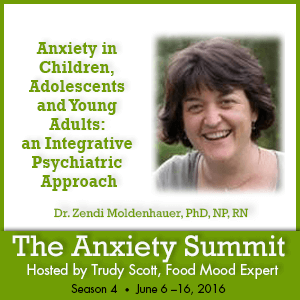
Dr. Zendi Moldenhauer, PhD, NP, RN, is interviewed on the Anxiety Summit by host of the Anxiety Summit, Trudy Scott, Food Mood Expert and Nutritionist, author of The Antianxiety Food Solution.

Anxiety in children, adolescents and young adults: an integrative psychiatric approach

  • The incidence of anxiety in children: official stats and real life numbers
  • How to identify anxiety in children and the IBS-anxiety connection
  • Medication over-prescribing, hidden side-effects and electroshock
  • Food, toxins, gut health, the adrenals and an integrative approach
  • How to use calming theanine and GABA

Here are some gems from our interview:

…anxiety disorders in children are probably the most common psychiatric disorders that start in childhood.  And depending on studies and depending on how anxiety is defined the rates are anything between 10 to 30 percent.  Less common in younger ones and more common in teenagers.  But really the lifetime prevalence of that is a child or teenager developing anxiety sometime up to age 18 is somewhere between 25 and 30 percent. That means one in three to one in four children or adolescents at some point during that time period which is very high.

…when somebody has an anxiety disorder they’re more like to have more than one anxiety disorder because they could have generalized anxiety disorder or social anxiety disorder or separation anxiety or panic disorder.  So it’s really very common like up to 60 percent of patients with anxiety disorder can have another anxiety disorder or depression or ADHD. 

And that’s just sort of more the mental health disorders.  There’s also an incredibly high association between anxiety and IBS.  In fact nearly half to three-quarters of children with IBS can have anxiety.  So there’s a huge relationship between anxiety and other mental health disorders but anxiety and other physical disorders like gut issues or headaches for example.

Here are some of the studies we discuss related to IBS and anxiety:

  • Relationship between irritable bowel syndrome, worry and stress in adolescent girls
  • Symptom Profiles in Patients With Irritable Bowel Syndrome or Functional Abdominal Pain Compared With Healthy Controls

Dr. Zendi shares that children can’t necessarily identify that they’re anxious: 

Children with anxiety can often not express that they’re anxious.  And if you can imagine a five or six or seven year old they don’t necessarily come to us and say mommy, I feel anxious about whatever is going on in their lives.  So often with children we see it through their behavior.  So children who are either nonverbal at all or haven’t yet developed the emotional language to describe anxiety act out anxiety.  So you might see a child that’s more withdrawn and doesn’t want to participate, doesn’t want to leave the house, doesn’t want to get on the school bus, doesn’t want to go to school, doesn’t want to participate in activities.  There’s a lot of avoidance kind of behavior. 

We discussed this article in Scientific American – The Hidden Harms of Antidepressants: Data about the true risks of suicide and aggression for children and teens taking these drugs have been suppressed

And this one about ECT: American Psychiatric Association Lobbies FDA to Electroshock Children  https://www.cchrint.org/2016/05/05/apa-lobbies-fda-to-electroshockchildren/

We covered organic food and the EWG dirty dozen list for fruits and vegetables

Dr Zendi’s go to nutrient for anxiety and adrenal dysfunction is theanine:

which is an amino acid derivative from green tea and it’s thought to really cross the blood brain barrier and exerts a variety of neurophysiological and even like pharmacological effects on the brain in terms of its anxiolytic and calming effects because it actually upregulates inhibitory neurotransmitters like GABA and possibly modulates serotonin and dopamine in specific areas of the brain.  It actually also increases alpha wave activity.  So children can either sleep better because they’re sleeping at a deeper level or they feel more calm and focused during the day without feeling drowsy so there’s no side effect to L-Theanine which is great. 

Here are two of the theanine papers we discussed:

  • The effects of L-theanine (Suntheanine®) on objective sleep quality in boys with attention deficit hyperactivity disorder (ADHD): a randomized, double-blind, placebo-controlled clinical trial.
  • A randomized targeted amino acid therapy with behaviourally at-risk adopted children

Here is Dr. Zendi’s digital gift: Practical Tips for Parents of Children and Teens with Anxiety and Irritable Bowel Syndrome (IBS) 


If you are not already registered for the Anxiety Summit you can get live access to the speakers of the day here: www.theAnxietySummit.com

Missed this interview or can’t listen live? Or want this and the other great interviews for your learning library? Purchase the MP3s or MP3s + transcripts and listen when it suits you.

You can find your purchasing options here.: Anxiety Summit Season 1, Anxiety Summit Season 2, Anxiety Summit Season 3, and Anxiety Summit Season 4.
Filed Under: Events, The Anxiety Summit 4 Tagged With: adolescents, anxiety, anxiety summit, children, integrative psychiatric approach, Trudy Scott, Zendi Moldenhauer

The Anxiety Summit – Antibiotic Induced Anxiety – How Fluoroquinolone Antibiotics Induce Psychiatric Illness Symptoms

June 10, 2016 By Trudy Scott 60 Comments

Lisa Bloomquist_Anxiety4

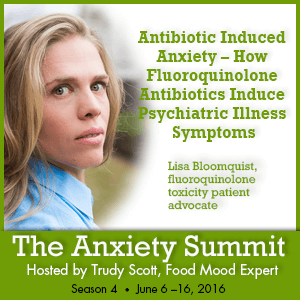
Lisa Bloomquist, fluoroquinolone toxicity patient advocate, is interviewed on the Anxiety Summit by host of the Anxiety Summit, Trudy Scott, Food Mood Expert and Nutritionist, author of The Antianxiety Food Solution.

Antibiotic Induced Anxiety – How Fluoroquinolone Antibiotics Induce Psychiatric Illness Symptoms

  • Fluoroquinolone antibiotics and what they are prescribed for
  • Why fluoroquinolones are more dangerous than other antibiotics
  • How they can cause serious psychiatric problems, including anxiety.
  • Ways fluoroquinolones cause psychiatric problems: GABA inhibition, gut destruction, piperazine molecule, mitochondrial destruction, oxidative stress and magnesium depletion.
  • Fluoroquinolone toxicity and fibromyalgia, ME/CFS, autoimmity and thyroid disease
  • Recovery from fluoroquinolone damage

Lisa describes how she was floxed after taking the Cipro antibiotic:

I felt like a bomb had gone off in my body.  My hands and feet swelled up and became incredibly painful.  I went from doing CrossFit to barely being able to walk.  I had big floater going across my eye.   My mouth was extremely dry.  I stopped sweating.  Massive amount of anxiety, just huge amounts of anxiety.  I had other central nervous system problems as well.  Things like I lost my memory and my reading comprehension.  I felt a very profound sense of weakness and fatigue.  And it was just very bizarre.  Like I had gone from being incredibly healthy.  I was very, very healthy prior to taking the Cipro.  And after I took it I felt like I could barely move, I could barely move and I could barely think.  And it was horrible.  It was a really horrible.  It was a very, very hard time in my life.

This is the 2016 paper we discussed: Fluoroquinolone-related neuropsychiatric and mitochondrial toxicity: a collaborative investigation by scientists and members of a social network.

The 3 fluoroquinolone (FQ) antibiotics – ciprofoxacin, levofoxacin, and moxifoxacin – are commonly administered to oncology patients. Although these oral antibiotics are approved by the US Food and Drug Administration (FDA) for treatment of urinary tract infections, acute bacterial sinusitis, or bacterial infection in patients with chronic obstructive pulmonary disease, they are commonly prescribed off-label to neutropenic cancer patients for the prevention and treatment of infections associated with febrile neutropenia. New serious FQ-associated safety concerns have been identified through novel collaborations between FQ-treated persons who have developed long-term neuropsychiatric (NP) toxicity, pharmacovigilance experts, and basic scientists.

For the survey, 93 of 94 respondents reported FQ-associated events including anxiety, depression, insomnia, panic attacks, clouded thinking, depersonalization, suicidal thoughts, psychosis, nightmares, and impaired memory beginning within days of FQ initiation or days to months of FQ discontinuation

The authors of the paper recommend: revised product labels describing a new serious adverse drug reaction, levofoxacin-associated long-term disability.

Here is the new FDA Drug Safety Communication: FDA advises restricting fluoroquinolone antibiotic use for certain uncomplicated infections; warns about disabling side effects that can occur together

Here are some of the studies we discussed in the interview:

  • Benzodiazepine tolerance, dependency, and withdrawal syndromes and interactions with fluoroquinolone antimicrobials
  • Ciprofloxacin-induced neurotoxicity: evaluation of possible underlying mechanisms

Here are some additional links that Lisa mentioned:

  • the Fluoroquinolone Effects Study
  • the Fluoroquinolone Vigilance Foundation 
  • the Fluoroquinolone Wall of Pain
  • Floxiehope  Lisa’s site (with stories of recovery)
  • Fluoroquinolonethyroid

Here is the link to Hacking Fluoroquinolones – an ebook

And the book Lisa mentioned, written by Kerri Knox: The Fluoroquinolone Toxicity Solution  

If you are not already registered for the Anxiety Summit you can get live access to the speakers of the day here: www.theAnxietySummit.com

Missed this interview or can’t listen live? Or want this and the other great interviews for your learning library? Purchase the MP3s or MP3s + transcripts and listen when it suits you.

You can find your purchasing options here.: Anxiety Summit Season 1, Anxiety Summit Season 2, Anxiety Summit Season 3, and Anxiety Summit Season 4.
Filed Under: Events, The Anxiety Summit 4 Tagged With: antibiotic, anxiety, anxiety summit, fluoroquinolone, Lisa Bloomquist, Trudy Scott

The Anxiety Summit – Anxiety and digestion: the microbiome, stomach acid, bile and the vagus nerve

June 10, 2016 By Trudy Scott 50 Comments

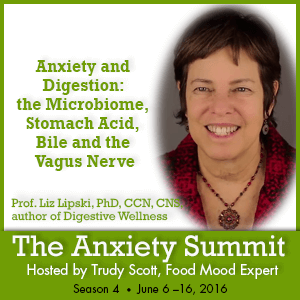
Liz Lipski_Anxiety4

Prof. Liz Lipski, PhD, CCN, CNS, was interviewed on the Anxiety Summit by host of the Anxiety Summit, Trudy Scott, Food Mood Expert and Nutritionist, author of The Antianxiety Food Solution.

Anxiety and digestion: the microbiome, stomach acid, bile and the vagus nerve

  • The microbiome – how these microbes are “us” and not different from us
  • Low stomach acid and the effects on protein/zinc/iron absorption, and candida
  • Low bile production and fat absorption issues
  • The vagus nerve, enteric nervous system and neurotransmitter production

Here are some gems from our interview:

So just to start the microbiome itself is not something separate from us but it’s the most newly recognized organ that we have in the human body.  And it’s comprised of viruses, bacteria and fungi.  And they’re like our rainforest and they live in every epithelial cell surface of our body so they’re on our skin, they’re in your lungs, in your hair, in your nailbeds.  They’re in your genitourinary system, in your digestive system, in your nose.  They’re really everywhere and I think that we’re also going to find that we have these microbes inside of our brain and inside of our liver and I think the more we learn we’re going to find that they’re really everywhere.

The thing that excites me about them is that they really help run our metabolism, help determine whether we’re fat or thin, help determine what our moods are like and how we feel. 

I just love this comment about the microbiome:

And honestly I never know are we just a big bag for carrying around these microbes and they’re really the intelligence in our body or what?  Because they’re kind of like the superstars and we’re really a super organism.  And without them we don’t function at all.

Here is some of what covered in the gut brain connection section:

We make a lot of neurotransmitters in our gut.  In fact we make about 80 to 90 percent of our neurotransmitters like serotonin.  We make most of it in our digestive system and not in our brain at all.  And when you start looking at it, it’s like wow, you look at dopamine and epinephrine and norepinephrine and all of these are made in great abundance in the digestive system itself and again they help modulate again the microbiome.  They help modulate gut motility, so how fast or how slow the food moves through our digestive system. 

Here is a fascinating article that covers much of the new research. The tantalizing links between gut microbes and the brain : Neuroscientists are probing the idea that intestinal microbiota might influence brain development and behaviour.

We cover hydrochloric acid and minerals:

So hydrochloric acid is really important for that.  It also helps us just break down proteins so that our digestive enzymes don’t have to work so hard.  And then it also in the beginning of the small intestine which is called the duodenum -it’s the first 12 to 18 inches – what happens is that the acid is still there before it get neutralized by the pancreas which secretes basically baking soda and neutralizes it because it’s done its job.  But in that first big part of the small intestine, the duodenum, is where we absorb iron and calcium and zinc and to a lesser extent magnesium and copper.  And so when we don’t have enough acid we’re more likely to get mineral insufficient.

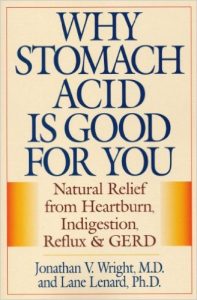
This is the book she mentions in the interview – Why Stomach Acid Is Good for You: Natural Relief from Heartburn, Indigestion, Reflux and GERD by Jonathan Wright

why stomach acid is good for you

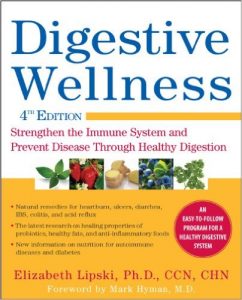
Here is Liz’s fabulous book Digestive Wellness 4th edition

digestive wellness

Here is the Stomach Acid/Hydrochloric Acid Test handout

If you are not already registered for the Anxiety Summit you can get live access to the speakers of the day here: www.theAnxietySummit.com

Missed this interview or can’t listen live? Or want this and the other great interviews for your learning library? Purchase the MP3s or MP3s + transcripts and listen when it suits you.

You can find your purchasing options here.: Anxiety Summit Season 1, Anxiety Summit Season 2, Anxiety Summit Season 3, and Anxiety Summit Season 4.
Filed Under: Events, The Anxiety Summit 4 Tagged With: anxiety, anxiety summit, bile, digestion, Liz Lipski, microbiome, stomach acid, Trudy Scott, vagus nerve

The Anxiety Summit – The leptin obesity anxiety connection

June 10, 2016 By Trudy Scott 23 Comments

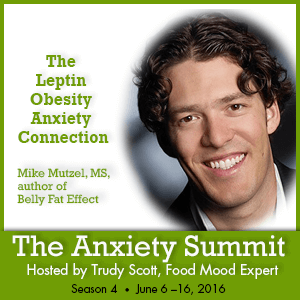
Mike Mutzel_Anxiety4

Mike Mutzel, MS, author of Belly Fat Effect,  was interviewed on the Anxiety Summit by host of the Anxiety Summit, Trudy Scott, Food Mood Expert and Nutritionist, author of The Antianxiety Food Solution.

The leptin obesity anxiety connection

  • Leptin as an appetite-regulation hormone
  • How leptin effects on immunity, inflammation and cortisol
  • Leptin and the microbiome, LPS and leaky gut
  • How leptin plays a role in anxiety, stress, PTSD and depression
  • How to exercise, meditate and do yoga to decrease leptin levels

Here are some snippets from our interview:

So low leptin levels trigger the hypothalamus in the brain to signal the rest of the body to initiate hunger and to cause people to eat and so forth.  And then as we eat calories throughout the day our leptin levels progressively rise.  And once they’re rising, they peak around midnight or two in the morning, it just depends on someone’s biological rhythms.  Everyone is different.

And so when they peak that signals to the rest of the body that there’s enough fuel on board and we can start burning fuel.  So it’s actually a good process, right, because it’s going to stimulate all these mitochondrial pathways to be turning on basically cellular breakdown of the nutrients that we’ve ingested throughout the day and then the cycle repeats.

The problem though is that people get leptin resistant and this really actually refers to the hypothalamus.  So that’s really the main region of the body where the receptors become resistant.  And so the problem then because people – and let me just pause and share with you kind of how people get leptin resistant.  It’s just leptin is released primarily from adipocytes, from fat tissue, okay.  And so the more fat you have, the more body fat you have whether you’re a man or a woman, young or old, the more leptin you’re going to be releasing.

And then we cover leptin 2.0 and the stress, anxiety, PTSD connection:

Now let’s take a deep dive into what I like to call leptin 2.0.  The cool part about leptin that not many people understand is that leptin affects the immune system.  It also affects the HPA axis and the hormonal system, cortisol and even sex hormones like testosterone and estrogen in a really profound way.

When you become more overweight, more sedentary, you eat outside of your circadian rhythm, leptin levels get imbalanced and you become leptin resistant. Leptin doesn’t have that brake mechanism to suppress cortisol release.  That’s why we see elevated levels of leptin in PTSD, in stress responses, in overweight people and so forth.  And so it affects our body’s ability to adjust to our environment which is really what we’re trying to do. 

We all have stress.  We’re just trying to balance that better. The problem though is leptin, if we have excess levels of leptin that’s going to affect our body’s ability to cope with stressors and make life seem more challenging than it needs to be.

Here is the 2015 study I mentioned: The role of maternal obesity in the risk of neuropsychiatric disorders 

Animals exposed to maternal obesity and a high fat diet consumption display hyperactivity, impairments in social behavior, increased anxiety-like and depressive-like behaviors, substance addiction, food addiction, and diminished cognition. During development, these offspring are exposed to elevated levels of nutrients (fatty acids, glucose), hormones (leptin, insulin), and inflammatory factors (C-reactive protein, interleukin, and tumor necrosis factor). Such factors appear to permanently change neuroendocrine regulation and brain development in offspring. In addition, inflammation of the offspring brain during gestation impairs the development of neural pathways critical in the regulation of behavior, such as serotoninergic, dopaminergic, and melanocortinergic systems.

Here are some recent studies on leptin, obesity, serotonin and the HPA axis:

  • Gastric ghrelin, GOAT, leptin, and leptinR expression as well as peripheral serotonin are dysregulated in humans with obesity
  • Neuroendorine and Epigentic Mechanisms Subserving Autonomic Imbalance and HPA Dysfunction in the Metabolic Syndrome

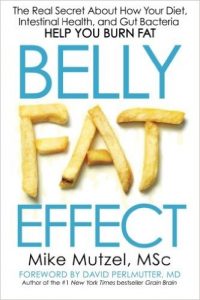
Mike is author of Belly Fat Effect: The Real Secret About How Your Diet, Intestinal Health, and Gut Bacteria Help You Burn Fat  

belly fat effectIf you enjoy geeky science and plenty of facts you will love this book!

We talked about the excellent Autism Intensive  which Mike hosted earlier this year.  You can register to watch 5 videos from the event.

And here are some snippets from The Autism Intensive  and a snippet of Dr. Usman’s interview: Zinc/copper balance in autism/pyroluria

Here is the gift from Mike: The Leptin Blueprint

If you are not already registered for the Anxiety Summit you can get live access to the speakers of the day here: www.theAnxietySummit.com

Missed this interview or can’t listen live? Or want this and the other great interviews for your learning library? Purchase the MP3s or MP3s + transcripts and listen when it suits you.

You can find your purchasing options here.: Anxiety Summit Season 1, Anxiety Summit Season 2, Anxiety Summit Season 3, and Anxiety Summit Season 4.
Filed Under: Events, The Anxiety Summit 4 Tagged With: anxiety, anxiety summit, leptin, Mike Mutzel, obesity, Trudy Scott

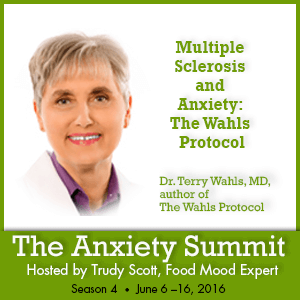
The Anxiety Summit – Multiple sclerosis and anxiety: The Wahls Protocol

June 8, 2016 By Trudy Scott 21 Comments

Terry Wahls_Anxiety4

Dr. Terry Wahls, MD, author of The Wahls Protocol, was interviewed on the Anxiety Summit by host of the Anxiety Summit, Trudy Scott, Food Mood Expert and Nutritionist, author of The Antianxiety Food Solution.

Multiple sclerosis and anxiety: The Wahls Protocol

  • A move to diet and lifestyle research
  • Recovery from MS with functional medicine and the Wahls Paleo™ diet
  • MS and anxiety: myelin damage, medications, GABA and glutathione
  • The Wahls Paleo™ diet
  • Organ meats and a ketogenic diet

Here are some snippets from our interview:

Here are some gems from our interview, starting with a quick overview of the Wahls diet (which is based on Paleo principles:

My focus is ramping up the vegetables and the target is nine cups because I’m a tall lady, six foot tall.  And if you’re a petite female or a very petite man it might be six cups.  It should be equally divided between dark green leafy vegetables like spinach, kale.  Sulfur containing vegetables, in particular the cabbage, onion and mushroom families because of the medicinal qualities of those three food groups.  And then deeply pigmented stuff – carrots, beets, peppers, berries.  And I’m really looking for all the colors, particularly blue, black, purple.

Dr Wahls shares how her MS was a gift:

And it all needs to happen this way Trudy.  I had to get that disabled.  I had to be on the verge of utter catastrophe to begin to feel the effects of cognitive decline to do all this work and then feel the effects of all this healing that happens when you provide a healthy habitat for the human ecosystem and all this repair happens.  If this hadn’t of have happened I’d still be a conventional medicine doc thinking the latest drugs out of the New England Journal of Medicine were the way to go as opposed to seeing the gospel of food and sleep and movement and stress reduction.

So my kids still sort of wish I’d never gotten MS and that I was still as vigorous of an athlete as I once was.  But Jackie and I are like, you know, it all had to happen this way.  And the gifts that I’ve received from it happening this way are really quite profound.

Here is Dr. Wahls’ feedback on benzodiazepines:

very, very strong for addiction potential.  And then once you’re on them getting off them is a very complicated process because if you suddenly stop you can have withdrawal problems that can become life threatening.  So one has to be very gradual, very slow in the reduction phase.  It’s certainly very important, very worth doing.  The best bet is to never get on that stuff and to use dietary and lifestyle environmental approaches first.

My blog has plenty of information on benzodiazepines.  Here is the most recent one – Benzodiazepines: informed consent? Your support is needed.   I encourage you to search the blog for additional information.

Here are some of the studies we discussed in the interview:

A recent study in the Journal of Child neurology included 140 children 5-18 years of age. The paper, Behavioral Symptoms in Pediatric Multiple Sclerosis: Relation to Fatigue and Cognitive Impairment, found that

Although the type of clinical problems varied across participants, attention problems, somatization, and anxiety were found to be most common

In another recent study Anxiety, depression and fatigue at 5-year review following CNS demyelination

Of the 236 cases, 40.2% had clinical anxiety, 16.0% had clinical depression, and 41.3% had clinical fatigue.

Dr. Wahls is the author of The Wahls Protocol: A Radical New Way to Treat All Chronic Autoimmune Conditions Using Paleo Principles

wahls book cover

I mentioned that we’ll both be presenting at IMMH/ Integrative Medicine for Mental Health in Washington DC in September.

Missed this interview or can’t listen live? Or want this and the other great interviews for your learning library? Purchase the MP3s or MP3s + transcripts and listen when it suits you.

You can find your purchasing options here.: Anxiety Summit Season 1, Anxiety Summit Season 2, Anxiety Summit Season 3, and Anxiety Summit Season 4.
Filed Under: Events, The Anxiety Summit 4 Tagged With: anxiety, anxiety summit, multiple sclerosis, terry wahls, Trudy Scott, wahls protocol

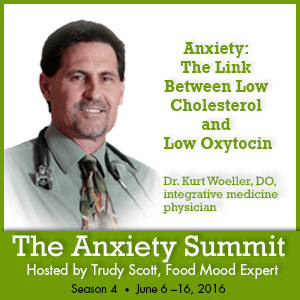
The Anxiety Summit – Anxiety: The Link Between Low Cholesterol and Low Oxytocin

June 8, 2016 By Trudy Scott 33 Comments

Kurt Woeller_Anxiety4

Dr. Kurt Woeller, DO, integrative medicine physician, was interviewed on the Anxiety Summit by host of the Anxiety Summit, Trudy Scott, Food Mood Expert and Nutritionist, author of The Antianxiety Food Solution.

Anxiety: The Link Between Low Cholesterol and Low Oxytocin

  • The functions of cholesterol and some of the many health consequences of low cholesterol
  • Fat malabsorption, and other causes of low cholesterol
  • Oxytocin: bonding, trust and social anxiety and why it can be low
  • The relationship between oxytocin and cholesterol and anxiety/depression
  • How to naturally raise low cholesterol and low oxytocin

Here are some gems from our interview:

As I mentioned in my practice, most of the kids that I test are anywhere between 110 to 120.  Now to give you a reference point, the National Institutes of Health states that levels less than 160, with regards to cholesterol, increases the rate of cancer, increases the rate of mental health disorders and even early death in some studies.  So that target zone we’re typically using is to try to get those total cholesterol levels at least above 160.  I usually shoot for around 170/175 if possible.  So in some of the kids the cholesterol levels come up with the Sonic Cholesterol, but not all.  What was interesting when I first started using the Sonic Cholesterol in practice sometimes within a week to two weeks I would get reports back by parents of autistic kids that their kids were calmer; they were more focused; they were happier; and what was most interesting to me was that they actually had improved eye contact and many of them were just appearing to be more social.  Now as you know in autism the social component is a big problem. 

The Pitocin/synthetic oxytocin discussion was fascinating:

And there’s a theory Trudy, I don’t know if you’ve heard this that the Pitocin, which is synthetic oxytocin, which is given to women who are not naturally going into labor, it’s meant to action speed labor up. Pitocin being synthetic oxytocin may short circuit in some susceptible kids the natural production of oxytocin, therefore slowing down or turning off those areas in the brain that are normally being developed at that time, with regards to socialization.  So essentially those nerve cells don’t reach their full potential in those areas of the brain.  That’s at least a theory, but it seems to hold true if you look at the biochemistry.  So one of the other effects then of oxytocin in all of us is what they call the love hormone or the bonding hormone is that it increases feelings of trust and harmony and pleasure in that it’s in involved in our ability to make connections with people on a one-on-one basis, not only through touch but facial expression recognition, voice emotional recognition. 

Here is one of the studies: A link between oxytocin and serotonin in humans: supporting evidence from peripheral markers

Given the several activities mediated by both OT [oxytocin] and 5-HT [serotonin] , such a relationship might provide new perspectives and insights into psychiatric disorders and/or social relationship disturbances, as well as novel treatment strategies overcoming and/or integrating the serotonergic paradigm.

Here is information on the Sonic Cholesterol product, dosing and other relevant information.

Here are some of my blog posts on oxytocin, pyroluria, anxiety and depression: 

  • Oxytocin and variations in the OXTR gene: postpartum depression and anxiety
  • Oxytocin, social anxiety, pyroluria and autism
  • Oxytocin and social anxiety, pyroluria and depression?

Dr. Woeller offers extensive training programs for health professionals: Adrenal Mastery, GI Mastery and Autism Mastery.

I mentioned that we’ll both be presenting at IMMH/ Integrative Medicine for Mental Health in Washington DC in September – here are the details

If you are not already registered for the Anxiety Summit you can get live access to the speakers of the day here: www.theAnxietySummit.com

Missed this interview or can’t listen live? Or want this and the other great interviews for your learning library? Purchase the MP3s or MP3s + transcripts and listen when it suits you.

You can find your purchasing options here.: Anxiety Summit Season 1, Anxiety Summit Season 2, Anxiety Summit Season 3, and Anxiety Summit Season 4.
Filed Under: Events, The Anxiety Summit 4 Tagged With: anxiety, anxiety summit, cholesterol, Kurt Woeller, oxytocin, Trudy Scott

  • « Go to Previous Page
  • Page 1
  • Interim pages omitted …
  • Page 4
  • Page 5
  • Page 6
  • Page 7
  • Page 8
  • Interim pages omitted …
  • Page 10
  • Go to Next Page »

Primary Sidebar

NEW! GABA QuickStart Homestudy (with special intro pricing)

gaba quickstart homestudy

Free Report

9 Great Questions Women Ask about Food, Mood and their Health

You'll also receive a complimentary subscription to my ezine "Food, Mood and Gal Stuff"


Connect with me

Popular Posts

  • Amino Acids Mood Questionnaire from The Antianxiety Food Solution
  • The Antianxiety Food Solution Amino Acid and Pyroluria Supplements
  • Pyroluria Questionnaire from The Antianxiety Food Solution
  • Collagen and gelatin lower serotonin: does this increase your anxiety and depression?
  • Tryptophan for the worry-in-your-head and ruminating type of anxiety
  • GABA for the physical-tension and stiff-and-tense-muscles type of anxiety
  • The Antianxiety Food Solution by Trudy Scott
  • Seriphos Original Formula is back: the best product for anxiety and insomnia caused by high cortisol
  • Am I an anxious introvert because of low zinc and vitamin B6? My response to Huffington Post blog
  • Vagus nerve rehab with GABA, breathing, humming, gargling and key nutrients

Recent Posts

  • What do I use instead of Seriphos to help lower high cortisol that is affecting my sleep and making me anxious at night?
  • BeSerene™ GABA/theanine cream eases severe muscle tension in her neck/shoulders, prevents her bad headaches and quells her anxiety
  • How the correct approach, dose and sublingual use of GABA can be calming and not cause a flushed and itchy face and neck
  • The amino acid glutamine improves low mood by addressing gut health, and it has calming effects too
  • Flight anxiety with heightened breath, physical tension and also fearing the worst (the role of low GABA and low serotonin)

Categories

  • 5-HTP
  • AB575
  • Addiction
  • ADHD
  • Adrenals
  • Alcohol
  • Allergies
  • Alzheimer's disease
  • Amino Acids
  • Anger
  • Antianxiety
  • Antianxiety Food Solution
  • Antidepressants
  • Anxiety
  • Anxiety and panic
  • Autism
  • Autoimmunity
  • benzodiazapines
  • Bipolar disorder
  • Books
  • Caffeine
  • Cancer
  • Candida
  • Children/Teens
  • Collagen
  • Cooking equipment
  • Coronavirus/COVID-19
  • Cravings
  • Depression
  • Detoxification
  • Diabetes
  • Diet
  • DPA/DLPA
  • Drugs
  • EFT/Tapping
  • EMF
  • EMFs
  • Emotional Eating
  • Endorphins
  • Environment
  • Essential oils
  • Events
  • Exercise
  • Fear
  • Fear of public speaking
  • Fertility and Pregnancy
  • Fish
  • Food
  • Food and mood
  • Functional neurology
  • GABA
  • Gene polymorphisms
  • General Health
  • Giving
  • Giving back
  • Glutamine
  • Gluten
  • GMOs
  • Gratitude
  • Gut health
  • Heart health/hypertension
  • Histamine
  • Hormone
  • Hyperparathyroidism
  • Hypoglycemia
  • Immune system
  • Inflammation
  • Insomnia
  • Inspiration
  • Introversion
  • Joy and happiness
  • Ketogenic diet
  • Lithium orotate
  • Looking awesome
  • Lyme disease and co-infections
  • MCAS/histamine
  • Medication
  • Men's health
  • Mental health
  • Mercury
  • Migraine
  • Mold
  • Movie
  • MTHFR
  • Multiple sclerosis
  • Music
  • NANP
  • Nature
  • Nutritional Psychiatry
  • OCD
  • Osteoporosis
  • Oxalates
  • Oxytocin
  • Pain
  • Paleo
  • Parasites
  • Parkinson’s disease
  • PCOS
  • People
  • PMS
  • Postpartum
  • PTSD/Trauma
  • Pyroluria
  • Questionnaires
  • Real whole food
  • Recipes
  • Research
  • Schizophrenia
  • serotonin
  • SIBO
  • Sleep
  • Special diets
  • Sports nutrition
  • Stress
  • Sugar addiction
  • Sugar and mood
  • Supplements
  • Teens
  • Testimonials
  • Testing
  • The Anxiety Summit
  • The Anxiety Summit 2
  • The Anxiety Summit 3
  • The Anxiety Summit 4
  • The Anxiety Summit 5
  • The Anxiety Summit 6
  • Thyroid
  • Thyroid health
  • Toxins
  • Tryptophan
  • Tyrosine
  • Uncategorized
  • Vegan/vegetarian
  • Women's health
  • Yoga

Archives

  • October 2025
  • September 2025
  • August 2025
  • July 2025
  • June 2025
  • May 2025
  • April 2025
  • March 2025
  • February 2025
  • January 2025
  • November 2024
  • October 2024
  • September 2024
  • August 2024
  • July 2024
  • June 2024
  • May 2024
  • April 2024
  • March 2024
  • February 2024
  • January 2024
  • December 2023
  • November 2023
  • October 2023
  • September 2023
  • August 2023
  • July 2023
  • June 2023
  • May 2023
  • April 2023
  • March 2023
  • February 2023
  • January 2023
  • December 2022
  • November 2022
  • October 2022
  • September 2022
  • August 2022
  • July 2022
  • June 2022
  • May 2022
  • April 2022
  • March 2022
  • February 2022
  • January 2022
  • December 2021
  • November 2021
  • October 2021
  • September 2021
  • August 2021
  • July 2021
  • June 2021
  • May 2021
  • April 2021
  • March 2021
  • February 2021
  • January 2021
  • December 2020
  • November 2020
  • October 2020
  • September 2020
  • August 2020
  • July 2020
  • June 2020
  • May 2020
  • April 2020
  • March 2020
  • February 2020
  • January 2020
  • December 2019
  • November 2019
  • October 2019
  • September 2019
  • August 2019
  • July 2019
  • June 2019
  • May 2019
  • April 2019
  • March 2019
  • February 2019
  • January 2019
  • December 2018
  • November 2018
  • October 2018
  • September 2018
  • August 2018
  • July 2018
  • June 2018
  • May 2018
  • April 2018
  • March 2018
  • February 2018
  • January 2018
  • December 2017
  • November 2017
  • October 2017
  • September 2017
  • August 2017
  • July 2017
  • June 2017
  • May 2017
  • April 2017
  • March 2017
  • February 2017
  • January 2017
  • December 2016
  • November 2016
  • October 2016
  • September 2016
  • August 2016
  • July 2016
  • June 2016
  • May 2016
  • April 2016
  • March 2016
  • February 2016
  • January 2016
  • December 2015
  • November 2015
  • October 2015
  • September 2015
  • August 2015
  • July 2015
  • June 2015
  • May 2015
  • April 2015
  • March 2015
  • February 2015
  • January 2015
  • December 2014
  • November 2014
  • October 2014
  • September 2014
  • August 2014
  • July 2014
  • June 2014
  • May 2014
  • April 2014
  • March 2014
  • February 2014
  • January 2014
  • December 2013
  • November 2013
  • October 2013
  • September 2013
  • August 2013
  • July 2013
  • June 2013
  • May 2013
  • April 2013
  • March 2013
  • February 2013
  • January 2013
  • December 2012
  • November 2012
  • October 2012
  • August 2012
  • July 2012
  • June 2012
  • May 2012
  • April 2012
  • March 2012
  • February 2012
  • January 2012
  • December 2011
  • November 2011
  • October 2011
  • September 2011
  • August 2011
  • July 2011
  • June 2011
  • May 2011
  • April 2011
  • March 2011
  • February 2011
  • January 2011
  • December 2010
  • October 2010
  • September 2010
  • July 2010
  • May 2010
  • April 2010
  • March 2010
  • February 2010
  • January 2010
  • November 2009

Share the knowledge!

The above statements have not been evaluated by the Food and Drug Administration. Products listed in this website are not intended to diagnose, treat, cure or prevent any disease.

The information provided on this site is for informational and educational purposes only and is not intended as a substitute for advice from your physician or other health care professional. You should consult with a healthcare professional before starting or modifying any diet, exercise, or supplementation program, before taking or stopping any medication, or if you have or suspect you may have a health problem.


Copyright © 2026 Trudy Scott. All Rights Reserved. | Privacy | Terms and Conditions | Refund Policy | Medical Disclaimer

Free Report

9 Great Questions Women Ask about Food, Mood and their Health

You’ll also receive a complimentary subscription to my ezine “Food, Mood and Gal Stuff”