• Skip to primary navigation
  • Skip to main content
  • Skip to primary sidebar

everywomanover29 blog

Food, Mood and Women's Health – Be your healthiest, look and feel great!

  • Blog
  • About
  • Services
  • Store
  • Resources
  • Testimonials
  • The Book
  • Contact
  • Search this site

anxiety summit

Why Bile is the Key to Anxiety & Hormone Havoc with Ann Louise Gittleman on The Anxiety Summit 5: Gut-Brain Axis

October 4, 2019 By Trudy Scott 9 Comments

bile anxiety hormone

Ann Louise Gittleman is one my guest experts on The Anxiety Summit 5: Gut-Brain Axis and our topic is: Why Bile is the key to Anxiety & Hormone Havoc.
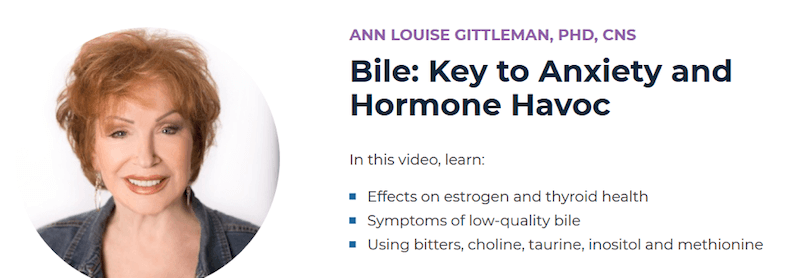
ann louise gittleman on anxiety summit 5

We had such a wonderful interview. She is sharp and funny, and really good with her short catchy phrases like this one: “Let’s make bile as important as probiotics!”

We start with the important role of bile in our bodies:

it emulsifies and digests fat, breaking it down into small particles so that your intestines can absorb them. It also helps escort toxins that your liver has removed out of the body.

We cover some of the many symptoms of low quality bile, such as queasiness, nausea, pale-colored stools, constipation and even motion-sickness.
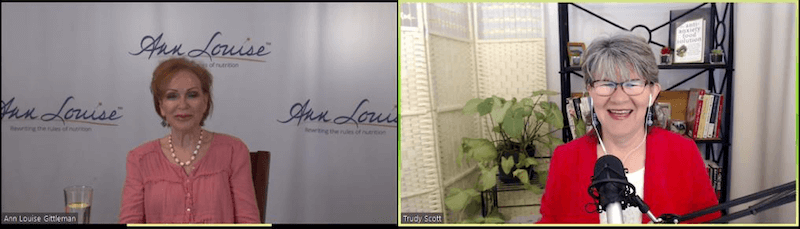
ann louise gittleman and trudy scott

Here is a snippet from our interview where Ann Louise shares about bitters, bile and the importance of digesting your fats:

I’m all for fat, I’ve written about it for years and have been on the frontlines of essential fatty acids. But if you’re not digesting fats you’re not using them and getting the benefits of your fat soluble vitamins A, D, E and K.

So bile is brilliant! Bring back the importance of bile and we know that bitter is better!

If you can remember all of that you’re on the right track to dealing with your anxiety and hormone havoc.

She covers the role of bile in PMS, estrogen imbalance and thyroid health; how it’s involved in the removal of toxins from the body:

Bile is the dumping ground for hormones like estrogen. It’s the dumping ground for heavy metals that create anxiety like mercury, as well as too much aluminum and lead. And it’s the dumping ground, also, for a bunch of chemicals. So you got to keep the bile flowing. You have to keep it decongested. You have to thin it out.

And simple tools to improve bile production (one of them being the addition of bitter greens to your diet).

You need to keep your bile nice and thinned out so it doesn’t clog up with extra estrogen that it’s not breaking down. And we do that with the bitters. The bitters are going to be the theme throughout. We do that with lemon and water in the morning. We do it with coffee, which is a bitter, believe it or not. And we do it with grapefruit and watercress, which are wonderfully bittered produce, high-end bittered produce. So bitter is very important for this.

We take a deep dive into key  nutrients for bile production and quality: choline, taurine, inositol and methionine:

You want to make sure that you’re taking certain types of lipotropic nutrients. And the magic word here is lipotropic that will help to digest fats. And that would be your methionine, your choline, and your inositol.

Five hundred milligrams of choline, methionine, and inositol three times a day will help your body, particularly your liver, to break down hormones such as estrogen into a non-toxic metabolite like estriol, which is the non-toxic estrogen. And that’s very important. And those three nutrients, my dear friend, are very much deficient in the diet today.

We also go into zinc: copper imbalances and the role this plays in PMS, hormone balance and anxiety. We talk about avocado and almond flour – both are good sources of fats and both need good quality bile to be digested. You may be surprised to hear what Ann Louise shares about these two foods. You’re going to have to tune in to know what I’m talking about. If you’re surprised (or even if you’re not) please let me know in the comments.

You likely know Ann Louise Gittleman as a New York Times Bestselling author of over 30 books on diet, detox, the environment, and women’s health. Beloved by many, she is regarded as a nutritional visionary and health pioneer who has fearlessly stood on the front lines of holistic and integrative medicine.

One of my favorite books of hers is Before the Change: Taking Charge of Your Perimenopause (my Amazon link for the book). This book helped me so much when I was in the midst of my PMS, anxiety and panic attacks in my late 30s. It was this book that taught me about my need for zinc and vitamin B6 and evening primrose oil before I even knew that pyroluria existed. It was one of the many books I read at that time, starting me on my lifelong journey of reading about nutrition, studying to become a nutritionist and attending conferences and summits.

Learn more/purchase now

If you’d like to give feedback or ask a question, please post in the comments section below.
Filed Under: The Anxiety Summit 5 Tagged With: ann louise gittleman, anxiety, anxiety summit, bile, bitters, choline, copper zinc, hormone imbalance, inositol and methionine, taurine, toxins

The Anxiety Summit, Dr. Perlmutter, the fear center of the brain and the joy of fresh flowers

September 27, 2019 By Trudy Scott 4 Comments

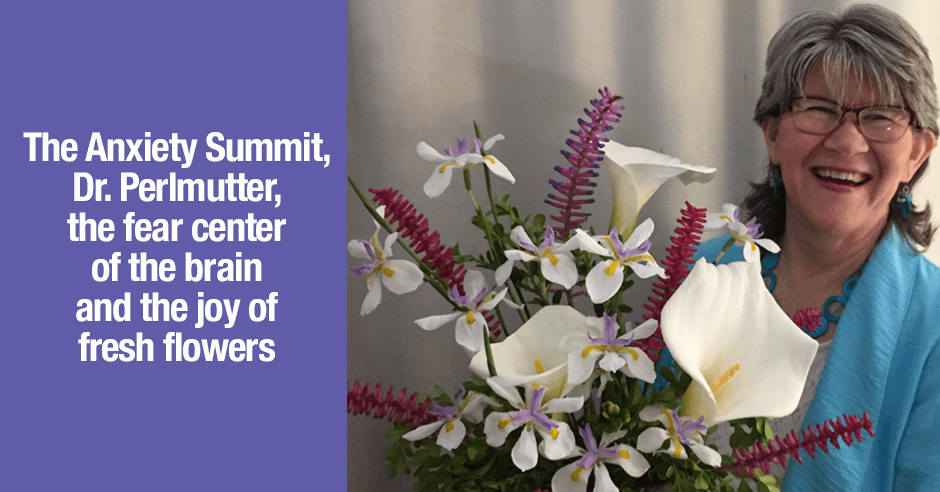
trudy and flowers

These lovely flowers are all from our garden and I have my wonderful mom-in-law to thank for this arrangement which I used for a very special interview this week with Dr. David Perlmutter (more on this below) for season 5 of The Anxiety Summit. I have my mom-in-law, Althea, to thank for all the flowers in all the interviews.

As you know, I love nature and flowers and because of this it feels really special to be able to say that The Anxiety Summit has been dubbed “a bouquet of hope.” Someone in one of the past seasons shared this anonymously and then sent me a lovely letter afterwards saying it was her.

Unfortunately, we were in the middle of packing to move and her letter was misplaced so I still don’t have a name and person to thank. If you’re reading this now, please please let me know it was you so I can thank you.

I’m sure you don’t need a study to convince you why you enjoy flowers so much but here goes anyway because – you know me – I love to geek out on the research.

In a study, Effect of olfactory stimulation by fresh rose flowers on autonomic nervous activity, 19 female university and graduate students (21 to 26 years old) reported an increase in physiological and psychological relaxation when smelling fresh roses. The study reported that the aroma of the fresh flowers led to

  • a significant increase in parasympathetic nervous activities
  • an increase in “comfortable” and “natural” feelings.

I’m not one bit surprised at these results! Are you? I would expect there to be an effect on our endorphins too because we feel so wonderful when we get a bunch of flowers from our loved one!

Dr. Perlmutter – Anxiety: Gut-Brain Communication & Diet

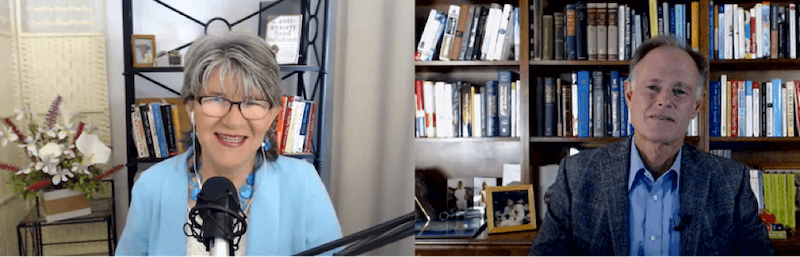
As I said above, I had the distinct pleasure of interviewing Dr. David Perlmutter for The Anxiety Summit this week (notice the flower arrangement in the background).

dr. perlmutter interview

You likely know Dr. Perlmutter as the author of Grain Brain, The Surprising Truth About Wheat, Carbs and Sugar, with over 1 million copies in print. What a wonderful interview we had. He’s smart, articulate, funny, geeky and practical at the same time, and an all around lovely person. I can’t wait to share this and all the incredible interviews I have done for The Anxiety Summit 5: Gut-Brain Axis.

In my interview with Dr David Brady on this summit he mentions how Dr. Perlmutter has championed the whole gut-brain connection. We all appreciate him for this work and with him being a trailblazer and leader in this, having him as a speaker on this summit could not have been more perfect. This is our topic and the talking points we cover

Anxiety: Gut-Brain Communication & Diet

  • Fermented foods, prebiotics, gut integrity and anxiety
  • SCFAs/short chain fatty acids, HDACs and serotonin production
  • Inflammation/cortisol and the amygdala/prefrontal cortex connection

Here is a snippet from our interview which went deep into the research, the mechanisms and biochemistry, and then brought it all back to practical interventions :

Both inflammation and stress can enhance anxiety. Well, what is anxiety? Anxiety is a physiological reaction to real of more commonly a perceived stress – in other words, a threat. There is no real threat there but the body perceives a situation that is not necessarily threatening as being threatening. So the body goes into this anxiety response for no good reason….

What we understand is that inflammation and cortisol actually tend to reduce the availability or the functionality of a connection between two parts of the brain. One of them, called the amygdala, is the fear center, and the other is the prefrontal cortex which is an area of the brain that tends to calm things down. It says to the amygdala: “Hey, cool, we’re glad you’re around but this isn’t one of those times you need to get excited.” It’s the adult in the room, if you will.

Inflammation and cortisol/stress breaks this key connection between the amygdala and the prefrontal cortex and these are one possible mechanism that leads to anxiety. We go on to discuss solutions such as diet, nature, and sleep.

I could have brought up flowers and talked more about nature at this point but we still had so much to cover.

Earlier in the interview went in depth into dietary aspects like delicious fermented foods and prebiotics such as garlic, onions, leeks and cauliflower. Prebiotics are fuel for short-chain fatty acids like butyrate, acetate and propionate, which are involved in the integrity of the gut lining, protect from intestinal inflammation. They are also involved in the manufacture of calming neurotransmitters, so here we have some of the stress/cortisol aspect covered.

Please join us and listen to the entire interview on The Anxiety Summit 5: Gut-Brain Axis.

Resources from Dr. Perlmutter

Now I get to share some of his wonderful work. You can find him online at DrPerlmutter.com and he has these new releases coming up:

  • He is the editor of the upcoming collection The Microbiome and the Brain that will be authored by top experts in the field and will be published in 2019 by CRC Press – written for both practitioners and researchers. This is so exciting and perfectly supports what we cover in this summit.
  • He shares a few gems from his book Brain Wash, which is proudly co-written with his son Austin Perlmutter, MD, in our interview.

Are you excited to hear my interview with Dr. Perlmutter? Which areas are of most interest to you?

And do you love flowers as much as I do? What are you favorites and how do you enjoy them?

If you have found any of the Anxiety Summits to be “a bouquet of hope” in your healing journey please tell us why and how you’re doing now.

If you’d like to give feedback or ask a question, please post in the comments below.


Filed Under: The Anxiety Summit, The Anxiety Summit 5 Tagged With: amygdala, anxiety, anxiety summit, bouquet of hope, Butyrate, cortisol, Dr. Perlmutter, fear, fear center, fresh flowers, gut integrity, Inflammation, prefrontal cortex, short chain fatty acids, stress

The Anxiety Summit – Closing

June 16, 2016 By Trudy Scott 21 Comments

Trudy Scott_Anxiety4_Closing

The host of the Anxiety Summit, Trudy Scott, Food Mood Expert and Nutritionist, author of The Antianxiety Food Solution closes the Anxiety Summit Season 4.

Anxiety Summit closing: Neurotransmitter testing, amino acid questions, hyperflexibility/EDS and pet anxiety

  • Ehlers Danlos Syndrome/EDS, hyperflexibility, connective tissue problems and the connection to pyroluria/social anxiety
  • Natural anxiety solutions for cats, dogs and horses
  • Neurotransmitter and pyroluria testing: what works and what doesn’t
  • Amino acid questions I get asked and my feedback
  • Questions from you, the summit attendees

If this is your first summit and this nutritional info is new to you and you feel overwhelmed start at the beginning and take baby steps and start with the basics: switch to eating a real whole foods diet and dump the junk/processed food, eat to control blood sugar get off the sugar and get off the gluten and caffeine.

You can come back to the advanced topics like oxytocin and fluroquinoline toxicty and Lyme disease and heavy metals and Ehlers Danlos syndrome (and all the rest) later.

I shared these 60+ Nutritional & Biochemical Causes of Anxiety on my closing call  of  The Anxiety Summit season 3.   I hope they will help you put the puzzle pieces together to resolve your anxiety.

Here is some of the Ehlers-Danlos Syndrome and anxiety/social anxiety/pyroluria information from the blog I posted late last year: Joint hypermobility / Ehlers-Danlos Syndrome and pyroluria?

Here is what we know from the research: disorder of connective tissue, premature osteoarthritis, intestinal dysmotility, and laxity in other tissues causing hernias or uterine or rectal prolapse, chronic pain some with serious disability

Here is the feedback I received from my blog reader: much higher than expected incidences of anxiety, depression, chronic pain which is often labelled as fibromyalgia, gastrointestinal problems, pyroluria, POTS (Postural orthostatic tachycardia syndrome) and MCAS (Mast Cell Activation Syndrome), leaky gut, less than ideal responses to nutrient therapies, many on cocktails of medications for pain, sleep, anxiety, depression, reflux, IBS, menstrual disorders etc.  [I appreciate her for posing the question]

There are a number of papers published in 2014 and 2015 linking EDS / Ehlers-Danlos Syndrome with psychiatric disorders, in one Swedish paper anxiety was as high as 74.8%.  In another paper they found preliminary connections with depression, ADHD, autism spectrum disorders, and OCD.

I have had many people with pyroluria confirm the connection and a number who get on the pyroluria protocol see their symptoms improve.  One person found a connection to Thin Basement Membrane Disease (an inherited collagen/connective tissue disorder diagnosed via kidney biopsy) and pyroluria and saw an improvement in both on the pyroluria protocol.

Here is the pyroluria questionnaire

Please see the above blog for links to the research I discussed and all the comments

Lisa Bloomquist shared this in the blog comments of her interview: Antibiotic Induced Anxiety – How Fluoroquinolone Antibiotics Induce Psychiatric Illness Symptoms

I agree completely, both that people with EDS should never be given fluoroquinolones (check this out ), and that fluoroquinolones can also exacerbate and cause EDS symptoms (and maybe EDS itself). Fluoroquinolones definitely cause connective tissue problems. They even have a black box warning on them noting the damage they can do to tendons. In addition to tendons, they can also damage cartilage, muscles, and collagen. I’m not sure whether the FQs trigger symptoms of EDS, or if they trigger epigenetic changes that lead to EDS. There are an unfortunately large number of people who have EDS symptoms post-exposure to these drugs.

The person who posed the question to me is a member of a FB group called: Ehlers Danlos Syndrome and Polysaccharide 

I haven’t had a chance to look into everything they recommend but I’ve been super impressed with what I’ve seen on this online forum.

Let us know if this resonates with you and if you have you been diagnosed with joint hypermobility or Ehlers-Danlos Syndrome?  If you have pyroluria to let us know if the pyroluria protocol of zinc, vitamin B6, evening primrose oil and a good copper-free multi has helped?

thundershirt

Pets and anxiety:

  • Anxitane, tryptophan, gluten-free diet and a Thundershirt (here’s an example of one)
  • Check with your vet about Rescue Remedy and pyroluria protocol (I’ve had feedback from people using both approaches)
  • Researchers have found that vets who were given pet dogs showed significant improvement in their PTSD symptoms. Here is the article

New research just out: Antidepressive treatment during pregnancy can affect newborn brain activity

New Medscape article – Fluoroquinolones: Not First-Line Treatment

Inspiring words of wisdom from a listener:

It was very helpful to hear of Tricia and her family’s journey with lyme, anxiety, pylouria, GABA, etc.  I am hoping that other parents will try “natural” remedies first for anxiety, panic, etc. I was put on antidepressants in my early teens and thus began a life long battle of trying to get my life back.

My parents didn’t know the repercussions of the medications I was on. I went from being an A student to being completely zoned out for a while in school, along with other problems from the prescription medications. Then came the thoughts of suicide and more. I had no idea what was going on with me.

Years later, a psychiatrist who seemed more open to natural remedies and who couldn’t find a medication that could help me or keep me from completely losing it, had an “enlightened moment” and when he went back over my history realized the “issues” I was having was most likely related to my hormones. I would indeed find out later that this was the case and that it had to do a lot with what we were eating growing up. My hormones were a mess as a young teenager and what we were eating a home was not at all healthy for us and filled with hormones, antibiotics, etc.

I want to impress on people that these prescription medications will ALWAYS do more damage than good. And my heart breaks when I hear of the young people around me being put on these medications. I just recently learned ECT (shock treatment) is now being used on the young.

Some time back, I cannot remember, I learned of you, Trudy, and your work. Even though I knew some of what you taught, I was still afraid to completely let go of the meds. It took some time, a great deal of struggle, patience and trust, but I eventually made the switch to a WAY MORE healthier diet, L-tryptophan, GABA calm and GABA, and have slowly begun to reclaim my life.

If you are not already registered for the Anxiety Summit you can get live access to the speakers of the day here: www.theAnxietySummit.com

Missed this interview or can’t listen live? Or want this and the other great interviews for your learning library? Purchase the MP3s or MP3s + transcripts and listen when it suits you.

You can find your purchasing options here.: Anxiety Summit Season 1, Anxiety Summit Season 2, Anxiety Summit Season 3, and Anxiety Summit Season 4.

Filed Under: Events, The Anxiety Summit 4 Tagged With: anxiety, anxiety summit, Trudy Scott

The Anxiety Summit – GABA: Blood brain barrier controversy, concerns, best forms and how to do a trial for eliminating anxiety

June 15, 2016 By Trudy Scott 106 Comments

Trudy Scott_GABA_Anxiety4

Trudy Scott, Food Mood Expert and Nutritionist, author of The Antianxiety Food Solution. presents during the Anxiety Summit Season 4.

GABA: Blood brain barrier controversy, concerns, best forms and how to do a trial for eliminating anxiety

  • Dispelling the blood brain barrier and the leaky brain myths
  • The newest research on GABA effectiveness
  • The best forms of GABA and why I have concerns about phenibut
  • Results from clients and feedback from practitioners using GABA
  • How to do a trial for the best results in eliminating anxiety

Here are some snippets from my presentation:

Worry and anxiety can be a result of low GABA and also low serotonin, so you may check off anxiety in both sections. Low GABA tends to result in a more physical anxiety, while low serotonin tends to result in more anxiety in the head and ruminating thoughts etc

With low GABA you have physical anxiety

  • Anxiety and feeling overwhelmed or stressed
  • Feeling worried or fearful
  • Panic attacks
  • Unable to relax or loosen up
  • Stiff or tense muscles
  • Feeling stressed and burned-out
  • Craving carbs, alcohol, or drugs for relaxation and calming

The targeted use of individual amino acid supplements like GABA will balance brain chemistry to alleviate anxiety, fear, worry, panic attacks, and feeling stressed or overwhelmed. They can also be helpful in addressing other problems that contribute to or exacerbate anxiety, such as sugar cravings and addictions. In addition, they can help with depression and insomnia, which often co-occur with anxiety.

Here is the amino acid questionnaire with all 5 sections including GABA

Here is the blog that discusses urinary neurotransmitter testing and why I don’t use it

Here are the list of amino acid precautions 

the main precaution with GABA is low blood pressure but I have yet to see it as an issue, liver/kidney issues – watch, GABA has not been studied in pregnancy or breastfeeding

Many individuals tapering from benzodiazepines find using GABA and other nutrients help the taper while others can’t tolerate GABA and other supplements.  If you’re new to the ill-effects of benzos do watch this webinar I did for Hawthorn University last year: Say NO to Benzos

The blood brain barrier controversy and the fact that so many people say GABA only works if you have a leaky brain

Does a GABA supplement have to cross the blood brain barrier to be effective? A nutrition seminar I have been to, said it does not and GABA supplements are ineffective

The 1960 paper published by Eugene Roberts, the scientist who discovered GABA mentions the failure of GABA to penetrate the blood-brain barrier readily:  Metabolic and Neurophysiological Roles of GABA

The 2015 zonulin intestinal permeability/leaky gut and possible blood brain barrier disruption paper: Gluten Psychosis: Confirmation of a New Clinical Entity

Zonulin is a tight junction modulator that is released by the small intestine mucosa upon gluten stimulation. Interestingly the zonulin receptor, identified as the precursor for haptoglobin-2, has been found in the human brain. Overexpression of zonulin (aka haptoglobin-2) could be involved in the blood brain barrier disruption similarly to the role that zonulin plays in increasing intestinal permeability.

NY Times article: Could Alzheimer’s Stem From Infections?

A virus, fungus or bacterium gets into the brain, passing through a membrane — the blood-brain barrier — that becomes leaky as people age

GABA – other possible mechanisms of action:

The microbiome and the bidirectional gut brain communication: Ingestion of Lactobacillus strain regulates emotional behavior and central GABA receptor expression in a mouse via the vagus nerve

Is the blood brain barrier more dynamic than assumed? A 2015 study discusses this Oral GABA supplementation allows better prioritizing of planned actions: new research

In the literature, there are controversial findings about GABA entering the brain through the blood brain barrier (BBB). The BBB is a tightly sealed layer of cerebral endothelial cells that form continuous tight junctions and prevent most solutes from entering the brain on the basis of size, charge, and lipid solubility. However … recent studies have demonstrated that the BBB is much more dynamic than assumed in the past, and some passage of solutes can occur by transcytosis, carrier-mediated transport, or simple diffusion of hydrophobic substances.

GABA’s relaxing effect may be due to peripheral effects rather than the effect on/in the brain. Here is an excerpt from this paper: GABA-receptors in peripheral tissues

GABA and its receptors are found in a wide range of peripheral tissues, including parts of the peripheral nervous system, endocrine, and non-neural tissues such as smooth muscle and the female reproductive system

The possible peripheral effects are also mentioned in this paper –  Psychological stress-reducing effect of chocolate enriched with gamma-aminobutyric acid (GABA) in humans: assessment of stress using heart rate variability and salivary chromogranin A

it has been considered that GABA may act on the peripheral nervous system of the digestive organs and not the central nervous system

The newest research on the mechanism of GABA was published just last year in October 2015 – Neurotransmitters as food supplements: the effects of GABA on brain and behavior

There is some evidence in favor of a calming effect of GABA food supplements, but most of this evidence was reported by researchers with a potential conflict of interest. We suggest that any veridical effects of GABA food supplements on brain and cognition might be exerted through BBB passage or, more indirectly, via an effect on the enteric nervous system. We conclude that the mechanism of action of GABA food supplements is far from clear, and that further work is needed to establish the behavioral effects of GABA. 

Here is other GABA research I mentioned:

  • A paper published in Life Sciences reports that a combination of GABA (?-aminobutyric acid) and 5-HTP (5-hydroxytryptophan) improved sleep and sleep duration more than the use of either of the two amino acids alone.
  • Research published in November 2015 – Study of GABA in Healthy Volunteers: Pharmacokinetics and Pharmacodynamics shows potential benefits for diabetes
  • The 2006 research on oral GABA being a natural relaxant for 13 subjects who crossed a suspended bridge as a stressful stimulus
  • The Improvement of Sleep by Oral Intake of GABA and Apocynum venetum Leaf Extract

I voiced concerns about how with phenibut physical dependence can develop and withdrawal symptoms can be similar to benzodiazepines

And how gabapentin withdrawal tends to mimic some of the same withdrawal symptoms associated with benzodiazepine withdrawal

Here is the blog post: how to do an amino acid trial for anxiety

I get valuable feedback about GABA’s effectiveness from other practitioners. Here are a few (and more here):

Dr. Josh Friedman, integrative psychotherapist uses amino acids and other nutritional approaches in his practice:

[GABA] is definitely something I use. I am not a biochemist, so I actually don’t really know whether it crosses the blood/brain barrier, nor do I care actually. The first question should be, is it harmful? Are any of these things going to cause harm? And the answer with all the amino acids are no, they’re not going to cause harm, especially when compared to psychiatric medicines. The second question is, does it work? Is it helpful for our patients that we see in our practice?

Jonathan Prousky, ND, MSc, editor of the Journal of Orthomolecular Medicine and author of Anxiety: Orthomolecular Diagnosis and Treatment shares this in our season 2 interview: Tapering off psychiatric drugs so they do not ruin your life 

I have found GABA to be invariably helpful and I don’t really know exactly how GABA works but I know it to be very, very safe and, to me, that is fundamentally important. It’s not associated with any withdrawal, with any tolerance, with any habituation, so people can try it without a lot of concern.

And it seems fitting to end with a quote from my mentor Julia Ross

On a scale of zero to ten, zero is not an unrealistic goal when it comes to anxiety.  It’s really the human potential and GABA gives us access to it.

And some feedback from real people who’ve used GABA (more here)

Dee likes the instant calm from a product that contains 500mg GABA and 200mg Theanine:

I have taken Xanax in the past for panic attacks. My functional medicine doctor suggested this product as I wanted a natural product. I was amazed how it works just like the Xanax did – instant calm feeling within 10 mins of taking 2 capsules. I use them as needed when I am having heightened stress and anxiety.

Melissa likes a product that contains GABA, taurine, glycine, inositol, niacin and vitamin B6

After my first panic attack I thankfully found Julia Ross’s work. I began taking 250 mg GABA every night. That really helped! Now a few years later I don’t need it every day, and I take a half pill during my cycle anxiety – more like uneasiness and over worried now, just as needed. I then heard you speak Trudy and share more info, bought your book, and put into place supportive lifestyle changes, and I have my life back. GABA is a great supplement for some of us!

Gina chewed two 100mg pharma GABA tablets and said this:

It changed my life in minutes! Take it every day now. No more hopelessness!

Do the amino acid questionnaire, review the precautions and do a GABA trial and let us know how it worked for you? If you’re a practitioner I’d love feedback too.

I’d also love to hear if you notice any difference opening a capsule or using something like GABA Calm instead of swallowing a capsule.

Here’s to hope and calm!

If you are not already registered for the Anxiety Summit you can get live access to the speakers of the day here: www.theAnxietySummit.com

Missed this interview or can’t listen live? Or want this and the other great interviews for your learning library? Purchase the MP3s or MP3s + transcripts and listen when it suits you.

You can find your purchasing options here.: Anxiety Summit Season 1, Anxiety Summit Season 2, Anxiety Summit Season 3, and Anxiety Summit Season 4.

Filed Under: Events, GABA, The Anxiety Summit 4 Tagged With: anxiety, anxiety summit, blood brain barrier, GABA, GABA trial, Trudy Scott

The Anxiety Summit – How We Used GABA for Lyme Anxiety

June 15, 2016 By Trudy Scott 15 Comments

Tricia Soderstrom_Anxiety4

Tricia Soderstrom of Abounding in Hope With Lyme was interviewed on the Anxiety Summit by host of the Anxiety Summit, Trudy Scott, Food Mood Expert and Nutritionist, author of The Antianxiety Food Solution.

How We Used GABA for Lyme Anxiety

  • Lyme disease can mimic a number of psychiatric illnesses, including anxiety disorders
  • Our journey with Lyme Disease
  • Essential oil for ticks and having pets
  • My daughter’s symptoms; Lyme pain, OCD, Anxiety, Panic Attacks
  • Protocols; antibiotics, herbs, supplements, anxiety meds and anti-depressant meds
  • Used GABA Calm sublinguals with good results and the Lyme pyroluria connection

Tricia shares this about her daughter’s Lyme anxiety:

When she was about seven my husband and I started noticing that she was washing her hands a lot, to the point where her hands would be just so raw and they would bleed a little bit.  And we noticed just some repetitive things that she was doing.  She started having like facial tics and motor tics and just really certain things would just kind of scare her more than usual.  I kept taking her to the pediatrician and everything and then we started noticing more symptoms.  She just began having anxiety, and it started out just kind of like little spurts here and there, but it became so overwhelming and so controlling over her life that she did not want to leave the house and she did not want me to leave her.  Part of her anxiety was that something was going to happen to me.  So she would just try to protect me with everything in her to keep me home with her or that I would take her with me everywhere I went.  I could not leave her for a second.  And if I did you could just tell she was so afraid and it was so heartbreaking, but it was so exhausting as a mom because it was 24 hours a day, it was not wanting to go to sleep at night; waking up in the middle of the night.  If she read something for school it would set her off.  If she saw something on TV that would set her off.  And it just became a life consuming problem.  And we were desperate, just desperate for answers. 

Tricia shares how Source Naturals GABA Calm was so helpful for her daughter’s anxiety and for her too:

when your child is in this full-blown panic attack they’re not going to swallow a pill so the sublingual was great because I would put it in her mouth under her tongue and just tell her to suck on it.  And you could just tell it would start to work and start to calm her down and really help her out. 

They would take the edge off of her anxiety; they would help her to go back to sleep at night.  And they helped me because I started taking GABA when I was so stressed out trying to interact with her and trying to help her.

And it’s nice to be able to just carry it in my purse if I need to, if anybody needs one

According to Dr. Klinghart, pyroluria needs to be addressed in order for the Lyme treatment to be successful.  Here is the pyroluria questionnaire

Here are some resources from Tricia:

Pet Flea & Tick Collar

Essential Oils Repellent

Lyme Links & Resources

If you are not already registered for the Anxiety Summit you can get live access to the speakers of the day here: www.theAnxietySummit.com

Missed this interview or can’t listen live? Or want this and the other great interviews for your learning library? Purchase the MP3s or MP3s + transcripts and listen when it suits you.

You can find your purchasing options here.: Anxiety Summit Season 1, Anxiety Summit Season 2, Anxiety Summit Season 3, and Anxiety Summit Season 4.

Filed Under: Events, The Anxiety Summit 4 Tagged With: anxiety, anxiety summit, GABA, Lyme Disease, Tricia Soderstrom, Trudy Scott

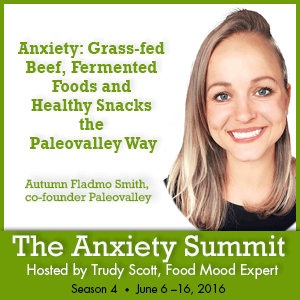
The Anxiety Summit – Anxiety: Grass-fed beef, fermented foods and healthy snacks the Paleovalley way

June 14, 2016 By Trudy Scott 16 Comments

Autumn Fladmo Smith_Anxiety4

Autumn Fladmo Smith, co-founder Paleovalley, is interviewed on the Anxiety Summit by host of the Anxiety Summit, Trudy Scott, Food Mood Expert and Nutritionist, author of The Antianxiety Food Solution.

Anxiety: Grass-fed beef, fermented foods and healthy snacks the Paleovalley way

  • can dietary intervention reduce anxiety?
  • how the health of the mother affects the child’s mental health
  • nutritional and mental health benefits of grass-fed beef vs. conventionally raised beef
  • benefits of fermented foods for mental wellbeing
  • healthy snacks for blood sugar control and anxiety
  • GMOs, the shikimate pathway and serotonin
  • Paleovalley’s mission, 100% grass-fed beef sticks, why they are fermented, and how/why GMOs and hydrogenated oils were avoided

Here are some gems from our interview:

What happened in around 2009, although the link between diet and mental health was rarely investigated prior to that time, a researcher from Deacon University named Dr. Felice Jacka came on the scene and she did her dissertation exploring dietary patterns.  So not only taking those dietary triggers, which were just really specific foods, but also seeing what were people eating as overall dietary patterns that was making a difference?  And when she did that research she kind of noted two different diets emerging.  And that’s the traditional diet with high intakes of grass fed meats, fish, vegetables and fruit and then our all too familiar SAD diet, the American standard diet.  And what she found was that there were very, very different outcomes, mental health wise, for people who were eating the traditional versus the processed diet.  And in fact her dissertation elucidated that if you were eating higher amounts of processed food or a standard American diet you had a 50 percent greater incidence of depression and anxiety.  So that was really an important finding for my thesis. 

Here is a link to Dr. Felice Jacka’s interview on season 1 of the Anxiety Summit: The Research – Food to prevent and treat anxiety and depression?

It was in this interview that Dr. Jacka said this:

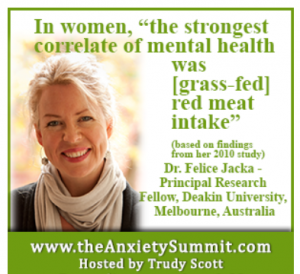
“In our study, out of every single dietary food grouping that I looked at including vegetables, fruits, salads, beans, etc the strongest correlate of mental health was red meat intake,” grass-fed red meat of course.

felice jacka red meat

This blog discusses Dr. Jacka’s current SMILES study on diet in anxiety and depression – A RCT of a dietary intervention for adults with major depression (the “SMILES” trial): study protocol.  We should see published results shortly.

Autumn shares these benefits of grass-fed red meat:

Grass fed red meat is different in two main ways.  And that’s because it has higher and a different fatty acid profile, especially omega-3 fatty acid.  There seems to be more, I think three to five times more than conventional raised beef.  And that’s important because omega-3 are known to be very therapeutic for mental health and a number of other health issues.  So as many of those omega-3’s as we can get is a good thing.  But what it also does is there’s omega-3 fatty acid and there’s omega-6 fatty acid and it improves the ratio.  It has kind of a perfect ratio.  Our ancestors had a ratio between these two fatty acid’s of about one to one and the common American today has a ratio of about 20 to one, which they hypothesize, and a lot of research suggest, leads to inflammation in the body, which is the root of basically all degenerative diseases.  So grass fed beef has a ratio of about 1.5 to one, which is almost perfect compared to one to 7.5 in conventionally raised beef.  So that’s just a huge difference. 

And then there’s also something called CLA, which is another fatty acid known to have cancer fighting properties.  One study showed that the women who ate the most CLA had a lower risk of breast cancer.  And it’s also known to optimize the deposition of fat in the body so that’s really important.  But the other major benefit of grass fed beef is its antioxidant profile.  There’s higher levels of glutathione, which is our bodies master antioxidant.  There’s I think seven times more vitamin A or beta-carotene, the precursors to vitamin A.  And I think three times more vitamin E.  There’s also higher levels of B vitamins, which are so critical for mental health, and minerals, especially zinc and iron and magnesium, which are also really, really important for mental health.  But the other side of the coin is, like Trudy said, what we’re not getting that conventionally raised beef has to offer and that is the hormones, the antibiotics and the pesticides, which just wreak havoc on our health.  And toxins are stored in fat as well, which is a really, really important thing to remember.  So when you’re eating the fat of a conventionally raised animal that fat is actually storing up all of those toxins and then you’re getting a healthy dose in every bite.  So basically grass fed beef is allowing us to only put into our body what’s going to allow us to thrive and none of what won’t, which is why I’m so passionate about it.

Here is Autumn’s digital gift: her antianxiety protocol based on her thesis 

You can use this link to get 30% off Paleovalley’s 100% grass-fed beefsticks 

If you are not already registered for the Anxiety Summit you can get live access to the speakers of the day here: www.theAnxietySummit.com

Missed this interview or can’t listen live? Or want this and the other great interviews for your learning library? Purchase the MP3s or MP3s + transcripts and listen when it suits you.

You can find your purchasing options here.: Anxiety Summit Season 1, Anxiety Summit Season 2, Anxiety Summit Season 3, and Anxiety Summit Season 4.

Filed Under: Events, The Anxiety Summit 4 Tagged With: anxiety, anxiety summit, Autumn Fladmo Smith, fermented food, grass-fed beef, paleovalley, Trudy Scott

  • « Go to Previous Page
  • Page 1
  • Page 2
  • Page 3
  • Page 4
  • Page 5
  • Page 6
  • Interim pages omitted …
  • Page 10
  • Go to Next Page »

Primary Sidebar

NEW! GABA QuickStart Homestudy (with special intro pricing)

gaba quickstart homestudy

Free Report

9 Great Questions Women Ask about Food, Mood and their Health

You'll also receive a complimentary subscription to my ezine "Food, Mood and Gal Stuff"


Connect with me

Popular Posts

  • Amino Acids Mood Questionnaire from The Antianxiety Food Solution
  • The Antianxiety Food Solution Amino Acid and Pyroluria Supplements
  • Pyroluria Questionnaire from The Antianxiety Food Solution
  • Collagen and gelatin lower serotonin: does this increase your anxiety and depression?
  • Tryptophan for the worry-in-your-head and ruminating type of anxiety
  • GABA for the physical-tension and stiff-and-tense-muscles type of anxiety
  • The Antianxiety Food Solution by Trudy Scott
  • Seriphos Original Formula is back: the best product for anxiety and insomnia caused by high cortisol
  • Am I an anxious introvert because of low zinc and vitamin B6? My response to Huffington Post blog
  • Vagus nerve rehab with GABA, breathing, humming, gargling and key nutrients

Recent Posts

  • What do I use instead of Seriphos to help lower high cortisol that is affecting my sleep and making me anxious at night?
  • BeSerene™ GABA/theanine cream eases severe muscle tension in her neck/shoulders, prevents her bad headaches and quells her anxiety
  • How the correct approach, dose and sublingual use of GABA can be calming and not cause a flushed and itchy face and neck
  • The amino acid glutamine improves low mood by addressing gut health, and it has calming effects too
  • Flight anxiety with heightened breath, physical tension and also fearing the worst (the role of low GABA and low serotonin)

Categories

  • 5-HTP
  • AB575
  • Addiction
  • ADHD
  • Adrenals
  • Alcohol
  • Allergies
  • Alzheimer's disease
  • Amino Acids
  • Anger
  • Antianxiety
  • Antianxiety Food Solution
  • Antidepressants
  • Anxiety
  • Anxiety and panic
  • Autism
  • Autoimmunity
  • benzodiazapines
  • Bipolar disorder
  • Books
  • Caffeine
  • Cancer
  • Candida
  • Children/Teens
  • Collagen
  • Cooking equipment
  • Coronavirus/COVID-19
  • Cravings
  • Depression
  • Detoxification
  • Diabetes
  • Diet
  • DPA/DLPA
  • Drugs
  • EFT/Tapping
  • EMF
  • EMFs
  • Emotional Eating
  • Endorphins
  • Environment
  • Essential oils
  • Events
  • Exercise
  • Fear
  • Fear of public speaking
  • Fertility and Pregnancy
  • Fish
  • Food
  • Food and mood
  • Functional neurology
  • GABA
  • Gene polymorphisms
  • General Health
  • Giving
  • Giving back
  • Glutamine
  • Gluten
  • GMOs
  • Gratitude
  • Gut health
  • Heart health/hypertension
  • Histamine
  • Hormone
  • Hyperparathyroidism
  • Hypoglycemia
  • Immune system
  • Inflammation
  • Insomnia
  • Inspiration
  • Introversion
  • Joy and happiness
  • Ketogenic diet
  • Lithium orotate
  • Looking awesome
  • Lyme disease and co-infections
  • MCAS/histamine
  • Medication
  • Men's health
  • Mental health
  • Mercury
  • Migraine
  • Mold
  • Movie
  • MTHFR
  • Multiple sclerosis
  • Music
  • NANP
  • Nature
  • Nutritional Psychiatry
  • OCD
  • Osteoporosis
  • Oxalates
  • Oxytocin
  • Pain
  • Paleo
  • Parasites
  • Parkinson’s disease
  • PCOS
  • People
  • PMS
  • Postpartum
  • PTSD/Trauma
  • Pyroluria
  • Questionnaires
  • Real whole food
  • Recipes
  • Research
  • Schizophrenia
  • serotonin
  • SIBO
  • Sleep
  • Special diets
  • Sports nutrition
  • Stress
  • Sugar addiction
  • Sugar and mood
  • Supplements
  • Teens
  • Testimonials
  • Testing
  • The Anxiety Summit
  • The Anxiety Summit 2
  • The Anxiety Summit 3
  • The Anxiety Summit 4
  • The Anxiety Summit 5
  • The Anxiety Summit 6
  • Thyroid
  • Thyroid health
  • Toxins
  • Tryptophan
  • Tyrosine
  • Uncategorized
  • Vegan/vegetarian
  • Women's health
  • Yoga

Archives

  • October 2025
  • September 2025
  • August 2025
  • July 2025
  • June 2025
  • May 2025
  • April 2025
  • March 2025
  • February 2025
  • January 2025
  • November 2024
  • October 2024
  • September 2024
  • August 2024
  • July 2024
  • June 2024
  • May 2024
  • April 2024
  • March 2024
  • February 2024
  • January 2024
  • December 2023
  • November 2023
  • October 2023
  • September 2023
  • August 2023
  • July 2023
  • June 2023
  • May 2023
  • April 2023
  • March 2023
  • February 2023
  • January 2023
  • December 2022
  • November 2022
  • October 2022
  • September 2022
  • August 2022
  • July 2022
  • June 2022
  • May 2022
  • April 2022
  • March 2022
  • February 2022
  • January 2022
  • December 2021
  • November 2021
  • October 2021
  • September 2021
  • August 2021
  • July 2021
  • June 2021
  • May 2021
  • April 2021
  • March 2021
  • February 2021
  • January 2021
  • December 2020
  • November 2020
  • October 2020
  • September 2020
  • August 2020
  • July 2020
  • June 2020
  • May 2020
  • April 2020
  • March 2020
  • February 2020
  • January 2020
  • December 2019
  • November 2019
  • October 2019
  • September 2019
  • August 2019
  • July 2019
  • June 2019
  • May 2019
  • April 2019
  • March 2019
  • February 2019
  • January 2019
  • December 2018
  • November 2018
  • October 2018
  • September 2018
  • August 2018
  • July 2018
  • June 2018
  • May 2018
  • April 2018
  • March 2018
  • February 2018
  • January 2018
  • December 2017
  • November 2017
  • October 2017
  • September 2017
  • August 2017
  • July 2017
  • June 2017
  • May 2017
  • April 2017
  • March 2017
  • February 2017
  • January 2017
  • December 2016
  • November 2016
  • October 2016
  • September 2016
  • August 2016
  • July 2016
  • June 2016
  • May 2016
  • April 2016
  • March 2016
  • February 2016
  • January 2016
  • December 2015
  • November 2015
  • October 2015
  • September 2015
  • August 2015
  • July 2015
  • June 2015
  • May 2015
  • April 2015
  • March 2015
  • February 2015
  • January 2015
  • December 2014
  • November 2014
  • October 2014
  • September 2014
  • August 2014
  • July 2014
  • June 2014
  • May 2014
  • April 2014
  • March 2014
  • February 2014
  • January 2014
  • December 2013
  • November 2013
  • October 2013
  • September 2013
  • August 2013
  • July 2013
  • June 2013
  • May 2013
  • April 2013
  • March 2013
  • February 2013
  • January 2013
  • December 2012
  • November 2012
  • October 2012
  • August 2012
  • July 2012
  • June 2012
  • May 2012
  • April 2012
  • March 2012
  • February 2012
  • January 2012
  • December 2011
  • November 2011
  • October 2011
  • September 2011
  • August 2011
  • July 2011
  • June 2011
  • May 2011
  • April 2011
  • March 2011
  • February 2011
  • January 2011
  • December 2010
  • October 2010
  • September 2010
  • July 2010
  • May 2010
  • April 2010
  • March 2010
  • February 2010
  • January 2010
  • November 2009

Share the knowledge!

The above statements have not been evaluated by the Food and Drug Administration. Products listed in this website are not intended to diagnose, treat, cure or prevent any disease.

The information provided on this site is for informational and educational purposes only and is not intended as a substitute for advice from your physician or other health care professional. You should consult with a healthcare professional before starting or modifying any diet, exercise, or supplementation program, before taking or stopping any medication, or if you have or suspect you may have a health problem.


Copyright © 2026 Trudy Scott. All Rights Reserved. | Privacy | Terms and Conditions | Refund Policy | Medical Disclaimer

Free Report

9 Great Questions Women Ask about Food, Mood and their Health

You’ll also receive a complimentary subscription to my ezine “Food, Mood and Gal Stuff”