• Skip to primary navigation
  • Skip to main content
  • Skip to primary sidebar

everywomanover29 blog

Food, Mood and Women's Health – Be your healthiest, look and feel great!

  • Blog
  • About
  • Services
  • Store
  • Resources
  • Testimonials
  • The Book
  • Contact
  • Search this site

Antianxiety Food Solution

The Anxiety Summit: Nutrition as a Foundation for Other Therapies

June 18, 2014 By Trudy Scott 10 Comments

nicole b

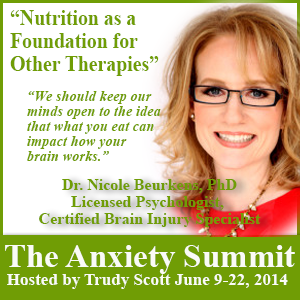
This is day 10 of the Anxiety Summit. Dr. Nicole Beurkens, PhD, Licensed Psychologist, Certified Brain Injury Specialist, Certified LENS Practitioner, is interviewed by host of the Anxiety Summit, Trudy Scott, Food Mood Expert and Nutritionist, author of The Antianxiety Food Solution.

Nutrition as a Foundation for Other Therapies

  • Why good nutrition status is important for people with anxiety and other mental health issues
  • What kinds of nutrition changes are encouraged
  • Challenges with helping parents and families make nutrition changes

Here are some great gems from my interview with Nicole:

Many parents are not even aware that food can affect their kids”

We should keep our minds open to the idea that what you eat can impact how your brain works”.

Here is a recent article from the Horizons website: The Nutrition-Anxiety Link in Children with Learning, Mood, and Behavior Challenges

Get your free gift from Dr Nicole Beurkens:  Horizons Healthy Brain Diet (RED/YELLOW/GREEN foods)

If you are not already registered for the Anxiety Summit you can get live access to the speakers of the day here www.theAnxietySummit.com

UPDATE: the summit concluded on Tues 6/24 – season 2 of The Anxiety Summit will be in November 2014. If you’d like to be on the notification list just sign up here www.theAnxietySummit.com

Missed this interview or can’t listen live? Or want this and the other great interviews for your learning library? Purchase the MP3s or MP3s + transcripts + interview highlights and listen when it suits you

Filed Under: Antianxiety, Food and mood, General Health, The Anxiety Summit Tagged With: Antianxiety Food Solution, anxiety, Nicole Beurkens, nutrition, the anxiety summit, therapies, Trudy Scott

The Anxiety Summit: Benzodiazepines Risks vs Benefits

June 18, 2014 By Trudy Scott 54 Comments


catherine pittman benzos anxiety

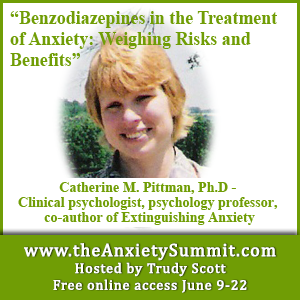
This is day 10 of the Anxiety Summit. Dr Catherine M. Pittman, Ph.D., Clinical psychologist, psychology professor, and co-author of Extinguishing Anxiety is interviewed by host of the Anxiety Summit, Trudy Scott, Food Mood Expert and Nutritionist, author of The Antianxiety Food Solution.

Benzodiazepines in the Treatment of Anxiety: Weighing Risks and Benefits

  • benzodiazapines: how they work and some of the benefits
  • side-effects, tolerance facts and withdrawal effects
  • survey results from members of the Benzobuddies.org online support group:
  • what sort of questions should we be asking about benzodiazepine prescriptions

Benzodiazepines are a class of drugs primarily used for treating anxiety.

I heard Dr. Pittman present on this topic at The Anxiety and Depression Association of America annual conference in 2012 and really wanted to share this with you.

Dr Pittman very kindly gave me permission to share a link to her PDF of the presentation she did at the ADAA conference.

During the interview we discussed the Ashton taper protocol which can be found at www.benzo.org.uk.  

During the interview I incorrectly stated that this is the site of Professor Ashton. Colin, the owner of BenzoBuddies kindly contacted me and informed me that “this site is actually owned and operated by Ray Nimmo, a benzodiazepine survivor. With Prof. Ashton’s permission, Ray has published the ‘Ashton Manual’ and some of her other writings at his website. benzo.org.uk is a personal website, containing all kinds of articles and writings which interest Ray and which he feels would be of interest to others going through benzodiazepine withdrawal and recovery.”

Julia Ross, author of The Mood Cure, presented earlier in the week on “Eliminating Anxiety: Amino Acid Therapy and Adrenal Balancing” and acknowledged the work of Professor Ashton. She emphasized how imperative it is to taper extremely slowly per the Ashton protocol. Julia also shared that the missing piece in getting off benzos is the use of GABA and often high doses of vitamin C (possibly even intravenously). I support this wholeheartedly.

If you are currently taking benzodiazapines:

  • please do NOT stop cold-turkey
  • do not make any changes to your prescription without working with your doctor
  • know that not everyone is affected to the same extent
  • and apologies if this is upsetting and scary

If you need support from people who have lived the benzo hell do check out www.benzobuddies.org. I’d like to acknowledge this group for being willing to participate in Dr. Pittman’s survey and want to let you know that we are doing our best to get this information into the hands of those who so need it.

Dr. Pittman shared some of the benefits of benzos and Dr. Kelly Brogan (in the opening interview “”Misunderstood and Mistreated: Reinventing Psychiatry”) shared how she only uses them for postpartum psychosis.

Dr. Pittman said: “benzos can cause physiological dependence in 4-6 weeks.”

This is not acceptable. 

I strongly believe we should BAN BENZOs completely

  • this is my belief, not Dr Pittman’s
  • we have better options and should be using them
  • GABA is one fabulous option
  • and so are all the other approaches shared in this summit

If you are not already registered for the Anxiety Summit you can get live access to the speakers of the day here www.theAnxietySummit.com

UPDATE: the summit concluded on Tues 6/24 – season 2 of The Anxiety Summit will be in November 2014. If you’d like to be on the notification list just sign up here www.theAnxietySummit.com

UPDATE: the summit concluded on Tues 6/24 – season 2 of The Anxiety Summit will be in November 2014. If you’d like to be on the notification list just sign up here www.theAnxietySummit.com – See more at: https://www.everywomanover29.com/blog/anxiety-summit-rooibos-a-functional-food-in-the-management-of-stress/#sthash.DxVLSzXs.dpuf

Missed this interview or can’t listen live? Or want this and the other great interviews for your learning library? Purchase the MP3s or MP3s + transcripts + interview highlights and listen when it suits you
Filed Under: Antianxiety, The Anxiety Summit Tagged With: Antianxiety Food Solution, anxiety, benzodiazapines, Catherine Pittman, GABA, the anxiety summit, Trudy Scott

No sugar or sugar in moderation? I say NO sugar!

January 10, 2014 By Trudy Scott 23 Comments

Delicious Chocolate Cake

More and more research is supporting the fact that sugar and carbs are as addicting as drugs and as difficult to quit for some people. I came across this quote the other day: “Stressed spelled backwards is desserts. Coincidence? I think not!” and it’s perfect. We crave sugar because we are stressed, sad, looking for pleasure and for energy and motivation. And we self-medicate with it in the same way as drugs, caffeine and tobacco.

This paper called Obesity: The emerging neurobiology of calorie addiction was published just a few days ago:

“The increased availability and consumption of highly palatable foods is the major factor behind the rise of obesity and type 2 diabetes in developed countries.”

“Progress has been made in recent years in understanding the neurobiological underpinnings for this preference” for sucrose: “sucrose activates dopamine neurons in a region of the brain called the striatum, and the resulting release of dopamine is associated with pleasure.”

“Moreover, the repeated consumption of high levels of sucrose can create a cycle of continued overconsumption—even compulsive eating—in order to recapture the initial feelings of pleasure. This is similar in many ways to drug abuse or addiction, and also involves some of the same signalling pathways within the body”

This dopamine/pleasure mechanism is just one way that leads to sugar addiction. This Oct 2013 paper in Nutrition, Neurobiologic basis of craving for carbohydrates says this:

“There is a relationship between emotional disorders, obesity, and craving for carbohydrates”

“Research on the basis of carbohydrate craving is varied, but may be grouped into five main areas: the serotonergic system, palatability and hedonic response [i.e. pleasure], the motivational system, stress response systems, and gene-environment interaction”

Last week I posed this question on my facebook page: “no sugar or sugar in moderation? what’s your vote? I say NO sugar! Do you think that’s too harsh and too unrealistic?” I was referring to ANY sweetener other than fresh fruit.

Here are some of the comments my tribe offered:

  • I’d say in moderation. However I’m trying to reduce my view of moderation over time.”
  • I was totally sweetener-free for a long time so I know how that feels for me. I’ve been experimenting with raw honey I seem to do fine with it “in moderation” (i.e. even a little bit each day is fine – although I don’t make baked goods so I’m not using large quantities.)
  • I seem at present to be incapable of moderation with sugar. So for me none at all might be the way I need to go. Humans developed over many thousands of years with just the sweetness of unprocessed fruits and maybe some honey now and then. Our culture’s idea of what “moderate” even means in regards to processed sugars is highly skewed.
  • Zero is way too hard for me but everyone is different
  • I say: a little bit of everything is just perfect!
  • Zero sugar is too rigid for me…I don’t think any of my clients say no to sugar 100%…I do avoid white and brown processed sugar ~95% of the time but will eat it when at someone’s home made with love. Every day, I use maple syrup to sweeten teas and in baked goods.
  • I don’t think a little bit of natural sugar is bad at all; but only just a little bit.
  • I’d say it’s ok for someone else [the zero sugar]! For me, I have to have a little here and there – just like bread. However, it’s a fraction of what it used to be. Maybe at some point I can whittle down from there.

Very few agreed with me about zero sugar. Here is what they said:

  • I’m with you! it is realistic as I have given up sugar and all artificial sweeteners.
  • NO sugar – Dr so astounded that I’ve brought my numbers down so much after wanting to give me meds for years. She said no meds would’ve brought my numbers down as much as I’ve done with diet and especially NO sugar or carbs.

Here are some of my thoughts: “Moderation” has quite a big range for some people and I see it going out of the window when it comes to baked goods. I see many recipes calling for pretty large amounts of maple syrup of honey. I recently heard Tana Amen, BSN, RN and author of The Omni Diet speak about sugar and crack cocaine in the same sentence and she said: “they are both addicting. We’d never do crack in moderation so why do sugar in moderation!?” I agree!

A friend and I were at a recent celiac function that had tons of gluten-free treats – all loaded with carbs and sugar and not healthy at all even though they were gluten-free. We had no desire to have any of the treats. That’s how we should feel! Zero sugar should be easy!

You won’t crave sugar or even feel the need for a little bit or an occasional treat if you have balanced biochemistry and are not stressed, no nutritional deficiencies (low zinc can be a factor) and are eating to control blood sugar.

You won’t be defensive when asked about it and you won’t feel deprived when you do go without it. You won’t feel that you need just a little. You also won’t have to white-knuckle it and use willpower.

Where do you stand? No sugar or sugar in moderation? And do you think that zero sugar is too harsh and too unrealistic? Do you think addiction plays a role? Are you white-knuckling it or can you take it or leave it?

Do you need help to get to zero sugar consumption? Here are some resources for you.

  1. Check out these chapters in my book “The Antianxiety Food Solution: How the Foods You Eat Can Help You Calm Your Anxious Mind, Improve Your Mood, and End Cravings”: eat real food, blood sugar balancing and the amazing amino acids.
  2. Stay tuned for the upcoming release of my homestudy program “Amazing Amino Acids for Emotional Eating.” Listen to me present on upcoming calls and tele-summits as I share some of the highlights of this wonderful 6 week program. 

Filed Under: Antianxiety Food Solution, Joy and happiness, Sugar addiction, Sugar and mood Tagged With: addiction, Antianxiety Food Solution, carbs, craving, emotional eating, sugar

The Antianxiety Food Solution on Annie Jennings’ JenningsWire

November 12, 2013 By Trudy Scott 12 Comments

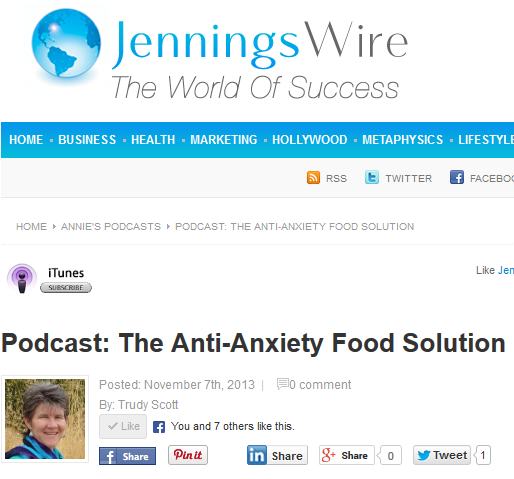
trudy scott on annie jenningsI really enjoyed sharing a few of my top antianxiety food solution tips on the Annie Jennings’ JenningsWire podcast! It was short but sweet! We managed to cover real food, red meat, coffee!!, tryptophan and gluten in 10 minutes!

The Antianxiety Food Solution

  • How do you calm your anxious mind, improve your mood and end cravings with food?
  • Does red meat cause anxiety?
  • If you’re anxious do you really have to quit caffeine?
  • Everyone is talking about the gluten-free diet – what is the tie in to mood?
  • What is your favorite nutrient for eliminating anxiety, worry, negative self-talk, low self-esteem and afternoon/evening sugar cravings?
  • What are the key nutrients for addressing social anxiety?

You can go to the Annie Jennings’ JenningsWire podcast page to listen to the 10 minute audio interview.

We didn’t get to the last question: What are the key nutrients for addressing social anxiety?  If you have the little-known condition called pyroluria (the main symptoms are inner tension and social anxiety) you may need to supplement with zinc and vitamin B6. These nutrients also happen to be co-factors for making brain chemicals like serotonin and the calming GABA.  I am seeing an overlap between the traits anxious introverts resonate with and the pyroluria symptoms !  Imagine a nutritional solution for anxious introverts!

From Annie’s site:  “This podcast is presented by Annie Jennings, of the National Publicity Firm, Annie Jennings PR and the creator of JenningsWire online magazine. JenningsWire is capturing the heart of America with its rich community of talented, insightful and relevant bloggers and podcasters!”

Thanks Annie and Stacey for the opportunity!

Filed Under: Antianxiety, Antianxiety Food Solution, Caffeine, Food and mood, Gluten, Introversion, Pyroluria, Real whole food Tagged With: annie jennings, Antianxiety Food Solution, anxious, introvert, pyroluria

Designs for Health, The Pantry Principle, Hawthorn University and Organic India: a BIG thank you!

October 8, 2013 By Trudy Scott 11 Comments

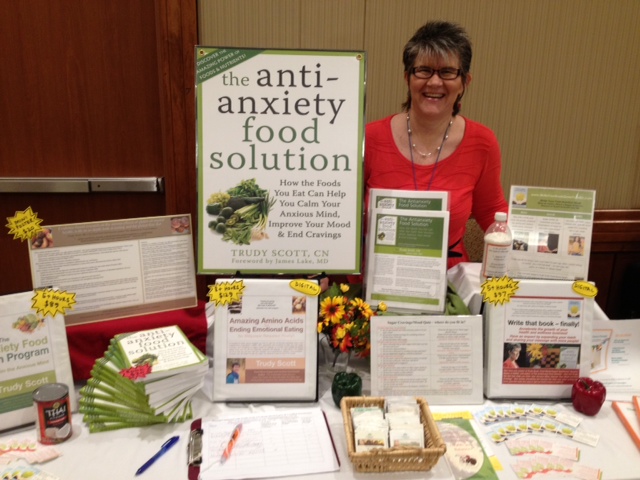
My booth at the recent IMMH conference

I exhibited at the recent Integrative Medicine for Mental Health / IMMH conference and appreciate the support of my sponsors or “partners.” 

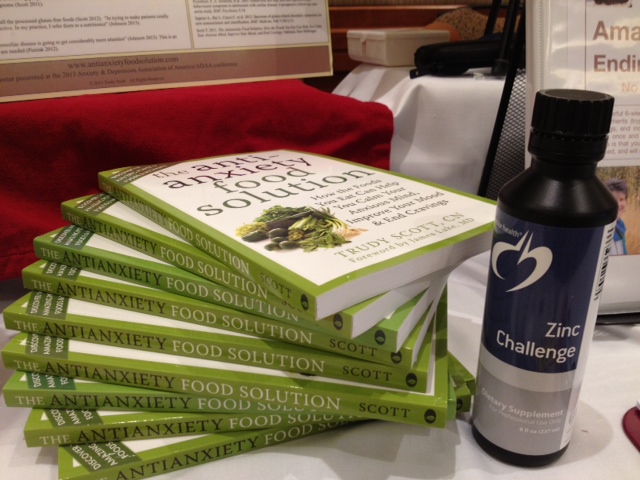
Designs for Health, a professional brand, offered exclusively to health care professionals and their patients through referral, donated bottles of Zinc Challenge for my zinc testing.   This is something I like to do at events because zinc is such a common deficiency, especially when it comes to anxiety and depression.  Low zinc is common in pyroluria – you can do the pyroluria questionnaire from my book to determine if this may be an issue for you.  There are 4 different levels of the zinc taste test: here is more information and an example of how it should taste.

Designs for Health Zinc
Designs for Health Zinc Challenge  – for zinc status testing


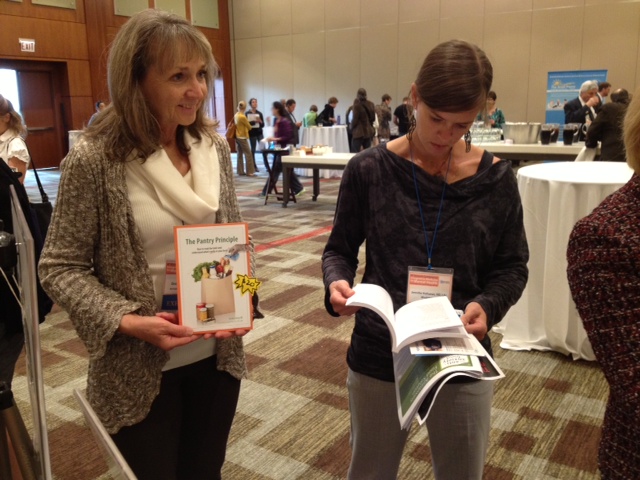
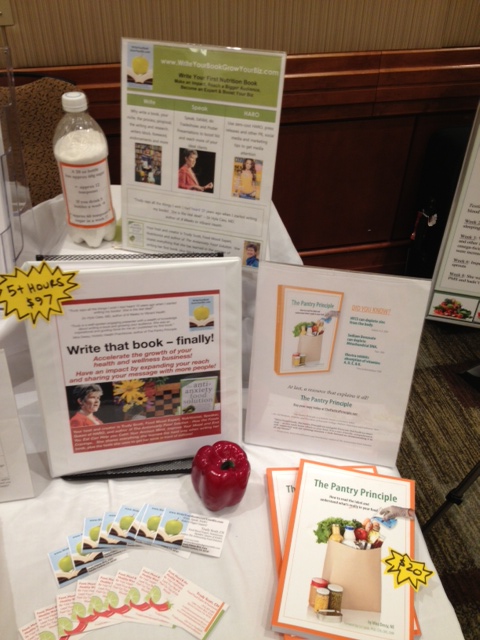
Mira Messy, NE, author of The Pantry Principle: How to read the label and understand what’s really in your food.   I had 10 of her wonderful books on display and available for purchase, plus a small standup poster with information, plus space on my signup sheet for people to get on her email list.  We did a trade and she is going to be exhibiting at HMN Natural Living Conference  on Oct 12 and will reciprocate with my book The Antianxiety Food Solution: How the Foods You Eat Can Help You Calm Your Anxious Mind, Improve Your Mood, and End Cravings. 

The Pantry Principle
Donna chatting to a visitor about The Pantry Principle


The Pantry Principle
The Pantry Principle (next to my new Write That Book – Finally! program

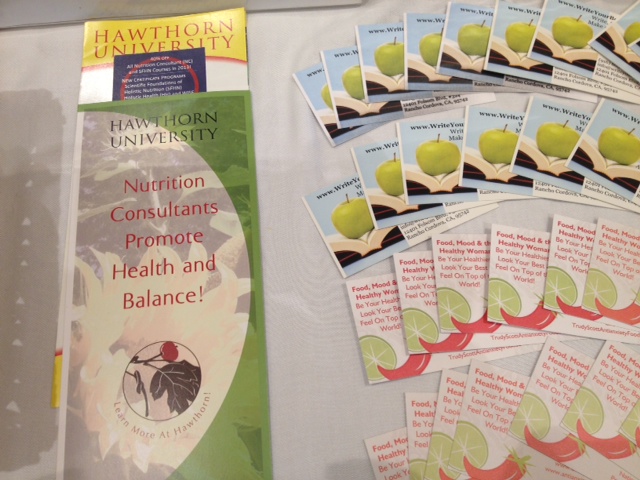
Hawthorn University  “is dedicated to providing supportive, comprehensive, and professional education in the fields of holistic health, nutrition, and the health sciences through the utilization of distance education methods. Hawthorn offers online undergraduate, graduate, and postgraduate degrees, certificates and continuing education programs to a diverse community of adult learners working to enhance health and wellness around the world.” I displayed fliers for these programs at my booth and was available to answer questions that my booth visitors had about their programs.

Hawthorn University fliers
Hawthorn University fliers – “Nutrition Consultants promote health and balance”

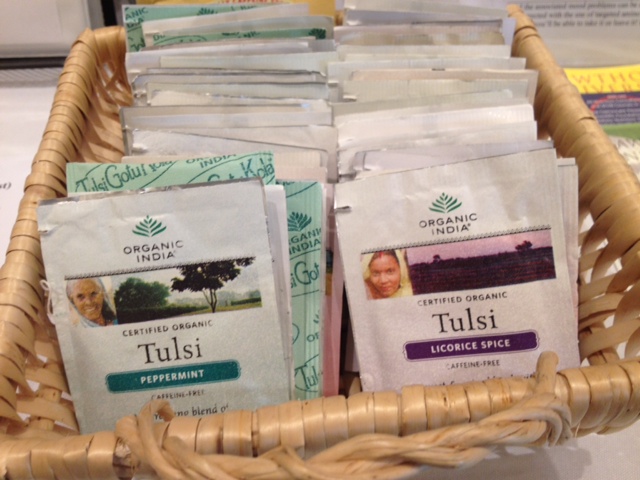
Organic India  is a herbal tea and supplement company which “promotes sustainable organic agriculture and protects the bio-diversity of the Earth, while supporting thousands of marginal farmers and tribal communities in rural India.”  They donated organic tulsi tea: “Tulsi, also called Holy Basil, is revered throughout India as a sacred herb infused with healing power and is considered to be the “Queen of Herbs.” Abundant in antioxidants, certified organic Tulsi Tea is not only great tasting; it offers stress relief, increased energy and a boost to your natural immune system.”  Also, because they are naturally caffeine-free they fit perfectly with my antianxiety food solution message of no to coffee!  My favorite is the lemon-ginger – it’s delicious!

a selection herbal tulsi tea
Organic India – a selection herbal tulsi tea

A big thank you to Designs for Health, The Pantry Principle, Hawthorn University and Organic India!

Filed Under: Antianxiety Food Solution, Events Tagged With: Antianxiety Food Solution, Designs for Health, Hawthorn University, Organic India, The Pantry Principle, zinc

Using Essential Oils to Survive and Thrive with Anxiety and Depression

July 5, 2013 By Trudy Scott 13 Comments

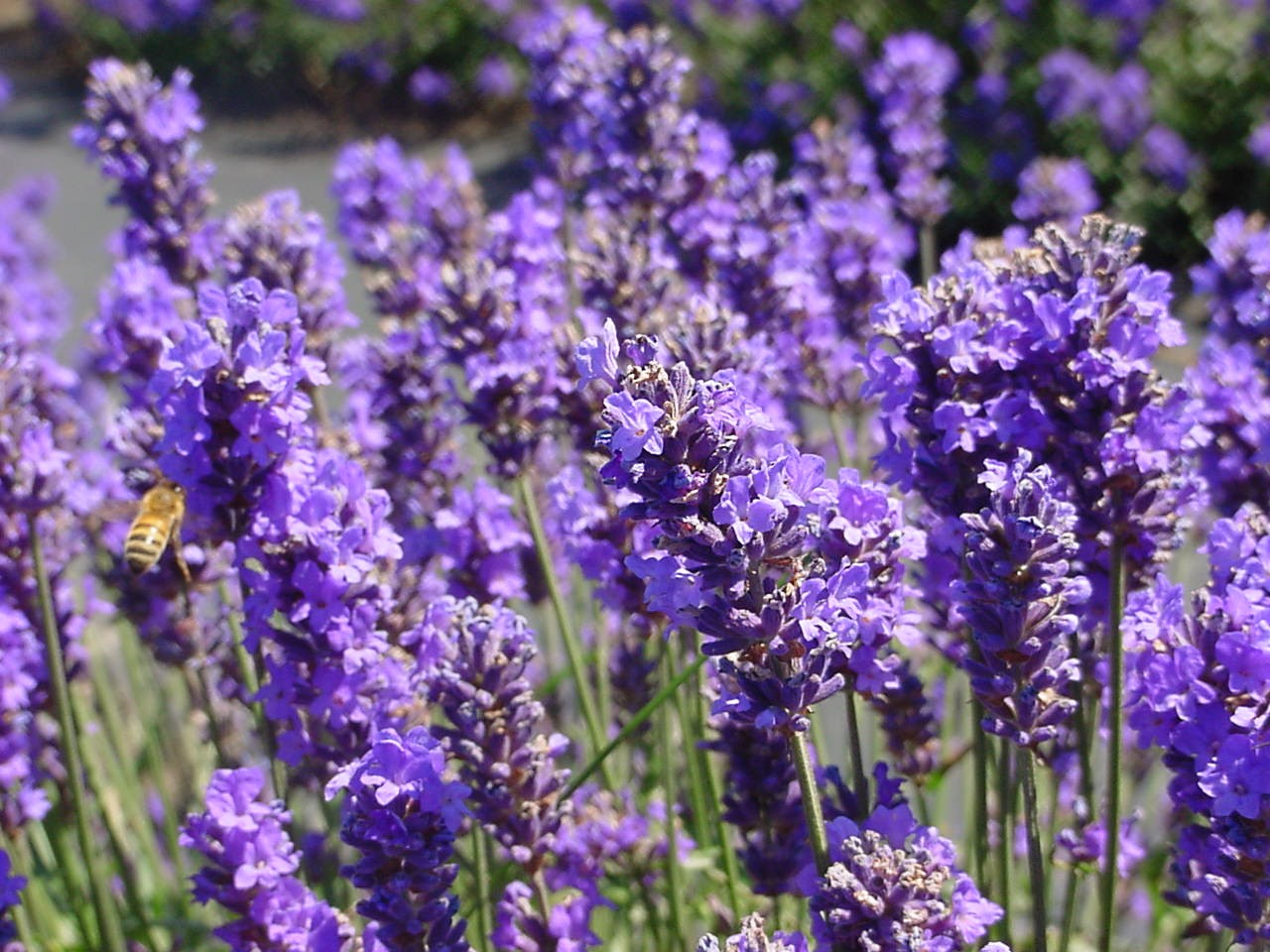
lavender

Essential oils can be a powerful addition to help relieve your anxiety, stress, depression and other mood disorders.  There is much research supporting the use of aromatherapy as we can see from this summary in a 2013 paper:  

“Molecular medical research on aromatherapy has been steadily increasing for use as an adjuvant therapy in managing psychiatric disorders and to examine its therapeutic mechanisms. Most studies, as well as clinically applied experience, have indicated that various essential oils, such as lavender, lemon and bergamot can help to relieve stress, anxiety, depression and other mood disorders. Most notably, inhalation of essential oils can communicate signals to the olfactory system and stimulate the brain to exert neurotransmitters (e.g. serotonin and dopamine) thereby further regulating mood.”

Today, I’m sharing a guest post on how to use essential oils, written by AnnaLaura Brown:

As anyone who suffers from anxiety and depression knows, it’s really hard on your life and can make it difficult to live a normal life. The drugs that are often prescribed can help but in many cases they don’t completely fix the problem and the side effects can make your health and the rest of your life even worse. So what can you do? While there are a variety of available options, essential oils have been proven to be a great natural solution. Essential oils are extracted from plants and because they are not a synthetic drug they have virtually no side effects. That said as with all products that are a form of medicine if you are currently taking drugs, then you want to talk with your doctor before you begin using essential oils.

Here are some tips to help you survive and thrive with anxiety and depression while using essential oils.

  1. If you are not on drugs now, don’t start using them and begin using essential oils instead.
  2. If you are on drugs now, talk with your doctor about your desire to gradually stop using them and work out a program to get off them over time and to begin using essential oils.
  3. Start slowly by trying one essential oil at a time. Identify your biggest health problem that you suffer with as a result of your anxiety and depression. For example, if you have problems sleeping, then you should start by using an oil that will help you sleep better. The best oil for this is lavender.
  4. Keep using that same oil for at least 2 weeks before you try another one.
  5. Take the time to do some research and to learn about different essential oils and how they are used for anxiety, depression and to help with moods. For example, citrus oils such as lemon, and orange can help uplift the moods of a lot of people. There are several books written on using oils for moods so you can probably find one with a lot of details at your local library or bookstore.
  6. Experiment with different ways of using oils. The most common ways that people use them are by either rubbing a few drops on the bottoms of your feet or your wrists, or by putting a few drops with some water into a diffuser or humidifier. You will want to try both ways and see which way works the best for you.
  7. Work on improving other aspects of your life so that you can live a more balanced life overall.
  8. Keep small amounts of the oils with you at all times so that if you start to feel depressed or anxious you can rub a little bit or smell the bottle to get some relief.

AnnaLaura Brown is passionate about helping others discover the power of essential oils for health and wellness. She personally discovered the oils while suffering from asthma and was able to get rid of her inhalers and use essential oils instead. In the past 2 years she has helped lots of people discover the power of essential oils for a variety of health and wellness uses. Grab your free copy of her report 50 ways to use essential oils at Health and Wealth with Oils.

Filed Under: Antianxiety, Antianxiety Food Solution, Anxiety and panic, Depression, Essential oils, Joy and happiness, Stress Tagged With: Antianxiety Food Solution, anxiety, depression, essential oils, lavender

  • « Go to Previous Page
  • Page 1
  • Page 2
  • Page 3
  • Page 4
  • Page 5
  • Page 6
  • Go to Next Page »

Primary Sidebar

NEW! GABA QuickStart Homestudy (with special intro pricing)

gaba quickstart homestudy

Free Report

9 Great Questions Women Ask about Food, Mood and their Health

You'll also receive a complimentary subscription to my ezine "Food, Mood and Gal Stuff"


Connect with me

Popular Posts

  • Amino Acids Mood Questionnaire from The Antianxiety Food Solution
  • The Antianxiety Food Solution Amino Acid and Pyroluria Supplements
  • Pyroluria Questionnaire from The Antianxiety Food Solution
  • Collagen and gelatin lower serotonin: does this increase your anxiety and depression?
  • Tryptophan for the worry-in-your-head and ruminating type of anxiety
  • GABA for the physical-tension and stiff-and-tense-muscles type of anxiety
  • The Antianxiety Food Solution by Trudy Scott
  • Seriphos Original Formula is back: the best product for anxiety and insomnia caused by high cortisol
  • Am I an anxious introvert because of low zinc and vitamin B6? My response to Huffington Post blog
  • Vagus nerve rehab with GABA, breathing, humming, gargling and key nutrients

Recent Posts

  • What do I use instead of Seriphos to help lower high cortisol that is affecting my sleep and making me anxious at night?
  • BeSerene™ GABA/theanine cream eases severe muscle tension in her neck/shoulders, prevents her bad headaches and quells her anxiety
  • How the correct approach, dose and sublingual use of GABA can be calming and not cause a flushed and itchy face and neck
  • The amino acid glutamine improves low mood by addressing gut health, and it has calming effects too
  • Flight anxiety with heightened breath, physical tension and also fearing the worst (the role of low GABA and low serotonin)

Categories

  • 5-HTP
  • AB575
  • Addiction
  • ADHD
  • Adrenals
  • Alcohol
  • Allergies
  • Alzheimer's disease
  • Amino Acids
  • Anger
  • Antianxiety
  • Antianxiety Food Solution
  • Antidepressants
  • Anxiety
  • Anxiety and panic
  • Autism
  • Autoimmunity
  • benzodiazapines
  • Bipolar disorder
  • Books
  • Caffeine
  • Cancer
  • Candida
  • Children/Teens
  • Collagen
  • Cooking equipment
  • Coronavirus/COVID-19
  • Cravings
  • Depression
  • Detoxification
  • Diabetes
  • Diet
  • DPA/DLPA
  • Drugs
  • EFT/Tapping
  • EMF
  • EMFs
  • Emotional Eating
  • Endorphins
  • Environment
  • Essential oils
  • Events
  • Exercise
  • Fear
  • Fear of public speaking
  • Fertility and Pregnancy
  • Fish
  • Food
  • Food and mood
  • Functional neurology
  • GABA
  • Gene polymorphisms
  • General Health
  • Giving
  • Giving back
  • Glutamine
  • Gluten
  • GMOs
  • Gratitude
  • Gut health
  • Heart health/hypertension
  • Histamine
  • Hormone
  • Hyperparathyroidism
  • Hypoglycemia
  • Immune system
  • Inflammation
  • Insomnia
  • Inspiration
  • Introversion
  • Joy and happiness
  • Ketogenic diet
  • Lithium orotate
  • Looking awesome
  • Lyme disease and co-infections
  • MCAS/histamine
  • Medication
  • Men's health
  • Mental health
  • Mercury
  • Migraine
  • Mold
  • Movie
  • MTHFR
  • Multiple sclerosis
  • Music
  • NANP
  • Nature
  • Nutritional Psychiatry
  • OCD
  • Osteoporosis
  • Oxalates
  • Oxytocin
  • Pain
  • Paleo
  • Parasites
  • Parkinson’s disease
  • PCOS
  • People
  • PMS
  • Postpartum
  • PTSD/Trauma
  • Pyroluria
  • Questionnaires
  • Real whole food
  • Recipes
  • Research
  • Schizophrenia
  • serotonin
  • SIBO
  • Sleep
  • Special diets
  • Sports nutrition
  • Stress
  • Sugar addiction
  • Sugar and mood
  • Supplements
  • Teens
  • Testimonials
  • Testing
  • The Anxiety Summit
  • The Anxiety Summit 2
  • The Anxiety Summit 3
  • The Anxiety Summit 4
  • The Anxiety Summit 5
  • The Anxiety Summit 6
  • Thyroid
  • Thyroid health
  • Toxins
  • Tryptophan
  • Tyrosine
  • Uncategorized
  • Vegan/vegetarian
  • Women's health
  • Yoga

Archives

  • October 2025
  • September 2025
  • August 2025
  • July 2025
  • June 2025
  • May 2025
  • April 2025
  • March 2025
  • February 2025
  • January 2025
  • November 2024
  • October 2024
  • September 2024
  • August 2024
  • July 2024
  • June 2024
  • May 2024
  • April 2024
  • March 2024
  • February 2024
  • January 2024
  • December 2023
  • November 2023
  • October 2023
  • September 2023
  • August 2023
  • July 2023
  • June 2023
  • May 2023
  • April 2023
  • March 2023
  • February 2023
  • January 2023
  • December 2022
  • November 2022
  • October 2022
  • September 2022
  • August 2022
  • July 2022
  • June 2022
  • May 2022
  • April 2022
  • March 2022
  • February 2022
  • January 2022
  • December 2021
  • November 2021
  • October 2021
  • September 2021
  • August 2021
  • July 2021
  • June 2021
  • May 2021
  • April 2021
  • March 2021
  • February 2021
  • January 2021
  • December 2020
  • November 2020
  • October 2020
  • September 2020
  • August 2020
  • July 2020
  • June 2020
  • May 2020
  • April 2020
  • March 2020
  • February 2020
  • January 2020
  • December 2019
  • November 2019
  • October 2019
  • September 2019
  • August 2019
  • July 2019
  • June 2019
  • May 2019
  • April 2019
  • March 2019
  • February 2019
  • January 2019
  • December 2018
  • November 2018
  • October 2018
  • September 2018
  • August 2018
  • July 2018
  • June 2018
  • May 2018
  • April 2018
  • March 2018
  • February 2018
  • January 2018
  • December 2017
  • November 2017
  • October 2017
  • September 2017
  • August 2017
  • July 2017
  • June 2017
  • May 2017
  • April 2017
  • March 2017
  • February 2017
  • January 2017
  • December 2016
  • November 2016
  • October 2016
  • September 2016
  • August 2016
  • July 2016
  • June 2016
  • May 2016
  • April 2016
  • March 2016
  • February 2016
  • January 2016
  • December 2015
  • November 2015
  • October 2015
  • September 2015
  • August 2015
  • July 2015
  • June 2015
  • May 2015
  • April 2015
  • March 2015
  • February 2015
  • January 2015
  • December 2014
  • November 2014
  • October 2014
  • September 2014
  • August 2014
  • July 2014
  • June 2014
  • May 2014
  • April 2014
  • March 2014
  • February 2014
  • January 2014
  • December 2013
  • November 2013
  • October 2013
  • September 2013
  • August 2013
  • July 2013
  • June 2013
  • May 2013
  • April 2013
  • March 2013
  • February 2013
  • January 2013
  • December 2012
  • November 2012
  • October 2012
  • August 2012
  • July 2012
  • June 2012
  • May 2012
  • April 2012
  • March 2012
  • February 2012
  • January 2012
  • December 2011
  • November 2011
  • October 2011
  • September 2011
  • August 2011
  • July 2011
  • June 2011
  • May 2011
  • April 2011
  • March 2011
  • February 2011
  • January 2011
  • December 2010
  • October 2010
  • September 2010
  • July 2010
  • May 2010
  • April 2010
  • March 2010
  • February 2010
  • January 2010
  • November 2009

Share the knowledge!

The above statements have not been evaluated by the Food and Drug Administration. Products listed in this website are not intended to diagnose, treat, cure or prevent any disease.

The information provided on this site is for informational and educational purposes only and is not intended as a substitute for advice from your physician or other health care professional. You should consult with a healthcare professional before starting or modifying any diet, exercise, or supplementation program, before taking or stopping any medication, or if you have or suspect you may have a health problem.


Copyright © 2026 Trudy Scott. All Rights Reserved. | Privacy | Terms and Conditions | Refund Policy | Medical Disclaimer

Free Report

9 Great Questions Women Ask about Food, Mood and their Health

You’ll also receive a complimentary subscription to my ezine “Food, Mood and Gal Stuff”