• Skip to primary navigation
  • Skip to main content
  • Skip to primary sidebar

everywomanover29 blog

Food, Mood and Women's Health – Be your healthiest, look and feel great!

  • Blog
  • About
  • Services
  • Store
  • Resources
  • Testimonials
  • The Book
  • Newsletter
  • Contact
  • Search this site

Essential oils

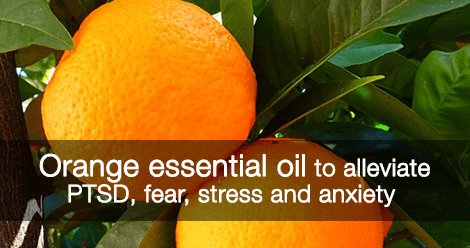
Orange essential oil to alleviate PTSD, fear, stress and anxiety

April 28, 2017 By Trudy Scott 7 Comments

Recent research finds evidence that orange essential oil reduces fear and anxiety, diminishes immune system markers of stress in mice and may help alleviate PTSD, offering a nonpharmaceutical option.

Essential oils are aromatic compounds produced naturally by plants. Orange essential oil is typically extracted from the peel of the orange fruit. People use essential oils for therapeutic purposes by diffusing them into the air, applying them to the skin or ingesting them in foods or beverages.

About 8 percent of people will develop post-traumatic stress disorder at some point in their lives, according to the U.S. Department of Veterans Affairs, yet treatments for this debilitating condition remain limited. Cassandra Moshfegh is research assistant in Paul Marvar’s laboratory at the George Washington University and she presented this research at the American Physiological Society’s annual meeting during the Experimental Biology 2017 meeting held April 22-26 in Chicago.

Relative to pharmaceuticals, essential oils are much more economical and do not have adverse side effects. The orange essential plant oil showed a significant effect on the behavioral response in our study mice. This is promising, because it shows that passively inhaling this essential oil could potentially assuage PTSD symptoms in humans.

The researchers tested the effects of passive inhalation of orange essential oil using Pavlovian Fear conditioning, a behavioral mouse model used to study the formation, storage and expression of fear memories as a model for PTSD.

Mice exposed to orange essential oil showed a significant reduction in freezing/fear behavior. They also showed significant differences in the types of immune cells present after fear conditioning. The immune system contributes to the inflammation associated with chronic stress and fear, so immune cells are a marker of the biochemical pathways involved in PTSD.

Preliminary results point to differences in the gene expression in the brain between the mice that were exposed to essential oil and those that were not, hinting at a potential mechanism to explain the behavioral results.

Moshfegh said further studies would be needed to understand the specific effects of orange essential oil in the brain and nervous system and shed light on how these effects might help to reduce fear, anxiety and stress in people with PTSD.

Experimental Biology is an annual meeting comprised of more than 14,000 scientists and exhibitors from six host societies and multiple guest societies. With a mission to share the newest scientific concepts and research findings shaping clinical advances, the meeting offers an unparalleled opportunity for exchange among scientists from across the U.S. and the world who represent dozens of scientific areas, from laboratory to translational to clinical research.

The American Physiological Society (APS) is a nonprofit organization devoted to fostering education, scientific research and dissemination of information in the physiological sciences. The Society was founded in 1887 and today represents more than 11,000 members and publishes 14 peer-reviewed journals.

Here is a link to the press release issued by Experimental Biology

Here is a link to the actual session abstract – Effects of Essential Oil on Fear Memory and the Immune Response: A Potential Alternative Therapy for Post Traumatic Stress Disorder (PSTD)

The application of orange essential oil has other supporting evidence for anxiety:

The effect of aromatherapy by essential oil of orange on anxiety during labor: A randomized clinical trial.

Aromatherapy is a noninvasive and effective method to help women overcome their anxiety during labor. Orange scent can be useful in childbirth units to help women who are experiencing stress in labor.

Effect of aromatherapy with orange essential oil on salivary cortisol and pulse rate in children during dental treatment: A randomized controlled clinical trial

It seems that the use of aromatherapy with natural essential oil of orange could reduce salivary cortisol and pulse rate due to child anxiety state.

Effect of sweet orange aroma on experimental anxiety in humans

Although more studies are needed to find out the clinical relevance of aromatherapy for anxiety disorders, the present results indicate an acute anxiolytic [anxiety-reducing] activity of sweet orange aroma, giving some scientific support to its use as a tranquilizer by aromatherapists.

Based on this we can see that essential oils have a valuable place when it comes to anxiety and stress relief and even PTSD. I do consider aromatherapy to be one of many tools of a comprehensive approach that includes dietary changes (like no gluten, no sugar, no caffeine, eating for blood sugar balance etc.) and addressing biochemical and nutritional imbalances (like low zinc, low omega-3s, alterations in cortisol and the hypothalamic-pituitary-adrenal (HPA) axis, low GABA and/or low serotonin with targeted individual amino acids, low vitamin D, dysbiosis and the microbiome etc.). Research is now showing that many of these factors may play a role in PTSD (making you more susceptible and also enhancing healing) as well as anxiety.

Have you used orange essential oil to help with your anxiety, fears or even PTSD? What is your favorite way to use it?

If you’re a practitioner do you used this essential oil with clients or patients?
Filed Under: Essential oils Tagged With: anxiety, aromatherapy, Cassandra Moshfegh, cortisol, fear, Orange essential oil, PTSD, stress

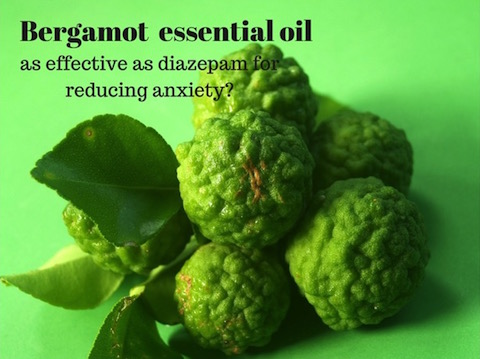
Bergamot as effective as diazepam for reducing anxiety?

August 19, 2016 By Trudy Scott 75 Comments

bergamot-green

Could the essential oil bergamot be as effective as diazepam (a benzodiazepine) in reducing anxiety?

An animal study shows very promising results: Acute effects of bergamot oil on anxiety-related behaviour and corticosterone level in rats

both BEO [bergamot essential oil] and diazepam exhibited anxiolytic-like behaviours and attenuated HPA axis activity by reducing the corticosterone response to stress

What this is means is that the bergamot was found to be as effective as diazepam in reducing the anxiety. Bergamot also reduced cortisol levels.

I’m really excited to see a study comparing an essential oil with benzodiazepines because I’m really worried that so many people are being prescribed benzodiazepines and that they are being used long-term. They are meant to be used short-term, if at all. They have very addictive properties, there are dependence issues and can be really really hard to quit, often with a very challenging withdrawal period. And too many people, including many in the medical profession, are not aware of all the issues once you start down this road.

If you’ve been following me for some time you’ll know I’m really vocal about the dangers of this class of medication.  You can read about the first World Benzodiazepine Awareness Day here.

How wonderful if we use these other wonderful approaches instead of benzodiazepines: use an essential oil like bergamot (or more than one – like lavender, roman chamomile and neroli too) and make food changes (like quitting gluten, caffeine and sugar), and add some amino acids like GABA and tryptophan and reduce the stress in our lives!

I talk about this research and other essential oils for anxiety and stress in the Essential Oils Revolution 2 summit which runs August 22 to 29. I’m so thrilled to be part of this event!

essential-oils-revolution-banner

Let’s get the conversation started now. Feel free to share which essential oils you use for anxiety and stress? And how do you use them?


Filed Under: Antianxiety, Essential oils, Events Tagged With: anxiety, benzodiazepine, Bergamot, diazepam, essential oils, Essential Oils Revolution

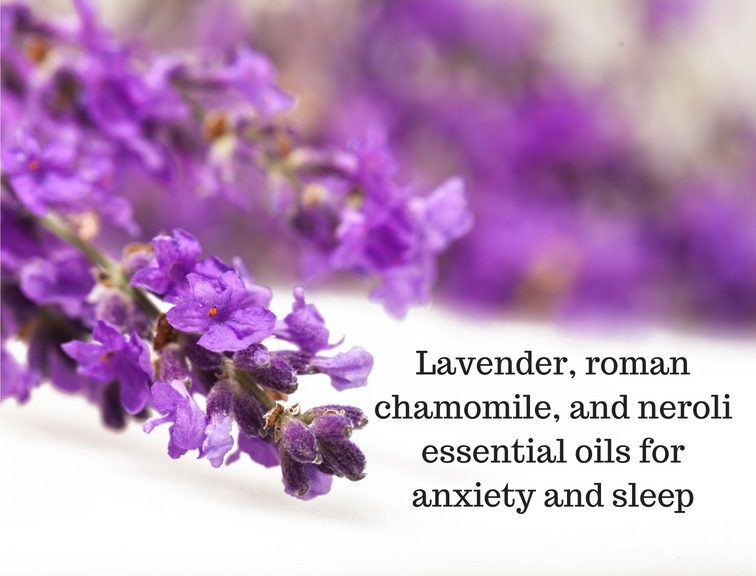
Lavender, roman chamomile, and neroli essential oils for anxiety and sleep

August 11, 2016 By Trudy Scott Leave a Comment

Lavender, roman chamomile, and neroli essential oils for anxiety and sleep

Lavender, roman chamomile, and neroli essential oils have been found to be beneficial for anxiety and sleep in patients going through a surgical procedure. 

The aromatherapy blend was in a ratio of 6 :  2 : 0.5  for lavender: roman chamomile: neroli.  

Participants received 10 treatments before percutaneous coronary intervention/PCI (formerly known as angioplasty with stent) and the same essential oil blend was inhaled another 10 times after the procedure.

Here are the details of the study: Effects of aromatherapy on the anxiety, vital signs, and sleep quality of percutaneous coronary intervention patients in intensive care units

The purpose of this study was to investigate the effects of aromatherapy on the anxiety, sleep, and blood pressure (BP) of percutaneous coronary intervention (PCI) patients in an intensive care unit (ICU). Fifty-six patients with PCI in ICU were evenly allocated to either the aromatherapy or conventional nursing care.

Outcome measures patients’ state anxiety, sleeping quality, and BP (blood pressure).

The aromatherapy group showed significantly low anxiety and improving sleep quality compared with conventional nursing intervention.

If these surgical patients could see these results imagine how these essential oils could help you if you suffer from anxiety and/or sleep issues.

Join us on the Essential Oils Revolution 2 to hear me cover this and  and other essential oils combinations for anxiety and insomnia.

essential-oils-revolution-banner

Here is the summit registration link:
https://qt247.isrefer.com/go/EOR16reg/trudyscottcn/

Have you found that this combination helps you with anxiety and sleep?  What ratio works for you?


Filed Under: Anxiety and panic, Essential oils, Events, Sleep Tagged With: anxiety, chamomile, essential oils, insomnia, lavender, neroli, sleep

Bergamot, lavender and ylangylang for anxiety and high blood pressure

August 4, 2016 By Trudy Scott 23 Comments

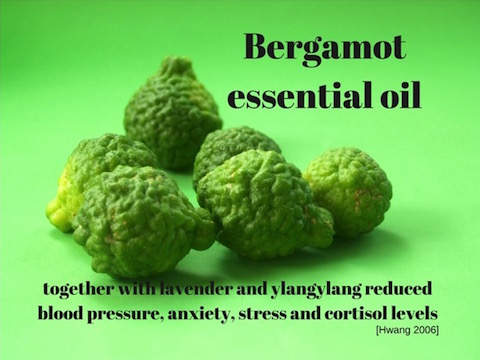
bergamot-eo

The wonderful combination of bergamot, lavender and ylangylang essential oils have been found to lower high blood pressure and reduce anxiety.

The study The effects of the inhalation method using essential oils on blood pressure and stress responses of clients with essential hypertension was published in 2006 and looked at 52 people who were anxious and stressed, and had high blood pressure.

The participants were placed in an essential oil group, a placebo group, and a control group by random assignment.

The essential oil group used aromatherapy inhalation by blending lavender, ylangylang, and bergamot essential oils once a day for 4 weeks.

To evaluate the effects of aromatherapy, blood pressure and pulse were measured two times a week and serum cortisol levels, catecholamine levels, subjective stress, and state anxiety were measured before and after treatment in the three groups.

 Here are the results of the study:

The blood pressure, pulse, subjective stress, state anxiety, and serum cortisol levels among the three groups were significantly statistically different.

The results suggest that the inhalation method using essential oils can be considered an effective nursing intervention that reduces psychological stress responses and serum cortisol levels, as well as the blood pressure of clients with essential hypertension.

They did not see any significant differences in catecholamine levels among the three groups but keep in mind this was only a 4-week study. And to see those other results in just 4 weeks is very encouraging! A simple intervention and yet very profound.

Dietary changes and amino acids and other nutrients are my go-to approach for anxiety but I’m finding more and more of my clients benefit with the addition of essential oils.

Essential oils are also very beneficial in the following instance where amino acids and other supplements can’t be taken or are not tolerated:

  • Young children (inhalation aromatherapy and creams/lotions work well here)
  • Older adults (creams/lotions work well when there is loss of smell with dementia or Alzheimer’s disease)
  • Someone going through benzodiazepine withdrawal and is too sensitive for supplements or can only tolerate small amounts

I talk about this research and other essential oils for anxiety and stress in the upcoming Essential Oils Revolution 2 summit which runs August 22 to 29. I’m thrilled to be part of this event!

essential-oils-revolution-banner

People all over the world are scrambling to find the answer to health problems like diabetes, pain, chronic fatigue, anxiety, estrogenic cancers and more. Millions are turning to natural solutions and many have experienced great success with essential oils. Learn if oils could be the missing ingredient for you and your family! What you will gain from this event:

  • Why essential oils are truly nature’s best medicine
  • How to use essential oils safely and effectively
  • Tips for regaining control of your health
  • Home recipes, guides, safety protocols and best practices
  • And so much more!

More than 165,000 people joined the 2015 Essential Oils Revolution. This year, the experts in aromatherapy, medicine and research will deliver in-depth discussion, debunk common myths and help you learn about the possibility of regaining your health using essential oils.

I can’t wait to learn more and hope you’ll tune in too. Here is the registration link:
https://qt247.isrefer.com/go/EOR16reg/trudyscottcn/

Let’s get the conversation started now. Feel free to share which essential oils you use for anxiety and stress? And how do you use them?

Filed Under: Essential oils, Events Tagged With: anxiety, Bergamot, cortisol, Essential Oils Revolution, high blood pressure, lavender, stress, Ylangylang

Essential oils for dementia, agitation, anxiety on the Alzheimer’s & Dementia Summit

July 31, 2016 By Trudy Scott 6 Comments

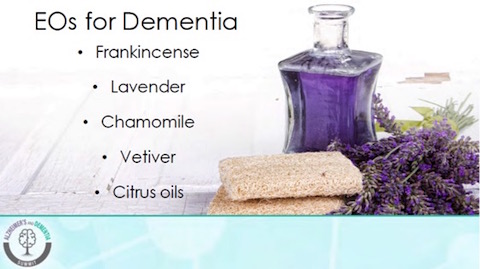
essential-oils-for-dimentia

One of the excellent speakers, Eric Zielinski, DC, MPH(c) is interviewed on the Alzheimer’s & Dementia Summit. He’s fondly known as Dr. Z and I love everything he shares about the simplicity and power of essential oils (and all the research).

The topic of his interview is “Best Essential Oils for Brain Health”, dementia and Alzheimer’s disease – but as you will hear these essential oils also help with anxiety, agitation, insomnia and social withdrawal.

One aspect that I find very interesting is the discussion about aromatherapy versus using essential oils in lotions with those with dementia and Alzheimer’s disease. The latter is more effective because of the loss of sense of smell with advanced dementia.

Here are some of the gems he shares (from Professor Elaine Perry’s paper: Aromatherapy for the treatment of Alzheimer’s disease:

Lemon balm (Melissa) lotion was applied to the face and arms of 36 patients, whilst another 36 patients had sunflower oil applied. Melissa was associated with highly significant reductions measured on an agitation inventory and social withdrawal, together with an increase in constructive activities (dementia care mapping).

In a trial involving 122 non-demented patients in intensive care, massage aromatherapy using lavender oil was well received, the greatest improvements being in mood and reduction in anxiety.

In another trial, lavender, geranium and mandarin essential oils in an almond oil base were applied to the skin of 39 patients over an unspecified period. This resulted in increased alertness, contentment and sleeping at night; and reduced levels of agitation, withdrawal and wandering.

I’m so pleased Dr. Z talks about antipsychotics and how a number of studies have shown a reduced need for these medications when using essential oils.

This interview and other interviews on the Alzheimer’s & Dementia Summit are well-worth tuning in to. They represent a unique opportunity to discover how to prevent, slow down and even reverse (yes reverse!) the symptoms of Alzheimer’s disease and dementia.

I say “yes reverse!” because I received this concerned question from someone in my community

It’s a big claim to say you can reverse Alzheimer’s, especially to those of us sensitized to the issue because of a very ill parent. On what studies or peer-reviewed research do you and your colleagues rely? Do you mean when someone is so far along that they are unable to communicate effectively? How would you find the “root cause” then? I am interested in alternative approaches but sometimes the claims seem to veer toward irresponsible

I feel for this concerned caregiver and her question is very valid because we have been led to believe that Alzheimer’s disease cannot be reversed. I only share information I have vetted and always make sure it is research-based and this summit is no exception, even when someone can no longer communicate effectively. Simply using essential oils in a lotion is a wonderful start. Getting the testing that Dr. Bredesen recommends would be the next step. There really is SO much that can be done!

Here are some of my other favorite interviews:

  • Christopher Shade PhD – Brain Defense: What to Do About Heavy Metal Toxicity
  • Niki Gratrix – Dementia Warning: Uncovering the Threat of Emotional Stress
  • Nadine Artemis – Protecting the Brain: Why You Should Care About Oral Health
  • Datis Kharrazian, DHSc, DC, MS – Dementia Solutions: Overlooked Therapies Revealed
  • Dale E. Bredesen, MD – Reversing Alzheimer’s Disease: A Comprehensive Approach (read more here and see his research)
  • David Minkoff, MD – Link Between Lyme Disease and Alzheimer’s

These interviews also provide a resource for you if you are just starting to notice that your own memory and focus is not quite what it used to be, if you have low motivation, if you suffer from brain fog and if you have anxiety and/or insomnia.

Today is the last day of the Alzheimer’s & Dementia Summit and REPLAYS of all the speakers will be tomorrow Monday August 1. You can still register here:
https://qt247.isrefer.com/go/ALZ16reg/trudyscottcn/

Prices will increase after the final REPLAY DAY that so if you know you want to purchase the series, now is the time. This is one summit I highly RECOMMEND purchasing! Here is the order link:
https://qt247.isrefer.com/go/ALZ16order/trudyscottcn/

If you have questions or feedback please feel free to post them in the comments.

PS. If you enjoyed this information and interview and want to learn more about essential oils, don’t forget that Dr. Z is hosting The Essential Oils Revolution 2 online from August 22-29. You can register for this one now.

Filed Under: Essential oils Tagged With: 5-HTP, anxiety, GABA, our calming neurotransmitter, PMS, sleep

Using Essential Oils to Survive and Thrive with Anxiety and Depression

July 5, 2013 By Trudy Scott 13 Comments

lavender

Essential oils can be a powerful addition to help relieve your anxiety, stress, depression and other mood disorders.  There is much research supporting the use of aromatherapy as we can see from this summary in a 2013 paper:  

“Molecular medical research on aromatherapy has been steadily increasing for use as an adjuvant therapy in managing psychiatric disorders and to examine its therapeutic mechanisms. Most studies, as well as clinically applied experience, have indicated that various essential oils, such as lavender, lemon and bergamot can help to relieve stress, anxiety, depression and other mood disorders. Most notably, inhalation of essential oils can communicate signals to the olfactory system and stimulate the brain to exert neurotransmitters (e.g. serotonin and dopamine) thereby further regulating mood.”

Today, I’m sharing a guest post on how to use essential oils, written by AnnaLaura Brown:

As anyone who suffers from anxiety and depression knows, it’s really hard on your life and can make it difficult to live a normal life. The drugs that are often prescribed can help but in many cases they don’t completely fix the problem and the side effects can make your health and the rest of your life even worse. So what can you do? While there are a variety of available options, essential oils have been proven to be a great natural solution. Essential oils are extracted from plants and because they are not a synthetic drug they have virtually no side effects. That said as with all products that are a form of medicine if you are currently taking drugs, then you want to talk with your doctor before you begin using essential oils.

Here are some tips to help you survive and thrive with anxiety and depression while using essential oils.

  1. If you are not on drugs now, don’t start using them and begin using essential oils instead.
  2. If you are on drugs now, talk with your doctor about your desire to gradually stop using them and work out a program to get off them over time and to begin using essential oils.
  3. Start slowly by trying one essential oil at a time. Identify your biggest health problem that you suffer with as a result of your anxiety and depression. For example, if you have problems sleeping, then you should start by using an oil that will help you sleep better. The best oil for this is lavender.
  4. Keep using that same oil for at least 2 weeks before you try another one.
  5. Take the time to do some research and to learn about different essential oils and how they are used for anxiety, depression and to help with moods. For example, citrus oils such as lemon, and orange can help uplift the moods of a lot of people. There are several books written on using oils for moods so you can probably find one with a lot of details at your local library or bookstore.
  6. Experiment with different ways of using oils. The most common ways that people use them are by either rubbing a few drops on the bottoms of your feet or your wrists, or by putting a few drops with some water into a diffuser or humidifier. You will want to try both ways and see which way works the best for you.
  7. Work on improving other aspects of your life so that you can live a more balanced life overall.
  8. Keep small amounts of the oils with you at all times so that if you start to feel depressed or anxious you can rub a little bit or smell the bottle to get some relief.

AnnaLaura Brown is passionate about helping others discover the power of essential oils for health and wellness. She personally discovered the oils while suffering from asthma and was able to get rid of her inhalers and use essential oils instead. In the past 2 years she has helped lots of people discover the power of essential oils for a variety of health and wellness uses. Grab your free copy of her report 50 ways to use essential oils at Health and Wealth with Oils.

Filed Under: Antianxiety, Antianxiety Food Solution, Anxiety and panic, Depression, Essential oils, Joy and happiness, Stress Tagged With: Antianxiety Food Solution, anxiety, depression, essential oils, lavender

  • « Go to Previous Page
  • Page 1
  • Page 2

Primary Sidebar

GABA QuickStart Homestudy

gaba quickstart homestudy

Free Report

9 Great Questions Women Ask about Food, Mood and their Health

You'll also receive a complimentary subscription to my ezine "Food, Mood and Gal Stuff"


Connect with me

Popular Posts

  • Amino Acids Mood Questionnaire from The Antianxiety Food Solution
  • The Antianxiety Food Solution Amino Acid and Pyroluria Supplements
  • Pyroluria Questionnaire from The Antianxiety Food Solution
  • Collagen and gelatin lower serotonin: does this increase your anxiety and depression?
  • Tryptophan for the worry-in-your-head and ruminating type of anxiety
  • GABA for the physical-tension and stiff-and-tense-muscles type of anxiety
  • The Antianxiety Food Solution by Trudy Scott
  • Seriphos Original Formula is back: the best product for anxiety and insomnia caused by high cortisol
  • Am I an anxious introvert because of low zinc and vitamin B6? My response to Huffington Post blog
  • Vagus nerve rehab with GABA, breathing, humming, gargling and key nutrients

Recent Posts

  • Her cravings for chips and peanut butter were triggered by stress: GABA ends cravings and reduces physical tension and fear of heights
  • It is truly miraculous to be able to move through life without crippling anxiety and panic
  • GABA and tryptophan combo provide immediate and noticeable relief for tremors and cervical dystonia in just 7 days
  • Red light therapy for back and neck pain, plantar fasciitis and low mood – a complement to the amino acids GABA, DPA and tryptophan
  • What do I use instead of Seriphos to help lower high cortisol that is affecting my sleep and making me anxious at night?

Categories

  • 5-HTP
  • AB575
  • Addiction
  • ADHD
  • Adrenals
  • Alcohol
  • Allergies
  • Alzheimer's disease
  • Amino Acids
  • Anger
  • Antianxiety
  • Antianxiety Food Solution
  • Antidepressants
  • Anxiety
  • Anxiety and panic
  • Autism
  • Autoimmunity
  • benzodiazapines
  • Bipolar disorder
  • Books
  • Caffeine
  • Cancer
  • Candida
  • Children/Teens
  • Collagen
  • Cooking equipment
  • Coronavirus/COVID-19
  • Cravings
  • Depression
  • Detoxification
  • Diabetes
  • Diet
  • DPA/DLPA
  • Drugs
  • EFT/Tapping
  • EMF
  • EMFs
  • Emotional Eating
  • Endorphins
  • Environment
  • Essential oils
  • Events
  • Exercise
  • Fear
  • Fear of public speaking
  • Fertility and Pregnancy
  • Fish
  • Food
  • Food and mood
  • Functional neurology
  • GABA
  • Gene polymorphisms
  • General Health
  • Giving
  • Giving back
  • Glutamine
  • Gluten
  • GMOs
  • Gratitude
  • Gut health
  • Heart health/hypertension
  • Histamine
  • Hormone
  • Hyperparathyroidism
  • Hypoglycemia
  • Immune system
  • Inflammation
  • Insomnia
  • Inspiration
  • Introversion
  • Joy and happiness
  • Ketogenic diet
  • Lithium orotate
  • Looking awesome
  • Lyme disease and co-infections
  • MCAS/histamine
  • Medication
  • Men's health
  • Mental health
  • Mercury
  • Migraine
  • Mold
  • Movie
  • MTHFR
  • Multiple sclerosis
  • Music
  • NANP
  • Nature
  • Nutritional Psychiatry
  • OCD
  • Osteoporosis
  • Oxalates
  • Oxytocin
  • Pain
  • Paleo
  • Parasites
  • Parkinson’s disease
  • PCOS
  • People
  • PMS
  • Postpartum
  • PTSD/Trauma
  • Pyroluria
  • Questionnaires
  • Real whole food
  • Recipes
  • Research
  • Schizophrenia
  • serotonin
  • SIBO
  • Sleep
  • Special diets
  • Sports nutrition
  • Stress
  • Sugar addiction
  • Sugar and mood
  • Supplements
  • Teens
  • Testimonials
  • Testing
  • The Anxiety Summit
  • The Anxiety Summit 2
  • The Anxiety Summit 3
  • The Anxiety Summit 4
  • The Anxiety Summit 5
  • The Anxiety Summit 6
  • Thyroid
  • Thyroid health
  • Toxins
  • Tryptophan
  • Tyrosine
  • Uncategorized
  • Vegan/vegetarian
  • Women's health
  • Yoga

Archives

  • May 2026
  • April 2026
  • October 2025
  • September 2025
  • August 2025
  • July 2025
  • June 2025
  • May 2025
  • April 2025
  • March 2025
  • February 2025
  • January 2025
  • November 2024
  • October 2024
  • September 2024
  • August 2024
  • July 2024
  • June 2024
  • May 2024
  • April 2024
  • March 2024
  • February 2024
  • January 2024
  • December 2023
  • November 2023
  • October 2023
  • September 2023
  • August 2023
  • July 2023
  • June 2023
  • May 2023
  • April 2023
  • March 2023
  • February 2023
  • January 2023
  • December 2022
  • November 2022
  • October 2022
  • September 2022
  • August 2022
  • July 2022
  • June 2022
  • May 2022
  • April 2022
  • March 2022
  • February 2022
  • January 2022
  • December 2021
  • November 2021
  • October 2021
  • September 2021
  • August 2021
  • July 2021
  • June 2021
  • May 2021
  • April 2021
  • March 2021
  • February 2021
  • January 2021
  • December 2020
  • November 2020
  • October 2020
  • September 2020
  • August 2020
  • July 2020
  • June 2020
  • May 2020
  • April 2020
  • March 2020
  • February 2020
  • January 2020
  • December 2019
  • November 2019
  • October 2019
  • September 2019
  • August 2019
  • July 2019
  • June 2019
  • May 2019
  • April 2019
  • March 2019
  • February 2019
  • January 2019
  • December 2018
  • November 2018
  • October 2018
  • September 2018
  • August 2018
  • July 2018
  • June 2018
  • May 2018
  • April 2018
  • March 2018
  • February 2018
  • January 2018
  • December 2017
  • November 2017
  • October 2017
  • September 2017
  • August 2017
  • July 2017
  • June 2017
  • May 2017
  • April 2017
  • March 2017
  • February 2017
  • January 2017
  • December 2016
  • November 2016
  • October 2016
  • September 2016
  • August 2016
  • July 2016
  • June 2016
  • May 2016
  • April 2016
  • March 2016
  • February 2016
  • January 2016
  • December 2015
  • November 2015
  • October 2015
  • September 2015
  • August 2015
  • July 2015
  • June 2015
  • May 2015
  • April 2015
  • March 2015
  • February 2015
  • January 2015
  • December 2014
  • November 2014
  • October 2014
  • September 2014
  • August 2014
  • July 2014
  • June 2014
  • May 2014
  • April 2014
  • March 2014
  • February 2014
  • January 2014
  • December 2013
  • November 2013
  • October 2013
  • September 2013
  • August 2013
  • July 2013
  • June 2013
  • May 2013
  • April 2013
  • March 2013
  • February 2013
  • January 2013
  • December 2012
  • November 2012
  • October 2012
  • August 2012
  • July 2012
  • June 2012
  • May 2012
  • April 2012
  • March 2012
  • February 2012
  • January 2012
  • December 2011
  • November 2011
  • October 2011
  • September 2011
  • August 2011
  • July 2011
  • June 2011
  • May 2011
  • April 2011
  • March 2011
  • February 2011
  • January 2011
  • December 2010
  • October 2010
  • September 2010
  • July 2010
  • May 2010
  • April 2010
  • March 2010
  • February 2010
  • January 2010
  • November 2009

Share the knowledge!

The above statements have not been evaluated by the Food and Drug Administration. Products listed in this website are not intended to diagnose, treat, cure or prevent any disease.

The information provided on this site is for informational and educational purposes only and is not intended as a substitute for advice from your physician or other health care professional. You should consult with a healthcare professional before starting or modifying any diet, exercise, or supplementation program, before taking or stopping any medication, or if you have or suspect you may have a health problem.


Copyright © 2026 Trudy Scott. All Rights Reserved. | Privacy | Terms and Conditions | Refund Policy | Medical Disclaimer

Free Report

9 Great Questions Women Ask about Food, Mood and their Health

You’ll also receive a complimentary subscription to my ezine “Food, Mood and Gal Stuff”