• Skip to primary navigation
  • Skip to main content
  • Skip to primary sidebar

everywomanover29 blog

Food, Mood and Women's Health – Be your healthiest, look and feel great!

  • Blog
  • About
  • Services
  • Store
  • Resources
  • Testimonials
  • The Book
  • Newsletter
  • Contact
  • Search this site

Autism

Low-dose suramin in autism disables cell danger response: leads to speech, calm, focus and play

June 9, 2017 By Trudy Scott 10 Comments

I’m fascinated and excited by this new research on cell danger response (CDR): Low-dose suramin in autism spectrum disorder: a small, phase I/II, randomized clinical trial abstract and the ramifications for autism as well as anxiety and other chronic health conditions. This recent study was double-blind, placebo-controlled and involved 10 boys, ages 5 to 14 years, all diagnosed with autism. Five of the 10 boys received a single, intravenous infusion of suramin and the other five boys received a placebo.

As reported in this Science Daily summary: Century-old drug as potential new approach to autism, the results seen in two of the autistic children after a single low dose of the 100 year old medication was profound:

The six-year-old and the 14-year-old who received suramin said the first sentences of their lives about one week after the single suramin infusion.

The most changed behaviors in all of the five boys who received the suramin were: 

social communication and play, speech and language, calm and focus, repetitive behaviors and coping skills.

One of the parents of a 14 year-old who had not spoken a complete sentence in 12 years said this:

We saw improvements in our son after suramin that we have never seen before.

Within an hour after the infusion, he started to make more eye contact with the doctor and nurses in the room. There was a new calmness at times, but also more emotion at other times. He started to show an interest in playing hide-and-seek with his 16-year-old brother. He started practicing making new sounds around the house. He started seeking out his dad more.

We have tried every new treatment out there for over 10 years. Nothing has come close to all the changes in language and social interaction and new interests that we saw after suramin. We saw our son advance almost three years in development in just six weeks.

I can’t even begin to imagine the joy these parents must have felt to see their children respond like this!

Unfortunately the therapeutic benefits of suramin was temporary and the benefits gradually faded after several weeks as the effects of the drug wore off.

Suramin is used for African sleeping sickness and river blindness, which are caused by parasites and does have some very serious side-effects when used at higher doses (in AIDS research in 1987 sixteen patients died while receiving suramin or within three weeks of discontinuation of drug therapy).

In this autism study the children received a single very low dose intravenous infusion which did cause a rash.

The authors do acknowledge that suramin isn’t the solution but rather a way to test the cell danger hypothesis as a “possible unifying theory” that contributes to the cause of autism (and other chronic conditions that don’t resolve).

So what does the cell danger response actually mean? It’s taken me a fair bit of reading to understand it so let me share this explanation from one of the earlier mouse studies done by lead researcher Robert K. Naviaux, MD, PhD:

When cells are exposed to danger in the form of a virus, infection, toxin, or even certain genetic mutations [or traumas], they react defensively, shutting down ordinary activities and erecting barriers against the [real or] perceived threat. One consequence is that communication between cells is reduced which …may interfere with brain development and function, leading to autism [and other chronic conditions]

Even when the danger is no longer there – the infection or toxin or trauma has been removed, the diet has been changed, the nutritional imbalances have been addressed, the inflammation has been reduced etc. – the cells stay in danger mode and are not able to communicate and do what they need to do.

By using suramin the cell danger response/CDR signal is blocked or disabled or switched off so the cells no longer see the perceived danger, allowing cells to restore normal communication and function, and symptoms are reversed.

A simple way to think of it is like this: like a bear, the cells are in hibernation because it’s winter and when summer comes around they stay in hibernation because they still think there is the danger of winter or the lack of food. This is the cell danger response and the cells are stuck. The suramin tells the cells it really is summer, there is plenty of salmon and berries and it’s safe to come out of hibernation.

This approach is called antipurinergic therapy or APT and research shows it has applications for a number of conditions. These are disorders corrected or improved by antipurinergic therapy:
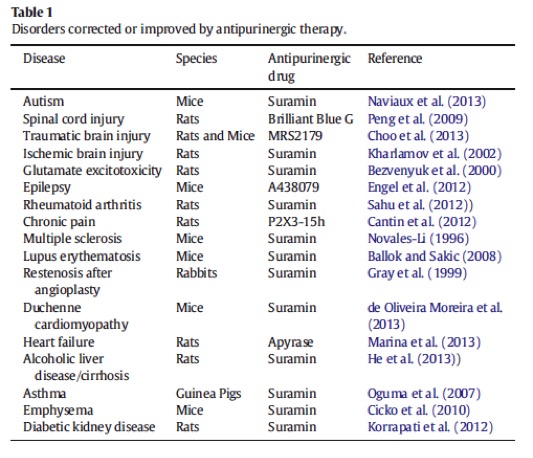
(table from Metabolic features of the cell danger response)

I’m excited about the amazing results in these children and about the promise of what this holds. But I do still have so many questions about this research and look forward to learning more and sharing more with you as I do:

  • Why was suramin used and is there a safe drug that could achieve the same results?
  • Or rather, what natural herb and/or nutrient/s can achieve the same or similar results without the side-effects?
  • What is planned for future CDR research for children with autism and for other conditions? (I do know Dr. Naviaux is planning CFS research later this year)
  • What role does vitamin B6 and serotonin play in all this? (the cell danger response yields vitamin B6 deficiency)
  • Could there be applications for anxiety for you if you have tried ALL the nutritional/biochemical approaches and are still not seeing symptom resolution?
  • Could this mechanism help you if you’ve been harmed by benzodiazepines, SSRIs and/or fluoroquinolones and can’t take any supplements?
  • Could this mechanism help when you have a combination of many stresses like past trauma, genetic defects, heavy metals, mold and Lyme, as well as gut issues and nutritional imbalances?

Feel free to share insights and questions in the comment box below.
Filed Under: Autism Tagged With: autism, suramin

Anxiety in autism, ADHD and sensory processing disorders

June 5, 2017 By Trudy Scott 8 Comments

I had the pleasure of being interviewed by Tara Hunkin on the upcoming Autism, ADHD and Sensory Processing Disorder Summit and share my expertise on anxiety since we so often see anxiety in this population. My topic is: Anxiety’s Role in ASD, ADHD and SPD and how nutrient therapy can help.

I start out sharing some of the research on the incidence and connections.

This 2009 paper Sensory Overresponsivity and Anxiety in Children With ADHD in the American Journal of Occupational Therapy, reports that:

Approximately 25% of children with attention deficit hyperactivity disorder (ADHD) have a comorbid anxiety disorder.

The purpose of this particular study was to determine whether sensory overresponsivity (SOR) or sensory processing disorders are related to increased anxiety in children with ADHD. There were twenty-four children between the age of 6 to 10 with ADHD and 24 children without ADHD.

The study concluded that:

Children in the ADHD + SOR [sensory over responsivity] group were significantly more anxious than both the ADHD-only and non-ADHD (control) groups.

Occupational therapists treating children with ADHD and SOR should be aware that these children may also have anxiety and discuss options with families for prevention or treatment.

I would add that anyone working with these children should be aware of the connections: doctors, nutritionists, psychologists and anyone else on the health team.

We also discuss this 2012 paper, also from the American Journal of Occupational Therapy – Sensory Overresponsivity and Anxiety in Typically Developing Children and Children With Autism and Attention Deficit Hyperactivity Disorder: Cause or Coexistence?

Reviews of the coexistence of ASD [autism spectrum disorder] and anxiety disorders have concluded that among children and youth with ASD, anxiety disorders are highly prevalent, clinically significant, and varied as to specific type of anxiety disorder

Approximately 25% of children with attention deficit hyperactivity disorder (ADHD) also have anxiety disorder, a rate that is elevated when ADHD is seen in conjunction with conduct or oppositional defiant disorders

The paper mentions these 3 factors as models worthy of further study in order to understand the relationship between anxiety, sensory overresponsivity, autism and ADHD:

(1) anxiety caused by, or a symptom of, SOR (primary anxiety model);
(2) SOR caused by, or a symptom of, anxiety (primary SOR model); and
(3) the presence of both anxiety and SOR, linked by way of another factor

Based on what I know about anxiety I feel it could be a combination of all of the above.

My interview also covers the following around how to address the anxiety in these children and their moms (who also often have anxiety):

  • Low serotonin anxiety, symptoms, using tryptophan and 5-HTP and precautions with using them with an SSRI
  • A young girl with RAD (reactive attachment disorder) with rage/anger, anxiety, insomnia, and sugar cravings and the successful use of chewable tryptophan, addressing low iron and a gluten-free diet
  • A young boy with OCD and the successful use of both tryptophan and inositol
  • Low GABA anxiety, the use of GABA and not phenibut, and cautions about using too much
  • A young girl with ADHD and irritability and the successful use of GABA
  • Pyroluria incidence and symptoms and how it ties back to neurotransmitter imbalances

Sensory processing disorders, ADHD and autism are not my expertise and I don’t work much with children so I’m really pleased to be bringing you this information via the other amazing speakers AND listening and learning myself!

Here are some speakers and topics I’m particularly interested in

  • Brandon Brock, RN, DC: Understanding PANS and PANDAS role in ASD, ADHD and SPD.
  • Elizabeth Mumper, MD: Mitochondrial Dysfunction: What it is and how to address the underlying causes.
  • Richard Frye, MD, Ph.D.: Cerebral Folate Deficiency: and how it impairs neurological health.
  • Nancy O’Hara, MD: What you need to know about cell danger response in ASD & other neurodevelopmental disorders.
  • John Tjenos, NTP: The importance of the vagus nerve and how to build vagal tone with essential oils.

We have so much to learn from practitioners and researchers working in this area. And children affected by these conditions do recover!

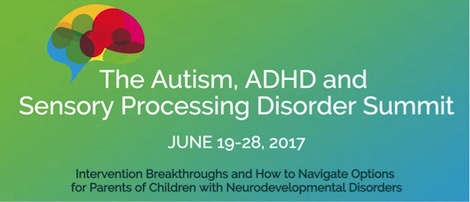
The Autism, ADHD and Sensory Processing Disorder Summit, hosted by Tara Hunkin, NTP, runs from June 19-28, 2017.

It will be 10 days of eye opening information into the root causes of your child’s neurological dysfunction. Imagine learning about what may have caused their symptoms and how to address them with nutrition and biomedical approaches and leverage the power of positive neuroplasticity to improve function, health and their lives.

Do also keep in mind that these topics may have relevance for you even if you don’t have a child with a sensory processing disorder, ADHD and/or autism. These children are the canaries in the coal mine and many of my clients with anxiety can benefit from the biomedical support that many of these speakers are addressing. Simply replace sensory processing disorder, ADHD and/or autism with anxiety and listen and learn.

You can register for The Autism, ADHD and Sensory Processing Disorder Summit here

Feel free to ask questions or provide feedback and your experiences in the comment section below.

Filed Under: Autism, Events Tagged With: ADHD, anxiety, autism, Brandon Brock, Elizabeth Mumper, GABA, inositol, Nancy O’Hara, sensory overresponsivity, Sensory Processing Disorder, serotonin, Tara Hunkin, tryptophan

Autism, anxiety and the gut: Microbiota transfer therapy or fecal microbiota transplant

April 17, 2017 By Trudy Scott 8 Comments

We know that one of your greatest ally in health is your microbiome – the trillions of bacteria that are the control center of your health! But sometimes your microbiome can actually cause problems. One way to improve the microbiome is via microbiota transfer therapy (MTT), also called fecal microbiota transplant (FMT).  

I was recently interviewed by Dr. Raphael Kellman for the Microbiome Medicine Summit 2 (it starts May 8) and shared newly published research on this approach – Microbiota Transfer Therapy alters gut ecosystem and improves gastrointestinal and autism symptoms: an open-label study

Here are some of the details of this very promising research:

  • It was a small study on children 6 to 7 years old
  • They were given antibiotics for 2 weeks
  • They were given a bowel cleanse
  • They were given an extended fecal microbiota transplant. This was a high initial dose followed by daily and lower maintenance doses for 7–8 weeks.
  • By the end of treatment and 80% reduction of gastrointestinal symptoms were seen. This included: constipation, diarrhea, indigestion, and abdominal pain.
  • These gastrointestinal symptoms improvements persisted for 8 weeks after treatment.
  • They also saw behavioral autism spectrum disorder symptoms improve significantly and remain improved 8 weeks after treatment ended. These symptoms included irritability, hyperactivity, lethargy and socialization

During the interview Dr. Kellman asked what bacterial changes were observed and I didn’t have the study on hand. I looked it up after the interview and this is what they report

Specifically, overall bacterial diversity and the abundance of Bifidobacterium, Prevotella, and Desulfovibrio among other taxa increased following MTT, and these changes persisted after treatment stopped (followed for 8 weeks).

Also

following MTT, the relative abundance of Bifidobacterium significantly increased fourfold and became comparable to its relative abundance in neurotypical children

They conclude that the MTT

shifted gut microbiota of children with ASD toward that of neurotypical children … consistent with the hypothesis that gut microbiota may be at least partially responsible for GI and ASD symptoms

Research just published last month reports similar results with digestive issues and anxiety. Germ-free mice were given the fecal microbiota from healthy control individuals or IBS patients with diarrhea, with or without anxiety. They found that the microbiota profiles in the mice matched the microbiota profiles of the human donors, affecting their digestive function and anxiety levels! I’ll share more on this study in a future blog post.

I hope you’ll join us on the Microbiome Medicine Summit 2, May 8-15, 2017 to learn more

Your host, Dr. Raphael Kellman, has seen the profound healing power of microbiome medicine and how it can address many diseases.

Learn the lessons and methodologies of microbiome medicine – it could improve your health, longevity, vitality and assist with unresolved problems!

It can enhance your brain function, improve mood, reduce anxiety and depression; and address gastrointestinal illnesses, including IBS, Crohn’s and colitis; counter newly identified GI/brain syndromes; and address autism and autoimmune diseases at the root cause!

I thoroughly enjoyed my interview with Dr. Kellman and look forward to hearing all the other great interviews. You can find details and registration here

I hope you can join us!

Filed Under: Autism, Events Tagged With: anxiety, autism, Dr. Kellman, fecal microbiota transplant, microbiome medicine summit, Microbiota transfer therapy

Anxiety, ADHD, autism and insomnia: how a weighted blanket helps

April 22, 2016 By Trudy Scott 20 Comments

anxiety-weighted-blanket

I shared this article on facebook recently: Sleeping With Weighted Blankets Helps Insomnia And Anxiety

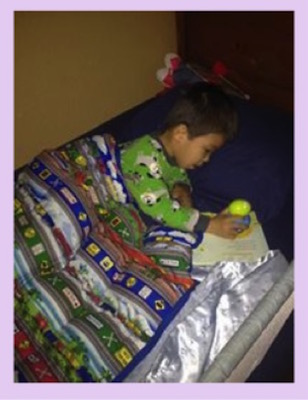
Traditionally, weighted blankets are used as part of occupational therapy for children experiencing sensory disorders, anxiety, stress or issues related to autism. ‘In psychiatric care, weighted blankets are one of our most powerful tools for helping people who are anxious, upset, and possibly on the verge of losing control,’ says Karen Moore, OTR/L, an occupational therapist in Franconia, N.H.

The response was so positive I promised I would share some blog posts with more information, so here we are. The first is to share some additional information and stories from people who have seen results or heard positive things about their use.

A 2008 study published in Occupational Therapy in Mental Health, observed the effects of a 30lb weighted blanket in a sample of 32 adults: Exploring the Safety and Therapeutic Effects of Deep Pressure Stimulation Using a Weighted Blanket. These results were observed

  • 63% reported lower anxiety after use
  • 78% preferred the weighted blanket as a calming modality

When I shared the article I asked a few questions. The first one: Have you used weighted blankets personally, or with children or recommended them to patients/clients?

The feedback I received was amazing! Lynn shared this magic blanket comment for ADHD and anxiety:

Someone close to me got one for her foster child, who suffers from emotional dysregulation, ADHD, and anxiety. It works like magic– in fact the child calls it his “magic blanket.”

She also shared this about her younger brother who is autistic and mute:

When we were young children, he would suffer terrible insomnia and agitation whenever there was a full moon. My older brother and I would take turns sleeping with him on full moon nights because that comforted him somewhat. We figured out as small children that we could get him to calm down and go to sleep by draping one leg and one arm across him. I think it was the heaviness and pressure of our limbs that settled his anxiety. Our parents could not do it, I suppose because their limbs were too large. So when I learned about Temple Grandin’s solution [more on that below], it made sense to me. Interesting, hmm

Phaedra commented saying some of us like to sleep with heavy blankets even in the summer and said this:

Deep pressure is calming and nurturing. Helps us get into our bodies and stimulates our proprioception (awareness of our body in space). I use weighted yoga bags filled with sand. Simply placing one across the chest or anywhere else on the body can be calming.

Diane shared that she used to write for a company called Mosaic Weighted Blankets and one of her jobs was to interview customers as testimonials:

I can’t tell you how blown away I was with my first few interviews. Parents of kids having autism, Asperger’s, special needs kids, kids having night terrors…it truly brought them (kids and the entire family) great peace and an ability to sleep through the night, almost immediately in many cases.

Adults also gained benefits, especially relating to issues with PTSD and restless legs syndrome.

The weight is part of the reason it provides calming…the pellets also provided something for the kids to touch/manipulate while they were trying to go to sleep. Mosaic’s blog should still have a lot of good articles on the benefits and how it is also used by occupational therapists. They can be on the expensive side if you compare it to a blanket, but if you compare it to the need for less medications and such it could be a very viable option.

There are many companies as well as sites showing how to make them yourself, just be sure you are focusing on the “pressure” effect and not the “heavy”…these blankets are not the same as just throwing 6 thick blankets on someone.

She also shared this article she wrote: Sensory Processing Disorder Treatment, Mosaic Weighted Blankets

Mosaic-Weighted-Blankets
Source: Mosaic Weighted Blankets

Tara lives in the UK and uses a medium weight duvet/comforter and has two very useful tricks/tips to hopefully get similar benefits if you don’t have access to a weighted blanket:

GREAT thread, everyone! Thanks so much! I find deep pressure *very* soothing. I don’t have a weighted blanket, but we do sleep with a 10.5 tog duvet [spring/autumn weight comforter – tog is a British measure of warmth pretty much year-round. (Ah, the “joy” of living in the UK. Not!)

good-sleep

That said, here are two other tricks: 1) if your climate allows (i.e. it’s not too hot), make yourself a *full* hot water bottle and tuck your feet *under* it. This will put some weight/pressure on your body and will feel comforting. (I’m thinking this could even be done with cold water if it’s too hot where you live.)

And 2) if you don’t have a weighted blanket, but find yourself struggling with insomnia, lie on your side and tuck your arms between your legs (so that your arms are “sandwiched” between your legs and the gravity of the leg on top presses onto your arms). It’s not the same as having the full weight of something on you, but you will be creating a bit of deep pressure all the same. I’m not an OT (I wish I were!) but if you think about what the best thing to do with a small baby is – swaddle it!!! A weighted blanket makes total sense! It’s calming to our nervous system because it “contains” us (but not in an oppressive, limiting way).

I have not verified if these two trick/tips do in fact work the same way but it makes sense that they would so feel free to share if you’ve found they work for you. I personally love the hot water bottle feeling and have always done this for as long as I can remember. I will also often start off sleeping in the arms-sandwiched position and then end up in arms folded position, sort of hugging myself. I had no idea why except that it just feels good.  

Tara mentioned also Temple Grandin’s deep pressure squeeze machine.

Temple Grandin (one of my heroes!) actually made her own deep pressure “machine” when she was little – she intuitively knew that it would help and soothe her. I’m not saying that anyone here is on the spectrum, but I have a hunch – tell me where I’m wrong – that a whole bunch of us have super “highly tuned” nervous systems! Thanks so much for all you do, Trudy and thanks to everyone in this group/community/village!

Based on the response this facebook post generated many of us have super “highly tuned” nervous systems, myself included!

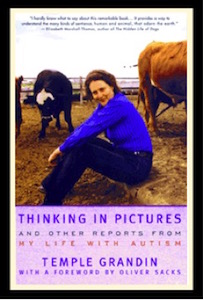
Many years ago I had read about device in her book: Thinking in Pictures, My Life with Autism many years ago. She is a fascinating woman and it’s a great read!  I see there is now an updated version.

thinking-in-pictures

Here is a little more about her: Temple Grandin PhD is an American professor of animal science at Colorado State University, world-renowned autism spokesperson and consultant to the livestock industry on animal behavior. On her website it states that she is now the most accomplished and well-known adult with autism in the world.

She writes about her squeeze machine and how it helped her anxiety and oversensitivity to touch here: Calming Effects of Deep Touch Pressure in Patients with Autistic Disorder, College Students, and Animals

I will describe here a deep touch pressure device (“squeeze machine”) that I developed to help me overcome problems of oversensitivity to touch, and that allays my nervousness. Reactions of other people to the squeeze machine, including children with autistic disorder and attention-deficit hyperactivity disorder (ADHD) are also reported.

When I posted this on facebook I also asked: “Do you have a source you can recommend -organic cotton cloth, non-plastic beads?”

I received some great resources but none that use organic cotton cloth and non-plastic beads. Some companies use stones and/or glass beads and one company has the option to send in your own fabric so you could buy your own organic cotton.  

I just feel that with sensitive individuals, having organic cotton and beads that are not plastic is the best option, especially since many of you will spend quite a bit of time under these blankets or wrapped in them.

I appreciate having the opportunity to share all the great facebook comments here. Thanks if you contributed to the discussion!. If you’d like to see all the responses here is link to the facebook post. Join us on facebook and be part of future discussions. We have a lot of fun and some healthy and sometimes heated debates too!

Stay tuned for part 2 where I will share resources for buying a weighted blanket. I’ll also share more of the research on how these weighted blankets work, resources for making one plus how to know what weight is best for you.

If you’ve used a weighted blanket for anxiety, stress reduction, ADHD or insomnia please do share how you liked it and how it helped you. Have you used one personally, or with children or recommended them to patients/clients?

If you have a resource that offers organic cotton cloth with non-plastic beads please do share it.

Filed Under: Antianxiety, Autism, Sleep Tagged With: insomnia, weighted blancket

Zinc/copper balance in autism/pyroluria: Dr. Usman

January 14, 2016 By Trudy Scott 23 Comments

This is such a great segment on zinc/copper balance in pyroluria and autism so I really want to share it. Dr. Usman was one of many excellent speakers on the Autism Intensive online event.

An excerpt from Dr. Usman’s interview: Optimizing Metabolic-Immune Communication and Function

Dr. Usman: …. In the 70s, they were breaking down individuals with schizophrenia into three phenotypes: low histamine, high histamine and pyrolurics. At the time this phenotype of pyroluria in schizophrenia was manifest as a B6, zinc deficiency and when they were given high doses of B6 or zinc, their schizophrenia improved.

Dr. Schwartz: So that was kind of your first exposure to nutritional vitamins.

Dr. Usman: Yeah. I was treating patients with depression, bipolar disorder, schizophrenia, mental illness with these various protocols that Carl Pfeiffer had developed. I started doing research in copper/zinc imbalances. We had over 500 patients with autism involved in a study that we look at there. We look at plasma zinc and serum copper ratios. When you ratio plasma zinc to serum copper what you’re looking for is a ratio of 1 to 1.

Dr. Schwartz: Balance is more important than the absolute number.

Dr. Usman: Correct.

Dr. Schwartz: Another concept that takes us outside the traditional lab values?

Dr. Usman: Exactly. You’re not looking at a lab number, but you’re looking at a ratio.

Dr. Schwartz: So both zinc and copper could be in the normal range, but the ratio can be way off. That’s something I’ve certainly seen in my patients.

Dr. Usman: Correct. When the ratio of copper and zinc is off, we want that ratio to be one-to-one. And patients with inflammatory issues and patients with various autoimmune issues and sick patients in general, their ratio ends up being disturbed. We found out in the autistic population was that 99% of them, which is a very low P value in statistics.

Dr. Schwartz: Zero, zero, zero, zero.

Dr. Usman: Zero, zero, zero, zero. 99% of them had low zinc, high copper and they had a high ratio of copper to zinc – of over 1.2.

Dr. Schwartz: So very dramatic.

Dr. Usman: Yeah. Then Dr. Walsh, who headed the Pfeiffer treatment center, had a theory that this was due to defect in a protein called metallothionein. Metallothionein is a protein that, in a way, transports copper and zinc through the body.


Filed Under: Autism, Events, Pyroluria Tagged With: autism intensive, copper, Dr. Usman, zinc

Autism Intensive – an Online Summit

January 10, 2016 By Trudy Scott 2 Comments

Autism spectrum disorders are the fastest growing developmental disorder in the world today.

In the United States a child is diagnosed every 11 minutes. For the past three decades the rates have increased at an accelerating rate and are currently 1in 68 children; 1 in 48 boys and 1 in 189 girls are affected.

This is the first online Autism Summit. The compilation of experts across multiple disciplines with cutting edge and innovative therapies make this summit unique, with a comprehensive, inclusive, credible approach to a much-debated issue.

This is a new online event I just heard about from one of the hosts Mike Mutzel and have to share. So many topics are equally relevant when it comes to anxiety (in many interviews you could replace the word autism with anxiety as there are so many overlaps). Of course, if you do have loved ones or patients/clients with autism then this event is not to be missed.

Here is a short video clip of Dr. Ben Lynch: Advanced Strategies to Optimize Methylation and Glutathione Pathways

And a short video clip of Richard Deth, PhD: Nutritional Support for Attention and Focus: the Methylation and Dopamine Connection

Here are some of the many other excellent-looking interviews:

  • Jim Adams, PhD: How Diet and the Environment Affect the Gut Microbiome and Nutrient Status
  • Sidney M Baker, MD: Calming Inflammation and Restoring Immune Tolerance through Helminth Therapy
  • Jolene Brighten, ND: Pregnancy and Pre-Pregnancy Autism Prevention
  • Kathleen DiChiara: Sources of Inflammatory Triggers and Toxins in Our Food
  • Richard Frye, MD, PhD: Balance the Web of Methylation, Glutathione and Detoxification Metabolism
  • Mark Hyman, MD: Restoring Immune and Mitochondrial Imbalances
  • Russ Jaffe, MD, PhD: Whole Food Strategies to Balance Digestion and Glutathione Metabolism
  • Kent MacLeod, RPh: Making Sense of Organic Acids and Choline Metabolism
  • Julie Matthews: Nourishing and Anti-Inflammatory Diets for Autism, Including Picky Eaters

You can register here:
https://mutzelnutrition.isrefer.com/go/1129/trudyscottcn

Filed Under: Autism, Events Tagged With: autism intensive

  • « Go to Previous Page
  • Page 1
  • Page 2
  • Page 3
  • Page 4
  • Go to Next Page »

Primary Sidebar

GABA QuickStart Homestudy

gaba quickstart homestudy

Free Report

9 Great Questions Women Ask about Food, Mood and their Health

You'll also receive a complimentary subscription to my ezine "Food, Mood and Gal Stuff"


Connect with me

Popular Posts

  • Amino Acids Mood Questionnaire from The Antianxiety Food Solution
  • The Antianxiety Food Solution Amino Acid and Pyroluria Supplements
  • Pyroluria Questionnaire from The Antianxiety Food Solution
  • Collagen and gelatin lower serotonin: does this increase your anxiety and depression?
  • Tryptophan for the worry-in-your-head and ruminating type of anxiety
  • GABA for the physical-tension and stiff-and-tense-muscles type of anxiety
  • The Antianxiety Food Solution by Trudy Scott
  • Seriphos Original Formula is back: the best product for anxiety and insomnia caused by high cortisol
  • Am I an anxious introvert because of low zinc and vitamin B6? My response to Huffington Post blog
  • Vagus nerve rehab with GABA, breathing, humming, gargling and key nutrients

Recent Posts

  • Her cravings for chips and peanut butter were triggered by stress: GABA ends cravings and reduces physical tension and fear of heights
  • It is truly miraculous to be able to move through life without crippling anxiety and panic
  • GABA and tryptophan combo provide immediate and noticeable relief for tremors and cervical dystonia in just 7 days
  • Red light therapy for back and neck pain, plantar fasciitis and low mood – a complement to the amino acids GABA, DPA and tryptophan
  • What do I use instead of Seriphos to help lower high cortisol that is affecting my sleep and making me anxious at night?

Categories

  • 5-HTP
  • AB575
  • Addiction
  • ADHD
  • Adrenals
  • Alcohol
  • Allergies
  • Alzheimer's disease
  • Amino Acids
  • Anger
  • Antianxiety
  • Antianxiety Food Solution
  • Antidepressants
  • Anxiety
  • Anxiety and panic
  • Autism
  • Autoimmunity
  • benzodiazapines
  • Bipolar disorder
  • Books
  • Caffeine
  • Cancer
  • Candida
  • Children/Teens
  • Collagen
  • Cooking equipment
  • Coronavirus/COVID-19
  • Cravings
  • Depression
  • Detoxification
  • Diabetes
  • Diet
  • DPA/DLPA
  • Drugs
  • EFT/Tapping
  • EMF
  • EMFs
  • Emotional Eating
  • Endorphins
  • Environment
  • Essential oils
  • Events
  • Exercise
  • Fear
  • Fear of public speaking
  • Fertility and Pregnancy
  • Fish
  • Food
  • Food and mood
  • Functional neurology
  • GABA
  • Gene polymorphisms
  • General Health
  • Giving
  • Giving back
  • Glutamine
  • Gluten
  • GMOs
  • Gratitude
  • Gut health
  • Heart health/hypertension
  • Histamine
  • Hormone
  • Hyperparathyroidism
  • Hypoglycemia
  • Immune system
  • Inflammation
  • Insomnia
  • Inspiration
  • Introversion
  • Joy and happiness
  • Ketogenic diet
  • Lithium orotate
  • Looking awesome
  • Lyme disease and co-infections
  • MCAS/histamine
  • Medication
  • Men's health
  • Mental health
  • Mercury
  • Migraine
  • Mold
  • Movie
  • MTHFR
  • Multiple sclerosis
  • Music
  • NANP
  • Nature
  • Nutritional Psychiatry
  • OCD
  • Osteoporosis
  • Oxalates
  • Oxytocin
  • Pain
  • Paleo
  • Parasites
  • Parkinson’s disease
  • PCOS
  • People
  • PMS
  • Postpartum
  • PTSD/Trauma
  • Pyroluria
  • Questionnaires
  • Real whole food
  • Recipes
  • Research
  • Schizophrenia
  • serotonin
  • SIBO
  • Sleep
  • Special diets
  • Sports nutrition
  • Stress
  • Sugar addiction
  • Sugar and mood
  • Supplements
  • Teens
  • Testimonials
  • Testing
  • The Anxiety Summit
  • The Anxiety Summit 2
  • The Anxiety Summit 3
  • The Anxiety Summit 4
  • The Anxiety Summit 5
  • The Anxiety Summit 6
  • Thyroid
  • Thyroid health
  • Toxins
  • Tryptophan
  • Tyrosine
  • Uncategorized
  • Vegan/vegetarian
  • Women's health
  • Yoga

Archives

  • May 2026
  • April 2026
  • October 2025
  • September 2025
  • August 2025
  • July 2025
  • June 2025
  • May 2025
  • April 2025
  • March 2025
  • February 2025
  • January 2025
  • November 2024
  • October 2024
  • September 2024
  • August 2024
  • July 2024
  • June 2024
  • May 2024
  • April 2024
  • March 2024
  • February 2024
  • January 2024
  • December 2023
  • November 2023
  • October 2023
  • September 2023
  • August 2023
  • July 2023
  • June 2023
  • May 2023
  • April 2023
  • March 2023
  • February 2023
  • January 2023
  • December 2022
  • November 2022
  • October 2022
  • September 2022
  • August 2022
  • July 2022
  • June 2022
  • May 2022
  • April 2022
  • March 2022
  • February 2022
  • January 2022
  • December 2021
  • November 2021
  • October 2021
  • September 2021
  • August 2021
  • July 2021
  • June 2021
  • May 2021
  • April 2021
  • March 2021
  • February 2021
  • January 2021
  • December 2020
  • November 2020
  • October 2020
  • September 2020
  • August 2020
  • July 2020
  • June 2020
  • May 2020
  • April 2020
  • March 2020
  • February 2020
  • January 2020
  • December 2019
  • November 2019
  • October 2019
  • September 2019
  • August 2019
  • July 2019
  • June 2019
  • May 2019
  • April 2019
  • March 2019
  • February 2019
  • January 2019
  • December 2018
  • November 2018
  • October 2018
  • September 2018
  • August 2018
  • July 2018
  • June 2018
  • May 2018
  • April 2018
  • March 2018
  • February 2018
  • January 2018
  • December 2017
  • November 2017
  • October 2017
  • September 2017
  • August 2017
  • July 2017
  • June 2017
  • May 2017
  • April 2017
  • March 2017
  • February 2017
  • January 2017
  • December 2016
  • November 2016
  • October 2016
  • September 2016
  • August 2016
  • July 2016
  • June 2016
  • May 2016
  • April 2016
  • March 2016
  • February 2016
  • January 2016
  • December 2015
  • November 2015
  • October 2015
  • September 2015
  • August 2015
  • July 2015
  • June 2015
  • May 2015
  • April 2015
  • March 2015
  • February 2015
  • January 2015
  • December 2014
  • November 2014
  • October 2014
  • September 2014
  • August 2014
  • July 2014
  • June 2014
  • May 2014
  • April 2014
  • March 2014
  • February 2014
  • January 2014
  • December 2013
  • November 2013
  • October 2013
  • September 2013
  • August 2013
  • July 2013
  • June 2013
  • May 2013
  • April 2013
  • March 2013
  • February 2013
  • January 2013
  • December 2012
  • November 2012
  • October 2012
  • August 2012
  • July 2012
  • June 2012
  • May 2012
  • April 2012
  • March 2012
  • February 2012
  • January 2012
  • December 2011
  • November 2011
  • October 2011
  • September 2011
  • August 2011
  • July 2011
  • June 2011
  • May 2011
  • April 2011
  • March 2011
  • February 2011
  • January 2011
  • December 2010
  • October 2010
  • September 2010
  • July 2010
  • May 2010
  • April 2010
  • March 2010
  • February 2010
  • January 2010
  • November 2009

Share the knowledge!

The above statements have not been evaluated by the Food and Drug Administration. Products listed in this website are not intended to diagnose, treat, cure or prevent any disease.

The information provided on this site is for informational and educational purposes only and is not intended as a substitute for advice from your physician or other health care professional. You should consult with a healthcare professional before starting or modifying any diet, exercise, or supplementation program, before taking or stopping any medication, or if you have or suspect you may have a health problem.


Copyright © 2026 Trudy Scott. All Rights Reserved. | Privacy | Terms and Conditions | Refund Policy | Medical Disclaimer

Free Report

9 Great Questions Women Ask about Food, Mood and their Health

You’ll also receive a complimentary subscription to my ezine “Food, Mood and Gal Stuff”