• Skip to primary navigation
  • Skip to main content
  • Skip to primary sidebar

everywomanover29 blog

Food, Mood and Women's Health – Be your healthiest, look and feel great!

  • Blog
  • About
  • Services
  • Store
  • Resources
  • Testimonials
  • The Book
  • Contact
  • Search this site

Archives for May 2025

[NEW] D-Phenylalanine (DPA) powder for boosting endorphins: improve mood, reduce comfort eating and ease pain

May 30, 2025 By Trudy Scott 30 Comments

dpa for endorphins

D-Phenylalanine (DPA) is an amino acid that destroys the enzyme that breaks down endorphins. Endorphins are feel-good chemicals that you experience with an endorphin rush when you go for a run or when someone gives you a big hug, when you show kindness to someone or someone does something nice for you. Taking the amino acid DPA, as a supplement helps to boost your endorphins in order to improve mood, reduce pain and cravings or comfort-eating.

I’ve recommended the Lidtke Endorphigen product (500mg DPA) to my clients and community for many years, and wrote about it in my book and on various blog posts. Because product formulations have shifted and capsules changed, I’ve revised my recommendations over the years. I’ve suggested swallowing a capsule, then suggested chewing the capsule (when the company used gelatin capsules and clients saw quicker results than swallowing the capsule) and then suggested opening the capsule and tipping the contents on to the tongue (when the company  switched to vegan capsules).

I then also started recommending Doctor’s Best D-Phenylalanine 500mg as another option and because many in the community didn’t like the taste and texture of the Lidtke product (more on that below). This product has now been discontinued.

The purpose of this blog post is to announce a new product: D-Phenylalanine (DPA) powder and share my current recommendations on the use of DPA for endorphin support. And some examples and feedback (from clients and my personal experiences too) in case you’re new to this amino acid and low endorphins.

Lidtke Endorphigen with 500mg D-phenylalanine (capsules)

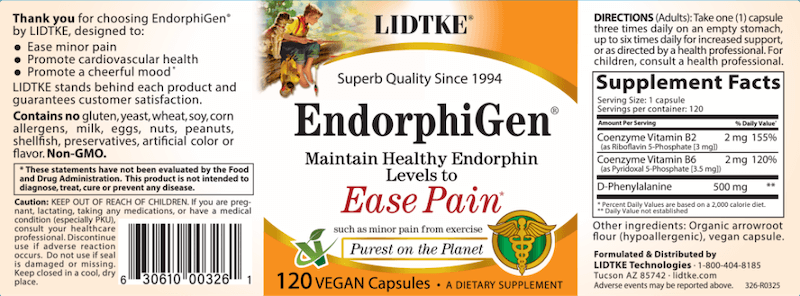
Here is the new label for the Lidtke Endorphigen with 500mg D-phenylalanine. As you can see it also contains vitamin B2 and vitamin B6. The latest version now contains arrowroot flour as a filler.
lidtke endorphigen

This product has been a firm favorite of mine for many years and the formulation has shifted over the years.

Last year I did a taste difference blog on Lidtke Endorphigen and Doctor’s Best D-phenylalanine – Lidtke Endorphigen vs Doctor’s Best D-phenylalanine: the taste difference and endorphin boosting benefits for mood and cravings

Many of my clients (and myself included) describe the opened DPA (from capsules) as a dark-chocolate bitter like taste that is not unpleasant. However, about half my clients don’t particularly like the taste of DPA and one woman in my community, Ali, was ready to give up on the Lidtke Endorphigen product because of the taste. I suspect it was the B vitamins that she didn’t like.

Oh goodness. If I open the Endorphigen on my tongue, it’s just awful. I might be able to get 1/4 of it but that’s it. And the taste stays there for at least an hour. No sense of chocolate in there for me. Isn’t that interesting that you and others like the taste. I consider myself pretty open to whatever needs to be done but wow, this is almost no way.

I reached out to Lidtke sharing the taste issue and the above blog post, and asked if they would be willing to offer a DPA only product and suggested a powder.

Lidtke appreciated the fact that I shared your taste issues and feedback, and my request for a powder-only product of d-phenyalanine/DPA has come to fruition.

Doctor’s Best D-phenylalanine has been discontinued, so this is great news taste-wise and for a number of other reasons (listed below)!

The brand new Lidtke D-Phenylalanine (DPA) powder

Here is the label for the brand new Lidtke D-Phenylalanine (DPA) powder. As you can see it’s only DPA – no added B vitamins or fillers.

lidtke d-phenylalanine

Here are the advantages of DPA in powder form:

  • A capsule opened on to the tongue offers mood and pain benefits so why not simply use the powder instead
  • Fewer capsules to swallow
  • Fewer digestive issues the cellulose of vegan capsules are not tolerated (I’m hearing more and more feedback about this)
  • Convenient for kids and older adults who may have problems swallowing capsules
  • A pleasant dark-chocolate like taste with none of bitterness of B vitamins
  • Hopefully, more affordable than the capsules

My personal experience with DPA

Personally I have used DPA over the years with much success. It’s my go-to amino acid for all kinds of pain – a sprained ankle, a pulled back muscle, a tension headache (and even a headache caused by chocolate) and belly pain during an IBS flare.

I’ve also used it for endorphin support when I have not been able to exercise due to an injury. I immediately notice a subtle mood boost and a reduction in comfort-eating and carb-cravings.

I have the new Endorphigen 500mg DPA product (i.e. the capsules) and it’s helping in the same way as the previous version.

I have yet to try the new DPA (d-phenylalanine) powder myself but will report back as soon as I have had a chance to do so – on the taste, the texture and the effectiveness.

Other DPA feedback from the community

I suspect many folks who already like the Lidtke 500mg Endorphigen and find opening the capsules to be more effective, are going to like the new powder:

  • “I love using the DPA! I use the Lidke brand. Very helpful in improving mood and anxiety. Open on my tongue. I like the taste!” ~ Lynn
  • “It’s interesting to read your recommendation to open the capsule … I had just started doing that! (Already using powdered forms of other aminos) Anyone looking thru my trash might wonder what I’m up to. This method really works for me.” ~ Joan

Here are a few blog posts illustrating the use of DPA in multiple sclerosis, weepiness, physical pain, emotional pain and resilience, cravings/emotional eating and even helping to wean off prescription pain medication:

  • Multiple sclerosis: low endorphin research and the amino acid DPA (d-phenylalanine) for pain, depression, comfort and trauma support “The endogenous opioid system is …well known to play a role in the development of chronic pain and negative affect [i.e. depression], both of which are common comorbidities in MS.”
  • DPA for weepiness, pain and comfort and reward eating
  • The individual amino acids glutamine, GABA, tryptophan (or 5-HTP), DPA and tyrosine are powerful for eliminating sugar cravings, often within 5 minutes
  • When using the amino acid DPA (d-phenylalanine) I have more resilience and more buffer in the caregiving work I do, and just the oops’s of life As I mentioned above, using DPA over these holidays also gave me more resilience and the endorphin boost I needed help with the emotional pain of losing my mom.
  • Wean off prescription pain medication, improve sleep and reduce emotional eating with DPA (an endorphin-boosting amino acid)

Be sure to use the search feature on the blog to find additional applications of DPA.

Additional resources when you are new to using DPA, tryptophan, GABA, and other amino acids as supplements

As always, I use the symptoms questionnaire to figure out if low endorphins or low serotonin or low GABA or other neurotransmitter imbalances may be an issue.

If you suspect low levels of any of the neurotransmitters and do not yet have my book, The Antianxiety Food Solution – How the Foods You Eat Can Help You Calm Your Anxious Mind, Improve Your Mood, and End Cravings, I highly recommend getting it and reading it before jumping in and using amino acids on your own so you are knowledgeable. And be sure to share it with the practitioner/health team you or your loved one is working with.

There is an entire chapter on the amino acids and they are discussed throughout the book in the sections on gut health, gluten, blood sugar control (this is covered in an entire chapter too), sugar cravings, anxiety and mood issues.

The book doesn’t include product names (per the publisher’s request) so this blog, The Antianxiety Food Solution Amino Acid and Pyroluria Supplements, lists the amino acids that I use with my individual clients and those in my group programs.

If, after reading this blog and my book, you don’t feel comfortable figuring things out on your own (i.e. doing the symptoms questionnaire and respective amino acids trials), a good place to get help is the GABA QuickStart Program (if you have low GABA symptoms). This is a paid online/virtual group program where you get my guidance and community support.

If you are a practitioner, join us in The Balancing Neurotransmitters: the Fundamentals program. This is also a paid online/virtual program with an opportunity to interact with me and other practitioners who are also using the amino acids.

Wrapping up and your feedback

My current recommendations for endorphin support are as follows:

  • Lidtke Endorphigen with 500mg D-phenylalanine – capsules swallowed
  • Lidtke Endorphigen with 500mg D-phenylalanine – capsules opened on to the tongue and held in the mouth 1-2 minutes
  • Lidtke D-phenylalanine powder – on to the tongue and held in the mouth 1-2 minutes (assuming it works as well as Endorphigen)

Now I’d love to hear from you – how has DPA helped your mood, cravings and pain?

Have you used Lidtke Endorpigen 500mg or Doctor’s Best D-Phenylalanine in the past – capsules swallowed or opened on the tongue? Have you had any issues with the taste or texture?

Are you interested in trying the new Lidtke D-Phenylalanine powder?

If you’re a practitioner do you use DPA with your clients/patients?

Feel free to share and ask your questions below.

Filed Under: Cravings, Depression, Endorphins, Pain Tagged With: amino acid, comfort eating, cravings, d-phenylalanine, Doctor’s Best D-Phenylalanine, DPA, DPA powder, endorphins, Lidtke Endorphigen, mood, pain, taste, texture

Mitochondrial disruption and systemic benzodiazepine side effects/tapering issues: pain, fatigue, brain fog, insomnia and anxiety

May 16, 2025 By Trudy Scott 19 Comments

mitochondrial disruption

A recent article published on Naturopathic Doctor News & Review, Mitochondrial Disruption Explains Systemic Benzodiazepine Side Effects, reports on new research that identifies a possible mechanism for wide-ranging side effects of these antianxiety medications. In addition to side-effects there can also be persistent withdrawal symptoms that continue after they have been tapered:

Benzodiazepines impair mitochondrial signaling across multiple systems in the body, not just GABA receptors in the brain. Mitochondria play a central role in regulating cell energy metabolism, hormone synthesis, oxidative stress balance, and immune response.

Disrupting these pathways has systemic consequences that explain the wide range of symptoms patients report during chronic use and withdrawal.

These findings offer a cellular mechanism for persistent fatigue, pain syndromes, cognitive impairment, and inflammatory symptoms that may continue after tapering.

Many medications impact the mitochondria but this new research has identified a new possible mechanism: tryptophan-rich sensory proteins (HsTSPO1) and reactive oxygen species.

In this blog I share more about HsTSPO1 and this new research, additional symptoms of benzodiazepine withdrawal, what we already know about mitochondria and anxiety, other medications and environmental toxicants that affect the mitochondria, and some key nutrients for mitochondrial support.

Benzodiazepines bind to tryptophan-rich sensory proteins (HsTSPO1)

This article from Virginia Commonwealth University, Researchers may have solved decades-old mystery behind benzodiazepine side effects, discusses the new study and HsTSPO1:

Benzodiazepines produce their therapeutic effect by binding with GABAA receptors in the brain; however, the drug has an equally strong affinity to human mitochondrial tryptophan-rich sensory proteins (HsTSPO1), located on the outer membrane of mitochondria in cells.

This type of protein is linked to several neurodegenerative diseases, including Alzheimer’s, and researchers have suspected that HsTSPO1 may be involved in certain side effects of benzodiazepine drugs.

And “when valium and other benzodiazepines bind to HsTSPO1, they inhibit the protein’s ability to manage ROS (reactive oxygen species) levels in our cells … this both reduces the production and the neutralization of ROS.

This may help explain why such medications cause side effects over time

And the authors propose this: “The new insights into HsTSPO1’s function could help pharmaceutical companies develop improved benzodiazepines.”

I have a better idea and propose we create more awareness about how these and other medications affect the mitochondria. I believe all medications should include a warning about these mitochondrial effects, and that mitochondrial support should be included when these medications are prescribed and then tapered.

This may include a combination of the same nutrients used for neurodegenerative disorders caused by mitochondrial dysfunction – CoQ10, B-vitamins/NADH, L-carnitine, vitamin D, and alpha-lipoic acid. And should also include infrared sauna, red light therapy and other detox approaches.

Ideally, this awareness will increase the use of the amino acids GABA, tryptophan, 5-HTP and DPA (d-phenylalanine), and other nutritional approaches instead of long-term benzodiazepine prescriptions for anxiety, pain and sleep issues. More on that below.

Some of the many other symptoms of benzodiazepine withdrawal

This paper from 1994, The benzodiazepine withdrawal syndrome describes some of the many symptoms:

Physiological dependence on benzodiazepines is accompanied by a withdrawal syndrome which is typically characterized by sleep disturbance, irritability, increased tension and anxiety, panic attacks, hand tremor, sweating, difficulty in concentration, dry wretching and nausea, some weight loss, palpitations, headache, muscular pain and stiffness and a host of perceptual changes.

The mechanism is not addressed in the paper but in the light of this new research, it’s possible that tryptophan-rich sensory proteins, increased reactive oxygen species and mitochondrial dysfunction are factors.

Brain mitochondria: anxiety and fear

I first addressed mitochondrial dysfunction during the 2019 Anxiety Summit: Gut-Brain Axis. One of my guest experts, Tara Hunkin, NTP, CGP, RWP shared these highlights from this review paper – Anxiety and Brain Mitochondria: A Bidirectional Crosstalk:

  • Despite the established link between mitochondrial dysfunction and various psychiatric disorders, the contribution of mitochondria in anxiety disorders has not been extensively addressed.
  • Mitochondria are emerging as modulators of anxiety-related behavior, as evidenced both in animal and human studies.
  • There is a bidirectional link between mitochondria and anxiety. Mitochondrial, energy metabolism, and oxidative stress alterations are observed in high anxiety; conversely, changes in mitochondrial function can lead to heightened anxiety.

More recent research, published in 2024, The Emerging Role of Brain Mitochondria in Fear and Anxiety, supports this and proposes “a model in which mitochondrial function is critical for regulating the neural circuits that underpin fear and anxiety behaviors, highlighting how mitochondrial dysfunction can lead to their pathological manifestations.”

The new HsTSPO1 research builds on this research, identifying a possible mechanism and further supporting the oxidative stress connection.

On a side note, I’m really intrigued to learn more about these tryptophan-rich sensory proteins!

Other medications and environmental toxicants that impact the mitochondria

Keep in mind that it’s not only benzodiazepines that impact the mitochondria.

This 2023 paper, Drug-induced mitochondrial toxicity: Risks of developing glucose handling impairments, explores the correlation between potential mitochondrial dysfunction caused by selected medications, specifically looking at their effects on insulin signalling and glucose handling:

Drug classes such as statins, anti-diabetics, anti-epileptics, NSAIDs, anti-depressants, and certain antibiotics have been identified to induce mitochondrial toxicity.

This 2022 paper, Environmental Chemical Exposures and Mitochondrial Dysfunction: a Review of Recent Literature, states this:

Classes of environmental toxicants such as polycyclic aromatic hydrocarbons, air pollutants, heavy metals, endocrine-disrupting compounds, pesticides, and nanomaterials can damage the mitochondria in varied ways, with changes in mtDNA copy number and measures of oxidative damage the most commonly measured in human populations.

Amino acids and nutritional support: instead of benzos and before/during tapering

As I mentioned above, this awareness will hopefully increase the use of the amino acids GABA, tryptophan, 5-HTP and DPA (d-phenylalanine), and other nutritional approaches instead of long-term benzodiazepine prescriptions for anxiety, pain and sleep issues.

When it comes to tapering, it’s best to be nutritionally stable BEFORE starting to taper. This means eating real whole food that includes quality animal protein, healthy fats, fermented foods and organic vegetables and fruit; eating for blood sugar control; quitting sugar, gluten, alcohol and caffeine; addressing gut and adrenal health; addressing pyroluria and key nutritional deficiencies like low zinc, low iron, low vitamin D and more. This is all covered in my book.

Addressing neurotransmitter imbalances with amino acids before and during the tapering helps immensely too.  And so does mitochondrial support.

And a reminder: tapering should always be done very very very slowly and under medical supervision with the prescribing doctor.

Additional resources when you are new to using GABA, tryptophan and other amino acids as supplements

As always, I use the symptoms questionnaire to figure out if low serotonin or low GABA or other neurotransmitter imbalances may be an issue.

If you suspect low levels of any of the neurotransmitters and do not yet have my book, The Antianxiety Food Solution – How the Foods You Eat Can Help You Calm Your Anxious Mind, Improve Your Mood, and End Cravings, I highly recommend getting it and reading it before jumping in and using amino acids on your own so you are knowledgeable. And be sure to share it with the practitioner/health team you or your loved one is working with.

There is an entire chapter on the amino acids and they are discussed throughout the book in the sections on gut health, gluten, blood sugar control (this is covered in an entire chapter too), sugar cravings, anxiety and mood issues.

The book doesn’t include product names (per the publisher’s request) so this blog, The Antianxiety Food Solution Amino Acid and Pyroluria Supplements, lists the amino acids that I use with my individual clients and those in my group programs.

If, after reading this blog and my book, you don’t feel comfortable figuring things out on your own (i.e. doing the symptoms questionnaire and respective amino acids trials), a good place to get help is the GABA QuickStart Program (if you have low GABA symptoms). This is a paid online/virtual group program where you get my guidance and community support.

If you are a practitioner, join us in The Balancing Neurotransmitters: the Fundamentals program. This is also a paid online/virtual program with an opportunity to interact with me and other practitioners who are also using the amino acids.

Wrapping up and your feedback

Are you aware that benzodiazepines and many other medications can play a role in mitochondrial disruption? And that this mitochondrial disruption is likely a factor when it comes to systemic benzodiazepine side effects and tapering issues such as pain, fatigue, brain fog, insomnia and anxiety (and more)?

Have you considered or used mitochondrial support when tapering one of the benzodiazepines and has this approach helped?

And has it helped to be nutritionally stable BEFORE tapering and using amino acids to help with tapering? What changes did you make and which amino acids helped?

If you’re a practitioner is this a topic you discuss and address with your clients/patients?

Please do share in the comments below.

Filed Under: Anxiety, GABA, Insomnia Tagged With: alpha-lipoic acid, antianxiety medications, anxiety, B vitamins, benzodiazepine, brain fog, cell energy metabolism, CoQ10, fatigue, GABA, HsTSPO1, insomnia, L-carnitine, medications, mitochondria, Mitochondrial disruption, oxidative stress, pain, reactive oxygen species, side-effects, tapering, tryptophan-rich sensory proteins, vitamin D

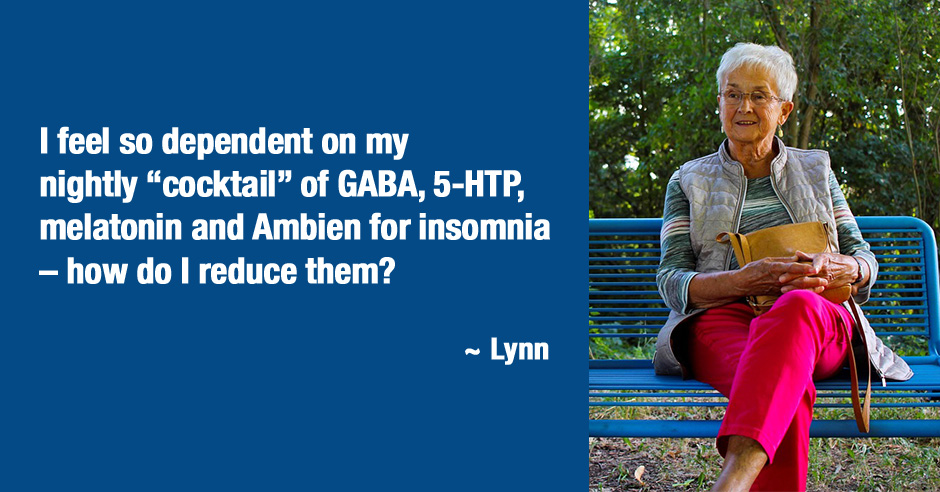
I feel so dependent on my nightly “cocktail” of GABA, 5-HTP, melatonin and Ambien for insomnia – how do I reduce them?

May 2, 2025 By Trudy Scott 3 Comments

reducing gaba

I have had insomnia for years. I have used GABA Calm with good results and also 5-HTP, melatonin and Ambien. Recently I discovered I have mild sleep apnea and have made huge progress in modifying my night awakening.

With my sleep apnea issues addressed, I would like to try to reduce my supplements and the Ambien… but the thought of this causes more anxiety. I feel so dependent on my nightly “cocktail”.

What is the best way to reduce the fear of withdrawal and my nagging brain that tells me I “need” these things?

Many thanks for all the wonderful information you share!

Lynn asked this on one of the blogs and since it’s a common question I’m sharing my feedback in this new blog post. I’m pleased to hear she has discovered sleep apnea is a factor as it’s not always checked and it definitely can cause disrupted sleep and waking in the night.

There is no need to taper amino acids and melatonin but I typically have clients gradually reduce them, one at a time, especially when they are concerned and are not sure how much they may still be helping.

She has a nagging feeling she still needs these supplements, feels dependent on them and feels anxious about stopping. All of this, in conjunction with the fact that stopping a sleep medication such as Ambien can also cause rebound insomnia has me advising a go-slow approach in a situation like this. Also, Ambien does need to be tapered very slowly and under medical supervision, so she would need to keep this in mind too.

A go-slow approach and one amino acid at a time

Lynn may still need one or more of the GABA, 5-HTP and/or melatonin and we don’t want to lose any gains.

As mentioned above, there is no need to taper amino acids and melatonin but I typically have clients gradually reduce them, one at a time, especially when they are concerned and are not sure how much they may still be helping.

I would start with assessing other low GABA symptoms and other low serotonin symptoms and if there are none, start with reducing either GABA or 5-HTP over a few weeks, watching for worsening sleep or other symptoms showing up. She could then do the same with melatonin.

As a reminder, other than sleep issues (with physical tension at night), these are low GABA symptoms: feeling anxious with physical-tension and stiff-and-tense-muscles, overwhelm, feelings of panic, and the need to self-medicate to calm down, often with alcohol but sometimes with carbs and sugary foods. You can also experience anger, rage and agitation, poor focus, intrusive thoughts/overactive brain, spasms, visceral pain/belly pain with IBS and more. You can read the entire list of low GABA signs and symptoms here.

With low serotonin, we see sleep issues with ruminating thoughts and worry (at night too), and fears, phobias, ruminations, obsessing, feelings of panic, perfectionism and lack of confidence, low mood, rage, anger and irritability.

Lynn has a nagging feeling she still needs these supplements, feels dependent on them and feels anxious about stopping. All this is a clue she may still need them or at least need one or more to some extent. Doing a reverse-trial of reducing each one, one at a time, with careful tracking is my approach.

I would tackle the above amino acid and melatonin reduction – if she decides to go ahead with it – only AFTER she has worked with her prescribing doctor on a slow taper on the Ambien. Stopping a sleep medication such as Ambien can cause rebound insomnia/discontinuation syndrome and she may find she does still need nutritional support to tide her over the Ambien taper period. This may be the same as she is currently using or she may even need to adjust upwards on one or more.

Ambien: dependence, withdrawal, rebound insomnia, slow tapering, falls and memory issues

Ambien/Zolpidem “is a non-benzodiazepine receptor modulator primarily used in the …short-term treatment of insomnia aimed at patients with difficulty falling asleep,” increasing “GABA inhibitory effects leading to sedation.”

I seldom see it used short-term i.e. 7 to 10 days. With longer-term use, “this drug has a high potential for overuse and daily dependence” and “withdrawal symptoms may occur if the zolpidem dose is tapered off rapidly or discontinued.”

Other factors to be aware of:

  • Complex sleep behaviors can occur after using zolpidem, such as sleep-driving, sleep-walking, and engaging in activities while not fully awake
  • Changes in behavior and abnormal thinking have been reported after zolpidem administration. In addition, patients have demonstrated aggressiveness and extroversion uncommon for the person’s usual behavior
  • Worsening of depression or suicidal ideation may occur with zolpidem therapy

I encourage you to read the article here and be fully informed.

This 2024 paper supports that “long-term use of Zolpidem may lead to drug tolerance, dependence, rebound phenomena, and withdrawal symptoms, making discontinuation difficult.” Other concerns include: dizziness, headache, falls, and cognitive decline.

Many of the papers published prior to 2023 do not report many of these issues, however awareness is growing. This 2024 paper, Case report: Additional grounds for tighter regulation? A case series of five women with zolpidem dependence from a Brazilian women-specific substance use disorder outpatient service, also reports adverse effects in women such as “memory and social impairment, falls, seizures” and “withdrawal symptoms, including rebound insomnia, social impairment, and craving.”

The authors recommend tighter regulation, stating that: “The surge in zolpidem prescriptions, driven by its perceived safety and low abuse potential compared to benzodiazepines, may lead to a global health issue of dependence.”

Because of much of this it’s important to work with the prescribing doctor on doing a very slow taper under their medical supervision. She may need to adjust her amino acids up during the taper period if her sleep gets worse in the short-term. And then do the taper approach I mentioned at the start of this blog.

With these safety, dependence and withdrawal issues, I would love to see GABA, tryptophan/5-HTP and/or melatonin (and other nutritional and functional medicine approaches), addressing sleep apnea and lifestyle factors/sleep hygiene be considered as the first approach for sleep issues – instead of Ambien/Zolipdem.

Additional resources when you are new to using GABA, 5-HTP and other amino acids as supplements

As always, I use the symptoms questionnaire to figure out if low serotonin or low GABA or other neurotransmitter imbalances may be an issue.

If you suspect low levels of any of the neurotransmitters and do not yet have my book, The Antianxiety Food Solution – How the Foods You Eat Can Help You Calm Your Anxious Mind, Improve Your Mood, and End Cravings, I highly recommend getting it and reading it before jumping in and using amino acids on your own so you are knowledgeable. And be sure to share it with the practitioner/health team you or your loved one is working with.

There is an entire chapter on the amino acids and they are discussed throughout the book in the sections on gut health, gluten, blood sugar control (this is covered in an entire chapter too), sugar cravings, anxiety and mood issues.

The book doesn’t include product names (per the publisher’s request) so this blog, The Antianxiety Food Solution Amino Acid and Pyroluria Supplements, lists the amino acids that I use with my individual clients and those in my group programs.

If, after reading this blog and my book, you don’t feel comfortable figuring things out on your own (i.e. doing the symptoms questionnaire and respective amino acids trials), a good place to get help is the GABA QuickStart Program (if you have low GABA symptoms). This is a paid online/virtual group program where you get my guidance and community support.

If you are a practitioner, join us in The Balancing Neurotransmitters: the Fundamentals program. This is also a paid online/virtual program with an opportunity to interact with me and other practitioners who are also using the amino acids.

Wrapping up and your feedback

I appreciate Lynn for asking this question and want to acknowledge that she is wise to be cautious and have concerns about the best way to tackle this. And she may find she does have a physical dependence on the Ambien.

Have you found that GABA, 5-HTP and/or melatonin helped/helps with your sleep issues?

And is sleep apnea a factor for you too?

And have you been prescribed Ambien and had any of the issues mentioned?

And how have you adjusted your amino acids and other sleep supplements as you’ve tapered your sleep medication?

Feel free to share your feedback and ask your questions below in the comments section.

Filed Under: Anxiety, GABA, Insomnia Tagged With: 5-HTP, Ambien, amino acids, anxiety, cognitive, dependent, falls, fear of withdrawal, GABA, GABA Quickstart, insomnia, melatonin, overwhelm, physical-tension, Rebound insomnia, sleep, Sleep apnea, sleep issues, Zolpidem

Primary Sidebar

NEW! GABA QuickStart Homestudy (with special intro pricing)

gaba quickstart homestudy

Free Report

9 Great Questions Women Ask about Food, Mood and their Health

You'll also receive a complimentary subscription to my ezine "Food, Mood and Gal Stuff"


Connect with me

Popular Posts

  • Amino Acids Mood Questionnaire from The Antianxiety Food Solution
  • The Antianxiety Food Solution Amino Acid and Pyroluria Supplements
  • Pyroluria Questionnaire from The Antianxiety Food Solution
  • Collagen and gelatin lower serotonin: does this increase your anxiety and depression?
  • Tryptophan for the worry-in-your-head and ruminating type of anxiety
  • GABA for the physical-tension and stiff-and-tense-muscles type of anxiety
  • The Antianxiety Food Solution by Trudy Scott
  • Seriphos Original Formula is back: the best product for anxiety and insomnia caused by high cortisol
  • Am I an anxious introvert because of low zinc and vitamin B6? My response to Huffington Post blog
  • Vagus nerve rehab with GABA, breathing, humming, gargling and key nutrients

Recent Posts

  • What do I use instead of Seriphos to help lower high cortisol that is affecting my sleep and making me anxious at night?
  • BeSerene™ GABA/theanine cream eases severe muscle tension in her neck/shoulders, prevents her bad headaches and quells her anxiety
  • How the correct approach, dose and sublingual use of GABA can be calming and not cause a flushed and itchy face and neck
  • The amino acid glutamine improves low mood by addressing gut health, and it has calming effects too
  • Flight anxiety with heightened breath, physical tension and also fearing the worst (the role of low GABA and low serotonin)

Categories

  • 5-HTP
  • AB575
  • Addiction
  • ADHD
  • Adrenals
  • Alcohol
  • Allergies
  • Alzheimer's disease
  • Amino Acids
  • Anger
  • Antianxiety
  • Antianxiety Food Solution
  • Antidepressants
  • Anxiety
  • Anxiety and panic
  • Autism
  • Autoimmunity
  • benzodiazapines
  • Bipolar disorder
  • Books
  • Caffeine
  • Cancer
  • Candida
  • Children/Teens
  • Collagen
  • Cooking equipment
  • Coronavirus/COVID-19
  • Cravings
  • Depression
  • Detoxification
  • Diabetes
  • Diet
  • DPA/DLPA
  • Drugs
  • EFT/Tapping
  • EMF
  • EMFs
  • Emotional Eating
  • Endorphins
  • Environment
  • Essential oils
  • Events
  • Exercise
  • Fear
  • Fear of public speaking
  • Fertility and Pregnancy
  • Fish
  • Food
  • Food and mood
  • Functional neurology
  • GABA
  • Gene polymorphisms
  • General Health
  • Giving
  • Giving back
  • Glutamine
  • Gluten
  • GMOs
  • Gratitude
  • Gut health
  • Heart health/hypertension
  • Histamine
  • Hormone
  • Hyperparathyroidism
  • Hypoglycemia
  • Immune system
  • Inflammation
  • Insomnia
  • Inspiration
  • Introversion
  • Joy and happiness
  • Ketogenic diet
  • Lithium orotate
  • Looking awesome
  • Lyme disease and co-infections
  • MCAS/histamine
  • Medication
  • Men's health
  • Mental health
  • Mercury
  • Migraine
  • Mold
  • Movie
  • MTHFR
  • Multiple sclerosis
  • Music
  • NANP
  • Nature
  • Nutritional Psychiatry
  • OCD
  • Osteoporosis
  • Oxalates
  • Oxytocin
  • Pain
  • Paleo
  • Parasites
  • Parkinson’s disease
  • PCOS
  • People
  • PMS
  • Postpartum
  • PTSD/Trauma
  • Pyroluria
  • Questionnaires
  • Real whole food
  • Recipes
  • Research
  • Schizophrenia
  • serotonin
  • SIBO
  • Sleep
  • Special diets
  • Sports nutrition
  • Stress
  • Sugar addiction
  • Sugar and mood
  • Supplements
  • Teens
  • Testimonials
  • Testing
  • The Anxiety Summit
  • The Anxiety Summit 2
  • The Anxiety Summit 3
  • The Anxiety Summit 4
  • The Anxiety Summit 5
  • The Anxiety Summit 6
  • Thyroid
  • Thyroid health
  • Toxins
  • Tryptophan
  • Tyrosine
  • Uncategorized
  • Vegan/vegetarian
  • Women's health
  • Yoga

Archives

  • October 2025
  • September 2025
  • August 2025
  • July 2025
  • June 2025
  • May 2025
  • April 2025
  • March 2025
  • February 2025
  • January 2025
  • November 2024
  • October 2024
  • September 2024
  • August 2024
  • July 2024
  • June 2024
  • May 2024
  • April 2024
  • March 2024
  • February 2024
  • January 2024
  • December 2023
  • November 2023
  • October 2023
  • September 2023
  • August 2023
  • July 2023
  • June 2023
  • May 2023
  • April 2023
  • March 2023
  • February 2023
  • January 2023
  • December 2022
  • November 2022
  • October 2022
  • September 2022
  • August 2022
  • July 2022
  • June 2022
  • May 2022
  • April 2022
  • March 2022
  • February 2022
  • January 2022
  • December 2021
  • November 2021
  • October 2021
  • September 2021
  • August 2021
  • July 2021
  • June 2021
  • May 2021
  • April 2021
  • March 2021
  • February 2021
  • January 2021
  • December 2020
  • November 2020
  • October 2020
  • September 2020
  • August 2020
  • July 2020
  • June 2020
  • May 2020
  • April 2020
  • March 2020
  • February 2020
  • January 2020
  • December 2019
  • November 2019
  • October 2019
  • September 2019
  • August 2019
  • July 2019
  • June 2019
  • May 2019
  • April 2019
  • March 2019
  • February 2019
  • January 2019
  • December 2018
  • November 2018
  • October 2018
  • September 2018
  • August 2018
  • July 2018
  • June 2018
  • May 2018
  • April 2018
  • March 2018
  • February 2018
  • January 2018
  • December 2017
  • November 2017
  • October 2017
  • September 2017
  • August 2017
  • July 2017
  • June 2017
  • May 2017
  • April 2017
  • March 2017
  • February 2017
  • January 2017
  • December 2016
  • November 2016
  • October 2016
  • September 2016
  • August 2016
  • July 2016
  • June 2016
  • May 2016
  • April 2016
  • March 2016
  • February 2016
  • January 2016
  • December 2015
  • November 2015
  • October 2015
  • September 2015
  • August 2015
  • July 2015
  • June 2015
  • May 2015
  • April 2015
  • March 2015
  • February 2015
  • January 2015
  • December 2014
  • November 2014
  • October 2014
  • September 2014
  • August 2014
  • July 2014
  • June 2014
  • May 2014
  • April 2014
  • March 2014
  • February 2014
  • January 2014
  • December 2013
  • November 2013
  • October 2013
  • September 2013
  • August 2013
  • July 2013
  • June 2013
  • May 2013
  • April 2013
  • March 2013
  • February 2013
  • January 2013
  • December 2012
  • November 2012
  • October 2012
  • August 2012
  • July 2012
  • June 2012
  • May 2012
  • April 2012
  • March 2012
  • February 2012
  • January 2012
  • December 2011
  • November 2011
  • October 2011
  • September 2011
  • August 2011
  • July 2011
  • June 2011
  • May 2011
  • April 2011
  • March 2011
  • February 2011
  • January 2011
  • December 2010
  • October 2010
  • September 2010
  • July 2010
  • May 2010
  • April 2010
  • March 2010
  • February 2010
  • January 2010
  • November 2009

Share the knowledge!

The above statements have not been evaluated by the Food and Drug Administration. Products listed in this website are not intended to diagnose, treat, cure or prevent any disease.

The information provided on this site is for informational and educational purposes only and is not intended as a substitute for advice from your physician or other health care professional. You should consult with a healthcare professional before starting or modifying any diet, exercise, or supplementation program, before taking or stopping any medication, or if you have or suspect you may have a health problem.


Copyright © 2026 Trudy Scott. All Rights Reserved. | Privacy | Terms and Conditions | Refund Policy | Medical Disclaimer

Free Report

9 Great Questions Women Ask about Food, Mood and their Health

You’ll also receive a complimentary subscription to my ezine “Food, Mood and Gal Stuff”