• Skip to primary navigation
  • Skip to main content
  • Skip to primary sidebar

everywomanover29 blog

Food, Mood and Women's Health – Be your healthiest, look and feel great!

  • Blog
  • About
  • Services
  • Store
  • Resources
  • Testimonials
  • The Book
  • Newsletter
  • Contact
  • Search this site

Archives for June 2017

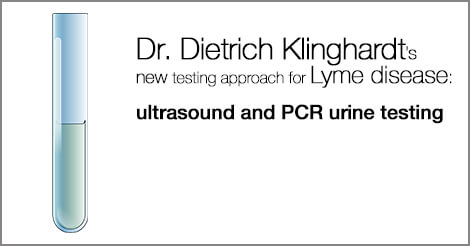
New testing approach for Lyme disease: ultrasound and PCR urine testing

June 7, 2017 By Trudy Scott 16 Comments

Dr. Dietrich Klinghardt’s interview with Dr Jay Davidson, host The Chronic Lyme Disease Summit 2 is one of the most interesting and encouraging Lyme disease interviews I’ve heard for a long time! He covers the Latest on Lyme Testing and Treatments. The reason it’s so encouraging is that chronic Lyme disease is notoriously difficult to test for.

Dr. Klinghardt starts by sharing why Lyme disease goes undiagnosed in many instances:

Lyme is highly compartmentalized. That means it sets up sanctuaries in different body compartments, and chronic Lyme is not living in the blood. Lyme may be in the blood in acute Lyme but not in chronic Lyme.

In chronic Lyme it may be in the right hippocampus but not in the entire brain, maybe in the brain stem but not the liver. It may be in your disk of L4-L5 but not in other disks and so on and so forth.

It lives in biofilm. We know that. It lives in the cell, but it doesn’t stray.

He goes on to share that the common immune system-based Lyme disease tests that use blood testing are misleading because with chronic Lyme

the blood or the white blood cells are not in contact with the actual microbes and you do not get the immune activation…So many cases go undiagnosed.

Dr. Klinghardt shares a wonderful technique that he and one of the world’s most renowned ultrasound radiologists, Dr. Marco Ruggiero, have developed for both testing and to improve treatment:

We know that when you put ultrasound …on a group of cells, it squeezes and relaxes the cells at a very high speed and squeezes out things from the cell that shouldn’t be in there. And so, we had the theory if you apply ultrasound to an area where we suspect Lyme spirochetes or Bartonella or Babesia or Ehrlichia, then those microbes are forced into the connective tissue. And some of them will stray from there into the blood, and some of them will be excreted through the kidneys into the urine.

With that principle, we found an incredible increase in our findings that most of the people that were suspected of having chronic Lyme disease didn’t just have Borrelia burgdorferi, but they had also Borrelia miyamotoi. They had Babesia duncani, Babesia microti. They had Bartonella henselae.

So what we do, we have set up a certain sequence of using ultrasound on the brain, on the thymus, on the spleen, on the vagus nerve, and on the brain stem. We drive out the microbes, and then we collect the urine and find the microbes. This is by far the best test we use – the PCR testing – looking for whole strands of DNA of the bugs in the urine.

That testing has been the most rewarding test in my whole lifetime. We are publishing a paper that comes out later this month in the American Journal of Immunology where we lay out the details of this technique. That’s what we do at the Sophia Health Institute.

The whole treatment takes less than 10 minutes, and then it’s the first urine that naturally occurs after that that’s collected. And then we send it to the lab for PCR testing, and insurance pays if you do it with Lab Corp. There’s other labs that offer this test now. And it can cost up to $500 to test for 14 of the coinfections.

Here is the title of that paper: The Ruggiero-Klinghardt (RK) Protocol for the Diagnosis and Treatment of Chronic Conditions with Particular Focus on Lyme Disease and the lab DNA Connexions is mentioned in this paper. 

He goes on to explain how they also use the therapeutic ultrasound as an instrument to optimize drug uptake and utilization in specific areas of the body order to eliminate the bacteria.

Later on in the interview Dr. Klinghardt makes this bold and rather concerning statement:

Most of my patients with severe, persistent Lyme disease have never had a tick bite. They had a spider bite or a flea bite or a bite from a stinging fly. So these are insect-borne diseases but not tick-borne diseases.

Dr. Klinghardt has been at the forefront of Lyme disease treatment for years and now bringing even further wisdom to this very challenging condition. I really look forward to learning more about all this from this amazing practitioner.
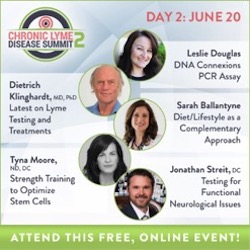
The Chronic Lyme Disease Summit 2 runs June 19-26, 2017 and Dr. Klinghardt’s interview airs on day 2 of the summit.

Be sure to also listen to:

  • Leslie Douglas: DNA Connexions PCR Assay (the testing Dr. Klinghardt uses) and
  • Jonathan Streit: Testing for Functional Neurological Issues

This summit will help you understand symptoms (common and rare), diagnosis and testing, practical at-home health tips, healing protocol explanations and more!

And it will hopefully give you some insights to any ongoing health issues you may have that may actually be due to Lyme disease (even if you have not yet been diagnosed). It’s something I consider with all my clients that are not seeing symptom resolution.

Register here for The Chronic Lyme Disease Summit 2

Last year I was interviewed on Lyme anxiety and how to use GABA and other amino acids to ease the anxiety while you are working on addressing the Lyme disease. I’m not speaking this year but that interview and some of my other Lyme anxiety resources are available to summit purchasers. I actually mention Dr Klinghardt in that interview because he finds that his Lyme patients don’t get well until they have addressed pyroluria.

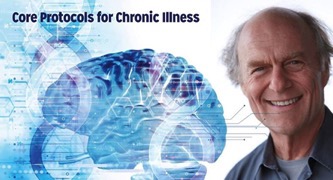
If you live in Sydney, Australia, you can hear Dr. Kinghardt present live this weekend during his 1 day event: Core Protocols for Chronic Illness. If you’re not a practitioner be sure to let your healthcare provider know about this event.
Feel free to post questions or feedback below.

Filed Under: Events, Lyme disease and co-infections Tagged With: anxiety, Chronic Lyme Summit, Dr. Jay Davidson, Dr. Klinghardt, GABA, Lyme Disease, pyroluria, ultrasound

Anxiety in autism, ADHD and sensory processing disorders

June 5, 2017 By Trudy Scott 8 Comments

I had the pleasure of being interviewed by Tara Hunkin on the upcoming Autism, ADHD and Sensory Processing Disorder Summit and share my expertise on anxiety since we so often see anxiety in this population. My topic is: Anxiety’s Role in ASD, ADHD and SPD and how nutrient therapy can help.

I start out sharing some of the research on the incidence and connections.

This 2009 paper Sensory Overresponsivity and Anxiety in Children With ADHD in the American Journal of Occupational Therapy, reports that:

Approximately 25% of children with attention deficit hyperactivity disorder (ADHD) have a comorbid anxiety disorder.

The purpose of this particular study was to determine whether sensory overresponsivity (SOR) or sensory processing disorders are related to increased anxiety in children with ADHD. There were twenty-four children between the age of 6 to 10 with ADHD and 24 children without ADHD.

The study concluded that:

Children in the ADHD + SOR [sensory over responsivity] group were significantly more anxious than both the ADHD-only and non-ADHD (control) groups.

Occupational therapists treating children with ADHD and SOR should be aware that these children may also have anxiety and discuss options with families for prevention or treatment.

I would add that anyone working with these children should be aware of the connections: doctors, nutritionists, psychologists and anyone else on the health team.

We also discuss this 2012 paper, also from the American Journal of Occupational Therapy – Sensory Overresponsivity and Anxiety in Typically Developing Children and Children With Autism and Attention Deficit Hyperactivity Disorder: Cause or Coexistence?

Reviews of the coexistence of ASD [autism spectrum disorder] and anxiety disorders have concluded that among children and youth with ASD, anxiety disorders are highly prevalent, clinically significant, and varied as to specific type of anxiety disorder

Approximately 25% of children with attention deficit hyperactivity disorder (ADHD) also have anxiety disorder, a rate that is elevated when ADHD is seen in conjunction with conduct or oppositional defiant disorders

The paper mentions these 3 factors as models worthy of further study in order to understand the relationship between anxiety, sensory overresponsivity, autism and ADHD:

(1) anxiety caused by, or a symptom of, SOR (primary anxiety model);
(2) SOR caused by, or a symptom of, anxiety (primary SOR model); and
(3) the presence of both anxiety and SOR, linked by way of another factor

Based on what I know about anxiety I feel it could be a combination of all of the above.

My interview also covers the following around how to address the anxiety in these children and their moms (who also often have anxiety):

  • Low serotonin anxiety, symptoms, using tryptophan and 5-HTP and precautions with using them with an SSRI
  • A young girl with RAD (reactive attachment disorder) with rage/anger, anxiety, insomnia, and sugar cravings and the successful use of chewable tryptophan, addressing low iron and a gluten-free diet
  • A young boy with OCD and the successful use of both tryptophan and inositol
  • Low GABA anxiety, the use of GABA and not phenibut, and cautions about using too much
  • A young girl with ADHD and irritability and the successful use of GABA
  • Pyroluria incidence and symptoms and how it ties back to neurotransmitter imbalances

Sensory processing disorders, ADHD and autism are not my expertise and I don’t work much with children so I’m really pleased to be bringing you this information via the other amazing speakers AND listening and learning myself!

Here are some speakers and topics I’m particularly interested in

  • Brandon Brock, RN, DC: Understanding PANS and PANDAS role in ASD, ADHD and SPD.
  • Elizabeth Mumper, MD: Mitochondrial Dysfunction: What it is and how to address the underlying causes.
  • Richard Frye, MD, Ph.D.: Cerebral Folate Deficiency: and how it impairs neurological health.
  • Nancy O’Hara, MD: What you need to know about cell danger response in ASD & other neurodevelopmental disorders.
  • John Tjenos, NTP: The importance of the vagus nerve and how to build vagal tone with essential oils.

We have so much to learn from practitioners and researchers working in this area. And children affected by these conditions do recover!

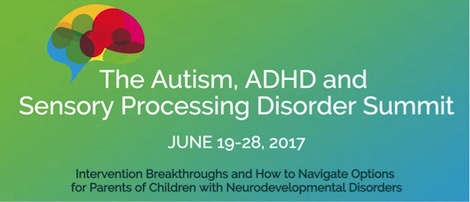
The Autism, ADHD and Sensory Processing Disorder Summit, hosted by Tara Hunkin, NTP, runs from June 19-28, 2017.

It will be 10 days of eye opening information into the root causes of your child’s neurological dysfunction. Imagine learning about what may have caused their symptoms and how to address them with nutrition and biomedical approaches and leverage the power of positive neuroplasticity to improve function, health and their lives.

Do also keep in mind that these topics may have relevance for you even if you don’t have a child with a sensory processing disorder, ADHD and/or autism. These children are the canaries in the coal mine and many of my clients with anxiety can benefit from the biomedical support that many of these speakers are addressing. Simply replace sensory processing disorder, ADHD and/or autism with anxiety and listen and learn.

You can register for The Autism, ADHD and Sensory Processing Disorder Summit here

Feel free to ask questions or provide feedback and your experiences in the comment section below.

Filed Under: Autism, Events Tagged With: ADHD, anxiety, autism, Brandon Brock, Elizabeth Mumper, GABA, inositol, Nancy O’Hara, sensory overresponsivity, Sensory Processing Disorder, serotonin, Tara Hunkin, tryptophan

Anxiety is a common symptom of IBS/SIBO: breath and antibody testing at MINDD 2017

June 2, 2017 By Trudy Scott 8 Comments

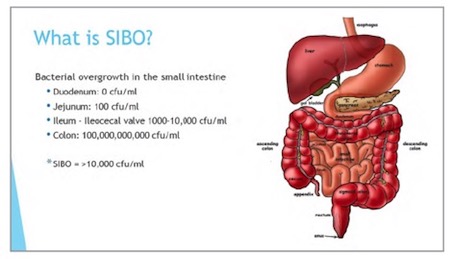
I attended Dr. Nirala Jacobi’s presentation on at MINDD 2017 practitioner training and here are some highlights from her presentation on SIBO (small intestine bacterial overgrowth) which is the leading cause of IBS and a major cause of leaky gut syndrome. It is the presence of an overgrowth of beneficial bacteria in the small intestine i.e. good bacteria in the wrong place.

She shares that:

Bacterial overgrowth has also been implicated in a host of other conditions such as developmental delay, fibromyalgia, interstitial cystitis, malabsorption syndromes and many more [such as anxiety and depression and even insomnia]. SIBO requires a methodical approach to testing and treatment in order to successfully re-establish a healthy digestive tract.

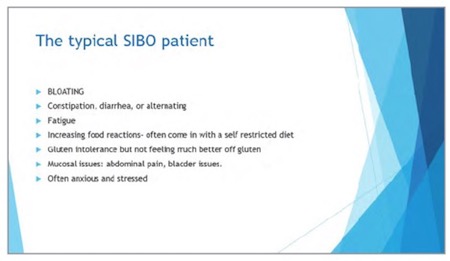
And some of the typical symptoms SIBO patients experience:

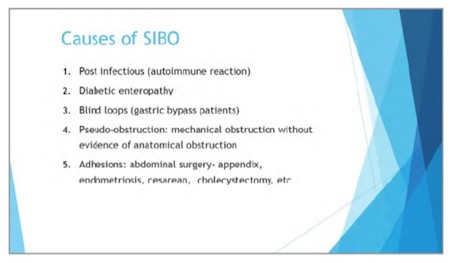
I was not familiar with all these prior surgical procedures being a possible cause but this makes sense. I’ve added gastric bypass, appendix removal, endometrial surgeries, C-section and gallbladder removal (cholecystectomy) to my SIBO questionnaire.

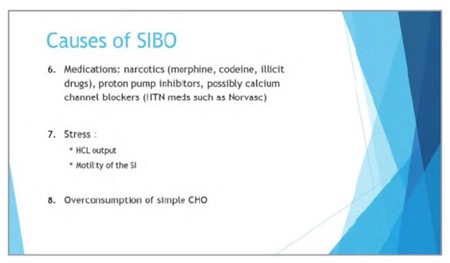
Other possible causes include certain medications, stress and anxiety (which affects how much HCl or stomach acid you produce and gut motility) and overconsumption of simple carbohydrates.

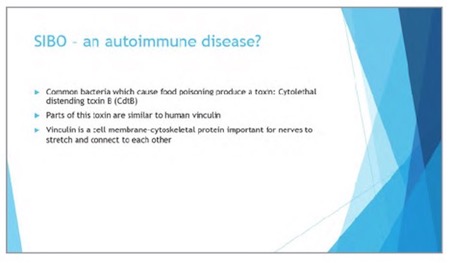
Going back to the #1 possible cause i.e. post-infectious due to a stomach bug, the gastroenteritis and autoimmunity connection was presented. Bacteria which cause food poisoning produce a toxin called CdtB which is similar to human vinculin which is important for nerve function.

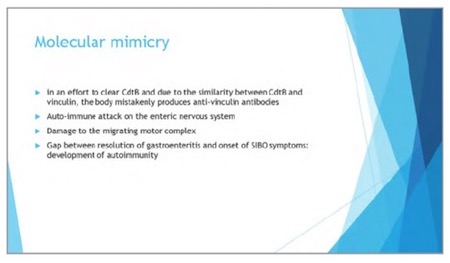
Due to the similarity between CdtB and vinculin, the body produces anti-vinculin and anti- CdtB antibodies which lead to an auto-immune attack on the enteric nervous system. This causes damage to the MMC/migrating motor complex and contributes to SIBO.

A press release from Cedars-Sinai and Dr. Pimental: Definitive Tests for Irritable Bowel Syndrome Developed at Cedars-Sinai announce the multicenter study validating the accuracy of the new blood tests:

Dr. Pimentel and fellow researchers studied nearly 3,000 people, comparing IBS patients to those diagnosed with inflammatory bowel disease, celiac disease and those with no GI disease. The blood tests identified the two antibodies associated with IBS – anti-Cdtb and anti-vinculin – with greater than 90 percent certainty.

The tests are marketed under the name IBSchek™ and are produced by Commonwealth Laboratories Inc., in Salem, Massachusetts.

This paper reports this autoimmunity connection: Autoimmunity Links Vinculin to the Pathophysiology of Chronic Functional Bowel Changes Following Campylobacter jejuni Infection in a Rat Model and this paper discusses the two tests: Development and Validation of a Biomarker for Diarrhea-Predominant Irritable Bowel Syndrome in Human Subjects

These blood tests are available in the USA but are not yet available in Australia where Dr. Nirala Jacobi now lives and practices.

Dr. Nirala Jacobi, BHSc, ND (USA) graduated from Bastyr University in 1998 with a doctorate in naturopathic medicine. She practiced as a primary care physician in Montana for 7 years before arriving in Australia. Nirala is considered one of Australia’s leading experts in the natural treatment of small intestine bacterial overgrowth (SIBO), a common cause of IBS. In 2014, she designed the SIBO Bi-Phasic Diet to aid practitioners in simplifying their treatment approach with their SIBO patients. She is the Chief Medical Officer and Director of SIBOtest.com, an online breath testing service and educational portal for practitioners. She frequently lectures to national and international professional audiences on the topic of SIBO and founded the first Australian SIBO Summit in 2016 Nirala has had a busy private practice in Brisbane since 2008 and recently moved her clinic to Wilsons Creek in the beautiful northern rivers region of NSW, Australia.

For SIBO breath testing services in all countries check out the testing page on Dr. Siebecker’s SIBOinfo site

Keep in mind that most SIBO studies are on IBS. According to Dr. Siebecker

Drs. Pimentel and Lin originated the theory that SIBO is the underlying cause of IBS.  As with all theories, there is debate and controversy about this idea, with many who agree and many who do not.  One thing is certainly clear, the symptoms of SIBO overlap with those of IBS and a large percentage of IBS sufferers test positive for SIBO.  One study by Dr Pimentel and team, showed SIBO in up to 84% of IBS patients, though the percentage has been lower in other studies, with an average of 60%.

Here is the most recent study showing the mental health effects of IBS (which we could presumably extrapolate to SIBO and confirm with the testing discussed above) – Neuroendocrine Dysregulation in Irritable Bowel Syndrome Patients: A Pilot Study

Irritable bowel syndrome (IBS) is a multifactorial disorder, involving dysregulation of brain-gut axis

Prevalent psychological symptoms in IBS were maladjustment (60%), trait (40%) and state (17%) anxiety, obsessive compulsive-disorders (23%), and depressive symptoms (23%).

If you are not getting anxiety symptom resolution with dietary changes, the use of targeted individual amino acid, adrenal support, addressing dysbiosis and other biochemical approaches it’s time to work with a practitioner to rule out or address SIBO as a causal factor.

Filed Under: Events, SIBO Tagged With: mindd, Nirala Jacobi, sbi, SIBO

  • « Go to Previous Page
  • Page 1
  • Page 2
  • Page 3

Primary Sidebar

GABA QuickStart Homestudy

gaba quickstart homestudy

Free Report

9 Great Questions Women Ask about Food, Mood and their Health

You'll also receive a complimentary subscription to my ezine "Food, Mood and Gal Stuff"


Connect with me

Popular Posts

  • Amino Acids Mood Questionnaire from The Antianxiety Food Solution
  • The Antianxiety Food Solution Amino Acid and Pyroluria Supplements
  • Pyroluria Questionnaire from The Antianxiety Food Solution
  • Collagen and gelatin lower serotonin: does this increase your anxiety and depression?
  • Tryptophan for the worry-in-your-head and ruminating type of anxiety
  • GABA for the physical-tension and stiff-and-tense-muscles type of anxiety
  • The Antianxiety Food Solution by Trudy Scott
  • Seriphos Original Formula is back: the best product for anxiety and insomnia caused by high cortisol
  • Am I an anxious introvert because of low zinc and vitamin B6? My response to Huffington Post blog
  • Vagus nerve rehab with GABA, breathing, humming, gargling and key nutrients

Recent Posts

  • Her cravings for chips and peanut butter were triggered by stress: GABA ends cravings and reduces physical tension and fear of heights
  • It is truly miraculous to be able to move through life without crippling anxiety and panic
  • GABA and tryptophan combo provide immediate and noticeable relief for tremors and cervical dystonia in just 7 days
  • Red light therapy for back and neck pain, plantar fasciitis and low mood – a complement to the amino acids GABA, DPA and tryptophan
  • What do I use instead of Seriphos to help lower high cortisol that is affecting my sleep and making me anxious at night?

Categories

  • 5-HTP
  • AB575
  • Addiction
  • ADHD
  • Adrenals
  • Alcohol
  • Allergies
  • Alzheimer's disease
  • Amino Acids
  • Anger
  • Antianxiety
  • Antianxiety Food Solution
  • Antidepressants
  • Anxiety
  • Anxiety and panic
  • Autism
  • Autoimmunity
  • benzodiazapines
  • Bipolar disorder
  • Books
  • Caffeine
  • Cancer
  • Candida
  • Children/Teens
  • Collagen
  • Cooking equipment
  • Coronavirus/COVID-19
  • Cravings
  • Depression
  • Detoxification
  • Diabetes
  • Diet
  • DPA/DLPA
  • Drugs
  • EFT/Tapping
  • EMF
  • EMFs
  • Emotional Eating
  • Endorphins
  • Environment
  • Essential oils
  • Events
  • Exercise
  • Fear
  • Fear of public speaking
  • Fertility and Pregnancy
  • Fish
  • Food
  • Food and mood
  • Functional neurology
  • GABA
  • Gene polymorphisms
  • General Health
  • Giving
  • Giving back
  • Glutamine
  • Gluten
  • GMOs
  • Gratitude
  • Gut health
  • Heart health/hypertension
  • Histamine
  • Hormone
  • Hyperparathyroidism
  • Hypoglycemia
  • Immune system
  • Inflammation
  • Insomnia
  • Inspiration
  • Introversion
  • Joy and happiness
  • Ketogenic diet
  • Lithium orotate
  • Looking awesome
  • Lyme disease and co-infections
  • MCAS/histamine
  • Medication
  • Men's health
  • Mental health
  • Mercury
  • Migraine
  • Mold
  • Movie
  • MTHFR
  • Multiple sclerosis
  • Music
  • NANP
  • Nature
  • Nutritional Psychiatry
  • OCD
  • Osteoporosis
  • Oxalates
  • Oxytocin
  • Pain
  • Paleo
  • Parasites
  • Parkinson’s disease
  • PCOS
  • People
  • PMS
  • Postpartum
  • PTSD/Trauma
  • Pyroluria
  • Questionnaires
  • Real whole food
  • Recipes
  • Research
  • Schizophrenia
  • serotonin
  • SIBO
  • Sleep
  • Special diets
  • Sports nutrition
  • Stress
  • Sugar addiction
  • Sugar and mood
  • Supplements
  • Teens
  • Testimonials
  • Testing
  • The Anxiety Summit
  • The Anxiety Summit 2
  • The Anxiety Summit 3
  • The Anxiety Summit 4
  • The Anxiety Summit 5
  • The Anxiety Summit 6
  • Thyroid
  • Thyroid health
  • Toxins
  • Tryptophan
  • Tyrosine
  • Uncategorized
  • Vegan/vegetarian
  • Women's health
  • Yoga

Archives

  • May 2026
  • April 2026
  • October 2025
  • September 2025
  • August 2025
  • July 2025
  • June 2025
  • May 2025
  • April 2025
  • March 2025
  • February 2025
  • January 2025
  • November 2024
  • October 2024
  • September 2024
  • August 2024
  • July 2024
  • June 2024
  • May 2024
  • April 2024
  • March 2024
  • February 2024
  • January 2024
  • December 2023
  • November 2023
  • October 2023
  • September 2023
  • August 2023
  • July 2023
  • June 2023
  • May 2023
  • April 2023
  • March 2023
  • February 2023
  • January 2023
  • December 2022
  • November 2022
  • October 2022
  • September 2022
  • August 2022
  • July 2022
  • June 2022
  • May 2022
  • April 2022
  • March 2022
  • February 2022
  • January 2022
  • December 2021
  • November 2021
  • October 2021
  • September 2021
  • August 2021
  • July 2021
  • June 2021
  • May 2021
  • April 2021
  • March 2021
  • February 2021
  • January 2021
  • December 2020
  • November 2020
  • October 2020
  • September 2020
  • August 2020
  • July 2020
  • June 2020
  • May 2020
  • April 2020
  • March 2020
  • February 2020
  • January 2020
  • December 2019
  • November 2019
  • October 2019
  • September 2019
  • August 2019
  • July 2019
  • June 2019
  • May 2019
  • April 2019
  • March 2019
  • February 2019
  • January 2019
  • December 2018
  • November 2018
  • October 2018
  • September 2018
  • August 2018
  • July 2018
  • June 2018
  • May 2018
  • April 2018
  • March 2018
  • February 2018
  • January 2018
  • December 2017
  • November 2017
  • October 2017
  • September 2017
  • August 2017
  • July 2017
  • June 2017
  • May 2017
  • April 2017
  • March 2017
  • February 2017
  • January 2017
  • December 2016
  • November 2016
  • October 2016
  • September 2016
  • August 2016
  • July 2016
  • June 2016
  • May 2016
  • April 2016
  • March 2016
  • February 2016
  • January 2016
  • December 2015
  • November 2015
  • October 2015
  • September 2015
  • August 2015
  • July 2015
  • June 2015
  • May 2015
  • April 2015
  • March 2015
  • February 2015
  • January 2015
  • December 2014
  • November 2014
  • October 2014
  • September 2014
  • August 2014
  • July 2014
  • June 2014
  • May 2014
  • April 2014
  • March 2014
  • February 2014
  • January 2014
  • December 2013
  • November 2013
  • October 2013
  • September 2013
  • August 2013
  • July 2013
  • June 2013
  • May 2013
  • April 2013
  • March 2013
  • February 2013
  • January 2013
  • December 2012
  • November 2012
  • October 2012
  • August 2012
  • July 2012
  • June 2012
  • May 2012
  • April 2012
  • March 2012
  • February 2012
  • January 2012
  • December 2011
  • November 2011
  • October 2011
  • September 2011
  • August 2011
  • July 2011
  • June 2011
  • May 2011
  • April 2011
  • March 2011
  • February 2011
  • January 2011
  • December 2010
  • October 2010
  • September 2010
  • July 2010
  • May 2010
  • April 2010
  • March 2010
  • February 2010
  • January 2010
  • November 2009

Share the knowledge!

The above statements have not been evaluated by the Food and Drug Administration. Products listed in this website are not intended to diagnose, treat, cure or prevent any disease.

The information provided on this site is for informational and educational purposes only and is not intended as a substitute for advice from your physician or other health care professional. You should consult with a healthcare professional before starting or modifying any diet, exercise, or supplementation program, before taking or stopping any medication, or if you have or suspect you may have a health problem.


Copyright © 2026 Trudy Scott. All Rights Reserved. | Privacy | Terms and Conditions | Refund Policy | Medical Disclaimer

Free Report

9 Great Questions Women Ask about Food, Mood and their Health

You’ll also receive a complimentary subscription to my ezine “Food, Mood and Gal Stuff”