• Skip to primary navigation
  • Skip to main content
  • Skip to primary sidebar

everywomanover29 blog

Food, Mood and Women's Health – Be your healthiest, look and feel great!

  • Blog
  • About
  • Services
  • Store
  • Resources
  • Testimonials
  • The Book
  • Contact
  • Search this site

weight-loss

The marketing of Risperdal and how atypical antipsychotics became a multi-billion-dollar industry – a shockingly eye-opening article!

August 22, 2025 By Trudy Scott 2 Comments

marketing of risperdal

Even though I’m very aware this happens, this shockingly eye-opening article by Lydia Green is  the best explanation I’ve heard….

I didn’t set out to shape the field of psychiatry. I was just a copywriter working in pharmaceutical advertising. But over time, I found myself at the center of a campaign that would help transform how mental illness—and its treatment—are understood in the U.S. This is the story of how we marketed one drug, Risperdal, and how that effort helped turn atypical antipsychotics into a multi-billion-dollar industry.

If you’ve ever wondered how this powerful class of drugs ended up being prescribed for everything from adolescent mood swings to agitated nursing home patients, you’re not alone. The rise of atypical antipsychotics was a business and marketing phenomenon—driven in part by a wave of pharmaceutical mergers in the 1990s. First introduced for schizophrenia, atypical antipsychotics were promoted as more effective and safer than older drugs like Haldol or Thorazine.

While journalists and regulators have addressed this issue, I want to share my memories of marketing Risperdal—the first widely prescribed atypical antipsychotic. This is the story of how we promoted Risperdal not just as a medication, but as a revolution in psychiatric care. It’s also the story of how we redefined schizophrenia, rewrote the safety narrative of antipsychotics, and helped drive one of the most successful (and concerning) pharmaceutical launches in history.

It was also my first realization of the immense power marketers have to shape their version of the truth—and how I eventually came to question the very system I helped build.

This is an excerpt from the excellent article recently published on the Mad in America site.  We all need to be aware what happened with this medication and is still happening. It’s so wrong and is just heart-breaking to think how individuals and their families were manipulated and impacted. Unfortunately it’s very likely also happening with many other block-buster medications too – like Ozempic (for weight-loss),  Evenity (for osteoporosis) and more.

In this blog, I share stories from social workers and psychologists who were working in the field at time, the overprescribing of atypical antipsychotics to children and teens in the mid-1990s and now, and the powerful effects of tryptophan, GABA, other nutrients and diet for anxiety, agitation, rage and sleep issues in autism, dementia and ADHD.

You can read the full article here – Confessions of an Ad Writer: How I Helped Turn Atypical Antipsychotics into a Billion-Dollar Industry.

Be sure to read some of the many comments from individuals and families who bore the brunt of this. It’s heartbreaking.

Stories from individuals who were working in the trenches at the time

I shared this article on Facebook and here is some of the feedback I received from the community. Laura Ann’s response:

Thank you for sharing this article. I can remember when I was fresh out of my grad social work program and was working in child psychiatry at the University of Maryland, our docs were pushing this drug for young children with ADHD and conduct disorder. Unbelievable! These companies and their executives should be criminally prosecuted.

We tend to think of these scandals as something that happened but aren’t currently happening. I think we will be reading similar articles about GLP-1’s.

I appreciate her for sharing what she was seeing as a social worker at the time. This is so sad and so wrong. I agree that these companies should be prosecuted. Instead they pay massive fines which are part of their marketing and just-doing-business budget, and continue as before.

Unfortunately Laura Ann is spot on, as much of this continues with Risperdal and other psychiatric meds and it’s already happening with GLP-1s. I share more on this below.

Elizabeth Mary’s response:

Just reading your post gave me chills and made my stomach turn. I worked with folks with developmental disabilities during this time period, I had for years! I watched as the antipsychotics and various psych meds infiltrated the group homes and joined a team of co-workers to fight it. We lost. It was disgusting. And I had no idea all this was happening in the background

My heart breaks for these individuals and their families. Bravo to her for trying to fight it and I appreciate her for sharing what she saw happening.

And this feedback from someone else in the community:

This drug was pushed on individuals with ASD (autism spectrum disorder)! Probably still is! Very sad!

I am a retired psychologist who worked primarily with individuals with developmental disabilities. I saw it all the time. The “medical model” was used a lot, meaning many saw psychiatrists and/or PCPs (primary care providers) who prescribed these meds. It has a long history.

Overprescribing of atypical antipsychotics and other psychiatric medications to children and teens – then and now

As mentioned above, I’ve been aware for some time that there is overprescribing of psychiatric medications to children and teens. In one of my interviews on an Anxiety Summit, “Psychiatric Medications in Children and Teens” with Dr. Nicole Beurkens, we discuss these results from this 2019 paper, Current Pattern of Psychiatric Comorbidity and Psychotropic Drug Prescription in Child and Adolescent Patients:

  • Our study indicates that the rate of presentation to child and adolescent psychiatry outpatient clinics is increasing, and rates of diagnosis and initiation of psychiatry drugs are high among the presented children.
  • The prevalence of ADHD shows an increase in males and females in our country, and psychiatric polypharmacy (multiple medications) has reached significant rates.

Keep in mind that Lydia Green shared her marketing work began in the mid-1990s, about 25 years before the above paper was published.

Unfortunately not much has changed. This 2025 paper from Swedish authors reports that the “number of prescriptions to children aged 5-17 years has increased” and that “most prescribed drugs were risperidone [Risperdal] and aripiprazole.”

This 2025 paper report that in a group of Australian children with intellectual disability, autism spectrum disorder and cerebral palsy, “risperidone was the most prescribed antipsychotic medication” and it was often prescribed off-label.

Similar increases in antipsychotic prescriptions are also reported in children and teens in Israel in 2025. The list of papers goes on and on and there are similar papers for dementia and other conditions.

There are versions of this story about a lot of diseases: osteoporosis is another one

Melissa’s response to the Risperdal article was this: “Makes you wonder about therapies they are pushing today.” It’s creating awareness which is what we need and she is asking a great question. Yes – there are many versions of this story about other medications.

Here is a perfect quote from this 2009 article: How A Bone Disease Grew To Fit The Prescription

There’s a powerful economic incentive for pharmaceutical firms to expand the boundaries of the use of different therapies. So whether you consider treatments for osteoporosis or treatments for depression or treatments for high cholesterol — in all of these settings — pharmaceutical firms stand to benefit if the therapies for these diseases are broadly used, even if they’re used among people who have very mild forms of these diseases.

In this same article, Caleb Alexander, a pharmaco-epidemiologist at the University of Chicago, is writing about the marketing of osteoporosis medications and says “the dynamic is well understood.” But all this applies equally to the marketing of all medications i.e. “There are versions of this story about a lot of diseases.”

Dubious marketing by the makers of Ozempic and Wegovy (GLP-1s for weight loss)

This is happening right now for GLP-1s. There were already reports in 2023 about dubious marketing by Novo Nordisk, the makers of Ozempic and Wegovy:

In Great Britain, the company has paid within three years a total of around 21.7 million pounds (24.7 million euros) to experts and organisations including important opinion leaders who have since touted semaglutide as a “game changer” in obesity in a campaign described as an “orchestrated PR campaign.

Sadly I expect their marketing campaigns to run unchecked and get more and more sophisticated, with unsuspecting consumers being taken advantage of and harmed.

Families are not aware of the powerful effects of tryptophan, GABA, other nutrients and diet

My goal is to try and change this lack of awareness so families and individuals can explore other options when they are faced with decisions about some of these medications.

Instead of using antipsychotics for a family member with dementia or Alzheimer’s who is experiencing agitation, aggression and anxiety, consider tryptophan and melatonin, and GABA:

  • Sundowning in Alzheimer’s and dementia: melatonin/tryptophan for the agitation, restlessness, anxiety, disturbed sleep and aggression
  • GABA lessens anxiety, agitation and defiance in 98 year old mother who has been “sundowning” for a couple of years

Instead of using antipsychotics, explore the use of 5-HTP/tryptophan and/or GABA for kids with ADHD:

  • ADHD: 5-HTP melts have been a miracle for one of my adopted kids
  • GABA for children: ADHD, focus issues, irritability, anxiety and tantrums

Instead of antipsychotics and other psychotropic medications in autism, explore tryptophan and GABA:

  • Pathological Demand Avoidance (PDA) in children with autism – how much is behavioral and how much is due to low serotonin?
  • Half a crushed GABA Calm for my autistic child: sleep, anxiety and sensorimotor skills (writing, horse riding and swimming) improve

This is by no means a conclusive approach to addressing these symptoms in dementia/Alzheimer’s, ADHD and autism. We also need to consider and address diet, other nutritional imbalances, infections, gut health, toxins and much more.

Additional resources when you are new to using GABA and tryptophan as supplements

As always, I use the symptoms questionnaire to figure out if low GABA or low serotonin or other neurotransmitter imbalances may be an issue.

If you suspect low levels of any of the neurotransmitters and do not yet have my book, The Antianxiety Food Solution – How the Foods You Eat Can Help You Calm Your Anxious Mind, Improve Your Mood, and End Cravings, I highly recommend getting it and reading it before jumping in and using amino acids on your own so you are knowledgeable. And be sure to share it with the practitioner/health team you or your loved one is working with.

There is an entire chapter on the amino acids and they are discussed throughout the book in the sections on gut health, gluten, blood sugar control (this is covered in an entire chapter too), sugar cravings, anxiety and mood issues.

The book doesn’t include product names (per the publisher’s request) so this blog, The Antianxiety Food Solution Amino Acid and Pyroluria Supplements, lists the amino acids that I use with my individual clients and those in my group programs.

If, after reading this blog and my book, you don’t feel comfortable figuring things out on your own (i.e. doing the symptoms questionnaire and respective amino acids trials), a good place to get help is the GABA QuickStart Program (if you have low GABA symptoms). This is a paid online/virtual group program where you get my guidance and community support. You can sign up to be notified when the next live launch is happening.

If you need serotonin support, the Serotonin QuickStart Program is a good place to get help. This is also a paid online/virtual group program where you get my guidance on using tryptophan and 5-HTP safely, and community support during 5 LIVE Q&A calls. You can sign up to be notified when the next live launch of this program is happening.

If you are a practitioner, join us in The Balancing Neurotransmitters: the Fundamentals program. This is also a paid online/virtual program with an opportunity to interact with me and other practitioners who are also using the amino acids.

Wrapping up and your feedback

I appreciate Lydia for sharing this and enlightening us, and Mad in Arica for inviting her to do the article. And I appreciate community members for sharing and allowing me to share on this blog

Have you or a family member been the victim of the overprescribing of atypical antipsychotics ?

Have you seen this overprescribing of atypical antipsychotics happening in the work you do as a social worker, psychologist, doctor or other health professional?

Are you surprised to learn about similar strategies being used for marketing osteoporosis and GLP-1 medications?

Feel free to share and ask your questions below.

Filed Under: ADHD, Alzheimer's disease, Autism, GABA, Medication, serotonin Tagged With: ADHD, agitation, anxiety, atypical antipsychotics, autism, children, dementia, diet, Evenity, GABA, Lydia Green, marketing, mood swings, multi-billion-dollar industry, osteoporosis, overprescribing, Ozempic, pharmaceutical, psychiatry, rage, risperdal, sleep, teens, tryptophan, weight-loss

KetoNutrition: From Science to Emerging Applications and Practical Implementation

May 4, 2018 By Trudy Scott Leave a Comment

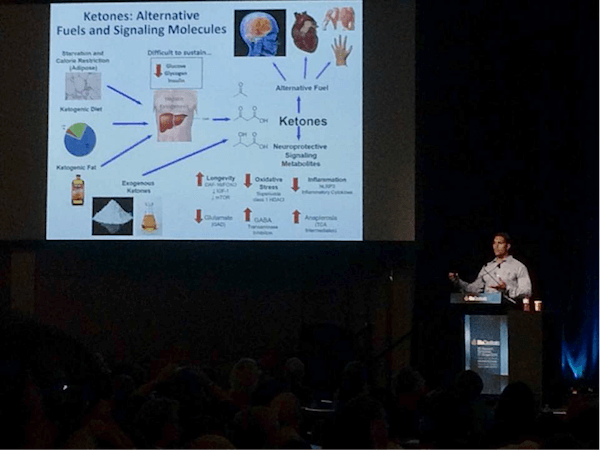
I had the pleasure of hearing Dominic D’Agostino, NASA crew member, researcher and Associate Professor at the University of South Florida present on “KetoNutrition: From Science to Emerging Applications and Practical Implementation” at the 6th BioCeuticals Research Symposium in Melbourne last weekend. His presentation was based on decades of evidence that supports the anticonvulsant and neuroprotective properties of nutritional ketosis. It was one of my favorite presentations and I’m thrilled to share some of the highlights with you here.

Ketones are alternative fuels and neuroprotective signaling metabolites – increasing longevity, lowering inflammation, dampening oxidative stress, lowering glutamate and raising GABA.

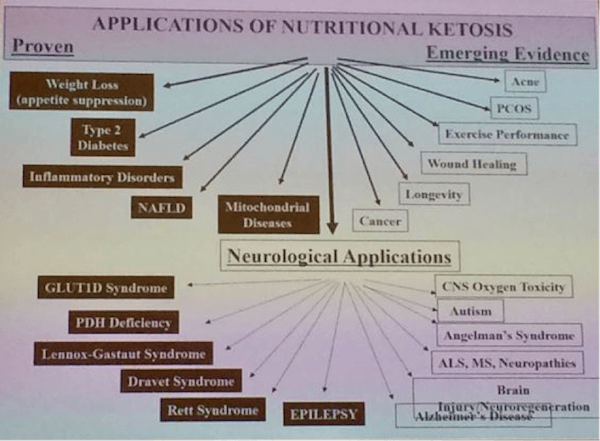
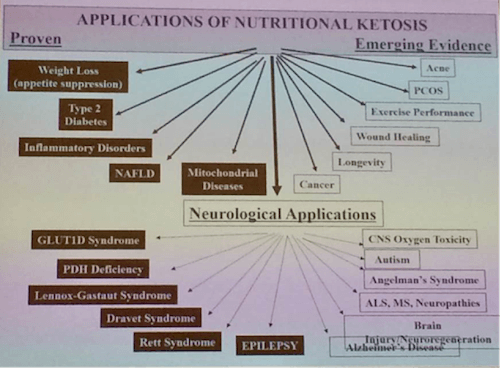
In this slide he shared how the proven applications of nutritional ketosis are extensive – including epilepsy, type 2 diabetes, weight loss, NAFLD, mitochondrial disease and inflammation, GLUTID Syndrome, PDH Deficiency, Lennox-Gastaut Syndrome, Dravet Syndrome and Rett Syndrome.

There is emerging evidence for acne, PCOS, exercise performance, wound healing, longevity, cancer, CNS Oxygen Toxicity, autism, Angelman’s Syndrome, ALS, MS, Neuropathies, Alzheimer’s disease, brain injury, neurodegeneration, anxiety, depression, bipolar and schizoaffective disorder.

Seizures, cancer and the ketogenic diet


In his TEDx talk from 2013 Dr. D’Agostino shares the benefits of a ketogenic diet for seizures and how while studying the effects of gasses on the brains of Navy Seal divers, he developed an approach for metabolically starving cancer cells through diet and compressed oxygen, replacing chemotherapy, surgery, or radiation.

He ends by saying this:

Future treatments and prevention of many diseases may fall back on the ancient wisdom of Hippocrates when he said “let food be thy medicine”

As you can see from the applications slide above, much more research has been done on the therapeutic benefits of a ketogenic diet since this 2013 TEDx talk.  And food truly is medicine!

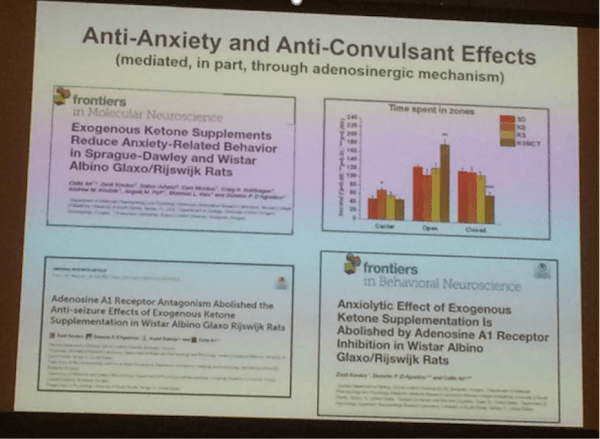
In one of his studies, the first paper above, ketone supplementation was found to have an anti-anxiety effect – Exogenous Ketone Supplements Reduce Anxiety-Related Behavior in Sprague-Dawley and Wistar Albino Glaxo/Rijswijk Rats:

We conclude that ketone supplementation may represent a promising anxiolytic strategy through a novel means of inducing nutritional ketosis.

Adenosine and the adenosinergic mechanism

He shared a number of studies that describe how the anti-anxiety and anti-convulsant effects of ketone supplementation are mediated, in part, through the adenosinergic mechanism. This was one of his papers – Anxiolytic Effect of Exogenous Ketone Supplementation Is Abolished by Adenosine A1 Receptor Inhibition in Wistar Albino Glaxo/Rijswijk Rats.

Adenosine is a neurochemical which many coffee-drinkers may be familiar with since: “Caffeine increases wakefulness [and often anxiety] by antagonizing adenosine receptors, and adenosine itself promotes sleepiness” and a feeling of calm.

Older research finds that there is the “involvement of adenosinergic receptor system in anxiety related behaviours.” More recent research describes adenosine as “a mediator with multisystemic effects”, and it is produced by almost all cells, playing a role in heart function, sleep, bone health, activation of the immune system and mediating the effect of various hormones. I expect we’ll be hearing a great deal more about adenosine in relation to ketogenic diets in the near future.

The microbiomes of astronauts sync up and so do their serotonin levels

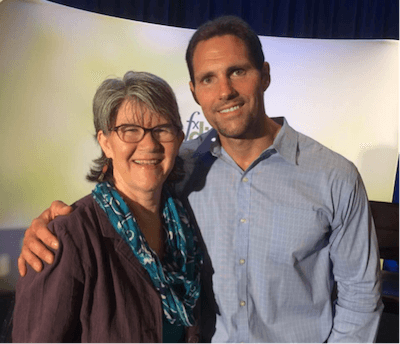
This was one of my favorite presentations at the BioCeuticals Symposium and it was really great to meet Dominic afterwards and learn more about future anxiety research. He shared that his lab has planned research on the benefits of ketosis for both anxiety and improved cognitive function.

It was also fascinating learning from someone who has been in space and hearing how the microbiomes of the astronauts sync up when they are all in space together. And so do their serotonin levels.

If the ketogenic diet is new for you or you want to see the latest research, check out Dominic’s work at Keto Nutrition. And if you want to learn more from Dominic and other keto experts, the Keto Edge Summit runs all of next week.

I also write about two schizoaffective case studies here and share questions and concerns I have about the ketogenic diet. It’s not a panacea for everyone in all instances. But the therapeutic benefits are profound when someone needs to adopt this dietary approach.

Feel free to ask questions and share you experiences with a ketogenic diet – in the comments below.

Filed Under: Anxiety, Bipolar disorder, Ketogenic diet Tagged With: adenosine, adenosinergic, anxiety, autism, cancer, depression, Dominic D'Agostino, keto, Ketogenic diet, ketosis, schizoaffective disorder, seizures, weight-loss

The ketogenic diet for mental health, weight loss, inflammation and disease prevention

May 2, 2018 By Trudy Scott 6 Comments

I wasn’t aware until recently that “KETO”, “Ketones” “Keto diet”, “Ketogenic lifestyle”, “Ketosis” and “Ketogenic diet” are some of the MOST SEARCHED terms on the internet today.

But there is a good reason for this and host of  The Keto Edge Summit (which runs from May 7-13, 2018), Dr. David Jockers shares this:

The goal of the ketogenic lifestyle is to adapt the body to utilize FAT as its primary fuel source instead of SUGAR.

For our ancestors, eating three meals a day just wasn’t a thing. Instead, they’d hunt and forage for the foods they could find. When there wasn’t food, they wouldn’t eat.

Sometimes they’d go for days without food. To sustain life during times of scarcity, the body is thought to have developed the ability to utilize fat as an alternative fuel source.

Today, there’s an abundance of food available to most of us at all times. We regularly eat three meals per day with intermittent snacking between them.

This kind of frequent eating, along with an overemphasis on carb-rich and sugary foods, causes a REDUCED ability to burn fat. Because we don’t have to hunt or forage for food; we’ve become “sugar burners.”

As these sugar-laden foods damage our bodies, we rely MORE on sugar and lose the ability to produce ketones – as a result, massive blood sugar spikes, inflammation, hormone imbalance and ultimately many of the chronic diseases that plague us today.

In a traditional nutrition course, you’d learn that sugar is the body’s PRIMARY fuel source, while fat is secondary. What we’ve learned now (and so much research is supporting this) fat can be a healthier and more sustainable source of energy.

Ketones help you burn fat for energy, powerfully reduce inflammation and show promise in preventing and eradicating diabetes, cancer, autoimmune and neurodegenerative diseases like Alzheimer’s and Parkinson’s, and they can even play a role in alleviating symptoms in mental health conditions like anxiety, depression and schizoaffective disorder.

One of the amazing speakers on the summit is Dominic D’Agostino, researcher and Associate Professor at the University of South Florida. I attended the Bioceuticals conference in Melbourne this past weekend and had the pleasure of hearing him present on this topic live and all I can say is wow! I don’t want you to miss out and now you don’t have to when you tune in via the Keto Edge Summit.

Here is one of the slides where he shares the many proven and emerging applications of nutritional ketosis:

The applications of nutritional ketosis are extensive – including epilepsy, type 2 diabetes, weight loss, NAFLD, mitochondrial disease and inflammation, with emerging evidence for acne, PCOS, wound healing, cancer, autism, ALS, MS, Alzheimer’s, the brain and anxiety.

(anxiety and depression fall under brain on the right and also under inflammatory disorders on the left)

I shared these case studies a few weeks ago in a blog post – Ketogenic diet: reductions in auditory hallucinations and delusions, better mood and energy, and weight loss. Two schizoaffective patients working with Dr. Chris Palmer, a psychiatrist from Harvard’s McLean Hospital in Belmont, Massachusetts, tried a ketogenic diet for weight loss:

  • After four weeks on the ketogenic diet, the female patient had resolution of her delusions and lost ten pounds.
  • The male patient experienced similar results with “dramatic” reductions in auditory hallucinations and delusions, as well as better mood and energy. He also lost weight, losing 104 pounds over the course of a year.

There is also research reporting the following results:

  • Therapeutic use of carbohydrate-restricted diets in an autistic child; a case report of clinical and 18FDG PET findings

the patient’s behavior and intellect improved in regard to hyperactivity, attention span, abnormal reactions to visual and auditory stimuli, usage of objects, adaptability to changes, communication skills, fear, anxiety, and emotional reactions

  • Exogenous Ketone Supplements Reduce Anxiety-Related Behavior in Sprague-Dawley and Wistar Albino Glaxo/Rijswijk Rats

ketone supplementation may represent a promising anxiolytic strategy through a novel means of inducing nutritional ketosis.

As Dr. Jockers states:

The GREATEST health discovery of this century may ALREADY be inside your body!

During this health summit, you’ll discover:

  • What is ketosis (and how does it work)?
  • Myths, and how to separate fact from fiction!
  • How to overcome the challenges of being “keto adapted.”
  • Whether you should start a keto diet (or not!).
  • How to shop, live and eat on a ketogenic lifestyle.

The Keto Edge Summit is online and available at no-cost from May 7-13, 2018! Register here

I will be in learning mode with you for the Keto Edge Summit. I’ve been following Dr. David Jockers for awhile and I’m very excited about the applications of a ketogenic diet for anxiety and depression, given what we’ve learned so far. It’s going to be a great educational opportunity for all of us.

Have you experienced benefits from a ketogenic diet? If yes please do share what benefits?

If you’ve had challenges being on a ketogenic diet please share those challenges too, so we can all learn.

Filed Under: Diet, Events, Ketogenic diet Tagged With: anxiety, brain, Dominic D'Agostino, Dr. David Jockers, Inflammation, keto, Ketogenic, Ketogenic diet, ketosis, The Keto Edge Summit, weight-loss

Ketogenic diet: reductions in auditory hallucinations and delusions, better mood and energy, and weight loss

April 6, 2018 By Trudy Scott 5 Comments

Two schizoaffective patients of Dr. Chris Palmer, a psychiatrist from Harvard’s McLean Hospital in Belmont, Massachusetts, tried a ketogenic diet for weight loss. As well as losing weight, they experienced reductions in auditory hallucinations and delusions, had a better mood and had more energy.

Here is additional information about these remarkable results, published late last year in this letter to the editor – Ketogenic diet in the treatment of schizoaffective disorder: Two case studies.

The male patient: lost weight, reductions in auditory hallucinations and delusions, better mood and energy

The male patient, diagnosed with schizoaffective disorder, with a prior psychiatric history of attention deficit hyperactivity disorder and major depression, experienced “dramatic” reductions in auditory hallucinations and delusions, as well as better mood and energy on the ketogenic diet. He also lost weight, losing 104 pounds over the course of a year.

He weighed 322 lb and wanted to lose weight by following a ketogenic diet, typically consisting of coffee with medium chain triglyceride (MCT) oil and butter (“bulletproof coffee”), eggs, meat, fish, poultry, spinach, kale, and olive oil. Within 3 weeks, he had lost 15 lb, but also noted a dramatic reduction in his auditory hallucinations and delusions, and improvement in his mood, energy, and ability to concentrate. For the past year, he has largely remained on this ketogenic diet and has lost 104 lb.

His functioning has improved and he has become more independent:

He completed a certification course, successfully participates in an online college program, has friends, began dating, and moved from his father’s home into an independent apartment.

The female patient: lost weight, resolution of her delusions

After four weeks on the ketogenic diet, the female patient, also diagnosed with schizoaffective disorder, and with a prior psychiatric history of major depression and anorexia nervosa, had resolution of her delusions and lost ten pounds:

she wanted to lose weight, and went on a ketogenic diet, consisting mostly of coffee, eggs, poultry, and lettuce. Within 4 weeks, she lost 10 lb and noted that her delusions were no longer present, and that her mood and energy were much better. After 4 months, she lost a total of 30 lb and her PANSS score decreased to 70 [down from 107]

In both instances their symptoms returned when they stopped the diet, but then improved again when back on the ketogenic diet.

In case you’re not familiar with the ketogenic diet here is a quick summary:

The ketogenic diet is a high-fat / low carbohydrate [and low protein] diet that has been used since the 1920’s to treat childhood epilepsy, with some studies suggesting that over 50% of patients experience significant reductions in seizure frequency. The ketogenic diet results in ketone bodies, instead of glucose, being used as the primary energy source in the brain.

There simply is no psychiatric medication available with the power to accomplish these results

I had the pleasure of meeting Dr. Georgia Ede, MD  last year at the ISNPR conference. She is a Harvard-trained psychiatrist and nutrition consultant practicing at Smith College, and writes about these two schizoaffective cases in her article – Low-Carbohydrate Diet Superior to Antipsychotic Medications:

These outcomes are truly remarkable: improvement by dozens of points on the PANSS, significant weight loss, and better quality of life. There simply is no psychiatric medication available with the power to accomplish these results.

I agree with Dr. Ede especially when we look at the medications these patients had trialed. These medication trials for the male patient: methylphenidate, amphetamine salts, dextroamphetamine, bupropion, sertraline, paroxetine, buspirone, lamotrigine, lorazepam, clonazepam, gabapentin, haloperidol, perphenazine, aripiprazole, olanzapine, quetiapine, and clozapine. The female patient had a similarly long list of medication trials and she also received 23 electroconvulsive therapy treatments. For both of them, positive and negative symptoms persisted.

I do still have questions about the ketogenic diet

The research in epilepsy is extensive and the research in mental health is growing. I am really impressed with the results, but I do still have questions about the ketogenic diet. Perhaps you have some similar questions and concerns. Here goes…

  1. If this particular nutritional psychiatry approach works so well for severe mental health disorders such as schizophrenia and psychosis, how will it work for less severe conditions like anxiety and panic attacks? Are these severe cases like the “canaries in the coal-mine” paving the way and teaching us about the benefits of this way of eating?
  2. Should you use a ketogenic dietary approach as the first approach or consider it as a last resort once the other dietary approaches have been implemented and you’re not seeing full symptom resolution? In other words, should you start with a real whole foods diet, then implement a gluten-free diet, then a grain-free diet, then remove dairy (if it’s an issue), then incorporate low FODMAPs if needed and only then implement a ketogenic diet? (low oxalate, low salicylate and low histamine would be incorporated as needed earlier in the process, based on each person’s unique needs).  If we look only at schizoaffective disorder,  there is growing evidence of the role of gluten  in some individuals with this paper “suggesting that an antigliadin IgG positive population of schizophrenia could be a distinct subgroup.” This 2 person pilot study reports the benefits of a gluten-free diet: “this potential mechanism is exciting and may provide improvement for up to one-fourth of patients (antibody-positive) who suffer from this devastating disorder.”
  3. How do we clearly define a ketogenic diet and communicate this definition to practitioners and to those who choose to implement this way of eating on their own? I’ve had feedback from many people who tell me they have been on a ketogenic diet (and it’s worked well for them or maybe it hasn’t worked so well for them), only to discover they are not really eating a true ketogenic diet. How do we simplify this way of eating and make it easy for individuals to understand and then stay in ketosis?
  4. How do we create a ketogenic diet that is nutrient dense and also offers the benefits seen in this research. I have major concerns about long-term nutritional deficiencies with a diet of coffee, eggs, poultry, and lettuce (as eaten by the female patient in this case study). It should ideally include plenty of leafy greens, non-starchy vegetables like broccoli, cauliflower, asparagus etc. and healthy fats like avocado, grass-fed butter and coconut oil, together with fermented vegetables and bone broths. I’m also not convinced that coffee should be part of the ketogenic diet, especially if coffee increases your anxiety and affects your sleep.

  1. How do we help individuals make the switch to this way of low carb eating and help them maintain so they don’t feel deprived and are not relying on willpower alone? As you can see from these 2 cases, the diet can be challenging to sustain and slip ups are common. If you are eating enough health fats (and it’s a lot more than you’re used to eating), this typically helps with cravings. If you still have cravings and feel you are deprived and missing out on treats, the targeted individual amino acids offer powerful results: tryptophan (for afternoon cravings), GABA (for stress eating), DPA (for comfort eating), tyrosine (when there is low motivation) and glutamine (for low blood sugar cravings).
  2. Is the ketogenic diet the next big fad or weight-loss trend as we’re hearing in the media? Based on the above research it truly does have impressive therapeutic benefits beyond only weight-loss. So can we see similar benefits with a modified ketogenic diet, using intermittent fasting and/or cycling in and out of ketosis, and even adding in a ‘feasting day’ of carbs?
  3. Who shouldn’t adopt a ketogenic diet? For example: those with the APOE4 gene, women with adrenal and hormone issues, and individuals with thyroid issues and no gallbladder? The question then becomes this: of those suffering with anxiety and depression or another mental health disorder, who doesn’t have one of these issues? And how do we address the keto rash, constipation, fat malabsorption, fatigue, mineral deficiencies and other issues some people experience on a ketogenic diet?

Right now, this is my thinking: as with any nutritional or functional medicine approach, I would say there is no one-size-fits all for who should implement a ketogenic diet (we need to consider the unique biochemistry of each person) and there is no one set ketogenic diet (it will need to be customized for each person).

Please do share if you’ve adopted a ketogenic diet and the benefits you have experienced, and if you experienced any issues. Be sure to share what a typical day’s diet looks like for you.

Filed Under: Anxiety, Diet, Sugar addiction Tagged With: anxiety, coffee, delusions, depression, diet, Dr. Chris Palmer, energy, hallucinations, Ketogenic, mood, schizoaffective, weight-loss

Primary Sidebar

NEW! GABA QuickStart Homestudy (with special intro pricing)

gaba quickstart homestudy

Free Report

9 Great Questions Women Ask about Food, Mood and their Health

You'll also receive a complimentary subscription to my ezine "Food, Mood and Gal Stuff"


Connect with me

Popular Posts

  • Amino Acids Mood Questionnaire from The Antianxiety Food Solution
  • The Antianxiety Food Solution Amino Acid and Pyroluria Supplements
  • Pyroluria Questionnaire from The Antianxiety Food Solution
  • Collagen and gelatin lower serotonin: does this increase your anxiety and depression?
  • Tryptophan for the worry-in-your-head and ruminating type of anxiety
  • GABA for the physical-tension and stiff-and-tense-muscles type of anxiety
  • The Antianxiety Food Solution by Trudy Scott
  • Seriphos Original Formula is back: the best product for anxiety and insomnia caused by high cortisol
  • Am I an anxious introvert because of low zinc and vitamin B6? My response to Huffington Post blog
  • Vagus nerve rehab with GABA, breathing, humming, gargling and key nutrients

Recent Posts

  • What do I use instead of Seriphos to help lower high cortisol that is affecting my sleep and making me anxious at night?
  • BeSerene™ GABA/theanine cream eases severe muscle tension in her neck/shoulders, prevents her bad headaches and quells her anxiety
  • How the correct approach, dose and sublingual use of GABA can be calming and not cause a flushed and itchy face and neck
  • The amino acid glutamine improves low mood by addressing gut health, and it has calming effects too
  • Flight anxiety with heightened breath, physical tension and also fearing the worst (the role of low GABA and low serotonin)

Categories

  • 5-HTP
  • AB575
  • Addiction
  • ADHD
  • Adrenals
  • Alcohol
  • Allergies
  • Alzheimer's disease
  • Amino Acids
  • Anger
  • Antianxiety
  • Antianxiety Food Solution
  • Antidepressants
  • Anxiety
  • Anxiety and panic
  • Autism
  • Autoimmunity
  • benzodiazapines
  • Bipolar disorder
  • Books
  • Caffeine
  • Cancer
  • Candida
  • Children/Teens
  • Collagen
  • Cooking equipment
  • Coronavirus/COVID-19
  • Cravings
  • Depression
  • Detoxification
  • Diabetes
  • Diet
  • DPA/DLPA
  • Drugs
  • EFT/Tapping
  • EMF
  • EMFs
  • Emotional Eating
  • Endorphins
  • Environment
  • Essential oils
  • Events
  • Exercise
  • Fear
  • Fear of public speaking
  • Fertility and Pregnancy
  • Fish
  • Food
  • Food and mood
  • Functional neurology
  • GABA
  • Gene polymorphisms
  • General Health
  • Giving
  • Giving back
  • Glutamine
  • Gluten
  • GMOs
  • Gratitude
  • Gut health
  • Heart health/hypertension
  • Histamine
  • Hormone
  • Hyperparathyroidism
  • Hypoglycemia
  • Immune system
  • Inflammation
  • Insomnia
  • Inspiration
  • Introversion
  • Joy and happiness
  • Ketogenic diet
  • Lithium orotate
  • Looking awesome
  • Lyme disease and co-infections
  • MCAS/histamine
  • Medication
  • Men's health
  • Mental health
  • Mercury
  • Migraine
  • Mold
  • Movie
  • MTHFR
  • Multiple sclerosis
  • Music
  • NANP
  • Nature
  • Nutritional Psychiatry
  • OCD
  • Osteoporosis
  • Oxalates
  • Oxytocin
  • Pain
  • Paleo
  • Parasites
  • Parkinson’s disease
  • PCOS
  • People
  • PMS
  • Postpartum
  • PTSD/Trauma
  • Pyroluria
  • Questionnaires
  • Real whole food
  • Recipes
  • Research
  • Schizophrenia
  • serotonin
  • SIBO
  • Sleep
  • Special diets
  • Sports nutrition
  • Stress
  • Sugar addiction
  • Sugar and mood
  • Supplements
  • Teens
  • Testimonials
  • Testing
  • The Anxiety Summit
  • The Anxiety Summit 2
  • The Anxiety Summit 3
  • The Anxiety Summit 4
  • The Anxiety Summit 5
  • The Anxiety Summit 6
  • Thyroid
  • Thyroid health
  • Toxins
  • Tryptophan
  • Tyrosine
  • Uncategorized
  • Vegan/vegetarian
  • Women's health
  • Yoga

Archives

  • October 2025
  • September 2025
  • August 2025
  • July 2025
  • June 2025
  • May 2025
  • April 2025
  • March 2025
  • February 2025
  • January 2025
  • November 2024
  • October 2024
  • September 2024
  • August 2024
  • July 2024
  • June 2024
  • May 2024
  • April 2024
  • March 2024
  • February 2024
  • January 2024
  • December 2023
  • November 2023
  • October 2023
  • September 2023
  • August 2023
  • July 2023
  • June 2023
  • May 2023
  • April 2023
  • March 2023
  • February 2023
  • January 2023
  • December 2022
  • November 2022
  • October 2022
  • September 2022
  • August 2022
  • July 2022
  • June 2022
  • May 2022
  • April 2022
  • March 2022
  • February 2022
  • January 2022
  • December 2021
  • November 2021
  • October 2021
  • September 2021
  • August 2021
  • July 2021
  • June 2021
  • May 2021
  • April 2021
  • March 2021
  • February 2021
  • January 2021
  • December 2020
  • November 2020
  • October 2020
  • September 2020
  • August 2020
  • July 2020
  • June 2020
  • May 2020
  • April 2020
  • March 2020
  • February 2020
  • January 2020
  • December 2019
  • November 2019
  • October 2019
  • September 2019
  • August 2019
  • July 2019
  • June 2019
  • May 2019
  • April 2019
  • March 2019
  • February 2019
  • January 2019
  • December 2018
  • November 2018
  • October 2018
  • September 2018
  • August 2018
  • July 2018
  • June 2018
  • May 2018
  • April 2018
  • March 2018
  • February 2018
  • January 2018
  • December 2017
  • November 2017
  • October 2017
  • September 2017
  • August 2017
  • July 2017
  • June 2017
  • May 2017
  • April 2017
  • March 2017
  • February 2017
  • January 2017
  • December 2016
  • November 2016
  • October 2016
  • September 2016
  • August 2016
  • July 2016
  • June 2016
  • May 2016
  • April 2016
  • March 2016
  • February 2016
  • January 2016
  • December 2015
  • November 2015
  • October 2015
  • September 2015
  • August 2015
  • July 2015
  • June 2015
  • May 2015
  • April 2015
  • March 2015
  • February 2015
  • January 2015
  • December 2014
  • November 2014
  • October 2014
  • September 2014
  • August 2014
  • July 2014
  • June 2014
  • May 2014
  • April 2014
  • March 2014
  • February 2014
  • January 2014
  • December 2013
  • November 2013
  • October 2013
  • September 2013
  • August 2013
  • July 2013
  • June 2013
  • May 2013
  • April 2013
  • March 2013
  • February 2013
  • January 2013
  • December 2012
  • November 2012
  • October 2012
  • August 2012
  • July 2012
  • June 2012
  • May 2012
  • April 2012
  • March 2012
  • February 2012
  • January 2012
  • December 2011
  • November 2011
  • October 2011
  • September 2011
  • August 2011
  • July 2011
  • June 2011
  • May 2011
  • April 2011
  • March 2011
  • February 2011
  • January 2011
  • December 2010
  • October 2010
  • September 2010
  • July 2010
  • May 2010
  • April 2010
  • March 2010
  • February 2010
  • January 2010
  • November 2009

Share the knowledge!

The above statements have not been evaluated by the Food and Drug Administration. Products listed in this website are not intended to diagnose, treat, cure or prevent any disease.

The information provided on this site is for informational and educational purposes only and is not intended as a substitute for advice from your physician or other health care professional. You should consult with a healthcare professional before starting or modifying any diet, exercise, or supplementation program, before taking or stopping any medication, or if you have or suspect you may have a health problem.


Copyright © 2026 Trudy Scott. All Rights Reserved. | Privacy | Terms and Conditions | Refund Policy | Medical Disclaimer

Free Report

9 Great Questions Women Ask about Food, Mood and their Health

You’ll also receive a complimentary subscription to my ezine “Food, Mood and Gal Stuff”